What Is 81 Stroke Count Name Feng Shui
Imagine your name carries a hidden score, one that traditional practitioners believe can shape your fortune across an entire lifetime. That's the core idea behind 81 stroke count name feng shui, a numerological naming system used across East Asia to evaluate the energetic quality of a person's name through pure numerical analysis.
81 stroke count name feng shui is a Chinese name numerology method that totals the brush strokes of each character in a name, maps the resulting numbers to one of 81 archetypal meanings, and uses those meanings to assess a person's predicted fortune in areas like career, relationships, and health.
Unlike choosing a name based on poetic meaning or pleasant sound alone, this system treats each character as a numerical unit. The strokes required to write a character become data points, and those data points feed into a structured framework that outputs a fortune reading.
What the 81 Stroke Count System Actually Measures
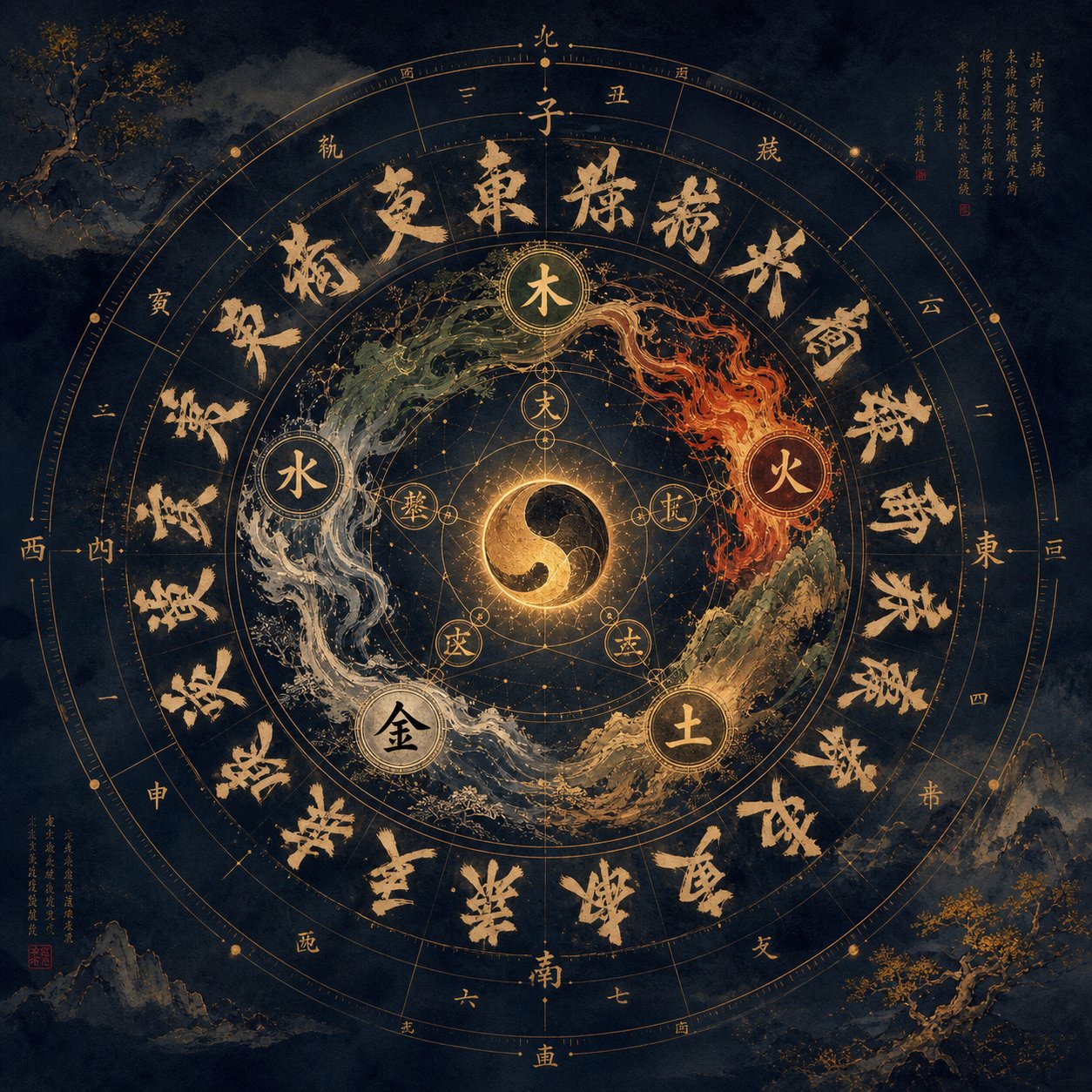
The system doesn't interpret what a character means semantically. Instead, it measures the numerical vibration of a name. Each number from 1 through 81 carries a specific archetypal meaning, classified as auspicious, inauspicious, or mixed. The number 81 completes the cycle and returns to 1, forming a closed loop rooted in classical Chinese cosmology.
Practitioners derive multiple numbers from a single name by splitting it into positional grids, each representing a different life domain. The interaction between these numbers, including their Five Elements associations, determines whether a name is considered harmonious or problematic.
Why Stroke Counts Matter in Chinese Name Selection
In this feng shui name analysis method, stroke count is the raw input that drives every calculation. A single stroke difference can shift a name from an auspicious number to an inauspicious one. That's why parents and naming consultants across China, Taiwan, Japan, and Korea pay close attention to exact stroke totals when selecting characters for a child's name.
The 81 number naming system treats numerical patterns as carriers of energy, much like how traditional feng shui treats spatial arrangements. Your name becomes a kind of personal feng shui, a structure you carry with you everywhere.
The system's reliance on stroke counts rather than character meaning raises an immediate practical question: which version of a character do you count? Simplified characters often have fewer strokes than their traditional counterparts, and the answer to that question changes your results entirely.
Historical Origins From Japan to China
Most people assume this naming system is purely Chinese. The real history of stroke count name analysis tells a more surprising story, one that starts in early twentieth-century Japan and only later migrates across the East China Sea.
Kumazaki Kenoh and the Birth of Seimei Handan
The system we use today was formalized by Kumazaki Kenoh (熊崎健翁), a Japanese scholar who published his structured approach to name numerology around 1929. He drew on older Chinese numerological philosophy, where numbers are linked to generative, destructive, or neutral forces, but organized these ideas into a repeatable, formula-driven framework he called seimei handan (姓名判断, literally "surname and given name divination").
Before Kumazaki, Japanese naming consultants known as meimei-shi had already been combining numerology with yin-yang thought during the Meiji and Taisho eras. What Kumazaki contributed was standardization: a fixed set of 81 archetypal number meanings, a five-grid calculation structure, and clear rules anyone could follow. His Kumazaki Kenoh naming system history is essentially the origin point for every modern stroke count calculator you'll find online today.
How the System Crossed Into Chinese Naming Culture
During the mid-twentieth century, Kumazaki's framework traveled to Taiwan and later mainland China, where practitioners adapted it under the name xing ming xue (姓名学, literally "name study"). The transition was natural. Both Japanese kanji and Chinese characters share the same written roots, and the numerological principles Kumazaki systematized had originally come from Chinese cosmology anyway.
Still, differences emerged between the two traditions. Japanese seimei handan practitioners typically use standard kanji stroke counts, while Chinese xing ming xue practitioners insist on Kangxi dictionary counts, a distinction that matters more than you might expect. The Japanese tradition also tends to weigh the five-grid pillars equally, whereas Chinese practitioners often prioritize ren ge (the personality grid) and zong ge (the total grid) as dominant indicators.
The shared numerological framework, 81 numbers cycling back to 1, five positional grids, Five Elements interactions, remains identical across both cultures. Think of it as the same engine running under two slightly different hoods.
This cross-cultural journey raises a practical question that trips up nearly everyone attempting their own calculation: if the system predates character simplification, which stroke counts are actually correct?
Which Stroke Count System to Use
Here's where most beginners make their first serious mistake. You sit down to analyze a name, count the strokes of each character as you'd normally write them, and plug those numbers into the five-grid formula. The result? Completely wrong. The simplified vs traditional stroke count difference isn't a minor technicality. It can throw off your entire calculation by five, ten, even twelve strokes per character.
Simplified Versus Traditional Stroke Counts
Chinese characters underwent a government-led simplification process in the 1950s and 1960s, reducing the stroke count of thousands of commonly used characters. The character for "dragon" (龙) went from 16 strokes to 5. "Beautiful" (丽) dropped from 19 to 7. "Splendor" (华) fell from 14 to 6.
The problem is straightforward: the 81 stroke count system was developed decades before simplification existed. Kumazaki Kenoh published his framework in 1929. The Kangxi Dictionary, which serves as the stroke count standard, was compiled in 1716. Every number meaning, every auspiciousness rating, every Five Elements assignment in the system was calibrated against traditional character forms. Using simplified stroke counts with this framework is like measuring in centimeters and reading the result as inches.
Why Kangxi Dictionary Counts Are the Standard
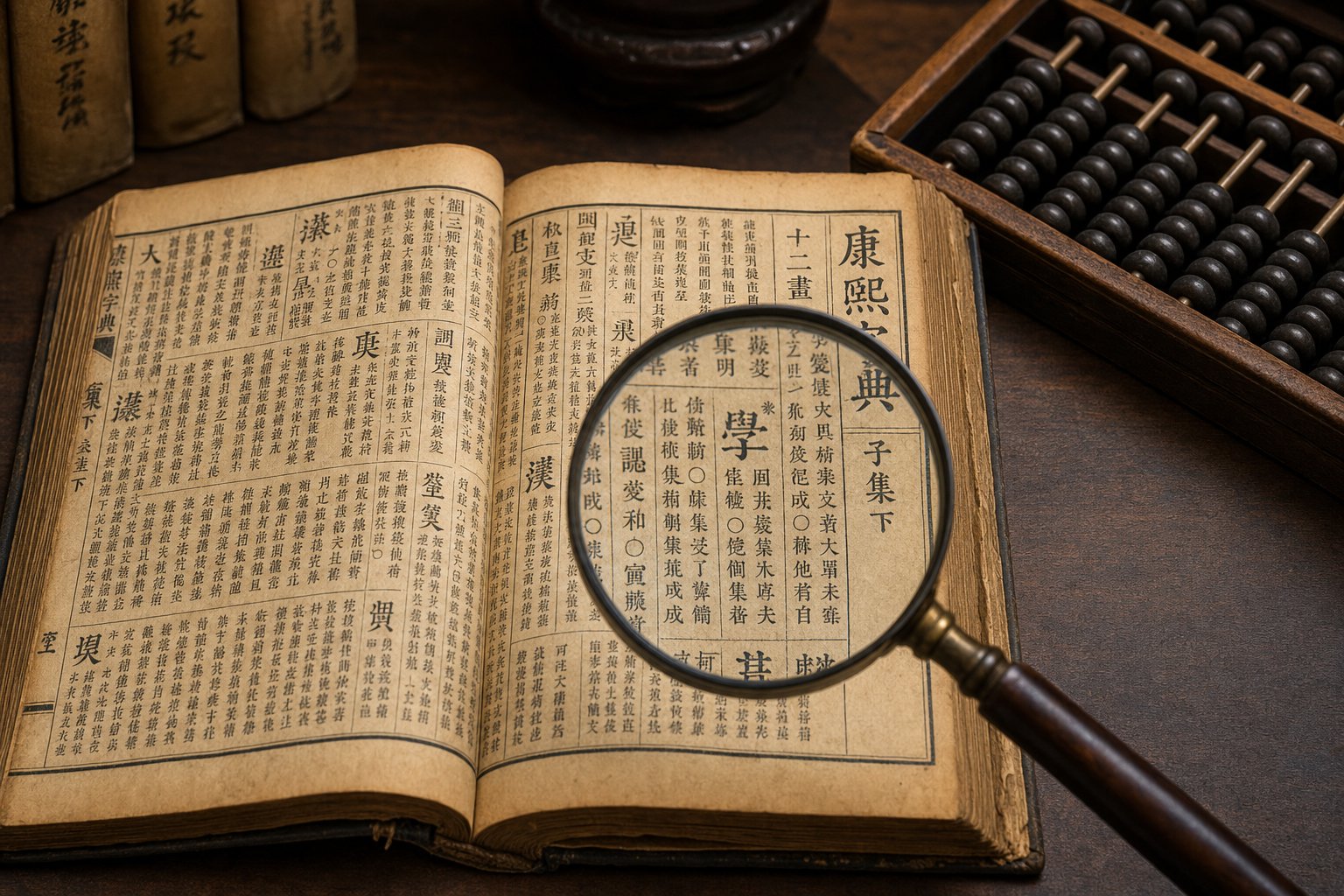
The Kangxi Dictionary (康熙字典) cataloged 47,035 characters under 214 radicals, with precise stroke counts for each entry. Three qualities make it the correct stroke count method for name analysis:
- It preserves complete traditional character forms, exactly as they existed when the numerological system was built.
- It provides a standardized, verifiable reference. Every practitioner working from the same dictionary arrives at the same number.
- It maintains continuity with the empirical tradition. The 81 number meanings were observed and refined over decades using Kangxi counts, not simplified ones.
When you encounter a Kangxi dictionary stroke count for names, you're looking at the number the system was actually designed to interpret. Swap in a simplified count, and you're feeding the wrong input into the formula.
The orthodox rule is clear: all five-grid calculations in the 81 stroke count system must use Kangxi Dictionary stroke counts, regardless of which character form you write in daily life.
Common Radicals That Change Between Systems
The trickiest part of how to count strokes for Chinese name feng shui isn't the obviously simplified characters. It's the radicals, those recurring building blocks that appear in hundreds of naming characters. Many radicals look like they have fewer strokes when written as components of a character, but the Kangxi standard requires you to count them as their original, independent character form.
This Kangxi radical stroke count guide covers the most common discrepancies you'll encounter:
| Radical (as written) | Original Character | Apparent Strokes | Kangxi Count | Example Characters |
|---|---|---|---|---|
| 氵 (water) | 水 | 3 | 4 | 清, 涵, 洋, 泽 |
| 扌 (hand) | 手 | 3 | 4 | 振, 拓, 持 |
| 忄 (heart) | 心 | 3 | 4 | 怡, 恒, 悦 |
| 艹 (grass) | 艸 | 3-4 | 6 | 芳, 萱, 荣, 莉 |
| 礻 (spirit) | 示 | 4 | 5 | 祥, 祺, 福 |
| 衤 (clothing) | 衣 | 5 | 6 | 裕, 袖, 褚 |
| 辶 (walk) | 辵 | 3-4 | 7 | 远, 达, 道, 逸 |
| 阝 left (mound) | 阜 | 2-3 | 8 | 陈, 阳, 陵 |
| 阝 right (city) | 邑 | 2-3 | 7 | 郑, 邦, 都 |
Notice the "walk" radical (辶). You'd normally count it as 3 or 4 strokes when writing. Under Kangxi rules, it counts as 7. That single radical adds 3 to 4 extra strokes to characters like 远 (far) and 达 (reach), which dramatically shifts the grid calculations. The left and right ear radicals (阝) are especially tricky because they look identical but represent different original characters depending on their position, with different stroke counts.
A practical tip: whenever you're evaluating a potential name, don't trust your instinct on stroke counts. Look up every character against a Kangxi reference, paying special attention to radical restoration rules. Even experienced practitioners double-check, because a single miscounted radical cascades through every grid in the five-grid system.
With the correct stroke counts in hand, the next step is understanding exactly how those numbers feed into the five-grid calculation, where each character's position in the name determines which life domain it influences.
The Five Grid Calculation Method Explained
You have your Kangxi stroke counts. Each character in the name is now a verified number. The question becomes: what do you do with those numbers? This is where the wu ge five grid name calculation method transforms raw stroke data into a structured fortune profile.
The Five Grids system, known as wu ge (五格), splits a name into five positional configurations. Each grid is derived by combining the stroke counts of characters that sit in specific positions within the name. The result is five numbers, each governing a different dimension of life.
The Five Grid Positions and What They Represent
Think of the five grids as five lenses, each focused on a different aspect of a person's experience. Here's what each one captures:
- Tian Ge (Heaven Grid) — Derived from the surname. Represents innate fortune and ancestral lineage. Because you inherit your surname, this grid reflects conditions you're born into rather than ones you create. People sharing the same surname share the same tian ge, which is why practitioners treat it as a foundational reference point rather than an independent fortune indicator.
- Ren Ge (Human Grid) — The core grid. Derived from the junction between surname and given name. Represents your primary personality, central life trajectory, and the way you engage with the world. In practice, this is the single most important number when evaluating a name.
- Di Ge (Earth Grid) — Derived from the given name characters. Governs early-life fortune, your foundational years from childhood through young adulthood, and your relationship with your children.
- Wai Ge (Outer Grid) — Represents social fortune, external environment, and interpersonal relationships. An auspicious wai ge suggests smooth social connections and helpful allies; an inauspicious one may indicate friction in external dealings.
- Zong Ge (Total Grid) — The sum of all characters in the name. Governs late-life fortune from middle age onward and reflects the overall arc of an entire lifetime.
The structural logic is elegant: tian ge looks upward to ancestry, di ge looks downward to foundations, ren ge sits at the center as the pivot, wai ge extends outward to society, and zong ge encompasses everything. Together, they form a complete map.
Step-by-Step Calculation Formulas
Ready to calculate? Here's the five grid Chinese name formula step by step. These rules apply to the most common name structure: a single-character surname with a two-character given name (like 王文昭). Variations for compound surnames and single-character given names follow the same logic with minor adjustments.
- Calculate Tian Ge (Heaven Grid): Take the Kangxi stroke count of the surname and add 1. For compound surnames, add the stroke counts of both surname characters together (no extra 1 needed). The added "1" for single surnames represents the Taiji, the primordial unity, maintaining structural symmetry in the system.
- Calculate Ren Ge (Human Grid): Add the stroke count of the last surname character to the stroke count of the first given name character. This is how to calculate tian ge ren ge di ge in sequence: the ren ge always bridges the surname-given name boundary.
- Calculate Di Ge (Earth Grid): Add the stroke counts of all given name characters together. For a single-character given name, add 1 to the given name's stroke count (same structural convention as the heaven grid).
- Calculate Zong Ge (Total Grid): Add the Kangxi stroke counts of every character in the full name. No additions, no adjustments. This is the simplest calculation of the five.
- Calculate Wai Ge (Outer Grid): Subtract the ren ge from the zong ge. For compound surnames with two-character given names, use an alternative formula: add the first surname character's strokes to the last given name character's strokes. For single surnames with single-character given names, the wai ge is fixed at 2.
The computational core follows a principle of adjacent summation. Each grid combines stroke counts from characters that occupy neighboring positions within the name structure. No character exists in isolation; it always enters into relationship with what sits beside it.
How Grid Positions Map to Life Aspects
Why does this wai ge zong ge name feng shui calculation matter in practical terms? Because each grid governs a specific life timeline and domain:
| Grid | Life Period | Primary Domains | Priority in Name Selection |
|---|---|---|---|
| Tian Ge | Innate / inherited | Family background, ancestral influence | Low (cannot be changed) |
| Ren Ge | Entire life (core) | Personality, career trajectory, central fortune | Highest |
| Di Ge | Youth through early 30s | Education, foundational growth, children | High |
| Wai Ge | Mid-life social period | Relationships, networking, external support | Moderate |
| Zong Ge | Middle age onward | Later career, retirement, life summary | High |
Notice the practical implication: a name with an auspicious zong ge but inauspicious di ge might indicate a person who struggles early but finds fulfillment later. The reverse pattern, strong di ge with weak zong ge, suggests early promise that fades. Practitioners aim for auspicious numbers across all grids, but when trade-offs are unavoidable, ren ge takes priority, followed by zong ge and di ge.
The five grids don't operate in isolation, either. Adjacent grids interact through their Five Elements attributes, creating productive or destructive relationships that add another layer of interpretation. The heaven grid, human grid, and earth grid together form what's called the Three Talents configuration, a critical evaluative layer where the elemental relationship between grids matters as much as the individual numbers themselves.
Formulas in hand, the natural next step is seeing them in action with real characters and real arithmetic, where abstract rules become concrete numbers you can verify against your own name.
Worked Examples With Real Calculations
Formulas are abstract until you run actual numbers through them. Let's walk through two complete 81 stroke count calculation examples using Chinese names, one with a single-character surname and one with a double-character (compound) surname, so you can see exactly how each grid emerges from the arithmetic.
Worked Example With a Single-Character Surname
Take the name 王文昭 (Wang Wenzhao). This is the most common name structure in modern Chinese naming: one surname character followed by two given name characters. Here's how to calculate the name stroke count step by step.
First, look up each character's Kangxi stroke count:
- 王 (Wang) — 4 strokes
- 文 (Wen) — 4 strokes
- 昭 (Zhao) — 9 strokes
With those verified counts, apply the five-grid formulas:
| Grid | Formula | Calculation | Result |
|---|---|---|---|
| Tian Ge (Heaven) | Surname strokes + 1 | 4 + 1 | 5 |
| Ren Ge (Human) | Surname + first given name character | 4 + 4 | 8 |
| Di Ge (Earth) | All given name characters combined | 4 + 9 | 13 |
| Zong Ge (Total) | All characters combined | 4 + 4 + 9 | 17 |
| Wai Ge (Outer) | Total Grid minus Human Grid | 17 - 8 | 9 |
This five grid worked example with a single character surname produces grid numbers of 5, 8, 13, 17, and 9. Each of these numbers carries a specific meaning within the 81-number reference system, and each has a Five Elements assignment based on its final digit. For instance, the ren ge of 8 ends in 8, placing it in the Metal element. The di ge of 13 ends in 3, placing it in Fire. That Metal-Fire relationship between adjacent grids becomes part of the Three Talents analysis.
Notice how the single-surname structure gives you full flexibility with the two given name characters. Adjusting either one shifts the ren ge, di ge, wai ge, and zong ge simultaneously, which is why practitioners often test dozens of character combinations before settling on a name.
Worked Example With a Double-Character Surname
Compound surnames change the calculation rules slightly. Let's use 歐陽明輝 (Ouyang Minghui) to demonstrate a double character surname stroke count calculation.
Kangxi stroke counts for each character:
- 歐 (Ou) — 15 strokes
- 陽 (Yang) — 17 strokes (the left-side radical 阝 restores to 阜, counting as 8 strokes under Kangxi radical rules)
- 明 (Ming) — 8 strokes
- 輝 (Hui) — 15 strokes
The 陽 character is a perfect example of why you can't trust visual stroke counting. That small left-ear radical (阝) looks like 2 or 3 strokes, but it represents 阜 with 8 strokes in the Kangxi system. Missing this would throw off three of your five grids.
Apply the compound surname formulas:
| Grid | Formula | Calculation | Result |
|---|---|---|---|
| Tian Ge (Heaven) | Both surname characters combined (no +1) | 15 + 17 | 32 |
| Ren Ge (Human) | Last surname char + first given name char | 17 + 8 | 25 |
| Di Ge (Earth) | Both given name characters combined | 8 + 15 | 23 |
| Zong Ge (Total) | All characters combined | 15 + 17 + 8 + 15 | 55 |
| Wai Ge (Outer) | First surname char + last given name char | 15 + 15 | 30 |
Two key differences stand out from the single-surname example. First, the tian ge doesn't add 1 because the compound surname already has two characters providing structural completeness. Second, the wai ge uses a different formula: first surname character plus last given name character, rather than subtracting the ren ge from the zong ge. The compound surname with two-character given name is the most complete structure in the system because every grid has its own independent calculation space with no virtual additions needed.
You'll also notice that this structure produces larger numbers overall. A tian ge of 32 and a zong ge of 55 push into the higher ranges of the 81-number cycle, where meanings shift considerably compared to lower numbers. This is neither inherently good nor bad; it simply means you'll be referencing a different section of the 81-number chart.
A practical reminder: always verify your stroke counts against a Kangxi dictionary reference before drawing any conclusions. Even one miscounted radical, like treating 辶 as 3 strokes instead of 7, cascades through every grid and produces a completely different fortune profile. The arithmetic itself is simple addition. Getting the input numbers right is where the real care is needed.
With your five grid numbers calculated, the next layer of analysis involves determining what element each number belongs to and whether those elements flow harmoniously or clash destructively across adjacent grid positions.
Five Elements and the Yin Yang Connection
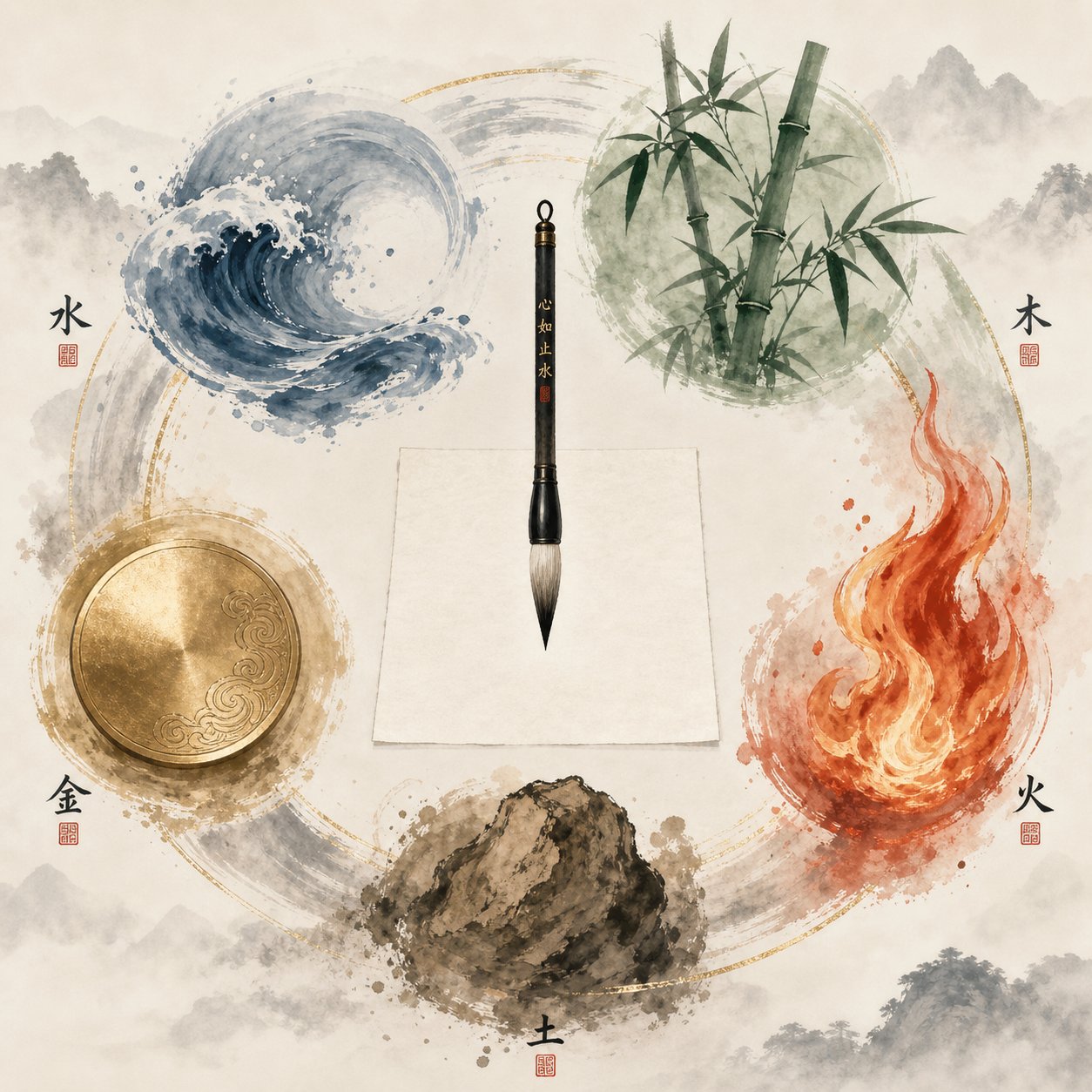
Every grid number you calculated in the previous step carries a hidden identity beyond its 81-number meaning. It also belongs to one of the Five Elements, wu xing (五行), and that elemental identity determines whether adjacent grids support each other or tear each other apart.
Five Elements Assignment for All 81 Numbers
The wood fire earth metal water name number assignment follows a simple rule: look at the last digit of any grid number. That final digit locks the number into its element. Here's the complete breakdown:
- Wood (木) — Numbers ending in 1 or 2 (e.g., 1, 2, 11, 12, 21, 22, 31, 32...)
- Fire (火) — Numbers ending in 3 or 4 (e.g., 3, 4, 13, 14, 23, 24, 33, 34...)
- Earth (土) — Numbers ending in 5 or 6 (e.g., 5, 6, 15, 16, 25, 26, 35, 36...)
- Metal (金) — Numbers ending in 7 or 8 (e.g., 7, 8, 17, 18, 27, 28, 37, 38...)
- Water (水) — Numbers ending in 9 or 0 (e.g., 9, 10, 19, 20, 29, 30, 39, 40...)
Within each pair, the odd number represents yang and the even number represents yin. So 1 is Yang Wood and 2 is Yin Wood. 3 is Yang Fire and 4 is Yin Fire. This yin yang balance in Chinese name selection adds nuance: a grid with Yang Fire (3, 13, 23) carries a more assertive, outward energy than one with Yin Fire (4, 14, 24), even though both belong to the same element.
Let's revisit the 王文昭 example from the previous section. The ren ge was 8 (Metal), the di ge was 13 (Fire), and the tian ge was 5 (Earth). Those elemental identities now become the basis for evaluating how the grids interact.
A quick note on sourcing: this assignment pattern derives from the Heavenly Stems (天干) sequence, where Jia/Yi map to Wood, Bing/Ding to Fire, and so on. Some practitioners instead reference the He Tu (河图) diagram, an ancient numerological map that assigns elements slightly differently for certain number positions. The Heavenly Stems method is the dominant standard in modern practice, but you may encounter He Tu-based interpretations in older Taiwanese texts. For most name analyses, the last-digit method above is what you'll use.
Productive and Destructive Cycles Between Grids
The wu xing five elements name feng shui connection isn't just about labeling each grid. It's about how those labels relate to one another. The Five Elements interact through two fundamental cycles:
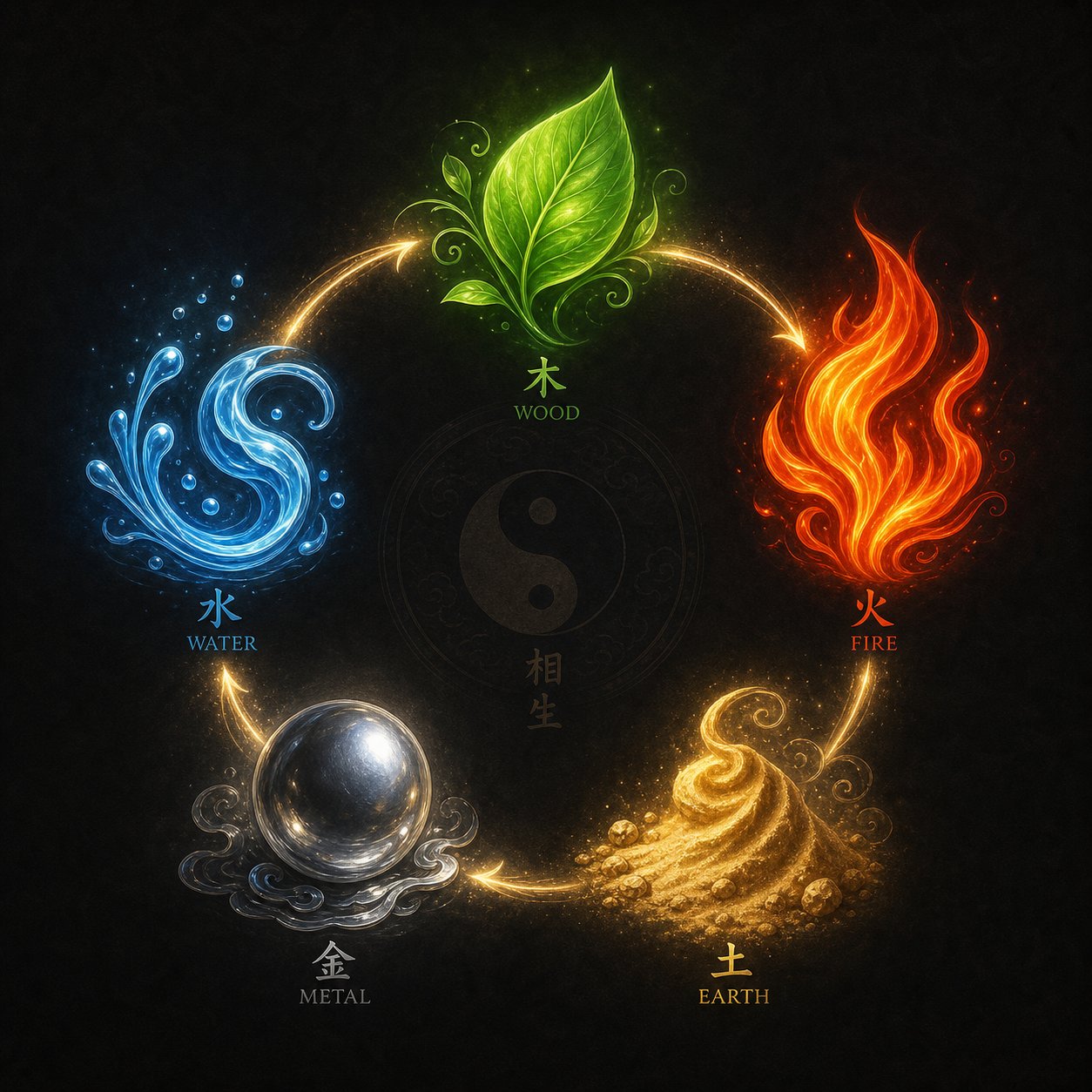
The Productive Cycle (相生): Wood feeds Fire. Fire creates Earth (ash). Earth yields Metal (ore). Metal collects Water (condensation). Water nourishes Wood. When adjacent grids follow this sequence, energy flows smoothly from one life domain to the next.
The Destructive Cycle (相克): Wood breaks Earth. Earth dams Water. Water extinguishes Fire. Fire melts Metal. Metal cuts Wood. When adjacent grids fall into this pattern, the system flags tension or obstruction between those life areas.
Practitioners focus especially on the Three Talents (三才) configuration: the relationship between tian ge, ren ge, and di ge. These three grids represent heaven, human, and earth, the classical Chinese cosmological triad. The five elements cycle in stroke count naming matters most here. Ideally, you want the element of tian ge to produce or support ren ge, and ren ge to produce or support di ge, creating a downward flow of generative energy from heaven through the person into their foundation.
Back to 王文昭: tian ge is 5 (Earth), ren ge is 8 (Metal), di ge is 13 (Fire). Earth produces Metal, so the tian-to-ren relationship is productive. But Metal is destroyed by Fire, so the ren-to-di relationship is destructive. A practitioner would flag this as a mixed Three Talents configuration, strong ancestral support flowing into the personality, but friction between the core self and early-life foundations.
Balancing Yin and Yang Through Name Selection
Beyond the productive and destructive cycles, practitioners also consider yin-yang distribution across the five grids. A name where every grid number is odd (all yang) may indicate excessive assertiveness or instability. A name where every grid is even (all yin) might suggest passivity or stagnation. The ideal is a mix, with yang energy in grids governing action (ren ge, wai ge) and yin energy in grids governing foundation and reflection (di ge, zong ge).
This isn't a rigid rule. It's a secondary consideration that fine-tunes the analysis after the primary checks, auspicious number meanings and productive element flow, are satisfied. Think of it as adjusting the seasoning after the main ingredients are already in place.
The elemental layer transforms the five-grid system from a set of isolated numbers into a dynamic, interconnected map. Each grid doesn't just carry its own fortune meaning; it actively influences the grids beside it. That's why two names with identical individual grid ratings can receive very different overall assessments, one might have harmonious element flow while the other is locked in destructive cycles across every position.
With both the numerical meanings and elemental interactions understood, the full 81-number reference chart becomes the essential lookup tool, where each number's classification as auspicious, inauspicious, or mixed determines the final verdict on any name.
The Complete 81 Number Reference Guide
You've calculated your five grids. You know the element of each number. The final step is looking up what those numbers actually mean. This is the 81 stroke count number meanings complete list, the core reference that every name analysis ultimately depends on.
Each number from 1 through 81 falls into one of three fortune categories. In Chinese, these are called ji (吉, auspicious), xiong (凶, inauspicious), and ban ji ban xiong (半吉半凶, mixed fortune). Think of them as green light, red light, and yellow light. A green number in a grid position suggests smooth energy in that life domain. A red number signals obstacles or hardship. A yellow number means the outcome depends heavily on context, specifically how it interacts with the elements and numbers in adjacent grids.
Auspicious Numbers and Their Meanings
These are the lucky stroke count numbers for naming that practitioners actively seek when constructing a name. An auspicious number in the ren ge (personality grid) or zong ge (total grid) is considered especially favorable, since those grids carry the most weight in overall fortune assessment.
The following auspicious numbers for Chinese names chart covers the full set of ji-rated numbers along with representative meanings:
| Number | Element | Meaning Keyword | Rating |
|---|---|---|---|
| 1 | Wood (Yang) | Cosmic origin, supreme prosperity | Auspicious |
| 3 | Fire (Yang) | Growth, intelligence, flourishing | Auspicious |
| 5 | Earth (Yang) | Longevity, fortune gathering | Auspicious |
| 8 | Metal (Yin) | Iron will, steady development | Auspicious |
| 11 | Wood (Yang) | Renewal, family restoration | Auspicious |
| 13 | Fire (Yang) | Brilliance, strategic success | Auspicious |
| 15 | Earth (Yang) | Happiness, longevity, completeness | Auspicious |
| 16 | Earth (Yin) | Noble assistance, leadership | Auspicious |
| 21 | Wood (Yang) | Authority, independence, honor | Auspicious |
| 23 | Fire (Yang) | Rising sun, grand ambition realized | Auspicious |
| 24 | Fire (Yin) | Wealth accumulation, self-made success | Auspicious |
| 31 | Wood (Yang) | Wisdom and courage, lasting peace | Auspicious |
| 32 | Wood (Yin) | Unexpected blessings, noble support | Auspicious |
| 33 | Fire (Yang) | Ascendancy, fame across the land | Auspicious |
| 35 | Earth (Yang) | Gentle elegance, steady progress | Auspicious |
| 37 | Metal (Yang) | Authority, loyalty, great achievement | Auspicious |
| 41 | Wood (Yang) | Virtue, high reputation, fulfillment | Auspicious |
| 45 | Earth (Yang) | Smooth sailing, all things favorable | Auspicious |
| 47 | Metal (Yang) | Blossoming fortune, legacy to heirs | Auspicious |
| 48 | Metal (Yin) | Wisdom and virtue, honored advisor | Auspicious |
| 52 | Wood (Yin) | Foresight, vision realized | Auspicious |
| 57 | Metal (Yang) | Resilience rewarded, late prosperity | Auspicious |
| 61 | Wood (Yang) | Dual fame and fortune, cultivation | Auspicious |
| 63 | Fire (Yang) | Safe harbor, peace and abundance | Auspicious |
| 65 | Earth (Yang) | Longevity, ambition in all directions | Auspicious |
| 67 | Metal (Yang) | Clear path, aided by mentors | Auspicious |
| 68 | Metal (Yin) | Inventive mind, steady expansion | Auspicious |
| 81 | Wood (Yang) | Return to origin, renewal of all things | Auspicious |
Number 81 is unique. It completes the cycle and carries the same energy as number 1, representing a return to the beginning. This cyclical nature is why the system uses exactly 81 numbers rather than 100 or some other round figure. It mirrors the concept of wanwu huichun, all things returning to spring.
Inauspicious Numbers to Avoid
These are the inauspicious name numbers to avoid when possible. A xiong-rated number in the ren ge or zong ge is considered a serious concern, while the same number in the tian ge (which you can't control, since it's derived from your surname) is treated with less alarm.
| Number | Element | Meaning Keyword | Rating |
|---|---|---|---|
| 2 | Wood (Yin) | Separation, instability, isolation | Inauspicious |
| 4 | Fire (Yin) | Sudden misfortune, stagnation | Inauspicious |
| 9 | Water (Yang) | Shipwreck, hardship and loss | Inauspicious |
| 10 | Water (Yin) | Emptiness, total depletion | Inauspicious |
| 12 | Wood (Yin) | Weak will, family loneliness | Inauspicious |
| 14 | Fire (Yin) | Separation from kin, restlessness | Inauspicious |
| 19 | Water (Yang) | Obstacles, repeated setbacks | Inauspicious |
| 20 | Water (Yin) | Emptiness, non-achievement | Inauspicious |
| 22 | Wood (Yin) | Autumn frost, struggle without gain | Inauspicious |
| 28 | Metal (Yin) | Drifting, family discord | Inauspicious |
| 34 | Fire (Yin) | Destruction, ruin of household | Inauspicious |
| 36 | Earth (Yin) | Turbulence, wasted effort | Inauspicious |
| 40 | Water (Yin) | Reckless risk, retreat needed | Inauspicious |
| 42 | Wood (Yin) | Scattered talents, poverty | Inauspicious |
| 44 | Fire (Yin) | Darkness, mental anguish | Inauspicious |
| 46 | Earth (Yin) | Sinking ship, loss after gain | Inauspicious |
| 54 | Fire (Yin) | Fruitless labor, deep hardship | Inauspicious |
| 56 | Earth (Yin) | Lack of drive, obstacles everywhere | Inauspicious |
| 59 | Water (Yang) | Misfortune from outside, no endurance | Inauspicious |
| 60 | Water (Yin) | Darkness, aimless wandering | Inauspicious |
| 64 | Fire (Yin) | Disaster, separation from loved ones | Inauspicious |
| 66 | Earth (Yin) | Internal conflict, loss of fortune | Inauspicious |
| 69 | Water (Yang) | Stagnation, lack of conviction | Inauspicious |
| 70 | Water (Yin) | Desolation, withered prospects | Inauspicious |
| 74 | Fire (Yin) | Futility, decline without purpose | Inauspicious |
| 76 | Earth (Yin) | Scattering, fruitless toil | Inauspicious |
| 79 | Water (Yang) | Exhaustion, inability to advance | Inauspicious |
| 80 | Water (Yin) | Withdrawal, hidden suffering | Inauspicious |
A pattern emerges when you scan this list: numbers ending in 0 (Water Yin) appear frequently among the most negative ratings. Numbers 10, 20, 40, 60, 70, and 80 all carry themes of emptiness or depletion. In classical numerology, 10 represents fullness tipping into void, and every multiple of 10 echoes that energy of "too much becoming nothing."
Mixed Fortune Numbers and Context
The ban ji ban xiong category is where interpretation gets nuanced. These numbers aren't straightforwardly good or bad. Their outcome depends on what surrounds them, specifically the elements of adjacent grids and the overall Three Talents configuration.
| Number | Element | Meaning Keyword | Rating |
|---|---|---|---|
| 6 | Earth (Yin) | Stability, but beware of excess | Mixed |
| 7 | Metal (Yang) | Determination, risk of isolation | Mixed |
| 17 | Metal (Yang) | Breakthrough power, stubbornness | Mixed |
| 18 | Metal (Yin) | Perseverance, needs flexibility | Mixed |
| 25 | Earth (Yang) | Talent, but sharp-edged temperament | Mixed |
| 27 | Metal (Yang) | Ambition, self-sabotage risk | Mixed |
| 29 | Water (Yang) | Grand plans, unstable execution | Mixed |
| 30 | Water (Yin) | Gambler's fortune, high variance | Mixed |
| 38 | Metal (Yin) | Artistic talent, weak leadership | Mixed |
| 39 | Water (Yang) | Wealth with hidden sorrow | Mixed |
| 49 | Water (Yang) | Crossroads, extreme outcomes | Mixed |
| 51 | Wood (Yang) | Rise then fall, late decline | Mixed |
| 55 | Earth (Yang) | External beauty, internal struggle | Mixed |
| 58 | Metal (Yin) | Hardship first, sweetness later | Mixed |
| 71 | Wood (Yang) | Good intentions, poor follow-through | Mixed |
| 73 | Fire (Yang) | High aspirations, limited energy | Mixed |
| 75 | Earth (Yang) | Safe if conservative, fails if bold | Mixed |
Notice how many mixed numbers carry a conditional quality. Number 58, for example, literally translates to "hardship first, sweetness later" (先苦后甘). Number 75 is safe only if you don't overreach. These numbers reward specific behaviors or life strategies, which is why practitioners say context determines their outcome.
When you encounter a mixed number in your ren ge or zong ge, the adjacent grid elements become the deciding factor. A mixed number supported by productive element flow from neighboring grids tends to express its positive potential. The same number surrounded by destructive element relationships tends to manifest its negative side.
One important caveat: as noted in compiled reference sources, the ji and xiong classifications are statistical tendencies rather than absolute verdicts. The original folk numerology texts like Zhuge Lishu contained no auspiciousness ratings at all. The classifications we use today were added later through observational pattern-matching. They represent probability, not destiny.
This 81 number ji xiong reference table gives you the lookup tool needed to interpret any five-grid calculation. But numbers alone don't tell the whole story. The system's predictive claims deserve honest scrutiny, especially when real-world outcomes don't always match what the chart predicts.
Does Stroke Count Naming Really Work? A Balanced View
Any honest discussion of the 81 stroke count system has to confront an uncomfortable question: if this method accurately predicts fortune, why do plenty of highly successful people carry names that score poorly? And why do some people with textbook-perfect name scores struggle through life?
These aren't rhetorical jabs. They're the exact questions that serious practitioners and skeptics alike have raised for decades. The answer lies in understanding what the system is and what it isn't.
Known Limitations and Criticisms
The most common criticism of five grid name analysis centers on falsifiability. You can find billionaires, artists, and political leaders whose names produce inauspicious numbers in key grid positions. Conversely, people with perfectly auspicious five-grid profiles live ordinary or even difficult lives. If the system were a reliable predictor, these exceptions shouldn't exist at the rate they do.
Several specific limitations deserve acknowledgment:
- Historical calibration gap. The 81 number meanings were codified in the early twentieth century based on observational pattern-matching, not controlled study. The sample sizes and methods behind those observations are undocumented.
- Stroke count disputes. Even among practitioners, disagreements persist about correct Kangxi counts for certain characters. Two analysts can produce different grid numbers for the same name, leading to contradictory readings.
- Cultural specificity. The system was designed for East Asian naming structures. It doesn't account for people who use their names primarily in non-Chinese contexts, or for the growing number of people who carry both Chinese and Western names with different usage frequencies.
- Confirmation bias. People who receive a favorable reading tend to remember the hits and forget the misses. Those who receive an unfavorable reading may attribute unrelated difficulties to their name score, reinforcing belief regardless of actual correlation.
There's also the question of internal consistency. The system assigns fixed meanings to numbers 1 through 81, yet the same number can appear in different grid positions governing entirely different life domains. Number 25 in the ren ge (personality) carries different practical implications than number 25 in the wai ge (social relationships), yet the core meaning keyword remains identical. Critics argue this one-size-fits-all approach oversimplifies human experience.
The System as Cultural Tradition Not Destiny
So is 81 stroke count name feng shui accurate? The more useful framing is this: it was never designed to function as a standalone prediction engine. Professional practitioners in both the Japanese seimei handan and Chinese xing ming xue traditions treat the five-grid stroke analysis as one layer within a much broader naming evaluation.
A comprehensive name consultation, like those offered by professional feng shui naming services, typically weighs multiple factors simultaneously:
- Stroke count and five-grid analysis (the 81-number system)
- Bazi (Eight Characters) compatibility, aligning the name's elements with the child's birth chart
- Character meaning and cultural resonance
- Phonetic quality, how the name sounds spoken aloud
- Family traditions, including generational naming conventions
The stroke count system provides a structural framework. It doesn't override character meaning, ignore birth timing, or claim to be the sole determinant of a person's path. Think of it as one instrument in an orchestra. Played alone, it gives you a melody. Played alongside the other instruments, it contributes to something richer and more complete.
The 81 stroke count system is best understood as a cultural naming tradition that offers structural guidance, not a deterministic fortune-telling tool. It works alongside character meaning, phonetics, and birth chart analysis rather than replacing them.
This perspective explains why experienced practitioners don't panic over a single inauspicious grid number. They look at the full picture: element flow between grids, Three Talents harmony, character semantics, and bazi alignment. A name with one weak grid position but strong overall coherence across all other dimensions may still be considered excellent.
The limitations of Chinese name numerology don't invalidate the system. They contextualize it. For families who value this tradition, the five-grid method provides a structured, repeatable way to evaluate naming options, one that has guided millions of naming decisions across East Asia for nearly a century. Its value lies in the intentionality it brings to the naming process, not in any guarantee of outcomes.
For parents weighing whether to use this system, the practical question shifts from "does it work?" to "how do I apply it wisely alongside everything else that matters in choosing a name?"

How to Choose a Chinese Name Using the Stroke Count System
You understand the theory. You know how the grids work, what the numbers mean, and where the system's limits lie. The practical question remains: how do you actually use all of this when choosing a baby's Chinese name or evaluating one that's already been picked?
For English-speaking diaspora parents, the process can feel especially daunting. You might not read Chinese fluently, you may not have a Kangxi dictionary on your shelf, and the idea of hiring a feng shui naming consultant might seem unfamiliar. Here's what each path looks like in practice.
How Professional Name Consultations Work
A feng shui name consultation typically involves more than just running stroke counts. When you work with a professional, here's what to expect:
The consultant will ask for the baby's exact birth date and time, which they use to construct a bazi (Eight Characters) chart. This chart reveals which of the Five Elements are strong, weak, or missing in the child's innate destiny. The name is then designed to supplement what the bazi lacks. If the chart shows weak Water energy, for example, the consultant will favor characters whose stroke counts produce Water-element grid numbers or whose semantic meaning relates to Water.
You'll also be asked for the parents' full Chinese names, any siblings' names, the family surname, and any characters you'd like included or excluded. Services like those offered by Divineway Fengshui Singapore typically deliver a report with five to seven name options, each analyzed across all five grids, Three Talents configuration, element balance, and character meaning. Turnaround is usually around five working days.
Costs vary widely. Basic online analyses run from $50 to $150, while in-depth consultations with experienced masters range from several hundred to over a thousand dollars. Price doesn't always correlate with quality. What matters more is whether the practitioner explains their reasoning clearly and considers multiple dimensions beyond stroke count alone.
DIY Name Analysis for Diaspora Parents
Not everyone wants or needs a professional consultation. If you'd prefer to evaluate names independently, here's a practical checklist for choosing a baby Chinese name with the 81 stroke method:
- Start with your surname. Look up its Kangxi stroke count using an online Kangxi dictionary tool. Calculate the tian ge (surname strokes + 1 for single surnames). This number is fixed and cannot be changed, so note its element and auspiciousness rating as your baseline.
- List candidate characters. Gather characters you like based on meaning, family significance, or sound. For each one, verify the Kangxi stroke count. Don't trust simplified counts or your own visual estimate, especially for characters containing radicals like 氵 (counts as 4), 艹 (counts as 6), or 辶 (counts as 7).
- Run the five-grid calculations. For each name combination, calculate all five grids using the formulas covered earlier. Write out the tian ge, ren ge, di ge, zong ge, and wai ge numbers.
- Check each grid number against the 81-number reference. Prioritize the ren ge and zong ge. If either falls on a strongly inauspicious number (like 4, 9, 10, 20, or 34), consider swapping a character. Mixed numbers are acceptable if the surrounding element flow is productive.
- Evaluate the Three Talents element flow. Determine the element of your tian ge, ren ge, and di ge using the last-digit rule. Check whether adjacent elements follow the productive cycle. Earth producing Metal producing Water is smooth. Fire clashing with Metal or Metal cutting Wood signals friction.
- Read the name aloud. Check for awkward homophones in both Mandarin and your family's dialect. A numerologically perfect name that sounds unfortunate when spoken defeats the purpose.
- Cross-reference with personal meaning. Does the name still carry the meaning, cultural resonance, or family connection you originally wanted? If the stroke count analysis pushed you toward characters that feel hollow or disconnected from your intent, reconsider the trade-off.
This DIY Chinese name analysis for English speakers doesn't require fluency in Chinese. It requires patience, a reliable Kangxi stroke count reference, and willingness to test multiple character combinations until the numbers align with your preferences.
Balancing Tradition With Personal Meaning
Here's something experienced practitioners will tell you that online calculators won't: a name that scores perfectly on all five grids but carries no personal significance is a hollow victory. The stroke count system is a structural tool. It evaluates numerical patterns. It cannot measure whether a name connects your child to their grandparents' heritage, reflects a value your family holds dear, or simply sounds beautiful when called across a playground.
Imagine you've found a character combination that produces auspicious numbers across every grid, but the characters feel generic and carry no family resonance. Compare that with a name where one grid falls on a mixed number, but the characters honor a beloved ancestor and carry deep cultural meaning. Most practitioners, and most families, would choose the second option.
Stroke count analysis is one tool among several. It should complement your family's cultural values and personal meaning rather than override them.
The strongest approach treats the 81 stroke system as a filter, not a generator. Start with names that matter to you. Then check whether those names produce problematic numbers. If they do, look for alternative characters with similar meaning or sound that shift the count into better territory. You're adjusting within your preferences, not abandoning them for the sake of a number.
For diaspora families navigating between cultures, this balance matters even more. Your child's Chinese name may be used primarily within family contexts, on official documents, or during cultural celebrations. It carries identity weight that no numerological score can quantify. The 81 stroke count system gives you a framework for evaluating structural harmony. Your family gives the name its soul.
Frequently Asked Questions About 81 Stroke Count Name Feng Shui
1. What is the 81 stroke count name feng shui system?
The 81 stroke count name feng shui system is a numerological method that evaluates a Chinese name by totaling the Kangxi dictionary brush strokes of each character, splitting those totals into five positional grids (tian ge, ren ge, di ge, wai ge, and zong ge), and mapping the resulting numbers to 81 archetypal meanings classified as auspicious, inauspicious, or mixed. Each number also carries a Five Elements identity that determines how adjacent grids interact. The system originated in Japan around 1929 through Kumazaki Kenoh's seimei handan framework and later spread to Chinese naming culture as xing ming xue.
2. Should I use simplified or traditional stroke counts for name feng shui analysis?
You must use traditional Kangxi Dictionary stroke counts, not simplified ones. The 81-number system was developed decades before Chinese character simplification occurred in the 1950s, so all number meanings were calibrated against traditional forms. Using simplified counts produces incorrect grid numbers. Pay special attention to radicals that change between systems, such as the water radical (氵) which counts as 4 strokes under Kangxi rules instead of the apparent 3, and the walk radical (辶) which counts as 7 instead of 3 or 4.
3. How do you calculate the five grids (wu ge) from a Chinese name?
For a single-character surname with a two-character given name: Tian Ge equals surname strokes plus 1; Ren Ge equals surname strokes plus first given name character strokes; Di Ge equals both given name characters' strokes added together; Zong Ge equals all characters' strokes combined; Wai Ge equals Zong Ge minus Ren Ge. For compound surnames, the Tian Ge is simply both surname characters added together without the extra 1, and the Wai Ge uses the first surname character plus the last given name character instead.
4. Which numbers are considered most auspicious for Chinese names?
Key auspicious numbers include 1 (cosmic origin), 3 (growth and intelligence), 5 (longevity), 8 (steady development), 11 (renewal), 15 (happiness and completeness), 16 (noble assistance), 21 (authority and honor), 23 (grand ambition realized), 24 (wealth accumulation), 31 (wisdom and courage), 32 (unexpected blessings), 33 (fame), 35 (steady progress), 37 (great achievement), 41 (virtue), 45 (smooth sailing), 48 (honored advisor), and 81 (return to origin). Practitioners prioritize placing auspicious numbers in the ren ge and zong ge positions since these carry the most weight.
5. Is the 81 stroke count naming system scientifically accurate?
The system lacks scientific validation and has well-documented limitations. Successful people exist with inauspicious name scores, and people with perfect scores can struggle in life. The 81 number meanings were codified through observational pattern-matching rather than controlled study, and practitioners sometimes disagree on correct stroke counts for certain characters. Professional naming consultants treat it as one layer within a broader analysis that includes birth chart compatibility, character meaning, phonetics, and family traditions rather than as a standalone prediction tool.