The Lost Art of Ancient Chinese Boy Naming
Imagine naming a child not just to identify them, but to align their spirit with the cosmos, encode a family's philosophy into two characters, and set the trajectory of an entire life. That's exactly what ancient Chinese names were designed to do. Unlike modern naming, which often prioritizes sound or trend, naming a boy in ancient China was an act of profound intention rooted in cosmology, literary tradition, and moral aspiration.
Why Ancient Chinese Boy Names Carry Deep Significance
Chinese names have always been more than labels. As Temple University's Center for Chinese Language Instruction explains, a person's name tells the story of their parents' ideals and hopes, aspirations that the bearer often embraces throughout life. In ancient China, this belief ran even deeper. Every character chosen for a chinese baby carried cultural, historical, and spiritual weight. Parents consulted classical texts, analyzed the balance of elemental forces at the moment of birth, and selected characters that would harmonize a child's inner nature with the world around them.
In traditional Chinese culture, a name was believed to be one of the key factors deciding a person's destiny, carrying the power to influence health, fortune, relationships, and moral character across an entire lifetime.
Among asian names, few traditions match the layered complexity of ancient Chinese boy names. A single name could reference a line of poetry, honor an ancestor, invoke a Confucian virtue, and balance the Five Elements simultaneously. Understanding the meaning behind chinese names from these periods reveals an entire worldview compressed into one or two characters.
How This Guide Organizes Names by Dynasty and Meaning
Most lists of chinese boy names present options without context, stripped of the history that gives them power. This guide takes a different approach. You'll find ancient chinese names organized chronologically through Chinese history, from the Zhou dynasty through the Qing, so you can see how naming philosophy evolved alongside political and intellectual change. Along the way, you'll learn how the multi-name system worked, which philosophical frameworks shaped character selection, and how dynasty-specific trends produced distinct naming styles. Each name includes original Chinese characters, pinyin, and the chinese names and meanings that made them resonate across centuries.
The system behind these names was far more elaborate than a single given name. Ancient Chinese men could carry three or more names throughout their lives, each serving a different social and spiritual function.
How the Ancient Chinese Naming System Worked
Picture yourself watching a Chinese historical drama. One character calls someone 孔明 (Kongming), another refers to the same person as 诸葛亮 (Zhuge Liang), and a third mentions 卧龙先生 (Wolong Xiansheng, "The Crouching Dragon"). All three names belong to the same man. Confusing? It makes perfect sense once you understand how do chinese names work in their traditional, multi-layered form.
Ancient Chinese men didn't carry just one name. They moved through life accumulating names, each one unlocking a different social register and serving a distinct purpose. This system of multiple names persisted for over two thousand years, shaping how people addressed one another, signaled respect, and expressed identity.
Ming, Zi, and Hao Explained
The three core layers of the ancient naming system were the 名 (ming), the 字 (zi), and the 号 (hao). Each arrived at a different stage of life, was chosen by a different person, and operated in a different social context.
The ming (名) was the birth name, given by parents or grandparents shortly after a child was born. This was the most intimate name, used only within the family by elders and close relatives. Calling someone by their ming in public was considered deeply disrespectful, equivalent to stripping away their social standing. The character 名 itself is composed of 口 (mouth) and 夕 (evening), suggesting the act of calling out to identify someone in the dark. Among male chinese first names, the ming was paradoxically the most personal yet the least publicly spoken.
The zi (字), or courtesy name, was bestowed around age twenty during the 冠礼 (guanli), the capping ceremony that marked a young man's entry into adulthood. This was the name peers, colleagues, and social equals used in daily interaction. The zi typically bore a meaningful relationship to the ming, either echoing its meaning through a synonym or playing against it with an antonym. For example, the poet 韩愈 (Han Yu) had the zi 退之 (Tuizhi). His ming 愈 means "to advance," while his zi 退之 means "to retreat," creating an elegant philosophical balance.
The hao (号), or literary name, was the only name a person chose for themselves. It functioned like a creative alias, often poetic or whimsical, reflecting personal philosophy or life circumstances. The poet 陶渊明 (Tao Yuanming) called himself 五柳先生 (Wuliu Xiansheng, "Mr. Five Willows") after the trees near his home. The scholar 欧阳修 (Ouyang Xiu) adopted the hao 六一居士 (Liuyi Jushi, "Hermit of Six Ones"), referencing his collection of books, inscriptions, a lute, a board game, a pot of wine, and himself as the sixth "one."
| Name Type | When Given | Who Chooses It | Purpose | Example from History |
|---|---|---|---|---|
| 名 (Ming) - Birth Name | Shortly after birth | Parents or grandparents | Private identity; used only by family elders | 亮 (Liang) - Zhuge Liang's personal name |
| 字 (Zi) - Courtesy Name | Age 20 (capping ceremony) | Father, teacher, or respected elder | Public address among peers; shows respect | 孔明 (Kongming) - Zhuge Liang's courtesy name |
| 号 (Hao) - Literary Name | Any time in adulthood | The individual themselves | Creative self-expression; artistic identity | 卧龙 (Wolong, "Crouching Dragon") - Zhuge Liang's hao |
The Courtesy Name Tradition and Its Social Function
Why did this system matter so much? In a culture built on hierarchical relationships, names were tools for navigating social space. Using someone's ming without permission was an act of aggression. Even bitter enemies observed this boundary. During the Three Kingdoms period, 马超 (Ma Chao) had his entire family slaughtered by 曹操 (Cao Cao). Yet when recounting the tragedy, Ma Chao referred to his enemy as 孟德 (Mengde), Cao Cao's respectful zi, rather than his ming. To use the birth name would have lowered Ma Chao himself, not just his enemy.
This social architecture meant that chinese male given names operated on multiple registers simultaneously. The ming carried family intimacy, the zi carried public dignity, and the hao carried personal artistry. A man's full identity was distributed across all three. When you encounter male chinese given names in historical texts, knowing which name type you're reading tells you immediately about the relationship between speaker and subject.
Single-Character vs Double-Character Given Names Across Eras
One of the most interesting shifts in chinese first names male across dynasties involves character count. Were names one character or two? The answer changed dramatically depending on the era.
During the pre-Qin period and early Han dynasty, both single-character and double-character given names coexisted freely. You'll find historical figures with one-character ming like 信 (Xin, as in Han Xin) alongside two-character names without any rigid preference. This changed abruptly during the Xin dynasty (AD 9-23), when the usurper emperor Wang Mang mandated that all given names must be a single character. Wang Mang was a convinced Confucian and a stickler for what he considered classical propriety. He believed single-character names reflected the purity of ancient practice.
Though Wang Mang's dynasty lasted barely fourteen years, his naming decree cast a long shadow. Single-character names dominated through the Eastern Han dynasty and into the Three Kingdoms period. Think of the era's most famous figures: 刘备 (Liu Bei), 关羽 (Guan Yu), 张飞 (Zhang Fei), all single-character ming. It wasn't until the Tang and Song dynasties that double-character chinese given names male regained widespread popularity, eventually becoming the norm that persists today.
This oscillation between single and double characters wasn't merely aesthetic. Some families used the second character as a generational marker, a practice sometimes compared to chinese middle names in Western naming systems. All sons of one generation would share a character, distinguishing them from cousins in the generation above or below. This generational naming practice would reach its most systematic form centuries later during the Ming dynasty, when it merged with the Five Elements cycle to create an extraordinarily structured naming system.
Zhou and Han Dynasty Boy Names
The generational naming system didn't emerge from nowhere. Its roots stretch back to the earliest chinese dynasty names in recorded history, when the Zhou and Han dynasties established the philosophical vocabulary that would define chinese male names for millennia. These two eras gave birth to the moral language of naming itself.
Zhou Dynasty Names Rooted in Virtue and Ritual
The Zhou dynasty (1046-256 BC) spanned nearly eight centuries, making it the longest-lasting dynasty in Chinese history. During this period, ritual propriety (礼, li) and virtue (德, de) became the organizing principles of society. Naturally, these ideals flowed directly into how parents named their sons.
Consider Kong Zi (孔子), known in the West as Confucius, a name invented by Jesuit missionaries who romanized 孔夫子 (Kǒng Fūzǐ, "Master Kong"). His personal ming was 丘 (Qiu, meaning "hill"), reportedly given because of a bump on his forehead at birth. His zi was 仲尼 (Zhongni), where 仲 indicates he was the second son. This naming pattern, grounding a child's identity in observable reality while layering social information into the courtesy name, was typical of the Spring and Autumn period. Among famous chinese names from this era, Kong Zi's exemplifies how even the greatest sage followed conventional naming logic.
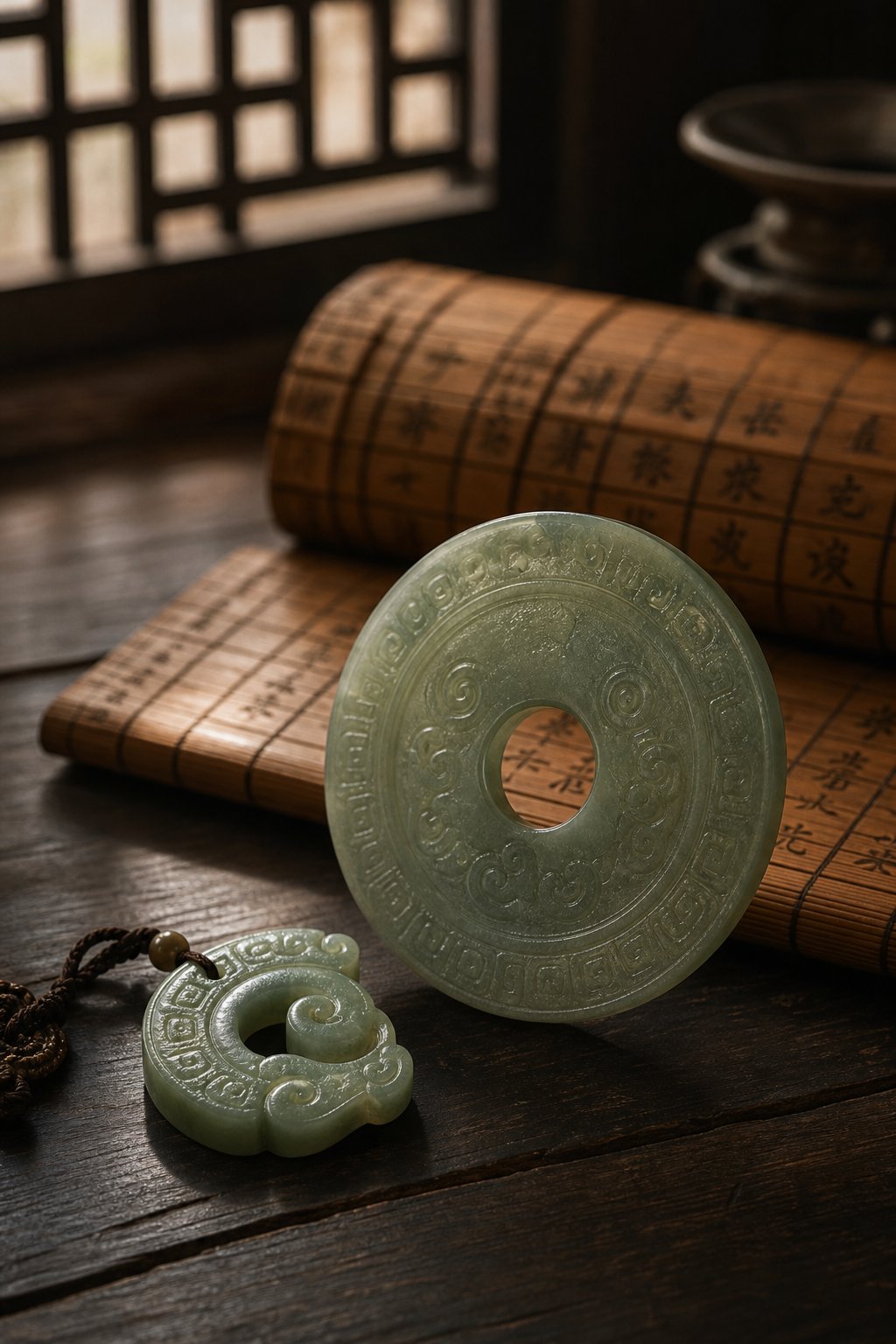
Zhou-era names of chinese male figures drew heavily from characters associated with jade (玉, yu), moral cultivation, and ritual mastery. Jade wasn't merely decorative. It symbolized the five Confucian virtues: benevolence, righteousness, wisdom, courage, and purity. Parents who embedded jade-related characters into their son's name were encoding an entire ethical program into a single stroke pattern.
Han Dynasty Names Reflecting Confucian Ideals
When the Han dynasty (206 BC - AD 220) established Confucianism as state orthodoxy, naming became even more explicitly tied to moral philosophy. Common chinese names for boys during this period read like a catalog of Confucian virtues: 忠 (Zhong, loyalty), 仁 (Ren, benevolence), 义 (Yi, righteousness), 信 (Xin, trustworthiness), and 礼 (Li, ritual propriety). Parents weren't just hoping their sons would embody these qualities. They believed the name itself could cultivate them.
Characters related to scholarly pursuits also dominated Han-era chinese names male. The empire's civil examination system rewarded literary achievement, so names incorporating 文 (wen, literature), 学 (xue, learning), and 书 (shu, books) signaled a family's aspirations for their son's career path. A boy named 文德 (Wende, "literary virtue") carried both his family's intellectual ambitions and their moral expectations in just two characters.
| Name (Chinese Characters) | Pinyin with Tone Marks | Meaning | Dynasty | Notable Historical Figure |
|---|---|---|---|---|
| 忠 (Zhōng) | Zhōng | Loyalty, devotion | Zhou / Han | 关羽 (Guan Yu), epitome of loyalty |
| 仁 (Rén) | Rén | Benevolence, humaneness | Zhou / Han | Core virtue taught by Kong Zi |
| 义 (Yì) | Yì | Righteousness, justice | Zhou / Han | 刘义隆 (Liu Yilong), Song emperor |
| 信 (Xìn) | Xìn | Trustworthiness, faith | Han | 韩信 (Han Xin), legendary general |
| 德 (Dé) | Dé | Virtue, moral power | Zhou / Han | 刘玄德 (Liu Xuande), Liu Bei's zi |
| 瑜 (Yú) | Yú | Fine jade, flawless virtue | Han | 周瑜 (Zhou Yu), strategist of Wu |
| 文 (Wén) | Wén | Literature, culture, refinement | Zhou | 周文王 (King Wen of Zhou) |
| 怀瑾 (Huái Jǐn) | Huái Jǐn | Holding beautiful jade (inner virtue) | Zhou (Warring States) | 屈原 (Qu Yuan), poet of Chu |
You'll notice a pattern in this table. Jade characters like 瑜 and 瑾 appear alongside abstract virtue characters like 仁 and 义. This dual tradition, one drawing from the natural world and the other from moral philosophy, gave parents a rich palette for constructing meaningful names. A boy could be named for what he should become (virtuous) or what he already resembled (precious, luminous, enduring like jade).
These Zhou and Han naming conventions didn't vanish when those dynasties fell. They became the bedrock vocabulary that later eras built upon, especially when poetry and literary culture reached their peak during the Tang and Song dynasties.
Tang and Song Dynasty Names from Classical Poetry
Poetry wasn't just art in Tang and Song China. It was the raw material from which parents built their sons' identities. The Tang dynasty (618-907) and Song dynasty (960-1279) represent the golden age of literary naming, a period when choosing a boy's name meant selecting from the finest lines of verse, the deepest philosophical texts, and the most evocative images of the natural world. These traditional chinese names carry a richness that flat vocabulary lists can never capture.
Tang Dynasty Names Inspired by Poetry and Exploration
Tang dynasty parents had an extraordinary literary inheritance to draw from. The Book of Songs (Shijing), China's oldest poetry anthology compiled by Confucius himself, remained a primary source for naming. This collection of over 300 poems had shaped Chinese thought since antiquity, functioning not just as literature but as moral instruction, diplomatic code, and cultural memory. Parents mined its verses for characters that carried both sonic beauty and philosophical weight.
The I Ching (易经, Yijing) offered another deep well. Its language of transformation, cosmic balance, and celestial imagery gave rise to names like 乾 (Qian, "heaven" or "creative force") and 明哲 (Mingzhe, "bright wisdom"), the latter drawn from the Shijing verse 既明且哲 ("both brilliant and wise"). Tang-era poets themselves became naming inspirations. When Li Bai and Du Fu elevated the language of mountains, rivers, and xia celestial imagery to new heights, parents followed their lead, choosing characters that evoked the expansive Tang spirit of exploration and ambition.
The Tang was an era of confidence. The empire stretched across the Silk Road, and its capital Chang'an was the world's largest city. This cosmopolitan energy shaped chinese name meanings of the period. Characters like 远 (yuan, "far-reaching"), 飞 (fei, "to fly"), and 翔 (xiang, "to soar") appeared frequently, reflecting a culture that looked outward. Beautiful chinese names from this era often paired a nature image with an aspiration: 云飞 (Yunfei, "clouds in flight") or 天翔 (Tianxiang, "soaring through heaven").
Song Dynasty Names Drawn from Neo-Confucian Philosophy
The Song dynasty shifted the naming palette inward. Where Tang names reached for the horizon, Song names reached for moral clarity. This was the era of Neo-Confucianism, when philosophers like Zhu Xi (1130-1200) and the Cheng brothers built systematic frameworks around concepts of Pattern (理, li), humaneness (仁, ren), and the cultivation of virtue. Their intellectual vocabulary seeped directly into how families named their sons.
Neo-Confucian thought emphasized that human nature is fundamentally good, that wisdom comes through disciplined study and moral reflection, and that the heartmind (心, xin) must align with cosmic Pattern. These ideas produced chinese names with meaning rooted in intellectual aspiration rather than martial glory. Characters like 明 (ming, "bright/clear"), 理 (li, "pattern/principle"), 诚 (cheng, "sincerity"), and 道 (dao, "the Way") dominated Song-era naming.
The name in chinese meaning often carried a direct philosophical reference. 文山 (Wenshan, "literary mountain") belonged to the patriot-poet 文天祥 (Wen Tianxiang), whose courtesy name 天祥 itself means "heavenly auspiciousness." His name encoded both scholarly identity and cosmic blessing. Similarly, 明道 (Mingdao, "illuminating the Way") was the hao of the philosopher Cheng Hao, reflecting the Neo-Confucian mission to recover and clarify the moral Way that earlier generations had obscured.
| Name (Characters) | Pinyin | Meaning | Literary Source | Era |
|---|---|---|---|---|
| 明哲 (Mingzhe) | Ming Zhe | Bright wisdom, clear discernment | Book of Songs (Shijing), "Da Ya" section | Tang / Song |
| 天祥 (Tianxiang) | Tian Xiang | Heavenly auspiciousness / fragrance | I Ching cosmological imagery | Song |
| 文山 (Wenshan) | Wen Shan | Literary mountain, scholarly eminence | Neo-Confucian literary tradition | Song |
| 浩然 (Haoran) | Hao Ran | Vast and righteous spirit | Mencius: "flood-like qi" (浩然之气) | Tang |
| 思远 (Siyuan) | Si Yuan | Thinking far, deep contemplation | Book of Songs, "Zai Chi" poem | Tang / Song |
| 子瞻 (Zizhan) | Zi Zhan | One who gazes far ahead | Book of Songs, "Huang Niao" section | Song |
| 明道 (Mingdao) | Ming Dao | Illuminating the Way | Neo-Confucian philosophy (Cheng Hao) | Song |
| 云飞 (Yunfei) | Yun Fei | Clouds in flight | Liu Bang's "Great Wind Song" (大风歌) | Tang |
Notice how the Tang names in this table lean toward movement and grandeur, while Song names gravitate toward clarity and moral depth. 浩然 (Haoran) comes directly from Mencius's concept of the "flood-like qi," a vast moral energy that fills the space between heaven and earth. The Tang poet Meng Haoran carried this name, and it perfectly captured the era's appetite for expansive spirit. Meanwhile, 子瞻 (Zizhan), the courtesy name of the great Song polymath Su Shi (苏轼), draws from the Shijing's imagery of looking ahead with vision and purpose.
This literary naming tradition meant that educated families were essentially having a conversation with the classical canon every time they named a child. The name became a compressed citation, a signal to anyone who recognized the source that this family valued learning, moral seriousness, and cultural continuity. That same impulse toward systematic meaning would intensify further in the Ming and Qing dynasties, where naming became not just literary but structurally encoded through elemental cycles and generational poems.
Ming and Qing Dynasty Naming Traditions
The Ming dynasty (1368-1644) took the literary naming impulse of earlier eras and turned it into something almost scientific. Where Tang and Song parents chose names through poetic intuition, Ming families operated within rigid structural systems that dictated which mandarin characters a child's name could contain. The Qing dynasty (1644-1911) then layered Manchu customs on top of these Han Chinese traditions, creating the most complex naming landscape in imperial Chinese history.
Ming Dynasty Names and the Wuxing Element System
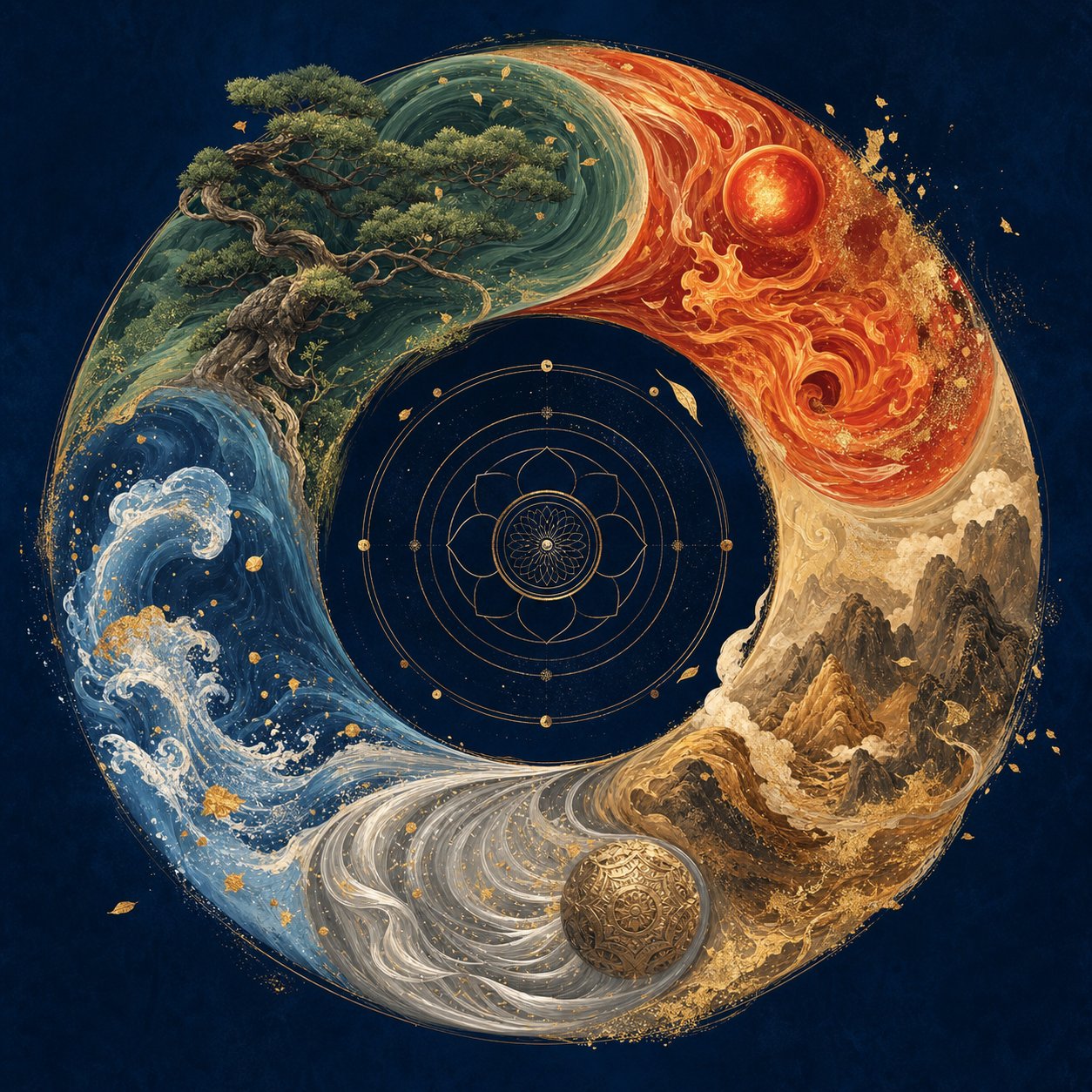
The Ming imperial family, the Zhu clan, developed a naming system so systematic it reads like an algorithm. Emperor Zhu Yuanzhang, the dynasty's founder, decreed that each generation of princes must use name characters containing a radical corresponding to one of the Five Elements (五行, Wuxing) in cyclical order: Wood, Fire, Earth, Metal, Water. The cycle then repeated, binding the imperial lineage to the cosmic rhythm of elemental transformation.
Sounds complex? Here's how it worked in practice. Zhu Yuanzhang's sons had names with the Wood radical (木). His grandsons' names contained the Fire radical (火). Great-grandsons used Earth (土), the next generation Metal (金), and the following generation Water (水). Then the cycle restarted with Wood. This meant that simply reading a prince's name told you exactly which generation he belonged to and where he sat in the cosmic sequence.
The system created a practical problem. Each generation needed enough characters with the correct elemental radical to name dozens of princes across multiple branches. Court scholars sometimes had to invent new characters, combining the required radical with auspicious components, just to supply enough options. The result was a set of rare mandarin characters that exist almost exclusively because of Ming imperial naming needs.
The Role of the Five Elements in Choosing Name Characters
Beyond the imperial family, the Wuxing system influenced naming across all social classes during the Ming period. Families consulted fortune-tellers who analyzed a child's birth time (八字, bazi, "eight characters") to determine which elements were strong or weak in their cosmic profile. A boy born with insufficient Water energy might receive a name containing the Water radical to restore balance. This practice connected naming directly to cosmological diagnosis.
| Element (Chinese) | Radical | Example Name Characters | Pinyin | Meaning |
|---|---|---|---|---|
| Wood (木, Mu) | 木 | 桢 / 楠 / 松 | Zhen / Nan / Song | Hardwood pillar / Cedarwood / Pine tree |
| Fire (火, Huo) | 火 | 炜 / 煜 / 焕 | Wei / Yu / Huan | Brilliant glow / Radiant light / Shining splendor |
| Earth (土, Tu) | 土 | 坤 / 培 / 城 | Kun / Pei / Cheng | Earth-force / Cultivate / Fortress |
| Metal (金, Jin) | 金 / 钅 | 铭 / 锐 / 鑫 | Ming / Rui / Xin | Inscription / Sharp-edged / Prosperous gold |
| Water (水, Shui) | 水 / 氵 | 海 / 浩 / 泽 | Hai / Hao / Ze | Ocean / Vast waters / Marshland grace |
This table shows how each element offered a family of radicals and characters to draw from. A name like 镇海 (Zhenhai, "calming the sea") combines the Metal radical (镇) with the Water radical (海), creating a name that suggests Metal's power to control Water, a direct application of Wuxing theory where Metal generates Water in the productive cycle. Similarly, 成龙 (Chenglong, "become dragon") and 国华 (Guohua, "national splendor") reflect the Ming-era appetite for names projecting strength and dynastic pride.
Qing Dynasty Generational Poems and Manchu Influence
The Qing dynasty introduced a fascinating cultural collision. The Manchu rulers, as the Smithsonian's National Museum of Asian Art explains, "selectively continued and adapted aspects of Chinese life they admired" while maintaining distinct Manchu customs. Naming was no exception. The Manchu ruling class originally used polysyllabic names without surnames in the Chinese sense, names like Nurhaci and Dorgon that followed entirely different phonetic patterns. But as the dynasty matured, Manchu elites increasingly adopted Han Chinese naming structures, especially the generational poem system.
Generation poems (辈分诗, beifen shi) represent one of the most elegant naming innovations in Chinese history. A clan would compose a poem, typically in lines of five or seven characters, and each character in sequence became the shared generation character for all males born in that generation. Brothers and cousins carried the same generation character in their names, making family relationships immediately visible. The remaining character was unique to the individual.
Imagine a generation poem reading: 仁义礼智信 (ren yi li zhi xin, "benevolence, righteousness, ritual, wisdom, trust"). The first generation of sons all have 仁 in their names. Their sons all share 义. The grandsons share 礼. This system could map out naming for twenty or more generations in advance, creating a living poem that unfolded across centuries. Even today, many families in southern China and overseas Chinese communities still follow their clan's generation poem when naming children.
The Qing imperial family itself used a generation character system for its Chinese-style names. The Kangxi Emperor assigned the character 胤 (yin) to his sons' generation, 弘 (hong) to his grandsons, and so on. These characters weren't random. They were chosen to convey the values the emperor wished each generation to embody. Understanding chinese last names and meanings becomes richer when you recognize that surnames like Aisin Gioro (the Qing imperial clan name) functioned differently from the most common chinese last names of Han Chinese families. While Han surnames like 王 (Wang), 李 (Li), and 张 (Zhang) are single characters passed patrilineally, Manchu clan names were multi-syllabic and carried tribal rather than familial significance.
This blending of traditions meant that Qing-era naming operated on parallel tracks. Han Chinese families continued using generation poems, Wuxing balancing, and literary allusion. Manchu families gradually adopted these practices while retaining elements of their own heritage. The result was the richest and most varied naming culture in Chinese history, one where chinese last name meanings could trace back to ancient tribal affiliations, geographic origins, or imperial grants depending on whether the family was Han, Manchu, Mongol, or from another of the empire's many ethnic groups.
Among the most common chinese surnames, families like the Kong clan (descendants of Confucius) maintained generation poems stretching back to the Ming dynasty, with characters assigned by imperial decree. Their poem has guided naming for over thirty generations, making it one of the longest continuously used naming systems in human history. This level of structural intentionality shows how far naming had evolved from the intuitive, poetry-driven choices of the Tang and Song. Yet beneath all the systems and cycles, the core impulse remained the same: encoding meaning, identity, and aspiration into the characters a boy would carry for life.
These structural frameworks, the Wuxing cycle, the generation poems, the elemental balancing, operated within a broader philosophical landscape. Confucianism, Taoism, and Buddhism each contributed distinct character vocabularies and naming logics that cut across all dynasties, shaping not just which names were chosen but why certain characters carried spiritual weight in the first place.
Philosophy and Taboos Behind Ancient Name Choices
Every ancient chinese characters chosen for a boy's name carried the weight of an entire belief system. Confucianism, Taoism, and Buddhism each offered distinct vocabularies for expressing what a child should become, what forces should protect him, and how his identity should relate to the cosmos. These weren't competing systems so much as overlapping layers. A single name could draw from all three traditions simultaneously, encoding virtue, natural harmony, and spiritual aspiration into one or two brushstrokes.
Confucian Virtues Encoded in Name Characters
Confucianism dominated official culture for over two thousand years, and its moral vocabulary became the default language of naming. The Five Constants (五常, wuchang) provided a ready-made menu of name chinese characters that parents returned to generation after generation. These weren't abstract ideals. They were specific characters with specific structural components, each one a miniature philosophical statement.
Consider 德 (de, "virtue"). This character combines the 彳 radical (meaning "footstep" or "to go"), 直 ("straight"), and 心 ("heart"). Read structurally, it suggests a heart that walks straight, a person whose inner nature aligns with correct action. The linguist Peter Boodberg called de "perhaps the most significant word, next to dao, in ancient Chinese macro- and microcosmology." When parents named a boy 德明 (Deming, "bright virtue") or 德远 (Deyuan, "far-reaching virtue"), they were invoking this entire philosophical architecture.
The core Confucian character categories for naming included:
- Virtue characters: 德 (de, virtue), 仁 (ren, benevolence), 义 (yi, righteousness), 礼 (li, ritual propriety), 智 (zhi, wisdom)
- Scholarly characters: 文 (wen, literature/culture), 学 (xue, learning), 士 (shi, scholar-official), 书 (shu, books/writing)
- Filial characters: 孝 (xiao, filial piety), 忠 (zhong, loyalty), 信 (xin, trustworthiness)
The xiao meaning of "filial piety" made it one of the most emotionally charged name characters available. The character 孝 combines 老 ("old") on top with 子 ("child") below, visually depicting a child supporting an elder. A boy named 孝先 (Xiaoxian, "filial first") carried a daily reminder of his primary duty.
Taoist Nature Names and the Way
Where Confucianism looked inward toward social duty, Taoism looked outward toward the natural world. Taoist naming drew from landscapes, weather, celestial bodies, and the rhythms of seasons. These names suggested that a boy's true nature was not something to be cultivated through effort but something already present, waiting to be recognized.
Common Taoist-influenced character categories included:
- Nature characters: 山 (shan, mountain), 海 (hai, ocean), 云 (yun, cloud), 风 (feng, wind)
- Celestial characters: 天 (tian, heaven), 日 (ri, sun), 星 (xing, star), 龙 (long, dragon)
- Flow characters: 道 (dao, the Way), 玄 (xuan, mysterious/dark), 清 (qing, clear/pure), 虚 (xu, emptiness)
A chinese name related to luck often drew from this Taoist vocabulary. Characters like 福 (fu, "fortune") and 祥 (xiang, "auspiciousness") carried deep auspicious meaning rooted in the belief that naming could attract cosmic favor. The concept of the chinese lucky star, 福星 (fuxing), connected celestial imagery directly to earthly blessing, and parents who named a boy 星辉 (Xinghui, "starlight") or 天佑 (Tianyou, "heaven's protection") were tapping into this tradition of cosmic alignment.
Buddhist Influence on Later Dynasty Naming
Buddhism arrived in China during the Han dynasty but didn't deeply influence naming until the Tang and Song periods. Once it did, characters like 慧 (hui, "wisdom" in the Buddhist sense), 觉 (jue, "awakening"), 净 (jing, "purity"), and 禅 (chan, "meditation") entered the naming vocabulary. These characters carried different connotations than their Confucian counterparts. Buddhist 慧 implied transcendent insight rather than scholarly knowledge. Buddhist 净 suggested liberation from attachment rather than moral cleanliness.
The three traditions together gave parents an enormous palette of chinese symbols and meanings to work with. A family might choose 慧明 (Huiming, "wisdom and brightness") to blend Buddhist and Confucian resonances, or 云道 (Yundao, "cloud path") to merge Taoist nature imagery with spiritual seeking.
The Jade Radical and Noble Name Characters
One structural element deserves special attention: the jade radical 玉 (yu). In ancient China, jade symbolized the five Confucian virtues simultaneously, making it the single most concentrated symbol of moral excellence. The jade radical appears in 473 characters in the Kangxi Dictionary, many of which became prized name characters.
When the jade radical appears on the left side of a character, it takes the form 王 (four strokes, resembling the "king" radical). This visual similarity wasn't accidental to ancient minds. Jade and kingship were intertwined concepts. Characters built with the jade radical include 瑜 (yu, "fine jade"), 瑾 (jin, "beautiful jade"), 琪 (qi, "rare jade"), and 璋 (zhang, "jade tablet"). Each one carried associations of purity, durability, and inner luminosity. When the poet Qu Yuan wrote of "holding beautiful jade" (怀瑾握瑜) as a metaphor for maintaining virtue in a corrupt world, he cemented jade-radical characters as the ultimate noble naming choice.
Naming Taboos That Reshaped the Language
All of these philosophical naming traditions operated under one powerful constraint: bihui (避讳), the practice of tabooing names. The names of emperors, ancestors, officials, teachers, and even friends were all considered taboo. It was prohibited to pronounce them or record them in writing. In many cases, characters that were merely similar in writing or pronunciation were avoided as well.
The consequences of violating bihui were severe. In 1775, the scholar Wang Xihou compiled a dictionary and accidentally wrote the personal names of Confucius and three Qing emperors in his introduction. Emperor Qianlong condemned this as "rebellion and high treason." Wang Xihou was executed, his property confiscated, his books burned, and his sons and grandsons were killed or enslaved. This wasn't an isolated case. Entire careers ended, families were punished, and people even refused official positions because the office title contained a taboo character.
Here's the paradox: bihui actually enriched the naming vocabulary over centuries. Every time an emperor ascended the throne, his personal name character became off-limits for the entire population. Families who had planned to use that character needed alternatives. Scholars developed synonyms, variant forms, and creative workarounds. A character banned in one dynasty might be replaced by a rarer, more elegant alternative that then entered common naming use. The constant pressure to avoid certain characters pushed families toward greater linguistic creativity, expanding the pool of name chinese characters rather than shrinking it.
The tabooing of names had an enormous impact on Chinese culture. It was crucial for implementing social values and demonstrating the political hierarchy.
This interplay between philosophy and prohibition created the naming landscape that ancient Chinese families navigated. Confucian virtue, Taoist nature imagery, Buddhist transcendence, jade symbolism, and the ever-shifting boundaries of taboo all converged on the same question: which characters, from the thousands available, best captured what this child should carry into the world? The answer depended not just on meaning but on category, on whether a family wanted to signal strength, wisdom, fortune, or cosmic connection through their choice.
Ancient Chinese Boy Names Organized by Meaning
Philosophy, taboo, and elemental theory shaped which characters were available. But when a family sat down to choose a name, they started with a simpler question: what quality do we want this child to embody? Strength? Wisdom? Fortune? A connection to the natural world? The answer determined which corner of the vast character library they explored.
Below you'll find a curated collection of chinese boy names and meanings drawn from across dynastic history, organized into four thematic categories. Each entry includes original Chinese characters, pinyin with tones, English meaning, and the historical era that popularized it. Think of this as a reference you can return to, whether you're researching heritage names, writing historical fiction, or simply exploring the depth of names in chinese and meanings.
Names Meaning Strength and Courage
Powerful chinese male names in this category draw from military valor, physical endurance, and moral fortitude. These weren't reserved for soldiers. A scholar-official named for courage was expected to show bravery in speaking truth to power, not just on the battlefield. Many of these masculine chinese names pair a force-of-nature image (thunder, iron, mountain) with a character suggesting purposeful action.
| Chinese Characters | Pinyin (with tones) | English Meaning | Thematic Category | Dynasty of Origin |
|---|---|---|---|---|
| 俊威 | Jun Wei | Noble and mighty | Strength / Authority | Han / Tang |
| 浩然 | Hao Ran | Vast and righteous (from Mencius's "flood-like qi") | Moral Fortitude | Tang |
| 震宇 | Zhen Yu | Shakes the universe | Cosmic Power | Ming |
| 刚毅 | Gang Yi | Firm and resolute | Inner Strength | Han / Song |
| 卫疆 | Wei Jiang | Guards the borders | Military Valor | Han / Ming |
| 铁峰 | Tie Feng | Iron peak | Unyielding Strength | Song / Ming |
| 武岳 | Wu Yue | Martial mountain | Physical Power | Tang / Song |
| 雷震 | Lei Zhen | Thunderclap | Explosive Force | Zhou / Han |
You'll notice that chinese warrior names from ancient China rarely sound aggressive in isolation. A name like 卫疆 (Wei Jiang, "guards the borders") frames strength as protective duty rather than conquest. Even 震宇 (Zhen Yu, "shakes the universe") implies awe-inspiring presence rather than violence. This reflects the Confucian ideal that true courage is moral, not merely physical. The general Yue Fei (岳飞), whose name means "mountain in flight," embodied this principle: fierce in battle, but remembered for loyalty and righteousness above all.
Names Meaning Wisdom and Learning
In a civilization where the civil examination system could elevate a farmer's son to prime minister, names encoding intellectual aspiration carried enormous social weight. These boy names with meaning rooted in scholarship signaled a family's commitment to education and their hope that a son would achieve through learning what others achieved through birth.
| Chinese Characters | Pinyin (with tones) | English Meaning | Thematic Category | Dynasty of Origin |
|---|---|---|---|---|
| 志远 | Zhi Yuan | Ambitious and far-reaching | Aspiration / Vision | Han / Song |
| 睿哲 | Rui Zhe | Perceptive philosopher | Deep Wisdom | Song |
| 博文 | Bo Wen | Broadly learned, extensively cultured | Scholarly Breadth | Tang / Song |
| 明哲 | Ming Zhe | Bright wisdom, clear discernment | Intellectual Clarity | Tang (from Shijing) |
| 思齐 | Si Qi | Aspires to equal the virtuous | Moral Learning | Zhou (from Analerta) |
| 致远 | Zhi Yuan | Achieves far-reaching goals through calm focus | Purposeful Study | Han / Song |
| 文韬 | Wen Tao | Literary strategy, brilliant tactical mind | Strategic Wisdom | Tang / Ming |
| 怀瑾 | Huai Jin | Holds beautiful jade (inner virtue and talent) | Hidden Excellence | Zhou (Warring States) |
The name 致远 (Zhi Yuan) comes from one of the most quoted lines in Chinese intellectual history: "非淡泊无以明志, 非宁静无以致远" ("Without tranquility, one cannot clarify purpose; without stillness, one cannot reach far"). Attributed to Zhuge Liang's letter to his son, this phrase made 致远 a perennial favorite among families who valued quiet determination over flashy ambition. It remains one of the most enduring unique boy names with meaning that transcends any single era.
Names Meaning Prosperity and Good Fortune
Not every family reached for philosophical abstraction. Many parents chose names that directly invoked material blessing, dynastic glory, or cosmic favor. These names were especially popular during periods of instability, when families hoped that an auspicious name might attract the protection that uncertain times demanded.
| Chinese Characters | Pinyin (with tones) | English Meaning | Thematic Category | Dynasty of Origin |
|---|---|---|---|---|
| 国华 | Guo Hua | National splendor | Dynastic Glory | Ming / Qing |
| 鸿煊 | Hong Xuan | Grand and brilliant | Radiant Fortune | Tang / Song |
| 瑞祥 | Rui Xiang | Auspicious omen | Cosmic Blessing | Song / Ming |
| 承龙 | Cheng Long | Inherits the dragon (become dragon) | Imperial Fortune | Ming / Qing |
| 兴邦 | Xing Bang | Revives the nation | Collective Prosperity | Song / Ming |
| 锦程 | Jin Cheng | Brocade journey (splendid future) | Life Path Fortune | Tang / Song |
| 泽民 | Ze Min | Grace that benefits the people | Benevolent Prosperity | Han / Tang |
| 永昌 | Yong Chang | Eternal flourishing | Enduring Fortune | Han / Ming |
A name like 承龙 (Cheng Long) carries layers of meaning. The dragon (龙) was the supreme symbol of imperial power and cosmic vitality, while 承 ("to inherit" or "to carry forward") suggests continuity and worthiness. Together they express the hope that a boy will rise to greatness, carrying forward the family's legacy like a dragon ascending through clouds. Chinese masculine names in this prosperity category often balanced personal ambition with collective benefit. 泽民 (Ze Min, "grace that benefits the people") and 兴邦 (Xing Bang, "revives the nation") frame individual success as inseparable from communal flourishing.
Names Inspired by Nature and the Cosmos
The Taoist tradition of finding meaning in mountains, rivers, stars, and seasons produced some of the most poetic names in Chinese history. These names position a boy within the natural order rather than above it, suggesting that his character should mirror the qualities of the landscape: enduring like stone, adaptable like water, luminous like starlight.
| Chinese Characters | Pinyin (with tones) | English Meaning | Thematic Category | Dynasty of Origin |
|---|---|---|---|---|
| 龙飞 | Long Fei | Dragon in flight | Celestial Power | Han / Tang |
| 天翊 | Tian Yi | Sky's wing, divine assistance | Heavenly Aspiration | Tang |
| 峻峰 | Jun Feng | Lofty peak | Mountain Imagery | Song / Ming |
| 云飞 | Yun Fei | Clouds in flight | Sky / Freedom | Han / Tang |
| 沧海 | Cang Hai | Vast sea | Ocean Depth | Tang / Song |
| 星野 | Xing Ye | Starfield, expansive field of stars | Cosmic Imagery | Tang |
| 凌霄 | Ling Xiao | Reaches the clouds, soars to the sky | Transcendence | Song / Ming |
| 松柏 | Song Bai | Pine and cypress (evergreen integrity) | Endurance / Nature | Zhou / Han |
龙飞 (Long Fei, "dragon in flight") is one of the most iconic nature-cosmic names in Chinese tradition. The dragon wasn't merely a mythical beast. It represented the yang force of the universe, the energy of spring thunderstorms, and the legitimate power of heaven's mandate. A boy named Longfei carried all of these associations. Similarly, 松柏 (Song Bai, "pine and cypress") referenced the Analects passage where Confucius observed that only in winter do you see that pine and cypress are the last to lose their leaves, a metaphor for integrity under pressure that made evergreen trees a permanent fixture in the naming vocabulary.
These four categories aren't rigid boundaries. Many names bridge multiple themes. 浩然 (Haoran) appears under strength because of its connection to Mencius's concept of moral courage, but it could equally sit among nature names for its imagery of vast, flood-like energy. The best ancient names work precisely because they compress multiple layers of meaning into a single pairing of characters, giving the bearer a name that grows richer the more deeply you understand it.
What separates these historical names from their modern counterparts isn't just age. It's structural complexity, literary depth, and the weight of philosophical tradition behind each character choice. That distinction matters for anyone considering whether an ancient name still fits in the contemporary world.
How Ancient Names Differ from Modern Chinese Names
Structural complexity and literary weight aren't just abstract qualities. They produce names that look, sound, and function differently from what you'll find on a modern Chinese birth certificate. If you've browsed lists of popular chinese names from recent decades, you've probably noticed they feel lighter, softer, and more immediately accessible than the names in the tables above. That difference isn't accidental. It reflects a fundamental shift in what naming is designed to accomplish.
Character Choices Then vs Now
Ancient naming drew from a vocabulary shaped by classical texts, philosophical systems, and imperial culture. Characters like 忠 (zhong, loyalty), 义 (yi, righteousness), and 瑾 (jin, beautiful jade) dominated because they encoded moral expectations. A name was a statement of values, not a sound preference.
Modern chinese first names operate differently. Research covering 1.2 billion Han Chinese individuals born between 1930 and 2008 shows that popular characters have shifted toward warmth over competence. Characters from the pre-1960s and 1960s scored higher in competence, while characters from the 1970s onward scored much higher in warmth. The most common chinese names today favor characters like 宇 (yu, universe), 轩 (xuan, lofty), and 泽 (ze, grace), which feel expansive and gentle rather than morally demanding.
Common chinese boy names in recent years also reflect international considerations. Parents increasingly choose characters that produce pinyin spellings easy for non-Chinese speakers to pronounce. A typical chinese names list from the 2020s includes names like 子墨 (Zimo) and 奕辰 (Yichen), names that sound pleasant across languages. Compare that to ancient names like 怀瑾 (Huaijin, "holding beautiful jade") or 卫疆 (Weijiang, "guards the borders"), which prioritized meaning density over phonetic accessibility.
Structural Differences in Ancient and Modern Names
Beyond character selection, the entire architecture of naming has changed. Ancient naming was a multi-stage, multi-name system embedded in ceremony and social hierarchy. Modern naming is a single act performed at birth registration.
| Dimension | Ancient Chinese Naming | Modern Chinese Naming |
|---|---|---|
| Character Complexity | Rare, literary characters with high stroke counts (瑾, 韬, 璋) | Common, visually balanced characters preferred for legibility |
| Literary References | Names drawn directly from classical poetry, the I Ching, or Confucian texts | Aesthetic sound and visual appeal often outweigh textual sourcing |
| Naming Ceremony | Multiple ceremonies: birth naming, capping ceremony at 20, self-chosen hao | Single naming at birth; no formal courtesy name tradition |
| Names Per Person | Three or more (ming, zi, hao, plus possible posthumous names) | One legal given name; sometimes an English name for international use |
| Generational Markers | Shared generation character from clan poem or Wuxing cycle | Rarely used; most families no longer follow generation poems |
| Cultural Influences | Confucianism, Taoism, Buddhism, imperial decree, Five Elements theory | Pop culture, internet trends, global aesthetics, celebrity names |
One striking shift involves the one-child policy era. During the 1980s, single-character given names peaked because parents no longer needed a shared generation character to distinguish siblings. But this created a problem: too many people shared the same common chinese name. The term "market names" (菜市场名) emerged to describe names so popular that calling one out in a crowded space would turn multiple heads. Two-character names returned after the 1980s partly to reduce this duplication.
The most popular chinese male names of recent decades, names like 俊杰 (Junjie, "handsome and outstanding") and 浩宇 (Haoyu, "vast universe"), still carry meaning. But they tend toward broad positivity rather than specific philosophical commitment. An ancient name like 思齐 (Siqi, "aspires to equal the virtuous") points to a precise passage in the Analects. A modern name like 浩宇 gestures at grandeur without anchoring itself in any particular text.
Here's what's interesting: this gap is narrowing. As recent reporting on Chinese naming trends shows, post-1990s parents are increasingly turning back to classical sources. Names like 砚舟 (Yanzhou), drawn from a Northern Song dynasty poem by Zeng Gong, and 扶苏 (Fusu), from the Book of Songs and the name of Emperor Qin Shihuang's eldest son, have appeared on newborn name lists across multiple provinces. Cultural sociologist Xu Shumin describes this as young parents "reclaiming traditional Chinese culture as a living aesthetic in everyday life," comparing it to the Hanfu revival movement.
For readers unfamiliar with Mandarin pronunciation, a quick note on tones will help you read the pinyin in this guide. Mandarin has four tones: first tone (high and flat, like "ma" meaning mother), second tone (rising, like asking a question), third tone (dipping then rising), and fourth tone (sharp and falling). The same syllable pronounced with different tones becomes an entirely different character with a different meaning. This is why pinyin alone can't capture a name's full identity. The characters themselves are essential, and why this guide includes them alongside every name.
This revival of ancient naming elements suggests that the distinction between "ancient" and "modern" is becoming less binary. Parents today aren't recreating the full multi-name system or consulting the Wuxing cycle at birth. But they are reaching back into classical texts for characters that carry more weight than trending alternatives. The question for anyone drawn to these historical names is how to use them thoughtfully, with awareness of their cultural context and the traditions they carry.
Using Ancient Chinese Boy Names Respectfully Today
Reaching back into classical texts is one thing. Carrying an ancient name into the modern world, whether for a child, a fictional character, or a cultural project, requires a different kind of care. These names belong to living traditions with real communities behind them. Using them well means understanding not just what they mean but what they represent to the people who inherited them.
Cultural Considerations for Non-Chinese Families
If you're exploring asian names for boys from outside the Chinese cultural tradition, the most important step is also the simplest: learn the name's full story before committing to it. A character that looks beautiful on paper might carry associations you didn't anticipate. Some names reference specific historical figures so strongly that using them feels like naming a child "Napoleon" or "Caesar." Others contain characters reserved for imperial use that can sound presumptuous in certain contexts.
Chinese names for men historically operated within a web of social meaning that extended far beyond the individual. A name signaled family status, philosophical allegiance, generational position, and regional identity simultaneously. Stripping a name from that context and using it purely for its sound or aesthetic risks flattening something rich into something decorative.
That said, appreciation and respectful adoption aren't the same as appropriation. Many Chinese families welcome cross-cultural interest in their naming traditions, especially when it comes with genuine understanding. The key is doing the work rather than skimming the surface.
Here's a practical checklist before choosing or using a historical Chinese name:
- Research the name's full historical context, including which dynasty popularized it and whether it's associated with a specific figure
- Consult a native Mandarin speaker to confirm pronunciation and tonal accuracy
- Check that the character combination doesn't produce unintended meanings or homophones with negative connotations
- Verify that the name isn't strongly tied to a single famous person in a way that might feel odd or disrespectful
- Understand whether the characters carry gendered expectations that align with your intent
- Consider how the name will function in daily life across different language environments
As one account of choosing a Chinese name in Taiwan illustrates, even fluent speakers can accidentally land on combinations that sound like unrelated words. The author nearly named himself something phonetically identical to "euthanasia" before a friend caught the error. Character combinations that look fine individually can produce unfortunate homophones when spoken aloud, a risk that only native speakers can reliably catch.
Tips for Heritage Naming and Honoring Ancestry
For families with Chinese heritage looking to honor their lineage through naming, the path is different but equally thoughtful. If your family maintained a generation poem (辈分诗), using the correct generation character connects a child to centuries of family history. Even if the poem has been lost, older relatives or clan records may preserve it.
Chinese baby names drawn from ancestral traditions carry weight precisely because they're not arbitrary. A boy named with his generation character joins a chain of meaning stretching back through dozens of predecessors. If you're reconnecting with this practice after a generational gap, consider:
- Contacting extended family or clan associations who may have preserved naming records
- Researching your surname's historical origins and common pairings from your ancestral region
- Balancing traditional elements with practical considerations for the child's daily environment
- Pairing a heritage given name with a common surname for authenticity, using established combinations like those found in historical records from your family's province of origin
Chinese men names from the classical period pair naturally with the most common Chinese surnames: Wang (王), Li (李), Zhang (张), Liu (刘), and Chen (陈). These five surnames alone cover hundreds of millions of people. If you're constructing an authentic-sounding full name, pairing a historically appropriate given name with one of these surnames produces something that reads as natural rather than invented.
Pronunciation Guide and Choosing a Name That Travels Well
One practical reality shapes every cross-cultural naming decision: will the people in this child's daily life be able to say the name? Mandarin's four tones mean that a name perfectly clear in Beijing can become unrecognizable when filtered through English phonetics. Some chinese names for boys travel across languages more easily than others.
Names with sounds that map cleanly onto English phonology tend to cause fewer daily frustrations. Syllables like "ming," "kai," "jun," and "wei" are relatively intuitive for English speakers. Names beginning with "x" (pronounced like "sh" with the tongue forward), "q" (like "ch" with the tongue forward), or "zh" (like "j" with the tongue pulled back) require more explanation.
For writers of historical fiction or game designers seeking period-appropriate asian boy names, authenticity means matching names to their correct era. A Tang dynasty character shouldn't carry a name popularized during the Qing. Use the dynasty-specific tables in earlier sections of this guide as a reference, and remember that the multi-name system (ming, zi, hao) was active throughout imperial history. A well-drawn historical character would have at least two names, used by different people in different contexts.
When pairing given names with surnames for fictional characters, avoid combinations that belong to famous historical figures unless you intend the reference. Naming a character 诸葛亮 (Zhuge Liang) is like naming an English character "William Shakespeare." Instead, take a historically appropriate given name and pair it with a common surname from the correct period and region. The result will feel authentic without accidentally invoking someone specific.
Whether you're choosing a chinese baby name rooted in heritage, selecting a name for a creative project, or simply deepening your understanding of how naming worked across Chinese history, the same principle applies: these names carry more than meaning. They carry relationships, obligations, and worldviews. Treating them with the seriousness they were given is itself a form of respect, one that honors the centuries of thought that went into every character choice.
Frequently Asked Questions About Ancient Chinese Boy Names
1. How did the ancient Chinese naming system work with multiple names?
Ancient Chinese men carried three or more names throughout life. The ming (birth name) was given by parents and used only within the family. The zi (courtesy name) was bestowed at age 20 during the capping ceremony and used by peers in public. The hao (literary name) was self-chosen in adulthood as a creative or philosophical alias. Each name served a distinct social function, and using someone's birth name without permission was considered deeply disrespectful.
2. What philosophical traditions influenced ancient Chinese boy names?
Three major traditions shaped naming across dynasties. Confucianism contributed virtue characters like ren (benevolence), yi (righteousness), and xiao (filial piety). Taoism inspired nature-based names using characters for mountains, clouds, wind, and celestial bodies. Buddhism added characters like hui (transcendent wisdom) and jue (awakening) from the Tang dynasty onward. Many names blended elements from all three traditions simultaneously.
3. What is the Five Elements (Wuxing) naming system used in the Ming dynasty?
The Ming imperial family required each generation's names to contain a radical corresponding to one of the Five Elements in cyclical order: Wood, Fire, Earth, Metal, and Water. A child's birth chart was analyzed to determine which elements were weak, and name characters with the corresponding radical were chosen to restore cosmic balance. This system spread beyond the imperial family and influenced naming across all social classes during the Ming period.
4. Can non-Chinese families use ancient Chinese boy names respectfully?
Yes, with proper research and cultural awareness. Key steps include learning the name's full historical context and dynasty of origin, consulting native Mandarin speakers for pronunciation accuracy, checking that character combinations don't produce unintended homophones or negative meanings, and understanding whether the name is strongly tied to a specific historical figure. Genuine understanding and effort distinguish respectful adoption from superficial borrowing.
5. Why are ancient Chinese names different from modern Chinese names?
Ancient names drew from classical texts and philosophical systems, using rare literary characters with high stroke counts to encode moral expectations. Modern names prioritize warmth, aesthetic sound, and international pronunciation compatibility. Structurally, ancient naming involved multiple ceremonies and three or more names per person, while modern naming is a single act at birth registration. However, recent trends show young Chinese parents returning to classical sources for naming inspiration.