Understanding Chinese Radicals and the Dog Zodiac Connection
Imagine picking a name that does more than sound pleasant. In Chinese naming tradition, every character carries hidden structural DNA called radicals (部首, bushou), and these tiny components can channel zodiac energy toward fortune or friction. If you're choosing chinese dog names for a pet or selecting a meaningful name for a baby born in a Dog zodiac year, understanding radicals is the first step toward getting it right.
What Are Chinese Name Radicals
A radical is the core building block of a Chinese character. Think of it as a root element that signals meaning, much like Latin roots do in English. The character 忠 (zhong, meaning loyalty) contains the radical 心 (heart) at its base, telling you the word relates to emotion or inner character. There are roughly 214 traditional radicals, and each one belongs to a semantic category: water, fire, wood, people, shelter, and so on.
As Khanji School explains, radicals help identify the meaning of characters and can be positioned at the top, bottom, left, right, or center of a character. When you're learning how to say dog in chinese, you'll encounter the character 狗 (gou), which contains the radical 犭, a compressed form of 犬 (quan, meaning canine). That radical immediately tells a reader the character relates to animals. In naming, the radical you embed in a character quietly broadcasts symbolic intent to anyone who reads it.
Why Radicals Matter for Dog Zodiac Naming
Chinese astrology assigns each zodiac animal a set of traits, elemental associations, and environmental preferences. The Dog (the chinese for dog in zodiac context is 狗 or the more formal 戌) is a domestic creature that thrives on human connection, shelter, and purpose. Radicals that echo these themes are considered to have strong zodiac affinity, meaning they resonate with the Dog's core nature and amplify positive fortune.
Auspicious naming, then, is the practice of deliberately selecting characters whose radicals align with the zodiac animal's symbolic needs. A name built on compatible radicals is believed to strengthen the bearer's luck, health, and relationships throughout life.
The Dog is a domestic, loyal animal. The best chinese name radicals for dog zodiac signs should reinforce three pillars: shelter (a sense of home), companionship (human bonds), and loyalty (emotional depth and faithfulness).
Pet Dogs vs Human Dog-Year Babies
This guide serves two audiences. First, parents naming children born in Dog zodiac years (such as 2018 or 2030) who want names carrying auspicious radical energy. Second, pet owners searching for chinese pet names or chinese names for dogs that honor traditional naming principles while sounding charming in everyday life.
The radical logic applies equally to both cases. Whether you're browsing pet names in chinese for a new Shih Tzu puppy or crafting a formal given name for a newborn, the same zodiac-radical framework guides your choices. The difference lies mainly in formality: human names typically use two or three characters with careful tonal balance, while pet names can be playful single-character or doubled-syllable creations. Dog in mandarin is 狗 (gou), but the naming radicals you'll select go far beyond that single character into a rich system of symbolic pairing.
With these foundations in place, the real question becomes which radicals carry the strongest auspicious charge for the Dog sign, and why certain ones outperform others by a wide margin.
Cultural Logic Behind Auspicious Dog Zodiac Radicals
Why do certain radicals carry more weight for the Dog zodiac than others? The answer lies in centuries of observation. Ancient Chinese naming masters studied the behavioral nature of dogs, their relationship with humans, and their environmental needs, then mapped those observations onto the structural components of written characters. The result is a symbolic logic system where each radical either supports or undermines the Dog's innate energy.
The Dog as a Domestic Guardian in Chinese Culture
Among the twelve zodiac animals, the Dog holds a unique position. It is not wild like the Tiger, nor independent like the Dragon. The Dog (犬, quan) is fundamentally a domestic creature, one that finds its highest purpose through partnership with people. In Chinese culture, dogs have long symbolized vigilance, loyalty, and guardianship of the home.
This domestic identity shapes everything about radical selection. A dog that roams mountains faces danger. A dog without a master lacks direction. A dog exposed to the elements suffers. These aren't just poetic metaphors. According to Master Jo Ching of DestinyAsia Global Consultancy, dogs enjoy staying at home and feel protected with a roof or shelter overhead. Characters containing shapes associated with enclosure or covering signal stability in career, supportive relationships, and a smooth-sailing life for Dog zodiac individuals.
People born in Dog years are generally described as friendly, helpful, and kind, yet also observant and cautious about how they present themselves. They possess innate resilience and diligence, often overcoming early-life challenges to achieve strong accomplishments by middle age. These personality traits directly inform which radicals will amplify positive outcomes.
How Symbolic Logic Drives Radical Choices
The reasoning follows a clear pattern: identify what the Dog needs to thrive, then find radicals that symbolically provide it. Consider a few core needs:
A dog needs shelter. The radical 宀 (mian, meaning roof or home) places a protective covering over the character, signaling belonging and security. Characters like 安 (peace), 宇 (universe/home), and 容 (tolerance) all carry this radical, and each reinforces the Dog's need for a stable base.
A dog needs a master. The radical 亻 (ren, the person radical) represents human connection. Since dogs are considered man's most trusted friend, embedding this radical in a name implies loyalty and mutual support. Characters like 伶 (clever), 佳 (excellent), and 仕 (official) contain 亻 and suggest a person who attracts helpful relationships.
A dog needs nourishment. The radical 心 or its compressed form 忄 (xin, heart) relates to flesh and emotion in the Chinese character system. Dogs are carnivores, so heart-related radicals symbolize both emotional depth and material sustenance. As Master Jo Ching notes, characters with the heart or moon (月) radical suggest the person will receive help from others throughout life.
A dog benefits from adornment. The radical 衤 (yi, clothing) implies the dog is "dressed up," which in symbolic terms leads to a rise in social status. Characters containing 衤 or related cloth radicals like 糸 signal refinement and recognition.
Connecting Dog Traits to Radical Meaning
When you understand chinese dog zodiac compatibility at the radical level, you'll notice the system rewards alignment between personality and symbol. The Dog's core traits map neatly onto specific radicals:
- 宀 (roof/home) = shelter and belonging. Reinforces the Dog's domestic nature and need for stability.
- 亻 (person) = human bond and loyalty. Reflects the Dog's identity as a faithful companion and team player.
- 心/忄 (heart) = emotional depth and faithfulness. Supports the Dog's capacity for deep connection and sincerity.
- 衤 (clothing) = protection and status. Elevates the Dog's social standing and signals being cared for.
This isn't random symbolism. Each pairing follows the principle that a name should accentuate the positive attributes of the zodiac sign because, as traditional practitioners explain, there is a resonance of energy between the zodiac animal and the way each character was scripted and evolved from ancient Chinese oracle bones.
Dog chinese zodiac compatibility with radicals works like a feedback loop. A well-chosen radical reinforces the Dog's strengths (loyalty, protectiveness, warmth), which in turn attracts circumstances that reward those traits. A poorly chosen radical, by contrast, can introduce conflicting energy that disrupts the Dog's natural harmony.
The practical takeaway is straightforward: prioritize radicals that give the Dog what it needs symbolically. Shelter, companionship, emotional richness, and dignified presentation form the foundation. From here, the question shifts from why these radicals work to how strongly each one performs, which is where a tiered ranking system becomes essential for making confident decisions.

Ranked Radical Tiers: Best Chinese Name Radicals for Dog Zodiac
Not all auspicious radicals carry equal weight. Some deliver powerful zodiac resonance, while others offer a gentler supportive boost. Rather than handing you a flat, overwhelming list, a tiered ranking gives you a practical decision-making framework. You'll know exactly which radicals to prioritize when crafting a chinese name for dog zodiac individuals, whether for a newborn or a beloved pet.
Tier 1 Radicals with Strongest Auspicious Energy
These are the heavy hitters. Tier 1 radicals directly address the Dog's core symbolic needs: shelter, human connection, emotional depth, and dignified presentation. When choosing a dog chinese name, anchoring at least one character in a Tier 1 radical gives the name its strongest auspicious foundation.
According to traditional naming principles documented by Your Chinese Astrology, characters with the radicals 宀 and 冖 (house and family) bless the bearer with good family fortune and wealth. Characters with 亻, 人, and 入 (human) indicate loyalty to career, love, and prosperity. And characters containing 心, 忄, or 月 (heart/flesh) ensure the person lives happily without worry, attracting support from others throughout life.
Tier 2 Generally Favorable Radicals
Tier 2 radicals don't address the Dog's primary needs as directly, but they complement the Dog's personality traits in meaningful ways. A chinese name dog owners or parents choose can benefit from pairing a Tier 1 radical with one of these supporting elements.
The logic here is subtler. Dogs are lovable when small, so the radical 小 (small) makes the bearer popular and well-doted by friends or a spouse. The radical 士 (scholar/warrior) implies dignity and the ability to command respect. And 少 (few/young) reinforces modesty, a trait the Dog zodiac naturally embodies. The radical 口 (mouth) connects to the Dog's voice and expression, though practitioners advise using it carefully. Avoid stacking multiple 口 radicals in one name, as this can symbolize excessive barking or disputes rather than confident communication.
| Tier | Radical | Pinyin | Meaning | Why It Benefits Dog Zodiac | Example Characters |
|---|---|---|---|---|---|
| Tier 1 (Strongest) | 宀 | mian | Roof / Home | Provides shelter and belonging; Dog thrives domestically | 安, 宇, 宁, 家, 宏, 容 |
| Tier 1 (Strongest) | 亻 | ren | Person | Symbolizes human bond; Dog is man's loyal companion | 伶, 佳, 仕, 伯, 佩, 依 |
| Tier 1 (Strongest) | 心 / 忄 | xin | Heart | Represents emotional depth, faithfulness, and nourishment | 忠, 慧, 惠, 思, 恒, 念 |
| Tier 1 (Strongest) | 衤 | yi | Clothing | Implies adornment and elevated social status | 裕, 福, 礼, 装, 衫, 珍 |
| Tier 2 (Favorable) | 小 | xiao | Small | Dog is lovable when small; attracts affection and popularity | 少, 尖, 尘 |
| Tier 2 (Favorable) | 少 | shao | Few / Young | Reinforces modesty and youthful charm | 妙, 省, 沙 |
| Tier 2 (Favorable) | 士 | shi | Scholar / Warrior | Commands respect; Dog walks with pride and dignity | 志, 壮, 吉 |
| Tier 2 (Favorable) | 口 | kou | Mouth | Gives the Dog a voice and confident expression (use sparingly) | 合, 吉, 和 |
| Tier 3 (Neutral) | 日 | ri | Sun / Day | No strong positive or negative interaction with Dog energy | 明, 昌, 晴 |
| Tier 3 (Neutral) | 目 | mu | Eye | Neutral presence; neither supports nor conflicts | 看, 眉, 睿 |
| Tier 3 (Neutral) | 耳 | er | Ear | Neutral; no documented zodiac interaction | 聪, 闻, 聆 |
How to Use the Tier System for Name Selection
Think of this framework as a recipe. Your strongest chinese dog name will contain at least one Tier 1 radical as the primary anchor. This ensures the name's core energy aligns with the Dog's deepest needs. From there, you can layer in a Tier 2 radical for balanced auspicious energy without overloading the name with a single theme.
For example, pairing 宀 (shelter) with 士 (dignity) creates a name suggesting someone who guards the home with authority. Combining 心 (heart) with 小 (small) evokes a person of gentle emotional intelligence who attracts warmth from others. These combinations produce compounded fortune because the radicals complement rather than compete with each other.
Tier 3 radicals won't harm a chinese name dog zodiac bearers carry, but they also won't actively boost fortune. Use them when a character's overall meaning is too perfect to pass up, even if its radical doesn't directly serve the Dog's energy. The key rule: never let a Tier 3 radical replace a Tier 1 option when both characters fit the name equally well.
Prioritize Tier 1 radicals as your anchor, then complement with Tier 2. This layered approach turns name selection from guesswork into a structured, confident process.
This ranking covers radicals based on the Dog's intrinsic nature. But the Dog doesn't exist in isolation within the zodiac wheel. It has allies, partners, and rivals among the other eleven animals, and those relationships unlock an entirely separate set of radical strategies rooted in the San He and Liu He harmony systems.
Zodiac Allies and the San He Liu He Radical Strategy
The Dog's own nature tells you which radicals provide shelter, companionship, and emotional depth. But the zodiac wheel holds another layer of intelligence: the Dog's relationships with other animals. In Chinese astrology, certain animals form natural alliances that amplify each other's fortune. When you borrow radicals associated with these allied animals, you're essentially inviting harmonious energy into the name from multiple directions at once.
Two classical systems govern these alliances: San He (三合, Three Harmonies) and Liu He (六合, Six Harmonies). Each offers a distinct set of radical recommendations for anyone crafting a chinese character for dog zodiac naming.
San He Trinity Allies of the Dog
The San He system groups the twelve zodiac animals into four compatible triads. The Dog's triad partners are the Tiger (寅) and the Horse (午), forming what's known as the Fire triangle. These three animals share bravery, independence, and a strong sense of justice. They naturally support and enhance each other's fortunes.
What does this mean for radical selection? Each allied animal carries its own symbolic environment. The Tiger roams mountains and forests, so radicals connected to its habitat bring Tiger energy into a Dog zodiac name. The Horse gallops across open grasslands and feeds on grain, so plant-related radicals channel Horse vitality. By embedding these radicals in a name, you're drawing on the collective strength of the entire Fire triad.
Tiger-associated radicals include:
- 山 (shan) - Mountain. The Tiger's domain. Suggests strength, stability, and commanding presence.
- 木 (mu) - Wood/Tree. Forests where Tigers thrive. Implies growth, vitality, and deep roots.
- 王 (wang) - King. The Tiger is king of the mountain. Conveys authority and natural leadership.
Horse-associated radicals include:
- 艹 (cao) - Grass. Open pastures where Horses run free. Symbolizes abundance and freedom.
- 禾 (he) - Grain/Harvest. Nourishment for the Horse. Represents prosperity and reward for effort.
When you learn how to write dog in chinese characters, you'll notice the character 犬 itself is relatively simple. But the names built around Dog zodiac energy can draw from a much richer palette by incorporating these allied-animal radicals alongside the Tier 1 options discussed earlier.
Liu He Harmony Partner Radicals
While San He operates as a group dynamic among three animals, Liu He focuses on intimate one-on-one compatibility. The Dog's Liu He partner is the Rabbit (卯). As Master Sean Chan explains, Dog (戌) and Rabbit (卯) form a classical Six Harmony pair where the two branches fuse into the Fire element when they meet, traditionally meaning they bring out a generative quality in each other.
This deep compatibility makes Rabbit-associated radicals especially powerful for Dog zodiac names. The Rabbit inhabits gentle woodland environments and is associated with grace, diplomacy, and creativity. Its radicals include:
- 艹 (cao) - Grass. Shared with the Horse, doubling its value for Dog names.
- 木 (mu) - Wood. Shared with the Tiger, reinforcing the forest connection.
- 口 (kou) - Mouth/Opening. Represents the Rabbit's burrow entrance and safe enclosure.
You'll notice overlap between the San He and Liu He radical sets. The radicals 艹 and 木 appear in both systems, which makes them particularly versatile choices. A name containing 艹 simultaneously channels Tiger energy, Horse energy, and Rabbit energy for the Dog. In the dog in chinese language naming tradition, this kind of multi-layered resonance is considered highly auspicious.
| Allied Animal | Alliance Type | Beneficial Radicals | Radical Meaning | Example Characters for Dog Names |
|---|---|---|---|---|
| Tiger (寅) | San He (Fire Triad) | 山 | Mountain | 岳 (yue), 峰 (feng), 岚 (lan), 崇 (chong) |
| Tiger (寅) | San He (Fire Triad) | 木 | Wood / Tree | 林 (lin), 柏 (bai), 桐 (tong), 楠 (nan) |
| Tiger (寅) | San He (Fire Triad) | 王 | King | 瑞 (rui), 琪 (qi), 珏 (jue), 瑾 (jin) |
| Horse (午) | San He (Fire Triad) | 艹 | Grass | 芳 (fang), 茗 (ming), 荣 (rong), 蕊 (rui) |
| Horse (午) | San He (Fire Triad) | 禾 | Grain / Harvest | 秋 (qiu), 穗 (sui), 稳 (wen), 程 (cheng) |
| Rabbit (卯) | Liu He (Six Harmony) | 艹 | Grass | 萱 (xuan), 莉 (li), 蓉 (rong), 菲 (fei) |
| Rabbit (卯) | Liu He (Six Harmony) | 木 | Wood / Tree | 梓 (zi), 枫 (feng), 杉 (shan), 栩 (xu) |
| Rabbit (卯) | Liu He (Six Harmony) | 口 | Mouth / Enclosure | 和 (he), 品 (pin), 嘉 (jia), 哲 (zhe) |
Conflicting Zodiac Radicals to Avoid
Every alliance system has its opposite. Just as certain animals support the Dog, others clash with it. The Dog's primary zodiac conflicts involve the Dragon (辰), the Rooster (酉), and the Ox (丑). Incorporating radicals tied to these animals can introduce disruptive energy into an otherwise well-constructed name.
The Dragon conflict is the most significant. Dog and Dragon sit directly opposite each other on the zodiac wheel in a Six Clash (六冲) relationship. Radicals to watch out for include 辰 itself and the rain radical 雨, which connects to the Dragon's association with storms and water. Characters containing 龙 (dragon) components should also be avoided.
The Rooster (酉) presents a Mutual Harm (相害) relationship with the Dog. This means radicals associated with birds, particularly 鸟 (bird) and 酉 (wine vessel/rooster branch), can undermine the Dog's fortune. Even characters that contain hidden bird components within complex structures deserve scrutiny.
The Ox (丑) forms a Mutual Punishment (相刑) relationship with the Dog. The radical 牛 (niu, ox/cow) and characters strongly associated with bovine imagery should be used cautiously in dog in chinese character naming contexts.
Here's a quick reference for what to avoid:
- Dragon-linked: Avoid 辰, 龙, 雨, and characters with dragon components (e.g., 震, 龚, 霖)
- Rooster-linked: Avoid 鸟, 酉, 隹, and bird-related characters (e.g., 鸣, 凤, 雀)
- Ox-linked: Use caution with 牛 and strongly bovine characters (e.g., 牧, 犊, 特)
A common mistake is focusing only on what radicals to include while overlooking what to exclude. The most harmonious Dog zodiac names combine Tier 1 radicals with allied-animal radicals while steering clear of conflicting-animal components entirely. This dual awareness, choosing allies and avoiding rivals, creates names with clean, unobstructed auspicious flow.
Zodiac alliances address the relational dimension of naming. But the Dog also exists within the Five Elements (五行) cycle, where Earth, Fire, Metal, Water, and Wood interact in patterns of creation and destruction. Elemental balance adds yet another lens for refining radical choices, especially when the Dog's birth year carries a specific elemental signature.
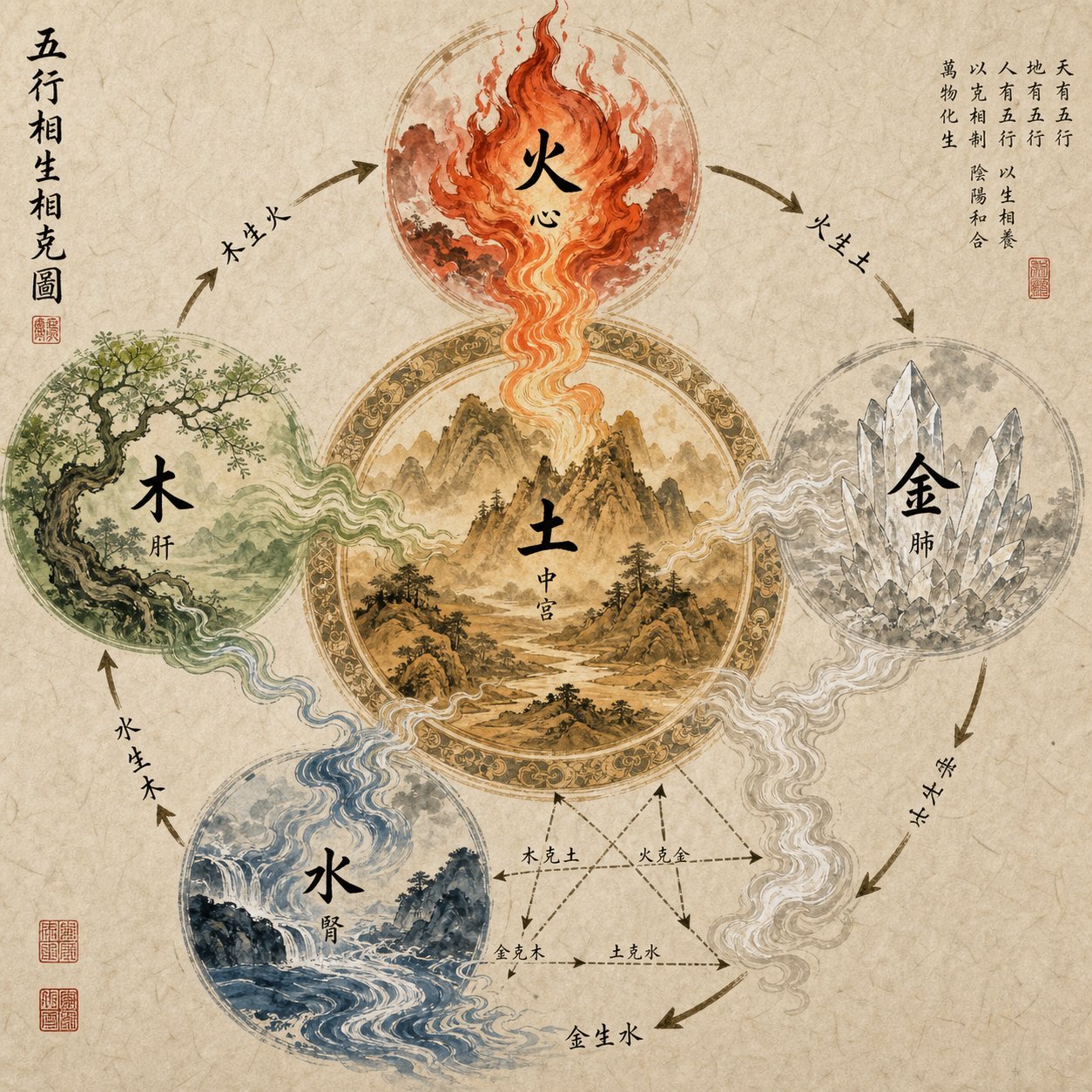
Five Elements Framework for Dog Zodiac Radical Selection
Zodiac alliances tell you which animals support the Dog. The Five Elements (五行, Wu Xing) tell you which natural forces fuel or drain it. Every zodiac animal carries a fixed elemental identity, and the Dog's is Earth (土). This single fact reshapes how you evaluate radicals because elemental compatibility determines whether a radical strengthens the Dog's foundation or quietly erodes it.
If you're searching for lucky dog names rooted in tradition, elemental alignment is where generic advice ends and personalized naming begins.
The Dog Fixed Element and Compatible Elements
In the Five Elements generating cycle, each element produces the next in a continuous loop: Wood fuels Fire, Fire forms Earth, Earth consolidates into Metal, Metal carries Water, and Water feeds Wood. The overcoming cycle runs in a different pattern: Wood separates Earth, Earth absorbs Water, Water quenches Fire, Fire melts Metal, and Metal penetrates Wood.
For the Dog, the key relationships are:
- Fire produces Earth. Fire is the Dog's parent element. It feeds and strengthens the Dog's core energy, making Fire radicals highly supportive.
- Earth matches Earth. Same-element radicals create a "like supports like" resonance (土土比旺), reinforcing stability and grounding.
- Earth produces Metal. Metal is the Dog's child element in the generating cycle. In pure Five Elements theory, this is a productive relationship. However, traditional Dog zodiac naming adds an important caveat: Metal radicals (金, 钅) can hide Rooster (酉) energy, and the Rooster has a punishment relationship with the Dog. Use Metal radicals selectively and with awareness.
- Wood overcomes Earth. Wood radicals (木) place pressure on the Dog's foundation. While the San He system values 木 for its Tiger alliance, from a purely elemental standpoint, heavy Wood energy can destabilize an Earth-based sign.
- Water is absorbed by Earth. Water radicals (水, 氵) have a draining quality. The Dog expends energy controlling Water, which can lead to exhaustion in symbolic terms.
The practical takeaway? Fire and Earth radicals are the safest elemental choices for unique chinese names built on Dog zodiac principles. Metal requires caution, and Wood or Water radicals should only appear when zodiac alliance logic (San He) provides a compelling reason to include them.
Elemental Radical Groups for Dog Names
Each element governs a family of radicals. When you're brainstorming chinese puppy names or formal human names, sorting your options by element helps you see which characters carry supportive energy at the deepest structural level.
| Element | Relationship to Dog | Recommended Radicals | Example Characters | Best For Which Dog Sub-Type |
|---|---|---|---|---|
| Fire (火) | Parent element; produces and strengthens Earth | 火, 灬, 丙, 丁 | 炎 (yan), 烽 (feng), 焕 (huan), 灿 (can), 炫 (xuan) | Wood Dog (needs Fire to bridge Wood into Earth); Water Dog (needs Fire to counter Water's chill) |
| Earth (土) | Same element; reinforces Dog's core stability | 土, 山, 石, 田 | 坤 (kun), 培 (pei), 基 (ji), 堉 (yu), 墨 (mo) | Metal Dog (needs Earth to replenish what Metal drains); any Dog lacking grounding |
| Metal (金) | Child element; productive but carries Rooster risk | 金, 钅 (use cautiously) | 鑫 (xin), 铭 (ming), 锋 (feng) | Fire Dog (Fire melts Metal, reducing conflict); only when BaZi chart shows Metal deficiency |
| Wood (木) | Overcomes Earth; adds pressure | 木 (use only with San He justification) | 林 (lin), 柏 (bai), 楠 (nan) | Acceptable when Tiger alliance energy is prioritized over elemental purity |
| Water (水) | Drained by Earth; exhausting relationship | 水, 氵 (generally avoid) | 涵 (han), 湘 (xiang), 洵 (xun) | Rarely recommended; only if BaZi shows extreme dryness needing moisture |
Notice how Fire and Earth dominate the "safe" zone. Characters like 炎 (flame), 坤 (earth/feminine force), and 培 (to nurture/cultivate) carry both strong meaning and elemental harmony for names for chinese dogs and Dog-year humans alike. The Kangxi Dictionary zodiac naming guide confirms this priority, listing Fire and Earth characters prominently among auspicious options while placing Metal and Water characters in the avoidance category.
Personalizing with BaZi Birth Chart Basics
Here's where things get interesting. Not every Dog is the same Dog. A person born in 1994 is a Wood Dog. Someone born in 2006 is a Fire Dog. The year 2018 produced Earth Dogs, and 2030 will bring Metal Dogs. Each sub-type carries a different elemental signature layered on top of the Dog's fixed Earth nature.
Why does this matter? A Wood Dog already has Wood energy pressing against their Earth foundation. Adding more Wood radicals intensifies that pressure. Instead, Fire radicals serve as a bridge, transforming Wood's aggressive energy into nourishing Earth support through the generating cycle. A Water Dog, on the other hand, may feel emotionally overwhelmed or directionless. Fire radicals warm and stabilize, while Earth radicals reinforce the core identity.
The BaZi (八字) system takes this further by analyzing not just the birth year but also the month, day, and hour. Each of these four pillars carries its own elemental value. A professional BaZi reading reveals which elements are abundant and which are deficient in a person's chart. The Day Master, the heavenly stem of the day pillar, serves as the focal point around which all elemental relationships revolve.
For most people choosing chinese puppy names or baby names without a full BaZi consultation, a simpler approach works well:
- Identify the Dog's elemental year (Wood, Fire, Earth, Metal, or Water)
- Determine which element is likely deficient based on the generating cycle
- Select radicals from the element that fills the gap without introducing conflict
A Fire Dog born in 2006, for example, already has abundant Fire. Adding more Fire radicals could create excess heat. Earth radicals ground that Fire productively, channeling passion into stability. An Earth Dog from 2018 benefits from Fire radicals that feed its already-strong Earth, or from same-element Earth radicals that amplify its natural confidence.
The best elemental radical choice depends on what the individual Dog lacks, not just what the Dog zodiac generically favors.
This personalized lens transforms radical selection from a one-size-fits-all checklist into a nuanced balancing act. And once you've identified the right elemental radicals, the next consideration is how those choices play differently across gender, where masculine and feminine naming traditions each bring their own preferences for which radicals carry the most appropriate energy.
Chinese Female Dog Names and Masculine Pairings: Gender-Specific Radicals
Elemental balance tells you what energy a Dog zodiac name needs. Gender tradition tells you how that energy should feel. In Chinese naming culture, certain radicals naturally lean feminine or masculine in their connotations, and pairing the right gendered energy with auspicious Dog radicals creates names that are both fortunate and culturally resonant.
This doesn't mean rigid rules. It means understanding which combinations carry softness versus strength, so you can make intentional choices whether you're selecting chinese names for dogs female companions or naming a Dog-year son.
Feminine Radical Combinations and Example Names
For feminine names, the most harmonious Dog zodiac radicals are those evoking emotional intelligence, grace, and gentle beauty. The heart radical 心/忄 tops the list because it signals deep feeling and faithfulness, qualities prized in both women and the Dog sign itself. The clothing radical 衤 carries connotations of elegance and adornment, suggesting refinement without vanity. And 小 (small) implies delicacy and charm, making the bearer endearing to others.
Flower and nature characters containing the grass radical 艹 work beautifully here too. Since 艹 channels both Horse and Rabbit alliance energy for the Dog, it's auspicious on two levels: zodiac harmony and feminine aesthetic tradition.
Here are example chinese female dog names using these radical combinations in two-character and three-character structures:
- 心慧 (Xin Hui) - Heart radical + heart radical. Meaning: wise heart. Tones: 1st-4th, creating a level-to-falling flow.
- 依萱 (Yi Xuan) - Person radical 亻 + grass radical 艹. Meaning: relying on warmth (萱 is the daylily, symbolizing a mother's love). Tones: 1st-1st, steady and calm.
- 裕恩 (Yu En) - Clothing radical 衤 + heart radical 心. Meaning: abundant grace. Tones: 4th-1st, falling then level for elegant contrast.
- 安蓉 (An Rong) - Roof radical 宀 + grass radical 艹. Meaning: peaceful lotus. Tones: 1st-2nd, gently rising.
- 佩芳 (Pei Fang) - Person radical 亻 + grass radical 艹. Meaning: admirable fragrance. Tones: 4th-1st, decisive then soft.
- 小蕊 (Xiao Rui) - Small radical + grass radical. Meaning: little blossom. Tones: 3rd-3rd (consider adding a surname with 1st or 4th tone to break the pattern).
These female chinese dog names work equally well for pet dogs and human babies. For those browsing asian dog names girl options, characters like 萱, 蓉, and 芳 are easy to pronounce across languages while carrying layered zodiac meaning.
Masculine Radical Combinations and Example Names
Masculine Dog zodiac names lean toward strength, leadership, and protective energy. The person radical 亻 takes on a different flavor here, implying human authority and the capacity to lead rather than simply connect. The roof radical 宀 paired with powerful characters suggests someone who guards the home with commanding presence. And 王 (king), drawn from the Tiger San He alliance, conveys natural authority and ambition.
Fire-element radicals also skew masculine in traditional naming, adding dynamism and drive to the Dog's steady Earth nature.
- 宏伟 (Hong Wei) - Roof radical 宀 + person radical 亻. Meaning: grand and mighty. Tones: 2nd-3rd, rising then dipping for rhythmic strength.
- 仕瑞 (Shi Rui) - Person radical 亻 + king radical 王. Meaning: official of good fortune. Tones: 4th-4th (pair with a level-tone surname like 王 or 林 for balance).
- 家铭 (Jia Ming) - Roof radical 宀 + metal radical 钅. Meaning: family legacy inscribed. Tones: 1st-2nd, level then rising.
- 志安 (Zhi An) - Heart radical 忄 + roof radical 宀. Meaning: ambition grounded in peace. Tones: 4th-1st, strong then steady.
- 伯峰 (Bo Feng) - Person radical 亻 + mountain radical 山. Meaning: elder of the peak. Tones: 2nd-1st, both level for a dignified, even cadence.
- 瑾宇 (Jin Yu) - King radical 王 + roof radical 宀. Meaning: precious jade sheltering the world. Tones: 3rd-3rd (best with a 1st-tone surname to create undulation).
Notice how masculine names often stack two Tier 1 or allied-animal radicals together. This creates concentrated auspicious energy suited to the Dog's protective, guardian-like masculine archetype.
Modern Naming and International Compatibility
Many parents today want chinese dog names for females and males that work seamlessly in both Chinese and international contexts. The challenge is preserving radical auspiciousness while choosing characters whose pinyin romanization sounds natural in English, French, or other languages.
Tonal harmony plays a central role here. As the Chinese Name Sound Harmony guide explains, ideal names alternate between level and oblique tones (平仄相间) to create rhythmic undulation. A name where all characters share the same tone sounds flat and monotonous when spoken aloud. The best combinations pair a level tone (1st or 2nd) with an oblique tone (3rd or 4th), producing a natural rise-and-fall cadence that feels musical in Mandarin.
For international compatibility, consider these practical tips:
- Choose characters with clean pinyin syllables. Names like 安 (An), 瑞 (Rui), and 明 (Ming) translate easily into Western contexts without awkward spelling.
- Avoid characters with pinyin that creates unintended meanings in English. Test the romanized version aloud before committing.
- Two-character given names offer flexibility. Parents can use one character as a Chinese call name and the full pinyin as a legal name internationally.
- Doubled syllables work well for pets. Names like 安安 (An An) or 萱萱 (Xuan Xuan) are charming, easy to call out, and retain their radical auspiciousness.
Whether you're drawn to asian dog names girl options for a new puppy or building a formal three-character name for a Dog-year daughter, the principle stays the same: let the radical carry the zodiac fortune while the sound carries the beauty. A name that flows well tonally and looks elegant on paper has already done most of the heavy lifting.
Gender and tonal considerations apply broadly across all Dog zodiac names. But what happens when you're naming a specific breed with its own distinct personality? Chinese-origin breeds like the Chow Chow and Shar Pei bring temperament into the equation, opening up breed-specific radical pairings that add yet another layer of meaning.
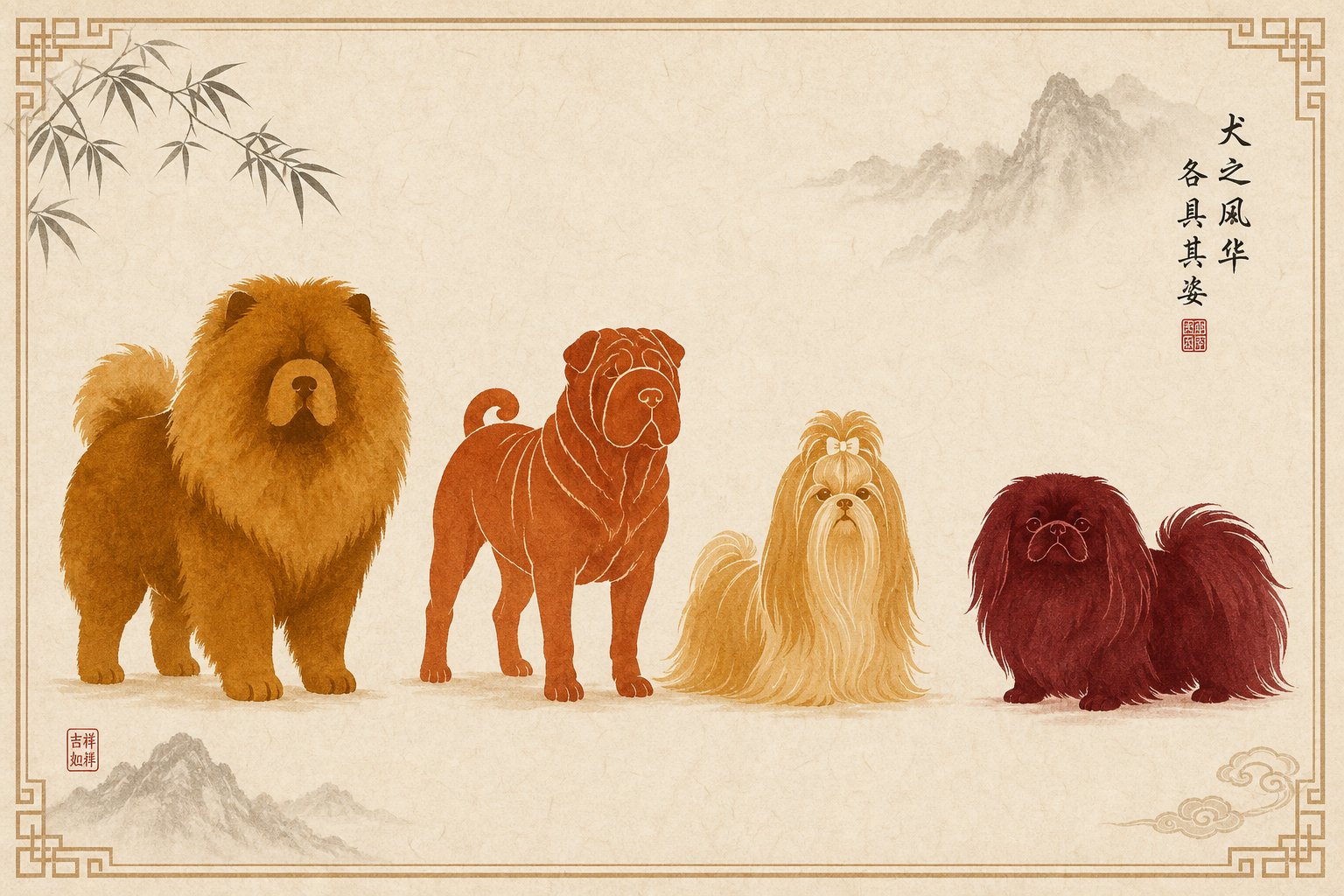
Breed-Specific Radical Pairings for Chinese Dog Breeds
A Chow Chow and a Shih Tzu couldn't be more different in temperament. One is aloof and regal, the other playful and affectionate. So why would you give them the same style of name? Matching breed personality with zodiac radical meaning creates a name carrying layered significance, one layer honoring the Dog zodiac's auspicious energy and another reflecting the individual animal's character.
Chinese-origin breeds already carry cultural weight. Their histories stretch back centuries as The Spruce Pets documents, from imperial lapdogs to ancient guard dogs with blue-black tongues. Tailoring your radical choices to breed temperament turns a good name into a perfect one.
Chow Chow and Shar Pei Naming with Radicals
The Chow Chow is one of the most ancient Chinese breeds, with evidence dating back to 206 B.C. These dogs are smart, protective, and fiercely independent, often bonding deeply with a single person. Their bear-like appearance and dignified bearing demand chow chow names that reflect nobility rather than playfulness.
For chow chow dog names, pair the roof radical 宀 with characters suggesting authority or grandeur. The logic is simple: 宀 gives the Dog zodiac its shelter energy, while the character's meaning honors the Chow's commanding independence. Characters like 宏 (grand), 宸 (imperial), and 宁 (serene) capture that dignified aloofness perfectly. If you're brainstorming dog names for chow chows, think of names that sound as stately as the breed looks.
The Shar Pei takes a different emotional path. Described as reserved, devoted, and affectionate by breed experts, these wrinkled guardians express loyalty through quiet steadfastness rather than showy displays. Chinese shar pei dog names benefit most from the heart radical 心/忄, which channels both the Dog zodiac's emotional depth and the breed's calm devotion. Characters like 恒 (constant), 慕 (admire/devoted), and 忠 (loyal) mirror the Shar Pei's temperament while reinforcing auspicious zodiac energy.
Shih Tzu and Pekingese Radical Pairings
The Shih Tzu, whose Chinese name literally means "lion dog," was treasured by Chinese nobility for centuries. These dogs are intelligent, alert, and playful with an undeniable regal air. The clothing radical 衤 pairs beautifully with gentle, elegant characters for this breed. Since 衤 implies adornment and elevated status in Dog zodiac naming, it echoes the Shih Tzu's history as a noble companion. Characters like 裕 (abundant elegance) and combinations with soft-sounding pinyin honor both the breed's grace and its zodiac fortune.
The Pekingese brings boldness to the table. Originally bred to resemble lions and kept exclusively by Chinese royalty, Pekes are good-natured yet stubborn, with a confidence that far exceeds their small size. The king radical 王 from the Tiger San He alliance suits them perfectly, conveying authority and natural leadership. The person radical 亻 also works well, implying the Pekingese's deep bond with its chosen human. Characters like 瑞 (auspicious jade), 佑 (divine protection), and 伟 (greatness) match the breed's bold spirit.
| Breed | Key Traits | Recommended Radicals | Example Names |
|---|---|---|---|
| Chow Chow | Dignified, independent, protective, bonds with one person | 宀 (roof) + authority characters | 宸威 (Chen Wei), 宏安 (Hong An), 宁峰 (Ning Feng) |
| Shar Pei | Reserved, devoted, calm, loyal guardian | 心/忄 (heart) + steadfast characters | 恒忠 (Heng Zhong), 慕安 (Mu An), 思宁 (Si Ning) |
| Shih Tzu | Affectionate, regal, playful, elegant | 衤 (clothing) + gentle characters | 裕萱 (Yu Xuan), 安裕 (An Yu), 依裳 (Yi Shang) |
| Pekingese | Bold, confident, stubborn, lion-hearted | 王 (king) or 亻 (person) | 瑞佑 (Rui You), 伟琪 (Wei Qi), 佑瑾 (You Jin) |
Phonetic Considerations for International Owners
Many owners searching for chow chow puppy names or chow puppy names want something that sounds natural when called across a dog park in London or Los Angeles. The good news is that several auspicious characters have clean, short pinyin that works internationally.
For easy pronunciation, lean toward single or doubled syllables:
- An An (安安) - Roof radical 宀. Means "peaceful." Simple, warm, works in any language.
- Rui (瑞) - King radical 王. Means "auspicious." Sounds like "ray" to English speakers.
- Ning (宁) - Roof radical 宀. Means "serene." Clean single syllable, easy to call out.
- Mu Mu (慕慕) - Heart radical. Means "devoted." Doubled for pet charm.
- Yu (裕) - Clothing radical 衤. Means "abundant." Short, elegant, internationally friendly.
The trick is testing names aloud before committing. Say it sharply, say it softly, call it across a room. A name that feels natural in your mouth while carrying zodiac-aligned radicals underneath gives your dog the best of both worlds: cultural depth and everyday usability.
Breed-specific pairing adds precision to your radical choices. But precision also means knowing where things can go wrong. Certain common mistakes in radical selection can quietly undermine even the most thoughtfully chosen name, and recognizing these pitfalls before you finalize is just as important as selecting the right components.
Common Radical Selection Mistakes for Dog Zodiac Names
You've identified your Tier 1 radicals, checked zodiac alliances, and balanced the Five Elements. Everything looks solid on paper. But even careful name-builders stumble into traps that quietly sabotage their work. Some mistakes are obvious once you know to look for them. Others hide inside complex characters where only a trained eye catches the conflict.
Here are the most damaging errors, ranked from most severe to least, so you know exactly where to focus your attention first.
- Using radicals tied to conflicting zodiac animals. This is the single most harmful mistake. Characters containing Dragon (辰), Rooster (酉), or Ox (丑) energy directly clash with the Dog's zodiac position. The Dragon clash (六冲) is especially destructive. Characters like 震 (zhen, containing 辰), 鸣 (ming, containing 鸟 bird radical), or 凤 (feng, phoenix/bird) introduce hostile energy regardless of how beautiful their surface meaning appears. A name meaning "soaring phoenix" sounds poetic, but for a Dog zodiac bearer, it invites the Rooster's harmful influence.
- Overlooking hidden radicals inside complex characters. Many characters contain embedded components that aren't immediately visible to casual readers. The character 耀 (yao, meaning brilliant) looks impressive, but it contains 隹 (zhui), an old bird radical. Similarly, 翔 (xiang, meaning to soar) carries 羽 (feather) which connects to bird/Rooster energy. Even 鹏 (peng, a mythical bird) is sometimes chosen for its grand meaning while its 鸟 radical directly conflicts with Dog fortune. Always decompose a character into its full radical structure before committing.
- Ignoring stroke count balance (笔画). Traditional naming masters evaluate the total stroke count of each character and the name as a whole using grid systems like San Cai Wu Ge (三才五格). As BaZi naming practitioners explain, stroke count numerology assigns fortune values through calculations involving the Heaven Grid, Person Grid, Earth Grid, Outer Grid, and Total Grid. Numbers like 15, 16, 21, 23, 24, and 31 are widely considered auspicious, while 19, 20, 22, 28, and 34 are generally avoided. A character with a perfect radical but an unlucky stroke count creates internal tension in the name's overall energy.
- Selecting radicals purely for meaning while ignoring tonal clashes. Imagine choosing two characters both carrying Tier 1 radicals, both with beautiful meanings, but both pronounced in the 3rd tone. Spoken aloud, the name sounds flat and awkward. Tonal harmony requires alternating between level tones (1st, 2nd) and oblique tones (3rd, 4th) to create natural rhythm. A name that looks perfect on paper but stumbles when spoken loses half its power, since names are called aloud far more often than they're read.
- Stacking too many of the same radical type. Using 心 in both characters of a given name, for example, doubles the emotional energy but can create imbalance. The Dog benefits from layered variety: one radical addressing shelter, another addressing emotional depth, rather than redundant emphasis on a single theme.
Conflicting Animal Radicals That Harm Dog Fortune
The severity of conflicting radicals depends on the type of zodiac relationship involved. The Dragon's Six Clash (六冲) is the most destructive, creating direct opposition. The Rooster's Mutual Harm (相害) erodes fortune gradually through friction. The Ox's Mutual Punishment (相刑) introduces recurring obstacles and interpersonal conflict.
When browsing dog names that start with p or puppy names that start with p, you might encounter characters with pinyin starting in "p" that contain hidden conflicts. For instance, 鹏 (Peng) starts with P and means "great mythical bird," making it tempting for boy dog names that start with p. But its bird radical directly clashes with Dog energy. Similarly, 珮 (Pei, meaning jade ornament) is safe and auspicious with its king radical 王, making it a strong option among female dog names that start with p. The lesson: always check the radical beneath the pinyin surface.
Other p names for pets that remain zodiac-safe include 佩 (Pei, person radical 亻, meaning admirable), 培 (Pei, earth radical 土, meaning to nurture), and 品 (Pin, mouth radical 口, meaning quality). Each carries compatible energy for the Dog while offering girl dog names that start with p or masculine options depending on the character pairing.
Hidden Radicals in Complex Characters
Complex characters with high stroke counts often contain multiple embedded radicals. The visible radical on the left or top is easy to identify, but secondary components buried within the structure can carry conflicting zodiac energy without you realizing it.
Common traps include:
- 翔 (xiang) - Appears to mean "soaring gracefully," but contains 羽 (feather/bird). Conflicts with Dog via Rooster association.
- 耀 (yao) - Means "brilliant/shining," but embeds 隹 (short-tailed bird). Hidden Rooster energy.
- 震 (zhen) - Means "to shake/thunder," but contains 辰 (Dragon branch). Direct Six Clash with Dog.
- 農 (nong) - Means "agriculture," but contains 辰 at its base. Dragon conflict hidden in plain sight.
- 雞/鸡 (ji) - Obviously Rooster, but simplified forms of characters containing 酉 are less obvious, like 醒 (xing, to wake) which embeds the Rooster branch 酉.
The safest approach is to look up each candidate character in a radical decomposition dictionary before finalizing. Online tools that break characters into component parts make this quick work.
Stroke Count and Tonal Balance Checklist
Before you commit to any name, run it through this validation checklist. Think of it as quality control for your radical selection work.
| Check | What to Verify | Pass Criteria |
|---|---|---|
| 1. Conflicting Radicals | Decompose every character into its full radical components | No Dragon (辰), Rooster (酉/鸟/隹), or Ox (牛) radicals present |
| 2. Tier 1 Anchor | Confirm at least one character contains a Tier 1 radical (宀, 亻, 心/忄, 衤) | Primary auspicious energy is present |
| 3. Stroke Count | Count total strokes for each character and calculate grid numbers | Avoid totals of 19, 20, 22, 28, 34; favor 15, 16, 21, 23, 24, 31 |
| 4. Tonal Flow | Check the tone of each character including the surname | Tones alternate between level (1st/2nd) and oblique (3rd/4th); no three identical tones in a row |
| 5. Elemental Harmony | Identify the element of each radical and confirm compatibility | No Water or Wood radicals without San He justification; Fire and Earth preferred |
| 6. Overall Meaning | Read the complete name as a phrase | Combined meaning is positive, coherent, and free of unintended double meanings |
Run every candidate name through all six checks in order. A name that passes checks 1 through 4 but fails on overall meaning still needs revision. Each layer builds on the previous one, and skipping any step leaves a gap where inauspicious energy can slip through unnoticed.
A name with perfect radicals but clashing tones or unlucky stroke counts is like a house with strong walls but no roof. Every layer of harmony matters.
Knowing what to avoid is half the battle. The other half is assembling all these principles into a single, repeatable process that takes you from a blank page to a complete, validated name. That's where a step-by-step combination method pulls everything together into one clear workflow.

Step-by-Step Method for Combining Radicals into Asian Dog Names
All the theory in the world means little without a clear process to follow. Whether you're exploring oriental pet names for a new puppy or crafting a formal given name for a Dog-year baby, the same six-step workflow transforms scattered knowledge into a single, confident decision. Think of it as a recipe where each ingredient builds on the last.
Six-Step Radical Combination Method
This method works for both asian names for dogs and human names. Follow the steps in order, and don't skip ahead. Each check prevents a specific category of error identified in the previous section.
- Identify the Dog sub-type. Determine the elemental year if known. A 2018 birth is an Earth Dog, 2006 is a Fire Dog, 1994 is a Wood Dog, and 2030 will be a Metal Dog. For pets without a confirmed birth year, default to the most recent Dog year or treat the element as unknown and lean on Fire/Earth radicals as universally safe choices.
- Select one Tier 1 radical as the primary auspicious anchor. Choose from 宀 (shelter), 亻 (person), 心/忄 (heart), or 衤 (clothing). This radical forms the backbone of your name's zodiac energy. Pick the one that best addresses what the Dog sub-type needs: shelter for stability, heart for emotional warmth, person for companionship, or clothing for status.
- Choose a complementary Tier 2 or allied-animal radical. Layer in a second radical from a different category. Options include 小 (charm), 士 (dignity), 山 (Tiger alliance), 艹 (Horse/Rabbit alliance), 木 (Tiger/Rabbit alliance), or 王 (Tiger authority). This creates compounded fortune rather than single-note energy.
- Verify no conflicting radicals are present. Decompose every candidate character into its full radical structure. Reject anything containing Dragon (辰), Rooster (酉/鸟/隹), or Ox (牛) components, no matter how appealing the surface meaning.
- Check tonal flow and stroke count. Say the full name aloud, including the surname. Tones should alternate between level (1st/2nd) and oblique (3rd/4th). Count strokes and confirm the total avoids unlucky numbers like 19, 20, or 28 while favoring auspicious counts like 15, 16, 21, or 24.
- Confirm the complete name carries positive meaning as a whole phrase. Read the characters together. Do they form a coherent, uplifting image? Check for unintended homophones or double meanings that could cause embarrassment. A name should tell a small story when read as a unit.
Radical pairing creates compounded fortune when elements are compatible. A Tier 1 radical anchors the name's zodiac power, while a complementary radical from a different category multiplies that energy rather than merely repeating it.
Worked Example for a Pet Dog Name
Imagine you've adopted a Shar Pei puppy born in 2018 (Earth Dog year). You want one of those charming asian pet names that carries real zodiac weight. Here's the process:
- Step 1: Earth Dog. Already has strong Earth energy. Fire radicals feed Earth productively, and same-element Earth reinforces stability.
- Step 2: Primary anchor: 心/忄 (heart). The Shar Pei's calm devotion pairs naturally with emotional depth radicals. Select 慕 (mu, meaning devoted/admiring), which contains the heart radical at its base.
- Step 3: Complementary radical: 宀 (shelter). For the second character, choose 安 (an, meaning peaceful), giving the Dog its symbolic home. This pairs a Tier 1 heart radical with a Tier 1 shelter radical for maximum auspicious layering.
- Step 4: Conflict check. 慕 decomposes into 艹 + 日 + 大 + 心. No Dragon, Rooster, or Ox components. 安 decomposes into 宀 + 女. Clean.
- Step 5: Tonal flow. 慕安 (Mu An) = 4th tone + 1st tone. Falling then level, a natural and pleasant rhythm. Stroke count: 慕 (14) + 安 (6) = 20 total. That's an unlucky number. Adjust: swap 安 for 宁 (ning, 8 strokes, meaning serene). New total: 14 + 8 = 22. Still problematic. Try 宏 (hong, 7 strokes, meaning grand): 14 + 7 = 21. Auspicious.
- Step 6: 慕宏 (Mu Hong) means "devoted grandeur." For a dignified Shar Pei, this reads beautifully. Alternatively, for kawaii names for pets with a softer feel, double the first character: 慕慕 (Mu Mu), meaning "devoted one," which sidesteps stroke count concerns since pet names follow looser conventions.
Final name: 慕慕 (Mu Mu) for everyday charm, or 慕宏 (Mu Hong) for formal registration. Both carry heart-radical zodiac energy tailored to the Earth Dog Shar Pei.
Worked Example for a Human Dog-Year Name
A baby girl born in 2030 will be a Metal Dog. Metal is the Dog's child element, and since Metal can carry hidden Rooster energy, the name should emphasize Fire (to temper Metal) and Earth (to reinforce the Dog's core). The family surname is 林 (Lin, 2nd tone, 8 strokes).
- Step 1: Metal Dog. Needs Fire to balance Metal excess and Earth to stabilize the foundation.
- Step 2: Primary anchor: 宀 (shelter/Earth energy). Select 宁 (ning, meaning serene, 8 strokes). The roof radical provides shelter while the character's calm meaning suits a girl's name.
- Step 3: Complementary radical: 艹 (grass, Rabbit Liu He alliance + Horse San He). Select 萱 (xuan, meaning daylily/mother's love, 12 strokes). This channels allied-animal energy while carrying feminine grace. The grass radical also connects to Wood, which the generating cycle transforms through Fire into Earth, a productive chain.
- Step 4: Conflict check. 宁 = 宀 + 丁. Clean. 萱 = 艹 + 宣 (宀 + 亘). Double shelter energy embedded. No Dragon, Rooster, or Ox components anywhere.
- Step 5: Full name tonal flow: 林宁萱 (Lin Ning Xuan) = 2nd + 2nd + 1st. Three level tones in a row. That's too flat. Swap order: 林萱宁 (Lin Xuan Ning) = 2nd + 1st + 2nd. Still all level. Try replacing 宁 with 安 (an, 1st tone, 6 strokes): 林萱安 = 2nd + 1st + 1st. No improvement. Instead, replace 宁 with 恩 (en, meaning grace, 1st tone, 10 strokes, heart radical 心): 林萱恩 = 2nd + 1st + 1st. Still level-heavy. Better approach: use 慧 (hui, 4th tone, 15 strokes, heart radical): 林萱慧 (Lin Xuan Hui) = 2nd + 1st + 4th. Rising, level, falling. Excellent rhythmic undulation.
- Step 5 continued: Stroke count: surname 林 (8) + 萱 (12) + 慧 (15). Person Grid (given name total): 12 + 15 = 27. Earth Grid (second character + 1): 15 + 1 = 16. The number 16 is considered auspicious in the San Cai Wu Ge system. Acceptable.
- Step 6: 林萱慧 (Lin Xuan Hui) reads as "wisdom of the daylily in the forest." The combined image evokes a wise, nurturing woman rooted in nature. No negative homophones. The pinyin "Xuan Hui" sounds elegant internationally.
Final name: 林萱慧 (Lin Xuan Hui). It carries shelter energy (hidden 宀 inside 萱's sub-component), heart-radical emotional depth (慧), and Rabbit/Horse alliance energy (艹), all while avoiding every conflicting radical and maintaining smooth tonal rhythm.
These two examples show how the same six-step process adapts to different contexts. For those exploring asian names for pets, the workflow can be abbreviated at steps 5 and 6 since pet names allow more flexibility. For human names, every step demands full rigor. Either way, the framework ensures your oriental names for dogs or Dog-year children carry intentional, layered auspicious energy rather than accidental choices dressed up in nice-sounding pinyin.
The best radical combinations aren't the ones that look most impressive individually. They're the ones that work together, each radical addressing a different facet of the Dog's needs so the complete name becomes greater than the sum of its parts.
Frequently Asked Questions About Chinese Name Radicals for Dog Zodiac
1. What are the luckiest Chinese radicals for someone born in the Year of the Dog?
The four strongest radicals for Dog zodiac names are 宀 (roof/home), 亻 (person), 心/忄 (heart), and 衤 (clothing). These Tier 1 radicals directly address the Dog's core symbolic needs: shelter, human companionship, emotional depth, and dignified status. Traditional naming masters consider these the most powerful because the Dog is a domestic animal that thrives with a roof overhead, a loyal bond with people, and a sense of belonging. Pairing any Tier 1 radical with a supportive Tier 2 option like 小 (small), 士 (scholar), or 山 (mountain from the Tiger alliance) creates compounded auspicious energy in the name.
2. Which Chinese radicals should be avoided in Dog zodiac names?
Radicals associated with the Dog's conflicting zodiac animals should be avoided entirely. The Dragon (辰) creates a Six Clash relationship, so avoid characters containing 辰, 龙, or 雨 components. The Rooster (酉) causes Mutual Harm, meaning radicals like 鸟 (bird), 酉, and 隹 (short-tailed bird) introduce friction. The Ox (丑) triggers Mutual Punishment, so 牛 (ox) radicals deserve caution. Watch for hidden conflicts in complex characters too. For example, 翔 contains the feather radical 羽, and 震 embeds the Dragon branch 辰, even though their surface meanings seem positive.
3. How do the Five Elements affect radical selection for Dog zodiac names?
The Dog's fixed element is Earth (土), so Fire radicals (火, 灬, 日) are highly supportive because Fire produces Earth in the generating cycle. Earth radicals (土, 山, 石, 田) reinforce the Dog's core stability through same-element resonance. Metal radicals require caution since they can carry hidden Rooster energy. Wood radicals place pressure on Earth and should only appear when justified by San He Tiger alliance logic. Water radicals are generally avoided as they drain the Dog's energy. The specific Dog sub-type matters too: a Wood Dog (1994) benefits from Fire to bridge Wood into Earth, while an Earth Dog (2018) thrives with additional Fire or same-element Earth support.
4. Can the same radical system be used for naming pet dogs and human babies born in Dog years?
Yes, the zodiac-radical framework applies equally to both pet dogs and human babies born in Dog zodiac years. The underlying logic of matching radicals to the Dog's symbolic needs for shelter, companionship, and loyalty remains identical. The main differences are practical: human names typically require two or three characters with careful tonal balance, stroke count verification, and formal meaning coherence. Pet names allow more flexibility, including playful single characters, doubled syllables like 慕慕 (Mu Mu), or simplified combinations that prioritize easy pronunciation over strict numerological compliance.
5. What is the San He and Liu He system and how does it help choose Dog zodiac name radicals?
San He (Three Harmonies) groups the Dog with the Tiger and Horse into a Fire triangle of mutual support. Liu He (Six Harmonies) pairs the Dog intimately with the Rabbit. By incorporating radicals associated with these allied animals, you invite harmonious energy from multiple zodiac directions. Tiger-linked radicals include 山 (mountain), 木 (wood), and 王 (king). Horse-linked radicals include 艹 (grass) and 禾 (grain). Rabbit-linked radicals include 艹, 木, and 口 (mouth/enclosure). Notably, 艹 and 木 appear in both systems, making them especially versatile choices that channel triple alliance energy for Dog zodiac names.