Understanding Name Element Calculation Through Stroke Counting
Imagine someone tells you that the number of pen strokes in your name could reveal your elemental makeup, predict personality traits, and even influence your fortune. Sounds like a stretch? In Chinese naming traditions, this idea has been taken seriously for generations. Calculating name elements by strokes is a structured system that links the physical construction of Chinese characters to the Five Elements of classical philosophy: Wood, Fire, Earth, Metal, and Water.
The practice goes far beyond picking characters that "sound nice." Each name stroke carries numerical weight, and those numbers map directly onto elemental categories. Practitioners use this mapping to evaluate whether a name creates harmony or conflict within a person's destiny chart. It is, at its core, a bridge between the tangible act of writing and the abstract world of elemental energy.
What Does Calculating Name Elements by Strokes Mean
At its simplest, this system counts the brush strokes in each character of a Chinese name, then uses those counts to derive elemental assignments through a set of formulas. A typical Chinese name consists of a one-character surname and a one- or two-character given name. The stroke totals from these characters feed into a framework called the Five Grids, which produces five numerical values. Each value corresponds to one of the Five Elements based on its last digit.
The result is a complete elemental profile for the name. Practitioners then check whether the elements generated by these grids support or clash with each other, and whether they complement the person's birth chart (Ba Zi). A name where the elements flow in a productive cycle is considered auspicious. One where they conflict may be seen as a source of obstacles.
The stroke-counting system transforms each character from a visual symbol into a numerical code, and each number into an elemental force. It is where the precision of calligraphy meets the philosophy of cosmic balance.
Why Stroke Count Matters in Chinese Naming
Chinese characters are not arbitrary shapes. Every stroke follows a specific order and direction, and the total count defines the character's structural identity. In Chinese name strokes analysis, this count becomes the raw data for an entire numerological system. Characters with an even number of strokes are classified as Yin, while those with an odd count are Yang, adding another layer of balance to consider in a Chinese name.
Why does this matter culturally? In Chinese metaphysical thought, a person's luck is shaped by three forces: Heaven Luck (what you're born with), Earth Luck (your environment), and Human Luck (your actions and relationships). Name analysis falls under Human Luck, accounting for roughly 15% of that category. Because a name is used daily, written repeatedly in school, spoken aloud in social settings, its elemental influence is considered semi-permanent. For newborns especially, a well-calculated name is seen as one of the few ways to actively shape destiny from day one.
This guide walks through the entire calculation process, from counting strokes correctly to interpreting the elemental results. Most resources explain that this system exists without showing you how it actually works. The sections ahead fill that gap with formulas, worked examples, and the common mistakes that throw off your results.
Historical Roots of Stroke-Based Name Analysis
Every system has an origin story, and the stroke-counting method used in Chinese name analysis is no exception. While the Five Elements and numerology stretch back thousands of years in Chinese thought, the specific framework most practitioners use today is surprisingly modern. It was formalized just over a century ago, not in China, but in Japan.
Origins of the Five Grids Naming System
The Five Grids system (五格, Wu Ge) was created in 1918 by Japanese scholar Kumazaki Kenoh, who built it on the foundation of Chinese I Ching (Yixue) numerology. His method established five numerical relationships derived from the stroke counts of a person's name, then interpreted those numbers through the lens of the Five Elements and their cycles of generation and destruction.
The system didn't stay in Japan for long. In 1936, a Taiwanese student named Bai Yuguang (also known as Bai Huiwen) translated and promoted Kumazaki's work after returning from his studies in Japan. From Taiwan, the method spread to South Korea, Southeast Asia, and Hong Kong. By the 1990s, Chinese fate analysis scholars on the mainland, including Fang Chen, had integrated the Five Grids method with traditional Chinese I Ching principles, standardizing it into a comprehensive naming system that aligned with Chinese cultural conventions.
What makes this history interesting is the cross-cultural loop. Kumazaki drew on ancient Chinese cosmological ideas, repackaged them into a structured analytical method, and that method then returned to China where it was refined further. The result is a system that feels deeply traditional but carries a distinctly modern, systematic architecture.
The five grids themselves each govern a different dimension of a person's life:
- Heaven Grid (天格) - Derived from the surname, representing inherited fortune and ancestral influence.
- Human Grid (人格) - The central grid governing overall life destiny and personality, also called the Personality Grid.
- Earth Grid (地格) - Calculated from the given name, reflecting early-life circumstances and foundational luck.
- External Grid (外格) - Represents the social environment, interpersonal relationships, and external opportunities.
- Total Grid (总格) - The sum of all strokes in the full name, indicating fortune trajectory from middle age onward.
Each grid produces a number, and each number carries both a Five Elements assignment and a specific fortune meaning within the 81 Numerology system. The interplay between these grids forms the basis of a complete name reading.
How Yin and Yang Philosophy Shapes Name Analysis
The Five Grids framework doesn't operate in isolation. It sits within the broader cosmological structure of yin and yang in Chinese writing and metaphysical thought. In this tradition, odd-numbered stroke counts are classified as Yang (active, expansive), while even-numbered counts are Yin (receptive, contracting). A name that leans entirely toward one polarity is considered imbalanced.
Think of it this way: names that mean yin yang balance aren't just about choosing characters with opposing meanings. The balance is encoded structurally, in the stroke counts themselves. A name with all odd-stroke characters carries heavy Yang energy. One with all even-stroke characters tilts toward Yin. Practitioners look for a mix that reflects the dynamic interplay between these forces.
This connects to the I Ching concept of "image" and "number" (象 and 数). The image is the visible form of the character, its shape and meaning. The number is its hidden structural identity, revealed through stroke counting. Kumazaki's insight was to systematize the relationship between these two layers, creating a repeatable method that anyone could apply rather than relying on intuitive interpretation alone.
The yin and yang names principle also extends to how the Five Elements interact within the grid results. The productive cycle (generation) represents Yang movement, where one element actively creates the next. The destructive cycle (restraint) represents Yin movement, where one element controls or limits another. A healthy name reading typically shows productive relationships between the key grids, particularly in the Three Talents configuration formed by the Heaven, Human, and Earth grids.
This philosophical scaffolding is what separates stroke-based name analysis from simple numerology. The numbers aren't just lucky or unlucky in isolation. They participate in a dynamic system of elemental relationships, where context determines meaning. A "7" in one grid position might strengthen the name's overall balance, while the same number in another position could introduce conflict. The system's power, and its complexity, comes from reading these relationships as a whole rather than evaluating any single number on its own.
Of course, knowing the philosophy behind the system is only useful if you can count the strokes correctly in the first place. And that step is where most people make their first critical error.
How to Count Strokes Correctly Using the Kangxi Standard
Here's where most people trip up. You look at a character, count the strokes you see on screen or paper, and plug that number into the Five Grids formulas. Seems logical, right? The problem is that the character you're looking at might be in its simplified form, and simplified stroke counts will throw off your entire calculation. The system doesn't use modern writing conventions. It uses a specific historical standard, and getting this wrong at the foundation means every grid value you derive afterward is incorrect.
Why the Kangxi Dictionary Standard Is Used
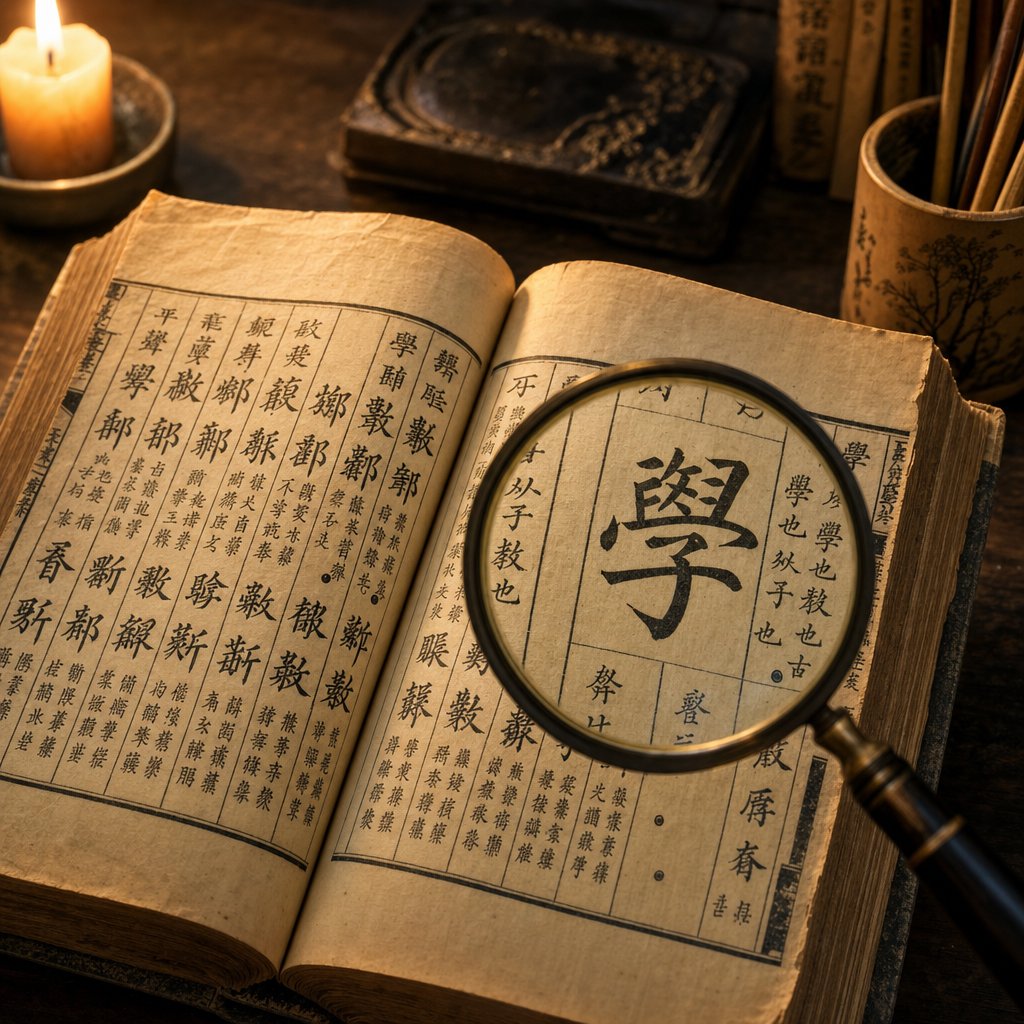
The reference point for all stroke counting in name element analysis is the Kangxi Dictionary (康熙字典), compiled between 1710 and 1716 during the Qing Dynasty under Emperor Kangxi. This dictionary cataloged over 47,000 characters using their traditional forms and established a definitive stroke count for each one. It became the authoritative source for Chinese character classification by radical and stroke number.
Why not just use modern stroke counts? Because the Five Grids system and its numerological interpretations were built on Kangxi-standard values. The 81 Strokes fortune meanings, the number-to-element mappings, the Three Talents configurations, all of these were calibrated using traditional character forms. Swapping in simplified counts is like using metric measurements in a formula designed for imperial units. The math still runs, but the output is meaningless.
Traditional Chinese characters have been in use for over a thousand years. Their structural forms carry what practitioners consider stable energetic resonance, shaped by centuries of consistent use in calligraphy, literature, and ritual. Simplified characters, introduced in the 1950s and 1960s by the People's Republic of China, were designed for practical literacy goals. They reduced stroke counts to make writing faster and easier to learn. That's a worthy goal for everyday communication, but it altered the numerical identity of thousands of characters in ways that break the numerological framework.
Simplified vs Traditional Stroke Counts
When you're working with chinese character stroke names for numerological purposes, the gap between simplified and traditional forms can be dramatic. Some characters lose half their strokes or more in the simplification process. Others change by just one or two strokes. Either way, even a single stroke difference shifts the grid calculation and potentially changes the elemental assignment.
Consider a practical scenario. You want to analyze the name of someone whose surname is written as 刘 in simplified Chinese. You count 6 strokes. But the Kangxi standard uses the traditional form 劉, which has 15 strokes. That's a difference of 9 strokes, enough to completely change the Heaven Grid value and cascade errors through every subsequent calculation.
The same issue applies to given name characters. If you're counting chinese strokes names using the simplified forms you learned in a modern Mandarin course, you'll consistently undercount. The system requires you to look up the traditional equivalent of every character in the name, then count based on that form.
Characters That Change Stroke Count Between Systems
To illustrate how significant these differences can be, here are some commonly cited examples where simplified and traditional forms diverge sharply:
| Character (Simplified/Traditional) | Simplified Strokes | Kangxi Standard Strokes |
|---|---|---|
| 龙 / 龍 (dragon) | 5 | 16 |
| 马 / 馬 (horse) | 3 | 10 |
| 书 / 書 (book, to write) | 4 | 10 |
| 灵 / 靈 (spirit) | 7 | 24 |
| 数 / 數 (number) | 13 | 15 |
| 刘 / 劉 (surname Liu) | 6 | 15 |
Look at 龙 versus 龍. The simplified form has just 5 strokes. The traditional form has 16. If this character appeared in a name, using the wrong count would shift the element assignment from Earth (5-6 range) to Water (ending in 6 of 16) or potentially a completely different grid outcome depending on position. The character 灵/靈 is even more extreme, jumping from 7 strokes to 24.
These aren't edge cases. Many of the most popular chinese stroke names used in given names, characters representing beauty, wisdom, prosperity, and strength, underwent significant simplification. Characters with the speech radical (言, 7 strokes in Kangxi) appear as 讠 (2 strokes) in simplified writing. Characters with the gold/metal radical (金, 8 strokes) show up as 钅 (5 strokes) in their simplified versions.
The practical takeaway is straightforward: before you calculate anything, convert every character in the name to its traditional form and verify the stroke count against a Kangxi-standard reference. Online Kangxi stroke count tools exist specifically for this purpose. If you skip this step, you're building your entire analysis on a faulty foundation.
With accurate stroke counts in hand, the next challenge is knowing exactly what to do with those numbers. The Five Grids formulas transform raw stroke counts into meaningful grid values, and each grid follows its own specific calculation rule.
Step-by-Step Five Grids Calculation Method
You've got your Kangxi-standard stroke counts locked in. Each character in the name now has a verified number attached to it. The question becomes: what do you actually do with those numbers? The five grids name calculation follows a specific set of arithmetic formulas, and each grid draws from different parts of the name. Some grids use only the surname, others only the given name, and a few combine both. Getting the formulas right is non-negotiable because each grid feeds into the elemental analysis that follows.
The Five Grids Calculation Formulas Explained
The chinese name stroke calculation method breaks a full name into five numerical values. Think of it as slicing the name into overlapping segments, each representing a different life domain. Here's the sequential process for a standard single-surname, two-character given name:
- Determine the Kangxi stroke count for each character in the name (surname and given name characters separately).
- Calculate the Heaven Grid by adding 1 to the surname's stroke count. For compound (two-character) surnames, simply add the two surname characters' strokes together without adding 1.
- Calculate the Human Grid (Personality Grid) by adding the surname's stroke count to the first character of the given name.
- Calculate the Earth Grid by adding together the stroke counts of all given name characters. If the given name is a single character, add 1 to its stroke count.
- Calculate the Total Grid by summing the stroke counts of every character in the full name (surname plus given name).
- Calculate the External Grid using the formula: Total Grid minus Human Grid, plus 1 (for single surnames). For compound surnames, omit the "+1" step.
Why does the Heaven Grid add 1 for single surnames? The system uses a concept sometimes called a "virtual stroke" to maintain structural consistency across different name lengths. This placeholder ensures that single-surname names and compound-surname names produce comparable grid relationships. The same logic applies to the Earth Grid when a given name has only one character.
Here's a clean reference table showing each grid and its corresponding formula for the most common name structure (single surname, two-character given name):
| Grid Name | Formula (Single Surname, Two-Character Given Name) | Life Domain |
|---|---|---|
| Heaven Grid (天格) | Surname strokes + 1 | Ancestral fortune, early influence |
| Human Grid (人格) | Surname strokes + 1st given name character strokes | Core personality, overall destiny |
| Earth Grid (地格) | 1st given name character strokes + 2nd given name character strokes | Early life, foundational luck |
| Total Grid (总格) | All character strokes summed | Middle age through later life |
| External Grid (外格) | Total Grid - Human Grid + 1 | Social environment, relationships |
Notice how the Human Grid sits at the intersection of surname and given name. It bridges inherited identity (the family name) with personal identity (the chosen name). This is why practitioners consider it the most important single grid when writing chinese names for newborns. It governs overall life fortune and personality expression.
Handling Single-Character Names and Surnames
Not every name follows the two-character given name pattern. Many names in chinese writing use a single character for the given name, and some surnames are compound (two characters). These variations change the formulas slightly:
Single surname + single-character given name:
- Heaven Grid = surname strokes + 1
- Human Grid = surname strokes + given name strokes
- Earth Grid = given name strokes + 1
- Total Grid = surname strokes + given name strokes
- External Grid = fixed at 2
That fixed External Grid of 2 is a special rule. When both the surname and given name are single characters, the External Grid calculation (Total - Human + 1) would always yield 2 regardless of stroke counts, so the system simply assigns it directly.
Compound surname + two-character given name:
- Heaven Grid = 1st surname character strokes + 2nd surname character strokes (no +1)
- Human Grid = 2nd surname character strokes + 1st given name character strokes
- Earth Grid = 1st given name character strokes + 2nd given name character strokes
- Total Grid = all four character strokes summed
- External Grid = Total Grid - Human Grid (no +1)
Compound surname + single-character given name:
- Heaven Grid = 1st surname character + 2nd surname character strokes
- Human Grid = 2nd surname character strokes + given name strokes
- Earth Grid = given name strokes + 1
- Total Grid = all three character strokes summed
- External Grid = Total Grid - Human Grid + 1
The pattern here is consistent: whenever a segment of the name contains only one character (whether surname or given name), the system adds a virtual stroke (+1) to compensate. This keeps the mathematical relationships between grids proportional and prevents single-character names from producing artificially low grid values that would skew the elemental reading.
Each of these five grid numbers now needs to be translated into a Five Elements assignment. That conversion follows its own distinct logic, rooted in one of the oldest cosmological diagrams in Chinese philosophy.
Deriving Five Elements From Your Stroke Numbers
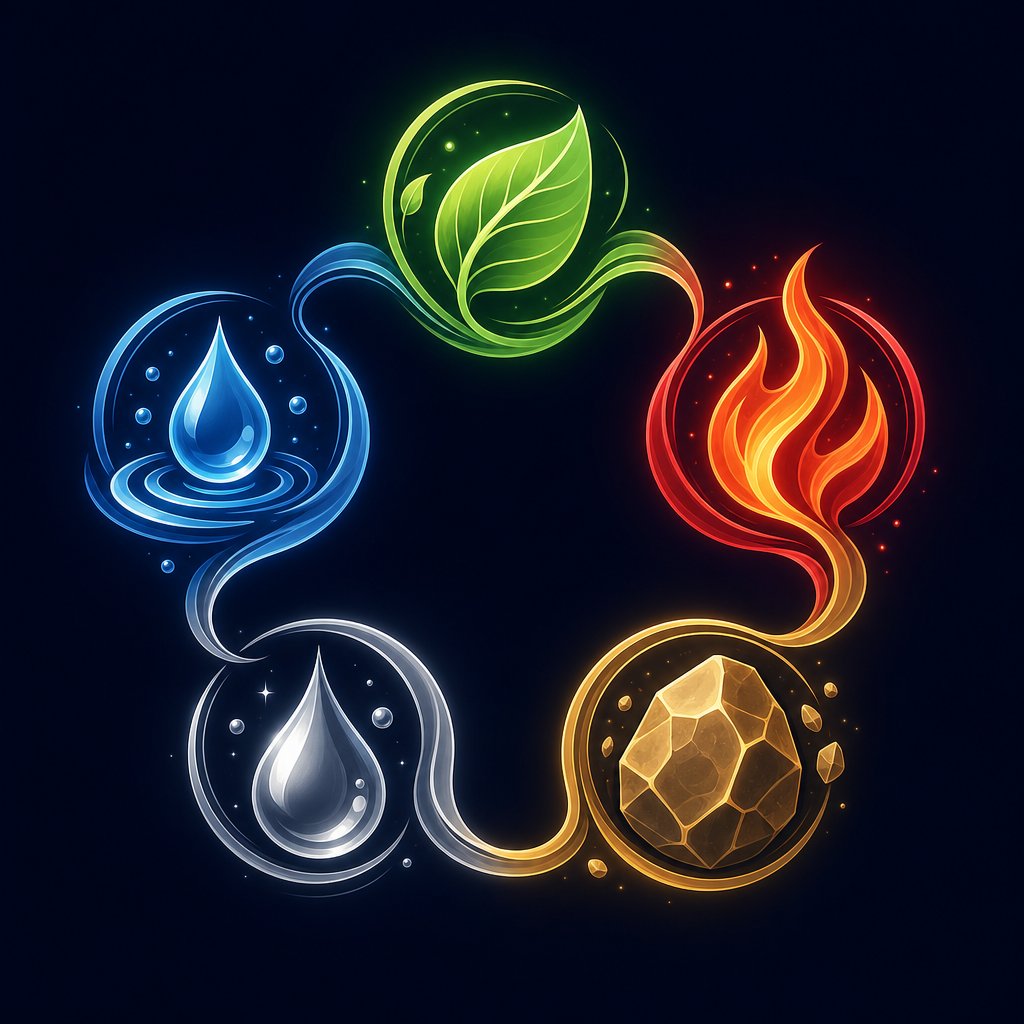
You've run the formulas. Each of the five grids now holds a number. But a number by itself doesn't tell you much about elemental harmony or conflict. The critical next step is converting those grid values into Five Elements assignments. This is where the name strokes five elements mapping comes into play, and it follows a surprisingly simple rule once you understand the logic behind it.
The Number-to-Element Mapping System
The conversion rule is based on the last digit of each grid number. Regardless of whether your grid value is 7 or 37 or 67, the element is determined by that final digit alone. Here's the complete reference:
| Last Digit of Grid Number | Assigned Element | Heavenly Stem Origin |
|---|---|---|
| 1 or 2 | Wood | Jia (甲), Yi (乙) |
| 3 or 4 | Fire | Bing (丙), Ding (丁) |
| 5 or 6 | Earth | Wu (戊), Ji (己) |
| 7 or 8 | Metal | Geng (庚), Xin (辛) |
| 9 or 0 | Water | Ren (壬), Gui (癸) |
So if your Human Grid calculates to 23, the last digit is 3, which maps to Fire. If your Earth Grid is 16, the last digit is 6, making it Earth. A Total Grid of 40 ends in 0, assigning it to Water. The five elements stroke number meaning is entirely determined by this single-digit rule.
You'll notice the pattern pairs odd and even numbers together: 1-2, 3-4, 5-6, 7-8, 9-0. This isn't arbitrary. The odd number in each pair represents the Yang aspect of that element, while the even number represents its Yin aspect. Wood-1 is Yang Wood (active growth), while Wood-2 is Yin Wood (gentle flexibility). This Yin-Yang subdivision adds nuance to interpretation, though the elemental category itself remains the same for both digits in a pair.
He Tu Origins of Elemental Assignments
Where does this digit-to-element correspondence come from? The system claims its foundation in the He Tu (河图), one of the oldest cosmological diagrams in Chinese philosophy. The He Tu assigns number pairs to the five cardinal directions, each associated with an element:
- 1 and 6 reside at North, belonging to Water
- 2 and 7 reside at South, belonging to Fire
- 3 and 8 reside at East, belonging to Wood
- 4 and 9 reside at West, belonging to Metal
- 5 and 10 reside at Center, belonging to Earth
Wait. If you compare the He Tu assignments above with the name analysis mapping table, you'll spot something immediately: they don't match. In the He Tu, 1 and 6 are Water. In the Five Grids name system, 1 and 2 are Wood. These are two completely different number-to-element schemes.
What happened? The Five Grids system actually derives its mapping from the Ten Heavenly Stems (十天干) sequence rather than directly from the He Tu number pairs. The Heavenly Stems run in order: Jia, Yi (Wood), Bing, Ding (Fire), Wu, Ji (Earth), Geng, Xin (Metal), Ren, Gui (Water). Since there are ten stems numbered 1 through 10, the system simply assigns elements based on sequential position: stems 1-2 get Wood, stems 3-4 get Fire, and so on.
The He Tu connection is indirect. The Heavenly Stems themselves were historically derived from He Tu cosmology, so the name analysis system claims He Tu as its philosophical ancestor. But the actual number-to-element mapping follows the Stems' sequential order, not the He Tu's directional pairings. This distinction matters because it's one of the points where practitioners disagree about the system's internal consistency. A character like 林 (forest) has 8 strokes, which the name system assigns to Metal. Yet 林 is visually and semantically pure Wood. The Heavenly Stems logic overrides the character's inherent meaning, which some find counterintuitive.
The 81 Strokes Fortune Meanings
Beyond elemental assignment, many practitioners layer on an additional interpretive system: the Theory of 81 Strokes (八十一划灵动吉凶数). In this framework, every number from 1 to 81 carries a specific fortune meaning, a short poetic description of the luck quality associated with that value. Numbers above 81 cycle back by subtracting 80 (so 82 is treated as 2, 83 as 3, and so on).
Each number receives a classification as auspicious (吉), inauspicious (凶), or mixed (半吉半凶). For example, the number 1 is considered a great auspicious number representing new beginnings and leadership. The number 4 is typically classified as inauspicious, associated with instability. These meanings apply to each grid independently, so a name might have an auspicious Human Grid number but an inauspicious Total Grid number.
The 81 Strokes system is sometimes called the 9 Palace Name Analysis System because 81 equals 9 squared, connecting it to the nine-chamber structure of the Luo Shu magic square. Whether you're analyzing the chinese character with the most strokes in a name or the simplest one, the grid totals all funnel through this same 1-81 interpretive range.
Here's where things get interesting for anyone analyzing names with high stroke counts. A chinese word with most strokes might push a Total Grid value well above 40 or 50, landing it in number ranges that carry very specific fortune readings. The number 46, for instance, is classified as inauspicious in the 81 Strokes system, described as a path of hardship and repeated obstacles. The number 44 similarly warns of plans that fail despite careful effort. Yet plenty of highly successful people carry these supposedly unfavorable numbers in their names, which is why some practitioners treat the 81 Strokes layer as supplementary rather than definitive.
The elemental mapping, by contrast, is treated as foundational. Once you've assigned an element to each grid, the real interpretive work begins: reading how those elements interact with each other. The most important interaction to evaluate is the Three Talents configuration, which examines the relationship between your Heaven, Human, and Earth grid elements as a unified triad.
Interpreting the Three Talents Element Combinations
You've assigned an element to each grid. Five numbers, five elements. But the system doesn't evaluate them in isolation. The real diagnostic power comes from reading how three specific elements interact as a group. This is the Three Talents (三才) configuration, and it's the single most weighted factor in determining whether a name's elemental profile is considered favorable or problematic.
The Three Talents draws from three grids only: Heaven, Human, and Earth. Arranged top to bottom, they mirror the classical Chinese cosmological model where Heaven sits above, Earth below, and Humanity occupies the space between. The elements assigned to these three grids form a vertical chain, and the relationships within that chain tell the story of how inherited conditions, personal destiny, and foundational luck interact.
Reading the Three Talents Configuration
To read your Three Talents, pull the elemental assignments from your Heaven Grid, Human Grid, and Earth Grid, then arrange them in sequence. If your Heaven Grid ends in 5 (Earth element), your Human Grid ends in 8 (Metal), and your Earth Grid ends in 3 (Fire), your Three Talents configuration is Earth-Metal-Fire.
The interpretation focuses on two adjacent relationships:
- The relationship between the Heaven Grid element and the Human Grid element (how ancestral or inherited energy supports or pressures your core personality)
- The relationship between the Human Grid element and the Earth Grid element (how your core personality interacts with your foundational luck and early-life conditions)
Each pair is evaluated using the Five Elements cycle logic. Does the upper element generate the lower one? Does it control it? Is the relationship reversed, with the lower element generating or controlling the upper? The direction matters. A Heaven Grid that generates the Human Grid is read as supportive inheritance. A Heaven Grid that controls the Human Grid suggests external pressure on personal development.
The Human Grid sits at the center of this triad, which is why practitioners treat it as the most critical position. When both the Heaven and Earth grids generate the Human Grid, the configuration is considered highly auspicious. When both control it, the reading is unfavorable. Mixed configurations, one generating and one controlling, fall somewhere in between.
Auspicious vs Inauspicious Element Combinations
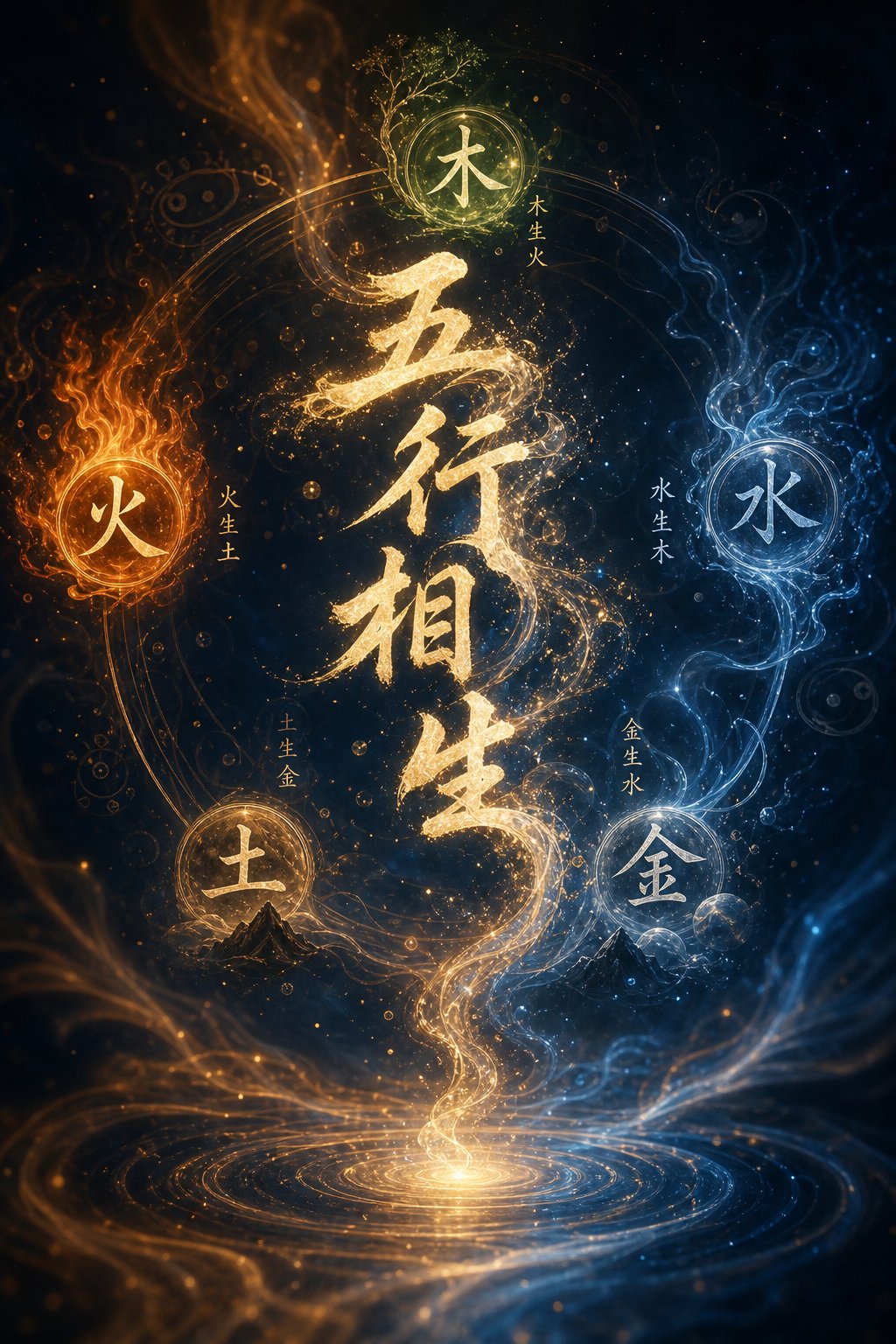
The productive cycle defines which element pairs are considered harmonious. When one element feeds into the next in this sequence, the relationship is classified as mutually generative (相生):
- Wood feeds Fire - Wood serves as fuel, enabling Fire to burn and expand
- Fire creates Earth - Fire reduces matter to ash, which becomes soil
- Earth bears Metal - Minerals and ores form within the Earth over time
- Metal collects Water - Metal surfaces condense moisture; molten metal flows like water
- Water nourishes Wood - Water sustains plant growth, completing the cycle
A Three Talents configuration where the elements flow in productive sequence, say Water-Wood-Fire (Heaven generates Human, Human generates Earth), is considered ideal. Energy moves downward smoothly, each level supporting the next. This pattern suggests that inherited conditions nurture personal development, and personal development in turn strengthens foundational luck.
The destructive cycle identifies element pairs that clash. When one element controls or overcomes another, the relationship is classified as mutually overcoming (相克):
- Water controls Fire - Water extinguishes flame
- Fire controls Metal - Fire melts and reshapes metal
- Metal controls Wood - Metal axes cut through wood
- Wood controls Earth - Tree roots break apart soil and drain nutrients
- Earth controls Water - Earth dams and absorbs water
A configuration where the Heaven Grid element controls the Human Grid element, like Metal-Wood-Fire, signals that external or inherited conditions work against personal growth. The person may need to exert significantly more effort to achieve results. If the Earth Grid also controls the Human Grid, the reading becomes more severe, suggesting pressure from both above and below.
Here's a reference table showing how common Three Talents combinations are generally interpreted:
| Three Talents (Heaven-Human-Earth) | Relationship Pattern | General Interpretation |
|---|---|---|
| Water - Wood - Fire | Heaven generates Human, Human generates Earth | Favorable: smooth downward flow of support |
| Earth - Metal - Water | Heaven generates Human, Human generates Earth | Favorable: each level nurtures the next |
| Earth - Metal - Fire | Heaven generates Human, Earth controls Human | Mixed: support from above, pressure from below |
| Wood - Earth - Water | Heaven controls Human, Human controls Earth | Unfavorable: cascading control downward |
| Metal - Wood - Earth | Heaven controls Human, Human controls Earth | Unfavorable: double pressure on the Human position |
| Fire - Fire - Fire | Same element throughout | Neutral: stable but lacks dynamic growth energy |
Notice that same-element configurations (like Fire-Fire-Fire or Water-Water-Water) are generally read as neutral rather than auspicious. There's no conflict, but there's also no generative movement. The productive cycle requires difference between elements to create forward momentum. Sameness produces stability at the cost of dynamism.
One subtlety worth noting: the direction of generation matters. If the Earth Grid generates the Human Grid (energy flowing upward), that's still considered positive because it means foundational luck supports personal destiny. But it's read differently from the Human Grid generating the Earth Grid (energy flowing downward). Practitioners describe upward generation as "receiving support" and downward generation as "extending influence." Both are favorable, but they describe different life dynamics.
The yin yang name balance principle applies here too. A name where all three grids share the same element might seem harmonious on the surface, but it lacks the dynamic tension that drives growth. Names meaning yin and yang balance in the Three Talents context aren't about identical elements. They're about elements that interact productively, where difference creates complementary energy rather than destructive friction.
Keep in mind that the Three Talents reading is a tendency indicator within the Five Grids framework, not an absolute verdict. It's one layer in a multi-dimensional analysis. The specific grid numbers still carry their own 81 Strokes fortune meanings, and the External and Total grids contribute additional context. Still, when practitioners disagree about a name's quality, the Three Talents configuration is usually the first thing they check.
Theory only goes so far without seeing the full process in action. Walking through a complete calculation from raw characters to final Three Talents interpretation makes the entire system concrete and verifiable.
Complete Worked Example From Strokes to Elements
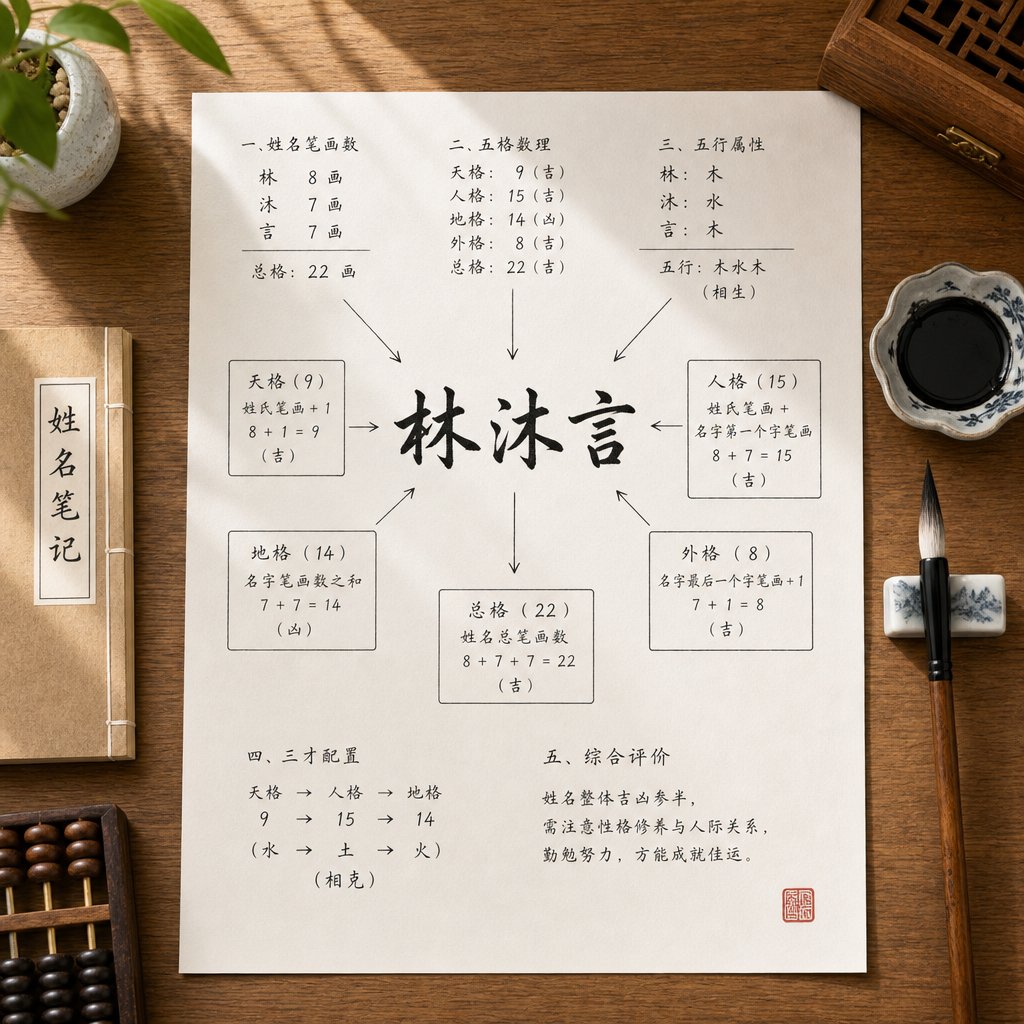
Formulas and mapping tables are useful, but nothing solidifies the process like watching it run from start to finish on an actual name. Let's take the sample name 馬文國 (Ma Wen Guo) and walk through every step, from identifying Kangxi stroke counts to reading the final Three Talents configuration. Each character here has a well-established stroke count in standard references, so you can verify the math independently.
Full Worked Example With a Sample Name
The first task when learning how to calculate name strokes is pinning down the correct Kangxi-standard count for each character. Here's what we're working with:
| Position | Character | Kangxi Stroke Count |
|---|---|---|
| Surname | 馬 (Ma) | 10 |
| Given Name, 1st Character | 文 (Wen) | 4 |
| Given Name, 2nd Character | 國 (Guo) | 11 |
A quick note on naming chinese characters for this example: 馬 is the traditional form of the surname commonly simplified as 马 (3 strokes). Using the simplified count here would produce a Heaven Grid of 4 instead of 11, cascading errors through every subsequent calculation. The character 國 similarly differs from its simplified form 国 (8 strokes versus 11). The character 文 remains unchanged between systems at 4 strokes.
With verified counts in hand, here's the sequential calculation process:
- Heaven Grid = Surname strokes + 1 = 10 + 1 = 11
- Human Grid = Surname strokes + 1st given name character strokes = 10 + 4 = 14
- Earth Grid = 1st given name character strokes + 2nd given name character strokes = 4 + 11 = 15
- Total Grid = All character strokes summed = 10 + 4 + 11 = 25
- External Grid = Total Grid - Human Grid + 1 = 25 - 14 + 1 = 12
Each grid value now gets its elemental assignment based on the last digit:
| Grid | Value | Last Digit | Element |
|---|---|---|---|
| Heaven Grid | 11 | 1 | Wood |
| Human Grid | 14 | 4 | Fire |
| Earth Grid | 15 | 5 | Earth |
| Total Grid | 25 | 5 | Earth |
| External Grid | 12 | 2 | Wood |
Checking Your Results Grid by Grid
The Three Talents configuration for this chinese name stroke count example reads: Wood (Heaven) - Fire (Human) - Earth (Earth). Now evaluate the adjacent relationships:
- Heaven to Human: Wood generates Fire. The Heaven Grid element feeds the Human Grid element, meaning inherited or ancestral energy actively supports core personality development. This is a productive downward relationship.
- Human to Earth: Fire generates Earth. The Human Grid element feeds the Earth Grid element, meaning personal destiny nurtures foundational luck and early-life conditions. Another productive downward relationship.
The result is a continuous generative flow: Wood feeds Fire, Fire creates Earth. This is exactly the pattern practitioners describe as ideal in the Three Talents framework, where each level supports the next without conflict or stagnation. Energy moves smoothly from ancestral influence through personal destiny into foundational luck.
Beyond the Three Talents, you can also check individual grid numbers against the 81 Strokes fortune system. The Human Grid value of 14 is generally classified as inauspicious in that system, while the Total Grid value of 25 is considered auspicious, representing resourcefulness and talent. This illustrates why practitioners look at multiple layers rather than relying on any single indicator. A name chinese character combination might score well on Three Talents harmony but carry a less favorable individual grid number, or vice versa.
If you run this process on your own name and the Three Talents shows a controlling relationship instead of a generative one, that doesn't necessarily mean the name is "bad." It signals where friction might exist and gives you a framework for understanding the elemental dynamics at play. The calculation itself is mechanical and repeatable. The interpretation is where nuance enters.
Of course, this entire worked example assumes every stroke count was correct from the start. In practice, that's the step where errors creep in most often, particularly with characters containing radicals whose Kangxi stroke values differ from their modern visual appearance.
Common Stroke Counting Mistakes and How to Avoid Them
A single miscounted stroke doesn't just nudge your results slightly off. It shifts an entire grid value, potentially reassigning the element and flipping a Three Talents reading from favorable to conflicting. The worked example above assumed clean, verified counts. In reality, the most common stroke counting errors in Chinese names come not from carelessness but from a specific trap: radicals that look like they have fewer strokes than the Kangxi standard actually assigns them.
Radicals With Unexpected Kangxi Stroke Counts
When you write a character like 清 (pure) in everyday handwriting, the left-side water radical 氵 appears to have three strokes: dot, dot, rising stroke. But under the Kangxi Dictionary standard, 氵 is a compressed form of the full character 水 (water), which has four strokes. Every character containing this radical picks up an extra stroke that casual counting misses.
This principle is called radical restoration. When a radical appears in its abbreviated positional form inside a character, you don't count what you see on paper. You count the strokes of the original, unabbreviated character it derives from. The chinese radical stroke count for these components follows the full traditional form, not the shorthand version used in everyday writing.
In Kangxi stroke counting, you are not counting what you write. You are counting what the radical originally was before it was compressed into a component form.
Here are the radicals that trip people up most frequently, along with their kangxi dictionary stroke count values:
| Radical (As Written) | Original Full Form | Apparent Strokes | Kangxi Stroke Count | Common Characters Affected |
|---|---|---|---|---|
| 氵 (three-dot water) | 水 (water) | 3 | 4 | 清, 涵, 洋, 润, 泽 |
| 艹 (grass radical) | 艸 (grass) | 3 or 4 | 6 | 芳, 荣, 萱, 莉, 菲 |
| 忄 (vertical heart) | 心 (heart) | 3 | 4 | 怡, 恒, 悦, 慧 |
| 扌 (hand radical) | 手 (hand) | 3 | 4 | 振, 拓, 持, 抒 |
| 犭 (dog radical) | 犬 (dog) | 3 | 4 | 狮, 猛, 独 |
| 礻 (spirit radical) | 示 (spirit/altar) | 4 | 5 | 祥, 祺, 禧, 福 |
| 衤 (clothing radical) | 衣 (clothing) | 5 | 6 | 裕, 袖, 被 |
| 辶 (walking radical) | 辵 (walk) | 3 or 4 | 7 | 远, 达, 道, 逸, 遥 |
| 阝 left (mound radical) | 阜 (mound) | 2 | 8 | 陈, 阳, 陵, 院 |
| 阝 right (city radical) | 邑 (city) | 2 | 7 | 郑, 邦, 都, 郭 |
Look at the walking radical 辶. In modern handwriting it's three or four quick strokes. Under Kangxi rules, it restores to 辵 at seven strokes. That's a difference of three to four strokes on a single component. A character like 遥 (distant) jumps dramatically in total count because of this one radical. The left-side 阝 is even more deceptive: it looks like just two strokes, but it represents 阜 at eight strokes. And here's a detail that catches even experienced practitioners: the identical-looking 阝 on the right side of a character restores to a different original (邑) and counts as seven strokes, not eight. Left and right versions of the same visual shape carry different stroke values.
The grass radical 艹 deserves special attention because it appears in so many popular naming characters. Names containing 芳, 萱, 莉, or 蓉 all carry this radical, and miscounting it as three or four strokes instead of six creates a two- or three-stroke error that cascades through the grid calculations.
How to Verify Your Stroke Count Is Correct
Given how many radicals require restoration, relying on visual counting alone is a recipe for errors. Here's a practical verification approach:
- Identify the radical first. Before counting total strokes, determine which radical the character belongs to. If it's one of the restoration radicals listed above, apply the corrected count for that component.
- Convert to traditional form. If you're starting from a simplified character, find its traditional equivalent before doing anything else. A character like 泽 (8 simplified strokes) becomes 澤 in traditional form, and the 氵 radical still restores to 4, giving a Kangxi total of 17 strokes.
- Cross-reference with a dedicated tool. Online Kangxi stroke count lookup tools let you input a character and receive its verified count. Use these rather than counting manually, especially for characters with multiple radicals that might each require restoration.
- Double-check characters with two restorable radicals. Some characters contain more than one radical that requires restoration. In these cases, both components need correction, and the cumulative difference from casual counting can be substantial.
The most reliable offline reference remains the Kangxi Dictionary itself, though modern reprints and digital databases built on its data serve the same purpose. What matters is that you're checking against the traditional radical system of 214 categories rather than modern simplified radical lists.
These counting pitfalls explain why two practitioners can analyze the same name and arrive at different results. If one uses Kangxi restoration rules and the other counts strokes visually, their grid values diverge from the very first step. That divergence points to a broader reality: not everyone agrees on which standard to apply, and the system itself contains room for legitimate methodological disagreement.
Different Approaches and Practical Considerations
Two practitioners analyze the same name. One declares it auspicious. The other flags it as problematic. Both followed a systematic method, both used formulas, and both arrived at their conclusions with confidence. How is that possible? The answer lies in the fact that stroke-based name analysis isn't a single unified system. It's a family of related methods that share core principles but diverge on key technical decisions. Understanding where these approaches split helps you evaluate any reading you encounter, whether you're performing your own analysis or assessing someone else's.
Different Schools and Their Varying Approaches
The disagreements between name analysis methods chinese practitioners use aren't minor quibbles. They involve foundational choices that change the output at every level. Here are the primary points of divergence:
- He Tu mapping vs. Heavenly Stems mapping: Some practitioners insist the number-to-element conversion should follow the He Tu directional pairings (1-6 Water, 2-7 Fire, 3-8 Wood, 4-9 Metal, 5-10 Earth). Others use the Heavenly Stems sequential method (1-2 Wood, 3-4 Fire, 5-6 Earth, 7-8 Metal, 9-0 Water). The same grid number produces a completely different element depending on which system you apply.
- 81 Strokes fortune emphasis vs. Three Talents emphasis: One school treats the individual grid numbers and their 81 Strokes fortune meanings as the primary diagnostic tool. Another school prioritizes the Three Talents elemental relationships and treats the 81 Strokes layer as supplementary. A name might score poorly on individual numbers but excellently on Three Talents harmony, leaving the two schools with opposite conclusions.
- Simplified vs. traditional stroke counting: While the orthodox position requires Kangxi-standard counts, some modern practitioners in mainland China argue that simplified characters have accumulated enough cultural energy over decades of use to carry valid numerological weight. This stroke calculation different schools debate remains unresolved and produces the most dramatic result differences.
- Virtual stroke rules: Not all practitioners agree on when to add the +1 virtual stroke. Some apply it only to single-character surnames, others extend it to single-character given names, and a few omit it entirely, arguing it introduces an artificial element that distorts the natural numerical identity of the name.
- Integration with Ba Zi (Eight Characters): Certain schools treat the Five Grids analysis as standalone. Others insist it's meaningless without cross-referencing the person's birth chart. In the integrated approach, a name's elements should compensate for whatever the birth chart lacks. A person born with excessive Fire in their Ba Zi might benefit from a name heavy in Water elements, regardless of whether the Three Talents configuration looks ideal in isolation.
These aren't fringe disagreements. Each variation has established practitioners, published literature, and decades of use behind it. The result is that chinese name numerology approaches can produce contradictory readings for the same name depending on which school's methodology you follow.
Addressing Criticisms of the Stroke Calculation System
Critics raise several legitimate concerns about the system's reliability. The most pointed criticism is straightforward: if different schools produce different results from identical input, the system lacks the internal consistency needed to be considered objective. A name can't simultaneously be elementally harmonious and elementally conflicting. Yet depending on which mapping table you use, that's exactly what happens.
There's also the historical argument. The Five Grids system was created in 1918, not in ancient China. Its connection to classical cosmology is real but indirect. Critics point out that Kumazaki Kenoh designed the system for Japanese names, which have different structural properties than Chinese names. The adaptation to Chinese naming conventions required modifications that some scholars consider imperfect.
The semantic disconnect presents another challenge. A character like 淼 (vast water) contains three water radicals and visually screams "Water element." But if its stroke count ends in 2, the system assigns it to Wood. For people who expect the system to reflect a character's inherent meaning, this feels contradictory. The system's defenders argue that numerological identity operates on a different plane than semantic meaning, but skeptics find this explanation unsatisfying.
None of these criticisms invalidate the system as cultural knowledge. They do suggest that treating any single reading as definitive requires more certainty than the methodology can support. A balanced perspective recognizes the system as a structured framework for thinking about names, one that encodes centuries of philosophical reasoning about balance and harmony, without demanding that it function as an exact predictive science.
Applying This Knowledge to Your Own Name
Whether you approach this material as a believer, a skeptic, or simply someone curious about Chinese cultural traditions, the calculation process itself is worth running on your own name. Here's a practical path forward:
Start by converting your name characters to their traditional forms and verifying Kangxi stroke counts using a reliable reference tool. Run the Five Grids formulas. Apply the Heavenly Stems number-to-element mapping (the most widely used standard in contemporary practice). Check your Three Talents configuration against the productive and destructive cycles.
If you want a deeper layer, look up your individual grid numbers in an 81 Strokes reference to see their fortune classifications. Compare the Three Talents reading with the individual number readings. Do they align, or do they tell different stories? That tension itself is informative. It shows you where the system's different layers agree and where they diverge.
For parents choosing a name, the practical value lies in narrowing options. If you have several candidate names that all sound good and carry positive meanings, running the stroke analysis gives you an additional filter. It won't tell you the "perfect" name, but it can flag combinations where the elemental relationships are particularly harmonious or particularly conflicting under the standard framework.
For everyone else, the value is cultural literacy. Calculating name elements by strokes is a living tradition practiced across East Asia. Understanding how it works, including its internal debates and limitations, gives you a richer appreciation of how Chinese philosophy encodes meaning into the physical structure of written language. The strokes aren't just marks on paper. In this tradition, they're the smallest units of a name's hidden architecture, carrying numerical weight that connects individual identity to a cosmological system thousands of years in the making.
Frequently Asked Questions About Calculating Name Elements by Strokes
1. How do you convert stroke numbers into Five Elements in Chinese name analysis?
The conversion uses the last digit of each grid number. Numbers ending in 1 or 2 correspond to Wood, 3 or 4 to Fire, 5 or 6 to Earth, 7 or 8 to Metal, and 9 or 0 to Water. This mapping derives from the Ten Heavenly Stems sequence rather than directly from the He Tu diagram, though both share cosmological roots. The rule applies regardless of how large the grid number is, so a value of 7 and a value of 47 both map to Metal.
2. Why must I use Kangxi Dictionary stroke counts instead of modern simplified counts?
The Five Grids system, the 81 Strokes fortune meanings, and the Three Talents interpretations were all calibrated using traditional character forms from the Kangxi Dictionary. Simplified characters introduced in the 1950s reduced stroke counts for literacy purposes, but this altered the numerical identity of thousands of characters. Using simplified counts produces grid values that don't align with the system's interpretive framework, leading to inaccurate elemental assignments and misleading readings.
3. What is the Three Talents configuration in Chinese name stroke analysis?
The Three Talents (San Cai) is a triad formed by the elements assigned to the Heaven Grid, Human Grid, and Earth Grid. It mirrors the classical model of Heaven above, Humanity in the middle, and Earth below. Practitioners evaluate whether adjacent elements in this sequence generate or control each other. A configuration where each element feeds the next in the productive cycle (such as Water-Wood-Fire) is considered highly auspicious, while controlling relationships signal friction or obstacles in the corresponding life domains.
4. What are the most common stroke counting mistakes in Chinese name element calculation?
The most frequent errors involve radicals that appear abbreviated in written form but must be counted at their full original stroke value under Kangxi rules. For example, the three-dot water radical counts as 4 strokes (restoring to the full character for water), the grass radical counts as 6, and the walking radical counts as 7. The left-ear radical that appears as just 2 strokes actually counts as 8. These restoration rules can add several strokes per character that visual counting misses entirely.
5. Can two practitioners get different results when analyzing the same name?
Yes, and this happens regularly due to legitimate methodological differences between schools. Key points of divergence include which number-to-element mapping to use (He Tu pairings versus Heavenly Stems sequence), whether to prioritize Three Talents harmony or individual 81 Strokes fortune numbers, and whether simplified character counts carry valid numerological weight. Each variation has established practitioners and published literature supporting it, which is why no single reading should be treated as absolute.