The Beauty of Wind in Chinese Baby Names
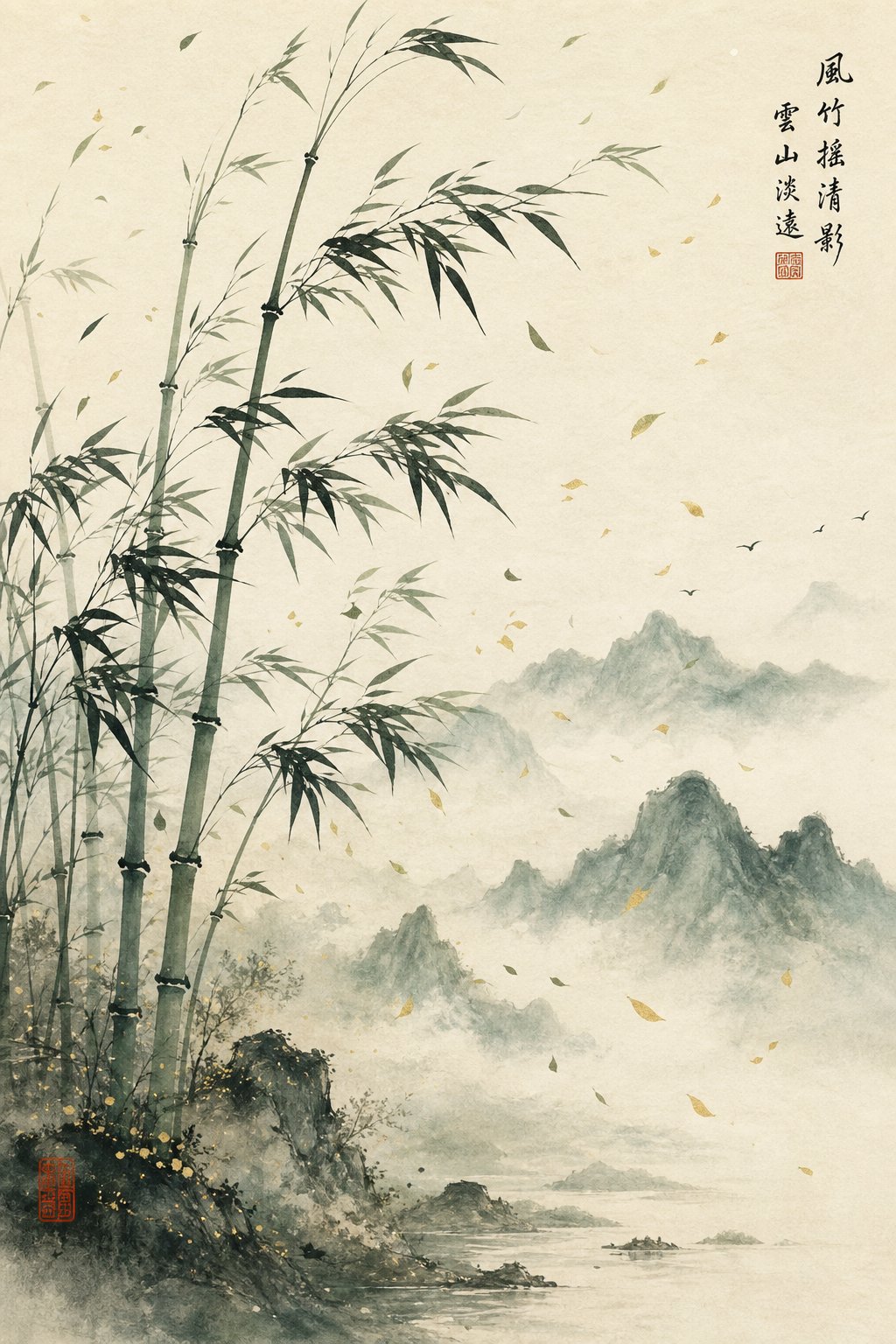
Imagine a force that scatters autumn leaves, opens spring flowers, raises thousand-foot waves on rivers, and bends ten thousand bamboo stalks at once. That is how Tang dynasty poet Li Qiao described wind in just four lines, capturing its invisible power through the things it touches. For Chinese parents, this same energy makes wind one of the most compelling naming elements available.
解落三秋叶,能开二月花。过江千尺浪,入竹万竿斜。
"It blows down the leaves of late autumn, yet opens the flowers of early spring. Over the river it raises waves a thousand feet high; through the bamboo grove, ten thousand stalks lean." - Li Qiao, "Wind"
Why Wind Is a Treasured Naming Element
The character 风 (feng) carries far more weight than its English translation suggests. Beyond weather, it represents demeanor, bearing, and personal style through the concept of fengdu (风度). It signals elegance through fengcai (风采). It evokes moral character through fenggu (风骨). When parents choose Chinese baby names meaning wind, they are not simply naming a child after a breeze. They are embedding aspirations of freedom, grace, and the kind of quiet strength that reshapes landscapes without force.
Wind-inspired Chinese names for babies also tap into something deeply philosophical. Wind is movement itself, the invisible force that carries seeds to distant places and sweeps life in unexpected directions. In a culture that has spent over 3,000 years writing poetry about this single element, choosing a wind name means giving your child a piece of living literary tradition.
What This Guide Covers
Whether you are a Chinese-heritage family honoring tradition or a parent drawn to the meaning behind chinese names that mean wind, this guide walks you through everything you need. You will find curated name lists for boys, girls, and unisex options, each with pronunciation guidance designed for non-Mandarin speakers. You will learn which character combinations carry beautiful connotations and which ones to avoid. And you will understand the cultural layers that make each name more than just a sound.
The character 风 first appeared on oracle bones over three millennia ago, and its richness only deepens from there. Let's start with the character itself and the tonal system that gives it meaning.
Understanding the Wind Character and Its Tones
Before you settle on a wind-inspired name, you need to understand the character at its core. The feng chinese character meaning wind is far more layered than a simple weather symbol, and pronouncing it correctly matters more than you might expect.
Breaking Down the Character 风
The simplified character 风 looks deceptively simple. Its traditional form, 風, reveals much more. The outer frame 凡 originally served as a phonetic indicator, telling readers how to pronounce the character. Inside sits 虫, the insect radical. Why insects inside a wind character? Ancient Chinese observed that you cannot see wind directly. You see it through what it moves: leaves scattering, grass bending, and insects stirring to life with the arrival of spring breezes. The 虫 radical captures this idea that wind makes itself known through the living world it animates.
The character first appeared on oracle bones over 3,000 years ago, originally sharing its pictorial form with 凤 (phoenix). During the Qin dynasty (221-207 BCE), the two split into separate seal-script forms: 鳳 for the mythical bird and 風 for the weather phenomenon. Modern simplification brought us 风 for wind and 凤 for phoenix, but their ancient kinship still echoes in naming traditions.
How Tones Change Everything
Here is where many parents stumble. Mandarin uses four tones, and the syllable "feng" means completely different things depending on which tone you use. Imagine saying the English word "there" versus "their" versus "they're." Tones work similarly but with pitch instead of spelling. A wrong tone does not just sound off; it changes the word entirely.
When choosing a name, you want the first tone: fēng. This is the one that means wind, style, and bearing. The table below shows how each tone transforms the same syllable into an unrelated word:
| Tone | Pinyin | Character | Meaning | English Approximation |
|---|---|---|---|---|
| 1st (high, flat) | fēng | 风 / 風 | Wind; style; demeanor | Say "fung" with a steady, high-pitched hum, like holding a musical note |
| 2nd (rising) | féng | 缝 | To sew; to stitch | Say "fung" as if asking a surprised question: "Fung?" |
| 3rd (dipping) | fěng | 讽 | To satirize; to mock | Say "fung" starting low, dipping lower, then rising slightly, like a reluctant "well..." |
| 4th (falling) | fèng | 凤 | Phoenix (mythical bird) | Say "fung" sharply downward, like a firm command: "Stop!" |
You will notice that the first tone sounds like a sustained, level pitch at the top of your vocal range. Think of the sound a doctor asks you to make: "Ahhh." That flat, steady quality is what you are aiming for when you say fēng.
The Radical Story Behind Wind
The feng name meaning in Mandarin extends well beyond meteorology. Because 风 historically connects to both insects (nature made visible) and the phoenix (mythical grace), it carries a dual energy: grounded in the natural world yet reaching toward something transcendent. This is precisely why it works so powerfully in names. A child named with 风 inherits both the earthiness of rustling leaves and the aspiration of flight.
Understanding how to pronounce feng in chinese names correctly is not just academic. When you introduce your child, when teachers call attendance, when the name appears in conversation for decades to come, that first tone needs to ring clear and steady. The difference between naming your child "wind" and accidentally naming them "to satirize" comes down to pitch alone.
With the character and its sound firmly in hand, the deeper question becomes: what does wind actually represent in Chinese thought? The answer reaches back through millennia of philosophy, poetry, and elemental theory.
Cultural Symbolism of Wind in Chinese Tradition
Wind is not just air in motion within Chinese philosophy. It is a cosmic force woven into the very framework that explains how the universe operates. When you choose a wind name for your child, you are drawing on thousands of years of meaning that connects weather to character, seasons to spirit, and nature to human aspiration.
Wind in Chinese Philosophy and Wu Xing
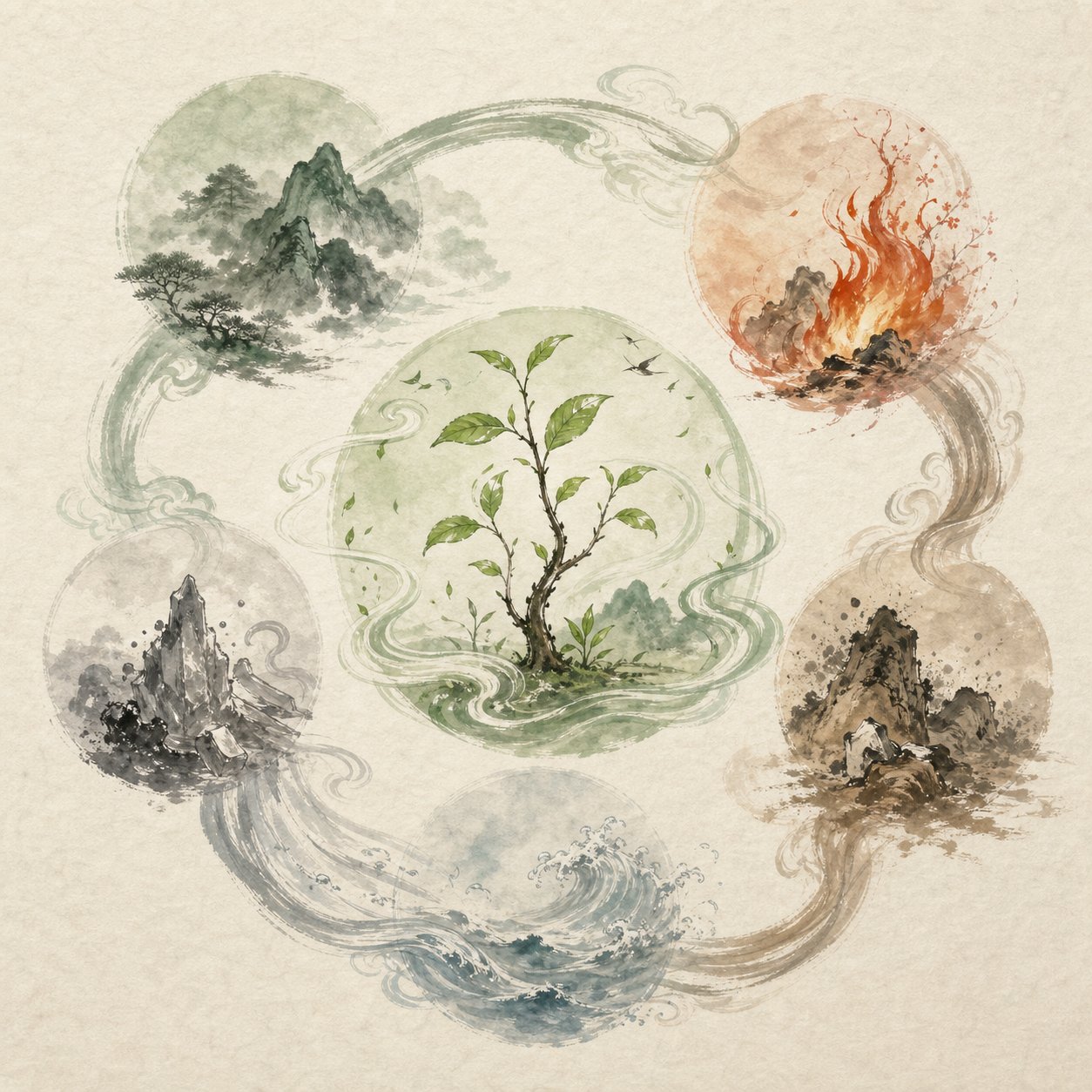
The Chinese Five Elements system, known as Wu Xing, maps relationships between all things in nature. It identifies five phases: Wood, Fire, Earth, Metal, and Water. Wind belongs to the Wood element and corresponds to spring, the season of sprouting, growth, and new beginnings. In this framework, spring is associated with the color green, the direction east, and the climate of wind. Think of it this way: just as spring pushes new shoots through cold soil, wind carries the energy of forward movement and fresh starts.
This connection gives wind names a built-in layer of meaning. A child whose name evokes wind also carries the energy of spring: renewal, upward growth, and the kind of gentle persistence that cracks open seeds. The Wu Xing system also links wind and the Wood element to patience, altruism, and the liver (the organ of planning and vision in traditional Chinese medicine). So the feng cultural significance in naming goes far deeper than poetic imagery. It ties into an entire cosmological system that Chinese families have lived within for millennia.
Literary References That Inspire Names
Wind in Chinese poetry and philosophy is everywhere. China's oldest poetry anthology, the Shijing (Book of Songs, dating to around 600 BCE), organizes its first and largest section under the heading "Feng" (风), meaning "Airs" or "Winds." These 160 poems capture the daily emotions and lives of common people, collected from different regions like winds blowing in from various directions. The very word for folk poetry became synonymous with wind itself.
During the Tang Dynasty (618-907 CE), poets like Li Bai and Du Fu elevated wind into a vehicle for expressing longing, resilience, and the passage of time. Du Fu's famous "View in Springtime" (春望) opens with a ruined kingdom where grass and trees still grow deep, spring wind indifferent to human suffering. Li Bai wrote of riding the wind across vast distances, turning it into a symbol of unbounded freedom. The idiom 乘风破浪 (chengfeng polang), meaning "to ride the wind and cleave the waves," originates from this literary tradition and still describes bold ambition today.
The Aspirational Meaning Parents Choose
Wind symbolism in Chinese culture extends into a rich vocabulary of personal qualities. When parents select a wind-related name, they are often reaching for one of these deeper associations:
- 风度 (fengdu) - Demeanor, poise, and personal bearing. Describes someone who carries themselves with natural grace.
- 风骨 (fenggu) - Moral backbone and literary strength. Originally a term for vigorous, principled writing, it now describes integrity of character.
- 风雅 (fengya) - Elegance and refined taste. Drawn directly from two sections of the Shijing ("Feng" and "Ya"), linking sophistication to literary heritage.
- 风采 (fengcai) - Charisma and distinguished bearing. Used to describe someone with the air of a scholar or leader.
- 风华 (fenghua) - Elegance and talent in full bloom. Often used to describe someone at the peak of their brilliance.
- 风范 (fengfan) - Exemplary conduct and style. The kind of presence that others naturally follow.
Notice how none of these concepts relate to weather. They all describe human qualities: grace, integrity, charisma, refinement. This is what makes wind names aspirational rather than merely descriptive. You are not naming your child after a gust of air. You are naming them after the qualities that wind represents in a culture that has spent over three thousand years contemplating its meaning.
The connection to freedom and artistic spirit runs especially strong. Wind cannot be contained, owned, or predicted. It moves where it chooses. For parents who want their child's name to carry a sense of independence and creative energy, few elements in the Chinese naming tradition offer this combination of elegance and wildness.
These cultural layers are exactly what transform a simple character into a powerful name. The question becomes: which specific combinations best channel this energy for a son or daughter?
Wind-Inspired Chinese Names for Boys
For sons, wind carries connotations of strength, ambition, and the kind of effortless confidence described by fengdu (风度). Chinese boy names meaning wind range from bold declarations, placing 风 front and center, to subtler evocations through characters that suggest soaring, gusting, or sweeping motion. Both approaches draw on the same cultural well, but they create different impressions on the page and in conversation.
Boy Names Using 风 Directly
These names place the character 风 (fēng) within the given name itself. The result is unmistakable: anyone reading the name in Chinese immediately recognizes the wind reference. This directness works well for parents who want the meaning to be clear and culturally resonant from the first glance.
| Name | Pinyin | Pronunciation Guide | Meaning & Cultural Connotation |
|---|---|---|---|
| 逸风 | yìfēng | "ee-fung" (ee as in "see," fung with a steady high tone) | Free as the wind. Combines 逸 (carefree, unrestrained) with 风. Evokes a scholar who chooses freedom over convention. |
| 风华 | fēnghuá | "fung-hwah" (both syllables smooth and open) | Elegance of wind; talent in full bloom. Drawn from the phrase 风华正茂, describing someone at the peak of brilliance. |
| 凌风 | língfēng | "ling-fung" (ling rhymes with English "ling") | Rising above the wind. Suggests someone who faces challenges head-on and soars beyond them. |
| 风朗 | fēnglǎng | "fung-lahng" (lahng with a dipping tone) | Wind and clarity. Paints the image of a clear sky after wind sweeps clouds away. Implies openness and honesty. |
| 承风 | chéngfēng | "chung-fung" (chung with a rising tone) | Inheriting the wind; carrying forward. Connected to the idiom 乘风破浪 (riding the wind and cleaving waves), symbolizing bold ambition. |
| 风骏 | fēngjùn | "fung-jwen" (jwen with a sharp falling tone) | Wind-swift steed. Combines wind with 骏 (fine horse), suggesting speed, nobility, and spirited energy. |
You will notice that many of these combinations pair 风 with a character that amplifies or directs its energy. 逸风 channels wind toward freedom. 凌风 channels it toward courage. The second character acts like a rudder, steering the wind's meaning toward a specific aspiration.
Boy Names Evoking Wind Through Imagery
Not every strong wind name for boys in Chinese needs to contain 风 explicitly. Some of the most evocative choices use characters that suggest wind's effects: soaring flight, powerful gusts, or the sweeping motion of air across open landscapes. These names feel less literal and more poetic, which appeals to parents who prefer subtlety.
| Name | Pinyin | Pronunciation Guide | Meaning & Cultural Connotation |
|---|---|---|---|
| 飙 | biāo | "bee-ow" (like "bee" + "ow" blended quickly) | Whirlwind; violent gust. A single-character name with raw power. Suggests intensity and unstoppable force. |
| 翔 | xiáng | "shee-ahng" (rising tone, smooth and gliding) | Soaring; gliding flight. Implies riding wind currents effortlessly. One of the most popular nature characters in Chinese male names. |
| 鹏翔 | péngxiáng | "pung-shee-ahng" (both syllables rising) | The great roc soaring. 鹏 is a mythical bird from Zhuangzi's philosophy that rides wind currents for 90,000 li. A name of enormous ambition. |
| 逸 | yì | "ee" (short, with a sharp falling tone) | Unrestrained; leisurely escape. Historically described scholars who left government to live freely in mountains. Carries the philosophy of spiritual freedom over material comfort. |
| 浩翰 | hàohàn | "how-hahn" (both falling tones, strong and decisive) | Vast and boundless. Evokes the feeling of wind sweeping across open plains. Suggests expansive vision and broad-mindedness. |
| 云翼 | yúnyì | "ywen-ee" (ywen rising, ee falling) | Cloud wings. Combines sky imagery with flight, suggesting a boy who moves through life with wind-like grace and elevation. |
Strong and Classic Combinations for Sons
When choosing between direct and evocative approaches, consider how the name sounds alongside your surname. A single-character name like 翔 paired with a common surname such as Li (李翔) creates a clean, memorable three-syllable name. A two-character given name like 逸风 paired with the same surname (李逸风) produces a four-syllable name with more rhythmic complexity.
Current naming trends in China show parents gravitating toward names that blend natural imagery with classical literary resonance. Characters like 逸, 翔, and 鹏 appear frequently in modern registries precisely because they carry wind energy without feeling dated. They bridge traditional aspiration and contemporary taste.
One practical note: boy names that mean breeze in chinese tend to use softer pairings like 清风 (qīngfēng, clear breeze) or 和风 (héfēng, gentle wind). These work beautifully but carry a gentler, more contemplative energy compared to the bolder options above. If you want strength and movement, lean toward 凌, 飙, or 鹏. If you want calm confidence, 逸风 or 清风 strike that balance.
Of course, wind does not belong exclusively to boys. Many of these same characters and concepts translate into equally powerful, equally poetic names for daughters, though the pairing strategies shift in interesting ways.
Wind-Inspired Chinese Names for Girls
Wind in feminine Chinese names tends to shift register. Where boys' names often channel wind as force and ambition, chinese girl names meaning wind lean toward grace, musicality, and the poetic imagery of breezes moving through natural landscapes. The character 风 still appears directly, but it is just as common to find gentle breeze names for girls in chinese that evoke wind through clouds, chimes, mist, and drifting motion. Both approaches carry equal cultural weight.
Girl Names with Direct Wind Meaning
These chinese female names with feng place the wind character within the given name itself. The effect is elegant rather than forceful, especially when 风 pairs with characters suggesting sound, light, or refinement.
| Name | Pinyin | Pronunciation Guide | Meaning & Cultural Connotation |
|---|---|---|---|
| 风铃 | fēnglíng | "fung-ling" (ling with a rising tone, like asking a question) | Wind chime. Evokes the delicate sound of bells stirred by a breeze. Suggests a girl whose presence brings gentle music to those around her. |
| 清风 | qīngfēng | "ching-fung" (ching as in "cheese" without the "ze") | Clear breeze. One of the most beloved wind images in Chinese poetry, representing purity and refreshing calm. Implies someone who brings clarity wherever she goes. |
| 风荷 | fēnghé | "fung-huh" (huh with a rising tone) | Wind over lotus. Paints the image of a breeze rippling across a lotus pond. Combines wind's freedom with the lotus's symbolism of emerging pure from muddy waters. |
| 风吟 | fēngyín | "fung-yin" (yin with a rising tone) | Wind's song; wind chanting. Suggests the sound wind makes through pine trees or bamboo groves. Carries a literary, artistic quality. |
| 风眠 | fēngmián | "fung-mee-en" (mian smooth and flowing) | Sleeping in the wind. A dreamy, painterly name inspired by the famous modernist artist Lin Fengmian. Suggests creative spirit and tranquil confidence. |
| 晓风 | xiǎofēng | "shee-ow-fung" (shee-ow with a dipping tone) | Dawn breeze. The first gentle wind of morning. Evokes freshness, new beginnings, and quiet beauty before the world fully wakes. |
Notice how these pairings soften 风 without diminishing it. 风铃 turns wind into music. 清风 turns it into clarity. 晓风 turns it into the tender first breath of a new day. The wind is still there, still free, but expressed through what it touches rather than through raw power.
Gentle Breeze and Cloud Names for Daughters
Some of the most poetic wind names for daughters skip 风 entirely and reach for characters that are wind in disguise: clouds drifting, mist rising, air flowing softly. The character 云 (yun, cloud) pairs especially well with wind imagery because clouds are, in a sense, wind made visible. In Chinese literary tradition, clouds represent elevation, transcendence, and a dreamy artistic temperament that resists being pinned down.
| Name | Pinyin | Pronunciation Guide | Meaning & Cultural Connotation |
|---|---|---|---|
| 云舒 | yúnshū | "ywen-shoo" (ywen rising, shoo steady) | Clouds unfolding at ease. From the classical line "watching clouds roll and unroll." Suggests a girl who moves through life with unhurried grace. |
| 云裳 | yúncháng | "ywen-chahng" (chahng with a rising tone) | Cloud garments. From Li Bai's famous poem praising Yang Guifei: "Cloud-like robes, flower-like face." Implies ethereal beauty. |
| 霏 | fēi | "fay" (steady first tone, like the English name Faye) | Misty rain; fine drizzle carried by wind. Appears in the Shijing (Book of Songs). Suggests someone comfortable with mystery, who reveals herself gradually. |
| 岚 | lán | "lahn" (rising tone, rhymes with "on") | Mountain mist; wind among peaks. Combines the mountain radical with wind. A single-character name with atmospheric depth and quiet strength. |
| 云霓 | yúnní | "ywen-nee" (both rising tones) | Clouds and rainbow. Evokes the moment after wind and rain clear to reveal color. Suggests hope, beauty emerging from change. |
| 烟云 | yānyún | "yen-ywen" (yen flat, ywen rising) | Mist and clouds. A painterly name evoking traditional Chinese landscape art where mist creates depth and mystery. Implies an enigmatic, artistic nature. |
The character 岚 deserves special attention. It literally embeds the wind radical within a mountain, creating the image of breezes swirling through high peaks. As a single-character given name, it carries simplicity and depth in equal measure, a quality that aligns with current naming trends favoring concise yet profound choices.
Poetic Wind Imagery in Feminine Names
Beyond clouds and mist, wind expresses itself through motion: drifting petals, flowing silk, the gentle sway of willow branches. These names capture wind's presence through what it moves, creating imagery that feels alive on the page.
| Name | Pinyin | Pronunciation Guide | Meaning & Cultural Connotation |
|---|---|---|---|
| 飘逸 | piāoyì | "pee-ow-ee" (pee-ow flat, ee falling) | Drifting gracefully. Combines 飘 (floating in wind) with 逸 (carefree elegance). Describes someone who moves through life with effortless poise. |
| 柳絮 | liǔxù | "lee-oh-shoo" (lee-oh dipping, shoo falling) | Willow catkins. The white fluff that drifts on spring breezes. A classic image in Chinese poetry for gentle, airborne beauty. |
| 舞风 | wǔfēng | "woo-fung" (woo dipping, fung steady) | Dancing in the wind. Suggests joyful movement, a girl who meets life's currents with grace rather than resistance. |
| 漪 | yī | "ee" (steady first tone) | Ripples on water. Wind's signature on a still lake. A subtle, elegant single-character name suggesting quiet influence spreading outward. |
| 絮宁 | xùníng | "shoo-ning" (shoo falling, ning rising) | Catkins at peace. Combines wind-carried imagery with tranquility. Suggests someone who finds calm within movement. |
| 若风 | ruòfēng | "rwoh-fung" (rwoh falling, fung steady) | Like the wind. The character 若 (like, as if) adds a poetic softness, making the name a simile rather than a statement. Gentle yet free. |
The character 飘 (piao) is particularly interesting for girls' names. Its flowing strokes seem to drift across the page, and names incorporating it suggest someone who moves through life with grace, unburdened by rigid plans and comfortable with uncertainty. In a culture that often values careful planning, there is something quietly bold about choosing a name that celebrates fluid movement.
Whether you gravitate toward the musical clarity of 风铃, the atmospheric mystery of 岚, or the drifting poetry of 柳絮, each of these names gives a daughter wind's essential gift: the freedom to move, to change, and to remain beautifully uncontainable. Many of these characters also work beautifully in gender-neutral contexts, which raises a natural question: what about names that carry wind energy without committing to traditionally masculine or feminine territory?
Unisex Options and Subtle Wind Imagery Names
Some names refuse to sit neatly in gendered categories, and wind, by its very nature, resists being boxed in. Unisex chinese names meaning wind work precisely because wind itself carries no inherent masculine or feminine energy. It can be a howling gale or a whispered breeze, a force that topples trees or one that barely stirs a curtain. Gender neutral wind names in chinese draw on this flexibility, offering parents choices that feel equally natural for any child.
Unisex Names That Carry Wind Energy
The names below work across genders because their core imagery, movement through open space, rising above, drifting freely, speaks to universal human aspirations rather than gendered ones. Each carries wind energy without leaning toward traditionally masculine strength or traditionally feminine softness.
| Name | Pinyin | Pronunciation Guide | Meaning & Cultural Connotation |
|---|---|---|---|
| 凌 | líng | "ling" (rising tone, like asking "ling?") | Rising above; soaring over. Suggests someone who transcends obstacles the way wind rises over mountain ridges. Works as a single-character name or paired with others. |
| 岚 | lán | "lahn" (rising tone) | Mountain mist stirred by wind. The character literally contains the wind radical beneath the mountain radical. Atmospheric and gender-neutral in modern usage. |
| 逸 | yì | "ee" (sharp falling tone) | Unrestrained; carefree escape. Historically described scholars who withdrew from government to live freely, choosing poetry over politics. Carries a philosophy of spiritual freedom. |
| 飘 | piāo | "pee-ow" (flat first tone) | Drifting in the wind. Captures leaves, petals, or snowflakes carried on air currents. Suggests grace and comfort with uncertainty. |
| 翎 | líng | "ling" (rising tone) | Feather; plume. The part of a bird that catches wind. Implies lightness, elegance, and readiness for flight. |
| 澈 | chè | "chuh" (falling tone, like a firm "check" without the k) | Clear; transparent. Evokes the clarity that follows when wind sweeps away haze. Suggests honesty and a refreshing presence. |
You will notice that 凌 and 岚 appear in both boys' and girls' name lists across Chinese naming resources. This dual usage is not accidental. These characters describe natural phenomena that exist beyond human gender categories. A mountain mist does not belong to anyone. Rising air does not choose sides. Parents who want their child's name to carry wind's freedom without prescribing how that freedom should express itself often land on exactly these characters.
Subtle Wind Names Without Using 风 Directly
Here is where naming becomes an art of suggestion rather than statement. Chinese names that evoke wind without feng rely on characters that describe what wind does rather than what wind is. The wind itself stays invisible, but its presence is unmistakable through the imagery of soaring, drifting, swirling, and flowing. Think of it as painting the wind by painting the leaves it moves.
These subtle wind meaning chinese baby names fall into three natural categories based on the type of wind energy they channel:
Gentle Breeze Names - soft movement, calm air, quiet presence:
- 煦 (xù) - Warm breeze; gentle warmth. The feeling of spring air on skin. Suggests nurturing kindness.
- 柔 (róu) - Soft; supple. Like grass bending in a light wind rather than breaking. Implies flexibility and quiet strength.
- 漪 (yī) - Ripples on water. Wind's lightest touch made visible on a still surface. Subtle influence spreading outward.
- 拂 (fú) - To brush lightly; to sweep past. The motion of a breeze across your face. Delicate and fleeting.
- 悠 (yōu) - Leisurely; unhurried. The pace of clouds drifting on a calm day. Suggests someone who refuses to be rushed.
Powerful Gust Names - force, speed, decisive movement:
- 飙 (biāo) - Whirlwind; violent gust. Raw atmospheric power compressed into a single character.
- 凛 (lǐn) - Biting cold; awe-inspiring. The sharp edge of winter wind. Commands respect.
- 骋 (chěng) - To gallop; to race freely. The speed of wind across open plains. Suggests ambition without restraint.
- 啸 (xiào) - To whistle; to howl. The sound wind makes through narrow passes. Carries a wild, untamed quality.
- 湍 (tuān) - Rushing current. Water driven by wind into rapid motion. Implies urgency and decisive energy.
Atmospheric Movement Names - rising mist, shifting clouds, air in transition:
- 霏 (fēi) - Fine misty rain carried on wind. From the Shijing. Suggests someone comfortable with mystery, who does not need everything explained.
- 霭 (ǎi) - Mist; haze. Clouds that have descended to mingle with the human world. Approachable despite a dreamy nature.
- 渺 (miǎo) - Vast and indistinct. The feeling of looking across a misty lake where water meets sky. Implies depth beyond what is immediately visible.
- 曳 (yè) - To trail; to drag gently. Like silk or smoke pulled by moving air. Graceful, unhurried motion.
- 氤 (yīn) - Rising vapor; atmospheric energy. Often paired as 氤氲 (yīnyūn), describing mist swirling upward. Suggests creative energy gathering before it takes form.
Choosing Between Direct and Evocative Approaches
So when does a parent reach for 风 itself versus one of these indirect alternatives? The decision often comes down to how you want the name to communicate.
A name containing 风 directly, like 逸风 or 清风, announces its meaning immediately. Any Chinese reader sees the character and thinks "wind." There is no ambiguity, no need for interpretation. This directness carries confidence. It also means the name participates in a long tradition of wind-bearing names, connecting your child to centuries of poets and scholars who carried the same character.
An evocative name like 岚, 飘, or 凌 works differently. The wind connection requires a moment of recognition. Someone reading the name thinks "mountain mist" or "drifting" or "soaring" before the wind association surfaces. This layered quality appeals to parents who prefer names that reward closer attention, names that reveal their depth gradually rather than all at once.
Consider these practical factors when deciding:
- International readability: Characters like 逸 and 凌 transliterate into English more smoothly (Yi, Ling) than 风 (Feng), which English speakers sometimes confuse with "fang."
- Tonal pairing: 风 is a first tone character. If your surname is also first tone, stacking two flat tones can sound monotonous. An evocative character in a different tone creates more musical variety.
- Subtlety preference: Some families prefer names that do not immediately telegraph their meaning. A name like 霏 carries wind energy but does not announce it, leaving room for the child to define themselves beyond a single element.
- Character stroke count: 风 has only four strokes in simplified form, making it easy for a child to learn to write. Characters like 飘 (15 strokes) or 霏 (14 strokes) are more complex, which matters for young children practicing handwriting.
Neither approach is superior. A name like 凌风 (língfēng) even combines both strategies, using an evocative character alongside the direct one. The best choice depends on your surname's tonal pattern, how the name will function across languages, and whether you want wind to be the first thing people notice or a deeper layer they discover over time.
Whichever direction you lean, pronunciation remains the bridge between a beautiful character on paper and a name that sounds right in daily life. For parents who did not grow up speaking Mandarin, getting the tones and sounds correct is the next essential step.
Pronunciation Guide for Non-Mandarin Speakers
You have found the perfect wind name on paper. The meaning resonates, the characters look beautiful, and the cultural layers feel right. But when you try to say it out loud, something feels uncertain. How do you pronounce chinese wind names so they sound natural rather than awkward? The gap between reading pinyin and actually producing the correct sounds trips up most English-speaking parents, and tones are the biggest reason why.
A Simple Guide to Mandarin Tones
Mandarin has four tones plus a neutral tone. Each tone changes the pitch of your voice in a specific way, and as language researchers emphasize, tones are roughly as important as vowels in English. Get the tone wrong and you change the word entirely, not just the accent.
Here are the four tones explained through everyday English analogies:
- First tone (high, flat): Hold a steady, high-pitched note, like the sound a doctor asks you to make: "Ahhh." No rise, no fall. Just flat and high. This is the tone for 风 (fēng, wind).
- Second tone (rising): Say a one-word question in English. When someone says something surprising and you respond "What?" with your voice rising at the end, that rising pitch is the second tone. Think of 岚 (lán, mountain mist).
- Third tone (low/dipping): Start low, dip even lower, then let your voice rise slightly at the end. It sounds like a reluctant, drawn-out "well..." when you are unsure about something. Think of 逸 in its standalone pronunciation context.
- Fourth tone (falling): Say "No!" firmly to a child reaching for something dangerous. That sharp, decisive drop from high to low is the fourth tone. Think of 逸 (yì, carefree).
The key insight from tone research: mandarin tones for baby names explained in isolation are manageable, but they become trickier when strung together in a full name. This is why tone pairs matter. A Chinese name is typically two or three syllables spoken in sequence, and each syllable's tone influences how the next one feels.
Pronouncing Wind Characters Correctly
Beyond tones, certain pinyin letters do not map to English sounds the way you might expect. The pinyin system is not a phonetic spelling of English sounds. It is a romanization system with its own rules. Here are the most common pitfalls when pronouncing wind-related name characters:
- "Feng" is not "fang": The vowel "e" in pinyin sounds like the "u" in "fun" or the "e" in "the" (unstressed). Say "fung" rather than "fang" or "feng" as in English.
- "Q" sounds like "ch": In 清风 (qīngfēng), the "q" is pronounced like "ch" in "cheese" but with a slight "y" sound added. Say "ching-fung" not "king-fung."
- "X" sounds like "sh": In 翔 (xiáng), the "x" is close to "sh" in "sheep" with a hint of "sy." Say "shee-ahng" not "ksee-ahng."
- "Zh" is not "z": In 朗 paired names, "zh" sounds like "j" in "John" with the tongue curled back. It is never a buzzing "z" sound.
- "Ü" has no English equivalent: In characters like 雨 (yǔ), round your lips as if saying "oo" but try to say "ee" instead. The result is close enough.
A practical tip: record yourself saying the name and compare it to native audio. Free pinyin charts with audio from resources like Yabla let you click any syllable and hear it spoken in all four tones. Listen, mimic, compare. Even a few minutes of practice makes a noticeable difference.
How Surnames Pair with Wind Names
A name does not exist in isolation. Your child's surname comes first in Chinese, and the tonal relationship between surname and given name determines whether the full name flows musically or stumbles. Naming experts emphasize that a well-crafted name should move through different tones, creating natural rhythm when spoken aloud.
The general principle: variety creates flow. When consecutive syllables share the same tone, especially the first tone, the name can sound flat and monotonous. When tones alternate or create a rising-falling pattern, the name feels more dynamic and pleasing to the ear.
Here is how common surnames pair with popular wind names, rated for tonal harmony:
| Surname + Name | Pinyin (Tones) | Tonal Pattern | Harmony Rating | Notes |
|---|---|---|---|---|
| 李逸风 | Lǐ Yìfēng (3-4-1) | Low → Falling → High | Excellent | Three different tones create dynamic movement. The name rises from low to high across its syllables. |
| 王清风 | Wáng Qīngfēng (2-1-1) | Rising → High → High | Fair | Two consecutive first tones can sound flat. Consider 王清岚 (Wáng Qīnglán, 2-1-2) for more variety. |
| 张凌风 | Zhāng Língfēng (1-2-1) | High → Rising → High | Good | The rising second tone in the middle breaks up the two first tones nicely. |
| 陈风华 | Chén Fēnghuá (2-1-2) | Rising → High → Rising | Excellent | Alternating pattern creates a pleasing wave-like rhythm. |
| 刘岚 | Liú Lán (2-2) | Rising → Rising | Fair | Two rising tones in a row can feel repetitive. Works better in casual speech where the second tone softens. |
| 赵飘逸 | Zhào Piāoyì (4-1-4) | Falling → High → Falling | Excellent | Strong contrast between the high first tone and surrounding falling tones. Memorable and rhythmic. |
| 林风铃 | Lín Fēnglíng (2-1-2) | Rising → High → Rising | Excellent | Musical alternation mirrors the tinkling quality of the name's meaning (wind chime). |
| 周逸 | Zhōu Yì (1-4) | High → Falling | Good | Clean two-syllable contrast. The falling tone gives a decisive, confident ending. |
You will notice that the "Excellent" ratings all share one trait: no more than two consecutive syllables on the same tone. The "Fair" ratings stack identical tones, which is not wrong but lacks the musical quality that makes a name memorable when spoken aloud.
A quick self-test: say the full name (surname plus given name) out loud three times quickly, as if calling your child across a playground. If your voice moves up and down naturally without feeling stuck on one pitch, the tonal harmony is working. If it feels like you are droning on a single note, consider swapping one character for a synonym in a different tone.
This chinese name pronunciation guide for english speakers covers the essentials, but pronunciation is only half the practical picture. Equally important is knowing which character combinations to avoid entirely, where beautiful-sounding wind names can accidentally carry meanings no parent would want.
Chinese Naming Taboos for Wind Names: What to Avoid
A name can sound beautiful, carry the right tone, and still land badly because of a hidden connotation the parents never saw coming. Wind is a powerful naming element, but it also carries a shadow side. In Chinese culture, wind can imply instability, rootlessness, or moral looseness depending on how it pairs with other characters. Knowing which wind name combinations to avoid in chinese is just as important as finding the ones you love.
Wind Combinations That Carry Negative Meanings
Wind's greatest strength as a symbol, its freedom and constant movement, becomes its greatest liability in certain pairings. Chinese parents traditionally prefer names that embody goodwill and auspiciousness, and some wind combinations accidentally suggest the opposite. Here are the feng name negative meanings to watch for:
- 风流 (fengliu) - While this literally means "wind flowing" and historically described a talented, romantic scholar, its modern usage overwhelmingly implies promiscuity or being a womanizer. Never use this as a name.
- 风尘 (fengchen) - "Wind and dust" poetically describes a life of hardship and wandering. Worse, it carries a historical association with sex work (风尘女子). Avoid entirely.
- 风波 (fengbo) - "Wind and waves" means trouble, disturbance, or controversy. You would essentially be naming your child "conflict."
- 风言风语 (fengyan fengyu) - Gossip and rumors. Any name that echoes this four-character phrase (like pairing 风 with 言 or 语) risks this association.
- 风烛 (fengzhu) - "Candle in the wind" sounds poetic in English, but in Chinese it specifically describes old age and frailty, a life about to be extinguished. Deeply inauspicious for a baby.
- 风寒 (fenghan) - This is a medical term meaning "wind-cold," referring to catching a chill or flu. It reads as an illness, not a name.
- 飘零 (piaoling) - "Drifting and falling" describes leaves scattered by wind, but its cultural meaning is loneliness, displacement, and a life without roots. Especially problematic for diaspora families who might inadvertently name a child "rootless wanderer."
The underlying pattern: wind paired with characters suggesting impermanence, decay, or social transgression creates names that Chinese speakers immediately read as unfortunate. Wind needs an anchor, a character that grounds its freedom into something aspirational rather than chaotic.
Homophone Traps to Watch For
Mandarin's limited syllable inventory means many characters share identical pronunciations but carry wildly different meanings. When you say a name aloud, listeners hear the sound before they see the character. If that sound matches an unfortunate word, the association sticks regardless of your intended meaning. This is one of the most common chinese baby name mistakes to avoid.
- 风 (feng) + 死 (si) combinations: Any character pronounced "si" in the fourth tone risks association with 死 (death). A name like 风思 (fengsi, "wind thoughts") sounds dangerously close to "wind death" in casual speech.
- 飘 (piao) homophones: 飘 means "drifting," but 嫖 (also piao, first tone) means "to visit prostitutes." While the tones differ slightly, the phonetic similarity makes some listeners uncomfortable.
- 岚 (lan) confusion: 岚 (mountain mist) is safe, but be careful pairing it with characters that create unfortunate compound sounds. 岚 followed by certain syllables can echo 烂 (lan, rotten) to quick listeners.
- 风 (feng) and 疯 (feng): Both are first tone. 疯 means "crazy" or "insane." While the characters look nothing alike on paper, spoken aloud, a name heavy on "feng" sounds can prompt jokes. This is especially relevant in schoolyard settings where children hear sounds, not characters.
- 逸 (yi) and 一 (yi): Less problematic, but 逸 in certain surname combinations can sound like counting. 李逸 (Li Yi) is fine, but 张一逸 could sound like "Zhang one one" to casual ears.
Chinese naming experts recommend always reading a potential name aloud in full, including the surname, and listening for unintended puns. Ask a native speaker to hear it fresh. What looks elegant on paper sometimes sounds unfortunate at conversational speed.
Names That Work Across Cultures
For families living outside China, or those who want a name that travels well internationally, certain wind characters translate more gracefully into English-speaking contexts than others. The goal is a name that sounds natural in both Mandarin and English without requiring constant correction or creating awkward associations.
Characters that transliterate smoothly into English:
- 凌 (Ling) - Familiar to English ears, easy to spell, no negative associations in English. Works as both a given name and a middle name.
- 岚 (Lan) - Short, clean, and phonetically similar to common English names. No pronunciation confusion.
- 逸 (Yi) - Simple and elegant. English speakers can say it correctly on the first try.
- 翔 (Xiang) - Slightly harder for English speakers due to the "x" sound, but "Shiang" approximation works well enough in daily life.
Characters that create friction in English-speaking environments:
- 风 (Feng) - English speakers consistently mispronounce it as "fang" or rhyme it with "beng." The name also appears in "feng shui," which some find overly associated with interior decorating trends rather than personal identity.
- 飘 (Piao) - Unfamiliar to English ears and difficult to spell. Often requires repeated explanation.
- 啸 (Xiao) - The "x" plus "iao" combination frustrates English speakers. Frequently mangled into "ex-ee-ow" or confused with the common name "Xiao" meaning small.
Usage patterns also differ by region. In mainland China, names using 风 directly have become less common in recent decades, with parents favoring subtler nature imagery like 逸, 岚, and 翔. Taiwan retains slightly more traditional naming patterns, and names with classical literary references remain popular. Diaspora communities in North America, Australia, and Europe often prioritize dual functionality, choosing Chinese names that also work as English middle names or that pair naturally with a Western first name.
A practical approach for international families: choose the Chinese name for its full cultural meaning, then consider how it will function in your daily linguistic environment. A child named 李清风 (Li Qingfeng) might go by "Ching" informally in English-speaking settings, preserving the wind connection while offering an accessible everyday option. The key is that the Chinese name remains whole and meaningful on its own terms, not compromised to fit another language's comfort zone.
Avoiding these pitfalls clears the path toward a final decision. With the right name identified, the right pronunciation practiced, and the wrong combinations eliminated, what remains is the practical question of how to bring everything together into a choice that honors both heritage and the life your child will actually live.
Choosing the Perfect Wind Name for Your Child
You have explored the cultural layers, studied the characters, practiced the tones, and eliminated the pitfalls. The knowledge is there. What remains is the deeply personal act of choosing: picking the one name that will follow your child through every introduction, every first day of school, every signature for decades to come. How to choose a chinese wind name for baby comes down to balancing what the name means with how it will actually function in your child's life.
Balancing Heritage and Modern Life
For diaspora families, a name lives in two worlds simultaneously. It carries ancestral weight when grandparents say it during holiday gatherings, and it navigates English-speaking classrooms on Monday mornings. Research on Chinese American naming practices shows that parents consider both Mandarin and English linguistic features, blending traditional culture with the transnational identity their children will inhabit. The goal is not compromise. It is integration.
Several strategies work well for families bridging cultures:
- Chinese wind name as a middle name: A child named "Aria Lingfeng Chen" carries her wind name formally while using "Aria" in daily English contexts. The Chinese name remains whole and culturally intact without requiring constant pronunciation coaching at school.
- Phonetic bridging: Choose a wind character whose pinyin sounds natural in English. 凌 (Ling), 岚 (Lan), and 逸 (Yi) all function as plausible English names or nicknames without modification. A child named 李岚 can go by "Lan" in any language.
- Hyphenation for two-character names: Chinese naming conventions note that two-character given names like 逸风 can be written as Yifeng, Yi-Feng, or Yi Feng. Writing it as a single unit (Yifeng) makes it clearest that this is one given name, not a first and middle name. Hyphenation (Yi-Feng) preserves the two-character structure visually while signaling unity.
- Western first name echoing the Chinese meaning: Parents sometimes choose an English name that mirrors the wind theme. Aria (air), Gale, Zephyr, or Aura paired with a Chinese wind name creates thematic harmony across both naming systems.
The important principle: your child's Chinese name should not be an afterthought squeezed into a Western naming format. It carries its own grammar, its own beauty, and its own cultural logic. In Chinese convention, the family name always comes first, and the given name follows as a complete unit. Whether your child uses the Chinese name daily or reserves it for family contexts, it should stand on its own terms.
Your Wind Name Decision Checklist
Ready to commit? Walk through these steps in order. Each one narrows the field until the right name emerges naturally:
- Decide on directness. Do you want 风 visible in the name, making the wind meaning immediately obvious to any Chinese reader? Or do you prefer a subtler evocation through characters like 岚, 凌, or 翎 that carry wind energy without announcing it?
- Check tonal harmony with your surname. Say the full name aloud, surname first, three times quickly. Does your voice move through different pitches, or does it flatten into monotone? If two consecutive syllables share the same tone, consider swapping one character for a synonym in a different tone.
- Test for homophones. Say the name at conversational speed and listen for unintended puns. Ask a native Mandarin speaker to hear it fresh. Does any part of the name echo an unfortunate word?
- Verify the character combination. Look up the two-character combination specifically. Some characters are beautiful alone but create negative compound words when paired. Search the combination in a Chinese dictionary to confirm it carries no unwanted secondary meaning.
- Consider international function. If your child will live in an English-speaking environment, can the name be pronounced reasonably by non-Mandarin speakers? Does the romanized spelling create any awkward English words or associations?
- Assess stroke complexity. Your child will learn to write this name. A character with 4 strokes (风) is far easier for small hands than one with 15 strokes (飘). This matters less for families using the name primarily in English contexts, but it matters enormously if your child will attend Chinese school or write their name in characters regularly.
- Read it in context. Write the full name in characters. Does it look balanced on the page? Chinese aesthetics value visual harmony between characters. A very simple character next to a very complex one can feel lopsided.
- Say it with love. Imagine calling this name across a park, whispering it at bedtime, writing it on a birthday card. Does it feel like your child? Trust that instinct. It carries more weight than any checklist.
Bringing Your Choice to Life
Once you have settled on a name, a few practical steps make it real. Register the name in its proper pinyin form with tone marks in your personal records, even if official documents strip the diacritics. This preserves the correct pronunciation for anyone who encounters the name later. If you are using a Chinese calligrapher for a birth announcement or nursery art, provide both simplified and traditional character forms so they can choose the style that suits their brushwork.
For families who want extra cultural grounding, consider the name's literary source. If you chose 清风 because of its appearance in Song dynasty poetry, keep that poem accessible. When your child is old enough to ask "why this name?" you will have a story that connects them to something larger than themselves: a tradition stretching back through centuries of poets, philosophers, and parents who looked at the invisible force shaping the world around them and thought, yes, that is what I want for my child.
Wind cannot be held, but it can be named. And a name, once given with intention and understanding, becomes the gentlest kind of wind itself: something that carries a person forward, shapes their path without constraining it, and connects them to every breeze that came before.
Frequently Asked Questions About Chinese Baby Names Meaning Wind
1. What does the Chinese character feng (风) mean in baby names?
The character 风 (feng) carries meanings far beyond its literal translation of wind. In Chinese naming tradition, it represents personal demeanor (风度), moral integrity (风骨), elegance (风雅), and charisma (风采). When parents use 风 in a baby name, they are embedding aspirations of grace, freedom, and quiet strength rather than simply referencing a weather phenomenon. The character connects to over 3,000 years of literary and philosophical tradition.
2. How do you correctly pronounce feng in a Chinese baby name?
Feng for wind uses the first tone in Mandarin, meaning you hold a steady, high-pitched note without rising or falling, similar to the sound a doctor asks you to make when saying 'Ahhh.' The vowel sounds like the 'u' in 'fun,' so say 'fung' rather than 'fang.' Getting the tone right matters because the same syllable in different tones means entirely different things: second tone means to sew, third tone means to satirize, and fourth tone relates to phoenix.
3. What are some Chinese girl names that mean wind or breeze?
Popular wind-inspired names for girls include 风铃 (fengling, wind chime), 清风 (qingfeng, clear breeze), 晓风 (xiaofeng, dawn breeze), and 岚 (lan, mountain mist stirred by wind). Cloud-related names like 云舒 (yunshu, clouds unfolding at ease) and atmospheric names like 霏 (fei, misty rain carried by wind) also evoke wind through poetic imagery. These names emphasize grace, musicality, and gentle movement rather than raw force.
4. Are there Chinese wind names that work well in English-speaking countries?
Characters like 凌 (Ling), 岚 (Lan), and 逸 (Yi) transliterate smoothly into English and can function as recognizable names without constant pronunciation coaching. Characters like 风 (Feng) tend to cause more friction because English speakers often mispronounce it as 'fang.' A practical strategy is choosing a wind name whose pinyin sounds natural in English, or using the Chinese wind name as a middle name paired with a Western first name that echoes the wind theme, such as Aria, Gale, or Zephyr.
5. What Chinese wind name combinations should parents avoid?
Several wind pairings carry strongly negative connotations in Chinese. 风流 (fengliu) implies promiscuity in modern usage. 风尘 (fengchen) has historical associations with sex work. 风波 (fengbo) means trouble or controversy. 风烛 (fengzhu) describes frailty and approaching death. 飘零 (piaoling) suggests rootlessness and loneliness. Parents should also watch for homophones: 风 sounds identical to 疯 (crazy), and 飘 shares its sound with an offensive character. Always test names aloud with a native speaker before committing.