Why the Year of the Sheep Shapes Chinese Boy Names
When you're choosing chinese baby names for a son born in a Sheep year, you're tapping into one of the oldest naming traditions in the world. The Chinese zodiac doesn't just assign an animal to a birth year. It provides a blueprint for character, fortune, and the kind of life a child might lead. For parents seeking names for chinese new year babies, the Sheep sign carries a distinct set of qualities that directly influence which characters are considered lucky, protective, or prosperous.
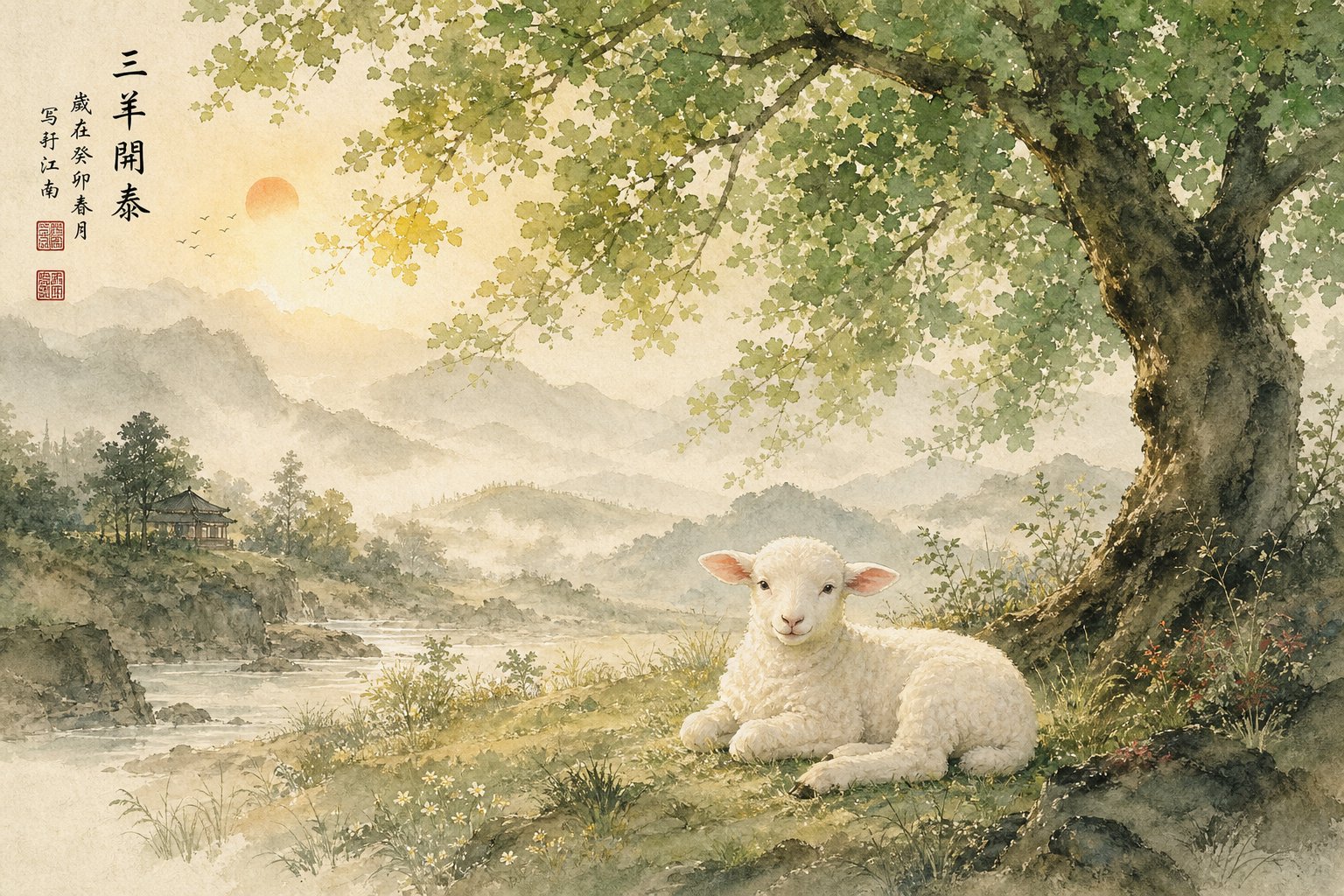
The Sheep is the eighth animal in the 12-year zodiac cycle, linked to the Earthly Branch wei (未). Recent and upcoming Sheep years include 1955, 1967, 1979, 1991, 2003, 2015, and 2027. Because the Chinese calendar is lunisolar, each Sheep year begins on a different date, typically falling between late January and mid-February. If your son's birthday lands near the lunar new year boundary, you'll want to confirm the exact start date for that cycle before selecting zodiac-aligned characters.
Sheep, Goat, or Ram: Understanding the Chinese Character
Here's where many Western parents get confused. You'll see this zodiac sign translated as Sheep, Goat, or Ram depending on the source. Which one is correct? All of them. The Chinese character 羊 (yang) refers broadly to the Caprinae subfamily, which includes both goats and sheep. There is no single "right" English translation because the Chinese language doesn't draw the same distinction. The word for goat specifically is shanyang (山羊), while sheep is mianyang (绵羊). The zodiac character stands alone as yang, encompassing the full family of gentle, hoofed ruminants.
This broader meaning matters for naming. Rather than locking you into imagery of one specific animal, 羊 evokes a whole constellation of traits: softness, warmth, pastoral abundance, and peaceful grazing. Lunar new year names built around the Sheep sign draw from this wide symbolic palette rather than a narrow literal image.
What the Sheep Zodiac Means for Boy Names
In Chinese culture, the sheep has long been considered an auspicious symbol. The character 羊 actually appears inside the character for "auspiciousness" (祥, xiang) and "kindness" (善, shan). This linguistic connection runs deep: naming a Sheep-year boy means working with characters that resonate with fortune and benevolence at a structural level.
Traditional Chinese astrology attributes a specific personality profile to Sheep-year children, and this profile guides parents toward certain name characters over others.
Boys born in the Year of the Sheep are traditionally associated with gentleness, creativity, strong imagination, compassion, calm temperament, and artistic talent. They are considered sociable and considerate, with a natural inclination toward the arts.
These traits shape naming in a practical way. Parents select characters that either reinforce the Sheep's natural strengths, like creativity and kindness, or compensate for perceived vulnerabilities, like hesitation or passivity. A well-chosen name doesn't just label a child. It sets an intention for the kind of person he'll grow into.
The personality blueprint is only the starting point. Each Sheep year also carries one of five elemental signatures, and that element further refines which characters will harmonize with your son's birth energy.
Five Elements Theory and Sheep Year Naming
The Sheep's personality blueprint gives you a starting direction, but it's only half the picture. Every Sheep year also carries one of five elemental phases, and that element reshapes which characters will truly harmonize with your son's birth energy. This is where Wu Xing (五行) comes in.
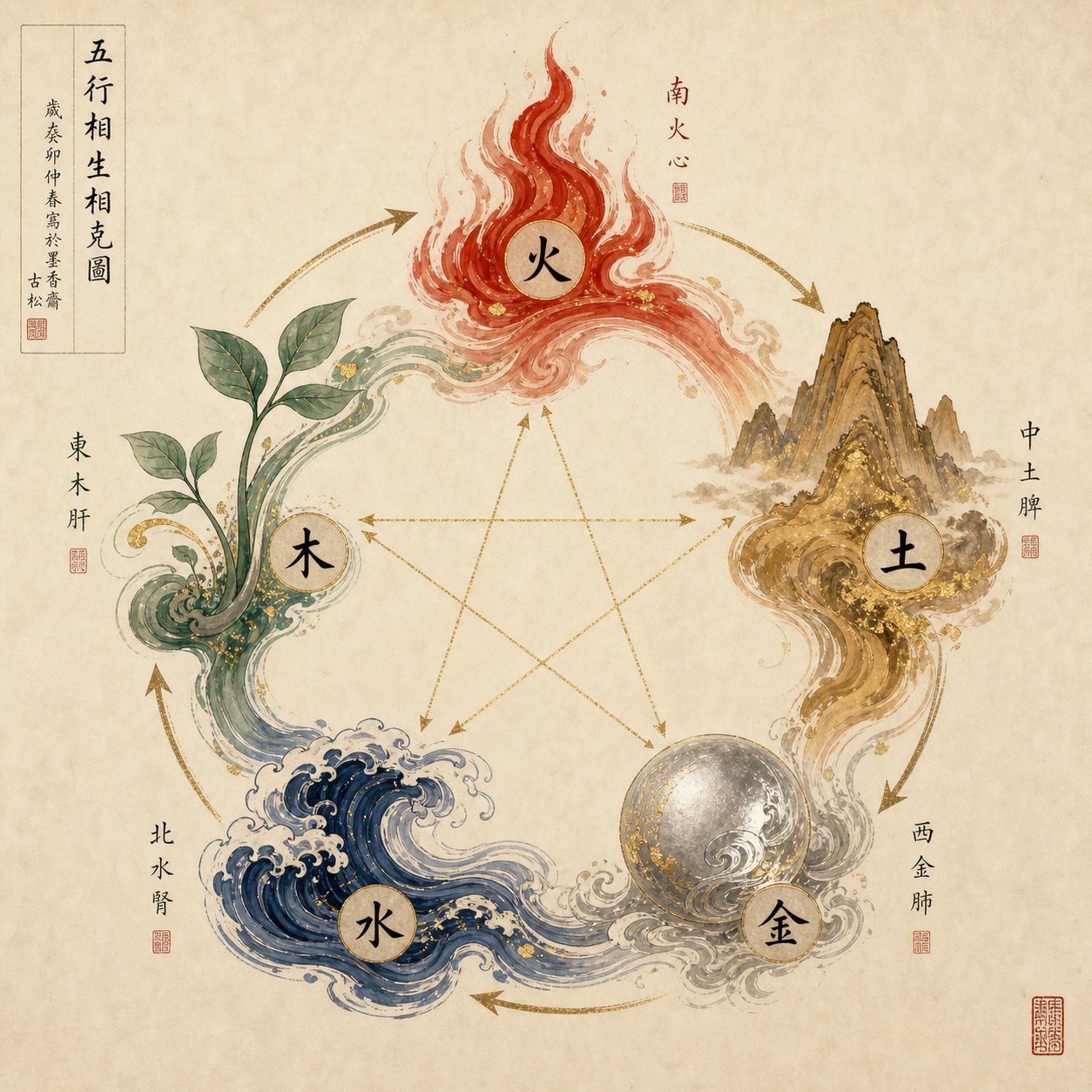
Wu Xing, often called the Five Elements, is more accurately understood as five dynamic phases of energy: Wood, Fire, Earth, Metal, and Water. These aren't static materials. They're patterns of movement that interact through cycles of generation and control. In Chinese naming, they serve as practical tools for selecting characters that bring balance to a child's life path.
How the Five Elements Shape Sheep Year Names
The Sheep's native element is Earth. This means every Sheep-year boy already carries strong Earth energy: stability, nurturing instincts, patience, and reliability. When choosing chinese names with meaning for a Sheep boy, you're working with this Earth foundation and deciding what to build on top of it.
Two elements naturally support Earth in the generating cycle:
- Fire feeds Earth. In the creation cycle, Fire burns material into ash, which becomes Earth. Fire-element characters strengthen and energize the Sheep's grounded nature, adding warmth, passion, and visibility.
- Earth produces Metal. Earth compresses over time to form Metal ores. Metal characters channel the Sheep's stability into structure, decisiveness, and refined clarity.
Two elements create tension:
- Wood controls Earth. Tree roots break through soil and dominate it. Heavy Wood energy in a name can overwhelm the Sheep's gentle Earth, creating inner conflict between growth-driven ambition and the Sheep's natural calm.
- Water is dammed by Earth. While Earth controls Water in the restraining cycle, excessive Water can still erode Earth over time, potentially diluting the Sheep's stability with too much fluidity or uncertainty.
Understanding these relationships helps you evaluate any character, not just the ones listed in guides. If a character carries strong Wood energy, you'll know it introduces a controlling force against your Sheep boy's core element.
Matching Name Characters to Your Sheep Sub-Element
Not all Sheep years are identical. The elemental sub-cycle rotates every two years based on the last digit of the birth year. This creates five distinct Sheep variations, each with different personality nuances and therefore different ideal name characters. When exploring chinese names and their meanings, matching the sub-element is what separates a good name from a truly resonant one.
| Sub-Element | Sheep Years | Last Digit | Personality Nuances | Recommended Character Types |
|---|---|---|---|---|
| Wood Sheep | 1955, 2015 | 4 or 5 | More growth-oriented, generous, charitable, and creatively expressive than other Sheep types | Fire-radical characters to channel Wood's energy productively into Earth (e.g., 煜 yu, meaning radiant; 炜 wei, meaning brilliant) |
| Fire Sheep | 1967, 2027 | 6 or 7 | Ambitious, passionate, drawn to leadership and the arts; more outwardly dynamic | Earth-radical characters to ground Fire's intensity (e.g., 坤 kun, meaning earth/receptive; 峻 jun, meaning lofty) |
| Earth Sheep | 1979 | 8 or 9 | Double Earth energy brings exceptional stability, diligence, strong family values, and financial luck | Metal-radical characters to give direction and sharpness to abundant Earth (e.g., 铭 ming, meaning inscription; 锐 rui, meaning keen) |
| Metal Sheep | 1991 | 0 or 1 | More disciplined and structured; stronger willpower and determination than typical Sheep | Water-radical characters to soften Metal's rigidity and add wisdom (e.g., 涵 han, meaning contain/cultivate; 泽 ze, meaning beneficence) |
| Water Sheep | 2003 | 2 or 3 | Highly intuitive, adaptable, emotionally intelligent; drawn to healing and creative fields | Wood-radical characters to give Water direction and upward momentum (e.g., 林 lin, meaning forest; 桐 tong, meaning paulownia tree) |
Notice the logic: each recommendation follows the generating cycle forward. You're selecting characters from the element that your sub-element naturally produces or supports, creating a flowing rather than stagnant energy pattern in the name.
For parents exploring chinese names with meanings for a 2027 baby, you're looking at a Fire Sheep. That means your son will carry both the Sheep's Earth foundation and Fire's ambitious, expressive energy. Earth-radical characters ground him without dampening his spark, while Fire-supportive characters risk tipping the balance toward restlessness.
Elemental theory tells you which types of characters to seek. The next question is more specific: which structural components within those characters, the radicals themselves, carry the most auspicious energy for a Sheep-year boy?
Auspicious Radicals That Strengthen Sheep Year Boy Names
Elemental theory points you toward the right category of characters. Radicals take you one level deeper, into the actual structural building blocks of each character. In Chinese, a radical is the semantic root embedded within a character, often hinting at its core meaning. For Sheep-year naming, certain radicals are considered inherently lucky because they mirror the natural environment where a sheep thrives. Think of it this way: you're building a name that places your son in a landscape of abundance, shelter, and comfort.
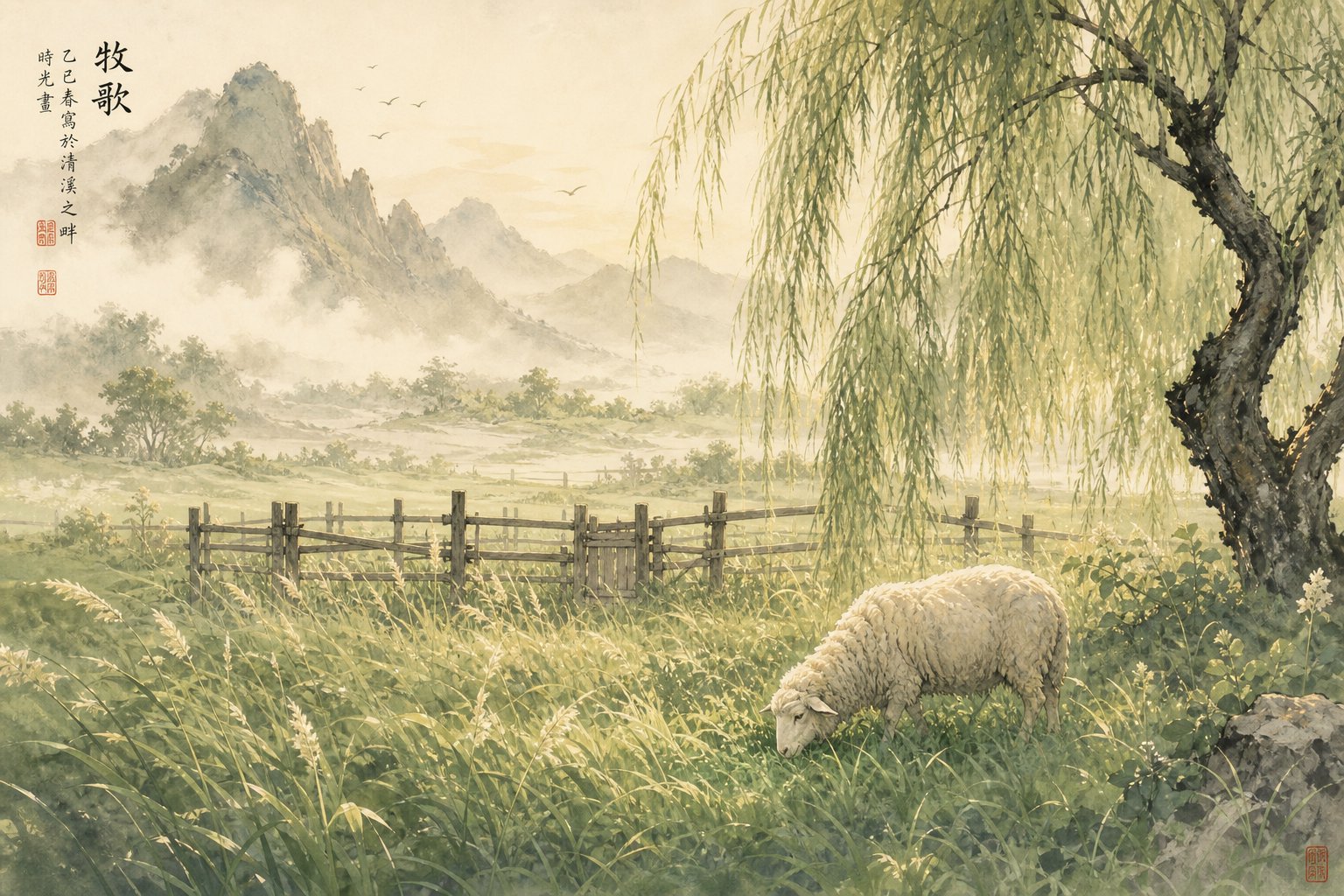
The logic is pastoral and agricultural. A well-fed sheep grazing in lush fields, sheltered under trees, resting in a secure enclosure: this is the image of a fortunate life. Characters containing radicals that evoke this scene carry that fortune into a child's name. When searching for a chinese name related to luck for your Sheep-year boy, these radicals are your foundation.
The Grass Radical and Nourishment Characters
The grass radical (艹, cao) sits at the top of a character like a canopy of green. Because the sheep is a herbivore, characters built on this radical symbolize a life where food is plentiful and nourishment never runs short. A Sheep-year boy with grass-radical characters in his name is metaphorically surrounded by endless pasture.
This isn't abstract symbolism. In traditional Chinese society, a well-fed animal represented household prosperity. A sheep with abundant grass meant the family had fertile land and stable resources. That association transfers directly into naming: grass-radical characters signal material comfort and sustained growth.
Strong choices for boys include:
- 艺 (yi, 4th tone) - meaning art or skill. Contains the grass radical and connects to the Sheep's creative nature. A name that feeds both body and spirit.
- 茗 (ming, 2nd tone) - meaning tea leaves or fine tea. Evokes refinement and cultural depth, with the nourishment radical grounding it in abundance.
- 英 (ying, 1st tone) - meaning heroic or outstanding. The grass radical here suggests a hero who rises from fertile ground, well-supported and well-resourced.
- 萱 (xuan, 1st tone) - meaning daylily, a plant associated with joy and freedom from worry. A gentle, nature-rooted choice often found in cute chinese names.
- 苑 (yuan, 4th tone) - meaning garden or park. Implies a curated, abundant space where the Sheep can flourish freely.
- 荣 (rong, 2nd tone) - meaning glory or flourishing. Combines the grass radical's nourishment with upward success.
Characters with related grain radicals also carry this nourishment energy. The rice radical (米), wheat radical (麦), and millet radical (禾) all signal that the Sheep has access to the five cereals, a traditional marker of complete sustenance. Examples include 秀 (xiu, 4th tone, meaning elegant), 稷 (ji, 4th tone, meaning millet/harvest god), and 科 (ke, 1st tone, meaning branch of study).
Shelter and Protection Radicals for Sheep Boys
A sheep without shelter is vulnerable. In naming tradition, radicals that suggest enclosure, covering, or protective structure give a Sheep-year boy the energetic equivalent of a safe home. Several radicals serve this purpose, each with slightly different nuance.
The wood radical (木, mu) represents trees that provide shade, rest, and protection from the elements. Imagine a flock settling beneath a grove on a hot afternoon. Characters with this radical place your son under a canopy of safety, suggesting he'll always find support and refuge when needed.
- 杰 (jie, 2nd tone) - meaning outstanding or heroic. The wood radical grounds exceptional talent in stable shelter.
- 梓 (zi, 3rd tone) - meaning catalpa tree, symbolizing hometown and roots. A name that anchors a boy to family and belonging.
- 森 (sen, 1st tone) - meaning forest. Triple wood creates an image of deep, layered protection.
- 楠 (nan, 2nd tone) - meaning phoebe nanmu, a prized hardwood. Suggests durability, value, and quiet strength.
- 桐 (tong, 2nd tone) - meaning paulownia tree, associated with the phoenix. A chinese name for beautiful aspirations, linking shelter to nobility.
The mouth radical (口, kou) works differently. It doesn't literally mean "mouth" in this naming context. Instead, it represents an enclosure, a fenced area, a doorway, or a comfortable space. For the Sheep, a character with 口 suggests being safely housed rather than exposed to danger. It's the pen that keeps the flock secure at night.
- 嘉 (jia, 1st tone) - meaning excellent or praiseworthy. The enclosure radical here suggests goodness that is protected and preserved.
- 品 (pin, 3rd tone) - meaning quality or character. Three mouths stacked together imply thorough evaluation and high standards.
- 哲 (zhe, 2nd tone) - meaning wise or philosophical. Wisdom held within a safe container, ready to be shared.
Related shelter radicals include 宀 (mian, meaning roof), 门 (men, meaning door or gate), and 冖 (mi, meaning cover). Characters like 宏 (hong, 2nd tone, meaning grand), 安 (an, 1st tone, meaning peace), 宸 (chen, 2nd tone, meaning imperial residence), and 家 (jia, 1st tone, meaning home) all carry this protective energy. The recommended shelter radicals for Sheep naming include 冖, 几, 囗, 宀, and 门, each representing a different form of safe enclosure.
Why These Radicals Bring Fortune to Sheep Names
You'll notice a pattern across all these auspicious radicals: they recreate the conditions under which a real sheep would live its best life. Abundant grass means no hunger. Trees mean shade and safety. Enclosures mean protection from predators and harsh weather. The naming tradition maps the animal's ideal physical environment onto a human life, translating pastoral well-being into personal fortune.
Beyond the three core radicals above, a few additional structural components deserve attention:
- Foot radical (足, zu) - because sheep enjoy jumping and moving freely. Characters like 跃 (yue, 4th tone, meaning leap) suggest vitality and forward momentum.
- 几 radical (ji, meaning small table or bench) - visually resembles a lamb kneeling to nurse. Characters with this component, like 亮 (liang, 4th tone, meaning bright) and 凯 (kai, 3rd tone, meaning triumphant), suggest filial piety and the comfort of being well-nourished from birth.
- Zodiac-compatible radicals - characters containing components linked to the Sheep's zodiac allies (Pig, Rabbit, Horse) also bring harmony. The Earthly Branches 亥 (Pig), 卯 (Rabbit), and 午 (Horse) form a supportive triad with the Sheep's 未 branch. Names like 家 (jia, containing the Pig radical 豕), 骏 (jun, 4th tone, meaning fine steed), and 逸 (yi, 4th tone, meaning carefree) tap into this alliance.
The key takeaway: auspicious radicals aren't arbitrary superstition. They follow a coherent internal logic rooted in agricultural observation and elemental theory. Once you understand why a radical is lucky, you can evaluate any character on your own, even ones not listed in traditional guides.
Of course, knowing what to include is only half the equation. Certain radicals actively work against the Sheep's energy, and placing them in your son's name introduces friction rather than flow.
Characters to Avoid When Naming a Sheep Year Boy
Selecting the right radicals is half the work. The other half? Knowing which structural components introduce conflict, danger, or imbalance into a Sheep-year boy's name. These aren't random taboos. Each avoidance follows the same pastoral and elemental logic that guides the auspicious choices. When you understand the reasoning, you can spot problematic characters on your own, even ones not covered in any guide.
The core principle is simple: anything that threatens a real sheep's safety or well-being threatens the fortune of a Sheep-year name. Blades, predators, sacrificial imagery, and elemental imbalance all fall into this category.
Radicals That Clash With the Sheep Zodiac
The most critical avoidance involves radicals connected to slaughter and sacrifice. In ancient China, the sheep was one of the three primary sacrificial animals (alongside the ox and pig) offered during important rituals. Characters that evoke this fate, whether through blade imagery, ceremonial vessels, or decorative preparation, carry an energy of being "used up" for others rather than living freely.
The knife radical (刂, dao) is the most direct threat. It literally represents a blade, and for the Sheep, blades mean only one thing. Characters built on this radical place your son symbolically in harm's way. Similarly, the vessel radical (皿, min) suggests the ceremonial dishes used to hold sacrificial offerings, and the radicals related to colorful clothing (巾, 衣, 糸) evoke the practice of decorating sacrificial animals before the ritual.
Sounds harsh? It is. But this is precisely why traditional naming takes these associations seriously. A chinese name with meaning should carry life-affirming energy, not sacrificial undertones.
Characters linked to authority and grandeur also create problems. The radicals 大 (da, meaning big), 王 (wang, meaning king), and 君 (jun, meaning ruler) seem positive at first glance. But for the Sheep, being "elevated" historically meant being selected as the finest offering. A sheep that stands out gets chosen for sacrifice. Characters suggesting prominence or royal status can paradoxically signal a life spent serving others at personal cost.
Understanding Why Certain Characters Bring Conflict
Beyond sacrificial imagery, zodiac incompatibility creates another layer of avoidance. The Sheep's Earthly Branch (未, wei) clashes directly with the Ox (丑, chou) and is harmed by the Rat (子, zi). Characters containing these branch components introduce interpersonal friction and obstacles into the name's energy.
Water-heavy characters present an elemental concern. While the Sheep's native Earth element does control Water in the restraining cycle, excessive Water energy erodes Earth over time. Think of a riverbank slowly washing away. Characters dominated by the water radical (氵) can dilute the Sheep's grounded stability, especially for Earth Sheep or Fire Sheep sub-types who need their core element reinforced rather than challenged.
Here's the complete avoidance framework in one view:
| Radical/Component | Meaning | Example Characters to Skip | Reasoning |
|---|---|---|---|
| 刂 / 刀 (dao) | Knife, blade | 刚 (gang, 1st tone), 利 (li, 4th tone), 刘 (liu, 2nd tone), 割 (ge, 1st tone) | Blades represent slaughter danger for the Sheep; suggests being cut down |
| 皿 (min) | Vessel, dish | 盛 (sheng, 4th tone), 盈 (ying, 2nd tone), 监 (jian, 1st tone) | Ceremonial vessels used in sacrificial offerings; implies being consumed |
| 巾 / 衣 / 糸 (jin/yi/mi) | Cloth, clothing, silk | 帅 (shuai, 4th tone), 彰 (zhang, 1st tone), 裕 (yu, 4th tone), 彦 (yan, 4th tone) | Sheep were adorned in colorful cloth before ritual sacrifice; decoration signals doom |
| 大 / 王 / 君 (da/wang/jun) | Big, king, ruler | 天 (tian, 1st tone), 奇 (qi, 2nd tone), 琦 (qi, 2nd tone), 瑜 (yu, 2nd tone) | Prominence makes the Sheep a target for selection as a sacrifice; living for others |
| 丑 / 牛 (chou/niu) | Ox branch, ox | 牡 (mu, 3rd tone), 牧 (mu, 4th tone), 隆 (long, 2nd tone) | Ox directly clashes with the Sheep's Earthly Branch; creates opposition and conflict |
| 子 / 鼠 (zi/shu) | Rat branch, rat | 学 (xue, 2nd tone), 孔 (kong, 3rd tone), 存 (cun, 2nd tone), 孟 (meng, 4th tone) | Rat harms the Sheep in the zodiac harm cycle; leads to hidden obstacles |
| 辰 / 戌 / 犬 (chen/xu/quan) | Dragon branch, Dog branch, dog | 晨 (chen, 2nd tone), 成 (cheng, 2nd tone), 献 (xian, 4th tone), 独 (du, 2nd tone) | Creates tight encirclement with the Sheep's branch; implies being trapped or cornered |
| 车 (che) | Vehicle, cart | 轩 (xuan, 1st tone), 辉 (hui, 1st tone), 转 (zhuan, 3rd tone) | Carts historically transported sacrificial animals; suggests being carried toward an unwanted fate |
A few characters in this table might surprise you. 轩 (xuan) is extremely popular in modern Chinese boy names, and 裕 (yu, meaning abundant) sounds inherently positive. But when you understand the sacrificial logic, you'll see why traditional naming practitioners flag them for Sheep-year children specifically. A character can be beautiful in isolation and still carry the wrong energy for a particular zodiac sign.
The practical takeaway: before finalizing any character, check its radical components against this framework. Ask yourself whether the character places your son in a position of safety and nourishment, or whether it inadvertently positions him as something elevated, decorated, or exposed. The best Sheep-year names keep your boy grounded, sheltered, and free from symbolic threat.
With both the auspicious and inauspicious radicals mapped out, the next step is putting this knowledge into action, selecting complete names that align with the Sheep's most celebrated personality traits.
Sheep Year Boy Names Organized by Meaning
You've mapped the auspicious radicals and flagged the ones to avoid. The question now is: what do you actually want your son's name to say about him? The Sheep zodiac offers three natural thematic lanes, each rooted in the sign's core personality. Gentle compassion, artistic creativity, and material prosperity all resonate deeply with the Sheep's energy. The names below draw from those themes while incorporating the lucky structural components covered earlier.
Each name listed here includes the Chinese characters, pinyin with tone marks, a character-by-character meaning breakdown, and a note on why it specifically suits a Sheep-year boy. You'll notice many of these characters also appear in chinese girl names and meanings guides, because qualities like kindness and creativity aren't gendered in Chinese naming tradition. The difference lies in pairing and tonal weight, which we'll explore in the next section.
Names Meaning Gentle and Compassionate
The Sheep's defining trait is its gentle, empathetic nature. These names lean into that strength rather than compensating for it, reinforcing the idea that softness and kindness are forms of power.
- 善宁 (Shanning) - pinyin: Shan4ning2. 善 means kind or good and contains the character 羊 (sheep) within its structure, creating a direct zodiac resonance. 宁 means serene or peaceful, built on the 宀 (roof) radical that provides shelter. Together: "kind and serene." This name places your Sheep boy's innate gentleness under a protective canopy, suggesting a compassionate person who lives in peace.
- 嘉和 (Jiahe) - pinyin: Jia1he2. 嘉 means excellent or praiseworthy, containing the 口 (enclosure) radical that signals safety. 和 means harmony, combining the grain radical 禾 with 口, doubling the auspicious energy. Together: "excellent harmony." Both characters carry enclosure or nourishment radicals, making this a deeply protective name for a boy whose nature is already inclined toward peacemaking.
- 安荣 (Anrong) - pinyin: An1rong2. 安 means peace or stability, sheltered under the 宀 (roof) radical. 荣 means flourishing or glory, crowned with the 艹 (grass) radical. Together: "peaceful flourishing." This name tells a story of a boy who grows abundantly precisely because he is secure, mirroring the well-sheltered sheep that thrives in green pasture.
- 宏仁 (Hongren) - pinyin: Hong2ren2. 宏 means grand or expansive, built on the 宀 (roof) radical. 仁 means benevolence, one of the five Confucian virtues. Together: "grand benevolence." The shelter radical grounds big-heartedness in safety, suggesting a boy whose compassion has wide reach without leaving him exposed.
- 茗善 (Mingshan) - pinyin: Ming2shan4. 茗 means fine tea, carrying the 艹 (grass) radical that signals nourishment. 善 means kind, containing 羊 (sheep). Together: "refined kindness." This name layers the Sheep's food-abundance radical with its own zodiac character, creating a name that is both culturally elegant and zodiacally precise.
Names Meaning Creative and Artistic
Creativity is the Sheep's second great gift. Boys born under this sign are drawn to music, visual arts, writing, and imaginative play. These names honor that inclination with characters that evoke artistry, wisdom, and intellectual depth.
- 艺林 (Yilin) - pinyin: Yi4lin2. 艺 means art or skill, topped with the 艹 (grass) radical. 林 means forest, doubling the 木 (wood) radical for layered shelter. Together: "art among the trees." A creative spirit rooted in protection, this name suggests talent that grows naturally in a supportive environment, much like a beautiful chinese name for a child destined to create.
- 英哲 (Yingzhe) - pinyin: Ying1zhe2. 英 means outstanding or heroic, carrying the 艹 (grass) radical. 哲 means wise or philosophical, containing the 口 (enclosure) radical. Together: "outstanding wisdom." The combination pairs nourishment with safe containment, suggesting a boy whose brilliance is both well-fed and well-protected.
- 梓墨 (Zimo) - pinyin: Zi3mo4. 梓 means catalpa tree, built on the 木 (wood) radical and symbolizing roots and hometown. 墨 means ink, the essential tool of Chinese calligraphy and painting. Together: "rooted in ink." This name connects artistic expression to a sense of belonging, perfect for a Sheep boy whose creativity flows from feeling secure in his origins.
- 苑博 (Yuanbo) - pinyin: Yuan4bo2. 苑 means garden or park, carrying the 艹 (grass) radical. 博 means broad or knowledgeable. Together: "garden of knowledge." The imagery is of a curated space where learning and beauty coexist, reflecting the Sheep's love of aesthetics paired with intellectual curiosity.
- 楠艺 (Nanyi) - pinyin: Nan2yi4. 楠 means phoebe nanmu wood, a prized timber, built on the 木 (wood) radical. 艺 means art, with the 艹 (grass) radical. Together: "precious art." Two auspicious radicals in one name, wood and grass, create an image of a boy whose creative talents are as valued and enduring as rare hardwood.
Names Meaning Prosperous and Fortunate
Prosperity names work with the Sheep's Earth foundation, channeling stability into material abundance and lasting good fortune. These characters signal a life of plenty without triggering the sacrificial associations of overly grand or royal imagery.
- 富安 (Fu'an) - pinyin: Fu4an1. 富 means wealthy or abundant, sheltered under the 宀 (roof) radical. 安 means peace, also under 宀. Together: "wealthy and peaceful." Double roof radicals create an exceptionally protected name, suggesting prosperity that comes with security rather than risk. The Sheep thrives here, sheltered and provided for.
- 祥森 (Xiangsen) - pinyin: Xiang2sen1. 祥 means auspicious, and it literally contains 羊 (sheep) as its right component, making it one of the most zodiacally resonant characters possible. 森 means forest, tripling the 木 (wood) radical. Together: "auspicious forest." This name directly encodes the Sheep's connection to good fortune while surrounding it with deep, layered shelter.
- 宏茂 (Hongmao) - pinyin: Hong2mao4. 宏 means grand, built on 宀 (roof). 茂 means lush or flourishing, carrying the 艹 (grass) radical. Together: "grandly flourishing." The name paints a picture of expansive growth under a protective structure, like a greenhouse where everything thrives abundantly.
- 家荣 (Jiarong) - pinyin: Jia1rong2. 家 means home or family, combining the 宀 (roof) radical with 豕, which connects to the Pig, one of the Sheep's zodiac allies. 荣 means glory, topped with 艹 (grass). Together: "family glory." This name activates both shelter energy and zodiac alliance, suggesting prosperity that benefits the entire household.
- 嘉禾 (Jiahe) - pinyin: Jia1he2. 嘉 means excellent, with the 口 (enclosure) radical. 禾 means grain or harvest, one of the core nourishment radicals for Sheep naming. Together: "excellent harvest." A name that directly invokes agricultural abundance, the most literal form of Sheep-year fortune.
You'll notice a pattern across all three categories: the strongest Sheep-year names layer multiple auspicious radicals within a single two-character combination. A name like 祥森 stacks the zodiac animal itself with triple wood shelter. 家荣 combines roof protection, zodiac alliance, and grass-radical nourishment in just two characters. This layering is what separates a name that merely avoids conflict from one that actively generates fortunate energy.
Individual characters are the building blocks. The real art comes in assembling them into complete names, pairing them with surnames, balancing tonal flow, and ensuring the full name reads as a cohesive statement rather than a collection of lucky parts.
Complete Name Combinations With Pronunciation Guides
A beautiful given name only works if it sounds right alongside the surname. In Chinese naming, the full name is a single unit: surname first, given name second, read as one continuous phrase. The tonal rhythm, visual weight, and semantic flow of the complete combination matter just as much as the individual characters. This is where many parents get stuck. You've identified auspicious Sheep-year characters, but how do they actually land when paired with common family names?
Chinese names are compact by design. A typical Chinese name consists of two or three characters total: one character for the surname and one or two for the given name. That brevity means every character must pull its weight across sound, form, meaning, and elemental balance simultaneously. Let's see how that plays out in practice.
Two-Character Full Name Examples for Sheep Boys
A two-character name (one surname character plus one given-name character) is the most concise format. It feels modern and punchy, and it's increasingly popular among younger Chinese families. For Sheep-year boys, single-character given names work best when the chosen character is rich enough to carry auspicious meaning on its own.
| Full Name (Characters) | Pinyin With Tones | Character Breakdown | Overall Meaning |
|---|---|---|---|
| 林荣 | Lin2 Rong2 | 林 (surname: forest) + 荣 (glory, 艹 grass radical) | A flourishing life rooted in family heritage; grass radical feeds the Sheep |
| 陈嘉 | Chen2 Jia1 | 陈 (surname: ancient state) + 嘉 (excellent, 口 enclosure radical) | Excellence held within safe boundaries; rising then level tone creates smooth flow |
| 王安 | Wang2 An1 | 王 (surname: king) + 安 (peace, 宀 roof radical) | Peace under shelter; the surname's authority is softened by the given name's calm |
| 李茗 | Li3 Ming2 | 李 (surname: plum tree) + 茗 (fine tea, 艹 grass radical) | Refined nourishment; falling-rising tone followed by rising tone creates upward momentum |
| 张哲 | Zhang1 Zhe2 | 张 (surname: draw a bow) + 哲 (wise, 口 enclosure radical) | Wisdom safely contained; level tone to rising tone gives a clean, open sound |
Notice how each pairing avoids tonal repetition between surname and given name. 林荣 (Lin2 Rong2) shares the same tone, which is generally less ideal, but the different initial consonants and vowel sounds prevent it from feeling flat. In contrast, 张哲 (Zhang1 Zhe2) moves from first tone to second tone, creating a natural lift that sounds confident when spoken aloud.
Three-Character Names With Generational Elements
Three-character names (one surname plus two given-name characters) remain the traditional standard. They offer more room to layer meaning, balance elements, and incorporate generational naming. The generational name system, called zi bei (字辈), assigns one shared character to all children of the same generation within a family. This character is typically determined by a generational poem composed by ancestors, with each line providing the generation character for successive descendants.
Imagine your family's generational character for this generation is 文 (wen2, meaning literature or culture). Your task becomes finding a second given-name character that is both zodiacally auspicious for the Sheep and tonally compatible with both the surname and the generational character. The generational character occupies a fixed position, usually the first of the two given-name characters, though some families place it second.
Here's how that works in complete names:
| Full Name (Characters) | Pinyin With Tones | Character Breakdown | Overall Meaning |
|---|---|---|---|
| 李文荣 | Li3 Wen2 Rong2 | 李 (surname) + 文 (generational: culture) + 荣 (glory, 艹 grass radical) | Cultural glory rooted in nourishment; three distinct tones create rhythmic variety |
| 陈文嘉 | Chen2 Wen2 Jia1 | 陈 (surname) + 文 (generational: culture) + 嘉 (excellent, 口 enclosure radical) | Cultural excellence within safe bounds; ends on a bright first tone |
| 张宏艺 | Zhang1 Hong2 Yi4 | 张 (surname) + 宏 (grand, 宀 roof radical) + 艺 (art, 艹 grass radical) | Grand artistry sheltered and nourished; descending tonal arc feels grounded |
| 刘家森 | Liu2 Jia1 Sen1 | 刘 (surname) + 家 (home, 宀 roof + zodiac ally 豕) + 森 (forest, triple 木 wood) | A home surrounded by deep forest; layered shelter with zodiac alliance |
| 王善宁 | Wang2 Shan4 Ning2 | 王 (surname) + 善 (kind, contains 羊 sheep) + 宁 (serene, 宀 roof radical) | Kind serenity; the Sheep character embedded within善 creates direct zodiac resonance |
Modern families who no longer follow a strict generational poem still often use this three-character structure. They simply choose both given-name characters freely, treating the pair as a unified expression rather than splitting it between tradition and individuality. Many of the same characters appear in chinese names for girls with meaning as well, since qualities like wisdom, artistry, and kindness cross gender lines in Chinese culture. The distinction for boys often comes through tonal weight and pairing choices rather than the characters themselves. Some families even select gender neutral chinese names that work equally well regardless of the child's gender, particularly characters like 嘉, 安, and 文.
How Tonal Balance Affects Name Selection
Mandarin's four tones turn every name into a miniature melody. A well-crafted name moves through contrasting tones, avoiding monotony and awkward collisions. Here's the practical framework:
- Avoid three identical tones in a row. 王光芳 (Wang2 Guang1 Fang1) stacks three level-adjacent tones and sounds flat. Swap the final character for a falling tone and the name gains shape.
- Third-tone sequences create pronunciation difficulty. Two consecutive third tones trigger a tone sandhi rule where the first shifts to second tone in speech. 李品 (Li3 Pin3) becomes "Li2 Pin3" when spoken naturally. This isn't wrong, but it means the written tone and spoken tone diverge, which can confuse non-native speakers.
- Ending on a first or fourth tone sounds decisive. Names that close on a high level tone (1st) or a sharp falling tone (4th) tend to feel more assertive. Names ending on a second tone (rising) feel open and approachable. Match the ending to the personality you want the name to project.
- Test the name across a crowded room. As naming experts note, the real test is whether the name carries clearly when called out loud. Say it at full volume. Does it ring, or does it collapse into mush?
Tonal balance is the final filter. A name can have perfect radical composition, ideal elemental alignment, and beautiful meaning, but if it stumbles off the tongue, it won't serve your son well in daily life. The strongest Sheep-year names satisfy all four dimensions of Chinese naming: sound, form, meaning, and element working together as one cohesive statement.
Full name construction assumes you're working within a Chinese-language context. But what happens when your son will grow up speaking English at school, introducing himself in two languages, and navigating official documents that may not accommodate tonal marks or character scripts?
Choosing Sheep Year Names for Bilingual Families
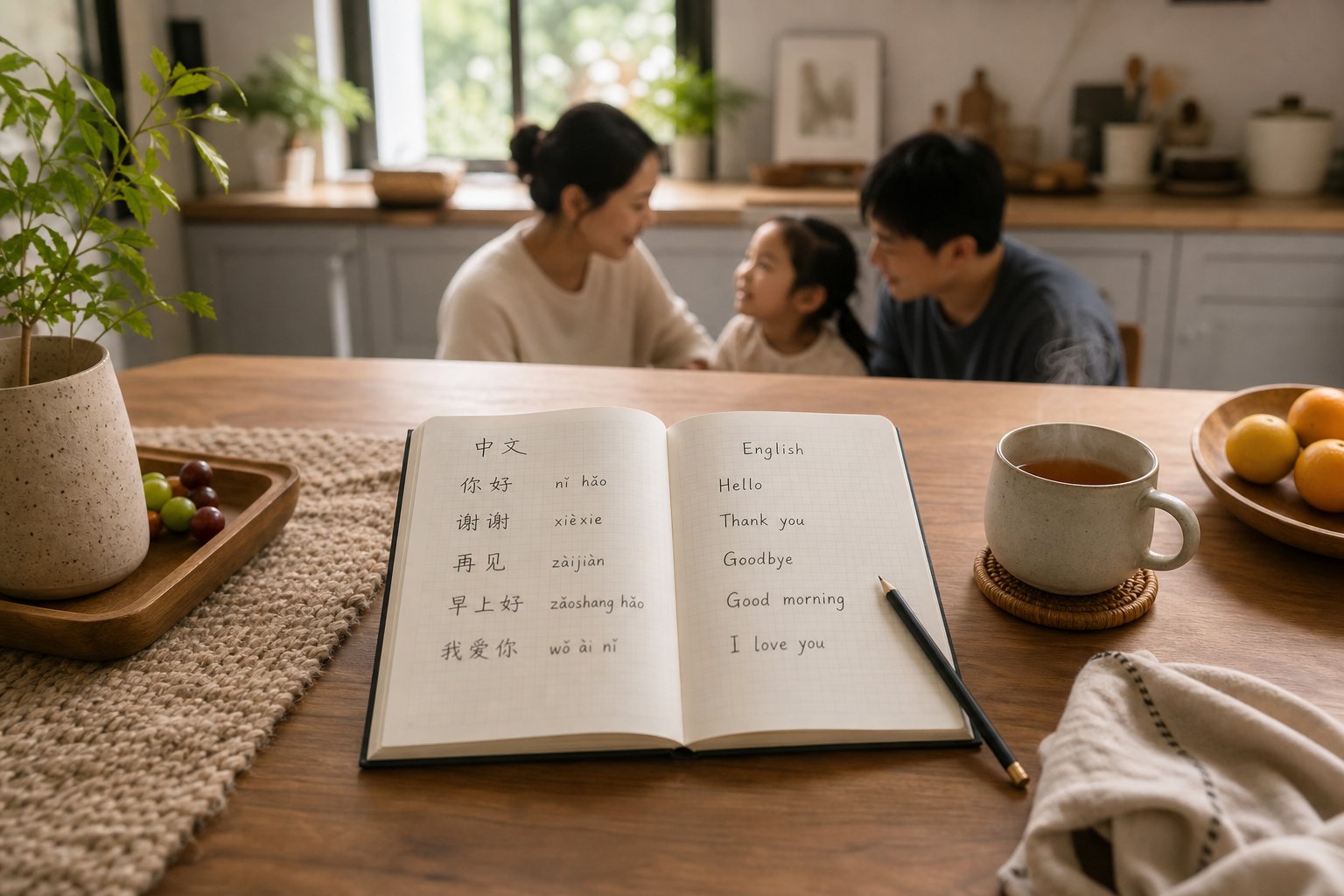
Growing up between two languages changes how a name functions. For diaspora families raising a Sheep-year boy in an English-speaking country, the name needs to work twice: once within Chinese cultural tradition and once in classrooms, doctor's offices, and playgrounds where nobody reads characters. This dual requirement doesn't mean compromising on zodiac authenticity. It means being strategic about which auspicious characters you select and how they'll translate into daily life abroad.
Research on mainland Chinese students' English naming practices shows that uniqueness and personal identity rank among the top priorities when choosing names that cross linguistic boundaries. The same principle applies when you're working in the other direction, selecting a Chinese name that will coexist with an English-speaking environment. Your son's name should feel distinctive and intentional in both languages, not like an awkward translation in either one.
Bilingual Naming Strategies for Diaspora Families
The practical challenge is straightforward: most English speakers cannot distinguish Mandarin tones, struggle with certain initial consonants (like q, x, and zh), and will default to reading pinyin as if it were English. A name like Qiang sounds elegant in Mandarin but gets mangled in an American classroom. Meanwhile, a name like An or Kai travels easily across both worlds without losing its Chinese identity.
Here are concrete strategies for choosing Sheep-year names that bridge Chinese and English-speaking environments:
- Prioritize pinyin syllables that map cleanly to English phonetics. Characters with pinyin like Lin, Ming, Kai, An, and Sen are intuitive for English speakers to pronounce correctly. Many of these happen to carry auspicious Sheep radicals: 林 (lin, wood radical for shelter), 茗 (ming, grass radical for nourishment), 安 (an, roof radical for protection).
- Avoid pinyin that creates unfortunate English associations. Check whether the romanized name resembles an English word with negative or humorous connotations. Say the full name aloud in English conversation and listen for unintended meanings.
- Consider phonetic pairing with an English first name. Some families give their son both a Chinese name and an English name that share a sound. For example, a boy named 嘉 (Jia) might go by Jay in English contexts, preserving a sonic thread between identities. This approach lets you choose the most zodiacally powerful character without worrying about English pronunciation.
- Test the name in official document formats. Western systems typically record names in pinyin without tone marks. Check how your son's name looks written as a single romanized string. 王善宁 becomes Wang Shanning, which reads clearly. Some pinyin combinations create visual confusion when spaces are removed or rearranged on forms.
- Keep the given name to two syllables or fewer in pinyin. Three-syllable given names (like Hongmingyi) can feel cumbersome in English-dominant settings. Two-character given names like Jiahe or Yilin strike a comfortable balance between cultural richness and everyday usability.
The confusion between surnames and given names is another real-world issue for diaspora families. In Western systems, the given name comes first and the family name last, reversing the Chinese order. Decide early whether your son will introduce himself in Chinese order (Wang Jiahe) or Western order (Jiahe Wang), and be consistent on official documents to avoid the kind of administrative mix-ups that have historically affected Chinese families abroad.
Balancing Tradition and Modern Values in Sheep Year Names
Traditional Sheep-year naming for boys leans heavily into gentleness, compassion, and artistic sensitivity. A generation ago, some families worried these traits sounded "too soft" for a son and would compensate with overtly strong characters. That impulse is fading. Modern parents, especially in diaspora communities, increasingly recognize that empathy and creativity are strengths worth naming into existence rather than qualities to counterbalance.
This shift mirrors broader trends in Chinese naming. As research on Han Chinese naming patterns shows, popular characters for boys and girls have grown more gender-neutral since the 1980s. Characters once reserved for female chinese names and meanings, like 文 (cultured) and 佳 (excellent), now appear freely in boys' names. The same data shows that even radicals with traditionally gendered associations are applied more loosely across the sexes as China modernizes.
For Sheep-year boys specifically, this means you don't need to offset the sign's gentle nature with aggressive characters. A name like 善宁 (kind and serene) or 艺林 (art among the trees) honors the Sheep's authentic energy without apology. The zodiac's personality blueprint isn't a limitation to work around. It's a foundation to build on with confidence.
Diaspora parents also have the freedom to reinterpret which traditions they carry forward. You might follow the auspicious radical system closely while skipping the generational poem. You might choose a character that resonates with both chinese names female and meanings guides and boy-name guides, embracing the gender-neutral direction that contemporary naming is already moving toward. The tradition is a living framework, not a rigid rulebook, and your son's name can reflect both where your family comes from and where it's headed.
With bilingual compatibility and cultural values aligned, the final step is assembling all these considerations into a single, clear decision-making process you can follow from start to finish.
A Practical Framework for Choosing the Perfect Name
You've covered a lot of ground: elemental theory, radical logic, sacrificial avoidances, tonal balance, and bilingual strategy. That's a dense set of considerations, and it can feel overwhelming when you're staring at a blank page trying to name your son. The good news? All of these principles collapse into a single linear process. Follow it step by step, and you'll arrive at a name that carries cultural weight, zodiac alignment, and real-world usability in equal measure.
Your Step-by-Step Sheep Year Naming Checklist
Think of this as your decision tree. Each step narrows the field until you're left with a short list of names that satisfy every dimension of Chinese naming tradition.
- Confirm the Sheep year and identify your son's sub-element. Check the exact lunar calendar start date for his birth year. Then determine whether he's a Wood, Fire, Earth, Metal, or Water Sheep based on the year's last digit. This tells you which elemental energy to reinforce through character selection.
- Select your target radicals. Start with the three core auspicious radicals: 艹 (grass) for nourishment, 木 (wood) for shelter, and 口 or 宀 (enclosure/roof) for protection. Layer in the element-specific characters recommended for your son's sub-type. A Fire Sheep benefits from Earth-radical characters; a Water Sheep benefits from Wood-radical characters.
- Choose a thematic direction. Decide what you want the name to express about your son's future. Gentle compassion? Creative artistry? Quiet prosperity? Pick one primary theme and one secondary theme. This prevents the name from trying to say everything at once.
- Screen against the avoidance list. Check every candidate character for knife radicals, sacrificial vessel components, colorful cloth radicals, and zodiac-clash branches (Ox, Rat, Dog). A character can sound perfect and still carry the wrong structural energy. This step catches those hidden conflicts.
- Pair with your surname and test tonal flow. Say the full name aloud, at conversational volume and across a room. Listen for tonal monotony, awkward third-tone sequences, or syllables that blur together. The name should move through contrasting tones and land cleanly on the final character.
- Verify bilingual compatibility. Write the name in pinyin without tone marks. Does it read clearly in English? Does it avoid unfortunate homophones or visual confusion? If your son will use both a Chinese and English name, check that the phonetic bridge between them feels natural rather than forced.
- Consult family traditions. If your family follows a generational poem or has naming conventions, integrate the assigned generational character at this stage. Confirm it doesn't conflict with the radical and elemental choices you've already made. As Bazi naming practitioners emphasize, the final name should also be checked against stroke count and overall numerological harmony for complete alignment.
Bringing It All Together for Your Son
The strongest chinese baby names and meanings emerge when no single factor dominates the decision. A name chosen purely for zodiac luck but impossible to pronounce abroad won't serve a bilingual child. A name that sounds beautiful in English but carries a sacrificial radical undermines its own fortune. The checklist above ensures balance across all dimensions.
If you feel stuck between two or three finalists, here's a simple tiebreaker: which name would you most want to hear called out at his graduation? That gut response often captures the intersection of sound, meaning, and aspiration better than any analytical framework can.
Naming a Sheep-year boy is an act of intention. You're encoding wishes for his life into the very characters that will represent him, on documents, in introductions, and in the minds of everyone who knows him. The Sheep's energy is gentle, creative, and quietly prosperous. A name built on that foundation doesn't fight against his nature. It gives him a running start toward becoming exactly who he's meant to be.
Frequently Asked Questions About Chinese Boy Names for Year of the Sheep
1. What years are the Year of the Sheep in the Chinese zodiac?
The Year of the Sheep follows a 12-year cycle in the Chinese zodiac. Recent and upcoming Sheep years include 1955, 1967, 1979, 1991, 2003, 2015, and 2027. Because the Chinese calendar is lunisolar, each Sheep year begins on a different date, typically between late January and mid-February. If your son is born near the lunar new year boundary, confirm the exact start date for that cycle before choosing zodiac-aligned name characters.
2. Is it Year of the Sheep, Goat, or Ram in Chinese astrology?
All three translations are correct. The Chinese character 羊 (yang) refers broadly to the Caprinae subfamily, which includes sheep, goats, and rams. Chinese does not draw the same distinction between these animals as English does. The specific word for goat is shanyang (山羊) and sheep is mianyang (绵羊), but the zodiac character stands alone as yang. This broader meaning gives parents a wider symbolic palette for naming, drawing on traits like softness, warmth, pastoral abundance, and peaceful energy rather than one specific animal image.
3. What radicals are lucky for Sheep year boy names?
Three core radicals are considered most auspicious for Sheep-year boys. The grass radical (艹) symbolizes abundant food since sheep are herbivores. The wood radical (木) represents trees providing shelter and safety. The mouth or roof radicals (口, 宀) suggest a secure enclosure protecting the flock. Additional lucky radicals include grain-related components (禾, 米) for nourishment and the foot radical (足) for vitality. Characters containing components linked to the Sheep's zodiac allies - Pig, Rabbit, and Horse - also bring harmonious energy to a name.
4. What characters should you avoid in a Sheep year boy name?
Avoid characters with the knife radical (刂) as it represents slaughter danger for the Sheep. Skip the vessel radical (皿) which evokes sacrificial dishes, and cloth-related radicals (巾, 衣, 糸) since sacrificial animals were decorated before rituals. Characters suggesting royalty or grandeur (大, 王, 君) paradoxically signal being selected as a fine offering. Also avoid components linked to zodiac-clashing animals: the Ox (丑/牛), Rat (子), and Dog (戌/犬) branches all create conflict with the Sheep's Earthly Branch.
5. How do the Five Elements affect naming a Sheep year baby boy?
Every Sheep year carries one of five elemental phases based on the year's last digit, creating distinct sub-types. Wood Sheep (1955, 2015) benefit from Fire-radical characters. Fire Sheep (1967, 2027) pair well with Earth-radical characters. Earth Sheep (1979) thrive with Metal-radical characters. Metal Sheep (1991) are balanced by Water-radical characters. Water Sheep (2003) gain direction from Wood-radical characters. Each recommendation follows the generating cycle forward, selecting characters from the element that the sub-element naturally produces or supports.