What Chinese Emperor Names Really Mean and Why It Matters
When you read about a single Chinese emperor and find him called by four completely different names, it feels like a mistake. Take the famous Qianlong of the Qing dynasty. His birth name was Aixinjueluo Hongli. Historians also call him Gao Zong. His posthumous title includes the character Chun. And yet most people know him simply as "Qianlong." Four names, one ruler. Sounds confusing? You are not alone.
Why Chinese Emperor Names Confuse Western Readers
Western naming conventions are straightforward. A king is Henry VIII from birth to death and beyond. Chinese emperor names work nothing like this. Each name a ruler carried served a different purpose, was assigned at a different time, and was used by a different audience. Some names were given at birth and then forbidden from public use the moment that person took the throne. Others were chosen by court officials after the emperor died, functioning as a final verdict on his legacy. The result is that Chinese ancient emperors appear in historical texts under whichever name convention was dominant during their dynasty. Western scholarship says "Kangxi Emperor" using an era name, "Emperor Wu of Han" using a posthumous name, and "Tang Taizong" using a temple name. Three different systems for three different rulers, with no obvious pattern for the uninitiated reader.
Names as Political Statements Not Just Labels
Here is what changes everything once you grasp it: Chinese emperor names were never arbitrary. Every character was selected with surgical precision from a vocabulary rooted in Confucian philosophy, cosmological belief, and political strategy. A name could declare military ambition, signal moral virtue, or condemn a fallen ruler to eternal shame.
Every character in a Chinese emperor's name was chosen to project power, virtue, or cosmic harmony.
These names functioned as tools of legitimacy and propaganda. A new dynasty founder used naming to delegitimize his predecessor. A court of ministers used posthumous naming to pass historical judgment on a dead emperor's entire reign. An era name broadcast the ruler's aspirations to every corner of the empire, since it appeared on official documents, coins, and calendars.
Understanding Chinese emperor names means recognizing four distinct categories that operated simultaneously:
- Personal name - given at birth, then made taboo once the ruler took power
- Era name (nianhao) - a motto chosen to define the reign's character and ambitions
- Temple name (miaohao) - assigned after death for ancestral worship, indicating rank in the dynastic lineage
- Posthumous name (shihao) - a moral evaluation granted after death, summarizing the emperor's legacy in one or two characters
Each type carries its own logic, its own history, and its own set of meaningful characters. Together, they form a system where a single ruler's identity was constructed, contested, and preserved across generations. The characters embedded in these names reveal what Chinese civilization valued most in its leaders, and what it condemned.
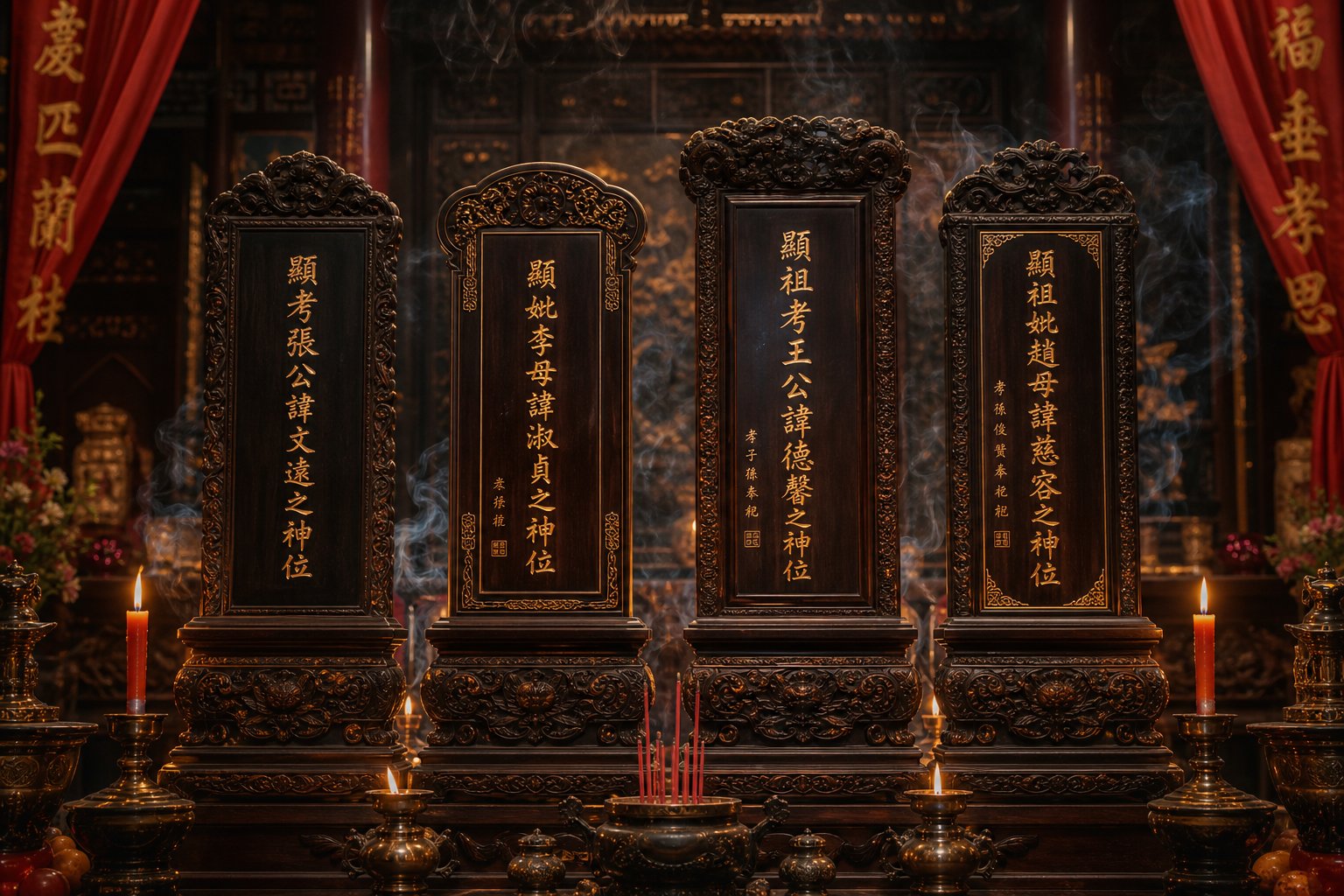
The Four Types of Chinese Emperor Names Decoded
Imagine one person carrying a birth name no one is allowed to say, a reign motto stamped on every coin in the empire, an ancestral rank assigned after death, and a moral verdict delivered by his successors. That is exactly what happened with Li Shimin, the second emperor of the Tang dynasty and one of the most celebrated rulers in Chinese history. His case is the clearest way to see how all four naming types worked together for a single emperor in China.
Personal Names and Temple Names Explained
Li Shimin (李世民, Li Shimin) received his personal name at birth. His father Li Yuan chose "Shimin" as a shortened form of the phrase "save the earth and pacify the people" (济世安民, jishi anmin). Even the ancient Chinese name given to a prince carried political weight, embedding a vision of benevolent rule into the child's identity from day one.
The moment Li Shimin became emperor in 626, his personal name became taboo. No one in the empire could write or speak the characters 世 (shi) or 民 (min) in their original form. Documents were altered, and people whose names contained these characters had to change them. The personal name effectively vanished from daily use, which is why you rarely see Chinese emperors referred to by their birth names in historical texts.
After Li Shimin died in 649, his successor placed a memorial tablet in the Imperial Ancestral Temple bearing the name Taizong (太宗, Taizong). This is his temple name. The character 太 (tai) means "grand" or "great," while 宗 (zong) means "ancestor" or "one who maintains the lineage." Together, Taizong signals that this emperor was a grand successor who consolidated and elevated the dynasty his father founded. Temple names follow a strict hierarchy: founders receive the suffix 祖 (zu, meaning "progenitor"), while successors receive 宗 (zong, meaning "maintainer").
Era Names Versus Posthumous Names
Li Shimin used only one era name during his entire 23-year reign: Zhenguan (贞观, Zhenguan), meaning "righteous contemplation" or "upright governance." This era name appeared on every official document, calendar, and legal record produced between 627 and 649. It broadcast the emperor's governing philosophy to the entire empire. The "Reign of Zhenguan" became so legendary that future crown princes were required to study it as the gold standard of Chinese governance.
His posthumous name tells a different story. After his death, court officials evaluated his legacy and assigned the title Wen Huangdi (文皇帝), where 文 (wen) means "civil, cultured, literary." This single character summarized their judgment: Li Shimin was a ruler of cultural refinement and wise governance. Later generations expanded this into a much longer string of honorific characters, eventually reaching "Wen Wu Dasheng Daguang Xiao Huangdi" (文武大圣大广孝皇帝), but the core evaluation remained that initial character, 文.
One Emperor Four Different Names
So which name do historians actually use? This is where the conventions get interesting. For Tang dynasty emperors, scholars default to the temple name because posthumous titles had already inflated into unwieldy strings of praise by that era. That is why you will always see "Tang Taizong" in history books rather than "Emperor Wen of Tang" or "the Zhenguan Emperor."
The convention shifts depending on the dynasty:
- Before the Tang dynasty, posthumous names were short and evaluative, so historians use them. You say "Emperor Wu of Han" (using the posthumous character 武, meaning "martial").
- From the Tang through Song dynasties, posthumous names became too long to be practical, so temple names took over. You say "Tang Taizong" or "Song Taizu."
- From the Ming and Qing dynasties onward, each emperor used only one era name for his entire reign, making it a convenient identifier. You say "the Kangxi Emperor" or "the Yongle Emperor."
This is why Western readers encounter what seems like an inconsistent system. It is not inconsistent at all. Scholars simply use whichever name type was most distinctive and practical for that particular historical period.
The table below maps all four chinese titles for Li Shimin, showing how each name type functioned within the broader system:
| Name Type | Chinese Term | Example Characters | Pinyin | English Meaning | When Used |
|---|---|---|---|---|---|
| Personal Name | 名 (ming) | 李世民 | Li Shimin | "Save the world, pacify the people" | Given at birth; made taboo upon enthronement |
| Era Name | 年号 (nianhao) | 贞观 | Zhenguan | "Righteous contemplation / Upright governance" | Used throughout the reign on documents and calendars |
| Temple Name | 庙号 (miaohao) | 太宗 | Taizong | "Grand Ancestor-Maintainer" | Assigned after death for ancestral worship |
| Posthumous Name | 谥号 (shihao) | 文皇帝 | Wen Huangdi | "The Cultured Emperor" | Assigned after death as moral evaluation of the reign |
Every row in this table represents a different moment in the emperor's life cycle and a different audience. The personal name belonged to the family. The era name belonged to the empire. The temple name belonged to the ancestral shrine. And the posthumous name belonged to history itself.
What makes this system so revealing is that three of these four names were chosen about the emperor rather than by him. Only the era name reflected the ruler's own aspirations. The rest were judgments, rankings, and legacies imposed by others. And the specific characters selected for each name drew from a shared vocabulary of Confucian virtues, cosmological ideals, and political claims that repeated across centuries of imperial rule.
Common Characters in Emperor Names and Their Symbolism
That shared vocabulary was not random. Across two thousand years of imperial rule, the same handful of characters appeared again and again in ancient china names for rulers. Court officials did not invent new words each time they needed to honor or judge an emperor. They drew from a codified set of characters, each carrying precise philosophical weight rooted in Confucian thought. Understanding these recurring characters is like learning an alphabet of power. Once you recognize them, any emperor's name starts to speak.
Virtue Characters and Confucian Philosophy
Why did certain characters dominate imperial naming for centuries? The answer lies in classical texts that explicitly defined which virtues merited which titles. The Liji (Book of Rites), one of the Five Confucian Classics compiled during the late Warring States and Former Han periods, established the philosophical framework connecting governance to moral cultivation. It taught that a ruler's character shaped the state itself. The lost chapter of the Yizhoushu (逸周书) went further, providing explicit definitions for posthumous characters: "those who love the people and like to give are called Benevolent (惠); settlers of disorder are called Martial (武); the virtuous and erudite are called Propagator (宣)."
This was not poetic license. It was a formal system. Court officials selecting a posthumous name consulted these classical definitions the way a judge consults legal precedent. The character had to match the ruler's documented conduct. A ruler who expanded territory through military campaigns earned 武 (wu). One who patronized scholarship and governed through civil institutions earned 文 (wen). The system made naming an act of historical accountability.
Martial and Civil Character Meanings
The most fundamental pairing in ancient chinese male names for rulers is 文 (wen) and 武 (wu). These two characters represent the twin pillars of ideal governance in Confucian thought: civil cultivation and martial strength. You will notice them everywhere in Chinese imperial history because they trace back to the very founders of the Zhou dynasty, King Wen and King Wu, whose posthumous names became the template for all that followed.
- 文 (wen, "cultured/civil") - Awarded to rulers who promoted learning, literature, and benevolent governance. Example: Emperor Wen of Han (汉文帝), praised for reducing taxes and fostering stability.
- 武 (wu, "martial") - Given to rulers who achieved military expansion or suppressed rebellion. Example: Emperor Wu of Han (汉武帝), who dramatically expanded the empire's borders.
- 德 (de, "virtue") - Signifies moral excellence and righteous conduct. Example: Emperor De Zong of Tang (唐德宗), whose name expressed the aspiration of virtuous governance.
- 仁 (ren, "benevolence") - The highest Confucian virtue, indicating compassion toward the people. Example: Emperor Renzong of Song (宋仁宗), remembered for his gentle and humane rule.
- 聖 (sheng, "sage/holy") - Reserved for rulers considered divinely wise. Example: The Kangxi Emperor's posthumous title includes 聖, acknowledging his extraordinary intellect and long, stable reign.
Prosperity and Eternity in Imperial Names
Beyond moral evaluation, ancient asian names for emperors also projected cosmic ambitions. Era names especially favored characters that invoked permanence, abundance, and heavenly favor. These were not judgments of past conduct but declarations of future intent.
- 永 (yong, "eternal") - Expressed the desire for an everlasting reign. Example: Yongle (永乐, "Eternal Happiness"), the era name of the Ming emperor who built the Forbidden City.
- 隆 (long, "prosperity/grandeur") - Conveyed flourishing abundance. Example: Qianlong (乾隆, "Heavenly Prosperity"), the era name of the Qing emperor who presided over China's territorial peak.
- 康 (kang, "health/peace") - Indicated stability and well-being. Example: Kangxi (康熙, "Peaceful Prosperity"), the longest-reigning emperor in Chinese history.
- 熙 (xi, "brilliant/radiant") - Suggested illumination and flourishing. Often paired with other characters to amplify meaning, as in Kangxi.
- 太 (tai, "grand/supreme") - Denoted the highest rank in temple names. Example: Taizu (太祖, "Grand Progenitor"), the standard temple name for dynasty founders.
Notice the pattern: characters used in posthumous names tend to be moral judgments looking backward, while characters in era names tend to be aspirational claims looking forward. This distinction reveals something fundamental about how Chinese civilization understood the relationship between naming and time. A ruler could choose optimism for his reign, but only history could assign him virtue or shame.
That assignment of shame, it turns out, was just as codified as the assignment of praise. The same classical sources that defined 文 and 武 also specified characters reserved for rulers who failed, characters that functioned not as honors but as condemnations carved permanently into the historical record.
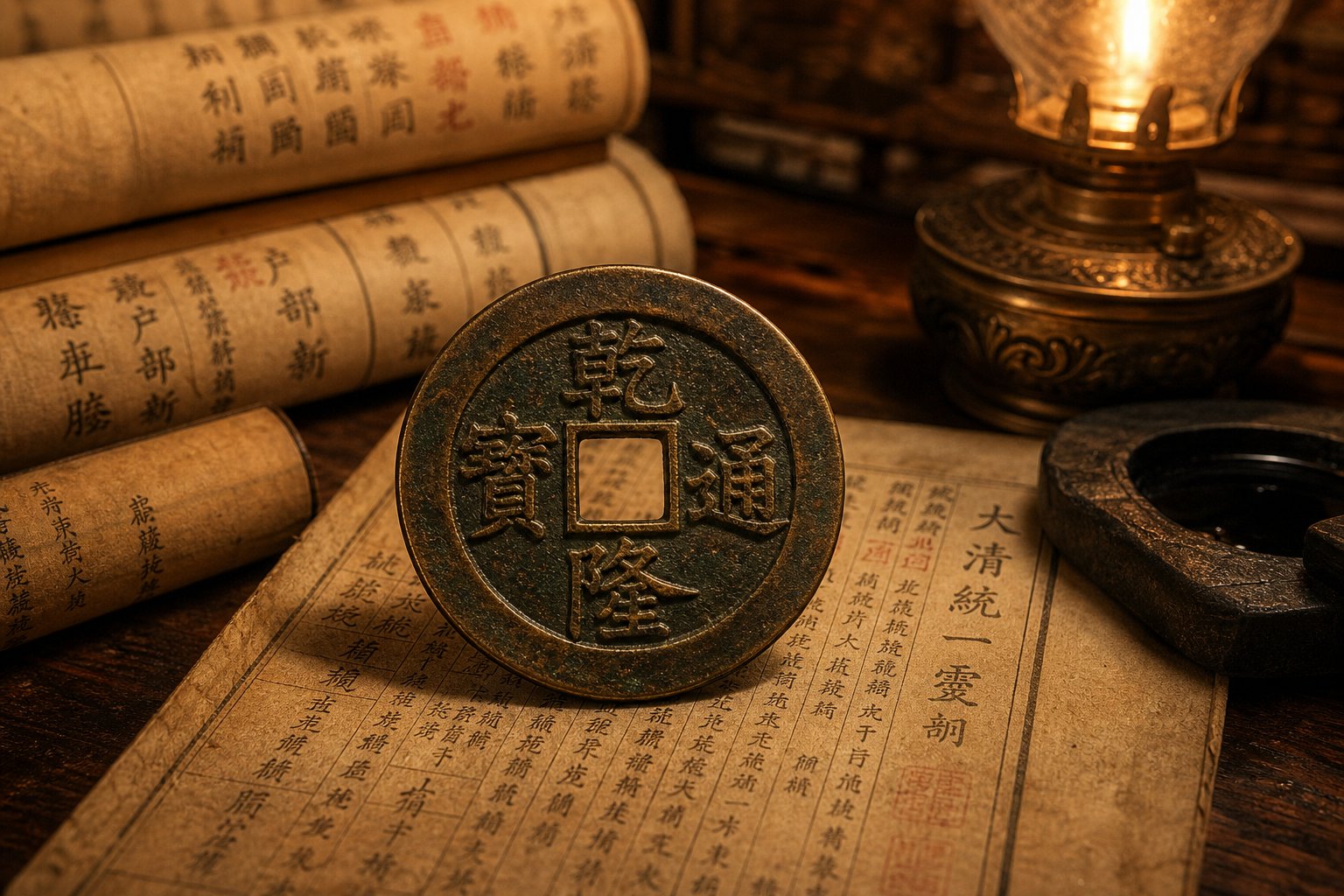
Era Names and the Meanings Emperors Chose for Their Reigns
Posthumous names judged the past. Era names claimed the future. Of all four naming types, the era name (年号, nianhao) was the only one an emperor could actively shape during his lifetime. It appeared on every official document, coin, legal record, and calendar entry produced during his reign. It was, in effect, a political slogan broadcast to the entire empire, and the characters chosen for it were never accidental.
The system began in 140 BCE when Emperor Wu of Han declared the first era name in Chinese history: Jianyuan (建元), meaning "establishing the origin." The name itself acknowledged its own novelty. From that point forward, every Chinese emperor adopted at least one era name upon taking the throne, and the tradition persisted for over two thousand years until the fall of the Qing dynasty in 1912.
How Court Officials Selected Era Name Characters
Choosing an era name was not a solo decision. Senior court officials deliberated over which characters best expressed the political moment. The process resembled crafting a mission statement for an entire government. Officials considered the current state of the empire, the emperor's ambitions, and the philosophical resonance of each character combination.
The results were aspirational by design. Kangxi (康熙) paired 康 (kang, "peace/health") with 熙 (xi, "radiant/flourishing") to project an image of peaceful prosperity. Yongle (永乐) combined 永 (yong, "eternal") with 乐 (le, "happiness") to declare a reign of everlasting joy. Qianlong (乾隆) joined 乾 (qian, "heaven") with 隆 (long, "grandeur/prosperity") to invoke heavenly abundance. Each pairing was a carefully constructed message about what the reign intended to be.
Era names also served as political reset buttons. When a natural disaster struck, a rebellion erupted, or an auspicious omen appeared, the emperor could declare a new era name to signal a fresh start. The act of changing an era name, called gaiyuan (改元, "change the origin"), reset the calendar back to year one. It told the empire: the old troubles belong to the old era; this is a new beginning. Emperor Huizong of Song, for instance, chose the era name Jianzhongjingguo (建中靖国, "establishing a moderate and peaceful country") specifically to signal his desire to end factional rivalry between conservative and progressive court officials.
From Multiple Era Names to One Per Reign
Before the Ming dynasty, frequent era name changes were standard practice. Emperor Xuan of Han used seven different era names across his reign. Emperor Wu of Han, who invented the system, cycled through more than ten. Eastern Han emperors changed them after auspicious events with no set interval. During the Tang dynasty, Wu Zetian alone adopted over twenty era names in her fifteen-year rule. Each change marked a political recalibration.
This changed dramatically with the Hongwu Emperor, founder of the Ming dynasty in 1368. He established the tradition known as yi shi yi yuan zhi (一世一元制), meaning "one era name for one reign." From that point through the end of the Qing dynasty, nearly every emperor kept a single era name for life. The shift happened because a single, stable era name made administration simpler and gave each reign a clearer identity. It also meant that Ming and Qing emperors became synonymous with their era names. When you say "Kangxi" or "Qianlong," you are using the era name as if it were the emperor's personal identifier.
The famous calligraphy Lantingji Xu by Wang Xizhi opens with the line "In the ninth year of the Yong He era" (永和九年). Yonghe, meaning "eternal harmony," was the era name of Emperor Mu of Jin, used from 345 to 356 CE. This illustrates how era names permeated every layer of Chinese culture, from imperial edicts down to private letters and artistic works. The name era system was not merely bureaucratic. It shaped how people experienced and recorded time itself, functioning as the Chinese equivalent of reign 中文 dating that structured all historical chronology.
The table below compares notable era names across dynasties, revealing how the chosen characters reflected each emperor's political context:
| Name | Characters | Literal Meaning | Emperor | Historical Context |
|---|---|---|---|---|
| Jianyuan | 建元 | Establishing the Origin | Emperor Wu of Han | First era name in Chinese history, marking the invention of the system itself |
| Zhenguan | 贞观 | Righteous Governance | Tang Taizong (Li Shimin) | Declared after a period of civil war; signaled commitment to just rule |
| Yonghe | 永和 | Eternal Harmony | Emperor Mu of Jin | Aspiration for lasting peace during the fragmented Eastern Jin period |
| Yongle | 永乐 | Eternal Happiness | Ming Chengzu (Zhu Di) | Chosen after usurping the throne; projected legitimacy and optimism |
| Kangxi | 康熙 | Peaceful Prosperity | Qing Shengzu (Xuanye) | Longest-used era name (61 years); matched a reign of territorial expansion and stability |
| Qianlong | 乾隆 | Heavenly Prosperity | Qing Gaozong (Hongli) | Presided over China's peak territorial extent and cultural patronage |
Notice how earlier era names tend toward abstract ideals ("establishing the origin," "eternal harmony") while later ones project confident grandeur ("heavenly prosperity"). This evolution mirrors the growing sophistication of imperial propaganda. By the Qing dynasty, an era name was not just a calendar label. It was a brand, carefully designed to define how an entire generation would remember its ruler.
Yet era names only captured what an emperor hoped his reign would be. The real judgment came after death, when successors assigned a posthumous name that told the empire what the reign actually was. And unlike era names, posthumous titles could be brutal.
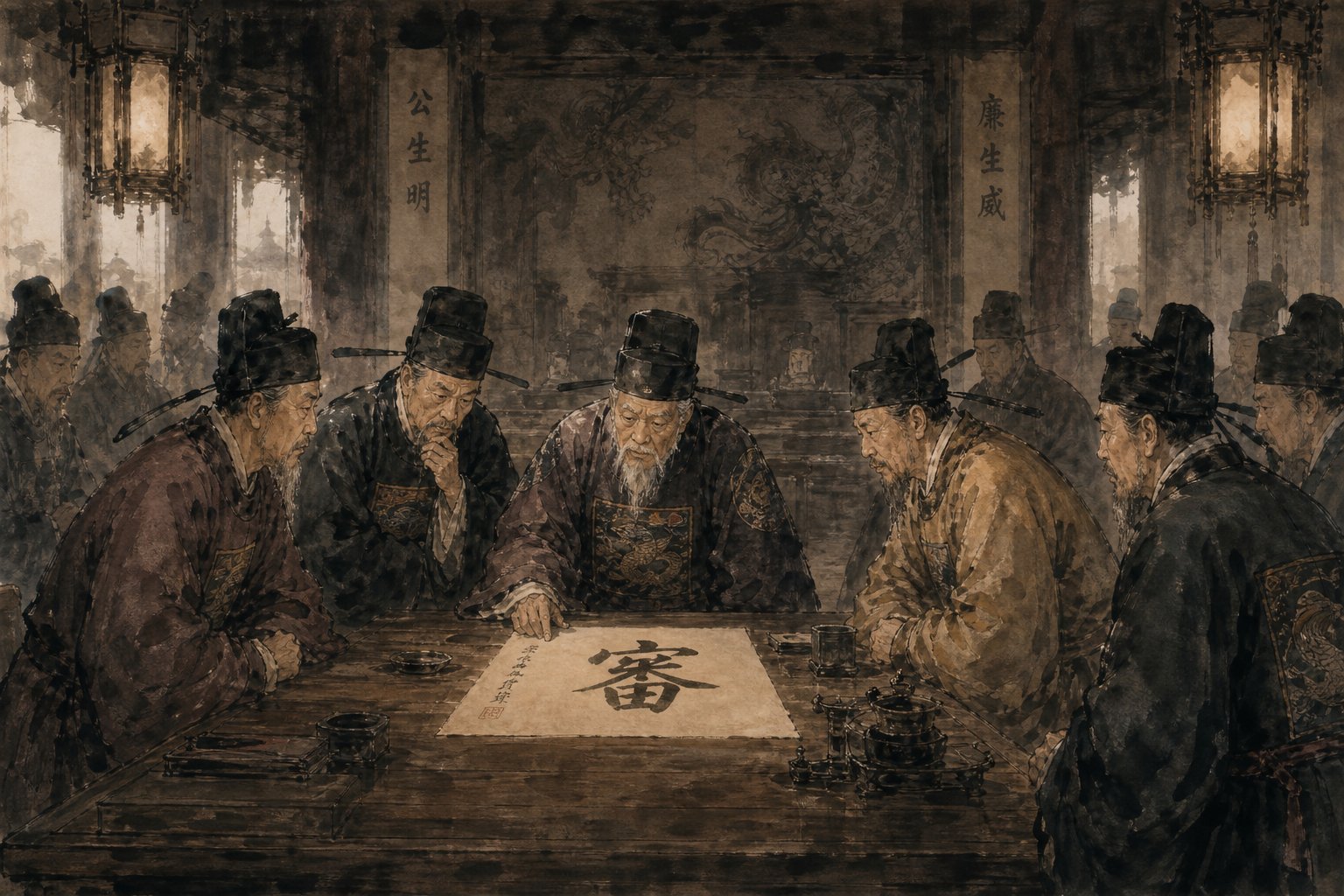
Posthumous Names as Verdicts on Imperial Legacy
Brutal is the right word. Posthumous names (谥号, shihao) were not tributes offered out of respect. They were verdicts. When an emperor died, his successors and court officials assembled to evaluate his entire life, then compressed that judgment into one or two characters that would define him for eternity. A good ruler earned praise. A bad one earned condemnation that no descendant could erase. This made the posthumous naming system the closest thing ancient chinese kings had to a final court of judgment, one where the dead could not defend themselves.
Positive Posthumous Names and Their Classical Definitions
The rules governing this system were not improvised. They came from a canonical text: the "Order of Posthumous Names Explained" (谥法解, Shifa Jie), a chapter preserved in the Neglected Zhou Scriptures (逸周书, Yizhoushu). Traditionally attributed to the Duke of Zhou and compiled by the Western Han scholar Liu Xiang, this text itemized over one hundred posthumous characters alongside their precise moral definitions. Its opening line established the entire philosophy:
A posthumous title is the trace of one's conduct. An appellation is the manifestation of one's achievements. Great conduct receives a great name, and minor conduct receives a minor name.
Each laudatory character had a specific definition that court officials were expected to match against the ruler's documented behavior. The system worked like legal precedent. You did not simply pick a flattering word. You had to justify it against the classical standard. Here are the most important positive posthumous characters and their codified meanings:
- 文 (wen, "cultured") - "Ordering heaven and earth is called Wen; being widely learned in the Way and virtue is called Wen." Awarded to rulers who governed through scholarship and civil institutions.
- 武 (wu, "martial") - "Quelling calamities and disorder is called Wu; being strong and upholding righteousness is called Wu." Given to rulers who achieved military success or suppressed rebellion.
- 宣 (xuan, "glorious") - "The one whose sagacity and kindness are known throughout is called Xuan." Reserved for rulers whose benevolent reputation spread widely.
- 康 (kang, "peaceful") - "Bringing peace and joy to comfort the people is called Kang; enabling the people to live in peace and joy is called Kang."
- 昭 (zhao, "illustrious") - "Displaying virtue with merit is called Zhao; one's sagely reputation being widely known is called Zhao."
These definitions came directly from the Shifa Jie and were treated as authoritative across dynasties. When officials debated whether a dead emperor deserved 文 or 武, they were not arguing taste. They were arguing evidence against a fixed standard.
Negative Names as Historical Judgment
Here is what makes the posthumous system genuinely remarkable: it included characters designed to shame. The same canonical text that defined praise also codified condemnation. A ruler who failed his people did not simply miss out on a flattering title. He received a character that branded his legacy as a warning to future generations.
The most infamous example is 炀 (yang). The Shifa Jie defines it plainly: "The one who is fond of his harem and withdraws himself from ritual is called Yang." This character was assigned to Yang Guang, the last significant ruler of the Sui dynasty, by his rival Li Yuan, who went on to found the Tang dynasty. The name "Emperor Yang of Sui" (隋炀帝) is not a neutral label. It is a political execution carried out through language, branding Yang Guang as a dissolute ruler who destroyed his own dynasty through licentiousness and neglect.
Other negative posthumous characters carried equally damning weight:
- 幽 (you, "tenebrous/dark") - Associated with rulers whose reigns ended in catastrophic collapse. King You of Zhou, the last Western Zhou ruler, bears this name after his infatuation with a consort led to the dynasty's fall.
- 厉 (li, "oppressive") - "Slaughtering the innocent is called Li." King Li of Zhou earned this for his tyrannical suppression of dissent.
- 哀 (ai, "piteous") - A neutral-to-negative character expressing lament. Emperor Ai of Jin was poisoned to death, and his posthumous name reflects that tragic end.
- 缪 (miu, "erroneous") - "Name and reality being at odds is called Miu." A subtle but devastating judgment meaning the ruler's reputation was undeserved.
The political stakes were enormous. Since the privilege of bestowing a posthumous name belonged to the legitimate successor, competing claimants sometimes proposed different names for the same dead ruler. When Yang Guang died in 618 AD, three rival factions each suggested a different posthumous name: Li Yuan proposed the condemning 炀 (yang, "scorching"); Yang Guang's own grandson's court proposed the laudatory 明 (ming, "bright"); and the military leader Dou Jiande proposed 闵 (min, "lamentable"). Each name was effectively a competing bid for imperial authority. Li Yuan won the war, so his condemnation stuck permanently.
How Posthumous Names Inflated Over Time
Early chinese royal names in the posthumous tradition were admirably concise. During the Zhou, Qin, and Han dynasties, a posthumous name consisted of just one or two characters. Emperor Wu. Emperor Wen. King Xuan. The brevity forced precision. One character had to carry the entire weight of a reign's moral evaluation.
This discipline eroded over time. By the Tang dynasty, emperors began receiving posthumous titles padded with additional honorific characters. Li Shimin's original posthumous name was simply 文 (wen, "cultured"). Later generations expanded it to "Wen Wu Dasheng Daguang Xiao Huangdi" (文武大圣大广孝皇帝), a string of seven laudatory characters meaning "Cultured, Martial, Greatly Sagely, Greatly Radiant, Filial Emperor." The Song dynasty continued this inflation. By the Qing dynasty, posthumous titles had ballooned into unwieldy strings that could stretch to over twenty characters, making them the longest chinese name constructions in the imperial system.
The Qing emperor Nurhaci's full posthumous title runs to twenty-five characters. The Kangxi Emperor's reaches twenty-three. At that length, the names ceased to function as moral evaluations and became ceremonial formulas of accumulated praise. This is precisely why scholars stopped using posthumous names to identify Tang, Song, Ming, and Qing emperors. When every ruler receives a title that essentially says "magnificent, sagely, martial, benevolent, wise, filial, divine," the names lose their discriminating power.
The inflation also killed the negative posthumous name. The Northern Song dynasty effectively abolished the practice of assigning derogatory posthumous characters. From that point forward, every emperor received praise regardless of his actual conduct. The system that once held rulers accountable to history became a rubber stamp of flattery. The sharp moral clarity of the early system, where a single character could immortalize shame or honor, gave way to bureaucratic ceremony.
This shift reveals something important about how power relates to naming. When the posthumous system was young, successors had the political will to condemn predecessors honestly. As dynasties consolidated and court culture became more elaborate, the ritual of naming grew detached from the reality of judgment. The names got longer, but they said less. The characters multiplied, but their meaning diluted. What remained constant was the underlying architecture: temple names still ranked each emperor within the dynastic hierarchy, and those rankings carried their own coded vocabulary of power.
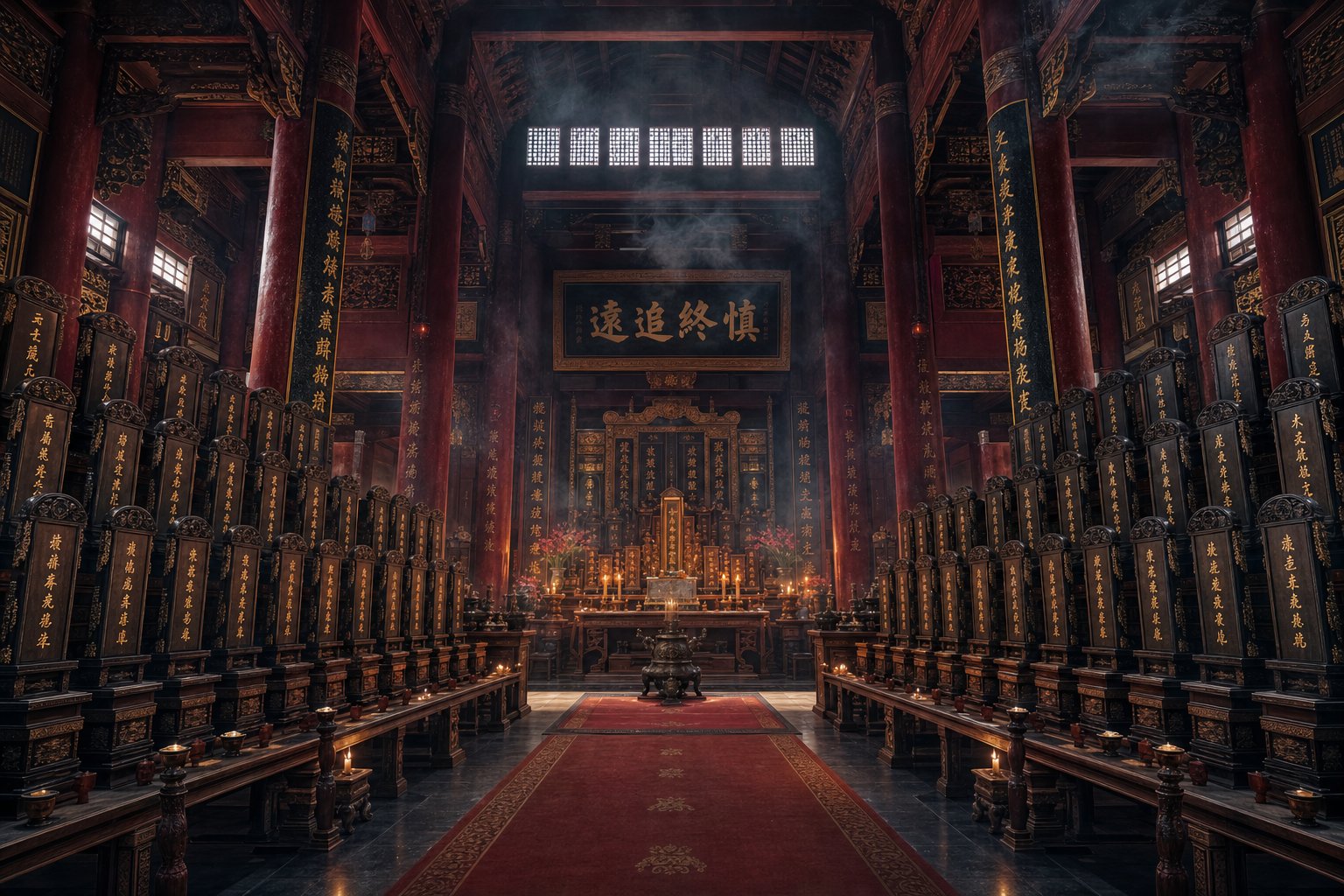
Temple Names and the Power of Name Taboo in Imperial China
That coded vocabulary of power is most visible in temple names (庙号, miaohao). While posthumous names judged character and era names projected ambition, temple names did something different entirely. They ranked each emperor within the dynastic family tree, assigning a precise hierarchical position that determined how the ruler would be worshipped for generations. Every character in a temple name carried structural meaning about the emperor's role in the dynasty's story.
Temple Name Characters and Their Hierarchical Meanings
Temple names were inscribed on memorial tablets placed in the Imperial Ancestral Temple (太庙, taimiao), where successive generations performed ritual sacrifices. The system originated during the Shang dynasty and persisted until the Qing dynasty's fall in 1912. Each temple name consists of two characters: a descriptive prefix and a suffix that indicates the emperor's foundational role.
The suffix tells you the most important thing immediately. Founders receive 祖 (zu, "progenitor/ancestor"), signaling that they created something new. Successors who maintained and built upon that foundation receive 宗 (zong, "forebear/maintainer"). This single-character distinction separates dynasty-makers from dynasty-keepers. When you see Taizu, you know you are looking at a founder. When you see Taizong, you know you are looking at a consolidator.
The prefix characters form their own hierarchy of royal chinese names:
| Temple Name | Chinese | Pinyin | Meaning | Typical Usage |
|---|---|---|---|---|
| Taizu | 太祖 | Taizu | Grand Progenitor | Dynasty founders (Song Taizu, Ming Taizu, Qing Taizu) |
| Gaozu | 高祖 | Gaozu | High Ancestor | Exalted founders (Han Gaozu, Tang Gaozu) |
| Shizu | 世祖 | Shizu | Generation Ancestor | Rulers who refounded or dramatically transformed the dynasty (Qing Shizu) |
| Taizong | 太宗 | Taizong | Grand Forebear | Second-generation rulers who consolidated power (Tang Taizong, Song Taizong) |
| Shizong | 世宗 | Shizong | Generation Forebear | Rulers who initiated a new phase within an existing dynasty |
| Gaozong | 高宗 | Gaozong | High Forebear | Successors of particular distinction (Tang Gaozong, Qing Gaozong) |
The character 太 (tai, "grand/supreme") signals the highest rank. 高 (gao, "high/exalted") conveys elevated status. 世 (shi, "generation") indicates someone who opened a new chapter in the dynasty's history. These prefixes were not interchangeable. Court officials debated which prefix a dead emperor deserved based on his actual contributions. The Yongle Emperor of the Ming dynasty, for instance, originally received the temple name Taizong (太宗, "Grand Forebear") as the dynasty's third ruler. Over a century later, the Jiajing Emperor reclassified him as Chengzu (成祖, "Completing Progenitor") because his military conquests and territorial expansion were considered equivalent to founding a dynasty anew.
Before the Sui dynasty, temple names were reserved exclusively for rulers of exceptional impact. Many Han dynasty emperors never received one. Emperor Jing of Han, despite a stable and prosperous reign, was denied a temple name because his successors judged his contributions insufficient for ancestral enshrinement. From the Tang dynasty onward, every emperor received a temple name regardless of merit, which diluted the system's selectivity but made it universally useful as an identifier.
Name Taboo and Why Personal Names Disappeared from Records
If temple names ranked emperors within the dynasty, name taboo (避讳, bihui) erased them from everyday language entirely. This practice explains one of the strangest features of old chinese names in historical records: the personal names of emperors are almost never used in texts produced during or after their reigns. Not because they were forgotten, but because writing or speaking them was a criminal offense.
The rule was absolute. The moment a man became emperor, every character in his personal name became forbidden throughout the empire. Anyone whose own name contained the same character had to change it. Books were reprinted with substitute characters. Place names were altered. Even the strokes of the forbidden character were modified in handwriting so that the word appeared visually different on the page.
Consider what happened when Li Yuan (李渊) founded the Tang dynasty in 618. His personal name character 渊 (yuan, "deep pool") became taboo empire-wide. The historian writing the Jinshu (晋书, History of Jin) during the Tang period could not write the name of the earlier Xiongnu chieftain Liu Yuan (刘渊) using that character. Instead, the text refers to Liu Yuan by his courtesy name, Yuanhai (元海), to avoid the tabooed character entirely.
The effects compounded across generations. The Kangxi Emperor's personal name was Xuanye (玄烨). The character 玄 (xuan, "mysterious/dark") became forbidden not only during his sixty-one-year reign but for decades afterward. The Daoist classic Taixuanjing (太玄经) had to be renamed Taiyuanjing (太元经), substituting a different character. Scribes who could not avoid the character altogether resorted to writing it with the final stroke deliberately omitted, producing a visually incomplete form (𤣥) that signaled awareness of the taboo without technically violating it.
The Qianlong Emperor's personal name, Hongli (弘历), triggered similar alterations. The character 弘 (hong) was written as 𢎞, with a modified internal stroke, across all official documents. These were not optional courtesies. Violating name taboo could result in punishment, and examination candidates who accidentally used a tabooed character in their essays risked having their papers invalidated.
This practice had a profound effect on which chinese old name forms survived in common usage. Since personal names were systematically suppressed from public records, they became the least accessible way to identify an emperor. Temple names, era names, and posthumous names filled the gap precisely because they were designed for public use. The taboo system essentially guaranteed that the political names, the ones chosen to project power and pass judgment, would dominate historical memory while the intimate birth name faded into archival obscurity.
Name taboo also reveals something about how imperial power operated through language itself. Controlling which words could be spoken or written was a demonstration of sovereignty as tangible as collecting taxes or commanding armies. The emperor's name did not merely identify him. It belonged to him so completely that no other person in the empire could share it. In a civilization where naming carried philosophical and moral weight, this was the ultimate assertion of singular authority.
Yet even this authority had limits. Dynasties rose and fell, and with each transition, the old taboos dissolved while new ones took their place. The naming conventions that survived a dynasty's collapse, the ones historians chose to preserve, often depended on which political faction won the succession struggle and which characters they selected to define the era that followed.
How Name Meanings Evolved Across Chinese Dynasties
Each dynasty that rose to power inherited the naming system from its predecessor but reshaped it to serve new political realities. The result is that asian dynasty names follow recognizable patterns within each era, yet shift dramatically between them. What counted as the "primary" name for a ruler in the Han dynasty was not the same as in the Tang, and both differed from the Ming. Tracking these shifts reveals how naming conventions functioned as living political tools rather than static traditions.
Naming Patterns from Han Through Qing
During the Han dynasty, posthumous names were short, morally precise, and genuinely evaluative. The system was also selective: not every emperor received a temple name. Only rulers with extraordinary contributions earned a place in the ancestral temple. This selectivity gave both naming types real weight. The Western Han produced only four temple names among eleven emperors, making each one a meaningful distinction.
The Tang dynasty changed everything. Temple names became universal, awarded to every emperor regardless of merit. Simultaneously, posthumous titles inflated into long honorific strings. The practical consequence was a swap: scholars stopped citing posthumous names (now too unwieldy) and defaulted to temple names as the standard identifier. This is why you say "Tang Taizong" rather than "Emperor Wen of Tang."
The Song dynasty continued this pattern while quietly eliminating negative posthumous names. From the Northern Song onward, no emperor received a condemning title. The system lost its teeth as a tool of accountability.
The Ming and Qing dynasties introduced the one-era-name-per-reign convention, making the era name the most distinctive identifier. Since each ruler kept a single nianhao for life, it functioned almost like a personal name. This is why the name for ancient china's later emperors is almost always their era name: Yongle, Kangxi, Qianlong.
| Dynasty | Preferred Name Type | Meaning Pattern | Notable Example |
|---|---|---|---|
| Han (206 BCE-220 CE) | Posthumous name | Single moral character evaluating conduct | Emperor Wu (武, "Martial") for military expansion |
| Tang (618-907) | Temple name | Hierarchical rank within dynastic lineage | Taizong (太宗, "Grand Forebear") for consolidation |
| Song (960-1279) | Temple name | Rank plus inflated posthumous praise | Renzong (仁宗, "Benevolent Forebear") for humane rule |
| Ming (1368-1644) | Era name | Aspirational two-character political motto | Yongle (永乐, "Eternal Happiness") for legitimacy after usurpation |
| Qing (1644-1912) | Era name | Cosmic ambition and stability claims | Kangxi (康熙, "Peaceful Prosperity") for 61-year reign |
Ironic Names and Political Propaganda
Knowing what these characters meant makes certain names deeply ironic. The Jianwen Emperor (建文, "Establishing Civility") of the Ming dynasty chose an era name projecting cultured governance. His uncle Zhu Di overthrew him within four years, erased his reign from official records, and adopted the era name Yongle ("Eternal Happiness"). The happiness, it turned out, belonged to the usurper. Zhu Di then had his own temple name upgraded from Taizong to Chengzu (成祖, "Completing Progenitor") generations later, retroactively elevating his status to that of a dynasty founder.
Usurpers weaponized naming consistently. Li Yuan condemned the last Sui emperor with the posthumous character 炀 (yang, "dissolute") while simultaneously claiming the temple name Gaozu (高祖, "High Ancestor") for himself. The contrast was deliberate propaganda: one name destroyed a predecessor's legacy while the other elevated the new ruler to the highest possible rank. China had different names for the same historical moments depending on who won the succession struggle.
The Qing dynasty, founded by the Manchu minority, faced a unique legitimacy challenge. Their naming choices reflected it. The Kangxi Emperor received the temple name Shengzu (圣祖, "Sagely Progenitor"), a suffix normally reserved for dynasty founders. He was not the founder, but his military conquests of Taiwan and suppression of the Three Feudatories were considered equivalent to establishing the dynasty anew. The old name china's historians assigned him was itself an argument for Qing legitimacy over former Ming loyalists.
Even the question of what was china called before china connects to this naming politics. Each dynasty considered itself the legitimate successor to all previous civilization, and naming was the primary mechanism for asserting that continuity. A new dynasty did not merely replace the old one. It renamed it, rejudged its rulers, and rewrote the meaning of its legacy through carefully chosen characters that told the empire exactly who deserved honor and who deserved shame.
These patterns show that imperial naming was never a neutral archival exercise. It was contested ground where legitimacy was won and lost. The characters embedded in each name carried arguments about who deserved to rule and why. Recognizing those arguments is the difference between memorizing labels and actually reading the political history encoded within them.
How to Decode Any Chinese Emperor Name Yourself
Reading the political history encoded in these names is a skill you can apply to any emperor you encounter. The structural clues are consistent enough that a few simple checks will tell you what type of name you are looking at and what its characters were designed to communicate.
A Step-by-Step Method to Decode Any Emperor Name
When you come across an unfamiliar emperador china reference in a book, documentary, or museum exhibit, run through this process:
- Check the suffix. If the name ends in 祖 (zu) or 宗 (zong), you are looking at a temple name. Zu marks a founder; Zong marks a successor. The prefix character tells you the emperor's rank within the dynasty.
- Count the characters (excluding 皇帝/Huangdi). A single evaluative character like 文, 武, or 炀 followed by "Emperor" or "Di" is a posthumous name. It carries a moral verdict, positive or negative.
- Look for a two-character aspirational phrase. If the name is two characters that together form a hopeful or cosmic meaning (Eternal Happiness, Peaceful Prosperity, Heavenly Grandeur), you are reading an era name. These project ambition rather than judgment.
- Identify the dynasty period. If the emperor ruled before the Tang, scholars typically cite the posthumous name. Tang through Yuan, expect a temple name. Ming and Qing, expect an era name.
- Break down each character individually. Use the vocabulary covered in this article: 文 means civil/cultured, 武 means martial, 太 means grand, 永 means eternal, 康 means peaceful. Each character is a deliberate claim about power, virtue, or cosmic order.
This method works whether you are reading English translations, pinyin romanizations, or original Chinese characters. The structural patterns remain the same regardless of language. Even Spanish-language sources discussing an emperador china follow these same naming conventions in translation.
Imperial Naming Legacy in Modern Chinese Culture
Does china still have an emperor? No. The last emperor, Puyi, abdicated in 1912, and China has been a republic ever since. But the philosophy behind imperial naming did not vanish with the throne. It migrated into everyday Chinese naming culture, where parents still select characters for their children based on meaning, aspiration, and moral weight.
The practice of chinese generation names (字辈, zibei) echoes the imperial system directly. Many Chinese families assign a shared character to all children of the same generation, creating a naming structure that tracks lineage across centuries, much like temple names tracked dynastic succession. The Confucian belief that a name shapes destiny, that the right characters can invoke virtue, prosperity, or wisdom, persists in modern naming choices just as it once shaped the titles of emperors.
Understanding chinese emperor names meaning is ultimately about recognizing that names in Chinese civilization were never passive labels. They were active instruments: tools for claiming legitimacy, passing judgment, projecting ambition, and structuring memory across generations. Every character was a choice, and every choice told a story about what power meant, what virtue required, and what history would remember.
Frequently Asked Questions About Chinese Emperor Names
1. Why do Chinese emperors have so many different names?
Chinese emperors carried four distinct name types, each serving a different purpose and assigned at a different time. The personal name was given at birth but became taboo once the ruler took the throne. The era name functioned as a political motto broadcast on coins and documents. The temple name ranked the emperor within the dynastic ancestral hierarchy after death. The posthumous name delivered a moral verdict on the ruler's legacy. Scholars use whichever name type was most practical for the dynasty in question, which is why the same emperor may appear under different names in different sources.
2. What is the difference between a Chinese emperor's era name and posthumous name?
An era name (nianhao) was chosen during the emperor's lifetime to express his political ambitions and governing philosophy. It appeared on calendars, legal documents, and currency. A posthumous name (shihao) was assigned after the emperor's death by his successors as a moral judgment on his reign. Era names look forward with optimistic characters like 'eternal' or 'prosperity,' while posthumous names look backward with evaluative characters like 'cultured' or 'martial.' Only the era name reflected the ruler's own aspirations; the posthumous name was imposed by others.
3. What do the characters in Chinese emperor names mean?
Each character was drawn from a codified Confucian vocabulary with precise definitions. Common characters include wen (cultured, for rulers who promoted scholarship), wu (martial, for military achievers), ren (benevolence, for compassionate rulers), yong (eternal, expressing desire for lasting rule), and kang (peaceful, indicating stability). These were not chosen casually. Court officials consulted classical texts like the Shifa Jie that provided formal definitions matching specific virtues to specific characters based on documented conduct.
4. Does China still have an emperor today?
No. The last Chinese emperor, Puyi, abdicated in 1912 when China became a republic. However, the philosophy behind imperial naming persists in modern Chinese culture. Parents still select characters for children based on meaning and aspiration. The practice of generation names (zibei), where all children of the same generation share a character, directly echoes how temple names tracked dynastic succession. The Confucian belief that a name shapes destiny remains deeply embedded in Chinese naming traditions.
5. Why were Chinese emperors' personal names forbidden to use?
The practice of name taboo (bihui) made every character in an emperor's personal name illegal to write or speak throughout the empire. Anyone whose own name contained the same character had to change it. Books were reprinted with substitute characters, and place names were altered. This was a demonstration of absolute sovereignty through language. The taboo explains why personal names rarely appear in historical texts and why political names like era names and temple names became the standard way to identify rulers in Chinese historical records.