What Chinese Family Nicknames Really Mean
When you search for Chinese family nicknames, you probably get a list of kinship titles: how to say "uncle" or "grandmother" or "older brother." Those are useful, but they are not nicknames. They are labels for roles. The intimate, sometimes bizarre, deeply affectionate names that Chinese families actually use behind closed doors? That is a different world entirely.
In the family in Chinese language and culture, there is a clear line between a kinship title (称呼 chēnghu) and a family nickname (小名 xiǎomíng or 乳名 rǔmíng). A kinship title like 姑姑 (gūgu, paternal aunt) tells you exactly where someone sits on the family tree. A nickname like 小胖 (Xiǎo Pàng, "Little Chubby") tells you something else entirely: that someone is cherished enough to be teased.
A kinship title tells you someone's role in the family. A nickname tells you how much they are loved.
What Makes Chinese Family Nicknames Different from Kinship Titles
Chinese familial terms for addressing family members in Chinese follow strict rules. You cannot call your father's older brother by the same title as his younger brother. Kinship in Chinese is precise, hierarchical, and rooted in Confucian social structure. Nicknames, on the other hand, break every rule. They are playful, personal, and sometimes sound outright rude to outsiders. A grandmother calling her grandson "Dog Egg" is not an insult. It is protection wrapped in love.
The Three Naming Layers in Chinese Culture
Every person in a Chinese family can carry up to three naming layers simultaneously:
- Formal name (大名 dàmíng or 学名 xuémíng) - the official name used on documents, at school, and in professional life. This is the name given with careful thought to meaning, stroke count, and sometimes a fortune teller's guidance.
- Family nickname (小名 xiǎomíng or 乳名 rǔmíng) - the "milk name" used at home, often given at birth and carried for life. These range from sweet to deliberately ugly, and they signal belonging.
- Kinship title (称呼 chēnghu) - the relational address that places you within the family hierarchy. This is what most English resources cover when they discuss family members in Chinese.
The chinese character for family, 家 (jiā), literally combines a roof with the character for pig, suggesting a household with livestock beneath it. That same blend of the practical and the intimate runs through how Chinese families name each other. The formal name faces outward. The nickname faces inward, toward the kitchen table and the living room couch.
So how do these nicknames actually get created? The most common pattern starts with a single syllable that signals closeness the moment you hear it.
Nicknames with the 小 Prefix Pattern
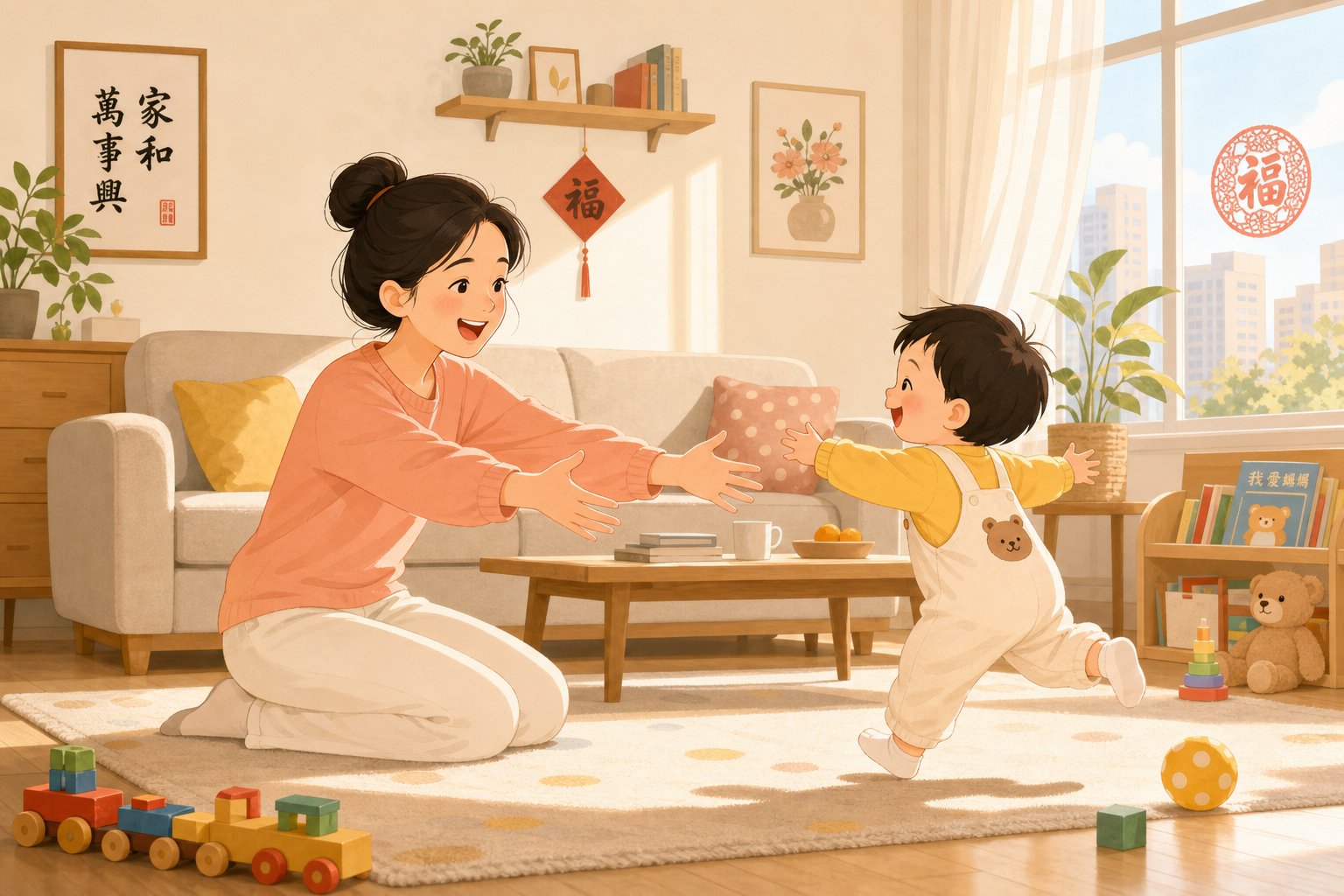
That single syllable? It is 小 (xiǎo), meaning "little." Stick it in front of almost any character, and you instantly create a nickname dripping with familiarity. This is the most widespread pattern for chinese family nicknames, and you will hear it in nearly every household across China, Taiwan, and Chinese diaspora communities worldwide.
The formula is simple: take one character from the child's formal name, or pick a descriptive word, and add 小 before it. A child formally named 张明辉 (Zhāng Mínghuī) becomes 小明 (Xiǎo Míng) at home. A rosy-cheeked baby girl might become 小红 (Xiǎo Hóng, "Little Red"). The nickname strips away formality and replaces it with warmth.
The 小 Prefix Pattern for Children
Imagine a family dinner where a grandmother calls out "小宝, come eat!" Everyone at the table knows exactly who she means, even though 小宝 (Xiǎo Bǎo, "Little Treasure") is not on any birth certificate. These nicknames often emerge in the first days of life, sometimes before the formal name is even decided. Parents might spend weeks consulting character dictionaries and stroke-count charts for the official name, but the 小 nickname? That one comes from the gut.
Here are common examples you will encounter:
- 小明 (Xiǎo Míng) - "Little Bright" - used by parents and grandparents for a child whose formal name contains 明
- 小红 (Xiǎo Hóng) - "Little Red" - often for girls, used by the whole family at home
- 小宝 (Xiǎo Bǎo) - "Little Treasure" - a universal endearment from parents to young children
- 小胖 (Xiǎo Pàng) - "Little Chubby" - affectionate teasing, typically from parents or older relatives
- 小鱼 (Xiǎo Yú) - "Little Fish" - playful, often for active or slippery toddlers, used by parents
- 小龙 (Xiǎo Lóng) - "Little Dragon" - common for boys born in the Year of the Dragon, used by the whole family
- 小妹 (Xiǎo Mèi) - "Little Sister" - used by parents and older siblings for the youngest daughter in the family
- 小弟 (Xiǎo Dì) - "Little Brother" - used by parents and older siblings for the youngest son
You will notice that 小弟 overlaps with the chinese for younger brother as a kinship term, but when used as a nickname within the family, it carries a softer, more affectionate tone than the formal address. Similarly, calling someone little brother in mandarin chinese as a nickname signals closeness rather than hierarchy.
Why Adults Keep Their 小 Nicknames
Here is what surprises many people outside Chinese culture: these nicknames do not expire. A 45-year-old executive might still be 小军 (Xiǎo Jūn) to his mother. A married woman with her own children might still answer to 小丽 (Xiǎo Lì) at family reunions. The 小 prefix does not literally mean the person is small or young. It means "you are still my child."
This persistence is deliberate. The nickname anchors the family bond across decades. It is a verbal time machine that pulls a grown adult back into the safety of childhood with a single word. In professional settings, no one would dare use it. At the office, you are 李总 (Lǐ Zǒng, "Director Li"). At your mother's kitchen table, you are 小李 (Xiǎo Lǐ), and you always will be.
The 小 prefix also extends sideways across sibling relationships. An older sister in chinese might call her little sister in chinese 小妹 well into their sixties. An older brother might forever be the one who calls his younger brother in chinese 小弟, regardless of who is taller or more successful. The nickname preserves the original family dynamic like amber preserving an insect.
But 小 is just one tool in the nickname toolbox. Chinese families have another pattern that doubles down on affection, literally, by repeating a single character twice.
Reduplication Nicknames in Chinese Families
Repeating a single character twice. That is all it takes to turn an ordinary word into one of the most emotionally loaded chinese family nicknames you will hear. This pattern, called 叠字 (diézì), produces names like 明明 (Mingming), 甜甜 (Tiantian), and 乐乐 (Lele) that sound almost musical when spoken aloud. If the 小 prefix signals familiarity, reduplication signals something deeper: the unguarded, sing-song voice a parent uses when no one else is listening.
How Reduplication Creates Warmth
Why does repeating a syllable feel so intimate? The answer lies in how babies learn language. Across cultures, early speech gravitates toward repeated sounds: mama, papa, dada. In Mandarin, this instinct runs especially deep. How do you say mother in chinese? You say 妈妈 (mama), a reduplicated form. How do you say mama in chinese for "dad"? 爸爸 (baba). These foundational family words already use the same doubling pattern, so when parents create a nickname like 甜甜 (Tiantian, "Sweet Sweet"), they are tapping into the same linguistic register as a child's very first words.
The mother in chinese language is 妈妈 rather than the formal 母亲 (muqin) precisely because reduplication carries warmth and closeness. When you learn how to write ma mother chinese style, you write the character 妈 twice. That same emotional logic extends to nicknames. A reduplicated name sounds like it belongs in the home, not the classroom or the office. It mimics the rhythm of comfort, of lullabies, of being rocked to sleep.
As one reference on Chinese naming conventions notes, reduplication in nicknames "feels like toddler's speech" to many native speakers, which is exactly why it carries such strong emotional resonance when used within families. The pattern signals that the speaker is dropping all social armor.
Choosing Characters for Reduplication Nicknames
Parents typically draw from two sources when picking a character to reduplicate:
- The child's formal name - If a girl's given name is 明慧 (Minghuì, "bright and wise"), her family might call her 明明 (Mingming) at home. The nickname borrows one character and softens it through repetition.
- Aspirational qualities - Parents choose characters that represent what they hope for the child: sweetness, joy, prosperity, or beauty. A round-faced baby might become 圆圆 (Yuanyuan), where roundness symbolizes completeness and good fortune.
The character selection is rarely random. Each choice carries meaning, and families often debate which quality deserves to become the child's daily name. Here are common reduplication nicknames you will encounter across Chinese-speaking families:
| Characters | Pinyin | Meaning | Common Usage Context |
|---|---|---|---|
| 明明 | Mingming | Bright bright | Derived from formal name containing 明; used by parents and grandparents |
| 甜甜 | Tiantian | Sweet sweet | For girls; expresses hope for a pleasant, happy life |
| 乐乐 | Lele | Happy happy | Gender-neutral; one of the most popular reduplication nicknames for babies |
| 圆圆 | Yuanyuan | Round round | Symbolizes completeness and prosperity; often for chubby babies |
| 贝贝 | Beibei | Precious precious | Universal endearment; used by parents for young children of either gender |
| 欢欢 | Huanhuan | Joyful joyful | Expresses delight at the child's arrival; common in northern China |
| 安安 | An'an | Peaceful peaceful | Often chosen for calm babies or as a wish for a safe life |
| 星星 | Xingxing | Star star | Poetic; used by parents who see the child as their guiding light |
| 果果 | Guoguo | Fruit fruit | Symbolizes the "fruit" of the parents' love; popular in recent years |
| 豆豆 | Doudou | Bean bean | Playful; often for small or energetic children, used by the whole family |
Regional differences shape how these nicknames sound in practice. In Mandarin-speaking families, the second syllable often takes a neutral tone, softening the name further. Cantonese-speaking families use the same reduplication principle but with Cantonese pronunciations and tonal patterns, and they tend to favor different characters. A Cantonese family might lean toward 仔仔 (Jai jai, "little one") or 囡囡 (Neoi neoi, "girl girl"), forms that sound distinctly southern and carry their own regional warmth.
What both dialects share is the underlying logic: doubling a character strips it of its dictionary formality and wraps it in affection. The mandarin for mother, 妈妈, works the same way. One 妈 is a word. Two of them together is a feeling.
Reduplication nicknames tend to skew positive: sweetness, brightness, joy. But Chinese naming traditions also have a darker, stranger corner, where the most loving nicknames sound deliberately ugly, and that ugliness is the whole point.
The Tradition of Humble Nicknames to Protect Children
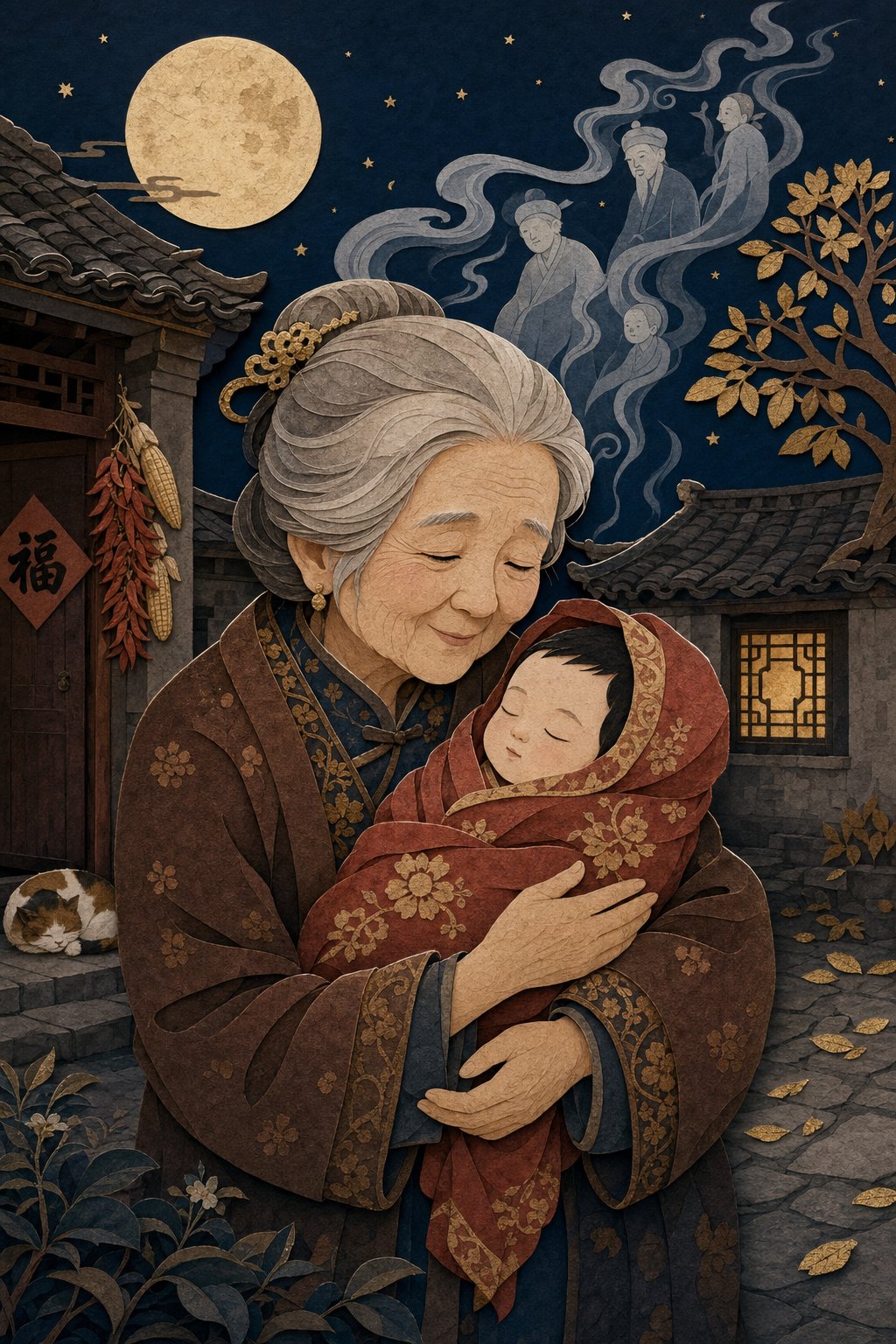
A grandmother calls her newborn grandson "Dog Egg." A father introduces his toddler as "Iron Pillar." A mother coos "Ugly Ugly" at the baby in her arms. To an outsider, these sound cruel. To the family, they are armor.
This is the tradition of 贱名 (jianming), literally "cheap names" or "lowly names," and it represents one of the most counterintuitive expressions of love in Chinese naming culture. The logic is ancient: if you give a child a beautiful, precious-sounding name, jealous spirits will notice and steal the child away. But if the child sounds worthless? The spirits will pass right over.
The Folk Belief Behind Humble Nicknames
The roots of this practice stretch deep into the chinese family tree, passed down through generations of rural families who faced devastating infant mortality rates. As China Daily notes, the ancient Chinese gave children names like pig or cow because they believed such names would not attract evil spirits, thereby assuring the child a long life. The reasoning was practical in its own way: spirits hunt for treasure, not trash. Name your child something undesirable, and death itself might overlook them.
Common examples of these protective nicknames include:
- 狗蛋 (Goudàn) - "Dog Egg" - one of the most classic rural nicknames, combining two "lowly" elements
- 铁柱 (Tiezhù) - "Iron Pillar" - suggesting the child is tough, sturdy, and too heavy for spirits to carry away
- 丑丑 (Chǒuchǒu) - "Ugly Ugly" - using reduplication to emphasize unattractiveness to evil forces
- 狗剩 (Gǒushèng) - "Dog Leftovers" - implying the child is so worthless even a dog would leave them behind
- 石头 (Shítou) - "Rock" - hard, common, and beneath a spirit's attention
This tradition also connects to Confucian values of humility. In a culture where boasting invites misfortune, giving a child a modest name aligns with the broader philosophy that the family tree in mandarin culture is built on restraint, not display. The nickname signals to the community: we do not presume our child is special. We simply hope they survive.
Every Chinese family nickname carries a hidden negotiation between hope and fear. The humble name says: I love you so much that I will call you ugly to keep you safe.
How This Tradition Has Evolved in Modern Families
Among relatives in chinese families today, you will still hear 贱名 nicknames, but the context has shifted. Urban, educated parents rarely believe in wandering spirits. Yet some still choose mildly "ugly" nicknames as a lighthearted nod to tradition, a way of honoring grandparents who insist the old ways carry weight. A modern family might call their baby 臭臭 (Chòuchòu, "Stinky Stinky") with a wink rather than genuine superstition.
Others have moved entirely toward aspirational nicknames, choosing characters that reflect dreams rather than deflect danger. The shift mirrors broader changes in how Chinese families relate to their past: respecting the family tree chinese traditions built, while adapting to a world where infant survival is no longer a daily fear. The protective impulse remains, it just wears different clothes.
Whether humble or hopeful, these nicknames share one thing: they are spoken only within the family's inner circle. And within that circle, every relationship has its own vocabulary of affection, from the terms parents whisper to babies, to the special names grandparents reserve for their favorites.
Affectionate Pet Names Between Family Members
Each relationship within a Chinese household carries its own set of pet names, and these terms shift depending on who is speaking and who is listening. A mother does not use the same nickname as a grandmother. A husband does not call his wife what he calls his daughter. The vocabulary of affection is layered, specific, and deeply personal.
Terms of Endearment from Parents to Children
Parents hold the widest range of pet names for their children, and they rotate through them depending on mood, context, and the child's age. Some of these terms are so universal that nearly every Chinese-speaking household uses them:
- 宝贝 (baobei) - "treasure" or "baby" - the most common term of endearment from parent to child, used from infancy through adulthood
- 宝宝 (baobao) - "baby" - softer and more infantile than 宝贝, often used with very young children or when a parent is being especially tender
- 乖乖 (guaiguai) - "good child" or "obedient one" - used when praising a child or coaxing them to behave, but also as a standalone nickname expressing fondness
- 心肝 (xingan) - literally "heart and liver" - this one sounds strange in English, but in Chinese it means "the most vital part of me." Parents use it to express that the child is as essential as their own organs.
- 小宝贝 (xiao baobei) - "little treasure" - combines the 小 prefix with 宝贝 for extra affection, common with toddlers
- 心肝宝贝 (xingan baobei) - "heart-liver treasure" - the full version, reserved for moments of intense emotion or worry
You will notice that 心肝 sounds almost visceral. That is intentional. In Chinese culture, love is not abstract or airy. It lives in the body. Calling your child your "heart and liver" means they are not just loved but physically inseparable from you. A father in chinese culture might not say "I love you" out loud very often, but he will call his daughter 心肝 without hesitation.
What Grandparents Call Their Grandchildren
Grandparents in chinese families often develop their own exclusive nicknames for grandchildren, separate from whatever the parents use. This creates a private language between generations that reinforces the special bond.
The chinese for grandparents varies by region and family side. A paternal grandfather in chinese is 爷爷 (yeye), while a paternal grandmother in chinese is 奶奶 (nainai). On the maternal side, grandpa in chinese is 外公 (waigong) and grandma in chinese is 外婆 (waipo). But regardless of what the grandchildren call them, grandparents tend to use these pet names in return:
- 乖孙 (guai sun) - "good grandchild" - a warm, approving term used especially by paternal grandparents
- 大宝 (da bao) - "big treasure" - typically reserved for the eldest grandchild, signaling their special status as the first
- 二宝 (er bao) - "second treasure" - for the second grandchild, maintaining the treasure metaphor while marking birth order
- 小祖宗 (xiao zuzong) - "little ancestor" - a humorous, slightly exasperated term for a spoiled or demanding grandchild. It flips the family hierarchy on its head, acknowledging that the child rules the household.
- 小心肝 (xiao xingan) - "little heart-liver" - grandparents' version of the parents' 心肝, adding 小 to make it even more tender
The term 小祖宗 deserves special attention. When a grandmother calls her grandson "little ancestor," she is joking that the child has more power in the family than the actual elders. It sounds like a complaint, but it is pure adoration. Grandparents in chinese households, particularly those who serve as primary caregivers while parents work, often develop the most creative and emotionally loaded nicknames.
Informal Kinship Titles as Nicknames
Here is something that blurs the line between title and nickname: the informal versions of kinship terms function as endearments in their own right. The word for father in chinese has two forms. 父亲 (fuqin) is formal, used in writing or when speaking about one's father to outsiders. 爸爸 (baba) is intimate, the version children actually use at home. That shift from 父亲 to 爸爸 is not just a formality difference. It is an emotional one.
The same applies to mothers. 母亲 (muqin) appears in essays and official documents. 妈妈 (mama) is what you cry out when you are scared or happy or need comfort. As Glossika notes, most children shorten these even further to 爸 (ba) and 妈 (ma), single syllables that carry the full weight of a lifetime relationship.
Between spouses, the pattern repeats. The formal word for wife in chinese mandarin is 妻子 (qizi), but at home she is 老婆 (laopo), a colloquial term that literally means "old woman" yet functions as a deeply affectionate nickname. A husband is formally 丈夫 (zhangfu), but intimately 老公 (laogong), meaning something like "old man." These terms sound rough in translation, but in practice they signal comfort, familiarity, and the ease of a long partnership.
- 爸爸 (baba) vs 父亲 (fuqin) - informal "dad" vs formal "father" - the informal version is the one that carries emotional warmth
- 妈妈 (mama) vs 母亲 (muqin) - informal "mom" vs formal "mother" - 妈妈 is the version used in daily life and affection
- 老婆 (laopo) vs 妻子 (qizi) - "old woman/wifey" vs formal "wife" - 老婆 is the affectionate daily-use term between spouses
- 老公 (laogong) vs 丈夫 (zhangfu) - "old man/hubby" vs formal "husband" - 老公 signals intimacy and comfort
What makes these informal titles function as nicknames is context. When a child shouts 爸爸 while running toward their father at the airport, that word is not a title. It is an explosion of feeling compressed into two syllables. When a wife texts her husband 老公 followed by a string of emojis, she is not labeling his role. She is reaching for him.
These pet names flow freely within the household, but they follow invisible rules about who can say what to whom. And those rules become especially complex when siblings enter the picture, where birth order dictates not just what you are called, but what kind of nickname you are allowed to have.
Sibling Nicknames and Birth Order Traditions
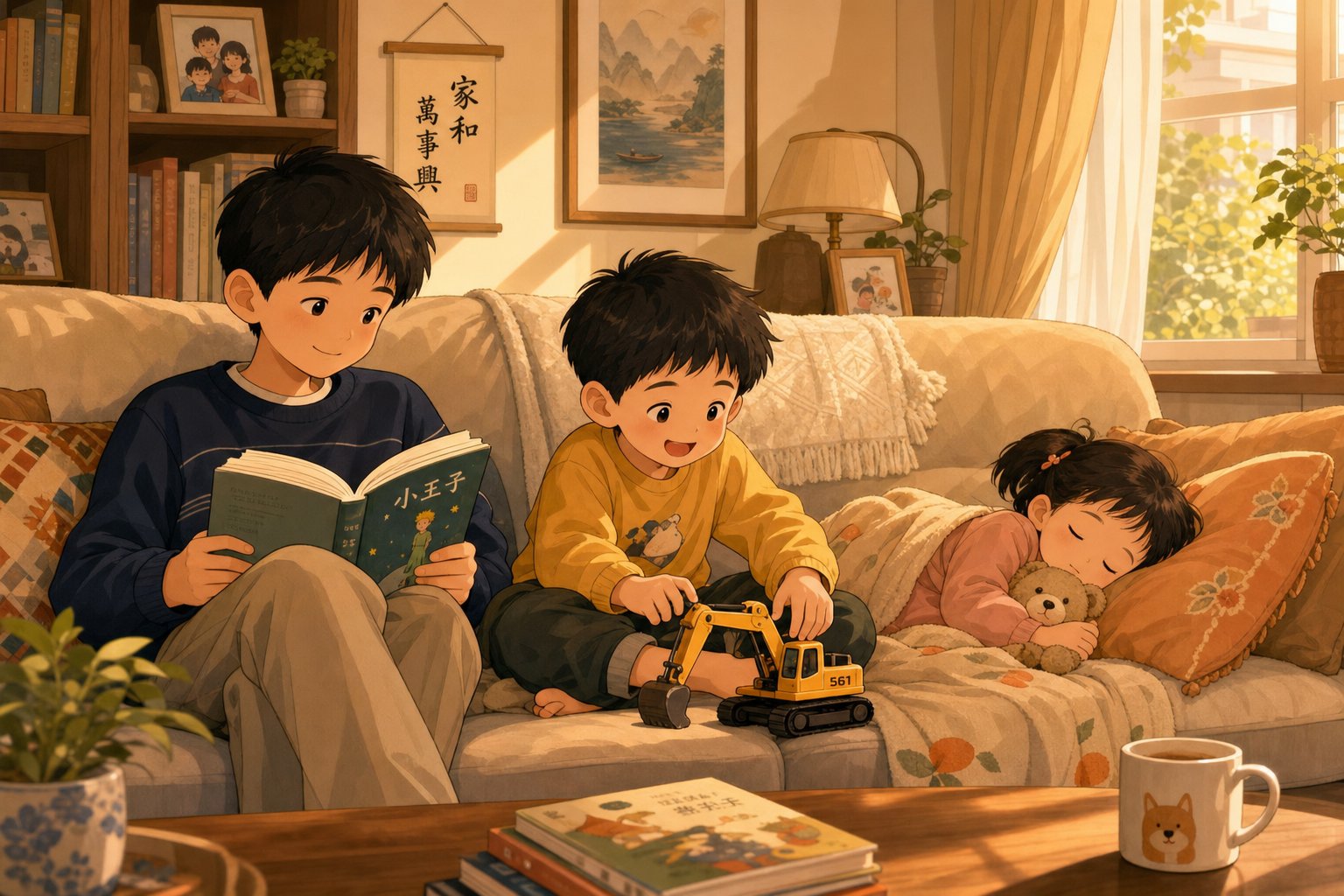
Birth order is not just a family detail in Chinese culture. It is a structural force that shapes what you are called, how you are addressed, and what kind of nickname you receive. Siblings in chinese households do not occupy equal naming ground. The firstborn carries weight. The youngest carries sweetness. And the nicknames reflect that divide with surprising precision.
Birth Order and Nickname Hierarchy
When you say older brother in chinese, you say 哥哥 (gege). Big brother in chinese carries built-in respect: the character 哥 implies seniority, responsibility, and a protective role. The same applies to older sister in chinese, 姐姐 (jiejie). Big sister in chinese is not just a label. It is a status. And that status shapes how nicknames attach to older siblings versus younger ones.
For older siblings, nicknames tend to combine the respectful title with a personal element. A family might call their eldest son 明哥 (Ming-ge), fusing his given name character with the elder brother in chinese marker. An older sister named 丽华 might become 丽姐 (Li-jie) to her younger siblings. The title stays, but the nickname softens it, creating something that is both respectful and warm.
Younger siblings get a different treatment entirely. They receive diminutive nicknames, the 小 prefix names and reduplication patterns covered earlier, without any title attached. The youngest daughter is simply 小妹 or 甜甜 or whatever playful name the family invents. No honorific required. No status marker needed. The nickname itself signals their position: the baby, the protected one, the one everyone spoils.
Here is how this plays out in practice:
| Birth Position | Nickname Pattern | Example | Pinyin | How It Feels |
|---|---|---|---|---|
| Eldest brother | Name character + 哥 | 明哥 | Ming-ge | Respectful, warm, acknowledges seniority |
| Eldest sister | Name character + 姐 | 丽姐 | Li-jie | Affectionate but maintains hierarchy |
| Middle sibling | 小 + name character or number | 小二 / 二哥 | Xiao Er / Er-ge | Positioned between respect and playfulness |
| Youngest brother | 小 + descriptive word or reduplication | 小宝 / 豆豆 | Xiao Bao / Doudou | Diminutive, babied, purely affectionate |
| Youngest sister | 小 + descriptive word or reduplication | 小妹 / 果果 | Xiao Mei / Guoguo | Playful, tender, no status weight |
Notice the asymmetry. The brother in chinese family dynamics who is oldest gets a nickname that still nods to his role. The sister in chinese family dynamics who is youngest gets a nickname that is pure affection with no responsibility attached. This is not accidental. It mirrors the Confucian expectation that older and younger siblings are addressed differently in Chinese, reflecting respect and hierarchy.
Generational Naming Conventions as Nickname Roots
Beyond birth order within a single household, there is a broader system at work: 辈分 (beifèn), or generational naming. In many traditional Chinese families, all children of the same generation share one character in their formal names. A grandfather might decree that every grandchild's name must contain the character 志 (zhi, "ambition"). So the cousins become 志明, 志华, 志强, and 志丽. Different people, same generational marker.
This shared character becomes fertile ground for nicknames. When four cousins all carry 志 in their names, the family needs a quick way to distinguish them at the dinner table. The solution? Nicknames built from the non-shared character. 志明 becomes 小明. 志华 becomes 华华. 志强 becomes 小强. The generational character fades into the background, and the unique character steps forward as the nickname's core.
In larger extended families, this system prevents confusion while preserving identity. The shared character says "you belong to this generation of this family." The nickname says "but you are still uniquely you." It is a balancing act between collective identity and individual affection, played out through something as simple as which syllable the family chooses to repeat or prefix with 小.
These sibling and generational patterns have held steady for centuries. But the forces reshaping Chinese family life today, from social media to cross-cultural marriages to diaspora identity, are creating entirely new nickname conventions that would puzzle a traditional grandmother.
Modern Evolution of Chinese Family Nicknames
A grandmother in Sichuan calls her grandson 蛋蛋 (Dandan). That same grandson, now living in Toronto, introduces himself as Daniel at school. His Canadian wife calls him Dan. His mother still texts him 蛋蛋 every morning. Three names, three worlds, one person. This is what chinese family nicknames look like in the age of migration, social media, and blended households.
Social Media and Pop Culture Influence on Nicknames
Chinese social platforms like Douyin, Xiaohongshu, and WeChat have accelerated nickname innovation in ways that would have been unthinkable a generation ago. New patterns are emerging that blend traditional structures with internet-era playfulness:
- The 儿 (er) suffix revival - Once a regional feature of Beijing dialect, adding 儿 to the end of a name character has spread nationwide through viral content. A child named 果果 might become 果儿 (Guor) online, giving the nickname a breezy, modern feel. As CHiNOY TV notes, the 儿 suffix is traditionally more common in northern China, but social media has made it a universal option.
- English-Chinese hybrid nicknames - Parents who consume English-language media are creating mashups: a child might be called 小Tom (Xiao Tom) at home, or a baby named 安娜 (Anna) gets the nickname 小Na. These hybrids feel natural to bilingual families and reflect how mandarin family members navigate two linguistic worlds daily.
- Pop culture-inspired names - K-drama characters, anime heroes, and C-pop idols inspire nickname choices. A family obsessed with a particular show might nickname their baby after a beloved character, adapting it with traditional patterns like reduplication or the 小 prefix.
- Food-based nicknames trending online - Names like 小汤圆 (Xiao Tangyuan, "Little Rice Ball"), 小糯米 (Xiao Nuomi, "Little Sticky Rice"), and 饺子 (Jiaozi, "Dumpling") have surged in popularity, partly because celebrity parents in China have used them publicly for their own children.
The underlying grammar of nickname creation has not changed. Families still use 小, reduplication, and descriptive characters. What has changed is the source material. Where previous generations drew from nature, folk beliefs, or the Five Elements, today's parents scroll through trending hashtags and baby-name recommendation posts. The tradition adapts without breaking.
Navigating Nicknames in Cross-Cultural Families
For diaspora families and cross-cultural couples, nicknames become a bridge between identities. A child growing up in Melbourne or Los Angeles might carry a full set of chinese words for family members in their vocabulary at home, while switching entirely to English the moment they step outside. The nickname is often the last piece of Chinese that survives in households where the heritage language is fading.
Imagine you are a non-Chinese person who has married into a Chinese family. You have learned the formal titles: how to address your mother-in-law, your wife in mandarin chinese terms, your spouse's siblings. But the family also uses nicknames among themselves, and knowing when you are invited into that layer matters. Practical scenarios include:
- What to call your partner at home - Many cross-cultural couples settle on a Chinese pet name for private use. 老公 (laogong) and 老婆 (laopo) work regardless of whether you speak fluent Mandarin, because they are short, easy to pronounce, and signal effort.
- Choosing a baby nickname that works in both languages - Parents often pick a 小名 that sounds natural in both Mandarin and English. Names like 乐乐 (Lele), 安安 (An'an), or 妮妮 (Nini) cross linguistic boundaries without awkwardness. The goal is a nickname that grandparents in Guangzhou and grandparents in Glasgow can both say comfortably.
- When the family in chinese letters on a WeChat group chat uses nicknames you do not recognize - Extended family group chats often default to nicknames rather than formal names. Learning who is who requires asking your partner to decode the family members in chinese language terms being used.
The family members in chinese list that a diaspora child learns at home might be shorter than what a child in Beijing absorbs naturally. But the nicknames persist. A second-generation Chinese-American who speaks minimal Mandarin might still answer to 小宝 when their grandmother calls. The nickname does not require fluency. It requires only recognition and the emotional memory attached to it.
For families navigating this dual system, the nickname often becomes the most emotionally charged piece of the family in mandarin vocabulary. It is the word that makes a child feel Chinese even when everything else in their daily life is conducted in English. It is the sound that connects a kitchen in San Francisco to a kitchen in Fuzhou.
These evolving patterns raise a practical question that trips up many newcomers to Chinese family life: when exactly are you allowed to use someone's nickname, and what happens if you get it wrong?
Nickname Etiquette: When to Use Chinese Family Nicknames
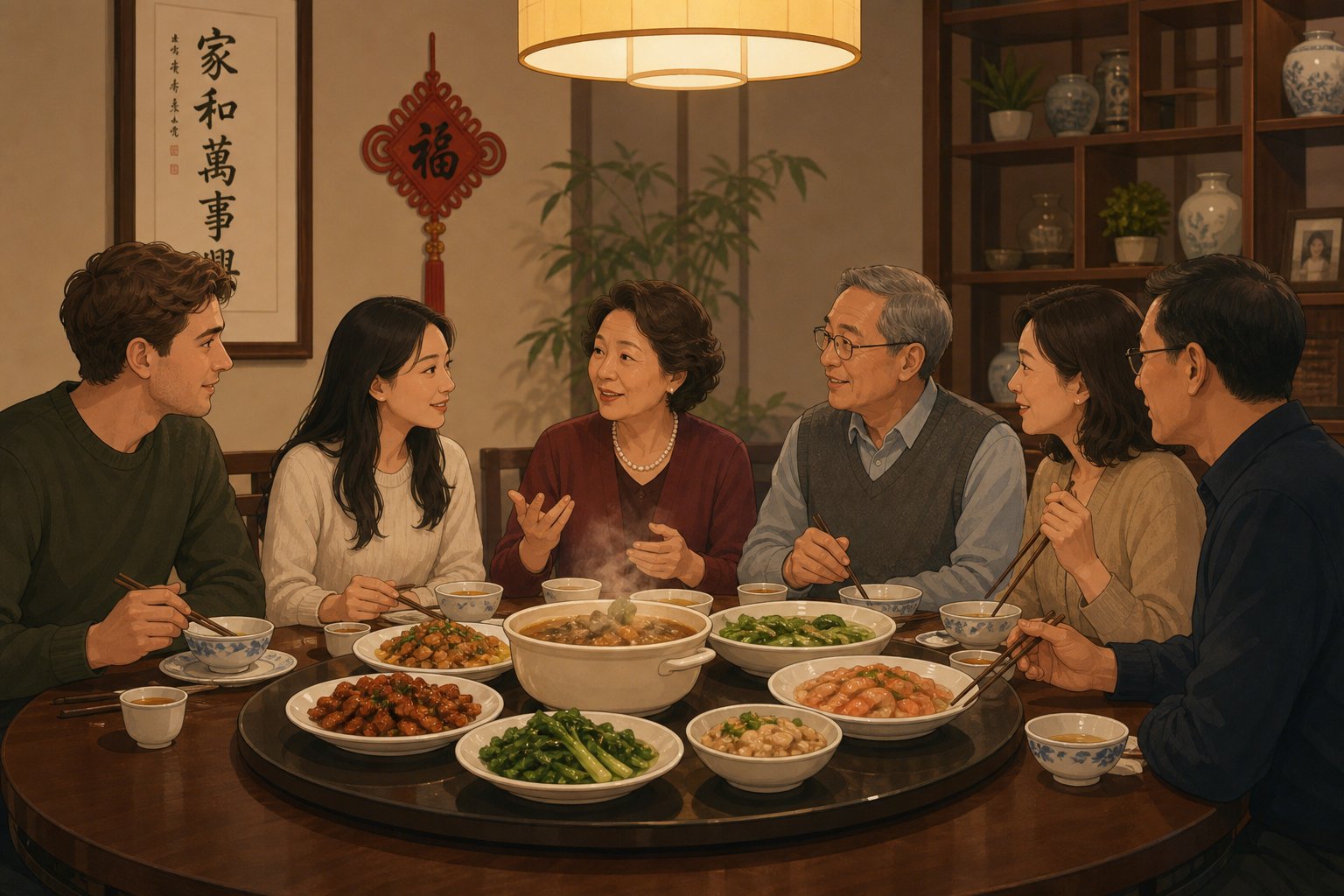
Getting it wrong is easy. You hear your spouse's family tossing around nicknames at dinner, so you try one yourself. The table goes quiet. Someone coughs. Your mother-in-law's smile tightens just slightly. What happened? You skipped a step. In Chinese family culture, nicknames are not open-access. They are earned, granted, and governed by invisible rules that no one explains until you break them.
When to Use Nicknames Versus Formal Titles
Think of nickname access as a three-stage progression that mirrors how relationships deepen over time:
- Stage one: formal titles only. When you first meet your partner's family, you address everyone by their proper kinship title. Your partner's father is not "Uncle Wang." He is whatever the correct chinese for uncle term is for his specific position: 伯父 (bofu) if he is your father-in-law, or 叔叔 (shushu) if he is your partner's father's younger brother. The uncle in mandarin chinese system is precise, and getting the title right signals respect. Similarly, the chinese for aunt depends on which side of the family she belongs to and whether she is older or younger than your parent-in-law. Using 阿姨 (ayi) as a general aunt in mandarin is safe for maternal aunts or unrelated older women, but 姑姑 (gugu) is specifically for a father's sister. At this stage, you are proving you take the family seriously.
- Stage two: informal titles. After months or years of regular contact, the family may signal that you can relax. A mother-in-law might say "just call me 妈" instead of the formal address. An uncle in chinese family terms might wave off his full title and tell you to use the shortened version. This shift is an invitation. It means you have moved from outsider to accepted member. Do not initiate this shift yourself.
- Stage three: nicknames. Eventually, you may hear family members use someone's 小名 in your presence without lowering their voices. You might be told your spouse's childhood nickname, or a grandparent might start calling you by a pet name. This is the innermost circle. Using someone's nickname before being invited to do so signals a level of intimacy you have not yet earned, and it can feel presumptuous or even disrespectful.
The key principle: wait to be invited. A cousin in chinese family dynamics might use their sibling's nickname freely, but that does not mean you can. Each person's nickname belongs to specific relationships. A grandmother's nickname for her grandchild is hers. A parent's nickname for their child is theirs. Borrowing someone else's term of endearment without permission feels like reading their diary out loud.
Guidance for Non-Chinese Speakers Joining Chinese Families
If you are a non-Chinese speaker navigating this system for the first time, here are practical priorities that will save you from awkward moments:
- Master the tones on kinship titles first. Before worrying about nicknames, make sure you can pronounce the formal titles correctly. Calling someone 叔叔 (shushu, uncle) with the wrong tone can accidentally produce a completely different word. Your partner's family will forgive imperfect pronunciation, but they will notice the effort.
- Ask your partner to map the family for you. Before any gathering, get a quick briefing: who will be there, what their title is, and whether any of them prefer informal address. This prevents the common mistake of using a generic uncle in chinese when a more specific title is expected.
- Listen before you speak. Pay attention to what names family members use for each other. If everyone calls the youngest child 小宝 but addresses the eldest as 明哥, that tells you the nickname rules in this specific household. Every family has its own internal logic.
- Accept your own nickname gracefully. At some point, the family may give you a Chinese nickname. This is a sign of acceptance. Even if it sounds odd or mildly teasing, receive it warmly. A family that nicknames you has decided you belong.
- Do not use your spouse's childhood nickname in front of their parents. This is a subtle but important boundary. Your partner's 小名 might be something their mother uses. If you use it in front of her, it can feel like you are claiming a parental intimacy that is not yours. Save it for private moments, or follow your partner's lead on when it is appropriate.
Common pronunciation mistakes to avoid: mixing up 小 (xiao, third tone, meaning "little") with 笑 (xiao, fourth tone, meaning "laugh"). Flattening the tones on 奶奶 (nainai, grandmother) so it sounds like you are saying something else entirely. And the classic error of pronouncing 姑姑 (gugu, paternal aunt) with the wrong vowel sound, which can produce confusion or unintended humor.
The deeper truth behind all this etiquette is simple: chinese family nicknames are not just words. They are relationship markers. Each one encodes history, hierarchy, and emotional permission. When a family finally uses your nickname at the dinner table without thinking twice, you have not just learned a word. You have been woven into the fabric of the family itself.
Frequently Asked Questions About Chinese Family Nicknames
1. What is the difference between a Chinese family nickname and a kinship title?
A kinship title (称呼 chenghu) identifies someone's structural role in the family, like 姑姑 for paternal aunt or 叔叔 for uncle. A family nickname (小名 xiaoming or 乳名 ruming) is an intimate, affectionate name used at home that expresses love and closeness. Kinship titles follow strict hierarchical rules, while nicknames are playful, personal, and often sound silly or even rude to outsiders. Most Chinese people carry both simultaneously throughout their lives.
2. Why do Chinese families give their children ugly or humble nicknames?
The tradition of 贱名 (jianming) or 'cheap names' comes from an ancient folk belief that evil spirits would target children with beautiful, precious-sounding names. By giving a child a deliberately undesirable nickname like 狗蛋 (Dog Egg) or 丑丑 (Ugly Ugly), parents believed spirits would overlook the child. This practice also connects to Confucian values of humility. While modern urban families rarely hold this superstition literally, some still use mildly humble nicknames as a lighthearted nod to tradition or to honor grandparents who value the old customs.
3. Do Chinese adults still use their childhood nicknames?
Yes, chinese family nicknames typically last a lifetime. A 45-year-old professional might still be called 小军 (Xiao Jun) by their mother or 明明 (Mingming) by their grandmother. These nicknames are never used in professional or formal settings, but within the family home, they persist as a verbal anchor to childhood bonds. The nickname signals that regardless of age or status, the person remains a cherished child in the eyes of their family.
4. How do you create a Chinese nickname using the 小 prefix?
The most common method is to place 小 (xiao, meaning 'little') before one character from the person's formal name or a descriptive word. For example, a child named 张明辉 becomes 小明 (Xiao Ming) at home. You can also pair 小 with descriptive qualities: 小胖 (Little Chubby) for a round-cheeked baby, 小鱼 (Little Fish) for an active toddler, or 小宝 (Little Treasure) as a universal endearment. The 小 prefix instantly signals intimacy and is reserved exclusively for informal family contexts.
5. When is it appropriate to use someone's Chinese family nickname?
Nickname usage follows a three-stage progression. First, use only formal kinship titles when meeting a partner's family. Second, after months of regular contact, the family may invite you to use informal titles like 妈 instead of the full formal address. Third, only after being explicitly included in nickname usage should you adopt them. Never use someone's childhood nickname without invitation, as it implies a level of intimacy you may not have earned. The safest approach is to listen carefully to what names family members use with each other and follow their lead.