How a Chinese Female Name Generator Actually Works
Most people expect a chinese female name generator to spit out a random string of syllables. Click a button, get a name, move on. But Chinese names don't work that way. Every character carries meaning, tone, and cultural weight. A name isn't just a label in Chinese culture; it's a statement of identity, aspiration, and family lineage. Understanding the logic behind these names transforms a generator from a novelty into a genuinely useful tool.
Why Understanding Chinese Female Names Matters
When you search for a chinese name generator female results, you're probably looking for more than decoration. Chinese given names are composed of characters known as Hanzi, and each character carries cultural, historical, and sometimes spiritual significance. Girls' names often represent beauty, kindness, or natural elegance, but the specific characters chosen can invoke entirely different associations depending on tone and radical composition.
A Chinese name is never just a sound. It is a convergence of meaning, tone, visual form, and familial hope, layered in ways that most Western names simply are not.
Consider this: the character Mei in the third tone means "beautiful," while Mei in the second tone means "plum blossom." Same spelling in English, completely different names. A chinese name generator that ignores this distinction produces nonsense rather than names. That's why meaning-first thinking matters here.
Who Benefits From a Name Generator
The reasons people reach for a chinese girl name generator vary widely:
- Parents naming a baby who want a name reflecting specific virtues or family values
- Fiction writers building characters for wuxia, xianxia, or contemporary stories set in Chinese-speaking worlds
- Language learners choosing a Chinese name for classroom or professional use
- Diaspora families reconnecting with heritage and selecting names that honor cultural roots
Each group needs different things. A parent cares about stroke count beliefs and homophone pitfalls. A novelist needs names that sound period-appropriate. A language learner wants something pronounceable that won't accidentally mean "mosquito." Whether you're using a female chinese names generator or an asian name generator female tool, the output is only as good as the cultural logic behind it.
This article breaks down that logic piece by piece, starting with the structural rules that govern every Chinese female name ever written.
The Structure of Chinese Female Names Explained
Chinese names follow a formula that's the exact reverse of what English speakers expect. The family name comes first, the given name follows, and the entire name is typically two or three characters long. Sounds simple? The real complexity lives in how those characters combine, what they signal about gender, and why the pool of possible given names is essentially infinite while chinese surnames remain remarkably limited.
Surname First and Given Name Structure
In Western naming, you introduce yourself as "given name + family name." In Chinese names, the structure flips: surname leads, given name trails. So a name like Lin Yuxin places the chinese surname Lin (林) at the front, followed by the two-character given name Yuxin (雨欣). There's no middle name in the Western sense. The given name itself can be one or two characters, and that's the entire name.
Here's what makes this interesting for anyone using a generator or building a name manually: chinese family names come from a surprisingly small set. According to China's Seventh National Population Census, the top five most common chinese last names alone (Li, Wang, Zhang, Liu, and Chen) cover over 30% of the Han ethnic population. The full pool of surnames in active use numbers around 6,000, but the vast majority of people carry one of the top 100.
Given names, on the other hand, can draw from tens of thousands of characters in virtually unlimited combinations. Parents can choose any character or pair of characters, not just conventional name words but literally any word in the language. This asymmetry means that while surnames repeat constantly, given names offer near-infinite creative space.
One Character vs Two Character Given Names for Girls
Historically, single-character given names carried a certain elegance for women. Names like Wang Fei (王菲) or Li Na (李娜) feel streamlined and classical. A one-character given name paired with a single-character surname produces a two-character full name, which sounds crisp and memorable.
Modern usage tells a different story. Two-character given names now dominate for girls across mainland China and Taiwan. Why the shift? Practical reasons play a role: with over a billion people sharing a limited set of surnames, single-character given names create massive duplication. A two-character given name dramatically reduces the chance of sharing your exact name with thousands of others.
There's also an expressive advantage. Two characters allow parents to layer meaning. One character might reference nature while the second adds a virtue, creating combinations like Yuhan (雨涵), where "rain" meets "encompassing" to suggest depth and gentleness. Two-character given names in Taiwan are especially common, as noted in Taiwanese naming conventions where two-word given names are the standard rather than the exception.
The table below shows how these structures break down in practice:
| Full Name | Surname | Given Name | Pinyin | Meaning |
|---|---|---|---|---|
| 林雨欣 | 林 | 雨欣 | Lin Yuxin (lin2 yu3 xin1) | Forest + Rain Joy |
| 王静 | 王 | 静 | Wang Jing (wang2 jing4) | King + Tranquil |
| 陈思琪 | 陈 | 思琪 | Chen Siqi (chen2 si1 qi2) | Ancient state + Thoughtful Jade |
| 李婉清 | 李 | 婉清 | Li Wanqing (li3 wan3 qing1) | Plum + Graceful Clarity |
| 张悦 | 张 | 悦 | Zhang Yue (zhang1 yue4) | Stretch + Delight |
You'll notice that the single-character given names (Jing, Yue) produce shorter, punchier names, while the two-character options (Yuxin, Siqi, Wanqing) carry richer layered meaning. Both are valid, but if you're evaluating output from a chinese female name generator, two-character given names will generally feel more contemporary and distinctive.
Structure alone doesn't make a name feel authentically feminine, though. The real personality of a Chinese girl's name lives in the specific characters chosen and the meaning categories they belong to.
Meaning Categories That Define Chinese Girl Names
Chinese female names don't pull characters at random. They draw from specific meaning categories that have shaped naming traditions for centuries. When parents choose chinese girl names, they're selecting from a cultural vocabulary organized around nature, virtue, beauty, and literary heritage. Each category carries distinct connotations, and understanding them helps you evaluate whether a generated name actually makes sense or just looks pretty on screen.
Nature-Inspired Characters for Female Names
Nature imagery dominates chinese names for girls. Flowers, seasons, celestial bodies, and weather patterns all serve as naming material. The logic is straightforward: natural beauty is effortless, cyclical, and universally admired. A girl named after a lotus or a morning breeze carries those associations through life.
Flower characters are especially common. The orchid (兰) represents virtue and refinement in Confucian thought. The lotus (荷) signals purity because it grows from mud yet remains clean. Seasonal references like snow (雪) suggest purity and quiet strength, while celestial characters like moon (月) evoke grace and luminosity.
| Character | Pinyin with Tones | Meaning Category | Cultural Significance |
|---|---|---|---|
| 兰 (Lan) | lan2 | Flower | Orchid; Confucian symbol of integrity and refined character |
| 雪 (Xue) | xue3 | Season/Weather | Snow; represents purity, resilience, and quiet beauty |
| 月 (Yue) | yue4 | Celestial | Moon; evokes feminine grace, cycles, and gentle luminosity |
| 荷 (He) | he2 | Flower | Lotus; purity rising above adversity, Buddhist associations |
| 薇 (Wei) | wei1 | Plant | Fern or rosa; symbolizes resilience and delicate strength |
You'll notice that nature-inspired chinese female names rarely use generic words like "flower" (花) directly. Instead, they reference specific plants or phenomena, each carrying its own layered story.
Virtue and Beauty Characters in Chinese Girl Names
Virtue-based characters express what parents hope their daughter will embody: wisdom, kindness, grace, or inner strength. Beauty characters, meanwhile, reference physical elegance or precious materials. These two categories often overlap, especially when jade enters the picture.
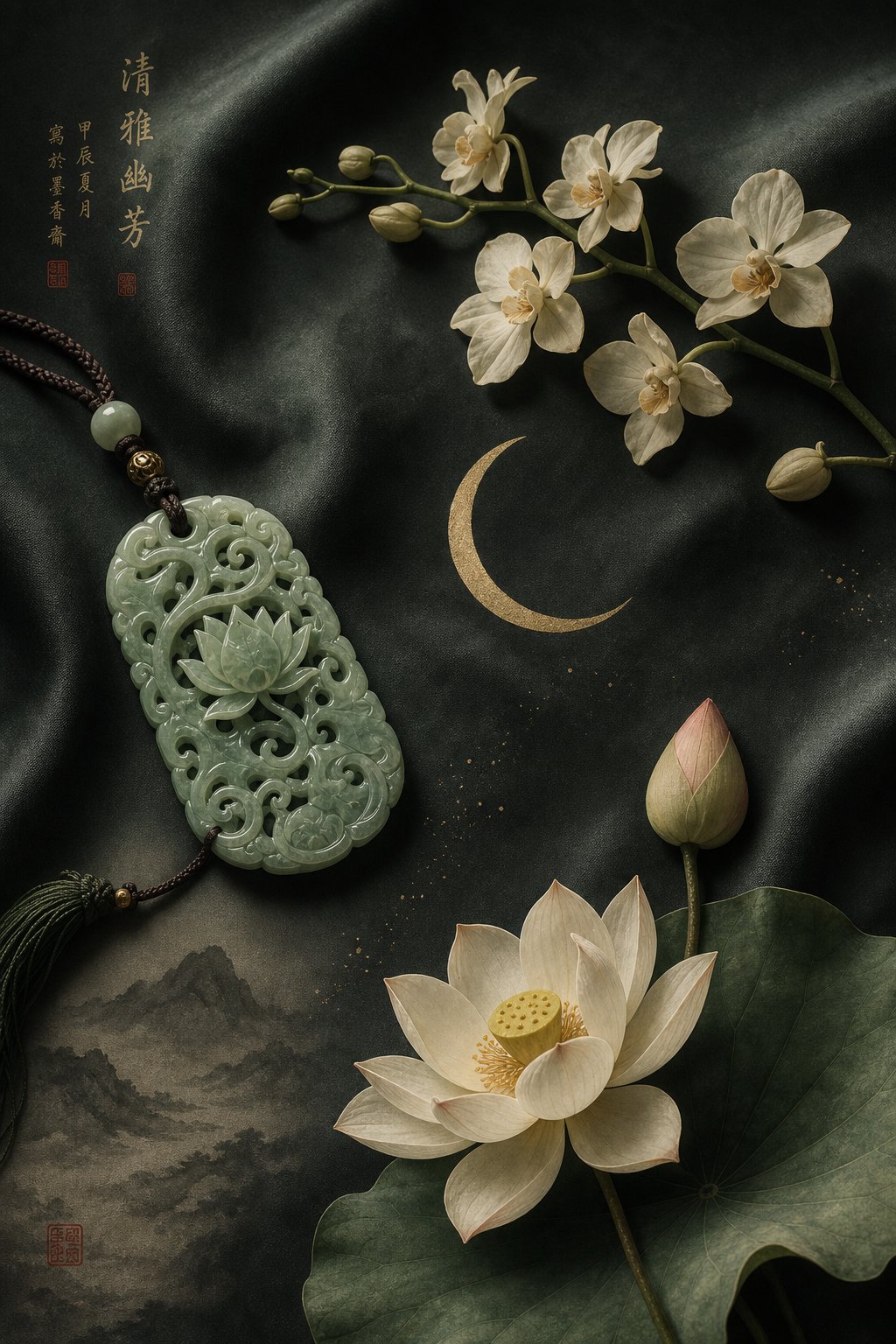
The jade name meaning in Chinese culture goes far beyond "pretty stone." Jade (玉) represents moral perfection, incorruptibility, and warmth. Characters containing the jade radical (王, which visually resembles 玉) appear constantly in chinese female names because they signal both beauty and virtue simultaneously. Names like 瑾 (jin3, fine jade representing virtue), 瑶 (yao2, luminous jade), and 琳 (lin2, blue-green jade) all carry the jade radical, embedding this dual symbolism of beauty and moral character directly into the name's visual structure.
Why is jade so dominant? In Chinese philosophy, jade embodies the five Confucian virtues: benevolence, righteousness, wisdom, courage, and purity. Naming a daughter with a jade character is essentially encoding an entire ethical framework into her identity.
| Character | Pinyin with Tones | Meaning Category | Cultural Significance |
|---|---|---|---|
| 瑾 (Jin) | jin3 | Jade/Virtue | Fine jade held in hand; actively possessing moral excellence |
| 慧 (Hui) | hui4 | Virtue | Wisdom and intelligence; valued across all dynasties |
| 雅 (Ya) | ya3 | Beauty/Virtue | Elegance and refinement; denotes cultured sophistication |
| 瑶 (Yao) | yao2 | Jade/Beauty | Luminous jade; radiates inner light and precious quality |
| 淑 (Shu) | shu1 | Virtue | Virtuous and kind; classic Confucian feminine ideal |
Literary and Poetic Name Characters
Some of the most distinctive chinese names and meanings trace back to classical poetry, philosophical texts, or literary allusions. Parents who draw from this category are embedding a specific poetic meaning into their daughter's name, referencing lines from the Shijing (Book of Songs), Tang dynasty poetry, or Chu Ci (Songs of the South).
Characters like 婉 (wan3, gentle and graceful) appear in the Shijing line "有美一人,清扬婉兮" describing a beautiful woman. The character 芷 (zhi3, angelica herb) comes from Qu Yuan's poetry, where fragrant plants symbolize moral purity. These aren't obscure references in Chinese culture; they're foundational texts that educated families have drawn from for millennia.
| Character | Pinyin with Tones | Meaning Category | Cultural Significance |
|---|---|---|---|
| 婉 (Wan) | wan3 | Literary/Beauty | From Shijing; gentle grace praised in China's oldest poetry |
| 芷 (Zhi) | zhi3 | Literary/Nature | Angelica herb from Qu Yuan's Li Sao; moral purity through botanical metaphor |
| 琼 (Qiong) | qiong2 | Literary/Jade | Fine jade in classical verse; "jade towers and palaces" imagery |
| 霓 (Ni) | ni2 | Literary/Celestial | Secondary rainbow; rare and ethereal, used in Tang poetry |
Literary names signal education and cultural depth. A name like 婉清 (Wanqing) doesn't just sound pleasant; it tells anyone familiar with classical texts that the family values literary heritage. For fiction writers creating characters, these references add authenticity that readers steeped in Chinese literature will immediately recognize.
Meaning categories give names their emotional texture, but the visual structure of each character tells its own story. The radicals hidden inside these characters act as built-in meaning markers, revealing at a glance whether a name belongs to the world of jade, plants, water, or something else entirely.
Character Radicals and What They Tell You About a Name
Every chinese hanzi is built from smaller components called radicals. Think of them as the DNA of a character: they don't tell you everything, but they reveal the family a character belongs to. When you see a name in chinese characters, the radicals inside each character act as quick-read labels, hinting at whether the name references jade, water, plants, or femininity itself. This is the skill that separates someone who can evaluate a chinese character name from someone just copying symbols they don't understand.
How Radicals Reveal Name Meanings
Chinese has 214 radicals in total, but only a handful appear regularly in female given names. Each radical occupies a consistent position within a character, usually on the left side or at the top, and signals the character's semantic category. Spot the water radical (氵) on the left? The character likely relates to liquid, flow, or gentleness. See the grass radical (艹) sitting on top? You're looking at something botanical.
This matters practically. If you're using a chinese character generator or any tool that converts a name to chinese characters, you can instantly check whether the output makes cultural sense. A name that claims to mean "gentle jade" but contains the knife radical (刂) instead of the jade radical should raise a red flag. Radicals give you a built-in verification system.
Key Radicals in Female Name Characters
Four radicals dominate the landscape of naming chinese characters for women. Here's how each one works:
| Character | Radical | Radical Meaning | Full Character Meaning | Example Names |
|---|---|---|---|---|
| 瑶 (yao2) | 王 (jade) | Jade, precious stone | Luminous jade | 李瑶, 陈瑶瑶 |
| 琳 (lin2) | 王 (jade) | Jade, precious stone | Blue-green jade | 张琳, 王琳琳 |
| 婉 (wan3) | 女 (woman) | Woman, female | Gentle, graceful | 李婉清, 陈婉儿 |
| 妍 (yan2) | 女 (woman) | Woman, female | Beautiful, attractive | 林妍, 赵妍希 |
| 芷 (zhi3) | 艹 (grass) | Grass, plants | Angelica herb | 周芷若, 王芷萱 |
| 萱 (xuan1) | 艹 (grass) | Grass, plants | Daylily (mother's flower) | 林萱, 陈萱萱 |
| 淑 (shu1) | 氵 (water) | Water, flowing | Virtuous, kind | 王淑芬, 张淑婷 |
| 涵 (han2) | 氵 (water) | Water, flowing | Encompassing, tolerant | 李雨涵, 陈涵 |
A few patterns emerge. The jade radical (王/玉) appears in chinese character names that signal preciousness and moral refinement. It looks identical to the character for "king" (王) but carries a small dot in its standalone form (玉). In practice, when this radical appears inside another character, the dot disappears, which is why 瑶, 琳, and 瑾 all show 王 on their left side rather than 玉.
The woman radical (女) is more direct. Characters built on it often describe qualities culturally associated with femininity: grace (婉), beauty (妍), or goodness (好). The grass radical (艹) sits atop botanical characters, connecting names to flowers, herbs, and growing things. And the water radical (氵) lends a sense of flow, depth, and gentleness to characters like 涵 (encompassing) and 淑 (virtuous).
One note on simplified vs traditional differences: these four radicals remain visually identical across both systems. The jade radical is 王 in simplified and traditional. The grass radical is 艹 in both. Where you'll see divergence is in the full characters themselves. For example, the traditional form of some water-radical characters adds strokes to the right-side component, but the radical portion stays consistent. This means your ability to read radicals transfers cleanly whether you're working with mainland simplified text or traditional characters used in Taiwan and Hong Kong.
Understanding radicals gives you a decoding tool that works whether you're reviewing output from a name to chinese characters converter or assembling a name yourself. But radicals only tell you what category a character belongs to. The broader question of which characters feel appropriate for a given era, and how naming conventions have shifted across generations, requires looking at how Chinese female naming has evolved over time.
How Chinese Female Naming Has Evolved Over Generations
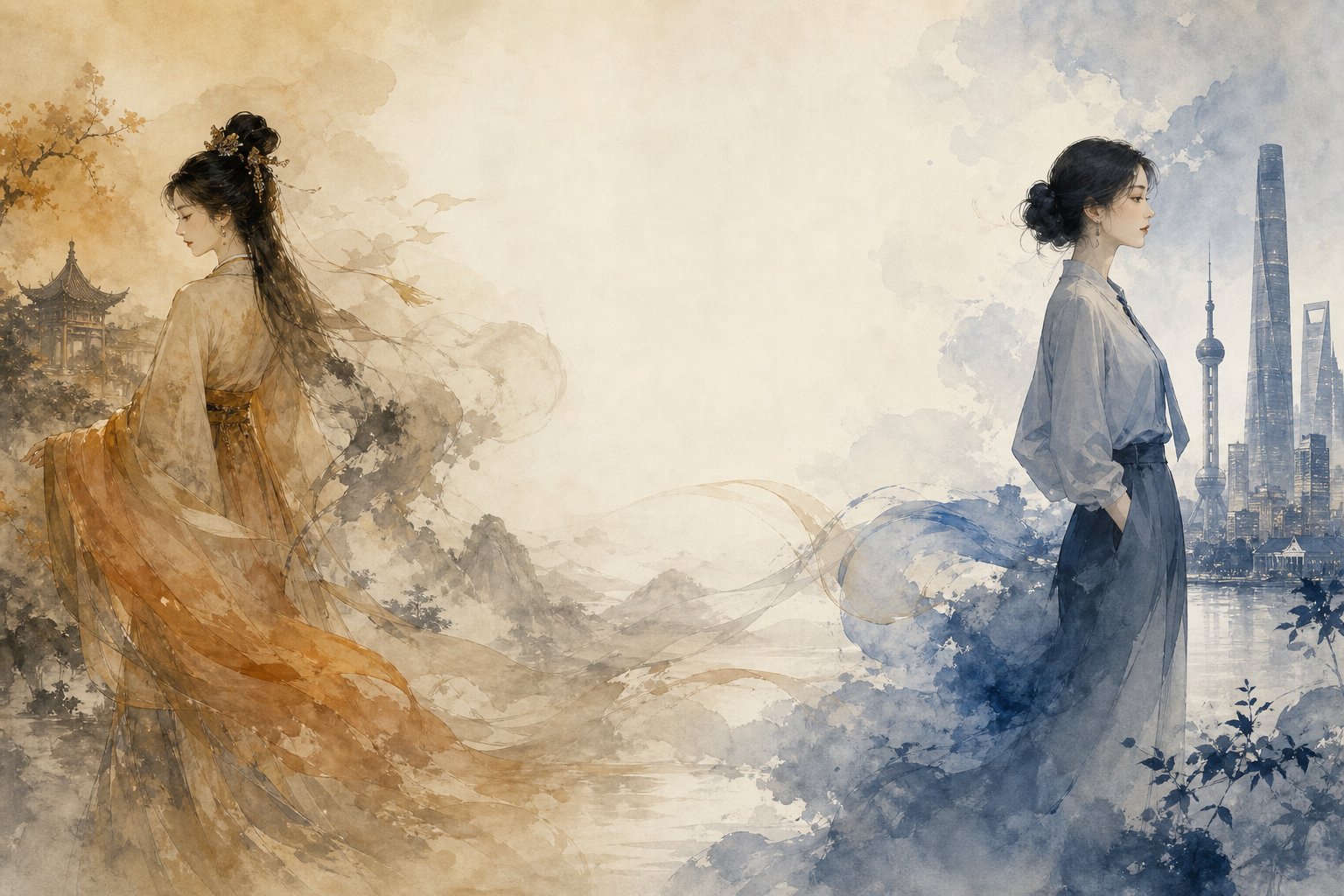
Radicals and meaning categories provide the building blocks, but which blocks parents actually reach for has changed dramatically across decades. The female chinese names chosen during the Cultural Revolution look nothing like the names topping birth registries today. Tracing that evolution reveals how social values, politics, and pop culture reshape what feels like a "good" name for a girl in any given era.
Traditional Naming Conventions for Daughters
For most of Chinese history, naming daughters followed a predictable script. Parents drew from characters emphasizing beauty, gentleness, and domestic virtue. Common chinese names for girls leaned heavily on characters like 淑 (shu1, virtuous), 芳 (fang1, fragrant), and 丽 (li4, pretty). The goal was encoding femininity itself into the name.
Generational naming added another layer. Many families maintained a beifenzi (辈分字) system, where all children born in the same generation shared one character in their given name. If the generation character was 美 (mei3, beautiful), siblings might be named 美玲 (Meiling), 美芳 (Meifang), and 美萱 (Meixuan). This practice preserved ancestral continuity and made family relationships immediately visible in a name.
Here's the catch: generation characters applied more rigidly to sons than daughters in many families. Boys carried the lineage marker as a matter of duty. Daughters received it as a courtesy, and some families skipped it entirely for girls, treating their names as more personal and less bound to clan structure. This subtle asymmetry meant china female names historically had slightly more creative freedom than male names, even within traditional frameworks.
Modern Trends Reshaping Female Name Choices
The shift away from overtly gendered naming accelerated after China's economic reforms. Parents began choosing characters with unisex meaning, favoring aspirational qualities over traditional femininity. A name like 子涵 (Zihan, "child" + "encompassing") works for any gender, reflecting modern values of equality and ambition rather than appearance.
Several forces drive this transformation:
- From beauty to aspiration: Characters like 睿 (rui4, wise) and 卓 (zhuo2, outstanding) now appear in chinese names girl registries where 丽 and 芳 once dominated
- Two-character dominance: Single-character given names dropped below 15% as parents sought uniqueness in a population of 1.4 billion
- Nature-poetic blends: Combinations like 雨桐 (Yutong, "rain paulownia") merge natural imagery with modern aesthetics rather than defaulting to flowers alone
- Global phonetic appeal: Names like 米娅 (Miya, adapting "Mia") use characters with positive meanings while sounding accessible internationally
- Literary fiction influence: The popularity of xianxia novels and danmei fiction has revived classical-sounding names among younger parents who grew up reading these genres, bringing characters like 瑾 (jin3, fine jade) and 霓 (ni2, rainbow) back into circulation
The xianxia and danmei influence deserves special attention. These genres romanticize ancient Chinese aesthetics, and their massive readership has created a generation of parents who associate poetic, archaic-sounding names with beauty and strength rather than stuffiness. A character that might have felt old-fashioned twenty years ago now carries the glamour of a beloved fictional heroine.
Celebrity culture amplifies these shifts further. When a popular actress carries a particular name or a viral drama features a compelling female lead, registration of similar-sounding names spikes within months. The result is a naming landscape where tradition, fiction, and global awareness collide constantly.
These generational shifts play out differently depending on geography. A family in Shanghai, a family in Taipei, and a family in Vancouver's Chinatown may share the same cultural roots yet follow distinctly different naming conventions shaped by their regional context.
Regional Differences in Chinese Female Names
Geography shapes naming as much as generational taste does. The same cultural heritage produces noticeably different results depending on whether a family lives in Beijing, Taipei, Hong Kong, or Toronto. Character systems diverge, romanization standards differ, and the aesthetic preferences that guide name selection reflect each region's distinct cultural trajectory. If you're generating or selecting mandarin names female speakers would actually use, knowing which conventions apply where prevents awkward mismatches.
Mainland China vs Taiwan and Hong Kong Naming Styles
The most visible split is the writing system itself. Mainland China uses simplified characters, while Taiwan and Hong Kong maintain traditional characters. A name like 梦琪 (Mengqi, "dream jade") appears in simplified form on the mainland but would be written 夢琪 in Taiwan. The characters carry identical meaning, but their visual complexity differs, and this affects which characters parents gravitate toward. Traditional characters with high stroke counts feel more ornate and classical, which aligns with Taiwanese naming aesthetics that lean toward literary elegance.
Romanization creates another layer of divergence. Mainland China standardized on Hanyu Pinyin decades ago, so a name reads as "Lin Yuxin" on a passport. Taiwan uses a mix of Wade-Giles, Tongyong Pinyin, and Hanyu Pinyin depending on personal preference and local regulations. The same taiwanese last names might appear as "Lin" in one system and "Lim" in another. Hong Kong uses Jyutping or informal Cantonese romanization, producing spellings like "Lam" for 林 instead of "Lin." This means the same written name looks entirely different in English depending on where the person is from.
Character preferences also split along regional lines. Taiwanese mandarin naming tends to favor softer, more literary characters. Names drawn from classical poetry feel natural in Taiwan, where traditional education emphasizes classical Chinese texts. Hong Kong names, influenced by Cantonese phonology, prioritize how a name sounds in Cantonese rather than Mandarin, sometimes selecting characters that sound elegant in one dialect but unremarkable in the other.
| Region | Character System | Romanization | Common Naming Style | Example Considerations |
|---|---|---|---|---|
| Mainland China | Simplified | Hanyu Pinyin | Modern aspirational; trending toward gender-neutral | 梦琪 (Mengqi); avoid politically sensitive characters |
| Taiwan | Traditional | Wade-Giles / mixed | Literary, poetic; classical references common | 夢琪 (Meng-ch'i); stroke count analysis popular |
| Hong Kong | Traditional | Cantonese romanization | Cantonese phonetics prioritized; English name paired | 夢琪 (Mung Kei); sound in Cantonese matters most |
| Diaspora (Western) | Varies by family origin | Adapted to local language | Heritage-honoring; balanced with Western first name | May use pinyin or ancestral dialect spelling |
Diaspora Naming and Dual-Name Practices
For families living outside Chinese-speaking regions, naming becomes a negotiation between heritage and practicality. Many diaspora families maintain a dual-name system: a legal English name for everyday use and a Chinese name for family, cultural events, and personal identity. The Chinese name might appear on a birth certificate as a middle name or exist only within the family's oral tradition.
This practice is widespread across communities where asian names and surnames don't always translate smoothly into local systems. A name that sounds beautiful in Mandarin might be unpronounceable for English-speaking teachers and colleagues. So families often choose an English first name independently, then select a Chinese name that carries the family's cultural aspirations without needing to function in Western bureaucratic contexts.
The approach to the Chinese name itself varies by generation. First-generation immigrants often give children names that would fit seamlessly in their home region. Second and third-generation families sometimes choose characters with more personal or aesthetic significance, freed from the social pressures that shape naming in China or Taiwan. Some families consult grandparents or naming masters back home, while others use the selection process as a way to reconnect with heritage on their own terms.
Romanization in diaspora contexts gets creative too. Families from Cantonese-speaking backgrounds might spell asian surnames using older romanization ("Ng" for 吴, "Cheung" for 张) that reflects their dialect rather than Mandarin pinyin. Hokkien-speaking families from Southeast Asia produce yet another set of spellings. The result is that the same written Chinese name can appear in English documents in half a dozen different ways depending on the family's regional and linguistic roots.
Regional awareness matters because a name that feels perfectly natural in one context can seem mismatched in another. But regardless of region, all Chinese naming traditions share certain boundaries: cultural taboos and phonetic pitfalls that every name, whether generated or handpicked, needs to clear before it's ready to use.
Naming Taboos and Cultural Rules You Should Know
A name can have beautiful characters, perfect tonal flow, and deep literary roots, yet still fail the cultural test. Knowing how to choose a chinese name means knowing what to avoid just as much as what to select. These taboos aren't arbitrary superstitions. They're social guardrails refined over centuries, and ignoring them produces names that sound off, feel disrespectful, or carry unintended baggage.
Homophone Pitfalls and Sound Combinations to Avoid
Mandarin's limited syllable inventory means many characters share identical pronunciations. A name that looks elegant on paper can sound like something embarrassing when spoken aloud at normal speed. The classic example from Chinese naming customs: 杜子腾 (Du Ziteng) is a perfectly valid name in isolation, but spoken quickly it mimics 肚子疼 (duzi teng), meaning "stomachache." The surname and given name fuse into an accidental phrase.
This isn't rare. Tonal sandhi, where consecutive third tones shift in natural speech, can transform innocent character pairings into unfortunate homophones. The test is simple but essential: say the full name aloud in conversational rhythm, not character by character. Listen for overlap with common words, slang, or dialect-specific meanings. If you're trying to translate name into chinese or evaluate generator output, this spoken check catches problems that visual inspection misses.
Characters with negative standalone associations also get filtered out, even when their meaning in context seems fine:
- Death and illness characters: 死 (si3, death), 病 (bing4, illness), and 哀 (ai1, sorrow) are never used, regardless of any poetic framing
- Isolation and poverty: 孤 (gu1, alone) and 贫 (pin2, poor) carry associations no parent wants embedded in a child's identity
- Homophones of taboo words: Characters that sound identical to vulgar or unlucky terms in the family's home dialect, not just standard Mandarin, get vetoed
- Surname-given name collisions: Certain surnames create problems with otherwise fine characters. 吴 (Wu2) paired with characters meaning "virtue" or "fortune" can sound like negation phrases since 吴 sounds like 无 (wu2, "without")
Regional dialect adds another layer. A name in mandarin characters might sound perfectly fine in standard Putonghua but produce an unfortunate homophone in Cantonese, Hokkien, or Shanghainese. Families with strong dialect ties often run the name through both Mandarin and their home dialect before committing.
Stroke Count Beliefs and Other Cultural Considerations
Beyond sound, the visual and numerical properties of characters matter in traditional chinese name interpretation. Stroke count analysis assigns Yin or Yang properties to each character based on whether its stroke total is even or odd. The full name's combined strokes should hit specific auspicious totals, and the Yin-Yang pattern across the name's characters should follow balanced sequences like Yang-Yang-Yin or Yin-Yang-Yang.
How seriously families take this varies enormously. Taiwanese households and overseas Chinese communities in Southeast Asia often consult naming masters who calculate stroke counts alongside the child's birth chart. Urban mainland families increasingly treat it as optional. But even skeptical parents sometimes run a quick stroke check, the same way someone might glance at a horoscope without fully believing it.
Additional cultural rules round out the picture:
- No naming after living elders: Unlike Western traditions where naming a baby after a grandparent honors them, Chinese convention treats this as disrespectful. The elder's character is reserved to them. Honoring a deceased ancestor uses a character with related meaning rather than the exact same one
- Overly complex characters: A character like 馨 (xin1, fragrant) at 20 strokes is calligraphically beautiful but a burden for a child learning to write. Many parents balance one complex character with a simpler partner
- Historical figure associations: Characters strongly tied to infamous figures carry that shadow. Context matters: 则天 (Zetian) references Empress Wu, which some families admire and others avoid
- Generational conflicts: If a family follows a generation poem and the assigned character clashes tonally with the surname, modern families often skip the system rather than force an awkward combination
Understanding names in chinese and meanings requires grasping these constraints. Chinese surnames and meanings interact with given-name characters in ways that can amplify or undermine the intended message. A generator that ignores taboos might produce a name that's technically valid but culturally tone-deaf.
These rules define what a name should avoid. The next logical step is building a name that clears every hurdle: selecting a surname, choosing meaning-rich characters, checking sound and stroke count, and tailoring the result to your specific purpose.
A Manual Method to Generate Your Own Chinese Female Name
Knowing the rules is one thing. Applying them is where a name actually takes shape. What follows is a structured framework that functions as a chinese name maker you can work through by hand. No algorithm required. Each step builds on the cultural logic covered so far, giving you a repeatable process to generate chinese name options that hold up under scrutiny.
Step-by-Step Process to Build Your Own Chinese Female Name
Think of this as a decision tree. Each step narrows your options until you arrive at a name that sounds right, looks balanced, and carries the meaning you intended. Here's how to make a chinese name from scratch:
- Select a surname. Start from the most common options unless you have a specific family name in mind. The top 10 Chinese surnames alone cover roughly 40% of all ethnic Chinese, so choosing from this pool keeps the name realistic. Fiction writers can pick less common surnames for distinctiveness.
- Choose a meaning category. Decide what the name should express: nature imagery, virtue, jade-related beauty, or literary allusion. This choice shapes everything downstream. A parent honoring family values might lean toward virtue characters. A novelist building an ancient chinese name generator approach for a xianxia story would draw from literary and celestial categories.
- Select one or two given-name characters. Pick characters from your chosen category that pair well phonetically. Aim for tonal variety: avoid stacking three characters in the same tone. A rising tone (second) followed by a falling tone (fourth) creates natural rhythm. Check that the characters look visually balanced when written together.
- Run the homophone check. Say the full name aloud at conversational speed. Listen for overlap with common words, slang, or dialect-specific meanings. Test in both Mandarin and any relevant dialect.
- Verify stroke count balance (optional). If stroke count matters to you, confirm the combined total hits an auspicious number and the Yin-Yang pattern across characters alternates rather than repeating.
- Cross-check against taboos. Confirm the name doesn't duplicate a living elder's character, reference an infamous historical figure negatively, or contain characters with unfortunate associations in the family's dialect region.
This process mirrors what any thoughtful chinese names generator does internally, except you control every decision point. The result is a chinese name generator with meaning baked into every layer rather than bolted on after the fact.
To get you started on step one, here's a curated set of surname options ranked by frequency:
| Surname Character | Pinyin | Frequency Rank | Notable Associations |
|---|---|---|---|
| 王 | Wang2 | #1 | Most common surname; means "king"; versatile pairing |
| 李 | Li3 | #2 | Tang dynasty imperial surname; means "plum" |
| 林 | Lin2 | #19 | Means "forest"; pairs naturally with nature-themed given names |
| 陈 | Chen2 | #5 | Ancient state name; extremely common across all regions |
| 苏 | Su1 | #42 | Literary associations (Su Shi, Su Xiaoxiao); elegant sound |
| 沈 | Shen3 | #49 | Means "deep"; less common, distinctive without being obscure |
| 顾 | Gu4 | #81 | Means "to look back"; popular in fiction for its poetic feel |
Fiction writers often gravitate toward surnames in the 40-100 range. They sound authentic without being so common that the character blends into a crowd. A surname like 顾 (Gu) or 苏 (Su) immediately signals a certain literary elegance that works well for period fiction.
Tailoring Names for Fiction, Heritage, or Language Learning
The six-step framework stays the same regardless of purpose, but your priorities shift depending on why you need the name:
Fiction writers (wuxia, xianxia, contemporary): Prioritize sound and atmosphere over practical concerns like stroke count. An ancient chinese name generator approach for a martial arts novel should lean into literary and celestial characters: 霜 (shuang1, frost), 瑾 (jin3, fine jade), 凌 (ling2, ice/soaring). Pair these with less common surnames for a name that feels distinctive on the page. Period accuracy matters: Tang dynasty characters differ from Ming dynasty preferences.
Parents selecting meaningful names: Balance aspiration with practicality. The name needs to survive a lifetime of daily use, so avoid characters that are difficult to write, hard to pronounce for non-native speakers if the family is diaspora, or too trendy to age well. Run the full taboo checklist. Consult family elders on generation characters if applicable.
Language learners adopting a Chinese identity: Keep it pronounceable for yourself. A name you can't say confidently defeats the purpose, as one learner in Taiwan discovered when his chosen name proved nearly impossible for him to pronounce clearly. Choose characters with tones you can reliably produce. Avoid transliterating your English name directly, since phonetic approximations often land on characters with unintended or absurd meanings. Instead, pick characters whose meaning resonates with you personally and whose pronunciation you can handle.
Whether you're working through this manually or evaluating output from a china names generator tool, the underlying logic is identical. A random chinese name generator that skips any of these steps produces names that might look plausible but crumble under cultural inspection. The framework gives you the filter to tell the difference.
Names built through this process carry intention. But intention doesn't exist in a vacuum. The most resonant Chinese female names echo real figures from history, mythology, and literature, names that have endured precisely because they embody the principles this framework encodes.
Famous Chinese Female Names From History and Literature
Names built from meaning categories and radical logic feel complete on paper. But the names that truly resonate across centuries aren't constructed in isolation. They belong to real women, legendary figures, and fictional heroines whose stories gave those characters lasting cultural weight. When you encounter a name like Mulan or Zetian, you're not just reading syllables. You're reading centuries of accumulated meaning. These are the names that a chinese female name generator draws from, whether its creators realize it or not.
Iconic Names From Chinese History and Mythology
Across the full span of the chinese dynasties list, from the Northern and Southern Dynasties through the Tang, Ming, and Qing, certain female names have become cultural shorthand for specific virtues. They endure because the women who carried them broke expectations in ways that made the names impossible to forget.
Consider Wu Zetian (武则天), the only woman in Chinese history to rule as emperor in her own right. Her chosen name combines 则 (ze2, "standard" or "rule") with 天 (tian1, "heaven"), declaring her authority as heaven-ordained. That's not a name she was born with. It's a name she claimed, and the act of claiming it became inseparable from her legacy as a chinese empress who reshaped the Tang Dynasty's power structure.
Or take Hua Mulan (花木兰), whose name literally means "magnolia flower." The character 兰 (lan2, orchid) embedded in her name signals integrity and quiet strength, qualities the Ballad of Mulan attributes to her as she disguises herself to take her father's place in the army. Whether Mulan existed historically remains debated, but her name has become a permanent fixture in the naming vocabulary, inspiring parents who want their daughters to carry that same blend of grace and courage.
Mythology offers equally powerful source material. Figures like Chang'e (嫦娥), the moon goddess, and Nüwa (女娲), the creator goddess who repaired the sky, provide names steeped in celestial and elemental power. These aren't just stories. They're part of the broader world of chinese mythological creatures and divine beings that populate classical texts, and their names carry an otherworldly elegance that modern parents and fiction writers both find irresistible.
The chinese pirate queen Zheng Yi Sao (郑一嫂), who commanded a fleet of over 300 ships in the early 1800s, demonstrates how even non-traditional figures leave naming legacies. While her title-name translates roughly to "wife of Zheng Yi," her birth name Shi Xianggu (石香姑) uses 香 (xiang1, fragrant) and 姑 (gu1, maiden), characters that remain popular in female naming today.
Literary Names That Inspire Modern Choices
Historical figures provide one stream of inspiration. Classical literature provides another, arguably richer one. Characters from novels, poetry collections, and dramatic works have shaped naming taste for generations, and their influence has only intensified as genres like xianxia and danmei bring classical aesthetics to massive modern audiences.
The distinction between wuxia vs xianxia matters here. Wuxia (martial heroes) stories set in the jianghu, the semi-mythical underworld of wandering fighters, tend to produce names that sound grounded and sharp: 赵敏 (Zhao Min), 小龙女 (Xiao Longnu). Xianxia (immortal heroes) fiction reaches for more ethereal, celestial-sounding names: 白浅 (Bai Qian), 花千骨 (Hua Qiangu). Danmei fiction, with its emphasis on emotional intensity and aesthetic beauty, often creates female supporting characters with names that blend literary allusion and visual elegance.
Fiction writers building characters in any of these genres can draw directly from the naming patterns these traditions established. A name set in the jianghu world should feel earthier and more direct. A name for an immortal cultivator should reach for celestial and jade imagery. The genre signals which meaning categories to prioritize.
| Name | Pinyin | Origin | Meaning | Why It Endures |
|---|---|---|---|---|
| 武则天 (Wu Zetian) | wu3 ze2 tian1 | History (Tang Dynasty) | Martial + Heaven's Standard | Only female emperor; name embodies claimed divine authority |
| 花木兰 (Hua Mulan) | hua1 mu4 lan2 | Literature/Legend | Flower + Magnolia Orchid | Filial courage wrapped in botanical grace; universal recognition |
| 嫦娥 (Chang'e) | chang2 e2 | Mythology | Lunar goddess | Eternal feminine beauty and solitude; moon imagery in naming |
| 王昭君 (Wang Zhaojun) | wang2 zhao1 jun1 | History (Han Dynasty) | Bright + Noble | One of the Four Beauties; sacrifice and dignity under pressure |
| 李清照 (Li Qingzhao) | li3 qing1 zhao4 | History (Song Dynasty) | Clear + Illuminated | Greatest female poet in Chinese history; literary excellence |
| 林黛玉 (Lin Daiyu) | lin2 dai4 yu4 | Literature (Dream of the Red Chamber) | Forest + Black Jade | Tragic beauty and poetic sensitivity; literary archetype |
| 秋瑾 (Qiu Jin) | qiu1 jin3 | History (Late Qing) | Autumn + Fine Jade | Revolutionary feminist and poet; courage against oppression |
| 女娲 (Nuwa) | nv3 wa1 | Mythology | Woman + Creator | Creation goddess; primordial feminine power |
A few patterns stand out. The empress of china Wu Zetian chose a name that asserted power directly. Li Qingzhao's name uses clarity and light imagery, fitting for a poet whose work illuminated Song dynasty literature. Lin Daiyu from Dream of the Red Chamber carries jade (玉) in her name, connecting her to that entire tradition of moral beauty and fragility that the jade radical encodes.
Qiu Jin, the revolutionary poet executed in 1907 for plotting against the Qing government, combined 秋 (autumn, a season of change) with 瑾 (fine jade, moral perfection). Her name reads like a thesis statement: precious integrity in a time of transformation. Modern parents who choose 瑾 for their daughters often do so with Qiu Jin's legacy in mind, whether consciously or not.
These names persist because they compress entire narratives into two or three characters. Each one demonstrates the principles covered throughout this article: meaning categories, radical logic, tonal balance, and cultural resonance working together. Whether you're using a generator, building a name manually, or naming a fictional character navigating the jianghu, these historical examples serve as both inspiration and quality benchmark. A name that carries even a fraction of their layered intention will serve its bearer well.
Frequently Asked Questions About Chinese Female Name Generators
1. How do Chinese female names differ from Western names in structure?
Chinese female names place the surname first and the given name second, which is the reverse of Western naming conventions. The full name is typically two or three characters total. Surnames come from a limited pool of around 6,000 options, with the top five covering over 30% of the population. Given names, however, draw from tens of thousands of characters in nearly unlimited combinations, allowing parents to layer multiple meanings into a single name through careful character selection.
2. What meaning categories are most common in Chinese girl names?
Chinese girl names typically draw from four main meaning categories: nature-inspired characters (flowers, seasons, celestial bodies like moon or snow), virtue-based characters (wisdom, kindness, grace), beauty-related characters (especially jade, which represents moral perfection and warmth in Chinese philosophy), and literary or poetic characters drawn from classical texts like the Shijing or Tang dynasty poetry. Each category carries distinct cultural connotations that shape how the name is perceived socially.
3. Why does jade appear so frequently in Chinese female names?
Jade holds a unique position in Chinese culture because it simultaneously represents physical beauty and moral virtue. In Confucian philosophy, jade embodies five core virtues: benevolence, righteousness, wisdom, courage, and purity. Characters containing the jade radical, such as 瑾 (fine jade), 瑶 (luminous jade), and 琳 (blue-green jade), encode this entire ethical framework into a name. This dual symbolism of outer elegance and inner integrity makes jade characters among the most enduring choices for daughters across all regions and generations.
4. What naming taboos should I avoid when choosing a Chinese female name?
Key taboos include avoiding characters that create unfortunate homophones when spoken aloud at conversational speed, never duplicating a living elder's name character, steering clear of characters associated with death or illness, and checking that the surname-given name combination does not accidentally form a common phrase with negative meaning. Regional dialect should also be considered, as a name that sounds fine in Mandarin may produce an embarrassing homophone in Cantonese or Hokkien. Stroke count balance and avoiding names of infamous historical figures are additional considerations many families observe.
5. Can I use a Chinese female name generator for fiction writing?
Yes, but the genre should guide your choices. Wuxia stories set in the jianghu world call for grounded, sharp-sounding names with earthier characters. Xianxia fiction suits ethereal, celestial-sounding names using jade and sky imagery. For authentic results, pair less common surnames (ranked 40-100 in frequency) with characters from the appropriate meaning category, and ensure the name fits the historical period of your story. Tang dynasty naming preferences differ significantly from Ming or Qing era conventions, so period accuracy adds credibility.