Understanding the Year of the Sheep and Why It Shapes Baby Names
Imagine choosing a name for your daughter that carries centuries of cultural meaning, one that aligns with the cosmic energy of her birth year. In Chinese tradition, a child's name is far more than a label. It is a wish, a blessing, and a reflection of the forces believed to shape her destiny. For parents welcoming a girl during the Year of the Sheep, this connection between zodiac symbolism and naming runs especially deep.
What Is the Year of the Sheep in Chinese Culture
The Sheep is the eighth animal in the 12-year cycle of the Chinese zodiac. Each cycle assigns an animal sign based on the lunar calendar, and the Sheep years include 1955, 1967, 1979, 1991, 2003, 2015, and the upcoming 2027. Because the Chinese zodiac follows the lunar calendar, the exact start and end dates shift each year. For example, the 2027 Sheep year begins on February 6 and ends January 25, 2028. If your baby arrives in late January or early February, you will want to confirm whether her birthday falls before or after the lunar new year transition.
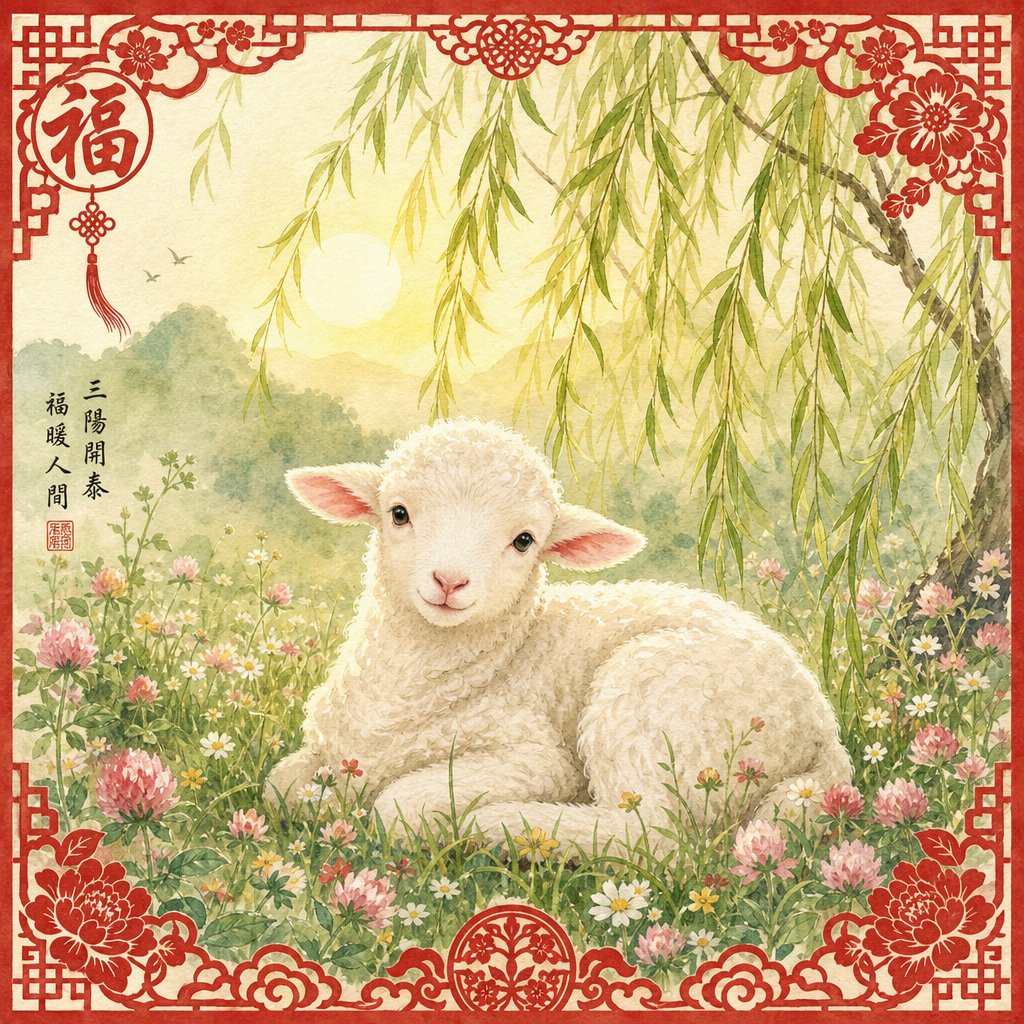
In Chinese culture, the sheep has been considered auspicious since ancient times. It was used in sacrificial offerings to pray for good fortune and even served as a form of currency, linking it to wealth and prosperity. People born under this sign are thought to be gentle, calm, creative, and compassionate. These qualities make the Sheep zodiac particularly well-suited for girls' names that emphasize grace, artistry, and kindness.
In Chinese tradition, the sheep symbolizes both richness and good luck. Its gentle nature and historical role in sacred offerings make it one of the most auspicious signs for a child to be born under.
This cultural weight is exactly why so many parents treat lunar new year names as more than a creative exercise. Choosing chinese baby names tied to the zodiac is a deliberate act of aligning a child's identity with favorable energy from the very start of life.
Sheep Goat or Ram and Why the Distinction Matters for Naming
You may have noticed some sources call it the Year of the Goat or the Year of the Ram. This confusion exists because the Chinese character "yang" (羊) is a broad term that can refer to sheep, goats, or rams without distinction. Chinese folklorists note that the zodiacal yang is more likely a goat, given the goat's popularity as a farm animal among Han Chinese. However, in practice, Chinese people do not draw a hard line between these animals for zodiac purposes. Images of all three appear on New Year stamps, paintings, and paper-cuts across different regions.
So why does this matter for naming? Each interpretation carries slightly different symbolic energy. The sheep evokes softness, warmth, and nurturing qualities. The goat suggests resilience and sure-footedness. The ram implies strength and determination. When selecting names for chinese new year babies born in this zodiac year, parents can lean into whichever interpretation resonates most with the qualities they hope their daughter will embody. A name inspired by gentle wool and pastoral calm differs in spirit from one inspired by a mountain goat's quiet tenacity.
This guide focuses on chinese girl names for year of the sheep that draw from the full spectrum of these qualities, combining zodiac-specific naming principles with characters that suit daughters in particular. The traits, lucky radicals, and elemental considerations that follow will help you move from cultural understanding to a concrete, meaningful name choice.
Sheep Zodiac Personality Traits and How They Guide Name Selection
The qualities associated with the Sheep zodiac do more than describe a personality type. They serve as a blueprint for choosing chinese names with meaning that resonate with a child's innate energy. In traditional Chinese naming philosophy, a name should amplify a person's natural strengths rather than work against them. For Sheep year girls, this means selecting characters that echo the sign's defining virtues: gentleness, creativity, compassion, elegance, and artistic sensitivity.
Key Sheep Zodiac Traits That Inspire Girl Names
People born under the Sheep sign are often described as sensitive, gentle, and quietly imaginative. Their emotional depth runs strong, and they tend to express themselves through art, music, or other creative outlets. These are not passive qualities. They reflect a rich inner world and a natural capacity for empathy that draws others in.
When parents understand these core traits, they can look for chinese names and their meanings that reinforce the best of what the Sheep zodiac offers. The reasoning is straightforward: a name that harmonizes with a child's zodiac nature is believed to support smoother personal development and attract favorable circumstances throughout life. Choosing a name that clashes with these traits, such as one emphasizing aggression or harshness, is thought to create internal tension.
Mapping Personality Traits to Name Characters
Each Sheep trait connects to specific Chinese characters commonly used in girls' names. Here is how the mapping works in practice:
- Gentleness (温柔) — Characters like 柔 (rou, gentle), 婉 (wan, graceful and mild), and 暖 (nuan, warm) capture the Sheep's soft, nurturing spirit. These are popular in chinese names with meanings tied to kindness and approachability.
- Creativity (创造力) — Characters such as 梦 (meng, dream), 彩 (cai, color), and 灵 (ling, spirit/inspiration) reflect the vivid imagination Sheep year children are known for. They suggest a mind that sees beyond the ordinary.
- Compassion (慈悲) — Characters like 慈 (ci, compassionate), 善 (shan, kind/virtuous), and 惠 (hui, benevolent) honor the Sheep's deep empathy. These names signal a caring, emotionally generous nature.
- Elegance (优雅) — Characters such as 雅 (ya, elegant), 娴 (xian, refined and poised), and 姝 (shu, beautiful) embody the quiet sophistication associated with this sign. They are classic choices for parents seeking timeless grace.
- Artistic Sensitivity (艺术感) — Characters like 琴 (qin, stringed instrument), 诗 (shi, poetry), and 画 (hua, painting) directly reference creative pursuits. They suit a Sheep year girl whose emotional depth may find its voice through the arts.
You will notice that many of these characters overlap in feeling. A name like 婉诗 (Wanshi) combines gentleness with poetic artistry, while 雅梦 (Yameng) blends elegance with imagination. This layering is intentional. Chinese names with meanings drawn from multiple complementary traits create a richer, more nuanced blessing for the child.
Trait alignment gives you direction, but it is only one layer of the naming process. The specific strokes and structural components within each character, known as radicals, carry their own zodiac significance. Certain radicals are considered especially fortunate for Sheep year babies, adding another dimension of auspiciousness to the names you have just seen.

Auspicious Radicals and Girl Name Examples for Each
Every Chinese character is built from smaller structural components called radicals. Think of radicals as the DNA of a character. They hint at its meaning category and, in the context of zodiac naming, they carry symbolic weight that can either support or undermine a child's fortune. For parents searching for a chinese name related to luck, understanding radicals is the key that unlocks truly auspicious choices.
Why Character Radicals Matter for Sheep Year Babies
The Sheep is a gentle herbivore that thrives in meadows, seeks shelter under trees, and feels secure in enclosed, protected spaces. Chinese naming tradition takes these natural associations literally. Characters containing radicals that symbolize what the sheep needs to flourish, such as grass for food, wood for shade, and enclosures for rest, are believed to bring prosperity and comfort to a child born under this sign.
This is not abstract symbolism. The logic is practical: a well-fed, sheltered sheep is a content and fortunate sheep. When you embed these radicals into your daughter's name, you are symbolically ensuring she will never lack nourishment, protection, or a place to call home. The grass radical (艹) is considered especially powerful because it directly represents the Sheep's primary food source.
Grass Radical Names for Prosperity
The grass radical (艹, cao zi tou) sits at the top of a character and signals a connection to plants, herbs, and flourishing growth. For Sheep year girls, it symbolizes abundant food and lifelong prosperity. Many of the most popular cute chinese names for girls happen to contain this radical, making it easy to find options that sound lovely and carry zodiac blessings simultaneously.
| Character | Pinyin | Radical | Meaning |
|---|---|---|---|
| 芳 | fāng | 艹 (grass) | Fragrant, virtuous; suggests a girl whose reputation is as sweet as flowers |
| 萱 | xuān | 艹 (grass) | Day lily, a plant symbolizing freedom from worry and maternal love |
| 茗 | míng | 艹 (grass) | Tea leaves; evokes refinement, calm, and cultural depth |
| 莉 | lì | 艹 (grass) | Jasmine; a classic chinese name for beautiful femininity and purity |
| 蓉 | róng | 艹 (grass) | Lotus or hibiscus; represents grace emerging from humble origins |
| 荷 | hé | 艹 (grass) | Lotus flower; symbolizes purity, elegance, and rising above adversity |
| 芸 | yún | 艹 (grass) | Rue herb; associated with literary talent and scholarly grace |
| 艺 | yì | 艹 (grass) | Art, skill, talent; perfect for a creatively gifted Sheep year girl |
Names like 茗茶 (Míngchá, meaning unsophisticated and pure) and 茉莉 (Mòlì, jasmine) appear in traditional recommendations for Sheep year girls precisely because they double down on the grass radical's protective energy.
Wood and Shelter Radical Names for Protection
The wood radical (木, mu) represents trees that provide shade, shelter, and a sense of rootedness. A sheep resting beneath a tree is safe and at peace. Characters built with this radical suggest stability, growth, and natural protection for your daughter throughout her life.
| Character | Pinyin | Radical | Meaning |
|---|---|---|---|
| 梓 | zǐ | 木 (wood) | Catalpa tree; symbolizes hometown, belonging, and strong roots |
| 朵 | duǒ | 木 (wood) | Blossom, a single flower; suggests delicacy and natural beauty |
| 楚 | chǔ | 木 (wood) | Clear, neat, distinct; implies intelligence and refined appearance |
| 枫 | fēng | 木 (wood) | Maple tree; evokes warmth, vibrant color, and seasonal beauty |
| 榛 | zhēn | 木 (wood) | Hazel tree; represents abundance and natural resilience |
Shelter-related radicals add another layer of security. Characters containing 宀 (mian, meaning roof) or 口 (kou, meaning enclosure) suggest a safe home and a life of comfort. Girl-friendly options include 安 (ān, peace and safety), 宁 (níng, tranquility), 容 (róng, tolerance and grace), and 婷 (tíng, graceful and poised). These characters indicate that the Sheep has found a resting place, a deeply fortunate symbol.
Combining radicals amplifies the effect. A name like 萱宁 (Xuānníng) pairs the grass radical's prosperity with the shelter radical's peace. Similarly, 芸楚 (Yúnchǔ) blends literary grace from the grass radical with the clarity of the wood radical. This layered approach is what separates a merely pleasant name from one that is structurally aligned with your daughter's zodiac fortune.
Of course, knowing which radicals to embrace is only half the equation. Certain character components actively conflict with the Sheep's energy, and including them, even unintentionally, can undermine the auspiciousness you have carefully built.
Characters to Avoid and What to Choose Instead
Selecting auspicious radicals is powerful, but overlooking problematic ones can quietly undo your careful work. In Chinese zodiac naming, certain characters carry energy that directly conflicts with the Sheep sign. These clashes stem from the Earthly Branch system, where specific animal signs oppose, harm, or punish each other. For a Sheep year girl, using a conflicting character in her name is like planting a garden in hostile soil. The name might sound beautiful, but the symbolic foundation works against her.
Characters That Clash with the Sheep Zodiac
The reasoning behind each avoidance is rooted in the Six Clashes (liu chong) and harm relationships of the Twelve Earthly Branches. The Sheep's branch is Wei (未), and its primary clash is with Chou (丑), the Ox. Its harm relationship involves Zi (子), the Rat. Additional tensions arise from characters associated with tight encirclement and sacrifice symbolism.
Here are the main categories to watch for when choosing a chinese name with meaning for your daughter:
- Ox-related radicals (丑, 牛) — Chou (Ox) directly clashes with Wei (Sheep). Characters like 牡 (mu, male animal), 牧 (mu, to herd), and 特 (te, special, which contains the ox radical) create zodiac tension. This clash symbolizes opposing energies and ideological conflict, making it the most important avoidance for Sheep year babies.
- Rat-related radicals (子, 鼠) — The Rat harms the Sheep in the Earthly Branch cycle. Characters such as 子 (zi, child), 孔 (kong, opening/Confucius surname), 学 (xue, to study), 存 (cun, to exist), and 孟 (meng, eldest) contain the 子 component and are traditionally discouraged. This harm relationship suggests hidden obstacles and quiet undermining of fortune.
- Encirclement and conflict radicals (辰, 戌, 犬) — Characters containing 辰 (chen, as in 晨, morning), 戌 (xu, the Dog's branch), and 犬 (quan, dog) suggest the Sheep being cornered or surrounded. Examples include 成 (cheng, to accomplish), 国 (guo, country), 献 (xian, to offer), and 独 (du, alone). Two Sheep meeting is also considered inauspicious, so the 未 radical itself should not be doubled.
- Sacrifice-related radicals (大, 王, 君) — The Sheep was historically one of the three sacrificial animals. Characters with radicals meaning monarch, greatness, or ruler, such as 王 (wang, king), 大 (da, big), 天 (tian, heaven), 奇 (qi, extraordinary), and 珏 (jue, paired jade), suggest the Sheep being raised for offering. This symbolism implies a life of service to others at one's own expense.
- Colorful clothing radicals (巾, 衣, 糸) — Sheep were traditionally adorned before sacrifice. Characters with cloth or silk radicals, such as 帆 (fan, sail), 希 (xi, hope), 彩 (cai, color), 彤 (tong, red), and 裕 (yu, abundant), carry this unfortunate association. This one surprises many parents because characters like 彩 seem inherently positive.
Notice that some commonly loved characters fall into these categories. A parent might naturally gravitate toward 学 for its scholarly connotation or 彩 for its vibrant imagery, unaware of the zodiac tension underneath. This is exactly why checking radicals matters, even for names that sound perfect on the surface.
Practical Alternatives for Common Avoidance Characters
The good news? Nearly every problematic character has a substitute that preserves the intended meaning while using Sheep-friendly radicals. You do not have to sacrifice the sentiment behind your name choice. You just need to express it through a different character.
- Instead of 学 (xue, study) — Use 慧 (hui, wisdom) or 文 (wen, literature). Both convey intelligence without the Rat-associated 子 radical.
- Instead of 彩 (cai, color/brilliance) — Use 艺 (yi, art/talent) with its auspicious grass radical, or 灵 (ling, spirit/inspiration). You keep the creative energy without the sacrifice symbolism.
- Instead of 希 (xi, hope) — Use 萱 (xuan, freedom from worry) or 安 (an, peace). Both carry hopeful sentiment through Sheep-compatible radicals.
- Instead of 晨 (chen, morning) — Use 曦 (xi, dawn light) or 朝 (zhao, morning). These capture the freshness of a new day without the 辰 encirclement radical.
- Instead of 牧 (mu, pastoral) — Use 苑 (yuan, garden/park) with the grass radical. It evokes the same pastoral imagery in a zodiac-safe way.
- Instead of 天 (tian, heaven/sky) — Use 宁 (ning, tranquility) or 蓝 (lan, blue, as in the sky). The meaning stays expansive without triggering the sacrifice association.
These substitutions work well for both traditional and modern naming styles. They are also relevant for parents considering chinese gender neutral names, since characters like 文, 慧, and 安 cross gender boundaries comfortably while remaining zodiac-appropriate. Whether you lean toward a classic feminine name or prefer gender neutral chinese names that feel versatile across cultures, the principle stays the same: match the meaning you want with a radical the Sheep zodiac supports.
Radical compatibility gives you the structural foundation of a strong name. But structure alone does not account for the elemental energy assigned to each specific Sheep year. A girl born in 2015 carries different elemental qualities than one born in 2003 or the upcoming 2027, and her name can be refined further to harmonize with that deeper layer of cosmic influence.
Five Elements Theory and Element-Specific Girl Names
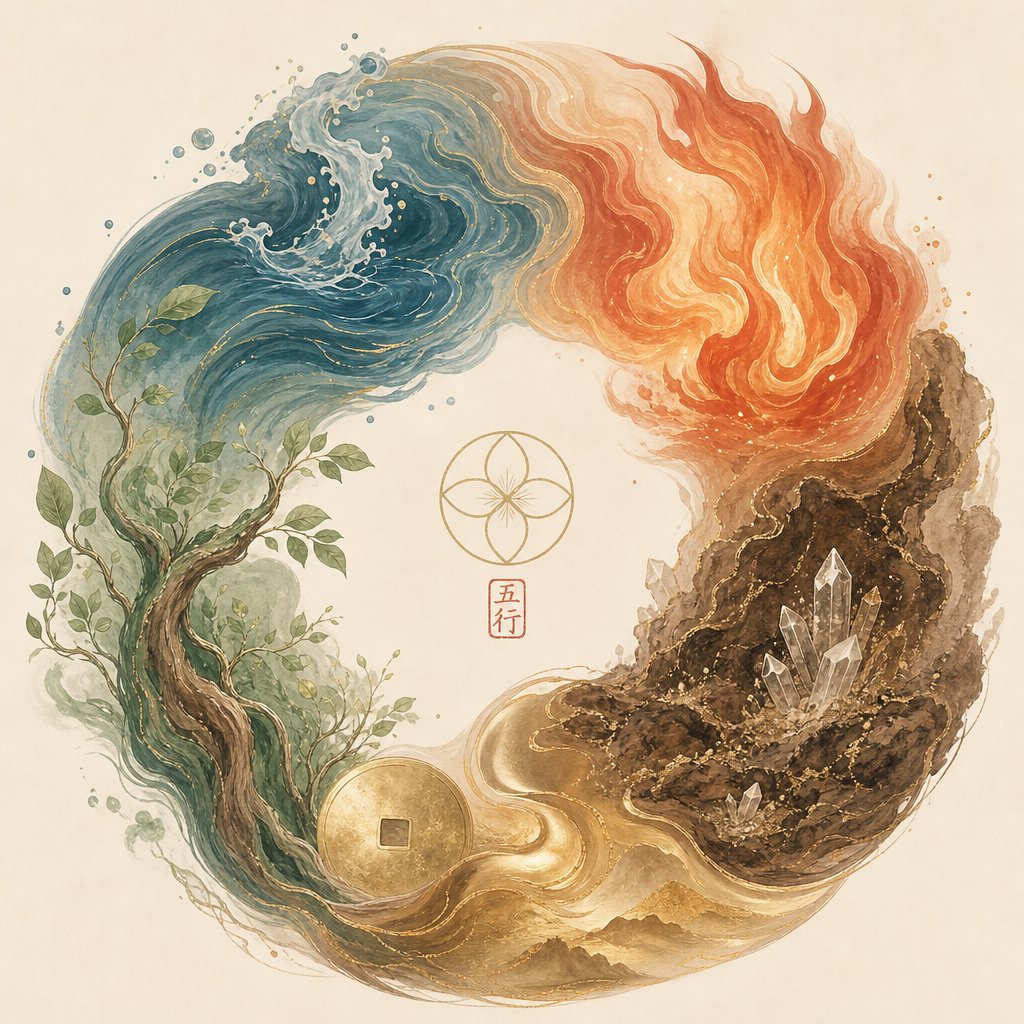
The Chinese zodiac does not simply assign an animal to each year and call it done. Layered beneath the 12-year animal cycle is a second system called Wu Xing (五行), the Five Elements: Wood, Fire, Earth, Metal, and Water. Each element rotates on a 10-year cycle, and when combined with the 12 animals, it produces 60 unique year types before the pattern repeats. This means not all Sheep years carry the same energy. A girl born in 2015 is a Wood Sheep, while one born in 2003 is a Water Sheep, and the upcoming 2027 brings a Fire Sheep. Each elemental variation shapes personality nuances and, crucially, influences which new year names will harmonize best with your daughter's birth energy.
How the Five Elements Refine Sheep Year Names
Think of the animal sign as the broad personality canvas and the element as the specific color palette painted onto it. The Five Elements are not static substances but dynamic forces that interact, nourish, and transform one another. Water feeds Wood. Wood fuels Fire. Fire creates Earth. Earth bears Metal. Metal enriches Water. This generative cycle means each element carries distinct qualities that refine the Sheep's baseline gentleness and creativity in different directions.
Determining your daughter's element is straightforward. It follows the last digit of her birth year:
- Wood — birth year ending in 4 or 5 (Sheep years: 1955, 2015)
- Fire — birth year ending in 6 or 7 (Sheep years: 1967, 2027)
- Earth — birth year ending in 8 or 9 (Sheep year: 1979)
- Metal — birth year ending in 0 or 1 (Sheep year: 1991)
- Water — birth year ending in 2 or 3 (Sheep year: 2003)
Once you know the element, you can select characters that resonate with its energy. A Water element name evokes depth, adaptability, and intuition. A Wood element name suggests growth and vitality. Matching the name's elemental spirit to the child's birth element creates a sense of internal harmony, like tuning an instrument to its natural key.
Element-Specific Girl Name Recommendations
The table below maps each elemental Sheep year to its core qualities and provides girl-appropriate characters along with full name examples. All names include pinyin with tone marks so you can confirm pronunciation.
| Element Year | Element Qualities | Recommended Characters | Full Name Examples |
|---|---|---|---|
| Wood Sheep (2015) | Growth, vitality, flexibility, creativity | 桂 (guì, cassia/laurel), 梓 (zǐ, catalpa tree), 芊 (qiān, lush green), 蕊 (ruǐ, flower pistil) | 林桂 (Lín Guì), 陈梓芊 (Chén Zǐqiān), 王蕊 (Wáng Ruǐ) |
| Fire Sheep (1967, 2027) | Warmth, passion, energy, illumination | 煦 (xù, warm sunlight), 晗 (hán, dawn sky), 昕 (xīn, early morning sun), 暖 (nuǎn, warm) | 张煦宁 (Zhāng Xùníng), 李晗 (Lǐ Hán), 赵昕暖 (Zhào Xīnnuǎn) |
| Earth Sheep (1979) | Stability, reliability, nurturing, grounding | 安 (ān, peace), 坤 (kūn, receptive earth), 岚 (lán, mountain mist), 瑾 (jǐn, fine jade) | 刘安岚 (Liú Ānlán), 周瑾 (Zhōu Jǐn), 吴坤宁 (Wú Kūnníng) |
| Metal Sheep (1991) | Strength, clarity, determination, refinement | 钦 (qīn, respect/admire), 铃 (líng, bell), 锦 (jǐn, brocade), 鑫 (xīn, prosperous) | 杨锦萱 (Yáng Jǐnxuān), 孙铃 (Sūn Líng), 黄钦 (Huáng Qīn) |
| Water Sheep (2003) | Wisdom, fluidity, depth, intuition | 润 (rùn, nourish), 清 (qīng, clear/pure), 海 (hǎi, sea), 澜 (lán, rippling waves) | 陈润清 (Chén Rùnqīng), 林海萱 (Lín Hǎixuān), 郑澜 (Zhèng Lán) |
A few patterns worth noting. For the Wood Sheep of 2015, characters with the grass radical (艹) do double duty: they satisfy both the Sheep's need for nourishment and the Wood element's association with living growth. Names like 梓芊 (Zǐqiān) layer the wood radical with lush greenery, creating a deeply harmonious combination.
For parents expecting a Fire Sheep daughter in 2027, gentler fire characters work best. The Sheep's soft nature pairs beautifully with warm, luminous characters like 煦 (xù, genial warmth) and 晗 (hán, the sky just before sunrise) rather than intense blaze characters. You get the fire element's energy without overwhelming the Sheep's inherent calm.
Water Sheep names offer some of the most poetic options. Characters like 海 (hǎi, sea) and 澜 (lán, waves) carry the vastness and depth that sea-inspired names are known for, while 润 (rùn, to nourish) captures water's quiet generosity. A name like 润清 (Rùnqīng) suggests someone who nourishes others with clarity and purity, perfectly reflecting the Water Sheep's intuitive compassion.
Earth and Metal Sheep names tend toward solidity and elegance. Earth characters like 岚 (lán, mountain mist) ground the Sheep's dreaminess without suppressing it, while Metal characters like 锦 (jǐn, brocade) add a sense of refined value and enduring beauty.
Elemental harmony gives your name choice a second layer of cosmic alignment beyond the animal sign alone. With both the Sheep's radical preferences and the birth element accounted for, the remaining question becomes practical: how do you assemble these characters into a complete, balanced Chinese name that sounds right, honors family tradition, and works in the real world?
Curated Chinese Girl Names Perfect for Sheep Year Babies
All the principles covered so far, auspicious radicals, elemental harmony, trait alignment, converge here. This section brings together beautiful chinese names for girl with meaning, each one specifically vetted for Sheep zodiac compatibility. Every name below contains at least one favorable radical, reflects a core Sheep personality trait, and carries a meaning that parents can feel proud of.
The names are organized into three thematic groups so you can browse based on the quality you most want your daughter's name to express. Whether you are drawn to the softness of nature, the spark of artistic talent, or the poise of timeless elegance, you will find options that work.
Nature and Gentleness Inspired Names
The Sheep thrives in natural settings, surrounded by meadows, trees, and open sky. These names channel that pastoral calm and the sign's signature gentleness. They are ideal for parents who want their daughter's name to feel grounded, warm, and quietly beautiful.
| Name (Characters) | Pinyin | Meaning | Sheep Year Connection |
|---|---|---|---|
| 若萱 | Ruò Xuān | Graceful as the day lily (freedom from worry) | Both characters carry the grass radical (艹), doubling the Sheep's nourishment symbolism while evoking gentle pastoral imagery |
| 芷宁 | Zhǐ Níng | Angelica herb with tranquility | Grass radical (艹) for prosperity paired with the roof radical (宀) for shelter, a deeply auspicious combination |
| 茗安 | Míng Ān | Tea leaves and peace | Grass radical signals abundance; the shelter radical in 安 means the Sheep has found a safe resting place |
| 荷柔 | Hé Róu | Lotus softness | Grass radical in 荷 provides nourishment; 柔 directly mirrors the Sheep's gentle temperament |
| 梓萌 | Zǐ Méng | Catalpa tree with new sprouts | Wood radical (木) offers protection and shade; grass radical (艹) in 萌 adds growth energy |
| 苑溪 | Yuàn Xī | Garden stream | Grass radical creates a lush environment; the flowing water imagery reflects the Sheep's calm, adaptable nature |
Names like 若萱 (Ruò Xuān) are especially popular among chinese girl names and meanings lists because they layer two grass-radical characters together, creating what naming practitioners consider a "double blessing" of abundance for the Sheep child.
Creativity and Artistic Names
Sheep year girls are known for their vivid imaginations and artistic sensitivity. These names honor that creative spirit while maintaining zodiac-friendly radicals. If you picture your daughter drawn to music, painting, poetry, or design, this group speaks directly to that vision.
| Name (Characters) | Pinyin | Meaning | Sheep Year Connection |
|---|---|---|---|
| 艺萱 | Yì Xuān | Artistic talent with day lily grace | Both characters contain the grass radical (艹); 艺 directly references creative skill, a core Sheep trait |
| 诗茵 | Shī Yīn | Poetry on a cushion of green grass | 茵 carries the grass radical for prosperity; 诗 channels the Sheep's literary and artistic sensitivity |
| 梦莲 | Mèng Lián | Dream of the lotus | Wood radical (木) in 梦 provides shelter; grass radical (艹) in 莲 ensures nourishment; together they evoke the Sheep's rich inner world |
| 芸墨 | Yún Mò | Scholarly herb and ink | Grass radical in 芸 connects to literary tradition; the combination suggests a girl whose creativity flows naturally like ink on paper |
| 琴萝 | Qín Luó | Stringed instrument and trailing vines | 琴 honors the Sheep's musical nature; grass radical (艹) in 萝 grounds the artistic energy in zodiac-favorable symbolism |
| 蕊灵 | Ruǐ Líng | Flower pistil with spiritual inspiration | Grass radical in 蕊 signals blooming abundance; 灵 captures the Sheep's intuitive, imaginative spark |
A name like 诗茵 (Shī Yīn) appears in traditional Sheep year recommendations because it balances romantic literary meaning with the practical zodiac benefit of the grass radical. It is well-mannered and creative in equal measure.
Elegance and Grace Names
Elegance is perhaps the Sheep's most universally recognized quality. These chinese names female and meanings reflect poise, refinement, and quiet confidence. They suit parents who want a name that feels timeless rather than trendy, one that will carry their daughter gracefully from childhood into adulthood.
| Name (Characters) | Pinyin | Meaning | Sheep Year Connection |
|---|---|---|---|
| 婉容 | Wǎn Róng | Graceful composure | 容 contains the roof radical (宀) for shelter and security; 婉 embodies the Sheep's gentle, tactful nature |
| 歆婷 | Xīn Tíng | Delighted and graceful | 婷 carries the shelter radical suggesting a protected, comfortable life; the combination reflects the Sheep's appreciation for beauty |
| 淑芳 | Shū Fāng | Virtuous and fragrant | Grass radical (艹) in 芳 provides nourishment symbolism; 淑 captures the Sheep's compassionate, refined character |
| 雅萱 | Yǎ Xuān | Elegant day lily | Grass radical in 萱 ensures prosperity; 雅 is the quintessential elegance character, perfectly aligned with Sheep energy |
| 宁馨 | Níng Xīn | Peaceful fragrance | Roof radical (宀) in 宁 means the Sheep is sheltered; 馨 suggests a reputation that spreads like a pleasant scent |
| 蓉婉 | Róng Wǎn | Hibiscus grace | Grass radical (艹) in 蓉 symbolizes abundant nourishment; 婉 reinforces the Sheep's hallmark gentleness and emotional intelligence |
You will notice that 歆婷 (Xīn Tíng) and 淑芳 (Shū Fāng) both appear in curated lists of auspicious Sheep year girl names. Their enduring popularity comes from striking the balance parents want most: a name that sounds sophisticated, carries deep meaning, and checks every zodiac box.
Each name in these tables works as a standalone given name. But a Chinese name is never just the given name. It sits within a larger structure that includes the family surname, tonal flow, and sometimes a generational character passed down through the family. Getting the full name right means understanding how these individual characters fit into that broader framework.
How to Build a Complete Chinese Name for Your Sheep Year Girl
A beautiful given name is only part of the picture. In Chinese naming, the given name never exists in isolation. It lives alongside a family surname, and the two must work together across sound, visual balance, and meaning. Understanding this structure is what separates a list of pretty characters from a complete, functional name your daughter will carry for life.
Surname Plus Given Name Structure Explained
Every Chinese name follows the same order: surname first, given name second. So in a name like 王若萱 (Wang Ruoxuan), 王 is the inherited family name and 若萱 is the given name chosen by the parents. This is the opposite of English naming conventions, and it reflects the cultural emphasis on family lineage preceding individual identity.
The surname is almost always fixed. The top 100 Chinese surnames cover roughly 85% of the Han Chinese population, with 王 (Wang), 李 (Li), and 张 (Zhang) alone accounting for over 200 million people. Because the surname pool is so concentrated, the creative weight falls entirely on the given name. This is where your zodiac considerations, elemental harmony, and radical choices come into play.
Given names are typically one or two characters. In mainland China, two-character given names are the modern default, giving parents more room to layer meaning and balance tones. A single-character given name is simpler but creates more name collisions in a population of 1.4 billion. For Sheep year girls, two characters offer the practical advantage of combining an auspicious radical character with a trait-based character, like pairing 萱 (grass radical, prosperity) with 宁 (shelter radical, peace).
Some families also follow a generational naming system called 字辈 (zibei). In this tradition, one character of the given name is predetermined by a poem written by an ancestor generations earlier. All cousins born in the same generation share that character, and the parents choose only the remaining one. If your family observes this practice, your zodiac-aligned character becomes the free slot, the one you can optimize for Sheep year energy.
Balancing Tradition with Cross-Cultural Practicality
For diaspora families or mixed-heritage couples, the challenge multiplies. You want a name that honors Sheep year traditions, satisfies the grandparents on a video call, and still works when a teacher in Toronto or London reads it off a class roster. This is not an impossible balance, but it requires thinking across languages simultaneously.
One growing approach is bilingual phonetic naming: choosing Chinese characters that carry genuine meaning and zodiac alignment while also approximating an English name in sound. A name like 安妮 (An Ni, meaning peace and grace) works as "Annie" in English contexts without losing its Chinese identity. Similarly, 莉莉 (Li Li, jasmine) maps naturally to "Lily." Both contain auspicious radicals for Sheep year girls while functioning seamlessly in Western settings.
The key is avoiding pure transliteration, where characters are chosen only for sound and carry no real meaning. As naming experts note, a serious Chinese name must satisfy four dimensions simultaneously: sound, form, meaning, and elemental balance. A transliteration-only approach skips three of those dimensions entirely.
Whether you take a traditional or modern path, the assembly process follows a consistent logic. Here is a step-by-step approach that works for both approaches:
- Confirm your surname's tone and stroke density. Write the surname down and note its tone (first, second, third, or fourth). A surname like 张 (Zhang, first tone) pairs differently than 李 (Li, third tone). Also note whether the surname is visually simple or complex, since this affects calligraphic balance with the given name.
- Check for generational character obligations. Ask family elders whether your lineage follows a 字辈 poem. If a generational character is assigned, determine whether it conflicts with Sheep zodiac radicals. If it does, you may need to compensate with the second given-name character.
- Select your primary given-name character based on zodiac alignment. Choose a character with an auspicious Sheep radical (grass, wood, or shelter) that also reflects the personality trait you most want to emphasize: gentleness, creativity, elegance, or compassion.
- Add a second character for elemental harmony. Match this character to your daughter's specific element (Wood, Fire, Earth, Metal, or Water) based on her birth year. This creates the layered blessing that makes chinese baby names and meanings truly resonate with the child's cosmic profile.
- Test tonal flow across the full name. Say the complete name, surname plus given name, out loud repeatedly. Ideally the tones should vary across the syllables, avoiding two consecutive third tones or monotonous repetition. One practical test from Chinese naming tradition: shout the name across a room as if calling your daughter for dinner. If it flows naturally and sounds clear, the tonal pattern works.
- Check for unfortunate homophones. Speak the full name at conversational speed and listen for accidental sound-alikes with negative words in Mandarin or your family's home dialect (Cantonese, Hokkien, Shanghainese). A name that reads beautifully on paper but sounds like "stomachache" when spoken quickly is a quiet disaster.
- Evaluate visual balance. Write the full name in characters and assess stroke density. If your surname is complex (like 魏 at 17 strokes), pairing it with two equally dense given-name characters creates a visually heavy name. Balance a complex surname with simpler given-name characters, or vice versa.
- Cross-check for cross-cultural usability (if relevant). For families living abroad, confirm that the pinyin romanization does not create awkward pronunciations or unintended meanings in English or the local language. Test how the name sounds when introduced in both Chinese and non-Chinese settings.
This process works whether you are a family in Beijing following every traditional convention or a couple in Vancouver blending two cultural naming systems. The order can flex, some families start with the generational character, others start with the element, but covering all eight steps ensures nothing important gets missed.
The real test, as one Mandarin teacher puts it, is whether the name passes the "auntie test": can a Chinese elder hear it, understand its meaning, and nod approvingly? That approval signals you have honored the structural, tonal, and cultural dimensions that make chinese female names and meaning hold up across generations. With your full name assembled, the final step is verification, making sure every detail checks out before the name becomes permanent.
Final Steps to Confirm the Perfect Sheep Year Name
You have assembled a name with the right radicals, elemental harmony, and tonal flow. It looks beautiful on paper and sounds clear when spoken aloud. But before this name goes on a birth certificate or gets announced at a Manyue banquet, it needs to survive a few final checks. These steps are where good names become great ones, and where subtle problems get caught before they become permanent.
Checklist for Finalizing Your Name Choice
Think of this as your quick-reference filter. Every chinese girl names with meaning recommendation in this guide has been built on these principles, and running your final choice through this list ensures nothing slips through the cracks.
- Auspicious radical confirmed — Does at least one character in the given name contain a Sheep-friendly radical (grass 艹, wood 木, or shelter 宀)? This is the single most important zodiac alignment check.
- No conflicting radicals present — Scan both given-name characters for ox (牛), rat (子), dog (犬), or sacrifice-related (大, 王) components. If one appears, swap it for an alternative with equivalent meaning.
- Elemental match verified — Does the name harmonize with your daughter's specific element year (Wood, Fire, Earth, Metal, or Water)? A Water Sheep girl benefits from fluid, depth-oriented characters; a Fire Sheep girl suits warm, luminous ones.
- Trait alignment present — Does the name reflect at least one core Sheep personality quality: gentleness, creativity, compassion, elegance, or artistic sensitivity?
- Tonal variety across the full name — Say the surname plus given name aloud. The tones should vary naturally, avoiding two consecutive third tones or flat monotony.
- No unfortunate homophones — Speak the full name at normal conversational speed. Listen for accidental sound-alikes with negative words in Mandarin and in your family's dialect.
- Stroke count balance — Write the full name in characters. A visually lopsided name (one very simple character next to one very complex character) can feel unbalanced. Some families also consult traditional stroke-count numerology to confirm the total falls within a favorable range.
- No ancestor name collision — Confirm that neither given-name character duplicates a character used by a living grandparent or great-grandparent. In Chinese tradition, this is considered disrespectful rather than honorific.
- Cross-dialect check complete — If your family speaks Cantonese, Hokkien, or another dialect alongside Mandarin, say the name in that dialect too. A name that sounds elegant in Mandarin can occasionally carry an awkward or negative meaning in another Chinese language.
- Cross-cultural usability tested (if applicable) — For families abroad, confirm the pinyin romanization does not create unintended meanings or difficult pronunciations in English or the local language.
Cultural Considerations and Family Consultation
No checklist replaces the human element. Chinese naming has always been a communal act. Families often spend weeks deliberating, with grandparents, uncles, and sometimes professional name consultants all weighing in. This is not bureaucracy. It is how the name gets stress-tested across generations of cultural knowledge that no single parent holds alone.
When you present your shortlist to family elders, you are not just asking for approval. You are inviting people who grew up hearing these characters in different contexts, different decades, different regions, to flag associations you might have missed. A grandfather in Fujian may catch a dialect homophone that sounds fine in standard Mandarin. A grandmother in Taiwan may recognize a character's connection to an old family taboo. These are the catches that protect your daughter from carrying an unintended meaning her whole life.
If your family does not have elders to consult, or if you are navigating this process without a Chinese-speaking community nearby, consider reaching out to a professional naming consultant (起名师, qimingshi). Many operate online and can review your shortlist against stroke-count systems, dialect pronunciations, and regional naming conventions you may not have access to independently.
One final thought worth holding onto. A name chosen with this much care, zodiac radicals checked, element matched, tones tested, family consulted, is more than a label. It is a structured blessing, a few characters that carry your hopes for who your daughter will become. The goal was never perfection. It was intention. A chinese name for girls with meaning that reflects both cosmic alignment and parental love is exactly the kind of name a Sheep year girl can grow into, from her first day through every chapter that follows.
Frequently Asked Questions About Chinese Girl Names for Year of the Sheep
1. What are the luckiest radicals for Sheep year baby girl names?
The grass radical (艹) is considered the most auspicious because it represents the Sheep's primary food source, symbolizing lifelong abundance. The wood radical (木) offers protection and stability, like a tree providing shade. Shelter radicals such as 宀 (roof) and 口 (enclosure) suggest the Sheep has found a safe home. Combining two or more of these radicals in a single name, such as pairing a grass-radical character with a shelter-radical character, creates layered blessings that strengthen the zodiac alignment.
2. Which characters should I avoid in a Sheep year girl's name?
Avoid characters containing the ox radical (牛) since the Ox directly clashes with the Sheep in the Earthly Branch system. Rat-associated characters with the 子 component, such as 学 and 孟, create a harm relationship. Dog-related radicals (犬, 戌) suggest encirclement. Sacrifice-related radicals like 王 (king) and 大 (big) imply the Sheep being raised for offering. Even colorful clothing radicals (巾, 衣, 糸) carry unfortunate associations because sheep were adorned before sacrifice. For each problematic character, zodiac-safe alternatives exist that preserve the intended meaning.
3. How do the Five Elements affect naming for different Sheep years?
Each Sheep year carries a specific element based on the birth year's last digit: Wood (2015), Fire (1967/2027), Earth (1979), Metal (1991), and Water (2003). The element refines the Sheep's baseline personality and guides character selection. A Wood Sheep girl benefits from growth-oriented characters like 芊 (lush green). A Fire Sheep girl suits warm, luminous characters like 煦 (gentle sunlight). Water Sheep names work best with fluid, depth-oriented characters like 澜 (rippling waves). Matching the name to the birth element creates a second layer of cosmic harmony beyond the animal sign alone.
4. Is it the Year of the Sheep, Goat, or Ram in Chinese zodiac?
The Chinese character 羊 (yang) is a general term that encompasses sheep, goats, and rams without distinguishing between them. Chinese folklorists suggest the zodiacal animal is more likely a goat based on farming traditions, but in practice, all three appear in zodiac artwork across different regions. For naming purposes, each interpretation offers different symbolic energy: sheep evokes softness and nurturing, goat suggests resilience, and ram implies determination. Parents can lean into whichever quality they most want their daughter's name to reflect.
5. How do I build a complete Chinese name for my Sheep year daughter?
Start with your fixed family surname and note its tone and stroke complexity. Check if your family follows a generational naming tradition (字辈) that predetermines one character. Then select your primary given-name character based on Sheep-friendly radicals, and add a second character for elemental harmony matching your daughter's birth year element. Test the full name for tonal variety by saying it aloud, check for unfortunate homophones in Mandarin and family dialects, evaluate visual stroke balance when written, and confirm no ancestor name collision exists. For diaspora families, also verify the pinyin romanization works in your local language.