Why Parents Are Choosing Chinese Mythology Names for Babies
Imagine giving your child a name that carries four thousand years of storytelling inside it. Not just a pleasant sound or a trendy pick, but a name rooted in gods who shaped the earth, heroes who defied heaven, and cosmic forces that still echo through Chinese culture today. That is the draw of chinese mythology names for babies, and it explains why more parents are looking beyond standard naming lists.
Why Chinese Mythology Offers Meaningful Baby Names
Most chinese baby names are chosen for auspicious meanings like prosperity, beauty, or intelligence. These are fine choices. But mythology-inspired names operate on a different level. They carry entire narratives. A name drawn from Nuwa references the goddess who molded humanity from clay and repaired the broken sky. A name inspired by Sun Wukong connects to rebellion, resilience, and transformation. These are not just chinese names and meanings on a list. They are compressed stories that grow with a child.
A common Chinese name wishes something for your child. A mythology name tells them who they could become.
Mythical chinese names pull from a tradition where gods walked among floods, emperors descended from dragons, and immortals wandered mountains seeking enlightenment. That depth gives a name weight no trending baby name chart can replicate.
What This Guide Covers That Others Do Not
This guide draws from specific mythological sources: the Shan Hai Jing (Classic of Mountains and Seas) for nature spirits and primordial creatures, Fengshen Yanyi (Investiture of the Gods) for Daoist deities, Journey to the West for heroic figures, and foundational creation myths featuring Pangu, Nuwa, and Fuxi. Buddhist-influenced figures like Guanyin and folk heroes like Nezha also appear. Each name includes its mythological story, character breakdown with radicals, and a pronunciation guide designed for English speakers. You will also find the cultural taboos that most naming guides skip entirely, because in Chinese tradition, some mythical chinese names are considered too powerful or sacred for a child to carry.
Major Sources of Chinese Mythology for Baby Names
Chinese mythology is not a single book or a unified canon. It is a sprawling network of creation stories, literary epics, religious texts, and folk traditions built over millennia. When you explore names in chinese and meanings tied to mythology, you are pulling from at least four distinct literary and spiritual traditions, each offering a different flavor of name.
Creation Myths and the Oldest Chinese Names
The oldest layer of traditional chinese names comes from creation mythology. Pangu (盘古), the first living being, emerged from cosmic chaos and separated earth from sky. Nuwa (女娲) molded humans from clay and later repaired the heavens after a catastrophic battle between the water god Gonggong and the fire god Zhurong. Fuxi (伏羲), her partner, introduced writing, fishing, and the Eight Trigrams to humanity. These figures represent the very foundation of Chinese cosmology, and their names carry elemental weight: creation, sacrifice, and civilization itself.
Literary Epics as Naming Sources
Beyond creation myths, several literary works serve as rich sources for chinese given names with mythological depth:
- Shan Hai Jing (Classic of Mountains and Seas) — An ancient geographic and mythological text describing nature spirits, mythical creatures, and strange lands. It provides names tied to mountains, rivers, celestial animals, and elemental forces. Think chinese fantasy names rooted in a world where every peak and waterway had a guardian spirit.
- Fengshen Yanyi (Investiture of the Gods) — A Ming dynasty novel filled with Daoist deities, immortals, and cosmic warfare. It offers names connected to divine power, celestial rank, and spiritual transformation.
- Journey to the West (Xi You Ji) — The epic tale of the Monkey King and his companions on a Buddhist pilgrimage. Characters like Sun Wukong, Nezha, and Erlang Shen provide names associated with rebellion, protection, and martial courage.
- Foundational folk legends — Stories like the Cowherd and Weaver Girl, Chang'e's flight to the moon, and the tale of the White Snake offer names tied to love, longing, and personal sacrifice.
Daoist and Buddhist Influences on Naming
Daoist cosmology contributes taoist names centered on harmony, immortality, and natural forces. Characters referencing clouds (云), jade (玉), or the celestial Dao (道) often trace back to Daoist imagery. Buddhist influence, arriving later through cultural exchange, introduced names connected to compassion, enlightenment, and mercy. Guanyin, the bodhisattva of compassion, is perhaps the most recognized example.
What makes this system rich is that not every mythology name references a deity directly. Many mandarin names and meanings draw instead on mythological concepts: the phoenix as rebirth, the dragon as cosmic authority, jade as moral purity. Some parents choose chinese names in chinese that echo a mythological atmosphere without naming a god outright. Others want the full weight of a deity's story behind their child's identity. Both approaches are valid, and the sources above support either path.
Each tradition carries its own cultural register, though. A name from the Shan Hai Jing feels ancient and elemental. A name from Journey to the West feels bold and adventurous. Understanding where a name originates helps you choose one that matches the story you want your child to carry forward.
Chinese Girl Names From Goddesses and Mythological Heroines
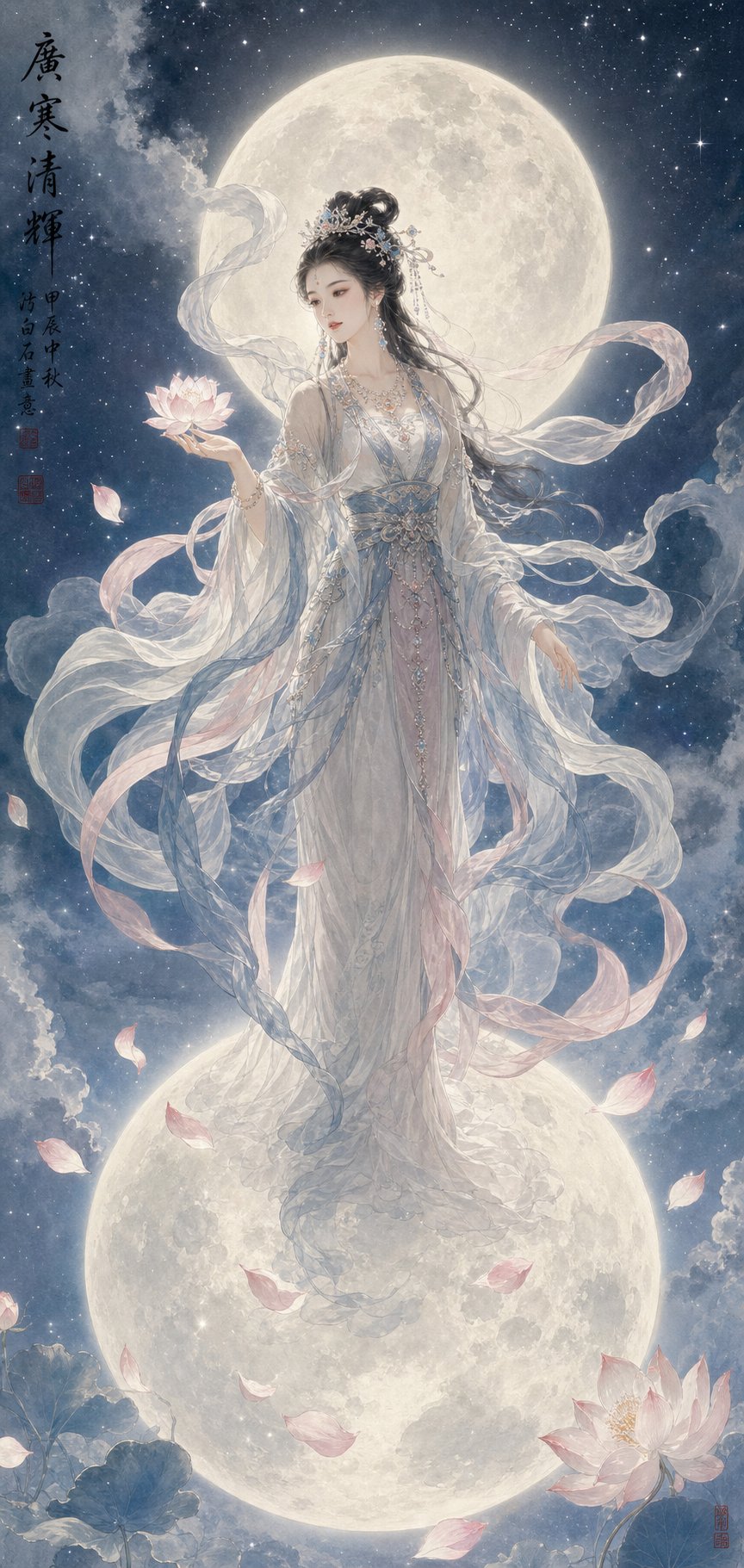
Chinese mythology is filled with powerful feminine figures who shaped the cosmos, governed the heavens, and sacrificed for love. When searching for chinese girl names with real narrative depth, these goddesses and heroines offer something no modern naming trend can match: stories that have resonated across thousands of years. Each chinese goddess names option below carries a specific mythological identity, and many of the characters within them can be adapted or combined to create unique chinese girl names that still honor their divine origins.
Goddess Names for Baby Girls
These names draw directly from major feminine deities in Chinese mythology. Some parents use the full deity name as a given name, while others extract a single character from the goddess's name and pair it with another meaningful character. Both approaches work, though cultural considerations (covered later in this guide) apply to direct deity names.
Chang'e (嫦娥) — The moon goddess. In the myth, Chang'e swallowed an elixir of immortality and ascended to the moon, where she lives in eternal solitude in the Guanghan Palace. Her story speaks to sacrifice, beauty, and otherworldly grace. The character 嫦 (chang) is used almost exclusively in her name, making it immediately recognizable. The character 娥 (e) means "graceful woman" and contains the female radical 女 (nu). Parents often use 娥 on its own or pair it with lunar imagery.
Nuwa (女娲) — The creator goddess who molded humanity from yellow clay and repaired the shattered sky with melted stones of five colors. Her name combines 女 (nu, "woman") with 娲 (wa), a character reserved almost entirely for her. Names inspired by Nuwa often incorporate 娲 or reference her creative acts through characters like 造 (zao, "to create") or 补 (bu, "to mend").
Xi Wangmu (西王母) — The Queen Mother of the West, ruler of the paradise on Mount Kunlun and keeper of the peaches of immortality. She represents divine authority and eternal life. The character 瑶 (yao, "precious jade") is closely associated with her realm, called Yaochi (瑶池, "Jade Pool"). Many pretty chinese girl names use 瑶 as a direct nod to Xi Wangmu without naming her outright.
Guanyin (观音) — The bodhisattva of compassion and mercy, one of the most beloved figures in Chinese folk religion. Her name means "observing the sounds [of the world's suffering]." The character 慈 (ci, "mercy/compassion") and 悯 (min, "sympathy") are often used in names inspired by her qualities. Using 观音 directly as a baby name is uncommon and culturally sensitive, but her attributes inspire many feminine chinese names.
Zhinu (织女) — The Weaver Girl, a celestial fairy who wove colorful clouds in heaven. She fell in love with a mortal cowherd, and the two were separated by the Milky Way, reuniting only once a year on the seventh day of the seventh lunar month. The character 织 (zhi, "to weave") and 霞 (xia, "rosy clouds") both connect to her story.
| Name (Pinyin) | Chinese Characters | Mythological Origin | Core Meaning | Pronunciation Guide |
|---|---|---|---|---|
| Chang'e (Chang'e) | 嫦娥 (same in traditional/simplified) | Moon goddess who ascended to eternal solitude on the moon | Graceful woman of the moon; beauty and sacrifice | CHAHNG-uh (rhymes with "sung" + "uh") |
| Nuwa (Nüwä) | 女娲 (same in traditional/simplified) | Creator goddess who shaped humanity and repaired the sky | Divine feminine creator; resilience and ingenuity | NOO-wah (short "oo" as in "book") |
| Yao (Yao) | 瑶 (Traditional: 瑤) | Xi Wangmu's Jade Pool paradise (Yaochi) | Precious jade; purity and immortality | YOW (rhymes with "cow") |
| Ci'en (Ci'en) | 慈恩 | Guanyin's compassion and mercy | Benevolent grace; kindness | TSUH-uhn ("ts" as in "bits") |
| Zhinu (Zhïnü) | 织女 (Traditional: 織女) | The Weaver Girl separated from her mortal love | Weaving woman; devotion and artistry | JIR-noo ("zh" sounds like "j") |
Names Inspired by Feminine Mythological Symbols
Not every parent wants a direct deity reference. Many chinese names for girls draw on mythological symbols instead, evoking the same cosmic imagery without naming a specific goddess. These work well for families seeking a subtler connection to mythology while still choosing names with layered cultural meaning.
| Name (Pinyin) | Chinese Characters | Mythological Symbol | Core Meaning | Pronunciation Guide |
|---|---|---|---|---|
| Yuehe (Yuehe) | 月荷 | Moon (Chang'e) + Lotus (purity) | Moonlit lotus; grace under solitude | YWEH-huh |
| Fengxi (Fengxi) | 凤兮 | Phoenix (Fenghuang) — symbol of feminine power and rebirth | Phoenix spirit; renewal and elegance | FUNG-shee |
| Yunxia (Yunxia) | 云霞 (Traditional: 雲霞) | Celestial clouds woven by Zhinu | Rosy clouds; heavenly beauty | YOON-shyah |
| Biyao (Biyao) | 碧瑶 | Green jade of Xi Wangmu's paradise | Jade-green gem; preciousness and purity | BEE-yow |
| Lingxi (Lingxi) | 灵犀 | Mythical rhinoceros horn said to connect two hearts telepathically | Spiritual connection; intuition | LING-shee |
These chinese female names carry mythological resonance without the cultural weight of using a deity's full name. Characters like 凤 (feng, phoenix), 月 (yue, moon), 瑶 (yao, jade), and 霞 (xia, rosy clouds) appear frequently in chinese girls names precisely because they reference mythology indirectly while remaining beautiful standalone characters.
Character Breakdown and Pronunciation Guide
Understanding how Chinese characters build meaning helps you appreciate what a name actually says. Each character is composed of radicals, smaller components that signal category or sound. Here is how key characters from the names above break down:
- 娥 (e) — Left radical: 女 (woman). Right component: 我 (phonetic element). Together: a graceful, beautiful woman.
- 瑶 (yao) — Left radical: 王/玉 (jade). Right component: 缶 + phonetic. Together: a type of precious jade.
- 凤 (feng) — Simplified from the traditional 鳳. Represents the mythical phoenix, specifically the female of the fenghuang pair.
- 霞 (xia) — Top radical: 雨 (rain/weather). Bottom component: 叚 (phonetic). Together: colored clouds at sunrise or sunset.
- 慈 (ci) — Top component: 兹 (phonetic). Bottom radical: 心 (heart). Together: compassion rooted in the heart.
You will notice that many feminine chinese names use the 女 radical or the 玉 (jade) radical, both of which signal femininity and preciousness in the Chinese writing system. The 心 (heart) radical appears in names connected to Guanyin's compassion, while the 雨 (rain) radical shows up in celestial and weather-related imagery.
For English speakers, the trickiest sounds in these names are "x" (pronounced like "sh" but with the tongue closer to the teeth), "q" (like "ch" but lighter), and "zh" (like "j" in "judge"). Practicing these three sounds covers most pronunciation challenges you will encounter with chinese girl names from mythology.
The names above represent just the feminine side of Chinese mythological naming. Gods, legendary emperors, and warrior figures offer an equally rich set of options for boys, drawing on a different register of mythological power.
Chinese Boy Names From Gods and Legendary Heroes
Gods who tamed floods, emperors who unified civilization, warriors who split mountains with a third eye. The masculine figures of Chinese mythology operate on a scale that makes Greek heroes look understated. For parents searching for chinese boy names with genuine mythological weight, these figures offer names tied to fire, sovereignty, protection, and cosmic rebellion.
God and Emperor Names for Baby Boys
Chinese mythology's male pantheon spans culture heroes who built civilization, elemental gods who governed natural forces, and warrior deities who defended heaven itself. Here are the major figures and the chinese names for boys they inspire.
Huangdi (黄帝) — The Yellow Emperor, considered the ancestor of all Chinese people. He unified warring tribes, invented the compass, and established the foundations of Chinese medicine and agriculture. His name combines 黄 (huang, "yellow," representing the earth element and central authority) with 帝 (di, "emperor/sovereign"). While using 黄帝 directly is culturally inappropriate for a baby, the character 轩 (xuan) from his other name Xuanyuan (轩辕) is widely used in chinese male names. It means "high" or "lofty" and carries his legacy of elevated leadership.
Fuxi (伏羲) — The culture hero who observed nature and created the Eight Trigrams (bagua), invented fishing nets, and taught humanity to cook with fire. His name pairs 伏 (fu, "to tame/subdue") with 羲 (xi, "brilliance/dawn"). The character 羲 is particularly prized in chinese boy names and meanings because it references both Fuxi's wisdom and the concept of primordial light. It contains the radical 羊 (sheep, symbolizing gentleness) combined with 戈 (weapon), suggesting strength tempered by wisdom.
Zhurong (祝融) — The god of fire who governed the southern regions. In mythology, Zhurong defeated the water god Gonggong in a cosmic battle that cracked the pillars of heaven. The character 融 (rong, "to melt/blend/harmonize") from his name is commonly used in modern names, suggesting warmth, integration, and transformative power.
Erlang Shen (二郎神) — The three-eyed warrior deity, nephew of the Jade Emperor, known for his martial prowess and his ability to see through deception with his third eye. His weapon, the three-pointed double-edged lance, and his celestial hound make him one of mythology's most formidable fighters. The character 昭 (zhao, "bright/clear") connects to his all-seeing nature, while 瞻 (zhan, "to gaze far") references his divine perception.
Nezha (哪吒) — The protection deity and child-warrior who fought a dragon king at age seven, sacrificed his own flesh to save his parents, and was reborn from a lotus flower. His story embodies rebellion against unjust authority and self-sacrifice. While 哪吒 itself is not used as a given name, characters like 莲 (lian, "lotus," referencing his rebirth) and 焰 (yan, "flame," referencing his fire-tipped spear) draw from his mythology.
Sun Wukong-adjacent names — The Monkey King's name means "awakened to emptiness," a Buddhist concept. Using 悟空 directly is too culturally loaded for a baby name, but the character 悟 (wu, "to awaken/enlighten") is a strong choice for boys. It contains the heart radical 忄(xin) on the left and 吾 (wu, "self") on the right, literally meaning "the heart's self-awareness." The character 空 (kong, "emptiness/sky") also works in combinations, suggesting vastness and spiritual depth.
| Name (Pinyin) | Chinese Characters | Mythological Origin | Core Meaning | Pronunciation Guide |
|---|---|---|---|---|
| Xuan (Xuan) | 轩 (same in traditional/simplified) | Huangdi's name Xuanyuan (轩辕) | Lofty, elevated; noble bearing | SHWEN (rhymes with "when" with "sh" at start) |
| Xi (Xi) | 羲 (same in traditional/simplified) | Fuxi, creator of the Eight Trigrams | Primordial brilliance; dawn light | SHEE (like "she" but longer) |
| Rong (Rong) | 融 (same in traditional/simplified) | Zhurong, god of fire | To melt, blend; warmth and transformation | ROHNG (like "wrong" without the "w") |
| Zhao (Zhao) | 昭 (same in traditional/simplified) | Erlang Shen's all-seeing clarity | Bright, luminous; clear perception | JAOW (like "jow" in "jowl") |
| Wu (Wu) | 悟 (same in traditional/simplified) | Sun Wukong's spiritual awakening | Enlightenment; self-awareness | WOO (as in "wood" without the "d") |
Names Inspired by Masculine Mythological Forces
Not every parent wants a direct deity reference. Many powerful chinese male names draw instead on the elemental forces that gods commanded: dragons, thunder, mountains, and martial energy. These chinese names male options carry mythological resonance while functioning as standalone given names in modern use.
| Name (Pinyin) | Chinese Characters | Mythological Connection | Core Meaning | Pronunciation Guide |
|---|---|---|---|---|
| Long (Long) | 龙 (Traditional: 龍) | Dragon — symbol of imperial power and cosmic authority | Dragon; supreme strength and fortune | LOHNG (like "long" with a softer "o") |
| Lei (Lei) | 雷 (same in traditional/simplified) | Lei Gong, the thunder god who punished evil | Thunder; unstoppable force | LAY (like the English word "lay") |
| Yue (Yue) | 岳 (same in traditional/simplified) | Sacred mountains where gods dwelled | Great mountain; immovable strength | YWEH (like "you-eh" compressed) |
| Peng (Peng) | 鹏 (Traditional: 鵬) | The Peng bird from Zhuangzi — a fish that transforms into a bird spanning the sky | Giant mythical bird; boundless ambition | PUHNG (like "pung" in "expunge") |
| Feng (Feng) | 锋 (Traditional: 鋒) | Blades of divine weapons wielded by celestial warriors | Blade's edge; sharpness and decisiveness | FUHNG (like "fung" in "fungus") |
These masculine chinese names work well in both Chinese-speaking and English-speaking environments. Single-syllable options like Long, Lei, and Yue are easy for non-Chinese speakers to pronounce while retaining their full mythological weight. Parents looking for chinese masculine names with a bolder sound often gravitate toward characters containing the metal radical 钅(jin) or the mountain radical 山 (shan), both of which signal strength in the Chinese writing system.
Character Components and How They Build Meaning
Understanding how radicals work helps you see what a name actually communicates at the structural level. Here is how key characters from the names above construct their meaning:
- 轩 (xuan) — Left radical: 车 (vehicle/chariot). Right component: 干 (shield/trunk). Together: a high-fronted chariot, implying elevated status. In ancient China, only nobility rode in such chariots.
- 悟 (wu) — Left radical: 忄 (heart). Right component: 吾 (self/I). Together: the heart recognizing itself. This is why it means "awakening" — it is literally self-awareness of the heart-mind.
- 龙 (long) — A pictographic character that originally depicted a serpentine creature with horns and claws. The simplified form condenses the traditional 龍, which showed the dragon's body, scales, and flying motion.
- 雷 (lei) — Top radical: 雨 (rain). Bottom component: 田 (field). Together: the sound that rolls across fields during a storm. The rain radical signals weather phenomena.
- 鹏 (peng) — Left component: 朋 (phonetic, also means "friend/pair"). Right radical: 鸟 (bird). Together: the mythical bird of enormous wingspan from Daoist philosophy.
You will notice that many chinese boy names and meanings from mythology use radicals tied to natural forces: 雨 (rain/weather), 山 (mountain), 火 (fire), and 钅 (metal). These radicals act as built-in signals, telling anyone who reads the character what domain of power the name draws from. A name with the fire radical connects to Zhurong's domain. A name with the mountain radical echoes the sacred peaks where immortals trained. This layered construction is what separates mythology-rooted names from generic choices.
Strength in Chinese naming is not limited to brute force, though. The scholar-warrior ideal runs deep in this tradition, and many of the most respected masculine chinese names balance martial imagery with intellectual depth. That balance becomes even more pronounced when you look at warrior figures specifically, where both male and female legends carry blades and command armies.
Chinese Warrior Names From Legendary Figures
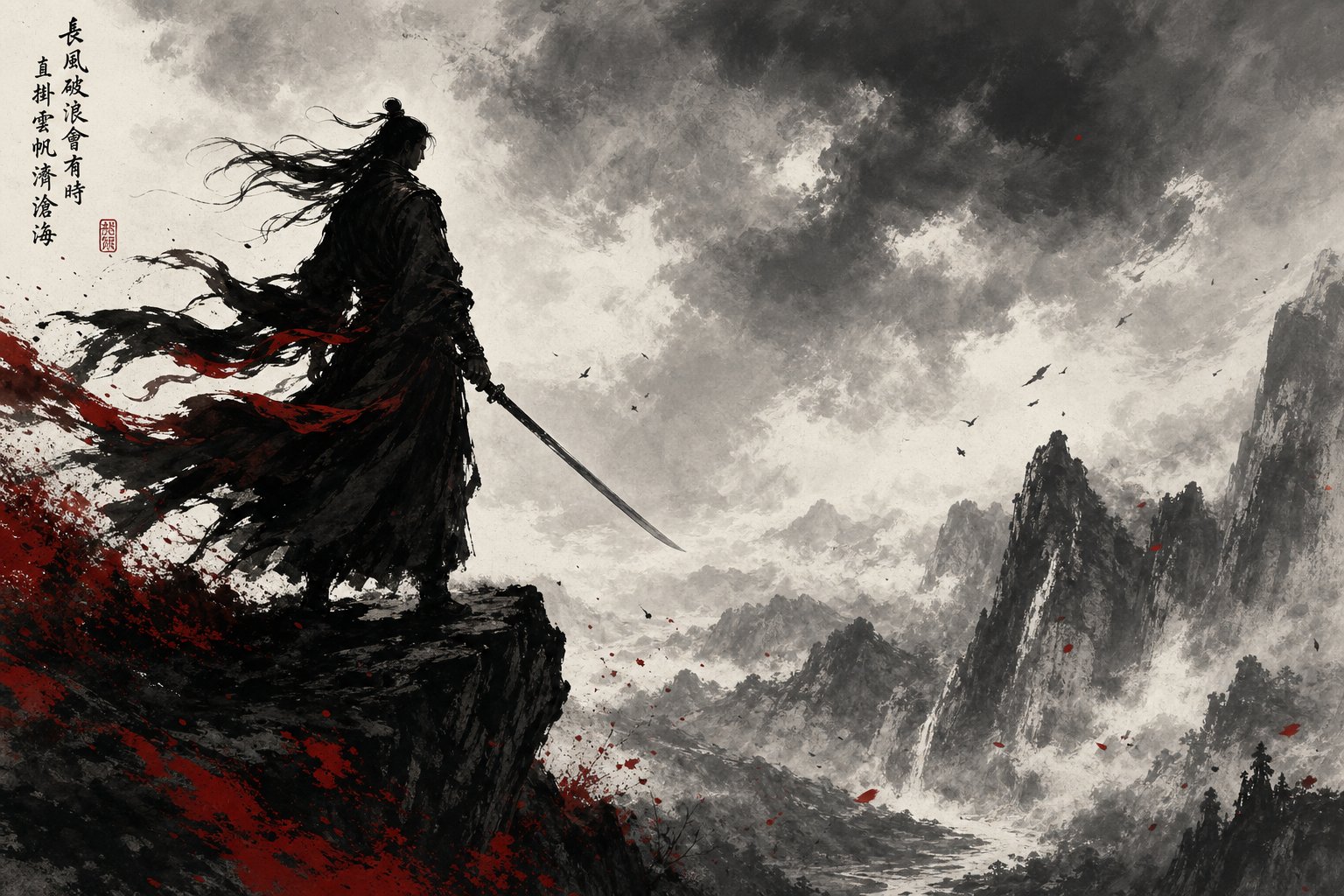
Chinese mythology draws a fascinating line between two kinds of warriors: those born from pure myth, like the headless giant Xing Tian who kept fighting even after decapitation, and those rooted in history who became so legendary that they crossed into divine status. Guan Yu was a real general during the Three Kingdoms period. Centuries of veneration turned him into the god of war, worshipped in temples across East Asia. Mulan may have originated from a ballad, but her story became inseparable from China's martial identity. When choosing chinese warrior names for a baby, understanding this distinction matters. A purely mythological china warrior name carries cosmic weight, while a mythologized historical name carries both human relatability and divine aspiration.
Male Warrior Names From Mythology
The names of chinese warriors on the male side range from elemental titans to disciplined generals elevated to godhood. Xing Tian (刑天) fought the supreme deity and, after losing his head, used his nipples as eyes and his navel as a mouth to continue battling. His name means "punished by heaven," and while you would not name a child 刑天 directly, the character 毅 (yi, "resolute/unyielding") captures his spirit. Guan Yu (关羽) embodies loyalty and righteousness so completely that his posthumous title is "Emperor Guan" (关帝). The character 义 (yi, "righteousness") from his famous epithet carries his legacy without invoking his sacred name. For a chinese swordsman name with literary flair, 剑 (jian, "sword") paired with characters like 心 (xin, "heart") creates combinations like Jianxin (剑心), meaning "sword heart" — a name that evokes martial discipline tempered by inner stillness.
Female Warrior Names From Legends
Female chinese warrior names pull from a tradition where women commanded armies and broke enemy formations. Mu Guiying (穆桂英) is a legendary heroine from the Yang Family Generals saga. She practiced martial arts from childhood, defeated her future husband in single combat, and later broke the Khitan army's unstoppable Heavenly Gate Formation. Her name combines 穆 (mu, "solemn/reverent"), 桂 (gui, "osmanthus/laurel"), and 英 (ying, "hero/flower"). The character 英 is especially versatile for girls' names, meaning both "heroic" and "flower" simultaneously. Mulan (木兰) offers 兰 (lan, "orchid"), a character that balances femininity with the resilience her story represents. From Fengshen Yanyi, figures like Deng Chanyu (邓婵玉), a warrior who fought with magical stones, inspire names using 婵 (chan, "graceful") — proving that feminine chinese warrior names need not sacrifice elegance for strength.
| Name (Pinyin) | Chinese Characters | Legendary Figure | Meaning | Gender |
|---|---|---|---|---|
| Yi (Yi) | 毅 | Xing Tian's unyielding defiance | Resolute, unwavering determination | Male |
| Yi (Yi) | 义 (Traditional: 義) | Guan Yu's legendary righteousness | Righteousness, moral courage | Male |
| Jianxin (Jianxin) | 剑心 (Traditional: 劍心) | Jianghu swordsman archetype | Sword heart; martial discipline with inner calm | Male |
| Ying (Ying) | 英 | Mu Guiying, Yang Family heroine | Heroic, outstanding; also means flower | Female |
| Lan (Lan) | 兰 (Traditional: 蘭) | Mulan, the disguised warrior | Orchid; resilience wrapped in grace | Female |
| Chan (Chan) | 婵 (Traditional: 嬋) | Deng Chanyu, Fengshen Yanyi warrior | Graceful, elegant; beauty in battle | Female |
| Wuying (Wuying) | 武英 | General warrior-hero archetype | Martial hero; valor and excellence | Unisex |
Jianghu-Inspired Names for a Bold Choice
The jianghu (江湖, literally "rivers and lakes") is the fictional martial arts underworld of Chinese wuxia literature — a world of wandering swordsmen, secret sects, and codes of honor. Cool chinese names jianghu style draw from this tradition's emphasis on freedom, skill, and personal honor rather than divine authority. Characters like 侠 (xia, "chivalrous hero"), 逸 (yi, "unrestrained"), and 飞 (fei, "to fly") capture the jianghu spirit. A name like Xiaofei (逍飞) suggests a wanderer soaring beyond convention. These names feel modern and adventurous while still connecting to a literary tradition stretching back centuries through novels like The Water Margin and the works of Jin Yong.
What makes warrior-related characters structurally distinctive is their radicals. The knife radical 刂 (dao) appears in 剑 and 刚 (gang, "firm/strong"). The power radical 力 (li) shows up in 勇 (yong, "brave") and 劲 (jin, "vigor"). The metal radical 钅 (jin) marks characters tied to weapons and forged strength, like 锋 (feng, "blade's edge") and 铮 (zheng, "clang of metal"). Spotting these radicals in a name tells you immediately that it draws from the warrior tradition — a built-in signal of martial heritage encoded in the writing itself.
Warrior names carry a particular energy: action, defiance, protection. But Chinese naming philosophy rarely stops at a single dimension. The deeper tradition asks what elemental forces a name channels and whether those forces sit in balance — a question that leads directly into the Five Elements system and its role in shaping names that harmonize rather than simply project power.
Five Elements and Gender-Neutral Mythological Names
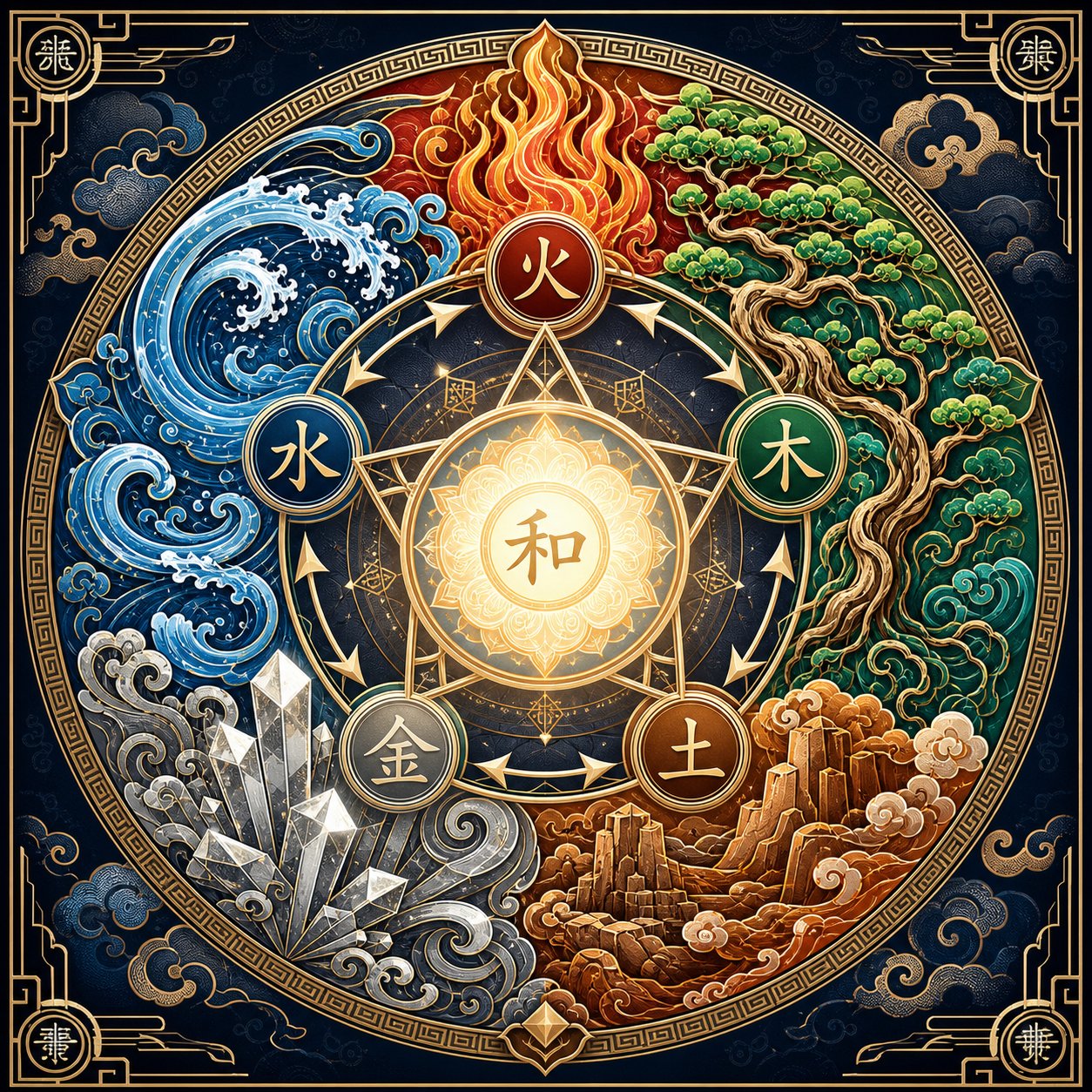
Power alone does not make a good name in Chinese tradition. Balance does. The Wu Xing (五行) system — Wood, Fire, Earth, Metal, Water — is the framework Chinese families have used for centuries to ensure a name does not just sound strong but sits in harmony with the child's birth chart, personality aspirations, and cosmic environment. Every mythological deity maps onto this system, and understanding those connections transforms how you read chinese names with meaning rooted in elemental forces.
The Five Elements and Their Mythological Connections
Each element governs a season, a direction, a set of character traits, and specific mythological figures. When parents choose a name, they often consult which element the child's birth year or hour lacks, then select characters that supply it. Here is how the five elements break down with their mythological associations:
- Wood (木, mu) — Direction: East. Season: Spring. Deity: Goumang (句芒), the wood god who governs growth and new life. Traits: creativity, flexibility, vitality. Name characters: 林 (lin, "forest"), 桐 (tong, "paulownia tree"), 荣 (rong, "flourishing"), 芝 (zhi, "sacred fungus").
- Fire (火, huo) — Direction: South. Season: Summer. Deity: Zhurong (祝融), the fire god who defeated Gonggong. Traits: passion, courage, brilliance. Name characters: 炎 (yan, "flame"), 焕 (huan, "radiant"), 煜 (yu, "shining"), 曦 (xi, "dawn light").
- Earth (土, tu) — Direction: Center. Season: Late summer. Deity: Houtu (后土), the earth goddess who governs fertility and stability. Traits: reliability, nurturing, groundedness. Name characters: 坤 (kun, "earth/feminine principle"), 培 (pei, "to cultivate"), 垚 (yao, "high ground"), 城 (cheng, "city/fortress").
- Metal (金, jin) — Direction: West. Season: Autumn. Deity: Rushou (蓐收), the metal god associated with harvest and justice. Traits: precision, determination, clarity. Name characters: 锐 (rui, "sharp"), 鑫 (xin, "prosperity"), 铭 (ming, "inscription"), 钧 (jun, "ancient unit of weight/authority").
- Water (水, shui) — Direction: North. Season: Winter. Deity: Gonggong (共工), the water god whose rage cracked the pillar of heaven. Traits: wisdom, adaptability, depth. Name characters: 涵 (han, "to contain"), 泽 (ze, "marsh/grace"), 澜 (lan, "great wave"), 溪 (xi, "stream").
Notice how the chinese name meaning shifts depending on which element you draw from. A child named 煜 (yu) carries Zhurong's radiant fire energy. A child named 涵 (han) channels Gonggong's depth without his destructive rage. The mythological figure informs the character choice, but the character itself is what the child actually carries — a distilled version of that elemental force.
In Chinese naming philosophy, the goal is never to maximize a single force. It is to supply what is missing, creating a name that completes rather than overwhelms.
Yin-Yang Balance in Baby Naming
The Five Elements do not operate in isolation. They cycle through yin and yang phases — generating and overcoming each other in a continuous loop. Wood feeds Fire. Fire creates Earth (ash). Earth bears Metal. Metal collects Water (condensation). Water nourishes Wood. This generative cycle means that chinese names and their meanings gain additional layers when elements are paired thoughtfully.
Traditional naming practice considers whether a name leans too far toward yang (active, bright, hard) or yin (receptive, soft, deep). A name like 烈锋 (Liefeng, "fierce blade") stacks Fire and Metal — both yang-dominant — which some families consider imbalanced. Adding a Water or Wood element through a middle character or generational name restores equilibrium. This is why mandarin name meaning often cannot be understood from a single character alone. The full name functions as a system.
This yin-yang framework also opens the door to names that transcend gender entirely. Celestial concepts — stars, clouds, dawn, jade — carry neither strongly masculine nor feminine energy in Chinese cosmology. They exist in balance by nature.
Gender-Neutral Names From Celestial Mythology
For parents who want meaning chinese names without locking into gendered associations, celestial mythology offers rich territory. These names reference phenomena that gods and goddesses alike governed, drawing from the sky, the cosmos, and the space between heaven and earth:
- 辰 (chen) — Meaning: celestial bodies, the hour of the dragon (7-9 AM). Connects to the mythological concept of cosmic time. Works for any gender.
- 霖 (lin) — Meaning: sustained rainfall. References the dragon kings who controlled rain. The rain radical 雨 gives it elemental Water energy without gendered weight.
- 瑾 (jin) — Meaning: a type of fine jade. Jade in Chinese mythology is the material of heaven itself — the Jade Emperor's palace, Xi Wangmu's pool, and the pillars of the sky. Neither masculine nor feminine.
- 旭 (xu) — Meaning: the rising sun. Connected to Xihe (羲和), the solar deity who drove the sun chariot across the sky. Carries Fire and Wood energy in balance.
- 岚 (lan) — Meaning: mountain mist. Combines the mountain radical 山 with the wind radical, evoking the sacred peaks where immortals trained. Earth and Water in harmony.
- 星 (xing) — Meaning: star. In mythology, stars were the celestial residences of deified heroes after death. The Investiture of the Gods ends with warriors assigned to star positions regardless of gender.
These chinese names meaning balance and celestial connection work precisely because mythology itself does not always gender its cosmic forces. The stars do not belong to gods or goddesses exclusively. The jade of heaven is not masculine or feminine. Dawn arrives without gendered intent. Parents exploring chinese name meanings in this celestial register find options that honor mythological tradition while fitting a child of any identity.
Elemental balance and celestial imagery give you the tools to construct a harmonious name. But harmony in naming is not only about what a name contains — it is also about what a name must avoid. Chinese culture carries specific taboos around which mythological references are welcome in a child's name and which cross invisible lines that most naming guides never mention.
Cultural Sensitivity and Naming Taboos to Know
Every mythology name carries cultural gravity. Some of that gravity is welcoming — a community recognizes the name, appreciates the reference, and understands the aspiration behind it. But some mythological references cross into territory that Chinese culture considers disrespectful, unlucky, or simply too heavy for a child to bear. These taboos rarely appear in typical chinese names guides, yet they are the first thing a Chinese grandparent or naming consultant would flag.
Names Considered Too Sacred for Babies
The core principle is straightforward: the more supreme the deity, the less appropriate it is to use their full name for a mortal child. Naming a baby 玉帝 (Yudi, the Jade Emperor) or 如来 (Rulai, the Buddha) would strike most Chinese families as presumptuous at best and spiritually dangerous at worst. The belief is that a child carrying a supreme deity's name invites comparison they cannot live up to, potentially attracting misfortune rather than blessing.
Here is where the line generally falls in practice:
- Off-limits (full deity names): 玉皇 (Jade Emperor), 观音 (Guanyin), 如来 (Rulai/Buddha), 阎王 (Yanwang/King of Hell), 盘古 (Pangu). These are considered too sacred or too powerful for a child.
- Culturally sensitive (use with caution): 哪吒 (Nezha), 悟空 (Wukong), 女娲 (Nuwa). Recognizable as specific mythological figures, these may draw raised eyebrows or be seen as nicknames rather than formal names.
- Widely accepted (single characters or indirect references): 瑶 (yao, from Xi Wangmu's jade pool), 轩 (xuan, from Xuanyuan/Huangdi), 悟 (wu, from Wukong's enlightenment), 慈 (ci, from Guanyin's compassion). Extracting one character from a deity's name or story is the standard approach.
The logic behind the name matters too. Among common chinese first names in modern China, you will find plenty of characters borrowed from mythology — 龙 (long, dragon), 凤 (feng, phoenix), 瑞 (rui, auspicious). These work because they reference mythological concepts rather than claiming a god's identity. The distinction is between honoring a tradition and overstepping it.
Regional Differences in Naming Customs
What counts as appropriate varies across Chinese-speaking communities. In mainland China, naming trends have shifted significantly since the mid-20th century. The most common chinese names today lean toward modern aesthetics — characters like 梓 (zi), 宇 (yu), and 涵 (han) dominate birth registries. Mythology-inspired names exist but tend toward subtle references rather than overt deity connections.
In Taiwan, traditional naming practices remain stronger. Families more frequently consult fortune tellers or naming masters who analyze a child's birth chart (bazi) before selecting characters. Generational naming poems (字辈, zibei) still influence some families, meaning one character in the name is predetermined by family tradition. Mythology references must fit within this existing structure.
Diaspora communities — in Southeast Asia, North America, and Europe — often navigate dual naming systems. A child might carry a Chinese mythology-inspired name alongside an English legal name. Here, the chinese behind the name often becomes a private family story rather than a public identity, which gives parents more freedom to choose uncommon chinese names that might feel too bold in a Chinese-speaking context.
Guidance for Non-Chinese Parents
If you are not Chinese and wondering how to name your asian baby with a mythology-inspired Chinese name — or if you simply love the stories and want to honor them — the path forward requires genuine engagement rather than surface-level borrowing. A name is not a costume. It is an identity marker that a child carries into communities who will read it with cultural fluency you may not share.
Practical dos and don'ts for cultural sensitivity:
- Do learn the full mythological story behind any name you consider. A name without its narrative is just a sound.
- Do consult native Mandarin or Cantonese speakers about how the name reads culturally — not just linguistically.
- Do verify tone and character selection with someone literate in Chinese. A wrong tone can change meaning entirely (e.g., 妈 ma "mother" vs. 马 ma "horse").
- Do consider whether your child will have community context for the name — Chinese language classes, cultural connections, family ties.
- Don't use a supreme deity's full name. This applies to Chinese and non-Chinese parents equally.
- Don't mix characters randomly because they "look nice." Character combinations carry meaning, and some pairings create unintended words or awkward homophones.
- Don't assume a name is appropriate because you found it on a baby name website. Many English-language lists include names no Chinese family would actually use.
- Don't treat the name as decorative. If you would not name your child Zeus or Odin without understanding Greek or Norse culture, apply the same standard here.
The honest reality is that choosing a Chinese mythology name as a non-Chinese parent works best when there is a genuine cultural connection: a Chinese partner, family heritage, deep personal study of the tradition, or a life lived within Chinese-speaking communities. Without that grounding, even a well-researched name can feel unmoored from the living culture that gives it weight.
Cultural sensitivity shapes which names you can choose. But practical concerns shape which names actually work in your child's daily life — especially if that life unfolds across languages, classrooms, and communities where Mandarin tones are unfamiliar territory.
Making Mythology Names Work in Multicultural Families
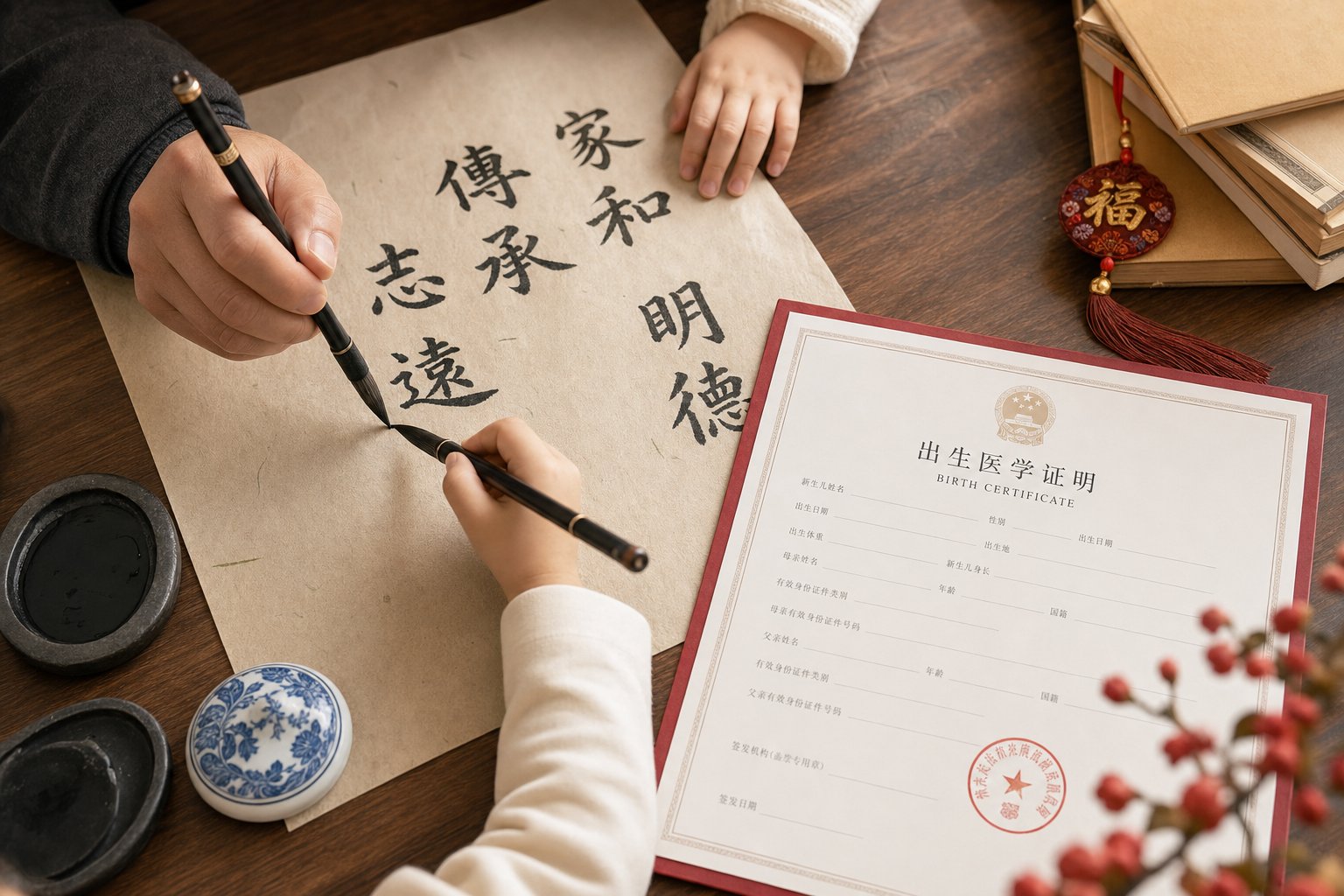
Knowing which names are culturally appropriate is one challenge. Making those names function smoothly in an English-speaking classroom, a doctor's office, or a playground introduction is another entirely. Chinese is a tonal language. English is not. That gap creates real friction when a mythology-inspired chinese first name meets daily life outside Chinese-speaking communities. The good news: some names cross that gap effortlessly, and practical strategies exist for the ones that don't.
Names That Work Well in English-Speaking Contexts
Certain mythology-rooted chinese names in english pronunciation land naturally on English-speaking ears. Single-syllable names with familiar consonant-vowel patterns cause the fewest issues. Think of names like Long (dragon), Lei (thunder), Lan (orchid/Mulan), Yue (mountain/moon), and Ming (bright). English speakers can approximate these without special coaching. They also function well on official documents where chinese names english translation is not required because the pinyin itself reads cleanly in Roman letters.
Names that cause more friction tend to involve pinyin sounds with no English equivalent. Xuan (from Huangdi's Xuanyuan) trips people up because English speakers read the "x" as "ks." Zhinu (the Weaver Girl) stalls on the "zh" opening. Qi-based names confuse anyone who reads "q" as the English letter. If daily pronunciation ease matters to your family, filtering for names whose pinyin maps closely to English phonetics saves years of correction.
Pinyin Pronunciation Essentials for English Speakers
Pinyin was not designed with English speakers in mind. It uses the Roman alphabet but assigns different sound values to several letters. Here are the sounds that cause the most confusion when people encounter chinese first names in pinyin form:
| Pinyin Letter | English Speakers Read It As | Actual Sound | Quick Approximation |
|---|---|---|---|
| X | "ks" (as in "box") | A soft "sh" with tongue near lower teeth | "sh" as in "sheep" |
| Zh | "z" + "h" | A "j" sound with the tongue curled back | "j" as in "judge" |
| Q | "kw" (as in "queen") | A light "ch" with tongue near lower teeth | "ch" as in "cheese" |
| C | "k" (as in "cat") | A sharp "ts" with a burst of air | "ts" as in "tsar" |
| R | English "r" | Closer to French "j" in "bonjour" | Between "r" and "zh" |
| -uan | "oo-an" | "wen" compressed into one syllable | Xuan = "shwen," Juan = "jwen" |
Tones add another layer. Mandarin has four tones plus a neutral tone, and they change meaning completely. The classic example: 妈 (ma, first tone) means "mother," while 马 (ma, third tone) means "horse." In daily English-speaking life, tones often get flattened. This rarely causes confusion in context — people know your child's name is their name — but it does mean the name sounds different from how a Mandarin speaker would say it. Preparing your child with a simple explanation ("my name sounds like this in English, but in Chinese it goes like this") gives them ownership over both versions.
A helpful tip for teachers and peers: when someone asks what is your name in chinese, encourage your child to say the name once with tones and once without. Most people remember the shape of the sound after hearing it modeled clearly just twice.
Strategies for Multicultural Naming
Families navigating two or more cultural identities have several structural options for incorporating a mythology name. The right approach depends on how prominently you want the Chinese name to function in daily life.
- Chinese mythology name as the legal first name: Works best with phonetically simple names (Lan, Ming, Yue, Lei). The child uses one name everywhere. Requires comfort with ongoing pronunciation coaching in non-Chinese environments.
- Chinese mythology name as a middle name: Many families use chinese middle names drawn from mythology while giving an English first name for daily use. The mythology name lives on legal documents and within family context. This is the most common approach for diaspora families balancing two cultures.
- Paired names with phonetic echoes: Some parents choose chinese names for english names that share a sound. Luna paired with 月 (Yue, moon) creates a thematic and phonetic bridge. Iris paired with 虹 (Hong, rainbow) links both names through nature imagery. This strategy lets the child move between cultures with names that feel connected rather than separate.
- Hyphenated or compound legal names: In some jurisdictions, you can register a hyphenated name (e.g., Mei-Lan or Xuan-Yi) that preserves the full Chinese given name structure on official documents.
One practical note on character registration: if your jurisdiction allows Chinese characters on birth certificates or identity documents, you will need to choose between traditional and simplified forms. Mainland China uses simplified characters. Taiwan, Hong Kong, and many overseas communities use traditional. Pick the form that matches your family's cultural connection, and keep the alternate version documented for any future travel or dual-citizenship paperwork.
These structural decisions — which name goes where, how it sounds in each context, which characters appear on paper — are the practical scaffolding that lets a mythology name live comfortably across cultures. With pronunciation and placement sorted, the final step is pulling all these considerations together into a clear decision framework.
How to Choose the Right Mythology Name for Your Baby
You have the sources, the cultural context, the pronunciation tools, and the sensitivity framework. What remains is a clear sequence of decisions that turns all of that knowledge into one name on a birth certificate. Whether you are drawn to the most popular chinese names with mythological roots or searching for something rarer, the process below keeps you from overlooking anything critical.
Your Mythology Name Selection Checklist
- Decide on directness. Do you want a name that references a deity explicitly (like using the character 羲 from Fuxi) or one that evokes mythological imagery indirectly (like 霖, sustained rain from the dragon kings)? Direct references carry more storytelling weight. Indirect ones offer flexibility.
- Verify cultural appropriateness. Check whether the name falls into the sacred, sensitive, or widely accepted category. If you are unsure, consult a native speaker or naming professional familiar with the tradition.
- Confirm the name in chinese meaning at the character level. Read each radical. Look up homophones. A beautiful character paired with the wrong second character can create unintended words. Good chinese names work as complete units, not isolated parts.
- Test tonal pronunciation. Say the name aloud in both Mandarin tones and flat English approximation. If the English version distorts the meaning or sounds awkward, consider whether that matters for your family's daily context.
- Check cross-cultural function. Will the name appear on school rosters, medical forms, and passport applications? Decide whether it serves as a first name, middle name, or paired name alongside an English option.
- Research the full story. Read the myth. Know the narrative arc of the figure or symbol your child's name references. A name without its story is just a sound.
- Consult family and community. Among chinese names popular within your family's region or dialect group, does this name fit? Grandparents, cultural community members, and naming consultants can catch issues you might miss.
Connecting With the Stories Behind the Name
The best chinese names drawn from mythology are not chosen from a list. They are chosen from a story that moved you. Read the Shan Hai Jing. Watch your child's eyes when you tell them about Nuwa mending the sky or the Monkey King storming heaven. The name you pick should be one whose story you want to tell a hundred times at bedtime, because that story becomes part of how your child understands themselves. Among the most popular chinese names today, the ones that endure across generations are those backed by narratives families actually pass down.
A mythology name does not just label a child. It hands them an ancient story and says: this is yours now, carry it forward.
Frequently Asked Questions About Chinese Mythology Baby Names
1. What Chinese mythology names are considered too sacred to use for a baby?
Supreme deity names like Yudi (Jade Emperor), Guanyin, Rulai (Buddha), Yanwang (King of Hell), and Pangu are generally off-limits for babies in Chinese culture. The belief is that carrying a supreme god's full name invites comparison a child cannot live up to and may attract misfortune. The accepted practice is to extract a single character from a deity's name or story rather than using the full divine title. For example, using the character xuan from Huangdi's alternate name Xuanyuan is widely accepted, while naming a child Huangdi directly would be considered disrespectful.
2. Can non-Chinese parents give their baby a Chinese mythology name?
Non-Chinese parents can choose a Chinese mythology name, but it requires genuine cultural engagement rather than surface-level borrowing. Key steps include learning the full mythological story behind the name, consulting native Mandarin or Cantonese speakers about cultural appropriateness, verifying tone and character selection with someone literate in Chinese, and considering whether the child will have community context for the name. The approach works best when there is a real cultural connection such as a Chinese partner, family heritage, or deep personal study of the tradition.
3. What are good gender-neutral Chinese mythology names?
Celestial mythology offers strong gender-neutral options because cosmic forces in Chinese tradition are not inherently gendered. Popular choices include Chen (celestial bodies), Lin (sustained rainfall linked to dragon kings), Jin (fine jade from heavenly mythology), Xu (rising sun connected to the solar deity Xihe), Lan (mountain mist combining earth and water elements), and Xing (star, representing celestial residences of deified heroes). These names draw from phenomena that both gods and goddesses governed, making them suitable for a child of any identity.
4. How do the Five Elements affect Chinese baby name selection?
The Wu Xing (Five Elements) system connects Wood, Fire, Earth, Metal, and Water to specific deities, seasons, directions, and personality traits. Traditional practice involves analyzing a child's birth chart to identify which element is lacking, then selecting name characters that supply that missing energy. For instance, a child lacking the Fire element might receive a name with characters like yan (flame) or yu (shining), connecting to the fire god Zhurong. The goal is balance rather than maximizing a single force, creating a name that completes the child's elemental profile.
5. Which Chinese mythology names are easiest to pronounce in English?
Single-syllable names with familiar consonant-vowel patterns work best in English-speaking contexts. Names like Long (dragon), Lei (thunder), Lan (orchid from Mulan), Yue (mountain or moon), and Ming (bright) require minimal pronunciation coaching. Names involving pinyin sounds with no English equivalent, such as X (a soft sh), Zh (a retroflex j), and Q (a light ch), tend to cause more friction. If daily pronunciation ease is a priority, filtering for names whose pinyin maps closely to English phonetics avoids years of repeated correction.