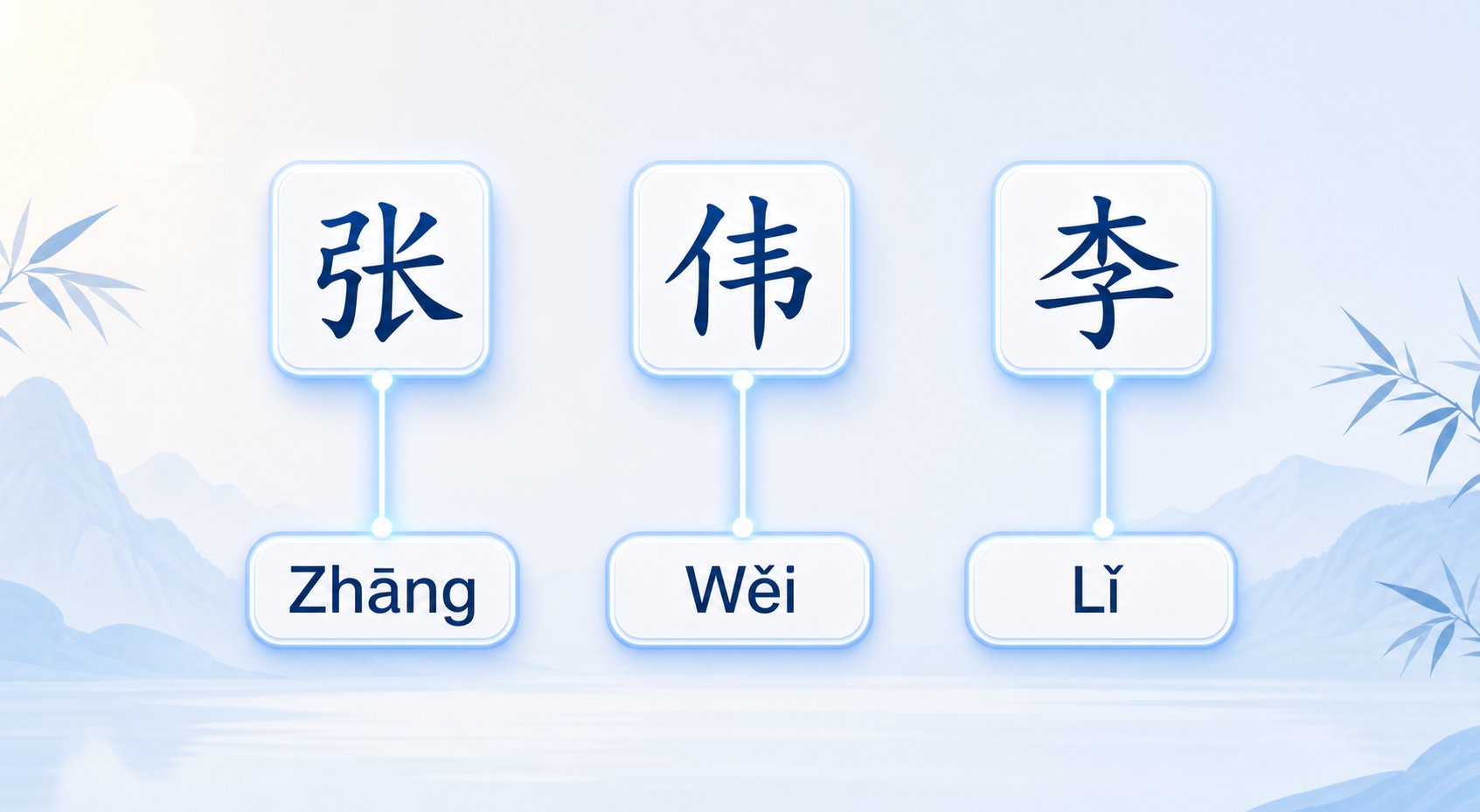
How Chinese Names Work in International Documents
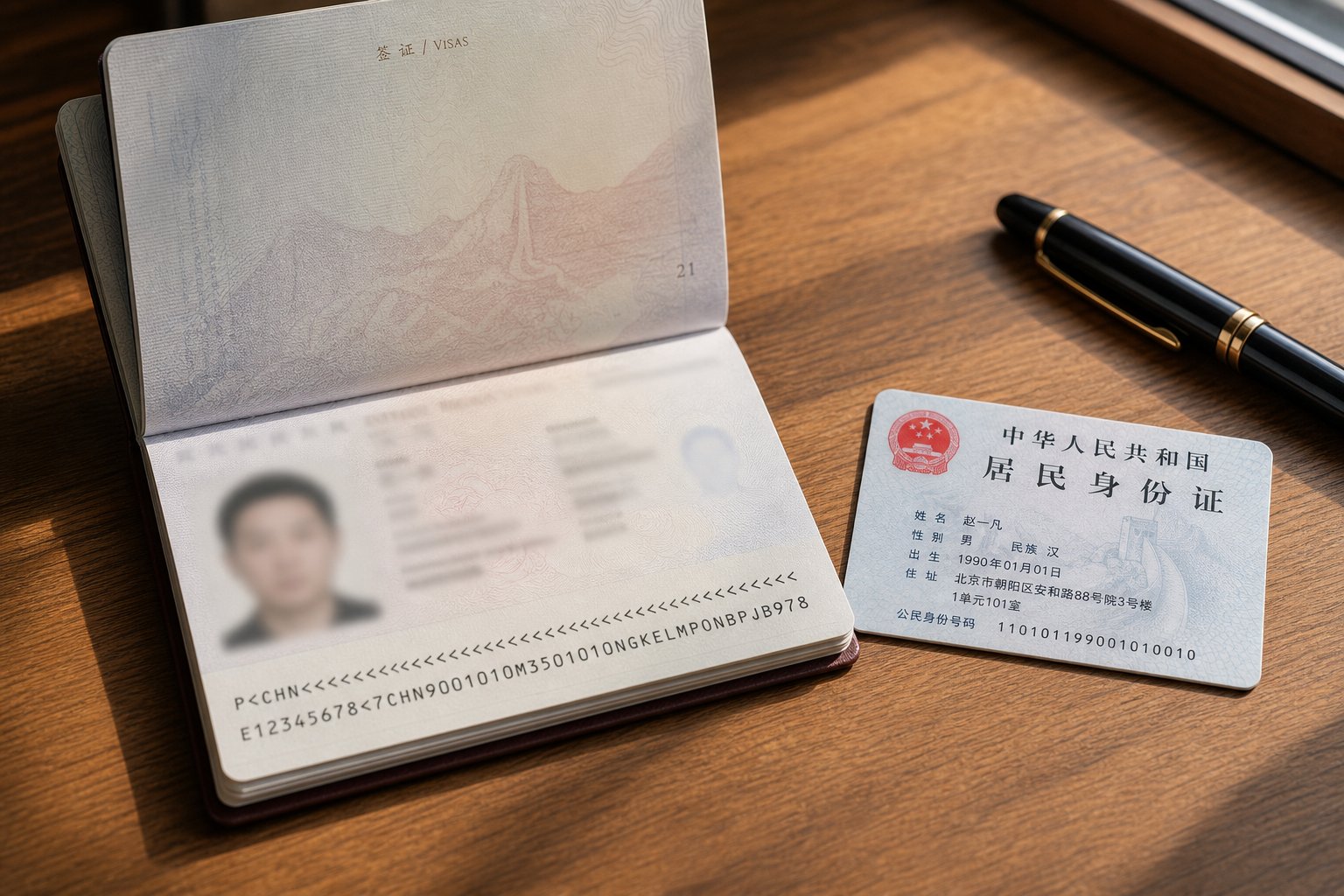
Imagine booking a flight, arriving at the airport, and being denied boarding because the name on your ticket doesn't match your passport. This happens more often than you'd think, and Chinese names are disproportionately affected. The core problem is straightforward: a name in Chinese exists as characters on a national ID card, but international documents require a romanized version in Latin letters. That translation process is where things break down.
Why Chinese Names Create Confusion in International Documents
Chinese names follow a completely different structure from Western names. The surname comes first, the given name follows, and there's no middle name in the traditional sense. When these names and characters are converted into English for passports, visas, or airline bookings, the order often gets reversed, spaces get inserted where they shouldn't be, or syllables get split apart incorrectly.
The single most common error with a Chinese name in international documents is name order reversal. Systems built for Western naming conventions assume the first word is a given name and the last word is a surname, flipping the identity of millions of Chinese travelers and applicants.
The consequences are real. A consumer dispute case documented how a couple was denied boarding over a name mismatch between ticket and passport, with the court ruling that "a person with a different name cannot travel on a particular ticket with a particular name as it can end up being a major security issue." Visa rejections, frozen bank accounts, and failed credential verifications all trace back to the same root cause: inconsistency in how a name in Chinese gets rendered across different systems.
What This Guide Covers
This guide walks through the full landscape of Chinese names in international paperwork. You'll learn how name structure works, which romanization system applies to your documents, what the official formatting rules are, and how to avoid mismatches that could derail a visa application, a bank account opening, or an academic credential review. Whether you're a Chinese national navigating foreign bureaucracy or an institution processing Chinese for name verification, the goal is the same: get the name right the first time.
Understanding Chinese Name Structure and Components
So how do Chinese names work, exactly? The structure is deceptively simple on the surface but creates real headaches when it meets international document systems designed around Western conventions. A Chinese name definition breaks down into two core parts: the surname (姓, xing) comes first, followed by the given name (名, ming). That's the opposite of English, where John Smith puts the given name before the family name. This reversal is where most international form errors begin.
Surname and Given Name Order Explained
A Chinese surname is almost always a single character, a single syllable. The given name that follows is typically one or two characters. So a full name is usually two or three syllables total. When you see a three-syllable name like Wang Xiaoming, the one-syllable part (Wang) is the family name, and the two-syllable part (Xiaoming) is the personal name.
International forms, however, are built with fields labeled "First Name" and "Last Name." A Chinese person filling out such a form faces an immediate dilemma. In Chinese naming conventions, the arrangement is always [FAMILY NAME] [given name]. But "First Name" in English means given name, and "Last Name" means family name. If someone writes their name in the natural Chinese order, the system records their surname as a first name and their given name as a last name. That single swap cascades through every document that pulls from that record.
You'll notice this is why many Chinese people fully capitalize their surname on business cards and formal correspondence. Writing WANG Xiaoming instead of Wang Xiaoming signals which part is the family name, a workaround born from decades of confusion in cross-cultural settings.
Compound Surnames and Uncommon Characters
Most common Chinese names use a one-character surname. The top 100 character surnames in China are all single-syllable and cover roughly 85 percent of the population. But about 81 compound surnames (复姓) still exist, and they add a layer of complexity that international systems handle poorly.
Compound surnames like Ouyang (欧阳), Sima (司马), Shangguan (上官), and Zhuge (诸葛) use two characters instead of one. When romanized, these become longer strings that can confuse automated systems. Consider someone named Ouyang Ming. A form with a character limit of 10 for the surname field might truncate "Ouyang" or, worse, split it across fields. Some systems interpret the space in "Ou Yang" as a separator between two distinct names, fragmenting the surname entirely.
These compound surnames derive from ancient noble titles, official positions, and place names dating back to the Zhou dynasty. Sima, for instance, originally meant "Master of the Horse," a military title. Shangguan meant "High Official." They're rare compared to single-character surnames, but the people who carry them face disproportionate friction in international paperwork.
Why Name Length Varies in Chinese
A complete Chinese name can be as short as two characters (one-character surname plus one-character given name) or as long as four or more characters (two-character compound surname plus two-character given name). This variability means there's no single "expected length" for a Chinese name in international documents, which trips up validation systems that expect names to fall within a narrow range.
Here's how common Chinese names appear across different contexts:
| Chinese Characters | Pinyin (Correct Order) | International Document Format | Common Error on Forms |
|---|---|---|---|
| 王秀 | Wang Xiu | Surname: WANG / Given: XIU | First Name: Wang / Last Name: Xiu |
| 张晨 | Zhang Chen | Surname: ZHANG / Given: CHEN | First Name: Zhang / Last Name: Chen |
| 李小平 | Li Xiaoping | Surname: LI / Given: XIAOPING | First Name: Li / Last Name: Xiao Ping |
| 欧阳明 | Ouyang Ming | Surname: OUYANG / Given: MING | First Name: Ou / Middle: Yang / Last: Ming |
| 司马文 | Sima Wen | Surname: SIMA / Given: WEN | First Name: Sima / Last Name: Wen |
Notice the pattern in the "Common Error" column. Single-character surnames get mistaken for given names. Compound surnames get split into pieces. And two-character given names get broken apart with spaces, creating phantom middle names that don't exist in the original Chinese name.
These structural mismatches aren't just inconvenient. They create identity fragmentation, where the same person appears as different individuals across different databases. And once a name enters a system incorrectly, correcting it often requires notarized documents, embassy visits, or legal name-change procedures. The chinese name definition might be simple in concept, but its interaction with global systems is anything but.
Romanization Systems and Which One Applies to Your Documents
Structural confusion is only half the problem. Even when the surname and given name land in the correct fields, the spelling itself can vary dramatically depending on where the passport was issued. That's because there is no single universal system for converting name Chinese characters into Latin letters. Multiple romanization systems exist, each producing different spellings for the same character. If you've ever wondered why the same surname appears as "Zhang" on one document and "Chang" on another, this is why.
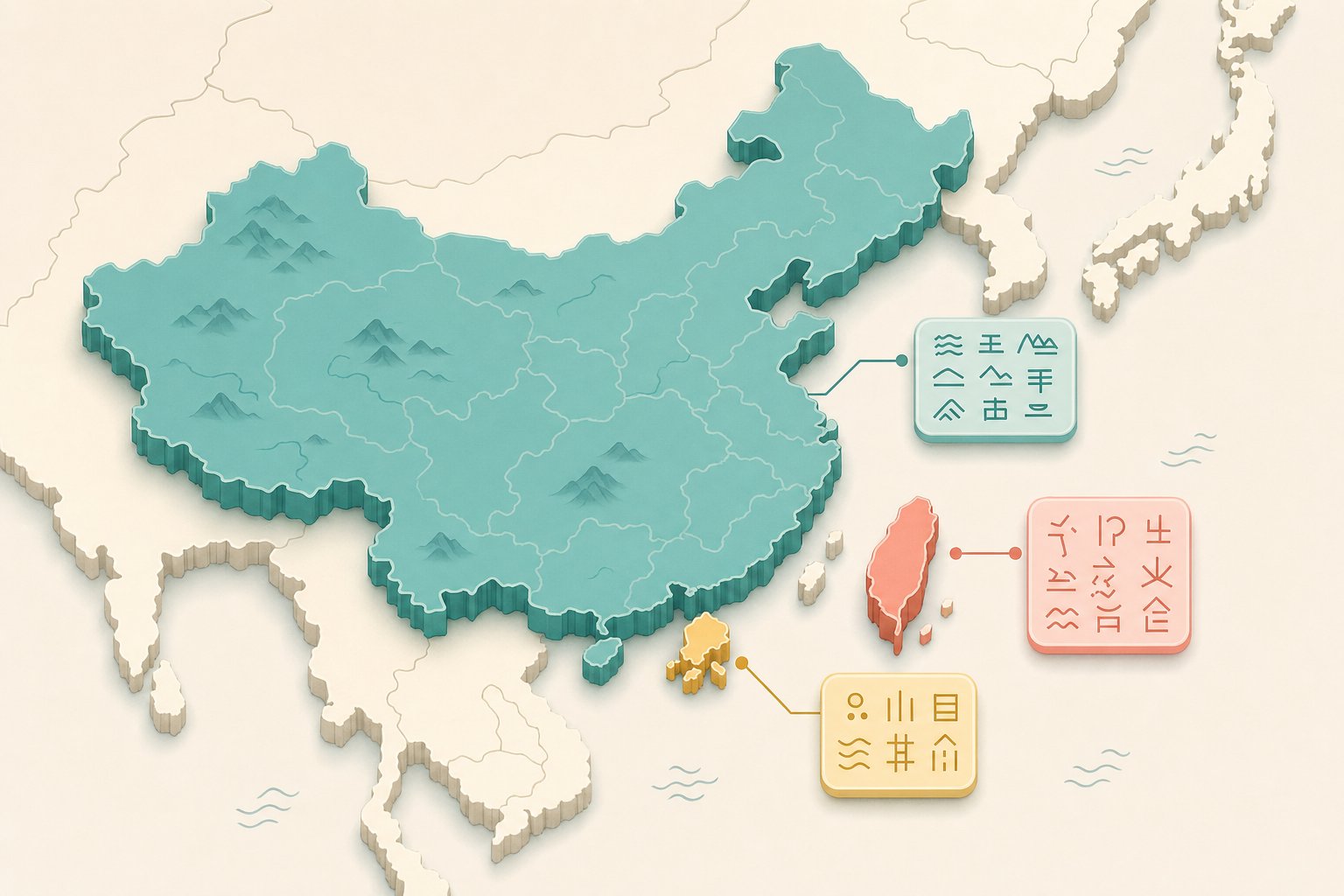
The system used to convert Chinese names into English depends entirely on the issuing authority. Mainland China, Taiwan, and Hong Kong each follow different standards, and those differences are baked into the passport at the moment of issue. Understanding which chinese name converter logic applies to your documents is essential for keeping everything consistent across borders.
Pinyin for Mainland Chinese Passports
The People's Republic of China uses Hanyu Pinyin exclusively for all passport romanization. Developed in the 1950s by a team of Chinese linguists including Zhou Youguang, Pinyin was accepted by the International Organization for Standardization in 1982 as the global standard for transcribing Mandarin Chinese. It's also the system recognized by the International Civil Aviation Organization (ICAO), which governs how names appear in the Machine-Readable Zone (MRZ) of travel documents worldwide.
For anyone holding a Mainland Chinese passport, there's no ambiguity. The Ministry of Public Security handles transliteration, and Pinyin is the only option. Tone marks are stripped, and the result is a clean alphabetic rendering: 张伟 becomes Zhang Wei, 李娜 becomes Li Na. Every Chinese consulate and immigration office processing Mainland documents expects this format.
Wade-Giles and Taiwanese Document Standards
Taiwan's situation is more complex. Historically, the island used the Wade-Giles system, a romanization method developed by British diplomat Thomas Wade in 1859 and refined by Herbert Giles in 1892. Wade-Giles produces noticeably different spellings from Pinyin. The aspirated consonants use apostrophes, and several initial sounds map to entirely different letter combinations.
Between 2002 and 2008, Taiwan officially adopted Tongyong Pinyin, a system designed partly to distinguish Taiwanese identity from Mainland China's Hanyu Pinyin. Since 2009, Taiwan's Ministry of Education has officially recommended Hanyu Pinyin for romanization. However, passport holders who already had names romanized under Wade-Giles or Tongyong Pinyin can keep their existing spelling. The result? Taiwanese passports in circulation today contain a mix of all three systems.
This means two Taiwanese citizens with the identical surname character 張 might have passports reading "Chang" (Wade-Giles) or "Zhang" (Hanyu Pinyin). Neither is wrong. Both are officially valid. But when someone tries to name convert to chinese or verify identity across documents, the inconsistency creates friction that automated systems can't easily resolve.
Cantonese Romanization for Hong Kong Documents
Hong Kong adds yet another layer. Because the region's dominant spoken language is Cantonese rather than Mandarin, passport romanization reflects Cantonese pronunciation. The system used isn't a single formal standard like Pinyin. Instead, it's a government romanization convention influenced by older colonial-era transliteration practices, with some overlap with the Jyutping system developed by the Linguistic Society of Hong Kong.
The practical impact is significant. Cantonese names sound completely different from their Mandarin equivalents. The surname 黄, pronounced "Huang" in Mandarin, becomes "Wong" in Cantonese. 陈 is "Chen" in Pinyin but "Chan" in Hong Kong documents. 李 stays "Li" in both, but 张 shifts from "Zhang" to "Cheung." These aren't errors or alternate spellings. They reflect genuinely different phonetic readings of the same characters.
For someone born in Hong Kong who later moves to the Mainland, or vice versa, this creates a documentation puzzle. Their name might appear one way on a Hong Kong identity card and a completely different way on a Mainland-issued document. Visa officers, banks, and universities processing these records need to understand that both spellings refer to the same person and the same characters.
Here's how the same names appear under each system:
| Chinese Characters | Hanyu Pinyin (Mainland) | Wade-Giles (Taiwan) | Cantonese (Hong Kong) |
|---|---|---|---|
| 张伟 | Zhang Wei | Chang Wei | Cheung Wai |
| 陈美玲 | Chen Meiling | Ch'en Mei-ling | Chan Mei-ling |
| 黄志强 | Huang Zhiqiang | Huang Chih-ch'iang | Wong Chi-keung |
| 林小明 | Lin Xiaoming | Lin Hsiao-ming | Lam Siu-ming |
| 王大伟 | Wang Dawei | Wang Ta-wei | Wong Tai-wai |
Notice how dramatically the spellings diverge, especially for cantonese names in the rightmost column. The ICAO standard requires that machine-readable travel documents use only the Roman alphabet without diacritical marks, but it does not mandate which romanization system a country must use. Each issuing authority makes that decision independently. The SEVIS name standards used by U.S. immigration, for example, simply follow whatever appears in the passport's MRZ, regardless of which romanization system produced it.
This is why a chinese name convert from characters to English is never a one-to-one mapping. The same person, holding documents from different regions or different eras, can legitimately have multiple correct romanized spellings. The key is consistency within each document set and awareness of which system generated each spelling.
Official Chinese Government Passport Name Standards
Knowing which romanization system applies is one thing. Knowing exactly how that system formats your name on the passport page is another. The Chinese government enforces specific rules about spacing, punctuation, and field placement that go beyond simply converting characters to Pinyin. Get any of these details wrong on a supporting document, and you've created a mismatch that can trigger rejections downstream.
Official Pinyin Rules for Chinese Passports
The Ministry of Public Security (MPS) is the authority responsible for issuing ordinary passports in Mainland China and handling the transliteration of each person's chinese name in chinese language into its romanized equivalent. The process is standardized and leaves no room for personal preference. According to official Chinese consular documentation, the passport data page prints "Chinese characters and their phonetic equivalents," with characters on the upper line and romanized Pinyin on the lower line. The passport is machine-readable and designed to meet ICAO standards.
Here are the specific formatting rules the MPS mandates for romanized names on Chinese passports:
- The surname (last name in chinese convention) and given name are placed in separate fields on the data page.
- All letters are capitalized in the Machine-Readable Zone (MRZ).
- No tone marks appear in the romanized version. Pinyin diacritics like the marks on "u" or tonal indicators are stripped entirely.
- No hyphens are used between syllables of the given name.
- No spaces are inserted between syllables of a multi-character given name. The given name is written as one continuous string.
- The surname field contains only the family name, romanized as a single word (or two words for compound surnames like Ouyang).
- The "U" with umlaut (as in the character 吕, Lu with umlaut) is rendered as "LV" on passports rather than "LU" or "LUE."
That no-space rule for given names is the single most important formatting detail to understand. When the MPS processes a name in chinese language for passport issuance, a two-character given name like 晓明 becomes "XIAOMING" as one unbroken string, not "XIAO MING" as two separate words. This applies regardless of how many syllables the given name contains.
Correct vs Incorrect Passport Name Formats
The distinction between correct and incorrect formatting might look minor on paper, but automated systems treat these as entirely different identities. A single misplaced space can mean the difference between boarding a flight and being turned away at the gate. The UK Home Office guidance on Chinese names notes that Chinese forenames are "often transposed" in Western systems, with the example format "LI Xiaoling Victoria" where "LI is the surname and Xiaoling Victoria are the forenames."
Here's how common name patterns should and shouldn't appear:
| Chinese Characters | Correct Passport Format | Incorrect Format | Why It's Wrong |
|---|---|---|---|
| 张晓明 | Surname: ZHANG / Given: XIAOMING | ZHANG XIAO MING | Space inserted between given name syllables |
| 李小红 | Surname: LI / Given: XIAOHONG | LI XIAO-HONG | Hyphen used between syllables |
| 王建国 | Surname: WANG / Given: JIANGUO | WANG Jian Guo | Spaces and mixed case in given name |
| 吕婷 | Surname: LV / Given: TING | LU TING or LYU TING | Incorrect umlaut handling |
| 欧阳文 | Surname: OUYANG / Given: WEN | OU YANG WEN | Compound surname split apart |
Pay close attention to the 吕 example. Many people assume their last name in chinese "Lu" translates directly, but the MPS uses "LV" as the standard representation for the u-umlaut sound. This catches people off guard when they fill out visa applications or airline bookings using "LU" and it doesn't match their passport.
Understanding Telecodes on Older Documents
Before Pinyin romanization became universal on Chinese passports, another system existed for encoding Chinese names: the telecode for chinese names. This system assigns a four-digit number to each Chinese character, originally developed for telegraph transmission in the 19th century. The character 张, for example, has telecode 1728. 伟 is 0251.
You'll still encounter telecodes on older Chinese documents, particularly pre-2000 passports, some visa application forms, and certain government records. The Chinese Telegraphic Code (CTC) book contains over 9,000 character-to-number mappings. While modern passports have moved entirely to Pinyin romanization with machine-readable zones, telecodes remain relevant in a few specific contexts:
- Some U.S. visa application forms historically requested telecodes alongside Pinyin.
- Older notarized documents and legal records may reference telecodes as a secondary identifier.
- Certain banking and financial verification systems in Asia still cross-reference telecodes for identity confirmation.
- Historical immigration records from the mid-20th century used telecodes as the primary name encoding method.
The telecode system solved a real problem in its era: it provided an unambiguous numeric identifier for each character, eliminating the confusion that multiple romanization systems created. Two people might romanize 张 differently, but the telecode 1728 always points to exactly one character. In that sense, telecodes served as an early form of digital identity verification for a name in chinese language long before machine-readable passports existed.
For anyone dealing with older documents that contain telecodes, the key is understanding that these numbers map directly to specific characters, not to pronunciations or romanized spellings. A telecode can be converted back to its character and then re-romanized under current Pinyin standards if needed for modern document alignment.
These formatting standards apply uniformly across all Mainland Chinese passports. But the same person might hold documents from different regions, different eras, or different issuing authorities, and each of those documents might present the name differently. Regional variation adds another dimension to the consistency challenge.
Regional Differences Between Mainland China, Taiwan, and Hong Kong
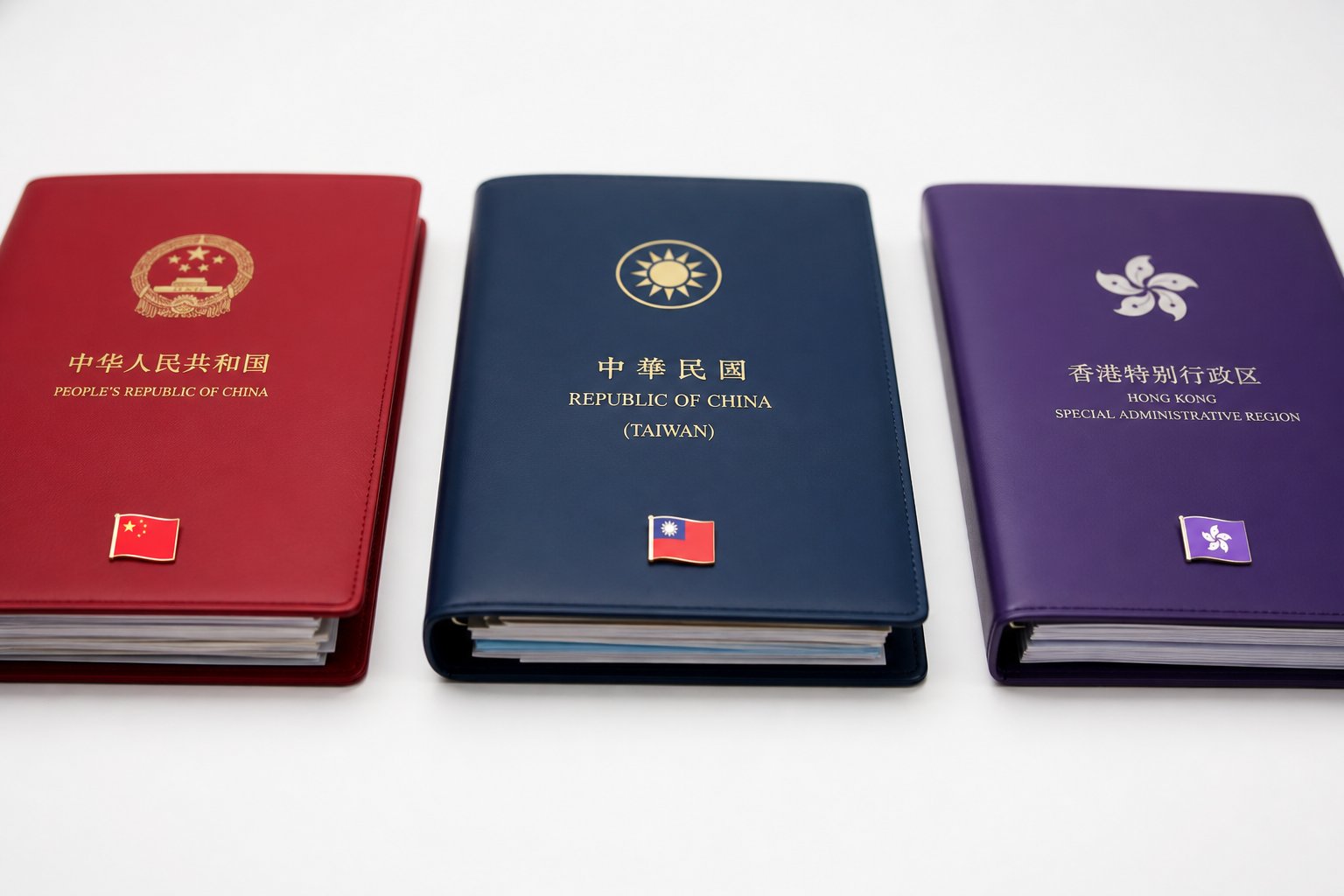
A person named 黄志强 could be "Huang Zhiqiang" on one passport and "Wong Chi-keung" on another, and both are completely legitimate. The difference isn't an error. It's geography. Each region in the Chinese-speaking world follows its own conventions for rendering names on official documents, and those conventions produce spellings that look nothing alike. For anyone holding documents from more than one jurisdiction, or for institutions verifying identity across borders, these regional splits are where things get complicated fast.
Mainland China Naming Conventions
Mainland China's approach is the most standardized of the group. The Ministry of Public Security applies Hanyu Pinyin uniformly, producing predictable results for every typical chinese name that passes through the system. Surnames appear as a single romanized word, given names merge into one unbroken string, and the entire output follows ICAO machine-readable formatting. There's no room for personal choice in how the name gets spelled.
Chinese honorifics on Mainland documents follow a similarly rigid pattern. In formal correspondence and legal paperwork, 先生 (xiansheng) maps to "Mr" and 女士 (nushi) maps to "Ms." You'll see these titles on notarized translations, official invitations, and government correspondence. On the passport itself, however, no honorific appears. The data page contains only the bare name. The mr in chinese convention (先生) shows up in supporting documents like invitation letters for visa applications, where the format typically reads "Mr. ZHANG Wei" or "Ms. LI Na" with the Western title preceding the name in its passport-order rendering.
Taiwan and Hong Kong Differences
Taiwan and Hong Kong each deviate from the Mainland standard in ways that reflect their distinct linguistic and political histories. Taiwan's mix of Wade-Giles, Tongyong Pinyin, and Hanyu Pinyin means that chinese last names on Taiwanese passports lack a single predictable spelling. Someone surnamed 蔡 might appear as "Tsai" (Wade-Giles) or "Cai" (Hanyu Pinyin) depending on when their passport was issued and which system they chose.
Hong Kong's divergence runs even deeper because it's rooted in a different spoken language entirely. Cantonese pronunciation drives the romanization, so the same characters produce fundamentally different sounds and spellings. Macau follows a similar Cantonese-based approach but adds Portuguese-influenced conventions from its colonial history, meaning a surname like 黄 could appear as "Wong" (Hong Kong style) or "Vong" (Macau Portuguese rendering).
The practical result? A single common chinese name character can have three, four, or even five legitimate romanized forms depending on the issuing region. This isn't a flaw in any one system. It's the natural outcome of multiple authorities applying different linguistic standards to the same writing system. But for the person whose identity spans these regions, it creates a paper trail that looks inconsistent to anyone unfamiliar with how asian names work across different Chinese-speaking jurisdictions.
How Regional Variations Affect Visa Applications
These differences stop being academic the moment someone applies for a visa or opens an international bank account. Imagine a Hong Kong resident who moves to Shenzhen and obtains a Mainland travel document. Their Hong Kong ID says "Chan Mei-ling," but their new Mainland document says "Chen Meiling." Same person, same characters (陈美玲), two completely different romanized names. A visa officer comparing these documents might flag the application for identity verification, adding weeks to the processing time.
The same friction appears in financial services. Banks running KYC (Know Your Customer) checks compare names across submitted documents. When an asian name appears as "Wong" on a Hong Kong passport but "Huang" on a Mainland birth certificate, automated matching systems often fail to recognize them as the same individual. Manual review becomes necessary, slowing account openings and fund transfers.
Here's how the same surnames appear across regional systems:
| Chinese Character | Mainland (Pinyin) | Taiwan (Wade-Giles) | Hong Kong (Cantonese) | Macau |
|---|---|---|---|---|
| 黄 | Huang | Huang | Wong | Vong |
| 陈 | Chen | Ch'en | Chan | Chan |
| 张 | Zhang | Chang | Cheung | Cheong |
| 刘 | Liu | Liu | Lau | Lao |
| 吴 | Wu | Wu | Ng | Ng |
| 郑 | Zheng | Cheng | Cheng | Cheang |
Look at 吴 in the Hong Kong column. "Ng" contains no vowel at all, which baffles systems that validate names against expected letter patterns. Some airline booking platforms reject "Ng" as too short or syntactically invalid, forcing travelers to add workarounds or contact customer service just to book a ticket under their legal name.
The takeaway for anyone navigating these regional differences: consistency within each document set matters more than uniformity across all documents. Your Hong Kong passport will say "Wong," and your Mainland documents will say "Huang." Neither is wrong. But every supporting document submitted alongside a specific passport should match that passport's spelling exactly. Mixing regional romanizations within a single application package is the fastest way to trigger a verification flag, delay a visa, or freeze an account.

Common Formatting Problems with Spaces and Hyphens
Regional spelling differences are at least predictable once you know which system issued the document. Formatting errors are sneakier. A name can use the correct romanization system, land in the correct field, and still cause a mismatch because of a single space or hyphen that shouldn't be there. These tiny punctuation decisions determine whether automated systems see one identity or two different people.
Spaces and Hyphens in Romanized Chinese Names
Consider the given name 晓明. Three different formats appear in the wild: Xiaoming, Xiao Ming, and Xiao-Ming. Which one is correct? It depends entirely on where the document was issued.
For Mainland Chinese passports, the answer is unambiguous: Xiaoming, written as one continuous word with no spaces or hyphens. The MPS standard joins all syllables of the given name into a single string. This applies whether the given name has two characters, three characters, or even the rare four-character given name.
Hong Kong conventions typically use a space between syllables of the given name. A person named 志強 would appear as "Chi Keung" on their Hong Kong ID, not "Chikeung." Taiwanese documents, meanwhile, favor hyphens. Names with a hyphen like "Hsiao-Ming" or "Kai-Shek" are characteristic of the Wade-Giles tradition that dominated Taiwanese passports for decades.
On a Mainland Chinese passport, the given name field never contains spaces or hyphens. XIAOMING is correct. XIAO MING and XIAO-MING are both wrong for Mainland documents, even though they may be perfectly valid for Hong Kong or Taiwanese passports.
The problem emerges when someone books a flight, fills out a visa form, or opens a bank account using a format that doesn't match their passport. A person whose passport reads "XIAOMING" but whose airline ticket says "XIAO MING" has created a name mismatch that systems treat as two different identities. Among chinese first names male like Jianguo, Zhiqiang, or Xiaoming, and chinese first names female like Meiling, Xiaohong, or Yuxin, this no-space rule catches people off guard because the two-syllable structure feels like it should have a space when written in English.
Here are the most common formatting mistakes and what they trigger:
- Adding a space in the given name (XIAO MING instead of XIAOMING) creates a phantom middle name in systems that parse on whitespace, splitting the identity across fields.
- Using a hyphen (XIAO-MING instead of XIAOMING) violates MRZ standards, which prohibit hyphens in the name field. The ICAO standard replaces hyphens with a filler character in the machine-readable zone.
- Capitalizing only the first letter of each syllable (Xiao Ming) when the passport MRZ uses all caps (XIAOMING) can fail strict string-matching checks.
- Splitting a compound surname like OUYANG into two words (OU YANG) makes the system interpret the second half as a middle name or given name.
- Entering the surname in the given name field and vice versa, a reversal that cascades through every linked record.
Airline Booking Systems and Name Matching
Airline Global Distribution Systems (GDS) like Amadeus, Sabre, and Travelport are where formatting errors hit hardest. These systems store passenger names in a strict last-name/first-name format within the Passenger Name Record (PNR). The identity chain from ticketing through security vetting to boarding depends on exact name matching. A last-name mismatch breaks that chain entirely, and the system treats the ticket as belonging to a different person.
GDS platforms have their own character limits and formatting rules that compound the problem. Most limit the name field to 57 characters total. They strip special characters, reject hyphens in certain configurations, and handle spaces as field separators. For a 3 letter chinese name like "Li Na," the system works fine. But longer names in chinese run into truncation issues. Someone named Ouyang Xiaoming might see their name cut to "OUYANG/XIAOMI" if the system hits its character ceiling.
The consequences are binary. As documented in traveler reports, airline staff cannot override a name mismatch at the gate. The Secure Flight system used for U.S.-bound flights requires that the name on the ticket exactly matches the identity that was vetted through government screening. Changing the name means invalidating the prior security clearance and resubmitting for vetting, a process that doesn't happen in real time. Under 49 CFR Part 1560, airlines are legally prohibited from boarding a passenger whose cleared identity no longer matches the ticket data.
This is why a space in the wrong place isn't a cosmetic issue. It's a boarding denial waiting to happen.
Character Limits on International Forms
Beyond airline systems, immigration forms in different countries handle the single given-name field in inconsistent ways. The U.S. SEVIS system allows up to 80 characters for the given name field and follows MRZ formatting, meaning no hyphens or apostrophes are permitted. The UK visa application system has its own character limits. Schengen visa forms provide a single "First name(s)" field that must accommodate the entire given name as one entry.
Chinese male given names like Jianguo (建国) or Zhiqiang (志强) fit comfortably in most systems. But compound given names with three characters, while uncommon, push boundaries. A name like 欧阳晓明 (Ouyang Xiaoming) already consumes 14 characters just for the romanized form, and that's before the system adds the surname field content to generate a full MRZ line limited to 39 characters total. The SEVIS name standards note that names exceeding the MRZ limit "might be truncated to fit," meaning part of the name simply gets cut off in the machine-readable zone.
Different countries also disagree on whether a multi-syllable Chinese given name should occupy one field or be split across "first name" and "middle name" fields. The SEVIS standard is clear: everything that isn't the surname goes into the Given Name field as a single entry. But other systems, particularly older ones, force users to split their chinese first names across multiple fields, creating inconsistencies that follow the applicant through every subsequent form that pulls from that initial entry.
The safest approach is always the same: match your passport's MRZ exactly. Whatever spacing, capitalization, and formatting appears in that two-line code at the bottom of your passport data page is what every other document should replicate. When in doubt, look at the MRZ, not the visual inspection zone above it, because automated systems read the MRZ, not the printed text.
Formatting errors on travel documents are stressful but at least somewhat fixable before departure. The stakes shift when these same inconsistencies appear in banking and legal documents, where corrections require notarized translations, apostilles, and institutional review processes that move far slower than an airline rebooking desk.
Chinese Names in Banking and Legal Documents
Opening a bank account abroad with a Chinese passport sounds routine until the compliance team flags your application because the name on your utility bill doesn't match the name on your passport. Financial institutions and legal authorities apply stricter identity verification than airlines or immigration counters. A space in the wrong place on a boarding pass might delay a flight. The same inconsistency on a banking document can freeze funds, block wire transfers, or stall a property purchase for weeks.
Chinese Names in International Banking
Banks running KYC (Know Your Customer) checks compare names across every document in the submission package. When you open an account abroad using a Chinese passport, the bank pulls your name from the passport's MRZ and treats that as the canonical identity. Every other document you submit, proof of address, employment letters, tax forms, needs to match that MRZ spelling exactly.
The friction point? Supporting documents often come from different systems that formatted the name differently. A Chinese name translation on a university transcript might read "Zhang Xiao Ming" with spaces, while the passport reads "ZHANG XIAOMING" without them. A landlord's reference letter might use "Xiaoming Zhang" in Western order. The bank's automated system sees three different people.
International banks handle this in a few ways. Some accept a statutory declaration or affidavit confirming that multiple name formats refer to the same individual. Others require a notarized chinese translation for names that bridges the gap between the Chinese-language source document and the romanized passport version. A few institutions, particularly in the UK and Australia, maintain internal guidelines for processing Chinese names and will accept minor formatting variations as long as the underlying characters match. But you can't count on leniency. The safest path is ensuring every document spells your name exactly as it appears on your passport before you submit anything.
Notarized Translations and Apostille Requirements
When a Chinese-language document needs to be used internationally, a certified chinese name translation alone isn't always enough. Depending on the destination country and the receiving institution, you may need notarization, apostille authentication, or both.
Here's the distinction. A certified translation is a document accompanied by a signed statement attesting that the translation is complete and accurate. Notarization adds a notarial act verifying the translator's signature. An apostille authenticates the origin of a public document for international use under the Hague Convention. These are three separate services that do different jobs, and ordering the wrong combination is one of the most common sources of rejection.
China officially joined the Hague Apostille Convention on March 8, 2023, which simplified the process considerably. Before that date, Chinese documents destined for Hague Convention countries required the longer consular legalization route. The Chinese apostille takes the form of a 9cm square stamp, written in Chinese and English, issued by the Ministry of Foreign Affairs or authorized local chancelleries.
For name translate chinese purposes, the critical detail is that the apostille confirms document authenticity but does not certify translation quality. You still need a separate certified translation, and that translation must render your name in the exact format that matches your passport. If your passport says "LV TING" and the translator writes "LU TING" on the certified translation, you've introduced a mismatch that the apostille won't fix.
Here's the step-by-step process for getting a certified chinese name interpretation accepted by international institutions:
- Obtain the original Chinese-language document (birth certificate, marriage certificate, diploma, or other official record) with its official seal and signature intact.
- Confirm which document version the receiving institution requires. Some authorities want the state-issued version, not the hospital-issued copy or institutional duplicate.
- Commission a certified translation from a qualified translator or agency, specifying that all names must match passport romanization exactly.
- Have the translation notarized by a public notariat in China if the destination country or institution requires notarization beyond basic certification.
- Submit the notarized translation to the Ministry of Foreign Affairs (or authorized local chancellery) for apostille authentication if the document will be used in a Hague Convention country.
- For non-Hague countries, proceed to consular legalization at the destination country's embassy or consulate in China, which adds additional authentication layers.
- Submit the complete package, original document plus certified translation plus apostille or legalization, to the receiving institution.
Resolving Name Mismatches in Financial Documents
What happens when the mismatch already exists? Maybe you opened an account years ago under a slightly different name format, or your employer registered your payroll name with spaces that your passport doesn't have. These legacy inconsistencies don't resolve themselves.
The standard remedy is a name confirmation document. This can take several forms depending on the institution's requirements:
- A notarized declaration stating that "ZHANG XIAOMING" and "Zhang Xiao Ming" refer to the same individual, supported by matching ID numbers or Chinese character originals.
- A letter from the Chinese embassy or consulate confirming the name equivalence across formats.
- A certified translation of the Chinese ID card showing both the characters and the official Pinyin romanization, demonstrating that both versions derive from the same source identity.
- A statutory declaration or affidavit sworn before a notary public in the country where the account is held.
The cost and complexity scale with how far apart the name formats have drifted. A simple spacing difference (XIAOMING vs XIAO MING) usually resolves with a single declaration. A regional romanization difference (Wong vs Huang) requires more documentation because the spellings look completely unrelated to someone unfamiliar with Cantonese and Mandarin pronunciation differences.
The underlying lesson is preventive: every time you create a new financial or legal record, pull out your passport and copy the name character by character from the MRZ. Don't rely on memory. Don't let a bank clerk "helpfully" add a space between syllables because it looks more natural in English. That small correction in the moment saves a notarized declaration, embassy visit, and weeks of processing time later.
Financial and legal documents at least have formal correction mechanisms. Academic records present a different challenge entirely, because universities issue documents once and rarely reissue them, meaning a name format locked into a diploma or transcript follows you for the rest of your career.

Academic Documents and Maintaining Name Consistency
A diploma gets printed once. A transcript gets sealed once. Whatever name format the university registrar entered into the system is what appears on those documents for the rest of your professional life. Unlike a bank account where you can submit a correction letter, academic credentials are static records. If the name on your Chinese university transcript doesn't match your passport spelling, you're carrying a built-in verification problem into every graduate school application, professional license review, and immigration filing that follows.
Chinese Names on Academic Transcripts and Diplomas
Chinese universities print both characters and Pinyin romanization on official documents, but the formatting isn't always consistent with passport standards. A transcript from Peking University might render a given name with a space between syllables (Xiao Ming) because the university's internal system follows a different style guide than the Ministry of Public Security. The diploma might capitalize differently. Recommendation letters written by professors often use whatever format feels natural in English prose.
For international students heading abroad, this creates a chain reaction. Credential evaluation agencies compare the name on your CHSI verification report against your passport, your transcript, and your application form. Any inconsistency, even a single space, can trigger additional verification steps that add weeks to processing. The CHSI system (China Higher Education Student Information and Career Center) cross-references names against the national database, and discrepancies between your registered academic name and your passport name require manual confirmation.
The problem compounds for students who enrolled under one passport and graduated under another, or whose university registered their name using an older romanization convention. With over one million Chinese students studying abroad in 2023, credential verification agencies process these mismatches daily.
Maintaining Name Consistency Across All Documents
Every document you submit alongside a passport application, visa filing, or credential evaluation should spell your name exactly as it appears in your passport's Machine-Readable Zone. No exceptions.
Sounds simple, but in practice most people accumulate documents over years without checking whether the name format matches across all of them. A chinese name meaning might carry deep personal significance chosen by parents or grandparents, but on paper, what matters to institutions is character-for-character consistency in the romanized spelling.
Here's a checklist of documents that should all use identical name formatting:
- Passport (the anchor document that sets the standard for everything else)
- University transcripts and diplomas
- CHSI verification reports (graduation certificate and degree certificate reports)
- Certified translations of any Chinese-language academic records
- Recommendation letters from professors or employers
- Visa application forms and immigration filings
- Standardized test score reports (TOEFL, IELTS, GRE, GMAT)
- Bank statements and financial support documents
- Employment verification letters and contracts
- Professional license applications and credential evaluations
When you register for standardized tests, the name you enter must match your passport exactly. Testing agencies like ETS and the British Council compare the name on your score report against the ID you present on test day. If your TOEFL registration says "XIAO MING" with a space but your passport says "XIAOMING" without one, you risk being turned away at the testing center or having your scores flagged during verification.
The fix is preventive. Before submitting any application, lay every document side by side and compare the name field character by character against your passport MRZ. Name discrepancies across translated documents are one of the most common causes of processing delays in immigration cases, and catching them before submission is far cheaper than resolving them after a Request for Evidence lands in your inbox.
If you discover a mismatch on an already-issued academic document, contact your university's registrar office and request a corrected version or an official letter confirming that both name formats refer to the same person. Chinese universities can issue supplementary certificates through CHSI that align with your current passport spelling. Start this process early, as credential evaluation experts recommend beginning verification at least two to three months before application deadlines.
When and How to Use an English Name Alongside Your Chinese Name
Many Chinese students and professionals adopt an English name for daily use abroad. "David Wang" is easier for colleagues to pronounce than "Wang Dawei." But where does that English name fit in the legal document landscape?
The short answer: it doesn't, unless you've legally registered it. An english name chinese name pairing like "David" alongside "Dawei" has no legal standing unless it appears on your passport or has been added through a formal name change or deed poll process. Your passport is the legal identity anchor. "David" might appear on your business cards, email signature, and LinkedIn profile, but it should never replace your passport name on visa applications, academic transcripts, or banking documents.
Some countries allow you to add a preferred name or alias to official records. The UK deed poll process, for example, lets you legally adopt an English name that then appears on future documents. Australia's change of name process works similarly. In the United States, a court-ordered name change can add an English given name to your legal identity. But until that legal step is taken, your english to chinese name connection exists only informally.
The practical approach most people use: keep your legal name (the passport version) on all official documents, and use your English name only in contexts where legal identity verification isn't required. When filling out forms that ask for "preferred name" or "known as," you can include your English name there. Some universities print both on student ID cards, showing something like "Xiaoming (David) WANG." This gives you the social convenience without creating a legal inconsistency.
For those curious about finding chinese names for english names or generating a chinese name from english name, various cultural and linguistic services exist. Parents choosing chinese names and meanings for children born abroad often consult naming specialists who consider character meaning, tonal balance, and generational naming traditions. But regardless of how meaningful or carefully chosen that name is, the document rule stays the same: your passport spelling governs everything official.
A chinese name from english doesn't work as a simple phonetic swap either. Characters are chosen for meaning as much as sound, which is why a professional chinese name meaning consultation considers factors that a basic transliteration tool misses entirely. The cultural depth behind naming conventions is real, but on immigration forms and bank applications, only the standardized romanization matters.
The bottom line for anyone managing a chinese name in international documents: pick one format, make it match your passport, and enforce that consistency ruthlessly across every record you create. The time you spend checking spelling now saves exponentially more time untangling mismatches later, when the stakes involve visa approvals, credential evaluations, or frozen accounts.
Frequently Asked Questions About Chinese Names in International Documents
1. Why does my Chinese name appear differently on my passport versus my airline ticket?
Mainland Chinese passports join all syllables of the given name into one continuous string without spaces or hyphens (e.g., XIAOMING, not XIAO MING). Airline booking systems, visa forms, or ticket agents often insert spaces between syllables because it looks more natural in English. This creates a mismatch that automated name-matching systems treat as two different identities, which can result in boarding denial since security regulations require exact matches between ticket and passport.
2. How do I know which romanization system applies to my Chinese passport?
The romanization system depends on where your passport was issued. Mainland China uses Hanyu Pinyin exclusively. Taiwan allows a mix of Wade-Giles, Tongyong Pinyin, and Hanyu Pinyin depending on when the passport was issued and the holder's preference. Hong Kong uses a Cantonese-based romanization reflecting local pronunciation. The same character can produce completely different spellings across these systems, such as Zhang (Mainland), Chang (Taiwan), and Cheung (Hong Kong) for the character 张.
3. What should I do if my name is spelled differently across multiple official documents?
The standard remedy is a name confirmation document. Options include a notarized declaration stating both name formats refer to the same person, a letter from a Chinese embassy confirming name equivalence, or a certified translation of your Chinese ID card showing both characters and official Pinyin. For academic documents, contact your university registrar to request a corrected version or supplementary certificate through CHSI that aligns with your current passport spelling.
4. Can I use my English name on visa applications and official documents?
An adopted English name like 'David' has no legal standing unless it appears on your passport or has been formally registered through a legal name change process such as a UK deed poll or U.S. court order. Until that legal step is taken, all visa applications, banking documents, and academic records must use your passport name exactly as it appears in the Machine-Readable Zone. English names should only be used in contexts where legal identity verification is not required.
5. How does China's apostille process work for documents needed abroad?
China joined the Hague Apostille Convention on March 8, 2023. The apostille is a 9cm square stamp in Chinese and English, issued by the Ministry of Foreign Affairs or authorized local chancelleries. It confirms document authenticity but does not certify translation quality. You still need a separate certified translation where your name matches your passport spelling exactly. For non-Hague countries, consular legalization at the destination country's embassy remains required instead of an apostille.