Why Chinese Names Create Special Challenges at Social Security
Imagine walking into a Social Security office where the entire system assumes your first name comes first, your last name comes last, and you probably have a middle name somewhere in between. For Chinese name holders, none of those assumptions hold true.
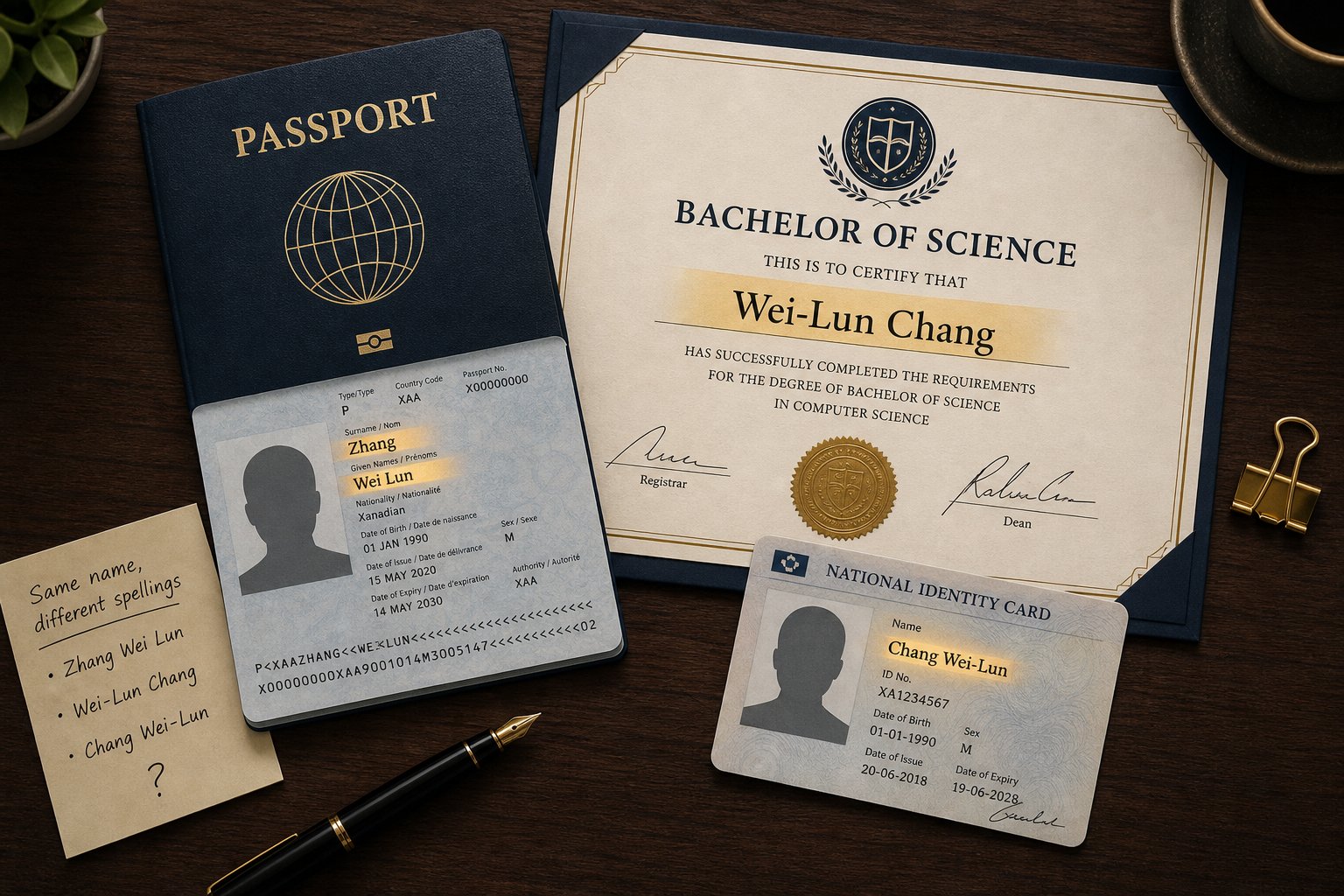
Chinese names follow a surname-first structure. The family name leads, followed by a given name that may be one or two characters. There is typically no middle name at all. And the romanized spelling on your passport — generated through Hanyu Pinyin — might look nothing like the English name you actually use day to day.
The Social Security Administration operates with a rigid Western naming framework: Last Name, First Name, Middle Name. When a Chinese name on a social security card needs to fit into those boxes, things get messy fast. Surnames end up in the first name field. Two-character given names get split, merged, or hyphenated inconsistently. The SSA name record can look unrecognizable compared to what you expected.
Why Chinese Names Present Unique SSA Challenges
The core issue is structural. SSA's system was built around English naming conventions, and a social security administration name change or correction must still conform to what appears on your immigration documents. You cannot simply tell the clerk your preferred spelling. The romanization on your Chinese passport dictates what SSA will print, even if that romanization feels foreign to you.
A foreign-born person's legal name is the name shown on the presented immigration document. SSA may only process an SSN application in a different name if a legal name change occurred after the immigration document was issued.
This principle, drawn directly from SSA's Program Operations Manual (POMS RM 10212.001), governs every interaction you will have when trying to correct a name on your social security card.
Who This Guide Helps
Whether you are applying for your first SSN, discovering your card arrived with a mangled name, or trying to align your SSA name with other documents, this guide walks through the specific pitfalls Chinese names encounter. You will learn how SSA interprets your passport, what formatting to expect, and how to fix errors when they happen.
The details matter more than you might think. A single misplaced character in your SSA record can trigger tax filing rejections, employment verification failures, and credit report fragmentation — problems that compound over time if left unresolved.
How Chinese Passport Names Translate to SSA Records
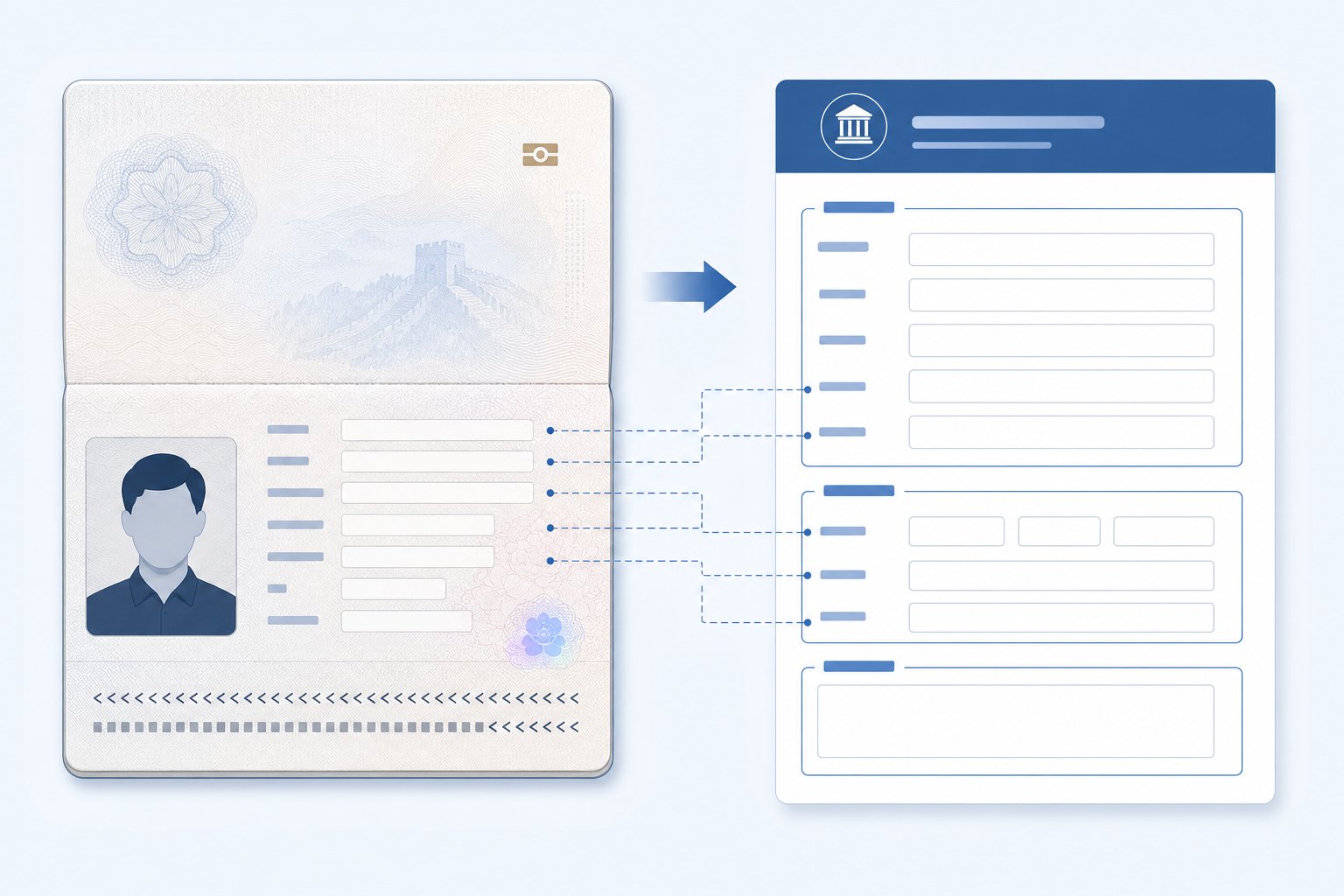
Your Chinese passport is the single most important document in determining what appears on your Social Security card. SSA does not ask how you prefer your name to be spelled or ordered. It reads what your immigration document says and enters that into its system. So understanding exactly how a Chinese passport presents your name is the first step toward avoiding — or diagnosing — errors in your SSA record.
How Chinese Passports Romanize Names
The People's Republic of China uses Hanyu Pinyin as its official romanization standard for all passports. This system converts Chinese characters into Latin letters following strict government rules. You do not get to choose an alternative spelling, and the passport office does not accommodate Wade-Giles, Cantonese romanization, or personal preferences.
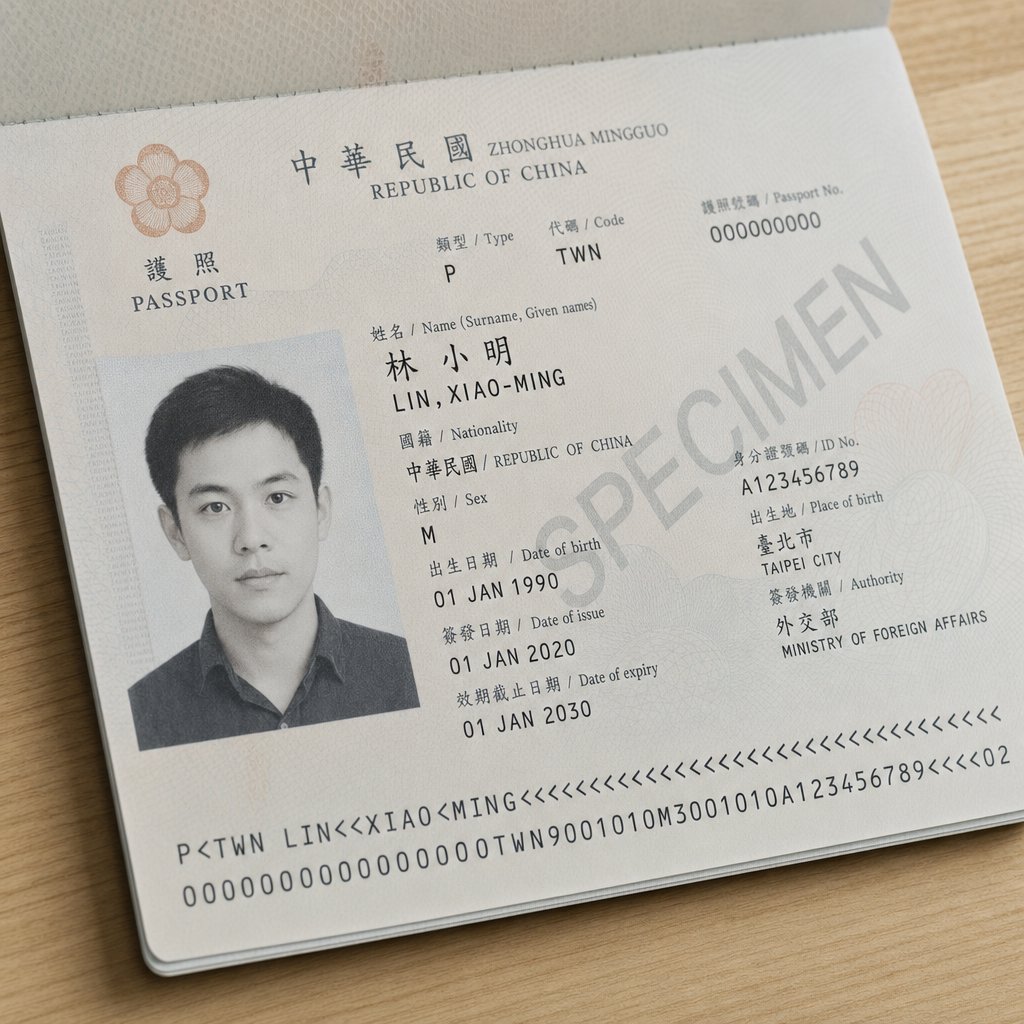
Here is what the PRC passport format looks like in practice. The biographic page and the Machine-Readable Zone (MRZ) follow these conventions:
- The surname appears first, printed in all capital letters
- The given name follows, also in capitals, written as a single continuous string with no space or hyphen between characters — even for two-character given names
- In the MRZ, the surname (primary identifier) is separated from the given name (secondary identifier) by a filler character
- No middle name field exists on a Chinese passport
Take the common name 张伟 as an example. The surname is 张 (Zhang) and the given name is 伟 (Wei). On the passport's Visual Inspection Zone, you will see: ZHANG WEI. In the MRZ, it appears as: P
For a two-character given name like 李晓明 (Li Xiaoming), the passport prints: LI XIAOMING — with the given name merged into one unbroken string. There is no space between "Xiao" and "Ming," and no hyphen. This formatting choice by the PRC passport authority directly shapes what SSA will record.
What SSA Sees on Your Immigration Documents
When an SSA clerk processes your application, they look at the name on your passport, visa, green card, or EAD and map it into three fields: Last Name, First Name, and Middle Name. For Chinese passport holders, the social security card name format typically fills only two of those three fields.
SSA treats the primary identifier on your immigration document as the last name and the secondary identifier as the first name. The middle name field stays blank. This sounds straightforward, but confusion arises because the passport lists the surname first — the opposite of what SSA clerks are accustomed to seeing from Western documents.
| Name Element | Chinese Passport (VIZ) | Passport MRZ | SSA Last Name Field | SSA First Name Field | SSA Middle Name Field |
|---|---|---|---|---|---|
| 张伟 (Zhang Wei) | ZHANG WEI | P| ZHANG |
WEI |
(blank) |
|
| 李晓明 (Li Xiaoming) | LI XIAOMING | P| LI |
XIAOMING |
(blank) |
|
| 王美玲 (Wang Meiling) | WANG MEILING | P| WANG |
MEILING |
(blank) |
|
When the name on your social security card is wrong — say the clerk entered ZHANG as the first name and WEI as the last name — it usually happened because the clerk read the passport in Western order (left to right, given name first) rather than recognizing the Chinese surname-first convention. The MRZ should clarify this, since it explicitly separates the primary identifier from the secondary identifier, but data entry errors still occur.
This is also why the name on a social security card different from a birth certificate is so common among Chinese immigrants. Your Chinese birth certificate may show characters, a different romanization, or a name order that does not match the Pinyin on your PRC passport. SSA does not care about the birth certificate for foreign-born applicants — it follows the immigration document exclusively. The passport dictates the record, and everything downstream flows from there.
Understanding this chain — from Chinese characters, to PRC Pinyin romanization, to passport MRZ, to SSA data entry — reveals exactly where errors creep in. And for names with two-character given names, the formatting questions multiply further.
How SSA Formats Multi-Character Chinese Given Names
A two-character given name like 晓明 (Xiaoming) can appear on documents in at least three different ways: as one merged word (Xiaoming), two separate words (Xiao Ming), or hyphenated (Xiao-Ming). Which version ends up on your Social Security card? The answer is simple in principle but messy in practice — SSA prints whatever your immigration document shows.
Since PRC passports merge two-character given names into a single unbroken string, most Chinese passport holders will see their full given name crammed into the First Name field as one long word. But not every Chinese immigrant carries a PRC passport. Those from Taiwan, Hong Kong, or who naturalized elsewhere may have passports that space or hyphenate the given name differently. And that difference changes what SSA records.
Two-Character Given Names on the SS Card
The SSN card has specific physical constraints. According to SSA's POMS RM 10205.120, the card provides 26 spaces on the first line for the first and middle names, and 26 spaces on the second line for the last name and suffix. Neither the first nor last name should be reduced in length unless it exceeds that 26-character limit. For most Chinese names, length is not the issue — formatting is.
Here are the common scenarios you will encounter depending on your document source:
- PRC passport (merged format): 李晓明 appears as LI XIAOMING on the passport. SSA records Last Name: LI, First Name: XIAOMING. The card prints "Xiaoming Li" with no space within the given name.
- Taiwan passport (spaced format): 李曉明 may appear as LI, HSIAO-MING or LI, HSIAO MING. SSA may record First Name: HSIAO, Middle Name: MING — or First Name: HSIAO-MING with no middle name. It depends on how the clerk interprets the document.
- Hong Kong passport (spaced or hyphenated): The name might read LI, Siu Ming or LI, Siu-Ming. SSA could place "Siu" in First Name and "Ming" in Middle Name, or keep "Siu-Ming" together as the first name.
- Green card or EAD (follows source passport): USCIS typically transfers the name from your passport into its own system. If USCIS split your given name into two words, SSA will follow that split — even if your passport kept it merged.
The inconsistency is the problem. You might hold a PRC passport showing XIAOMING as one word, but your green card shows XIAO MING as two words. SSA follows whichever document you present at the time of application. This creates situations where your social security card middle name field contains part of your given name that was never intended to be a middle name at all.
Handling Missing Middle Names and Generational Names
Do social security cards have middle names? Yes — the card can display a middle name or middle initial. But does your social security card have to have a middle name? Absolutely not. SSA's own policy states that a middle name or suffix is not considered part of the legal name. It does not matter if the middle name is included, omitted, or even incorrectly shown on the card.
For Chinese names, the middle name field typically stays blank. This is normal and causes no legal issues. The confusion arises when a two-character given name gets split across the First Name and Middle Name fields — turning half your given name into an apparent "middle name" that does not actually exist as a separate name in Chinese naming conventions.
Generational names add another layer. In many Chinese families, one character of the given name is shared across all siblings or cousins of the same generation. For example, in the name 王建国 (Wang Jianguo), "Jian" might be the generational character shared with siblings like 王建军 (Wang Jianjun). SSA has no concept of generational names. It does not separate them, flag them, or treat them differently. If your passport merges the generational character with the individual character into one string — JIANGUO — that is exactly what SSA records as your first name. No suffix social security field or special designation exists for this naming tradition.
The practical takeaway: check which document you plan to present at SSA before your appointment. If your passport and green card format your given name differently, the one you hand to the clerk determines your record. And once that record is set, changing it requires either a correction (if SSA made a data entry error) or a legal name change — a distinction that carries very different paperwork requirements.
Getting Your Chinese Name Right on a First-Time Application
Knowing how SSA interprets your documents is useful, but it only matters if you can translate that knowledge into action at the moment of application. The good news: getting your name recorded correctly the first time is far easier than fixing it after the fact. The key is preparation — knowing exactly what to bring, how to fill out the form, and what to double-check before you leave the office.
SSA requires that the name on your Social Security card match your immigration documents exactly. Not your preferred English name, not the spelling your university uses, not what your friends call you. The name printed on your passport, green card, or Employment Authorization Document is the name that goes into the system. Period.
Filling Out Form SS-5 With a Chinese Name
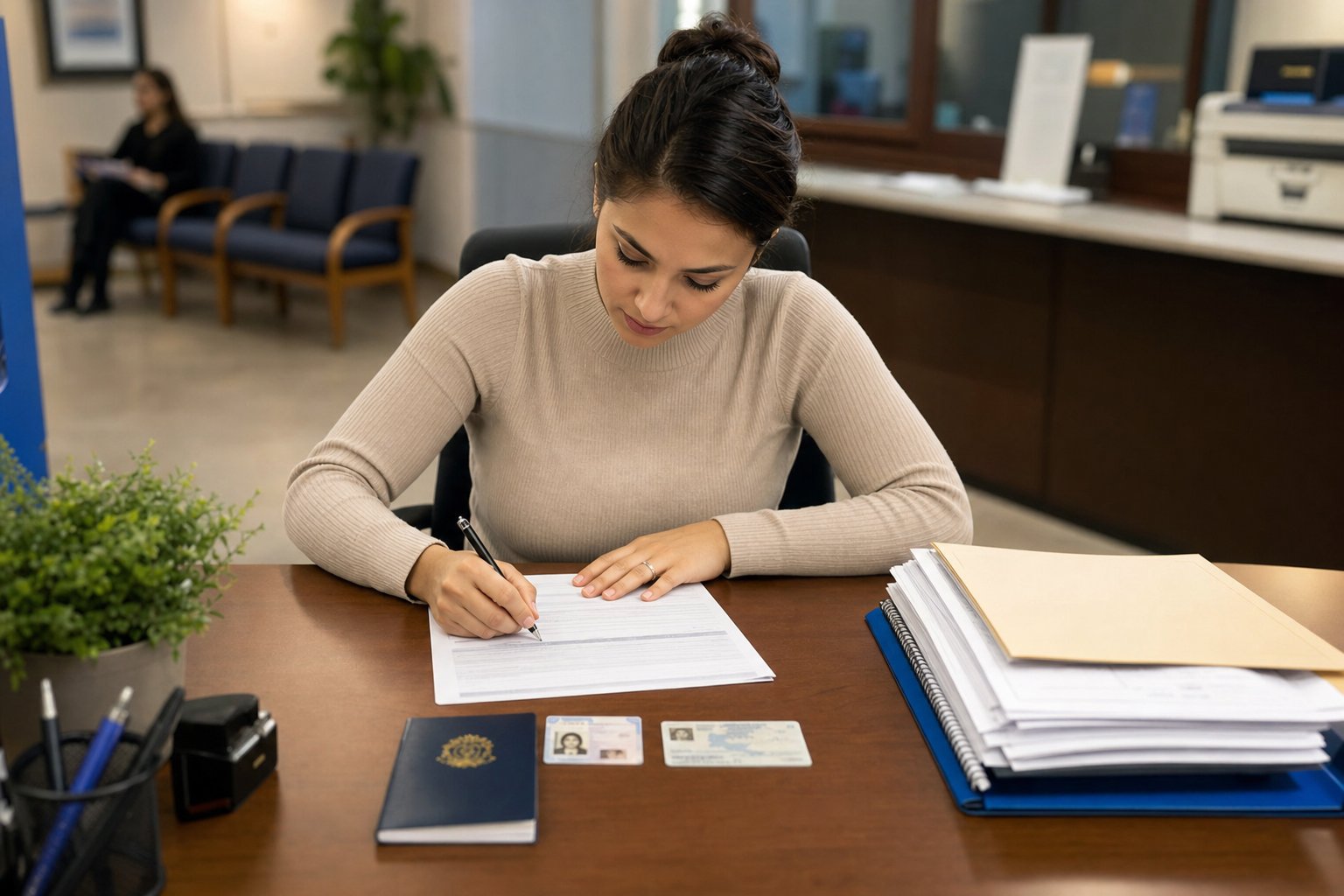
Form SS-5 is the Application for a Social Security Card. Whether you apply online and finish in person or complete a paper form at the office, the name fields work the same way. Here is the step-by-step process for a first-time applicant with a Chinese name:
- Gather your documents before visiting the office. You will need your unexpired passport with a valid visa stamp (or your Machine-Readable Immigrant Visa), your I-94 Arrival/Departure Record, and — if applicable — your Permanent Resident Card (Form I-551) or EAD (Form I-766). SSA accepts only originals or certified copies. Photocopies will be rejected.
- Decide which immigration document to present. If your passport and green card show your name differently (for example, XIAOMING on the passport versus XIAO MING on the green card), the document you hand to the clerk determines your SSA record. Choose the one that matches how you want your name to appear going forward.
- Fill in the Last Name field (Item 1) with your surname. For a PRC passport holder named 张伟, enter ZHANG. This is the primary identifier on your passport.
- Fill in the First Name field (Item 2) with your given name. Enter WEI — or XIAOMING if you have a two-character given name. Copy it exactly as it appears on your immigration document, including whether it is one word or two.
- Leave the Middle Name field (Item 3) blank unless your immigration document explicitly lists a middle name. Most Chinese passports do not have one. Do not invent a middle name or split your given name across two fields.
- Complete the remaining fields — date of birth, place of birth, citizenship status, and contact information. For place of birth, write the city and country as shown on your passport (e.g., "Beijing, China").
- Visit your local Social Security office or Card Center. You can start your application online and then bring your documents in person, or complete everything at the office. Either way, an in-person visit is required for first-time applicants to verify original documents.
- Confirm the name entry with the clerk before leaving. Ask the representative to read back what they entered into the system. Verify that your surname is in the Last Name field and your given name is in the First Name field — not reversed. This single step prevents the most common error Chinese applicants face.
If you requested an SSN as part of your immigrant visa application (through Form DS-260), the Department of State and DHS share your information with SSA automatically. You should receive your card by mail within three weeks of arriving in the United States without needing to visit an office. But this automated process also means you had no opportunity to verify the name entry in person — making the verification step below even more critical.
Verifying Your Card After It Arrives
Your Social Security card typically arrives within two to four weeks. When it does, do not just file it away. Check every detail immediately:
- Name order: Is your surname printed as the last name and your given name as the first name? Or did SSA reverse them?
- Spelling: Does every letter match your immigration document exactly? Even one transposed letter — "Xiaming" instead of "Xiaoming" — creates a mismatch that will cause problems later.
- Spacing and hyphens: If your passport shows XIAOMING as one word, your card should show "Xiaoming" — not "Xiao Ming" or "Xiao-Ming."
- Middle name: If you left it blank on the application, it should be blank on the card. An unexpected middle name means the clerk split your given name incorrectly.
If anything is wrong, contact SSA immediately. A data entry error made by SSA counts as a correction — not a name change — and requires less paperwork to fix. But the longer you wait, the more that incorrect name propagates into tax records, employment databases, and credit files.
You might wonder: what do I need to change my name on my SS card if I catch an error right away? For a simple correction of an SSA mistake, you will need the same immigration documents you originally presented plus a completed Form SS-5 marked as a correction. The process for how to update your name on a social security card is straightforward when the error is clearly on SSA's side — your original documents serve as proof of the correct name. But when the issue is not a typo and instead involves a mismatch between your documents and your preferred name, the path forward gets more complicated.
Common Problems With Chinese Names on Social Security Cards
A mismatch between your preferred name and what SSA printed is not always a data entry error. Sometimes the system worked exactly as designed — and the result still feels wrong. The difference matters because an SSA mistake qualifies for a simple correction, while a disagreement between your preference and your immigration document requires a completely different legal path.
Here are the most frequent problems Chinese applicants discover when they receive their card or try to use their SSN for employment or taxes:
- Surname and given name are swapped: Your card reads "Wei Zhang" with WEI in the Last Name field and ZHANG in the First Name field. The clerk read your passport in Western order instead of recognizing the Chinese surname-first convention.
- Given name appears as one unspaced block: Your card shows "Xiaoming" as a single word because that is how your PRC passport formats it — but your university, employer, and bank all have "Xiao Ming" as two words. The card is technically correct, yet it does not match anything else in your life.
- Romanization does not match your preferred English spelling: Your passport says HUANG, but you have always gone by WONG (Cantonese romanization). Or your passport says XIE, but your family uses HSIEH (Wade-Giles). The name misspelled on your social security card is not actually misspelled — it just follows a romanization system you do not personally use.
- A preferred English first name was added without legal basis: You told the clerk your English name is "David" and they entered DAVID as your first name or middle name, even though no immigration document shows that name. Your card now has an incorrect name on the social security card that does not match your passport or green card.
- Part of your given name landed in the middle name field: The clerk split XIAOMING into First Name: XIAO, Middle Name: MING. Your card shows "Xiao Ming Li" — making it look like you have a middle name when you do not.
- Tone marks or special characters were dropped or garbled: While rare with Pinyin (which does not use tone marks on passports), names from older documents or non-PRC passports occasionally include diacritics that SSA's system cannot process, resulting in a name spelled wrong on your social security card.
Some of these are genuine SSA errors. Others are the predictable outcome of a system that must follow your immigration document to the letter — even when that document does not reflect how you actually use your name.
Romanization Mismatches Between Passport and Preferred Spelling
This is the single most frustrating issue for Chinese immigrants, and it is also the one with the fewest easy solutions. Your PRC passport uses Hanyu Pinyin exclusively. If your family has used a Cantonese, Hokkien, or Wade-Giles spelling for generations — or if you simply prefer a different English rendering — SSA cannot accommodate that preference.
The policy is explicit. According to SSA's POMS RM 10212.001, a foreign-born person's legal name is the name shown on the presented immigration document. The only exception is if your name was legally changed after the immigration document was issued. Wanting a different romanization does not qualify. Family tradition does not qualify. Decades of using an alternate spelling on school records, business cards, or tax returns does not qualify.
So if your passport says HUANG and you prefer WONG, SSA will print HUANG. If your passport says LIU and your family has always spelled it LAU, SSA will print LIU. The social security misspelled name complaint you want to file is not actually a misspelling in SSA's eyes — it is the correct transcription of your legal document.
What can you do? Your options are limited to two paths:
- Obtain a legal name change through a U.S. court, then present the court order to SSA along with a new Form SS-5. This changes your SSA record to whatever the court order specifies.
- Update your immigration document first. If you naturalize and receive a U.S. passport in your preferred spelling, or if you obtain a court-ordered name change that USCIS reflects on a new green card, SSA will follow that updated document.
Neither path is quick or free. But they are the only legitimate routes when the social security card name spelled wrong complaint is really a romanization preference issue rather than a data entry error.
When You Can and Cannot Add an English First Name
Many Chinese immigrants adopt an English first name — "David," "Grace," "Kevin" — for daily use in the United States. Naturally, they want that name on official documents. Can SSA add it?
The short answer: not unless it appears on your immigration document or you have a legal name change.
SSA's policy leaves no room for preferred names that lack documentary support. If your green card says "XIAOMING LI" and you want your Social Security card to say "David Xiaoming Li" or "David Li," you need one of the following:
- A U.S. court order legally changing your name to include "David"
- A naturalization certificate (Form N-550) issued in the name "David Xiaoming Li" — since you can request a name change as part of the naturalization ceremony
- An updated immigration document (new green card or EAD) that reflects the English name after a legal change
Without one of these, SSA will refuse the request. If a clerk previously added your English name without proper documentation, that entry is technically an error in SSA's system — even though it matches what you wanted. This creates an awkward situation: your card shows the name you prefer, but it does not match your immigration documents, which can trigger problems during E-Verify checks or IRS matching.
There is one narrow exception worth noting. For foreign students on F-1 visas, SSA considers the name on Form I-20 as the legal name. Some universities issue the I-20 with an English preferred name included. If your I-20 shows "David XIAOMING LI," SSA may process the application in that name. The same applies to J-1 exchange visitors whose DS-2019 includes an English name. But this exception is document-specific — it does not extend to passport holders or green card holders whose documents lack the English name.
The pattern across all these scenarios is consistent: SSA follows the document, not the person's preference. Whether your name is misspelled on your social security card due to a clerk error or simply recorded in a romanization you dislike, the fix always starts with the underlying document. And the specific fix — correction versus legal change — determines exactly what paperwork you will need.

Correcting vs. Changing Your Chinese Name With SSA
That distinction between "correction" and "change" is not just bureaucratic semantics. It determines which documents you need, how long the process takes, and whether SSA can help you at all. Getting the category wrong means wasted trips to the office and rejected applications — frustrations that Chinese name holders encounter disproportionately because their situations rarely fit neatly into SSA's standard scenarios.
Name Correction vs. Legal Name Change at SSA
A social security card name correction applies when SSA's record does not reflect your actual legal name — and no name change event ever occurred. The Numident (SSA's master name database) simply shows something different from what your immigration documents prove. Maybe the clerk swapped your surname and given name. Maybe they typed ZHNAG instead of ZHANG. The point is: your legal name never changed, but SSA recorded it wrong.
A name change on social security, by contrast, applies when you legally became a different name. You went to court, naturalized under a new name, or married and took a spouse's surname. The Numident correctly shows your prior legal name — you just have a new one now.
SSA's POMS RM 10212.150 draws the line clearly: a correction does not require a name change event to have taken place, while a change requires one. This distinction matters because the evidence requirements differ significantly.
For a correction, you need to establish your legal name using your original immigration documents and provide evidence of identity. For a change of name in SSN records, you must show proof that the name change event actually happened — a court order, marriage certificate, divorce decree, or naturalization certificate showing the new name.
Which Path Applies to Your Situation
Chinese name holders often land in a gray area. Your card shows something you dislike, but is it an error or just an unwanted-but-accurate transcription? The table below clarifies how to correct a name on a social security card versus how to change one, with scenarios specific to Chinese names:
| Category | Name Correction | Legal Name Change |
|---|---|---|
| Definition | SSA's record does not match your legal name as shown on immigration documents; no name change event occurred | You legally adopted a new name through a court order, marriage, divorce, or naturalization |
| Required Documents | Original immigration document proving correct legal name + evidence of identity in the correct name | Court order, marriage/divorce certificate, or naturalization certificate showing new name + evidence of identity in the new name |
| Form Required | Form SS-5 (marked as corrected card) | Form SS-5 (marked as corrected card with name change documentation) |
| Processing | SSA updates the Numident to reflect the legal name that should have been recorded originally | SSA adds a new Numident entry showing the new legal name, preserving the prior name in history |
| Common Chinese-Name Scenario | Clerk reversed surname/given name (WEI ZHANG instead of ZHANG, WEI); clerk split given name into first + middle (XIAO, MING instead of XIAOMING); typo in romanization | Naturalized as "David Zhang" instead of "Wei Zhang"; obtained court order to change from Pinyin (HUANG) to Cantonese spelling (WONG); married and adopted spouse's surname |
| What It Cannot Fix | Cannot change your name to a spelling that differs from your immigration document — even if you prefer it | Cannot be processed without documentary proof of the legal name change event |
Notice the critical gap: if your passport says HUANG and you want WONG, that is neither a correction nor something SSA can process as a change — unless you first obtain a court order or updated immigration document establishing WONG as your legal name. The correction path only works when SSA deviated from what your documents actually show.
If you are unsure which category fits your situation, ask yourself one question: does my immigration document already show the name I want on my Social Security card? If yes, you need a correction. If no, you need a legal name change first — and that starts outside SSA's walls, in a courtroom or at USCIS.
Either path requires specific documents, and knowing exactly what to bring prevents the all-too-common experience of being turned away at the SSA office for insufficient paperwork.
Documents You Need to Fix Your Name at Social Security
Showing up at the SSA office without the right paperwork is the fastest way to waste a trip. And for Chinese immigrants, the document requirements are not always intuitive — what counts as "evidence of identity" or "proof of legal name" depends on your immigration status, how long you have been in the country, and whether you are correcting an error or recording a legal change.
One rule applies universally: SSA requires original documents or copies certified by the issuing agency. Photocopies, notarized copies, and scanned printouts are never accepted. SSA will examine your originals and return them to you — they do not keep your documents. But you must physically bring them to the office.
Required Documents for Chinese Name Corrections
A social security card correction — where SSA's record does not match what your immigration document actually shows — requires two categories of evidence: proof of your correct legal name and proof of your identity. For Chinese immigrants, the documents needed to change name on social security card in a correction scenario typically include:
- Evidence of correct legal name (bring at least one):
- Unexpired Chinese passport showing the correct romanized name
- Permanent Resident Card (Form I-551 / green card) showing the correct name
- Employment Authorization Document (Form I-766 / EAD) showing the correct name
- Machine-Readable Immigrant Visa (MRIV) with your correct name
- I-94 Arrival/Departure Record
- Evidence of identity (bring at least one):
- Unexpired Chinese passport (can serve as both identity and legal name evidence)
- Unexpired U.S. state-issued driver's license or ID card
- Permanent Resident Card
- Employment Authorization Document
In practice, your unexpired Chinese passport or green card often satisfies both requirements simultaneously. If your passport shows ZHANG WEI but SSA recorded WEI ZHANG (reversed), bringing that passport proves both your correct legal name and your identity in one document.
A completed Form SS-5 is also required. Select "Corrected" under the type of card you are requesting. Fill in your name exactly as it appears on the immigration document — the correct version, not what SSA currently has on file.
Required Documents for Legal Name Changes
When you legally changed your name and need SSA to update its records, the ssa name change documents requirements are more demanding. You must prove three things: your identity, your new legal name, and the name change event itself. Here is what Chinese immigrants typically need:
- Evidence of the name change event (bring at least one):
- U.S. court order granting a legal name change (e.g., changing from Pinyin HUANG to preferred spelling WONG)
- Marriage certificate (if adopting a spouse's surname)
- Divorce decree specifying a return to a prior name
- Certificate of Naturalization (Form N-550) showing your new legal name — particularly useful if you adopted an English first name during the naturalization ceremony
- Updated Permanent Resident Card or EAD issued after a court-ordered name change was processed by USCIS
- Evidence of identity in the new name (bring at least one):
- U.S. passport issued in the new name
- U.S. state-issued driver's license or ID card updated to the new name
- Updated Permanent Resident Card showing the new name
- Naturalization certificate
- Evidence of immigration status (if not a U.S. citizen):
- Current Permanent Resident Card
- Unexpired EAD
- Unexpired foreign passport with valid U.S. visa and I-94
A corrected social security card after a legal name change also requires Form SS-5. This time, enter your new legal name in the name fields and your prior name (what SSA currently has) in the "Other names used" section.
One common stumbling block for Chinese immigrants: if you obtained a court-ordered name change but have not yet updated your green card or passport, you may face a chicken-and-egg problem. SSA wants identity evidence in your new name, but you cannot get a new driver's license without an updated Social Security record. In this situation, the court order itself plus your existing immigration document (in the old name) is usually sufficient — but bring both to avoid being turned away. SSA's document requirements page confirms that the name change document and an identity document in either the old or new name can work together.
Regardless of which path applies — correction or change — plan to bring more documents than you think you need. SSA clerks have discretion in what they accept, and having backup evidence prevents a second trip. The stakes of getting this right extend well beyond the card itself, since every other government agency and financial institution keys off your SSA record.

What Happens When Your SS Card Name Does Not Match Other Documents
Every other government agency and financial institution keys off your SSA record — and when that record does not match, the consequences hit fast. A mismatched Chinese name on a social security card is not just an aesthetic annoyance. It creates a chain of failures across tax filing, employment verification, credit reporting, and banking that can take months to untangle.
Imagine this: your Social Security card says "Xiaoming Li," your employer's payroll system has "Xiao Ming Li," and your tax return shows "Xiao-Ming Li." To you, these are all the same person. To the IRS's automated matching system, they are not.
Tax Filing and Employment Verification Issues
The IRS validates every tax return by matching the name and SSN against SSA's records. If the name on your return does not match what SSA has on file, the return gets flagged. The IRS explicitly states that both your name and SSN must agree with your Social Security card to prevent delays in processing your return and issuing refunds.
For Chinese name holders, this mismatch happens in predictable ways:
- Your employer's W-2 shows your name with a space (XIAO MING) but SSA has it as one word (XIAOMING) — the IRS flags the discrepancy
- Your surname and given name are reversed on the W-2 compared to your SSA record
- You filed using a preferred English name (David Li) but SSA only has your Pinyin name (Wei Li)
A flagged return does not mean automatic rejection, but it can delay your refund by weeks or months. In some cases, the IRS sends a notice requesting clarification — adding stress and paperwork to an already confusing situation.
Employment verification through E-Verify creates an even more immediate problem. When a new employer submits your name and SSN to E-Verify, the system checks against SSA's database. A mismatch triggers a Tentative Nonconfirmation (TNC), which means your employment authorization cannot be confirmed. You then have eight federal government work days to visit an SSA office and resolve the discrepancy. For Chinese immigrants who just started a new job, receiving a TNC because their employer entered "Xiao Ming" but SSA has "Xiaoming" is both alarming and disruptive.
Credit History and Banking Complications
Credit bureaus build your file based on the name and SSN combination reported by lenders. When different creditors report slightly different versions of your name — one using the Social Security card spelling, another using your driver's license spelling, a third using whatever you wrote on a credit card application — the bureaus may create multiple fragmented profiles instead of one unified credit history.
The result: a thinner credit file than you actually deserve. Your mortgage payment history might sit in one profile while your credit card history lives in another. Lenders see an applicant with limited credit history rather than someone who has been building credit for years. For Chinese immigrants already navigating the U.S. credit system for the first time, this fragmentation makes an uphill climb even steeper.
Banking presents its own friction. When you open an account, the bank verifies your identity against your SSN. If the name on your ID does not match SSA's record, some banks will refuse to open the account or place restrictions on it. Wire transfers, especially international ones back to China, may be flagged or delayed when the sender name does not match across systems. And if you ever need to prove your identity for fraud disputes, inconsistent names across documents make the process significantly harder.
Recommended Order for Updating All Documents
If you have already discovered a mismatch, the question becomes: where do you start? Updating documents in the wrong order creates circular dependencies — you cannot get a new driver's license without an updated SSA record, but some agencies want to see your updated license as identity proof. The sequence below minimizes these loops:
- Fix your Social Security record first. Whether you need a correction or a legal name change at social security, this is always step one. Every other agency and institution references SSA's database, so nothing downstream can be fully resolved until the SSA record is accurate. Complete Form SS-5 and bring your supporting documents to the office.
- Update your employer's payroll records. Once you have your corrected social security card in hand, provide a copy to your employer's HR department. They will update your W-2 information so future tax filings match. If a W-2 was already issued with the wrong name, request a Form W-2c (Corrected Wage and Tax Statement).
- Update your state driver's license or ID. Visit your state DMV with your new Social Security card and immigration documents. Most states require the name on your license to match your SSA record exactly.
- Notify the IRS if needed. If you already filed a return with a mismatched name, you can correct the spelling by calling 800-829-1040 or by filing your next return with the corrected name. The IRS matches against SSA's current record, so once SSA is fixed, future filings should process smoothly.
- Update your bank accounts. Bring your new Social Security card and updated ID to each financial institution. Ask them to update the name on file to match exactly.
- Contact credit bureaus. If you suspect fragmented credit files, submit a dispute to Equifax, Experian, and TransUnion requesting that they merge any duplicate profiles under your correct legal name.
- Update remaining records. Health insurance, university transcripts, professional licenses, and any other institutions that have your SSN on file should be notified last — once your primary documents are consistent.
This entire process — from updating your name on a social security card through the final downstream corrections — typically takes four to eight weeks if you move through it methodically. Rushing or skipping steps creates new mismatches that require additional rounds of fixes.
The name on your Social Security card is the anchor for your entire identity in U.S. government and financial systems. Fix it first, and everything else follows.
For Chinese immigrants navigating this process, the frustration is real. A naming system designed for Western conventions forced your name into boxes it was never meant to fit, and the ripple effects touch every part of your financial and professional life. But the fix is methodical, not mysterious. Start at SSA, work outward, and verify each step before moving to the next. The goal is a single consistent name across every system — one that matches your legal documents and lets you move through American bureaucracy without friction.
Frequently Asked Questions About Chinese Names on Social Security Cards
1. Can I put my preferred English name on my Social Security card instead of my Chinese passport name?
No. SSA requires the name on your Social Security card to match your immigration document exactly. To add an English first name like David or Grace, you must either obtain a U.S. court order for a legal name change, naturalize under the new name, or have the English name appear on an accepted immigration document such as an I-20 for F-1 students. Simply telling the SSA clerk your preferred name is not sufficient grounds for them to enter it into the system.
2. Why is my surname and given name reversed on my Social Security card?
This is the most common SSA error for Chinese name holders. Chinese passports list the surname first (e.g., ZHANG WEI), but SSA clerks accustomed to Western naming conventions may read it as first-name-first and enter your given name in the Last Name field. This qualifies as a data entry error and can be corrected by bringing your passport back to the SSA office with a completed Form SS-5 marked as a correction. The Machine-Readable Zone on your passport clearly separates surname from given name, which serves as proof of the correct order.
3. How do I fix a two-character given name that was split into first and middle name fields?
If your PRC passport shows your given name as one merged string (e.g., XIAOMING) but SSA split it into First Name: XIAO and Middle Name: MING, this is a data entry error. Bring your passport to the SSA office and request a correction using Form SS-5. Enter your full given name in the First Name field and leave the Middle Name field blank, matching exactly what your passport displays. SSA should update the record without requiring a legal name change since the error originated on their end.
4. What problems can a name mismatch on my Social Security card cause?
A mismatched name triggers cascading issues across multiple systems. The IRS may flag or delay your tax refund if your W-2 name does not match SSA records. E-Verify can issue a Tentative Nonconfirmation for new employment, giving you only eight days to resolve it. Credit bureaus may fragment your history into multiple profiles, weakening your credit score. Banks may refuse to open accounts or flag wire transfers. The longer the mismatch persists, the more systems it contaminates, making resolution progressively harder.
5. Can I change my Social Security card from Pinyin spelling to Cantonese or Wade-Giles romanization?
Not directly. SSA must follow whatever romanization appears on your immigration document. If your PRC passport uses Hanyu Pinyin (e.g., HUANG), SSA cannot switch it to a Cantonese equivalent (e.g., WONG) based on personal preference alone. Your only options are obtaining a U.S. court order for a legal name change specifying the preferred spelling, or updating your immigration document first through naturalization or a USCIS-processed name change. Once you have legal documentation in the preferred spelling, SSA will update your record accordingly.