Understanding the Ancient Practice of Elder Name Avoidance
Imagine naming your newborn after a beloved grandfather, only to discover you have deeply offended your entire family. In Western cultures, naming a child after a parent or grandparent is an honor. In Chinese culture, it is one of the most serious social missteps you can make. This contrast sits at the heart of chinese name taboos for elders, a practice so deeply embedded in Chinese society that it has shaped language, literature, and family life for over three thousand years.
What Are Chinese Name Taboos for Elders
The practice is called 避讳 (bihuì), which translates literally to "avoiding taboo." It refers to the strict cultural rule that younger generations must never use the personal name characters of their elders or ancestors, whether those elders are living or deceased. This is not a casual preference. It is one of the most fundamental chinese naming conventions governing how families interact across generations.
So what is a chinese name in this context? A Chinese name typically consists of a one-character surname followed by a one- or two-character given name. The given name characters are the ones protected by this taboo. You do not speak them, write them in your own name, or use them to name your children. The taboo characters belonging to parents and grandparents are essentially off-limits for the entire family line below them.
This stands in sharp contrast to English-speaking traditions. In the West, a boy named "James" after his father carries a badge of family pride. In a Chinese family, giving a child any character from a parent's or grandparent's given name signals disrespect, as if you are placing the child on equal footing with the elder. The chinese name definition of respect flows in one direction: upward through the generations.
Why This Practice Still Matters Today
You might assume this is a relic of ancient court life. It is not. The chinese taboo around elder names continues to affect real decisions in modern families. It shapes baby naming, determines how you address relatives in conversation, influences written documents, and can even surface in professional contexts when colleagues share characters with someone's parent.
In Confucian teaching, to speak an elder's given name directly is to deny the generational hierarchy that holds families and society together. The name belongs to the elder alone, and using it implies you stand above or equal to them.
As the New Zealand China Friendship Society notes, it is considered disrespectful in China to name a child after an older relative, and within families, it is considered rude for a child to refer to parents by their given name, with this taboo extended to all adult relatives. Children and younger adults use kinship titles instead, never the personal name itself.
This article serves as a comprehensive English-language resource on this specific practice, not a general overview of Chinese names. Whether you are choosing a name for a child entering a Chinese family, learning to navigate family dynamics as an outsider, or simply curious about one of the world's oldest naming traditions, understanding these taboo characters and the logic behind them is essential.
The roots of this practice reach far deeper than social etiquette. They connect to an entire philosophical system that treats names as carriers of power, hierarchy, and moral order.
The Confucian Roots Behind Elder Name Respect
A name, in Confucian thought, is never just a label. It is a marker of position, a signal of authority, and a vessel of social meaning. The chinese name origin of elder avoidance does not lie in superstition or arbitrary custom. It grows directly from a coherent ethical system that treats the act of naming as inseparable from moral order itself.
Filial Piety and the Hierarchy of Names
Two foundational concepts drive this practice: 孝 (xiao, filial piety) and 礼 (li, propriety). Together, they create a framework where speaking an elder's given name is not merely rude but morally wrong.
Filial piety is far more than honoring your parents. As The Greater China Journal explains, it was the very foundation of the hierarchical structure of the Chinese family and thus of Chinese society as a whole. The character 孝 itself is composed of 老 (lao, old) on top and 子 (zi, son) below, visually representing the younger generation supporting the elder. This is not a suggestion. It is a moral architecture.
Within this architecture, names carry power. When you call someone by their given name, you position yourself as their equal or superior. Think about it: in English, calling your boss by their first name without invitation feels presumptuous. In Chinese culture, that same logic applies to family elders, amplified by thousands of years of philosophical reinforcement. A child who uses a parent's given name is, symbolically, refusing to stand beneath them in the generational order.
礼 (li, propriety) reinforces this by prescribing the correct behavior for every relationship. Confucius taught that there are five fundamental relationships, each with defined roles: ruler to subject, parent to child, husband to wife, elder brother to younger brother, and friend to friend. In all but the last, respect flows upward. Avoiding an elder's name is one of the most visible daily expressions of li, a constant, quiet acknowledgment that the hierarchy holds.
How Naming Reflects Social Order in Chinese Philosophy
There is a deeper layer still. Confucius introduced the concept of 正名 (zhengming, rectification of names), the idea that social harmony depends on calling things and people by their correct designations. When asked what he would do first as a governor, Confucius replied that he would "rectify the names" to make words correspond to reality.
The Analects state it plainly: "If names be not correct, language is not in accordance with the truth of things. If language be not in accordance with the truth of things, affairs cannot be carried on to success." This is not abstract philosophy. It is a practical claim that using the wrong name for someone disrupts the social fabric. A father must be addressed as a father. A grandfather must be addressed as a grandfather. To use their personal name is to deny their role, and denying their role destabilizes the relationships that hold society together.
The chinese name interpretation embedded in this philosophy is striking: your name is not simply what people call you. It defines your place in the world. And the chinese behind the name of every elder is a web of obligations, respect, and generational continuity that younger family members are expected to honor through avoidance.
This is why the practice persists even among families who would not describe themselves as Confucian. The meaning chinese names carry is not just semantic. It is relational. Every time a younger person avoids speaking an elder's given name, they are performing an act of 正名, keeping the social order aligned with its proper structure.
The core philosophical principles underpinning this taboo can be summarized clearly:
- 孝 (xiao) - Filial Piety: Children owe an unpayable debt to parents and ancestors, expressed through lifelong deference, including never claiming equality by using their names.
- 礼 (li) - Propriety: Every relationship has prescribed behaviors. Name avoidance is the correct ritual conduct for anyone in a junior generational position.
- 正名 (zhengming) - Rectification of Names: Calling people by their proper titles maintains cosmic and social order. Using an elder's personal name misnames the relationship.
- 祖先崇拜 (zuxian chongbai) - Ancestral Reverence: Deceased ancestors retain their authority and dignity. Their names remain protected even after death, ensuring continuity between the living and the dead.
These four principles do not operate in isolation. They reinforce each other, creating a system where the chinese name origin of avoidance is simultaneously an act of love, duty, social maintenance, and spiritual respect. Understanding this framework makes it clear why the practice cannot be dismissed as outdated formality. It is a living expression of values that continue to shape how Chinese families relate to one another across generations.
Of course, philosophical principles do not enforce themselves. Throughout Chinese history, these ideas were translated into laws, punishments, and institutional practices that varied dramatically from one dynasty to the next.
How Elder Naming Taboos Evolved Across Dynasties
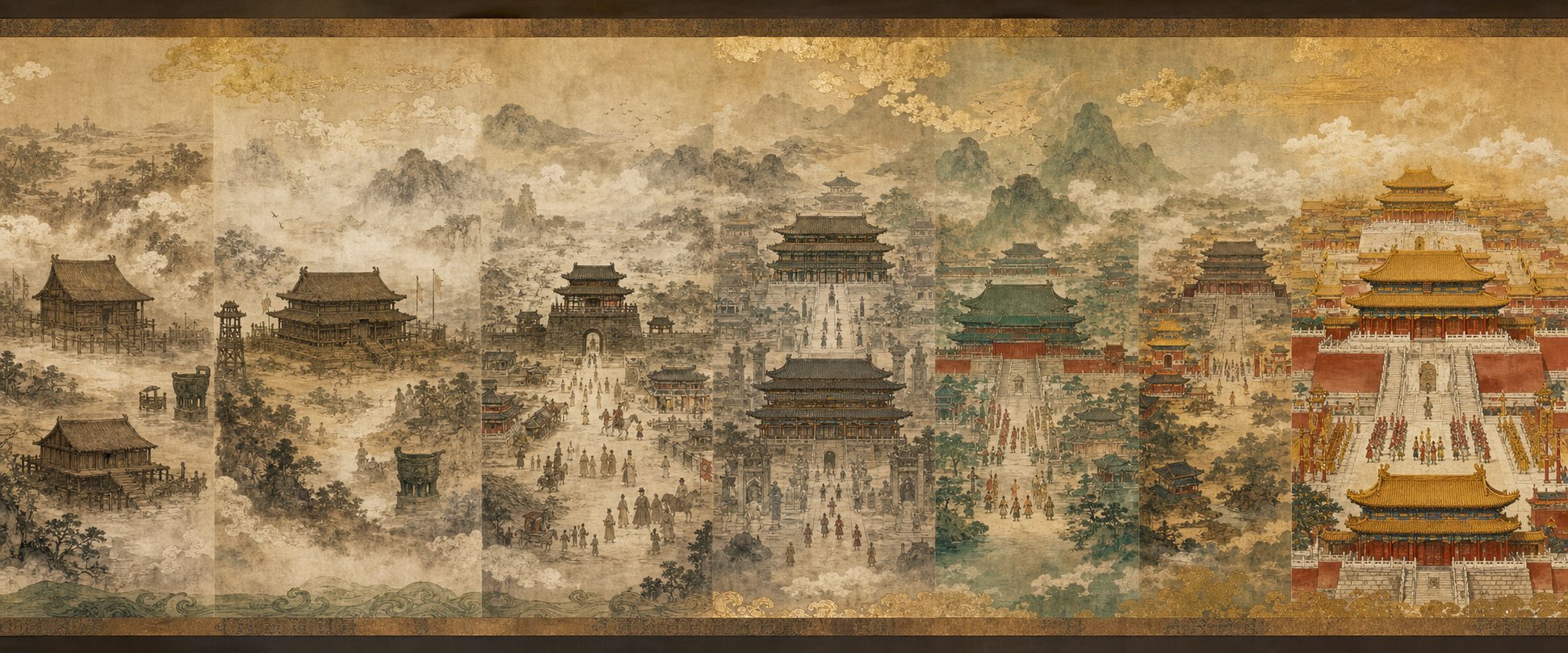
Philosophical ideals only matter when institutions back them up. The history of chinese name taboos for elders is not a flat line of unchanging tradition. It is a story of escalation, enforcement, and eventual transformation, stretching from quiet court protocol to empire-wide law and finally settling into the family-level practice that persists today.
From Zhou Dynasty Origins to Imperial Enforcement
The practice first appeared during the Zhou dynasty (1046-256 BCE) as a form of court etiquette. Nobles avoided speaking the personal names of their rulers and ancestors, but enforcement was informal and limited to the aristocratic class. Ordinary people were largely unaffected.
By the Han dynasty (206 BCE-220 CE), the scope expanded dramatically. Ancient chinese names belonging to emperors became protected not just in speech but in written texts. Emperor Xuan of Han, whose given name Bingyi (病已) contained two extremely common characters, actually changed his own name to Xun (询), a far rarer character, specifically to ease the burden on his subjects. This tells you how seriously the taboo was taken: even the emperor felt obligated to accommodate it.
The Tang dynasty (618-907 CE) pushed enforcement further. Emperor Taizong's given name was Shimin (世民), and he initially ruled that people only needed to avoid using both characters together. His son Emperor Gaozong reversed this leniency after Taizong's death, requiring complete avoidance of each character individually. The chancellor Li Shiji was forced to drop a character from his own name, becoming simply Li Ji. Imagine being a high-ranking official and having your identity rewritten because a dead emperor's name demanded it.
During the Song dynasty (960-1279 CE), the system reached peak complexity. Royal chinese names were protected across multiple generations, meaning subjects had to avoid not just the current emperor's name but those of all previous emperors in the dynasty. Traditional chinese names in official documents, examination essays, and even everyday correspondence were scrutinized for violations. Candidates could fail the imperial examinations for accidentally using a taboo character.
How Naming Taboos Shifted from State to Family Practice
Throughout imperial history, two parallel systems operated. The state taboo (国讳 guohui) protected the emperor's name and carried legal consequences. The family taboo (家讳 jiahui) protected one's own ancestors and elders, enforced by social pressure rather than law. Both drew from the same Confucian logic, but their fates diverged sharply.
When the Qing dynasty fell in 1912, the state-level taboo vanished overnight. No more emperors meant no more royal chinese names to protect. But the family-level practice, rooted in household relationships rather than political power, survived intact. It had always been self-enforcing, sustained by filial piety rather than imperial decree. The chinese old name avoidance tradition simply continued as it always had within families, even as the political world around it transformed completely.
The following table illustrates how the scope and consequences of naming taboos shifted across major dynasties:
| Dynasty | Period | Scope of Enforcement | Consequences for Violation |
|---|---|---|---|
| Zhou | 1046-256 BCE | Court nobles only; spoken avoidance | Social embarrassment, loss of standing |
| Han | 206 BCE-220 CE | Extended to written texts; emperors sometimes changed their own names to ease compliance | Official censure; potential dismissal from office |
| Tang | 618-907 CE | Empire-wide; officials forced to rename themselves; texts retroactively edited | Demotion, forced name changes, public humiliation |
| Song | 960-1279 CE | Multi-generational imperial protection; examination essays scrutinized | Examination failure, fines, career destruction |
| Qing | 1644-1912 CE | State taboo maintained but less aggressively; family taboo strongly observed | State violations punished variably; family violations brought severe social shame |
The chinese name origins of this practice reveal something important: what began as a privilege of power gradually became a universal family value. The emperors are gone, but the principle that an elder's name deserves protection lives on in millions of households. The question that follows naturally is how this system categorizes different types of taboos and which ones still carry weight in daily life.
The Four Types of Chinese Naming Taboos Explained
Not all naming taboos carry the same weight, and not all of them survived into the modern era. The chinese naming convention around name avoidance is actually a structured system with distinct categories, each protecting a different class of people. Understanding this taxonomy helps you see exactly where elder-specific taboos fit and why they remain the most relevant category for anyone navigating Chinese family life today.
The Four Categories of Chinese Name Taboos
Classical texts and historical scholarship divide the practice into four formal types. Each category defines who is protected, who must observe the taboo, and how strictly it was enforced. Think of it as a hierarchy of avoidance, with the broadest taboos at the top and the most personal at the bottom.
The first and most sweeping category is 国讳 (guohui, state taboo). This protected the emperor's given name and, in many dynasties, the names of his ancestors. Every person in the empire, from ministers to farmers, was required to comply. Violating it could end careers or worse.
The second is 家讳 (jiahui, family taboo). This protects the given names of one's own parents, grandparents, and ancestors. Only family members and close associates are bound by it, but within that circle, it carries deep emotional and moral force.
The third is 圣讳 (shenghui, sage taboo). This applied to revered cultural figures, most notably Confucius. From the Song dynasty onward, the character 丘 (qiu) in Confucius's name was avoided so strictly that families surnamed Qiu were forced to add a radical, writing their name as 邱 instead. This practice lasted nearly a thousand years.
The fourth is 私讳 (sihui, personal taboo). This refers to avoiding the names of one's direct superiors, such as a government official or a patron. It was less a universal rule and more a form of political flattery or professional deference. The famous idiom "only the magistrate may set fires, but the common people may not light lamps" (只许州官放火, 不许百姓点灯) comes from a Song dynasty official named Tian Deng who forced his entire district to avoid the character 灯 (deng, lamp) because it sounded like his name.
The following table compares all four categories side by side:
| Chinese Term | Pinyin | Who Is Protected | Who Must Observe | Still Practiced Today |
|---|---|---|---|---|
| 国讳 | guohui | Emperors and their ancestors | All subjects in the empire | No (ended with imperial system) |
| 家讳 | jiahui | Parents, grandparents, and ancestors | All younger family members | Yes (widely observed) |
| 圣讳 | shenghui | Sages such as Confucius and Mencius | All educated people | No (historical artifact) |
| 私讳 | sihui | One's direct superiors or patrons | Subordinates and dependents | Rarely (occasional deference in formal settings) |
Why Family Taboos Are the Most Relevant Today
Of these four categories, only family taboos remain a living, active practice. State taboos disappeared when the last emperor abdicated. Sage taboos faded as Confucianism lost its status as state orthodoxy. Personal taboos survive only as faint echoes of workplace politeness. But family taboos? They persist because they are rooted in relationships that never go away: the bond between parent and child, grandparent and grandchild.
Within the family taboo system, different generational levels carry different degrees of strictness. Here is how it typically works:
- Parents' names (strongest taboo): A child must never use either character from a parent's given name in their own name, their children's names, or casual speech. This is the most strictly observed rule across all Chinese communities.
- Grandparents' names (strong taboo): The same avoidance applies, though some families allow slightly more flexibility if the character is extremely common.
- Great-grandparents' names (moderate taboo): Observance varies by family. Traditional households maintain full avoidance, while more relaxed families may only avoid exact character matches rather than homophones.
- Earlier ancestors (variable): Some families with detailed genealogical records avoid names going back many generations. Others focus primarily on the three most recent generations above the child.
This layered approach reflects a practical reality: the closer the elder, the stronger the emotional and social obligation. Your parents' names are sacred ground. Your great-great-grandfather's name may be less immediately sensitive, depending on how connected your family remains to its genealogical records.
It is worth noting that these chinese name conventions intersect with another traditional practice: the use of courtesy names. What is a courtesy name? In classical China, a person received a 字 (zi, courtesy name) at adulthood, which peers and equals could use instead of the given name. The courtesy name meaning was partly functional: it gave people a way to address someone without invoking their taboo-protected personal name. Parents and elders used the given name; everyone else used the courtesy name. This system elegantly solved the problem of how to refer to someone whose name you were not supposed to speak. While the chinese courtesy name tradition has largely faded from daily use, its underlying logic, that personal names deserve protection and alternatives should exist, still informs how families think about naming today.
Knowing the categories is one thing. Knowing the actual linguistic techniques families use to work around these taboos is another matter entirely, one that reveals just how creative Chinese speakers have been in honoring these rules while still communicating clearly.
Linguistic Techniques for Avoiding Elder Names
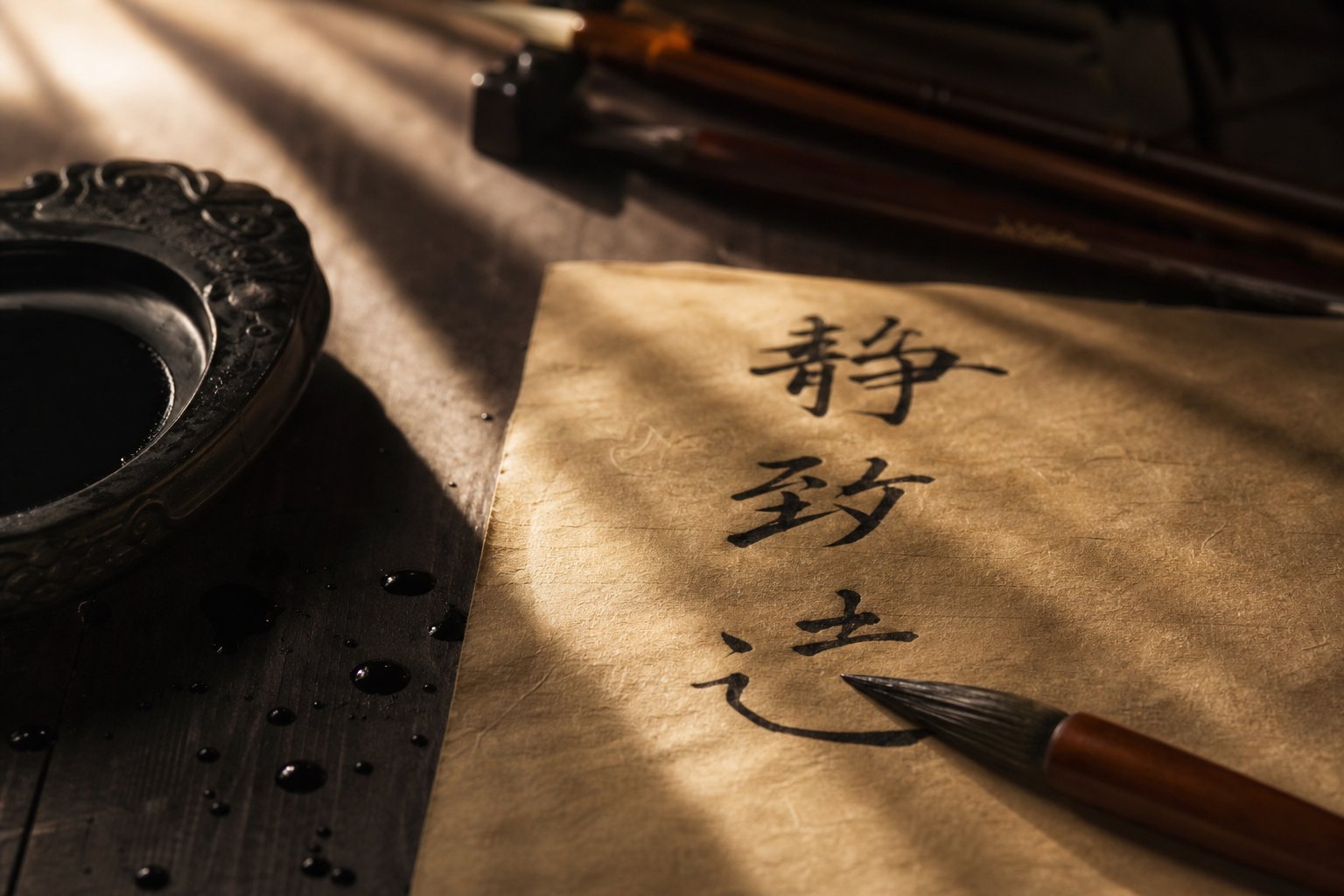
Knowing you cannot use an elder's name is one thing. Figuring out what to do instead, especially when that forbidden character appears in everyday vocabulary, requires real linguistic creativity. Over centuries, Chinese speakers developed specific techniques to navigate around taboo characters without losing meaning. These methods reveal just how deeply chinese names and characters are intertwined with the broader writing system, and how flexible that system can be when cultural rules demand workarounds.
When you consider how do you write names in chinese, you are really asking about a system where each character is a self-contained unit of meaning and sound. That structure gives families three distinct tools for avoidance, each operating at a different level of strictness.
- 避音 (biyin) - Phonetic Avoidance (Strictest): This technique requires avoiding not just the exact character of an elder's name but any character that sounds the same, regardless of meaning or written form. If your grandfather's name contains the character 明 (ming, bright), you would also avoid 名 (ming, name), 鸣 (ming, chirp), and any other character pronounced "ming" in your local dialect. The entire sound becomes off-limits. In practice, this means families sometimes avoid common words in daily speech, substituting synonyms or circumlocutions. A family avoiding the sound "hai" might say 大海 (dahai, ocean) less freely or replace it with 海水 (haishui, seawater) in contexts where the single syllable would feel too close to the elder's name.
- 改字 (gaizi) - Character Substitution (Moderate): This is the most commonly practiced technique today. The taboo character is replaced with a different character that shares a similar meaning, similar appearance, or a related phonetic component. For example, if an elder's name contains 华 (hua, splendid), a family member might use 荣 (rong, glory) instead when naming a child, preserving the positive meaning while avoiding the exact chinese name characters that belong to the elder. Historically, Emperor Xuan of Han changed his own name from 病已 (Bingyi) to 询 (Xun) specifically because his original characters were too common for the public to avoid comfortably. The substitute character was deliberately chosen to be rare, reducing the burden on everyone else.
- 缺笔 (quebi) - Stroke Omission (Mildest, Mostly Historical): In this technique, the taboo character is written with one or more deliberate missing strokes. The character remains recognizable but is visually marked as incomplete, signaling that the writer is not invoking the elder's actual name. For instance, if the taboo character is 玄 (xuan), the final dot stroke would be omitted, producing a slightly open form. This method was primarily used in formal written documents, examination papers, and carved inscriptions. It allowed scribes to reference a concept without technically writing the protected name in chinese symbols. Vietnamese historical texts show the same practice: the character 华 in the name of Queen Ho Thi Hoa had its last stroke deliberately left unwritten in official documents.
Character Substitution and How It Works
Of the three techniques, character substitution is the one modern families encounter most often. It works because the Chinese writing system contains thousands of chinese character names and vocabulary words that overlap in meaning, sound, or visual structure. When a family needs to avoid a specific character, they have a rich pool of alternatives.
Here is how the process typically plays out. Imagine a family where the grandfather's given name is 建国 (Jianguo, "build the nation"). The character 建 (jian, build) becomes taboo for all descendants. A grandchild who might otherwise be named 建明 (Jianming) could instead be named 立明 (Liming), substituting 立 (li, establish) for 建 because both characters carry the meaning of creating or founding something. The chinese name strokes are completely different, the visual form is distinct, but the semantic intention is preserved.
Another common scenario involves characters that appear in everyday words. If an elder's name contains 书 (shu, book), family members might habitually say 本子 (benzi, notebook) or 文章 (wenzhang, writing) in contexts where they would otherwise use 书. This is not a formal rule written down anywhere. It is an instinctive avoidance that becomes second nature within the household.
Phonetic Avoidance and Stroke Omission Techniques
Phonetic avoidance is the strictest method because it treats sound itself as the carrier of the taboo. You will notice this technique is more common in southern Chinese dialects, particularly Cantonese, where tonal distinctions create additional layers of potential conflict. A character that sounds nothing like an elder's name in Mandarin might be a perfect homophone in Cantonese, triggering avoidance that outsiders would never anticipate.
The practical effect is that families maintaining strict phonetic avoidance develop what amounts to a household-specific taboo words list, a set of sounds that everyone in the family instinctively works around. This list is rarely written down. Children absorb it by observing which words their parents never say, which names they never call, and which substitutions appear in family conversation.
Stroke omission, by contrast, is largely a historical curiosity. It was most relevant when documents were handwritten and scribes needed a way to reference taboo characters in official records without technically reproducing them. In an age of digital text and standardized fonts, deliberately omitting chinese name strokes from a typed character is not practical. The technique survives mainly as a subject of scholarly interest and a tool for dating ancient manuscripts, since the specific strokes omitted can reveal which emperor's name was being avoided and therefore when the document was written.
Together, these three techniques form a complete toolkit that allowed Chinese families to honor their elders while still communicating effectively. The system is elegant in its flexibility: strict families could apply phonetic avoidance across all contexts, while more relaxed families might only substitute the exact character when naming children. This spectrum of strictness leads naturally to the question of how families structurally prevent naming conflicts in the first place, before any avoidance technique becomes necessary.
The Generational Naming System and Proper Address
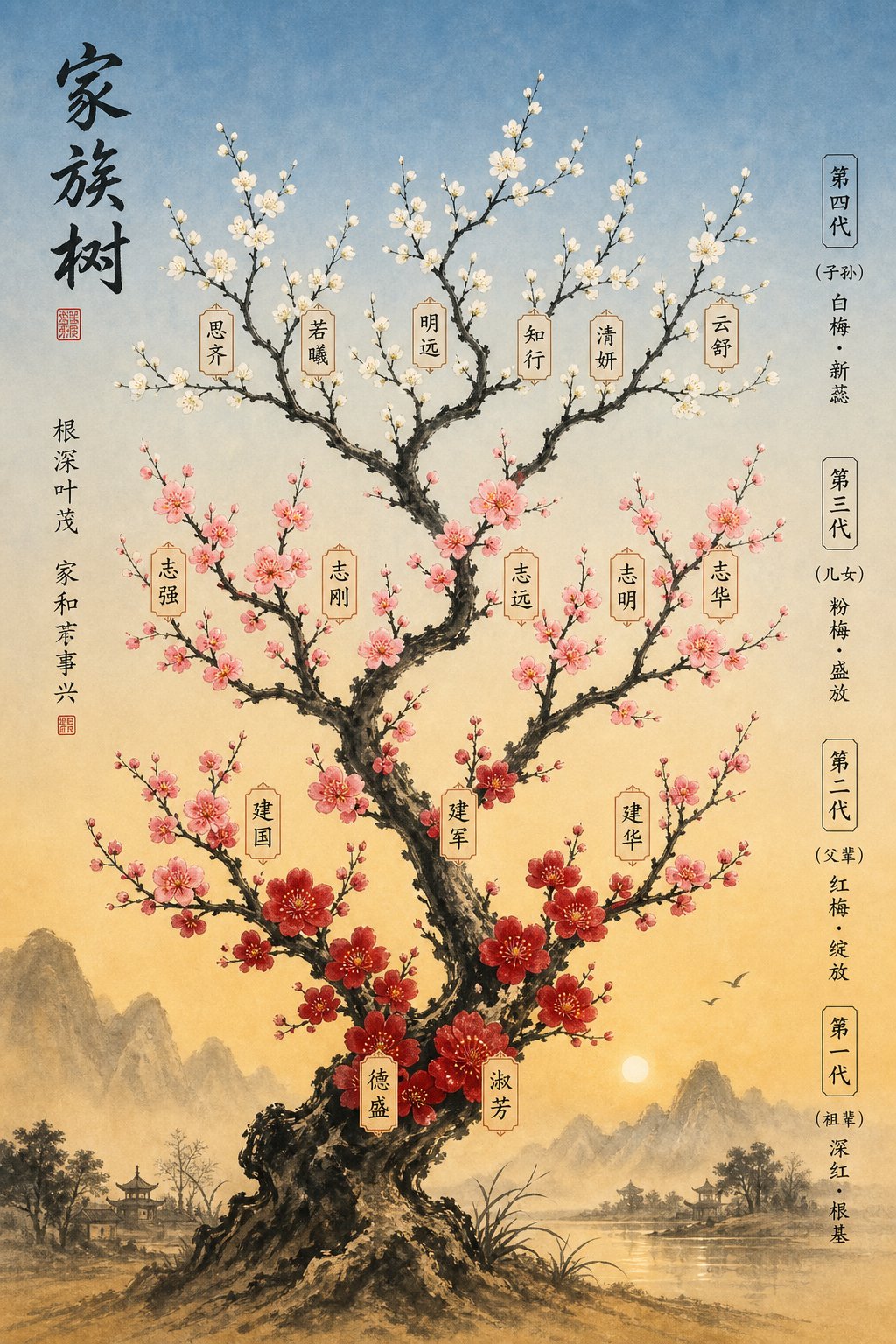
Avoidance techniques solve the problem after a conflict is discovered. But what if the system could prevent conflicts from arising in the first place? That is exactly what the generational naming system, known as 辈分 (beifèn), was designed to do. It is one of the most elegant structural features of chinese name structure, and it has quietly reinforced elder respect for centuries by giving each generation its own distinct naming space.
How Generation Characters Prevent Name Conflicts
To understand how this works, you need to know how chinese given names are constructed. The chinese name order follows a specific pattern: chinese names surname first, then the given name. So when you see chinese names first last, the family name comes before the personal name. The given name itself is typically one or two characters. In families that follow the 辈分 system, one of those given-name characters is shared by every member of the same generation.
Where does that shared character come from? Traditional families compose a generational poem (辈分诗 beifènshī), a sequence of characters arranged in verse form, with each character assigned to a successive generation. If your generation's character is 德 (de, virtue), then every cousin, sibling, and relative in your generation will have 德 as one component of their given name. Your children's generation might use 文 (wen, culture), your grandchildren 志 (zhi, ambition), and so on down the poem.
The result? Each generation occupies a completely separate naming space. When a chinese first name last name combination is built using this system, it becomes structurally impossible for a younger person to accidentally duplicate an elder's name. The generation character acts as a built-in marker, instantly signaling where someone sits in the family hierarchy. You can look at a name and know, without asking, whether that person is your senior, your peer, or your junior.
This system also makes the taboo easier to enforce. Parents choosing a name for a newborn only need to avoid the specific free character (the non-generational character) used by elders, since the generational character is already guaranteed to be different. It narrows the field of potential conflicts dramatically.
Proper Ways to Address Elders in Modern Chinese Families
Even with the 辈分 system preventing naming collisions, the question remains: how do you actually address your elders in daily life? The answer is kinship terms. In Chinese families, every relative has a specific title based on their position in the family tree, and these titles replace the given name entirely.
Here are the most common kinship terms you will encounter:
- 爷爷 (yeye) - paternal grandfather
- 奶奶 (nainai) - paternal grandmother
- 外公 (waigong) - maternal grandfather
- 外婆 (waipo) - maternal grandmother
- 爸爸 (baba) - father
- 妈妈 (mama) - mother
- 叔叔 (shushu) - father's younger brother; also used for unrelated men of your parents' generation
- 阿姨 (ayi) - mother's sister; also used for unrelated women of your parents' generation
- 舅舅 (jiujiu) - mother's brother
- 姑姑 (gugu) - father's sister
You will notice that Chinese distinguishes between paternal and maternal sides of the family, between older and younger siblings of your parents, and between male and female relatives at every level. This precision is not accidental. It reflects the same hierarchical logic that drives the naming taboo: every person has a defined position, and the language provides a specific term for that position so the given name never needs to be spoken.
Even in casual modern families where formality has relaxed, using an elder's full given name directly remains deeply uncomfortable for most Chinese speakers. A young person might call an older neighbor 王叔叔 (Wang shushu, Uncle Wang) rather than using his chinese name first name. Close family friends of your grandparents' generation become 李爷爷 (Li yeye) or 赵奶奶 (Zhao nainai), their surname plus the appropriate generational title. The given name stays private, protected, unspoken.
This system of kinship address is so ingrained that many Chinese adults do not actually know the given names of their grandparents. They have never needed to. The title was always sufficient, and asking would feel like prying into something that was never meant for them to use.
These structural and linguistic systems work together seamlessly in traditional communities. But China is not monolithic, and the degree to which families enforce these practices varies enormously depending on geography, generation, and cultural context.
Regional and Generational Differences in Practice
A family in rural Fujian and a young couple in downtown Shanghai may both identify as Chinese, but their relationship to elder naming taboos can look completely different. Geography, political history, dialect, and generational attitude all shape how strictly these rules are followed. Treating all Chinese communities as a single block misses the real picture. The practice is alive, but it breathes differently depending on where you are and who you ask.
Mainland China vs Taiwan vs Overseas Communities
In mainland China, the Cultural Revolution (1966-1976) disrupted many traditional practices, including genealogical record-keeping and generational naming systems. Families that lost their genealogical books during that period sometimes lost track of ancestral names entirely, making strict avoidance harder to maintain. Urban families in cities like Beijing, Shanghai, and Shenzhen tend to observe the taboo at a basic level: they avoid giving a child the exact same characters as a parent or grandparent, but they may not extend the rule to homophones or distant ancestors.
Taiwan tells a different story. Because the island did not experience the Cultural Revolution, many Taiwanese families maintained unbroken genealogical records and generational poems. Traditional naming practices, including strict elder name avoidance, remained embedded in family culture without interruption. When Taiwanese parents choose typical chinese names for their children, consulting the family's elder name list is still a standard step in the process, not an optional courtesy.
Overseas Chinese communities in Southeast Asia, particularly in Malaysia, Singapore, Indonesia, and Thailand, often preserved traditions that faded on the mainland. These diaspora communities left China before the political upheavals of the twentieth century and maintained their ancestral customs as a way of preserving identity abroad. Clan associations in cities like Penang and Singapore still keep detailed genealogical records, and families consult these records when naming children. The taboo functions here not just as family etiquette but as a marker of cultural continuity in a foreign land.
Cantonese-speaking communities, whether in Guangdong, Hong Kong, or overseas, face an additional layer of complexity. Cantonese has more tonal distinctions and different pronunciations for many characters compared to Mandarin. A character that sounds nothing like an elder's name in Mandarin might be a near-homophone in Cantonese. Families that speak Cantonese at home often check names in china against both Mandarin and Cantonese pronunciations, doubling the potential for conflicts. As The World of Chinese notes, naming customs in Chinese culture have always been shaped by the specific linguistic environment of the community, and dialect differences add real practical weight to what might seem like a simple rule.
Urban Modern Families vs Traditional Rural Practices
Even within a single country, the urban-rural divide creates sharp differences. Picture two families in the same province. In the city, a young couple might check their baby name against the grandparents' names as a gesture of respect, confirm it with the elders over a phone call, and move on. In a rural village thirty kilometers away, the same process might involve a formal family meeting, consultation of a handwritten genealogical book going back twelve generations, and a naming master who cross-references the proposed characters against every recorded ancestor.
The gap is not just about strictness. It is about who holds authority over the decision. In traditional rural families, naming a child is a collective act. The grandparents or the eldest male relative often have final say. In urban modern families, parents typically make the decision themselves and inform the elders afterward, treating their input as advisory rather than binding.
Younger generations across all regions are also redefining what counts as a violation. Some millennials and Gen Z parents in mainland cities view the taboo as applying only to the exact character match, not to homophones or visually similar characters. Others have relaxed it further, treating it as something to be aware of but not strictly bound by. Yet even among these more relaxed families, you will rarely find someone who would deliberately give their child the same name as a living parent. The emotional weight of that act still registers, even when the philosophical framework behind it has faded from conscious thought.
The following table compares how traditional and modern approaches differ across key dimensions:
| Dimension | Traditional Approach | Modern Urban Approach |
|---|---|---|
| Strictness Level | Avoids exact characters, homophones, and visually similar characters | Avoids exact characters only; homophones generally acceptable |
| Scope of Avoidance | Extends to ancestors several generations back, checked against genealogical records | Typically limited to parents and grandparents |
| Who Enforces It | Senior family members, clan elders, or naming masters | Parents self-enforce; may consult elders as a courtesy |
| Consequences of Violation | Family conflict, social shame, pressure to rename the child | Mild disapproval from older relatives; rarely escalates |
| Dialect Considerations | Name checked in local dialect and Mandarin | Usually checked in Mandarin only |
| Genealogical Records | Maintained and actively consulted | Often incomplete or not consulted |
What is striking is that even the most modern, relaxed interpretation still acknowledges the taboo's existence. No one argues that it is fine to name your son with your father's exact given name. The floor of respect remains intact. The variation is in how high above that floor each family builds its walls.
This spectrum of practice also means there is no single "correct" answer for families navigating these taboos in china today. A family that has maintained detailed records for generations will have different expectations than a family that lost its genealogical book decades ago. Typical chinese names chosen in one community might raise eyebrows in another, not because the name itself is bad, but because the avoidance rules differ. The key is understanding your specific family's expectations rather than applying a universal standard that does not exist.
For anyone entering a Chinese family from outside, whether through marriage, adoption, or close friendship, this regional and generational variation is precisely why asking matters more than assuming. The rules are real, but they are local. And knowing how to ask the right questions is itself a form of respect that transcends any single rule.
How Modern Families Navigate Elder Name Taboos
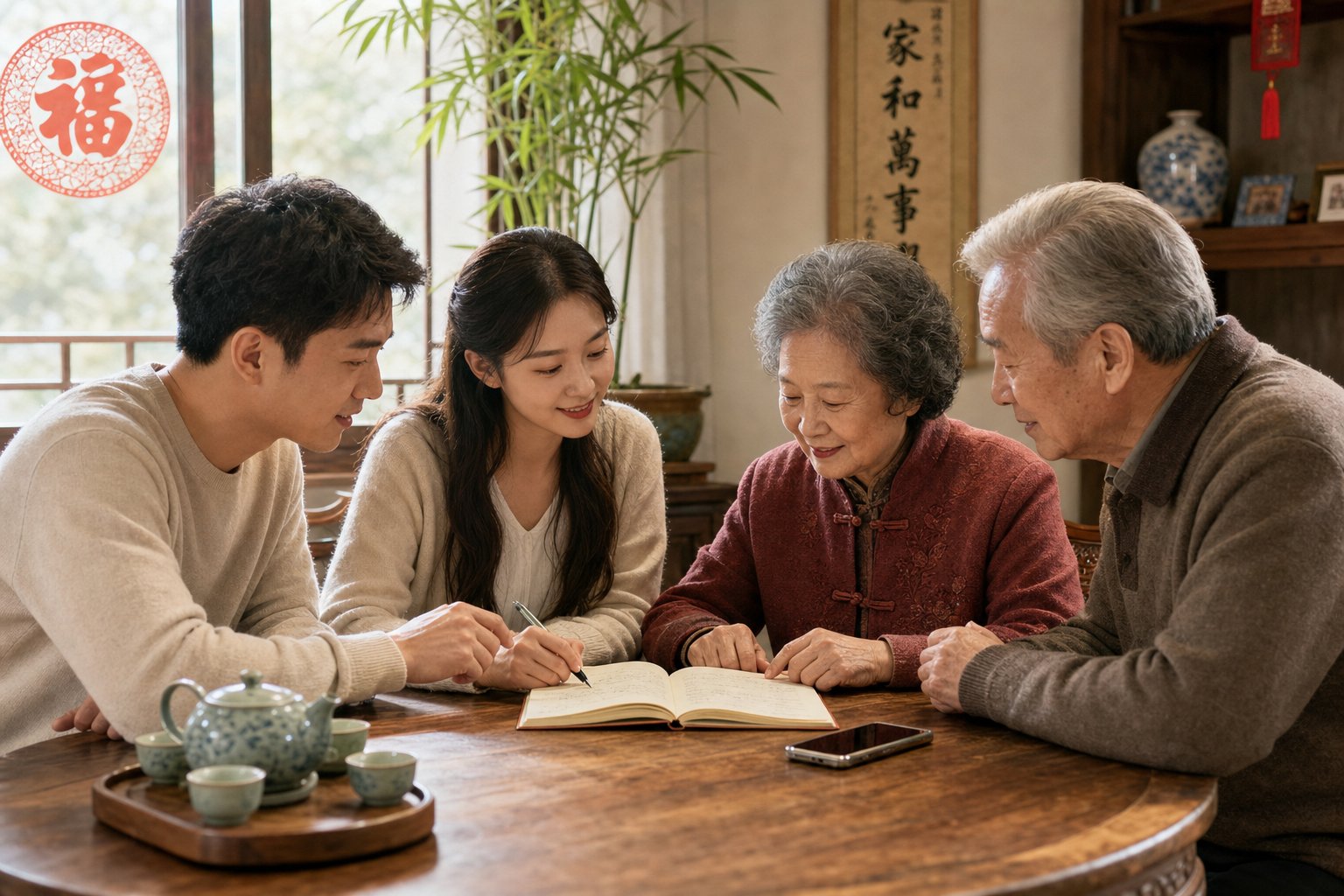
Asking the right questions is the first step. But what exactly should you ask, and in what order? Whether you are a Chinese parent weighing chinese baby names and meanings or a foreigner wondering what would be my chinese name within a new family, the process follows a clear logic. The rules may vary by household, but the method for checking a name against family elders is consistent enough to outline as a practical workflow.
Step-by-Step Guide to Checking Names Against Elders
When you are ready to how to pick a chinese name for a child, or even for yourself, the following process will help you avoid conflicts before they become family disputes. Think of it as due diligence: a few hours of checking can prevent years of awkwardness.
- Compile the elder name list. Gather the given names (both characters) of all living elders: parents, grandparents, great-grandparents if known. Include recently deceased ancestors, typically going back at least three generations. Ask the oldest family member available, as they usually hold the most complete knowledge. If a genealogical book (族谱 zupu) exists, consult it directly.
- Check for exact character matches. Compare every character in your proposed name against the elder name list. If any character appears in an elder's given name, that name is off the table. This is the non-negotiable baseline across virtually all Chinese families.
- Check for homophones. Say the proposed name aloud. Does any syllable sound identical to a character in an elder's name, even if written differently? In traditional families, this is enough to disqualify a name. In more relaxed households, homophones may be acceptable, but you need to know your family's threshold before deciding.
- Check dialect pronunciations. If the family speaks Cantonese, Hokkien, Hakka, or another dialect at home, run the name through that pronunciation system as well. A name that sounds safe in Mandarin might collide with an elder's name in the family's native dialect. This step is especially important for families in Guangdong, Fujian, and overseas communities in Southeast Asia.
- Consult senior family members. Present your shortlisted names to the grandparents or the most senior relative. This is not just a formality. Elders may catch conflicts you missed, such as a character that belonged to a great-uncle you never met, or a sound that reminds them of a deceased relative whose name was never written down. Their approval signals that the name is safe to use.
- Confirm and finalize. Once the name passes all checks and receives elder approval, you can proceed with confidence. Some families mark this moment with a small celebration or a formal announcement to the extended family, especially for a firstborn child.
This process might seem elaborate, but it typically takes a single conversation with the right family member. The key is knowing whom to ask and being willing to adjust if a conflict surfaces. Flexibility here is not weakness. It is respect made visible.
Advice for Foreigners Joining Chinese Families
If you are marrying into a Chinese family, adopting a Chinese child, or simply choosing a Chinese name for professional use in a Chinese-speaking environment, these taboos apply to you too. Many non-Chinese people ask what does my chinese name mean without realizing that meaning is only half the equation. The other half is whether that name accidentally steps on an elder's territory.
Here is what you need to know. When figuring out how to get a chinese name within a family context, your first move should be asking your partner or in-laws for the family's elder name list before you settle on anything. This applies whether you are choosing a name for yourself or for a child. Do not assume that because you are foreign, the rules do not apply. In most families, the opposite is true: a foreigner who proactively respects the naming taboo earns immediate goodwill, precisely because it signals cultural awareness that was not expected.
If your Chinese in-laws offer to choose a name for you, accept graciously. They will naturally avoid their own elders' characters, solving the problem without you needing to navigate it yourself. If you prefer to choose your own name, bring your shortlist to the family and ask directly: "Does this conflict with anyone's name?" That single question communicates more respect than any amount of language fluency.
For parents adopting a Chinese child and wondering what would my chinese name be for the child, the same principle holds. If the child already has a Chinese name given by birth parents or an orphanage, check whether it conflicts with your family's elder names before keeping it. If you are assigning a new Chinese name, consult a Chinese-speaking family friend or cultural advisor who can cross-reference your choices against common pitfalls.
The underlying message is simple: you do not need to master every nuance of chinese name taboos for elders to navigate them successfully. You just need to ask, listen, and be willing to adjust. That willingness itself is the respect the system was designed to express.
Embracing Elder Name Respect in a Changing World
Rules tell you what to avoid. Principles tell you what to value. The difference matters here. Chinese name taboos for elders are not a minefield to tiptoe through. They are an invitation to engage more deeply with family history, to ask questions that reveal stories, and to choose names that carry genuine weight precisely because they were chosen with care.
Balancing Tradition and Personal Expression
Constraints breed creativity. This is true in poetry, in architecture, and in naming. When certain characters are off the table, families are pushed to explore less obvious combinations, to dig deeper into the meaning of chinese names, and to find characters that honor the family's values without duplicating its elders. The result is often a name that feels more intentional, more layered, and more personal than one chosen from an unrestricted field.
Think of it this way: if every character in the language were available, the choice would be overwhelming and somewhat arbitrary. But when a family says "these twelve characters belong to your grandparents and great-grandparents," the remaining thousands of options suddenly feel more purposeful. You are not just picking a name you like. You are picking a name that fits into a living structure, one that connects your child to generations before and after them.
This is not about limiting self-expression. It is about grounding it. As JR Language illustrates through one family's story, Chinese parents typically name their children in accordance with their wishes and expectations, and the process of seeking an elder's opinion before finalizing a name is itself a strong example of honoring family bonds. The constraint does not diminish the name. It enriches the story behind it.
Families that embrace this balance often find that the naming process becomes a moment of genuine connection across generations. Grandparents share memories. Parents learn characters they had never considered. The child enters the world carrying chinese names with meanings that reflect not just parental hope but collective family identity.
Key Principles to Remember
Whether you are choosing a name, entering a Chinese family, or simply trying to understand this tradition from the outside, a few core ideas will serve you well:
- Respect, not superstition. The taboo is grounded in Confucian ethics and family structure. It is a deliberate expression of generational respect, not a fear of bad luck or spiritual punishment.
- Variation is normal. No single standard applies to all Chinese families. Region, dialect, generation, and personal family history all shape how strictly the rules are observed. What matters is understanding your specific family's expectations.
- Asking is always right. Regardless of how strict or relaxed a family is, the act of asking elders about their names before choosing a child's name communicates respect. Even families that would not enforce the taboo strictly appreciate being consulted.
- Understanding deepens appreciation. Learning about chinese names and meanings through the lens of elder avoidance gives you a richer picture of how naming works in Chinese culture. It reveals the relational logic behind every character choice, the idea that names in chinese and meanings are never just about the individual but about the family web they belong to.
- The practice is living, not frozen. Chinese name meanings evolve as families adapt to new contexts. The taboo is not a museum piece. It is a flexible tradition that families reinterpret for each generation while preserving its core principle: elders deserve a form of respect that is built into the very language used around them.
Elder name taboos represent one of the most enduring expressions of Chinese family values: the belief that respect is not just spoken but structurally embedded in how we name, address, and remember the people who came before us.
Whether you are Chinese and navigating these customs within your own family, or approaching them from outside with curiosity and good faith, the same attitude applies. You do not need to memorize every historical rule or master every regional variation. You need to understand that behind every avoided character is a relationship someone chose to honor. That understanding, more than any checklist, is what transforms a naming decision from a task into an act of belonging.
Frequently Asked Questions About Chinese Name Taboos for Elders
1. What happens if you accidentally use an elder's name in a Chinese family?
The consequences depend on the family's strictness and regional background. In traditional households, using an elder's given name directly can cause genuine offense and family conflict, potentially leading to pressure to rename a child. In more modern urban families, it may result in mild disapproval from older relatives. Regardless of strictness level, the act signals a lack of awareness about generational hierarchy. The safest approach is always to consult senior family members before finalizing any name choice, as even relaxed families appreciate being asked.
2. Do Chinese name taboos apply to both living elders and deceased ancestors?
Yes, the taboo applies to both. Living elders' names carry the strongest protection, particularly parents and grandparents. Deceased ancestors' names also remain protected because ancestral reverence is a core Confucian value. The depth of avoidance for deceased relatives varies by family. Some check names against three generations of ancestors, while families with detailed genealogical records may extend avoidance much further back. The underlying principle is that death does not diminish an elder's authority or the respect owed to them.
3. How do Chinese families avoid common characters that appear in an elder's name?
Chinese families use three main linguistic techniques. The strictest is phonetic avoidance, where any character sharing the same sound as the elder's name is avoided entirely. The most common modern method is character substitution, replacing the taboo character with one of similar meaning or appearance. The mildest historical technique is stroke omission, where a character is written with deliberate missing strokes to signal it is not being used as the elder's name. Most contemporary families practice character substitution, avoiding exact matches while allowing homophones in everyday speech.
4. Are Chinese name taboos the same in mainland China, Taiwan, and overseas communities?
No, significant regional differences exist. Mainland urban families often observe the taboo at a basic level due to Cultural Revolution disruptions that damaged genealogical records. Taiwanese families typically maintain stricter practices because their traditions were never interrupted. Overseas Chinese communities in Southeast Asia often preserved strong traditional customs as markers of cultural identity. Cantonese-speaking communities face additional complexity because characters may sound different in Cantonese versus Mandarin, creating extra potential conflicts that require checking in both pronunciation systems.
5. How can a foreigner joining a Chinese family respect elder naming taboos?
The most important step is asking your partner or in-laws for the family's elder name list before choosing any Chinese name for yourself or a child. This single act communicates cultural awareness and earns significant goodwill. If in-laws offer to choose a name for you, accept graciously since they will naturally avoid conflicts. If you prefer choosing your own name, present your shortlist and ask directly whether it conflicts with anyone's name. You do not need to master every rule. Willingness to ask and adjust is itself the respect the system was designed to express.