Why Color Characters Carry Deep Weight in Chinese Names
When a Chinese parent names a child 紫萱 (Zixuan) or 丹青 (Danqing), they are not simply picking a pretty color and pairing it with a pleasant sound. They are encoding aspiration, cosmology, and cultural memory into two or three characters that will follow that person for life. Chinese color symbolism runs deep in art, festivals, and philosophy, but something different happens when a color character enters a personal name. It stops being a descriptor and becomes a declaration.
Where Color Meets Identity in Chinese Naming
You might already know what do colors mean in Chinese culture at a surface level. Red means luck. White means mourning. Gold means wealth. These associations show up in everything from wedding decorations to funeral rites. But the practice of embedding color characters into names operates under its own logic, one shaped by phonetics, stroke count, elemental balance, and generational tradition.
Consider how Chinese naming works structurally. As Cultural Atlas explains, Chinese parents generally prefer names that embody goodwill, prosperousness, or seem auspicious, and given names often symbolize an aspiration. A color character placed inside a name does not merely say "this child is associated with purple." It says "this child carries the nobility, spiritual refinement, and rare beauty that purple has represented for centuries." The chinese symbol meanings shift once they enter the naming context.
In Chinese naming tradition, color characters function as carriers of aspiration rather than mere description. A name containing 丹 does not mean the child is red. It means the child is sincere, loyal, and warm-hearted, qualities the color has symbolized since ancient poetry first linked cinnabar to devotion.
Why This Topic Bridges Two Separate Traditions
Chinese colors symbolism and Chinese naming conventions are typically discussed as separate subjects. One belongs to cultural studies and art history. The other belongs to linguistics and family tradition. But the moment a parent selects 碧 (jade-green) over 绿 (plain green) for a daughter's name, both traditions collide. The choice reflects color hierarchy, gender associations, phonetic harmony, and even taboo avoidance, all at once.
This intersection is where chinese symbolism becomes personal. A name like 丹青 literally references the red and blue-green pigments used in classical painting, but as a given name it evokes artistic mastery and cultural refinement. The colors stop being colors. They become character traits, life wishes, and identity markers.
Throughout this article, you will see how specific color characters function differently in given names, surnames, and literary names. You will discover why some chinese colors are eagerly placed in names while others are carefully avoided. And you will understand how asian symbolism, cosmology, and family strategy converge every time a color character is chosen for a new life. The system is far more deliberate than it appears from the outside, and it starts with a framework that has organized Chinese color thinking for over two thousand years.
The Five Traditional Colors and Their Symbolic Foundations
That two-thousand-year-old framework has a name: 五色 (wǔse), the Five Colors system. It is the cosmological backbone behind every traditional chinese colors choice in naming, art, medicine, and ritual. If you want to understand why certain color characters appear in names while others are avoided, this is where the logic begins.
The Five Colors Framework and Its Cosmological Roots
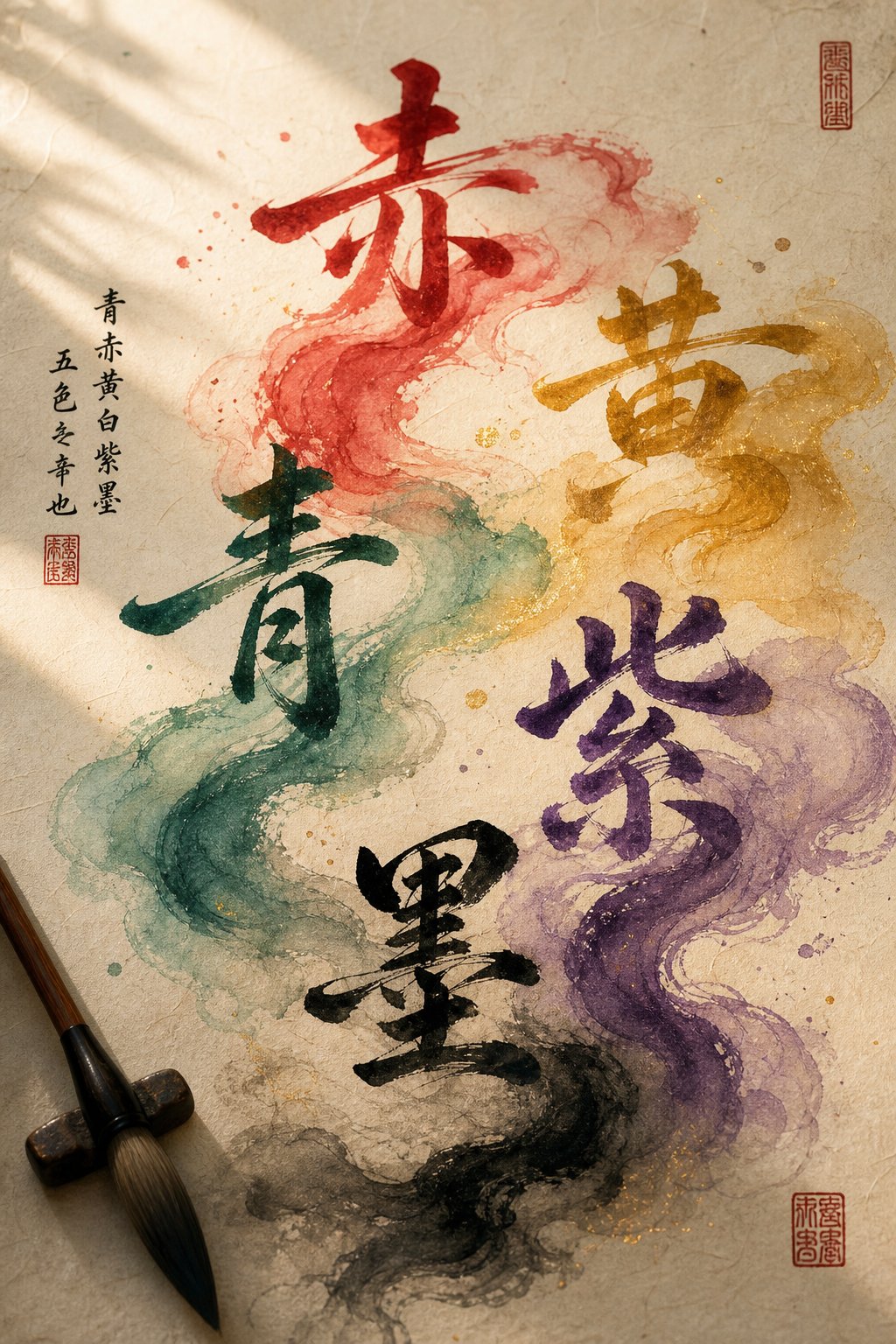
The Five Colors are red, yellow, blue-green (cyan), white, and black. Each one maps directly to one of the Five Elements (五行, wǔxing), a cardinal direction, a season, and a set of virtues. These are not arbitrary pairings. They form an interlocking system where colors in chinese culture carry cosmological weight that extends into every corner of life, including what parents name their children.
Imagine a child born in winter, a season governed by the Water element and the color black. A naming consultant might recommend characters associated with Fire (red) or Earth (yellow) to counterbalance that elemental dominance. The table below shows how each of the five traditional colors connects to its element, direction, season, and the core symbolic meaning it carries when placed inside a personal name.
| Color | Character | Element | Direction | Season | Core Naming Symbolism |
|---|---|---|---|---|---|
| Red | 赤/红 (chi/hong) | Fire (火) | South | Summer | Passion, loyalty, vitality |
| Yellow | 黄 (huang) | Earth (土) | Center | Late Summer | Authority, stability, nourishment |
| Blue-Green | 青 (qing) | Wood (木) | East | Spring | Youth, growth, renewal |
| White | 白 (bai) | Metal (金) | West | Autumn | Purity, clarity, but also mourning |
| Black | 黑 (hei) | Water (水) | North | Winter | Depth, wisdom, hidden power |
This framework explains why colors in chinese naming are never neutral. Red and yellow sit comfortably in names because their elemental associations, Fire and Earth, connect to warmth, prosperity, and centrality. White and black require more caution. White's link to the Metal element gives it connotations of sharpness and decline alongside purity, while black's Water association can suggest coldness or obscurity if not balanced carefully. These are the rules that chinese mandarin colors follow when they cross from description into identity.
How Color Characters Change Meaning Inside Names
Here is what most discussions of colour in chinese language miss entirely: a color character does not behave the same way inside a name as it does in a sentence. When you say 红色的花 (a red flower), 红 functions as a straightforward adjective. It describes a visual property. But when 红 appears in a name like 李红梅 (Li Hongmei), it stops describing anything visible. It becomes an abstract quality, evoking celebration, warmth, and feminine beauty.
This semantic shift happens because chinese words for colors carry layered literary and philosophical associations that activate differently depending on context. In everyday speech, colours in mandarin chinese are descriptive. In names, they are aspirational. The character 青 in a sentence means blue-green. In a name like 王青松 (Wang Qingsong), it evokes the vitality of evergreen pines and the freshness of youth. The color stops being a color and becomes a wish.
Grammatically, color characters in names also lose their need for the suffix 色 (se, meaning "color"). You would never name a child 红色 because that reads as a color label, not a personal quality. The standalone character 红 or its literary variants like 丹 and 朱 carry the symbolic weight without the clinical feel. This distinction between colors in mandarin language as vocabulary versus colors as naming elements is what separates surface-level understanding from genuine cultural fluency.
Each of the five cardinal colors branches into multiple character variants with distinct tones, stroke counts, and connotations. Red alone offers 红, 丹, 赤, and 朱, each carrying a different shade of meaning when placed in a name. That branching is where the real richness of this tradition lives, and where individual colors begin to tell very different stories depending on which character a parent selects.
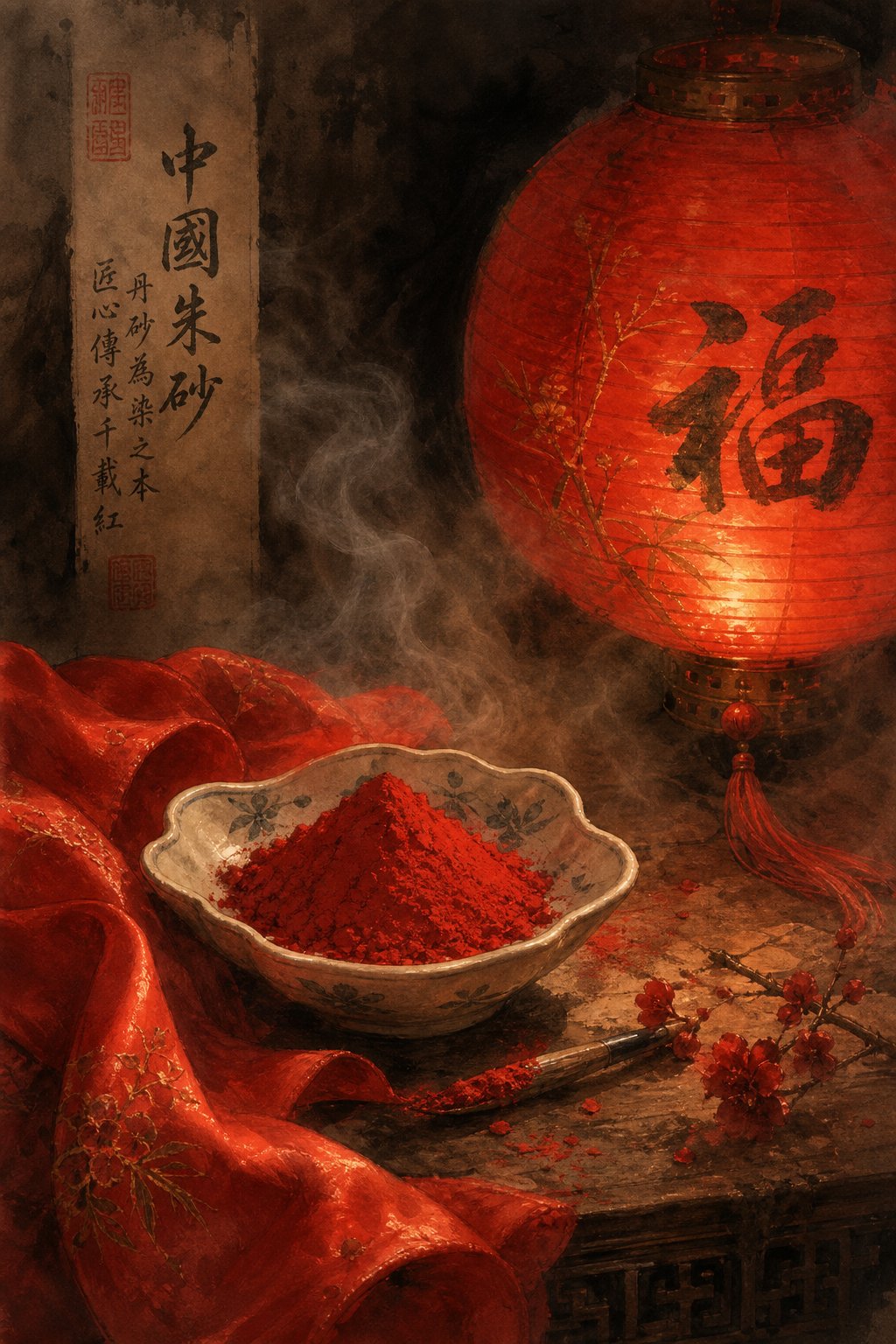
Red in Chinese Names From 丹 to 红
Red is not just the most popular color in Chinese naming. It is the most emotionally charged, historically layered, and symbolically versatile. No other chinese red color carries as many simultaneous meanings: joy, loyalty, revolution, femininity, celebration, and sincerity all live inside different red characters. What red colour symbolizes depends entirely on which character a parent chooses and when they choose it.
Red Characters and Their Distinct Naming Roles
The chinese for red is not a single word. It is a family of characters, each with its own personality. When parents select a red character for a name, they are choosing between very different symbolic registers. Here are the primary red-based characters used in naming and what each one carries:
- 丹 (dan) - Originally meaning cinnabar, the mineral pigment used in classical painting and Taoist alchemy. In male names, it evokes sincerity, loyalty, and a devoted heart (丹心, danxin, literally "cinnabar heart"). In female names, it suggests warmth, rosy beauty, and vitality. Appears in names like 丹青 (artistic mastery) and 丹凤 (phoenix grace).
- 红 (hong) - The most common modern word for red in mandarin. In names, it carries celebratory energy, good fortune, and social warmth. Strongly associated with feminine names from the mid-20th century onward. Found in names like 红梅 (red plum blossom) and 红霞 (red clouds at dawn).
- 赤 (chi) - A literary and ancient term for red, carrying connotations of bare honesty and fierce loyalty. Less common in modern names but valued for its classical weight. Appears in expressions like 赤子之心 (the pure heart of a newborn).
- 朱 (zhu) - Vermillion red, historically linked to imperial authority and the Ming Dynasty ruling family. Functions as both a surname and a given-name character, evoking nobility and official status.
Notice how 丹 operates across genders with different emphasis. A boy named 丹忠 carries the meaning of unwavering loyalty, while a girl named 丹萍 evokes gentle warmth drifting like duckweed. The same red character bends its symbolism to match the surrounding characters and the cultural expectations attached to gender. This flexibility is part of why 丹 has remained popular across centuries while other red characters rise and fall with political tides.
Historical Shifts in Red-Name Popularity
The character 红 tells a political story. During imperial China, red in chinese culture was already auspicious, linked to weddings, festivals, and the red lantern chinese families hung to ward off evil spirits and welcome prosperity. That celebratory energy made 红 a natural fit for names expressing hope and joy.
But 红 exploded in popularity during the 1960s and 1970s. The Cultural Revolution elevated red from a festive color to a political identity. The Red Guards (红卫兵) made 红 synonymous with revolutionary fervor. Research on Han Chinese naming patterns shows that names from this era reflected the political zeitgeist directly, with parents encoding loyalty to the revolution into their children's identities. Names like 红军 (Red Army), 红卫 (Red Guard), and 红旗 (Red Flag) surged among both boys and girls born in that decade.
After the reform era began in the late 1970s, overtly political red names declined sharply. Parents pivoted back toward poetic and naturalistic uses of red. 红梅 (red plum blossom) persisted because it balanced chinese red symbolism with literary elegance rather than ideology. The plum blossom blooms in winter, so 红梅 carries resilience alongside beauty, a wish that transcends any single political moment.
Today, 红 reads as slightly dated in mainland China, associated with the parents and grandparents generation. Younger parents seeking red symbolism increasingly reach for 丹 or 朱, characters that feel classical rather than political. Yet in overseas Chinese communities, 红 retains its festive warmth without the revolutionary baggage, making it a living example of how the same character carries different weight depending on geography and generation.
The red lantern hanging outside a family home during Spring Festival promises warmth, safety, and togetherness. That same promise lives inside red-based names. Whether through the ancient cinnabar of 丹 or the revolutionary fire of 红, red in chinese naming always points toward the same core wish: that this child will live a life filled with passion, connection, and warmth. The question is simply which shade of red matches the era, the family, and the future a parent imagines.
Red dominates the warm end of the spectrum, but Chinese naming tradition gives equal attention to colors associated with wealth and imperial power. Gold and yellow characters carry their own complex history, one shaped not just by aspiration but by centuries of imperial restriction on who was even permitted to use them.
Gold and Yellow Characters in Naming Traditions
Gold and yellow occupy a paradoxical space in Chinese naming. They represent the center of the cosmological map, the Earth element, imperial authority, and material prosperity. Yet for centuries, ordinary families faced real consequences for using yellow too freely. Understanding what does yellow symbolize in china requires separating two intertwined stories: the color as imperial property and the color as personal aspiration.
Imperial Yellow and Its Naming Taboos
Yellow as a symbol in Chinese culture sits at the very top of the color hierarchy. It corresponds to the center direction, the Earth element, and the emperor himself. From the Tang Dynasty onward, imperial law increasingly restricted the use of bright yellow (明黄, minghuang) to the royal family. Commoners caught wearing yellow garments or using yellow in unauthorized ways risked severe punishment.
During imperial China, yellow was legally reserved for the emperor and his immediate family. This restriction extended into naming conventions, where using 黄 as a given-name character could be interpreted as an act of presumption against the throne.
This taboo created a fascinating split. The character 黄 (huang) thrived as a surname, one of the most common in China, carried by millions of descendants whose family name traces back to the ancient State of Huang, which fell to the State of Chu in 648 BC. The people of that conquered state adopted Huang as their family name, preserving their heritage through generations. Yet the same character was treated cautiously in given names precisely because of its imperial weight.
So what does yellow mean in china when it appears in a name today? The imperial taboo has faded, but its echo persists. Parents rarely choose 黄 as a standalone given-name character because it reads as a surname first. The colour symbolism yellow carries, authority, centrality, nourishment, tends to enter names through indirect routes: characters like 金 (gold) or compound names that pair 黄 with naturalistic imagery, such as 黄莺 (golden oriole).
金 as a Name Character Across Genders
Where 黄 carries political baggage, 金 (jin, gold) moves freely. It connects to the Metal element in Five Elements naming, making it a practical choice for children whose birth charts show a Metal deficiency. But its appeal goes far beyond elemental balancing.
What does gold color symbolize in a Chinese name? Preciousness, resilience, and enduring value. Gold does not tarnish. It does not break easily. These physical properties translate directly into naming aspirations. A child named 金刚 (Jingang) carries the meaning of diamond-hard strength. A girl named 金玉 (Jinyu) evokes the phrase "gold and jade," a classical metaphor for something of supreme worth.
In yellow china's cultural landscape, 金 also functions as what color means success. Parents who wish prosperity and achievement for their children reach for 金 because it encodes wealth without vulgarity. The character suggests earned value rather than mere luck. You will find it across genders, though its pairings shift: male names tend toward 金鹏 (golden roc, ambition) or 金锋 (golden blade, sharpness), while female names favor 金萍 (golden duckweed, graceful wandering) or 金兰 (golden orchid, sworn friendship).
The character also appears as a surname, ranking among China's top 70. Families surnamed 金 often avoid doubling the gold imagery in given names, opting instead for complementary elements like Water or Wood characters to maintain balance. This interplay between surname color and given-name strategy reveals how deeply the Five Elements framework shapes real naming decisions.
Gold and yellow anchor the center of the traditional color map, but Chinese naming reaches equally into colors that resist easy categorization. One character in particular spans an entire spectrum, covering blue, green, and even black depending on context, and its role in names is unlike anything in Western color logic.
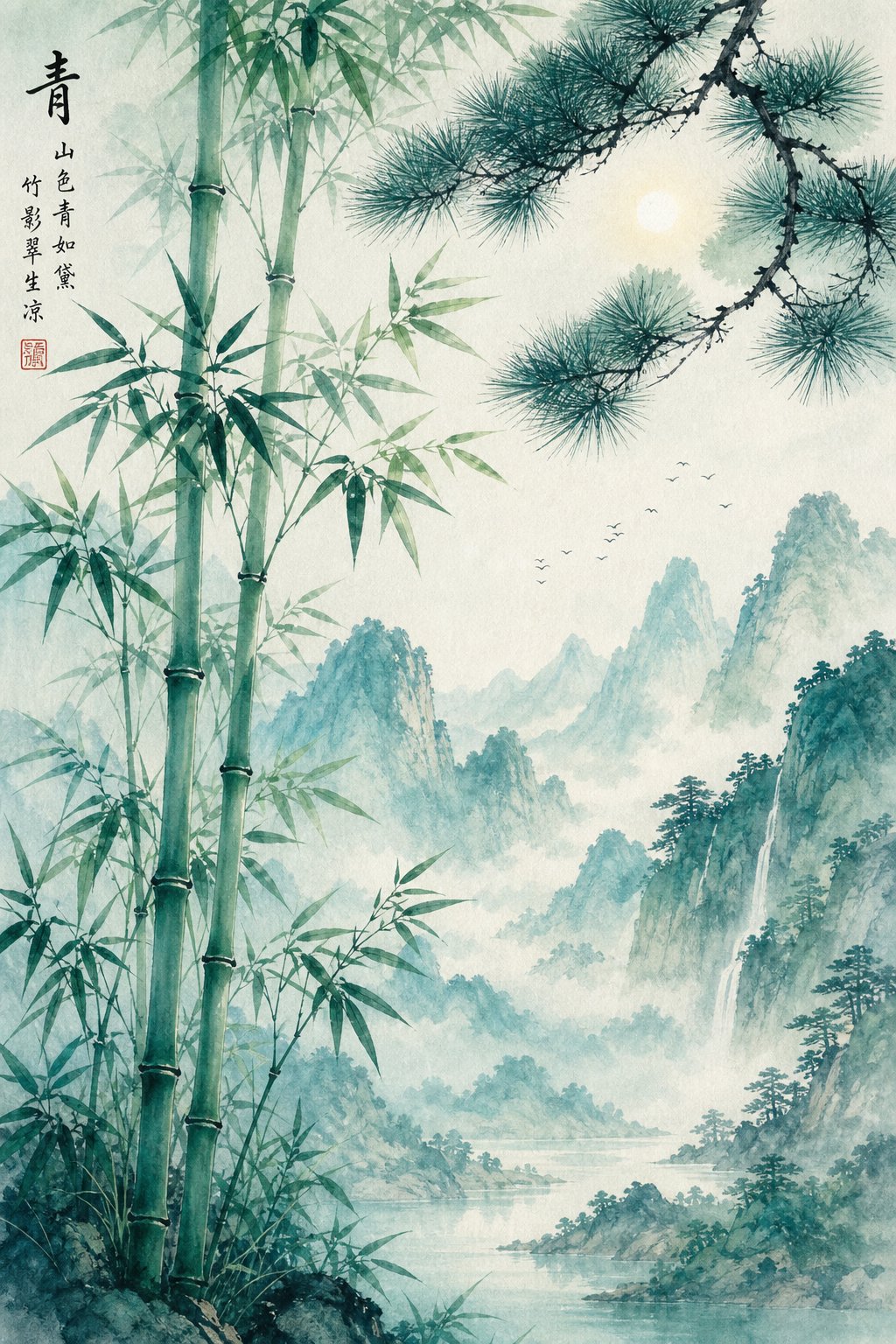
Blue, Green, and the Enigmatic Character 青
That spectrum-spanning character is 青 (qing), and it breaks every assumption English speakers bring to color naming. There is no single word for blue in chinese that maps neatly onto the English category, and there is no clean boundary between blue and green in chinese either. The character 青 sits at the center of this ambiguity, covering the color of a clear sky, fresh bamboo, dark ink stone, and young grass all at once. In Western languages, those would require four different color words. In Chinese naming, one character holds them all.
The Unique Spectrum of 青 in Chinese Names
The qing chinese color defies translation because it was never meant to describe a single wavelength. It describes a quality: the fresh, vital, living energy of things in their prime. When parents place 青 in a name, they are not saying "this child is blue" or "this child is green." They are saying "this child embodies youth, growth, and natural vitality."
Consider the name 青松 (Qingsong). It evokes an evergreen pine, resilient through winter, perpetually alive. The name 青云 (Qingyun) references clouds at high altitude, a classical metaphor for rapid career advancement. In both cases, the chinese blue colour association fades into something broader: freshness, upward momentum, and enduring life force. This is why 青 connects to the Wood element and the East direction in the Five Colors system. It carries spring energy regardless of whether you picture it as blue or green.
The character 碧 (bi) narrows the spectrum toward jade-green, and it carries distinctly feminine associations. As noted in Parents magazine's guide to Chinese baby names, 碧 means "green jade" and appears frequently in girls' names. Its symbolism draws from the physical properties of jade itself: translucent purity, cool elegance, and quiet strength. Names like 碧玉 (Biyu, jade beauty) and 碧莲 (Bilian, jade lotus) pair the character with other feminine imagery to create layered meaning. Blue in mandarin carries poetic weight through 碧, connecting the color to refinement rather than mere description.
Why 绿 Is Avoided While 碧 Thrives in Names
Here is where cultural taboo reshapes the naming landscape entirely. The character 绿 (lu) is the standard modern word for green in mandarin, yet you will almost never find it in a Chinese personal name. The reason traces back nearly two thousand years to a class-based stigma that eventually crystallized into one of Chinese culture's most potent insults.
The phrase 戴绿帽子 (dai lu maozi, "wearing a green hat") means a man's wife has been unfaithful. As The Sun Malaysia reports, this association dates back to ancient dynasties when green clothing was forced upon lower-ranking officials and later upon men whose female relatives worked in prostitution. By the Ming Dynasty, calling someone a "green headscarf" was a direct accusation of being cuckolded. The taboo runs so deep that even wearing a green hat in public draws comments today.
This cultural weight makes 绿 radioactive in naming contexts. No parent wants their child's name to trigger even a subconscious association with infidelity or shame. Yet the broader blue-green spectrum remains highly desirable. The solution is elegant: parents reach for characters that carry the freshness of green without the stigma of 绿.
Here is how the naming landscape divides between welcomed and avoided characters in this color range:
- Welcomed in names: 青 (qing, blue-green vitality), 碧 (bi, jade-green purity), 翠 (cui, kingfisher green, feminine elegance), 苍 (cang, deep blue-green, masculine depth), 蓝 (lan, blue, increasingly popular for its clean modern feel)
- Avoided in names: 绿 (lu, plain green, green hat taboo), 靛 (dian, indigo, too obscure and visually dark), 灰 (hui, gray, dull and lifeless connotations)
Characters like 翠 deserve special attention. The chinese for blue-green in its most poetic form, 翠 originally described the iridescent feathers of the kingfisher bird. In names, it suggests shimmering beauty and natural grace. 翠兰 (Cuilan, emerald orchid) and 翠微 (Cuiwei, misty green mountains) both use the character to paint miniature landscapes inside a name.
Some characters carry color meaning through their radicals rather than their primary definition. The grass radical (艹) atop characters like 萍, 莲, and 蕊 subtly encodes green-growing energy without explicitly naming a color. The jade radical (王) in characters like 琳, 瑶, and 珏 implies the blue-green translucence of jade. These subtler color signals let parents embed nature imagery into names without triggering any taboo or committing to a single hue.
The blue-green spectrum reveals how deeply cultural history shapes which characters survive in naming and which become untouchable. But the story grows even more complex at the opposite ends of the color wheel, where purple carries nobility, white walks a tightrope between mourning and purity, and black hides philosophical depth behind apparent darkness.
Purple, White, and Black in the Naming Spectrum
Purple, white, and black sit at the edges of the Chinese color wheel, and each one carries a tension that makes naming decisions more complex. Purple radiates nobility but risks sounding overly ornate. White suggests purity but echoes funeral rites. Black implies depth but borders on ominous. Parents who reach for these characters are making bolder choices than those who stick with safe reds and golds, and the rewards match the risk when the symbolism lands correctly.
Purple and Its Noble Associations in Names
The chinese purple color carries a lineage that traces directly to heaven. In Taoist philosophy, purple is associated with the North Star and celestial immortality. The Forbidden City's formal Chinese name is 紫禁城 (Zijincheng), literally "Purple Forbidden City," linking the color to divine imperial authority. As Asian Absolute notes, purple in Chinese tradition carries deep spiritual significance connected to the ascension to immortality and harmony between heaven and earth.
When 紫 (zi) enters a personal name, it brings all of that weight with it. Purple in chinese naming evokes spiritual refinement, rare beauty, and elevated status. You will find it overwhelmingly in female names, where it pairs with characters suggesting nature, grace, or talent. Names like 紫萱 (Zixuan, purple daylily) and 紫嫣 (Ziyan, purple beauty) combine the color's nobility with soft feminine imagery. The character suggests a woman who is both elegant and uncommon, someone who stands apart without needing to announce it.
What makes chinese purple particularly effective in names is its lack of negative associations. Unlike white or black, purple carries no taboos, no funeral connections, no slang pitfalls. It reads as purely aspirational. Among younger Chinese generations, purple also connects to romantic love and emotional expressiveness, giving names containing 紫 a modern warmth alongside their classical dignity. A girl named 紫琳 (Zilin, purple jade tinkling) carries both ancient nobility and contemporary tenderness in two characters.
Male names occasionally use 紫, though less frequently. When they do, the pairing tends toward grander imagery: 紫阳 (Ziyang, purple sun) or 紫峰 (Zifeng, purple peak). These combinations lean into the imperial and cosmic associations rather than the romantic ones, showing how the same color character bends its meaning depending on its companion.
White and Black Characters Between Taboo and Elegance
White symbolism in Chinese naming presents a genuine paradox. In daily life, white (白 bai) is the color of funerals, grief, and the spirit world. White flowers go to the bereaved. White envelopes hold condolence money. White clothing marks mourners. This association is strong enough that white in chinese naming contexts triggers immediate caution among most parents.
Yet 白 is simultaneously one of China's most common surnames, carried by millions of people including the legendary Tang Dynasty poet 白居易 (Bai Juyi). As a surname, 白 carries no negative weight whatsoever. It simply identifies a family lineage. The problem arises specifically when 白 appears as a given-name character, where it can suggest emptiness (白费, wasted effort), blankness (空白, blank space), or the pallor of death.
Here is where literary naming creates an exception. In poetic and artistic contexts, white in chinese recovers its meaning of purity, clarity, and unblemished truth. A scholar choosing a literary name (字 or 号) might embrace 白 precisely for its connotation of clean simplicity and honest character. The poet Bai Juyi's name itself means "dwelling in ease," and the surname 白 lends it an air of unadorned directness. This split between everyday avoidance and literary appreciation makes white symbolism one of the most context-dependent choices in the entire naming tradition.
Black in chinese language carries its own duality. The standard character 黑 (hei) rarely appears in names because modern Chinese associates it with illegality (黑市, black market), secrecy (黑幕, hidden dealings), and unlicensed activity (黑车, illegal taxi). No parent wants those connotations attached to a child. But black in chinese character form offers alternatives that bypass these modern associations entirely.
The character 玄 (xuan) means "mysterious black" or "profound darkness," and it carries philosophical weight drawn from Taoist cosmology. 玄 is the color of the primordial void, the deep space from which all creation emerges. In names, it suggests wisdom beyond ordinary understanding, hidden depth, and spiritual insight. The mythological Black Tortoise (玄武, Xuanwu) represents the North and offers protection, giving 玄 a guardian quality in naming. A boy named 玄明 (Xuanming, profound clarity) carries the paradox of darkness that illuminates.
Then there is 黛 (dai), a dark blue-black character that has become one of the most beloved feminine name elements in Chinese. 黛 originally referred to the dark mineral pigment women used to paint their eyebrows in classical China. Its most famous literary bearer is 林黛玉 (Lin Daiyu), the tragic heroine of the novel Dream of the Red Chamber, whose name means "black jade." In naming, 黛 evokes classical beauty, artistic sensitivity, and a touch of melancholy elegance. It carries the depth of black without any of the negative modern associations of 黑, making it a refined choice that signals literary awareness.
The table below compares these color characters across their key naming dimensions:
| Character | Pronunciation | Literal Meaning | Naming Symbolism | Gender Tendency |
|---|---|---|---|---|
| 紫 | zi | Purple | Nobility, spiritual refinement, rare beauty | Strongly feminine |
| 白 | bai | White | Purity and clarity (literary); mourning (everyday) | Common surname; rare in given names |
| 黛 | dai | Dark blue-black pigment | Classical beauty, artistic sensitivity, elegance | Exclusively feminine |
| 玄 | xuan | Mysterious black | Philosophical depth, hidden wisdom, cosmic origin | Predominantly masculine |
| 黑 | hei | Black | Rarely used; negative modern associations | Avoided in given names |
| 墨 | mo | Ink (black) | Scholarly refinement, literary talent, artistic spirit | Slightly masculine |
Notice the pattern: the standard, everyday color words (黑 for black, 白 for white) are the ones parents avoid. The literary, poetic, or philosophical variants (玄, 黛, 墨) thrive in names because they access the color's deeper symbolic register without triggering modern negative associations. A parent choosing 墨 (mo, ink-black) for a son's name is not naming him "black." They are naming him after the ink of scholars, the medium of calligraphy and painting, the substance that transforms blank paper into art.
This principle, that naming favors the elevated variant over the common one, applies across the entire color spectrum. It explains why 丹 outperforms 红, why 碧 replaces 绿, and why 玄 succeeds where 黑 fails. The naming tradition consistently reaches for the character that carries cultural memory, literary resonance, and aspirational weight rather than the one that simply labels a color.
These choices are rarely made on instinct alone. Behind many naming decisions sits a structured analytical process, one rooted in the same Five Elements cosmology that organizes the colors themselves. When a child's birth chart reveals an elemental imbalance, specific color characters become not just desirable but prescribed, turning naming from an art into a calculated act of cosmic correction.
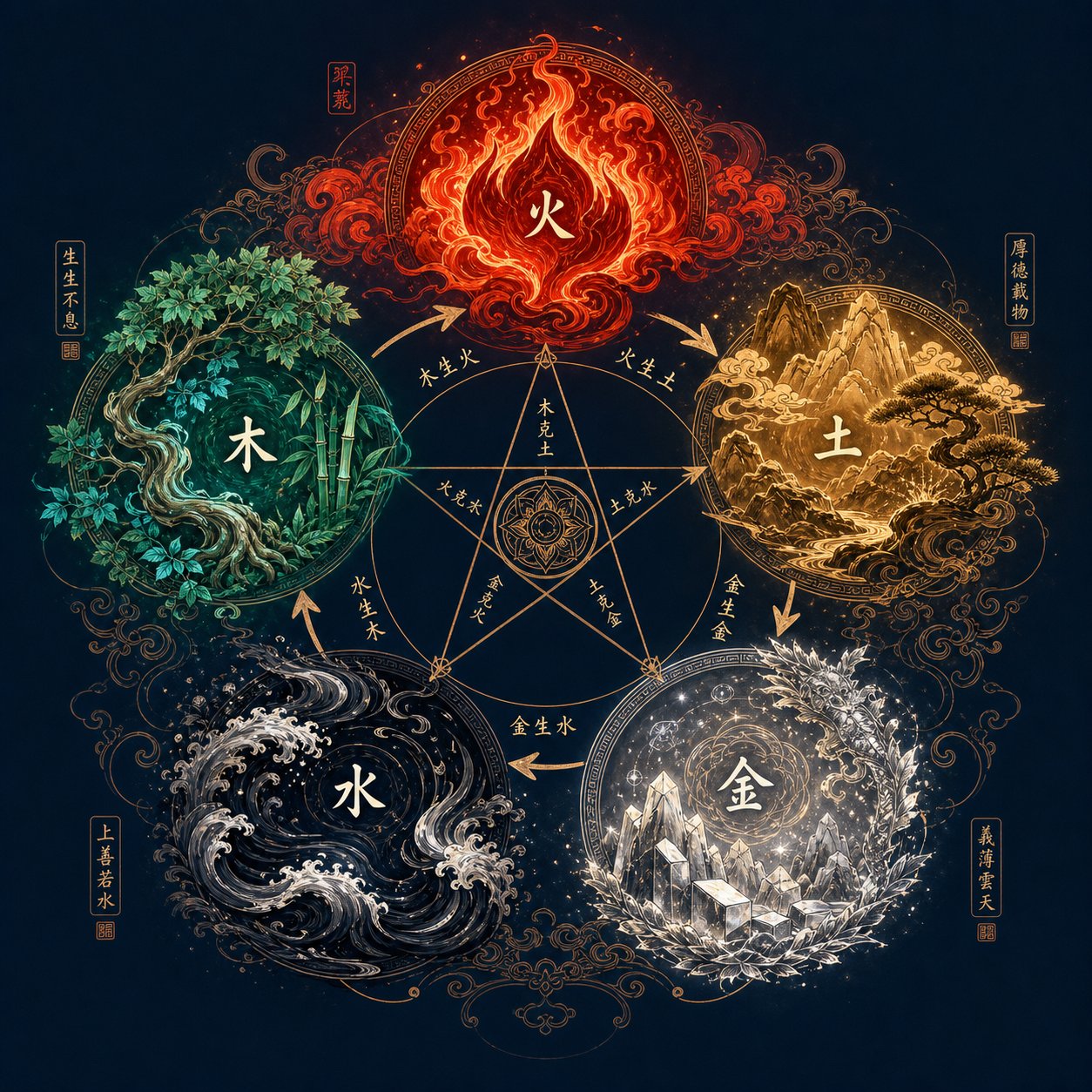
Five Elements Birth Charts and Name Selection
That calculated act of cosmic correction has a formal name: BaZi naming (八字取名). It is the process by which a child's exact birth time generates an elemental map, and that map dictates which color characters belong in their name. This is not guesswork or aesthetic preference. It is a structured diagnostic system where lucky colors in china are determined individually, one birth chart at a time.
How Birth Charts Determine Color Characters in Names
When a child is born in a traditional Chinese family, the first question is often not about weight or length but about the exact hour of birth. That hour, combined with the year, month, and day, generates eight characters called BaZi (八字), literally "Eight Characters." Each pair maps to one of the Five Elements: Wood, Fire, Earth, Metal, or Water. The resulting chart reveals which elements dominate and which are deficient.
Imagine a child born in deep winter with a chart heavy in Water and Metal but lacking Fire. That child's elemental profile runs cold. A naming consultant reads this imbalance and prescribes Fire-associated color characters like 丹 (cinnabar red) or 红 (red) to introduce warmth and vitality. The color character is not decorative. It is medicine for the chart.
The yin and yang colors within the chart add another layer. Each element expresses itself in both Yin and Yang forms. What color is yin in the Fire element? A gentle candle flame, represented by the Heavenly Stem 丁. What color is yang? A roaring bonfire, represented by 丙. A child with Yin Fire as their Day Master needs different balancing than one with Yang Fire. The yin color of an element suggests subtlety and receptivity, while the yang expression suggests intensity and outward force. This polarity shapes whether a consultant recommends a softer color character like 丹 or a bolder one like 赤.
Balancing the Five Elements Through Naming
The process follows a clear sequence. Here is how a naming consultant moves from birth data to final color character selection:
- Calculate the Four Pillars. Convert the birth year, month, day, and hour into four pairs of Heavenly Stems and Earthly Branches, producing the eight characters of the BaZi chart.
- Identify the Day Master. The Heavenly Stem of the Day Pillar represents the child's core elemental identity, the self that all other elements interact with.
- Assess elemental distribution. Map how much Wood, Fire, Earth, Metal, and Water appear across all eight characters, including Hidden Stems within the Earthly Branches.
- Determine the Favorable Element. Based on whether the Day Master is strong or weak, identify which element will bring balance. This is not simply "add what is missing" but rather "add what harmonizes the whole chart."
- Select color characters that carry the Favorable Element. If Fire is needed, the consultant draws from red-spectrum characters (丹, 红, 朱, 赤). If Wood is needed, blue-green characters (青, 碧, 翠) enter consideration. If Metal is the prescription, gold characters (金, 鑫) become candidates.
- Verify phonetic harmony and stroke count. The chosen color character must sound natural with the surname, carry an auspicious stroke count, and pair well with the second given-name character.
This is why two children born on the same day might receive completely different good luck colors in their names. A morning birth and an evening birth can shift the Hour Pillar enough to change the entire elemental balance. What feels lucky in chinese naming is not universal. It is personal, calculated from the specific cosmic weather at the moment of arrival.
The tradition continues in modern practice. Parents today consult both traditional BaZi masters and contemporary naming services that use the same Five Elements framework. Digital tools now calculate the elemental chart instantly, but the interpretive logic remains unchanged: read the chart, find the gap, prescribe the color. Whether a family visits a temple fortune teller or uses an online BaZi calculator, the underlying question is identical. Which element does this child need, and which color character delivers it?
The yin yang colours embedded in a birth chart do not just determine individual names. They also interact with something the child inherits before any consultant is ever consulted: the family surname. Many of China's most common surnames already contain color elements, and when a surname carries its own chromatic weight, the entire naming equation shifts.
Color-Based Surnames and Their Historical Origins
Every Chinese surname tells a story, but color-based surnames tell two stories at once. They carry the weight of clan history and the chromatic symbolism of the character itself. When your family name is a color, every given-name decision must account for that inherited hue. The surname arrived centuries before you did, and it shapes the naming landscape before a single consultant is consulted.
Origins of Color-Based Chinese Surnames
Chinese surnames containing color characters did not originate because ancestors liked a particular shade. They trace back to lost kingdoms, geographic features, imperial decrees, and occupational identities. Each one is a piece of chinese writing with meaning that extends far beyond the color it names. Here are the major color surnames and the histories they carry:
- 黄 (Huang, yellow) - One of China's most common surnames, carried by over 30 million people. It originates from the ancient State of Huang (黄国) in present-day Henan province, which fell to the State of Chu in 648 BC. Survivors adopted their kingdom's name as a family identifier. In Cantonese communities, it is pronounced "Wong"; in Teochew, "Ng" or "Oei." The same character 黄 can be romanized as Huang, Wong, Ng, Ong, or Vong depending on dialect and migration history.
- 白 (Bai, white) - Traces to the ancient Bai Di (白狄) people of northern China and to descendants of the Qin Dynasty minister Bai Qi. The chinese white surname carries no mourning associations whatsoever in the surname position. It is simply a lineage marker, most concentrated in Shaanxi and Henan provinces.
- 朱 (Zhu, vermillion red) - The chinese symbol for red in its vermillion form. According to genealogical records, the Zhu surname originated from the ancient State of Zhu (邾) in present-day Shandong province. At the start of the Zhou Dynasty, Cao Jia, a descendant of the legendary emperor Zhuanxu, was bestowed lordship of this state. When Chu conquered it, the descendants dropped the radical meaning "country" (阝) from 邾, leaving 朱 as their surname. It later became the imperial surname of the Ming Dynasty.
- 金 (Jin, gold) - Multiple origin paths. Some Jin families descend from the Jurchen and Manchu peoples of northeastern China who adopted Chinese surnames to integrate into society. Others trace to the ancient Shao Hao clan. The surname is particularly common in Korean-Chinese communities, where it corresponds to the Korean surname Kim.
- 黑 (Hei, black) - One of China's rarest color surnames. The chinese for black as a family name traces to ethnic minority groups in northwestern China, particularly among Hui Muslim communities. Its scarcity reflects both the character's challenging associations and its geographic concentration in Gansu and Ningxia provinces.
Notice the pattern: these surnames originated from places, peoples, and political events rather than from any color preference. The symbolism in china attached to each color came later, layering new meaning onto names that were already centuries old. These are chinese cultural symbols whose color dimension is secondary to their historical identity.
How Color Surnames Shape Given-Name Choices
When your surname already contains a color, the given-name strategy shifts. Families surnamed 黄 (yellow) rarely add another warm-spectrum character like 金 (gold) to the given name because the combination reads as chromatically redundant. Instead, they often reach for complementary elements. A child surnamed 黄 might receive a Water or Wood character in their given name to balance the Earth energy that yellow carries in Five Elements logic.
The Zhu (朱) surname presents a different challenge. Because 朱 means vermillion red and was the Ming imperial surname, given names paired with it must avoid sounding presumptuous. A name like 朱皇 (Zhu Huang, vermillion emperor) would be absurd. Families surnamed Zhu tend toward understated given names that let the surname's historical grandeur speak for itself.
Regional dialect also reshapes how these color surnames interact with given names. The same surname character produces entirely different sound combinations depending on whether the family speaks Mandarin, Cantonese, or Hokkien. A name that flows musically in Mandarin might clash tonally in Cantonese. Families in Guangdong and Fujian, the ancestral provinces of most overseas Chinese, often prioritize how the full name sounds in their home dialect rather than in standard Mandarin. This means the same chinese words symbols and meanings can produce different naming choices depending on which community the family belongs to.
Symbols in chinese culture rarely exist in isolation, and color surnames prove the point. They interact with given names, birth charts, generational poems, and regional phonetics all at once. A family surnamed 白 in Xi'an makes different naming calculations than a family surnamed 白 in Hong Kong, not because the character's meaning changes but because the surrounding cultural and linguistic context shifts everything around it. These inherited color identities set the stage for how modern parents navigate tradition, and increasingly, how they blend old frameworks with contemporary taste across very different Chinese-speaking communities.
Modern Naming Trends Across Chinese Communities
Those inherited color identities now meet a generation of parents who grew up with internet access, classical literature revivals, and cross-cultural awareness all at once. The result is a naming landscape where traditional chinese color meaning coexists with fresh aesthetic sensibilities, and where the same color character can carry entirely different appeal depending on whether the family lives in Shanghai, Taipei, Hong Kong, or Vancouver.
Regional Differences in Color-Name Preferences
Mainland China, Taiwan, Hong Kong, and overseas Chinese communities each bring distinct pressures to color-name selection. The divergence is not random. It reflects different political histories, linguistic environments, and cultural reference points that shape how parents relate to the chinese colour palette of naming characters.
In mainland China, the post-1990 generation of parents has driven a sharp turn toward classical literary names. Global Times reports that names like "Yanzhou" (inkstone and boat), drawn from Northern Song Dynasty poetry, and "Jincheng" (splendid prospects), rooted in classical idioms, are trending among newborns. Cultural sociologist Xu Shumin describes this shift as young parents "reclaiming traditional Chinese culture as a living aesthetic in everyday life." For color characters specifically, this means a revival of literary variants like 黛 (dai, dark pigment), 碧 (bi, jade-green), and 墨 (mo, ink-black) over their plainer counterparts. Educated urban parents in cities like Chengdu and Hangzhou reach for characters that signal both cultural depth and visual beauty.
Taiwan maintains stronger continuity with pre-1949 naming conventions. Color characters like 紫 (purple) and 翠 (kingfisher green) never fell out of fashion there because they were never displaced by revolutionary-era naming. Taiwanese parents tend to favor softer, more naturalistic color pairings, and the influence of Japanese aesthetics adds a preference for understated elegance over bold symbolism.
Hong Kong presents a unique case. Research on Hong Kong naming practices shows that families there navigate two naming systems simultaneously: a Chinese name reserved for family and formal documents, and an English name used in everyday social life. This dual-name reality means the Chinese name often carries heavier symbolic weight precisely because it is used less casually. Hong Kong parents invest significant effort in the Chinese name's meaning, stroke count, and elemental balance, frequently consulting feng shui masters. Color characters chosen for Hong Kong children tend toward classical refinement because the name functions as a cultural anchor rather than an everyday identifier.
Overseas Chinese communities in Southeast Asia, North America, and Australia face an additional layer: how the name sounds when romanized. A mandarin color character like 青 (qing) romanizes cleanly, but 翠 (cui) can confuse English speakers unfamiliar with the "c" as "ts" sound. Diaspora families sometimes weigh phonetic accessibility alongside symbolic meaning, choosing color characters that produce recognizable romanized syllables without sacrificing chinese colour symbolism.
How Modern Parents Blend Tradition With Fresh Aesthetics
The decline of overtly political color names is now complete. Characters like 红 (red) in revolutionary combinations like 红军 (Red Army) or 红卫 (Red Guard) belong firmly to the grandparent generation. What replaced them is not a rejection of color symbolism but a refinement of it. Parents still want color characters in names. They just want ones that feel literary rather than ideological, personal rather than collective.
Several trends define the current moment:
- Classical revival characters. 黛, 碧, 墨, and 玄 are gaining popularity among parents who read classical poetry and watch historical dramas. These characters signal cultural literacy and aesthetic taste.
- Nature-forward pairings. Color characters increasingly pair with natural imagery: 青禾 (green seedling), 紫薇 (purple crepe myrtle), 碧溪 (jade-green stream). The combination creates miniature landscape paintings inside a name.
- Gender flexibility. Characters like 青 and 墨, once coded masculine, now appear in girls' names as parents move away from rigid gender associations in naming.
- Stroke-count optimization. Modern naming services calculate how a color character's stroke count interacts with the surname and second character to produce auspicious numerological totals.
Naming apps and online services have made traditional chinese colours symbolism accessible to parents who might never visit a fortune teller in person. These platforms typically ask for the child's birth date and time, calculate the BaZi chart automatically, identify the favorable element, and then generate name suggestions filtered by that element's associated colors. The traditional logic remains intact. Only the delivery method has changed.
The table below shows example name combinations that illustrate how color characters pair with companion characters to create layered meanings across different communities:
| Full Name | Color Character | Companion Character | Combined Meaning | Regional Popularity |
|---|---|---|---|---|
| 紫萱 (Zixuan) | 紫 (purple) | 萱 (daylily) | Noble beauty that brings joy and ease | Mainland China, Taiwan |
| 碧瑶 (Biyao) | 碧 (jade-green) | 瑶 (precious jade) | Pure elegance of doubled jade imagery | Mainland China, Southeast Asia |
| 青禾 (Qinghe) | 青 (blue-green) | 禾 (grain seedling) | Youthful vitality and natural growth | Mainland China (trending) |
| 墨轩 (Moxuan) | 墨 (ink-black) | 轩 (high, dignified) | Scholarly refinement with noble bearing | Mainland China, Taiwan |
| 黛琳 (Dailin) | 黛 (dark pigment) | 琳 (beautiful jade) | Classical beauty with precious inner quality | Hong Kong, Taiwan |
| 丹彤 (Dantong) | 丹 (cinnabar red) | 彤 (red, glowing) | Doubled warmth and passionate sincerity | Mainland China, overseas |
| 翠微 (Cuiwei) | 翠 (kingfisher green) | 微 (subtle, misty) | Delicate beauty of distant green mountains | Taiwan, literary circles |
Each of these names demonstrates how a single color character transforms when paired with the right companion. 紫 alone means purple. But 紫萱 means "the noble spirit that brings comfort," because 萱 is the daylily, traditionally called the "forget-worry grass." The color stops being a color and becomes the first brushstroke in a two-character painting.
What unites all these regional variations and generational shifts is a consistent underlying principle: chinese color meanings in names are never decorative. Whether a family in Chengdu names their daughter after a line from the Tao Te Ching or a family in Toronto selects a color character that balances their child's birth chart, the logic is the same. The color carries a wish. The name carries the color. And the child carries the name into a future their parents can only imagine but refuse to leave to chance.
Color meanings chinese families have honored for millennia continue to evolve without breaking. The chinese color palette of naming characters expands as forgotten literary terms are rediscovered and as new aesthetic sensibilities emerge. Yet the core practice remains what it has always been: selecting a hue that shapes destiny, one character at a time.
Frequently Asked Questions About Chinese Names and Color Symbolism
1. Why do Chinese parents put color characters in their children's names?
Chinese parents embed color characters in names as carriers of aspiration rather than visual description. Each color character connects to the Five Elements cosmology, carrying specific virtues, life wishes, and cultural memory. For example, placing 丹 (cinnabar red) in a name encodes sincerity and loyalty, while 碧 (jade-green) conveys purity and elegance. Parents also use color characters to balance elemental deficiencies identified in a child's BaZi birth chart, making the choice both symbolic and cosmologically strategic.
2. What colors are considered unlucky or taboo in Chinese names?
The character 绿 (lu, green) is strongly avoided in Chinese names due to the 'green hat' taboo, which implies marital infidelity. The standard character 黑 (hei, black) is rarely used because modern Chinese associates it with illegality and secrecy. Similarly, 白 (bai, white) is cautiously treated in given names because of its connection to funerals and emptiness. However, literary alternatives like 碧 (jade-green), 玄 (mysterious black), and 黛 (dark pigment) bypass these taboos while preserving the color's deeper symbolic qualities.
3. How does the Five Elements system determine which color goes in a Chinese name?
A naming consultant calculates the child's BaZi (Eight Characters) birth chart from their exact birth date and time. This chart reveals which of the Five Elements — Wood, Fire, Earth, Metal, or Water — are dominant or deficient. The consultant then prescribes color characters associated with the needed element. A child lacking Fire might receive 丹 or 红 (red characters), while one needing Wood could get 青 or 碧 (blue-green characters). The process also considers yin and yang expressions of each element to fine-tune the selection.
4. Why is purple (紫) so popular in Chinese girls' names?
Purple holds a uniquely positive position in Chinese naming because it carries nobility, spiritual refinement, and celestial associations without any negative taboos. The Forbidden City itself is called 紫禁城 (Purple Forbidden City), linking the color to divine imperial authority. In Taoist philosophy, purple connects to the North Star and immortality. Unlike white or black, purple has no funeral associations or slang pitfalls, making it purely aspirational. It pairs naturally with feminine imagery in names like 紫萱 (noble daylily) and 紫嫣 (purple beauty).
5. Do Chinese color surnames affect how given names are chosen?
Yes, color surnames significantly influence given-name strategy. Families surnamed 黄 (yellow/Earth element) often avoid adding another warm-spectrum character like 金 (gold) to prevent chromatic redundancy, instead choosing Water or Wood characters for elemental balance. Families surnamed 朱 (vermillion red), the Ming imperial surname, tend toward understated given names to avoid sounding presumptuous. Regional dialect also matters — the same surname produces different sound combinations in Mandarin, Cantonese, and Hokkien, affecting which given-name characters pair harmoniously.