When Two Languages Collide at the Worst Possible Moment
Imagine sitting in a lecture hall when the professor calls out a student's name and the entire room stifles a laugh. The name is perfectly normal, meaningful, and even beautiful in Chinese. But to English-speaking ears, it sounds like something you'd never say in polite company.
This is the reality for millions of Chinese speakers navigating English-dominant environments. Chinese names that sound like bad words in English aren't jokes or pranks. They're legitimate names backed by centuries of cultural tradition, carrying meanings like "blessing," "prosperity," or "eastern." The comedy is real, but it's rooted entirely in how two unrelated phonetic systems happen to overlap in unfortunate ways.
Lists of funny Chinese names circulate endlessly online, yet most miss the actual linguistics behind the phenomenon. What makes these names sound humorous in English has nothing to do with Chinese and everything to do with how English speakers process unfamiliar sounds.
Why This Happens Between Chinese and English
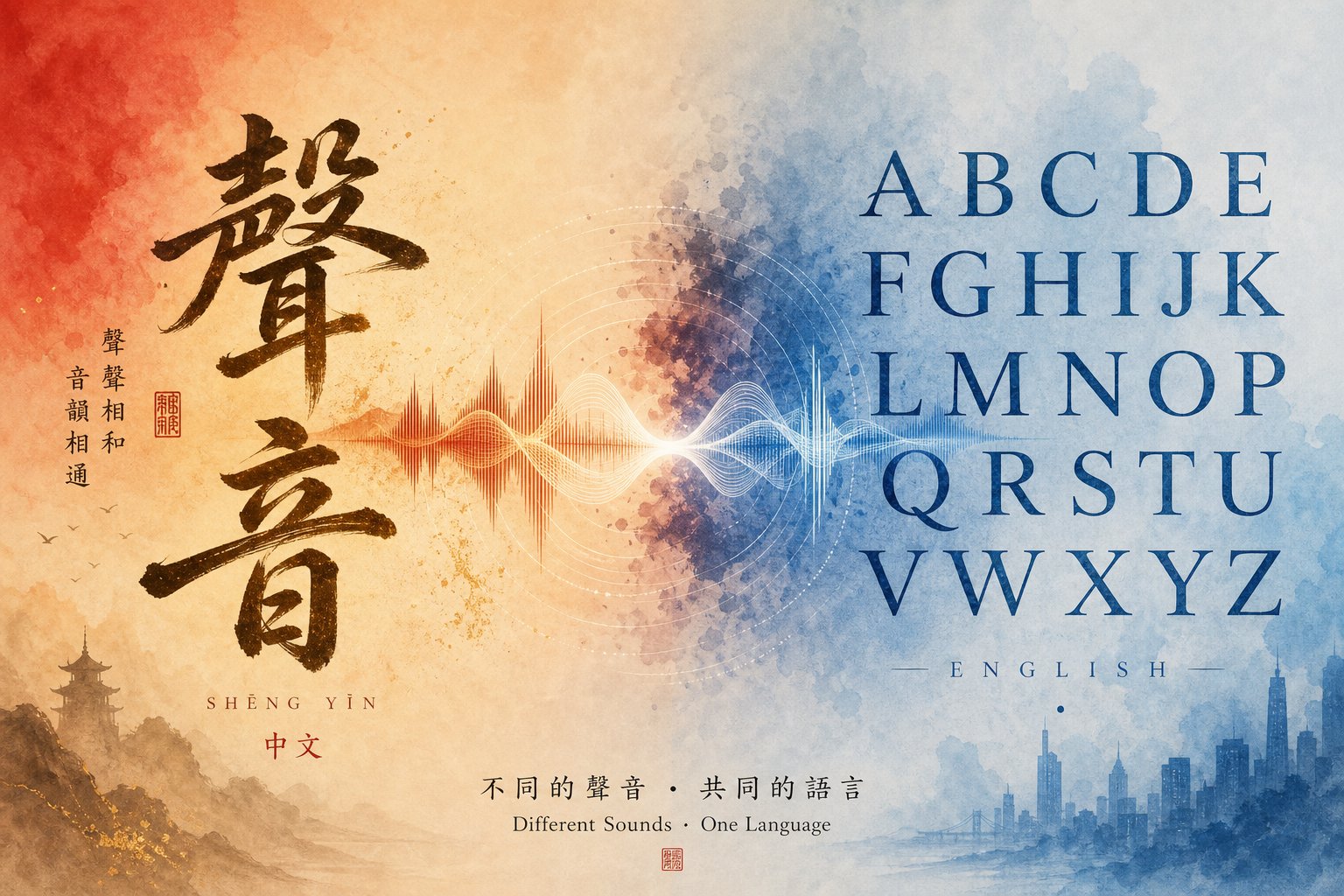
The core issue is deceptively simple. When Chinese characters get converted into Latin letters through romanization systems like Pinyin, all tonal information disappears. Mandarin Chinese uses four distinct tones to differentiate meaning. A single syllable like "shi" can mean poem, ten, history, or market depending on its tone. Strip those tones away, and you collapse dozens of distinct Chinese words into a handful of flat syllables that English speakers interpret through their own phonetic framework.
English uses pitch changes for emphasis and emotion, never for meaning. This makes English speakers uniquely unable to hear the tonal distinctions that keep Chinese names perfectly innocent in their original language.
What This Guide Covers
This isn't another list of funny names in Chinese presented without context. Instead, you'll find a genuine exploration of why romanization creates these collisions, which real syllables and surnames trigger English associations, how regional dialects change everything, and where the line falls between linguistic curiosity and disrespect. You'll also discover that this phenomenon cuts both ways, with plenty of common English words sounding equally inappropriate in Mandarin and Cantonese.
The goal is straightforward: understand the mechanics, appreciate the humor, and recognize that behind every humorous Chinese name is a real person whose name carries meaning you simply can't hear.
How Romanization Turns Innocent Names Into Awkward Ones
A single Chinese character can be spelled half a dozen different ways in English, and the spelling system used often determines whether a name looks perfectly normal or wildly inappropriate. The character 福, meaning "blessing" or "good fortune," becomes the harmless "fu" in Mandarin Pinyin. Romanize it through the Cantonese system, and you get "fuk." Same character, same meaning, completely different reaction from English speakers.
This isn't a quirk of one name. It's a structural feature of how Chinese sounds get translated into Latin letters. Multiple romanization systems exist because multiple Chinese languages and dialects exist, each with its own pronunciation rules. The system a person uses typically depends on where their family comes from, when they immigrated, or which government standardized their paperwork.
Pinyin vs Wade-Giles vs Jyutping
Three major romanization systems cover most Chinese names you'll encounter in English. Mainland China officially adopted Pinyin in the 1950s, replacing the older Wade-Giles system that had been standard since the 19th century. Meanwhile, Cantonese speakers in Hong Kong and diaspora communities use Jyutping or older informal romanizations that follow entirely different spelling conventions.
You'll notice the differences immediately when you compare how the same characters appear across systems. Wade-Giles uses apostrophes to mark aspiration (like ts'ui or ch'ien), while Pinyin uses letters like Q, X, and Z that Wade-Giles never employs. Cantonese Jyutping, built for a language with six tones instead of four, produces spellings that look nothing like either Mandarin system.
Here's how common characters transform depending on which system does the translating:
| Character | Meaning | Mandarin Pinyin | Wade-Giles | Cantonese Romanization | English Reaction |
|---|---|---|---|---|---|
| 福 | Blessing, fortune | fu | fu | fuk | Cantonese version triggers strong association |
| 石 | Stone, rock | shi | shih | sek/shek | Pinyin version sounds problematic |
| 王 | King (most common surname) | wang | wang | wong | Pinyin version triggers association |
| 陈 | Ancient kingdom (common surname) | chen | ch'en | chan | Relatively neutral across systems |
| 刘 | Common surname | liu | liu | lau | Neutral across systems |
| 张 | Bow (archer) | zhang | chang | cheung | Neutral across systems |
Notice the pattern. Some characters pass through every system without issue, while others hit a landmine in one specific romanization. The funny Chinese name problem isn't universal across all spelling systems. It's often isolated to one particular transliteration method.
Why Spelling Systems Matter More Than You Think
Here's what makes this personal rather than purely academic. A person's romanized name isn't usually a free choice. It's shaped by history and geography. Someone whose family left Guangdong province for San Francisco in the 1880s carries a Cantonese romanization. A professional who grew up in Beijing and moved abroad in 2010 uses Pinyin. A Taiwanese academic might use Wade-Giles or a local variant. The Asia Media Centre notes that in diaspora communities like Singapore and Malaysia, the spelling of a surname often signals which region a person's ancestors came from.
This means two people sharing the exact same Chinese surname character could have names that look completely different in English, with one version appearing innocuous and the other resembling funny Chinese words in English. The character 王 becomes "Wang" for a Mandarin speaker and "Wong" for a Cantonese speaker. Same family name, same prestige (it literally means "king" and is the most common surname in China, shared by tens of millions), but different English associations depending on the romanization path.
Even within a single family, you might find variation. Older generations who immigrated decades ago may carry romanizations from outdated or informal systems, while younger members use modern Pinyin. The result is that a funny Chinese name isn't really funny at all once you understand it's simply a product of which spelling system happened to process the sound first.
The spelling system acts as an invisible filter between the Chinese sound and the English eye. And that filter, not the name itself, is what creates the awkwardness. Strip away the romanization layer, and you're left with characters carrying meanings like "stone," "blessing," and "king" that have been dignified surnames for thousands of years.
Of course, romanization only accounts for half the problem. The other half lives in something English doesn't have at all: tones that change meaning entirely while leaving the spelling untouched.

The Tonal Dimension English Speakers Completely Miss
Romanization strips the spelling down to flat letters. But tones are where the real collapse happens. In Mandarin, every syllable is spoken with one of four distinct tones: high and flat, rising, low (or dipping), and falling. Change the tone, and you change the word entirely. It's not emphasis. It's not mood. It's meaning itself, baked directly into the pitch of your voice.
Think of it this way. In English, saying "tea" with a rising pitch means you're asking a question. Saying it with a falling pitch means you're making a statement. Either way, it still means the hot beverage. In Mandarin, that pitch shift would turn the word into something completely different. The syllable "ma" spoken with a high flat tone means "mother." Drop it to a low tone, and it means "horse." That's not a subtle distinction. That's the difference between greeting your mom and calling her a farm animal.
Four Tones and One Big Problem
When romanization flattens these tones into a single spelling, it merges words that sound nothing alike to Chinese ears into one identical cluster for English speakers. Take the syllable "shi," which appears in some of the funniest chinese names to Western ears. Here's what a Chinese speaker actually hears:
- shī (first tone, high flat): 诗 meaning "poetry" or 师 meaning "teacher"
- shí (second tone, rising): 十 meaning "ten" or 石 meaning "stone"
- shǐ (third tone, low/dipping): 史 meaning "history" or 使 meaning "to cause"
- shì (fourth tone, falling): 是 meaning "to be" or 世 meaning "world"
That's at least eight completely different words, all written as "shi" in romanized form. An English speaker sees one syllable and maps it to one English association. A Chinese speaker hears four separate sounds carrying dozens of possible meanings, none of which have anything to do with what English ears perceive.
The same pattern repeats across every syllable that makes chinese names funny to English speakers. The syllable "fu" covers 福 (blessing), 父 (father), 付 (to pay), and 富 (wealthy). "Dong" maps to 东 (east), 冬 (winter), 懂 (to understand), and 动 (movement). Each tone creates a completely separate word, but English flattens them all into one sound that may unfortunately resemble something crude.
Why English Speakers Cannot Hear the Difference
This isn't a matter of paying closer attention. English speakers are neurologically filtered against hearing tonal distinctions as meaningful. As research on tone perception challenges explains, the concept of tone simply doesn't exist in English. Your brain categorizes pitch changes as emotional cues or sentence-level intonation, never as the identity of a word itself.
Babies can perceive all possible speech sound distinctions, but as the brain adapts to its native language environment, it loses sensitivity to contrasts that don't matter locally. English speakers retain sharp hearing for vowel length differences ("bid" versus "bead") because those distinctions carry meaning in English. Tonal differences get pruned away because English never uses them to distinguish words.
The result is a genuine perceptual gap. When an English speaker hears a Chinese name, they physically cannot access the tonal layer that makes it a specific, dignified word. They hear only the consonants and vowels, stripped of the pitch information that gives the name its actual identity. What registers as one of the funniest chinese names is, to a Chinese ear, as distinct from its crude English near-match as "sheet" is from "ship."
This perceptual blindness means the problem isn't really in the names at all. It's in the listener's ear, shaped by a language that never needed tones to function. And when you combine that tonal deafness with the specific syllables that happen to overlap between the two languages, you get a predictable list of real surnames and given names that trigger involuntary reactions from English speakers.
Real Chinese Syllables and What They Actually Mean
That predictable list? It exists. Certain Chinese surnames and syllables land on English ears the same way every time, triggering giggles in classrooms, double-takes at airport counters, and viral social media posts. But each one of these syllables carries real meaning, real history, and real people behind it. Let's break them down properly.
Take the surname Wang. It belongs to roughly 99 million people, making it the most common surname on Earth. The character 王 means "king" or "monarch," and it has been one of China's most prestigious family names for millennia. To a Chinese speaker, introducing yourself as Wang carries the weight of royalty. To an English speaker unfamiliar with the context, it sounds like slang for something else entirely.
The same pattern repeats with Dong, Ho, Shi, Fu, and Pu. Each is a legitimate, common syllable attached to characters meaning things like "east," "to supervise," "stone," "blessing," and "simple." None of them have even a remote connection to what English speakers think they're hearing.
Common Surnames With Unfortunate English Echoes
Here's a straightforward breakdown of the most frequently misheard Chinese surnames. Every single one appears in the classical Hundred Family Surnames text dating to the Song dynasty, and each carries centuries of cultural significance.
| Character | Pinyin with Tone | Actual Meaning | Why It Sounds Problematic in English |
|---|---|---|---|
| 王 | Wáng (rising tone) | King, monarch | Resembles English slang for male anatomy |
| 董 | Dǒng (low/dipping tone) | To direct, supervise | Sounds like English slang for male anatomy |
| 何 | Hé (rising tone) | What; also an ancient state name | Sounds like a common English word for a sex worker (when romanized as "Ho" in older systems) |
| 施 | Shī (high flat tone) | To bestow, to carry out | Resembles a common English profanity |
| 福 | Fú (rising tone) / Fuk (Cantonese) | Blessing, good fortune | Cantonese romanization closely resembles the most common English expletive |
| 付 | Fù (falling tone) | To pay, to hand over | Same English association as 福 in certain romanizations |
| 蒲 | Pú (rising tone) | Cattail plant; a place name | Resembles a crude English term for excrement |
| 朴 | Pǔ / Piáo (varies by usage) | Simple, plain, unadorned | Same association as 蒲 depending on pronunciation |
| 石 | Shí (rising tone) | Stone, rock | Resembles the same profanity as 施 in fast speech |
Notice something important in that table. The "English Association" column has nothing to do with the "Actual Meaning" column. There's zero semantic overlap. The surname 王 (Wáng) connects to kingship and political authority. The surname 董 (Dǒng) means "to supervise" and was borne by historical figures of significant stature. The character 福 is so culturally valued that Chinese families hang it on their doors during Lunar New Year as a symbol of incoming blessings.
These aren't obscure names either. Wang alone accounts for more people than the entire population of Germany. When English speakers encounter what they perceive as silly chinese names, they're often looking at some of the most common and respected surnames in human history.
Given Names and Syllable Combinations
Individual surnames are one thing. But Chinese given names typically combine two syllables, and this is where things get more complex for English ears. Two perfectly innocent syllables can merge into a compound that sounds far worse than either one alone.
Consider how Chinese naming works. Parents select one or two characters for the given name, each chosen for its individual meaning. Common themes include virtues, nature imagery, and aspirations: 德 (dé, virtue), 梅 (méi, plum blossom), 志 (zhì, ambition), 伟 (wěi, greatness). The combination creates a mini-phrase expressing what the parents hope for their child. The name 美华 (Měihuá) means "beautiful splendor." The name 志远 (Zhìyuǎn) means "aspiration reaches far."
The phonetic aesthetics that guide these choices operate on completely different principles than English. Chinese parents evaluate how tones flow together, whether the stroke counts are auspicious, and how the given name's meaning complements the surname. A family named 刘 (Liú, "willow tree") might choose the given name 青 (Qīng, "green"), creating 刘青, "green willow," a name that paints a visual image.
English phonetic associations never enter this process because they're irrelevant within the Chinese sound system. So when a surname like Dong (董) pairs with a given name syllable like "Yu" or "Wang" pairs with a given name starting with "Ke," the resulting full name may trigger English speakers while carrying poetic meaning in Chinese. The compound "Shi-Ting" (诗婷) means "poetry" and "graceful" combined. To Chinese ears, it evokes elegance. To English ears, it might land differently.
This gap between intended beauty and perceived awkwardness is the core tension. Chinese naming culture treats names as serious acts of creative intention, with families sometimes consulting fortune tellers and spending months deliberating. The belief that a good name brings luck runs deep. Parents weigh stroke counts, tonal harmony, and semantic resonance across generations. What they don't weigh, and shouldn't have to, is whether an English speaker three continents away might snicker at the romanized version.
The disconnect highlights something worth sitting with. What registers as hilarious asian names to English speakers are often the product of more deliberate, meaningful naming practices than most English names ever receive. The humor exists only in the ear of the listener who lacks access to the tonal, semantic, and cultural layers that make these names not just normal but genuinely beautiful.
Of course, not everything that circulates online as a "real Chinese name" actually is one. The internet is flooded with fabricated pun names that couldn't exist in any Chinese dialect, and telling the difference matters more than most people realize.
Fake Joke Names vs Names That Actually Exist
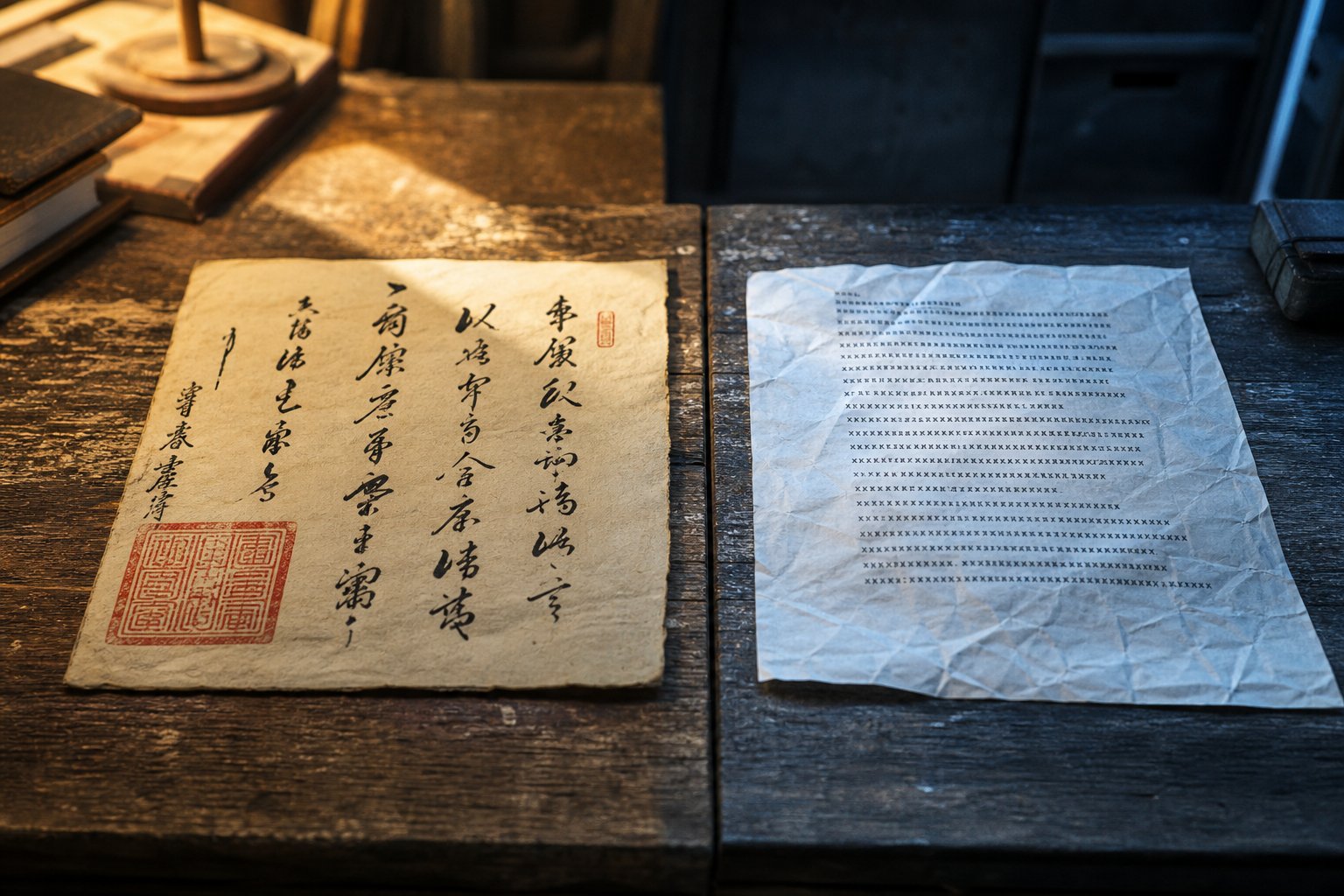
Scroll through any list of funny chinese names jokes online, and you'll find two very different categories mixed together. One category contains real surnames and given names that happen to sound awkward in English due to the phonetic collisions we've been exploring. The other category is pure fabrication: English sentences chopped up and spaced to look like Chinese names, designed to get a laugh at the expense of an entire language.
The difference matters. A lot. One is a genuine linguistic coincidence worth understanding. The other is a prank dressed up in mock-Asian phonetics, and it has caused real harm to real people.
Fabricated Pun Names vs Genuine Linguistic Coincidence
You've probably seen names like "Sum Ting Wong," "Ho Lee Fuk," or "Wi Tu Lo" shared as jokes. They look like Chinese names at first glance. But apply even basic knowledge of how Chinese works, and they fall apart immediately. These aren't funny chinese name jokes rooted in real phonetics. They're English phrases wearing a costume.
Here's why they're linguistically impossible as actual Chinese names:
- They form complete English sentences. Real Chinese names are two or three syllables, each corresponding to a specific character with independent meaning. "Sum Ting Wong" reads as "Something Wrong" in English but doesn't map to any natural combination of Chinese characters a parent would choose.
- The syllable combinations don't exist in Chinese phonology. Mandarin has roughly 400 possible syllables. Cantonese has more, but still operates within strict phonotactic rules. Combinations like "Wi Tu" don't correspond to standard syllables in any major Chinese dialect.
- No corresponding characters carry coherent meaning. Chinese parents select name characters for their semantic content. Even if you forced these syllables into characters, the resulting meanings would be nonsensical, like naming your child "vinegar carpet" in English.
- The tonal patterns are absent. Fabricated names never specify tones because they aren't built from Chinese at all. They're built backward from English punchlines.
- They violate naming conventions. Chinese surnames come from a fixed historical set. "Sum" and "Wi" aren't surnames in any Chinese naming tradition.
Compare these fabrications to a real name like Wang Shi (王石), which means "King" and "Stone" and belongs to one of China's most prominent business figures. The English ear might react to both syllables, but the name is backed by real characters, real tones, and real cultural logic. That's the dividing line between a genuine phonetic coincidence and a funny chinese names joke manufactured for mockery.
Why the Distinction Matters
This isn't just an academic point. Fabricated pun names have caused documented, real-world damage when people failed to recognize them as fakes.
In July 2013, after Asiana Airlines Flight 214 crash-landed at San Francisco International Airport, Oakland television station KTVU broadcast what it claimed were the names of the four pilots. The names read on air included "Sum Ting Wong," "Wi Tu Lo," "Ho Lee Fuk," and "Bang Ding Ow." A news anchor read them live during the noon broadcast, and the station initially attributed the information to the National Transportation Safety Board.
The names were completely fabricated. The NTSB later confirmed that a summer intern had erroneously verified the names when contacted by the station, acting "outside the scope of his authority." The intern didn't create the names. Someone presented them to the station, which failed to read them aloud phonetically before broadcast. As the BBC reported, Asiana Airlines filed a lawsuit against KTVU, calling it a "racially discriminatory report" that damaged the airline's reputation and defamed its pilots.
Three people died in that crash. Families were grieving. And a major news station broadcast what amounted to funny chinese joke names as factual reporting during a tragedy. The anchor apologized. The NTSB apologized. The intern was removed. But the clip had already gone viral, and the damage to public perception of Asian names was done.
This incident illustrates exactly why conflating fabricated pun names with genuine cross-linguistic coincidences is dangerous. Laughing at the fact that the real surname Wang (王) sounds like an English word is a reaction to an authentic phonetic overlap. It acknowledges that two unrelated languages happened to produce similar sounds with wildly different meanings. Laughing at "Sum Ting Wong" is laughing at a joke built specifically to make Chinese speech sound ridiculous, with no actual Chinese behind it.
The next time you encounter a list of supposedly hilarious names online, ask a simple question: does each name correspond to real Chinese characters with real meanings? If the answer is no, or if the "name" conveniently spells out an English sentence, you're looking at a fabrication. And the people whose actual names do trigger English associations deserve better than being lumped in with pranks designed to mock their language.
The confusion between real and fake names gets even more complicated when you factor in regional dialects. A name that passes without notice in Mandarin Pinyin can look startlingly different when transliterated from Cantonese or Hokkien, adding yet another layer to how English speakers encounter Chinese names in the wild.
When Dialect Changes Everything About a Name
The same person, the same family name character, can look completely different on paper depending on which Chinese dialect does the talking. A name that reads as harmless "fu" in Mandarin Pinyin becomes the far more eyebrow-raising "fuk" when romanized from Cantonese. The character hasn't changed. The meaning hasn't changed. But the dialect's phonology adds a final consonant that English speakers can't unsee.
This isn't a minor edge case. Tens of millions of Chinese people outside mainland China use romanizations based on Cantonese, Hokkien, Teochew, or Hakka rather than Mandarin. Their names reflect ancestral dialects spoken by families who emigrated generations ago, often long before Pinyin existed. The romanization they carry isn't a choice made for English convenience. It's a record of linguistic heritage.
Cantonese Romanization and Its English Pitfalls
Cantonese preserves final consonants like -k, -t, and -p that Mandarin lost centuries ago. These "entering tone" syllables produce romanized spellings that look dramatically different from their Pinyin equivalents. The character 福 (blessing) ends in a hard -k sound in Cantonese, giving us "Fuk." The character 色 (color) becomes "Sik." The character 國 (nation) becomes "Kwok" or "Kok." Each one is a perfectly dignified word that happens to land badly in English.
Hong Kong's romanization system, based on older colonial-era conventions rather than the standardized Jyutping system linguists prefer, makes this even more unpredictable. As Language Log's Victor Mair has documented, Hong Kong has never adopted a single official romanization standard for personal names. Instead, people use informal, "loose" romanizations that arose organically through decades of English-Cantonese contact. The result is that two Hong Kong residents with the same surname character might spell it differently, and both spellings might trigger different English associations.
Consider these Cantonese romanizations alongside their Mandarin Pinyin equivalents:
| Character | Meaning | Mandarin Pinyin | Cantonese Romanization | English Perception |
|---|---|---|---|---|
| 福 | Blessing | fu | fuk | Cantonese version resembles strongest English expletive |
| 色 | Color | se | sik | Cantonese version resembles English slang for "sick" or worse |
| 國 | Nation, country | guo | kwok / kok | Cantonese version resembles crude English slang |
| 發 | Prosperity, to emit | fa | faat / fat | Cantonese version reads as English word "fat" |
| 德 | Virtue, morality | de | tak / dak | Relatively neutral in both systems |
The pattern is clear. Cantonese's preserved final stops create consonant clusters that Mandarin simply doesn't have, and those clusters happen to complete English words in ways that Pinyin's open syllables never would. A person named Fuk Hing (福興, meaning "blessed prosperity") carries a name that's essentially a Lunar New Year greeting. In English, it looks like something else entirely.
Hokkien and Teochew Names in Southeast Asia
Move south from Hong Kong into Singapore, Malaysia, and the Philippines, and you encounter yet another layer of romanization complexity. The Chinese diaspora in Southeast Asia, numbering roughly 40 million people, is the largest in the world. These communities trace their roots primarily to Fujian and Guangdong provinces, meaning their names reflect Hokkien, Teochew, Hakka, and Cantonese pronunciations rather than Mandarin.
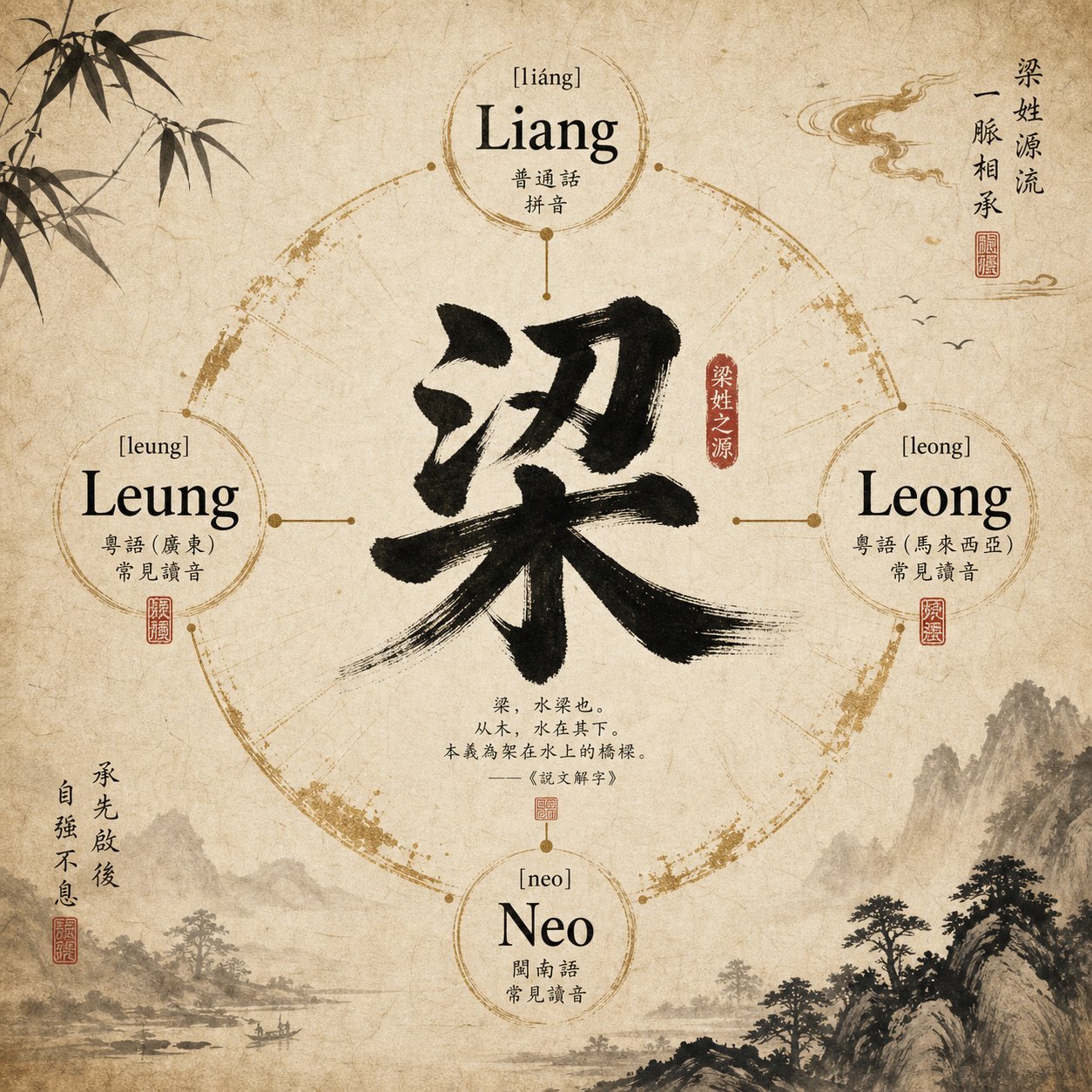
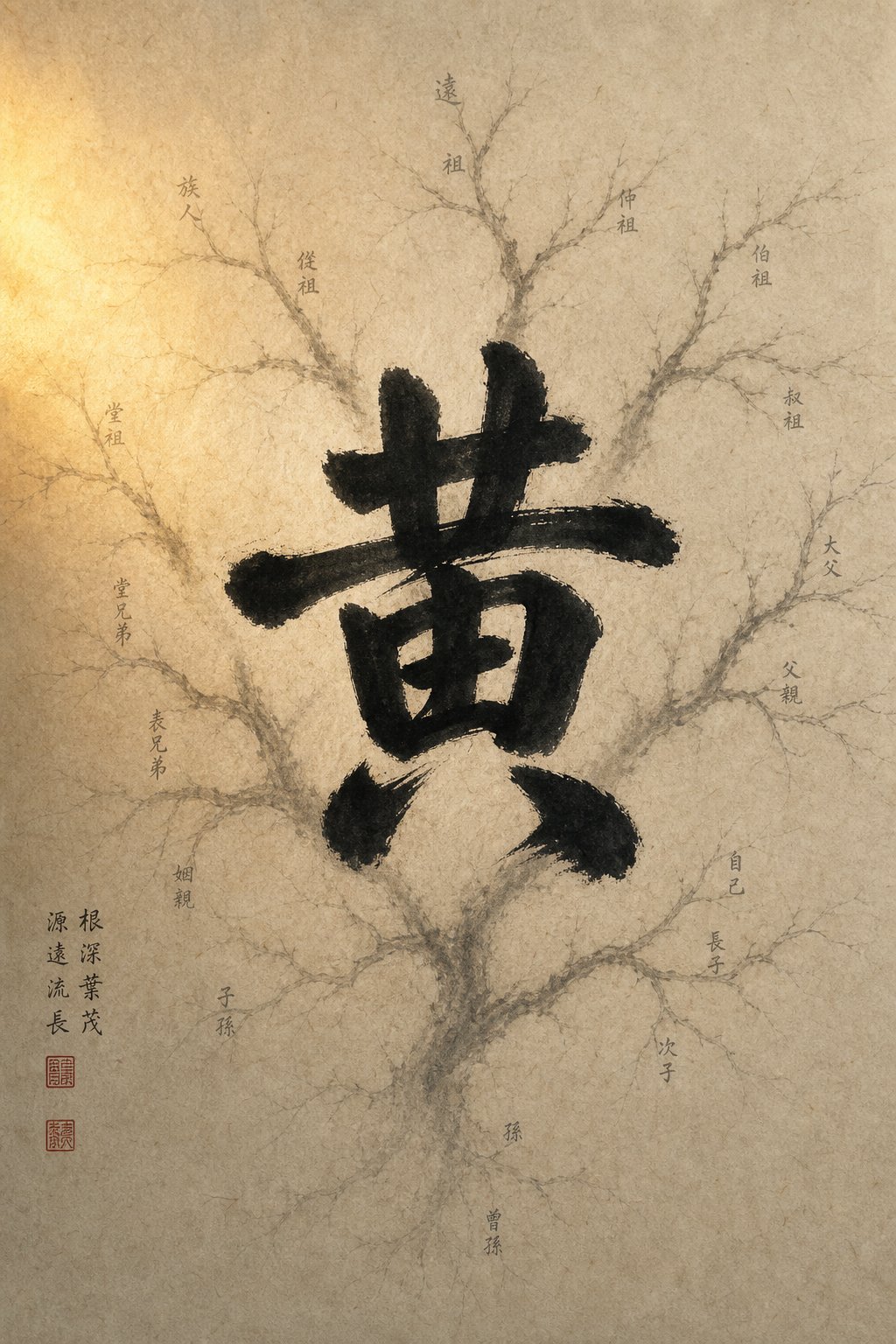
Historically, Chinese communities in the region organized themselves along five broad linguistic groups: Hokkien, Teochew, Hainanese, Cantonese, and Hakka. Each group brought its own pronunciation system, and each system produces its own set of romanized spellings. The surname 陈 (Chen in Mandarin) becomes "Tan" in Hokkien, "Chin" in Hakka, and "Chan" in Cantonese. The surname 黄 (Huang in Mandarin) becomes "Ng" or "Ooi" in Hokkien, "Wong" in Cantonese, and "Wee" in Teochew.
Some of these Hokkien and Teochew romanizations produce their own set of funny chinese nicknames to English ears. The syllable "Bak" (meaning "north" or "ink"), "Koh" (meaning "tall" or a surname), and "Pek" (meaning "white" or "uncle") all carry associations that range from mildly amusing to genuinely awkward depending on the English speaker's vocabulary and regional slang.
A single person might romanize their name differently depending on context or country of residence. A Malaysian Chinese professional named 陈福生 could appear as "Tan Hock Seng" on their Malaysian identity card, "Chen Fusheng" on a Chinese visa application, and "Darren Tan" on a LinkedIn profile aimed at international clients.
This flexibility isn't confusion. It's adaptation. The same name exists in multiple romanized forms because the person navigates multiple linguistic worlds. Their "real" name is the Chinese characters. Everything else is a translation, and translations vary by audience.
The Southeast Asian context adds another wrinkle: many of these communities have used their dialect-based romanizations for generations, long enough that the spellings have become fixed family identities. A Singaporean family surnamed "Goh" (from Hokkien pronunciation of 吴) isn't going to switch to the Mandarin "Wu" just because it looks less unusual to English speakers. That spelling represents their specific heritage within the broader Chinese diaspora.
What all of this means is that the phenomenon of Chinese names triggering English associations isn't one problem with one explanation. It's a web of dialect histories, colonial-era spelling conventions, immigration patterns, and personal identity choices. The same character can produce a dozen different romanizations across the Chinese-speaking world, and whether any given version sounds awkward in English is largely a matter of phonetic luck.
Behind every romanized spelling that makes an English speaker do a double-take, there's a real person navigating this complexity daily. And that daily navigation, from airport check-in counters to first-day introductions at new jobs, is where the linguistics stop being abstract and start being deeply personal.

How People Actually Deal With Name Awkwardness
Linguistics on paper is one thing. Standing at a Starbucks counter while a barista stifles a laugh at your name is something else entirely. For millions of Chinese people living, studying, and working abroad, the phonetic collisions we've been dissecting aren't theoretical. They're Tuesday morning.
The scenarios are predictable, repetitive, and exhausting. What varies is how people choose to handle them. Some lean into humor. Some sidestep the issue entirely. And some refuse to change a thing, accepting the awkwardness as the world's problem to solve rather than theirs.
Navigating Awkward Introductions Abroad
Certain situations trigger name-related discomfort more reliably than others. If your name happens to be one that fuels chinese name memes online, you'll recognize these moments immediately:
- Classroom roll call. A teacher encounters the name for the first time, hesitates visibly, and either mispronounces it badly or asks "how do you say this?" while the class watches. Students with names like Shi or Wang report dreading the first day of every new semester.
- Immigration and visa counters. Officials processing paperwork sometimes react to romanized names on passports. The interaction is already stressful, and a smirk or comment from someone holding authority over your entry into a country adds a layer of humiliation that's hard to shake.
- Business introductions. Multinational meetings where you hand over a business card and watch the recipient's expression shift. In professional settings, people rarely say anything, but the momentary pause communicates plenty.
- Customer service interactions. Reservations, phone calls, food orders. Any situation where you spell out or say your name to a stranger who then repeats it back, sometimes with barely concealed amusement. These small encounters accumulate.
- Email signatures and digital profiles. Your name exists in writing everywhere: Slack channels, Zoom screens, email headers. Colleagues see it before they meet you, and first impressions form around what looks like funny chinese names puns rather than a person with credentials and expertise.
People develop coping strategies through trial and error. Some preempt the awkwardness by introducing themselves with a quick explanation: "It's Wang, like the surname of Chinese kings." Others spell it out immediately to control the narrative. A few deploy self-deprecating humor to defuse tension, though research on naming practices suggests this strategy can reinforce the idea that their name is inherently problematic rather than simply unfamiliar.
The English Name Solution and Its Tradeoffs
The most common workaround is also the most loaded: adopting a Western name. Roughly half of Chinese international students in English-speaking countries use an anglicized name, according to studies on Chinese naming customs in the age of globalization. The practice has roots in China's reform and opening-up period of the late 1970s, when businesspeople sought smoother communication with foreign investors. It accelerated as English education became standard in Chinese schools, with teachers often requiring students to pick an English name on the first day of class.
The practical benefits are obvious. An English name eliminates mispronunciation, avoids the double-take, and lets you move through English-speaking environments without your name becoming a conversation topic. In workplaces, English names also solve a separate cultural issue: traditional Chinese address conventions are hierarchical and complex, requiring speakers to navigate titles and relative status. English names, existing outside that system, offer what journalist Huan Hsu described as an "ideal compromise between distance and familiarity" that makes professional communication more efficient.
But efficiency comes at a cost. A Chinese name isn't a random label. It's a deliberate creative act, often involving months of family deliberation, consultation with elders, and careful consideration of character meanings, tonal harmony, and even stroke counts believed to influence fortune. The name 志远 (Zhiyuan, "ambition reaches far") carries a parent's hope for their child's future. The name 美华 (Meihua, "beautiful splendor") paints an image. Replacing that with "Kevin" or "Jessica" for the convenience of strangers means setting aside something deeply personal every time you walk into a room.
Research bears out the psychological weight of this trade. A study on Chinese international students found that those who used anglicized names reported lower self-esteem than those who retained their Chinese names, and that self-esteem mediated the relationship between name anglicization and overall well-being. The main predictor of adopting an English name wasn't cultural enthusiasm. It was the perception that one's Chinese name would be difficult for others to pronounce and remember.
That finding reframes the entire practice. People aren't choosing English names because they want to. They're choosing them because the alternative, repeating and explaining and enduring reactions to what others perceive as chinese name jokes, is exhausting enough to make abandoning a piece of identity feel like the easier path.
Some people find middle ground. They use initials in professional contexts, keeping "D. Wang" on business cards instead of the full given name. Others reorder their name components, placing the given name first in Western style to shift emphasis away from the surname. A few select alternative romanizations, choosing "Huang" over "Wong" or vice versa depending on which version draws less attention in their specific environment.
None of these solutions are perfect. Each involves some degree of compromise between authenticity and convenience, between honoring what your parents gave you and navigating a world that wasn't built to accommodate it. The fact that millions of people make this calculation daily says less about their names and more about whose comfort gets prioritized in cross-cultural spaces.
And here's the thing that often gets lost in discussions about awkward names abroad: this phenomenon isn't one-directional. English names and common words sound equally ridiculous, offensive, or bizarre when they land in Chinese-speaking ears. The collision works both ways.
English Words That Sound Awful in Chinese Too
English speakers aren't the only ones stifling laughter at foreign names. Chinese speakers have their own collection of English words and names that sound hilariously inappropriate in Mandarin and Cantonese. The phonetic collision runs in both directions, and the results are just as absurd.
Consider the English word "shabby." Harmless enough in a conversation about old furniture. But as AFAR magazine notes, in Mandarin it sounds uncomfortably close to a vulgar slur for female anatomy. Say it in a room full of Chinese speakers and you'll get the same wide-eyed reaction that "Wang" gets in an English classroom. The mechanics are identical: two unrelated languages happen to share a sound, and one side hears something the other never intended.
This symmetry matters. It reframes the entire topic of chinese names that sound like bad words as a universal feature of cross-linguistic contact rather than something uniquely embarrassing about Chinese. Every language pair on Earth produces these collisions. English just happens to be the dominant global language, so its speakers encounter the phenomenon more visibly.
English Names That Sound Terrible in Chinese
Mandarin and Cantonese tutor Dr. Candise Lin went viral on TikTok by translating popular English names into Cantonese, and the results left viewers calling it "the funniest thing I've seen all week." The pattern she revealed is systematic, not random. Certain English name endings map consistently to unfortunate Cantonese words.
The suffix "-sie" or "-sy" in English names sounds like the Cantonese word for excrement. That single phonetic overlap turns a whole category of popular Western names into something no Cantonese-speaking parent would ever choose for their child.
| English Name | Approximate Sound in Cantonese | What Chinese Speakers Hear |
|---|---|---|
| Jessie | Je + si (屎) | "Bird excrement" |
| Rosie | Lo + si (屎) | "Old excrement" |
| Maisie | Mei + si (屎) | "Beautiful excrement" |
| Sissy | Si + si (屎屎) | "Double excrement" |
| David | Daai wai (大胃) | "Huge appetite / big stomach" |
| Susan | Seoi san (衰神) | "God of bad luck" |
| Ryan | Waai jan (壞人) | "Bad person" |
| Robert | Lo baak (蘿蔔) | "Carrot" |
Imagine being named Rosie and discovering that Cantonese speakers hear "old excrement" every time someone says your name. Or being a David who learns his name translates to "enormous appetite." These are among the funniest asian names from a Chinese perspective, and they demonstrate that no language has a monopoly on producing awkward cross-linguistic associations. The phenomenon is perfectly symmetrical.
Dr. Lin's videos garnered thousands of views precisely because they flip the usual script. English speakers are accustomed to laughing at funny asian name puns without realizing their own names provoke identical reactions in the other direction. "Thoughts and prayers to those who have just found out they may have excrement in Cantonese tattooed on them," one commenter wrote.
Brand Name Disasters in Chinese Markets
Individual names are one thing. But when multinational corporations pour millions into branding only to discover their name sounds offensive in Chinese, the stakes multiply dramatically.
The most cited example is KFC's entry into China. Their iconic slogan "Finger-lickin' good" was mistranslated into Mandarin as something closer to "Eat your fingers off." The literal rendering turned an appetizing tagline into a vaguely threatening command. Pepsi fared even worse: "Come alive with the Pepsi Generation" became "Pepsi brings your ancestors back from the grave" in Chinese, a particularly unfortunate phrasing in a culture that takes ancestor veneration seriously.
These aren't obscure companies making amateur mistakes. These are billion-dollar brands with global marketing teams who still got tripped up by the same phonetic and semantic gaps that make asian name jokes circulate online. The difference is that a person named Wang can shrug off a smirk, while a corporation that accidentally tells Chinese consumers it will resurrect their dead relatives has a genuine PR crisis on its hands.
HSBC's experience illustrates the financial scale of these failures. Their tagline "Assume Nothing" was rendered as "Do Nothing" across multiple markets, creating confusion so widespread that the bank spent an estimated $10 billion on a complete global rebrand. The problem wasn't carelessness. It was the fundamental difficulty of moving meaning between languages that organize sound, tone, and semantics in incompatible ways.
These corporate disasters normalize the entire phenomenon. When the world's largest fast-food chain and one of its biggest banks can't navigate cross-linguistic phonetics without embarrassment, it becomes clear that the issue isn't about any one language being "weird." It's about what happens whenever two unrelated sound systems collide without a shared frame of reference.
The universality of this problem points toward a deeper question. If phonetic overlap between languages is inevitable and symmetrical, producing equally absurd results in both directions, where exactly does harmless amusement end and genuine disrespect begin?
Where Humor Ends and Disrespect Begins
Phonetic overlap is universal, symmetrical, and genuinely funny. We've established that. But funny doesn't automatically mean harmless. The same observation about a name can land as lighthearted curiosity in one context and as targeted cruelty in another. The difference isn't in the words themselves. It's in who's speaking, who's listening, and what power sits between them.
Chinese people themselves often laugh at these coincidences. A Mandarin speaker discovering that their surname sounds like an English profanity might find it hilarious, the same way an English speaker named Rosie might laugh at learning their name means "old excrement" in Cantonese. Shared laughter across a linguistic gap can be a moment of genuine connection. The problem starts when the laughter flows in only one direction, when it stops being about the fascinating mechanics of language and starts being about the people who carry those names.
Linguistic Curiosity vs Cultural Mockery
There's a clean conceptual line here, even if real-world situations blur it. Curiosity asks "why does this happen?" and finds the answer in phonetics, romanization systems, and tonal mechanics. Mockery asks "isn't this ridiculous?" and locates the punchline in the people rather than the phenomenon.
Humor directed at a language system explores how sounds collide between unrelated phonologies. Humor directed at people uses those collisions to suggest that someone's name, heritage, or identity is inherently absurd.
Context determines which one you're dealing with. A linguistics professor explaining why "Wang" triggers English associations while teaching about tonal languages is doing something fundamentally different from a group of coworkers snickering every time their colleague introduces himself. The information is identical. The social function is not.
Intent matters, but it isn't everything. Research published in Cultural Diversity and Ethnic Minority Psychology found that among adolescents, ethnic and racial teasing delivered "under the guise of humor" still produced measurable increases in anxiety for those targeted, even when both parties considered the interaction friendly. Participants consistently dismissed these exchanges as harmless, saying things like "they were just making jokes." Yet the data showed elevated social anxiety that persisted into the following day for recipients who were already anxious. The humor framing didn't neutralize the psychological impact. It just made the impact harder to name and resist.
Power dynamics sharpen the effect. When someone from a dominant linguistic group laughs at a name from a minority language, the laughter carries institutional weight whether the laugher intends it or not. English is the global lingua franca. Chinese speakers navigating English-dominant environments are already managing a power imbalance: adapting their names, explaining their pronunciation, sometimes abandoning their given names entirely for Western alternatives. Laughter at their names reinforces the message that their language is the one that needs to accommodate, that their phonetic system is the "weird" one despite serving over a billion people perfectly well.
This doesn't mean English speakers must walk on eggshells. It means being aware that what feels like a harmless observation to you might land as the fifteenth time this week someone treated a person's name as a joke rather than an identity.
Engaging With Cross-Cultural Humor Respectfully
You can find phonetic coincidences genuinely funny without making anyone feel small. Here's how that works in practice:
- Direct your amusement at the phenomenon, not the person. "It's wild that English and Chinese overlap like that" is different from "your name sounds like a bad word." One treats the collision as a curiosity. The other treats someone's identity as the punchline.
- Don't repeat the joke to the person who carries the name. They know. They've heard it. Pointing it out doesn't give them new information. It gives them another moment of being reduced to a phonetic accident.
- Recognize that fabricated pun names and real names are different categories. Sharing lists of invented stereotype chinese names ("Sum Ting Wong" and its variants) isn't the same as discussing genuine linguistic overlap. One mocks a language. The other explores it.
- Let Chinese people set the tone. If someone with a name that triggers English associations jokes about it themselves, that's their prerogative. It doesn't become an open invitation for everyone else to pile on. Self-directed humor and externally directed humor carry different weights, as the research on ethnic/racial teasing among adolescents confirms: individuals who made jokes about their own ethnicity experienced different psychological outcomes than those who were targeted by others.
- Ask yourself who benefits from the laughter. If the humor builds shared understanding across a cultural gap, it's probably fine. If it reinforces the idea that Chinese names are inherently hilarious while English names are normal, it's doing something else.
- Learn the actual meaning. Knowing that Wang means "king" and Dong means "to supervise" transforms the name from a punchline into a piece of cultural information. Knowledge tends to replace mockery with respect, not because you're forcing yourself to be polite, but because the name stops being funny once you understand what it actually is.
None of this requires pretending the phonetic overlap doesn't exist. It does. It's real, it's predictable, and noticing it is a normal human response. The question isn't whether you notice. It's what you do with that noticing. Do you use it as a doorway into understanding how languages work, or as permission to treat someone's name as less legitimate than your own?
The answer usually comes down to something simple. If you'd be uncomfortable making the same joke directly to the person whose name you're laughing about, with them standing right there, then the joke isn't really about linguistics. It's about them. And that's the line.
Cross-linguistic phonetic collisions will keep happening as long as people from different language backgrounds share spaces. They're built into the structure of human language itself. The goal isn't to eliminate the humor. It's to make sure the humor stays where it belongs: in the fascinating, absurd, endlessly surprising space where two sound systems overlap, and not on the shoulders of the people caught in between.
Frequently Asked Questions About Chinese Names That Sound Like Bad Words
1. Why do some Chinese names sound inappropriate in English?
Chinese names sound inappropriate in English because romanization systems strip away tonal information that distinguishes meaning in Chinese. Mandarin uses four tones to differentiate words, so a syllable like 'shi' can mean poem, ten, history, or market depending on pitch. English speakers cannot perceive these tonal distinctions, so they hear only the flat consonants and vowels, which sometimes resemble English profanity or slang. The overlap is purely coincidental and has no connection to the actual meaning of the Chinese characters.
2. What are some common Chinese surnames that sound awkward in English?
Several of China's most common and historically prestigious surnames trigger English associations. Wang (meaning 'king,' shared by 99 million people), Dong (meaning 'to supervise'), Ho (meaning 'what' or an ancient state name), Shi (meaning 'to bestow'), and Fu/Fuk (meaning 'blessing' or 'good fortune') all carry dignified meanings in Chinese while resembling crude English words. These are among the most respected family names in Chinese culture, some dating back thousands of years to the Song dynasty's Hundred Family Surnames text.
3. How can you tell the difference between real Chinese names and fake joke names?
Real Chinese names correspond to actual characters with independent meanings, follow standard Chinese phonotactic rules, and use syllables from the roughly 400 possible in Mandarin or the slightly larger Cantonese set. Fabricated pun names like 'Sum Ting Wong' form complete English sentences when read aloud, use syllable combinations that don't exist in any Chinese dialect, have no corresponding characters with coherent meaning, and violate established naming conventions. If a supposed Chinese name conveniently spells out an English phrase, it is manufactured mockery rather than a genuine linguistic coincidence.
4. Do English names sound bad in Chinese too?
Yes, the phenomenon works in both directions. In Cantonese, English names ending in '-sie' or '-sy' (like Jessie, Rosie, and Maisie) sound like words containing the Cantonese term for excrement. The name David sounds like 'huge appetite,' Susan resembles 'god of bad luck,' and Robert sounds like 'carrot.' Major brands have also suffered: KFC's slogan was mistranslated as 'eat your fingers off' and Pepsi's tagline became 'Pepsi brings your ancestors back from the grave' in Chinese markets.
5. Why do Cantonese names look more problematic in English than Mandarin names?
Cantonese preserves final consonants like -k, -t, and -p that Mandarin lost centuries ago. These 'entering tone' syllables produce romanized spellings that complete English words in ways Mandarin's open syllables never would. The character for 'blessing' becomes the harmless 'fu' in Mandarin Pinyin but 'fuk' in Cantonese romanization. Similarly, 'nation' becomes 'guo' in Pinyin but 'kwok' or 'kok' in Cantonese. The added final consonants create closer matches to English profanity and slang terms.