
Understanding Chinese Nickname Culture in the Workplace
Chinese nicknames for coworkers are informal address forms, known as 绰号 (chuòhào, nicknames) and 称呼 (chēnghū, forms of address), that blend hierarchy, familiarity, and linguistic creativity to signal relationship depth between colleagues. Unlike Western offices where "Hey, Mike" works on day one, nicknames in Chinese workplaces follow layered social rules that encode seniority, closeness, and mutual respect into every interaction.
When you hear someone called 老王 (Lǎo Wáng) instead of 王经理 (Wáng Jīnglǐ, Manager Wang), that shift carries meaning. It tells you something about how long they have been on the team, how others perceive their status, and whether the speaker considers them part of an inner circle. Getting this wrong does not just sound awkward. It can unintentionally signal disrespect or overfamiliarity.
Why Chinese Workplace Nicknames Matter
In Chinese professional culture, the form of address is often based on the hierarchical structure and level of familiarity between individuals. A nickname in Mandarin is never just a shortcut. It is a social contract. Choosing the right one shows cultural fluency. Choosing the wrong one, like attaching 小 (xiǎo, young/junior) to a senior colleague's surname, creates friction you may never hear about directly.
In Chinese offices, the way you address someone reveals exactly where you stand in the relationship. Shifting from a formal title to a casual nickname is not your decision alone. It is a mutual, unspoken agreement.
Who This Guide Is For
This guide is for expats joining Chinese teams, remote workers collaborating across time zones, and anyone who wants to decode chinese nicknames in english without stumbling through trial and error. Whether you are navigating your first WeChat work group or trying to understand why your colleague just called you 小 + your surname, the system becomes intuitive once you see the full picture. The next step is understanding where nicknames sit on the formality ladder, from rigid titles all the way down to playful inside jokes.

The Formality Ladder From Titles to Nicknames
Imagine walking into a Chinese office on your first day. One person is called 王经理 (Wáng Jīnglǐ), another is 老张 (Lǎo Zhāng), and someone across the room just got a cheerful 小鱼 (Xiǎo Yú, Little Fish). These are not random choices. Each form of address sits on a specific rung of a formality ladder, and every rung carries distinct social weight.
Chinese workplace address operates on a five-level spectrum. The level someone uses with you, and the level you use back, communicates volumes about hierarchy, trust, and how long you have known each other. Think of it less like picking a name and more like selecting a frequency that both parties have silently agreed to tune into.
The Five Levels of Workplace Address
The system moves from rigid formality at the top to playful intimacy at the bottom. Here is how it breaks down:
| Level | Example (Characters + Pinyin) | When Appropriate | Social Signal |
|---|---|---|---|
| 1. Full Title | 王经理 (Wáng Jīnglǐ) — Manager Wang | First meetings, formal settings, addressing superiors you rarely interact with | Maximum respect and professional distance |
| 2. Surname + Abbreviated Title | 王总 (Wáng Zǒng) — Boss/Director Wang | Daily interactions with higher-ups, cross-department communication | Respect with a layer of familiarity; acknowledges rank without stiffness |
| 3. 老/小 + Surname | 老王 (Lǎo Wáng) / 小王 (Xiǎo Wáng) — Old Wang / Young Wang | Among peers who have established rapport; team members who work closely together | In-group belonging; signals you are "one of us" |
| 4. Given Name | 建国 (Jiànguó) or 小名 pet name like 丽丽 (Lìlì) | Close colleagues with established trust, often after months or years of working together | Personal warmth and genuine friendship beyond professional obligation |
| 5. Playful Nickname | 大白 (Dà Bái, Big White) or 猴哥 (Hóu Gē, Monkey Bro) | Tight-knit teams, casual company cultures, behind-the-scenes banter | Deep camaraderie; the relationship has moved well beyond transactional |
You will notice that the first two levels rely on job titles. The surname + position method is the standard starting point in Chinese offices. If your manager's surname is Wang, you address him as 王经理 (Wáng Jīnglǐ). The abbreviated form 总 (zǒng), originally short for 总经理 (zǒng jīnglǐ, general manager), has expanded to cover anyone in a senior role. Calling someone 王总 keeps things respectful while sounding less rigid than the full title.
Level three is where things get distinctly Chinese. The 老 (lǎo) and 小 (xiǎo) prefix system creates a sense of warmth that title-based address cannot. It is the mandarin for friend energy applied to professional relationships, a way of saying "hello friend in chinese" without the formality of a title or the intimacy of a given name. This middle ground is where most long-term colleague relationships settle.
When to Move Between Formality Levels
Shifting from one level to another is not something you announce. It happens organically, and the cues are subtle. A few patterns hold true across most Chinese workplaces:
- Moving from Level 1 to Level 2 often happens within the first few weeks, once you have had enough face-to-face interactions that full titles start feeling overly stiff.
- The jump from Level 2 to Level 3 typically requires a bonding moment: a shared project, an after-work dinner, or simply enough daily proximity that formality becomes unnecessary.
- Levels 4 and 5 are earned over months or years. Forcing them early reads as presumptuous, not friendly.
The key principle is reciprocity. If a colleague starts calling you 老 + your surname, that is an invitation. You can mirror the pattern back. But if you are the first to drop formality and the other person does not follow, pull back gracefully. Chinese terms of affection in the workplace are always a two-way street.
One more nuance worth noting: the ladder is not strictly linear. A colleague might use Level 2 in meetings and Level 3 over lunch. Context shifts the register. The same person who is 王总 in a client call becomes 老王 the moment the call ends. Reading the room matters as much as reading the relationship.
These five levels form the architecture, but the most common patterns, especially title-based forms that double as nicknames, deserve a closer look on their own.
Title-Based Nicknames Every Office Uses
Some address forms in Chinese offices look like job titles on the surface but function more like nicknames in practice. They carry warmth, signal familiarity, and create a sense of closeness that a cold, formal title never could. The difference is context. Calling someone 张老师 (Zhāng Lǎoshī) in a meeting room feels respectful. Calling them the same thing while handing over a coffee feels affectionate. Same words, different energy.
These title-based forms are the workhorses of Chinese workplace address. They sit in a comfortable middle zone where you show respect without creating distance, and they are often the first step toward more casual nicknames down the road.
Title-Based Address Forms That Double as Nicknames
Four forms dominate daily office life across industries. Each one carries a slightly different flavor of respect and familiarity:
- 老师 (lǎoshī) — Literally "teacher." In modern Chinese workplaces, this term has expanded well beyond classrooms to respectfully address anyone with expertise or seniority in a given area. A new marketing hire might call the senior designer 刘老师 (Liú Lǎoshī) not because they teach classes, but because the term acknowledges their skill and experience. It is one of the safest chinese terms of endearment in professional settings because it flatters without overstepping.
- 经理 (jīnglǐ) — Literally "manager." Used as surname + 经理, like 吴经理 (Wú Jīnglǐ). This is standard for anyone in a management role. The nickname-like quality emerges when teams shorten it or use it with a tone of casual familiarity rather than stiff formality. In smaller companies, even someone who is not technically a manager might get this label as a sign of respect for their leadership.
- 总 (zǒng) — Originally an abbreviation for 总经理 (zǒng jīnglǐ, general manager) or 总裁 (zǒng cái, president), this single character has become a catch-all honorific for anyone in a senior position. Saying 王总 (Wáng Zǒng) or 徐总 (Xú Zǒng) works across government offices, state-owned enterprises, and private businesses alike. Its versatility makes it feel less like a rigid title and more like a respectful nickname that says "you are important here."
- 师傅 (shīfù) — Literally "master" or "skilled worker." While more common in trades and service industries, some offices use it for colleagues who mentor others or possess specialized technical skills. A junior developer calling the team lead 李师傅 (Lǐ Shīfù) adds a layer of warmth that 李经理 does not quite capture.
You will notice a pattern: each of these forms pairs a surname with a role-based word. That structure is the backbone of workplace address in China. As Du Chinese notes, for newcomers in the workplace, learning how to address others appropriately is the very first rule of office life. Getting it wrong can leave a lasting negative impression.
Using 哥 and 姐 With Coworkers
Here is where things get interesting. The terms 哥 (gē, older brother) and 姐 (jiě, older sister) occupy a unique space in Chinese office culture. They are not titles. They are not casual nicknames. They are something in between, and that flexibility makes them the most versatile address forms available.
When you call a colleague 张哥 (Zhāng Gē) or 李姐 (Lǐ Jiě), you are saying: "I respect your seniority, but we are close enough that a formal title feels too stiff." This form works for colleagues who joined the company earlier or are slightly older, but hold the same general rank as you. It shows respect without creating hierarchy.
So what does gege mean in a professional context versus a personal one? In family settings, 哥哥 (gēge) refers to an actual older brother or a close male friend treated like family. In the workplace, the shortened 哥 (gē) attached to a surname strips away the intimate family connotation and replaces it with collegial warmth. The gege meaning in Chinese shifts depending on who says it and where. A coworker saying 张哥 is expressing professional camaraderie. A partner saying 哥哥 at home is expressing affection. Same root word, entirely different register.
The same logic applies to 姐 (jiě). Calling a female colleague 慧姐 (Huì Jiě) or 李姐 (Lǐ Jiě) communicates friendly respect. It is among the most common terms of endearment in chinese professional life because it balances warmth with appropriate boundaries. You can even use a given name instead of a surname, like 慧姐, which signals a slightly closer relationship than 李姐 would.
A few practical guidelines for using 哥 and 姐 at work:
- Use them for peers who are slightly senior in age or tenure, not for people two or three levels above you in the org chart. For those people, stick with title-based forms like 总 or 经理.
- Wait for social cues. If others on the team already use 哥/姐 with someone, it is safe to follow. If everyone uses formal titles, do not be the first to switch.
- These forms work in both directions of formality. You can pair them with a surname (张哥) for moderate closeness, or a given name (建国哥) for deeper familiarity.
- In some teams, 哥 and 姐 become so natural that they function as default address forms for anyone who is not a direct superior. This is especially common in smaller companies and creative industries.
The beauty of 哥 and 姐 is that they solve a problem unique to Chinese workplace dynamics: how do you acknowledge someone's seniority without making the interaction feel like a formal report? These two characters handle that tension effortlessly, which is why you will hear them dozens of times a day in any Chinese office.
Title-based forms and 哥/姐 cover the structured side of workplace address. But there is another system, even more distinctly Chinese, that creates instant belonging with just a single-character prefix attached to a surname.
The 老 and 小 Prefix System for Colleagues
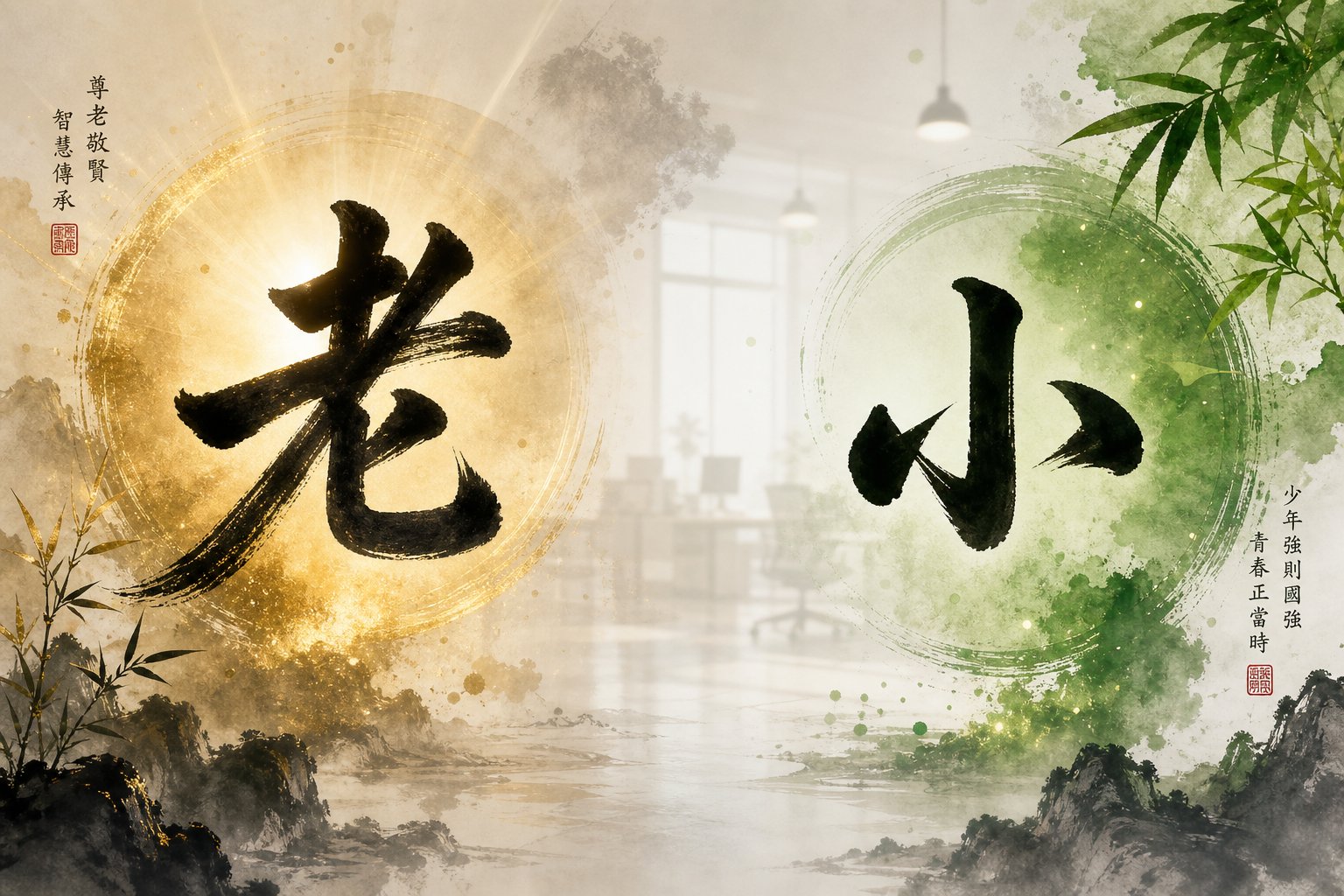
A single character in front of a surname, and suddenly you belong. That is the power of the 老 (lǎo) and 小 (xiǎo) prefix system, the most distinctly Chinese pattern for creating a nickname in Chinese workplaces. No title, no job description, just a one-syllable prefix that instantly communicates where someone sits in the team's social fabric.
You will hear these constantly: 老李 (Lǎo Lǐ), 老张 (Lǎo Zhāng), 小王 (Xiǎo Wáng), 小赵 (Xiǎo Zhào). They sound simple, but the social mechanics behind them are precise. Getting them right signals cultural fluency. Getting them wrong can quietly damage a professional relationship.
How 老 Lǎo Signals Respect and Seniority
Here is the first thing to understand: 老 does not mean "old" in the way English speakers think of it. Nobody is calling their colleague elderly. In this context, 老 functions as a marker of respect, experience, and established presence. It says "you have been here, you have earned your place, and we recognize that."
Research into how Chinese speakers actually use this construction confirms its complexity. A dataset-based study of 764 instances of lao + surname in Chinese literature found that 97% of addressees were over forty, and 76% of uses occurred between people of equal social status, like friends and colleagues. The construction overwhelmingly signals intimacy and informality rather than age itself. When colleagues of similar rank call each other 老张 and 老李, they are expressing solidarity, not commenting on anyone's birthday.
The same research highlights that 老 + surname is far more common for male colleagues (95% of cases) than female ones. This does not mean women cannot receive the prefix, but in practice, female colleagues are more often addressed with 姐 or given-name forms. Cultural norms around gendered address still shape how these prefixes land.
What makes 老 feel like one of the most natural chinese words of endearment in professional settings is its versatility. It works between peers, from a superior to a subordinate, and even from a subordinate to a superior in relaxed environments. A junior employee calling their team lead 老陈 (Lǎo Chén) in a casual setting signals that the relationship has moved past rigid hierarchy into genuine camaraderie.
When 小 Xiǎo Is Appropriate and When It Is Not
小 (xiǎo) works differently. It marks someone as younger, newer, or more junior on the team. Calling a recent graduate 小刘 (Xiǎo Liú) is perfectly natural and even affectionate, a kind of cute mandarin shorthand that says "welcome to the group, junior member." It carries warmth when used correctly.
But here is the nuance that trips people up: 小 can feel patronizing if the power dynamic is wrong. Calling someone 小 + surname when they have been at the company for years, or when they hold a position of responsibility, reads as dismissive. It implies they have not graduated from junior status. The prefix works when the person genuinely is newer or younger relative to the speaker. It backfires when it contradicts someone's actual standing.
A few guidelines to keep in mind:
- 小 is safe when used by someone clearly senior in age or tenure toward a genuinely junior colleague.
- If you are roughly the same age or rank, avoid 小 for the other person. Use 老 or a given-name form instead.
- Once someone has been on the team long enough to earn 老 status, continuing to call them 小 feels like refusing to acknowledge their growth.
Real Workplace Examples of Prefix Nicknames
The best way to understand how these prefixes get assigned is to watch them unfold in a team over time. Here is a typical progression based on how team dynamics shape nick name in chinese offices:
- New hire arrives. Zhang Wei, 24, joins a marketing team. Everyone calls him 小张 (Xiǎo Zhāng). He is the youngest, the newest, and the prefix reflects both facts naturally.
- Senior colleague gets the 老 prefix. Chen Guoqiang, 42, has been on the team for eight years. Everyone calls him 老陈 (Lǎo Chén). He joined before most of the current team, and the prefix honors that tenure. He wears it comfortably.
- Mid-career colleague lands in between. Liu Fang, 33, joined three years ago. She is neither the newest nor the most senior. The team uses her given name 芳芳 (Fāngfang) or 刘姐 (Liú Jiě) depending on who is speaking. The prefix system does not force everyone into a binary.
- 小 evolves into 老 over time. After five years, Zhang Wei is no longer the junior member. New hires have joined below him. Gradually, some colleagues start calling him 老张 (Lǎo Zhāng). The shift is never announced. It just happens, and it feels like a quiet promotion within the team's social structure.
- Context switches the register. In a formal client meeting, Chen Guoqiang is 陈经理 (Chén Jīnglǐ). The moment the client leaves, he is 老陈 again. The prefix nickname lives in the informal layer, ready to surface whenever hierarchy relaxes.
This progression reveals something important: the 老/小 system is not static. It evolves as relationships deepen and as team composition changes. A nickname chinese colleagues use for you today may shift in a year, and that shift itself is a form of social recognition.
Both prefixes create instant in-group belonging. When someone calls you 老 or 小 + your surname, they are pulling you inside a circle. You are no longer "that person from accounting." You are 老王 or 小王, a member of the tribe. That sense of belonging is why this system persists even in modern tech companies where English names and flat hierarchies are the official culture. The prefix system runs underneath, carrying social information that formal structures cannot.
Of course, not every workplace nickname follows these structured patterns. In more casual company cultures, creativity takes over, and the nicknames that emerge can be far more playful, and far more revealing of team dynamics.
Funny and Creative Nicknames in Chinese Offices
When the 老/小 system feels too structured and title-based forms feel too stiff, Chinese workplaces produce something else entirely: creative nicknames that draw on appearance, personality, food, and pop culture. These are the nicknames that make people laugh in the break room, the ones that stick for years and sometimes outlast the job itself.
Funny chinese nicknames thrive in environments where hierarchy loosens up. You will find them most often in tech companies, startups, and creative agencies where flat organizational structures encourage casual interaction. Traditional state-owned enterprises and government offices, by contrast, tend to stay within the formal title and 老/小 systems. The company culture sets the ceiling for how playful address forms can get.
The most striking example of this phenomenon is Alibaba's nickname culture, where employees adopt fictional character names drawn from martial arts novels, animation, movies, and internet slang. Founder Jack Ma goes by 风清扬 (Feng Qingyang), a character from Jin Yong's wuxia novels. The practice became so embedded that some employees struggle to remember their colleagues' real names. Getting a nickname is part of the onboarding ritual, and most choose carefully because the identity follows them even after leaving the company.
Categories of Funny Workplace Nicknames
Creative office nicknames in Chinese tend to fall into recognizable patterns. Here are the most common categories you will encounter:
- Appearance-based nicknames — These reference physical features in a playful way. Someone with big, expressive eyes might become 大眼睛 (Dà Yǎn Jīng, Big Eyes). A colleague with soft, fluffy hair could earn 毛毛 (Máo Máo, Fluffy). A person with a round face might get called 小熊 (Xiǎo Xióng, Little Bear). These cute chinese nicknames work when the feature is seen as endearing rather than sensitive.
- Personality-based nicknames — These capture behavioral traits. A bold, outspoken colleague might become 小老虎 (Xiǎo Lǎo Hǔ, Little Tiger), reflecting strength and feistiness. Someone who talks a lot could earn 大嘴巴 (Dà Zuǐ Ba, Big Mouth). A gentle, kind-hearted team member might be called 小白兔 (Xiǎo Bái Tù, Little White Rabbit). The nickname becomes shorthand for how the group perceives someone's character.
- Food-related nicknames — Food is central to Chinese social life, so it naturally shows up in funny names in chinese offices. A clumsy but lovable colleague might become 大土豆 (Dà Tǔ Dòu, Big Potato), a term that implies someone is down-to-earth and humble. Other food nicknames play on surname homophones or physical resemblance to particular foods.
- Pop-culture and fictional references — This is where cool chinese nicknames really shine. At companies like Alibaba, employees draw from wuxia novels, anime characters, movie heroes, and internet memes. Some Java developers at Alibaba named themselves 甲娃 (Jiǎwá) or 加瓦 (Jiāwǎ), both sounding like "Java" in Chinese. Others adopted company product names like 菜鸟 (Cài Niǎo, Cainiao) or playful cultural references like 土豪 (Tǔháo, nouveau riche).
- Wordplay and homophone nicknames — Chinese is rich in homophones, and colleagues exploit this for humor. A surname that sounds like a common word can generate an instant nickname. These puns are often untranslatable but land perfectly among native speakers, making them some of the most memorable asian nicknames funny enough to become permanent.
Duncan Clark, author of "Alibaba: The House That Jack Ma Built," noted that the nickname practice helps "engender a sense of community and informality in the company," particularly significant given that it emerged in 1999-2000 when state-owned enterprises, which typically gave employees numbers, still dominated the business landscape.
The Social Rules of Humorous Nicknames
Creative nicknames might sound like a free-for-all, but they operate under strict unwritten rules. Break these rules, and what was meant to be playful becomes uncomfortable fast.
- Nicknames are given by the group, not self-assigned. In most Chinese offices, a funny nickname earns its power because others created it. Self-assigning a humorous name can come across as attention-seeking. The exception is companies like Alibaba that formalize the process during onboarding, but even there, colleagues often conduct polls or seek group input. One Alibaba engineer ran an online poll with over 300 participants before settling on his nickname.
- Sensitive topics are off-limits. Weight, income, family problems, and romantic failures should never become nickname material. While 小胖子 (Xiǎo Pàng Zi, Little Fatty) exists as a term of endearment in some personal contexts, using weight-based nicknames at work crosses a line in most professional environments. The same applies to anything touching financial status or personal struggles.
- Negative connotations disqualify a nickname. Even in the most casual company cultures, nicknames should not carry genuinely insulting meanings. At Alibaba, the one explicit rule is that chosen names should not have negative connotations. This principle holds across Chinese workplaces generally: humor is welcome, cruelty is not.
- Context determines whether a nickname is used to someone's face. In tight-knit teams where everyone is comfortable, creative nicknames get used openly. In larger organizations, many humorous nicknames circulate behind someone's back, not maliciously, but because the nickname works as in-group shorthand among a smaller circle. The colleague being referenced may not even know the nickname exists.
- Hierarchy still applies. You can give a playful nickname to a peer or someone junior. Giving one to your boss requires either an extremely flat culture or an established relationship where the boss has signaled openness to it. In most cases, senior leaders keep their title-based or 老 + surname forms even in casual environments.
The distinction between face-to-face nicknames and behind-the-back ones is worth emphasizing. A face-to-face nickname like 猴哥 (Hóu Gē, Monkey Bro) signals deep camaraderie. The person knows it, accepts it, maybe even enjoys it. A behind-the-back nickname like calling the always-late colleague 迟到王 (Chídào Wáng, King of Lateness) serves a different social function. It builds solidarity among the people who use it without requiring the subject's consent. Both types exist in every Chinese office, but they carry very different social weight.
What makes these creative nicknames fascinating is how differently they manifest across Chinese-speaking regions. A tech startup in Shenzhen, a trading company in Hong Kong, and a design firm in Taipei all produce playful nicknames, but the linguistic patterns, language mixing, and cultural references vary dramatically.
Regional Differences Across Chinese-Speaking Workplaces
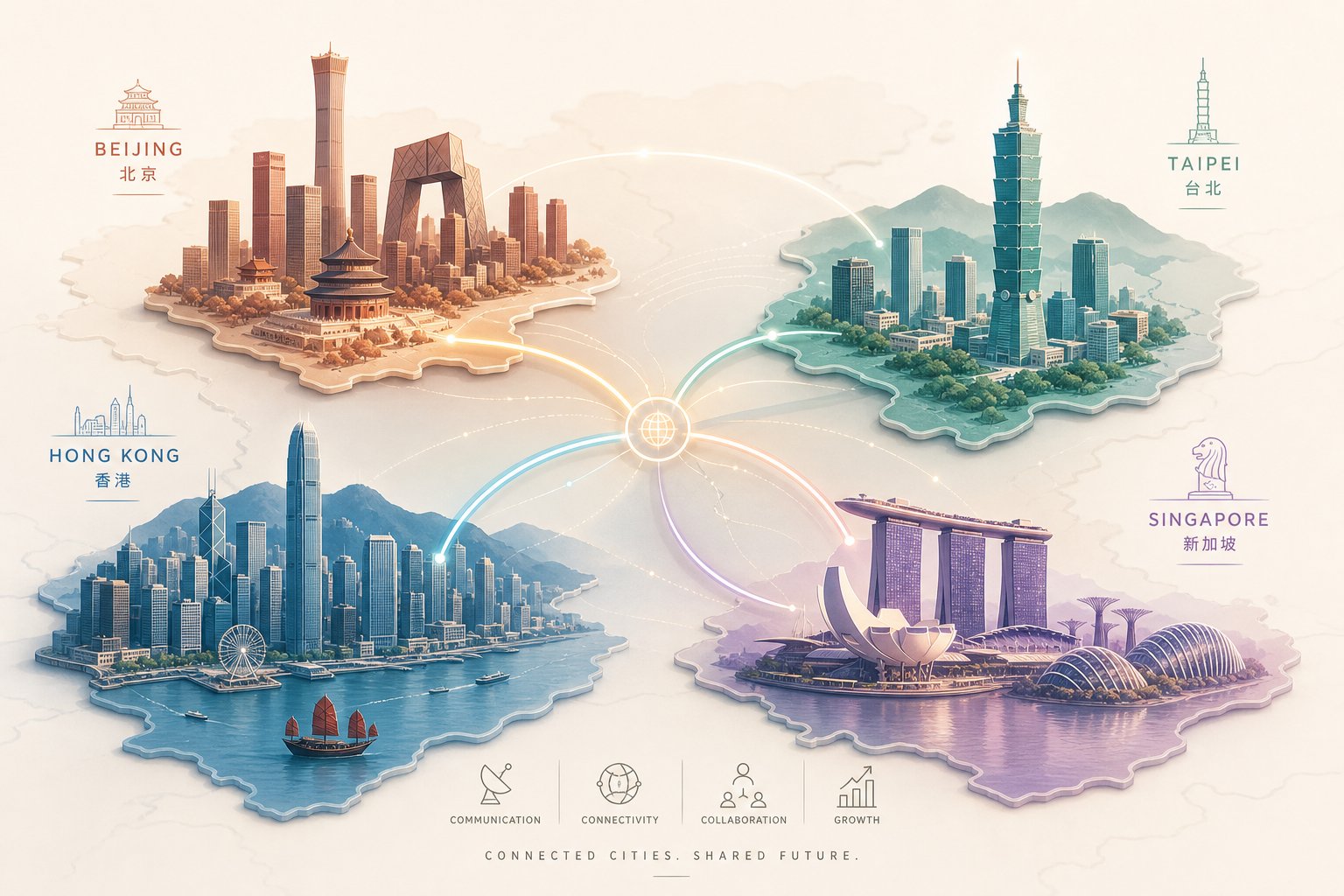
A colleague in Beijing gets called 老陈 (Lǎo Chén). That same person in Hong Kong might be "Chris." In Taipei, they could be "Chris" in meetings and 陈哥 (Chén Gē) at lunch. And in Singapore, they might hear all three in a single conversation. The nickname systems covered so far apply most directly to Mainland China, but Chinese-speaking workplaces exist across multiple regions, each with its own linguistic blend and social expectations around address forms.
Understanding these regional variations matters if you work across borders, collaborate with distributed teams, or simply want to avoid applying Mainland conventions where they do not fit. The underlying logic of hierarchy and familiarity remains consistent, but the surface-level patterns shift considerably depending on where you are.
Mainland China Workplace Naming Norms
Mainland offices represent the most "textbook" version of the systems already discussed. The 老/小 + surname pattern dominates peer-to-peer address. Title-based forms like 王总 (Wáng Zǒng) and 李经理 (Lǐ Jīnglǐ) structure hierarchical interactions. Mandarin chinese names follow simplified character conventions, and pinyin romanization is standard when English transliteration is needed.
A few Mainland-specific tendencies stand out:
- State-owned enterprises and government offices lean heavily on full titles. Dropping formality too quickly can read as disrespectful in these environments.
- Tech companies and startups often adopt English names or creative aliases (as seen with Alibaba's nickname culture), but the 老/小 system still runs underneath for daily interactions.
- Regional dialect influences exist. A colleague from Shanghai might use slightly different casual forms than one from Chengdu, but Mandarin remains the shared professional language.
- The term 信息 (xìnxī) for "information" and simplified characters in all written communication distinguish Mainland usage from other regions.
For most foreigners navigating chinese nicknames for coworkers, Mainland conventions are the default framework. The patterns are well-defined, widely understood, and relatively predictable once you learn the formality ladder.
Taiwan and Hong Kong Differences
Taiwan workplaces blend Chinese naming traditions with a strong English-name culture. Many Taiwanese professionals adopt an English name during school and carry it into their careers. In practice, this creates a dual-track system: English names for casual and cross-cultural interactions, Chinese titles or 哥/姐 forms for internal team dynamics. A taiwan nickname pattern you will frequently encounter is the English first name used universally, even among all-Taiwanese teams, particularly in industries with international exposure like tech, finance, and media.
Taiwan also uses traditional characters rather than simplified ones, and certain vocabulary differs. "Information" becomes 資訊 (zīxùn) instead of Mainland's 信息. These differences extend to address forms: Taiwanese offices tend to use 哥 and 姐 more liberally than Mainland ones, and the 老/小 system, while understood, appears less frequently in younger, urban workplaces.
Hong Kong operates on an entirely different linguistic foundation. The primary spoken language is Cantonese, not Mandarin, which changes how nicknames sound and function structurally. Hong Kong naming conventions reflect this complexity: most Hong Kongers maintain both a Chinese name and an English name, switching between them depending on context.
Cantonese nicknames differ from Mandarin ones in several key ways:
- The prefix 阿 (aa3 in Cantonese) replaces or supplements 老/小 in casual address. A colleague might be called 阿明 (Aa3 Ming) using part of their given name, a pattern less common in Mandarin workplaces.
- Close friends form nicknames by repeating the second character of a given name. Someone named 趙善穎 (CHIU Sin Wing) might become "Wing Wing" or "Ah-Wing" among close colleagues.
- The Cantonese equivalents of 老 and 小 exist as 'Lou' and 'Siu' respectively, functioning similarly but sounding completely different from their Mandarin counterparts.
- English names dominate commercial and educational settings. A hong kong nickname in daily office life is often just an English first name like "Cathy" or "Kevin," with Chinese forms reserved for more formal or traditional contexts.
The result is that Hong Kong offices often feel linguistically layered. A single interaction might include Cantonese grammar, English vocabulary, and occasional Mandarin, all woven together. Cantonese nicknames carry the same social logic as Mandarin ones, signaling closeness and hierarchy, but the phonetic and structural differences mean you cannot simply transpose Mainland patterns onto a Hong Kong team.
How International Offices Blend Naming Cultures
Singapore adds yet another dimension. With four official languages (English, Mandarin, Malay, and Tamil) and a workforce drawn from multiple ethnic backgrounds, Singaporean offices produce hybrid asian nicknames that pull from several traditions simultaneously. A Chinese-Singaporean colleague might use an English name professionally, respond to a Mandarin 老/小 form among Chinese-speaking teammates, and have a Hokkien or Cantonese family nickname that surfaces only with close friends.
International companies operating across these regions face a practical challenge: which naming system becomes the default? The most common solution is a dual-layer approach. English names serve as the universal professional identifier in cross-regional communication, while local nickname patterns persist within regional teams. A developer in the Shanghai office is 老张 to his local teammates and "Zhang" or "David" on global Slack channels.
| Region | Common Patterns | Language Mix | Formality Level |
|---|---|---|---|
| Mainland China | 老/小 + surname, title + surname, creative aliases in tech | Mandarin dominant, English names in international firms | Moderate to high; hierarchy clearly encoded in address forms |
| Taiwan | English names, 哥/姐 forms, given-name address | Mandarin + English names widely adopted | Moderate; English names flatten hierarchy in casual settings |
| Hong Kong | English names, 阿 + name, repeated given-name syllables, Lou/Siu + surname | Cantonese + English dominant, Mandarin increasing | Low to moderate; English names are default casual address |
| Singapore | English names, 老/小 among Chinese speakers, dialect nicknames | English + Mandarin + Hokkien/Cantonese/Malay | Low; multicultural environment favors flexible, informal address |
This regional variation explains why a one-size-fits-all approach to workplace nicknames fails. The colleague who appreciates being called 老王 in a Beijing office might prefer "William" when working with the Hong Kong team. Reading regional context is just as important as reading interpersonal dynamics.
These naming patterns play out not only in face-to-face interactions but also in the digital tools where modern Chinese teams spend most of their communication time, from WeChat group chats to DingTalk channels, where nickname culture takes on yet another form.
Digital Workplace Nicknames in Chat Apps and Email
Face-to-face nickname culture is only half the picture. In Chinese offices, most daily communication happens inside apps like WeChat, DingTalk, and Feishu (Lark). These platforms create a parallel nickname ecosystem where display names, group aliases, and private contact remarks reveal relationship dynamics just as clearly as spoken address forms do. If you want to understand how colleagues actually perceive each other, look at what they type, not just what they say.
The digital layer adds something face-to-face interaction cannot: a visible, persistent identity that everyone in a group chat sees simultaneously. Your chinese usernames in work apps become a form of self-presentation, broadcasting how you want to be perceived by dozens or even hundreds of colleagues at once.
Nicknames in WeChat and DingTalk Groups
WeChat work groups are where nickname culture becomes most visible. Every member has a display name that appears beside their messages, and WeChat allows users to set a custom alias for each group they join. This means the same person might appear as "张伟" in one group, "David Zhang" in another, and "大白 (Big White)" in a close team chat. The alias they choose signals how formal or casual they consider that particular group.
Common display name patterns in Chinese work chat apps reveal a lot about company culture and individual positioning:
- Real name in characters (张伟, 李芳) — The most formal option. Common in large company-wide groups, cross-department channels, and any chat where senior leadership is present. Signals professionalism and neutrality.
- English name only (David, Crystal, Vivian) — Popular in international companies, tech firms, and among younger professionals. Creates a casual, approachable tone. Some employees use English names as chinese pet names for themselves, choosing names that sound playful or aspirational rather than strictly professional.
- Department + name (市场部-张伟, Marketing-David) — Functional and common in larger organizations where people interact with colleagues they have never met in person. DingTalk and Feishu often encourage this format for organizational clarity.
- Creative handles and 小名 xiǎomíng (pet names) — In casual team chats, some employees use their childhood pet names in chinese, internet handles, or playful identities. A developer might go by 小鱼干 (Xiǎo Yú Gān, Little Dried Fish) or 码农老王 (Mǎ Nóng Lǎo Wáng, Coder Old Wang). These function like chinese gamertags brought into the professional sphere, blurring the line between personal identity and work persona.
- Emoji-enhanced names (🐱小猫, ✨Crystal✨) — Younger employees in creative or tech teams sometimes add emoji to their display names. This is rare in formal groups but common in small team chats. The emoji becomes part of the nickname itself, making the person instantly recognizable in a fast-scrolling group conversation.
Platforms like Feishu (Lark) even allow administrators to set multilingual names for members, meaning a colleague can appear as "张伟" to Mandarin-speaking teammates and "David Zhang" to English-speaking ones simultaneously. This built-in flexibility reflects how deeply nickname culture is embedded in the design of Chinese workplace tools.
The group chat context also shapes how people address each other within messages. In a large group, you might @张经理 (Manager Zhang) to maintain formality. In a small team chat, the same person gets a casual @老张. The platform makes these choices visible to everyone, which means digital address forms carry even more social weight than spoken ones. Everyone in the group witnesses the level of formality you choose.
Contact Remarks as Private Nicknames
Beyond public display names, Chinese chat apps offer a hidden nickname layer: contact remarks, or 备注名 (bèizhù míng). These are private labels you assign to contacts that only you can see. They replace the other person's display name in your interface without them ever knowing what you have written.
This feature creates a fascinating private nickname system. You might label your manager as "王总-不要周五找他" (Boss Wang - don't bother him on Fridays) or tag a helpful colleague from another department as "IT小哥-修电脑的" (IT bro - the computer fixer). These remarks blend practical information with informal nicknames, creating a personal map of workplace relationships that no one else can see.
Common patterns for contact remarks in professional contexts include:
- Role-based labels — "财务李姐" (Finance Sister Li), "HR小王" (HR Little Wang). These help you locate people quickly in a long contact list.
- Context reminders — "上海出差认识的" (met during Shanghai business trip), "面试官" (interviewer). Useful for remembering how you know someone.
- Private nicknames — The 老/小 forms, playful names, or personality-based labels that you would never say to someone's face but help you remember who they are. A colleague who always sends voice messages might get labeled "语音轰炸机" (Voice Message Bomber) in your private remarks.
- Relationship-depth markers — Some people use remarks to track how close they are with a contact: adding a star emoji for trusted allies, or noting "可以说真话" (can speak honestly with this person).
Email signatures add one more dimension. In Chinese business email, signatures often include both a Chinese name and an English name, plus title and department. The English name in a signature frequently becomes the default way international colleagues address that person, effectively functioning as an officially sanctioned nickname. Some employees choose English names that echo their Chinese pet names or personality traits, creating continuity between their digital identities across platforms.
The digital nickname ecosystem reveals something the spoken world cannot: the gap between how people present themselves publicly and how they are categorized privately. Your WeChat display name is your chosen identity. Your colleague's contact remark for you is their honest perception. Both layers coexist invisibly, and both carry real social meaning in Chinese professional culture.
All of these systems, spoken and digital, structured and creative, come with pitfalls. For non-Chinese speakers navigating this landscape, certain mistakes surface repeatedly, and some carry consequences that are harder to undo than a mistyped display name.

Common Mistakes Foreigners Make With Workplace Nicknames
Knowing the system is one thing. Avoiding the landmines is another. Non-Chinese speakers navigating workplace address forms tend to make the same handful of errors, and most of them stem from applying Western social logic to a Chinese framework. Some mistakes cause mild awkwardness. Others create impressions that take months to undo.
The tricky part is that Chinese colleagues rarely correct you directly. Remember the cultural principle that saying "no" outright is considered rude in China. If you misuse an address form, you are far more likely to get a polite smile than an honest correction. That silence makes it easy to repeat the same mistake for weeks without realizing anything is wrong.
Here are the most common errors, ranked from the ones nearly everyone makes to the ones that cause genuine embarrassment:
- Assuming all Chinese colleagues prefer their English name. Many Chinese professionals adopt English names for international convenience, but not all of them. Some feel strongly attached to their Chinese name and find it dismissive when foreigners default to "just call me your English name" without asking. The fix: ask directly. "How would you like me to address you?" works in any language. If they offer a Chinese name, use it. If they offer English, use that. Do not assume.
- Using someone's full given name without invitation. In English, calling a colleague "James" on day one is perfectly normal. In Chinese workplaces, using someone's given name (名字 míngzì) without an established relationship feels overly intimate. A full given name like 建国 (Jiànguó) is reserved for people who have earned closeness over time. Jumping straight to it signals a familiarity that does not yet exist. Stick with title-based forms or 老/小 + surname until the other person invites you closer.
- Attaching 小 (xiǎo) to a senior colleague's surname. This is the seniority mistake that causes real offense. Calling your 45-year-old team lead 小陈 (Xiǎo Chén) implies they are junior, inexperienced, or subordinate to you. Even if your intention is friendly, the prefix carries hierarchical weight that cannot be wished away. The rule is simple: if someone is older, more tenured, or higher-ranking than you, they get 老 or a title-based form. Never 小.
- Mispronouncing tones in ways that change meaning. Mandarin is a tonal language, and workplace address forms are not immune to tonal disasters. The word 老 (lǎo, third tone) means "senior/respected" in this context. Pronounce it with the wrong tone and you might produce something that sounds like an entirely different word. Similarly, 小姐 (xiǎojiě) with neutral tone on the second syllable means "Miss" in formal settings, but tonal shifts and regional usage have given it unwanted connotations in some contexts. When in doubt, practice the specific address form you plan to use, not just the individual characters.
- Using romantic terms in professional contexts. This is the mistake that causes the most embarrassment, and it happens more often than you would expect. Learners who have picked up chinese nicknames for girlfriend contexts sometimes carry those terms into the office without realizing the register shift. Words like 亲爱的 (qīn'ài de, darling) and 宝贝 (bǎobèi, baby/treasure) are romantic nicknames used between couples and carry deep intimacy. Using them with a coworker, even casually, creates immediate discomfort. The same applies to terms like 老公 (lǎogōng, hubby) and 老婆 (lǎopó, wifey), which are strictly for romantic partners. If you have been studying chinese pet names for girlfriend vocabulary or browsing lists of chinese girlfriend nicknames, keep that entire category sealed off from your professional interactions. The workplace and romantic registers in Chinese have almost zero overlap.
Romantic Terms That Do Not Belong at Work
The boundary between affectionate and professional language is sharper in Chinese than in English. In some Western offices, a casual "hey, darling" or "thanks, love" between familiar colleagues might pass without comment. In Chinese workplaces, the equivalent terms carry unmistakable romantic weight.
Here is what to avoid entirely in professional settings:
- 亲爱的 (qīn'ài de) — Means "dear" or "darling" in chinese. This is the standard lover in chinese language address, equivalent to how English couples say "darling." It has no professional application whatsoever.
- 宝贝 (bǎobèi) — Translates to "baby" or "treasure." Extremely common between romantic partners and parents addressing young children. Calling a colleague this would be like calling your manager "babe" in English, except the social fallout in a Chinese office would likely be worse.
- 亲 (qīn) — A shortened, casual form of 亲爱的, popular in online shopping (sellers address buyers as 亲) and between close female friends. While less intense than the full form, it still reads as inappropriately intimate in most workplace contexts.
- 老公/老婆 (lǎogōng/lǎopó) — Boyfriend in chinese or girlfriend in chinese casual address. These mean "hubby" and "wifey" respectively. There is no scenario where these belong in a professional conversation.
The confusion often arises because learners encounter these terms early in their Mandarin studies. Vocabulary lists for "darling in chinese" or "babe in chinese" are popular search topics, and the words themselves are simple to remember. But context is everything. A term that sounds warm and affectionate between partners sounds alarming between colleagues.
Seniority Mistakes That Cause Offense
Beyond the romantic-term blunder, seniority-related errors are the most damaging because they touch on face (面子 miànzi), the concept of social dignity that underpins Chinese professional relationships. Misusing the 老/小 system does not just sound wrong. It can feel like a status demotion.
Three patterns to watch for:
- Using 小 for someone your own age or older. Even if you outrank them organizationally, calling a peer 小 + surname when they are the same age reads as condescending. Reserve 小 for colleagues who are clearly younger and more junior than you.
- Dropping titles too quickly with senior leaders. Switching from 王总 (Wáng Zǒng) to 老王 (Lǎo Wáng) before the relationship warrants it signals that you do not respect the hierarchy. Let senior colleagues initiate the shift. If they start calling you by a casual form, that is your cue that reciprocal informality might be welcome, but even then, proceed cautiously with people above you.
- Using 老 with female colleagues who have not signaled comfort with it. As noted earlier, 老 + surname skews heavily male in actual usage. Applying it to a female colleague without social precedent can feel awkward or unwelcome. Default to 姐 or title-based forms for female colleagues unless the team culture clearly supports 老 for everyone.
How to Respond When Given a Chinese Nickname
The mistakes above focus on what you say. But there is a bidirectional element that catches many foreigners off guard: what happens when Chinese colleagues assign you a nickname?
This is actually a positive signal. When a team starts calling you 老 + your surname, or gives you a playful Chinese name, they are pulling you into the in-group. The worst response is to reject it or insist on your English name. That reads as refusing the social bond they are offering.
A few guidelines for handling this gracefully:
- Accept it with warmth. A simple smile and using the nickname back (if they have given you one that works reciprocally) shows you appreciate the gesture. You do not need to make a big deal of it.
- Ask about the meaning. If colleagues give you a creative Chinese nickname, asking "what does that mean?" shows genuine interest rather than resistance. They will usually enjoy explaining the wordplay or reference behind it.
- Do not self-assign a Chinese nickname. Let the group decide what to call you. Choosing your own playful Chinese name and announcing it to the team comes across as trying too hard. The organic process of receiving a nickname is part of what makes it meaningful.
- Mirror the formality level. If they call you 老 + surname, you can use the same pattern back with their surname. If they give you a creative nickname but still use formal titles for themselves, match their level rather than assuming equal casualness in both directions.
The underlying principle across all of these mistakes and corrections is the same: in Chinese workplace culture, address forms are not just labels. They are relationship instruments. Every choice carries social information, and the safest approach is always to start formal, observe how others interact, and let your colleagues set the pace for moving toward familiarity. The progression from formal title to casual nickname is not just a linguistic shift. It is a relationship timeline, and understanding how that timeline unfolds makes all the difference.
How Workplace Nicknames Evolve Over Time
Every chinese nickname you hear in an office has a backstory. It did not appear on day one. It emerged through shared lunches, late-night project pushes, and dozens of small moments where two people silently agreed that formality no longer fit. The address forms covered throughout this guide are not static labels. They are living markers of how a relationship has grown, and tracking their evolution tells you more about workplace dynamics than any org chart ever could.
The Nickname Timeline From New Hire to Trusted Colleague
Picture your first week at a Chinese company. The progression typically follows a predictable arc, though the speed varies by company culture and individual personality:
- Day one through week two: Everything is formal. You use full titles like 王经理 (Wang Jingli) and 李总 (Li Zong). Colleagues address you the same way, or by your English name if you have offered one. Nobody expects warmth yet. This is the observation phase where everyone is calibrating.
- Weeks three through eight: Small cracks in formality appear. A colleague drops the title and uses 老/小 + surname with you during a casual hallway conversation. Someone invites you to a team lunch and introduces you to others using a warmer form. These are test signals. If you mirror them back naturally, the shift sticks.
- Months two through six: The 老 or 小 prefix becomes your default identity within the immediate team. You are 老马 (Lao Ma) or 小李 (Xiao Li) in daily interactions, and titles resurface only in formal meetings or when outsiders are present. Chinese endearments like 哥 and 姐 might enter the mix if age and rapport align.
- Six months and beyond: Given names, pet names, or creative nicknames emerge among close colleagues. Someone might start calling you by a playful reference only your team understands. This level of familiarity signals genuine trust, the kind that survives disagreements and survives team reshuffles.
This timeline compresses in startup environments and stretches in traditional industries. A fast-moving tech team might reach given-name familiarity in weeks. A state-owned enterprise might keep title-based address as the norm for years. The pattern holds regardless: formality first, then gradual relaxation driven by shared experience.
Reading Social Cues for Address Changes
The trickiest part of this progression is knowing when a shift is welcome. Chinese colleagues rarely announce "you can call me 老张 now." Instead, they signal readiness through behavior. Here is what to watch for:
- They switch first. If a colleague drops your title and uses a casual form with you, that is an explicit invitation to reciprocate. Follow their lead.
- They use casual forms with others in your presence. When a colleague calls someone else 老 + surname in front of you, they are showing you the team's actual register. You can safely adopt the same level.
- After-hours interactions shift the register. A colleague who is 王总 in meetings but calls you by your given name at a team dinner is signaling that the informal layer exists. You can carry that warmth back into the next workday, gently.
- They ask about your preferences. "What should I call you?" or "Do you have a Chinese name?" are direct invitations to establish a more personal form of address.
Promotions and team changes reset parts of this timeline. When a peer becomes your manager, the address form might temporarily re-formalize. When new members join, the team often reverts to slightly more formal patterns until the newcomer integrates. Chinese couple nicknames evolve through shared history, and workplace nicknames follow the same logic: the depth of shared experience determines the depth of informality.
Let your Chinese colleagues initiate nickname transitions. The safest approach is always to start one level more formal than you think necessary, then follow their lead downward. Forcing familiarity before it is earned does not build closeness. It builds distance.
The practical takeaway across everything covered in this guide comes down to patience and observation. Start with titles. Listen to how the team addresses each other. Mirror what you hear. Accept warmth when it is offered. And trust that the right chinese nickname will find you when the relationship is ready for it. The system rewards those who pay attention, not those who rush.
Frequently Asked Questions About Chinese Nicknames for Coworkers
1. What does 老 (lao) mean when used before a Chinese coworker's surname?
When placed before a surname, 老 (lǎo) does not literally mean 'old' or 'elderly.' It functions as a marker of respect, seniority, and established presence within a team. Calling someone 老王 (Lǎo Wáng) signals that you recognize their experience and tenure. Research shows 97% of people addressed this way are over forty, and 76% of uses occur between people of equal social status, making it primarily an expression of peer-level solidarity and familiarity rather than a comment on age.
2. How do you know when it is appropriate to use a casual nickname with a Chinese colleague?
The key is to let your Chinese colleagues initiate the transition. Watch for signals like a coworker dropping your formal title and using 老 or 小 plus your surname in casual conversation, or switching to a warmer form during after-work dinners. If they shift first, you can mirror the pattern back. Never force familiarity by jumping to casual forms before the relationship warrants it, as Chinese workplace culture treats address forms as mutual, unspoken agreements about relationship depth.
3. Can you use 小 (xiao) with any younger coworker in a Chinese office?
Not always. While 小 (xiǎo) plus a surname works naturally for colleagues who are genuinely newer or younger relative to the speaker, it can feel patronizing if misapplied. Avoid using 小 for someone your own age, someone who has been at the company for years, or anyone who holds a position of responsibility. The prefix implies junior status, so continuing to use it after someone has grown in their role can feel like refusing to acknowledge their professional development.
4. What is the difference between workplace nicknames in Mainland China, Taiwan, and Hong Kong?
Mainland China relies heavily on the 老/小 plus surname system and title-based address forms like 王总 or 李经理. Taiwan blends Chinese naming with widespread English name adoption, using 哥 and 姐 forms more liberally than the Mainland. Hong Kong operates primarily in Cantonese, using the prefix 阿 (aa3) instead of 老/小, and English names dominate most commercial settings. Singapore adds further complexity by mixing English, Mandarin, and dialect nicknames within a single conversation.
5. What Chinese terms should you never use with coworkers?
Romantic terms like 亲爱的 (qīn'ài de, darling), 宝贝 (bǎobèi, baby), 老公 (lǎogōng, hubby), and 老婆 (lǎopó, wifey) must never appear in professional contexts. These carry unmistakable romantic weight in Chinese and have zero workplace application. Unlike some Western offices where casual endearments might pass between familiar colleagues, the boundary between affectionate and professional language is much sharper in Chinese culture, and crossing it creates immediate discomfort.