Chinese Names Put the Surname First and Here Is Why It Matters
Are Chinese surnames first or last? In Chinese naming convention, the surname always comes first, followed by the given name. This is the exact opposite of Western name order. For example, in the name 李明 (Li Ming), 李 (Li) is the surname and 明 (Ming) is the given name.
In Chinese names, the surname comes first. The family name leads, and the personal name follows. So when you see a name like Wang Xiaoming, Wang is the surname and Xiaoming is the given name.
The Short Answer to Chinese Name Order
Think of it this way: where English speakers say "John Smith" (given name + family name), Chinese speakers say the equivalent of "Smith John" (family name + given name). Chinese names are written surname first because family identity takes precedence over individual identity in Chinese culture. This convention has remained consistent for thousands of years across all Chinese-speaking regions in their native contexts.
The structure is straightforward once you know the rule. A Chinese surname is typically one syllable, and the given name is one or two syllables. So a full Chinese name is usually two or three syllables total. If someone introduces themselves as "Zhang Lihua," Zhang is the family name and Lihua is the personal name.
Why This Matters in Everyday Situations
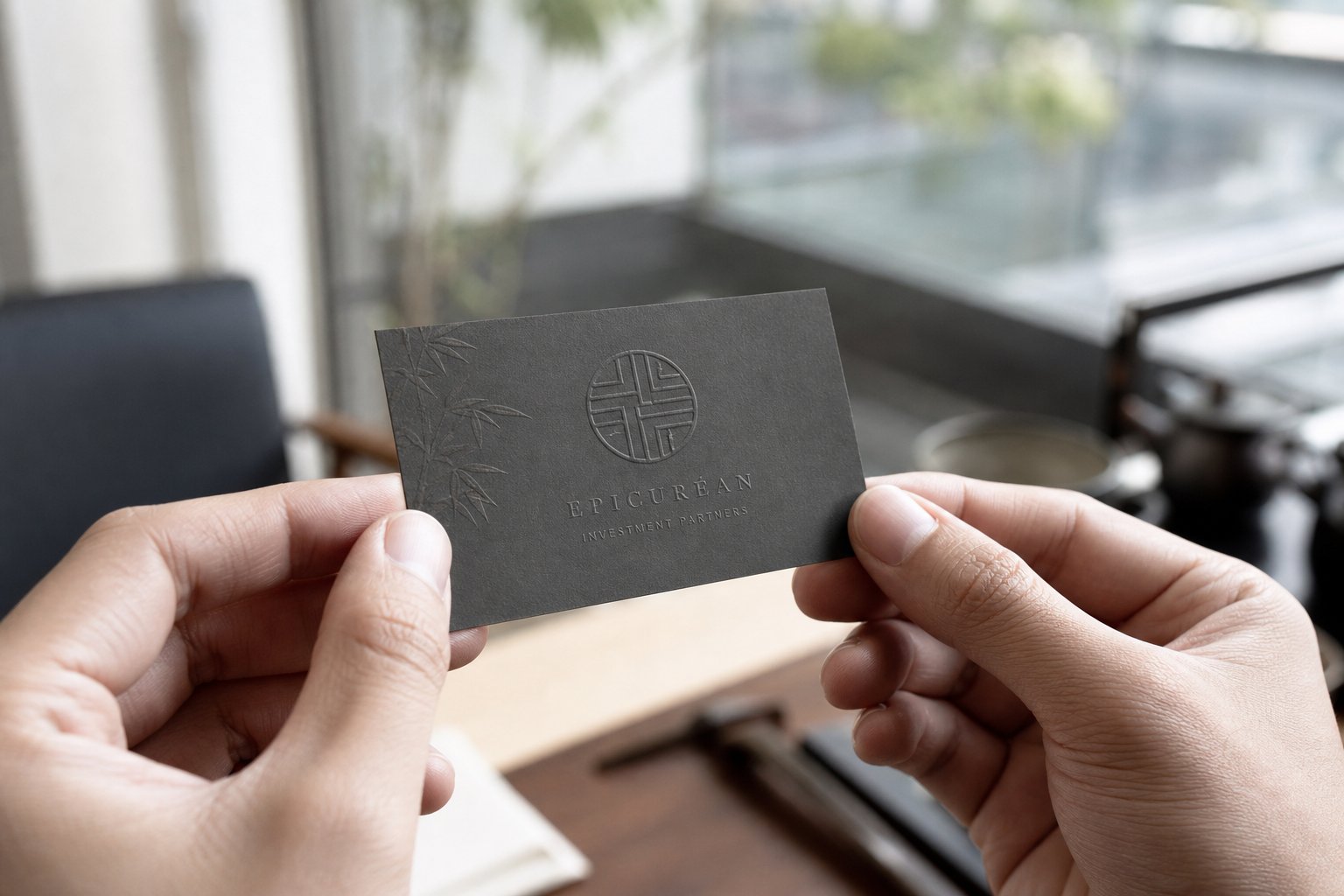
This difference in name order creates real confusion in cross-cultural settings. Imagine you receive a business card from a new colleague named Chen Wei. Do you call them Mr. Chen or Mr. Wei? If you guess wrong, you have just addressed someone by their given name as if it were their family name, which can feel awkward for both parties.
The confusion runs deeper than casual introductions. In the early days of Chinese immigration to New Zealand, misunderstanding which part was the surname and which was the given name resulted in subsequent generations of Chinese-New Zealanders carrying the wrong surnames on official records. That kind of mix-up still happens on university enrollment forms, passport applications, and workplace databases around the world.
This guide walks you through everything you need to parse unfamiliar Chinese names with confidence: the cultural reasoning behind surname-first order, structural clues for identifying which part is which, regional spelling variations that make the same name look completely different, and practical etiquette for addressing people correctly. Whether you are filling out a form, reading a business card, or meeting a new colleague, you will know exactly how to handle Chinese names without second-guessing yourself.
The Cultural Reasoning Behind Surname-First Order
Why does the family name lead in Chinese culture while Western names put the individual first? The answer is not random or arbitrary. It reflects a philosophical worldview thousands of years in the making.
Confucian Values and Family Identity
Chinese surname history is deeply intertwined with Confucianism, the philosophical tradition that shaped Chinese society for over two millennia. Confucian thought places the collective above the individual. Family, lineage, and ancestral heritage form the foundation of a person's identity. You belong to your family before you belong to yourself.
This is why the family name comes first. It signals that your lineage, your ancestors, and your clan take precedence over your personal identity. Traditional Chinese surnames carry not just identification but a sense of pride and responsibility. As Temple University's Center for Chinese Language Instruction explains, the surname "represents not just an individual but an entire lineage," reinforcing belonging and connection across extended family members.
Contrast this with Western naming conventions rooted in individualism. In English-speaking cultures, the given name leads because personal identity is emphasized first. You are "John" before you are "a Smith." In Chinese culture, you are "a Wang" before you are "Wei." Neither approach is better or worse. They simply reflect different values about where identity begins.
The chinese surname origin of this practice stretches back to ancient dynasties. Royal chinese surnames like Ji (姬), used by the Zhou Dynasty ruling family, were markers of political power and divine mandate. Ancient chinese surnames initially distinguished matrilineal clans, and over time they evolved into the patrilineal system still used today. This convention has persisted across every Chinese-speaking region in native contexts, from Beijing to Taipei to rural villages.
Chinese vs Western Name Order Side by Side
Seeing the two systems next to each other makes the difference immediately clear. Imagine four people and how their names appear depending on which convention is used:
| Chinese Order (Surname First) | Western Order (Given Name First) | Surname | Given Name |
|---|---|---|---|
| Wang Wei (王伟) | Wei Wang | Wang (王) | Wei (伟) |
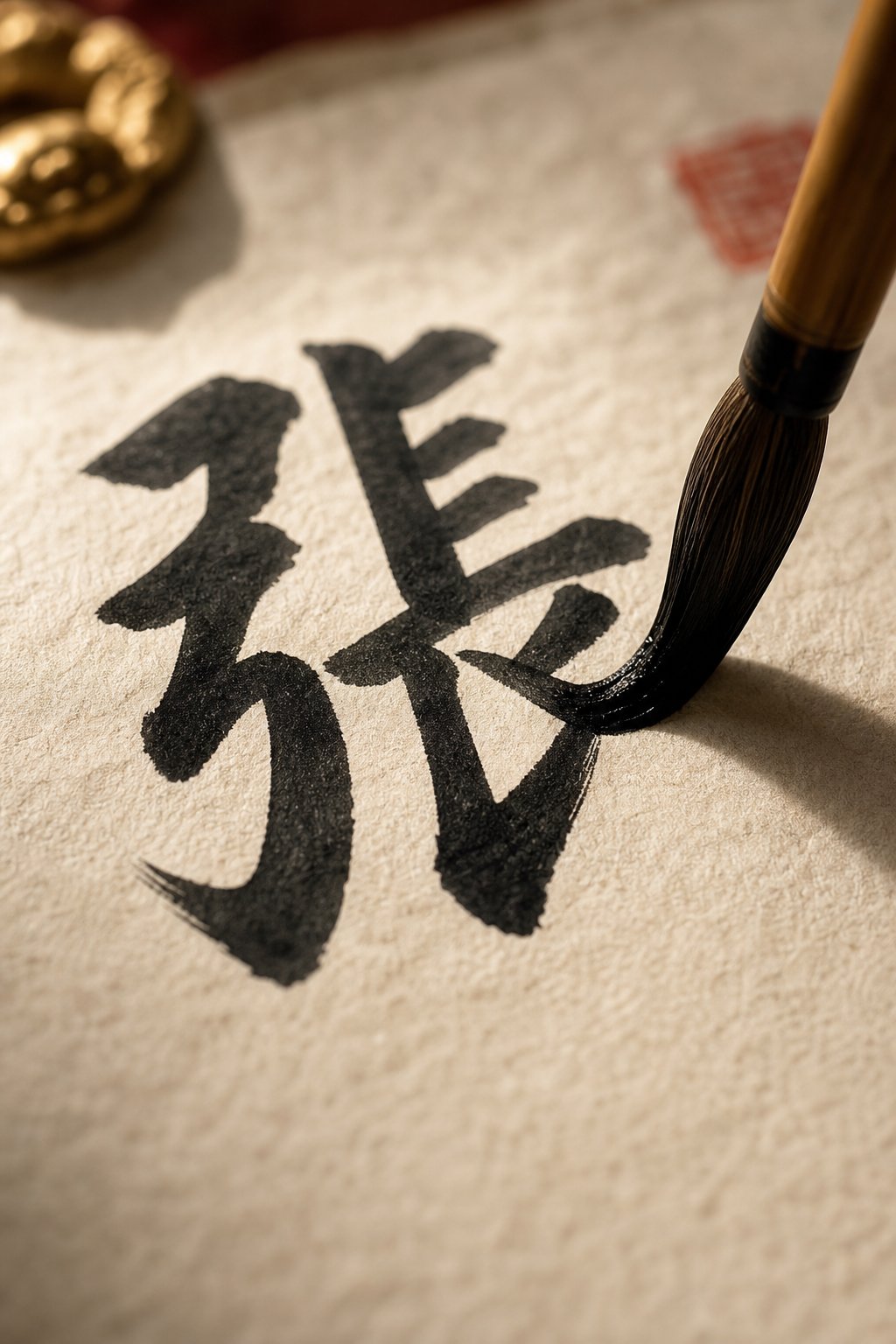
| Zhang Lihua (张丽华) | Lihua Zhang | Zhang (张) | Lihua (丽华) |
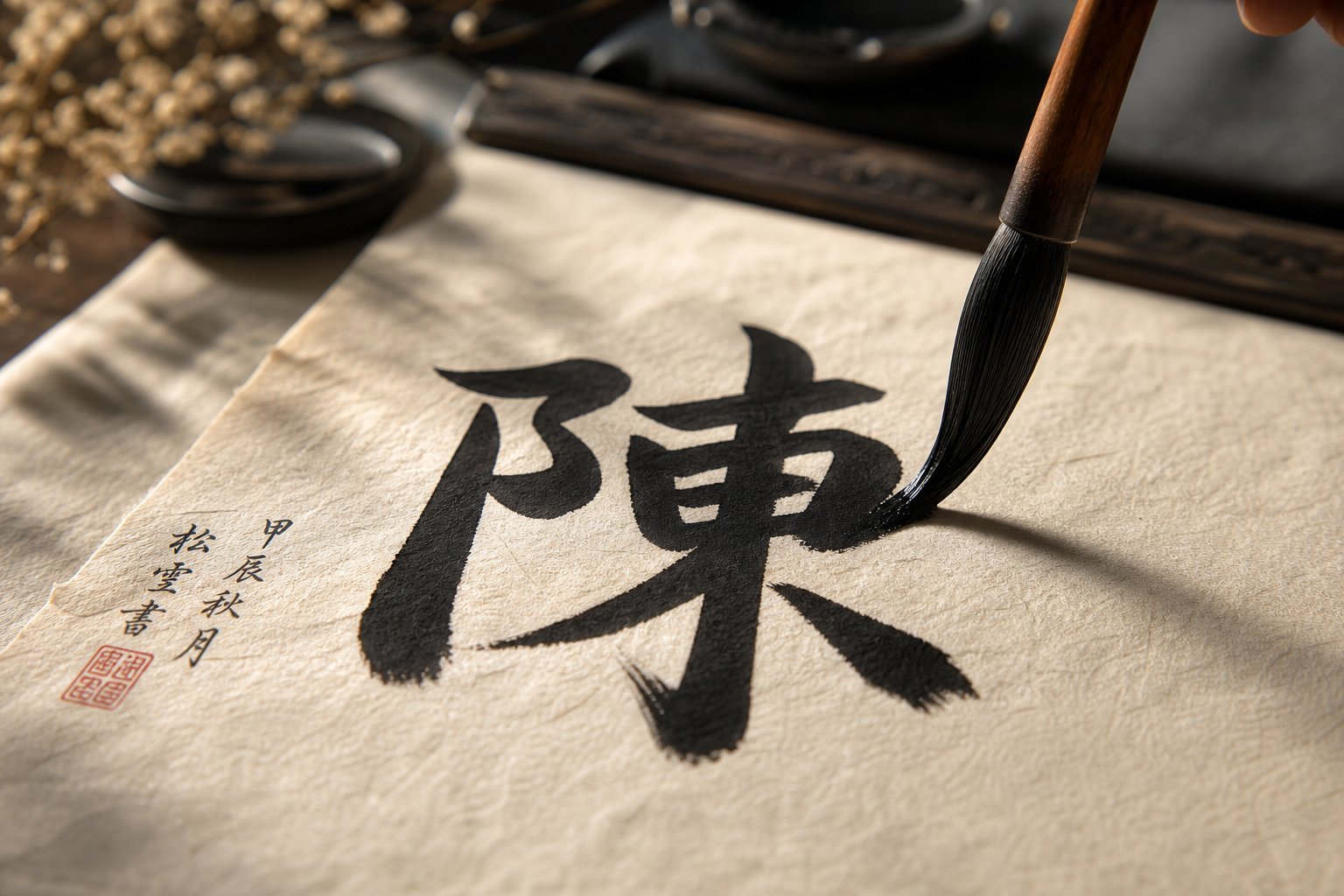
| Chen Xiaoming (陈小明) | Xiaoming Chen | Chen (陈) | Xiaoming (小明) |
| Liu Fang (刘芳) | Fang Liu | Liu (刘) | Fang (芳) |
You will notice the pattern: in Chinese order, the shorter element (one syllable) sits at the front, and the longer element (one or two syllables) follows. In Western-adapted order, that same short element moves to the back. This simple reversal is where most of the confusion begins, especially when you encounter a name without knowing which convention the person has chosen to follow.
The real challenge emerges when these two systems collide on a single document or in a single conversation. How do you tell which part is the surname when you are staring at an unfamiliar name with no context clues? Structural patterns in the name itself offer surprisingly reliable hints.

How to Tell Which Part of a Chinese Name Is the Surname
Structural patterns in Chinese names and surnames are more predictable than you might expect. Once you understand the building blocks, parsing an unfamiliar name becomes almost mechanical. The key lies in syllable count and position.
One Character Surnames vs Two Character Given Names
Here is the core rule: a Chinese name surname is almost always a single character, which translates to a single syllable in pinyin romanization. The given name that follows is typically one or two characters. So a complete Chinese name is usually two or three syllables total.
Think of it as a formula. When you see "Li Ming," that is two syllables: one for the surname (Li) and one for the given name (Ming). When you see "Wang Xiaoming," that is three syllables: one for the surname (Wang) and two for the given name (Xiaoming). As the Cultural Atlas notes, the family name "is usually a single syllable/Chinese character" while the given name "may contain one or two syllables/Chinese characters."
These identification rules hold true for the vast majority of surnames in Chinese:
- The surname is almost always the first single syllable in the name.
- The given name follows and consists of one or two syllables.
- A full name is typically two or three syllables total, rarely more.
- Given names with two syllables may appear hyphenated (Xiao-Ping), joined (Xiaoping), or separated (Xiao Ping), but they still represent one given name.
- When a family name is written in ALL CAPS (e.g., ZHANG Chen), the capitalized portion is the surname.
Rare Compound Surnames With Two Characters
There is one exception that trips people up: 2 character Chinese surnames. These compound surnames are rare but they do exist. Examples include 欧阳 (Ouyang), 司马 (Sima), 诸葛 (Zhuge), and 上官 (Shangguan). When someone has a compound surname, their full name might be four syllables instead of the usual two or three.
How common are these? Not very. The overwhelming majority of Chinese surnames names are single characters. Compound surnames account for a small fraction of the population, and you will most often encounter them in historical contexts or literature (think Zhuge Liang from the Three Kingdoms period). In modern everyday life, single-character surnames dominate.
A Quick Decision Tree for Parsing Chinese Names
When you encounter an unfamiliar Chinese name in pinyin, use this logic:
- Two syllables (e.g., Liu Fang): The first syllable is almost certainly the surname, and the second is the given name.
- Three syllables (e.g., Zhang Lihua): The first syllable is likely the surname, and the remaining two syllables form the given name.
- Four syllables (e.g., Ouyang Xiu): Consider whether the first two syllables form a known compound surname. If so, the last two syllables are the given name. If not, the first syllable is the surname and the last three may include a two-character given name with a generation name component.
This decision tree works reliably for the vast majority of Chinese names you will encounter. The tricky part is not the structure itself but recognizing which syllable combinations are surnames in the first place. Fortunately, a relatively small pool of family names covers an enormous share of the Chinese population, and learning to spot the most common ones gives you a powerful shortcut.
Most Common Chinese Surnames and How to Recognize Them
Knowing the structural rules is helpful, but imagine having a cheat sheet of the most frequently used family names so you can spot them instantly. That shortcut exists. A surprisingly small number of common Chinese surnames covers a massive portion of the population, and memorizing even a handful of them makes name parsing almost effortless.
The Hundred Family Surnames Tradition
China has a centuries-old literary tradition called the Baijiaxing (百家姓), or "Hundred Family Surnames." Written during the Song Dynasty (960-1279 AD), this rhyming poem listed 438 surnames and was memorized by schoolchildren for generations. The title is a bit misleading. It does not mean only one hundred surnames exist. Experts estimate that approximately 20,000 surnames have been used in China historically. However, the concentration is extreme: the top 100 surnames alone cover roughly 85% of China's 1.4 billion people.
What is the most common Chinese surname? That depends on the year and the data source, but the answer is consistently either Li (李) or Wang (王), each representing around 100 million people. To put that in perspective, a single Chinese surname has more bearers than the entire population of most countries.
The poem's first entry is Zhao (赵), not because it was the most popular chinese surname at the time, but because it was the ruling emperor's family name during the Song Dynasty. This detail reveals something important: surnames in China have always carried social and political weight, not just identification.
Top Chinese Surnames You Will Encounter Most Often
Data from China's Seventh National Population Census (2021) gives us a clear picture of the most common chinese surnames ranked by population. Here are the top ten:
| Rank | Character | Pinyin | Approximate Share of Han Population | Estimated Bearers |
|---|---|---|---|---|
| 1 | 李 | Li | 7.94% | ~100 million |
| 2 | 王 | Wang | 7.65% | ~100 million |
| 3 | 张 | Zhang | 7.07% | ~95 million |
| 4 | 刘 | Liu | 5.38% | ~70 million |
| 5 | 陈 | Chen | 4.53% | ~60 million |
| 6 | 杨 | Yang | — | ~40 million |
| 7 | 黄 | Huang | — | ~30 million |
| 8 | 赵 | Zhao | — | ~30 million |
| 9 | 周 | Zhou | — | ~25 million |
| 10 | 吴 | Wu | — | ~25 million |
Just these ten popular chinese surnames account for over 500 million people worldwide. The top five alone (Li, Wang, Zhang, Liu, Chen) represent roughly a third of China's Han ethnic population. If you memorize nothing else, memorize those five. When you see any of them at the beginning of a name, you can be confident it is the surname.
Beyond the top ten, the next tier includes surnames like Xu, Sun, Zhu, Ma, Hu, Guo, and Lin. These are still extremely common chinese surname options you will encounter regularly in international business, academia, and everyday life. Recognizing them on sight eliminates guesswork.
What about the other end of the spectrum? Rare chinese surnames do exist in significant numbers. Names like Shangguan, Nangong, or Duanmu appear infrequently, and some unique chinese surnames have fewer than a thousand living bearers. These are fascinating from a historical perspective, but for practical name-parsing purposes, the common ones are what matter most.
Here is the practical takeaway: if you see a short, single-syllable element at the start of a name and it matches one of the surnames above, you have almost certainly identified the family name. This recognition skill becomes even more valuable when you realize that the same Chinese character can look completely different depending on which romanization system was used to spell it.
Why the Same Chinese Surname Gets Spelled Different Ways
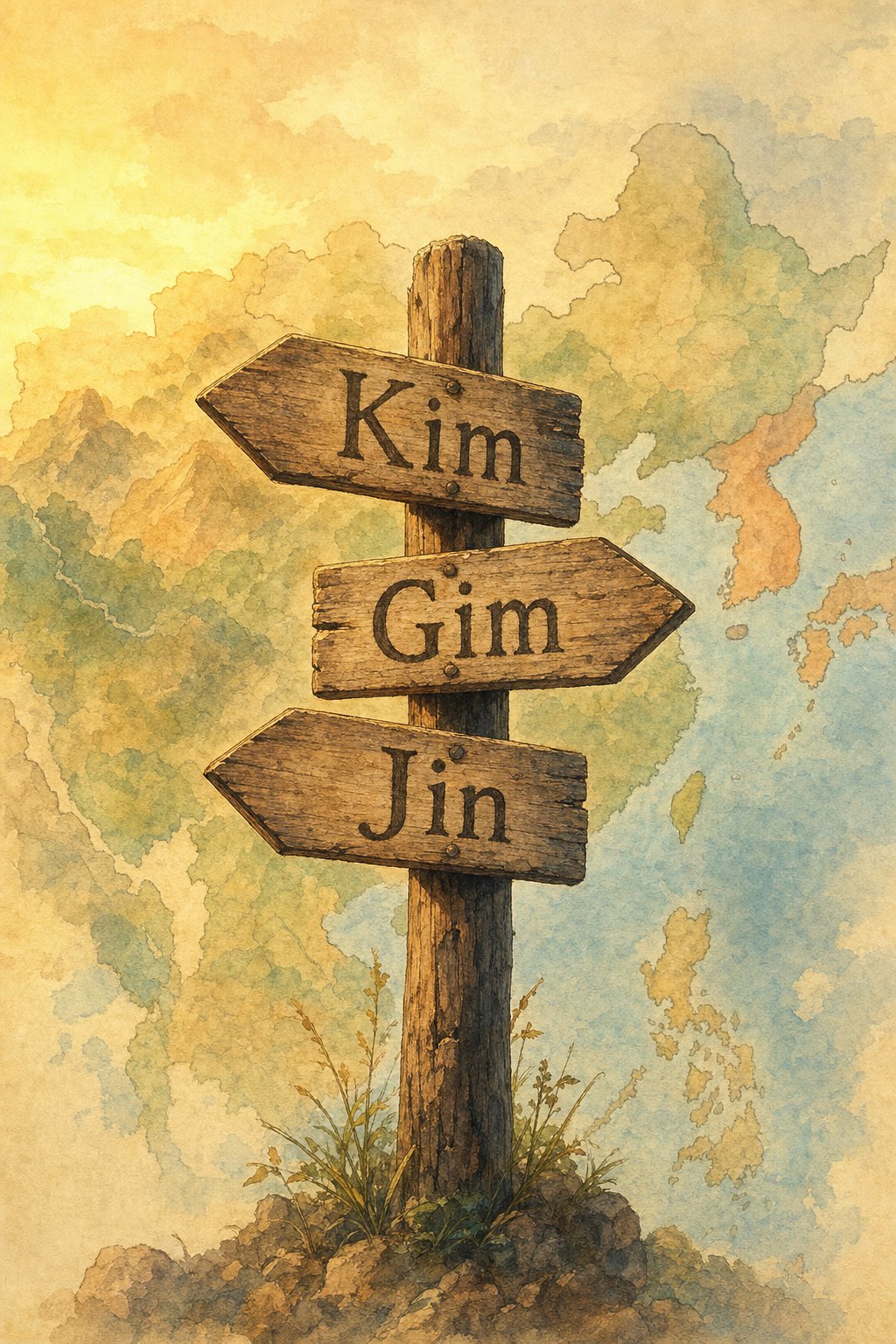
You have just memorized the top Chinese surnames in pinyin. Then you meet someone named "Cheung" and someone named "Chang," and neither spelling appears on your list. Are these different surnames entirely? No. They are both 张, the exact same character as "Zhang." The difference is not the name itself but the romanization system used to spell it.
This is one of the biggest sources of confusion when figuring out whether a Chinese surname is first or last in a name. Even after you identify the surname position, the spelling can throw you off completely. Three people with the identical family name can spell it three different ways depending on their regional background.
Pinyin Wade-Giles and Cantonese Romanization Compared
Chinese is not a single language but a language family consisting of many varieties that sound very different from each other. Each variety requires its own method of romanization, which is why the same character produces different spellings. Here are the three systems you will encounter most often:
- Pinyin is the official romanization standard in Mainland China and Singapore. Adopted in the 1950s, it provides consistent, standardized spellings. When you see "Zhang," "Chen," or "Li," you are looking at pinyin. This is the system used in international media for Chinese leaders and place names.
- Wade-Giles is an older system developed in the 19th century by British diplomats. It was the dominant romanization for Mandarin before pinyin took over and is still commonly seen in Taiwan. Wade-Giles uses apostrophes to distinguish aspirated sounds, so "Chen" becomes "Ch'en" and "Zhang" becomes "Chang."
- Cantonese romanization covers several sub-systems (including Yale, Jyutping, and informal conventions) used in Hong Kong, Macau, and Cantonese-speaking diaspora communities. Because Cantonese pronunciation differs significantly from Mandarin, the same character sounds completely different and gets spelled accordingly.
The result? A single Chinese character can appear as two or three entirely different English spellings depending on which system the person or their family adopted. This is not a matter of personal preference or creative spelling. It reflects genuine differences in pronunciation across Chinese language varieties and historical periods of romanization.
Why the Same Surname Looks Different Across Regions
Let's look at specific examples. The table below shows how several common surnames appear under different romanization systems, all referring to the same Chinese character:
| Chinese Character | Pinyin (Mainland China) | Wade-Giles (Taiwan) | Cantonese (Hong Kong) |
|---|---|---|---|
| 张 | Zhang | Chang | Cheung |
| 黄 | Huang | Hwang | Wong |
| 陈 | Chen | Ch'en | Chan |
| 李 | Li | Li | Lee / Lei |
| 林 | Lin | Lin | Lam |
| 王 | Wang | Wang | Wong |
Notice how dramatic the differences can be. The zhang chinese surname (张) looks nothing like "Cheung" at first glance, yet they are the same family name. Someone from Beijing spells it Zhang, someone from Taipei might spell it Chang, and someone from Hong Kong writes Cheung. All three share the same ancestor, the same character, and the same meaning.
The chen chinese surname (陈) follows a similar pattern. A person from Mainland China writes Chen, a Taiwanese person using Wade-Giles writes Ch'en, and a Hong Kong native writes Chan. If you are scanning a list of names looking for members of the same family, you could easily miss the connection.
Perhaps the most widely recognized example is the li chinese surname (李). In pinyin, it is simply Li. But the lee surname chinese communities use in Hong Kong, Malaysia, and much of the diaspora reflects Cantonese pronunciation. You will also see "Lei" in some Cantonese romanization systems. Bruce Lee, Jet Li, and the ancient poet Li Bai all share the character 李, yet their romanized surnames look different. The same applies to the chinese surname lee you see on business cards from Singapore or the chinese surname li on academic papers from Beijing. Same character, different spelling conventions.
This variation extends to less common surnames too. The chinese surname transliterating zuo (左) might appear as "Tso" in Wade-Giles or "Cho" in Cantonese contexts. Without knowing which system is in play, you cannot reliably match romanized spellings back to their original characters.
The practical lesson here is straightforward: when you encounter a Chinese surname that does not match your mental list of common names, consider that it might be a familiar surname spelled using a different romanization system. "Wong" is not a separate surname from "Wang" and "Huang." All three can represent either 王 or 黄 depending on the dialect and system. Context clues like the person's region of origin, their passport country, or even the era they were born in can help you decode which character sits behind the spelling.
This romanization puzzle gets even more complex when you factor in how different Chinese-speaking regions handle name order itself in international settings. A person from Hong Kong might write their Cantonese-romanized surname last (Western style), while someone from Mainland China might keep their pinyin surname first (Chinese style), and a third person might add a Western given name into the mix entirely.
Regional Differences in How Chinese Names Appear Internationally
Spelling is only half the puzzle. Even when you know the romanization system, the order in which name elements appear shifts depending on where a person grew up and which conventions they adopted for international use. A name from Mainland China, Taiwan, Hong Kong, or Singapore can follow entirely different formatting rules, and diaspora communities add yet another layer of variation.
Mainland China and Taiwan Conventions
In Mainland China, the domestic standard is clear: surname first, given name second. Official documents, news media, and everyday usage all follow this pattern. However, when Mainland Chinese individuals interact with Western systems, many reverse the order to match English conventions. A person named 王伟 (Wang Wei) might introduce themselves as "Wei Wang" on an English resume or email signature. Others keep the Chinese order intact. There is no universal rule, which means you cannot assume either arrangement.
Taiwan adds its own twist. Taiwanese names typically retain the surname-first order even in English contexts, and given names are often hyphenated. You will see formats like Tsai Ing-wen, where Tsai is the surname and Ing-wen is the two-character given name joined by a hyphen. This hyphenation is a helpful visual cue: if you spot a hyphen in the second element, the first element is almost certainly the surname.
- Mainland China: Surname first domestically; often reversed to given-name-first on English documents.
- Taiwan: Surname first in both Chinese and English contexts; given name frequently hyphenated (e.g., Lin Yi-han).
Hong Kong and Singapore Naming Practices
Hong Kong residents take a distinctly different approach. As the Cultural Atlas documents, most Hong Kongers adopt an English first name that they use regularly in professional and social settings. The typical format becomes: English name + Cantonese surname + Cantonese given name. Think of "Jackie Chan" where the chan surname chinese communities recognize instantly is the family name, and Jackie is an adopted English name. The full Chinese name (陈港生, Chan Kong-sang) follows traditional surname-first order, but in English contexts, the Western given name leads.
The cheong surname in chinese (张) appears as "Cheung" in Hong Kong romanization, and a person bearing it might introduce themselves as "David Cheung" in English while using 张大卫 (Cheung Tai-wai) in Chinese. This dual-name system is standard practice, not an exception.
Singapore presents yet another pattern. Singaporean Chinese often use a three-part format: Western name + Chinese surname + given name. Someone might appear as "Rachel Tan Mei Ling" on official documents, where Tan is the surname and Mei Ling is the given name. The au surname chinese families use in some Cantonese-speaking Singaporean communities (区) follows this same structure.
- Hong Kong: English first name + Cantonese surname + given name (e.g., Andy Lau Tak-wah). Surname is the middle element in English contexts.
- Singapore: Western name + Chinese surname + given name on official documents (e.g., Kevin Lee Wei Ming).
Diaspora Communities and Adapted Name Orders
Chinese american surnames follow no single pattern. Some families reversed the name order generations ago and now treat the original surname as a Western-style last name (e.g., "Amy Chen"). Others maintain Chinese order in certain contexts. Second and third-generation american chinese surnames may appear fully anglicized, making it harder to identify the family name without asking.
Chinese filipino surnames tell a different story. Many chinese surnames in the philippines were hispanicized during the Spanish colonial period, transforming names like 陈 (Chen/Tan) into "Tantoco" or 黄 (Huang/Ong) into "Ongpin." These adapted surnames no longer resemble their Chinese originals, making recognition nearly impossible without background knowledge.
Southeast Asian communities in Malaysia, Indonesia, and Vietnam each developed their own conventions too. The variation is enormous.
- Chinese Americans: Typically follow Western order (given name + surname) in English; wide variation in how much Chinese naming convention is preserved.
- Chinese Filipinos: Surnames often hispanicized or combined with local naming customs; original Chinese character may be unrecognizable.
- Malaysian and Indonesian Chinese: May use local name + Chinese surname, or fully localized names.
The takeaway from all this regional variation is simple: you genuinely cannot determine name order from appearance alone. The same person might use surname-first order on a Chinese document, surname-last order on a Western form, and an entirely different English name in casual conversation. When you are unsure, asking is not just acceptable but appreciated. Most people would rather clarify once than be called the wrong name indefinitely.
Of course, knowing that you should ask does not help when you are staring at a printed document with no one to ask. Passports, enrollment forms, and business cards each have their own formatting conventions that offer clues if you know where to look.
Handling Chinese Names on Forms Documents and Business Cards
Passports, enrollment forms, and HR databases all share one frustrating assumption: that every person's name fits neatly into a "first name" and "last name" box. For anyone carrying a surname in chinese naming order, this two-box structure creates an immediate problem. Which box does the surname go in? The answer depends on whether the person reversed their name for Western contexts or kept the original Chinese order, and there is no way to tell from the form itself.
This inconsistency is not hypothetical. Some Chinese individuals write their surname chinese style (first position) on every document regardless of language. Others flip to Western order the moment they fill out an English-language form. A third group uses a Western given name that was never part of their legal Chinese name. The result is that the same person's name can appear in different orders across different documents, and anyone reading those documents has to figure out which element is which.
Reading Chinese Names on Passports and Official Documents
Passports are actually one of the easier documents to decode because they follow international formatting standards. The UK HM Passport Office notes that Chinese passports show the person's surname in capital letters followed by the given name in mixed case. For example, a passport might display "LI Xiaoling Victoria" where LI is the surname and Xiaoling Victoria are the forenames.
This ALL CAPS convention is your most reliable visual cue on official documents. When you see one element fully capitalized and the rest in standard title case, the capitalized portion is almost always the surname for chinese nationals. International passports from many countries follow this same ICAO standard, placing the surname in uppercase regardless of the bearer's cultural background.
Beyond capitalization, look for these additional formatting signals on official documents:
- Comma separation: Many databases and formal records use the format "WANG, Xiaoming" where the surname precedes the comma and the given name follows. If you see a comma, everything before it is the family name.
- Labeled fields: Passports and visas typically label "Surname/Family Name" and "Given Names" separately. Trust the labels over your assumptions about name order.
- Shorter element in caps: Since surnames chinese people carry are typically one syllable, the shorter capitalized element is usually the family name. If you see "ZHANG Lihua," the single-syllable ZHANG is the surname.
- Machine-readable zone (MRZ): The bottom of a passport's photo page contains a machine-readable strip where the surname always appears first, separated from given names by double angle brackets (<<).
What about business cards? These are trickier because there is no universal standard. A card printed in both Chinese and English often reveals the answer: on the Chinese side, the surname is always first. Compare the two sides and you can identify which element is the family name. If only English text is present, look for the shorter element or check whether the name matches a common surname you recognize.
Entering Chinese Names in Western Database Systems
Forms and databases create a different kind of headache. When a system asks "what is your surname" in Chinese naming terms, the answer is straightforward. The surname is the family name, the one shared with parents and siblings. But the form's structure often assumes that the surname is the last word in the full name, which is only true if the person has already reversed their name order.
Imagine you are entering a colleague's name into a company directory. Their email signature reads "Chen Wei" and you are not sure whether they have kept Chinese order (Chen = surname) or adopted Western order (Wei = surname). Getting this wrong means every auto-generated greeting, every meeting invitation, and every company badge will address them incorrectly.
Here are practical tips for handling surnames chinese colleagues provide on forms and in systems:
- Ask directly: A simple "Which is your family name?" avoids all guesswork. Most people appreciate the effort. Phrasing it as "what is your surname" rather than "what is your last name" removes the positional ambiguity entirely.
- Check for a preferred name field: Many modern systems include a "preferred name" or "display name" option. Use it to store the person's chosen format regardless of how the legal name fields are structured.
- Do not split joined given names: If someone writes "Xiaoming" as one word, do not force it into separate "middle name" and "first name" fields. It is a single given name written as two characters.
- Preserve the original order when possible: If your system allows a "full name" field alongside structured fields, store the name as the person wrote it. This creates a reference point if confusion arises later.
- Watch for email signature clues: Many Chinese professionals put their surname in capitals within their email signature (e.g., "CHEN Wei" or "Wei CHEN") specifically to help international contacts identify the family name.
University enrollment systems face this problem at scale. International student offices process thousands of Chinese names each year, and a single data entry error can cascade through transcripts, diplomas, and alumni records. Some institutions now ask applicants to identify their surname and given name separately rather than relying on positional assumptions.
The underlying issue is that "first name" and "last name" are positional labels that only work within one cultural framework. A surname for chinese individuals is positionally first in their native convention but may appear last on a Western form. The label "family name" is culturally neutral and avoids this confusion entirely. If you design forms or databases, using "family name" and "given name" instead of "first" and "last" eliminates the ambiguity at the source.
Documents and databases give you formatting clues, but live interactions require a different skill set. Knowing how to address someone correctly in person, especially in professional settings, calls for a blend of cultural awareness and simple courtesy.
Etiquette for Addressing Someone With a Chinese Name
Getting the name order right on paper is one thing. Saying it correctly to someone's face, in a meeting, over email, or during introductions, carries real social weight. In Chinese culture, how you address a person communicates your respect for their status, your understanding of the relationship, and your willingness to meet them on their terms.
Professional and Business Etiquette for Using Chinese Names
In formal and professional settings, the standard approach is surname plus title. This mirrors Chinese business conventions where position-based address signals respect for hierarchy. If you know someone's family name is Wang, you would say "Mr. Wang" or "Ms. Wang" until invited to do otherwise. In academic contexts, "Professor Li" or "Dr. Chen" follows the same logic: surname plus professional title.
Here is where the meaning of chinese surnames becomes socially relevant. The surname represents the family, the lineage, the collective identity. Using it with a title acknowledges that heritage while maintaining professional distance. Jumping straight to a given name without invitation can feel overly familiar, especially with older colleagues or people in senior positions.
A few practical guidelines for professional interactions:
- Default to surname + title (Mr. Zhang, Director Liu, Professor Chen) until the person suggests otherwise.
- Use the full name in introductions or when clarity is needed. Saying "This is Wang Wei" is perfectly acceptable and avoids the ambiguity of using only one element.
- Mirror what they offer. If someone introduces themselves as "David," use David. If they say "I'm Manager Li," use Manager Li.
- Avoid using given names alone with people you have just met, especially in business contexts. In Chinese culture, given names are reserved for close friends and family.
- Watch for English names. Many Chinese professionals adopt a Western first name specifically for international interactions. "Call me Kevin" is a clear signal to use that name.
This last point is especially common among chinese male names and surnames you will encounter in global business. A colleague whose full name is 张伟 (Zhang Wei) might introduce himself as "Kevin Zhang" in English settings. The adopted English name removes the guesswork entirely and gives you a comfortable, familiar form of address. Chinese female names and surnames follow the same pattern: someone named 李芳 (Li Fang) might go by "Grace Li" professionally.
How to Ask About Name Preferences Without Awkwardness
What if you genuinely cannot tell which part is the surname? Maybe you received an email from "Wei Chen" and you are unsure whether the person kept Chinese order or reversed it. Maybe you are about to introduce a speaker and need to get it right. Asking is not rude. In fact, it signals that you care enough to get it right rather than guessing and potentially embarrassing both of you.
A simple, polite way to ask: "I want to make sure I address you correctly. Which is your family name, and what would you prefer I call you?"
This phrasing works because it accomplishes two things at once. It identifies the surname, and it invites the person to share their preferred form of address, which might be their full name, their surname with a title, their English name, or even a nickname. You are not making assumptions. You are showing respect.
A few alternative phrasings that work well in different contexts:
- In email: "Could you let me know your preferred name for correspondence?"
- Before a presentation: "I'd like to introduce you properly. How would you like me to say your name?"
- In casual settings: "What do you like to go by?"
Most people respond warmly to these questions. The awkwardness you might fear is almost always smaller than the awkwardness of calling someone by the wrong name for months. Chinese surnames meaning and identity are deeply personal, and the effort to get it right communicates genuine respect.
Understanding Generational Names and Middle Characters
There is one more layer to Chinese names that helps explain their structure: generational naming. In many Chinese families, siblings and cousins of the same generation share one character in their given name. This shared character is called the generation name, or beifen zi (辈分字).
Here is how it works. Imagine a family where all male cousins in one generation share the character 建 (Jian, meaning "to build"). One cousin might be named 张建国 (Zhang Jianguo), another 张建明 (Zhang Jianming), and a third 张建华 (Zhang Jianhua). The surname Zhang is the same for all three. The first character of the given name, Jian, marks their generation. Only the final character is unique to each individual.
As Ancestry explains, these generational names are often determined by a generational poem passed down within the family. If two people share the same first character in their given name, they are likely siblings or first cousins. This system helps trace lineage and clarify family relationships at a glance.
For practical purposes, generational naming means that the "middle" character in a three-syllable Chinese name is not equivalent to a Western middle name. It is part of the given name and carries family significance. When entering chinese male surnames and given names into a database, resist the urge to split a two-character given name into "first" and "middle" fields. The two characters function as a single unit, even when one of them is shared across a generation.
This tradition is less strictly followed among younger generations in urban China, where parents increasingly choose two-character given names based on sound and meaning rather than generational poems. Still, you will encounter generational names frequently among older professionals and in families that maintain traditional practices.
The thread connecting all of these etiquette points is simple: showing effort matters more than getting everything perfect on the first try. Asking about preferences, using the correct title, and understanding the cultural weight behind a name all communicate that you see the person as an individual worth knowing correctly. That respect builds trust, whether you are in a boardroom, a classroom, or a casual introduction.

A Quick Reference Summary for Getting Chinese Names Right
Everything in this guide comes down to a handful of core facts. Chinese surnames come first. They are typically one syllable. The given name follows and is one or two syllables. Regional conventions, romanization systems, and personal preferences create variation, but the underlying structure stays the same. When you are unsure, asking politely is always the right move.
If you are wondering how many chinese surnames are there, the answer is roughly 6,000 in active use today, drawn from a historical pool of over 20,000. Yet just 100 of those surnames cover nearly 86% of China's population. That concentration means a short chinese surnames list of the most common family names gives you practical coverage for the vast majority of names you will encounter. Memorizing even the top five (Li, Wang, Zhang, Liu, Chen) puts you ahead of most people navigating cross-cultural name situations.
Quick Reference Checklist for Chinese Name Order
Bookmark this list of chinese surnames and meanings principles for the next time you encounter an unfamiliar name:
- Surname is first in Chinese order. The family name leads, the personal name follows. This is the default in all Chinese-speaking regions domestically.
- Surnames are usually one syllable. If a name has two or three syllables, the first one is almost always the surname. Rare compound surnames (Ouyang, Sima) are the exception, not the rule.
- Check for ALL CAPS or commas on documents. Passports capitalize the surname (LI Xiaoling). Databases use comma separation (WANG, Xiaoming). These formatting cues are your most reliable shortcut.
- When unsure, ask politely. "Which is your family name?" or "What would you prefer I call you?" are always appropriate questions. People appreciate the effort.
- Respect the person's stated preference. Some people keep Chinese order in English. Others reverse it. Some use an adopted Western name entirely. Follow their lead, not your assumptions.
This checklist works whether you are reading a business card, entering data into a form, or introducing a colleague at a conference. The chinese surname meanings behind each family name carry centuries of history, but for everyday interactions, these five rules handle the practical side.
How Western Names Work in Chinese Contexts
Here is something that builds empathy for the confusion: Chinese speakers face the exact same puzzle in reverse. When a Western name enters Chinese, it gets transliterated into Chinese characters and placed after a surname-equivalent position. "John Smith" becomes something like 约翰·史密斯 (Yuēhan Shimisi), where the sounds are approximated using Chinese characters. The given name still comes second in Chinese rendering, matching Chinese name order.
For public figures, Chinese media consistently places the surname-equivalent last in the transliteration, following Chinese convention. "Donald Trump" becomes 唐纳德·特朗普 (Tangnaide Telangpu), with the family name portion at the end. Chinese readers parsing Western names face the same question you face with Chinese names: which part is the family name? They solve it the same way you can, by learning the convention and asking when unsure.
This symmetry matters. Neither system is more logical or correct than the other. Both reflect deep cultural values about identity, family, and individuality. A complete list of chinese surnames would fill pages, and a full accounting of chinese surname meanings would fill volumes. What matters for daily life is simpler: learn the pattern, recognize the common names, read the formatting cues, and ask when you need to.
Cross-cultural name literacy is not about memorizing every surname on a chinese surname list. It is about approaching unfamiliar names with curiosity instead of anxiety. The person across from you chose their name, inherited their surname, and carries both with pride. Getting it right, or showing you are trying to, is one of the simplest ways to build trust across any cultural divide.
Frequently Asked Questions About Chinese Name Order
1. Is the surname first or last in a Chinese name?
In Chinese naming convention, the surname always comes first, followed by the given name. For example, in Wang Xiaoming, Wang is the family name and Xiaoming is the personal name. This is the opposite of Western name order, where the given name leads. However, some Chinese individuals reverse the order when using English, so context and formatting cues like ALL CAPS or commas can help you identify which element is the surname.
2. How can I tell which part of a Chinese name is the surname?
Chinese surnames are almost always a single syllable (one character), while given names are one or two syllables. In a two-syllable name like Li Ming, the first syllable is the surname. In a three-syllable name like Zhang Lihua, the first syllable is the surname and the remaining two form the given name. On official documents, look for ALL CAPS formatting or comma separation, as passports typically capitalize the surname (e.g., WANG, Xiaoming).
3. Why do Chinese names put the family name first?
Chinese surname-first order reflects Confucian values that prioritize collective identity over individual identity. In Chinese culture, family lineage and ancestral heritage form the foundation of personal identity, so the family name takes precedence. This convention has persisted for thousands of years and applies across all Chinese-speaking regions in domestic contexts, representing a philosophical worldview where you belong to your family before you belong to yourself.
4. Why does the same Chinese surname get spelled differently?
Different romanization systems produce different spellings for the same Chinese character. Pinyin (Mainland China), Wade-Giles (Taiwan), and Cantonese romanization (Hong Kong) each reflect different pronunciations or historical conventions. For instance, the character 张 appears as Zhang in pinyin, Chang in Wade-Giles, and Cheung in Cantonese. Similarly, 李 can be Li, Lee, or Lei depending on the person's regional background.
5. How should I address someone with a Chinese name in a professional setting?
Default to using the person's surname plus a title, such as Mr. Wang, Ms. Li, or Professor Chen, until they invite you to use a different form of address. Many Chinese professionals adopt a Western first name for international interactions, so follow their lead. If you are unsure which part is the surname, a polite question like 'Which is your family name, and what would you prefer I call you?' is always appropriate and shows respect.