When Ancient Jobs Became Family Names
Imagine carrying your great-great-grandfather's job title as your identity for over two thousand years. That's exactly what happened to millions of people across China. Some of the most recognizable chinese surnames aren't rooted in geography or royal lineage. They're fossilized job descriptions, frozen in time from an era when what you did for a living defined who your descendants would be forever.
If your last name is Tao, your ancestors likely shaped clay into pottery. If it's Sima, someone in your family line once commanded horses for a king. These aren't coincidences. They're direct linguistic artifacts of ancient Chinese social organization, and they reveal far more about heritage than most people realize.
What Are Profession-Based Chinese Surnames
Profession-based chinese last names are family names that originated from occupational titles held by ancestors in ancient society. Rather than being granted by a ruler or derived from a birthplace, these chinese names crystallized when a person's trade became so central to their identity that it replaced or overshadowed any earlier clan designation.
These occupational surnames span a wide range of social roles. Some come from elite government positions, like ministers and court historians. Others trace back to manual trades such as pottery, butchery, and granary keeping. Still others emerged from spiritual occupations like shamanism or scholarly roles like music and record-keeping. Together, they form a distinct category among asian last names, one that encodes the entire professional hierarchy of ancient China into a single character.
Chinese surnames serve as a living archaeological record of ancient social structure, preserving job titles that vanished centuries ago in the everyday identities of millions of people today.
Why Occupational Origins Matter for Chinese Heritage
Understanding chinese family names through their occupational roots does something powerful. It connects living people to specific roles their ancestors played in building civilization. You're not just carrying a sound or a character. You're carrying evidence of what your family contributed to society thousands of years ago.
This matters for diaspora communities as well. Many surnames in taiwan and throughout Southeast Asia carry these same occupational origins, linking modern families back to mainland professional lineages they may not even be aware of. For anyone researching their heritage, recognizing that a surname started as a job title opens an entirely different avenue of genealogical discovery.
Among the thousands of chinese surnames documented throughout history, profession-derived names stand out because they're so specific. They don't just tell you where your family came from. They tell you what your family did. And in a culture that produced some of the great last names in human history, each one rich with meaning, the occupational category offers perhaps the most vivid window into daily life across dynasties.
This article focuses exclusively on that category. From compound surnames born in imperial courts to single-character names forged in workshops and temples, the scope covers government roles, manual trades, spiritual occupations, and scholarly positions that became hereditary chinese names. Each one tells a story about how ancient China organized itself, and how that organization echoes in families today.
The Historical Path From Occupation to Surname
A potter doesn't wake up one morning and decide his children will carry the word "pottery" as their identity forever. That kind of shift takes centuries, political upheaval, and a complete restructuring of how society tracks its people. The transformation of occupational titles into permanent hereditary surnames followed a specific historical path, one shaped by war, empire-building, and bureaucratic ambition.
From Job Description to Hereditary Name
Early Chinese naming operated on a dual system. The older layer, called xing (姓), referred to matriarchal clan names tied to ancestral mothers and tribal origins. You'll notice the character for xing actually contains the radical for "woman" (女), a linguistic fossil from that matrilineal era. The second layer, shi (氏), emerged later as a patriarchal identifier used to distinguish branches within a larger clan. It was in this shi layer that occupational titles found their foothold.
Here's how it worked. When a family branch needed a distinguishing marker, the patriarch's role in society often became that marker. A man who managed horses for the Zhou court wasn't just doing a job. He was "the horse officer," and his descendants became "the horse officer's family." Over generations, the job title stuck even after the family moved on to entirely different work.
The process followed a remarkably consistent pattern across different trades and regions:
- Occupation assigned - An ancestor receives or inherits a specialized role within the community, court, or feudal state.
- Title used as identifier - The occupational title becomes the primary way others refer to that person and their immediate family, functioning as a shi distinction.
- Title passed to children - The next generation inherits the identifier regardless of whether they continue the same trade, simply because the community already knows them by that name.
- Surname becomes permanent - Within a few generations, the connection to the original occupation fades from daily awareness, and the title functions purely as a family name.
This progression explains why so many rare last names in Chinese carry occupational meanings that their bearers no longer recognize. The meaning fossilized while life moved on.
How Dynasty Changes Fixed Occupational Surnames
The Warring States Period (475-221 BC) was the crucible. During this era of fragmented power and constant conflict, populations shifted, old feudal structures collapsed, and people needed stable identifiers that traveled with them. Occupational shi names, already in informal use, became the default family marker for millions of commoners who had no aristocratic xing to fall back on.
Then came Emperor Qin Shi Huang. His unification of China in 221 BC didn't just standardize weights, measures, and writing. It collapsed the old xing-shi distinction into a single surname system. Everyone needed one fixed family name for census records, taxation, and military conscription. For families already known by occupational identifiers, that title became their official, permanent surname. There was no going back.
This is why the huang surname (黄, meaning "yellow") and many other famous chinese names trace their fixed form to this exact historical moment. The Qin standardization didn't create these names. It locked them in place. A family that might have eventually drifted toward a different identifier was now permanently recorded under their occupational title in state registers.
The result is a naming system where asian names and surnames carry occupational DNA from over two millennia ago. Unlike a clan name randomizer that generates identities from nothing, these surnames grew organically from real social roles, then crystallized under political pressure into the permanent family markers we recognize today. By the Han Dynasty (206 BC - AD 220), the system was fully set. Occupational surnames had completed their journey from job description to hereditary identity, and the families bearing them had no memory of a time when the name meant anything other than "us."
Government Official Titles That Became Compound Surnames
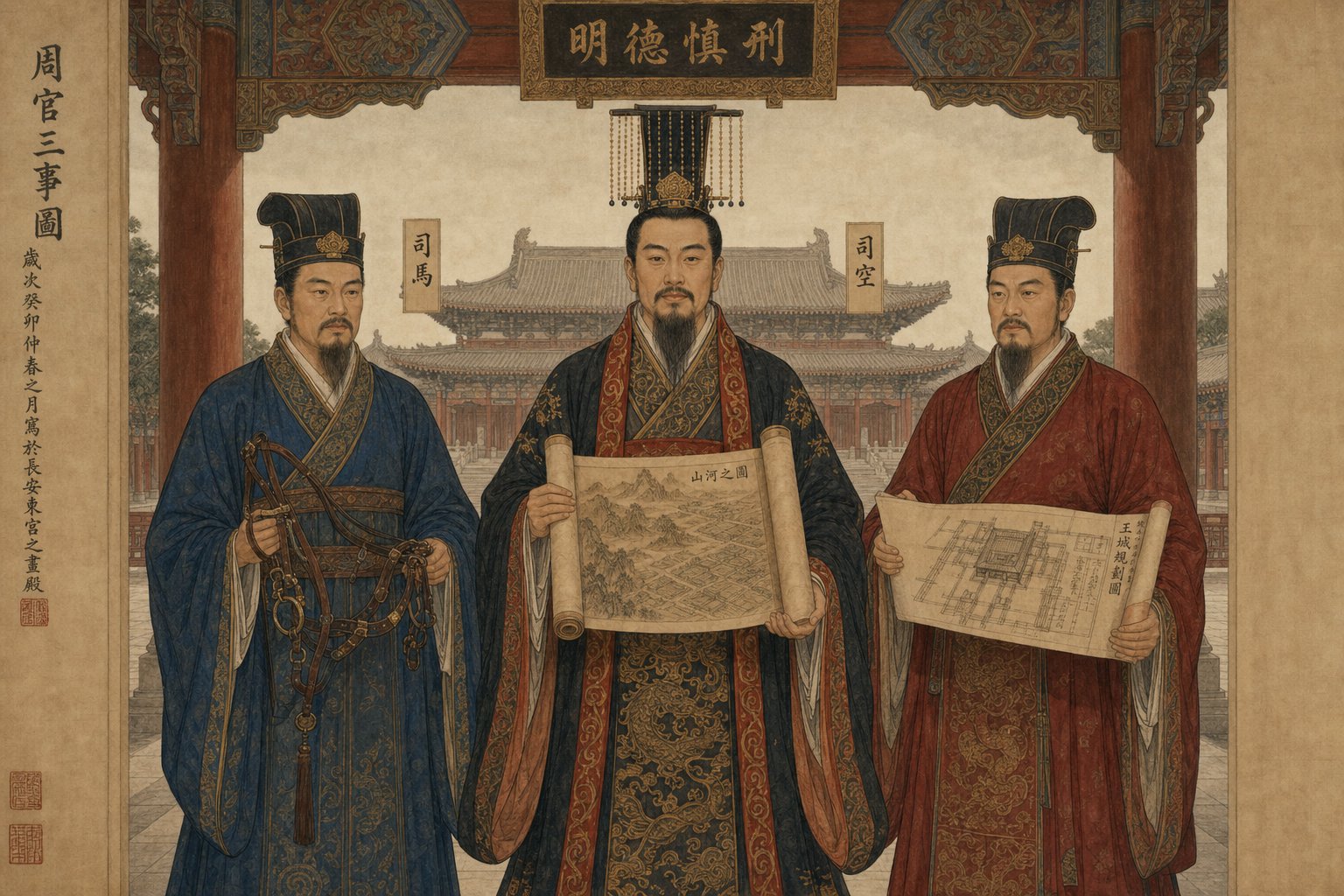
Most chinese surnames from professions compress an entire occupation into a single character. But a special class of names breaks that rule. Compound surnames, known as fuxing (复姓), use two characters instead of one, and the most recognizable examples come directly from bureaucratic titles held in ancient imperial courts. These two-character names are immediately distinctive among asian surnames because their structure mirrors the compound nature of the official positions they describe.
Think of it this way. A single-character surname like Tao (陶, potter) names a trade. A compound surname like Sima (司马) names an entire institutional role: the officer who oversees horses. The "si" (司) means "to manage" or "to oversee," and the second character specifies what's being managed. That grammatical structure, verb plus object, is what makes these names so transparent in their bureaucratic origins.
Sima, Situ, and Sikong as Court Position Surnames
Three compound surnames stand out as a matched set because they all share that same "si" (司, to oversee) prefix. Each one designated a different branch of government responsibility during the Zhou Dynasty and later became one of the Three Excellencies of the Han Dynasty, the highest ministerial positions in the empire.
| Compound Surname | Characters | Original Government Role | Dynasty of Origin | Modern Prevalence |
|---|---|---|---|---|
| Sima | 司马 | Master of Horses / Marshal of Military Affairs | Zhou Dynasty (c. 1046-256 BC) | Uncommon but well-recognized; famous bearers include historian Sima Qian and the Jin Dynasty imperial family |
| Situ | 司徒 | Minister over the Masses (land, population, civil affairs) | Zhou Dynasty | Still found in southern China and among Cantonese communities (romanized as Szeto or SooHoo) |
| Sikong | 司空 | Minister of Works (public construction, infrastructure) | Zhou Dynasty | Rare; one of the least common among the "si-" compound surnames |
| Shangguan | 上官 | Senior Official (high-ranking court position) | Western Zhou / Spring and Autumn Period | Moderately common; notable bearers include Tang Dynasty poet Shangguan Wan'er |
Sima is perhaps the most famous of the group. The role originally involved managing the royal cavalry and military logistics, but it evolved into a supreme military command position. The historian Sima Qian, who wrote China's first comprehensive history, carried this surname. Centuries later, the entire Jin Dynasty (265-420 AD) was ruled by the Sima clan. Among popular chinese names, Sima remains instantly recognizable even though relatively few people carry it today.
Situ oversaw civil administration, essentially managing the population and land allocation. Sikong handled public works, everything from roads and canals to government buildings. Together with Sima, these three "si-" surnames represent the complete executive branch of ancient Chinese government, frozen into family names.
Shangguan works differently. Rather than the "si" prefix, it combines "shang" (上, upper/senior) with "guan" (官, official). It's less specific about the role and more about rank, essentially meaning "high official." This makes it slightly different from the other three, which name exact ministerial portfolios.
Why Compound Surnames Signal Aristocratic Bureaucratic Origins
Here's what makes compound surnames so revealing. In a naming culture where the vast majority of family names use a single character, carrying two characters immediately marks a name as unusual. Among the hundreds of asian surnames names documented in historical records, compound forms account for only a small fraction, and most trace back to either official titles or place names associated with nobility.
The compound structure itself is the clue. Ordinary trades could be captured in one character: a potter is tao (陶), a butcher is tu (屠). But government positions required compound titles because they described a relationship between a person and an institution. "The one who oversees horses" can't collapse into a single character without losing meaning. So when these titles became surnames, they retained their two-character form, permanently branding their bearers as descendants of the administrative elite.
This is why compound surnames are considered last names uncommon in frequency but high in prestige. Unlike the chen last name origin, which traces to an ancient state name and became one of China's most populous surnames, compound bureaucratic surnames stayed relatively rare. The original pool of holders was small, limited to actual officeholders and their immediate families, so the population never expanded the way single-character asia surnames did.
That rarity carries cultural weight. In Chinese literature, film, and television, compound surnames often signal aristocratic heritage or scholarly lineage. They function almost like a built-in social marker, a two-character announcement that somewhere in the family tree, an ancestor held real institutional power. The bureaucracy may have dissolved millennia ago, but the names it generated still carry that echo of authority into every generation that bears them.
Surnames Born From Manual Trades and Craftsmanship
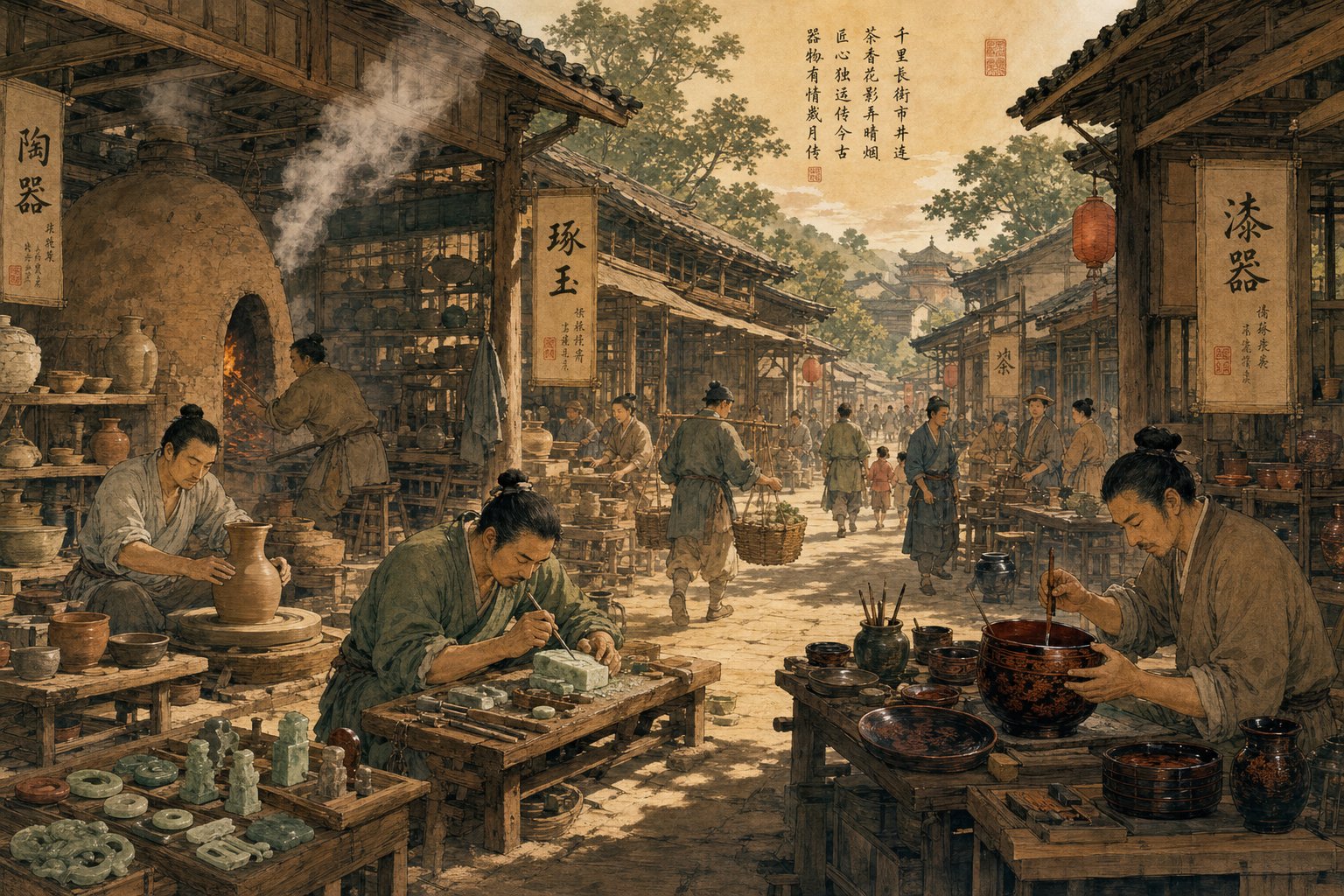
Compound surnames announced aristocratic power. But the vast majority of working people in ancient China never held a ministerial title. They shaped clay, slaughtered livestock, stored grain, and read cracks in heated bones. Their trades were humbler, yet equally capable of generating permanent family names. These single-character occupational surnames form the largest group of chinese surnames from professions, and their written forms often carry visual evidence of the original trade right inside the character itself.
When you look at common chinese last names derived from manual work, you're looking at the economic backbone of ancient society encoded into script. Each character tells a micro-story about what mattered enough to become identity.
Pottery, Butchery, and Divination as Surname Sources
The most well-documented trade surnames come from occupations so essential that every community needed them. A potter supplied vessels for cooking, storage, and ritual. A butcher processed meat for markets and sacrificial ceremonies. A diviner guided decisions for rulers and commoners alike. These weren't marginal roles. They were infrastructure.
Here's where chinese name meaning becomes visible at the character level. The surname Tao (陶) contains the "mound" radical (阝) on the left, referencing the earthen kilns where pottery was fired. The right component relates to forming or shaping. A family surnamed Tao carries a visual diagram of their ancestor's workshop in their name. As historical records confirm, Tao meaning "potter" was among the shi clan names used by non-nobles during the Warring States era.
Tu (屠) is equally transparent. The character combines the "corpse/body" radical (尸) on top with components suggesting a knife and cutting action below. It literally depicts the act of butchery. The surname Pu (卜) is even more minimal: just two strokes that represent the cracks appearing on oracle bones during divination. When heated, tortoise shells cracked in patterns that diviners interpreted as messages from ancestors. That cracking pattern became the character, and the character became a family name.
Cang (仓) shows a structure with a roof and an opening, representing a granary or storehouse. The person who managed grain reserves for a community or feudal lord became "the granary keeper," and their descendants inherited that identifier. Ku (库) works similarly, depicting an armory or weapons storehouse, with the "shelter" radical (广) suggesting a covered building. Shi (师) originally depicted a military division or a master of a specialized skill, carrying connotations of both teaching authority and professional mastery.
| Surname | Character | Original Profession | Radical/Visual Clue | Modern Status |
|---|---|---|---|---|
| Tao | 陶 | Pottery making / kiln work | 阝(mound) - references earthen kiln | Common; ranks within top 100 surnames |
| Tu | 屠 | Butchery / animal slaughter | 尸 (body) + knife components - depicts cutting | Uncommon but widely recognized |
| Pu (Bu) | 卜 | Divination / oracle bone reading | Pictograph of cracks on heated bone | Uncommon; more common in northern regions |
| Cang | 仓 | Granary keeping / grain storage | Roof + opening structure - depicts storehouse | Rare |
| Ku | 库 | Armory keeping / weapons storage | 广 (shelter) - covered storage building | Very rare |
| Shi | 师 | Teaching / mastery of a skill | Originally depicted a military division or expert | Uncommon |
Notice the pattern. The more essential and widespread the trade, the more likely the surname survived as a recognizable name. Tao remains among common chinese names precisely because every settlement needed potters. Ku and Cang faded because armory and granary management were centralized roles with fewer holders.
Specialized Ancient Trades Behind Rare Surnames
Beyond the well-known examples, a layer of rarer surnames traces back to highly specialized crafts that flourished during specific dynasties. These names reward deeper chinese name interpretation because their occupational origins aren't immediately obvious to modern readers.
Silk production generated the surname Si (丝), though it's extremely rare today. The character directly depicts threads of silk fiber. Bronze casting, one of ancient China's most prestigious crafts, contributed to surnames containing the metal radical (金), though many of these evolved through multiple origin paths. Jade carving, considered the noblest of material arts, connects to the surname Yu (玉), which carries the "jade" radical as its entire form, a single character that is simultaneously the material, the craft, and the family identity.
Other specialized trade surnames include:
- Jiang (匠) - general craftsman or carpenter; the character shows a tool inside a container, representing a worker's toolkit
- Zhu (铸) - metal casting; contains the gold/metal radical (钅) indicating work with molten metals
- Tong (铜) - bronze working; also carries the metal radical, specifying copper/bronze as the material
- Qi (漆) - lacquer work; contains the water radical (氵) referencing the liquid lacquer harvested from trees
What makes these surnames fascinating for anyone exploring popular asian last names is how they preserve economic history that written records often overlook. Official histories focused on emperors and wars. But surnames asian communities carry today quietly document which trades existed, which ones mattered enough to define families, and which ones eventually disappeared from daily life while persisting as identity markers.
The FamilySearch Chinese surname database categorizes "taking skills as the master" as a distinct surname origin type, listing witch, divination, pottery, craftsman, and butcher as primary examples. This confirms that Chinese naming tradition formally recognized occupational identity as a legitimate and permanent source of family names, not a secondary or informal category but a foundational one.
Each of these trade-based surnames carries its workshop, its tools, and its raw materials inside the brushstrokes of a single character. The written form doesn't just name the family. It diagrams the ancestor's daily work, making these names some of the most visually descriptive in any surnames asian tradition worldwide.
Spiritual, Military, and Scholarly Surname Origins
Potters and butchers shaped the material world. But ancient Chinese society also depended on people who shaped the immaterial: those who communicated with spirits, recorded history for future generations, composed ritual music, and commanded armies. These roles carried a different kind of authority, one rooted in knowledge, spiritual access, or martial power rather than manual skill. And just like their trade-based counterparts, these positions generated permanent family names that persist as uncommon surnames today.
What separates this group is prestige. In the Confucian social hierarchy, scholars and officials ranked above merchants and craftsmen. Spiritual intermediaries occupied an even more ancient layer of authority, predating Confucian categories entirely. The chinese surname each of these roles produced reflects that status difference, and it helps explain why some occupational names thrived while others faded.
Shamans, Historians, and Musicians as Surname Ancestors
The surname Wu (巫) traces directly to China's oldest spiritual profession: shamanism. The wu were ritual specialists who mediated between the human and spirit worlds, performing ceremonies, interpreting omens, and conducting healing rites. Research on Chinese shamanic traditions documents how these practitioners undertook spirit journeys, communing with deities and ancestors on behalf of their communities. The character itself (巫) depicts a figure standing between heaven and earth, arms raised, connecting the two realms. Families who served as hereditary shamans eventually carried that role as their permanent identifier.
Shi (史) names the court historian and record keeper. This wasn't a passive clerical role. The shi held enormous power because they controlled what was remembered and what was forgotten. Warring States sources even reference "spirit registrars" (siming) who controlled human life spans in the underworld bureaucracy, modeled directly on earthly scribes. The surname Shi thus carries connotations of both scholarly authority and quasi-spiritual power over records and fate.
Yue (乐) originated with court musicians responsible for ritual music during ceremonies, sacrifices, and state events. Music in ancient China wasn't entertainment. It was a tool of cosmic harmony, believed to align human society with heavenly order. The families who performed this function became permanently identified by it. Among surnames that mean power, Yue encodes a subtle but real form of influence: the ability to shape the emotional and spiritual atmosphere of the court itself.
Military Roles That Generated Family Names
Military occupations produced their own set of hereditary names, though fewer survived into the modern era. Bing (兵) directly references soldiers or military service. The character depicts a pair of hands holding a weapon, making it one of the most visually literal occupation surnames. Shuai (帅) referenced a military commander, while Zu (卒) identified foot soldiers or lower-ranking troops.
The survival rate of military surnames reveals something important about prestige and population dynamics. High-command positions like Sima (covered earlier) generated surnames that thrived because they were associated with elite families who had resources, land, and descendants. Lower-ranking military surnames like Zu remained rare because common soldiers had less social stability and fewer surviving lineages.
Stepping back, the full landscape of profession-based surnames organizes into clear categories that mirror ancient China's social structure:
- Government positions - Sima, Situ, Sikong, Shangguan (highest prestige; often compound surnames)
- Scholarly occupations - Shi (historian), Yue (musician), Shi (teacher/master)
- Religious and spiritual roles - Wu (shaman), Pu/Bu (diviner)
- Military roles - Bing (soldier), Shuai (commander), Zu (foot soldier)
- Manual trades - Tao (potter), Tu (butcher), Cang (granary keeper), Ku (armory keeper)
You'll notice this list roughly descends from highest to lowest social prestige, and that ordering correlates directly with surname survival. The most common chinese last names from occupational origins tend to cluster in the upper categories. Government and scholarly surnames maintained visibility across centuries because their original holders had access to education, land ownership, and political networks that helped their lineages grow. Manual trade surnames, while numerous in origin, often remained geographically concentrated and numerically small.
This pattern also explains the ng last name origin question that many Cantonese speakers encounter. Ng (伍) originally referenced a military unit of five soldiers, placing it in the military category. It became one of the most common chinese surnames in southern China and among overseas communities precisely because military organization touched large populations, giving the name a broad base of original holders even though the role itself wasn't elite.
The prestige hierarchy didn't just determine which surnames survived. It determined which ones people wanted to keep. Families bearing names tied to respected roles had no incentive to change them. Those carrying names from stigmatized trades, like butchery, sometimes adopted alternative surnames when social mobility allowed. The result is a modern surname landscape where spiritual, scholarly, and military names punch above their historical weight, while some trade names have quietly disappeared from the most popular chinese last names lists entirely.
Cross-Cultural Comparison With Western Occupation Surnames
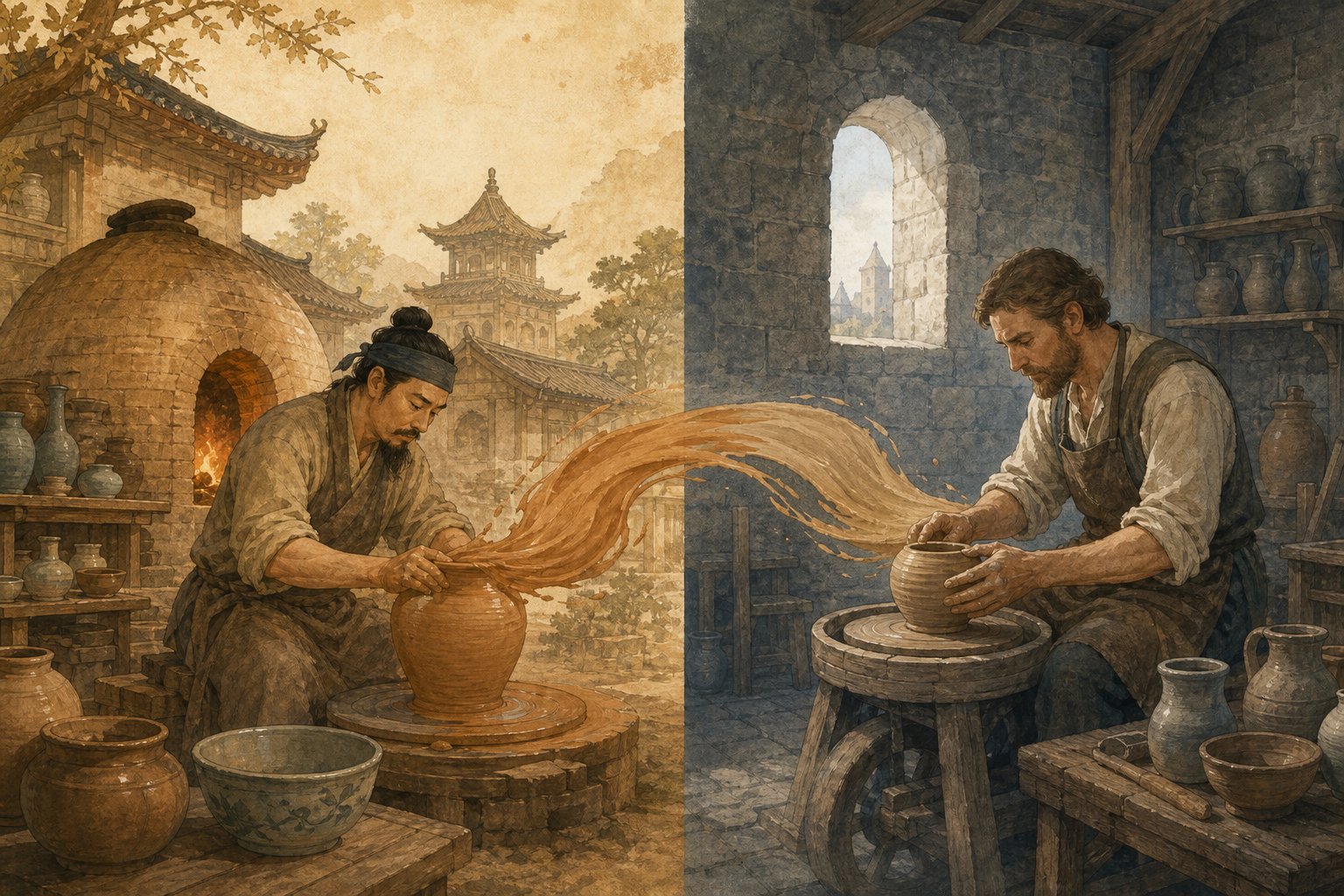
The pattern of jobs becoming family names isn't uniquely Chinese. Walk through any English-speaking country and you'll bump into Smiths, Bakers, Coopers, and Carpenters. These names work exactly the same way: an ancestor's daily labor became a permanent family identifier. Yet when you compare the two traditions side by side, a striking asymmetry emerges. English has hundreds of occupation-based surnames. Chinese has far fewer. Understanding why reveals deep differences in how Eastern and Western civilizations valued work, lineage, and identity.
Chinese and Western Occupation Surnames Side by Side
The parallels are surprisingly direct. A Smith forged metal at an anvil. A Tao (陶) shaped clay at a kiln. A Butcher processed animal carcasses. A Tu (屠) did the same in a Chinese market town. A Potter threw vessels on a wheel, and so did the ancestor behind the Tao surname. The occupations are universal because every pre-industrial society needed the same essential services.
Here's how the most common chinese names from occupational origins line up against their Western equivalents:
| Occupation | Chinese Surname | English Equivalent | German Equivalent |
|---|---|---|---|
| Pottery / ceramics | Tao (陶) | Potter | Töpfer |
| Butchery / slaughter | Tu (屠) | Butcher | Fleischer / Metzger |
| Metalworking / smithing | Jin (金) / Tie (铁) | Smith | Schmidt |
| Military command | Sima (司马) | Marshall | Marschall |
| Divination / spiritual counsel | Bu (卜) | Priest / Bishop | Priester |
| Record keeping / writing | Shi (史) | Clerk / Scrivener | Schreiber |
| Music performance | Yue (乐) | Harper / Piper | Spielmann |
| Grain storage / milling | Cang (仓) | Miller | Müller |
| Weaving / textiles | Si (丝) | Weaver / Webb | Weber |
| Carpentry / woodwork | Jiang (匠) | Carpenter | Zimmermann |
The table reveals something interesting. For nearly every major trade that generated a Western surname, a Chinese equivalent exists. The occupations are the same. The naming impulse is the same. But the scale is completely different. Research on English surname origins shows that the textile industry alone produced 165 distinct surnames, the metal industry generated 108, and the food industry contributed 107, with occupational names accounting for over 15% of all English surnames. Chinese occupational surnames, by contrast, represent a much smaller slice of the total surname pool.
Why Chinese Has Fewer Occupation-Based Surnames Than English
So what explains the gap? Why did English develop hundreds of trade-based surnames while Chinese produced only dozens? Three historical factors converge to explain this.
Earlier surname adoption in China. Chinese surnames solidified thousands of years before English ones did. Ancient chinese names were already fixed by the Qin Dynasty (221 BC), while English people didn't adopt hereditary surnames until after the Norman Conquest in 1066 AD. That's a gap of over a thousand years. By the time English communities needed distinguishing identifiers, their economies had diversified into hundreds of specialized trades. Medieval England had fullers, fletchers, chandlers, coopers, tanners, and dyers, each specific enough to generate a unique surname. Ancient China's economy, while sophisticated, hadn't yet fragmented into that level of named specialization when surnames locked into place.
Confucian emphasis on lineage over trade. Chinese culture, shaped by Confucian values, prioritized ancestral lineage and place of origin as identity markers. The liu last name (刘), for instance, traces to a feudal territory rather than a profession, and it became one of the most populous surnames in history. This cultural preference meant that when families had a choice of identifiers, they gravitated toward state names, clan ancestors, or geographic origins rather than trade descriptions. Work was something you did. Lineage was something you were.
The prestige hierarchy discouraged trade identification. Confucian social ordering ranked scholars, farmers, artisans, and merchants from top to bottom. Identifying permanently with a manual trade meant branding your descendants with a lower social position. Families with any alternative, a place name, a noble ancestor, a state affiliation, chose that instead. This is why surnames in asia derived from states and clans vastly outnumber those from occupations. The cultural incentive pointed away from trade-based naming.
English culture operated differently. Medieval English society saw no particular shame in occupational surnames. A Smith or a Baker carried a name that described honest, respectable work. The Norman feudal system actually reinforced occupational identity because trades were often hereditary obligations tied to land tenure. Your lord needed a blacksmith, so your family was the blacksmith family, and that became your permanent name without stigma.
This cultural contrast also shows up in taiwanese last names and diaspora communities across Southeast Asia. The surnames Chinese families carried abroad were overwhelmingly clan-based and territory-based, not trade-based. Among the most common surnames in Taiwan, names like Chen, Lin, Huang, and Zhang dominate, all tracing to states, ancestors, or geographic features. Occupational surnames exist in taiwan last names registries, but they remain a minority category, reflecting the same Confucian preference that shaped mainland naming patterns centuries earlier.
The comparison ultimately highlights something universal: every civilization turns jobs into names. But how many jobs become names, and which ones stick, depends entirely on what a culture values most. English valued practical identity. Chinese valued ancestral continuity. Both produced occupation surnames, but in vastly different proportions, and those proportions tell us as much about cultural priorities as any history book could.
Which Profession-Derived Surnames Survived and Why
Cultural values explain why Chinese produced fewer occupational surnames than English. But within that smaller pool, a second sorting happened over the centuries. Some profession-based names grew into large, thriving lineages. Others shrank to near extinction. The difference wasn't random. Specific, identifiable forces determined which occupational surnames would still appear on ID cards today and which would become curiosities found only in historical dictionaries.
Profession Surnames That Thrived Across Centuries
The Baijiaxing (百家姓), or Hundred Family Surnames, compiled during the early Song Dynasty (960 AD), provides a useful baseline. This text cataloged the most recognized surnames of its era, and scattered among its entries are names with clear occupational origins. Tao (陶, potter) appears prominently. Shi (史, historian) holds a solid position. Sima (司马) is listed among the compound surnames at the text's end. Their inclusion confirms that by the Song Dynasty, these profession-derived names had already achieved enough population mass to be considered "standard" chinese last name entries.
Fast forward to modern data. A 2019 study published in the American Journal of Physical Anthropology analyzed surname distribution across 1.28 billion Chinese citizens using data from the National Citizen Identity Information Center. The research revealed that surname survival correlates strongly with geographic concentration and historical migration patterns. Prefectures dominated by migratory movements tend to show higher concentrations of common surnames, while isolated regions preserve rarer names through genetic drift. This means profession-based surnames that originated in mobile, well-connected populations had a structural advantage over those born in isolated communities.
Among the most popular chinese last names with occupational roots, Tao consistently ranks within the top 100. Its survival makes sense: pottery was universal, every settlement needed it, and potters existed across all regions rather than clustering in one area. Shi (史) similarly benefited from geographic spread because courts and administrative centers existed in every major city, placing historian families across the map.
The chan last name, romanized from Chen (陈) in Cantonese, illustrates a different survival path. While Chen itself derives from a state name rather than a profession, its dominance as the most common last name in parts of southern China shows how population mass alone can guarantee survival. Profession-based surnames that achieved similar early population density, even if smaller in absolute terms, rode that same momentum forward.
Why Some Occupational Surnames Faded Into Rarity
Imagine a surname held by only a few hundred families, concentrated in a single valley, tied to a trade that disappeared when bronze replaced stone tools. That name had almost no chance of surviving two thousand years of wars, famines, and migrations. The factors that determined survival or extinction are remarkably consistent:
- Population of original holders - Surnames starting with a large base of bearers could absorb losses from wars, plagues, and natural disasters without disappearing entirely. Tao (potter) had thousands of original holders across China. Ku (armory keeper) had perhaps dozens in a single capital city.
- Prestige of the occupation - Families bearing high-status names like Sima (military marshal) had no incentive to change them. Families carrying names tied to stigmatized work, like butchery, sometimes adopted new surnames when social mobility allowed. Prestige acted as a retention force.
- Geographic concentration versus spread - The surname distribution research shows that geographically concentrated surnames are more vulnerable to local catastrophes. A flood, a siege, or a famine in one region could wipe out an entire surname if all its bearers lived there. Spread across multiple regions provided insurance.
- Historical events and migrations - Major population movements like the southward migrations during the Jin Dynasty (4th century) and Song Dynasty (12th century) carried some surnames into new territories where they flourished. Names left behind in war-torn regions often declined. Taiwanese surnames today reflect these migration waves, preserving certain occupational names that traveled south with fleeing populations.
- Relevance of the original trade - Occupations that remained culturally visible kept their surnames recognizable. Everyone still knows what a potter or a historian does. But who remembers what a specific type of bronze-age ritual specialist did? When the occupation becomes incomprehensible, the surname loses its cultural anchor and becomes just an arbitrary sound, making it easier to abandon or absorb into a more common name.
These factors worked together, not in isolation. Sima survived despite a small original population because its extreme prestige and association with an imperial dynasty gave it cultural immortality. Chinese warrior names like Bing (兵, soldier) had large original populations but low prestige, creating a mixed outcome: the name persists but remains uncommon because many bearer families eventually switched to higher-status alternatives.
The research on Chinese surname distributions also reveals a mathematical pattern. Surname frequency follows a stretched exponential distribution for common names but shifts to a power-law distribution for rare ones. Profession-based surnames cluster disproportionately in that power-law tail, meaning most of them are rare. The few that broke into the exponential zone, like Tao, did so early enough in history to benefit from compounding population growth over millennia.
What this means practically is that if your chinese last name derives from a profession and you still carry it today, your lineage beat significant odds. The name survived not just because an ancestor held a job, but because enough descendants kept it through every dynasty change, every migration, and every social pressure to conform to more common alternatives. That persistence is itself a form of heritage, a quiet testament to continuity across centuries of upheaval.
Yet survival tells only part of the story. The characters themselves, their radicals, their stroke patterns, and their regional pronunciations encode additional layers of occupational meaning that many bearers no longer recognize.
Character Etymology and Dialect Variations Explained
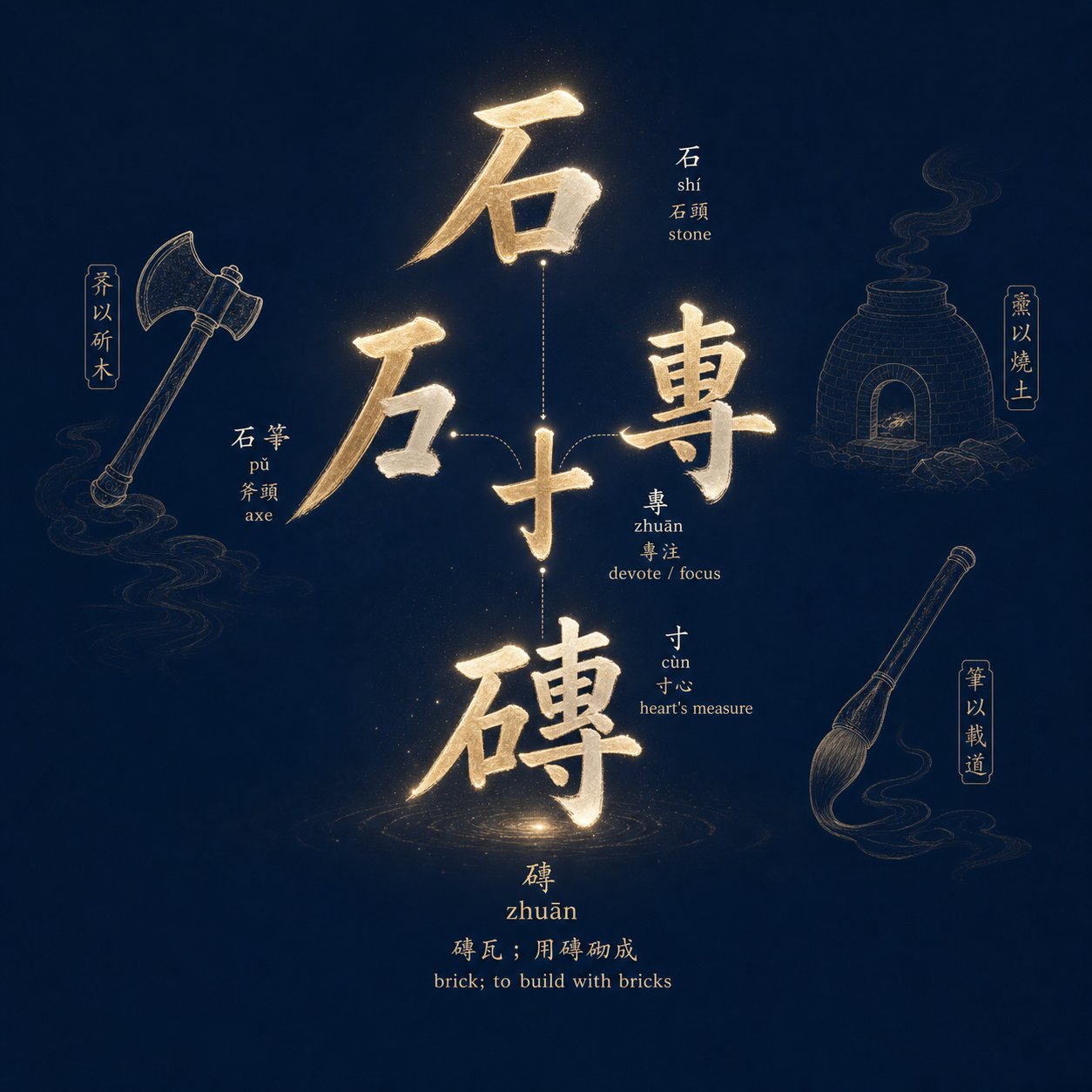
Every Chinese character is a small machine built from components that carry meaning. Radicals, the recurring building blocks of written Chinese, often reference materials, tools, actions, or environments. When a surname originated from a profession, those radicals frequently preserve a visual diagram of the ancestor's work. Learning to read these clues turns any surname character into a miniature occupational portrait, even if the bearer has no idea their name once described a job.
Reading Occupational Clues in Surname Characters
The trick is knowing which radicals signal which types of work. The metal radical (钅or 金) points toward smithing, casting, or metalwork. The water radical (氵) suggests trades involving liquids, like lacquer harvesting or dyeing. The mound radical (阝) can reference earthworks or kiln structures. The knife radical (刂) hints at cutting trades. Once you recognize these patterns, scanning chinese surnames and meanings becomes almost intuitive.
Here's a breakdown of key profession-based surnames showing exactly how their internal components encode occupational history:
| Character | Pinyin | Radical Breakdown | Original Meaning | Profession Referenced |
|---|---|---|---|---|
| 陶 | Tao | 阝(mound/earth) + 匋 (forming) | To shape from clay; kiln work | Potter / ceramicist |
| 屠 | Tu | 尸 (body) + 者 (one who does) | To slaughter; to cut apart | Butcher |
| 卜 | Bu/Pu | Pictograph of cracks on bone | To divine; to foretell | Oracle bone diviner |
| 巫 | Wu | Two 人 (people) flanking 工 (work/ritual) | Spiritual intermediary | Shaman / ritual specialist |
| 史 | Shi | 中 (center) + 又 (hand holding brush) | To record; to document | Court historian / scribe |
| 匠 | Jiang | 匚 (container/frame) + 斤 (axe) | One who works with tools | Carpenter / craftsman |
| 铸 | Zhu | 钅(metal) + 寿 (phonetic) | To cast molten metal | Bronze or iron caster |
Notice how Wu (巫) literally depicts a figure performing ritual work between two realms. Jiang (匠) shows an axe inside a frame, a toolkit in miniature. These aren't abstract symbols. They're pictorial shorthand for daily labor, preserved across millennia of script evolution.
If you want to check your own surname for occupational clues, start by identifying the radical. Does it reference a material (metal, wood, earth, water)? A tool (knife, axe, brush)? An action (cutting, shaping, holding)? Any of these signals a possible trade origin worth investigating further. Even among chinese names popular today, many carry radicals that hint at forgotten professional roots their bearers have never examined.
Regional Dialect Variations of Profession Surnames
Here's where things get confusing for diaspora families. The same surname character can sound completely different depending on whether it's pronounced in Mandarin, Cantonese, Hokkien, or Teochew. These aren't different names. They're the same name filtered through different regional sound systems, then frozen into different romanizations when families emigrated and registered their names in English-speaking countries.
The wong last name origin question is a perfect example. Wong is simply the Cantonese pronunciation of 王, which is Wang in Mandarin and Ong in Hokkien. The character hasn't changed. The meaning (king) hasn't changed. But the romanized spelling looks like three entirely different surnames to anyone unfamiliar with Chinese dialect geography. As the Asia Media Centre explains, in territories with a sizeable Chinese diaspora like Singapore and Malaysia, the way a family name is spelled often signals the region a person's ancestors came from.
The same principle applies to every profession-based surname. The chan last name origin traces to the character 陈 (Chen in Mandarin), which becomes Chan in Cantonese and Tan in Hokkien. While Chen itself derives from a state name rather than a trade, the dialect-splitting pattern is identical for occupational surnames. Bu (卜, diviner) becomes Bok in Cantonese. Shi (史, historian) becomes Si in Cantonese and Su in some Hokkien dialects.
For the wang last name and other common asian last names, this dialect fragmentation means that two families with seemingly different surnames might actually share identical characters and identical occupational origins. A person surnamed Wong researching their heritage and a person surnamed Wang are looking at the same ancestral story, just through different phonetic lenses.
This matters practically because genealogical research often hits a wall when families don't realize their romanized surname connects to a specific character with a known occupational etymology. Knowing that your "Wong" is 王 or that your "Toh" is 陶 (Tao in Mandarin, meaning potter) unlocks the entire etymological analysis described above. The dialect variation isn't a barrier to understanding. It's simply one more layer to peel back before the occupational meaning reveals itself.
The character stays constant across every dialect. The radicals don't change. The occupational story encoded in the brushstrokes remains the same whether you pronounce it in Mandarin, Cantonese, or Hokkien. What changes is only the sound, and with it, the romanized spelling that appears on passports and birth certificates. Recognizing this distinction is the first step toward connecting a modern romanized surname back to its ancient professional origin, regardless of which dialect community your family passed through on its way to the present.
How to Discover if Your Surname Comes From a Profession
Dialect variations obscure the connection between a romanized spelling and its original character. But once you've identified that character, a clear research path exists for determining whether your family name started as a job title. The process isn't complicated. It just requires knowing where to look and what to look for.
Whether your surname is the most common chinese last name in your region or something you've never seen on anyone else, the same investigative steps apply. Every chinese surname has an origin story, and profession-based origins leave specific, traceable evidence in the character itself, in historical texts, and in clan records.
Steps to Research Your Surname's Occupational Origins
Imagine you carry the hsu last name (徐) and you've always wondered what it means. Or maybe your surname is rarer, something you can't find in standard references. Either way, the following process moves you from uncertainty to a clear answer about whether your name once described an ancestor's daily work.
- Identify the traditional character form - If you only know the romanized spelling, determine which Chinese character it represents. Remember that one romanization can correspond to multiple characters. The My China Roots surname database notes that a single romanization like "Fung" can map to characters including 方, 房, 洪, 冯, 范, 凤, 丰, or 封. Start by confirming exactly which character belongs to your family. Ask older relatives, check immigration documents, or consult dialect-specific romanization tables.
- Analyze radicals for occupational clues - Once you have the character, examine its internal components. Does it contain the metal radical (钅), suggesting smithing or casting? The earth/mound radical (阝), pointing toward kiln work or construction? A tool component like axe (斤) or knife (刂)? These visual clues are your first indicator of a possible trade origin. Not every radical signals a profession, but occupational surnames almost always contain one that does.
- Consult historical surname dictionaries - The Baijiaxing (百家姓) is a starting point, but deeper resources exist. The Yuan He Xing Zuan (元和姓纂), compiled during the Tang Dynasty, provides detailed origin narratives for hundreds of surnames. Modern compilations like the Zhonghua Xingshi Dacidian (中华姓氏大辞典) catalog over 11,000 surnames with etymological notes. Look for entries that describe your surname's origin as "yi ji wei shi" (以技为氏, taking a skill as one's clan name) or similar phrasing indicating occupational derivation.
- Check clan genealogy records (族谱) - Chinese clan genealogies, known as zupu (族谱), often contain origin narratives in their opening sections that explain how the surname was first adopted. The Family History Library in Salt Lake City holds one of the world's largest collections of Chinese genealogical records, including clan records, gazetteers, and family histories that document surname origins alongside migration patterns and lineage charts. FamilySearch.org also provides online access to many of these documents.
- Compare with known profession-surname lists - Cross-reference your findings against established catalogs of occupational surnames. If your character matches a documented trade name, you have your answer. If it doesn't appear on standard lists but your radical analysis suggests a trade connection, you may have found a rare or regional variant worth deeper investigation.
Key Resources for Chinese Surname Etymology
You don't need to read classical Chinese to make progress. Several accessible resources can help at different stages of research:
- Online surname databases - Sites like My China Roots provide searchable entries with origin categories, dialect romanizations, and historical context for each surname character. These are ideal for the initial identification step.
- FamilySearch Chinese collection - Beyond the physical library, FamilySearch.org hosts digitized Chinese genealogies searchable by surname. The characters 族谱 (zupu, clan genealogy) and 姓 (xing, surname) are key search terms that unlock relevant records.
- Regional surname origin databases - Provincial and county-level gazetteers (地方志, difangzhi) often document local surname origins specific to that area. These capture regional occupational surnames that national-level resources might miss.
- Character etymology tools - Resources showing the historical evolution of characters from oracle bone script through modern forms can reveal occupational pictographs that simplified versions have obscured.
For the chen surname (陈), research would reveal a state-name origin rather than a professional one. For Tao (陶), the occupational connection is immediate and well-documented. Most surnames fall somewhere between these extremes, requiring a few steps of investigation before the origin category becomes clear. Understanding chinese names and meanings at this level transforms a surname from an inherited label into a direct link to an ancestor's lived experience.
The most common surname in any region achieved that status through population growth, migration, and historical accident. But every surname, common or rare, started somewhere specific. If yours started in a workshop, a court office, a temple, or a military camp, the evidence is still there, encoded in brushstrokes and preserved in texts that have survived longer than most civilizations. Tracing that connection doesn't just satisfy curiosity. It places you inside a continuous thread of social history stretching back thousands of years, linking your family to the specific work that built ancient Chinese civilization one generation at a time.
Frequently Asked Questions About Chinese Surnames From Professions
1. Which Chinese surnames come from ancient professions?
Several well-known Chinese surnames originated as occupational titles. Tao (陶) comes from pottery making, Tu (屠) from butchery, Sima (司马) from military horse management, Shi (史) from court record-keeping, Wu (巫) from shamanism, and Bu (卜) from divination. Compound surnames like Situ (司徒) and Sikong (司空) trace back to ministerial positions in the Zhou Dynasty court. Each character often contains radicals that visually reference the original trade, such as the mound radical in Tao pointing to earthen kilns.
2. How did Chinese occupational titles become permanent family names?
The transition happened in stages over centuries. First, an ancestor received a specialized role in their community or court. That occupational title then became the primary way others identified the family. Children inherited the identifier even if they pursued different work. Finally, during the Qin Dynasty unification (221 BC), Emperor Qin Shi Huang's standardization of census records locked these titles into permanent, hereditary surnames for taxation and military purposes. After that point, families could no longer drift toward alternative identifiers.
3. Why does Chinese have fewer occupation-based surnames than English?
Three main factors explain this gap. First, Chinese surnames solidified over a thousand years before English ones did, when the economy had fewer named specializations. Second, Confucian culture prioritized ancestral lineage and geographic origins over trade identity, so families preferred non-occupational markers when given a choice. Third, the Confucian social hierarchy ranked manual trades low, discouraging permanent identification with artisan work. English medieval society, by contrast, attached no stigma to trade names, allowing hundreds of specialized occupations like Fuller, Fletcher, and Chandler to become surnames.
4. How can I tell if my Chinese surname originally meant a profession?
Start by identifying the traditional Chinese character behind your romanized surname. Then examine its radicals for occupational clues: the metal radical (钅) suggests smithing, the mound radical (阝) points to kiln work, and tool components like axe (斤) or knife (刂) hint at cutting trades. Next, consult historical surname dictionaries like the Yuan He Xing Zuan or modern compilations such as the Zhonghua Xingshi Dacidian. Look for origin descriptions using the phrase 'yi ji wei shi' (以技为氏), meaning 'taking a skill as one's clan name.' Clan genealogy records (族谱) often contain origin narratives that confirm occupational derivation.
5. Why do the same Chinese profession-based surnames have different spellings like Wong, Wang, and Ong?
These spelling differences reflect regional dialect pronunciations of the same character. Wang is the Mandarin romanization of 王, while Wong is Cantonese and Ong is Hokkien. When Chinese families emigrated and registered names in English-speaking countries, the romanization matched their spoken dialect rather than a standardized system. This means two families with seemingly different surnames may share identical characters and occupational origins. Identifying the underlying character is essential before researching any surname's professional etymology.