Understanding Feng Shui as a Name and a Philosophy
When you search for the meaning of feng shui, you're really asking two questions at once. What does the term itself translate to? And what is the meaning of feng shui as a living practice that shapes everything from architecture to personal names? The answer sits at the intersection of language, philosophy, and cultural tradition stretching back thousands of years.
What Feng Shui Means as a Name and Practice
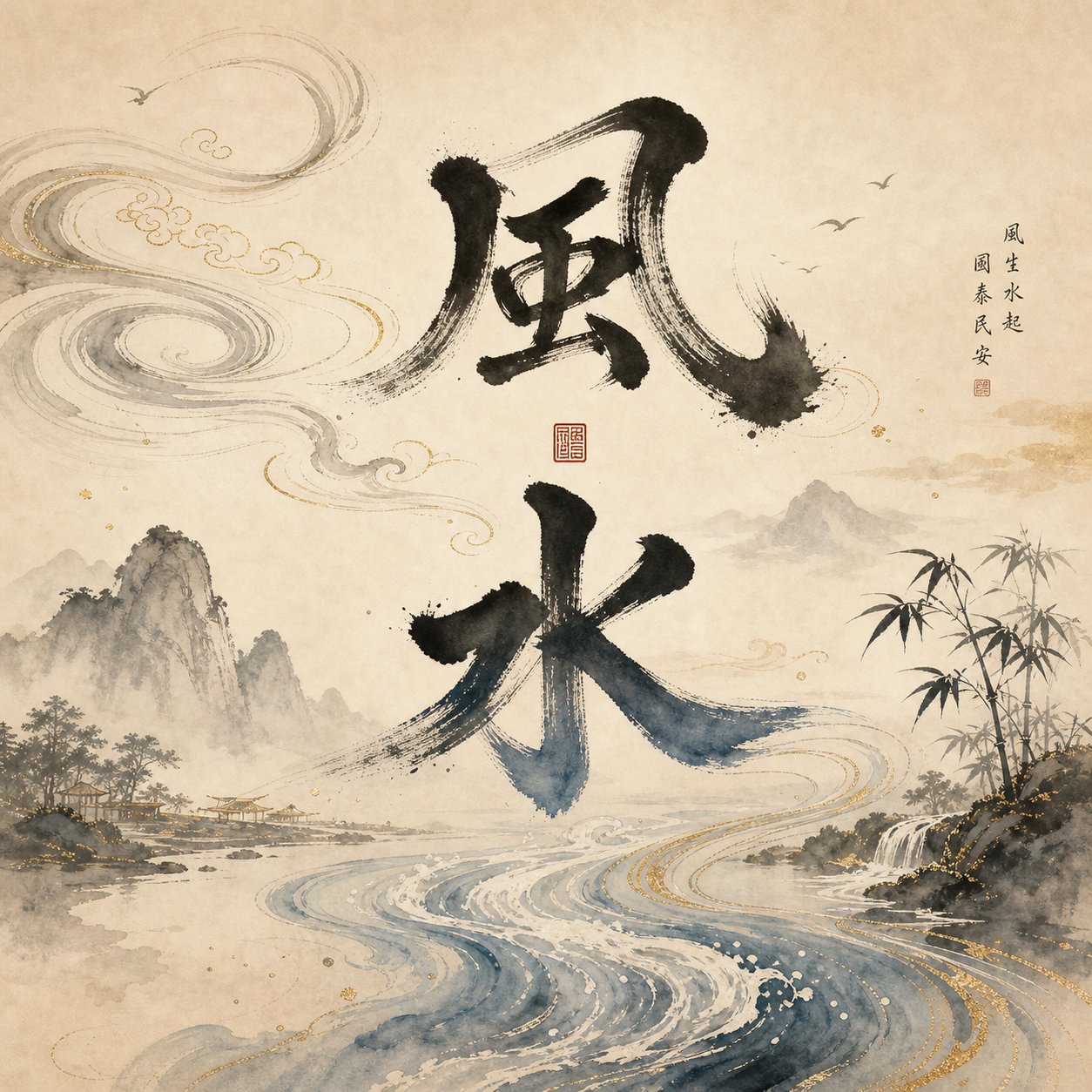
Feng shui in Chinese literally translates to "wind-water." It refers to an ancient system of spatial arrangement designed to harmonize people with their surrounding environment. National Geographic defines it as "an ancient Chinese art of arranging buildings, objects, and space in an environment to achieve harmony and balance." The practice has roots in early Taoism and centers on chi, the vital life force that flows through all things.
But here's where it gets interesting. The feng shui origin story is also a story about language. The term first appears in the Zangshu (Book of Burial), a classical Chinese text attributed to Guo Pu from the Jin Dynasty. The passage that gave this entire tradition its name reads:
Qi rides the wind and scatters, but is retained when encountering water. The ancients collected it to prevent its dissipation, and guided it to assure its retention. Thus it was called fengshui.
This classical definition from the Zangshu reveals that feng shui principles were never just about decorating a room. They describe how energy moves through landscapes, how wind disperses it, and how water holds it in place. You could use feng shui in a sentence like this: "The feng shui of the burial site was determined by how wind and water interacted with the terrain's qi." That single phrase carries an entire cosmology inside it.
Why a Feng Shui Dictionary Matters for Understanding Chinese Culture
So why does a feng shui name meaning dictionary matter? Because the same elemental logic that governs spatial harmony also governs how Chinese names are chosen. In traditional Chinese culture, a child's name is selected after careful analysis of their birth time and which of the five elements (fire, wood, water, metal, earth) need balancing. As BBC Worklife reports, feng shui practitioners in Hong Kong and across East Asia still advise on name selection and even name changes to rebalance a person's elemental composition.
Feng shui practitioner Lee Shing-chak explains that "other than one's timing of birth or doing good deeds, one's name is believed to be one of the factors" that decide destiny. This means the vocabulary of feng shui is also the vocabulary of naming. The same characters, radicals, and elemental associations that describe a well-positioned home describe a well-chosen name.
This resource bridges that gap. It connects feng shui terminology to naming conventions, giving you character-level translations, pronunciation guides, and the cultural context that makes each term meaningful. Whether you're exploring what feng shui means as a concept or trying to understand how its principles shape Chinese names, every entry that follows builds on the foundation laid in that ancient passage about wind, water, and the energy that flows between them.
How to Pronounce and Spell Feng Shui Correctly
Two characters. Four letters each. And yet the pronunciation of feng shui trips up English speakers more than almost any other Chinese loanword. If you've ever wondered how do you pronounce feng shui without embarrassing yourself, you're far from alone. The confusion runs deep, and it has a fascinating linguistic explanation.
Correct Pinyin and Tone Marks for Feng Shui
In standard Mandarin Chinese, the correct pronunciation is Fēng shuǐ. The first character carries a high, level first tone (fēng), and the second carries a falling-then-rising third tone (shuǐ). In IPA (International Phonetic Alphabet), that translates to /fʌŋ ʃweɪ/. Think of it as "fung shway" with a soft, rounded start on the "f" and a clean glide through the "shway."
So how to say feng shui in a way that's close to the Mandarin original? Aim for "fung" (rhyming with "lung") followed by "shway" (rhyming with "way"). The vowel in "feng" is closer to the "u" in "fun" than the "e" in "ten," which is where most English speakers go wrong.
The spelling "feng shui" itself comes from the Wade-Giles romanization system, developed in the 19th century to transliterate Chinese characters into the Latin alphabet. Under the newer Pinyin system (China's official romanization since 1979), the spelling remains the same: fēng shuǐ. This is one of the rare cases where Wade-Giles and Pinyin agree on the written form, even though Wade-Giles is generally considered more confusing due to its use of apostrophes and diacritical marks for tone and aspiration.
Common Misspellings and Alternative Romanizations
Here's why so many variant spellings exist: China has over 200 documented dialects. The same characters 风水 sound completely different depending on whether the speaker uses Cantonese, Hokkien, or standard Mandarin. A practitioner from Hong Kong might say "fung shway" or "fung shwee" in Cantonese. Someone from Taiwan using Hokkien dialect would pronounce it "hong chui." English speakers who've only heard the term spoken aloud, never seeing it written, produce their own phonetic guesses.
The result? A wide range of creative spellings that all point back to the same two characters. How do you say feng shui if you've only encountered it in conversation? You might end up searching for any of the variants below.
| Common Variant | Origin of Spelling | Correct Standard Form |
|---|---|---|
| Fung shway | Cantonese dialect pronunciation | Feng shui |
| Fung shwee | Cantonese with elongated vowel | Feng shui |
| Funkshway | English phonetic approximation | Feng shui |
| Fenchue / Functuay | English speaker guessing from hearsay | Feng shui |
| Faangsui | Alternate Cantonese romanization | Feng shui |
| Von sway | Misheard English approximation | Feng shui |
| Fung schwee | Hybrid Cantonese-English attempt | Feng shui |
None of these variants are "wrong" in the sense that language is wrong. They reflect real dialectal differences and the natural messiness of cross-linguistic borrowing. The important thing is recognizing that all of them refer to the same concept: 风水, wind and water, the ancient practice of harmonizing energy with environment.
With the pronunciation settled, the real depth of this term lives inside its individual characters. Each one carries layers of meaning that go far beyond a simple two-word translation.
Breaking Down the Characters Behind Feng Shui
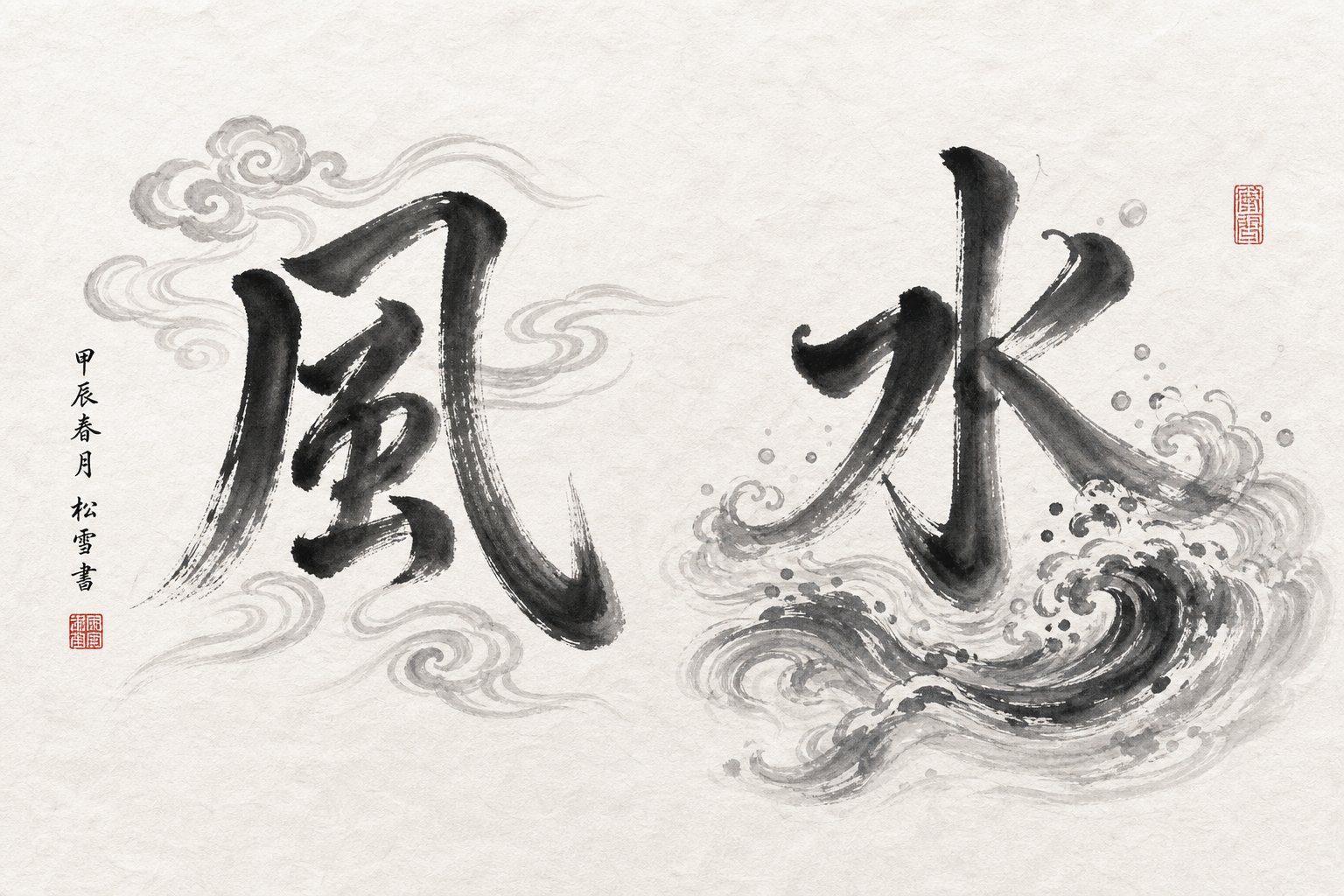
Feng shui in Chinese characters is written as 風水 (traditional) or 风水 (simplified). Two characters, two elemental forces, and centuries of layered meaning packed into a handful of brushstrokes. To truly define feng and understand shui, you need to look at each character on its own terms, because individually they carry far more weight than "wind" and "water" suggest.
風 Feng — Wind and Its Symbolic Weight in Chinese Culture
The feng definition begins with oracle bones. The character 風 first appeared over 3,000 years ago, sharing its pictorial form with 鳳 (fèng, phoenix) because wind, being invisible and intangible, couldn't easily be drawn. The outer radical 凡 indicated pronunciation. During the Qin dynasty, the two characters split into separate seal-script forms: 鳳 for the bird and 風 for the weather. The simplified version used today is 风.
The feng meaning extends well beyond meteorology. In Chinese culture, 風 represents trends, customs, temperament, and the invisible forces that shape society. You'll find it embedded in dozens of compound words that reveal this range:
- 風格 (fēnggé) — style or character
- 風俗 (fēngsú) — folk customs and local traditions
- 風度 (fēngdù) — demeanor or bearing
- 風采 (fēngcǎi) — elegance, personal charisma
- 風景 (fēngjǐng) — scenery, landscape
- 風氣 (fēngqì) — prevailing atmosphere or morale of a community
Notice how many of these relate to character and presence? That's exactly why 風 appears in Chinese given names. A name containing 風 suggests someone with grace, movement, and influence. The character carries connotations of freedom and cultural refinement, qualities parents hope to bestow. In classical literature, the Shijing (Book of Songs) uses 風 as the title for its folk song sections, linking the character to the voice of common people and regional identity.
水 Shui — Water as a Life Force and Naming Element
The shui meaning is rooted in one of the most ancient pictographs in the Chinese writing system. The character 水 is itself pictographic, its original form resembling a flowing stream with a central current and side ripples. Its radical, 氵(three dots of water), is one of the most common building blocks in Chinese characters, appearing in hundreds of words related to liquids, emotions, and movement.
Water in Chinese philosophy represents adaptability, depth, and the quiet persistence that wears down stone. The Dao De Jing famously states that "the highest good is like water," praising its ability to benefit all things without contention. This philosophical weight makes 水 and its radical powerful naming elements. Compound words built from 水 reveal its cultural reach:
- 水平 (shuǐpíng) — level, standard, or competence
- 水墨 (shuǐmò) — ink wash (as in traditional painting)
- 水晶 (shuǐjīng) — crystal (literally "water essence")
- 水源 (shuǐyuán) — water source, origin
- 水靈 (shuǐlíng) — vivacious, bright-eyed (used to describe attractive people)
As a surname, 水 (Shuǐ) exists in Chinese naming traditions, though it's rare. Far more common is the use of the water radical 氵in given names. Characters like 洁 (jié, pure), 涵 (hán, contain/cultivate), 淳 (chún, honest), and 澄 (chéng, clear) all carry the water radical and are popular choices for children's names. Parents select these characters to invoke water's qualities: clarity of mind, emotional depth, and the ability to adapt without breaking.
Together, 风水 in English translates simply as "wind-water," but that translation barely scratches the surface. One character embodies the invisible, the cultural, the swift. The other embodies the tangible, the nurturing, the enduring. Feng shui in Chinese language is a philosophy compressed into two syllables, and the same elemental logic that gives these characters their power also feeds directly into a much larger vocabulary of energy, direction, and balance.
Essential Feng Shui Vocabulary and Their Meanings
That larger vocabulary of energy, direction, and balance? It forms the working language of every feng shui practitioner, consultant, and geomancer. Yet most English-language resources offer only surface-level definitions, stripping away the Chinese characters and the naming connections that give each term its full weight. What follows is a structured glossary built for depth, not just quick reference.
Each entry below includes the original Chinese character, pinyin with tones, a literal feng shui translation, its practical application, and how the term connects to Chinese naming traditions. Think of it as the core vocabulary you'd need to read a feng shui consultation report or understand why certain characters appear in personal names.
Qi, Yin, Yang, and the Language of Energy
These three concepts form the energetic foundation of the entire system. Without them, every other feng shui term loses its context. Qi is the invisible current that flows through spaces and bodies. Yin and yang describe the dual nature of that current. Together, they create the framework for understanding how energy behaves.
| Chinese Character | Pinyin | Literal Meaning | Feng Shui Application | Naming Relevance |
|---|---|---|---|---|
| 氣 / 气 | qì | Breath, air, vital force | The life force energy that flows through environments; practitioners assess its quality and movement in a space | Common in names (e.g., 志氣 zhìqì, ambition); conveys vitality and spirit |
| 陰 | yīn | Shady side, dark, passive | Represents receptive, cool, quiet energy; balanced with yang for harmony | Rarely used directly in names but its qualities (softness, depth) inform character selection |
| 陽 | yáng | Sunny side, bright, active | Represents dynamic, warm, expansive energy; excess creates restlessness | Frequently used in male names (e.g., 陽明 Yángmíng); suggests brightness and strength |
| 道 | dào | Way, path, principle | The underlying natural order that feng shui seeks to align with | Used in names to suggest wisdom and moral direction (e.g., 道明 Dàomíng) |
You'll notice that qi, sometimes romanized as "chi" or "ch'i" in older Wade-Giles texts, is the single most important term in this glossary. Mindful Design School describes it as "life force energy, similar to the concept of breath or prana," emphasizing that it is not tangible or visible but something practitioners cultivate to feel and understand. In feng shui, every adjustment, every furniture placement, every color choice aims to improve the flow and quality of qi.
The yin-yang concept comes from Taoism and represents what practitioners call "a paradoxical unity of two sides of the same coin." It's not a simple binary. Each side contains a seed of the other, which is why the familiar symbol shows a dot of white within the black and vice versa. This nuance matters for naming: a child whose birth chart shows excess yang energy might receive a name with softer, yin-associated characters to restore balance.
Bagua, Sha Chi, and Directional Terminology
If qi describes what flows, the bagua describes where it flows and how space is organized. Directional terms give practitioners the map they need to diagnose and adjust a space. The geomancy definition most scholars use, "divination by means of earth patterns," connects directly to these spatial concepts.
| Chinese Character | Pinyin | Literal Meaning | Feng Shui Application | Naming Relevance |
|---|---|---|---|---|
| 八卦 | bāguà | Eight trigrams | An energy map dividing space into eight directional sectors, each linked to a life area and I Ching trigram | 卦 rarely appears in names, but 八 (eight) is considered lucky and influences naming numerology |
| 煞 | shà | Fiend, killing force | Harmful energy (sha chi) caused by sharp corners, clutter, or unfavorable environmental features | Avoided entirely in personal names due to its negative connotation |
| 生氣 | shēng qì | Generating breath | Positive, auspicious energy that supports well-being and prosperity (sheng qi) | 生 is popular in names, meaning life or growth (e.g., 生輝 Shēnghuī, radiance) |
| 羅盤 | luópán | Net plate | The feng shui compass used by practitioners to determine directional energies | 盤 occasionally appears in literary names suggesting breadth or completeness |
| 命卦 | mìng guà | Life trigram | A personal number based on birth year that determines favorable directions | 命 (destiny) appears in names emphasizing fate and purpose |
Sha chi deserves special attention. FengShuiBalanz defines sha qi as "negative or harmful energy" caused by sharp corners, clutter, or unfavorable environmental features, noting that "the main goal of Feng Shui is to neutralize or avoid this form of energy." Its opposite, sheng qi, represents the vibrant, life-supporting flow that every adjustment aims to cultivate. Understanding this polarity is essential: a geomancer's entire practice revolves around reducing sha and enhancing sheng.
People sometimes search for the feng shui slang meaning of terms like "poison arrow" or "money lock." These aren't slang in the casual sense but rather practitioner shorthand. A poison arrow refers to sha qi projected from sharp structural edges. A money lock describes an inauspicious period when a home's energy undermines financial luck. The feng shui slang meaning of these phrases only makes sense once you understand the foundational vocabulary above.
One more term worth noting: feng shui itself is sometimes called a feng shui synonym for the older English word "geomancy," though purists argue the two aren't identical. Geomancy in its Western definition refers broadly to divination through earth patterns, while feng shui specifically addresses the flow of qi through wind and water dynamics. The overlap is real, but the Chinese system carries layers of cosmological meaning that the Western term doesn't capture.
These terms don't exist in isolation. They connect to a deeper structural system, one where each element carries its own set of character radicals, colors, and qualities that directly shape how Chinese names are built from the ground up.
Five Elements and Their Role in Chinese Naming
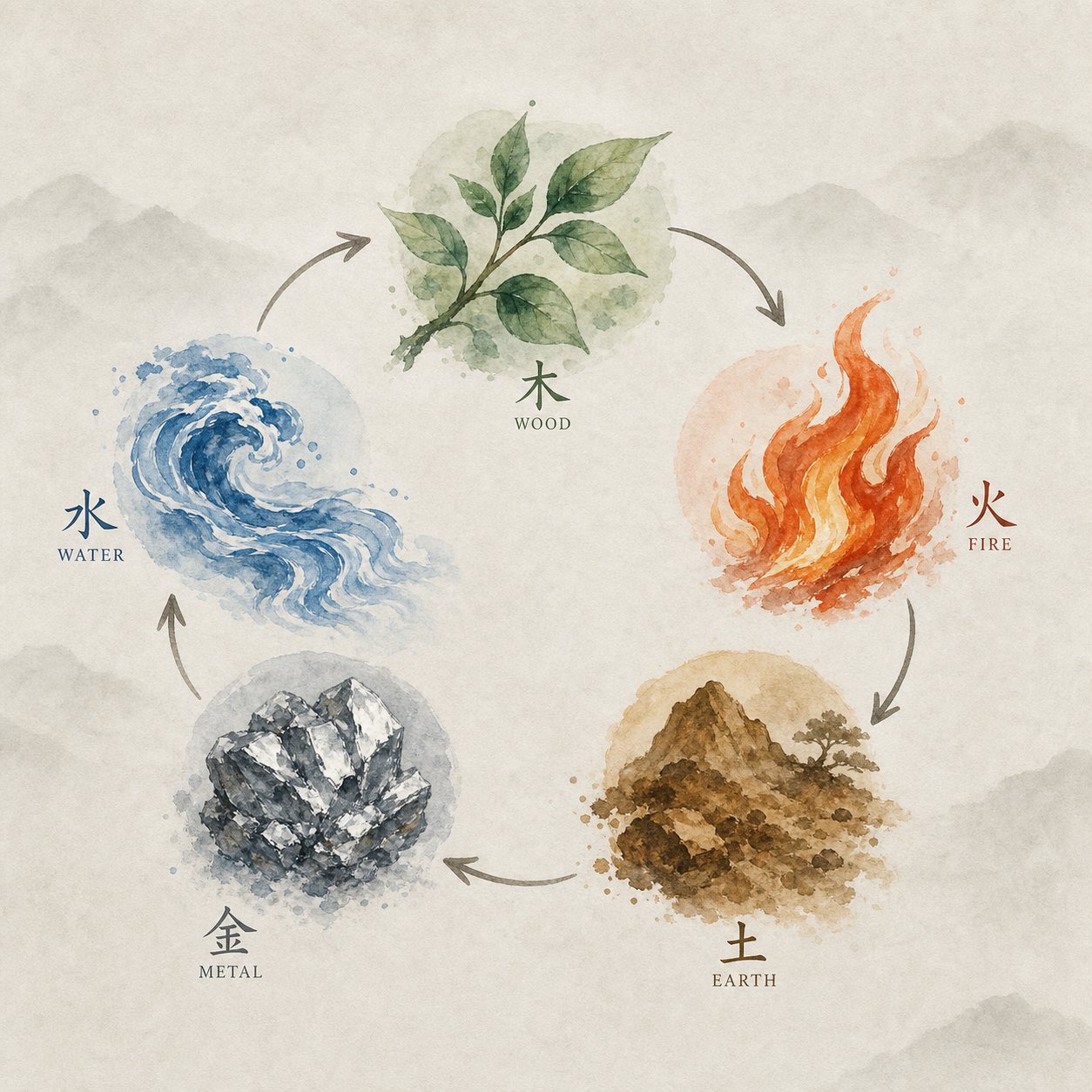
That deeper structural system is Wu Xing (五行), often translated as the Five Elements or Five Phases. It's the engine behind feng shui symbolism, and it's also the framework Chinese parents have used for centuries to select name characters that bring balance to a child's life. Imagine five forces constantly cycling into one another: water feeds wood, wood fuels fire, fire creates earth, earth bears metal, metal enriches water. It's not a static list. It's a living loop of transformation.
Each element represents a set of qualities, a season, a direction, and most importantly for naming, a specific radical that appears in hundreds of Chinese characters. When parents choose a name, they're not just picking something that sounds pleasant. They're selecting characters whose elemental associations complement what the child's birth chart needs. This is where feng shui rules meet the art of naming.
The Five Elements and Their Character Radicals
Every Chinese character is built from smaller components called radicals. These radicals often signal the character's meaning category, and in the context of Wu Xing, they reveal which element a character belongs to. A character with the water radical (氵) carries water energy. A character built on the wood radical (木) carries wood energy. This isn't metaphorical. It's a structural feature of the writing system that naming practitioners actively use when selecting characters for a child.
Here's how each element maps to its associated radical, representative qualities, and common name characters:
| Element | Chinese | Radical | Qualities Represented | Example Name Characters |
|---|---|---|---|---|
| Wood | 木 (mù) | 木 | Growth, vitality, flexibility, spring energy | 梓 (zǐ, catalpa tree), 柏 (bǎi, cypress), 桂 (guì, cassia), 林 (lín, forest) |
| Fire | 火 (huǒ) | 火 / 灬 | Warmth, passion, brightness, summer energy | 煜 (yù, to shine), 灿 (càn, brilliant), 煦 (xù, warm), 炎 (yán, flame) |
| Earth | 土 (tǔ) | 土 | Stability, nourishment, reliability, grounding | 坤 (kūn, receptive earth), 坚 (jiān, firm), 安 (ān, peace), 圣 (shèng, sacred) |
| Metal | 金 (jīn) | 钅/ 金 | Strength, clarity, precision, autumn energy | 铭 (míng, inscribe), 钧 (jūn, weight), 铮 (zhēng, clang), 钦 (qīn, respect) |
| Water | 水 (shuǐ) | 氵 | Wisdom, adaptability, depth, winter energy | 泽 (zé, grace), 润 (rùn, nourish), 清 (qīng, clear), 海 (hǎi, ocean) |
You'll notice that each element isn't just a substance. It's a personality profile. Metal names carry decisiveness and clarity. Water names evoke emotional intelligence and depth. Wood names suggest someone who keeps growing. Fire names radiate energy and warmth. Earth names feel steady and dependable. These aren't random associations. They reflect over two thousand years of philosophical thought about how natural forces shape human character.
How Elemental Balance Guides Name Selection
So how does a parent actually use this system? The traditional process starts with the child's birth chart, called BaZi (八字), which maps the exact year, month, day, and hour of birth onto the Five Elements. A BaZi analysis reveals which elements are strong, which are weak, and which are missing entirely.
Say a baby's chart shows abundant fire and earth but very little water. The naming direction would lean toward water-associated characters, ones carrying the 氵radical or evoking qualities like clarity, wisdom, and flow. A character like 涵 (hán, meaning to contain or cultivate) would bring water energy into the child's name, gently counterbalancing the excess fire in their chart.
This isn't about superstition or guaranteeing good luck. Chinese naming tradition treats elemental balance the way a designer thinks about what does harmony mean in interior design: it's about creating conditions where nothing overwhelms and nothing is missing. The goal is a name that feels complete, one where sound, meaning, and elemental energy all work together.
A few important nuances separate thoughtful naming from mechanical element-patching:
- A missing element isn't always the one that needs adding. Sometimes the chart needs support for the Day Master (the element representing the child) rather than simply filling a gap.
- The character's meaning and sound still matter. A lucky Chinese name isn't just elementally correct. It needs to pair well with the surname, avoid awkward tonal combinations, and carry a positive meaning.
- Family traditions, generational characters, and regional preferences all influence the final choice. Elemental balance provides direction, not a formula.
What makes this system remarkable is how it connects cosmology to something as personal as a child's name. The same Five Elements that govern feng shui rules for arranging a home also govern the selection of characters meant to shape a person's identity. A good luck Chinese name and a well-designed living space follow the same logic: balance the elements, support the flow of qi, and create conditions where life can thrive.
These elemental naming traditions didn't stay confined to China. As feng shui terminology traveled across borders and centuries, it carried its naming philosophy with it, adapting to new languages and cultural contexts along the way.
The Linguistic Journey of Feng Shui Into English
That adaptation started earlier than most people realize. The feng shui history in English stretches back over two centuries, beginning as an obscure footnote in colonial-era travel writing and ending up as a term your neighbor uses to describe rearranging their living room. How did two Chinese characters travel from geomancy manuals to mainstream Western vocabulary?
From 1797 to Mainstream English Usage
The Online Etymology Dictionary records the first attested English use of feng shui in 1797, appearing alongside the variant spellings "feng-shui" and "fung-shui." At that point, the term described something deeply foreign to English readers: "A kind of geomancy practiced by the Chinese for determining the luckiness or unluckiness of sites for graves, houses, cities, etc." It was a specialist term, confined to missionary reports and colonial administrative documents.
Here's a rough timeline of how feng shui in English evolved from footnote to household word:
- 1797 — First documented English usage. The term appears in texts describing Chinese burial customs, spelled variously as "feng-shui" and "fung-shui."
- 1800s-1900s — Scattered appearances in ethnographic and geographic literature. Western missionaries and diplomats encounter the practice and attempt phonetic spellings, producing early variants like fanchue and faangsui based on regional Chinese dialects.
- 1970s-1980s — Immigration from Hong Kong and Taiwan brings feng shui practitioners to Western cities. The term begins appearing in architecture and design publications.
- 1990s — Mainstream explosion. Bookstores fill with feng shui guides. Interior design magazines adopt the term. English speakers who've only heard it spoken produce creative approximations: funkshway, "von sway," and dozens of other phonetic guesses.
- 2000s-present — Full cultural absorption. The term functions as both noun ("the feng shui of this room") and adjective ("a very feng shui layout"). It appears in dictionaries without italics, signaling complete naturalization into English.
How Feng Shui Became a Household Term in Western Culture
What does fung shway mean to someone who's never studied Chinese? By the late 1990s, it meant something like "good energy" or "harmonious arrangement." The term had shed its geomantic specificity and become a general-purpose descriptor for spaces that feel balanced. This semantic broadening follows the same pattern as other Chinese loanwords like "dim sum" (which most English speakers use without knowing it literally means "touch the heart") or "kung fu" (which in Chinese refers to any skill achieved through effort, not just martial arts).
The variant spellings tell their own story. When someone searches for the funkshway meaning or the von sway meaning, they're revealing how English speakers process unfamiliar phonemes. The "f" in feng is straightforward, but the nasal "-ng" ending followed by "sh" creates a consonant cluster that English mouths want to simplify. The result? People hear "fung shway" and write what makes sense to them: funkshway, fung shway, or even von sway when the initial "f" gets softened in rapid speech.
This linguistic messiness is actually a sign of deep cultural adoption. Terms that stay neatly spelled are terms that stay in textbooks. Terms that get mangled, abbreviated, and reinvented are terms that people actually use in daily conversation. Feng shui crossed that threshold decades ago, and its naming philosophy crossed with it, carrying elemental thinking into cultures that had their own parallel traditions all along.
Feng Shui Terminology Across World Cultures
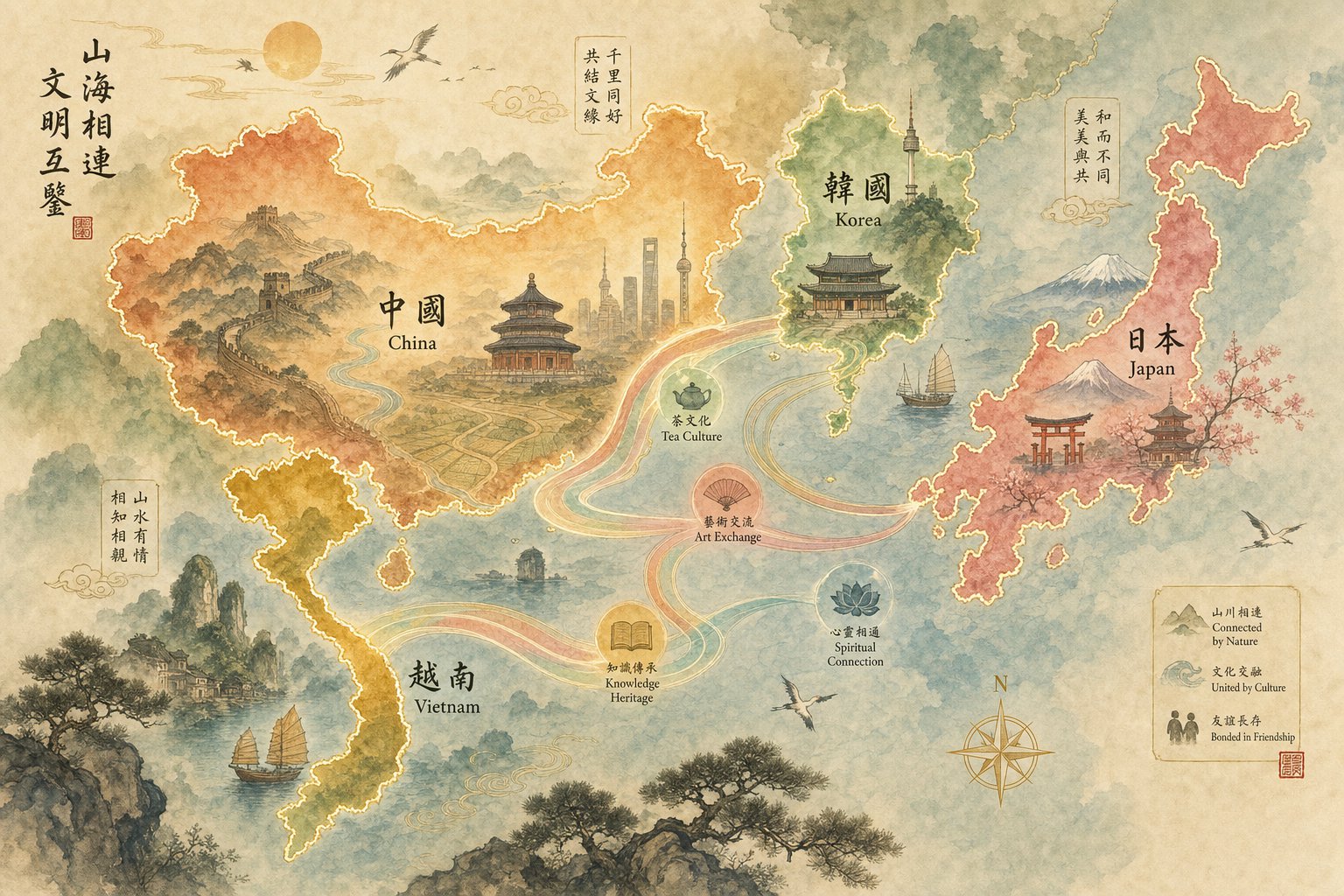
Those parallel traditions aren't just echoes. In Korea, Japan, Vietnam, and India, wind-and-water thinking developed its own vocabulary, its own naming logic, and its own cultural weight. The same two characters, 風水, traveled across East Asia centuries ago and took root in languages that reshaped their meaning. If you've ever wondered whether feng shui is Japanese or Chinese, or searched for feng shui in Korean, the answer is more layered than a simple origin claim.
Feng Shui Naming Across East Asian Cultures
Chinese feng shui didn't arrive in neighboring countries as a finished product that people simply adopted. Each culture absorbed the core principles and adapted them to local geography, spiritual traditions, and naming conventions. The characters 風水 remain visually identical in Japanese and traditional Korean texts, but the pronunciation, cultural associations, and practical applications diverge significantly.
In Japan, feng shui is called fusui (風水), and its history stretches back to the 7th century when it was introduced from China alongside Buddhism and Confucianism. According to research compiled by Elemental Japan, fusui became inseparable from Onmyodo (the Way of Yin and Yang) and was practiced by the powerful Onmyoji masters who advised emperors on city placement, grave sites, and architectural orientation. Cities like Kyoto, Nara, and Edo (Tokyo) were designed using fusui principles. One key difference: the Japanese approach uses a northeast-southwest orientation rather than the north-south axis of Chinese feng shui.
In Korea, the practice is known as pungsu (풍수), sometimes expanded to pungsu-jiri (풍수지리, meaning "wind-water geography"). Korean pungsu places heavy emphasis on mountain forms and their influence on ancestral burial sites, which connects directly to naming. A family's fortune, believed to flow from well-placed ancestral graves, shapes the generational names chosen for descendants. The logic is circular: good pungsu supports the family line, and strong names reinforce that support.
Vietnamese phong thuy (phong thủy) uses the same characters in their Sino-Vietnamese reading. The practice remains deeply embedded in daily life, influencing everything from house orientation to business naming. Vietnamese parents frequently consult phong thủy practitioners when selecting a child's name, ensuring the characters align with the family's directional luck and elemental balance.
Here's how the term compares across languages:
| Language | Native Script | Romanization | Literal Meaning | Naming Application |
|---|---|---|---|---|
| Chinese (Mandarin) | 風水 / 风水 | fēng shuǐ | Wind-water | Five Elements analysis of birth chart determines name characters and their radicals |
| Japanese | 風水 | fūsui | Wind-water | Nine Star Ki system links birth year to elemental energy; influences character selection for balance |
| Korean | 풍수 | pungsu | Wind-water | Ancestral grave placement affects family fortune; generational name characters reflect pungsu readings |
| Vietnamese | 風水 (Chữ Hán) | phong thủy | Wind-water | Practitioners advise on name selection based on directional luck and elemental compatibility |
| Okinawan | 風水 | funshi | Wind-water | Village and house placement traditions; naming influenced by local spiritual customs |
Is feng shui Chinese or Japanese? The origin is unambiguously Chinese, rooted in texts like the Zangshu from the Jin Dynasty. But the practice has been Japanese for over 1,300 years, Korean for nearly as long, and Vietnamese for centuries. Each culture owns its version. In European contexts, you'll sometimes see the Czech or Slovak transliteration feng šui in academic texts, reflecting how the term continues adapting to new phonetic systems as it spreads globally.
Comparing Feng Shui to Vaastu Shastra Naming Traditions
India's Vaastu Shastra offers a striking parallel. Often called the "Indian art of placement," Vaastu shares feng shui's concern with directional energy and elemental balance but draws on a different set of five elements: earth, water, fire, air, and space (ether). Where Chinese feng shui uses Wu Xing to determine name characters, Indian naming traditions use Jyotish (Vedic astrology) alongside Vaastu principles to select syllables that resonate with a child's birth constellation.
The overlap is conceptual rather than historical. Both systems believe that:
- A person's name carries vibrational energy that interacts with their environment
- Elemental balance at birth determines which sounds or characters bring harmony
- Directional associations influence which names are considered auspicious
- The built environment and personal identity are governed by the same natural forces
The difference lies in mechanics. Chinese naming selects written characters based on radical structure and elemental association. Indian naming selects phonetic syllables (aksharas) based on the birth star's (nakshatra) ruling sound. One system is visual and structural. The other is auditory and vibrational. Both arrive at the same destination: a name designed to harmonize a person with the forces surrounding them.
What's remarkable is how feng šui terminology, whether you encounter it as fusui, pungsu, phong thủy, or even Vaastu's parallel vocabulary, consistently links spatial harmony to personal identity. The 风水 英文 (feng shui in English) translation may flatten these distinctions into a single borrowed term, but beneath that surface, each culture maintains its own rich naming logic. Understanding these variations doesn't just build cultural literacy. It reveals how universal the impulse is to name children in alignment with the natural world, and how that impulse expresses itself differently depending on which wind and which water shaped a culture's history.

Applying Feng Shui Name Meanings in Everyday Life
Language shapes how you experience a practice. When you understand that qi means vital life force rather than just "energy," or that sha chi refers to harmful currents projected from sharp edges rather than generic "bad vibes," every feng shui decision becomes more intentional. This glossary isn't meant to sit idle. It's a working reference that changes how you read spaces, interpret consultations, and appreciate the cultural depth behind Chinese naming traditions.
Using Feng Shui Meanings in Home and Design Contexts
What is feng shui interior design, really? It's the application of qi flow principles to the spaces where you live and work. When a consultant tells you to place your bed in the "commanding position," you now know that means positioning it diagonally from the door with a clear sightline to the entrance. Feng shui bed placement isn't arbitrary. It's rooted in the same logic that governs how qi moves through a landscape: energy enters through openings and needs room to circulate without stagnation or direct collision.
The vocabulary covered in earlier sections translates directly into feng shui home design decisions. Consider a few practical connections:
- Bagua mapping — Overlay the eight-area energy map onto your floor plan to identify which rooms correspond to career, relationships, or health. Each area has associated colors and elements you can reinforce through feng shui decorating choices.
- Five Elements balance — A feng shui room layout that feels "off" often has an elemental imbalance. Too much metal (white, circular shapes) without wood (green, columnar forms) creates coldness. Knowing the element names and their qualities helps you diagnose what's missing.
- Sha qi awareness — Sharp corners pointing toward seating areas or beds project negative energy. Understanding the term means you can spot poison arrows in your own space and soften them with plants or curved furniture.
- Yin-yang calibration — A feng shui bedroom should lean slightly yin: softer lighting, muted colors, minimal electronics. The terminology tells you why. Yang energy is active and stimulating, the opposite of what supports rest.
- Commanding position — Whether it's your desk, stove, or bed, the principle stays the same. Place the most important piece of furniture where you can see the door without being directly in its path.
Feng shui house design works the same way at a larger scale. The facing direction of a building, its relationship to surrounding landforms, and the placement of its main entrance all connect to terms like "facing side," "sitting side," and "flying stars" covered in this resource. You don't need to become a practitioner to benefit. You just need enough vocabulary to ask better questions and make more informed choices about your space.
Building Cultural Literacy Through Feng Shui Vocabulary
Beyond interior design, this dictionary serves a broader purpose. It builds the kind of cultural literacy that helps you navigate Chinese texts, appreciate naming conventions, and understand references that appear constantly in East Asian media, architecture, and daily conversation.
Here are the practical contexts where this vocabulary pays off:
- Reading consultation reports — A professional feng shui audit includes terms like "flying stars," "wang shan wang shui," and "period 9." Without a glossary, these read as jargon. With one, they become actionable insights about your home's energy profile.
- Understanding Chinese names — When you meet someone named 泽明 (Zémíng), you can recognize the water radical in 泽 and understand the elemental intention behind the name. That's not trivia. It's cultural respect.
- Appreciating cross-cultural parallels — Knowing that Korean pungsu and Japanese fusui share the same characters as Chinese feng shui helps you see connections across East Asian cultures rather than treating each tradition as isolated.
- Engaging with feng shui interior design content — Blogs, books, and videos about feng shui decorating assume familiarity with core terms. This reference eliminates the guesswork so you can focus on application rather than translation.
- Avoiding misinformation — The internet is full of oversimplified or inaccurate feng shui advice. When you understand the actual meaning behind terms like bagua, wu xing, and sha qi, you can distinguish credible guidance from content that misuses the vocabulary.
Language is the entry point to any practice. A feng shui name meaning dictionary doesn't just define words. It connects you to a system where wind and water, character and space, naming and design all follow the same elemental logic. Every term in this resource, from the two characters that give the practice its name to the Five Elements that govern how names are chosen, belongs to a single coherent tradition that's been refining itself for thousands of years. Use it as a reference. Return to it when you encounter unfamiliar terms. And let the vocabulary reshape how you see the relationship between language, identity, and the spaces you inhabit.
Frequently Asked Questions About Feng Shui Name Meanings
1. What does feng shui literally mean in Chinese?
Feng shui literally translates to 'wind-water' in Chinese. The term comes from two characters: 風 (feng, meaning wind) and 水 (shui, meaning water). It originates from the ancient Book of Burial (Zangshu), which describes how qi (life force energy) is scattered by wind and retained by water. The phrase encapsulates an entire philosophy about how invisible natural forces interact with physical environments and human well-being.
2. How do you correctly pronounce feng shui?
The correct Mandarin pronunciation is 'fung shway,' with the first syllable rhyming with 'lung' and the second rhyming with 'way.' In pinyin with tone marks, it is written as Feng shui (first tone, third tone). The IPA transcription is /fʌŋ ʃweɪ/. Common mispronunciations arise because English speakers often pronounce the 'e' in feng like the 'e' in 'ten,' when it should sound closer to the 'u' in 'fun.'
3. How are the Five Elements used in Chinese naming traditions?
In traditional Chinese naming, parents analyze a child's BaZi (birth chart) to determine which of the Five Elements (wood, fire, earth, metal, water) are strong, weak, or missing. They then select name characters containing radicals associated with the needed element. For example, a child lacking water energy might receive a name with the water radical (氵), such as 泽 (ze, grace) or 涵 (han, cultivate). This process aims to create elemental balance believed to support the child's life path.
4. Is feng shui Chinese or Japanese in origin?
Feng shui is Chinese in origin, with its earliest textual reference appearing in the Jin Dynasty text Zangshu (Book of Burial). However, the practice spread to Japan over 1,300 years ago, where it is called fusui, and to Korea as pungsu and Vietnam as phong thuy. Each culture adapted the core wind-water principles to local geography, spiritual traditions, and naming conventions, so while the origin is Chinese, multiple East Asian cultures have developed their own authentic versions.
5. What is the difference between qi, sha chi, and sheng qi in feng shui?
Qi (氣) is the overarching term for life force energy that flows through all environments and living things. Sheng qi (生氣) refers specifically to positive, life-generating energy that supports health and prosperity. Sha chi (煞氣) is its opposite, representing harmful energy caused by sharp corners, clutter, or unfavorable structural features. The primary goal of feng shui practice is to maximize sheng qi while neutralizing or redirecting sha chi in a given space.