Understanding the Fire Horse and Its Influence on Baby Naming
The Fire Horse, known as 丙午 (Bǐng Wǔ) in Chinese metaphysics, is one of the rarest and most intense zodiac-element pairings in the entire 60-year cycle. It appears just once per cycle, and the current Fire Horse year began on February 17, 2026. For parents expecting a baby during this period, choosing the right chinese baby name carries layers of meaning that go far beyond sound or aesthetics.
This guide bridges cultural understanding with practical naming strategies, giving you the tools to select fire horse chinese baby names that honor tradition while celebrating your child's powerful birth energy.
What the Fire Horse Means in Chinese Astrology
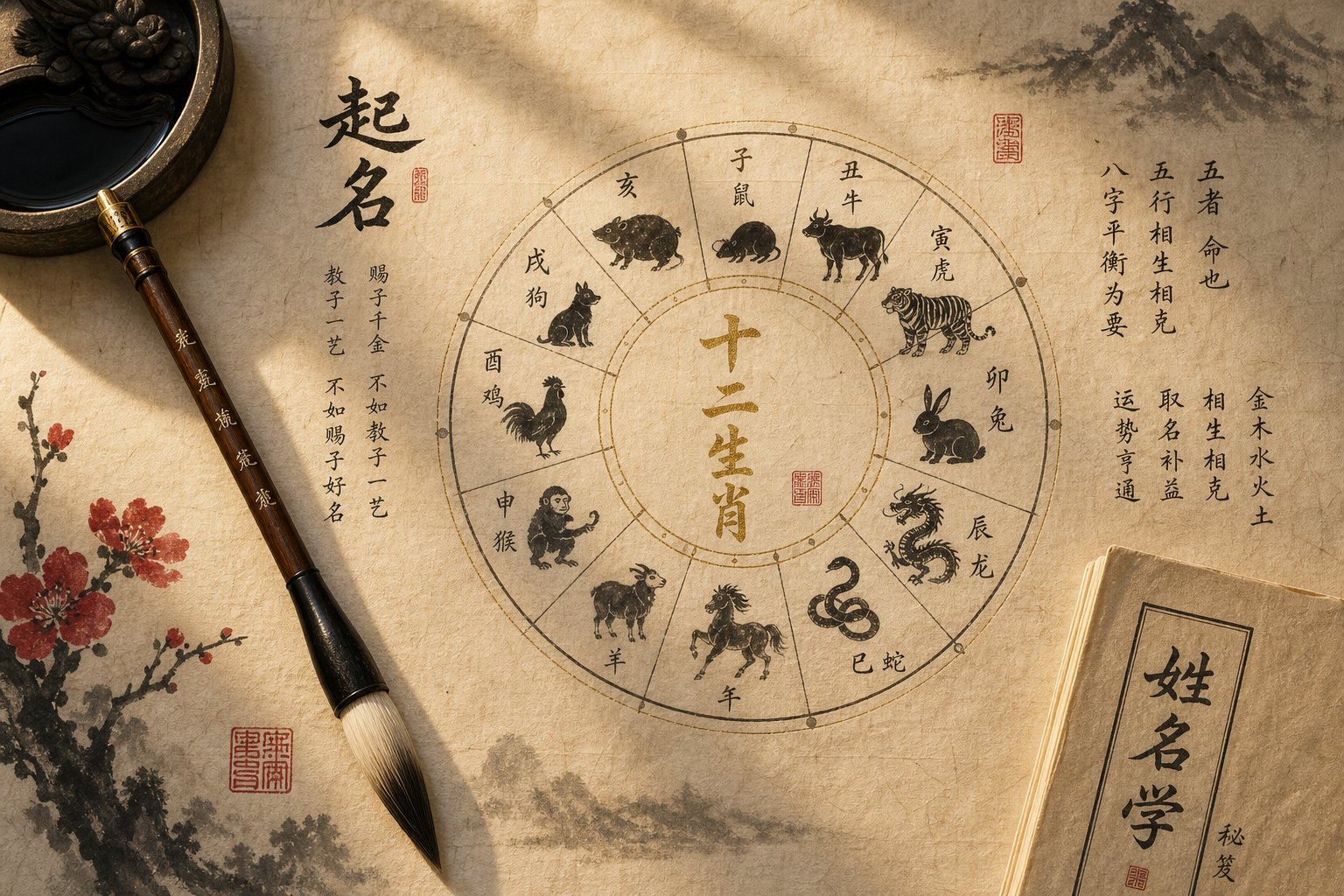
The Chinese zodiac pairs 12 animal signs with five elements: Wood, Fire, Earth, Metal, and Water. The Horse already carries an intrinsic Fire energy in its nature. When the Fire element aligns with the Horse in the sexagenary cycle, you get a double-Fire signature that amplifies every natural trait to an intense degree.
People born under the Fire Horse are traditionally associated with passion, independence, charisma, and strong leadership. Melbourne-based feng shui expert Ming Shao describes Horse individuals as forthright, eloquent, and heroic, noting that adding Fire "intensifies" their dynamism, energy, and dedication. Imagine all the drive and freedom of the Horse sign, then turn up the heat. That's the Fire Horse personality.
The Fire Horse appears only once every 60 years in the sexagenary cycle, making it the rarest expression of the Horse zodiac. Its double-Fire nature creates an elemental intensity unmatched by any other zodiac-element combination.
Why Fire Horse Names Require Special Consideration
Selecting chinese baby names and meanings for a Fire Horse child isn't the same as naming a baby born in a Water Horse or Earth Horse year. The doubled Fire energy means parents face a deliberate choice: balance that intensity with cooling or grounding elements, or lean into it and celebrate the flame.
This decision shapes every aspect of the naming process, from the radicals embedded in each Chinese character to the elemental associations those characters carry. A thoughtful chinese baby name for a Fire Horse child considers three dimensions simultaneously: elemental balance through Five Elements theory, cultural awareness of the superstitions surrounding this sign, and intentional character selection that aligns with the family's values and hopes.
Each of these dimensions builds on the others, and understanding how the sexagenary cycle produces five distinct types of Horse energy is the first step toward making an informed choice.
The Sexagenary Cycle and What Makes Fire Horse Unique
The Chinese calendar doesn't simply repeat every 12 years. It operates on a deeper, 60-year rotation called the sexagenary cycle (六十花甲, liushi huajia), which pairs 10 Heavenly Stems (天干) with 12 Earthly Branches (地支). Each Heavenly Stem carries one of the five elemental energies in either yin or yang form, and each Earthly Branch corresponds to a zodiac animal. When you combine them following the rule that yang stems pair only with yang branches and yin with yin, you get exactly 60 unique combinations before the cycle resets.
This means the Horse doesn't appear just once every 12 years in identical form. It appears five times across the full 60-year rotation, each time paired with a different element. The result is five distinct types of Horse, each carrying a different energetic signature and different implications for choosing auspicious chinese names for horse babies.
How the Sexagenary Cycle Creates Five Types of Horse
Each elemental Horse has its own temperament, strengths, and challenges. If you look at chinese baby names over time popularity, you'll notice that naming trends shift with each Horse variation because parents respond to the specific energy their child carries. Here's how the five types compare:
| Horse Type | Years | Key Traits | Energy Type | Naming Implications |
|---|---|---|---|---|
| Wood Horse (甲午) | 1954, 2014 | Diligent, passionate, freedom-seeking, impatient | Growth-oriented, moderate | Names can enhance patience and focus; Wood feeds Fire gently |
| Fire Horse (丙午) | 1966, 2026 | Smart, energetic, intense, strong-willed, charismatic | Double-Fire, maximum intensity | Names often introduce Water or Earth to cool and ground the energy |
| Earth Horse (戊午) | 1918, 1978 | Kind, generous, responsible, sociable, frank | Stable, grounded | Earth absorbs Fire naturally; names can enhance warmth and ambition |
| Metal Horse (庚午) | 1930, 1990 | Bold, outgoing, freedom-loving, frank, affectionate | Structured, sharp | Metal is melted by Fire; names may add Water to support Metal's clarity |
| Water Horse (壬午) | 1942, 2002 | Mild, helpful, generous, sensitive, emotionally rich | Flowing, adaptive | Water already tempers Fire; names can reinforce emotional depth |
Notice the pattern: the Fire Horse stands apart because its external elemental assignment matches the Horse's intrinsic elemental nature. Every other Horse type introduces a counterbalancing or modifying element. The Fire Horse doubles down.
The Unique Elemental Signature of the Fire Horse Year
Here's what makes this combination so significant for naming. In Chinese metaphysics, the Horse zodiac animal already belongs to the Fire element by nature. When the Heavenly Stem Bing (丙), which is yang Fire, pairs with the Earthly Branch Wu (午), which is the Fire Horse branch, you get Fire layered on Fire. No other zodiac-element pairing produces this kind of elemental echo.
This dual-Fire signature is precisely why parents historically developed specific naming strategies for Fire Horse children. The goal wasn't to suppress the child's nature but to introduce elemental variety into their energetic profile. Think of it like seasoning: a dish made entirely of heat benefits from something cool or earthy to bring out complexity.
When parents browse the 100 most common chinese baby names, they'll find many characters that carry neutral or mixed elemental energy. For a Fire Horse baby, though, intentional element selection matters more than it does for any other zodiac year. A name chosen with elemental awareness becomes a form of energetic architecture, shaping how the child's intense Fire energy interacts with the world.
This elemental doubling also explains why the Fire Horse attracted cultural superstitions that no other Horse type ever did, a history that modern families deserve to understand before making their naming decisions.

The Fire Horse Superstition and Its Modern Reinterpretation
That doubled Fire energy didn't just influence naming traditions. It sparked one of the most measurable superstitions in modern demographic history. For families choosing chinese baby names girl options or chinese girl baby names during a Fire Horse year, understanding this cultural backdrop is essential, not because the superstition should dictate your choices, but because awareness gives you the power to respond intentionally.
The belief centers on a simple claim: women born in the Fire Horse year possess uncontrollable, destructive energy that brings misfortune to their future husbands. The superstition traces back to 1686 Japan, when novelist Ihara Saikaku wrote about a headstrong young woman born in the 1666 Fire Horse year who committed arson to reunite with her lover and was executed for it. That fictional story calcified into folk belief: Fire Horse daughters would be temperamental, unsuitable as wives, and dangerous to marry.
The Historical Demographic Impact of Fire Horse Beliefs
This wasn't just folklore whispered between generations. It reshaped entire populations. During the 1960s, Japan's fertility rate held steady at roughly 2.0 to 2.1 children per woman. Then 1966 arrived, a Fire Horse year, and the rate dropped dramatically to 1.6 children per woman. The dent is still visible in Japan's population pyramid today.
The numbers tell a stark story. Birth rates in 1966 declined by 26% compared to surrounding years. Induced abortion rates climbed to 43.1 per 1,000 births, well above the 1963-1969 average of 30.5. Since prenatal sex detection wasn't available at the time, many families simply avoided having children altogether rather than risk a daughter born under the Fire Horse sign. Research published in MDPI's Sexes journal documented that this pattern repeated across earlier Fire Horse years too: birth rates also fell in 1846 and 1906, with some families in the earlier period forging birth certificates to reflect a different year.
The superstition hit hardest in rural communities, where arranged marriages remained common and a daughter's zodiac sign directly affected her perceived marriageability. Urban areas experienced a smaller fertility drop, suggesting that proximity to modern values offered some buffer. Still, the overall pattern was unmistakable: families feared having girls during Fire Horse years because cultural beliefs branded those daughters as unmarriageable.
Long-term studies of women actually born in 1966 revealed something troubling but important. Researchers found that 1960 chinese baby names cohorts and those born in surrounding years fared differently: Fire Horse women experienced higher divorce rates and lower economic attainment, not because of any innate flaw, but likely due to lingering social discrimination against their birth year.
Reframing Fire Horse Traits for Modern Families
Here's where modern parents get to write a different story. The traits that frightened previous generations, fierce independence, magnetic charisma, relentless determination, read very differently through a contemporary lens. These are leadership qualities. They describe founders, artists, advocates, and changemakers.
Consider what's shifted since 1966. Arranged marriages in Japan dropped from roughly half of all unions in the 1960s to just 5% by 2010. The cultural machinery that made the superstition consequential, the marriage market where parents exchanged photos and zodiac details through social networks, has largely dissolved. Love marriages dominate, and a partner's birth year carries far less weight in personal choice than it did in matchmaking negotiations.
The same intensity that old superstitions labeled as dangerous is what modern psychology recognizes as drive, resilience, and emotional intelligence. Naming a Fire Horse child isn't about suppressing who they are. It's about giving them a name that either harmonizes their energy or proudly declares it.
This is where naming becomes a deliberate act of philosophy. Parents who feel the cultural weight of the superstition can choose characters with Water or Earth radicals, names that signal balance and calm without denying their child's Fire Horse nature. Parents who want to reject the stigma entirely can select bold, Fire-embracing characters that celebrate intensity as a gift rather than a liability. Both approaches are valid. Both are rooted in love.
For families expecting daughters, this choice carries extra significance. Choosing a powerful, Fire-forward name for a girl born in a Fire Horse year is itself a statement of cultural reclamation, a refusal to let centuries-old misogyny dictate your daughter's identity before she even speaks her first word.
Either way, the practical tool that makes both strategies possible is Five Elements theory, the framework that maps how elemental energies interact, support, and balance one another within a name's character structure.
Five Elements Theory Applied to Fire Horse Naming
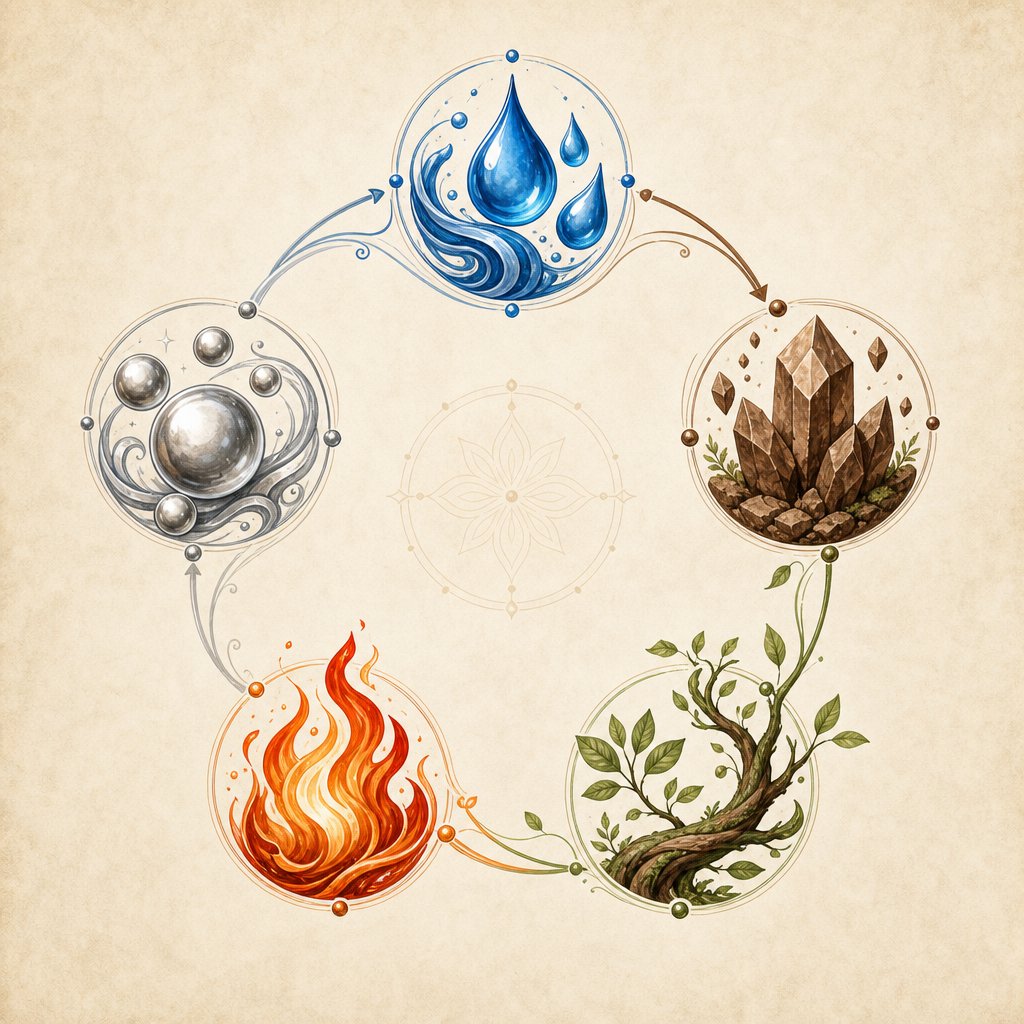
Wu Xing (五行) isn't just abstract philosophy. It's the practical engine behind every intentional baby chinese name feng shui decision, and for Fire Horse children, it becomes the single most important tool in a parent's naming toolkit. The system maps how five elemental forces — Wood, Fire, Earth, Metal, and Water — interact through cycles of creation and control, constantly generating and restraining one another to maintain cosmic balance.
When you're naming a child born with double-Fire energy, these interactions stop being theoretical. They become a blueprint for choosing characters that shape your child's energetic profile from day one.
The Five Elements Productive and Destructive Cycles
The Five Elements operate through two fundamental cycles. The productive cycle (相生, xiāng shēng) describes how each element nurtures the next: Wood feeds Fire, Fire creates Earth through ash, Earth bears Metal from ore, Metal carries Water through condensation, and Water nourishes Wood. Think of it as a chain of mothers and children, each element giving life to the next.
The destructive cycle (相克, xiāng kè) describes how each element controls another: Water quenches Fire, Fire melts Metal, Metal chops Wood, Wood parts Earth, and Earth dams Water. This isn't about destruction in a negative sense. It's about regulation and balance, preventing any single force from growing unchecked.
For a Fire Horse baby, you need to understand exactly how each element relates to Fire specifically. Here's the complete picture:
| Element | Relationship to Fire | Effect on Fire Horse Energy | Common Radicals | Example Characters |
|---|---|---|---|---|
| Water (水) | Controls / Quenches Fire | Directly cools and tempers intensity; strongest balancing force | 氵(three-dot water radical) | 润 (rùn), 淑 (shū), 泽 (zé), 清 (qīng) |
| Earth (土) | Child of Fire / Absorbs Fire | Draws Fire energy outward and grounds it; stabilizes without extinguishing | 土 (earth radical) | 坤 (kūn), 培 (péi), 瑞 (ruì), 城 (chéng) |
| Wood (木) | Parent of Fire / Fuels Fire | Feeds and intensifies Fire energy; adds more fuel to an already strong flame | 木 (wood radical) | 林 (lín), 桐 (tóng), 森 (sēn), 柏 (bǎi) |
| Metal (金) | Overcome by Fire / Melted | Fire dominates Metal; Metal characters add structure but may be overwhelmed | 钅/金 (metal radical) | 铭 (míng), 锦 (jǐn), 鑫 (xīn), 钰 (yù) |
| Fire (火) | Same element / Amplifies | Doubles down on existing intensity; celebrates rather than balances | 火 / 灬 (fire radical, four-dot base) | 烨 (yè), 炫 (xuàn), 焕 (huàn), 煊 (xuān) |
The key insight here: Water and Earth are your primary balancing tools. Water directly controls Fire, making it the strongest counterweight. Earth absorbs Fire's energy like soil absorbing heat, offering a gentler stabilizing effect. Wood, on the other hand, adds fuel. And additional Fire characters amplify what's already there. Neither choice is wrong, but each produces a very different energetic outcome in the name.
Identifying Elemental Energy in Chinese Characters
So how do you actually spot which element a character carries? This is where Chinese writing reveals its genius. Most characters contain a radical (部首, bùshǒu), a structural component that signals the character's semantic category and, by extension, its elemental association.
You don't need a baby chinese name calculator to start identifying elemental energy. The five key radicals to look for are:
- 氵(sān diǎn shuǐ, three-dot water) — Appears on the left side of water-element characters. You'll find it in 海 (sea), 河 (river), 润 (moist), 清 (clear), and 淑 (gentle). Any character with this radical carries Water energy.
- 土 (tǔ, earth) — Appears on the left side of earth-element characters. Look for it in 坤 (earth/feminine), 培 (cultivate), 城 (city), and 墨 (ink). These characters bring grounding, stabilizing energy.
- 木 (mù, wood) — Appears on the left side of wood-element characters. Present in 林 (forest), 桐 (paulownia tree), 柏 (cypress), and 梓 (catalpa). Wood characters feed Fire, so use them with awareness.
- 火 (huǒ, fire) and 灬 (four-dot base) — The fire radical appears on the left in characters like 烨 (brilliant) and 炜 (glowing). The four-dot variant sits at the bottom of characters like 熙 (prosperous) and 然 (so/correct). Both signal Fire energy.
- 钅or 金 (jīn, metal) — The simplified metal radical appears on the left in 铭 (inscribe), 锦 (brocade), and 钰 (precious jade). Metal characters add precision and structure.
Here's a practical tip for evaluating baby boy names chinese characters or any potential name: look at the left side of the character first. That's where radicals most commonly sit. If you see three dots stacked vertically, you're looking at Water. A cross-like shape with a horizontal base signals Earth. Two short strokes flanking a central peak indicate Fire.
Some characters carry elemental energy through meaning rather than radical structure. The character 安 (ān, peace) contains the roof radical (宀) over 女 (woman), neither of which is explicitly Earth. Yet its meaning of stability and calm aligns it with Earth energy in naming practice. Similarly, 瑞 (ruì, auspicious) carries the jade radical (王) but is traditionally associated with Earth due to its grounding, fortune-bringing connotations.
This is why experienced naming practitioners consider both the visible radical and the character's traditional elemental classification. A character's energy comes from the intersection of its structural components, its meaning, and centuries of cultural usage. For most parents, starting with radical identification gives you a reliable foundation. When you encounter ambiguous characters, that's where professional BaZi analysis adds value, something we'll explore later.
With these elemental relationships and identification skills in hand, the next question becomes strategic: which approach do you actually want to take? Cooling the Fire, grounding it, or letting it blaze?
Three Elemental Naming Strategies for Fire Horse Babies
Every baby chinese name selection for a Fire Horse child comes down to a philosophical choice. Do you want to cool the flame, steady it, or let it roar? Each approach draws on Five Elements theory in a different way, and none is more correct than another. What matters is that your decision is intentional, aligned with your family's values and your hopes for your child.
Think of these three strategies as a spectrum. On one end, you're introducing counterbalancing energy. In the middle, you're grounding intensity without dampening it. On the far end, you're celebrating the Fire Horse's full blaze. Here's how each works in practice, with specific characters you can use as building blocks for your baby chinese name.
Names That Cool Fire Energy With Water and Earth Elements
This is the traditional balancing approach, and it remains the most popular strategy among families who consult naming professionals. The logic is straightforward: since the Fire Horse carries double-Fire energy, introducing Water-element characters creates direct elemental control, while Earth-element characters gently absorb excess heat.
The three-dot water radical (氵) is your clearest signal that a character carries Water energy. It appears on the left side of the character and is the second most common radical in Chinese, forming nearly a quarter of all dictionary entries. For Fire Horse naming, these Water-radical characters are especially well-suited:
- 润 (rùn) — Meaning: moist, smooth, to enrich. Element: Water. Stroke count: 10. Conveys nourishment and gentle abundance, softening Fire without extinguishing it.
- 淑 (shū) — Meaning: virtuous, gentle, pure. Element: Water. Stroke count: 11. A classic character for girls that signals refined character and inner calm.
- 泽 (zé) — Meaning: marsh, grace, luster. Element: Water. Stroke count: 8. Suggests generosity and far-reaching influence, like water that nourishes everything it touches.
- 清 (qīng) — Meaning: clear, pure, transparent. Element: Water. Stroke count: 11. Evokes clarity of mind and purpose, a direct counterweight to Fire's sometimes chaotic intensity.
For Earth-element cooling, look for characters built on the 土 radical or those traditionally classified as Earth energy:
- 坤 (kūn) — Meaning: earth, feminine principle, receptive. Element: Earth. Stroke count: 8. Drawn from the I Ching trigram for Earth, representing vast capacity and nurturing strength.
- 培 (péi) — Meaning: to cultivate, to nurture. Element: Earth. Stroke count: 11. Suggests patient growth and development, grounding Fire into productive channels.
- 瑞 (ruì) — Meaning: auspicious, lucky omen. Element: Earth (by traditional association). Stroke count: 13. One of the most popular characters in baby chinese names for its universally positive connotations.
Names That Ground Fire Energy Through Stability
Some parents want a middle path. They don't want to actively counteract their child's Fire Horse nature, but they'd like to anchor it with characters that evoke steadiness and inner peace. This strategy uses characters whose meanings carry grounding energy, even when their radicals aren't strictly Earth or Water.
Imagine a bonfire on solid stone rather than dry grass. The fire still burns bright, but it has a stable foundation. That's the effect these characters create:
- 安 (ān) — Meaning: peace, tranquility, safe. Element: Earth (by meaning). Stroke count: 6. One of the most versatile characters in Chinese naming, pairing well with almost any second character.
- 静 (jìng) — Meaning: quiet, still, serene. Element: Water/Earth (by meaning). Stroke count: 14. Creates a beautiful contrast with Fire Horse energy, suggesting someone who possesses intensity but also knows when to be still.
- 稳 (wěn) — Meaning: steady, stable, composed. Element: Earth (by meaning). Stroke count: 14. Directly communicates reliability and groundedness, qualities that complement Fire Horse charisma.
- 恒 (héng) — Meaning: permanent, constant, persevering. Element: Earth (by meaning). Stroke count: 9. Suggests endurance and consistency, channeling Fire Horse determination into long-term achievement.
These grounding characters work especially well as the second character in a two-character given name, providing a stabilizing anchor while the first character carries the name's primary energy. Many parents using a baby chinese name generator will find these characters appearing frequently in balanced combinations, precisely because their meanings complement so many other characters.
Names That Embrace and Channel Fire Energy
Not every family wants to temper the flame. Some parents look at the Fire Horse's intensity and think: yes, more of that. This strategy is particularly meaningful for families who view the historical superstition as outdated and want their child's name to declare strength rather than apologize for it.
Characters with the fire radical (火) or the four-dot fire base (灬) carry unmistakable Fire energy. Choosing them for a Fire Horse child is a bold statement of confidence:
- 烨 (yè) — Meaning: brilliant, glorious, splendid. Element: Fire. Stroke count: 10. Suggests radiance that illuminates everything around it. A powerful choice for either gender.
- 炫 (xuàn) — Meaning: dazzling, to show off brilliance. Element: Fire. Stroke count: 9. Carries a sense of magnetic presence and visual impact, perfect for a child destined to stand out.
- 焕 (huàn) — Meaning: radiant, glowing, shining. Element: Fire. Stroke count: 11. Implies renewal and vitality, like a flame that brings warmth and light rather than destruction.
- 煊 (xuān) — Meaning: warm, brilliant, to shine. Element: Fire. Stroke count: 13. A less common character that feels distinctive and carries connotations of warmth spreading outward.
Parents choosing this path often pair a Fire character with a Water or Earth character in the second position, creating internal balance within the name itself. For example, 烨泽 (Yè Zé) combines Fire brilliance with Water grace, or 焕安 (Huàn Ān) pairs radiance with peace. This hybrid approach lets you celebrate Fire Horse energy while still introducing a note of harmony.
Whether you use a baby chinese name app to explore combinations or work through characters manually, the key principle remains the same: know which elemental energy each character carries, and build your name with intention. The strategy you choose shapes the energetic story your child's name tells the world.
These building blocks become even more powerful when assembled into complete names tailored for daughters and sons, where character pairing, tonal flow, and combined meaning all come into play.
Fire Horse Baby Girl Names With Character Breakdowns
Daughters bore the heaviest weight of the Fire Horse superstition. For centuries, families feared that girls born under this sign would carry uncontrollable energy into their marriages, making them "unmarriageable" in traditional matchmaking systems. That belief drove measurable birth rate declines and shaped how entire generations thought about chinese baby girl names during Fire Horse years.
Choosing a baby girl chinese name in 2026 is an opportunity to respond to that history with intention. You can select characters that introduce cooling balance, honoring the tradition of elemental harmony. Or you can choose characters that blaze with Fire energy, declaring that your daughter's intensity is her greatest asset. Both paths produce beautiful, meaningful names. The difference lies in what story you want the name to tell.
Below you'll find curated chinese baby names for girls organized by elemental strategy, with full character-level analysis so you understand exactly what each name carries.
Water Element Girl Names to Balance Fire Horse Intensity
These names draw on the Water element's natural ability to cool and regulate Fire energy. Each pairing combines a Water-radical character with a complementary second character, creating chinese baby girl names with meaning that speak to grace, depth, and gentle strength. Parents searching for baby girl chinese names and meaning rooted in elemental balance will find these combinations particularly harmonious.
| Characters | Pinyin | Individual Meanings | Combined Meaning | Elemental Balance | Total Strokes |
|---|---|---|---|---|---|
| 沁怡 | Qìn Yí | 沁 (penetrate, refresh; Water) + 怡 (joy, harmony; Earth) | Refreshing joy that permeates the heart | Water + Earth: strong cooling and grounding | 7 + 8 = 15 |
| 清婉 | Qīng Wǎn | 清 (clear, pure; Water) + 婉 (graceful, gentle; Earth) | Pure and graceful clarity | Water + Earth: calm elegance tempering Fire | 11 + 11 = 22 |
| 润萱 | Rùn Xuān | 润 (moist, enrich; Water) + 萱 (daylily, carefree; Wood) | Nourishing warmth that brings ease | Water + Wood: gentle flow with natural vitality | 10 + 12 = 22 |
| 涵悦 | Hán Yuè | 涵 (contain, encompass; Water) + 悦 (delight, pleased; Earth) | Deep inner contentment and breadth of spirit | Water + Earth: expansive calm | 11 + 10 = 21 |
| 淑宁 | Shū Níng | 淑 (virtuous, gentle; Water) + 宁 (peaceful, serene; Earth) | Virtuous tranquility | Water + Earth: classic balance for Fire Horse girls | 11 + 5 = 16 |
Notice how each pairing layers Water's cooling influence with a second character that reinforces stability or joy. The name 沁怡 works especially well because 沁 (Qìn) carries penetrating Water energy while 怡 adds emotional warmth without introducing more Fire. For parents wanting baby girl chinese names unique to the Fire Horse context, these combinations are specifically calibrated rather than pulled from generic lists.
Empowering Fire Element Girl Names That Celebrate Strength
For families who look at the Fire Horse superstition and think "not my daughter," these names lean directly into the blaze. Choosing a Fire-embracing baby girl chinese name for a 2026 daughter is itself an act of cultural reclamation. You're declaring that the traits previous generations feared — fierce will, magnetic presence, burning determination — are exactly what you wish for your child.
These names pair Fire-radical characters with complementary elements that add dimension without dampening intensity:
| Characters | Pinyin | Individual Meanings | Combined Meaning | Elemental Balance | Total Strokes |
|---|---|---|---|---|---|
| 炜彤 | Wěi Tóng | 炜 (glowing, brilliant; Fire) + 彤 (red, vermillion; Fire) | Glowing with vibrant radiance | Fire + Fire: full embrace of Fire Horse power | 8 + 7 = 15 |
| 煊妍 | Xuān Yán | 煊 (warm brilliance; Fire) + 妍 (beautiful, elegant; Water) | Brilliant warmth meeting graceful beauty | Fire + Water: bold with a touch of softness | 13 + 7 = 20 |
| 烨晗 | Yè Hán | 烨 (splendid, brilliant; Fire) + 晗 (dawn light; Fire) | Splendor of the breaking dawn | Fire + Fire: luminous and unstoppable | 10 + 11 = 21 |
| 焓悠 | Hán Yōu | 焓 (flame energy; Fire) + 悠 (leisurely, far-reaching; Earth) | Powerful energy with effortless reach | Fire + Earth: intensity grounded in ease | 11 + 11 = 22 |
| 灵煦 | Líng Xù | 灵 (spirit, clever; Fire) + 煦 (warm sunshine; Fire) | Spirited warmth that draws others in | Fire + Fire: charismatic and bright | 7 + 13 = 20 |
The name 炜彤 (Wěi Tóng) deserves special attention. It doubles down on Fire energy with both characters carrying the fire radical, making it one of the boldest possible choices for a Fire Horse daughter. Historically, this combination would have been avoided. Choosing it deliberately says something powerful about how your family views strength in women.
Meanwhile, 煊妍 (Xuān Yán) offers a slightly tempered approach. The first character blazes with Fire energy, but 妍 introduces a whisper of Water through its association with flowing beauty. This pairing works well for parents who want to honor Fire Horse intensity while maintaining a note of balance. It's also worth noting that 妍 appears in several modern naming recommendations for 2025 and 2026, making it both culturally resonant and contemporary.
Whichever direction you choose, the critical thing is that the choice is yours. A generation ago, families felt pressured to compensate for a daughter's Fire Horse birth year. Today, you get to decide whether your daughter's name whispers calm or shouts brilliance, and both decisions honor her equally.
The same elemental strategies apply when naming sons, though the cultural dynamics shift. Boys historically faced less superstitious pressure during Fire Horse years, which opens up a different set of naming possibilities and freedoms.
Fire Horse Baby Boy Names With Character Breakdowns
Boys born in Fire Horse years never carried the same cultural burden as their sisters. The superstition targeted daughters almost exclusively, which means parents choosing chinese baby boy names during a Fire Horse year have always had more creative freedom. That freedom still exists today, but it doesn't mean elemental strategy becomes irrelevant. A Fire Horse son still carries double-Fire energy, and a thoughtful baby boy chinese name can shape how that intensity expresses itself throughout his life.
The difference is one of pressure versus possibility. Where girl names in Fire Horse years were historically chosen defensively, boy names can be chosen expansively. You're not compensating for a perceived flaw. You're sculpting raw energy into a form that matches your aspirations for your son.
Whether you're building a baby boy chinese name list to discuss with family or narrowing down a final choice, the same three elemental strategies apply: cool with Water, ground with Earth, or blaze with Fire. Here's how each plays out with complete character-level analysis.
Water and Earth Element Boy Names for Balanced Energy
These names introduce cooling or grounding energy without diminishing the Fire Horse's natural leadership qualities. Think of Water and Earth characters as channels that direct your son's intensity toward productive ends rather than scattering it. Many of these characters appear in popular chinese baby names boy lists precisely because they carry universally positive meanings while providing elemental balance.
| Characters | Pinyin | Individual Meanings | Combined Interpretation | Elemental Profile | Total Strokes |
|---|---|---|---|---|---|
| 泽宇 | Zé Yǔ | 泽 (marsh, grace, luster; Water) + 宇 (universe, roof, bearing; Earth) | Grace that spans the universe; far-reaching generosity | Water + Earth: strong cooling with expansive grounding | 8 + 6 = 14 |
| 瑞坤 | Ruì Kūn | 瑞 (auspicious omen; Earth) + 坤 (earth principle, receptive; Earth) | Auspicious fortune rooted in deep stability | Earth + Earth: maximum grounding for double-Fire | 13 + 8 = 21 |
| 润泽 | Rùn Zé | 润 (moist, enrich; Water) + 泽 (marsh, grace; Water) | Abundant nourishment flowing outward to others | Water + Water: powerful cooling and generosity | 10 + 8 = 18 |
| 浩宁 | Hào Níng | 浩 (vast, grand; Water) + 宁 (peaceful, serene; Earth) | Vast calm; a broad mind at peace | Water + Earth: expansive tranquility | 10 + 5 = 15 |
| 瑞泽 | Ruì Zé | 瑞 (auspicious; Earth) + 泽 (grace, luster; Water) | Blessed grace; good fortune that flows freely | Earth + Water: balanced cooling with auspicious energy | 13 + 8 = 21 |
The name 泽宇 (Zé Yǔ) is particularly effective for a Fire Horse son. The first character 泽 carries the three-dot water radical and suggests generosity that reaches far, while 宇 evokes the vastness of the cosmos and a person of impressive bearing. Together, they paint a picture of someone whose influence extends broadly but remains grounded. The name 瑞泽 (Ruì Zé) draws from similar energy and has appeared among trending baby boy names in chinese with meaning in recent years, reflecting its appeal across both traditional and modern naming sensibilities.
Notice that 瑞坤 (Ruì Kūn) doubles down on Earth energy. For a child with double-Fire in their birth chart, this creates a strong stabilizing counterweight. The character 坤 comes directly from the I Ching's Earth trigram, representing receptive strength and vast capacity. It's a name that says: this child has fire within, but stands on unshakeable ground.
Bold Fire Element Boy Names Honoring Horse Spirit
For parents who want their son's name to declare his Fire Horse nature rather than temper it, these combinations channel intensity into imagery of brilliance, leadership, and dynamic force. Since boys historically faced no marriage-market stigma from Fire Horse birth years, choosing Fire-forward baby boy chinese names has always been culturally acceptable. Today it's a celebration.
What makes these names sophisticated rather than one-dimensional is their pairing strategy. Each combines a Fire-radical character with a complementary element that adds depth:
| Characters | Pinyin | Individual Meanings | Combined Interpretation | Elemental Profile | Total Strokes |
|---|---|---|---|---|---|
| 烨霖 | Yè Lín | 烨 (brilliant, splendid; Fire) + 霖 (sustained rain; Water) | Brilliance tempered by life-giving rain; radiance with depth | Fire + Water: bold intensity with built-in balance | 10 + 16 = 26 |
| 焕明 | Huàn Míng | 焕 (radiant, glowing; Fire) + 明 (bright, clear; Fire/balanced) | Radiant clarity; a light that illuminates with purpose | Fire + balanced: luminous intelligence | 11 + 8 = 19 |
| 炎峰 | Yán Fēng | 炎 (flame, blazing; Fire) + 峰 (peak, summit; Earth) | A blazing summit; reaching the highest point with fiery drive | Fire + Earth: ambition grounded by achievement | 8 + 10 = 18 |
| 煜辰 | Yù Chén | 煜 (shine, illuminate; Fire) + 辰 (celestial, morning; Earth) | Shining like the morning star; destined brightness | Fire + Earth: celestial fire anchored in time | 13 + 7 = 20 |
| 烨坤 | Yè Kūn | 烨 (brilliant; Fire) + 坤 (earth principle; Earth) | Brilliance rooted in the earth; splendor with substance | Fire + Earth: maximum presence with deep grounding | 10 + 8 = 18 |
The name 烨霖 (Yè Lín) deserves close attention. It's a masterclass in internal balance: 烨 blazes with the fire radical on its left side, declaring intensity and brilliance, while 霖 brings sustained, nourishing rain through its rain radical (雨) at the top. The combined effect is a name that says "brilliant and life-giving" rather than "brilliant and consuming." For a baby boy chinese name 2026 that honors Fire Horse energy without ignoring elemental harmony, this pairing is hard to beat.
Meanwhile, 炎峰 (Yán Fēng) takes a different approach. The character 炎 literally stacks two fire radicals on top of each other, making it one of the most intensely Fire characters available. But 峰 (peak, summit) introduces Earth energy through its mountain radical (山), grounding all that flame at the highest point of achievement. It's a name for a child you expect to lead.
The name 煜辰 (Yù Chén) draws from both ancient literary tradition and modern naming trends. 辰 has been a popular character in contemporary chinese baby boy names because it evokes celestial imagery, the stars and the early morning, while carrying grounding Earth associations. Paired with 煜's illuminating Fire, it creates a name that feels both timeless and current. Recent naming data from Chinese provinces shows that celestial and nature-inspired characters like 辰 continue to trend among new parents who want poetic resonance alongside cultural depth.
Whether you lean toward Water-cooled balance or Fire-forward boldness, the key is matching your baby boy name chinese choice to your family's philosophy. A name like 润泽 whispers steady generosity. A name like 炎峰 shouts ambition. Both serve a Fire Horse son well, just in different ways.
Of course, a name doesn't exist in isolation. For families navigating multiple cultural contexts, the next challenge is ensuring your chosen characters work not just within Chinese tradition but across the linguistic and regional landscapes your child will actually inhabit.
Cross-Cultural Naming and Regional Variations
A name that carries perfect elemental balance in Chinese can still stumble when it meets everyday life in English-speaking environments. For families raising children across cultures, the challenge isn't just choosing the right characters. It's ensuring those characters function smoothly alongside a Western first name, in school roll calls, on legal documents, and in casual introductions. Chinese english baby names need to work in both worlds without forcing the child to choose one identity over the other.
Pairing Fire Horse Chinese Names With Western First Names
Phonetic harmony is the foundation of successful chinese american baby names. When a Western first name sits next to a Chinese given name or surname, the combined sound should flow naturally rather than clash or create awkward repetitions.
Here are the core principles to keep in mind:
- Avoid tonal collisions. If your Chinese name ends on a sharp falling tone (fourth tone), pairing it with a Western name that starts with a hard consonant can sound abrupt. Softer Western names like Ella, Owen, or Mia create smoother transitions.
- Watch for syllable echoes. A surname like Chen paired with a Western name like Jen creates a rhyming effect that may feel unintentional. Vary your vowel sounds across the full name.
- Consider romanized pronunciation. Characters whose pinyin forms are intuitive for non-Chinese speakers reduce friction. Names like 润 (Rùn) or 泽 (Zé) are straightforward, while 清 (Qīng) may require repeated correction in English-dominant settings.
- Test the full sequence aloud. Say the complete name, Western first name plus Chinese name plus surname, as one phrase. Listen for rhythm. A name like "Sophia 沁怡 Zhang" flows more naturally than combinations where stressed syllables stack together.
Some american baby names popular with chinese parents work especially well because their sounds echo Chinese phonetics. Emma pairs naturally with names starting in soft consonants. Ethan mirrors the open vowel sounds common in Mandarin. For american chinese baby girl names, choices like Lily, Mia, or Clara complement Water-element Chinese characters without competing for sonic space. When selecting baby boy names chinese american families often gravitate toward names like Lucas, Ryan, or Leo, which share the clean syllable structure of common Chinese given names.
The goal isn't to make the Chinese name invisible. It's to ensure the full name feels like one coherent identity rather than two names awkwardly stitched together. Many families achieve this by selecting american chinese baby names where the Western name and Chinese name share a tonal quality or vowel color, creating a subtle phonetic bridge between the two halves.
Regional Naming Differences Across Chinese Communities
Fire Horse naming strategies don't apply uniformly across all Chinese-speaking communities. Naming conventions differ significantly between regions, and what feels natural in one community may seem unusual in another. If your family spans multiple regions or diaspora contexts, understanding these differences helps you make choices that resonate with your specific cultural background.
Key regional variations include:
- Character simplification: Mainland China and Singapore use simplified characters, while Hong Kong, Macau, and Taiwan use traditional forms. The same name looks different on paper: 龙振飞 (simplified) versus 龍振飛 (traditional). Fire Horse elemental radicals remain recognizable in both systems, but stroke counts change, which matters for families who factor numerology into their naming decisions.
- Given name length: Mainland Chinese names increasingly favor two-character given names (e.g., 泽宇), while single-character given names remain common in Hong Kong. Taiwanese names often use two characters with a hyphenated romanization (e.g., Tze-Yu). Your regional context shapes whether a Fire Horse name like 烨 stands alone or needs a companion character.
- Romanization systems: Mainland China uses Pinyin (Zé Yǔ), Taiwan uses a mix of Wade-Giles and local systems, and Hong Kong uses Jyutping or older Cantonese romanizations. The same characters produce different English spellings depending on where your family registers the name, which directly affects how american names for chinese babies pair with the Chinese component.
- Generational name traditions: Some families maintain generation names (字辈, zìbèi) where one character is shared among all children of the same generation. If your family follows this tradition, your Fire Horse elemental strategy applies only to the non-generational character, narrowing your options but also simplifying the decision.
- Superstition intensity: Fire Horse beliefs historically hit hardest in Japan and parts of East Asia with strong Confucian matchmaking traditions. Mainland Chinese families today generally place less weight on the superstition than families in more traditional communities. Diaspora families vary widely depending on which generation emigrated and how connected they remain to ancestral naming customs.
For anglo chinese baby names that need to function across these regional differences, the safest approach is choosing characters with clear, universally positive meanings and straightforward romanizations. Characters like 瑞 (ruì, auspicious) and 安 (ān, peace) carry no regional ambiguity and pair well with Western names regardless of whether your family uses Cantonese, Mandarin, or Hokkien pronunciation.
Navigating these layers of cultural context, elemental strategy, phonetic harmony, and regional convention can feel overwhelming. That's precisely where professional naming consultation adds its greatest value, offering expertise that accounts for dimensions most parents can't evaluate on their own.
Working With Naming Professionals and BaZi Analysis
Everything covered so far, elemental radicals, character meanings, naming strategies, operates at the level of the zodiac year. That's a solid starting point. But here's what most parents don't realize: the year pillar is only one-quarter of your child's energetic picture. A baby born in the Fire Horse year during a Water-heavy month, on an Earth day, in a Metal hour might already carry enough cooling energy in their birth chart to make Water-element naming unnecessary. Without a full BaZi analysis, you're making elemental decisions based on incomplete data.
This is where professional naming consultation transforms guesswork into precision. So how do chinese parents name their baby when they want the full picture? They consult a naming master who reads the complete birth chart before selecting a single character.
What a Chinese Naming Master Evaluates
A baby chinese name fortune teller, more accurately called a naming master or BaZi consultant, evaluates far more than zodiac year energy. Their analysis begins with the Four Pillars of Destiny (四柱命理), which are derived from the child's exact birth year, month, day, and hour. Each pillar contains a Heavenly Stem and an Earthly Branch, producing eight characters total, hence the name BaZi (八字, "eight characters").
Here's what a professional evaluates that you likely cannot assess on your own:
- Daymaster identification: The Heavenly Stem of the Day Pillar reveals your child's core elemental identity. A Fire Horse baby might have a Water Daymaster, completely shifting which elements the name should reinforce.
- Yong Shen (用神) determination: This is the "useful god," the single element the chart most needs for balance. It's the naming target. Every character selection should reinforce or complement this element, and it can only be identified through full chart analysis.
- Elemental balance across all four pillars: The month pillar governs seasonal energy and heavily influences chart temperature. A Fire Horse baby born in winter (Water season) has a fundamentally different elemental profile than one born in summer.
- Stroke count numerology: The 81-stroke luck number grid assigns fortune ratings to specific stroke totals. Professionals optimize stroke counts only after elemental character selection is complete, using it as a refining layer rather than a foundation.
- Phonetic and tonal harmony: Beyond meaning, naming masters assess whether the name's sounds create tonal clashes or carry unfavorable phonetic associations in the family's dialect.
- Generational naming rules: If your family maintains generation characters (字辈), the master works within that constraint while still optimizing elemental balance.
A complete birth chart, not just the zodiac year, determines the ideal naming strategy. A Fire Horse baby born with strong Water in the month and hour pillars may need Wood or even more Fire in their name, the opposite of what year-based analysis alone would suggest.
This is why two Fire Horse babies born weeks apart can require entirely different naming approaches. The year gives them the same zodiac energy, but the month, day, and hour pillars create unique elemental landscapes that only a trained practitioner can fully interpret.
DIY Versus Professional Naming Consultation
Not every family needs or wants a professional consultation. Some parents prefer to handle baby chinese name selection themselves, and there's plenty you can accomplish independently. The key is knowing where your own research reaches its limits.
What you can confidently assess on your own:
- Elemental radicals: Identifying whether a character carries Water (氵), Earth (土), Wood (木), Fire (火), or Metal (钅) energy through its radical structure.
- Basic meaning and connotation: Checking character definitions, ensuring no negative historical associations, and confirming the name carries your intended message.
- Phonetic flow: Speaking the full name aloud to test tonal variation, rhythm, and ease of pronunciation across languages.
- Cultural appropriateness: Verifying the name doesn't duplicate a famous figure's name, create unintended homophones, or violate family naming taboos.
What benefits from professional expertise:
- Full BaZi chart casting and interpretation: Requires knowledge of real solar time adjustments based on birth location, Heavenly Stem and Earthly Branch interactions, and the diagnostic skill to identify the Yong Shen accurately.
- Stroke count optimization: The 81-stroke system uses traditional character forms for counting, which differ from simplified forms. Many online calculators produce inaccurate totals because they count simplified strokes.
- Complex elemental interactions: When chart elements clash or when the surname's radical introduces unexpected elemental weight, a professional can navigate these layered dynamics.
- Luck Pillar forecasting: Naming masters consider how the name's elemental energy will interact with the child's 10-year Luck Pillars, ensuring the name serves them across decades rather than just at birth.
For families in Singapore, a baby chinese name master singapore consultation is widely accessible. Practitioners like those at Feng Shui Mastery Academy and other established firms offer baby chinese name singapore services that combine BaZi analysis with regional naming conventions. Hong Kong and Taiwan have equally deep traditions of professional naming consultation. For diaspora families in Western countries, baby chinese name selection singapore masters and practitioners in other Asian cities increasingly offer online consultations, making expert guidance accessible regardless of geography.
The practical takeaway: if you're comfortable with elemental basics and your family doesn't place heavy emphasis on stroke count numerology, a DIY approach using the strategies outlined in this guide will serve you well. If you want the full diagnostic picture, particularly if your child's birth time falls during an elementally complex period, a professional consultation ensures nothing is missed. Many families split the difference: they research independently first, develop a shortlist of characters they love, then bring that list to a naming master for validation against the complete birth chart.
Frequently Asked Questions About Fire Horse Chinese Baby Names
1. What is a Fire Horse year in the Chinese zodiac?
A Fire Horse year occurs once every 60 years in the sexagenary cycle when the yang Fire Heavenly Stem (Bing) pairs with the Horse Earthly Branch (Wu). Since the Horse already carries intrinsic Fire energy, this creates a rare double-Fire signature. The most recent Fire Horse years are 1966 and 2026. This elemental doubling is what makes Fire Horse babies unique among all zodiac-element combinations and why specific naming strategies developed around balancing or channeling that intensity.
2. How do I choose a balanced name for a Fire Horse baby?
The most effective approach uses Five Elements theory. Water-element characters (those with the three-dot water radical) directly cool Fire energy, while Earth-element characters absorb and stabilize it. Look for characters like 润 (moist), 泽 (grace), 清 (clear) for Water energy, or 坤 (earth), 培 (cultivate), 瑞 (auspicious) for Earth energy. You can also embrace Fire energy with characters like 烨 (brilliant) or 焕 (radiant). The strategy depends on your family's philosophy and, ideally, a full BaZi birth chart analysis.
3. Is the Fire Horse superstition still relevant in 2026?
The superstition historically claimed Fire Horse women would bring misfortune to husbands, causing measurable birth rate declines in 1966 Japan. However, modern cultural shifts have largely diminished its impact. Arranged marriages have dropped from roughly 50% to 5% in Japan since the 1960s, removing the matchmaking system that gave the belief its power. Most contemporary families either ignore the superstition entirely or use naming as a tool to intentionally address it, choosing characters that balance intensity or proudly celebrate Fire Horse strength.
4. Do I need a professional naming master for a Fire Horse baby?
Not necessarily, but professional consultation adds precision. Parents can independently assess elemental radicals, character meanings, phonetic flow, and cultural appropriateness. However, a naming master evaluates the complete BaZi birth chart across all four pillars (year, month, day, hour), identifies the Yong Shen (useful element), optimizes stroke counts using traditional character forms, and forecasts how the name interacts with future Luck Pillars. If your child is born during an elementally complex period, professional guidance ensures the naming strategy matches their full energetic profile rather than just the year pillar.
5. Can Fire Horse Chinese names work with Western first names?
Yes, with attention to phonetic harmony. Avoid tonal collisions between the Western name's ending sound and the Chinese name's opening tone. Watch for unintentional rhyming with the surname, and choose characters whose pinyin romanizations are intuitive for non-Chinese speakers. Names like Emma, Mia, Lucas, or Leo pair well because their clean syllable structures complement common Mandarin sounds. Test the full name sequence aloud to check rhythm and flow across both languages.