Understanding Chinese Name Structure Before You Begin
Imagine you want to weave both parents' identities into a single name for your baby. Sounds beautiful, right? But before you start mixing and matching characters, you need to understand how Chinese names actually work. The structure is fundamentally different from Western naming conventions, and those differences directly shape what's possible when you combine parents' names.
The Three-Part Structure of Chinese Names
So what are Chinese names made of? Every Chinese name follows a consistent pattern: the family name (姓, xing) comes first, followed by the given name (名, ming). This is the opposite of English naming order, where the personal name leads and the surname trails behind.
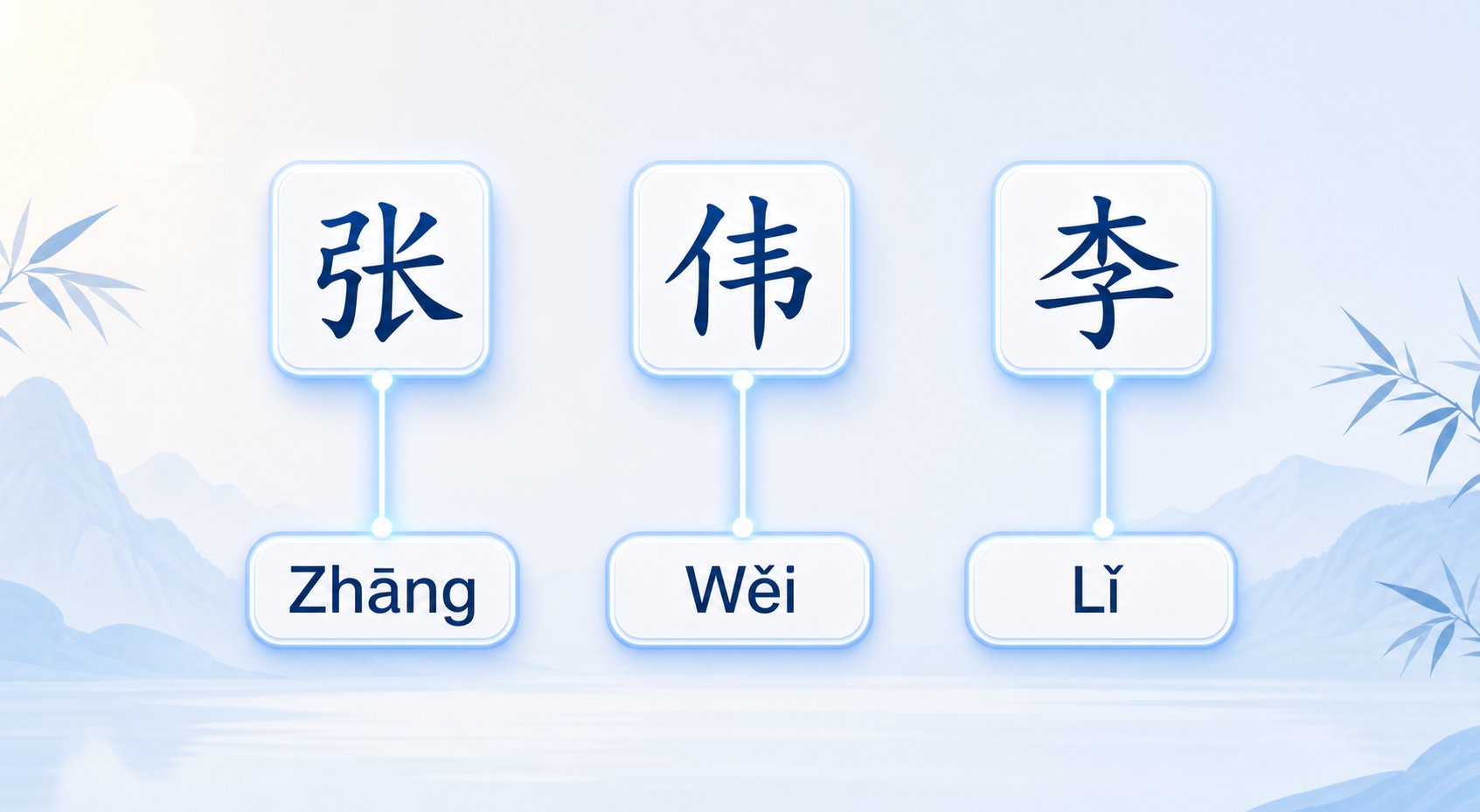
The family name is almost always a single character. According to the Asia Media Centre, all of the top 100 Chinese family names have only one syllable, and these surnames cover roughly 85 percent of China's citizens. The most common three — Li (李), Wang (王), and Zhang (张) — are shared by more than 270 million people.
The given name, on the other hand, can be either one or two characters. A full Chinese name is therefore two or three syllables total. Take the example Wang Xiaoming: Wang is the one-syllable surname, and Xiaoming is the two-character given name. When you see a three-syllable Chinese name, you'll know the last two syllables form the given name.
This structure matters because when you combine parents' names for a baby, you're working within the given name portion — those one or two character slots that follow the surname.
Single vs. Double Character Given Names and Why It Matters
Here's where things get practical. A single-character given name gives you exactly one slot to work with. That means you'd need to choose just one character — from one parent — or find a single character that somehow bridges both parents' names through its radical or meaning.
Double-character given names open up far more combination flexibility. With two character slots available, you can pull one character from each parent's given name, or derive two new characters that echo elements from both parents. You're essentially doubling your creative workspace.
Consider this: if both parents have two-character given names, you have four characters total to draw from. That's four sets of radicals, four meanings, four tonal values, and four elemental associations — all available as raw material for your baby's name. Parents with single-character given names still have options, but the pool of source material is smaller, which may push you toward more creative combination methods like radical derivation or meaning bridging.
Surname Inheritance Rules for Your Baby
Before you focus on the given name, you'll need to settle the surname question. Traditionally, children in China inherit their father's surname. Research published by Sixth Tone found that among Chinese born between 1986 and 2005, nearly 98% were given their father's surname. Maternal surnames and compound surnames accounted for only 1.4% and 0.8% respectively — though both showed a clear upward trend over time.
Today's families have more options than ever:
- Patrilineal surname — the baby takes the father's family name (most common)
- Matrilineal surname — the baby takes the mother's family name (growing in popularity, especially in coastal regions like Jiangsu, Zhejiang, and Shanghai)
- Compound surname — combining both parents' surnames into a double-barreled family name (e.g., father Zhang + mother Wang = surname "Zhang-Wang")
- Alternating surnames — in families with multiple children, giving different children different parents' surnames
The compound surname approach is particularly relevant when you want to honor both family lines from the very first character. Research suggests this practice is more common in urban areas and among families where the mother has a higher level of education, driven less by traditional lineage concerns and more by evolving attitudes about family identity.
Your surname choice directly affects how many character slots remain for the given name. A compound two-character surname paired with a two-character given name creates a four-character name — unusual and potentially cumbersome. Most families opting for compound surnames pair them with a single-character given name to keep the total length manageable.
With these structural building blocks clear — surname placement, given name length, and inheritance options — the real creative work begins: breaking down each parent's characters into their component parts to find the threads you can weave together.
Step 1 - Deconstructing Your Parent Name Characters
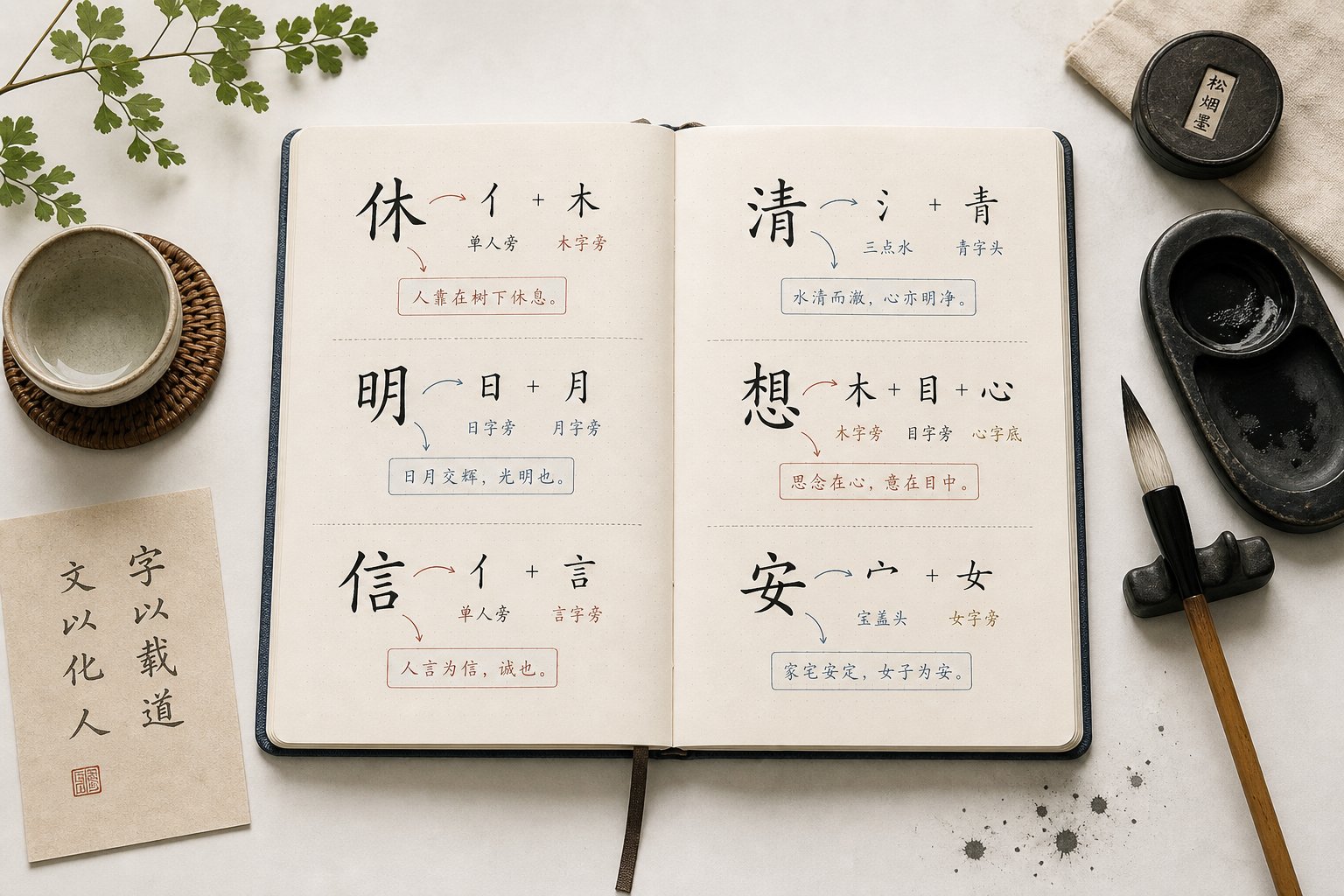
Every Chinese character is more than a single unit of meaning. It's a layered structure built from smaller, meaningful parts — radicals, phonetic hints, and semantic signals all packed into one compact visual form. When you're working with Chinese names and characters to create a baby name, your first real task is pulling those layers apart so you can see what you're actually working with.
Think of it like a recipe. You wouldn't combine two dishes without first knowing their individual ingredients. The same logic applies here. Each parent's given name characters contain components that carry meaning, sound, and elemental energy — and documenting all of it gives you a clear inventory of raw material for your baby's name.
Identifying Radicals and Semantic Components in Your Characters
A radical (部首) is the core semantic building block inside a Chinese character. It usually signals the character's general category of meaning. Most compound characters — and the vast majority of Chinese name characters are compounds — contain a radical that anchors the character to a concept family.
Here are some common radicals you'll encounter in name characters and the meaning each one carries:
- 氵(three-dot water radical) — relates to water, liquids, and flowing. Found in characters like 海 (sea), 洁 (pure), 涵 (contain)
- 木 (wood radical) — relates to trees, growth, and nature. Found in characters like 林 (forest), 桦 (birch), 梅 (plum)
- 心 or 忄 (heart radical) — relates to emotions, mind, and spirit. Found in characters like 慧 (wisdom), 恩 (grace), 怡 (joy)
- 火 or 灬 (fire radical) — relates to fire, heat, and energy. Found in characters like 煜 (brilliant), 烨 (splendid), 熙 (prosperous)
- 金 or 钅 (metal radical) — relates to metals and precious materials. Found in characters like 锦 (brocade), 铭 (inscribe), 鑫 (prosperous)
- 土 (earth radical) — relates to ground, stability, and land. Found in characters like 坤 (earth/feminine), 培 (cultivate), 城 (city)
To identify the radical in each parent's name characters, look at the left side or bottom of the character first — that's where radicals most commonly sit. As Hacking Chinese explains, each character has one designated radical, though other components also carry meaning. A dictionary app like Pleco can quickly confirm which radical belongs to any character you're examining.
Write down the radical for each character in both parents' given names. If a parent's name is 明辉, for example, you'd note that 明 contains the 日 (sun) radical and 辉 contains the 光 (light) component with the 小 radical — both pointing toward brightness and illumination.
Mapping the Meaning Layers of Each Parent Character
Radicals tell you the category, but each character carries multiple meaning layers beyond its radical. When exploring the Chinese meaning of names, you'll want to document at least three dimensions for every character:
- Literal meaning — the dictionary definition. For 慧, that's "intelligent" or "wise."
- Cultural connotations — the associations Chinese speakers carry. 梅 (plum blossom) literally means "plum," but culturally it symbolizes resilience and elegance because plum trees bloom in winter.
- Elemental association — which of the Five Elements (Wood, Fire, Earth, Metal, Water) the character connects to, based on its radical or meaning. A character with the 氵radical maps to Water. A character meaning "mountain" maps to Earth.
Imagine one parent's name contains 志 (ambition/will) and the other's contains 兰 (orchid). On the surface, these seem unrelated. But 志 carries connotations of determination and inner strength, while 兰 symbolizes refinement and integrity in Chinese culture. Both point toward noble character — and that thematic overlap becomes a bridge you can use later when combining.
Don't rush this step. Sit with each character and research its full range of associations. Online dictionaries, etymology resources, and even asking older family members can reveal layers you might miss on your own.
Creating Your Character Component Inventory
Here's where everything comes together into a practical working document. For each character in both parents' given names, create an inventory that captures all the information you'll need for the combination step. A simple table works perfectly:
| Character | Radical | Core Meaning | Tone | Stroke Count | Element |
|---|---|---|---|---|---|
| 明 (ming) | 日 (sun) | Bright, clear | 2nd tone | 8 | Fire |
| 辉 (hui) | 光 (light) | Radiance, splendor | 1st tone | 12 | Fire |
| 淑 (shu) | 氵(water) | Gentle, virtuous | 1st tone | 11 | Water |
| 兰 (lan) | 丷 | Orchid, elegance | 2nd tone | 5 | Wood |
This inventory becomes your reference sheet for every decision that follows. You'll notice patterns immediately — maybe both parents have Fire-element characters, or perhaps their tones are all clustered in the same range. These patterns reveal both opportunities and potential conflicts before you commit to a combination method.
A few practical tips for building your inventory:
- Use traditional stroke counts for the stroke column, even if you normally write in simplified Chinese — naming conventions in Chinese culture typically reference traditional forms
- Note the phonetic component of each character separately from the radical, since you may want to use sound echoes in your combination
- Include any secondary meanings or poetic associations in a notes column if your character has rich cultural depth
With your inventory complete, you have a clear map of every radical, meaning, sound, and elemental thread available from both parents' names. The question becomes: which combination method best suits your specific set of characters?
Step 2 - Choosing Your Combination Method
Your character inventory reveals the raw material. The method you choose determines how those pieces come together. There's no single right way to combine parents' names into a Chinese given name — but there are four distinct approaches, each suited to different character sets and different goals. Some parents want a direct, visible connection to both names. Others prefer something subtler, where the link lives beneath the surface.
Here's how to choose a chinese name combination method that works for your specific situation.
Method 1 - Direct Character Sharing
This is the most straightforward approach. You take one character from each parent's given name and place them together as the baby's two-character given name. If the father's name contains 明 and the mother's name contains 兰, the baby might be named 明兰 or 兰明.
Sounds simple? The catch is that character order changes meaning. In Chinese, the first character of a given name often carries more weight — it sets the tone and primary impression. 明兰 (bright orchid) reads differently from 兰明 (orchid brightness). One feels like a quality describing a flower; the other feels like a flower illuminating something. You'll want to test both orders and consider which meaning of chinese names resonates more with your hopes for the child.
This method works best when both parents have characters that naturally complement each other in meaning and tone. It's also the most transparent — anyone who knows both parents' names will immediately see the connection.
Method 2 - Radical Derivation
Rather than borrowing characters directly, this method extracts the radicals from parent characters and finds entirely new characters that share those same radicals. The result is a name that visually echoes both parents without copying either one.
Imagine one parent's character contains the 氵(water) radical and the other's contains the 木 (wood) radical. You could find new characters like 沐 (mu, meaning "to bathe in" or "to be blessed by") — which actually contains both the water and wood radicals in a single character. Or you might select two characters, one with each parent's radical: perhaps 泽 (ze, grace/moisture) for the water connection and 桐 (tong, paulownia tree) for the wood connection.
This approach creates a name that feels fresh and independent while carrying a hidden structural tribute to both parents. It's particularly useful when the parents' actual characters don't pair well together due to tonal clashes or awkward combined meanings.
Method 3 - Meaning Bridging
This method operates at the semantic level. You identify the core meanings of each parent's characters, then find new characters that carry related or complementary meanings — creating a thematic thread rather than a visual or phonetic one.
Say one parent's name means "mountain" and the other's means "ocean." Rather than using those exact characters, you might choose 岚 (lan, mountain mist) — a character that bridges land and water through imagery. Or you could select 浩然 (haoran), where 浩 evokes vastness like the ocean and 然 suggests natural grandeur like a mountain landscape.
Meaning bridging gives you the most creative freedom. You're not constrained by specific radicals or sounds — only by the conceptual territory of each parent's characters. This makes it ideal for parents whose characters have strong, clear meanings but don't share structural elements.
Method 4 - Phonetic Blending
This method uses sound as the connecting thread. You take syllables or phonetic components from each parent's name and find characters that echo those sounds while creating fresh combinations with independent meaning.
If one parent's name includes the syllable "hui" and the other includes "ming," you might look for characters that begin with "h" and "m" sounds, or find a single character whose pronunciation blends elements of both. For example, 慧明 uses both syllables directly, while 珲 (hui, a type of jade) borrows one parent's sound and pairs it with a character from a completely different semantic field.
Phonetic blending is especially popular among families who want the baby's name to sound harmonious when called aloud — where the auditory echo of both parents is more important than visual or semantic connections.
Comparing All Four Methods
Each method has its strengths depending on your characters, your priorities, and how visible you want the parental connection to be. Here's a side-by-side comparison:
| Method | Best For | Difficulty Level | Example Approach |
|---|---|---|---|
| Direct Character Sharing | Parents with complementary characters that pair naturally in meaning and tone | Low | Take father's 明 + mother's 兰 = baby's given name 明兰 |
| Radical Derivation | Parents whose characters don't pair well directly but share interesting radicals | Medium | Extract 氵from mother + 木 from father = find 沐 (contains both radicals) |
| Meaning Bridging | Parents with strong thematic meanings who want creative freedom | Medium-High | Father's "mountain" + mother's "ocean" = 岚 (mountain mist bridging both) |
| Phonetic Blending | Parents who prioritize how the name sounds when spoken aloud | Medium | Blend syllables "hui" + "ming" into harmonious new sound combinations |
You don't have to commit to just one method, either. Many parents find that a hybrid approach — say, using radical derivation for one character and meaning bridging for the other — produces the most satisfying result. The key is matching your method to your specific character inventory.
One important note: whichever method you choose, the resulting characters still need to pass several additional tests. A beautiful combination that clashes elementally or produces an unfortunate homophone won't serve your child well. The meaning of chinese names extends far beyond the dictionary — it lives in how the characters interact with each other, with the surname, and with the cultural systems that surround them.
Step 3 - Applying the Five Elements and BaZi Framework
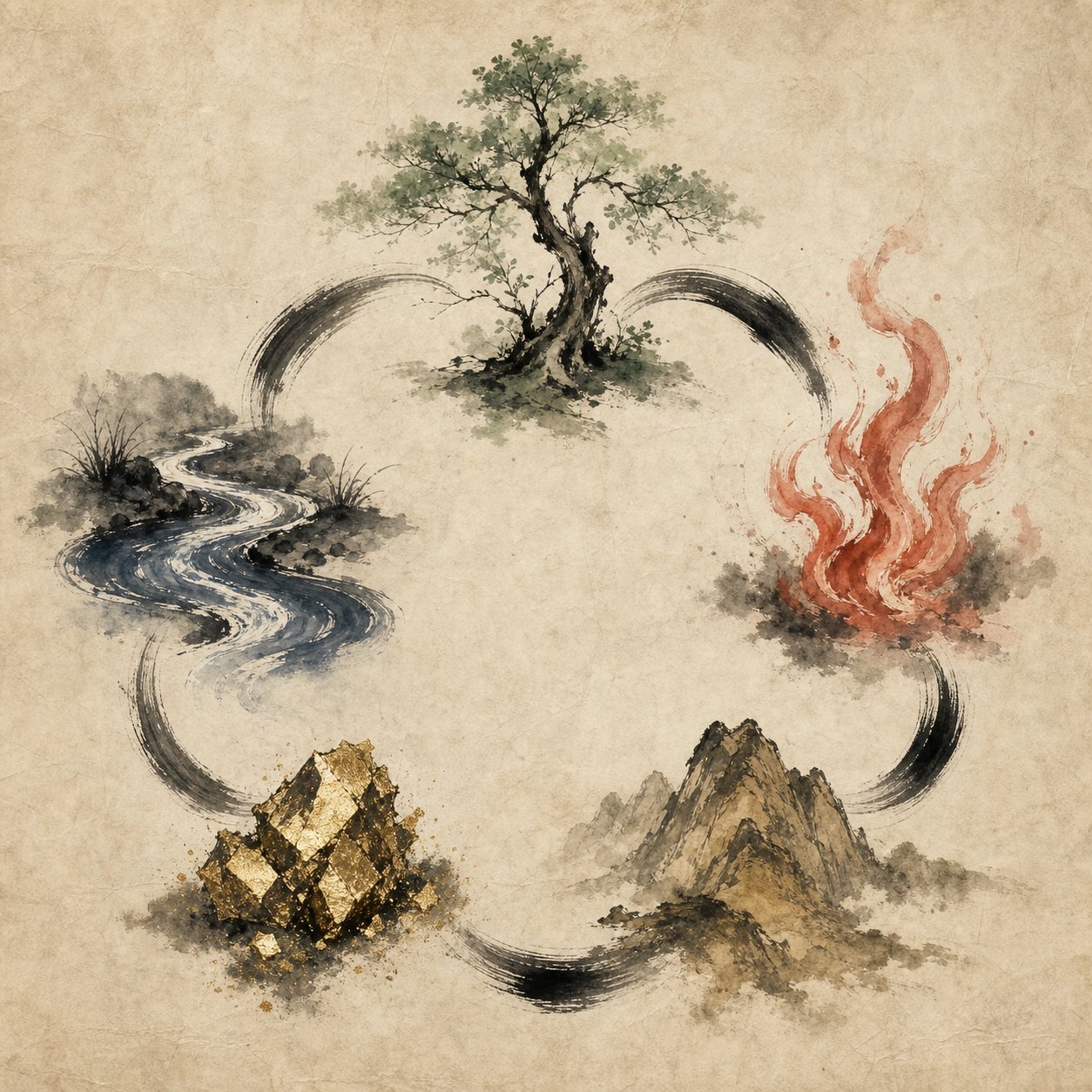
A name can look perfect on paper — beautiful meaning, balanced strokes, clear parental connection — and still clash at a deeper level. In Chinese naming customs, that deeper level is elemental. The Five Elements system (五行, wuxing) assigns every Chinese character to one of five natural forces: Wood (木), Fire (火), Earth (土), Metal (金), and Water (水). These forces interact in specific patterns, and the characters you borrow from parent names carry their elemental energy into your baby's name.
This isn't mysticism you need a master to decode. It's a structured framework with clear rules, and you can apply it yourself once you understand how the cycles work.
Understanding the Five Elements Cycle for Names
The Five Elements relate to each other through two primary cycles. The productive cycle (生, sheng) describes how one element feeds and strengthens another:
- Wood feeds Fire (wood burns to create fire)
- Fire produces Earth (fire creates ash, which becomes earth)
- Earth yields Metal (metal ore is mined from earth)
- Metal generates Water (metal surfaces collect condensation)
- Water nourishes Wood (water helps trees grow)
The destructive cycle (克, ke) describes how one element weakens or controls another:
- Wood parts Earth (roots break through soil)
- Earth dams Water (earth absorbs and blocks water)
- Water extinguishes Fire
- Fire melts Metal
- Metal chops Wood (axes cut trees)
How does a character map to an element? You already documented this in your character inventory. The most reliable indicator is the radical: characters with 氵belong to Water, those with 木 belong to Wood, those with 火 or 灬 belong to Fire, those with 土 or 山 belong to Earth, and those with 金 or 钅 belong to Metal. When a character lacks an obvious elemental radical, its core meaning determines the assignment — a character meaning "wisdom" or "depth" maps to Water, while one meaning "brightness" or "warmth" maps to Fire.
The BaZi naming tradition also recognizes a phonetic layer where classical Chinese "Five Tones" correspond to elements, though this level is complex enough that most parents focus on radical and meaning-based assignments first.
Determining Your Baby's Needed Elements from BaZi
Here's where chinese naming conventions get personal. Every child is born into a specific elemental landscape determined by their birth time. The BaZi (八字, "Eight Characters") system converts the year, month, day, and hour of birth into four pairs of Heavenly Stems and Earthly Branches — eight characters total, each carrying a Five Element value.
The central figure in this chart is the Day Master (日主) — the Heavenly Stem of the day your baby was born. This represents the child's core self. A Day Master of 甲 or 乙 is Wood. 丙 or 丁 is Fire. 戊 or 己 is Earth. 庚 or 辛 is Metal. 壬 or 癸 is Water.
The critical question isn't "which element is missing?" — a common misconception. It's "which element does the Day Master need for balance?" This needed element is called the Useful God (喜用神). A child born with an overwhelmingly strong Wood Day Master might need Metal (to control excess Wood) or Fire (to drain it). A child with a weak Water Day Master might need Metal (which generates Water in the productive cycle) to strengthen their core.
A simplified way to assess this without deep BaZi training:
- Identify the Day Master's element from the birth day's Heavenly Stem
- Check the birth month — does it support or weaken the Day Master? (A Wood Day Master born in spring is strong; born in autumn when Metal dominates, it's weak)
- If the Day Master appears strong (supported by the season and other pillars), the name should contain elements that drain or control it
- If the Day Master appears weak (unsupported or controlled by the season), the name should contain elements that produce or match it
For parents who want precision, online BaZi calculators can generate the full chart and identify the Useful God automatically. The key takeaway: the baby's name should supplement what the chart lacks in balance, not simply fill in a "missing" element.
Ensuring Parent Name Elements Support Baby Name Elements
This is where the chinese behind the name gets interesting for combined names specifically. When you borrow characters from parent names, you're importing their elemental properties into the baby's name. Those imported elements need to have a productive — not destructive — relationship with the baby's needed elements.
Walk through this check with your character inventory:
- Look at the element column for each parent character you're considering borrowing
- Compare those elements against your baby's Useful God element
- Check whether the parent character's element feeds the baby's needed element in the productive cycle, or conflicts with it in the destructive cycle
For example, if your baby's chart calls for Water as the Useful God, and one parent's character belongs to Metal — that's a productive match, because Metal generates Water. But if the other parent's character belongs to Earth, you have a conflict: Earth dams Water in the destructive cycle. Using that Earth character in the baby's name would work against the very element the child needs most.
The baby's name elements should be fed by, not conflict with, the parent name elements being borrowed. A parent character that destroys or weakens the baby's Useful God element should be set aside in favor of characters from the other parent, or replaced using radical derivation or meaning bridging to find an elementally compatible alternative.
This doesn't mean you must discard a beloved parent character entirely. Remember your combination methods — radical derivation and meaning bridging let you honor a parent's character thematically while selecting a new character that carries a more compatible element. If a mother's character 林 (Wood) conflicts with a baby who needs Metal, you might bridge to her character's meaning of "abundance" and find a Metal-element character like 鑫 (also meaning abundance/prosperity) that carries the same spirit without the elemental clash.
The Five Elements framework adds a layer of intention to your name combination — ensuring that the characters you've chosen don't just sound beautiful and honor both parents, but actively support your child's innate energetic balance. With elemental harmony confirmed, the next consideration is equally structural but operates through a different lens: the stroke count of your chosen characters and the numerical patterns they create.
Step 4 - Checking Stroke Count for Auspiciousness
Elemental harmony tells you whether your characters work together energetically. Stroke count tells you whether they work together numerically. In Chinese name conventions, the number of strokes in each character isn't just a calligraphic detail — it's a system of its own, one that assigns auspicious or inauspicious qualities to specific numerical patterns. A name that passes every other test can still be considered unlucky if its stroke count falls into an unfavorable configuration.
Sounds complex? The underlying logic is actually quite systematic. You count, you calculate, and you check against established patterns. Here's how to do it step by step.
Counting Strokes Correctly for Combined Characters
The first potential pitfall is miscounting. A stroke is a single, continuous pen movement — one lift of the pen means one stroke is complete. The character 人 (person) has two strokes. The character 天 (heaven) has four. Simple enough for basic characters, but things get tricky with more complex ones.
Here's the critical rule for naming purposes: Chinese name structure analysis traditionally uses traditional (繁体) character stroke counts, even if your family writes in simplified Chinese daily. Why? The naming numerology system was developed centuries before character simplification, and practitioners maintain that the traditional form carries the character's "true" numerical value. So if you're considering the character 华, you'd count the strokes of its traditional form 華 (14 strokes) rather than the simplified version (6 strokes).
Common counting mistakes to watch for:
- Characters with hidden connecting strokes — in 凹 and 凸, both have 5 strokes despite looking simpler or more complex than that
- The three-dot water radical (氵) counts as 4 strokes in traditional naming analysis, not 3, because it derives from the full character 水 (4 strokes)
- The grass radical (艹) counts as 6 strokes in traditional naming numerology, based on its original form 艸
- Characters where strokes connect at corners — whether two lines meeting at a corner count as one stroke or two depends on their position within the character
When in doubt, consult a traditional Chinese dictionary or a dedicated naming stroke-count reference. The counts used in naming don't always match what a standard modern dictionary lists for simplified forms.
Auspicious Stroke Count Patterns for Given Names
Chinese naming tradition uses a framework called the Five Grid method (五格剖象法) to evaluate how are chinese names structured numerically. This system breaks a name into five numerical "grids," each calculated from the stroke counts of different character positions:
- 天格 (Tian Ge, Heaven Grid) — the surname's stroke count plus 1. This represents inherited fortune and family legacy. You can't change it, since it's determined by the surname.
- 人格 (Ren Ge, Person Grid) — the surname's stroke count plus the first given name character's stroke count. This is considered the most important grid, representing the person's core personality and middle-age fortune.
- 地格 (Di Ge, Earth Grid) — the sum of both given name characters' stroke counts. This represents early life, emotions, and relationships.
- 外格 (Wai Ge, Outer Grid) — the total name stroke count minus the Ren Ge value, plus 1. This represents social relationships and external circumstances.
- 总格 (Zong Ge, Total Grid) — the total stroke count of all characters in the name combined. This represents overall life trajectory and later years.
Each grid produces a number, and each number carries a traditional interpretation — some considered auspicious (吉), some inauspicious (凶), and some mixed. The traditional system also layers in Yin-Yang balance: characters with even stroke counts are Yin, and those with odd counts are Yang. A well-structured name should alternate between Yin and Yang across its characters rather than clustering all-even or all-odd.
The preferred Yin-Yang patterns for a three-character name (surname + two given name characters) include:
- Yang-Yang-Yin (odd-odd-even)
- Yin-Yin-Yang (even-even-odd)
- Yang-Yin-Yin (odd-even-even)
- Yin-Yang-Yang (even-odd-odd)
Additionally, certain total stroke counts for the 总格 are traditionally considered favorable. Numbers like 3, 5, 6, 7, 8, 11, 13, 15, 16, 17, 18, 21, 23, 25, 29, 31, 32, 33, 37, 39, and 81 appear on classical auspicious lists. Numbers like 4, 9, 10, 14, 19, 20, 22, 26, 27, 28, and 34 are generally avoided.
Adjusting Your Combination Without Losing Meaning
What happens when your preferred parent-derived characters produce an unfavorable stroke count pattern? You don't have to abandon your combination entirely. Several adjustment strategies preserve the parental connection while shifting the numbers into better territory.
- Count the strokes of your current combination using traditional character forms — confirm the Tian Ge, Ren Ge, Di Ge, Wai Ge, and Zong Ge values
- Identify which grid or grids fall on inauspicious numbers
- Check the Yin-Yang pattern — does your name match one of the four favorable alternating patterns?
- If the Di Ge (given name total) is problematic, look for alternate characters that carry the same meaning but have different stroke counts — for example, 慧 (15 strokes) and 智 (12 strokes) both mean "wisdom"
- Try swapping the order of your two given name characters — this changes the Ren Ge (which uses only the first given name character plus surname) without changing the Di Ge or Zong Ge
- If using radical derivation, explore characters with the same radical but different complexity — the wood radical appears in characters ranging from 4 strokes (木) to 20+ strokes (欄)
- Recalculate all five grids after each adjustment to confirm the new configuration is favorable
- Verify that the Yin-Yang pattern still alternates properly after your changes
A practical example: imagine your surname is 王 (4 strokes traditional) and your combined given name characters are 明辉 (8 + 15 = 23 strokes for Di Ge). The Ren Ge would be 4 + 8 = 12, and the Zong Ge would be 4 + 8 + 15 = 27. If 27 falls on an inauspicious number for Zong Ge, you might swap 辉 for 晖 (the same meaning, "radiance," but with 13 traditional strokes), shifting your Zong Ge to 4 + 8 + 13 = 25 — a traditionally favorable total.
Keep in mind that not every family weighs stroke count equally. Some treat it as a firm requirement; others view it as one factor among many. The beauty of understanding how chinese name structure works numerically is that it gives you the option to optimize — without forcing you to sacrifice a meaningful parental connection for the sake of a number. When your stroke counts check out and your Yin-Yang balance holds, there's one more dimension to test: how your chosen characters actually sound when spoken aloud together.
Step 5 - Testing Tonal Harmony and Avoiding Pitfalls
A name can pass every structural test — meaning, elements, stroke count — and still fall flat the moment someone says it out loud. Chinese is a tonal language, and the way characters sound together matters as much as what they mean on paper. When you pull characters from two different parents' names, you're combining syllables that were never designed to sit side by side. Sometimes the pairing is musical. Sometimes it's jarring. And sometimes it accidentally says something you really don't want your child's name to say.
This step is where you shift from visual analysis to auditory testing. You've been looking at characters. It's time to start listening to them.
Tonal Harmony Rules for Two-Character Given Names
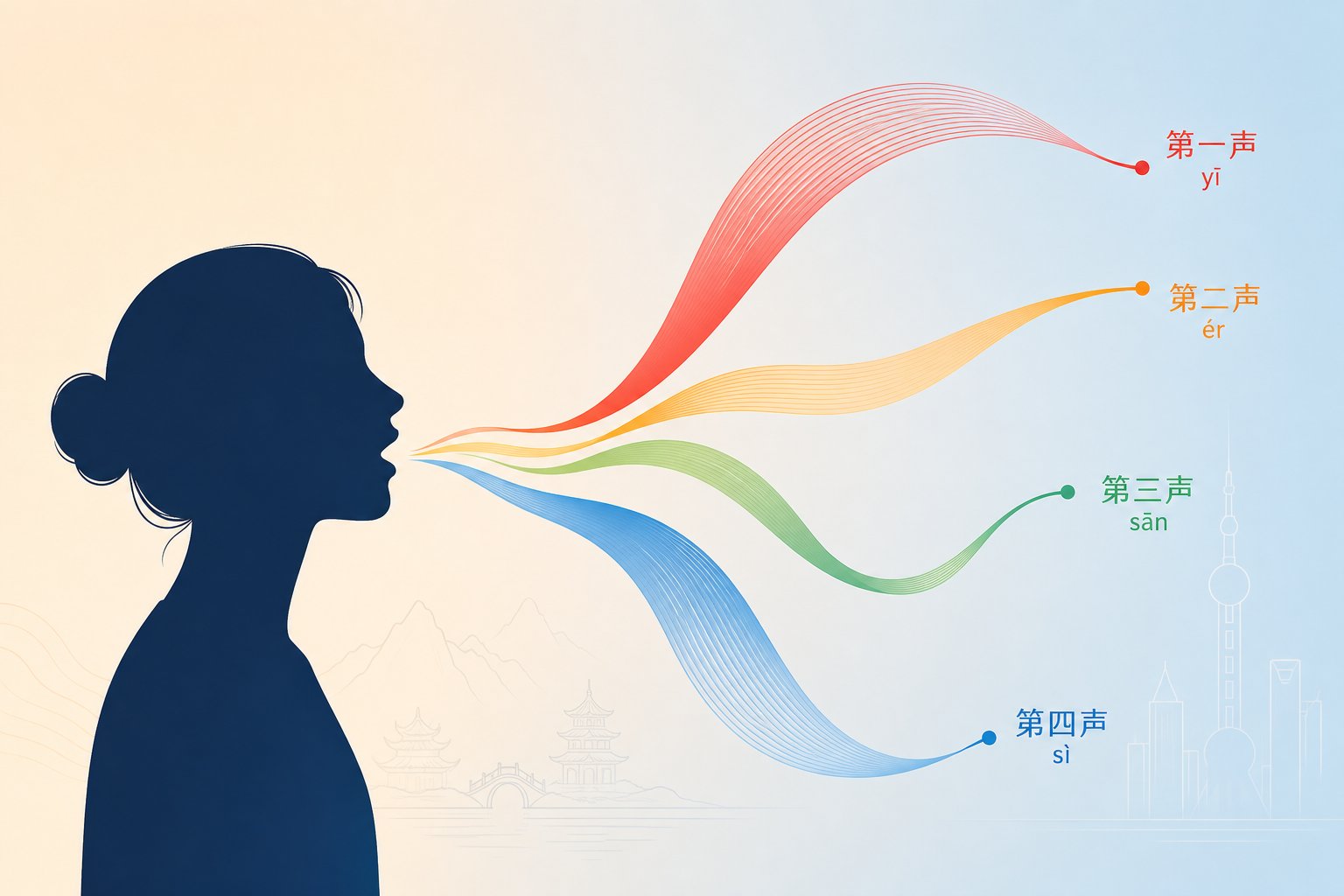
Mandarin Chinese has four tones plus a neutral tone. Each character carries a fixed tone, and when two characters sit together in a given name, their tonal combination creates a rhythm — either pleasing or grating to the ear.
The biggest offender? Two fourth-tone characters in a row. The fourth tone is a sharp, falling sound — forceful and abrupt. Stack two of them together and the name sounds like a command being barked. Imagine calling your child's name across a playground: two consecutive falling tones feel harsh and clipped rather than warm.
Similarly, two third-tone characters create an awkward pronunciation issue. In natural Mandarin speech, when two third tones appear consecutively, the first one shifts to a second tone (a phonological rule called tone sandhi). This means the name will never actually be pronounced the way it's "supposed" to sound — the spoken version will always differ from the tonal notation.
Preferred tonal pairings for two-character given names include:
- Tone 1 + Tone 4 (high flat followed by sharp falling) — creates a sense of rising then resolving, like a musical phrase completing itself
- Tone 2 + Tone 4 (rising followed by falling) — produces a natural arc that feels balanced and dynamic
- Tone 1 + Tone 3 (high flat followed by dipping) — gives a gentle, flowing quality
- Tone 4 + Tone 2 (falling followed by rising) — creates energy and forward momentum
When you check your character inventory from Step 1, look at the tone column for each parent character you're considering. If both characters you want to combine share the same tone — especially tones 3 or 4 — consider swapping their order (which changes the tonal pattern) or substituting one character using radical derivation or meaning bridging to find an alternative with a different tone.
Dangerous Homophones and Sound-Alike Pitfalls
Chinese is famously rich in homophones — words that sound identical but carry completely different meanings. A character that's perfectly respectable on its own can become problematic when paired with another character whose combined sound echoes an unfortunate word or phrase.
As noted by Chinese Name Translator, characters like "Si" (meaning "to think") and "Wang" (meaning "prosperous") seem like a strong combination individually, but together they sound nearly identical to "Siwang" — the Chinese word for death. The character "Ri" literally means "sun," but in colloquial usage it functions as a vulgar expletive. These aren't edge cases. They're the kind of traps that catch parents who only evaluate characters visually.
The danger multiplies when you factor in regional dialects. A name that sounds fine in standard Mandarin might carry embarrassing or offensive connotations in Cantonese, Hokkien, Shanghainese, or other dialects spoken by your extended family. If grandparents speak a different dialect, test the name in their pronunciation too.
Common homophone pitfalls to watch for:
- Characters that together sound like words for death (死), losing money (赔), separation (离), or illness (病)
- Given name characters that, when combined with the surname, create an unintended phrase — for example, surname 杨 (Yang) + given name 伟 (Wei) sounds like "yangwei" (impotence)
- Characters whose tonal shifts in casual speech produce slang terms or internet memes that may not exist yet but could emerge as the child grows
- Names that sound like animal names, brand names, or pop culture references when spoken quickly
- Characters that produce unfortunate sounds in the dialect regions where your family lives or where the child will grow up
The behind the name chinese tradition has always treated sound as inseparable from meaning. A character's written beauty means nothing if people wince or laugh when they hear the full name spoken aloud.
Testing Your Name Combination Aloud
Reading characters silently is not enough. You need to hear the name in context — the way teachers, friends, and strangers will actually use it. Here's a practical testing checklist:
- Say the full name (surname + given name) aloud at normal conversational speed. Does it flow smoothly, or do you stumble?
- Call the name loudly, as if shouting across a room. Harsh tonal combinations become obvious at volume.
- Say just the given name as a nickname. Many people will drop the surname in casual settings — does the given name alone sound complete?
- Test common nickname formations: the character repeated (e.g., 明明), the character preceded by 小 (小明), or just the last character alone. Do any of these produce awkward sounds?
- Ask at least two native Mandarin speakers to read the name cold, without context. Watch their facial reactions before they comment — involuntary reactions reveal more than polite feedback.
- If your family speaks Cantonese, Hokkien, or another dialect, have a dialect speaker pronounce the full name and check for unintended meanings in that pronunciation system.
- Say the name alongside common phrases: "This is [name]," "[Name] is here," "Call [name]." Listen for whether the name blends naturally into sentence flow or creates awkward pauses.
One detail that parents often overlook: china different names can sound identical when spoken. Your child will share classrooms and workplaces with others, so consider whether the name is distinctive enough to be heard clearly in a group setting. A name with unusual tonal patterns or less common syllable combinations stands out more easily than one built from the most popular sounds of the generation.
Phonetic testing is the final sensory check before moving into cultural and structural verification. A name that sounds beautiful, carries clear meaning, honors both parents, and avoids every homophone trap still needs one more consideration for families where the naming puzzle includes an additional layer of complexity — when one parent's name isn't Chinese at all.
Step 6 - Combining Names for Intercultural Couples
What if only one parent has a Chinese name? For intercultural families, the question of how to combine parents names for a baby Chinese name introduces a unique challenge: one side of the equation is written in characters, and the other exists in a completely different script. The good news is that every method covered so far still applies — you just need an extra step to bring the non-Chinese parent's name into a form you can work with.
This is one of the most common situations modern families face, and it's far more solvable than it might seem at first glance.
Transliterating a Non-Chinese Name into Usable Characters
Transliteration converts the sounds of a name from one script into another — preserving pronunciation rather than meaning. If you've ever wondered what does my name in chinese mean, you've likely encountered this process already. The key distinction, as Elite Asia explains, is that transliteration transfers how a word sounds, while translation transfers what it means. For naming purposes, you'll often want both.
Here's how to transliterate a non-Chinese parent's name into workable characters:
- Break the name into syllables. "Sarah" becomes "Sa-ra." "Michael" becomes "Mai-ke-er."
- For each syllable, identify Chinese characters that approximate that sound. "Sa" could map to 萨 (sa) or 莎 (sha). "Ra" could map to 拉 (la) — since Mandarin lacks an "r" initial in the same way English uses it.
- Among the phonetic matches, choose characters that carry positive meanings. 莎 (sha) means "sedge grass" and carries poetic, elegant connotations — far better than a character that sounds right but means nothing pleasant.
- Avoid characters that are phonetically close but carry negative associations, even if the sound match is tighter.
You don't need to transliterate the entire name. Even one or two syllables give you characters that can then be deconstructed using the same radical, meaning, and elemental analysis from Step 1. Once transliterated, those characters become part of your inventory — ready to combine with the Chinese parent's characters using any of the four methods.
A practical example: the name "Emma" can be rendered as 艾玛 (ai-ma). 艾 carries the grass radical and means "mugwort" (associated with healing and protection in Chinese culture). 玛 contains the jade radical 玉 and means "agate." Both characters now offer radicals, meanings, and elements you can blend with the Chinese parent's name characters.
Meaning-Based Bridging for Cross-Cultural Combinations
Transliteration gives you sound-based material. But there's a richer approach: finding what the non-Chinese parent's name actually means etymologically, then locating Chinese characters that carry equivalent significance.
Most Western names have traceable origins. "Alexander" comes from Greek, meaning "defender of people." "Grace" is Latin for "gracious" or "blessed." "William" derives from Germanic roots meaning "resolute protector." These etymological meanings become your bridge into Chinese character selection.
The process works like this:
- Research the non-Chinese parent's name origin and core meaning using an etymology resource
- Identify the key concept — protection, wisdom, strength, beauty, grace, light
- Find Chinese characters that embody that same concept. For "defender," you might consider 卫 (wei, to guard) or 护 (hu, to protect). For "grace," perhaps 恩 (en, grace/kindness) or 雅 (ya, elegance)
- Combine these meaning-equivalent characters with characters from the Chinese parent's given name using direct sharing, radical derivation, or any other method
Imagine a father named "David" (Hebrew origin, meaning "beloved") and a mother with the Chinese given name 慧琳 (wise jade). The meaning bridge from "beloved" leads to characters like 爱 (love) or 恋 (cherish). Pairing the mother's 琳 (beautiful jade) with 爱 creates 爱琳 — a given name meaning "beloved jade" that carries the father's name meaning alongside the mother's actual character. The child's name tells both parents' stories without forcing either culture to dominate.
Balancing Dual Cultural Identity in One Name
For intercultural families, the deeper question isn't just technique — it's identity. How do you create a Chinese name that feels authentically Chinese while still honoring a parent whose heritage lies elsewhere? As writer Cecilia Huang reflects, naming a child in a multicultural family means "merging two sets of individual values, balancing tradition and individualism."
Several strategies help achieve this balance:
- Chinese surname + bridged given name. Use the Chinese parent's surname and create a given name that weaves both parents' identities through meaning or sound. The name reads as fully Chinese while carrying a cross-cultural story beneath the surface.
- Phonetic echo approach. Choose Chinese characters whose pronunciation loosely echoes the non-Chinese parent's name or a syllable from it, while carrying independent Chinese meaning. The name works on its own in Chinese contexts but contains an auditory nod that the non-Chinese parent recognizes.
- Parallel naming. Give the child both a Chinese name and a Western name, with the Chinese name incorporating elements from both parents using the methods above. This lets each name function fully within its own cultural context without compromise.
- Shared character strategy. If the non-Chinese parent has adopted a Chinese name (common for those who've studied Mandarin or lived in China), treat that adopted name as source material just like a birth name. Its characters can be deconstructed and combined normally.
The most important principle: a Chinese name should be able to stand on its own as a legitimate, meaningful name within Chinese culture. It shouldn't sound like a forced transliteration or an awkward hybrid. The cross-cultural connection can be subtle — a shared meaning, a radical echo, a tonal nod — and still be deeply meaningful to the family who understands the story behind it.
Whether your combination draws from transliteration, meaning bridging, or a blend of both, the resulting name candidates still need to clear the same final hurdles as any Chinese name: cultural taboos, generational naming rules, and the comprehensive verification that ensures your chosen name will serve your child well across every context they'll encounter.
Step 7 - Verifying Against Taboos and Finalizing Your Choice
You've built a name from both parents' characters, checked its elemental balance, confirmed its stroke count, and tested how it sounds aloud. The creative work is done. What remains is quality assurance — a final pass through the cultural rules and naming taboos that can quietly disqualify an otherwise beautiful name. Think of this step as the difference between a name that delights your immediate family and one that holds up across generations, regions, and social contexts your child will navigate throughout life.
Some of these rules carry centuries of weight. Others are fading in modern practice. Either way, knowing them lets you make an informed choice rather than an accidental one.
Checking Against Common Chinese Naming Taboos
Chinese naming culture carries a set of unspoken rules that most native speakers absorb instinctively but that parents combining names might accidentally violate — especially when focused on making the parental connection work. Here are the major taboos to verify your combined name against:
- Avoid characters shared with living elder relatives. In traditional Chinese families, using the same character — or even a character with the same pronunciation — as a parent, grandparent, or elder uncle or aunt is considered disrespectful. As Global Times reports from feng shui master Shi Jiuzheng: "You can never name the baby with the same character of its parents' or grandparents' name — that would be disrespectful." This is particularly relevant when combining parent names, since you're deliberately borrowing parental characters. The workaround? Use radical derivation or meaning bridging rather than direct character sharing if your family observes this tradition strictly.
- Avoid characters with negative or unfortunate meanings. Characters associated with death (死), illness (病), decay (朽), or misfortune (祸) are obvious exclusions. But subtler cases exist — characters that individually seem neutral but carry negative weight in certain compound words or literary contexts.
- Avoid names of infamous historical figures. Characters used by notorious criminals, traitors, or morally condemned figures in Chinese history carry cultural baggage. As All Language Cafe notes, you should also avoid using the full names of major political leaders like 毛泽东 or 周恩来 — though using a single character from their given names with a different surname is generally acceptable.
- Watch for colloquial or vulgar double meanings. Some characters carry hidden vulgar connotations in spoken language that don't appear in dictionaries. The character 日 (ri) means "sun" formally but functions as profanity in some regions. Similarly, 草 (cao, grass) can carry crude slang meanings in certain contexts. These regional vulgarities shift over time, making it worth checking with native speakers from different areas.
- Avoid overly rare or unrecognizable characters. While uncommon characters might seem distinctive, they create practical problems — teachers mispronouncing the name, computer systems unable to input it, and a lifetime of spelling corrections. A name that honors both parents loses its warmth if the child dreads introducing themselves.
One nuance worth noting: the taboo against sharing characters with family members applies most strongly to direct character reuse in the given name. If you're using radical derivation — finding a new character that contains a parent's radical but is itself a different character — most families consider this acceptable, since you're echoing the parent rather than copying them.
Generational Naming Conflicts to Verify
Some Chinese families maintain a generational naming system (辈分, beifun) where a specific character is assigned to all children born in the same generation. This character typically occupies one fixed position in the given name — usually the first of two given name characters — and follows a sequence recorded in the family's genealogy book (家谱, jiapu).
If your family follows this tradition, one slot in your baby's given name is already spoken for. That generational character takes priority, and your parent-name combination must work within the remaining slot. This doesn't eliminate your options — it simply means you're combining parental elements into a single character rather than two.
Research from NUS Faculty of Arts and Social Sciences shows this practice is fading, particularly among younger parents in urbanized and Westernized communities. Associate Professor Lee Cher Leng found that only a small handful of students in her courses had been named according to their family's genealogy books, and most were unfamiliar with the practice entirely. Dr. Peter Tan observed that modern young parents may adapt the tradition within their immediate families — choosing common characters or initials for siblings rather than following a centuries-old sequence.
How to check for generational naming conflicts:
- Ask both sets of grandparents whether the family maintains a generational naming sequence
- If a genealogy book exists, identify which character belongs to your child's generation
- Check whether your combined name accidentally uses a character assigned to a different generation — this would imply the child belongs to the wrong generational rank within the family
- If the generational character conflicts with your preferred combination (elementally, tonally, or in meaning), discuss with elder family members whether flexibility exists
Even families that no longer strictly follow beifun may have opinions about it. A quick conversation with grandparents before finalizing the name prevents surprises at the birth announcement — and shows respect for the family's history regardless of whether you ultimately incorporate the generational character.
Your Final Name Evaluation Checklist
Every step in this process has produced a specific verification point. Here's the complete sequence, consolidated into a single pass you can run against each name candidate before making your final decision:
- Confirm the combined characters carry a clear, positive meaning when read together — not just individually but as a unit
- Verify the Five Elements of your chosen characters have a productive (not destructive) relationship with your baby's Useful God element from their BaZi chart
- Count strokes using traditional character forms and calculate all five grids (天格, 人格, 地格, 外格, 总格) — confirm none fall on inauspicious numbers
- Check the Yin-Yang stroke pattern across surname and given name characters for proper alternation
- Say the full name aloud in Mandarin — confirm the tonal combination sounds melodic, not harsh or monotone
- Test for homophones by speaking the name quickly and checking whether it echoes any unfortunate words in Mandarin or relevant dialects
- Verify no character in the given name duplicates a character used by a living elder relative (parents, grandparents, uncles, aunts)
- Check against the family's generational naming sequence — confirm the name doesn't accidentally use a character reserved for a different generation
- Screen for historical or cultural associations — ensure no character links to infamous figures or carries hidden vulgar meanings in regional speech
- Test nickname formations (小X, XX repeated, last character alone) for awkward sounds or unintended meanings
- Have at least two native speakers read the name cold and observe their immediate reactions
- If applicable, confirm the name works across both cultures for intercultural families — standing independently as a legitimate Chinese name while carrying its cross-cultural story
Not every candidate will pass all twelve points on the first attempt. That's expected. Most families cycle through three to five strong candidates before one clears every check. Keep your character inventory and combination notes handy — when one candidate fails at step 6 or step 9, you can often return to your inventory and generate a new option quickly using a different combination method.
Modern families may choose to follow all, some, or none of these traditional rules while still creating a meaningful combined name. What matters most is that your choice is intentional — that you understand what each tradition represents and consciously decide which ones align with your family's values, rather than accidentally violating rules you didn't know existed.
A name built from both parents' characters, verified against these cultural guardrails, and spoken aloud with confidence is more than a label. It's a statement of origin — a compact story that tells your child, every time they write it or hear it called, exactly where they came from and what their family hoped they would carry forward.
FAQs About Combining Parents Names for a Baby Chinese Name
1. Can I use characters directly from both parents' names for my baby's Chinese name?
Yes, direct character sharing is one of four combination methods. You take one character from each parent's given name and place them together as the baby's two-character given name. However, some traditional families consider it disrespectful to reuse a parent's exact character in a child's name. In that case, radical derivation or meaning bridging lets you honor both parents without directly copying their characters. Always check with elder family members about their preferences before finalizing.
2. What if one parent doesn't have a Chinese name?
Intercultural couples have two main approaches. First, transliterate the non-Chinese parent's name into Chinese characters that approximate its sound while carrying positive meanings, then deconstruct those characters for radicals and elements. Second, research the etymological meaning of the non-Chinese name (e.g., 'Grace' means blessed, 'David' means beloved) and find Chinese characters with equivalent meanings to combine with the Chinese parent's characters. Both approaches produce names that function authentically in Chinese while honoring both cultural backgrounds.
3. How do the Five Elements affect a baby's Chinese name?
Each Chinese character maps to one of five elements (Wood, Fire, Earth, Metal, Water) based on its radical or meaning. The baby's birth date and time determine their BaZi chart, which reveals which elements they need for balance. Characters borrowed from parent names carry elemental energy into the baby's name, so you need to verify those elements have a productive rather than destructive relationship with the child's needed element. For example, if the baby needs Water, a Metal-element parent character supports it (Metal generates Water), but an Earth-element character conflicts (Earth dams Water).
4. Does stroke count really matter when choosing a Chinese baby name?
In traditional Chinese naming practice, stroke count creates numerical patterns evaluated through the Five Grid method (五格剖象法). The system calculates five values from the stroke counts of surname and given name characters, each representing different life aspects. Some numbers are considered auspicious and others inauspicious. Modern families vary in how strictly they follow this system. Some treat it as essential, others as one factor among many. Understanding it gives you the option to optimize without being forced to sacrifice a meaningful parental connection for a number.
5. What are the biggest mistakes to avoid when combining parents' Chinese names for a baby?
The most common pitfalls include creating accidental homophones that sound like unfortunate words (like combining characters that together sound like 'death' or 'illness'), using two fourth-tone characters that sound harsh when spoken aloud, violating the taboo against sharing characters with living grandparents, ignoring elemental conflicts between parent characters and the baby's BaZi needs, and choosing overly rare characters that cause lifelong pronunciation and input problems. Testing the full name aloud with native speakers from different dialect regions catches most of these issues before they become permanent.