Why Registering a Chinese Name Abroad Is More Complex Than You Think
Imagine standing at a civil registry counter, form in hand, and realizing there is no field that accepts Chinese characters. The clerk asks you to spell your name, but romanization strips away the meaning embedded in each character. You are not alone in this frustration. Diaspora families, immigrants formalizing identity documents, and business owners expanding into foreign markets all face the same problem: figuring out how to register a Chinese name abroad when the system was never built for it.
No single English-language resource walks you through the full process from start to finish. Government websites offer fragments. Forum posts share outdated anecdotes. The result is confusion, inconsistent paperwork, and costly delays. This guide closes that gap, covering both personal name registration and business name registration across multiple countries so you can move forward with clarity.
Who Needs to Register a Chinese Name Abroad
Three groups typically need this information most:
- Diaspora parents registering a newborn and wondering how to get a Chinese name onto a foreign birth certificate alongside or instead of an English name.
- Immigrants and new citizens who want to add, formalize, or correct a Chinese name on official documents after settling in a new country.
- International businesses looking to register a Chinese trade name or corporate entity in a foreign jurisdiction, whether to serve Chinese-speaking customers or protect brand identity.
If you fall into any of these categories, every step ahead applies directly to your situation.
Personal vs Business Chinese Name Registration
Before diving in, it helps to understand that personal and business registration follow entirely different tracks. Here is a quick breakdown of how they differ:
- Governing authority: Personal names go through civil registries or vital statistics offices; business names go through corporate registrars or trademark offices.
- Document requirements: Personal registration typically requires identity documents and birth certificates; business registration requires incorporation papers and trademark searches.
- Character acceptance: Some jurisdictions allow Chinese characters on personal IDs but not on corporate filings, or vice versa.
- Legal implications: A personal name change affects passports, visas, and inheritance rights; a business name registration affects contracts, branding, and intellectual property.
Whether you need to get a Chinese name recorded for a newborn or how to make a Chinese name official for your company overseas, the path forward depends on which track you are on. The steps that follow address both, clearly marked so you can skip to what matters most for your situation.
Step 1 – Decide How to Structure Your Chinese Name for Foreign Systems
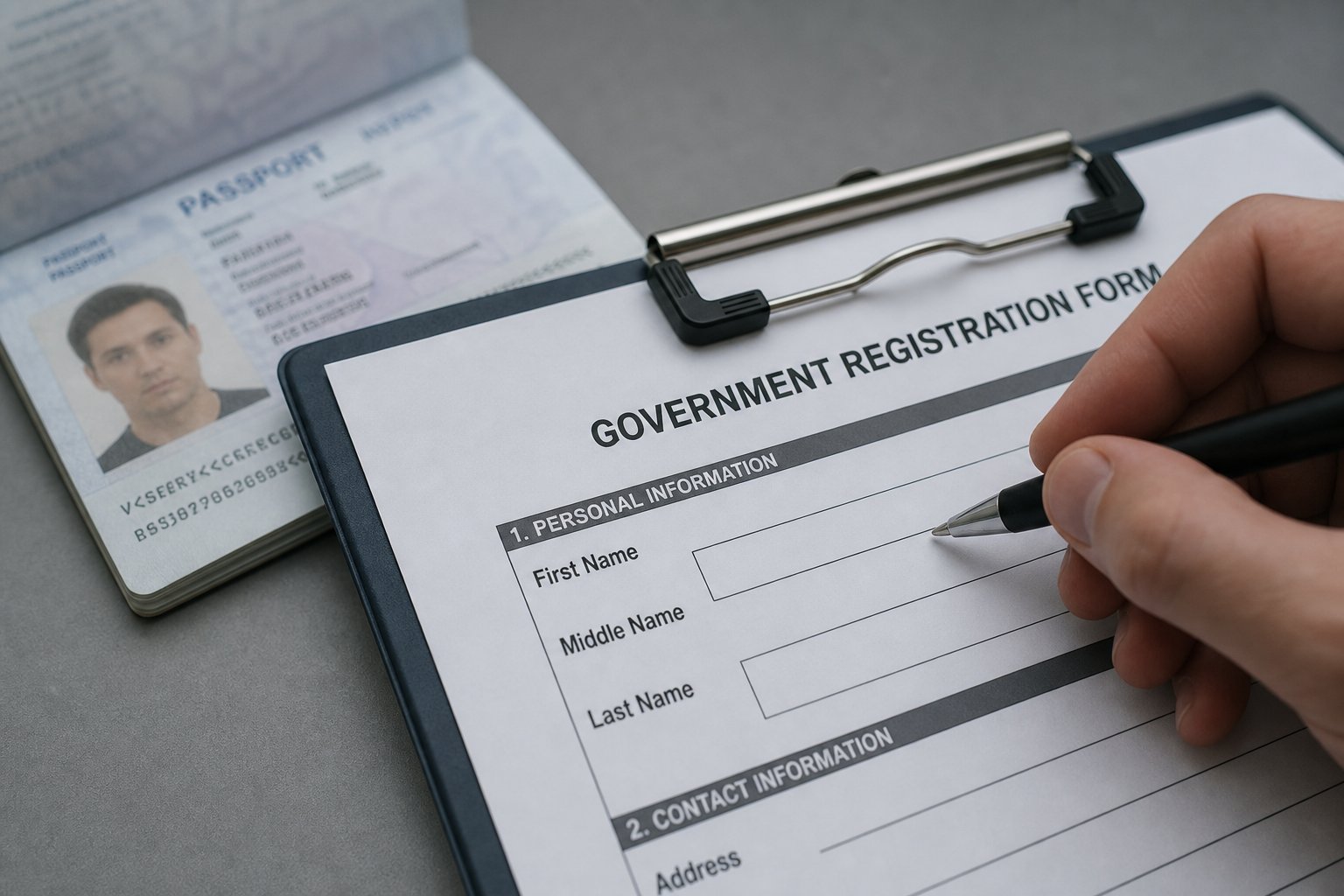
Every registration form you encounter abroad will ask the same basic question: what is your first name, and what is your last name? Sounds simple. But Chinese naming conventions place the family name first and the given name second, which is the exact opposite of what Western civil registries expect. Getting this wrong at the outset creates a cascade of mismatched documents that can haunt you for years. So before you fill in a single field, you need to decide exactly how your Chinese name will be structured for foreign systems.
Understanding Name Order Conventions in Western Systems
Countries like the United States, United Kingdom, Canada, and Australia all default to a given-name-first order. Their registration forms typically have separate fields labeled "First Name" (or "Given Name"), "Middle Name," and "Last Name" (or "Family Name" / "Surname"). When you present a Chinese name like ZHANG Xiaoming, the clerk may assume "Zhang" is your first name and "Xiaoming" is your last, simply because it appears first on your Chinese passport.
This confusion around Chinese name order in Western countries is one of the most common registration errors. Here is what correct versus incorrect registration looks like for someone named WANG Meiling (王美玲):
- Correct: First Name: Meiling | Last Name: Wang
- Incorrect: First Name: Wang | Last Name: Meiling
- Also incorrect: First Name: Mei | Middle Name: Ling | Last Name: Wang (splitting a two-syllable given name into first and middle)
That last mistake is especially common. A two-character given name like 美玲 (Meiling) is one name, not a first-plus-middle combination. If you allow a registry clerk to split it, your official documents will never match your passport, and you will spend time and money correcting the error later.
A practical tip: when filling out forms, write your family name in capitals (WANG Meiling) to signal clearly which part is the surname. Many Chinese naming convention guides recommend this practice specifically to avoid confusion in international contexts.
Romanization and Telecodes for Official Documents
Your Chinese name exists in characters, but most foreign registration systems only accept Latin script. That means you need a Chinese name romanization system to convert your characters into letters. The system you use depends on where you or your family are from, and consistency is non-negotiable.
Here is how the same name, 陈丽华 (a woman named Chen Lihua), looks across different romanization approaches:
| Romanization System | Origin Region | Surname | Given Name | Full Name on Documents |
|---|---|---|---|---|
| Hanyu Pinyin | Mainland China | Chen | Lihua | Chen Lihua |
| Wade-Giles | Taiwan (older documents) | Ch'en | Li-hua | Ch'en Li-hua |
| Jyutping | Hong Kong / Cantonese | Can | Lai-waa | Can Lai-waa |
| Hong Kong Government | Hong Kong (common usage) | Chan | Lai Wah | Chan Lai Wah |
You will notice the same person could appear as "Chen Lihua," "Ch'en Li-hua," or "Chan Lai Wah" depending on the system used. If your passport says "Chen" but your birth certificate translation says "Chan," foreign authorities may treat these as two different people. Pick the romanization that matches your passport and use it everywhere.
Beyond romanization, you may encounter the telecode for Chinese names during visa applications. A telecode is a four-digit number assigned to each Chinese character, originally developed for telegraph transmission. For example, the US DS-160 visa form asks applicants with Chinese names whether they have a telecode that represents their name. If your name is 李连杰 (Li Lianjie), the corresponding telecodes are 2621 6647 2638. You can look up your telecodes using online tools like NJStar or ChaseDream's telecode converter. Telecodes are also still used on Hong Kong and Macau ID cards for storing Chinese names in computer systems.
When are telecodes required? Primarily for US visa applications and certain consular processes. If you are registering a name at a local civil registry in the UK or Australia, telecodes will not come up. But if you are simultaneously applying for visas or dealing with immigration paperwork, having your telecodes ready saves time and prevents processing delays.
Choosing Whether to Register Characters or Romanized Form
Here is the reality most people discover too late: the majority of foreign jurisdictions will only accept the romanized version of your Chinese name on official documents. The United States, United Kingdom, Canada, and Australia do not print Chinese characters on birth certificates, driver's licenses, or citizenship papers. Your name will appear in Latin letters only.
However, there are notable exceptions. Singapore allows Chinese characters on the National Registration Identity Card (NRIC), and Malaysia permits them on the MyKad. In these jurisdictions, you can register both the romanized spelling and the original characters, which means your official identity document reflects your full Chinese name as it was intended to be written.
For everyone else, the romanized form becomes your legal name in that country. This does not mean the characters are irrelevant. They still matter for consular registration, translated legal documents, and any dealings with Chinese government agencies. Think of it this way: the romanized version is what the foreign system sees, but the characters remain your name's true identity in Chinese-language contexts.
Imagine someone searching for how to render "nicole in chinese" for a birth certificate. The characters 妮可 might carry personal or cultural significance, but on a US or UK birth certificate, only "Nike" or "Nicole" in Latin script will appear. The Chinese characters would be preserved separately through consular registration or a bilingual naming certificate, which is a different process entirely.
The key decision at this stage is straightforward: match your romanized spelling to your existing passport or travel document, keep it consistent across every form you fill out, and understand that characters may need to live in a parallel set of documents. With your name structure settled, the next challenge is assembling the paperwork that proves your identity and supports your registration, which varies significantly depending on whether you are registering a newborn, changing an adult name, or filing for a business.
Step 2 – Gather All Required Documents and Certificates
Paperwork is where most registration attempts stall. You know how your name should be structured, you have chosen your romanization, and then you sit down to gather documents and realize you are missing something critical. A certified translation you never ordered. An apostille you did not know existed. A consular form you cannot find online. The documents needed for Chinese name registration vary by country, by registration type, and sometimes by the mood of the clerk processing your file. Getting everything assembled upfront saves weeks of back-and-forth.
The lists below cover the three most common scenarios: an adult registering or formalizing a personal name, parents registering a newborn, and a business registering a Chinese trade name. Treat these as starting checklists and verify specific requirements with your local registry before submitting.
Essential Documents for Personal Name Registration
If you are an adult immigrant or new citizen looking to register, add, or change your name to include your Chinese name, you will typically need the following:
- Valid Chinese passport or travel document — this serves as your primary identity proof and establishes the official romanized spelling of your name.
- Birth certificate from China (original plus certified translation) — the china birth certificate is your foundational identity document, and most foreign registries require both the original and a professionally translated version.
- Proof of current residence or visa status — a utility bill, lease agreement, or visa stamp showing you are legally present in the country where you are registering.
- Completed local registration or name change forms — these vary by jurisdiction; some are available online, others must be collected in person.
- Passport-sized photos — typically two to four, depending on the country, meeting local specifications for background color and dimensions.
- Filing fee payment — amounts range from nominal (under $50 in some US states) to several hundred dollars in jurisdictions that require court orders for name changes.
One detail that catches many people off guard: a chinese birth certificate often needs additional authentication before a foreign registry will accept it. If the destination country is a member of the Hague Apostille Convention, you will need an apostille issued by China's Ministry of Foreign Affairs. For non-member countries, the process is longer — consular legalization through the destination country's embassy in China is required instead. Either way, plan for this step well in advance because processing times can stretch to several weeks.
Another common complication: if you were born before 1996, China may not have issued you a standard medical birth certificate. In that case, you will need to obtain a Proof of Kinship from your local public security bureau (PSB) and then have a Chinese notary public office issue a notarized birth certificate before you can proceed with apostille or authentication.
Additional Documents for Newborn Registration
Diaspora parents face a unique situation. Your baby is born in a foreign country, which means the local hospital issues the birth record. But if you want your child's Chinese name formally recognized — both locally and with Chinese authorities — you are dealing with two parallel registration systems.
For the local civil registry (to get the birth certificate issued in the country of birth), you will typically need:
- Hospital birth record or notification of live birth — issued by the hospital or birthing center where delivery took place.
- Parents' identification documents — both parents' passports (Chinese passports if applicable), plus any local ID such as a driver's license or residence permit.
- Marriage certificate — some jurisdictions require this to list both parents on the birth certificate; if the marriage took place in China, a certified translation may be needed.
- Completed birth registration form — this is where you specify the child's name, including the romanized Chinese name you want recorded.
For consular registration with the Chinese embassy or consulate (to establish the child's Chinese identity), you will additionally need:
- Consular birth registration application form — available from the Chinese consulate's website or in person.
- Original local birth certificate — the one issued by the foreign country, often with a certified Chinese translation.
- Both parents' Chinese passports — originals and photocopies of the data pages.
- Parents' visa or residence status documentation — to confirm eligibility for consular registration.
- Passport-sized photos of the child — specifications vary by consulate.
Here is the part many new parents miss: registering with the local civil registry does NOT automatically notify the Chinese consulate. These are entirely separate processes handled by different governments. If you only register locally, your child will have a foreign birth certificate with a romanized Chinese name but no formal Chinese identity documentation. If maintaining ties to China matters to your family, both registrations are necessary.
Business Name Registration Documents
Registering a Chinese business name abroad follows a corporate track with its own paperwork requirements. Whether you are establishing a subsidiary, registering a trade name, or protecting a Chinese brand in a foreign market, you will generally need:
- Company registration certificate — from the original jurisdiction where the business is incorporated.
- Articles of incorporation or association — showing the company's legal structure and authorized representatives.
- Trademark search results — confirming the Chinese name (in romanized form or characters, depending on the jurisdiction) is available and does not conflict with existing registrations.
- Certified translations — of all Chinese-language corporate documents into the official language of the destination country.
- Board resolution or authorization letter — authorizing the foreign registration and naming the responsible party.
The table below organizes all documents by registration type so you can quickly identify what applies to your situation:
| Document | Personal (Adult) | Newborn | Business |
|---|---|---|---|
| Chinese passport or travel document | Required | Parents' passports required | Not typically required |
| Birth certificate from China (with translation) | Required | Not applicable | Not applicable |
| Local hospital birth record | Not applicable | Required | Not applicable |
| Marriage certificate | Sometimes required | Often required | Not applicable |
| Proof of residence or visa status | Required | Required | Registered agent address required |
| Apostille or consular authentication | Required for Chinese documents | Required for consular registration | Required for Chinese corporate documents |
| Company registration certificate | Not applicable | Not applicable | Required |
| Trademark search results | Not applicable | Not applicable | Required |
| Certified translation of documents | Required | May be required | Required |
| Passport-sized photos | Usually required | Required for consular registration | Not typically required |
A quick scan of this table reveals a common thread: certified translations and authentication appear across all three tracks. No matter which type of registration you are pursuing, your Chinese-language documents will need professional translation and some form of official verification before a foreign authority will accept them. The specific type of verification — apostille versus consular legalization — depends on your destination country and whether it participates in the Hague Convention. That distinction, along with the choice between simplified and traditional characters on your source documents, shapes everything that comes next.
Step 3 – Choose the Correct Chinese Characters for Your Jurisdiction
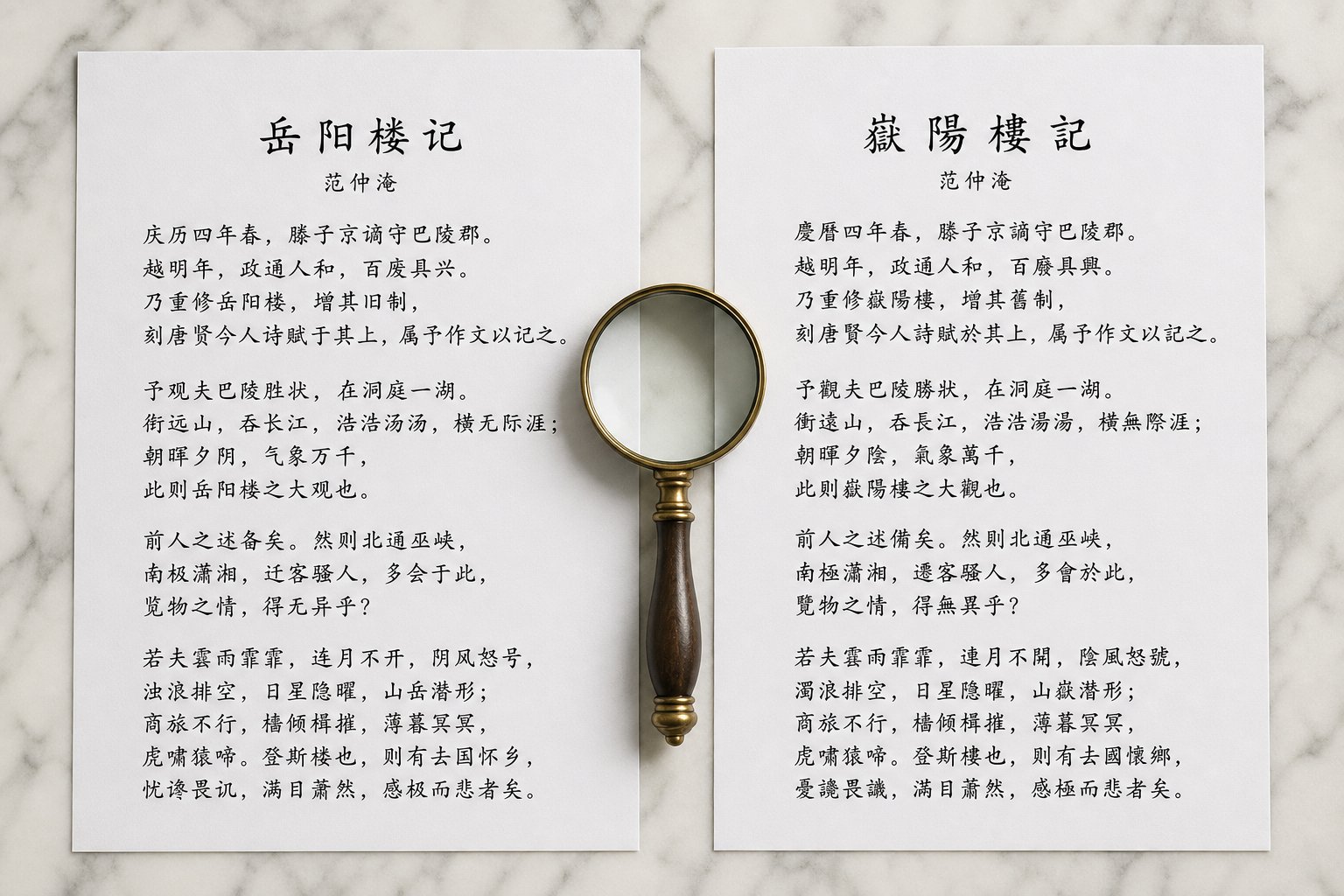
Your documents are gathered, your translations are ordered, and then a question surfaces that most guides never address: which version of your Chinese characters should appear on those translated documents? If you are from mainland China, your birth certificate uses simplified characters. If you are from Hong Kong, Macau, or Taiwan, it uses traditional characters. This distinction might seem like a minor typographical detail, but when it comes to simplified vs traditional Chinese name registration, the wrong choice creates mismatches that follow you across borders for decades.
The character set on your source documents determines how your name is translated, how it appears on consular records, and whether future authorities can verify your identity without friction. Getting this right from the start is far easier than correcting it later.
Simplified vs Traditional Characters and Regional Conventions
The split between simplified and traditional Chinese characters is rooted in mid-20th century language reform. Mainland China adopted a standardized list of 2,238 simplified characters between 1956 and 1964, reducing stroke counts to improve literacy rates. Hong Kong, Macau, and Taiwan never adopted these reforms and continued using traditional characters as their standard writing system. The American Translators Association notes that this distinction is purely about the written form — it does not change the spoken language or the meaning of a name.
What does this mean for you when registering abroad? The character set on your registration should match your origin documents. Here is the general rule:
- Mainland China origin: Your passport, birth certificate, and hukou all use simplified characters. Any translated documents, consular registrations, or character-based filings abroad should reflect simplified characters.
- Hong Kong and Macau origin: Your HKSAR passport and birth certificate use traditional characters. Registration abroad should maintain traditional characters on any document that displays Chinese script.
- Taiwan origin: Your ROC passport and household registration use traditional characters. The same consistency principle applies.
Why does matching matter so much? Imagine you are from mainland China and your birth certificate shows your name in simplified characters as 刘晓明. If a translator renders your name in traditional characters (劉曉明) on a certified translation, a foreign official comparing that translation against your passport may flag the visual discrepancy — even though both versions represent the same name. In jurisdictions like Singapore and Malaysia, where Chinese characters actually appear on identity documents such as the NRIC or MyKad, submitting the wrong character set could result in a mismatch between your local ID and your passport that complicates every future transaction.
For overseas Chinese communities in places like Malaysia and Singapore, the situation has an additional layer. These countries historically used traditional characters but shifted toward simplified Chinese as mainland China's global influence grew. If your family has been in Malaysia for generations, your existing documents may use traditional characters even though the community now leans simplified. In that case, match whatever your current passport shows — not what the local community uses.
How to Handle Translation When Characters Cannot Be Registered
Most countries where Chinese diaspora settle — the US, UK, Canada, Australia — do not accept Chinese characters on official documents at all. Birth certificates, citizenship papers, and driver's licenses will only display the romanized version of your name. So why does the character choice still matter?
Because your Chinese name in characters lives on in two critical places: consular documents and certified translations. When you obtain a chinese birth certificate translation for submission to a foreign registry, the translator works from your original document. The characters on that original determine how the translation is produced, and the translated document typically includes a reproduction or reference to the source characters alongside the English rendering.
Getting a certified translation that accurately reflects your original characters requires attention to a few details:
- Provide a clear, legible copy of the original. Faded or handwritten birth certificates from older eras in China can be difficult to read. If your china certificate is unclear, obtain a notarial birth certificate from a Chinese notary public office before commissioning the translation.
- Specify the character set to your translator. A professional translator will recognize whether your document uses simplified or traditional characters, but explicitly confirming this avoids errors — especially if the document is partially illegible.
- Ensure the translator does not convert between character sets. A simplified-character document should be translated as-is, not "upgraded" to traditional or vice versa. The translation must faithfully represent the source.
- Request that the translator include the original Chinese characters in the certified translation. Many certified translations reproduce the source text alongside the English version, which helps foreign officials verify the document's authenticity.
One practical tip: always keep your original Chinese documents physically paired with their certified translations. Store them together, submit them together, and reference them together. A certified translation without the original it was based on loses much of its evidentiary value. Similarly, an original china certificate without a translation is useless to a foreign registry clerk who cannot read Chinese.
Never submit a self-translated document for official registration purposes. Most countries require translations by accredited professionals — ATA-certified in the US, NAATI-certified in Australia, or equivalent credentials elsewhere.
Maintaining Name Consistency Across Multiple Documents
Here is where many people run into trouble months or even years after their initial registration. You registered your name correctly at the local civil registry. Your passport matches. But then you apply for a visa, file an inheritance claim, or enroll a child in school, and someone notices that the spelling on one document does not quite match another. Maybe your birth certificate translation says "Xiao Ming" as two words, but your passport says "Xiaoming" as one. Maybe one document capitalizes your surname and another does not. These small inconsistencies can trigger identity verification failures that are disproportionately painful to resolve.
The golden rule is simple: every document that carries your romanized Chinese name should spell it identically. That means the same spacing, the same capitalization pattern, and the same hyphenation (or lack thereof) across:
- Your Chinese passport
- Your certified birth certificate translation
- Your local birth certificate or name change certificate
- Your consular registration documents
- Your visa applications and immigration paperwork
- Your driver's license or national ID card
If you spot an inconsistency before submitting documents, fix it at the source. Contact the translator and request a correction. If the inconsistency is already embedded in an issued document, you may need to file a formal correction with the issuing authority — a process that varies by country but universally involves paperwork, fees, and waiting.
For families with children, this consistency check is especially important. A child's name gets recorded on multiple documents in rapid succession — hospital birth record, local birth certificate, consular registration, passport application — often by different people filling out different forms. One distracted clerk writing "Wei-Lin" instead of "Weilin" creates a discrepancy that surfaces years later when the child applies for university admission or a work visa abroad.
The character set and romanization decisions you lock in at this stage ripple through every interaction with government systems for years to come. With your characters chosen and your documents consistently aligned, the next step is navigating the specific civil registry where your name will actually be recorded — and the rules vary dramatically depending on which country you are in.
Step 4 – Register Your Chinese Name at the Local Civil Registry
Your documents are assembled, your characters are chosen, and your romanization is locked in. The question now is practical: where exactly do you go, and what happens when you get there? The answer depends entirely on which country you are standing in. Each jurisdiction has its own registry body, its own rules about what scripts are allowed on official documents, and its own stance on whether a notarised birth certificate from China can be accepted directly or needs additional layers of authentication.
What follows is country-specific guidance for the six most common destinations where Chinese families register names. Whether you are a new parent filling out a birth registration form or an adult formalizing a name change, these are the offices, processes, and quirks you need to know.
Registering a Chinese Name in the United States
If you want to register a Chinese name in the USA, the first thing to understand is that there is no single federal registry. Birth certificates and legal name changes are handled at the state and county level, which means the process varies depending on whether you are in California, New York, Texas, or anywhere else.
For newborns, the process starts at the hospital. Most US hospitals provide a birth registration worksheet shortly after delivery. You fill in your child's name — romanized only, since Chinese characters cannot appear on US birth certificates — and the hospital forwards it to the county vital records office. The birth certificate is then issued with the romanized Chinese name in the "First Name" and "Last Name" fields. There is no field for characters, no option to include them, and no workaround. The romanized version becomes the child's legal name in the United States.
For adults who want to add or formalize a Chinese name, the path runs through the courts. In most states, you file a petition for a legal name change with your local circuit or superior court. The USAGov name change guide confirms that you typically need to file paperwork and appear before a judge to complete the process. Some states also require you to publish the name change in a local newspaper. Once the court grants the order, you use that document to update your Social Security card, driver's license, and passport in sequence.
A few practical details specific to Chinese names in the US system:
- Two-character given names can be registered as one word (Xiaoming) or two words (Xiao Ming), but whichever format you choose must match your passport exactly.
- Some county clerks may question unusual spellings or ask if you "meant" a more common English name. Stand firm — you have the legal right to any name that is not fraudulent or obscene.
- If your Chinese name on birth certificate abroad was issued by another country and you are now naturalizing in the US, you can request a name change as part of your naturalization ceremony, which avoids the separate court petition entirely.
Registering in the United Kingdom, Canada, and Australia
These three countries share a common trait: none of them allow Chinese characters on official identity documents. But all three readily accept romanized Chinese names on birth certificates, passports, and other civil records. The differences lie in how you get there.
United Kingdom: For newborns, parents register the birth at their local register office within 42 days (in England and Wales). You can give your child any romanized Chinese name without restriction. For adults wanting to change or add a name, the UK uses the deed poll system. You can create an unenrolled deed poll yourself for free, or pay 53.05 GBP to enroll it through the High Court for a more formal record. The deed poll allows you to change any part of your name, add names, or alter spelling. One important note: if you are a permanent resident overseas, you cannot change your name by deed poll under UK law — you would need to use the legal process in your country of residence instead.
Canada: Birth registration and name changes fall under provincial jurisdiction. Each province has its own vital statistics office — for example, ServiceOntario in Ontario, or the Vital Statistics Agency in British Columbia. Newborn registration typically must be completed within 30 days of birth. Adults requesting a name change file an application with their provincial vital statistics office, pay a fee (ranging from approximately CAD 137 in Ontario to CAD 27 in Quebec), and wait for processing. Canadian forms accept romanized Chinese names without issue, and two-character given names can be registered as a single unit.
Australia: Each state and territory operates its own Registry of Births, Deaths and Marriages. Newborn registration must occur within 60 days in most states. For adult name changes, you apply to the registry in the state where you reside, provide identification, and pay a fee (typically AUD 195 to AUD 250 depending on the state). Australia's system is straightforward for romanized Chinese names, but the registry will not accept characters in any form on the certificate itself.
Across all three countries, if you are submitting a notarial birth certificate from China as supporting documentation, it will need to be authenticated. The UK, Canada, and Australia are all members of the Hague Apostille Convention, so an apostille from China's competent authority is sufficient — consular legalization is no longer required for these destinations.
Registering in Singapore and Malaysia
Here is where things get genuinely different. Singapore and Malaysia are exceptional jurisdictions in that Chinese characters can appear on official identity documents. If preserving your name in its original written form matters to you, these two countries offer something the Western nations above simply cannot.
Singapore: The National Registration Identity Card (NRIC) issued by the Immigration and Checkpoints Authority (ICA) displays both the romanized name and Chinese characters. When registering a birth, parents can include the child's Chinese name in characters on the birth certificate. For citizens registering their IC at age 15, the process is handled online with biometrics enrollment either at school or at the ICA Services Centre. Name changes require a deed poll with parental consent for minors, and the ICA accepts translations produced by a notary public in Singapore or the country that issued the original document. The fee for IC registration is SGD 10 for citizens and SGD 50 for permanent residents.
Malaysia: The MyKad (national identity card) also displays Chinese characters alongside the romanized name for Malaysian Chinese citizens. Birth registration is handled by the National Registration Department (Jabatan Pendaftaran Negara, or JPN). Parents register the birth within 14 days at the nearest JPN office or hospital registration counter, and can include the Chinese name in characters at that point. For immigrants or new permanent residents from China, the process involves submitting your Chinese passport and relevant documentation to JPN, which will record your name in both scripts on the MyKad.
The ability to register characters directly on identity documents in Singapore and Malaysia eliminates the disconnect that Chinese families experience in Western countries — where the "real" name in characters exists only on consular documents while the official local identity shows only a romanized approximation.
The table below compares all six countries at a glance so you can quickly identify the rules for your destination:
| Country | Chinese Characters Allowed on Documents | Registration Body | Notarized Birth Certificate from China Accepted Directly |
|---|---|---|---|
| United States | No — romanized only | State/county vital records office | No — requires apostille or state-specific authentication |
| United Kingdom | No — romanized only | Local register office (births); High Court (enrolled deed poll) | No — requires apostille |
| Canada | No — romanized only | Provincial vital statistics office | No — requires apostille |
| Australia | No — romanized only | State/territory Registry of Births, Deaths and Marriages | No — requires apostille |
| Singapore | Yes — on NRIC and birth certificate | Immigration and Checkpoints Authority (ICA) | Yes — with notarized translation accepted |
| Malaysia | Yes — on MyKad and birth certificate | National Registration Department (JPN) | Yes — with certified translation |
A pattern emerges from this comparison: in every Western country listed, your Chinese-language documents from China cannot be submitted as-is. They require an apostille and a certified translation before any registry will process them. Singapore and Malaysia, by contrast, accept notarized documents more directly and offer the added benefit of preserving your characters on the final identity document.
Regardless of which country you are in, local civil registration is only half the picture. For Chinese citizens and their children born abroad, there is a parallel process that runs through Chinese embassies and consulates — one that serves a completely different legal purpose and requires its own set of appointments, forms, and fees.

Step 5 – Work With Chinese Embassies and Consulates Abroad
Local civil registration gives your Chinese name legal standing in your country of residence. But it does nothing for your relationship with Chinese authorities. A birth certificate issued in London or Los Angeles does not exist in China's civil records system. If you want your child recognized as a Chinese citizen, or if you need notarized Chinese-language documents for future use back home, you are dealing with an entirely separate institution: the Chinese consulate.
Many families complete local registration and assume they are done. Months or years later, they discover that without chinese consulate name registration, their child cannot obtain a Chinese passport, their documents lack the notarial weight needed for property transactions in China, or their name simply does not exist in the system that matters most for cross-border legal purposes.
What Services Chinese Consulates Provide for Name Registration
Chinese consulates abroad offer several name-related services that local registries cannot replicate:
- Consular birth registration — for newborns born abroad to Chinese citizens, this establishes the child's identity within China's civil system and is a prerequisite for issuing a Chinese travel document or passport.
- Notarization of Chinese-language documents — a china notary service provided through the consulate that certifies documents for use in legal proceedings, property matters, or identity verification within China.
- Issuance of travel documents — Chinese passports and travel permits for children born abroad, with the registered Chinese name printed in both characters and romanized form.
- Name verification and correction — if a previously issued document contains errors in characters or romanization, the consulate can issue corrected documentation.
One critical point that trips people up: consular registration does NOT replace local civil registration. These are parallel systems serving different legal jurisdictions. A child born in Canada needs both a Canadian birth certificate (from the provincial vital statistics office) and a consular birth registration (from the Chinese consulate) if the parents want the child recognized in both countries. Neither process triggers the other automatically.
How to Schedule and Prepare for a Consular Appointment
Consular offices do not accept walk-ins for most services. You will need to book ahead and arrive prepared. Here is the typical process:
- Locate your nearest consulate. China maintains embassies and consulates in most major cities. The Chinese Ministry of Foreign Affairs website lists all overseas missions with contact details and jurisdictional boundaries — your assigned consulate depends on which state or region you live in, not simply which is closest geographically.
- Book an appointment online. Most consulates use an online booking system where you select the service type, choose a date, and receive a confirmation number. Slots fill quickly, especially in cities with large Chinese populations, so book several weeks in advance.
- Prepare all required originals and copies. Bring the original documents plus two photocopies of each. For birth registration, this typically includes both parents' Chinese passports, the local birth certificate, marriage certificate, and proof of residence. For notary in china services handled through the consulate, bring the documents requiring notarization plus supporting identity proof.
- Bring correct payment. Most Chinese consulates do not accept cash or personal checks. Payment is typically by money order or cashier's check made payable to the consulate. Some locations have begun accepting card payments, but confirm this when booking. Fees vary by service — consular birth registration typically costs between USD 25 and USD 50, while notarization fees depend on the document type.
- Arrive early with completed forms. Download and fill out application forms from the consulate's website before your appointment. Arriving with blank forms wastes your appointment slot and may result in rescheduling.
Processing times vary. Straightforward birth registrations may be completed within a few business days, while notarization or document corrections can take two to four weeks. Some consulates offer expedited processing for an additional fee.
Mainland China vs Hong Kong vs Taiwan Consular Processes
This is where many people make a costly assumption: that all Chinese-origin citizens use the same consular services abroad. They do not. Mainland Chinese, Hong Kong, and Taiwanese citizens interact with entirely different offices, and walking into the wrong one wastes everyone's time.
- Mainland China citizens use PRC embassies and consulates (e.g., the Chinese Embassy in Washington, D.C., or the Consulate-General in New York, Los Angeles, San Francisco, Chicago, or Houston). These offices handle passport renewals, birth registrations, and notarization for citizens of the People's Republic of China.
- Hong Kong SAR residents use Hong Kong Economic and Trade Offices (HKETOs) or designated British consulates for certain services. For immigration matters like passport renewals, they deal with the HKSAR Immigration Department directly (often by mail) or through Chinese embassies that have a dedicated HKSAR section. Hong Kong residents do NOT use the same application forms or processes as mainland citizens.
- Taiwan (ROC) citizens use the Taipei Economic and Cultural Office (TECO), not PRC consulates. TECO offices operate in major cities across the US, Canada, the UK, Australia, and other countries. They provide visa services, document authentication, and passport services for ROC nationals. Because most countries do not formally recognize Taiwan diplomatically, these offices function as de facto consulates without the official title.
The practical implication is straightforward: before booking any appointment, confirm which consular system applies to you based on your passport type. A mainland Chinese passport (maroon cover, PRC emblem) routes you to PRC consulates. An HKSAR passport (dark blue cover) routes you to HKSAR services. A Taiwan passport (green cover, ROC emblem) routes you to TECO. Using the wrong office means your documents will not be processed, and you will lose weeks starting over.
Consular registration establishes your name in the Chinese legal system, but the documents you submit — and receive back — still need to meet specific authentication standards before foreign authorities will accept them. That authentication process, involving notarization, apostilles, and certified translations, has its own rules and pitfalls that deserve careful attention.
Step 6 – Complete Notarization and Translation Requirements
You have your documents gathered, your consular appointment scheduled, and your local registration underway. Then a clerk slides your Chinese birth certificate back across the counter and says, "We cannot accept this without notarization and authentication." This is the moment where many registrants stall — sometimes for months — because the notarization, apostille, and translation requirements form a chain, and each link must be completed in the correct order. Skip a step or sequence them wrong, and you start over.
Understanding what each requirement actually means, and why foreign registries insist on them, helps you move through this phase without unnecessary delays.
When and Why You Need a Notarized Birth Certificate
A notarial birth certificate from China is not the same document as your original birth certificate. This distinction confuses many people, so let's be clear about what each one is.
Your original birth certificate (出生医学证明) is the medical certificate of birth issued by the hospital where you were born. It records your name, gender, date of birth, and parents' information. The problem? As immigration attorneys have noted, the information filled in for the child — including the child's name and mother's name — is written in Chinese, even though the headings may appear in both Chinese and English. Most foreign registries and immigration authorities will not accept this document on its own.
A notarial birth certificate (公证书) is a separate, specially formatted document issued by a notary chinese public office (公证处). It is a verified photocopy of the original medical birth certificate that confirms its authenticity, bears an official seal and watermark, and is accompanied by a certified English translation. Think of it as the original birth certificate dressed in formal legal clothing that foreign governments recognize.
To obtain a notarial birth certificate, you need to:
- Visit a notary public office with jurisdiction over your current or past household registration (hukou) location or your birthplace.
- Submit an application form along with your national ID and household registration booklet (or passport copy if living abroad).
- Provide proof of birth — your original medical birth certificate, initial birth record, or proof issued by a sub-district office.
- Supply two passport-sized photographs.
- Submit signed authorization documents if someone else applies on your behalf, including their ID.
- Provide documentation of both parents' identification (death certificates if deceased).
- Pay the required fees.
If you were born before 1996, you may not have a standard medical birth certificate at all. In that case, the notary in chinese public offices can issue a notarial certificate based on alternative proof — such as a household registration record, hospital archives, or a statement from your parents' work unit. The process takes longer, but it produces a document that carries the same legal weight.
For US immigration purposes specifically, USCIS and the US State Department now only accept the notarial birth certificate format, which should include your name, gender, date of birth, ID number (if issued after 2012), birthplace, and parents' names. It must bear a watermark, seal, and red stamp, and be accompanied by a certified English translation.
The Apostille and Consular Authentication Process
Once you have your notarial birth certificate in hand, it still needs one more layer of verification before most foreign countries will accept it. This is where the chinese document apostille process comes in — and the path you follow depends on whether your destination country is a member of the Hague Apostille Convention.
For Hague Convention member countries (US, UK, Canada, Australia, and most of Europe):
China acceded to the Hague Apostille Convention, which took effect on November 7, 2023. This was a significant change that simplified the authentication process considerably. Under the Convention, documents issued by Chinese authorities now only require an apostille from the issuing country and can be used directly in the destination country — without the need for consular attestation or legalization.
The step-by-step apostille process works like this:
- Obtain your notarial birth certificate from a Chinese notary public office (as described above).
- Apply for an apostille from China's Ministry of Foreign Affairs (MFA) in Beijing or from an authorized Foreign Affairs Office (FAO) of the local government in your province. The FAO handles apostilles for documents within their respective administrative region.
- Receive the apostille certificate — a standardized form attached to your notarial document that certifies its authenticity for use in any Hague Convention member country.
- Submit the apostilled document to the foreign registry along with a certified translation (if the document is not already in the destination country's language).
Processing times for apostilles through the MFA or local FAOs typically range from three to seven business days, though this can vary during peak periods. You can verify the authenticity of a Chinese apostille certificate online through the MFA's verification portal.
For non-Hague Convention countries:
If your destination country has not joined the Apostille Convention, you need the older, more cumbersome process of consular legalization. This involves two steps:
- Authentication by China's MFA — the Ministry of Foreign Affairs verifies the notary's seal and signature on your document.
- Legalization by the destination country's embassy in China — the embassy of the country where you intend to use the document adds its own verification stamp, confirming that the MFA's authentication is genuine.
This dual-step process takes significantly longer — often two to four weeks — and requires either personal visits to both offices or use of a document agent in China. The fees are also higher, as both the MFA and the foreign embassy charge separately.
One important note: Hong Kong and Macau had already acceded to the Apostille Convention before mainland China joined, so documents from these regions have followed the apostille path for much longer. If your birth certificate was issued in Hong Kong or Macau, the apostille process routes through their respective government offices rather than the mainland MFA.
Finding Certified Translators for Chinese Documents
Authentication proves your document is genuine. Translation makes it readable. Both are required, and the translation must meet specific professional standards — a point where many registrants cut corners and pay for it later.
Most countries require that translations of official documents be performed by accredited professionals. The specific credential depends on where you are submitting the translation:
- United States: Translations should be done by an ATA-certified translator (certified by the American Translators Association). USCIS requires that any foreign-language document be accompanied by a full English translation that the translator certifies as complete and accurate.
- Australia: The standard is NAATI certification (National Accreditation Authority for Translators and Interpreters). Australian registries and immigration authorities specifically look for the NAATI stamp.
- United Kingdom: Translations must be certified by a qualified translator — typically a member of the Institute of Translation and Interpreting (ITI) or the Chartered Institute of Linguists (CIOL).
- Canada: Requirements vary by province, but certified translators accredited by a provincial association (such as ATIO in Ontario or OTTIAQ in Quebec) are the standard.
How do you find the right translator? The ATA maintains an online Language Services Directory where you can search by language pair and specialization. For Chinese birth certificate translation specifically, look for translators who list legal or immigration documents as a specialty — they will be familiar with the formatting conventions that registries expect and the terminology that appears on Chinese notarial certificates.
When working with a translator, provide clear electronic copies of your documents (PDFs work best), confirm whether you need the translation certified and/or notarized, and specify your deadline. A standard birth certificate translation typically takes two to five business days, though rush services are available at higher rates.
Never submit a self-translated document for official registration purposes. Even if you are fluent in both languages, government authorities require an independent, accredited translator's certification to accept the translation as evidence.
One final sequencing note that saves headaches: complete your notarization and apostille before commissioning the translation. Translators work from the final, authenticated document — not from drafts or unauthenticated originals. If you translate first and then discover the notary needs to reissue the certificate with corrections, you will pay for the translation twice.
With your documents notarized, apostilled, and professionally translated, the administrative machinery should process your registration smoothly. But "should" and "will" are different words in bureaucracy. Even well-prepared applications hit snags — a misspelled romanization, a telecode error on a visa form, or a consular registration that was never filed. Knowing the most common mistakes in advance, and how to fix them when they happen, is what separates a frustrating multi-month ordeal from a clean resolution.

Step 7 – Avoid These Common Mistakes and Fix Registration Errors
Even with perfect preparation, registration errors happen. A clerk enters your name wrong. A translator uses a different spacing convention than your passport. You get caught up in the chaos of new parenthood and forget to file with the consulate. These are not hypothetical scenarios — they are the five most frequent problems people encounter when registering a Chinese name in a foreign jurisdiction, ranked by how often they occur:
- Romanized spelling varies between documents — the single most common issue, affecting nearly every registrant who has documents from multiple sources.
- Forgotten or delayed consular registration — especially common among new parents who complete local registration but never file with the Chinese consulate.
- Telecode errors on visa applications — incorrect four-digit codes that cause processing delays or identity mismatches.
- Name rejected by the civil registry system — rare but real, usually caused by character-length limits or unsupported diacritical marks in the registry's software.
- Family name recorded as a middle name — a data entry error that stems from confusion over Chinese name order.
Name Spelling Inconsistencies Across Documents
Imagine your passport reads "Xiaoming" as one word, but your birth certificate from China — once translated — renders it as "Xiao Ming" with a space. To you, it is obviously the same name. To an immigration officer or registry clerk comparing documents side by side, it is a discrepancy that can trigger delays, Requests for Evidence, or outright rejection.
The fix depends on when you catch it. Before submission, the solution is straightforward: contact your translator and request a corrected version that matches your passport spelling exactly. A professional certified translator can reissue the document within days. After a document has already been filed and accepted with the wrong spelling, you will need to apply for a formal correction through the issuing authority — whether that is a county vital records office, a provincial registry, or a consular section. This typically involves a correction application form, a copy of your passport showing the correct spelling, and a fee.
The prevention strategy is simple but requires discipline: before starting any registration process, write down the exact romanized spelling from your current valid passport — including spacing, capitalization, and hyphenation — and use that as your reference for every single form and translation you commission.
Telecode Errors and How to Resolve Them
Telecodes — those four-digit numeric codes representing individual Chinese characters — appear primarily on US visa applications (the DS-160 form) and certain consular documents. An incorrect telecode means the system records a different character than the one in your actual name. For example, the character 李 (Li) has telecode 2621, but if you accidentally enter 2612, the system registers a completely different character — and your identity no longer matches across databases.
If you discover a telecode error on a submitted visa application, contact the embassy or consulate where you applied. For the DS-160 specifically, the US State Department allows applicants to correct errors by having the embassy reopen the application for editing. You will need your application ID number and may need to reschedule your interview. For telecode errors on consular documents issued by a Chinese embassy, submit a correction request with your passport and the document containing the error. Processing typically takes two to four weeks.
To avoid telecode errors entirely, double-check each code against a reliable lookup tool before submitting any form. Cross-reference the character displayed by the tool with the character in your name — do not rely on memory alone.
Forgotten Consular Registration and How to Register Late
You registered your newborn at the local hospital, received the birth certificate, and moved on with life. Six months later — or six years later — you realize you never filed with the Chinese consulate. Your child has no Chinese identity documentation, cannot obtain a Chinese passport, and is invisible to China's civil records system.
The good news: late consular registration is possible. Chinese consulates accept birth registration applications regardless of the child's age, though the process becomes slightly more involved the longer you wait. You will need the same documents as a timely registration — parents' Chinese passports, the foreign birth certificate (original plus translation), and completed application forms — plus an explanation for the delay. Some consulates may request additional proof of the child's identity, such as school records or medical documents, if significant time has passed.
The practical consequence of late registration is primarily one of timing. A child registered at birth can receive a Chinese travel document within weeks. A child registered years later may face additional verification steps that extend processing to several months. There is no penalty or fine for late registration, but the longer you wait, the more supporting documentation you may need to provide.
What to Do If Your Chinese Name Is Rejected
Occasionally, a civil registry's computer system simply cannot handle a romanized Chinese name. Maybe the name exceeds the character limit in their database field. Maybe the system does not accept names without a space between first and last name components. Maybe a clerk insists the name "looks wrong" and refuses to process it. These situations are rare, but when they happen, you need a chinese name rejected registration fix that actually works.
Your options depend on the reason for rejection:
- Character limit exceeded: Some older registry systems cap name fields at 15 or 20 characters. If your full romanized name (e.g., "Huangfu Zhengyang") exceeds the limit, ask whether the system allows abbreviation or whether a supervisor can override the field length. In the US, most modern vital records systems have been updated to accommodate longer names, but county-level systems in smaller jurisdictions may lag behind.
- System does not accept single-word given names: A few registries require a space between "first" and "middle" names and will not process a single-unit given name like "Xiaoming." If forced to split it, ensure both parts are recorded as given names (not one as a middle name) and document the split with a note referencing your passport.
- Clerk refuses the name: In most Western countries, you have the legal right to register any name that is not fraudulent, obscene, or intended to deceive. If a clerk refuses your Chinese name without a valid legal basis, ask to speak with a supervisor or request the refusal in writing. A written refusal gives you grounds to escalate through the registry's complaints process or, if necessary, through legal channels.
In every rejection scenario, your passport is your strongest evidence. It is a government-issued document from a sovereign nation that displays your name in its official romanized form. No local registry clerk has the authority to override what a national government has already certified as your legal name.
Registration errors are frustrating, but none of them are permanent. Every mistake covered here has a documented correction path — it just takes patience, the right paperwork, and sometimes a notary public china office or certified translator to set things straight. The families and individuals who navigate this process most smoothly are the ones who standardize their name spelling early, file with both local and consular authorities promptly, and keep every document — original, translation, and authentication — organized and accessible for the years ahead.
Frequently Asked Questions About Registering a Chinese Name Abroad
1. Can I put Chinese characters on a birth certificate in the US, UK, or Australia?
No. The United States, United Kingdom, Canada, and Australia only accept romanized (Latin script) versions of Chinese names on official documents like birth certificates and citizenship papers. Only Singapore and Malaysia allow Chinese characters to appear on identity documents such as the NRIC and MyKad. For Western countries, your Chinese characters are preserved through separate consular registration and certified translations rather than on the local civil document itself.
2. What is the difference between a Chinese birth certificate and a notarial birth certificate?
Your original Chinese birth certificate is the medical certificate issued by the hospital at birth, recording basic details in Chinese. A notarial birth certificate is a separate, formally verified document issued by a Chinese notary public office that certifies the original's authenticity, bears official seals and watermarks, and includes a certified English translation. Most foreign registries and immigration authorities require the notarial version because it meets international legal standards for document authentication.
3. Do I need to register my child's Chinese name at both the local registry and the Chinese consulate?
Yes, if you want your child recognized in both countries. Local civil registration gives the name legal standing in your country of residence, while consular birth registration establishes the child's identity within China's civil system and is required for obtaining a Chinese passport or travel document. These are parallel processes handled by different governments, and completing one does not trigger or replace the other.
4. What romanization system should I use when registering my Chinese name abroad?
Use the romanization system that matches your current passport. Mainland China passports use Hanyu Pinyin, Hong Kong documents often use the Hong Kong Government romanization system, and Taiwan may use Wade-Giles or Tongyong Pinyin depending on when the passport was issued. Consistency across all documents is critical because even minor spelling differences between your passport and other records can trigger identity verification failures during visa applications or legal proceedings.
5. How do I fix a Chinese name that was registered incorrectly on a foreign document?
The correction process depends on the issuing authority. For a misspelled name on a local birth certificate, contact your county or provincial vital records office and file a correction application with your passport as proof of the correct spelling. For errors on consular documents, submit a correction request to the Chinese consulate with supporting identification. For telecode errors on US visa applications, contact the embassy to have the DS-160 reopened for editing. In all cases, your passport serves as the primary evidence of your correct legal name.