Lucky Chinese Characters and the Rabbit Zodiac Sign
When you think about luck in the year of the rabbit, what comes to mind? Red envelopes, the number 8, maybe jade green? Those elements matter, but they only scratch the surface. The real engine of Chinese fortune lives inside the characters themselves, each one a small architecture of meaning, sound, and visual symbolism built over thousands of years. For anyone exploring year of the rabbit Chinese astrology, understanding these characters unlocks a layer of cultural depth that color charts and number lists simply cannot reach.
This guide goes beyond generic zodiac rabbit overviews. You will find specific characters complete with pinyin pronunciation, literal meanings, and the cultural reasoning that ties each one to rabbit year energy. Think of it as a practical reference you can use for calligraphy, gifts, greetings, and personal reflection.
Why Characters Matter More Than Colors and Numbers
Chinese characters are not just labels for ideas. Each one is assembled from radicals, smaller components that carry their own meaning. The radical for "heart" inside a character signals emotion. The radical for "jade" signals purity and value. When you select a lucky star Chinese character for display or gifting, you are choosing a visual symbol whose internal structure reinforces the blessing. Colors and numbers point toward luck. Characters contain it.
How Chinese Homophones Create Lucky Associations
Mandarin is rich with homophones, words that share identical or near-identical pronunciation but carry different meanings. This phonetic overlap is the foundation of countless lucky associations. The classic example: the word for "fish" (鱼, yu) sounds the same as "surplus" (余, yu), which is why fish appears at every New Year banquet as a wish for abundance in the coming year. Similarly, the number eight (八, ba) rhymes closely with "to prosper" (发, fa), making it one of the most sought-after digits in Chinese culture.
Chinese characters encode fortune through two simultaneous channels: what the eye sees in the radical structure and what the ear hears in the pronunciation. No other writing system layers visual meaning and phonetic luck so deliberately into a single symbol.
During a rabbit year, these phonetic and visual layers become especially relevant. The zodiac rabbit embodies gentleness, creativity, and quiet intelligence, so the characters that resonate most are those whose sounds and structures echo those same qualities. In the sections ahead, you will discover exactly which characters carry that resonance, starting with the rabbit character itself.
Understanding the Rabbit Character 兔 and Its Lucky Roots
Every lucky phrase, every calligraphy scroll, and every festive greeting tied to the chinese zodiac rabbit sign begins with a single building block: the character 兔 (tù). Before exploring the broader universe of auspicious characters, it helps to understand this one deeply, because its structure, history, and phonetic properties are what make rabbit year wordplay possible in the first place.
The Character 兔 and Its Radical Composition
The chinese symbol for rabbit is one of the oldest pictographs still in active use. In its earliest oracle bone form, 兔 depicted a squatting hare viewed from the side, with long ears arching upward and a small dash representing the tail. Over centuries of calligraphic evolution, the image simplified into the modern form you see today, but the visual echo of a crouching animal remains if you look closely.
Structurally, 兔 incorporates the 儿 (ér) radical, which represents legs. This radical appears at the base of the character, grounding the rabbit symbol in movement and agility. The character is written in 8 strokes, a number that itself carries lucky connotations in Chinese culture. Notably, the traditional and simplified forms of this character are identical, making it one of the few zodiac characters unchanged by script reform.
| Simplified Form | Traditional Form | Pinyin | Literal Meaning | Stroke Count |
|---|---|---|---|---|
| 兔 | 兔 | tù | Rabbit / Hare | 8 |
For anyone learning chinese for rabbit-related calligraphy or greetings, the stroke order matters. The top portion is written first, capturing the ears and head, followed by the body enclosure, and finishing with the legs radical and the tail dot at the lower right. Proper stroke order is considered essential in traditional calligraphy because it affects the flow of energy through the finished character.
Auspicious Compound Words Built From 兔
What makes 兔 especially productive for lucky phrases is its pronunciation. The syllable tù is a near-homophone for several powerful words: 途 (tú, path or future), 图 (tú, plan or aspiration), and 突 (tū, sudden breakthrough). During Rabbit year celebrations, writers swap these characters with 兔 to create playful blessings that layer zodiac energy onto everyday wishes.
Some of the most popular examples from recent Spring Festival greetings include:
- "钱""兔"无量 (qián tù wúliàng) — a pun on 前途无量 (boundless future), rewritten to mean "boundless wealth in the Rabbit year"
- 大展宏"兔" (dàzhǎn hóng tù) — a pun on 大展宏图 (fulfill grand aspirations), with 兔 replacing 图
- "兔"飞猛进 (tù fēi měngjìn) — a pun on 突飞猛进 (rapid progress), channeling the rabbit's swift energy
- "兔"然暴富 (tù rán bàofù) — a pun on 突然暴富 (suddenly become rich), a favorite among younger generations
These compound phrases work because the zodiac for rabbit is not just a symbol but a phonetic key that unlocks an entire family of aspirational words. The rabbit in chinese culture carries associations of cleverness and agility, and these wordplay blessings extend that energy into wishes for career success, financial growth, and forward momentum.
Beyond modern puns, classical proverbs also feature 兔 prominently. The idiom 狡兔三窟 (jiǎo tù sān kū), meaning "a cunning rabbit has three burrows," teaches the wisdom of keeping multiple options open. Meanwhile, 守株待兔 (shǒu zhū dài tù) warns against passivity, reminding those born under the chinese sign rabbit that fortune favors action over idle waiting.
With the rabbit character's structure and phonetic reach now clear, the natural next question becomes: which other characters pair best with rabbit year energy? The answer lies in matching specific traits, gentleness, wisdom, elegance, to individual characters whose radicals and meanings amplify those qualities.
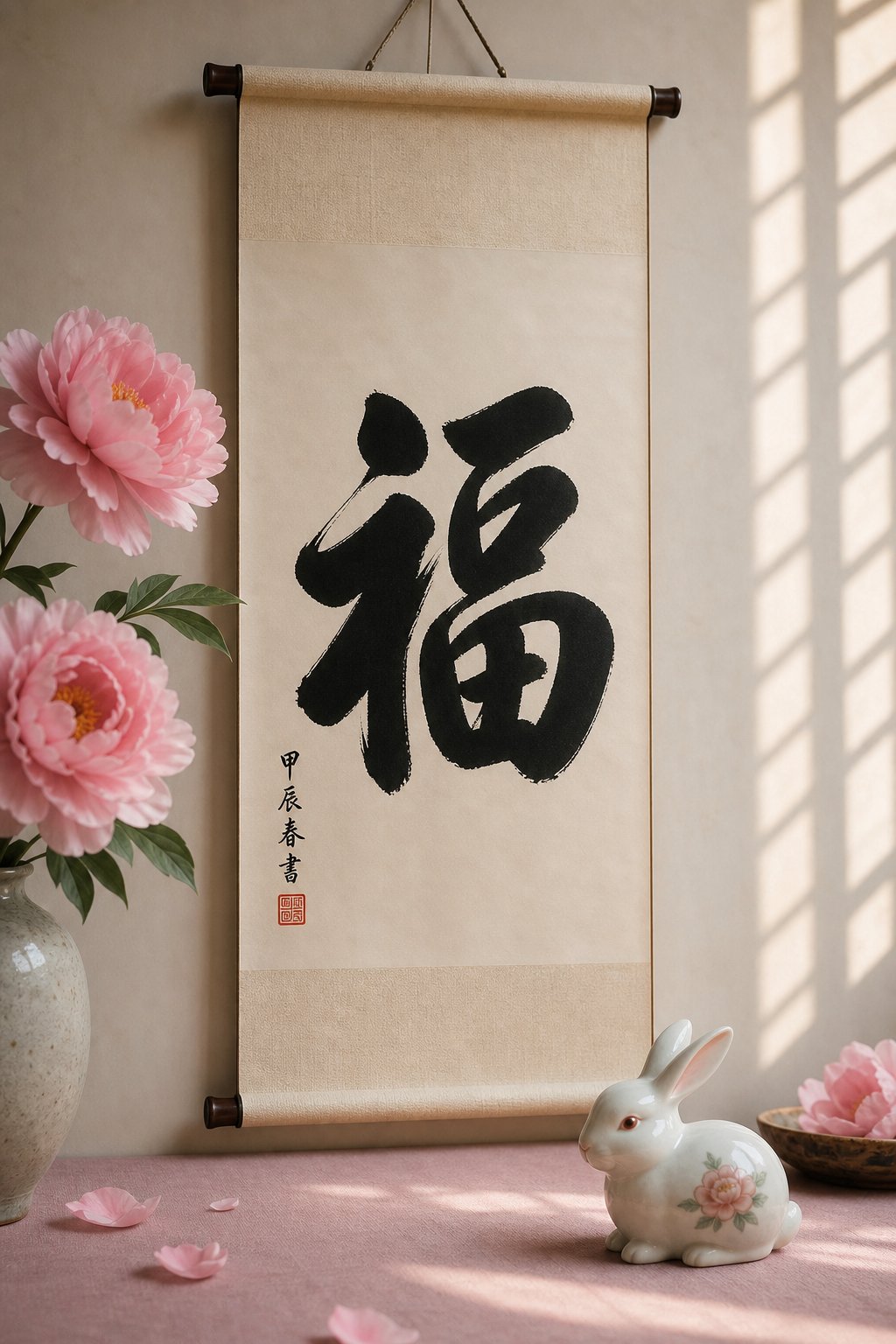
Top Lucky Single Characters for Rabbit Year People
Matching a character to a zodiac sign is not random. In rabbit astrology, the goal is to find characters whose internal energy, radical structure, and phonetic tone echo the core traits of the rabbit chinese zodiac personality: gentleness, creativity, diplomacy, and quiet intelligence. The characters below were selected because their meanings directly amplify those qualities rather than working against them.
Characters That Amplify Rabbit Traits of Gentleness and Wisdom
The year of the rabbit personality is defined by a preference for harmony over conflict, careful observation over impulsive action, and artistic sensitivity over brute force. According to CLI's zodiac research, people born under this sign are good listeners, excellent negotiators, and naturally drawn to creative fields. A rabbit woman, for instance, is often described as perceptive and composed, someone who leads through insight rather than volume. These traits point toward characters rooted in calm, intellect, and refinement.
| Character | Pinyin | Meaning | Connection to Rabbit Traits |
|---|---|---|---|
| 安 (安) | ān | Peace, tranquility | Mirrors the rabbit's deep need for a calm, stable environment and conflict-free relationships |
| 慧 (慧) | huì | Wisdom, intelligence | Reflects the rabbit's keen observation skills and preference for thoughtful decision-making |
| 雅 (雅) | yǎ | Elegance, refinement | Captures the artistic sensibility and graceful composure central to rabbit energy |
| 柔 (柔) | róu | Gentle, soft | Embodies the rabbit's diplomatic nature and ability to resolve tension without force |
| 敏 (敏) | mǐn | Quick-witted, agile | Echoes the rabbit's mental agility and nimble approach to problem-solving |
Notice how each character contains radicals tied to its meaning. 慧 includes the heart radical (心) at its base, grounding wisdom in emotional intelligence. 安 places a woman (女) beneath a roof (宀), visually encoding the idea that peace comes from shelter and care. For a female rabbit especially, these characters resonate on both phonetic and structural levels, reinforcing the protective and perceptive qualities that define this sign.
Fortune Characters That Resonate With Rabbit Energy
Beyond personality-aligned characters, certain fortune characters carry energy that complements rather than overwhelms the rabbit's gentle disposition. Imagine giving a rabbit-born person a character associated with aggressive conquest. It clashes. The characters below bring prosperity and good fortune through channels the rabbit naturally thrives in: steady growth, auspicious timing, and quiet abundance.
| Character | Pinyin | Meaning | Connection to Rabbit Traits |
|---|---|---|---|
| 福 (福) | fú | Fortune, blessing | Universal luck character whose gentle energy suits the rabbit's non-aggressive path to success |
| 瑞 (瑞) | ruì | Auspicious omen | Contains the jade radical (王), linking purity and value to the rabbit's refined nature |
| 祥 (祥) | xiáng | Good fortune, propitious | Built on the spirit radical (礻), connecting blessings to the rabbit's intuitive spiritual awareness |
| 逸 (逸) | yì | Ease, leisure, excellence | Combines the rabbit radical (兔) with movement (辶), literally encoding rabbit energy into the character |
| 萱 (萱) | xuān | Daylily, freedom from worry | Features the grass radical (艹), auspicious for rabbits as herbivores who thrive in lush environments |
The character 逸 deserves special attention. It literally contains 兔 within its structure, making it one of the few fortune characters with a direct visual connection to the rabbit. Its meaning, effortless excellence and freedom, captures what a year of the rabbit for a rabbit feels like at its best: natural momentum without forced struggle.
Similarly, 萱 draws on the grass radical that Chinese naming traditions specifically recommend for rabbit-born individuals. In the bunny zodiac framework, characters featuring plant-related radicals signal nourishment and abundance because they connect the rabbit to its natural habitat.
These ten characters form a practical toolkit. Whether you are selecting a character for calligraphy, choosing an engraving for jewelry, or writing a blessing card, pairing the right character to rabbit energy ensures the message lands with cultural precision. The question that follows naturally is how these individual characters combine into longer phrases, specifically the four-character idioms and Spring Festival couplets that bring rabbit year celebrations to life.
Auspicious Phrases and Idioms for Rabbit Year Festivities
Single characters carry power, but four-character idioms (成语/chéngyǔ) concentrate that power into compact blessings that feel complete on their own. During the year of the rabbit chinese zodiac celebrations, these phrases appear everywhere: brushed in gold ink on red banners, printed on door decorations, and written inside greeting cards. They function as verbal talismans, each one a self-contained wish that activates the moment it is read aloud or displayed.
Four-Character Idioms for Rabbit Year Celebrations
What makes a four-character idiom suitable for rabbit this year? It either references the rabbit directly through character substitution, or it embodies virtues the rabbit zodiac prizes: harmony, steady progress, wisdom, and graceful success. Here are the most popular phrases ranked by how frequently they appear in traditional Spring Festival usage:
- 玉兔迎春 (yùtù yíngchūn) — "The Jade Rabbit welcomes spring." The most iconic rabbit year greeting, used on nearly every official New Year decoration during the 2023 chinese zodiac cycle. It connects the mythological moon rabbit to seasonal renewal.
- 兔年大吉 (tùnián dàjí) — "Great luck in the Rabbit year." A straightforward, universally appropriate blessing found on red envelopes, banners, and digital greetings alike.
- 瑞兔送福 (ruìtù sòngfú) — "The auspicious rabbit delivers fortune." Combines two powerful lucky characters (瑞 and 福) with the zodiac animal, making it a favorite for calligraphy scrolls.
- 兔跃新程 (tùyuè xīnchéng) — "The rabbit leaps into a new journey." Popular in professional contexts, this phrase wishes career advancement and fresh beginnings.
- 福兔呈祥 (fútù chéngxiáng) — "The fortunate rabbit presents good omens." Often paired with imagery of rabbits holding lingzhi mushrooms or peaches of immortality.
You will notice that these idioms layer multiple lucky characters into a single phrase. 瑞兔送福, for example, stacks auspiciousness (瑞), the zodiac animal (兔), and fortune (福) into just four syllables. This density is intentional. In the year of rabbit chinese zodiac tradition, concentrated blessings are believed to carry more weight than lengthy ones.
Spring Festival Couplets With Rabbit Symbolism
Spring Festival couplets (春联/chūnlián) follow a stricter format. They come in pairs, one line for each side of a doorway, with a horizontal banner across the top. The two vertical lines must match in tone pattern, character count, and thematic balance. When someone born under the chinese zodiac 2023 cycle wants to honor rabbit this year at their entrance, a well-chosen couplet signals both cultural literacy and intentional fortune-building.
Upper line: 玉兔呈祥家家乐 (yùtù chéngxiáng jiājiā lè) — The Jade Rabbit brings good omens, every household rejoices. Lower line: 金龙献瑞处处春 (jīnlóng xiànruì chùchù chūn) — The Golden Dragon offers blessings, spring arrives everywhere. Horizontal banner: 兔年大吉 (tùnián dàjí) — Great luck in the Rabbit year.
This couplet pair works because it balances the outgoing Dragon energy with the incoming Rabbit energy, a common technique during zodiac year transitions. The upper line focuses on domestic happiness, matching the rabbit's home-loving nature, while the lower line extends blessings outward into the wider world.
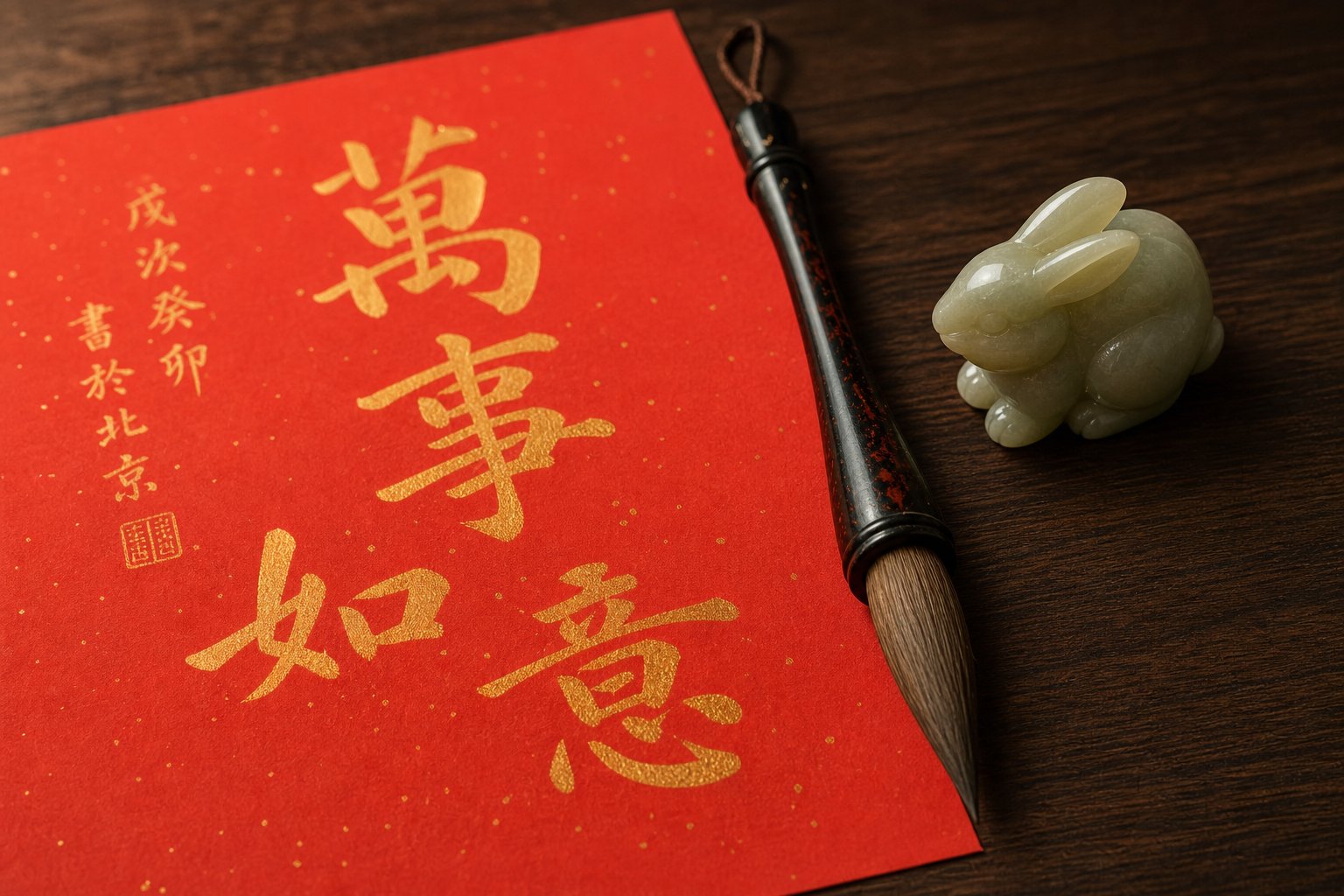
For display, the upper line goes on the right side of the door (from the viewer's perspective facing the entrance) and the lower line on the left. The horizontal banner sits above the doorframe. Red paper with black or gold ink is standard, though gold ink on red is considered slightly more formal and auspicious.
These phrases gain even more precision when matched to the specific elemental variant of a Rabbit year. A Water Rabbit year calls for different energetic emphasis than a Fire Rabbit year, and the characters chosen for couplets and idioms shift accordingly.

How the Five Elements Shape Your Lucky Characters
Not every Rabbit is the same Rabbit. The Chinese zodiac operates on a 60-year cycle, meaning each Rabbit year is colored by one of the Five Elements: Wood, Fire, Earth, Metal, or Water. Your element modifies your core personality, your strengths, and critically, which lucky characters carry the most resonance for you. A character that amplifies one element's energy might feel flat or even discordant for another.
Think of it this way: the Rabbit sign provides the foundation, but the element acts as a filter that sharpens certain frequencies. When you understand chinese zodiac elements wood vs earth, or fire versus metal, you can select characters that work with your elemental grain rather than against it.
Water and Wood Rabbit Lucky Characters
The year of water rabbit births (1963 and 2023) produces people who are gentle, peaceful, and highly adaptable. Their energy flows rather than pushes. Characters that echo fluidity, intuition, and quiet depth serve them best:
- 涵 (hán) — To contain, to cultivate. The water radical (氵) on the left directly mirrors Water Rabbit energy, while the meaning suggests depth of character and intellectual cultivation.
- 慧 (huì) — Wisdom. Water Rabbits possess unrivaled talents but need encouragement to act on them. This character reinforces their natural intelligence and nudges it toward expression.
- 润 (rùn) — Moist, smooth, to enrich. Another water-radical character that symbolizes nourishing others and oneself without force, perfectly matching the Water Rabbit's adaptive nature.
Wood Rabbits (1915 and 1975) are deliberate, bold beneath a simple exterior, and career-oriented in a steady, step-by-step fashion. Their element governs growth, expansion, and upward movement. The best characters for them tap into that rising energy:
- 茂 (mào) — Flourishing, lush. The grass radical (艹) connects to the rabbit's natural habitat while the meaning signals abundant growth, ideal for Wood Rabbit career ambitions.
- 彬 (bīn) — Refined, elegant. Contains the wood radical (木) twice, doubling down on elemental alignment while expressing the cultured sophistication Wood Rabbits project.
- 荣 (róng) — Glory, prosperity. Grass radical on top with a structure suggesting upward reach, this character channels the Wood Rabbit's trajectory from flat early years to rapid mid-life success.
Fire, Earth, and Metal Rabbit Lucky Characters
If your 1987 chinese zodiac element is fire, you belong to the fire rabbit chinese zodiac category: straightforward, passionate, and sharp-eyed leaders who seek high standards. The fire rabbit thrives with characters that channel brightness and vision without tipping into recklessness:
- 煜 (yù) — Radiant, shining. The fire radical (火) grounds this character in elemental truth while its meaning reflects the Fire Rabbit's natural brilliance.
- 明 (míng) — Bright, clear. Combines sun (日) and moon (月), representing the clarity of perception that makes Fire Rabbits excellent at discovering talent in others.
- 灿 (càn) — Splendid, brilliant. Another fire-radical character that captures the generous, elegant energy Fire Rabbits bring to leadership roles.
For those whose chinese zodiac 1999 element is earth, the earth rabbit chinese zodiac personality is steadfast, ambitious, and sometimes rigid. These individuals need characters that reinforce stability without encouraging inflexibility:
- 坤 (kūn) — Earth, receptive. A foundational character from the I Ching representing nurturing strength and groundedness.
- 稳 (wěn) — Stable, steady. Contains the grain radical (禾), connecting material security to the Earth Rabbit's practical approach to wealth-building.
- 厚 (hòu) — Thick, generous, substantial. Reflects the Earth Rabbit's frank nature and their capacity for deep, enduring relationships.
Metal rabbit chinese astrology (1951 and 2011) describes people who are kind-hearted yet adamant, never surrendering in adversity. Their element governs precision, resilience, and refinement:
- 锐 (ruì) — Sharp, keen. The metal radical (钅) directly aligns with the element while the meaning captures the Metal Rabbit's aspirant, never-give-up spirit.
- 鑫 (xīn) — Prosperous (triple gold). Three metal radicals stacked together, this character is a powerhouse for Metal Rabbits seeking financial fortune.
- 铭 (míng) — To engrave, to remember. Metal radical paired with a meaning of permanence, reflecting how Metal Rabbits build lasting legacies through steady, careful work.
| Element | Birth Years | Key Energy | Top Lucky Characters |
|---|---|---|---|
| Water | 1963, 2023 | Flow, adaptability, intuition | 涵 (hán, cultivate) / 慧 (huì, wisdom) / 润 (rùn, enrich) |
| Wood | 1915, 1975 | Growth, expansion, persistence | 茂 (mào, flourishing) / 彬 (bīn, refined) / 荣 (róng, glory) |
| Fire | 1927, 1987 | Passion, vision, leadership | 煜 (yù, radiant) / 明 (míng, bright) / 灿 (càn, splendid) |
| Earth | 1939, 1999 | Stability, ambition, groundedness | 坤 (kūn, earth) / 稳 (wěn, stable) / 厚 (hòu, substantial) |
| Metal | 1951, 2011 | Precision, resilience, refinement | 锐 (ruì, sharp) / 鑫 (xīn, prosperous) / 铭 (míng, engrave) |
The practical takeaway: when selecting lucky characters for display, gifts, or personal use, check your birth year against this table first. A Water Rabbit writing 煜 on their study wall is borrowing fire energy they may not naturally channel well. A Metal Rabbit choosing 润 might find its soft, flowing quality at odds with their decisive nature. The strongest results come from matching element to character, letting the radical structure do the energetic work.
These elemental characters gain another dimension when you trace them back to mythology. The most famous rabbit in Chinese legend, the Jade Rabbit pounding medicine on the moon, carries its own set of auspicious characters drawn from an entirely different source: the celestial realm.
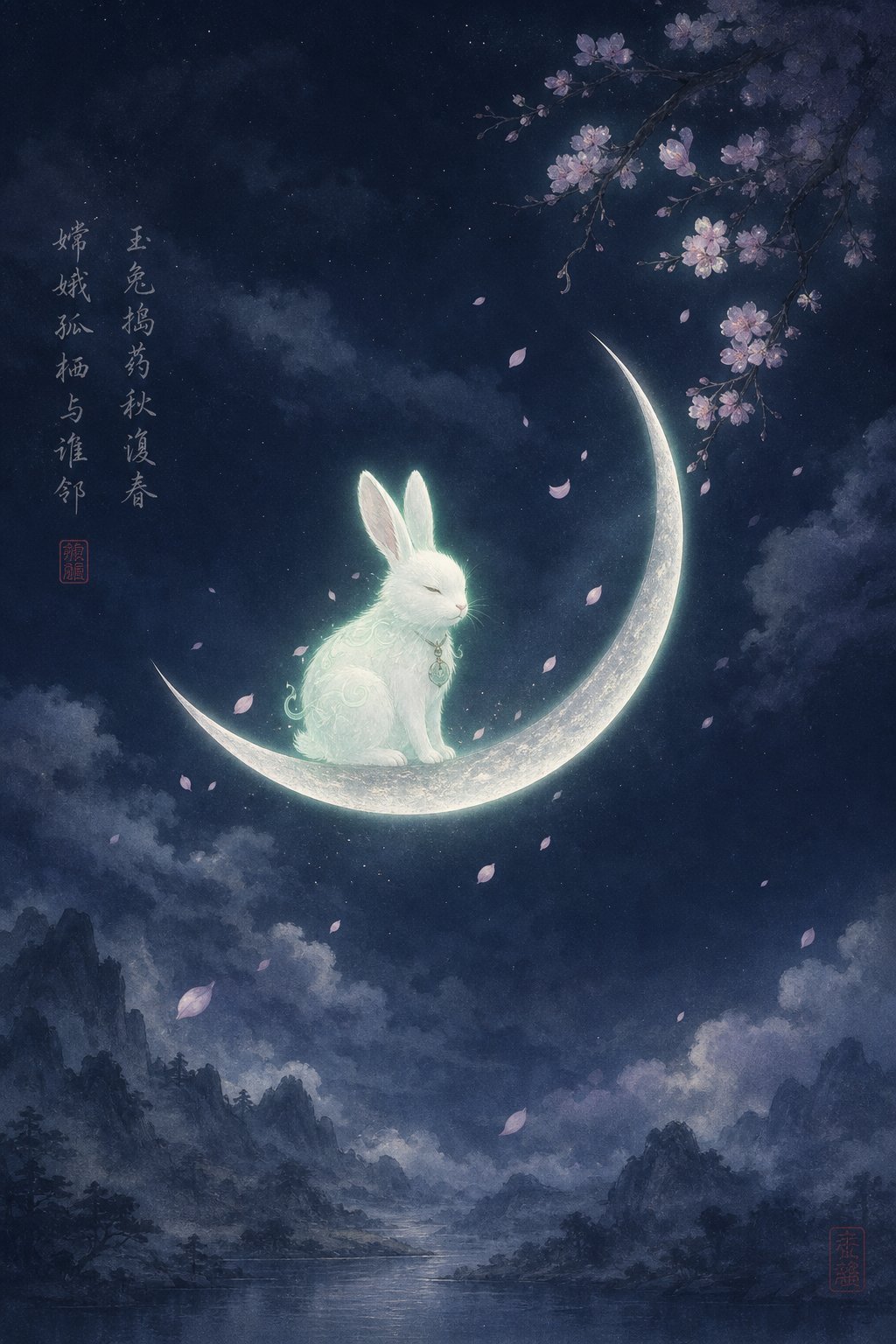
The Jade Rabbit Legend and Its Auspicious Characters
Imagine a rabbit so selfless it leaped into fire to feed a stranger. That act of sacrifice earned it eternal life on the moon, where it pounds the elixir of immortality alongside the goddess Chang'e. This is the legend of the Jade Rabbit (玉兔/yùtù), and it is far more than a bedtime story. For those who follow the rabbit chinese zodiac, this myth is a living source of lucky characters that carry celestial weight, characters you can still find on calligraphy scrolls, jewelry, and festival decorations today.
The Jade Rabbit Moon Legend and Its Characters
The story varies across tellings, but the core remains consistent. The Jade Emperor, disguised as a starving old man, tested three animals in a forest: a monkey, a fox, and a rabbit. The monkey offered fruit. The fox brought food it had gathered. The rabbit, unable to find anything suitable, threw itself into the fire as an offering. Moved by this sacrifice, the Jade Emperor granted the rabbit immortality and sent it to live in the Moon Palace, where it became the divine medicine maker, pounding herbs into the elixir of eternal life with a mortar and pestle.
The rabbit's fur, according to legend, became as white and luminous as jade, earning it the name 玉兔. Its companion in the Moon Palace is Chang'e, the goddess who ascended to the moon after consuming a pill of immortality. Together, they represent purity, devotion, and transcendence, qualities that give the year of the rabbit meaning far beyond personality traits and horoscope predictions.
What makes this legend relevant to lucky characters? Every key element of the story, the jade, the moon, the immortality, the spiritual cleverness, corresponds to a specific Chinese character with its own auspicious energy. The year of the white rabbit imagery in art and decoration draws directly from this myth, and the golden rabbit chinese zodiac motifs you see on luxury New Year goods reference the same celestial source.
Mythological Characters You Can Use Today
Each character below originates from the Jade Rabbit legend and carries blessings rooted in that story. You do not need to retell the myth every time you use one. The cultural memory is already embedded in the character itself.
- 玉 (yù) — Jade, purity, moral perfection. Story connection: The rabbit's fur became jade-white as a reward for selflessness. Modern application: Used in blessings that wish someone moral clarity and inner refinement. Popular on pendants, seals, and calligraphy for newborns. The gold rabbit chinese zodiac pairing often combines 玉 with gold leaf on red paper for maximum auspicious contrast.
- 月 (yuè) — Moon, renewal, cyclical return. Story connection: The Moon Palace is the Jade Rabbit's eternal home. Modern application: Represents fresh starts and the promise that good fortune returns in cycles. Frequently brushed onto Mid-Autumn Festival lanterns and Rabbit year greeting cards. Its meaning resonates with the year of rabbit meaning of gentle, recurring prosperity.
- 仙 (xiān) — Immortal, transcendent being. Story connection: The rabbit achieved immortality through sacrifice and now creates the elixir of eternal life. Modern application: Conveys wishes for longevity, spiritual elevation, and a life that rises above ordinary struggles. Often paired with 兔 in the phrase 仙兔 (xiāntù, immortal rabbit) on birthday scrolls for elderly family members.
- 灵 (líng) — Spirit, cleverness, efficacy. Story connection: The Jade Rabbit's ability to compound divine medicine requires supernatural intelligence and spiritual sensitivity. Modern application: Wishes someone sharp intuition and creative brilliance. Especially fitting for students, artists, and entrepreneurs. Appears in the compound 灵巧 (língqiǎo, dexterous and clever), echoing the rabbit's nimble paws at work.
- 瑶 (yáo) — Precious jade, celestial beauty. Story connection: The Moon Palace itself is described in classical texts as 瑶台 (yáotái), a terrace of precious jade. Modern application: A popular character in women's names and in blessings that wish for a life of beauty and elevated fortune. Its jade radical reinforces purity while its celestial association adds otherworldly grace.
These five characters form a mythological toolkit distinct from the personality-based and element-based characters covered earlier. Their power comes from narrative rather than phonetics or radical analysis alone. When you display 玉 on a wall, you are not just invoking the mineral. You are invoking the entire story of sacrifice rewarded, of humility elevated to heaven.
The Jade Rabbit legend also explains why rabbit year decorations so often feature lunar imagery. Crescent moons, full moons, and cloud motifs surrounding a rabbit figure all trace back to this single myth. For anyone exploring the year of the cat zodiac (as the Rabbit year is known in Vietnamese tradition), the same lunar symbolism applies, since the Cat replaces the Rabbit in that system while retaining the moon connection.
Knowing which characters carry mythological weight is one thing. Knowing where to place them, how to pair them with colors and materials, and which occasions call for which character is where theory becomes practice.
Practical Ways to Use Lucky Characters in Daily Life
A character sitting in a reference guide does nothing. Its energy activates when you write it, display it, gift it, or carry it into a space where it can interact with your daily rhythm. Whether you follow the chinese horoscope rabbit closely or simply appreciate the cultural tradition, these practical applications turn knowledge into tangible fortune.
Characters for Red Envelopes and Gift Giving
Red envelopes (红包/hóngbāo) are the most common vehicle for lucky characters in Chinese culture. The character printed or brushed on the envelope sets the tone for the blessing inside. Traditional red envelope etiquette calls for designs featuring characters like 福 (fortune) or 祥 (good luck) paired with gold foil stamping on red paper, but you can go further by matching the character to the occasion and the recipient's zodiac profile.
For someone born in a Rabbit year, choose characters that honor their gentle energy. 安 (peace) on a birthday envelope tells them you value their calming presence. 慧 (wisdom) on a graduation envelope acknowledges their intellectual gifts. 瑞 (auspicious) on a New Year envelope channels broad good fortune without overwhelming their quiet disposition.
Beyond envelopes, jewelry engravings offer a more permanent application. Jade pendants carved with 玉 or 逸 carry both material and symbolic value for Rabbit-born wearers. Gold bangles engraved with 福 or 瑞 make meaningful gifts for milestone birthdays. The key principle: select characters whose radical structure aligns with the material. Jade pieces pair naturally with characters containing the jade radical (王). Gold pieces suit characters with metal-related radicals like 鑫 or 铭.
Digital applications have expanded the reach of these characters considerably. Phone wallpapers featuring 兔年大吉 in calligraphic style, WeChat stickers with animated rabbit characters holding 福, and social media profile frames brushed with 瑞兔送福 all carry the same intentional energy as physical displays. For those checking their year of the rabbit horoscope today, pairing the daily reading with a matching character wallpaper reinforces the message throughout the day.
Home and Office Display With Feng Shui Placement
Placement matters as much as character selection. Feng shui tradition assigns specific energies to different areas of a space, and positioning artwork with intention determines whether a character supports or disrupts the flow of chi in your environment.
Here are the core placement principles for Rabbit year characters:
- Entrance or foyer: Display 福 (fortune) or 祥 (propitious) here. The entrance sets the energetic tone for everything that follows. A single well-chosen character in gold ink on red paper welcomes positive energy before it flows deeper into the home.
- Living room, south-facing wall: Place 瑞 (auspicious) or 安 (peace) where family gathers. The south direction governs recognition and warmth, making it ideal for characters that promote harmony, something the Rabbit sign craves.
- Home office, wall behind your seat: Choose 慧 (wisdom) or 稳 (stability). Grounded imagery behind you creates a sense of support, reinforcing focus and steady progress. This is especially relevant for those exploring where to live based on chinese zodiac rabbit principles, since the workspace within a home carries as much weight as the home's geographic location.
- Bedroom, east-facing wall: 安 (peace) or 柔 (gentle) placed in the east supports health and renewal. The east direction governs growth and family relationships, aligning with the Rabbit's need for restorative personal space.
One important consideration for timing: the chinese horoscope 2025 rabbit forecast places Rabbit-born individuals in a year of the snake for rabbit, which traditionally brings challenges around communication and trust. During such transitional years, strengthening your space with characters like 安 and 慧 provides a stabilizing counterbalance. Similarly, if you are navigating relationships and curious about year of the rat and rabbit compatibility, displaying 和 (harmony) in shared spaces can soften the natural tension between these two signs.
Here is a quick-reference checklist organized by occasion:
- Chinese New Year: 福 on door, 兔年大吉 banner above entrance, 瑞兔送福 calligraphy scroll in living room
- Birthdays: 寿 (longevity) for elders, 慧 or 逸 for younger Rabbit-born recipients, engraved on pendants or brushed on cards
- Weddings: 喜 (double happiness) remains standard, but adding 安 or 雅 to secondary decorations honors a Rabbit bride or groom's nature
- Business openings: 瑞 or 鑫 (prosperity) displayed at the entrance, paired with the owner's elemental character from the Five Elements table
The thread connecting all these applications is intentionality. A character chosen at random decorates. A character chosen with awareness of zodiac energy, elemental alignment, and spatial placement activates. That activation becomes even more powerful when you pair characters with their complementary lucky colors, numbers, and directions, building a complete fortune framework rather than relying on isolated symbols.
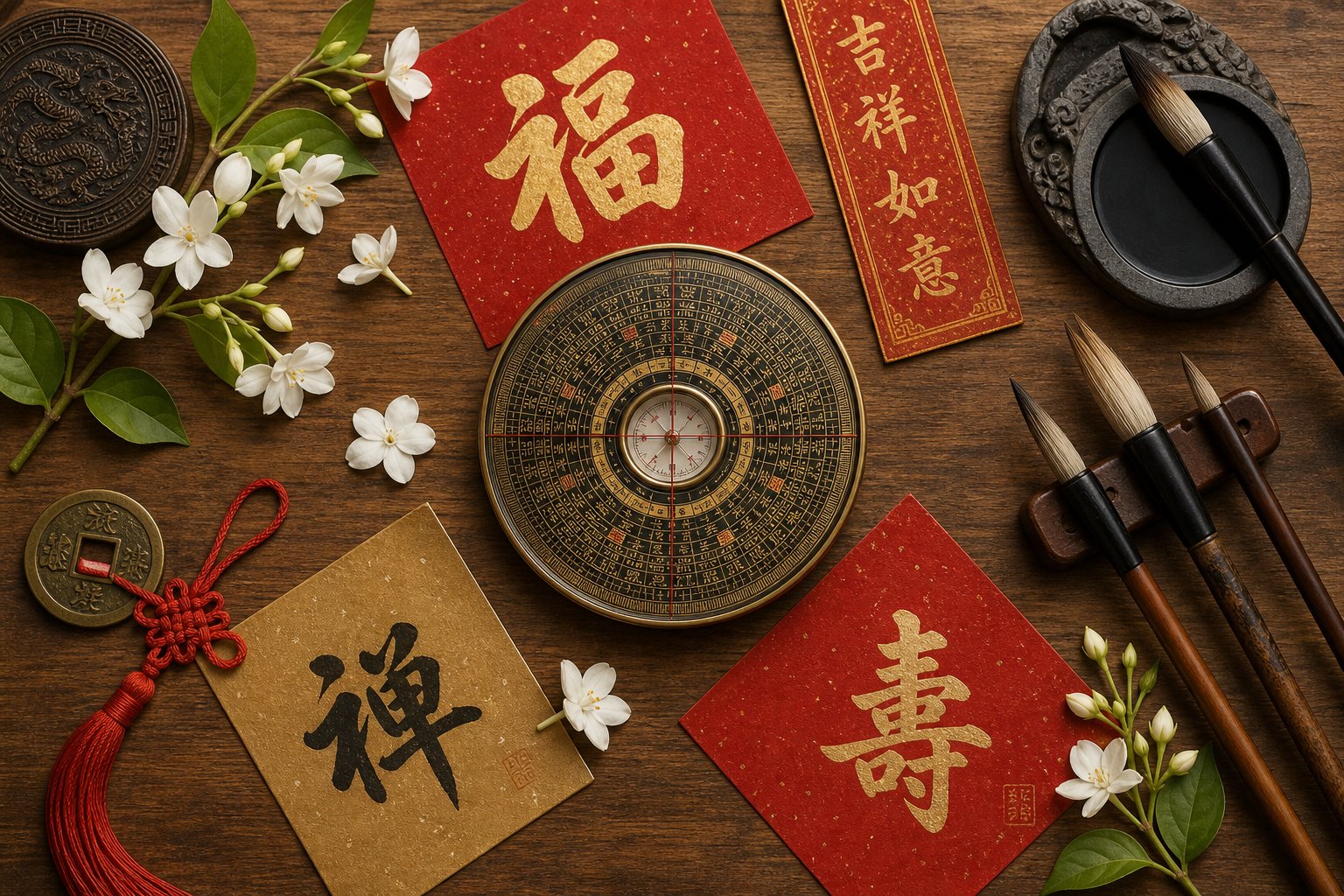
Connecting Lucky Characters to Colors, Numbers, and Directions
A character brushed in black ink on white paper carries meaning. The same character brushed in gold ink on red paper carries meaning and momentum. Chinese fortune traditions treat lucky elements as a system, not a checklist. Colors, numbers, directions, and flowers each vibrate at specific frequencies, and when you pair them deliberately with the right character, the effect compounds rather than simply adds up.
Pairing Characters With Lucky Colors and Numbers
The Rabbit zodiac's lucky colors are red, pink, purple, and blue, according to traditional Chinese zodiac references. Its lucky numbers are 3, 4, and 9. These are not arbitrary assignments. Red activates fortune and celebration. Pink and purple resonate with the Rabbit's refined, artistic temperament. Blue connects to the Water element that governs several rabbit zodiac years. The numbers 3 and 4 align with the Rabbit's fourth position in the zodiac cycle, while 9 represents longevity and completeness.
How does this translate to character display? Imagine you have chosen 福 (fortune) for your entrance. Writing it in gold ink on red paper activates both the character's meaning and the color's celebratory energy. Pairing it with a grouping of 3 or 9 decorative elements around it, say three lanterns or nine coins, reinforces the numerical resonance. The result is a layered blessing that speaks through multiple channels simultaneously.
Colors to avoid matter just as much. Dark brown, dark yellow, and white are considered unlucky for Rabbit-born individuals. A beautiful calligraphy piece of 瑞 (auspicious) loses its punch if mounted on a dark brown background or framed in white matting. Small details like these separate decorative choices from intentional fortune-building.
Building a Complete Rabbit Year Fortune Framework
The table below brings everything together: character, ideal color pairing, directional placement, and complementary lucky number. Use it as a quick reference when planning displays for your home, office, or gifts.
| Lucky Character | Ideal Color Pairing | Best Direction for Display | Complementary Number |
|---|---|---|---|
| 福 (fu, fortune) | Gold ink on red paper | South (recognition, warmth) | 9 |
| 瑞 (rui, auspicious) | Gold ink on purple paper | East (growth, new beginnings) | 3 |
| 安 (an, peace) | Blue ink on pink paper | Southeast (gentle prosperity) | 4 |
| 慧 (hui, wisdom) | Black ink on blue paper | East (intellectual clarity) | 3 |
| 逸 (yi, effortless excellence) | Gold ink on red paper | South (vitality, momentum) | 9 |
| 玉 (yu, jade/purity) | Green ink on pink paper | Southeast (refinement) | 4 |
| 雅 (ya, elegance) | Purple ink on cream paper | East (creative energy) | 3 |
Notice the pattern: east and southeast dominate the directional column. This is not coincidence. The Rabbit's lucky directions are east, south, and southeast, with the fixed element of Wood naturally governing the eastern quadrant. Placing characters in these directions aligns the written blessing with the spatial energy that already favors Rabbit-born individuals.
Flowers add a final sensory layer. The Rabbit's lucky flowers, plantain lily and jasmine, can be placed near character displays to engage scent and visual beauty alongside the written word. A calligraphy scroll of 安 beside a vase of jasmine creates a multi-sensory peace blessing that works on the viewer even before they consciously read the character.
For those planning ahead, the years of the rabbit follow a 12-year cycle. The most recent was 2023, and when is the next rabbit year? That would be 2035, a Wood Rabbit year running from February 8, 2035 to January 27, 2036. If you are wondering whens the next year of the rabbit and want to prepare early, the chinese zodiac 2035 cycle will emphasize growth-oriented characters like 茂 and 荣 paired with green and blue tones. The next year of the rabbit gives you time to build your framework gradually, selecting and commissioning calligraphy pieces that align with Wood energy well before the celebrations begin.
The rabbit years chinese zodiac system rewards patience and preparation, qualities the Rabbit sign itself embodies. Whether you are displaying characters for the current cycle or laying groundwork for the next, the principle stays the same: match character to element, element to color, color to direction, and let the entire system work as one coherent blessing rather than a collection of isolated lucky charms.
Frequently Asked Questions About Lucky Chinese Characters for the Year of the Rabbit
1. What is the luckiest Chinese character for someone born in the Year of the Rabbit?
The character 逸 (yi, meaning effortless excellence) is uniquely powerful for Rabbit-born individuals because it literally contains the rabbit radical 兔 within its structure. Its meaning of natural ease and freedom captures the Rabbit sign's energy at its best. Other top choices include 福 (fu, fortune), 瑞 (rui, auspicious), and 安 (an, peace), each selected because their radical composition and meaning amplify core Rabbit traits like gentleness, wisdom, and quiet prosperity rather than working against them.
2. How do the Five Elements change which lucky characters are best for Rabbit year people?
Each Rabbit birth year is governed by one of five elements, and the ideal lucky characters shift accordingly. Water Rabbits (1963, 2023) benefit from flow-oriented characters like 涵 and 润 that contain the water radical. Wood Rabbits (1975) thrive with growth characters like 茂 and 荣 featuring plant radicals. Fire Rabbits (1987) resonate with brightness characters like 煜 and 明. Earth Rabbits (1999) need stability characters like 坤 and 稳, while Metal Rabbits (2011) align with precision characters like 锐 and 鑫 containing the metal radical.
3. What are the most popular four-character idioms used during Rabbit year celebrations?
The top five Rabbit year idioms ranked by traditional usage are: 玉兔迎春 (The Jade Rabbit welcomes spring), 兔年大吉 (Great luck in the Rabbit year), 瑞兔送福 (The auspicious rabbit delivers fortune), 兔跃新程 (The rabbit leaps into a new journey), and 福兔呈祥 (The fortunate rabbit presents good omens). These phrases appear on door banners, red envelopes, and calligraphy scrolls, with each one layering multiple lucky characters into a compact four-syllable blessing.
4. Where should I place lucky Chinese characters in my home according to feng shui?
Feng shui placement for Rabbit year characters follows directional energy principles. Display 福 or 祥 at your entrance to welcome positive chi. Place 瑞 or 安 on south-facing living room walls where family gathers. Position 慧 or 稳 on the wall behind your office seat for grounded support. Put 安 or 柔 on east-facing bedroom walls to promote health and renewal. The Rabbit's lucky directions are east, south, and southeast, so prioritize these orientations for maximum energetic alignment.
5. What is the connection between the Jade Rabbit legend and lucky characters?
The Jade Rabbit (玉兔) myth tells of a selfless rabbit granted immortality on the moon, where it pounds the elixir of eternal life alongside goddess Chang'e. This legend produces five celestial lucky characters: 玉 (jade, purity), 月 (moon, renewal), 仙 (immortal, transcendence), 灵 (spirit, cleverness), and 瑶 (precious jade, celestial beauty). Unlike personality-based or element-based characters, these carry mythological weight rooted in narrative, making them especially meaningful for calligraphy scrolls, jewelry, and festival decorations honoring Rabbit year traditions.