Understanding Lucky Chinese Characters in the Snake Zodiac Year
When you write a Chinese character on a red banner or press it in gold foil onto a lantern, you're doing more than decorating. You're activating a centuries-old system where written symbols carry intention, energy, and yes, luck. These auspicious characters, known as 吉祥汉字 (jixiang hanzi), aren't random choices. Each one is selected for its meaning, sound, and elemental resonance with the year it represents.
So what is snake year, exactly, and why does it demand its own set of lucky characters? The 2025 Year of the Snake marks a cycle tied to qualities like wisdom, intuition, elegance, and quiet wealth accumulation. In Chinese culture, the snake is often called "the little dragon" (小龙 xiaolong), linking it to transformation and rebirth rather than the negative connotations common in Western traditions. Certain characters align with these attributes so precisely that their auspicious power is considered amplified during Snake years, through symbolic meaning, phonetic echoes (谐音 xieyin), and Five Elements connections.
Why Characters Matter in Snake Year Celebrations
Imagine walking into a home during Lunar New Year. Red paper couplets frame the doorway, a diamond-shaped 福 hangs inverted on the wall, and golden characters gleam from window decorations. Each symbol was chosen with purpose. Chinese characters function simultaneously as language, art, and spiritual technology. A single character can compress an entire wish for prosperity, health, or wisdom into a few brushstrokes.
In traditional Chinese culture, written characters are not passive labels. They are active carriers of luck and intention, believed to attract the very energy they name when displayed with proper timing and placement.
This is why generic zodiac guides that list the same characters for every year miss the point. Lucky chinese characters for year of the snake draw their special potency from the animal's own cultural DNA. Characters connected to wisdom (智 zhi), wealth (财 cai), and transformation (化 hua) resonate differently during a Snake year than they would in, say, a Tiger or Dragon year.
The Snake's Place in Chinese Zodiac Symbolism
What rank is the snake in the Chinese zodiac? It holds the sixth position in the twelve-animal cycle, following the Dragon and preceding the Horse. According to the traditional zodiac sequence, the order runs Rat, Ox, Tiger, Rabbit, Dragon, Snake, Horse, Goat, Monkey, Rooster, Dog, and Pig. In the Chinese zodiac the snake is ranked sixth, a position associated with depth, mystery, and inner power rather than outward force.
Year of the snake birth years include 1929, 1941, 1953, 1965, 1977, 1989, 2001, 2013, and 2025. People born under this sign are traditionally described as enigmatic, intelligent, and wise. Snake zodiac symbolism centers on quiet accumulation rather than loud display, which is precisely why the lucky characters for this year emphasize internal qualities like insight and steady prosperity over flashy abundance.
What rank is the snake in Chinese zodiac lore beyond just a number? Its sixth-place position connects it to the Earthly Branch 巳 (si) and the Fire element in its base form. This elemental identity shapes which characters carry the strongest resonance, a relationship between symbol and cosmic timing that most people overlook entirely.
The difference between picking any attractive character and selecting one tuned to the Snake's energy is the difference between general good wishes and targeted intention. That distinction is where this guide begins.
Universal Lucky Characters vs Snake-Year-Specific Characters
Every Lunar New Year, certain characters appear on doorways, red envelopes, and window decorations across Chinese-speaking communities worldwide. These are the workhorses of festive calligraphy, reliable regardless of which zodiac animal rules the year. But the snake zodiac meaning introduces a second, more targeted layer of character selection that most people never distinguish from the universal set.
Universal Lucky Characters for Any Lunar New Year
You'll notice the same characters cycling through celebrations year after year. 福 (fu, blessing/fortune) is the most iconic, often hung upside down because the word for "inverted" (倒 dao) sounds like "arrived" (到 dao), creating the pun "fortune has arrived." Then there's 春 (chun, spring), representing renewal, and 吉 (ji, lucky/auspicious), a compact wish for good outcomes. 旺 (wang, prosperous) and 喜 (xi, happiness) round out the standard set.
These characters work every year because their meanings are universal. Who doesn't want fortune, happiness, and prosperity? They're the foundation of any Lunar New Year display, and understanding what is a good luck color for displaying them matters too. Red backgrounds with gold characters remain the default pairing, since red wards off evil and gold attracts wealth in traditional belief.
Snake-Year-Specific Characters and Their Power
Here's where things get interesting. The symbolic meaning of snake in Chinese culture centers on wisdom, quiet accumulation, and elegant transformation. Characters that echo these qualities carry amplified energy during a Snake year because they align with the animal's cultural identity.
What is the meaning of the snake in terms of character selection? It points toward 智 (zhi, wisdom), 財 (cai, wealth), 化 (hua, transformation), and 雅 (ya, elegance). These aren't random picks. Snake meaning symbolism emphasizes internal power over external display, so characters tied to insight, steady financial growth, and graceful change resonate more deeply than generic prosperity wishes.
When considering lucky colours chinese traditions associate with these characters, green connects to the 2025 Wood Snake element while gold reinforces the wealth association. What do colors mean in chinese culture when paired with specific characters? They amplify the character's intention. A 財 written in gold on red paper doubles down on the wealth wish through both symbol and color.
| Character | Pinyin | Meaning | Context of Use |
|---|---|---|---|
| 福 | fu | Fortune/Blessing | Universal, any Lunar New Year display |
| 春 | chun | Spring/Renewal | Universal, spring couplets and banners |
| 吉 | ji | Lucky/Auspicious | Universal, greetings and decorations |
| 旺 | wang | Prosperous/Thriving | Universal, business and home displays |
| 智 | zhi | Wisdom | Snake-specific, aligns with Snake's intellect |
| 財 | cai | Wealth | Snake-specific, echoes Snake's accumulation trait |
| 化 | hua | Transformation | Snake-specific, reflects shedding and renewal |
| 雅 | ya | Elegance | Snake-specific, mirrors Snake's refined nature |
How Character Radicals Reveal Hidden Meanings
Chinese characters aren't monolithic symbols. Most are built from smaller components called radicals that signal meaning categories. The 示 (shi) radical, numbered 113 in the Kangxi Dictionary system, originally depicted an altar or offering table. It appears in characters connected to spiritual blessings and divine communication.
Look at 福 (fortune) and 祥 (xiang, auspicious). Both contain the 示 radical in its left-side form 礻, a four-stroke variant used when the radical appears as a component. This shared root tells you something important: these characters carry a spiritual dimension beyond their surface meanings. They connect to veneration, sacred offerings, and communication with higher forces. The 示 radical links over 200 characters in the Kangxi Dictionary to concepts of worship, blessing, and spiritual protection.
Recognizing radicals gives you a shortcut for evaluating which characters carry genuine auspicious weight versus those that simply sound nice. A character built on the 示 radical has blessing encoded in its very structure, not just its pronunciation or dictionary definition.
This structural depth becomes even more relevant when you examine individual characters in detail and trace exactly how each one connects to the Snake's attributes.
Essential Lucky Characters with Meanings and Pronunciations
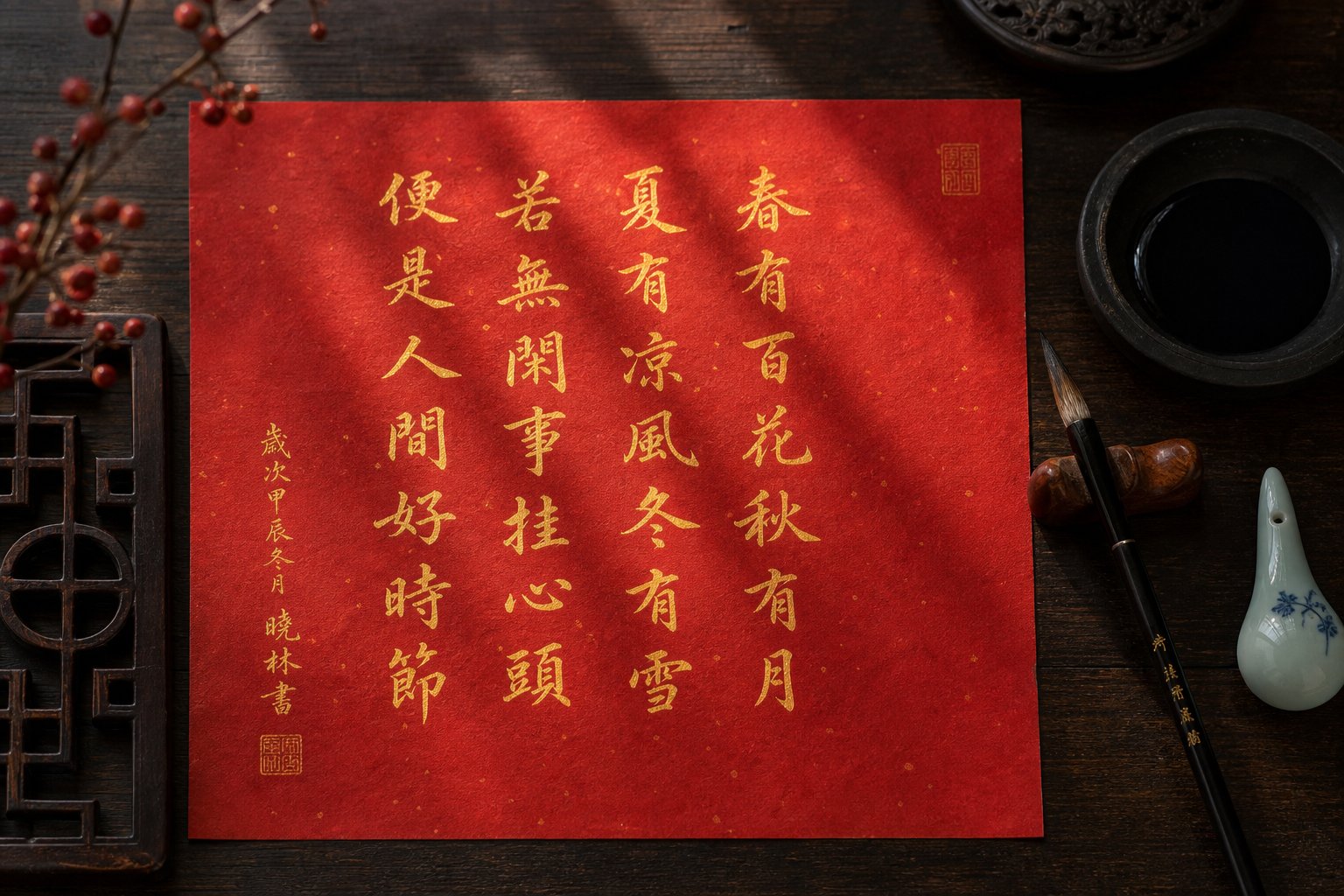
Each lucky character carries its own personality, stroke structure, and cultural weight. Knowing the year of the snake meaning 2025 at a surface level is one thing. Understanding exactly which characters channel that meaning into your decorations, greetings, and gifts is another. Below, you'll find detailed profiles of seven essential characters, grouped by the Snake attribute they amplify.
| Character | Pinyin | Meaning | Stroke Count | Snake Year Connection |
|---|---|---|---|---|
| 蛇 | she (2nd tone) | Snake | 11 | The zodiac animal itself, central to all Snake year displays |
| 福 | fu (2nd tone) | Fortune/Blessing | 13 | Universal prosperity amplified by Snake's wealth-gathering nature |
| 財 | cai (2nd tone) | Wealth | 10 | Directly mirrors the Snake's talent for quiet accumulation |
| 智 | zhi (4th tone) | Wisdom | 12 | Aligns with the Snake's core attribute of deep intelligence |
| 祥 | xiang (2nd tone) | Auspicious | 10 | Spiritual blessing tied to the Snake's mystical reputation |
| 旺 | wang (4th tone) | Prosperous/Thriving | 8 | Energetic flourishing that complements Snake's steady growth |
| 吉 | ji (2nd tone) | Lucky/Auspicious | 6 | Compact good fortune, foundational to Snake year greetings |
Characters of Fortune and Prosperity
蛇 (she) is the anchor character for any 2025 year of the snake meaning you want to express. With 11 strokes, it features the insect/creature radical 虫 on the left, reflecting the character's zoological roots. You'll see it on banners, paper cuttings, and greeting cards as the year's visual signature. Snakes in Chinese culture represent guardians of treasure and symbols of regeneration, so displaying 蛇 isn't just labeling the year. It's invoking those protective qualities.
福 (fu) needs little introduction. Its 13 strokes pack together the 示 radical (spiritual blessing) with a right component meaning "full" or "abundant." During a Snake year, 福 gains extra resonance because the Snake is traditionally associated with household wealth protection. Hanging 福 upside down on your door still works its classic pun, but pairing it with snake imagery creates a layered blessing specific to this cycle.
財 (cai, written 财 in simplified form) is the wealth character that directly mirrors the Snake's reputation for accumulation. The snake number six connects to steady material gain in numerological traditions, and 財 channels that energy into a single symbol. You'll find it on red envelopes, business displays, and paired with 發 (fa) in the compound 發財 (facai, "get rich"). Its 10 strokes include the 貝 (shell/money) radical, a visual reminder that this character is built on the concept of currency itself.
Characters of Wisdom and Transformation
智 (zhi) is arguably the most Snake-aligned character on this list. The Snake's defining trait across Chinese folklore is not danger or deception but deep, patient intelligence. With 12 strokes, 智 combines 知 (zhi, "to know") with 日 (ri, "sun/day"), suggesting knowledge illuminated by clarity. Use it in study spaces, on gifts for students, or in calligraphy pieces meant to invite intellectual growth during the year.
The year of the snake lucky numbers often include 2, 8, and 9, and you'll notice that several of these characters have stroke counts echoing those figures. 旺 (wang), with exactly 8 strokes, is a natural fit. It means thriving, flourishing, and vigorous. The character contains the 日 radical topped by a component suggesting upward energy. For business owners, 旺 is the go-to character for shop displays and opening-day banners, signaling that trade will be brisk and growth unstoppable.
Characters of Auspicious Blessings
祥 (xiang) carries the 示 radical discussed earlier, anchoring it firmly in the realm of sacred blessing. Its 10 strokes include the 羊 (yang, sheep) component on the right, which itself is a traditional symbol of gentleness and good fortune. In Snake year context, 祥 connects to the animal's mystical, almost spiritual reputation. It appears frequently in the compound 吉祥 (jixiang, "auspicious") and on decorations meant to invite divine favor into the home.
吉 (ji) is the most compact character here at just 6 strokes, yet it punches well above its weight. Its structure places 士 (shi, scholar/warrior) above 口 (kou, mouth), sometimes interpreted as "auspicious words spoken by a worthy person." During the 2025 Year of the Snake, 吉 appears in nearly every standard greeting and pairs effortlessly with other characters to form compounds like 大吉 (daji, great luck) and 吉利 (jili, fortunate).
These individual characters are powerful on their own, but Chinese tradition rarely stops at single symbols. The real magic happens when characters combine, when homophones create hidden meanings, and when two-character or four-character phrases multiply auspicious energy through complementary pairings.
The Homophone Luck System and Auspicious Character Pairings
Chinese is a tonal language with a limited number of syllables, which means hundreds of characters share identical or near-identical pronunciations. Rather than treating this as a linguistic inconvenience, Chinese culture turned it into a sophisticated system of symbolic association called 谐音 (xieyin). A character's sound can summon the meaning of another character entirely, layering hidden wishes beneath everyday words. This phonetic luck system is what makes certain lucky chinese characters for year of the snake far more powerful than their dictionary definitions suggest.
How Homophones Create Lucky Meanings
You've probably encountered this principle without realizing it. The character 福 (fu, fortune) hung upside down on doors works because "inverted" (倒 dao) sounds like "arrived" (到 dao), creating the implied message "fortune has arrived." The same logic applies to fish served at New Year dinner: 鱼 (yu, fish) sounds like 余 (yu, surplus), so eating fish symbolizes abundance year after year.
During the Snake year, this system activates specific phonetic connections tied to the animal itself. The character 蛇 (she) shares tonal qualities with 赦 (she, pardon or forgiveness), suggesting a year suited for fresh starts and letting go of past grievances. Even more productive is the Earthly Branch character 巳 (si), which sounds like 事 (shi, matters/things) and 时 (shi, time). These near-homophones generate an entire family of Snake year wordplay where 巳 substitutes into common phrases to create festive double meanings.
In traditional folk belief, is seeing a snake good luck? Many communities answer yes, precisely because the snake's presence activates these phonetic associations with wealth and renewal. The creature itself becomes a living homophone, its appearance "pronouncing" good fortune into existence.
- 蛇 (she) echoes 赦 (she) - pardon, forgiveness, fresh beginnings
- 巳 (si) echoes 事 (shi) - matters going well, as in 巳巳如意 (everything goes as wished)
- 巳 (si) echoes 时 (shi) - good timing, as in 蛇来运转 (when the snake comes, fortune turns)
- 蛇 (she) echoes 舍 (she) - letting go to gain, as in 有蛇有得 (where there's a snake, there's a gain)
- 桔 (ju, tangerine) echoes 吉 (ji) - luck, which is why tangerines appear alongside snake decorations
The prosperous pronunciation of a character matters as much as its written form. When you say 發財 (facai) aloud, the explosive "fa" sound itself symbolizes pronunciation of outward-bursting energy, reinforcing the wish for wealth to flow outward and multiply.
Powerful Two-Character Compounds for Snake Year
Single characters carry meaning, but two-character compounds create complete wishes. These pairings appear on red envelopes, spring couplets, and digital greetings throughout the celebration season. The most common compounds for Snake year greetings include:
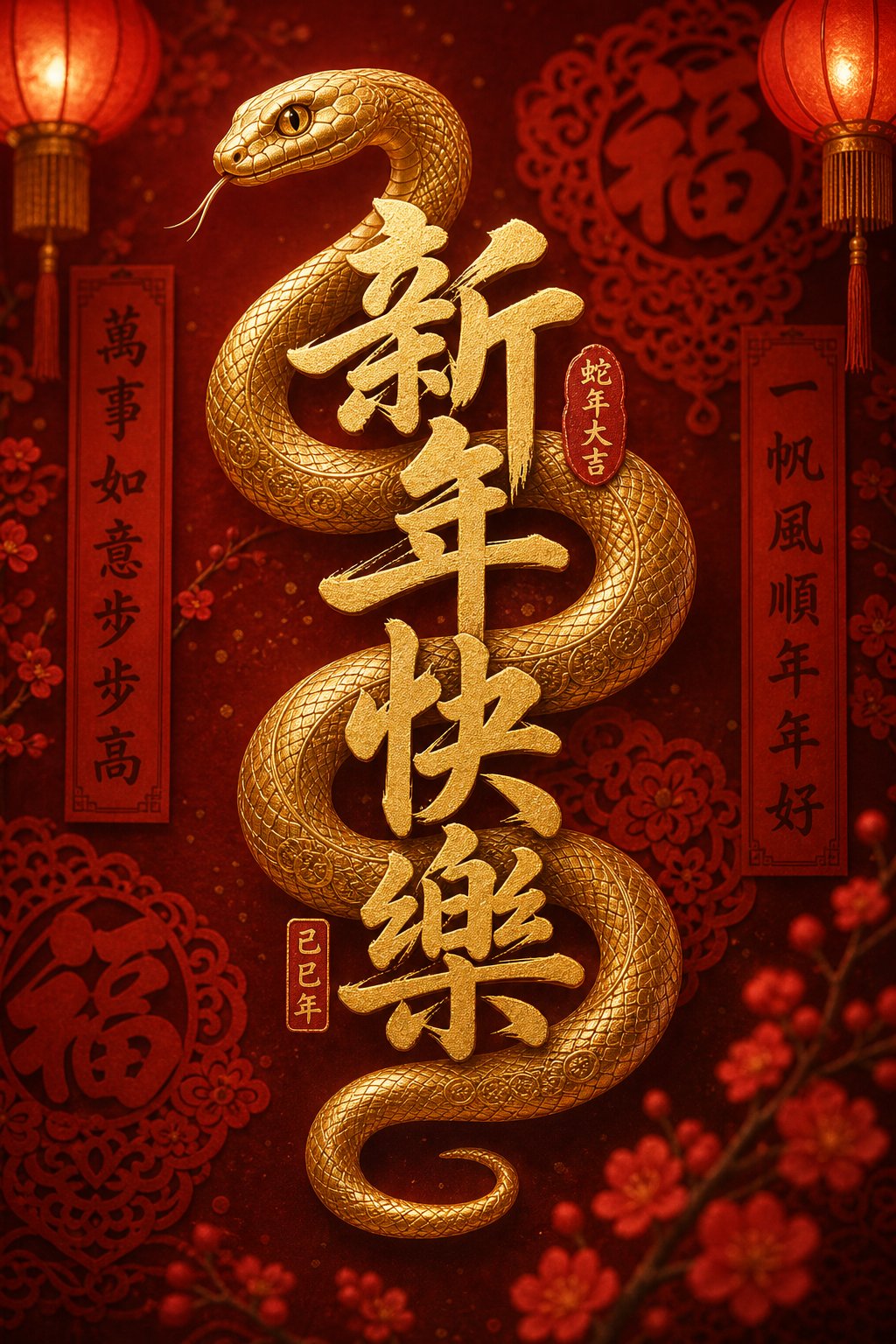
吉祥 (jixiang) combines "lucky" with "auspicious," doubling down on good fortune. It appears in the broader category of 吉祥话 (jixianghua), the auspicious phrases exchanged during New Year greetings. 如意 (ruyi) means "as one wishes" and pairs beautifully with Snake year puns like 巳巳如意 (si si ruyi), a play on 事事如意 (may everything go as planned). 發財 (facai) directly invokes wealth generation and appears in the universal greeting 恭喜發財 (gongxi facai, wishing you prosperity).
Snake-specific compounds draw from the animal's cultural identity: 灵蛇 (ling she, spirit snake) suggests supernatural wisdom, 金蛇 (jin she, golden snake) invokes metallic wealth, and 蛇运 (she yun, snake fortune) ties luck directly to the zodiac cycle.
Character Pairings That Amplify Auspicious Energy
Why do combinations work better than single characters? Complementary pairings create what you might call semantic resonance. When 吉 (lucky) meets 祥 (auspicious), the compound doesn't just add their meanings together. It creates a third, amplified meaning that neither character carries alone. Think of it like lucky numbers and meanings in numerology: the number 8 is prosperous, but 88 is considered exponentially more so.
The same principle explains what numbers are considered lucky in character stroke counts. A compound whose total strokes add up to 8, 16, or 18 carries extra numerological weight. 吉祥 totals 16 strokes (6 + 10), a number associated with completeness and smooth progress.
For Snake year specifically, the most potent pairings match a Snake attribute with a prosperity wish: 智慧 (zhihui, wisdom) honors the Snake's intellect, 财运 (caiyun, financial luck) channels its accumulation instinct, and 蛇福 (she fu, snake blessing) binds the zodiac animal directly to divine favor. Is seeing a snake good luck in the context of these pairings? The tradition says yes, because the snake's presence activates the entire network of phonetic and symbolic associations these compounds represent.
These two-character compounds are building blocks. Stack them together, and you get the four-character idioms (成语) that represent the highest form of Snake year linguistic art, phrases dense enough to compress entire blessings into a single breath.
Four-Character Idioms and Phrases for Snake Year Celebrations
Four-character idioms, or 成语 (chengyu), are the most concentrated form of auspicious expression in Chinese. Each phrase packs a complete blessing, image, or narrative into exactly four syllables. For the 2025 year of snake celebrations, specific chengyu draw on the animal's cultural identity to create greetings that feel both traditional and precisely timed to the zodiac cycle. Whether you're writing calligraphy, signing a card, or sending a WeChat message wishing you a prosperous year of the snake, these phrases carry more weight than any single character alone.
The idioms below progress from the most accessible and widely used to more literary expressions. If you're a beginner, start at the top. If you want to genuinely impress native speakers, work your way toward the bottom of the list.
Classic Snake Year Four-Character Idioms
- 蛇年大吉 (she nian da ji) - Literal meaning: "Great luck in Snake year." This is the most straightforward and universally understood Snake year greeting. You'll see it on red banners, printed cards, and digital stickers everywhere during celebrations. It requires no cultural decoding, making it the safest choice for anyone wanting to say happy snake year 2025 in four characters. Use it as a standalone greeting or as the closing line of a longer message.
- 金蛇狂舞 (jin she kuang wu) - Literal meaning: "The golden snake dances wildly." Figuratively, it describes vibrant, joyful celebration and boundless energy. The image of a golden serpent whipping through the air evokes festive fireworks and the dynamic brushstrokes of calligraphy. This phrase works beautifully on spring couplets and as a caption for celebration photos. It suggests that the year of snake 2025 will be one of exuberant vitality.
- 灵蛇献瑞 (ling she xian rui) - Literal meaning: "The spiritual snake presents good fortune." 灵 (ling) elevates the snake from ordinary creature to mystical being, while 瑞 (rui) specifically denotes an omen of divine favor. This phrase carries a more reverent tone, suitable for formal greetings, business cards, and calligraphy scrolls. It implies that blessings arrive not by accident but through the snake's deliberate offering, connecting to the 2025 year of snake meaning of wisdom guiding prosperity.
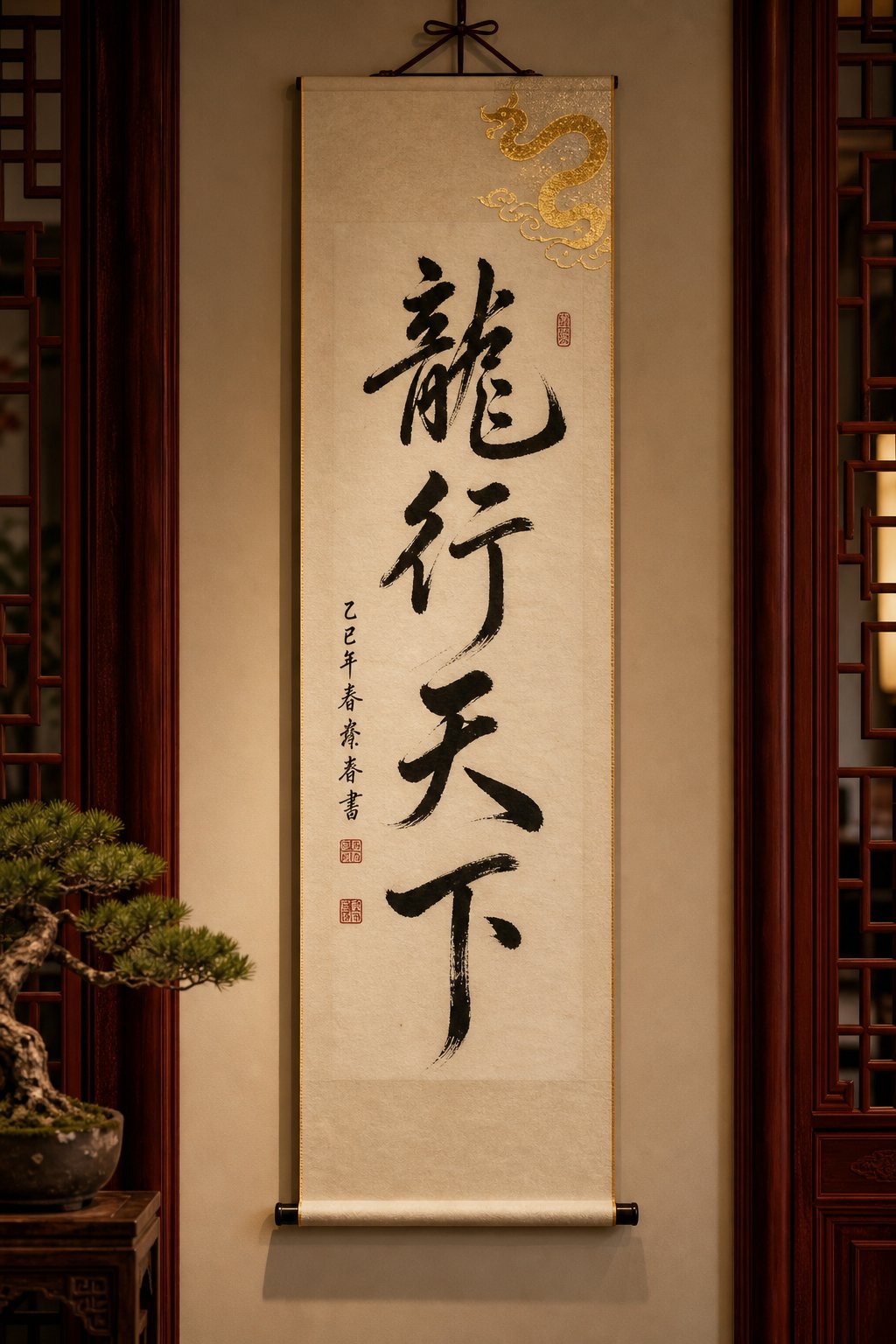
- 龙蛇飞动 (long she fei dong) - Literal meaning: "Dragons and snakes in flight." Originally a classical description of lively, dynamic calligraphy where brushstrokes twist and soar like serpentine creatures, this idiom has broadened to describe any scene of powerful, graceful energy. It's the most literary option here, best reserved for written greetings, art exhibitions, or formal speeches. Using it signals cultural fluency and an appreciation for classical Chinese aesthetics.
- 金蛇吐祥 (jin she tu xiang) - Literal meaning: "The golden snake breathes out auspiciousness." This phrase imagines the snake as a creature exhaling blessings like a dragon breathes fire, but gentler and more refined. It pairs well with imagery of mist, clouds, or flowing water in decorative contexts. The meaning of year of the snake 2025 comes alive in this idiom: quiet power releasing good fortune into the world.
How to Use Snake Idioms in Greetings and Calligraphy
Context determines which idiom fits best. For casual messages to friends and family, 蛇年大吉 is warm and universally appropriate. Business greetings benefit from 灵蛇献瑞, which carries formality without stiffness. If you're practicing brush calligraphy, 金蛇狂舞 and 龙蛇飞动 are natural choices because their meanings literally describe the art form you're performing. The brushstrokes themselves become the dancing snake.
For language learners, these idioms also serve as stepping stones into more advanced wordplay. Once you're comfortable with standard four-character phrases, you can explore the homophone-substitution idioms that swap 蛇 or 巳 into existing chengyu. Phrases like 巳巳如意 (si si ruyi), a pun on 事事如意 (may everything go as wished), or 蛇来运转 (she lai yun zhuan), playing on 时来运转 (when the time comes, luck turns), represent the advanced tier of Snake year linguistic creativity.
These idioms and their homophone cousins don't exist in a vacuum. Their power intensifies or diminishes depending on which elemental forces are active during a given Snake year, and 2025's Wood element adds a specific layer of meaning that shapes which characters and phrases carry the strongest resonance.
Five Elements Connection and Wood Snake Auspicious Characters
Every Snake year carries a different elemental signature. The earth snake chinese zodiac year (1989) felt different from the chinese zodiac metal snake year (2001) or the year of the snake metal cycle (1941). Why? Because the chinese zodiac 2025 element is Wood, and that single variable reshapes which characters carry the strongest auspicious charge. Understanding the Five Elements framework, known as 五行 (wuxing), is what separates generic character selection from truly intentional choices.
The Five Elements and Their Character Connections
In Chinese cosmology, five fundamental forces cycle through time in a fixed sequence: Wood (木 mu), Fire (火 huo), Earth (土 tu), Metal (金 jin), and Water (水 shui). These aren't just abstract categories. Each element governs a direction, season, color, and set of personality traits. More importantly for character selection, each element connects to specific radicals and character families that carry its energy.
The elements interact through two cycles. The generating (productive) cycle flows like this: Wood fuels Fire, Fire forms Earth, Earth contains Metal, Metal carries Water, and Water feeds Wood. The overcoming (destructive) cycle works in opposition: Fire melts Metal, Metal penetrates Wood, Wood separates Earth, Earth absorbs Water, and Water quenches Fire. These relationships determine which elemental characters support each other and which ones clash.
Among eastern zodiac elements, the Snake's fixed element is Fire. This is its permanent identity regardless of which year-cycle element overlays it. In 2025, the Heavenly Stem is Yi (乙), which represents Wood. So you have Wood feeding into the Snake's inherent Fire nature, a generating relationship that creates momentum and vitality rather than conflict.
| Element | Color | Direction | Associated Characters | 2025 Snake Year Relevance |
|---|---|---|---|---|
| Wood (木) | Green | East | 林 (lin, forest), 春 (chun, spring), 榮 (rong, flourishing), 茂 (mao, lush) | Primary element of 2025; characters carry strongest auspicious weight |
| Fire (火) | Red | South | 旺 (wang, thriving), 煌 (huang, brilliant), 炎 (yan, blazing) | Snake's fixed element; supported by Wood in productive cycle |
| Earth (土) | Yellow | Center | 坤 (kun, earth), 培 (pei, nurture), 堅 (jian, solid) | Produced by Fire; neutral support role |
| Metal (金) | White/Gold | West | 鑫 (xin, prosperity), 銀 (yin, silver), 鋒 (feng, sharp) | Overcome by Fire; use gold for wealth symbolism only |
| Water (水) | Black | North | 泉 (quan, spring), 潤 (run, moist), 海 (hai, sea) | Feeds Wood; indirect support for 2025 energy |
Wood Element Characters with Special Snake Year Power
The green wooden snake of 2025 draws its identity from the Wood element, which means characters containing the 木 radical (mu zi pang) or evoking growth imagery carry amplified fortune this year. Think of it as tuning into the right frequency. These characters vibrate at the same elemental wavelength as the year itself.
林 (lin, forest) doubles the 木 radical, literally depicting two trees standing side by side. It suggests abundance, community, and natural wealth growing without force. With 8 strokes, it also hits a numerologically favorable count. Display it to invoke steady, organic expansion in business or personal life.
春 (chun, spring) is the season governed by Wood energy. Its 9 strokes contain imagery of growth pushing upward through the earth. While 春 appears universally during Lunar New Year, it resonates with particular strength during a Wood year because the element and the season share the same generative force.
榮 (rong, flourishing) contains the 木 radical at its base and means thriving, glorious, or honored. At 14 strokes in traditional form, it's a visually rich character suited to formal calligraphy and business displays. It captures the Wood element's core promise: growth that leads to recognition.
茂 (mao, lush/luxuriant) features the grass radical (艹) on top, connecting it to verdant plant life. Its 8 strokes and meaning of dense, thriving growth make it ideal for wishes related to fertility, creative output, or career development during the Wood Snake year.
Element Color Symbolism in Character Display
Colors for year of the snake aren't just decorative preferences. They're elemental signals. The year of the snake colors that carry the most power in 2025 are green, red, and gold, each tied to a specific elemental function.
Green represents Wood directly. For those born in the Year of the Wood Snake, green is the most auspicious colour because it corresponds to Yi, the Heavenly Stem of 2025. Writing Wood-element characters like 林 or 榮 in green ink on lighter paper, or displaying them against green backgrounds, doubles the elemental alignment.
Red connects to Fire, the Snake's fixed element. Since Wood fuels Fire in the productive cycle, pairing green decorations with red creates a visual representation of elemental harmony. The classic red-and-gold combination still works, but adding green to your year of the snake colors palette taps into the specific 2025 energy that most people overlook.
Gold represents wealth and Metal. While Fire overcomes Metal in the destructive cycle, gold is used specifically for its prosperity symbolism rather than its elemental identity. Writing 財 or 福 in gold on red paper remains appropriate because the color functions as a wealth signal, not an elemental one.
The practical takeaway? Match your character choices to their elemental colors. Wood characters in green, Fire characters in red, and wealth characters in gold. This alignment between symbol, color, and cosmic timing is what transforms a simple decoration into a genuinely auspicious display, one that works with the year's energy rather than against it.
Knowing which characters and colors to choose is half the equation. The other half is knowing where and how to place them, from traditional spring couplets on your doorframe to digital red envelopes on your phone screen.
Where to Display Lucky Characters from Couplets to Digital Greetings
Selecting the right characters is only half the work. Placement determines whether those characters actually function as intended. A perfectly chosen 福 stuck in the wrong spot or a beautifully written couplet with mismatched tonal structure can undermine the very blessing you're trying to invoke. Traditional display rules have governed character placement for centuries, and modern digital contexts have added new layers to the practice.
Spring Couplets and Door Decorations for Snake Year
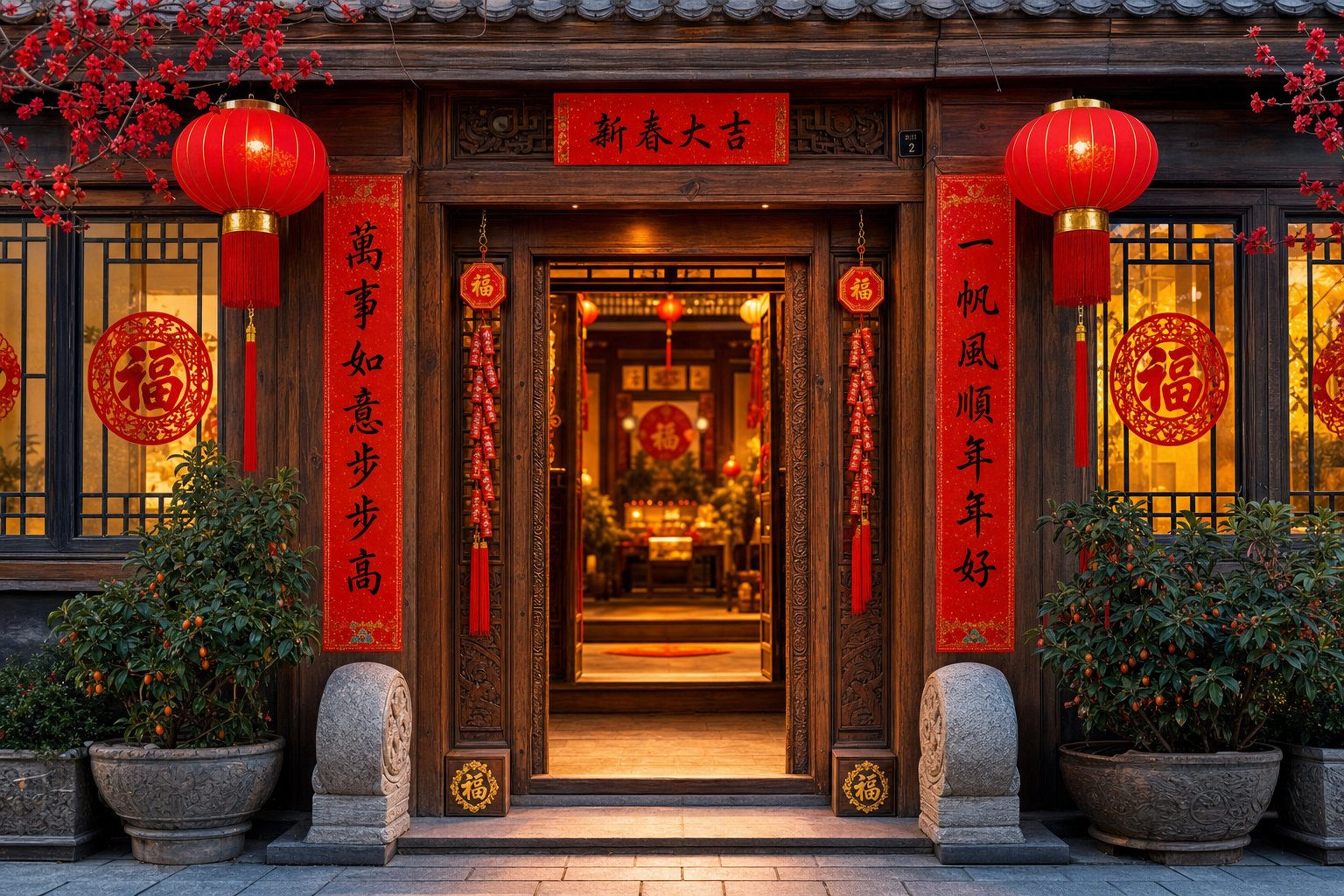
Spring couplets (对联 duilian) are the most visible application of lucky characters during Lunar New Year. These paired phrases flank your doorway, with the first line (上联 shanglian) on the right side as you face outward and the second line (下联 xialian) on the left. A horizontal scroll (横批 hengpi) sits above the door, summarizing the couplet's theme in four characters.
The structural rules matter. Each line must contain the same number of characters, typically seven. The tones of the final characters must contrast: the first line ends on an oblique tone (仄声 zesheng) while the second line ends on a level tone (平声 pingsheng). Meaning should flow from the first line to the second, building in intensity or shifting from past to future. As calligraphy master Tam Po Shek notes, writing couplets with brush and ink captures the writer's genuine sentiment in ways printed versions cannot.
Snake year couplet examples that follow proper tonal structure:
- 上联: 金蛇狂舞迎春到 (The golden snake dances wildly to welcome spring) / 下联: 灵蛇献瑞送福来 (The spirit snake presents fortune and delivers blessings) / 横批: 蛇年大吉
- 上联: 蛇衔灵芝报春早 (The snake carries lingzhi to announce spring's arrival) / 下联: 龙腾盛世庆年丰 (The dragon soars in a prosperous era celebrating abundance) / 横批: 吉祥如意
Window decorations (窗花 chuanghua) offer another traditional display surface. These red paper cuttings often feature the zodiac animal surrounded by auspicious characters. For Snake year, look for designs incorporating 蛇 within circular frames alongside 福 or 吉祥. These chinese new year lucky charms serve both decorative and symbolic functions, transforming windows into portals for good energy.
Red Envelope Characters and Gifting Etiquette
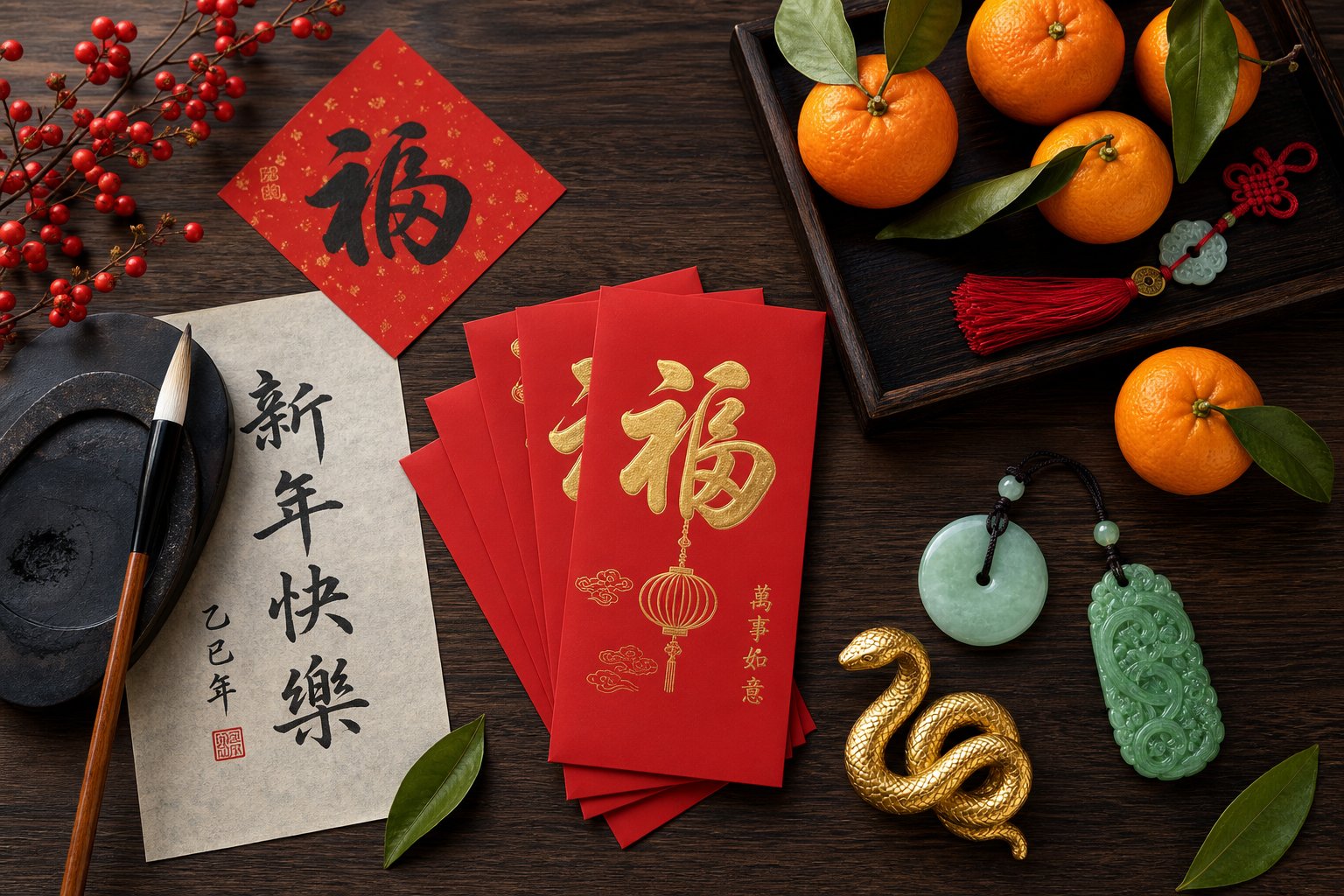
Red envelopes (红包 hongbao) carry specific character conventions that vary by occasion. For Lunar New Year, the most common characters printed on envelopes include 福 (fortune), 大吉大利 (great luck and profit), and 恭喜發財 (wishing you prosperity). During a Snake year, envelopes featuring 蛇年大吉 or snake imagery paired with 祥 add zodiac-specific intention to your gift.
Etiquette rules apply beyond character selection. Red envelope tradition requires crisp new bills, amounts avoiding the number four (since 四 si sounds like 死 si, death), and receiving with both hands. The envelope should never be opened in front of the giver. For year of the snake 2025 gifts, pairing a red envelope with a year of the snake charm or a small year of the snake bracelet adds a physical dimension to the blessing.
- Use single characters (福, 財, 吉) on smaller envelopes for casual giving
- Choose four-character phrases (蛇年大吉, 恭喜發財) for larger, more formal envelopes
- Favor amounts containing 8 (prosperity) or 6 (smooth progress) for Snake year
- Pair envelopes with year of the snake jewelry like a pendant or bracelet for milestone gifts
- For weddings during Snake year, 百年好合 (a hundred years of harmony) remains appropriate alongside zodiac-specific phrases
Year of snake jewelry and year of the snake jewellery (as it's spelled in British English markets) have become popular gift accompaniments. A piece of chinese zodiac snake jewelry featuring the 蛇 character or a coiled serpent design transforms a wearable accessory into a portable lucky charm for the entire year.
Digital Greetings and Modern Character Usage
WeChat red envelopes, social media posts, and digital greeting cards have created entirely new contexts for lucky character display. The constraints are different here. Screen space is limited, attention spans are short, and visual impact matters more than calligraphic nuance.
For digital red envelopes on WeChat or Alipay, short phrases work best. 蛇年大吉, 恭喜發財, or simply 吉祥 fit the character limits and display clearly on mobile screens. Pair them with snake-themed emoji or sticker packs for visual reinforcement.
- Keep WeChat greetings to four or eight characters for clean display
- Use 巳巳如意 (the homophone pun on 事事如意) for messages to friends who appreciate wordplay
- Add 🐍 emoji alongside characters in casual social media posts
- For formal digital cards, use full couplet phrases with traditional formatting
- Instagram and Xiaohongshu posts benefit from calligraphy images of 金蛇狂舞 or 灵蛇献瑞 as visual anchors
Regional variations shape these practices. In Mainland China, simplified characters (财 rather than 財) dominate digital and printed materials. Taiwan and Hong Kong maintain traditional characters, and overseas communities often mix both depending on their audience. Cantonese-speaking communities in Hong Kong may favor 恭喜發財 pronounced "gung hei fat choi," while Mandarin speakers use the same characters with different phonetics. The characters remain constant across regions, but pronunciation and stylistic preferences shift.
Whether your display is a hand-brushed couplet on red paper or a four-character phrase in a WeChat message, the underlying principle stays the same: match the right character to the right context, and let the Snake year's energy do the rest. Of course, knowing what to display is only complete when you also know what to avoid, because certain characters and combinations carry taboo associations that can accidentally invert your good intentions.
Characters and Combinations to Avoid During Snake Year
The homophone system that makes certain characters lucky works in reverse too. The same phonetic logic that turns 蛇 (she) into a symbol of fresh starts can also generate deeply inauspicious associations when the wrong characters appear alongside snake references. Chinese culture has a well-developed system of taboo characters (忌讳 jihui) that most guides on lucky chinese characters for year of the snake never mention. Knowing what to avoid is just as important as knowing what to display.
Taboo Characters and Negative Homophones to Avoid
The core principle is simple: if a character sounds like something negative, it carries that negativity regardless of its actual meaning. The most universally recognized example is the number four. In Chinese, 四 (si) sounds nearly identical to 死 (si, death). This phonetic overlap makes four so unlucky that buildings skip the fourth floor, phone numbers avoid it, and addresses containing fours typically rent for less. During Snake year, this taboo intensifies because 巳 (si), the Snake's own Earthly Branch, shares that same "si" sound. Pairing 巳 carelessly with other characters can accidentally invoke death associations rather than zodiac blessings.
Characters containing the knife radical (刀 dao, or its variant form 刂 on the right side of characters) should stay off Snake year decorations entirely. Why? Sharp objects symbolize severing, cutting short, or violence. During Chinese New Year celebrations broadly, scissors and knives are put away because cutting anything suggests life being cut short. For Snake year specifically, the visual of a blade near a snake evokes killing the zodiac animal itself, an image that inverts every blessing you're trying to create.
Other characters and words to keep away from your Snake year displays:
- 散 (san, to scatter/break apart) - sounds like 伞 (san, umbrella), both associated with separation. Pairing with snake imagery suggests blessings dispersing rather than gathering.
- 断 (duan, to break/sever) - contains the knife radical variant and literally means cutting off. Especially problematic near 蛇 because it evokes a snake being cut in two.
- 输 (shu, to lose) - sounds like 书 (shu, book), which is why some shopkeepers avoid reading at work. On Snake year business displays, any character sounding like "lose" undermines the wealth-accumulation energy.
- 梨 (li, pear) - sounds like 离 (li, to separate). Never gift pears during Snake year celebrations or include this character on shared decorations.
- 终 (zhong, to end) - as in 送终 (songzhong, funeral rites). The character 钟 (zhong, clock) shares this sound, which is why clocks remain one of the most taboo gifts in Chinese culture.
The snake lucky number tradition also tells you what to avoid by implication. If favorable numbers for the Snake include 2, 8, and 9, then the lucky number for snake is decidedly not 4. Amounts on red envelopes, quantities of decorations, and even the number of characters in a greeting should steer clear of four when possible.
Stroke Count Numerology in Character Selection
Beyond pronunciation, the physical structure of a character carries numerological weight through its stroke count (笔画 bihua). This system, called 笔画数理 (bihua shuli), assigns fortune values to specific numbers. It influences everything from baby naming to business signage to which characters appear on Snake year decorations.
The lucky number of snake in stroke count terms favors 6, 8, 11, 13, and 16. Six represents smooth progress (六六大顺 liu liu da shun). Eight sounds like 發 (fa, to prosper). Eleven is the stroke count of 蛇 itself. Thirteen belongs to 福. And sixteen, the combined count of 吉祥, suggests completeness. Characters with these stroke counts carry a built-in numerological advantage.
Stroke counts to approach cautiously include 4 (death association), 14 (contains four), and 24 (double emphasis on four). A character might have a perfectly fine meaning but carry an unlucky stroke count that undermines its use on formal displays. For example, 凶 (xiong, fierce/inauspicious) has only 4 strokes, and its meaning plus its count create a double negative. More subtly, even neutral characters with a stroke count of 4 lose some of their power when used in zodiac lucky numbers contexts where numerological alignment matters.
This is where the concept of a numerologically lucky number intersects with character selection. When choosing between two characters with similar meanings, practitioners often select the one whose stroke count aligns with favorable numbers. Between 富 (fu, wealthy, 12 strokes) and 財 (cai, wealth, 10 strokes), both work for Snake year, but 財 at 10 strokes (1+0=1, a number of new beginnings) may be preferred for fresh-start contexts, while 富 at 12 strokes suits established-wealth wishes.
Regional Differences in Character Taboos
Taboo characters aren't universal across all Chinese-speaking communities. What triggers discomfort in Cantonese-speaking Hong Kong may pass unnoticed in Mandarin-speaking Beijing, because the homophone associations depend entirely on local pronunciation.
In Cantonese, the number 9 (九 gau) can sound like a vulgar word depending on context, making it less universally lucky than in Mandarin where 九 (jiu) echoes 久 (jiu, long-lasting). Meanwhile, the number 3 (三 saam) in Cantonese sounds like 生 (saang, life/birth), giving it positive associations absent in Mandarin. These phonetic differences mean the lucky number for snake shifts depending on your audience's dialect.
Taiwan maintains traditional characters and tends toward more conservative taboo observance, particularly around funeral-related homophones. Overseas communities in Southeast Asia often blend local superstitions with Chinese taboo systems, creating hybrid avoidance lists. Year 4 in numerology carries negative weight across nearly all Chinese-speaking regions, making it one of the few truly universal taboos, but the secondary taboos vary significantly.
The practical rule? Know your audience. If you're creating Snake year decorations for a Cantonese-speaking family, check Cantonese pronunciations for unintended homophones. If your audience spans multiple dialect groups, stick to universally safe characters like 福, 吉, and 祥 whose positive associations hold across all Chinese languages. Among unlucky numbers around the world, four's death association in Chinese culture is one of the most deeply embedded, but the surrounding taboo landscape shifts with geography and generation.
With a clear picture of both what to embrace and what to avoid, the final step is matching the right characters to your specific intentions for the Snake year ahead.
Choosing the Right Lucky Characters for Your Snake Year Intentions
You've seen how individual characters work, how homophones layer hidden meanings, how elements shape resonance, and which combinations to avoid. The question that remains is personal: which characters belong in your Snake year? The answer depends entirely on what you're seeking. Wisdom, wealth, health, or stronger relationships each call for a different set of symbols, colors, and display contexts.
Quick Reference by Use Case and Intention
Rather than memorizing every character and rule covered above, use this consolidated reference to match your goals directly to the characters that serve them best. Think of it as a menu. Pick the intention that resonates, then select from the corresponding characters and display methods.
| Intention | Character | Meaning | Suggested Display Context | Recommended Color |
|---|---|---|---|---|
| Wealth | 財 (cai) | Wealth/Riches | Red envelopes, business entrance, wallet charms | Gold on red |
| Wealth | 旺 (wang) | Prosperous/Thriving | Shop signage, office calligraphy, digital business greetings | Gold on red |
| Wisdom | 智 (zhi) | Wisdom/Intelligence | Study rooms, student gifts, personal calligraphy scrolls | Green on cream |
| Wisdom | 慧 (hui) | Insight/Cleverness | Paired with 智 as 智慧, book gifts, desk displays | Green on white |
| Health | 安 (an) | Peace/Safety | Bedroom decorations, family gathering spaces, wellness gifts | Red on gold |
| Health | 康 (kang) | Health/Vitality | Gifts for elders, paired with 健 as 健康, home entrance | Red on gold |
| Relationships | 和 (he) | Harmony | Living room calligraphy, couple gifts, family banners | Pink or red on cream |
| Relationships | 喜 (xi) | Happiness/Joy | Wedding gifts, paired as 双喜, social gathering spaces | Red on gold |
| Transformation | 化 (hua) | Change/Transform | Personal journals, new venture blessings, creative spaces | Green on red |
| General Fortune | 福 (fu) | Blessing/Fortune | Front door (inverted), window decorations, any gift | Gold on red |
For home decorations, lean toward characters with broad protective energy: 福, 安, and 祥 work across living spaces without needing specific context. Red envelopes and gifts benefit from direct prosperity characters like 財 and 旺, or the universally safe 吉祥. Business displays should feature 旺, 發財, or the four-character phrase 蛇年大吉 for zodiac-specific impact. Personal blessings allow the most creativity, where you can match Snake attributes directly to your own goals.
Matching Characters to Your Snake Year Goals
The Snake's four core attributes map cleanly onto character families. If wisdom is your priority this year, build your displays around 智, 慧, and the idiom 灵蛇献瑞, which invokes the snake's spiritual intelligence. Seeking financial growth? Layer 財, 旺, and 發財 with gold coloring to channel the Snake's quiet accumulation instinct. Personal transformation calls for 化, 新 (xin, new), and Wood-element characters like 春 and 榮 that echo growth and renewal. Elegance and social grace align with 雅 and 和, reflecting the Snake's refined nature.
Color amplifies everything. The lucky color for new year 2025 isn't a single shade but a palette working in concert. Green represents the Wood element governing this specific Snake year, making it the lucky color for snake 2025 when paired with growth-oriented characters. Red remains the universal protector and activator. Gold signals wealth. The most auspicious displays combine all three: a green-bordered banner with red background and gold characters, or a calligraphy piece using green ink for Wood characters and gold ink for prosperity ones.
Among the lucky colors for snake 2025, green deserves special attention because most people default to red and gold alone. Adding green, whether through plant decorations beside your couplets, green ribbon on gifts, or green accents in digital designs, taps into the Wood Snake's specific elemental frequency. The year of the snake 2025 lucky color palette of green, red, and gold creates a visual representation of the productive elemental cycle: Wood (green) feeds Fire (red), which produces the brilliance associated with gold.
What is the lucky color for 2025 beyond these three? Feng shui lucky colors for the Wood Snake also include soft earth tones like cream and warm yellow, which represent the Earth element produced by Fire. These work as background colors that ground your displays without competing with the primary trio. Lucky colors for year of the snake extend to black and deep blue for Water element support, since Water feeds Wood in the generative cycle, but use these sparingly as accents rather than dominant tones.
The year of the snake lucky colors you choose should ultimately reflect your personal intention. Pursuing career growth? Emphasize green. Building wealth? Lead with gold. Seeking protection and vitality? Red takes center stage. The characters and colors work as a unified system, each reinforcing the other.
Your Snake year display doesn't need to include every character or color mentioned in this guide. Pick two or three characters that genuinely resonate with your intentions, pair them with their corresponding elemental colors, avoid the taboo combinations, and place them where you'll see them daily. That focused, intentional approach is exactly how lucky characters have functioned for centuries: not as scattered decorations, but as precise instruments of personal aspiration, activated by the cosmic timing of the zodiac year itself.
Frequently Asked Questions About Lucky Chinese Characters for Snake Year
1. What are the luckiest Chinese characters for the Year of the Snake 2025?
The most auspicious characters for the 2025 Snake year include 智 (zhi, wisdom), 財 (cai, wealth), 祥 (xiang, auspicious), 旺 (wang, prosperous), and 福 (fu, fortune). These characters align with the Snake's core attributes of intelligence, quiet accumulation, and elegance. Snake-specific characters carry amplified energy because they resonate with the animal's cultural identity, unlike universal characters that appear every Lunar New Year regardless of the zodiac cycle.
2. What Chinese characters should you avoid during the Year of the Snake?
Avoid characters containing the knife radical (刀 or 刂) near snake imagery, as they evoke cutting or killing the zodiac animal. Characters with death-related homophones are also taboo, particularly 四 (si, four) which sounds like 死 (si, death). Other characters to avoid include 散 (san, scatter), 断 (duan, sever), and 终 (zhong, end). Since the Snake's Earthly Branch 巳 (si) shares the same sound as four, careless pairings can accidentally invoke negative associations instead of blessings.
3. How does the Wood element affect lucky characters in the 2025 Snake year?
The 2025 Snake year carries the Wood element, which means characters containing the 木 radical or evoking growth imagery hold extra auspicious power. Characters like 林 (lin, forest), 春 (chun, spring), 榮 (rong, flourishing), and 茂 (mao, lush) vibrate at the same elemental frequency as the year. Wood feeds the Snake's inherent Fire element in the productive cycle, creating momentum and vitality. Displaying these characters in green ink or on green backgrounds doubles the elemental alignment.
4. What are the best four-character idioms for Snake year greetings?
The most popular Snake year idioms include 蛇年大吉 (she nian da ji, great luck in Snake year) for universal greetings, 金蛇狂舞 (jin she kuang wu, golden snake dancing wildly) for vibrant celebrations, and 灵蛇献瑞 (ling she xian rui, spiritual snake presents fortune) for formal occasions. Advanced options include 龙蛇飞动 (long she fei dong, dragons and snakes in flight) for calligraphy contexts and homophone puns like 巳巳如意 (si si ruyi), which plays on 事事如意 meaning everything goes as wished.
5. Where should you display lucky Chinese characters during the Year of the Snake?
Traditional placements include spring couplets (对联) flanking doorways with the first line on the right and second on the left, 福 hung inverted on the front door, and paper cuttings (窗花) on windows. Red envelopes use single characters like 福 or four-character phrases like 蛇年大吉. For digital contexts, keep WeChat greetings to four or eight characters, use homophone puns like 巳巳如意 for friends who appreciate wordplay, and pair calligraphy images with snake emoji on social media platforms.