Understanding Malaysian Chinese Surnames and Their Southern Roots
Imagine two people named Tan and Chen sitting across from each other at a kopitiam. Different surnames, right? Not exactly. Both names trace back to the same Chinese character: 陈. The only difference is the dialect their ancestors spoke when they arrived on Malayan shores centuries ago. This single example captures something remarkable about Malaysian Chinese surnames: they are living records of migration, dialect, and identity frozen in time.
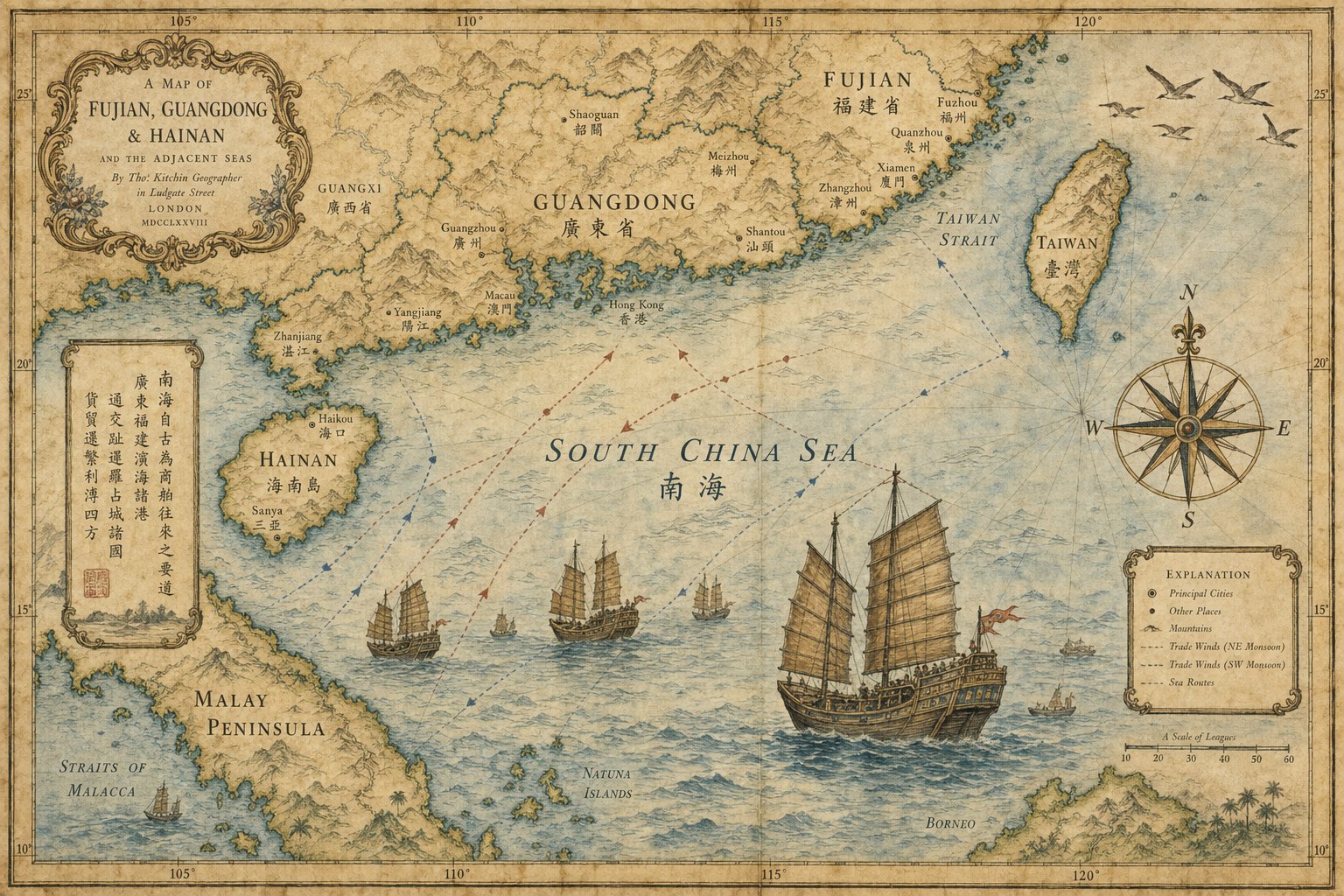
Malaysia is home to roughly 7 million ethnic Chinese, making it one of the largest overseas Chinese populations in Southeast Asia. Unlike mainland China, where the government standardized all surnames into Mandarin pinyin, Malaysia never unified its romanization system. The result is a rich, sometimes confusing landscape of Chinese last names that reflects the southern Chinese provinces from which most migrants originated, primarily Fujian, Guangdong, and Hainan.
Why Malaysian Chinese Surnames Tell a Migration Story
Chinese surnames in Malaysia do not follow the same frequency rankings you will find in China. The reason is straightforward: migration was not random. Specific dialect groups left specific provinces during specific eras, and they settled in clusters. Their pronunciations were written down phonetically by British colonial officers and never standardized afterward. Mainland China later unified surnames using Mandarin and pinyin, but by then, Malaysia's versions were already permanent on birth certificates, land titles, and school records. Even rare last names that barely register in national Chinese statistics can appear with surprising frequency in certain Malaysian towns, simply because one village sent many families to the same destination.
How This Guide Is Organized by Dialect Group
This guide breaks down Malaysian surnames by the dialect groups that carried them here: Hokkien, Cantonese, Teochew, Hakka, and Hainanese. Each group brought its own pronunciation of shared Chinese characters, creating the diverse set of malaysian surnames we see today. You will find tables, character references, and regional maps designed to help you trace your own family name back to its source.
Understanding your surname in Malaysia means understanding which dialect group your ancestors belonged to and which province they left behind. The spelling on your identity card is not just a name. It is a migration route.
The dialect your great-grandparents spoke determined how a British clerk wrote down your family name, and that single administrative moment shaped generations of identity. Whether your surname looks familiar or feels like an outlier among common Chinese last names, it carries a story worth uncovering.
How Dialect Groups Shaped Surname Distribution in Malaysia
The spelling of your surname did not happen by accident. It was shaped by which of the five major dialect groups your ancestors belonged to when they left southern China. Each group spoke a distinct variety of Chinese, and each pronounced the same written characters differently. When those pronunciations were recorded in Roman letters on colonial documents, they became permanent. That is why the study of chinese family names in Malaysia is really a study of dialect history.
Five Dialect Groups That Built Malaysian Chinese Communities
Chinese immigrants to Malaya organized themselves into dialect-based communities known as bang. These were not just linguistic groupings. They determined where you settled, what work you did, and who you married. Five groups dominated the migration flow and still define the landscape of asian names and surnames in Malaysia today.
- Hokkien (闽南) — Origin: Fujian province, particularly Quanzhou, Xiamen, and Zhangzhou. Primary migration period: 15th century onward, with the largest wave in the mid-19th to early 20th century. The largest Chinese subgroup in Malaysia, Hokkiens dominated trade and rubber plantations.
- Cantonese (广东) — Origin: Guangdong province, particularly Guangzhou and surrounding areas. Primary migration period: mid-19th century onward. Drawn by the booming tin mining industry, Cantonese settlers concentrated in developing towns like Kuala Lumpur and Ipoh.
- Teochew (潮州) — Origin: Chaoshan region in eastern Guangdong, particularly Shantou. Primary migration period: 18th to 19th century. Teochew immigrants established pepper and gambier plantations, settling heavily in Johor and parts of Kedah.
- Hakka (客家) — Origin: scattered across Guangdong, Fujian, and Guangxi provinces. Primary migration period: mid-19th century onward. Hakka workers flocked to gold and tin mines in Perak, Selangor, and Sabah, later shifting to rubber plantations.
- Hainanese (海南) — Origin: Hainan Island, off the coast of Guangdong. Primary migration period: late 19th century onward. Arriving later than other groups, Hainanese settlers found most lucrative trades already taken and became known for coffee shops and domestic service.
Each group brought its own pronunciation system, its own social networks, and its own set of cantonese surnames, Hokkien surnames, or Hakka surnames that would look completely different on paper despite sharing the same Chinese characters.
Migration Waves From Southern China to Malaya
Chinese settlement in Malaysia did not happen all at once. It unfolded across three broad waves, each bringing different people for different reasons.
The earliest wave dates back more than 500 years. In the 15th century, Chinese traders and members of a royal entourage settled in and around Melaka, some marrying local women and creating the Peranakan or Baba-Nyonya community. These were predominantly Hokkien-speaking men from Zhangzhou and Quanzhou in Fujian province.
The second and largest wave came during British colonial rule, from the early 19th century through the 1930s. Hundreds of thousands of immigrants, most from Fujian and Guangdong provinces, arrived to fill labor shortages in tin mines, rubber plantations, and railway construction. Jobs were filled based on referrals from fellow immigrants of the same dialect group, which meant entire industries became associated with specific communities. Cantonese and Hakka workers dominated tin mining. Teochews ran pepper and gambier plantations. Hokkiens controlled trade and commerce.
This occupational clustering had a direct effect on surnames in asia, particularly in the Malay Peninsula. When a Cantonese mining community grew around Ipoh, the surnames common in Guangzhou appeared there in high concentration. When Hokkien traders built networks in Penang, Fujian-origin surnames filled the local registers. The dialect group determined the romanization, and the settlement pattern determined which romanizations appeared where.
Why Malaysian Rankings Differ From Mainland China
Here is where it gets interesting. In mainland China, the surname 陈 (Chen) ranks fifth nationally. But in Malaysia, you will encounter far more people spelling it as Tan. Why? Because the majority of 陈-surnamed immigrants were Hokkien speakers from Fujian, and in Hokkien, 陈 is pronounced "Tan." Only Mandarin speakers write it as "Chen," and Mandarin-speaking immigrants were a small minority in the migration waves to Malaya.
The same logic applies across the board. The character 王 ranks first in mainland China as Wang, but in Malaysia it often appears as Ong (Hokkien) or Heng (Teochew). The character 黄 shows up as Wong among Cantonese families but as Ng or Ooi among Hokkien speakers. Every difference in spelling reflects a difference in dialect origin.
Mainland China's surname rankings are based on total national population, which is dominated by Mandarin speakers from northern and central provinces. Malaysia's Chinese population descends almost entirely from southern coastal provinces where Hokkien, Cantonese, Teochew, and Hakka were the dominant languages. This geographic filter means that surnames common in southern China are overrepresented in Malaysia, while surnames dominant in northern China barely appear at all.
So when you look at a list of common chinese family names in Malaysia and compare it to China's national list, the characters may overlap, but the romanized spellings tell a completely different story. The character is shared heritage. The spelling is migration history. And that distinction is exactly what makes tracing your roots through your surname so revealing: the letters on your IC do not just name you, they place your ancestors on a specific ship, from a specific port, speaking a specific dialect.
Most Common Malaysian Chinese Surnames With Characters and Meanings
Knowing that dialect groups shaped how surnames were spelled is one thing. Seeing the actual names side by side, with their characters and multiple romanizations, makes the pattern concrete. If you have ever wondered whether your surname ranks among the most common chinese last names in the country or sits further down the list, this section lays it out clearly.
One important note before diving in: because Malaysia never conducted a dedicated surname census, exact percentage figures are not publicly available. The rankings below reflect widely accepted estimates based on community records, clan association data, and population studies. What matters most is not a precise decimal point but the relative frequency and the character behind each spelling.
Top Ten Malaysian Chinese Surnames With Characters
The following table presents the most common chinese surnames found across Malaysia. You will notice that a single rank can produce three or four completely different-looking romanized names depending on dialect. Every entry includes the original Chinese character so you can identify the actual surname regardless of spelling.
| Rank | Chinese Character | Hokkien Romanization | Cantonese Romanization | Hakka Romanization | Meaning |
|---|---|---|---|---|---|
| 1 | 陈 | Tan | Chan | Chin | Ancient state of Chen |
| 2 | 林 | Lim | Lam | Lim | Forest |
| 3 | 李 | Lee | Lee / Lei | Li | Plum tree |
| 4 | 黄 | Ng / Ooi | Wong | Vong / Fong | Yellow |
| 5 | 王 | Ong / Heng | Wong | Vong | King |
| 6 | 吴 | Goh | Ng | Ng | Ancient state of Wu |
| 7 | 张 | Teo / Tiong | Cheong / Cheung | Chong | To draw a bow |
| 8 | 刘 | Lau | Lau / Liu | Liew / Low | To kill; battle axe |
| 9 | 谢 | Cheah / Chia | Tse / Che | Chia | Gratitude |
| 10 | 杨 | Yeoh / Yeo | Yeung | Yong | Willow tree |
A few things stand out immediately. The character 黄 and 王 can both appear as "Wong" in Cantonese, which creates confusion even among Malaysian Chinese themselves. Meanwhile, 吴 becomes Goh in Hokkien but Ng in Cantonese, while 黄 also becomes Ng in Hokkien. These overlaps are a direct consequence of dialect pronunciation being squeezed into the Roman alphabet without any standardized system.
The character 陈 (Tan/Chan) consistently ranks as the most popular chinese last name in Malaysia. Its dominance reflects the sheer size of the Hokkien-speaking community, since Fujian province, where 陈 is extremely common, supplied the largest share of immigrants. The character 林 (Lim/Lam) follows closely, also heavily concentrated among Hokkien and Teochew speakers. Together, Tan and Lim alone account for a significant portion of all Chinese surnames in the country.
李 (Lee) holds a special place in Chinese history as the imperial surname of the Tang Dynasty. In Malaysia, "Lee" became the dominant spelling because it aligned neatly with English conventions, regardless of whether the bearer was Hokkien, Cantonese, or Hakka. This makes it one of the few surnames where dialect differences are somewhat masked by a shared anglicized form.
Notable Surnames Beyond the Top Ten
The most common chinese last names get all the attention, but some of the most culturally significant surnames sit just outside the top tier. These names appear frequently in specific communities and carry rich histories that competitors often overlook.
| Chinese Character | Common Romanizations | Dialect Association | Meaning |
|---|---|---|---|
| 许 | Khor (Hokkien), Hui / Hee (Cantonese), Koh (Hakka) | Hokkien, Cantonese, Hakka | To permit; ancient state of Xu |
| 郑 | Teh / Teoh (Hokkien/Teochew), Cheng (Cantonese), Chang (Hakka) | Hokkien, Teochew, Cantonese | Ancient state of Zheng |
| 苏 | Soo (Hokkien/Cantonese), So (Cantonese), Su (Hakka) | Hokkien, Cantonese | Revive; perilla plant |
| 蔡 | Chua / Choo (Hokkien/Teochew), Choi / Tsoi (Cantonese) | Hokkien, Teochew, Cantonese | Ancient state of Cai |
| 叶 | Yeap / Yap (Hokkien/Hakka), Yip (Cantonese) | Hokkien, Hakka, Cantonese | Leaf |
| 罗 | Loh / Lo (Hokkien/Hakka), Law / Lor (Cantonese) | Hakka, Cantonese, Hokkien | A type of net; bird-catching |
| 温 | Oon / Un (Hokkien), Wan (Cantonese), Vun (Hakka) | Hokkien, Hakka | Warm; gentle |
Take 许 (Khor) as an example. In Penang, where Hokkien speakers dominate, Khor is a familiar common chinese surname. Cross over to Kuala Lumpur's Cantonese-majority neighborhoods, and the same character appears as Hui. The surname Yeoh (杨), made internationally famous by actress Michelle Yeoh, traces back to Hokkien and Teochew communities in Fujian and Guangdong provinces. Meanwhile, Teh and Teoh (郑) are distinctly Hokkien and Teochew renderings of a character that Cantonese speakers write as Cheng.
蔡 (Chua/Choi) is another surname that reveals dialect identity instantly. If someone introduces themselves as Chua, you can be fairly confident their family roots are Hokkien or Teochew. A Choi or Tsoi points toward Cantonese heritage. The character is identical. The sound tells you everything about the migration path.
These surnames beyond the top ten matter because they fill out the real picture of Chinese communities across Malaysia. They appear on shopfronts, clan hall plaques, and school honor rolls in every state. And each one, just like the top-ranked names, carries a dialect fingerprint that connects the bearer to a specific corner of southern China.
Of course, seeing the same character produce wildly different spellings raises an obvious question: how do you figure out which character a romanized surname actually represents? That puzzle, where one spelling can mean two different characters and one character can produce five different spellings, is exactly where confusion runs deepest.
Same Character Different Spellings and Why It Matters
Here is the single biggest source of confusion around any Chinese last name in Malaysia: one character can look like three completely unrelated surnames on paper, and two unrelated characters can produce the exact same romanized spelling. This is not a minor quirk. It creates real misunderstandings in daily life, from wedding invitations addressed to the wrong family to genealogy searches that hit dead ends.
The root cause is simple. Malaysian Chinese surnames were recorded phonetically based on dialect pronunciation, not based on the written character. Since most Chinese surnames are one syllable last names, the limited range of sounds available in southern dialects means overlaps were inevitable once those sounds were squeezed into the Roman alphabet.
One Character Multiple Spellings Across Dialects
Consider the character 陈. A Hokkien speaker pronounces it "Tan." A Cantonese speaker says "Chan." A Mandarin speaker writes "Chen." In Taiwan, where Mandarin is the official language, the standard romanization is Chen, making it one of the most common taiwanese surnames. But in Malaysia, Tan dominates because Hokkien speakers formed the largest migrant group. All three spellings point to the same chinese surname, the same ancestral character, and the same historical origin in the ancient state of Chen.
The character 吴 follows a similar pattern. Cantonese speakers pronounce it "Ng." Hokkien speakers say "Goh." Mandarin speakers write "Wu." If you meet a Goh and an Ng in Malaysia, they might share the exact same ancestral character without realizing it. The family name Ng in Cantonese communities traces directly to 吴, the ancient state of Wu in present-day Jiangsu province.
Then there is 林. In Hokkien and Teochew, it becomes "Lim." In Cantonese, it shifts to "Lam." In Mandarin and among taiwanese last names, it appears as "Lin." The lim last name origin traces back to the Shang Dynasty, when Prince Bi Gan's son was granted the surname Lin by King Wu of Zhou to honor his father's courage. The character 林 means "forest," composed of two tree (木) symbols standing side by side. Whether your IC reads Lim, Lam, or Lin, the ancestral story is the same.
Surname Pairs That Confuse Even Malaysian Chinese
The reverse problem is equally tricky: identical romanized spellings that represent completely different characters. The most notorious example is "Ng." In Cantonese communities, Ng almost always represents 吴. But in Hokkien and Teochew communities, Ng frequently represents 黄 (yellow), because the nasal pronunciation of 黄 in these dialects sounds nearly identical to the Cantonese pronunciation of 吴. British officials simply wrote what they heard.
This means two people both surnamed Ng may have entirely different ancestral characters, different clan associations, and different family histories. The only way to know for certain is to check the Chinese character itself.
| Romanized Spelling | Possible Character A | Dialect Context A | Possible Character B | Dialect Context B |
|---|---|---|---|---|
| Ng | 吴 (Wu) | Cantonese, Hakka | 黄 (Huang) | Hokkien, Teochew |
| Wong | 黄 (Huang) | Cantonese | 王 (Wang) | Cantonese |
| Lee | 李 (Li) | All dialects | 吕 (Lu) | Some Hakka variants |
| Lau | 刘 (Liu) | Cantonese, Hokkien | 罗 (Luo) | Some Cantonese variants |
| Ong | 王 (Wang) | Hokkien | 翁 (Weng) | Hokkien |
Notice how "Wong" can represent either 黄 or 王 in Cantonese. Both characters are extremely common, and both produce the same romanized spelling in that dialect. Without seeing the Chinese character, there is genuinely no way to tell them apart from the English spelling alone.
How to Identify the Original Character From a Romanized Name
So how do you work backward from a romanized surname to the correct character? A few practical approaches help:
- Ask about dialect background. If someone named Ng tells you their family is Cantonese, the character is almost certainly 吴. If they are Hokkien, it is likely 黄.
- Check clan association records. Clan halls are organized by character, not romanization. A Tan clan hall serves all 陈 families regardless of whether members spell it Tan, Chan, or Chen.
- Look at the Chinese name on official documents. Malaysian identity cards include Chinese characters for ethnic Chinese citizens, which eliminates ambiguity entirely.
- Consider geographic context. A Ng family from Penang is more likely to be 黄 (Hokkien area), while a Ng family from KL's Cantonese neighborhoods is more likely to be 吴.
The confusion is real, but it is also solvable. Every romanized chinese surname in Malaysia maps back to a specific character if you know the dialect and region. The spelling is the surface. The character underneath is the anchor that connects you to centuries of family history, whether your ancestors left from Fujian, Guangdong, or Hainan.
These dialect-driven spelling differences do not distribute evenly across the country. Certain states became strongholds for specific dialect groups, which means the surnames you encounter shift noticeably as you travel from Penang to KL to Johor.
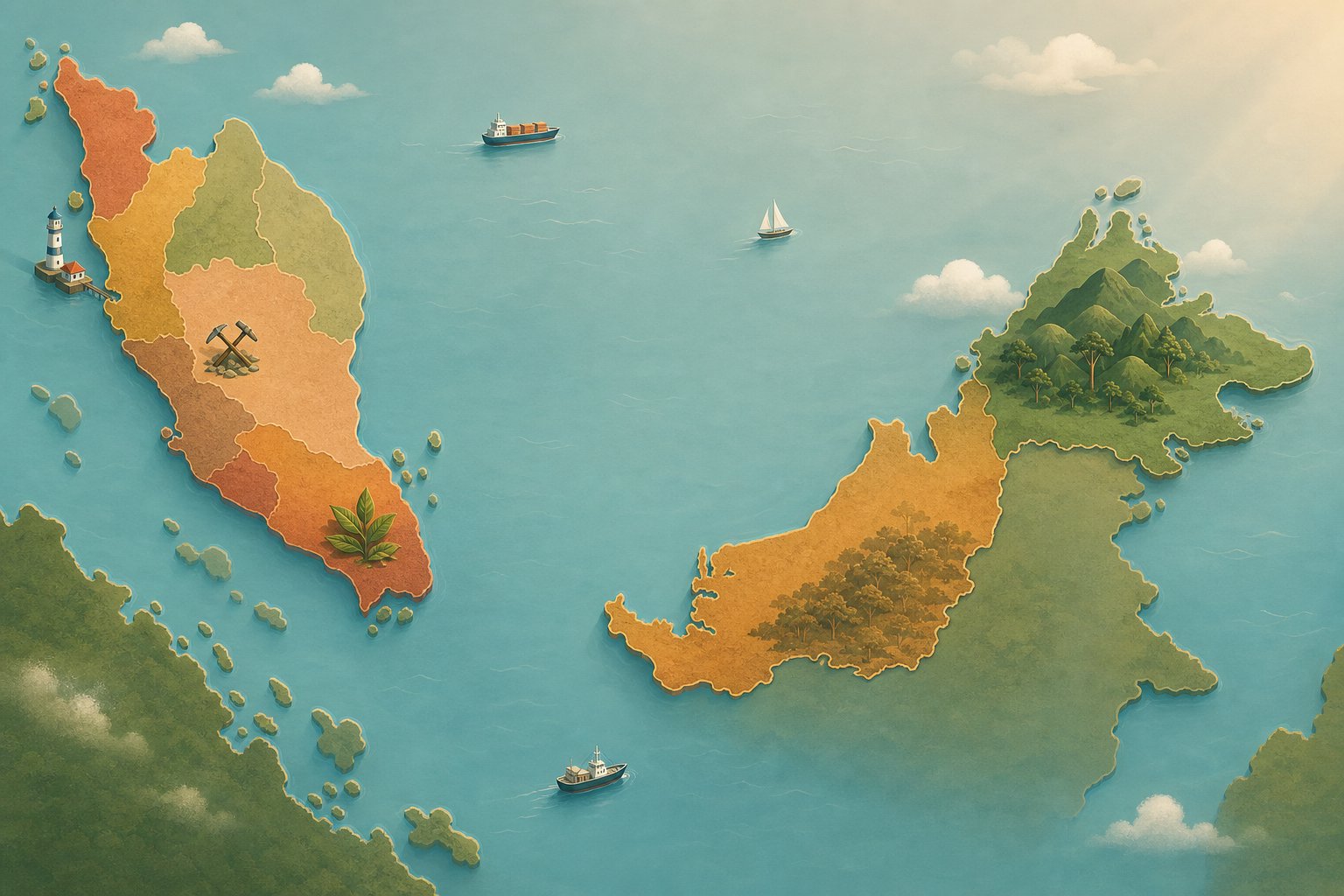
State-by-State Surname Distribution Across Malaysia
Travel from Penang to Johor Bahru and you will notice the surnames on shopfronts change. Tan and Lim dominate the north. Wong and Chan fill the Klang Valley. Teo and Chia appear along Johor's western coast. This is not random. Each region's dominant surnames in Malaysia reflect which dialect group settled there first and why they came.
Penang and the Northern Hokkien Belt
Penang's Chinese community is overwhelmingly Hokkien. The island's role as a major trading port from the late 18th century attracted merchants from Fujian province, particularly from Zhangzhou and Quanzhou. These families built commercial empires that shaped the state's economy for over a century. The 'Big Five' mercantile families of 19th-century Penang — the Khoo, Cheah, Yeoh, Lim, and Tan — were all Hokkien clans from Fujian who dominated regional trade, shipping, tin mining, and opium revenue farming.
That Hokkien dominance persists today. Walk through George Town and you will encounter Tan, Lim, Ong, Cheah, and Yeoh far more frequently than Cantonese-style spellings. The same pattern extends into Kedah, Kelantan, and Terengganu, where Zhangzhou Hokkiens settled as traders and plantation workers. If your last name in Malaysia is Tan, Lim, or Ong and your family hails from the northern states, your roots almost certainly trace to Fujian's coastal cities.
KL and Ipoh as Cantonese Strongholds
The Cantonese story in Malaysia is a tin mining story. When rich tin deposits were discovered in the Kinta Valley and along the Klang River, workers from Guangdong province poured in. They built the towns that became Kuala Lumpur, Ipoh, and Seremban. Today, approximately 80% of Cantonese Malaysians live in principal urban centers, making them the most urbanized Chinese subgroup in the country.
This concentration means that Wong, Chan, Leong, Cheong, and Lau appear with high frequency across the Klang Valley and Perak's major cities. The Cantonese dialect remains the lingua franca among Chinese communities in these areas. If your malaysia surname is spelled in Cantonese style and your family comes from KL, Ipoh, or Seremban, the connection to Guangdong's tin-era migration is direct.
Johor Teochew and Sabah Hakka Communities
Johor tells a different story. Teochew immigrants from the Chaoshan region in eastern Guangdong arrived in the 19th century to establish pepper and gambier plantations. They built new towns along Johor's western coast, and their descendants remain concentrated in Johor Bahru, Pontian, Muar, and Batu Pahat. Malaysian family names like Teo, Goh, Chia, and Chua appear with notable frequency in these areas.
Sabah, meanwhile, became a Hakka stronghold. Hakka settlers from scattered regions across Guangdong and Fujian came to work gold and tin mines, later turning to cash crop farming. The Hakka dialect is still widely spoken across Sabah's Chinese community. Surnames like Chong, Fong, Yap, and Chin cluster here, along with parts of Perak where Hakka miners settled in Taiping and surrounding towns.
| State/Region | Dominant Dialect Group | Historical Driver | Common Surnames |
|---|---|---|---|
| Penang, Kedah, Kelantan | Hokkien | Maritime trade, commerce | Tan, Lim, Ong, Cheah, Yeoh, Khoo |
| KL, Selangor, Seremban | Cantonese | Tin mining, urban development | Wong, Chan, Leong, Lau, Cheong |
| Ipoh, Perak (urban) | Cantonese, Hakka | Tin mining | Wong, Chan, Chong, Fong, Chin |
| Johor (western coast) | Teochew | Pepper and gambier plantations | Teo, Goh, Chia, Chua, Lim |
| Sabah | Hakka | Mining, cash crop farming | Chong, Fong, Yap, Chin, Wong |
| Sarawak (Sibu, Rajang) | Foochow | Rice and rubber plantations | Tiong, Ling, Wong, Chieng |
| Melaka | Hokkien (Peranakan roots) | Early trade settlement | Tan, Lee, Lim, Chan |
The pattern is consistent: economic opportunity determined settlement, settlement determined dialect dominance, and dialect dominance determined which surname spellings filled local records. Tin mining pulled Cantonese and Hakka speakers inland to river valleys. Maritime trade drew Hokkien speakers to port cities. Plantation agriculture spread Teochew families along Johor's fertile coast.
This geographic fingerprint means that your surname spelling, combined with your family's home state, can narrow down your ancestral origin with surprising precision. But surnames in Malaysia did more than just identify individuals. They became the organizing principle for entire community institutions, mutual aid networks, and clan halls that still operate across every state today.
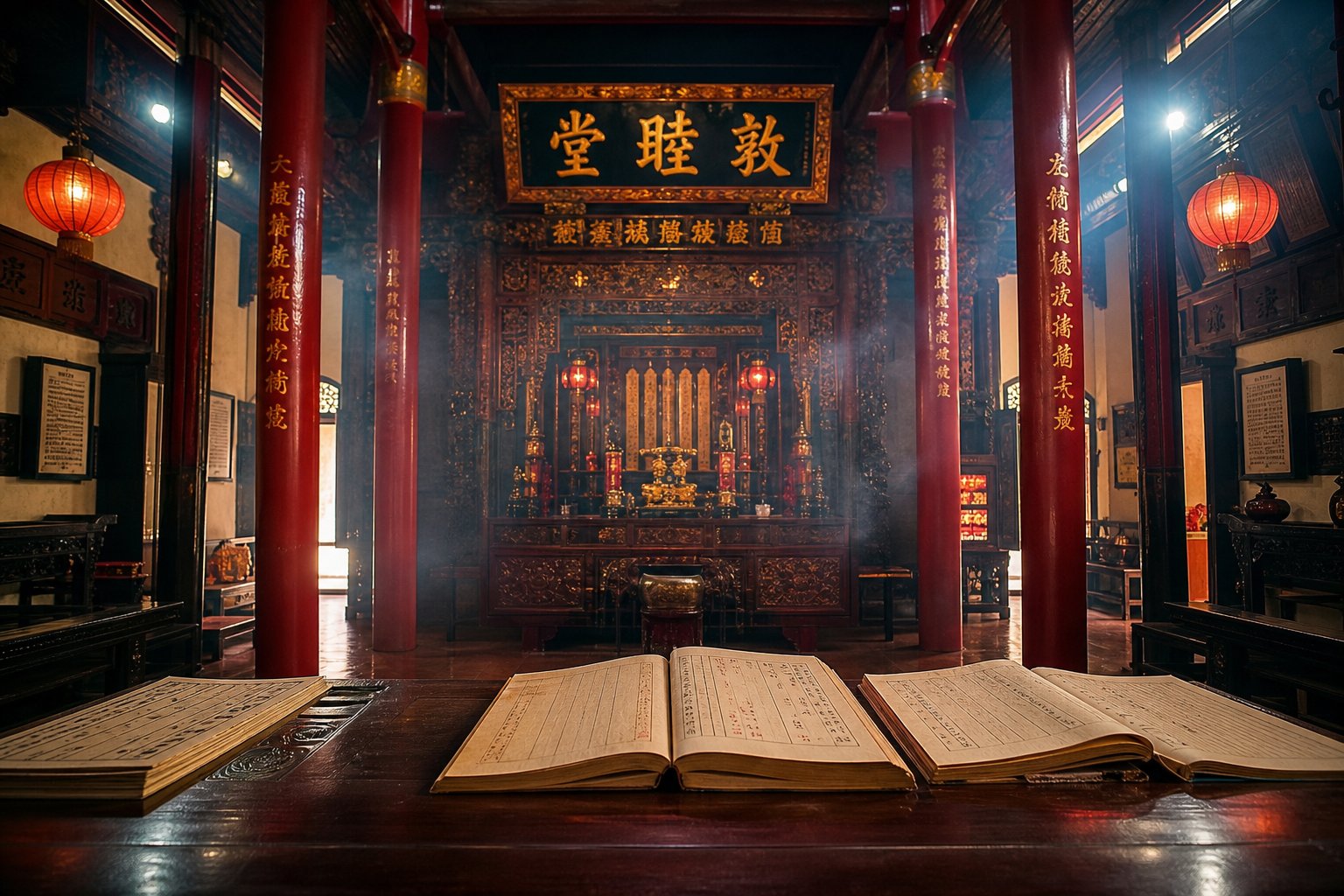
Clan Associations and the Power of Shared Surnames
When a newly arrived immigrant stepped off a ship in 19th-century Penang or Singapore, the first question was not "what is your name?" but "what is your surname and dialect?" The answer determined which community would take him in, find him work, and provide a safety net in an unfamiliar land. That system of surname-based mutual aid became formalized into clan associations, known as huay kuan (会馆) or kongsi, and these organizations remain active across Malaysia today.
What Are Clan Associations and How They Formed
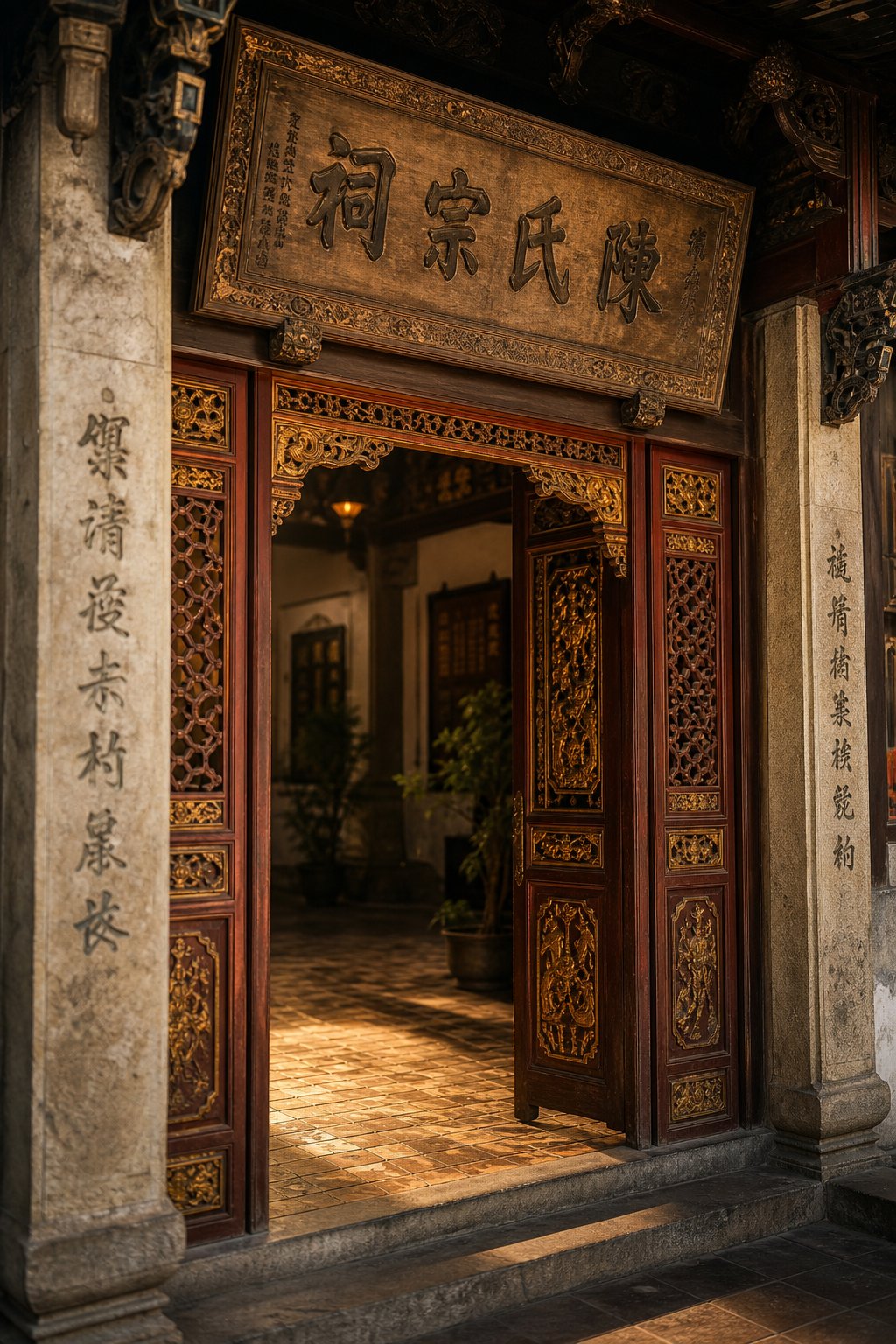
Clan associations are social organizations built around shared kinship, typically a common surname or a shared ancestral region in China. Some served people of a single surname, like the Chan She Shu Yuen Clan Ancestral Hall (陈氏书院) on Jalan Petaling in Kuala Lumpur, which has served the 陈 (Tan/Chan/Chen) community since the late 1800s. Others organized around dialect or district, like the Teochew Poit Ip Huay Kuan, which united Teochew speakers from eight districts in Guangdong province.
Their formation followed a practical logic. Immigrants arriving without family connections needed housing, employment leads, and dispute resolution. A shared surname implied shared ancestry, which created instant trust. Clan halls pooled resources to build temples, fund schools, maintain cemeteries, and settle conflicts within the community before they reached colonial courts. For surnames with high name rarity in a given area, these associations were especially vital since smaller family groups needed collective strength to survive.
Modern Functions of Surname-Based Organizations
You might assume these organizations faded after independence, but many adapted. The Malaysia Hainanese Lim Clan Association, the Huang Clan Association of Selangor and Kuala Lumpur, and dozens of similar bodies still operate from permanent premises across major cities. Their functions have shifted from basic survival support to cultural and professional services.
Modern clan associations typically provide:
- Scholarships and bursaries for members' children and grandchildren
- Networking events that connect professionals sharing the same surname
- Cultural preservation activities including dialect classes, calligraphy workshops, and traditional festival celebrations
- Genealogy resources such as ancestral records, village histories, and connections to counterpart organizations in China
- Welfare assistance for elderly or financially struggling members
- Organized heritage trips to ancestral villages in Fujian, Guangdong, and Hainan
The economic function, while never explicitly stated, remains significant. Conventions and anniversary dinners bring together business owners who share a forebears surname, creating opportunities for partnerships and referrals within a trusted network. International conventions link Malaysian chapters with counterparts in Singapore, Thailand, Indonesia, and mainland China.
Using Clan Associations for Genealogy Research
For anyone trying to build a chinese family tree, clan associations are an underused goldmine. Many halls maintain zupu (族谱), or genealogical registers, that record family lines stretching back generations to specific villages in China. Some have digitized these records. Others maintain physical ledgers that document births, marriages, deaths, and migration dates of members' families.
The practical steps are straightforward. Identify your surname's Chinese character, find the relevant clan association in your family's home state, and inquire about their genealogical holdings. Organizations like the Siow Association of Malaysia (萧氏总会) or the Persatuan Keturunan Foo maintain records that can help trace lineage even when last name rarity makes broader databases unhelpful. Many associations also maintain direct relationships with village committees in China, which means they can help connect you to ancestral records on the other side.
These clan halls represent something larger than administrative convenience. They are living proof that a shared surname carried real social weight, enough to build institutions that have survived colonial rule, Japanese occupation, independence, and modernization. The character on your IC did not just identify you to the government. It identified you to an entire community network that still exists, still meets, and still keeps records of where your family came from.
Beyond the social structures built around surnames, there is also a literary tradition that shaped how Chinese families think about their names. A single text compiled over a thousand years ago still influences how Malaysian Chinese understand the prestige and meaning behind each character.
The Hundred Family Surnames and What Each Character Means
Every Malaysian Chinese child who attended a Chinese-medium school has heard the opening line: Zhao, Qian, Sun, Li (赵钱孙李). These four syllables begin the Hundred Family Surnames (百家姓, Baijiaxing), a rhyming text compiled during the early Song Dynasty over a thousand years ago. It was never a phone book or a population survey. It was a political document dressed as a poem, and it still shapes how Chinese families think about the prestige and meaning of chinese surnames and meanings today.
The Hundred Family Surnames Text and Its Legacy
The Baijiaxing originally contained 411 surnames and was later expanded to 504, of which 444 are single-character surnames and 60 are double-character surnames. About 800 names have been derived from the original ones over time. The text is structured as a rhyming poem in lines of eight characters, designed to be memorized and recited by schoolchildren.
Here is the key detail that surprises most people: the surnames are not listed by how common they were. They are ranked by political importance during the Song Dynasty era. The first four surnames reveal this clearly:
- Zhao (赵) — the family name of the Song Dynasty emperors
- Qian (钱) — the family name of the kings of Wuyue
- Sun (孙) — the family name of the queen of Wuyue
- Li (李) — the family name of the kings of Southern Tang
Power determined position, not population. A surname could be extremely common among peasants and still rank low because it lacked royal or aristocratic association. This ordering system means the Baijiaxing tells you about political hierarchies in 10th-century China, not about which surnames were actually widespread.
The Hundred Family Surnames was never a census. It was a map of power. Yet for over a millennium, Chinese families have used it as a cultural mirror, finding pride in where their character sits within its verses.
For Malaysian Chinese families, the text carries a different kind of significance. Many grandparents can still recite portions from memory, learned in village schools in Fujian or Guangdong before they emigrated. It serves as a shared cultural reference point that connects diaspora communities back to a common literary tradition, regardless of which dialect they speak or which romanization appears on their documents. When someone looks up names in chinese and meanings, the Baijiaxing is often the starting point for understanding how their surname fits into the broader tapestry of Chinese identity.
What Individual Surname Characters Mean
Beyond rankings and politics, each surname character carries its own meaning rooted in nature, geography, occupation, or ancient history. Understanding chinese last names and meanings adds a layer of personal connection that goes deeper than pronunciation or spelling. Here are some of the most common examples found across Malaysia:
| Character | Common Malaysian Spellings | Literal Meaning | Origin Story |
|---|---|---|---|
| 林 | Lim, Lam | Forest (two trees side by side) | Granted to Prince Bi Gan's son during the Zhou Dynasty; the character depicts two trees growing together |
| 黄 | Wong, Ng, Ooi | Yellow | Associated with the Yellow Emperor (Huangdi) and the ancient state of Huang in present-day Henan |
| 陈 | Tan, Chan, Chin | To display; to arrange | Named after the ancient state of Chen, established during the Zhou Dynasty in present-day Henan province |
| 李 | Lee, Li | Plum tree | One of the most prestigious surnames in Chinese history; the imperial surname of the Tang Dynasty |
| 王 | Ong, Wong, Heng | King | Descendants of various royal houses who adopted "king" as their surname after losing power |
| 吴 | Goh, Ng, Wu | Ancient state of Wu | Named after the state of Wu in present-day Jiangsu; the character originally depicted a person shouting |
| 杨 | Yeoh, Yeo, Yeung | Willow tree | Derived from descendants of the ancient state of Yang; the willow symbolizes resilience and flexibility |
| 谢 | Cheah, Chia, Tse | Gratitude; to thank | Named after the fief of Xie granted during the Zhou Dynasty |
You will notice a pattern. Many of the meaning of chinese surnames trace back to ancient feudal states that existed during the Zhou Dynasty (1046-256 BCE). When these states were conquered or dissolved, their ruling families and subjects adopted the state name as a surname. This is why 陈 (Chen/Tan), 蔡 (Cai/Chua), 许 (Xu/Khor), and 郑 (Zheng/Teh) all reference places that no longer exist as political entities but live on through millions of descendants.
Other surnames draw from nature. 林 (Lim) paints a picture of two trees standing together. 杨 (Yeoh) evokes the willow, a tree prized in Chinese poetry for its graceful resilience. 李 (Lee) references the plum tree, which blooms in late winter and symbolizes perseverance. These natural meanings often carry philosophical weight. When Malaysian Chinese families explore chinese names and meanings, they frequently discover that their surname character encodes values their ancestors considered worth preserving across generations.
A third category connects to status and power. 王 (Ong/Wong) literally means "king," adopted by descendants of various royal houses who lost their thrones but kept their dignity through the character. The surname carries an implicit claim to noble ancestry, which is why it remains one of the most common in the Chinese-speaking world.
For Malaysian Chinese, these meanings exist in a layered way. The character carries its ancient significance. The romanized spelling carries its dialect history. And the combination of both, character plus spelling, tells you not just what your ancestors' name meant a thousand years ago, but which specific community carried that meaning across the South China Sea to Malaya. The literary tradition of the Baijiaxing gave surnames their cultural weight. The practical realities of colonial administration gave them their modern form on identity documents, a topic that introduces its own set of complications.
Legal and Administrative Realities of Chinese Surnames in Malaysia
Ancient meanings and dialect histories are fascinating, but they collide with a very modern problem the moment you open your wallet. Your MyKad, your passport, your bank account, your property titles — all of them display a romanized surname that was fixed at a specific moment in time, by a specific person, using whatever system felt right to them. For many Malaysian Chinese families, that moment produced inconsistencies that still cause headaches generations later.
How Chinese Surnames Appear on MyKad and Passports
On the Malaysian identity card (MyKad), a Chinese name typically appears in two forms: the romanized version in capital letters and, for ethnic Chinese citizens, the Chinese characters printed alongside. The romanized portion follows no single standardized system. It reflects whatever spelling was registered at birth, which in turn reflects whatever the registering officer or parent decided at that time.
The format itself can vary. Some people have their surname followed by a given name written as one word. Others have the given name hyphenated or split into two separate words. A 3 letter chinese name like "Tan Ah Kow" appears differently from "Tan Ah-Kow" or "Tan Ahkow," and all three formats exist on valid Malaysian documents. There is no enforced convention for spacing, hyphenation, or capitalization of given names.
On passports, the name mirrors whatever appears on the MyKad. This creates a rigid chain: birth certificate determines MyKad, MyKad determines passport. If the original registration contains an unusual spelling, that spelling follows you through every official document for life unless you go through a formal correction process.
For international travel, this rigidity matters. Airlines, immigration systems, and visa applications require exact name matches across documents. A surname spelled "Teh" on your MyKad but "Tay" on an old birth certificate can trigger verification delays. Hotel bookings, credit card names, and foreign bank accounts all need to align precisely with your passport spelling.
Romanization Inconsistencies Across Generations
Imagine a grandfather whose surname was recorded as "Tng" by a British colonial clerk in the 1920s. His son's birth certificate, registered in the 1950s, reads "Tan" because a different clerk used a different phonetic interpretation. His granddaughter, born in the 1980s, also has "Tan" — but her cousin, registered in a different district office, ended up with "Tang." Same family. Same character: 陈. Three different spellings on three different identity cards.
This scenario is not hypothetical. It plays out across thousands of Malaysian Chinese families. The inconsistencies stem from several overlapping factors:
- No standardized romanization system. Unlike Singapore, which adopted Hanyu Pinyin for official registration, Malaysia never mandated a single system. Each registration office operated independently.
- Clerk interpretation. Colonial-era and early post-independence clerks wrote down what they heard. A Hokkien surname pronounced slightly differently by two speakers could produce two different spellings.
- Dialect shifts across generations. A grandparent who spoke Teochew might have registered under a Teochew romanization, while their grandchild, raised speaking Mandarin, preferred a Mandarin-based spelling.
- Inconsistent treatment of asian second names. Given names were sometimes recorded in dialect, sometimes in Mandarin, and sometimes using an English name, with no consistent rule about order or format.
- Regional variation. Registration offices in Penang, KL, and Sabah each had their own informal conventions, meaning the same surname in malay-administered records could look different depending on which state office processed it.
The result is that siblings born years apart, or registered in different districts, can carry different surname spellings on their official documents. Parents who moved between states sometimes found that their children's names were recorded differently simply because the new district used a different romanization habit.
Correcting Surname Spelling on Official Documents
What happens when you need to fix an inconsistency? The process runs through Malaysia's National Registration Department, known as JPN (Jabatan Pendaftaran Negara). According to Malaysia's Ministry of Foreign Affairs, any change of name or addition to a passport requires the applicant to appear personally in Malaysia and submit the request directly to JPN. The process cannot be completed at overseas consulates.
The typical requirements include:
- An oath letter (surat akuan sumpah) declaring the name change
- Original Malaysian birth certificate or Borang W for those born abroad
- Current Malaysian identity card
- Supporting documents such as adjustment papers or statutory declarations
- Completed form JPN KP16
- A processing fee of RM10
Sounds straightforward on paper. In practice, the process can be slow and requires justification. JPN does not automatically approve spelling corrections, particularly if the requested change differs significantly from what appears on the birth certificate. Applicants often need to demonstrate that the current spelling is an error or that the correction aligns with the family's established usage.
For Malaysians living overseas, this requirement to appear in person creates a significant barrier. You cannot correct your surname spelling from abroad. This means some families live with mismatched documents for years, managing the inconvenience rather than making a special trip home for what should be a simple administrative fix.
The deeper issue is systemic. Because Malaysia never adopted a unified romanization standard for Chinese names, every correction is handled as an individual case rather than part of a broader normalization effort. Each family navigates the bureaucracy alone, armed with whatever documentation their parents or grandparents happened to keep. For those whose original registration records were lost during the Japanese occupation or in district office fires, proving the "correct" spelling becomes nearly impossible.
These administrative realities shape daily life in ways that go beyond paperwork. They affect how families relate to their names, whether younger generations feel connected to the dialect spelling their grandparents carried, and how Chinese naming conventions interact with Malaysia's broader multicultural society.
Cultural Practices Still Tied to Surnames in Modern Malaysia
Paperwork and bureaucracy are one thing. But surnames reach far deeper into daily life than what appears on an identity card. They influence who you marry, how colleagues address you, which ancestral hall you visit during festivals, and whether a business introduction feels like meeting a stranger or reconnecting with distant family. For Malaysian Chinese, a surname is not just inherited. It is actively lived.
Same-Surname Marriage Traditions Then and Now
One of the oldest cultural taboos in Chinese society holds that two people sharing the same surname should not marry. The logic was straightforward: if you share a surname, you might share a common ancestor, and marrying within the same bloodline was considered both morally wrong and biologically risky. In traditional Chinese communities, this rule was enforced strictly. A Tan could not marry another Tan. A Lim could not marry another Lim. It did not matter if the two families came from different provinces or had no traceable connection whatsoever. The shared character was enough.
In Malaysia, older generations took this seriously. Families would object to engagements between people with the same surname, and matchmakers actively avoided pairing same-surname candidates. The taboo carried extra weight in smaller towns where clan associations were socially powerful and community opinion mattered.
Has this changed? Largely, yes. Younger Malaysian Chinese generally view the same-surname taboo as outdated. Urbanization, smaller family sizes, and intermarriage across dialect groups have weakened the practical basis for the rule. When your surname is Tan and you live in a city where Tan is one of the most common chinese names, ruling out every potential partner who shares it would eliminate a significant portion of the dating pool. Most families today accept same-surname marriages without objection, though you will still encounter grandparents who raise an eyebrow or quietly express discomfort. The taboo has not disappeared entirely. It has softened into a cultural memory rather than a binding rule.
Surnames in Malaysian Multicultural Daily Life
Malaysia's multiethnic society adds another layer of complexity to how asian names function in everyday interactions. Chinese name order places the surname first and the given name second. Malay and Indian naming conventions follow different structures entirely. This creates frequent moments of confusion in workplaces, schools, and government offices.
Imagine a colleague named Tan Wei Ming. A Chinese Malaysian knows instantly that Tan is the surname and Wei Ming is the given name. But a Malay or Indian colleague unfamiliar with Chinese naming conventions might assume "Ming" is the surname because it comes last, following the Western first-name-last-name pattern. The reverse happens too: Chinese Malaysians sometimes struggle with Malay names that include patronymics (bin/binti) or Indian names where the father's initial precedes the given name.
In practice, most Malaysians navigate this through experience and goodwill. Workplaces with mixed teams develop informal literacy about each other's naming systems. Many Chinese Malaysians also adopt an English first name for professional settings, introducing themselves as "David Tan" or "Michelle Lim" to simplify cross-cultural interactions. This hybrid approach is so common that popular chinese names in Malaysia now include both the traditional Chinese given name and an English name used in daily life.
Addressing someone correctly still matters socially. Calling a Chinese Malaysian "Mr. Wei Ming" instead of "Mr. Tan" signals unfamiliarity. Getting it right signals respect. In business contexts, where relationship-building is central to Malaysian Chinese commercial culture, using the correct surname can open doors that a mangled name would keep shut.
The Growing Interest in Surname Genealogy
Something unexpected is happening among younger Malaysian Chinese. A generation that grew up speaking Mandarin or English rather than their grandparents' dialect is circling back to ask fundamental questions: where did my family come from? What does my surname actually mean? What is my chinese name in its original character form, and what story does it tell?
This genealogical curiosity is driven by several forces. Social media connects diaspora communities across borders, making it easier to find distant relatives or ancestral village connections. DNA testing services have popularized the idea of tracing ethnic origins. And the gradual passing of the immigrant generation creates urgency. Once the grandparents who remember the village name and the ship journey are gone, that oral history disappears unless someone records it.
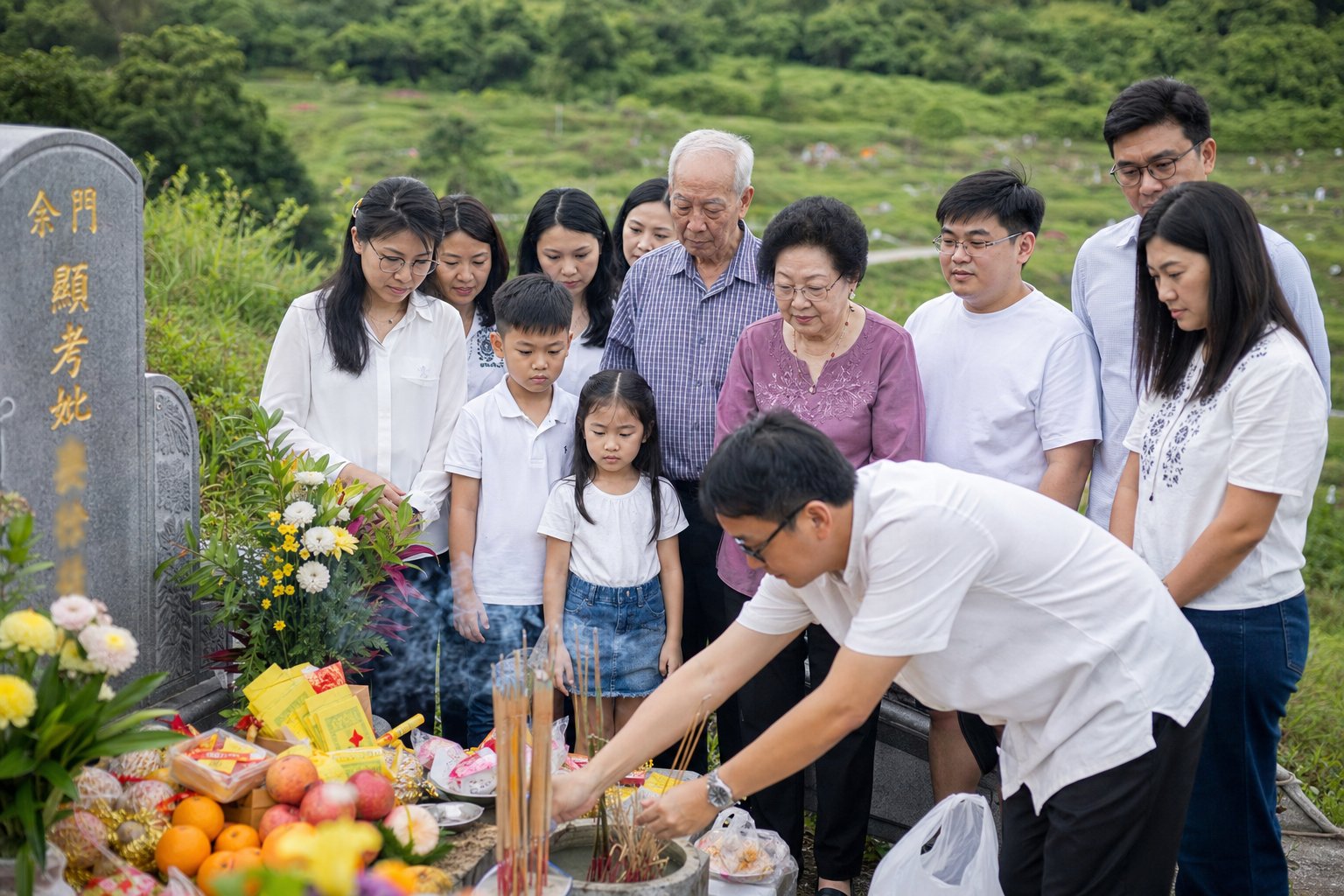
The Qing Ming Festival (清明节) has become a focal point for this renewed interest. During this annual tomb-sweeping occasion, families visit ancestral graves to pay respects, clean headstones, and make offerings. For many younger Malaysians, these visits are the only time they encounter their family's full Chinese name inscribed in characters, along with the ancestral hometown carved into the headstone. As geographer Ming Li Yong reflected after visiting her grandparents' grave in Pahang, the festival effects a temporal change in the landscape, bringing together up to four generations of families and transforming a cemetery into a living space of kinship and memory.
In diaspora communities, surnames are not just inherited labels. They are bridges between generations, connecting the living to ancestors they never met, to villages they have never visited, and to a history that would otherwise exist only in fading documents.
Clan associations have noticed this trend and responded by organizing heritage trips to ancestral villages in China, digitizing genealogical records, and hosting talks on surname history. Online platforms dedicated to Chinese genealogy see growing traffic from Malaysian users searching for their family's roots. The question "what is my chinese name" has evolved from a simple identity query into a doorway for exploring migration history, dialect heritage, and cross-generational connection.
This renewed interest does not mean younger Malaysians are returning to traditional practices wholesale. Most are not joining clan associations or observing the same-surname marriage taboo. What they are doing is treating their surname as a research project, a thread to pull that unravels a story stretching from a specific village in Fujian or Guangdong, across the South China Sea, to the town where their family eventually settled. The surname on their IC, once just an administrative fact, becomes a starting point for understanding who they are and where they came from.
In a country where the most common chinese names appear on millions of identity cards, each one still carries a unique migration path. The character is shared. The journey behind it is always personal.
Frequently Asked Questions About Malaysian Chinese Surnames
1. Why is Tan more common than Chen in Malaysia?
Tan and Chen both represent the same Chinese character 陈. The difference is dialect pronunciation. Most 陈-surnamed immigrants to Malaysia were Hokkien speakers from Fujian province, and in Hokkien the character is pronounced 'Tan.' Mandarin speakers romanize it as 'Chen,' but Mandarin-speaking migrants were a small minority in the historical waves to Malaya. Since Hokkien speakers formed the largest Chinese subgroup in Malaysia, Tan became the dominant spelling on official documents, birth certificates, and identity cards across the country.
2. How can I find out which Chinese character my Malaysian surname represents?
Start by asking older family members about your dialect background, as this narrows down the possibilities significantly. Check your Malaysian identity card (MyKad), which prints Chinese characters alongside the romanized name for ethnic Chinese citizens. You can also consult clan association records organized by character rather than romanization, or consider geographic context since certain dialects dominate specific states. For example, an Ng family from Penang likely represents 黄 (Hokkien area), while an Ng family from KL probably represents 吴 (Cantonese area).
3. What are the most common Chinese surnames in Malaysia?
The most common Malaysian Chinese surnames by frequency are 陈 (Tan/Chan), 林 (Lim/Lam), 李 (Lee), 黄 (Wong/Ng/Ooi), 王 (Ong/Wong), 吴 (Goh/Ng), 张 (Teo/Cheong/Chong), 刘 (Lau/Liew), 谢 (Cheah/Tse), and 杨 (Yeoh/Yeung). Each surname appears in multiple romanized forms depending on whether the bearer's family is Hokkien, Cantonese, Hakka, or Teochew. The character 陈 consistently ranks first due to the large Hokkien-speaking population descended from Fujian province immigrants.
4. Can I change the spelling of my Chinese surname on Malaysian documents?
Yes, but the process requires appearing in person at Malaysia's National Registration Department (JPN). You need to submit an oath letter, your original birth certificate, current MyKad, supporting documents, and form JPN KP16 with a RM10 fee. JPN does not automatically approve changes, especially if the requested spelling differs significantly from your birth certificate. The correction cannot be done from overseas, which creates barriers for Malaysians living abroad. Many families live with mismatched spellings across generations rather than navigating this bureaucratic process.
5. Why do different Malaysian states have different common Chinese surnames?
Historical settlement patterns tied to economic opportunities created distinct dialect-group concentrations across Malaysia. Hokkien traders settled in port cities like Penang, bringing surnames like Tan, Lim, and Ong. Cantonese and Hakka miners concentrated in KL and Ipoh for tin mining, establishing Wong, Chan, and Chong as dominant names. Teochew plantation workers settled Johor's western coast with surnames like Teo, Goh, and Chia. Hakka communities in Sabah brought Chong, Fong, and Yap. Each dialect group romanized shared Chinese characters differently, so the dominant spellings shift as you move between states.