What Is a Name Generator From Two Names
Imagine you and your partner want a single word that represents both of you, or you're expecting a baby and want a name that honors two family members at once. A name generator from two names is the tool built for exactly that scenario. It accepts two input names, breaks them down into their component parts, and produces blended, merged, or fused outputs that carry traces of both originals.
A name generator from two names is a digital tool that uses algorithmic and linguistic techniques to split, rearrange, and fuse syllables or letters from two input names, producing unique combined name options.
The appeal is straightforward: people want names that feel original yet meaningful. A random name pulled from a list carries no personal weight. A name combiner, on the other hand, creates something rooted in identity. That's why the concept stretches far beyond novelty. Couples use it for relationship nicknames and wedding hashtags. Parents use it to craft baby names drawn from both sides of the family. Entrepreneurs blend founder names into brand identities. Gamers fuse character names to build memorable handles.
What a Name Combiner Actually Does
At its core, a name combiner generator works by dissecting two names into smaller units, typically syllables, phonetic chunks, or individual letters. It then tests different split points and recombines the fragments in multiple arrangements. Think of it like shuffling puzzle pieces from two different boxes to see which ones click together naturally.
A name combiner tool typically factors in syllable count, phonetics, and the natural flow of sounds when generating its output list. Some function as a simple name mixer, swapping the front half of one name with the back half of another. Others operate more like a fusion name generator, weaving letters or sounds together in layered patterns. The result is a curated set of candidates rather than a single rigid answer, giving you room to pick the blend that resonates most.
Why Combined Names Carry Special Meaning
When you combine two names into one, you're doing more than wordplay. You're creating a symbol of connection. A couple in Australia recently shared their decision to blend their surnames Evernden and Gillman into Everman, describing it as genuinely uniting on even ground, a team in the truest sense. That emotional weight is what separates a combined name from a randomly generated one.
For baby names, the stakes are even higher. A combine name generator helps parents discover options that honor both lineages without defaulting to one side. For brands, a fused name signals partnership and shared vision from the very first impression. Whether the context is playful or permanent, the underlying motivation stays the same: two identities, one name, and the meaning that lives in the blend.
Of course, not every combination lands well. Some blends sound effortless while others feel forced or unpronounceable. The difference comes down to linguistics, and understanding the science behind natural-sounding combinations is what separates a great blend from an awkward one.
The Cultural History of Name Blending
That tension between effortless blends and awkward ones didn't emerge in a vacuum. The cultural appetite for combined names has a traceable history, one that starts with Hollywood gossip columns and winds its way into every corner of the internet.
Celebrity Portmanteaus That Started It All
When Ben Affleck and Jennifer Lopez began dating in the early 2000s, tabloid media coined "Bennifer" — the first widely recognized celebrity portmanteau. The term stuck because it was catchy, compact, and instantly recognizable. A few years later, "Brangelina" fused Brad Pitt and Angelina Jolie into a single cultural brand. As Vanessa Diaz, a communications professor at Cal State Fullerton, noted in her research, the Brangelina tag arose during an intense period of competition between celebrity tabloids, turning two superstars into one super-superstar.
Why did some combinations stick while others faded? "Brangelina" works because it preserves natural syllable flow and borrows recognizable chunks from both names. "TomKat" (Tom Cruise + Katie Holmes) succeeded through a different trick — it sounded like an existing word. Meanwhile, forced combinations that ignored phonetic logic never gained traction. The lesson was clear: creating ship names that resonate requires more than just mashing letters together.
From Fan Fiction to Mainstream Culture
Fan communities picked up the practice and ran with it. According to Book Riot, the concept of "shipping" originated with X-Files fans in 1995, though early fans used slashes (Mulder/Scully) rather than blended names. The shift toward portmanteau ship names happened in the mid-2000s, partly because platforms like Tumblr didn't allow slashes in tags, making blended names more practical for finding and sharing content.
Today, fandoms generate ship names like Reylo (Rey + Kylo Ren), Everlark (Everdeen + Mellark), and Blackbonnet (Blackbeard + Bonnet) with the same creative instinct tabloids once applied to real couples. A ship name generator or ship name maker automates what fans used to do manually, letting anyone generate ship names in seconds. The name shipper generator concept grew directly from this community need.
The timeline tells the story clearly:
- Early 2000s — Celebrity tabloids coin portmanteaus like Bennifer and Brangelina, proving combined names can become cultural shorthand.
- Mid-2000s — Online fan communities adopt blended names for fictional pairings, driven by tagging systems that reward compact, unique terms.
- 2010s onward — Mainstream tools emerge to serve everyone from couples wanting wedding hashtags to parents seeking baby names, making the ship generator names concept accessible beyond fandom.
The tradition also extends beyond English-speaking cultures. Many naming conventions worldwide already blend family names or honor multiple relatives through combination. Spanish compound surnames, Icelandic patronymic blending, and various African naming traditions that weave ancestral references into a child's name all reflect the same impulse: two sources, one identity.
What started as tabloid shorthand became a universal creative practice. But the real question isn't whether people want to combine names — it's why certain combinations sound natural while others fall flat. That answer lives in the mechanics of language itself.
The Linguistics Behind Name Combining
Every language has invisible rules governing which sounds can sit next to each other. You follow these rules every day without thinking about them. When you hear a made-up word like "blick," it sounds perfectly English. But "bnick"? Your brain rejects it instantly. That same instinct determines whether names mashed together sound like a natural fit or an unpronounceable mess.
The field responsible for these rules is called phonotactics, and it defines which sound sequences a language permits in terms of consonants, vowels, and syllables. When you mix the names of two people, you're essentially asking whether the resulting sound sequence obeys these deeply ingrained patterns. If it does, the blend feels effortless. If it doesn't, no amount of creative spelling will save it.
Syllable Boundaries and Why They Matter
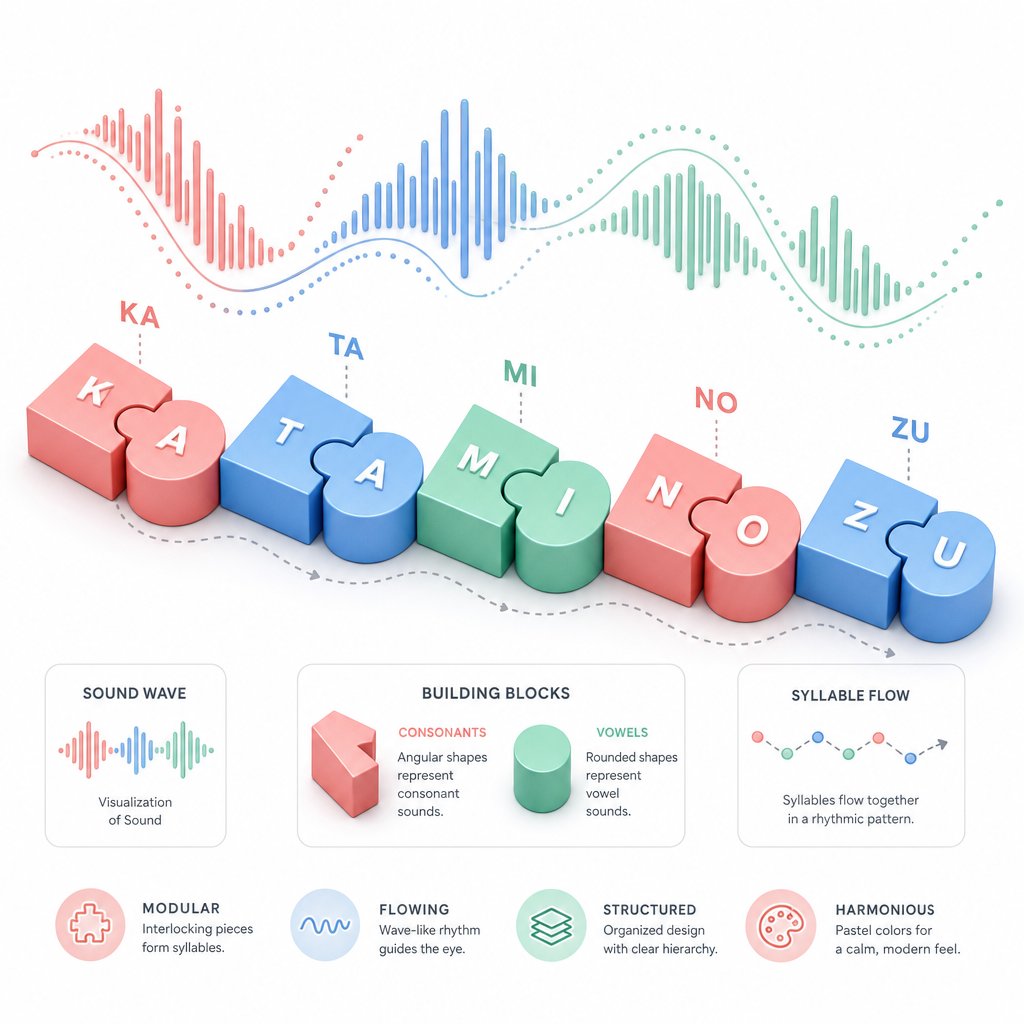
Every name breaks into syllables, and those syllable boundaries are the most important cut points when mixing of names occurs. A syllable in English typically follows a pattern: an optional consonant onset, a vowel nucleus (the most sonorous element), and an optional consonant coda. The name "Angela" splits as An-ge-la. "Brad" is a single syllable: Brad.
When you cut a name at a natural syllable boundary, the resulting fragment already sounds like something your mouth knows how to produce. Cut mid-syllable, and you create fragments that violate English sound rules. Consider these two approaches to blending "Brandon" and "Angelina":
- Cut at syllable boundaries: Br-an + gelina = Brangelina (clean, pronounceable)
- Cut mid-syllable: Bran-d + ngelina = Brandngelina (consonant pileup, unpronounceable)
"Brangelina" works because "Br" is a legal onset cluster in English, the vowel "a" provides a proper nucleus, and the transition into "-gelina" follows a natural syllable pattern. The blend respects boundaries your brain already recognizes. This is why the best name mixtures always honor where syllables naturally begin and end rather than slicing through them arbitrarily.
Vowel Harmony and Consonant Clusters
Sounds complex? It's actually something you already feel intuitively. English allows certain consonant clusters at the beginning of syllables (like "str," "spl," "cr") and others at the end (like "nk," "lp," "mps"). But it strictly forbids many combinations. You'll never find a native English word starting with "tl" or "sr" because those sequences violate English phonotactics.
When names mix together at a junction point, the consonants from the end of one fragment meet the consonants at the start of the next. If that meeting creates an illegal cluster, the result sounds foreign or broken. Imagine blending "Mark" and "Trina": "Marktrina" forces a "rkt" cluster that English doesn't permit within a single syllable. But "Martrina" or simply "Markina" avoids the problem entirely.
Vowel harmony plays a subtler role. English speakers find transitions between similar vowel sounds smoother than abrupt jumps between very different ones. A blend that moves from an "ah" sound to an "ee" sound (like in "Brangelina") works because English words commonly make that transition. But a blend forcing unusual vowel sequences can feel jarring even when the consonants cooperate.
Here's a quick reference for which clusters English permits:
| Position | Permitted Clusters | Forbidden Clusters |
|---|---|---|
| Word/syllable start | str, spl, cr, bl, tr, pr, gr | tl, sr, bn, dl, fn, ng |
| Word/syllable end | nk, lp, mps, nds, lts, ngth | bk, gp, mt (rare), pm |
| Blend junction | Vowel-to-consonant, sonorant-to-stop | Three+ stops in sequence, sibilant pileups |
The more sonorous a consonant is (like L, R, M, N), the closer it naturally sits to the vowel in a cluster. Less sonorous sounds (like S, T, P, K) gravitate toward the outer edges. When you mix name together fragments, respecting this sonority hierarchy keeps the result sounding like a real word rather than a keyboard smash.
How Input Name Properties Affect Output Quality
Not all name pairs produce equally good blends. The raw material matters enormously. Three properties of your input names directly determine how many usable combinations you'll get and how natural they'll sound:
- Shared sounds: Names that share vowels or consonants create natural overlap points. "Sarah" and "Aaron" share the "ar" sound, making blends like "Saaron" or "Arah" feel seamless. When you mix the names and find common ground already built in, the output practically writes itself.
- Syllable count: Names with similar syllable counts produce more balanced blends. Two two-syllable names (like "Jason" and "Linda") yield combinations where neither source dominates. Pairing a one-syllable name with a four-syllable name often creates lopsided results where one identity overshadows the other.
- Name length: Shorter names offer fewer cut points, which means fewer possible combinations overall. Longer names provide more syllable boundaries to work with, but they also risk producing blends that are too long to be practical.
Stress patterns add another layer. English names carry natural emphasis on specific syllables: DA-niel, je-SSI-ca, a-MAN-da. The most successful name mixtures preserve a familiar stress pattern in the output. "Brangelina" carries stress on the third syllable (bran-ge-LI-na), mirroring the rhythm of common English words like "ballerina." That rhythmic familiarity is part of why it sounds like a name that always existed rather than something forced into being.
When names mixed together share compatible stress patterns, the blend inherits a natural rhythm. When they clash, the result often sounds awkward regardless of how clean the consonants and vowels are. A name generator from two names that accounts for stress placement will consistently outperform one that only looks at letters on a screen.
Understanding these linguistic principles doesn't just explain why some blends flop. It gives you a framework for predicting which combinations will work before you even try them. The specific techniques for applying this knowledge, from portmanteau construction to syllable splicing, each leverage these rules in different ways.
Six Proven Techniques for Combining Two Names
Linguistic rules explain why certain blends sound right. But knowing the rules and knowing how to apply them are two different things. Each name combination technique leverages phonotactics and syllable structure in its own way, producing distinctly different results from the same pair of input names. To make this concrete, let's run a single pair — Jessica and Daniel — through all six methods and compare what comes out.
| Method | How It Works | Example Input | Example Output | Best Use Case |
|---|---|---|---|---|
| Portmanteau | Takes the beginning of one name and the ending of another | Jessica + Daniel | Jessiel, Dannica | Couple ship names, wedding hashtags |
| Syllable Splicing | Swaps or recombines whole syllable units between names | Jessica + Daniel | Danica, Jessian | Baby names, character names |
| Letter Blending | Interweaves individual letters from both names | Jessica + Daniel | Jdaensisceala | Creative projects, artistic pseudonyms |
| Initial-Based | Uses first letters or sounds to inspire a new name | Jessica + Daniel | Jade, Jaden | Business names, baby names |
| Phonetic Merging | Blends sounds rather than spellings | Jessica + Daniel | Jessaniel, Dassica | Gaming handles, pen names |
| Acronym Formation | Builds from initials or key letter sequences | Jessica + Daniel | J&D, JeDa | Brand names, logos, monograms |
Let's break each one down with additional examples so you can see exactly how to combine a name using the approach that fits your situation.
Portmanteau Method
This is the most intuitive technique and the one behind nearly every celebrity couple name you've encountered. You take the front portion of one name and attach the tail portion of the other. The key is choosing a split point that lands on a natural syllable boundary.
Using Jessica + Daniel:
- Jess + iel = Jessiel (front of Jessica, tail of Daniel)
- Dan + ica = Danica (front of Daniel, tail of Jessica)
- Jess + aniel = Jessaniel (longer front portion, longer tail)
- Dani + ca = Danica (alternate split preserving two syllables from each)
Real-world brand names follow this same logic. Netflix combines "internet" and "flicks." Verizon fuses the Latin "veritas" with "horizon." A name combo generator typically defaults to this method because it produces the highest ratio of pronounceable results. The technique works best when both names have at least two syllables, giving you multiple clean split points to test.
Syllable Splicing and Letter Blending
Syllable splicing goes a step further than portmanteau by treating each syllable as a modular unit you can rearrange freely. Instead of simply front-to-back joining, you swap internal syllables between names to produce unexpected combinations.
Jessica breaks into Jes-si-ca. Daniel breaks into Dan-iel. Splicing options include:
- Dan + si + ca = Dansica
- Jes + iel = Jessiel
- Dan + i + ca = Danica (a real name, which signals a natural blend)
- Jes + an + iel = Jesaniel
Letter blending takes a more experimental path. You interweave individual letters from both names in alternating or patterned sequences. The raw output — something like "Jdaensisceala" — is rarely usable as-is. But scanning through the interweaved string often reveals hidden combinations you wouldn't have spotted otherwise. Think of it as a creative brainstorming technique rather than a finished-product method. A combine words generator sometimes uses this approach to surface unexpected options buried within two inputs.
Initial-Based and Acronym Approaches
Sometimes the cleanest path to a name combination creator result is the simplest one. Take the first letters or sounds of both names and find an existing name or word that starts with them.
Jessica (J) + Daniel (D) opens up:
- Jade — a real name beginning with J, containing D
- Jaden — combines J and D sounds into a familiar name
- Jude — uses J from Jessica and the "d" sound from Daniel
- Jedidiah — a longer option weaving both initials throughout
Acronym formation works similarly but leans toward branding. J&D becomes a monogram for a wedding. "JeDa" becomes a business name. Real companies use this constantly — Arby's comes from "R" and "B" (Raffel Brothers), and IKEA combines the founder's initials with his hometown letters. As a combinations of names generator technique, initial-based methods produce results that feel professional and clean because they reference the source names subtly rather than overtly.
Phonetic merging sits between portmanteau and letter blending. Instead of looking at how names are spelled, you work with how they sound. "Jessica" phonetically is /JESS-ih-kuh/ and "Daniel" is /DAN-yul/. Merging the sounds gives you options like "Jessanyul" or "Dannika" that prioritize smooth pronunciation over visual logic. This is particularly useful when spelling-based methods produce awkward letter combinations that look strange on paper but would sound fine spoken aloud.
Each technique serves a different purpose, and the best name combination generator results often come from running the same pair through multiple methods and comparing outputs. A combine name maker approach that tests all six gives you the widest field of candidates. The real skill isn't in generating options — it's in knowing which technique matches your specific goal, whether that's a playful couple name or a child's legal identity.

Matching the Right Technique to Your Use Case
A portmanteau that makes a perfect Instagram caption would be a terrible legal name for a newborn. A polished initial-based brand name would fall flat as a playful couple nickname. Context determines which technique delivers the best result, so let's map each scenario to the method that serves it.
| Use Case | Recommended Technique | Why It Works | Example (from Sarah + Michael) |
|---|---|---|---|
| Couple ship names | Portmanteau | Catchy, instantly recognizable, social-media friendly | Michrah, Sarachel |
| Wedding hashtags | Portmanteau + wordplay | Memorable, easy to spell, unique on Instagram | #SarahchelForever |
| Baby names | Syllable splicing | Produces results that sound like real, established names | Micah, Sarai |
| Sibling name sets | Initial-based + phonetic merging | Creates cohesive sound patterns across multiple names | Mira, Sael (shared vowel tones) |
| Business/brand names | Initial-based or acronym | Professional, clean, easy to trademark | SaMi, Misha Co. |
| Gaming handles | Phonetic merging + letter blending | Unique, edgy, available as usernames | Sychael, Mikrah |
| Pet names | Portmanteau (short form) | Fun, informal, easy to call out loud | Mirah, Sacha |
Couple Ship Names and Wedding Hashtags
When you're building a couple name generator result for social media, memorability beats everything else. The portmanteau method dominates here because it produces short, punchy blends that read well in a hashtag and sound natural when spoken aloud. A couple nickname generator works best when it prioritizes the catchiest syllable from each name rather than trying to preserve both names equally.
For wedding hashtags specifically, The Knot recommends checking that your combined tag hasn't been used before and capitalizing the first letter of each word for readability. The best couple nickname maker results combine name blending with wordplay — think alliteration, rhymes, or puns layered on top of the portmanteau. Matching names for couples in this context means finding the blend that guests will actually remember and type correctly after a few glasses of champagne.
Quick tip: say your hashtag out loud and ask someone to spell it back. If they can't, simplify.
Baby Names From Parent Names
The stakes shift dramatically when the combined name becomes someone's legal identity. A baby name needs to pass tests that a ship name never faces: it must sound natural on a resume, age well from playground to boardroom, and avoid unintended associations. Syllable splicing is the strongest technique here because it produces outputs that resemble established names rather than obvious mashups.
Pampers notes that naming a child after family members carries emotional weight, and parents should ensure the name feels meaningful without creating obligations for future siblings. A sibling name generator approach helps here too — if you plan multiple children, consider how the first blended name sets a pattern. Using initial-based methods or shared phonetic themes across siblings creates a cohesive set without forcing identical structures on every child.
The couple nickname creator mindset (fun, casual, disposable) has no place in baby naming. Instead, test every candidate against real-world scenarios: doctor's office, graduation ceremony, job interview.
Business Names and Gaming Handles
Brand names built from two founder names need to feel intentional and professional. Initial-based and acronym techniques shine here because they reference the source names without wearing them on their sleeve. Think of how Haribo derives from Hans Riegel Bonn — subtle, clean, and impossible to guess without being told.
Gaming handles occupy the opposite end of the spectrum. Players want something unique, slightly edgy, and guaranteed available as a username. Phonetic merging and letter blending produce the kind of unexpected combinations that pass availability checks on crowded platforms. A name generator from two names tuned for gaming prioritizes uniqueness over pronounceability, since the name lives on-screen more than it lives in conversation.
Matching names to context is half the battle. The other half is knowing how to execute the technique by hand when no tool gives you exactly what you want.
How to Manually Combine Names Without a Tool
Tools are convenient, but they can't replace the creative instinct you bring to the process yourself. When you combine two names by hand, you control every decision — where to cut, what to keep, and which sounds deserve priority. Here's a repeatable method you can use with any pair of names.
Let's walk through the full process using two sample names: Melissa and Brandon.
The Split and Swap Method Step by Step
This is the most intuitive way to combine names manually. You break both names into syllable chunks, then swap pieces between them until something clicks.
- Write both names out and mark syllable breaks. Melissa becomes Me-lis-sa. Brandon becomes Bran-don.
- Identify shared letters or sounds. Both names contain an "n" sound and share the vowel "a." These overlaps become your connection points.
- Try different split points. Take the front of one and the tail of the other. Bran + issa = Branissa. Me + don = Medon. Mel + andon = Melandon.
- Reverse the order. Now try the front of the second name with the tail of the first. Bran + lissa = Branlissa (awkward cluster). Bra + lissa = Bralissa (smoother).
- Say each candidate out loud three times. If you stumble, discard it. If it flows, keep it on your shortlist.
- Check the survivors against your purpose. A baby name needs to sound natural. A gaming handle can be weirder. Filter accordingly.
From this single pair, the split and swap method gives us Branissa, Melandon, Medon, and Bralissa — four distinct options from one simple process. When you combine the name fragments at clean syllable boundaries, the results almost always pass the pronounceability test.
Finding Natural Overlap Points
The overlap method works differently. Instead of cutting and swapping, you look for places where one name's ending sounds like another name's beginning — a natural bridge already built into the raw material.
Look at Melissa and Brandon again. The ending of Melissa (-sa) doesn't overlap with the start of Brandon (Bran-). But flip the order: Brandon ends with "-don," and Melissa starts with "Me-" — no overlap there either. So you look deeper. The "-an" in Brandon mirrors the "-an" sound you could extract from Melissa's middle. That shared "an" becomes your seam: Mel-an-don = Melandon. The blend feels seamless because the overlapping sound belongs to both names simultaneously.
When you can't find a direct overlap, try the sound bridge approach: identify any shared phonetic element, no matter how small, and use it as the junction point. Even a single shared vowel can serve as the glue that holds two fragments together naturally.
The sound map method takes this further. Write out both names phonetically — /meh-LISS-uh/ and /BRAN-dun/ — then rearrange the sounds like tiles. This frees you from spelling and lets you combine 2 names based purely on how they feel in your mouth. "Branlissa" looks clunky on paper, but spoken as /bran-LISS-uh/, it actually flows. Spelling can be adjusted after you find a sound combination that works.
You'll notice that every manual method circles back to the same principle: combine name fragments at points where sounds transition naturally. Whether you split and swap, find overlaps, or rearrange a sound map, you're doing what algorithms do — just with the added advantage of human judgment about what sounds beautiful versus merely acceptable.
Generating a list of candidates is the easy part. The harder question is how to look at five or six options and confidently pick the one that will hold up under real-world scrutiny.
How to Evaluate and Choose the Best Combined Name
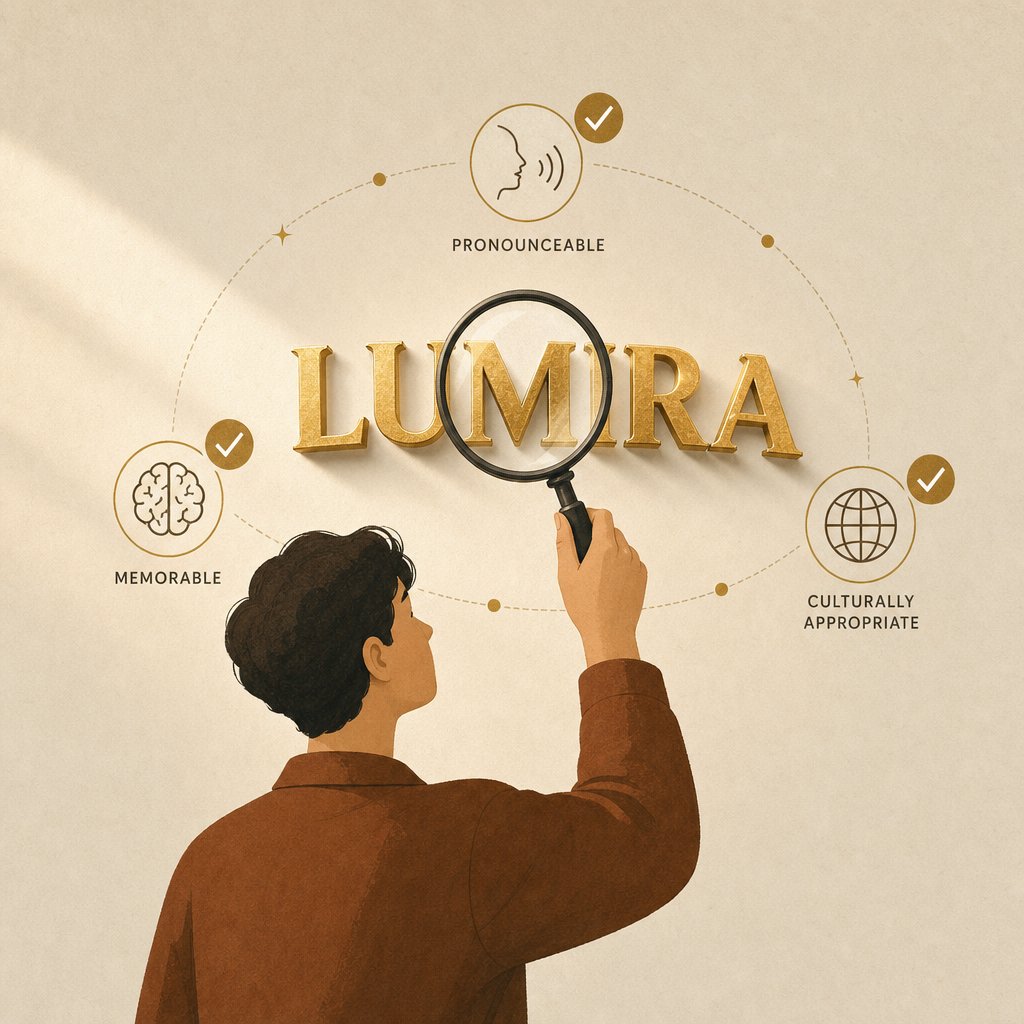
A shortlist of five or six candidates is progress, but it's not a decision. Every name combination on your list passed the basic phonetics test — it sounds okay when you say it. That bar is too low. The blend you commit to needs to survive contact with the real world, where strangers will mispronounce it, search engines will autocorrect it, and other languages might assign it meanings you never intended.
Systematic evaluation separates a good combo name from a great one. Here's how to stress-test every candidate before you commit.
The Pronounceability and Memorability Test
Two simple tests reveal whether your name fusion actually works in practice:
The phone test: Say the combined name to someone over the phone and ask them to spell it back. No visual cues, no context. If they can't reproduce it on the first try, the name carries too much ambiguity. A fusion of names that requires explanation every time defeats its own purpose.
The introduction test: Imagine introducing yourself (or your child, brand, or character) with this name in a professional setting. Does it feel natural? Would you hesitate? That hesitation is data. Research on product naming confirms that pronounceability ranks among the top criteria for any name's success — if people can't say it easily, they won't use it.
Memorability works differently. Say the name once to a friend, then ask them to recall it an hour later. Combined names that use familiar phonetic patterns stick. Names that feel like random letter strings vanish from memory almost immediately. The strongest results sound like they could have always existed — they borrow enough structure from real names to feel inevitable rather than invented.
Checking for Unintended Meanings and Cultural Issues
This step catches problems that no amount of phonetic testing reveals. A name combination that sounds beautiful in English might mean something unfortunate in Spanish, Mandarin, or Arabic. It might also overlap with slang terms that didn't exist when you created it.
Run every finalist through these checks:
- Search the name in Google across multiple languages — add terms like "meaning in [language]" to surface hidden associations.
- Check Urban Dictionary and slang databases for informal definitions you might have missed.
- Verify that the initials don't spell anything problematic (a name like Annabelle Sarah Smith creates "ASS" on monogrammed items).
- Consider what nicknames others will naturally shorten it to — and whether those nicknames carry their own baggage.
- Search social media platforms to confirm the name isn't already associated with someone notable or controversial.
- Test domain and handle availability if the name serves a brand or public identity.
Cultural sensitivity in naming isn't optional — 60% of consumers avoid products with unappealing names, and the same instinct applies to personal names that trigger negative associations in any community your name might reach.
Use this consolidated checklist to score each candidate on your shortlist:
- Can a stranger pronounce it correctly on the first attempt?
- Can someone spell it after hearing it once?
- Does it stick in memory after a single introduction?
- Is it free of negative meanings in other languages?
- Do the initials avoid unfortunate acronyms?
- Are natural nicknames acceptable?
- Is the name available as a social handle or domain (if relevant)?
- Does it feel appropriate for the context — playful for a ship name, dignified for a baby name, professional for a brand?
Any candidate that clears every item on this list is a strong contender. But even strong contenders can hide subtle flaws that only surface under specific conditions — the kind of pitfalls that trip people up repeatedly when they skip the evaluation stage entirely.
Common Pitfalls When Merging Two Names Together
Evaluation criteria help you pick the best option from a strong shortlist. But what if the shortlist itself is full of flawed candidates? Many people generate dozens of combinations and still end up with nothing usable — not because the technique failed, but because they fell into predictable traps during the mixing names process. Recognizing these mistakes before you make them saves hours of dead-end experimentation.
| Common Mistake | Why It Happens | How to Fix It |
|---|---|---|
| Unpronounceable consonant clusters | Cutting names mid-syllable creates illegal sound sequences | Always split at syllable boundaries; say it aloud before keeping it |
| Looks good, sounds bad | Focusing on spelling rather than phonetics | Speak every candidate out loud; prioritize sound over visual appearance |
| Unintended meanings in other languages | Only checking the name in English | Search the blend in multiple languages and slang dictionaries |
| Excessive length or complexity | Trying to preserve too much of both source names | Cap results at 3-4 syllables; sacrifice completeness for clarity |
| Name doesn't age well | Choosing trendy sounds over timeless structure | Imagine the name on a resume 30 years from now |
| Name already belongs to someone notable | Skipping a basic search before committing | Google the exact blend; check social media and public records |
Awkward Phonetics and Unpronounceable Results
This is the most common failure when people merge two names without understanding syllable mechanics. A mix names generator that simply chops names at arbitrary letter positions will produce results like "Brtney" or "Jhniel" — strings that look like names with the vowels removed. Your mouth literally cannot produce these sounds in sequence because they violate English phonotactic rules.
The fix is simple but non-negotiable: every combination must contain a vowel in every syllable, and no consonant cluster should exceed what English naturally permits. If you're using a mix names together generator or doing it manually, apply this filter ruthlessly. Say the candidate three times fast. If your tongue trips, discard it. No spelling trick will rescue a name that fights the speaker's anatomy.
Another subtle version of this problem: combinations that are technically pronounceable but require unusual stress placement. When you fuse names like "Timothy" and "Elaine," a result like "Timolaine" forces speakers to guess where the emphasis falls. Is it TIM-o-laine? Tim-o-LAINE? That ambiguity creates hesitation every time someone encounters the name.
Hidden Meanings and Cultural Blind Spots
Real-world examples prove how easily this goes wrong. HuffPost documented that the name "Pippa" means something vulgar in Italian and Swedish, "Siri" is slang for "penis" in Georgian, and "Gary" sounds like the Japanese word for diarrhea. These are established names — imagine the risks when you're inventing entirely new ones by mixing names together.
Hyphenated surname combinations create similar hazards. LiveAbout compiled real wedding announcements where merged surnames produced results like "Golden-Showers" and "Beaver-Wetter" — combinations that are individually innocent but catastrophic together. When you merge two names, you're creating a new word that exists in every language simultaneously. A mixing names generator won't flag cultural issues for you; that responsibility stays with the human making the final call.
Check every finalist in at least three to four major languages. Search Urban Dictionary. Ask friends from different cultural backgrounds for their gut reaction. One uncomfortable association is enough to eliminate a candidate.
The Length and Complexity Trap
People who want to honor both source names equally often refuse to sacrifice any material. The result? Six-syllable blends that no one can remember, spell, or fit into a username field. When you try to fuse names while preserving maximum content from both, you almost always overshoot.
The sweet spot for combined names is two to four syllables. Beyond that, the blend stops feeling like a name and starts feeling like a compound word. "Jessicadaniel" isn't a blend — it's just two names crammed together. Effective merging two names requires letting go of pieces. The best blends capture the essence of both sources in fewer syllables than either original, not more.
Shorter combinations also age better. A baby named "Alexandrandon" will spend a lifetime correcting people. A baby named "Lexan" carries the same DNA from both source names in a package that fits naturally into any context. When in doubt, cut further. You can always keep a longer version as a private family reference while giving the child a streamlined legal name.
These pitfalls share a common thread: they all stem from prioritizing the creator's intent over the listener's experience. The person hearing your combined name for the first time doesn't know the source names, doesn't see the clever logic behind the blend, and doesn't care how much of each original you preserved. They only know whether it sounds good, sticks in memory, and feels like a real name. Testing under those exact conditions is what separates a blend that works from one that merely exists on paper.
Testing Your Combined Name Before You Commit
Knowing what to avoid is protective. But the final step isn't about elimination — it's about confirmation. You've generated candidates, filtered out the flawed ones, and landed on a shortlist of names that pass every logical check. The question now is whether your top choice holds up under the messy, unpredictable conditions of daily life.
Real-World Testing Techniques
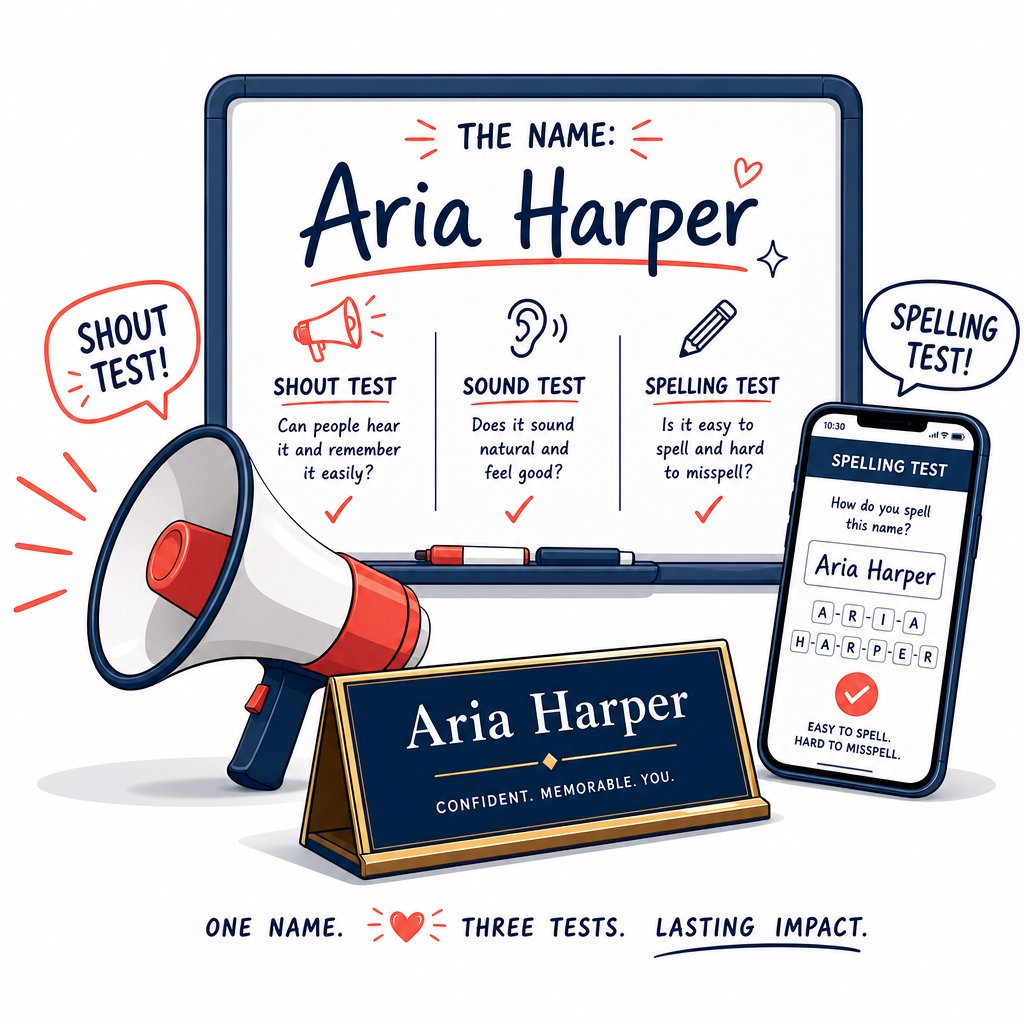
A name lives in sound before it lives on paper. These four tests simulate the real contexts where your combined name will exist:
The shout test: Stand in another room and yell the name as if calling someone to dinner. Does it carry clearly, or does it dissolve into mush at volume? One parent shared that she and her husband would yell potential names as if scolding a child — and immediately vetoed "Dreyfus" because it sounded like "Doofus" at full volume. If a name generator with two names gave you a blend like "Marnessa," shout it. You'll know instantly whether it works.
The whisper test: Say the name softly, the way you'd comfort a child at bedtime or introduce a brand in a quiet meeting. Names heavy on hard consonants (K, T, P) punch through whispers well. Names built on soft sounds (S, L, M) feel intimate. Neither is wrong — but the name should still sound complete at low volume, not like a half-finished word.
The formal introduction test: Say "Hi, I'm [name], and I'll be representing you today" or "This is my partner, [name]." Parents who use a name generator using two names for baby naming should picture the result in professional contexts decades from now. If the blend sounds playful but not serious enough for a courtroom or boardroom, it might work better as a nickname than a legal name.
The spelling-over-the-phone test: Call a friend and say the name without context. Ask them to spell it back. If they can't get close, the name will cause a lifetime of corrections. This mirrors the popular Starbucks barista test — give the name at a coffee counter and see what ends up written on the cup. If the barista can spell it and pronounce it when calling your order, you've got a winner.
Beyond sound, write the name in different visual formats: ALL CAPS, lowercase, cursive, typed in a standard font. Some blends look elegant in one format and awkward in another. Check what the initials spell — a combine two names generator won't flag that "Annabelle Sarah Smith" monograms to "ASS" on towels.
Digital Presence and Availability Checks
If your combined name serves any public-facing purpose — a brand, a social handle, a wedding hashtag — availability matters as much as aesthetics. Search the exact name on Instagram, TikTok, X, and any platform where you plan to use it. Check domain availability if the name might become a business. Google the name in quotes to see what already exists in search results.
A two name generator can produce something phonetically perfect that's already someone else's established identity online. Discovering that conflict after you've printed wedding invitations or filed business paperwork is a problem you can avoid with five minutes of searching.
Finally, get feedback from people who don't know the source names. Friends and family who know you're blending "Melissa" and "Brandon" will hear both names in any combination you show them. A stranger hears only the result. Their reaction — confusion, delight, indifference — tells you how the name performs on its own merits, stripped of backstory.
Use this final checklist before making your decision:
- Passes the shout test — carries clearly at volume
- Passes the whisper test — sounds complete at low volume
- Sounds natural in a formal introduction
- Can be spelled correctly after hearing it once
- Looks good in multiple written formats (caps, lowercase, cursive)
- Initials don't spell anything problematic
- Anticipated nicknames are acceptable
- Social media handles and domains are available (if needed)
- No conflicting search results from notable existing figures
- Strangers react positively without knowing the source names
The best results from any 2 name generator share one quality: they feel inevitable. They sound like names that always existed, waiting to be discovered rather than manufactured. When your combined name passes every test on this list and still makes you smile, that's not luck — that's the product of understanding how language, culture, and context work together. Trust the process, trust your ear, and commit.
Frequently Asked Questions About Name Generators From Two Names
1. How does a name generator from two names actually work?
A name generator from two names breaks both input names into smaller components such as syllables, phonetic chunks, or individual letters. It then tests various split points and recombines fragments using techniques like portmanteau construction, syllable splicing, letter blending, initial-based combinations, phonetic merging, and acronym formation. The tool filters results based on phonotactic rules, ensuring outputs follow natural English sound patterns so the blended names are pronounceable and memorable rather than random letter strings.
2. What is the best technique for combining two names into a baby name?
Syllable splicing is the strongest technique for baby names because it produces results that resemble established, real-sounding names rather than obvious mashups. Unlike portmanteau methods used for couple nicknames, syllable splicing treats each syllable as a modular unit that can be rearranged naturally. The key is ensuring the result passes real-world tests: it should sound appropriate on a resume, age well from childhood to adulthood, and avoid unintended associations in other languages or slang.
3. Why do some combined names sound natural while others sound forced?
The difference comes down to phonotactics, which are the invisible rules governing which sound sequences a language permits. Combinations that respect natural syllable boundaries, avoid illegal consonant clusters, maintain vowel harmony, and preserve familiar stress patterns sound effortless. For example, 'Brangelina' works because it cuts at clean syllable breaks and mirrors the stress rhythm of common English words like 'ballerina.' Combinations that force three consecutive stop consonants or place stress ambiguously will always sound awkward regardless of creative spelling.
4. How can I test if a combined name is good before committing to it?
Apply four real-world tests: the shout test (yell it across a room to check clarity at volume), the whisper test (say it softly to confirm it sounds complete), the formal introduction test (use it in a professional context sentence), and the spelling-over-the-phone test (say it to someone and ask them to spell it back). Additionally, write it in different formats like all caps and cursive, check what the initials spell, verify social media handle availability, and get reactions from strangers who do not know the source names.
5. What are the most common mistakes people make when merging two names?
The six most frequent pitfalls are creating unpronounceable consonant clusters by cutting mid-syllable, focusing on how the name looks written rather than how it sounds spoken, missing inappropriate meanings in other languages or slang, making combinations too long by trying to preserve too much of both source names, choosing trendy sounds that will not age well, and failing to check whether the name already belongs to someone notable. The fix for most of these is simple: always split at syllable boundaries, cap results at three to four syllables, and search the blend across multiple languages before committing.