Understanding the Official Pinyin System for Personal Names
When you fill out a passport application or submit a university enrollment form, your name in Chinese needs a romanized version that foreign systems can process. Sounds simple enough, right? Just spell it out in pinyin and move on. But here's where things get tricky: the way you romanize your name isn't a matter of personal preference. There are government-mandated standards that dictate exactly how Chinese names should appear in the Latin alphabet, and getting them wrong can cause real headaches with official documents.
The official hanyu pinyin rules for names cover everything from capitalization and spacing to how syllables in a given name connect. These aren't suggestions. They're codified in national standards that passport offices, civil registries, and international bodies reference when processing your romanized name. Yet most people have never read these documents, and the result is a patchwork of inconsistent spellings across IDs, diplomas, and published work.
Why Official Pinyin Name Rules Matter
A chinese name definition typically involves a surname followed by a given name, each composed of specific characters carrying meaning. When that name crosses into English-language contexts, the romanized name must follow a consistent format so that databases, immigration systems, and academic indexes can match records reliably. Imagine booking a flight with "Wei Min" as two separate given-name fields, then presenting a passport that reads "Weimin" as one unit. That mismatch alone can delay boarding or trigger identity verification flags.
The core issue is that pinyin for personal names and characters operates under rules distinct from general pinyin orthography. Writing a sentence in pinyin and writing a name in pinyin are governed by overlapping but different provisions. General pinyin separates words with spaces and uses apostrophes for syllable boundary clarity. Personal name rules layer additional requirements on top of that foundation, specifically addressing how surnames and given names interact on the page.
Pinyin spelling for personal names follows specific government-mandated standards that are distinct from general pinyin spelling rules. The surname is written separately from the given name, given name syllables are joined into one unit, and capitalization follows a fixed pattern.
Who Needs to Know These Standards
You might think these rules only matter to bureaucrats, but the audience is far broader:
- Chinese nationals applying for passports - The Public Security Bureau formats your name according to national standards. Understanding the rules helps you anticipate exactly how your name will appear and avoid discrepancies across documents.
- International students filling out university applications - Admissions systems often split names into "first" and "last" fields designed for Western name structures. Knowing how your name in chinese language maps onto these fields prevents enrollment errors.
- Professionals publishing in English-language contexts - Academic citations, bylines, and conference registrations all require a consistent romanized form. Inconsistency fragments your publication record and makes your work harder to find.
- HR departments and legal teams - Anyone processing Chinese names for contracts, visas, or employee records benefits from understanding the official format.
Each of these groups encounters the same fundamental challenge: bridging a name rooted in Chinese characters with a Latin-alphabet system that has its own structural expectations. The official standards exist precisely to make that bridge predictable and uniform rather than leaving every individual to improvise their own spelling.
The rules themselves aren't complicated once you see them laid out clearly. The difficulty has always been access. The relevant national standards are published in technical regulatory language, scattered across multiple documents, and rarely summarized in practical terms. That gap between the official text and everyday application is exactly what this guide closes, walking through each rule with concrete examples so you can apply them with confidence regardless of the document type sitting in front of you.
The National Standards That Govern Pinyin Name Spelling
Two documents sit at the center of how Chinese names get romanized on official paperwork. If you've ever wondered why a passport office formats your name one way while an academic journal uses another, the answer traces back to these national standards and the specific provisions each one lays out. Understanding which standard applies, and what it actually says, removes the guesswork from chinese romanization of personal names.
GB/T 28039-2011: The Personal Name Standard
This is the standard dedicated entirely to how Chinese personal names should be written in pinyin. Published in 2011 by the Standardization Administration of China, GB/T 28039-2011 addresses the unique challenges that arise when you romanize chinese names specifically, rather than general text. Think of it as the rulebook that passport offices and civil registries follow when converting your name from characters to Latin letters.
The key provisions of GB/T 28039-2011 include:
- Surname-first order - The surname (xing) is written before the given name (ming), preserving the traditional Chinese name structure in its romanized form.
- Capitalization - The first letter of the surname is capitalized, and the first letter of the given name is capitalized. All other letters remain lowercase.
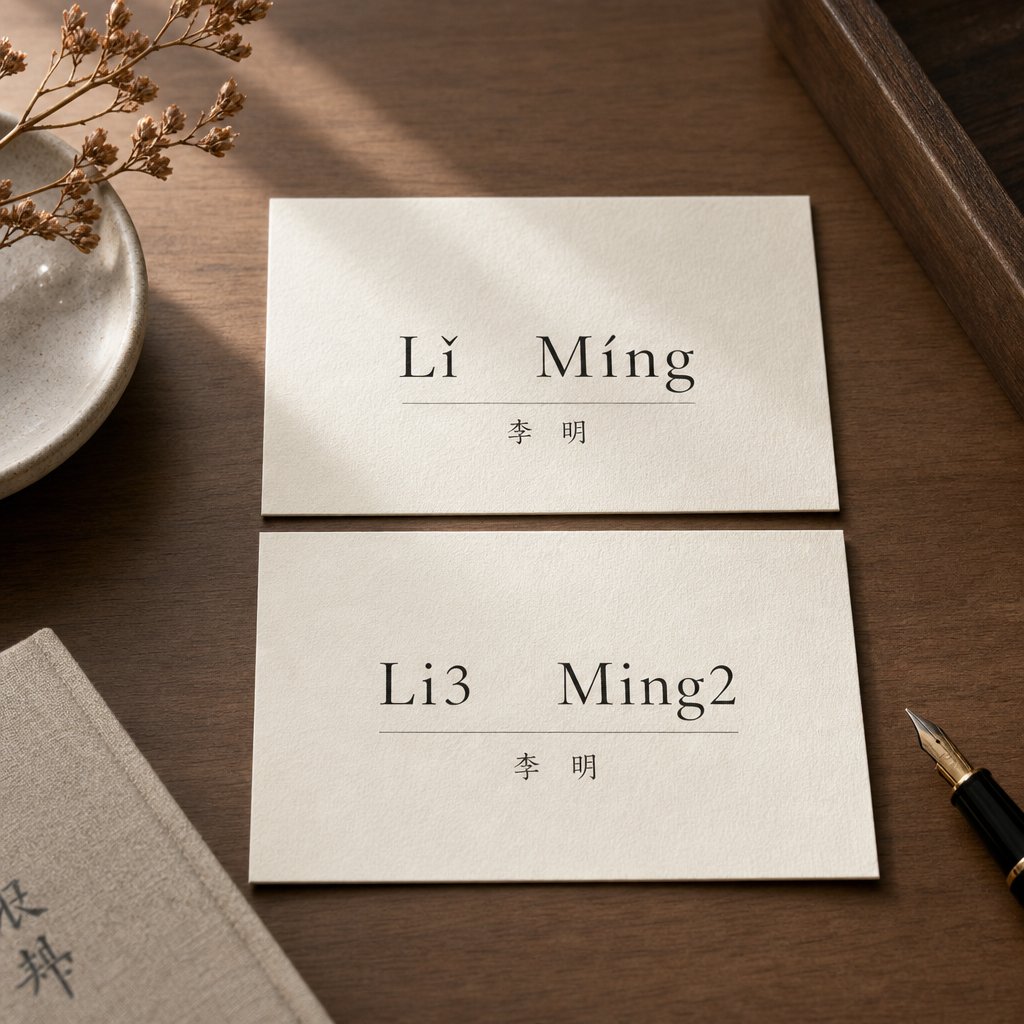
- Given name syllables joined - For disyllabic given names, both syllables are written as a single unit with no space or hyphen between them (e.g., Wáng Xiǎomíng, not Wang Xiao Ming).
- One space between surname and given name - A single space separates the surname from the given name. No additional punctuation or dividers.
- No hyphens - Unlike some regional conventions, the mainland standard does not use hyphens within given names.
- Tone marks optional in certain contexts - While tone marks are part of complete pinyin, official documents like passports typically omit them for practical reasons.
This standard also covers compound surnames, minority ethnic names, and edge cases like names where syllable boundaries could be ambiguous. It's the single most authoritative document for anyone asking "how should my name look in pinyin on a government-issued ID?"
GB/T 16159-2012: General Pinyin Orthography
Where GB/T 28039-2011 focuses narrowly on names, GB/T 16159-2012 covers the broader landscape of mandarin romanization. This is the general orthography standard, officially titled "Basic Rules of the Chinese Phonetic Alphabet Orthography," and it was revised in 2012 to update earlier guidelines from 1996.
For personal names, GB/T 16159-2012 reinforces the same core principles found in the dedicated name standard but situates them within the full system of pinyin writing rules. Its relevant provisions for names include:
- Proper noun capitalization - The first letter of each part of a proper noun is capitalized. For personal names, this means capitalizing the first letter of the surname and the first letter of the given name.
- Syllable connection within words - Syllables belonging to the same word are written together without spaces. Since a given name functions as a single unit, its syllables join.
- Apostrophe usage - When a syllable beginning with a, o, or e follows another syllable and the boundary could be misread, an apostrophe separates them. This rule applies within names when ambiguity arises.
- All-caps option - An entire name may be written in capital letters for contexts like legal documents or signage (e.g., WANG XIAOMING).
The 2012 revision also introduced some flexibility in areas like the writing of "de" particles, though these changes primarily affect general text rather than personal names. For the romanization of chinese personal names specifically, the two standards align closely, with GB/T 28039-2011 providing the detailed guidance and GB/T 16159-2012 supplying the broader orthographic framework that supports it.
Historical Development of Name Romanization Rules
These standards didn't appear out of nowhere. The groundwork for modern chinese transliteration rules stretches back decades. In 1958, the National People's Congress approved the Hanyu Pinyin system itself, but the question of how to apply it consistently to names and text took much longer to resolve.
A pivotal moment came in 1976, when the Committee for the Reform of the Chinese Written Language published guidelines on pinyin orthography that addressed personal names among other categories. This document established the foundational principles that later standards would formalize: surname before given name, given name syllables connected, initial letters capitalized. It served as the working framework for chinese transliteration of names through the 1980s and 1990s.
The timeline of key developments looks like this:
- 1958 - Hanyu Pinyin system officially adopted by the PRC.
- 1974-1976 - Committee for the Reform of the Chinese Written Language drafts orthographic guidelines, including personal name rules.
- 1996 - First version of GB/T 16159 published, codifying general pinyin orthography into a national standard.
- 2011 - GB/T 28039-2011 issued as a dedicated standard for personal names in pinyin, consolidating scattered guidance into one authoritative document.
- 2012 - GB/T 16159 revised to its current form, updating general orthography rules and aligning with the personal name standard.
Each iteration refined the rules, addressed ambiguities, and responded to practical problems that emerged as pinyin moved from classroom tool to international identifier. The 2011 personal name standard, in particular, was a response to the growing need for consistency as Chinese citizens interacted more frequently with international systems that required standardized romanized names.
What's worth noting is that these standards represent the mainland Chinese government's position. Taiwan, international bodies like ISO, and the United Nations each maintain their own guidelines for how to romanize chinese names, and they don't always agree on the details. The differences are subtle in some areas and significant in others, particularly around hyphenation and syllable separation, which creates real confusion for anyone navigating multiple systems.
Capitalization Rules for Surnames and Given Names
Knowing which standards exist is one thing. Applying their capitalization rules correctly is where most people stumble. The logic is straightforward once you see it, but small errors here are exactly what cause mismatches between your passport, your diploma, and your published work. So let's break down how capitalization actually works for each part of a Chinese name.
Surname Capitalization Rules
Every chinese surname, whether it's a common single-character last name in chinese like Wang or Li, or a rarer compound form like Ouyang, follows the same basic rule: capitalize the first letter, keep everything else lowercase. That's it. No full caps on the surname by default, no special treatment for longer surnames.
You'll see examples like:
- Zhāng - not ZHANG, not zhang
- Lǐ - not LI, not li
- Huáng - not HUANG, not huang
Chinese last names are overwhelmingly monosyllabic. Nearly all of the hundreds of common surnames in use today consist of a single character, which means a single pinyin syllable with its first letter capitalized. The simplicity of this rule is what makes deviations so noticeable on official forms.
Given Name Capitalization for One and Two Syllable Names
Chinese first names come in two varieties: monosyllabic (one character) and disyllabic (two characters). Modern names lean heavily toward two syllables, but single-syllable given names remain common, especially among chinese male given names from earlier generations and certain chinese first names female individuals carry today.
The rule is consistent regardless of length: capitalize only the first letter of the given name. For a two-syllable given name written as one joined unit, that means only the very first letter gets capitalized. The second syllable starts lowercase because it's part of the same word.
Here's how this looks in practice with name chinese characters mapped to their correct pinyin forms:
| Chinese Characters | Correct Pinyin Form | Incorrect Form | Rule Applied |
|---|---|---|---|
| 王芳 | Wáng Fāng | wang fang / WANG FANG | Both surname and monosyllabic given name capitalized at first letter |
| 张飞 | Zhāng Fēi | Zhang fei / zhang Fei | Each component gets initial capitalization independently |
| 杨为民 | Yáng Wèimín | Yáng Wèi Mín / Yáng WèiMín | Disyllabic given name joined, only first letter capitalized |
| 周恩来 | Zhōu Ēnlái | Zhou En Lai / Zhou En-lai | Given name syllables form one unit with single initial capital |
| 黄兴 | Huáng Xīng | HUANG XING / huang xing | Standard capitalization: first letter of surname and given name only |
| 孙中山 | Sūn Zhōngshān | Sun Zhong Shan / Sun ZhongShan | Two-syllable given name written as single capitalized unit |
Notice the pattern: whether the chinese first names are one syllable or two, the capitalization principle never changes. First letter up, everything else down. The only variable is whether the given name contains one syllable or multiple syllables joined together.
All-Caps Usage in Official Documents
There's one important exception to the standard capitalization pattern. In contexts like legal documents, official seals, or situations where the surname needs to be unmistakably identified, the entire name may be written in capital letters. You'll also encounter a hybrid approach where only the surname appears in full capitals while the given name retains standard capitalization, like WANG Fang or LIU Jianguo.
This technique solves a real problem. When a chinese surname is also a plausible given name, foreign readers often can't tell which part is which. Writing FANG Yang instead of Fang Yang immediately signals that Fang is the family name. International organizations and academic journals frequently adopt this convention for exactly that reason.
The default rule is simple: capitalize the first letter of the surname and the first letter of the given name. Use all-caps for the full name or surname-only caps when context demands absolute clarity about which component is the family name.
These capitalization conventions work hand-in-hand with another critical formatting rule: how the syllables within a given name connect to each other. Getting the capital letters right but the spacing wrong still produces an incorrect form, which is precisely the issue the spacing and joining rules address.
Spacing and Syllable Joining Rules in Pinyin Names
Capitalization tells you which letters go upper or lowercase. Spacing and joining tell you where those chinese name letters actually sit relative to each other on the page. This is where the majority of errors happen in chinese name writing, because the instinct for English speakers (and even many Chinese speakers filling out forms) is to separate every syllable with a space. The official standard says otherwise.
Joining Given Name Syllables Together
The rule is absolute: all syllables in a given name are written as one continuous unit. No spaces between them, no hyphens, no dashes. A two-syllable given name like 泽东 becomes Zédōng, not Zé Dōng and not Zé-dōng. The name pinyin form treats the entire given name as a single word, because semantically it functions as one unit of meaning.
This is the single most violated rule in practice. You'll see names with a hyphen on airline tickets, separated syllables on business cards, and inconsistent spacing across academic papers. Every one of those forms is incorrect under the mainland standard. The chinese name structure in pinyin mirrors the structure in characters: surname is one block, given name is one block.
| Incorrect Form | Correct Official Form | Error Type |
|---|---|---|
| Mao Ze Dong | Máo Zédōng | Given name syllables separated by spaces |
| Mao Ze-dong | Máo Zédōng | Hyphen inserted between given name syllables |
| Deng Xiao Ping | Dèng Xiǎopíng | Given name split into two separate words |
| Xi Jin-ping | Xí Jìnpíng | Hyphen used within given name |
| Liu-Xiang | Liú Xiáng | Hyphen placed between surname and given name |
| ZhaoLiYing | Zhào Lìyǐng | No space between surname and given name, intercaps used |
Names with a hyphen are a hallmark of Taiwanese conventions and older Wade-Giles influenced formats. Under mainland standards, hyphens have no place in personal name romanization. If you see a hyphenated Chinese name, it wasn't formatted according to GB/T 28039-2011.
The Space Between Surname and Given Name
Exactly one space separates the surname from the given name. Not a hyphen, not a comma, not a middle dot. Just a standard word space. This single gap is what visually distinguishes the two components of the name and allows readers to identify the chinese name structure at a glance.
So the complete pattern looks like this:
- Surname (capitalized) + one space + Given name (capitalized first letter, syllables joined)
- Example: Wáng Xiǎomíng, not WangXiaoming, not Wang Xiao Ming
This spacing rule applies regardless of how many syllables appear in either component. A monosyllabic surname and a monosyllabic given name still get that space: Lǐ Nà. A compound surname and a disyllabic given name still get exactly one space: Sīmǎ Xiāngrú.
Apostrophe Usage to Prevent Syllable Ambiguity
Here's where things get subtle. When a syllable within a joined given name begins with a, o, or e, and it follows another syllable, an apostrophe marks the boundary. This prevents misreading. The logic parallels the famous Xī'ān example: without the apostrophe, "Xian" looks like a single syllable rather than two (xi + an).
Applied to names, imagine someone named 刘昂 (Liú Áng). Without care, the given name portion could be misread. Or consider a given name like 皮尔 where the second syllable starts with a vowel. The apostrophe rule from GB/T 16159-2012 states clearly: place an apostrophe before any syllable beginning with a, o, or e when it appears after another syllable within the same word.
An apostrophe is required whenever a syllable starting with a, o, or e follows another syllable within a joined given name. This prevents misreading and applies the same principle used in place names like Cháng'ān.
In practice, this situation arises infrequently in personal names because relatively few given-name combinations create genuine vowel-initial ambiguity. But when it does occur, skipping the apostrophe produces a form that violates the standard and, more importantly, becomes genuinely difficult to read correctly.
These spacing and joining conventions handle the vast majority of Han Chinese names cleanly. But Chinese naming traditions include compound surnames like Sīmǎ and Ōuyáng, plus names from dozens of minority ethnic groups whose phonetic structures don't map neatly onto standard Han patterns. Those cases introduce their own formatting questions.
Compound Surnames and Minority Ethnic Name Rules
Most Chinese surnames are a single syllable, a single character, a single capitalized unit in pinyin. But compound surnames, known as fuxing (复姓), pack two syllables into the family name slot. And minority ethnic names can stretch even further, following phonetic patterns that don't resemble standard Han structures at all. Both cases have clear formatting rules under the national standard, yet they trip people up precisely because they break the one-syllable-surname expectation.
Compound Surname Formatting Rules
A compound surname in chinese is written as one continuous unit with only the first letter capitalized. No space between the two syllables, no hyphen, no intercap. The same joining logic that applies to given name syllables applies here: if it functions as a single semantic unit, it's written as one word.
Compound surnames are never separated by a space, hyphen, or any other divider. They are written as a single word with only the initial letter capitalized, exactly like a monosyllabic surname.
So Sima Qian is correct. Si Ma Qian, Si-ma Qian, and SiMa Qian are all wrong. The same applies to every other character surnames combination that forms a compound family name. Here are the most common ones with their correct pinyin forms:
- Ouyang (欧阳) - not Ou Yang, Ou-yang, or Ou-Yang
- Shangguan (上官) - not Shang Guan or Shang-guan
- Huangfu (皇甫) - not Huang Fu or Huang-fu
- Linghu (令狐) - not Ling Hu or Ling-hu
- Zhuge (诸葛) - not Zhu Ge or Zhu-ge
- Situ (司徒) - not Si Tu or Si-tu
- Sima (司马) - not Si Ma or Si-ma
- Xiahou (夏侯) - not Xia Hou or Xia-hou
According to China's 2020 national name report, Ouyang is by far the most common compound surname, with over 1.1 million bearers. Shangguan follows at around 88,000. In total, only about 0.11% of China's population carries a disyllabic family name, which partly explains why formatting guides often overlook them.
Many of these ancient chinese names carry historical weight. Studying chinese surnames meaning reveals that Sima originally referred to a military official, Zhuge combined a place name with an ancestral title, and Ouyang indicated a geographic origin south of a mountain. The chinese last name meanings embedded in compound surnames often preserve administrative or geographic references from centuries past, making them culturally significant even as they remain statistically rare.
Minority Ethnic Name Romanization
China recognizes 55 minority ethnic groups alongside the Han majority, and many of these groups have naming conventions that differ fundamentally from the Han surname-plus-given-name pattern. Tibetan names, for instance, often consist of four syllables with no family name component at all. Uyghur names follow a given-name-plus-patronymic structure. Mongolian names may include clan identifiers that function differently from Han surnames.
The official standard acknowledges this diversity. GB/T 28039-2011 specifies that minority ethnic names should be transcribed according to their own phonetic conventions rather than forced into a Han Chinese name template. A Tibetan name like Tashi Delek or a Uyghur name like Alimjan Hashim gets romanized following the phonetic structure of the source language, not artificially split into a "surname" and "given name" that don't exist in the original culture.
Non-Han Names Under the National Standard
What stays consistent across all ethnic groups is the capitalization framework. Regardless of how many components a name has or how its internal structure works, the first letter of each semantically distinct name component is capitalized. For a Mongolian name with a clan name and a personal name, both components get initial capitalization. For a Tibetan name written as a single multi-syllable unit, the first letter is capitalized and the rest remain lowercase.
The practical challenge is that many minority names don't have standardized pinyin representations because pinyin was designed for Mandarin phonology. Sounds present in Tibetan, Uyghur, or Zhuang may not map cleanly onto pinyin's syllable inventory. In these cases, the standard permits phonetic approximation or the use of the ethnic group's own romanization system, provided the general formatting principles (capitalization, spacing between distinct name components) are maintained.
This flexibility matters because a surname in chinese culture carries identity weight regardless of ethnicity. Whether it's a Han compound surname like Ouyang or a Dai ethnic name with three components, the standard aims to preserve the name's structure rather than distort it into a format it was never meant to occupy. The rules bend to accommodate linguistic diversity while keeping the visual formatting predictable for anyone reading the romanized result.
Compound surnames and minority names represent edge cases within the system, but they highlight a broader reality: different regions and institutions don't always handle these rules identically. Mainland China, Taiwan, and international bodies each interpret the formatting conventions through their own lens, producing visible differences in how the same name appears across documents.
Mainland China vs Taiwan vs International Standards Compared
You've seen how the mainland standard handles names. But what happens when you cross the Taiwan Strait or step into an international organization's office? The same Chinese characters can end up looking quite different in their romanised chinese form depending on which system processed them. If you've ever wondered why one person's passport reads "Lín Zhìyǐng" while another's says "Lin Chih-ying" for identical characters, the answer lies in competing standards that each took a different path toward chinese transliteration to english.
Mainland China Official Standard Rules
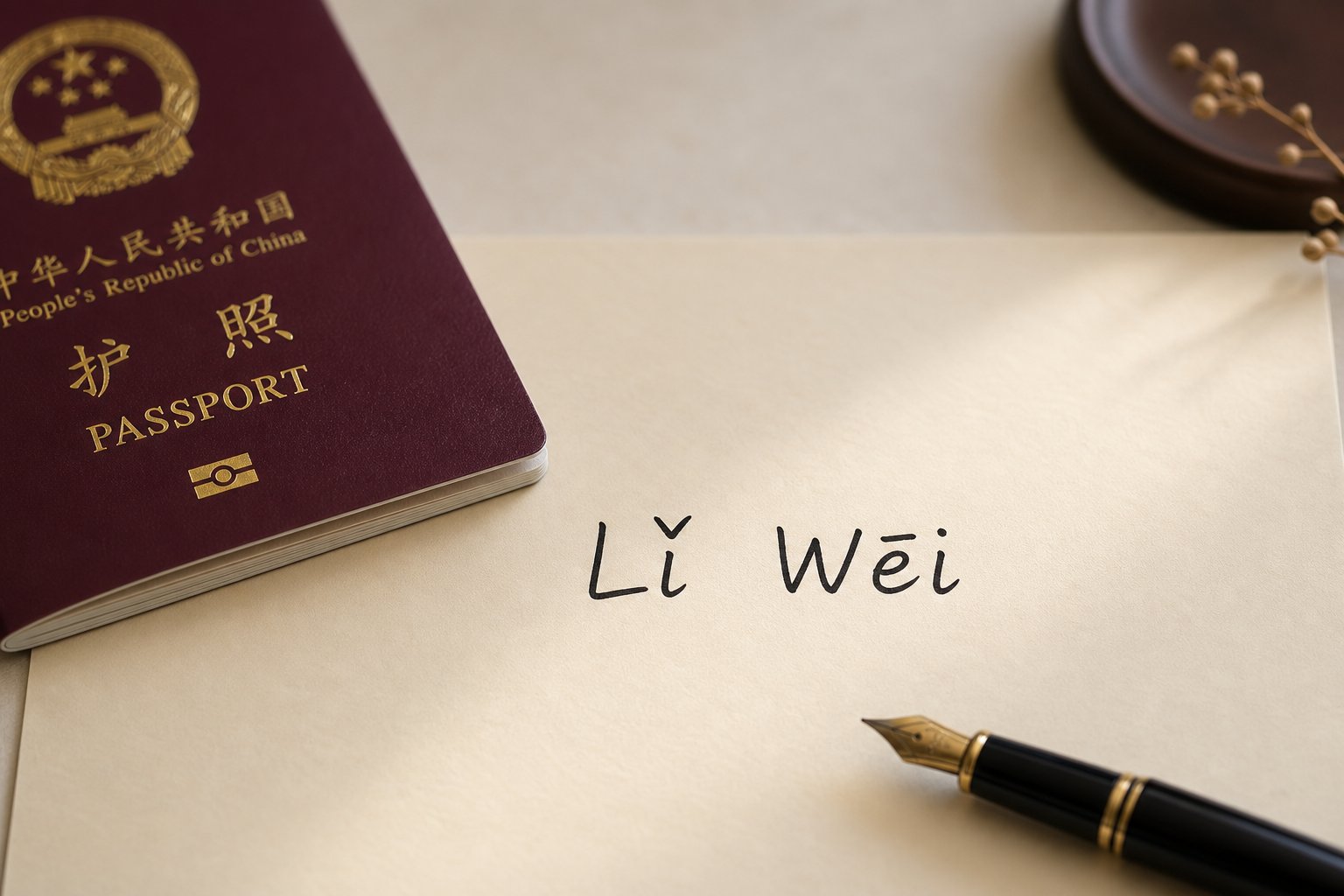
GB/T 28039-2011 represents the most prescriptive approach. Given name syllables are always joined, hyphens are never used, and the surname-first order is mandatory. Tone marks are technically part of the complete pinyin form, yet Chinese passports issued by the Public Security Bureau omit them entirely. Why? Machine-readable travel documents follow ICAO (International Civil Aviation Organization) specifications, which restrict characters to the basic Latin alphabet. Diacritics don't survive that filter, so tone marks get dropped at the document production stage even though the standard itself includes them.
The result is a simplified form: WANG XIAOMING in the machine-readable zone, with no tones, no special characters, and all caps. This practical reality means that while the official chinese to romanization rules specify tone marks as part of correct pinyin, millions of identity documents circulate without them.
Taiwan Ministry of Education Guidelines
Taiwan officially adopted Hanyu Pinyin in 2009 after cycling through Wade-Giles, Gwoyeu Romatzyh, MPS II, and Tongyong Pinyin over previous decades. But personal names tell a different story. Most Taiwanese citizens still romanize their names using a simplified Wade-Giles variant that drops diacritics, tone marks, and apostrophes. The given name syllables are typically separated by a hyphen, and both syllables often get capitalized, producing forms like Lin Chih-Ying rather than the mainland's Lín Zhìyǐng.
This isn't accidental. Taiwan's passport regulations permit applicants to choose from multiple romanization systems, and since most Taiwanese learn Zhuyin (bopomofo) rather than pinyin in school, there's little institutional pressure to standardize on one romanized form. The result is considerable variation. Politicians alone demonstrate the range: former president Lee Teng-hui used a form that doesn't match any single major system, while Chen Shui-bian's name most closely resembles Hanyu Pinyin.
ISO 7098 and International Conventions
At the international level, ISO 7098 (first published in 1982, revised in 1991 and 2015) endorses Hanyu Pinyin as the standard for romanization of Mandarin Chinese. The United Nations adopted the same system in 1986 for geographic names, and by extension it influences how chinese names into english appear in diplomatic and institutional contexts. ISO 7098 aligns closely with mainland rules: surname first, given name syllables joined, initial letters capitalized.
Where ISO 7098 diverges slightly is in its explicit inclusion of tone marks as part of the standard romanized form. Unlike passport practice, the international standard treats tones as non-optional. Academic publications and library cataloging systems that follow ISO 7098 will include tone marks, making them more phonetically complete than what appears on travel documents.
For cantonese names, neither the mainland standard nor ISO 7098 applies directly. Cantonese romanization follows separate systems like Jyutping or Yale Cantonese, and Hong Kong residents typically use idiosyncratic English spellings rooted in local pronunciation rather than Mandarin-based pinyin. A name romanized as "Cheung" in Hong Kong would be "Zhāng" under mainland rules, illustrating how the same character produces entirely different chinese romanized forms depending on the dialect and regional convention in play.
Here's how the three major frameworks compare across key formatting dimensions:
| Dimension | Mainland China (GB/T 28039-2011) | Taiwan (Common Practice) | International (ISO 7098) |
|---|---|---|---|
| Base System | Hanyu Pinyin | Wade-Giles variant / Hanyu Pinyin (official since 2009) | Hanyu Pinyin |
| Name Order | Surname first | Surname first | Surname first |
| Syllable Joining | Given name syllables joined (Zhìyǐng) | Given name syllables separated by hyphen (Chih-ying) | Given name syllables joined (Zhìyǐng) |
| Capitalization | First letter of surname and given name | Often both syllables of given name capitalized (Chih-Ying) | First letter of surname and given name |
| Tone Marks | Included in standard; omitted on passports | Not used in practice | Included as part of standard form |
| Hyphen Usage | Never used | Used between given name syllables | Never used |
| Apostrophe | Used for syllable disambiguation | Rarely used | Used for syllable disambiguation |
The gap between official rules and actual practice is wide on both sides of the strait. Mainland citizens may encounter their own names spelled inconsistently across older documents, foreign-issued visas, and academic publications. Taiwanese citizens face even greater variation because no single system has achieved universal adoption for personal names. And anyone performing chinese transliteration to english for international use has to decide which standard their target audience expects, since a name formatted perfectly for a Beijing passport office may look unfamiliar to a Taipei university registrar.
These cross-system differences become especially tangible when you sit down to fill out a specific document. A passport application, an academic paper, and a visa form each carry their own expectations about which variation of the rules applies.
How to Apply Pinyin Name Rules by Document Type
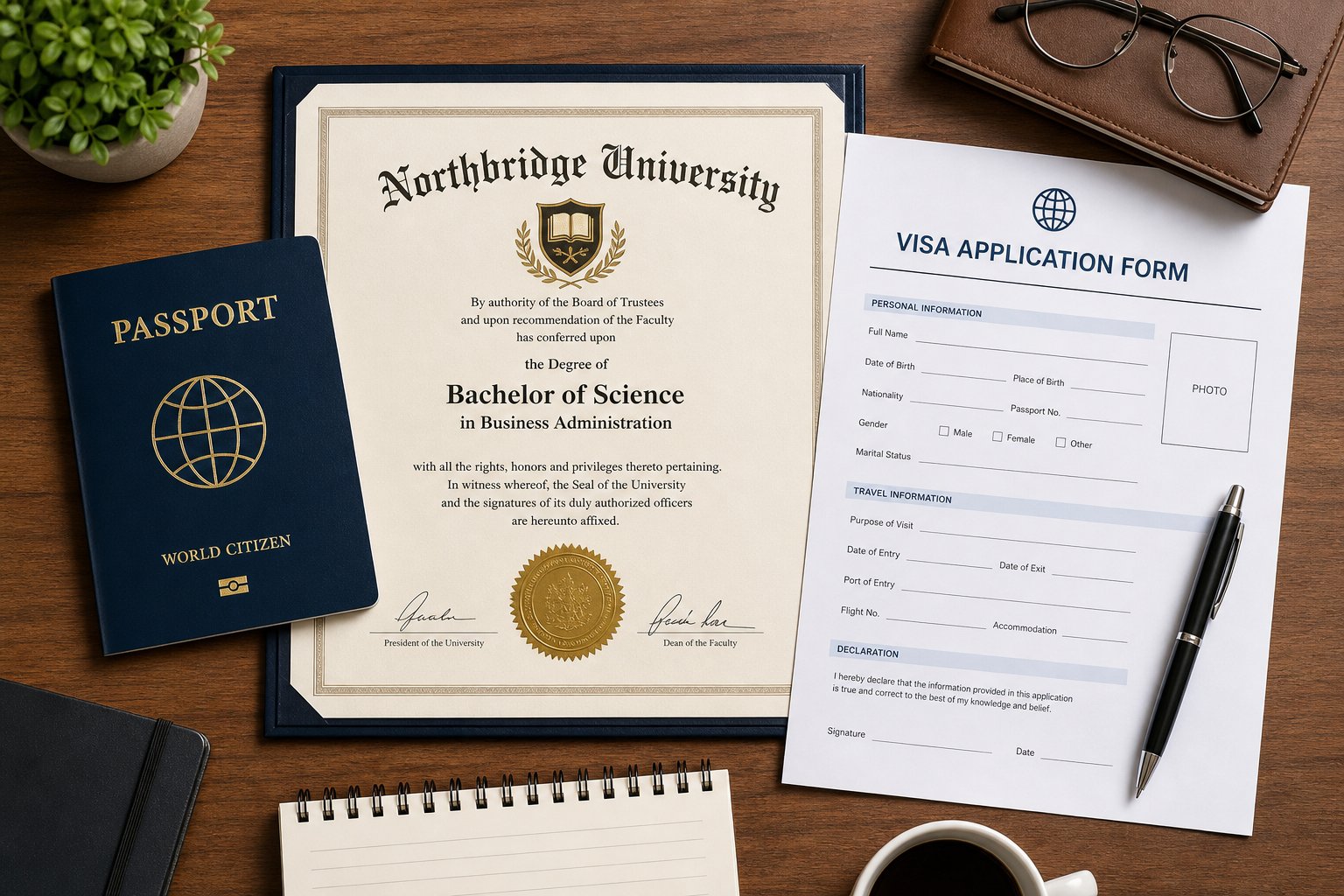
The same person can have their name spelled three different ways across three different documents, and every version might be defensible depending on context. That's not a bug in the system. It's a feature of how different institutions interpret the official hanyu pinyin rules for names based on their own technical constraints and audience expectations. The trick is knowing which variation belongs where, so you don't end up with a passport that contradicts your journal publications or a visa form that doesn't match either one.
Context determines which variation of the pinyin name rules applies. A passport, an academic paper, and a visa application each impose different constraints on the same underlying standard.
Pinyin Names on Passport Applications
Chinese passport applications follow GB/T 28039-2011 at its most stripped-down. The Public Security Bureau processes your chinese name translation into pinyin with zero embellishment: no tone marks, no diacritics, given name syllables joined into one block, surname separate. The machine-readable zone demands basic Latin characters only, which means everything that makes pinyin phonetically precise gets removed at the production stage.
If you're applying for or renewing a Chinese passport, here's exactly how to write your name in chinese pinyin for that form:
- Identify your surname and given name as separate fields. The application form provides distinct boxes for xing (surname) and ming (given name). Enter them separately, not as one combined string.
- Write your given name as one joined unit. If your given name is 小明, enter XIAOMING, not XIAO MING. No spaces, no hyphens, no punctuation within the given name field.
- Use all capital letters. Passport machine-readable zones render names in full caps. The form typically expects the same. WANG XIAOMING is the standard output format.
- Omit all tone marks. Even though tones are part of correct pinyin, ICAO machine-readable document standards don't support diacritics. Don't attempt to include them.
- Skip apostrophes unless the system explicitly supports them. While the standard calls for apostrophes in ambiguous cases, passport systems often can't process special characters. Follow the form's constraints.
The result on your passport will look like: WANG XIAOMING or LIU JIANGUO. Clean, unambiguous, and consistent with every other mainland Chinese passport. This is the most restrictive application of the rules, and it's non-negotiable. You can't request a hyphenated form or separated syllables on a PRC passport.
One common frustration: people who learned how to write your name in mandarin with full tone marks feel the passport version looks incomplete. It is, phonetically speaking. But the document serves an identification function, not a linguistic one. Consistency across millions of passports matters more than phonetic completeness on any single one.
Academic and Publishing Conventions
Academic contexts give you more room to breathe. Journals, conference proceedings, and university registrations generally follow the same structural rules (surname first, given name joined) but retain tone marks when the publication supports Unicode characters. This produces the most phonetically complete version of your romanized name.
- Follow the surname-first convention unless the journal specifies otherwise. Most Chinese-studies and linguistics journals expect surname first. General science journals may request Western order (given name first), in which case you'd write Xiaoming Wang rather than Wang Xiaoming.
- Include tone marks when the publication medium supports them. Academic pinyin should be phonetically complete: Wáng Xiǎomíng, not Wang Xiaoming. This aids pronunciation and distinguishes homophones.
- Keep given name syllables joined. Even in Western name-order contexts, the given name remains one unit: Xiǎomíng Wáng, not Xiǎo Míng Wáng.
- Use the all-caps surname convention for clarity. Many journals prefer WANG Xiaoming or WANG Xiǎomíng to signal which component is the family name. Check the journal's style guide.
- Be consistent across all your publications. Pick one romanized form and stick with it. Citation databases like Google Scholar and ORCID rely on name matching. Switching between Wang Xiaoming, X. Wang, and Xiaoming Wang fragments your publication record.
For anyone doing a chinese name translation for academic purposes, the key difference from passport usage is that tone marks are expected rather than prohibited. The structural rules remain identical. Your name doesn't change shape between documents; it just gains or loses phonetic detail depending on what the medium can handle.
International Forms and Visa Applications
Visa applications and international forms sit somewhere between the rigid passport format and the flexible academic convention. Each country's immigration system has its own field structure, character limits, and expectations about name order. The China Online Visa Application system, for instance, uses automatic passport bio-page recognition to populate name fields, pulling directly from the machine-readable format already on your travel document.
- Match your passport exactly. When a visa form asks for your name "as it appears in your passport," reproduce it character for character. If your passport says LIU JIANGUO, don't write Liu Jian-guo or Jianguo Liu.
- Use the name order the form expects. Many Western immigration forms put "Family Name" and "Given Name" in separate fields. Enter your surname in the family name field and your joined given name in the given name field. Don't split your given name across multiple fields.
- Omit tone marks unless the form explicitly accepts them. Most visa systems use basic ASCII input. Attempting to enter diacritics may cause processing errors or character substitution.
- Check for character limits. Some systems cap name fields at a specific length. If your joined given name exceeds the limit, contact the issuing authority rather than arbitrarily splitting or abbreviating it.
- Keep a record of which form you used for which document. Discrepancies between your visa name and your passport name can trigger identity verification delays at borders.
The China Online Visa Application system specifically notes that automatic recognition of your passport's bio-page will assist in filling name fields, and applicants should verify that all information matches before confirming. This automation reduces errors but also means your name format is locked to whatever your passport already shows.
People sometimes search for a chinese name converter tool expecting it to handle all these contextual variations automatically. No single converter can, because the correct output depends on which document you're filling out. An english to chinese name tool might generate characters from a romanized input, but the reverse process, converting characters to a properly formatted romanized name, requires knowing the target context. A passport demands one format. A journal expects another. A Schengen visa form has its own field constraints.
This is why the same person legitimately ends up with slightly different romanized forms across their document portfolio. The underlying name hasn't changed. The rules haven't been violated. Each document simply applies a different slice of the standard based on its own technical and institutional requirements. The goal isn't perfect uniformity across every piece of paper you'll ever sign. It's consistency within each document type and awareness of why the differences exist, so that when a border agent or registrar asks why your forms don't match perfectly, you can explain exactly which standard each one follows.
Knowing the correct form for each context is half the battle. The other half is recognizing incorrect forms when you encounter them, because errors in pinyin name formatting follow predictable patterns that are easy to spot once you know what to look for.
Common Pinyin Name Mistakes and Their Correct Forms
Errors in writing chinese names follow a handful of recurring patterns. Once you can spot them, you'll notice them everywhere: on conference badges, in email signatures, across published papers, and even on official forms where someone upstream made a formatting choice that contradicts the standard. The good news is that most mistakes fall into three categories, and each one has a clear fix.
Syllable Separation Errors and Corrections
The most common mistake in chinese name transliteration is splitting given name syllables apart. English-trained eyes expect spaces between words, so people instinctively insert gaps where none belong. When you transliterate chinese names under the mainland standard, the given name is always one joined block. No exceptions for longer syllables, no exceptions for names that "look better" separated.
You'll also see this error compounded by systems that auto-format names. A database field labeled "First Name" and "Middle Name" tempts users to drop the first given-name syllable into one box and the second into another. The result is a fragmented name that no longer matches the person's passport or any official record.
Capitalization and Hyphenation Mistakes
Intercaps (capitalizing the second syllable of a joined given name) and unnecessary hyphens are the next most frequent problems. People writing ZhiYing instead of Zhiying, or inserting a hyphen as Zhi-ying, are usually borrowing conventions from Taiwanese practice or older Wade-Giles habits without realizing those formats violate the mainland standard. If you're trying to chinese name convert from characters to pinyin under GB/T 28039-2011, the rule is one capital letter at the start of the given name and nothing else breaking up the flow.
Capitalization errors also appear on the surname side. Writing the entire surname in lowercase (wang Xiaoming) or applying random caps (wANG xiaoming) both fail the standard. The pattern is always: first letter up, rest down.
Mixed System Errors to Avoid
Perhaps the trickiest mistakes involve blending romanization systems. Someone might write their surname in pinyin but their given name in Wade-Giles, producing hybrids like "Zhang Chih-ming" that belong to no standard at all. This happens frequently when people copy name elements from different documents issued at different times or in different jurisdictions. Consistent transliteration chinese standards require picking one system and applying it to the entire name.
Another mixed-system error involves omitting apostrophes where syllable boundaries are ambiguous. If a name chinese writing form reads "Lian" but the intended pronunciation is "Li'an" (two syllables), the missing apostrophe creates a completely different sound. This isn't a stylistic choice. It's a phonetic error that changes the name.
Here's a reference table showing common incorrect forms alongside their officially correct versions:
| Common Incorrect Form | Correct Official Form | Rule Violated | Explanation |
|---|---|---|---|
| Li Wei Guo | Lǐ Wèiguó | Syllable separation | Given name syllables must be joined into one unit with no spaces |
| Zhang Wei-Ming | Zhāng Wèimíng | Hyphenation + intercaps | No hyphens in mainland pinyin names; only first letter of given name capitalized |
| wang xiaoming | Wáng Xiǎomíng | Missing capitalization | First letter of surname and first letter of given name must be capitalized |
| Chao Li-Hua | Zhào Lìhuá | Mixed system (Wade-Giles surname spelling + hyphen) | "Chao" is Wade-Giles; correct pinyin is "Zhao." No hyphen in given name |
| OuYang Xiu | Ōuyáng Xiū | Intercaps in compound surname | Compound surnames are one word with only the first letter capitalized |
| Liu Xian | Liú Xī'ān | Missing apostrophe | When the second syllable starts with a vowel, an apostrophe prevents misreading as a single syllable |
| ZHAO li ying | Zhào Lìyǐng | Inconsistent capitalization + separation | All-caps surname with lowercase split given name follows no standard |
| Deng Hsiao-ping | Dèng Xiǎopíng | Wade-Giles given name with pinyin surname | "Hsiao" is Wade-Giles; systems must not be mixed within one name |
Each of these errors stems from a predictable source: unfamiliarity with the joining rule, borrowing conventions from a different regional system, or letting software auto-format a name without checking the output. When you need to transliterate chinese names correctly, the checklist is short. Join given name syllables. Capitalize only initial letters. Skip hyphens. Use apostrophes only where vowel-initial syllables create ambiguity. Pick one romanization system and apply it to the whole name.
Recognizing these patterns is practical, not pedantic. A name formatted incorrectly can fail database matching, delay visa processing, or split a publication record into fragments that search engines treat as different people. The errors are easy to make and just as easy to fix once you know which rule each one violates.

Essential Pinyin Name Rules Quick Reference
You've seen the standards, the comparisons, and the common mistakes. Here's everything distilled into a reference you can return to whenever you're staring at a form and wondering how do chinese names work in pinyin. Whether you're formatting a common chinese name like Wang Wei or a compound-surname rarity like Ouyang Xiu, the core logic stays the same.
Quick Reference Summary of Core Rules
The single most important principle: surname comes first, given name syllables are joined into one unit, and the first letter of each component is capitalized. Everything else is a variation on this foundation.
Keep this checklist handy for any document or publication:
- Surname first, given name second - Always. Regardless of document type or target audience.
- One space between surname and given name - No hyphens, commas, or dots.
- Given name syllables joined - Two-syllable given names form one word: Xiaoming, not Xiao Ming.
- Capitalize only initial letters - First letter of surname, first letter of given name. Nothing else.
- Compound surnames stay as one word - Ouyang, Shangguan, Sima. No internal spaces or caps.
- Apostrophe when vowel-initial syllables follow another syllable - Prevents misreading within joined names.
- No hyphens under mainland standards - Hyphens belong to Taiwanese conventions, not GB/T 28039-2011.
- Tone marks included in full pinyin, omitted on passports - Context determines whether diacritics appear.
Choosing the Right Standard for Your Situation
When rules conflict across systems, let the document's destination decide. Submitting to a mainland Chinese government office? GB/T 28039-2011 governs. Publishing in an international journal? ISO 7098 applies, which aligns closely with mainland rules but expects tone marks. Filling out a form for a Taiwanese institution? Expect hyphenated given names to be acceptable. The standard isn't universal, but your choice within any single context should be consistent.
For typical chinese names appearing across multiple documents, maintain one "canonical" pinyin form that matches your passport. Let that serve as your anchor. Academic publications and informal contexts can layer tone marks or adjust name order on top of that base, but the passport form is the one that immigration systems, banks, and legal authorities will cross-reference.
Titles and Honorifics in Pinyin Names
Chinese honorifics attach to the surname, not the given name. The equivalent of "Mr" in chinese is xiansheng (先生), placed after the surname: Wang xiansheng. "Ms" or "Mrs" translates to nushi (女士): Li nushi. In professional settings, job titles replace generic honorifics entirely: Zhang laoshi (Teacher Zhang), Liu zhuren (Director Liu), Wang yisheng (Doctor Wang). The surname always precedes the title, reversing the English pattern of "Mr. Wang" into "Wang xiansheng."
A chinese courtesy name (zi), historically given at adulthood as an alternative to one's personal name, follows the same pinyin formatting rules as any given name. Zhuge Liang's courtesy name Kongming would be written Zhūgě Kǒngmíng in full pinyin, with the compound surname joined and the courtesy name treated as a standard given-name unit.
These conventions round out the full lifecycle of a pinyin name: from the official standard that defines its structure, through the government document that strips it to machine-readable basics, to the professional context where honorifics frame it within social relationships. The rules themselves are few. Applying them consistently across every form, publication, and introduction you'll ever encounter is the real skill, and now you have the reference to do exactly that.
Frequently Asked Questions About Official Pinyin Name Rules
1. Should given name syllables be joined or separated in pinyin?
Under the mainland Chinese standard GB/T 28039-2011, all syllables in a given name must be written as one continuous unit with no spaces or hyphens. For example, a name like 小明 is written as Xiaoming, never Xiao Ming or Xiao-ming. This joining rule treats the entire given name as a single word, reflecting how it functions semantically in Chinese. Hyphenated forms like Xiao-ming follow Taiwanese conventions and are not compliant with mainland standards.
2. Why does my Chinese passport omit tone marks from my pinyin name?
Chinese passports follow ICAO (International Civil Aviation Organization) machine-readable document specifications, which restrict characters to the basic Latin alphabet without diacritics. While GB/T 28039-2011 technically includes tone marks as part of correct pinyin, the passport production process strips them to ensure global system compatibility. This is a practical limitation of travel document technology rather than a deviation from the standard itself. Academic publications and linguistic contexts still expect tone marks when the medium supports Unicode.
3. How do you write a compound surname like Ouyang in pinyin?
Compound surnames (fuxing) are written as a single word with only the first letter capitalized. Ouyang is correct, while Ou Yang, Ou-yang, and OuYang all violate the standard. The same rule applies to all compound surnames: Shangguan, Sima, Zhuge, Huangfu, and others. No internal spaces, hyphens, or intercaps are permitted. The compound surname is then followed by one space before the given name, just like a monosyllabic surname would be.
4. What is the difference between mainland China and Taiwan pinyin name formatting?
The key differences involve hyphenation and capitalization. Mainland China joins given name syllables into one unit (Zhiying) with no hyphens, while Taiwan commonly separates them with a hyphen (Chih-ying) and often capitalizes both syllables. Taiwan also permits multiple romanization systems on passports, including Wade-Giles variants, whereas mainland China exclusively uses Hanyu Pinyin. Both systems place the surname first, but the visual output can look quite different for the same set of characters.
5. When should I use an apostrophe in a pinyin name?
An apostrophe is required when a syllable beginning with a, o, or e follows another syllable within a joined given name and the boundary could be misread. This mirrors the well-known Xi'an example in place names. For instance, if a given name contains the syllables li and an joined together, writing Lian without an apostrophe looks like a single syllable, while Li'an correctly signals two syllables. Though this situation is relatively uncommon in personal names, omitting the apostrophe when needed constitutes both a standard violation and a phonetic error.