Which Chinese Character for Peace Do You Actually Need
You type "peace in Chinese" into a search bar and get hit with a handful of different characters. Which one is correct? All of them, actually. The English word "peace" is broad enough to cover everything from global diplomacy to a quiet evening at home. Chinese handles that range by splitting the concept across several distinct characters, each carrying its own shade of meaning.
English "peace" maps to at least five distinct Chinese concepts: 和平 (diplomatic peace), 安 (safety), 宁 (tranquility), 平 (calm balance), and 太平 (great societal peace). Choosing the right chinese symbol for peace depends entirely on what kind of peace you mean.
Why There Are Multiple Chinese Characters for Peace
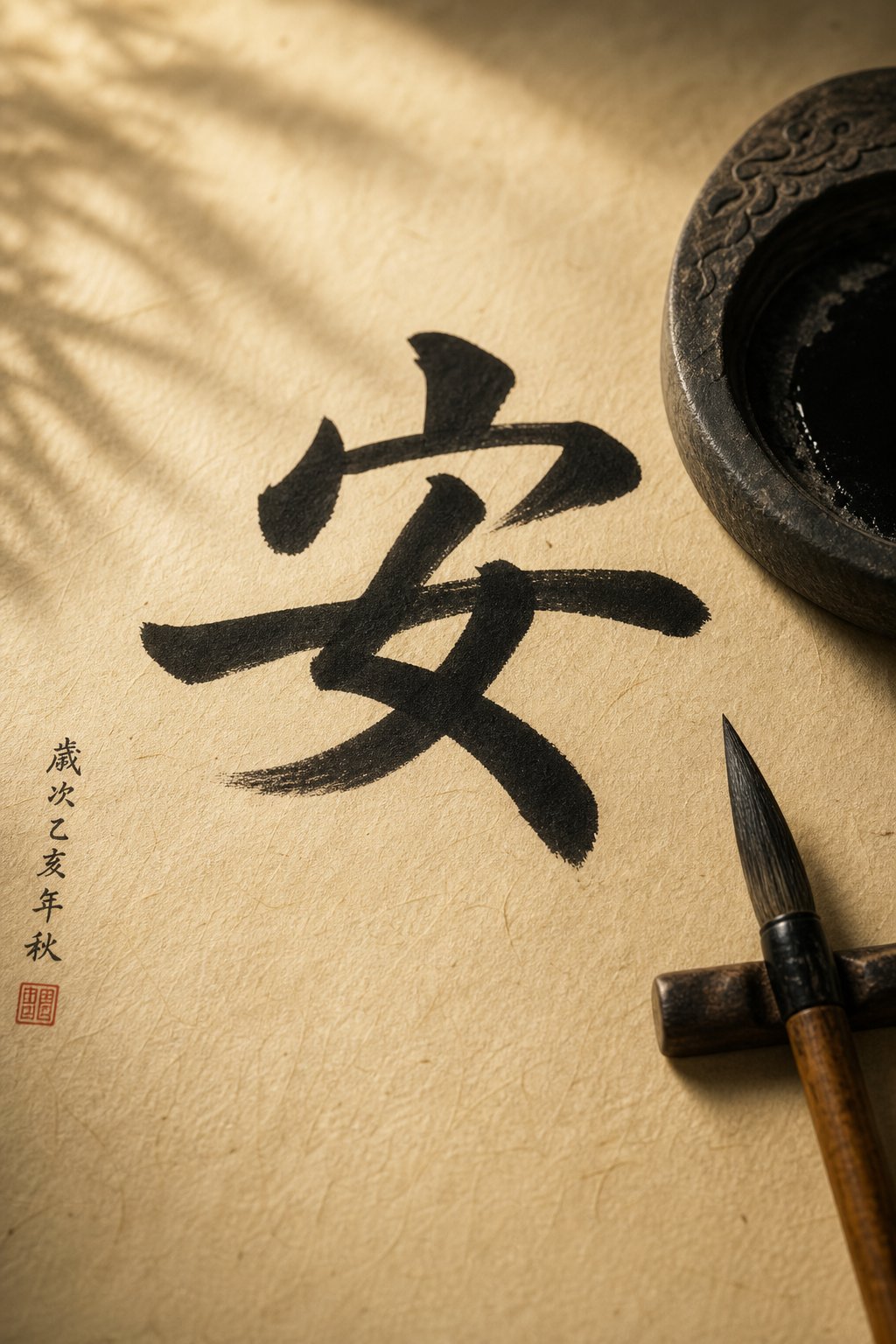
Chinese is a logographic language. Each character carries a core meaning rooted in thousands of years of cultural context. Where English relies on one umbrella word and adds adjectives for nuance, Chinese builds nuance directly into the character itself. The character 安 (an1) evokes the feeling of being safe under a roof. The character 宁 (ning2) points toward stillness and quiet. The compound 和平 (he2 ping2) specifically describes the absence of war or conflict between groups. These are not interchangeable synonyms. They occupy different slots in conversation, literature, and art.
So when you are looking for the right chinese character for peace, the first question to ask yourself is: peace from what? Peace from danger, from noise, from war, or from inner turmoil? Your answer determines which character fits.
Quick Reference for the Most Common Peace Symbols
Here is a concise breakdown of each chinese peace character and what sets it apart:
- 和平 (heping2, he2ping2) - Peace as the opposite of war; used in diplomacy and political contexts.
- 安 (an1, tone 1) - Safety, security, being free from danger or worry.
- 宁 (ning2, tone 2) - Tranquility, serenity, a quiet and undisturbed state.
- 平 (ping2, tone 2) - Flat, level, calm; implies balance and evenness.
- 太平 (taiping4, tai4ping2) - Great peace; describes an era or society free from upheaval.
Each of these characters has its own history, radical structure, and philosophical weight. The differences between them reveal how Chinese culture thinks about peace not as a single idea, but as a spectrum of states ranging from personal calm to civilizational harmony.
Complete Comparison of Every Chinese Peace Character
That spectrum of meanings is easier to navigate when you can see all the options laid out together. The table below puts every major chinese peace symbol side by side so you can compare nuance, formality, and real-world context at a glance. Think of it as a decision matrix: find the row that matches your intended meaning, and you have your answer.
Comparison Table of All Peace Characters
| Character | Pinyin | Core Meaning Nuance | Formality Level | Typical Usage Context |
|---|---|---|---|---|
| 和平 | heping2 (he2ping2) | Peace as the absence of war; diplomatic harmony | Formal | Politics, international relations, speeches, news media |
| 安 | an1 (an1) | Safety, security, freedom from danger | Neutral to formal | Blessings, personal names, greetings, compound words |
| 宁 / 寧 | ning2 (ning2) | Tranquility, quiet composure | Literary to neutral | Poetry, place names, personal reflection, Buddhist contexts |
| 平 | ping2 (ping2) | Flat, level, calm, equal | Neutral | Everyday speech, idioms, compound words describing balance |
| 太平 | taiping (tai4ping2) | Great peace; an era free from upheaval | Formal to literary | Historical writing, political discourse, place names |
| 安宁 | anning (an1ning2) | Peaceful and quiet; undisturbed calm | Neutral to literary | Describing environments, emotional states, spiritual practice |
You will notice that the chinese word for peace shifts depending on whether you are talking about a nation at rest or a mind at rest. That distinction matters enormously when choosing a character for calligraphy, a tattoo, or even a text message to a friend.
When to Use Each Character in Context
Seeing the characters in actual sentences makes the differences concrete. Below are real-world examples showing how each symbol of peace in chinese functions in natural Mandarin.
和平 (he2ping2)
世界和平是人类的共同愿望。
Shijie heping shi renlei de gongtong yuanwang.
World peace is humanity's common wish.
This is the standard chinese for peace in any formal or political setting. You will hear it in United Nations speeches, news broadcasts, and diplomatic statements.
安 (an1)
祝你一路平安!
Zhu ni yilu ping'an!
Wishing you a safe journey!
安 appears in countless compound blessings. It carries warmth and personal concern, making it the go-to character for well-wishes between family and friends.
宁 / 寧 (ning2)
我喜欢在宁静的夜晚读书。
Wo xihuan zai ningjing de yewan dushu.
I like reading on peaceful, quiet nights.
宁 leans poetic. You will find it in literary descriptions of nature, meditative settings, and personal names that express a wish for inner stillness.
平 (ping2)
湖面平静如镜。
Hu mian pingjing ru jing.
The lake surface is as calm as a mirror.
平 describes physical and emotional levelness. It is the most versatile single character in this group, appearing in dozens of compound words related to balance and calm.
太平 (tai4ping2)
百姓渴望天下太平。
Baixing kewang tianxia taiping.
The common people long for peace under heaven.
太平 carries historical weight. It describes peace on a civilizational scale, the kind of stability entire dynasties were judged by.
安宁 (an1ning2)
祝你心灵安宁。
Zhu ni xinling anning.
Wishing your mind peace and tranquility.
安宁 combines safety with quietude. It works beautifully for describing both a peaceful environment and a settled emotional state, bridging the personal and the spatial.
Each of these characters carries layers of history baked into its strokes. The visual form of a chinese sign for peace is not arbitrary decoration. It is a compressed record of how ancient scribes understood safety, stillness, and social order, and those origins stretch back thousands of years into oracle bone carvings and bronze inscriptions.
The Ancient Origins and Evolution of Peace in Chinese Script
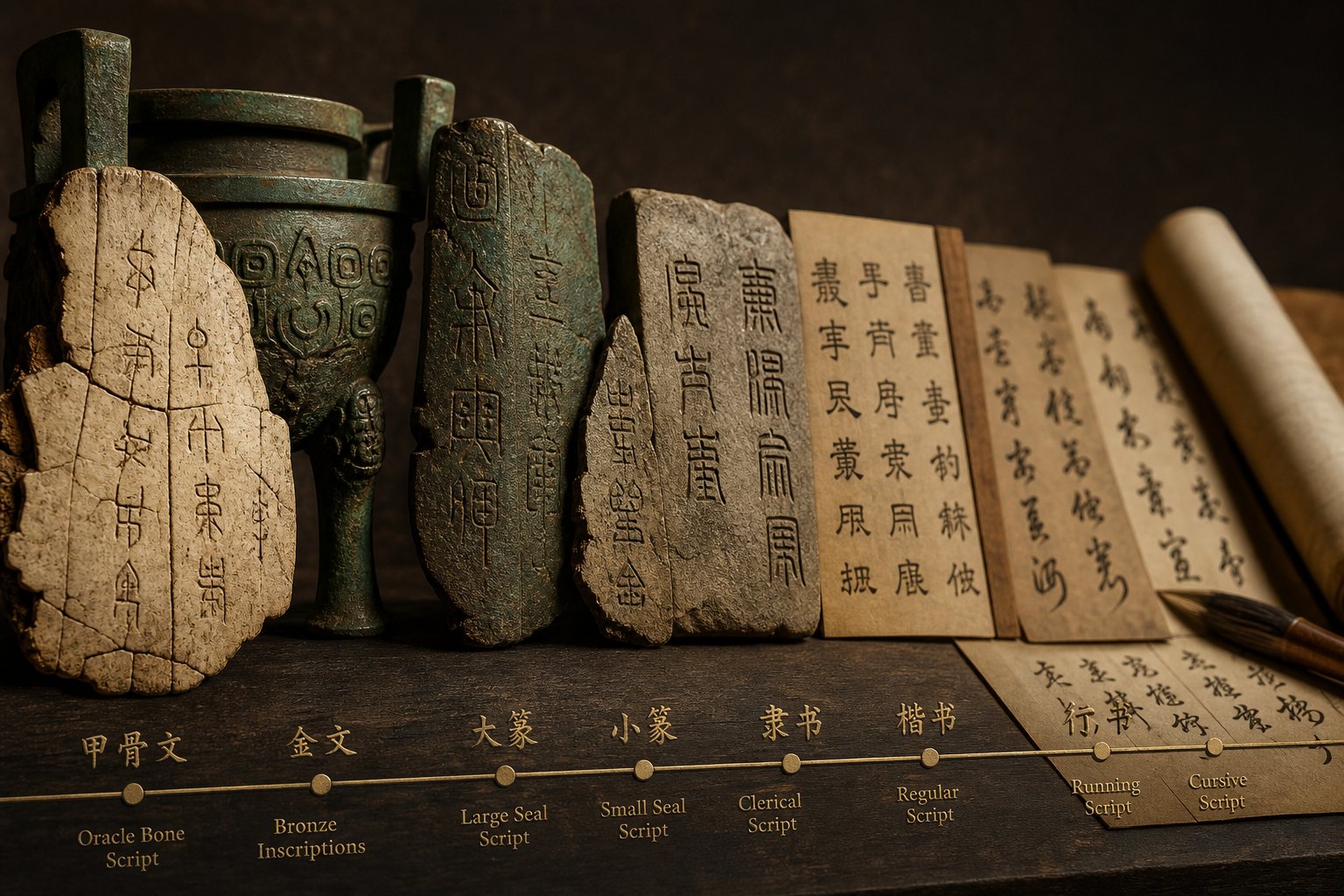
Those layers of history are not metaphorical. Every stroke in a chinese character peace carries today was shaped by scribes who carved into turtle shells and cast bronze vessels over three thousand years ago. The characters 安 and 平 are among the oldest in the Chinese writing system, and tracing their visual evolution reveals how ancient people literally pictured the concept of peace.
Oracle Bone Origins of Peace Characters
The earliest known Chinese writing appears on oracle bone inscriptions (甲骨文, jiaguwen) from the Shang dynasty, roughly the 17th to 11th century BCE. Priests carved questions into turtle plastrons and ox scapulae, then applied heat until cracks formed. The characters used in these divinations were still in an experimental stage, not yet standardized, with the same word sometimes written in multiple ways.
安 appears in oracle bone carvings as a recognizable pictograph: a woman (女) kneeling beneath a roof-like structure (宀). The image is direct. A woman sheltered inside a home equals safety, security, peace. This is classified as a huiyi (会意) or "combined meaning" character, where two visual elements merge to express an abstract idea.
平 shows up in early inscriptions as a more abstract form, depicting a level, balanced surface, likely representing still water or a flat plane. Where 安 roots peace in domestic shelter, 平 roots it in physical equilibrium. Two different ancient symbols for peace, two fundamentally different metaphors for the same human longing.
How the Characters Evolved Through Five Script Stages
Chinese writing peace has never been static. The characters passed through five major script stages, each reshaping their visual identity while preserving core meaning:
- Oracle Bone Script (甲骨文, c. 1200 BCE) - Characters are angular and pictographic, carved with sharp tools into bone. 安 clearly shows a kneeling figure beneath a peaked shelter. 平 appears as a simple horizontal line with balancing elements, suggesting a scale or water level.
- Bronze Script (金文, c. 1000-700 BCE) - Cast into ritual bronze vessels, the characters become rounder and more decorative. The woman in 安 gains fuller curves, and the roof widens. 平 develops more symmetrical proportions, reinforcing its visual message of balance.
- Seal Script (篆书, c. 500-200 BCE) - Standardized under the Qin dynasty, strokes become uniform in width and highly regulated. 安 takes on the elegant, flowing form still used in carved seals today. 平 settles into a clean geometric shape with even horizontal strokes.
- Clerical Script (隶书, c. 200 BCE-200 CE) - A practical revolution. Curved strokes flatten into angular ones for faster writing with brush on bamboo and silk. The pictographic origins of both characters become harder to see as efficiency overtakes illustration.
- Regular Script (楷书, c. 200 CE-present) - The modern standard form. Each stroke is distinct and codified. 安 and 平 reach their final shapes, the ones you see printed in books and typed on screens today.
What this progression reveals is a cultural shift. Early chinese characters peace expressed through literal pictures: a sheltered woman, a balanced surface. Over centuries, abstraction replaced illustration. The meaning stayed, but the visual storytelling became encoded rather than obvious. You can no longer "see" the woman under the roof in modern 安 without knowing the history behind it.
That hidden history is exactly what makes these characters so rich. Each one is a compressed narrative, and understanding the components inside them unlocks meaning that goes far beyond a dictionary definition.
Radical and Component Breakdown with Pronunciation Guide
Knowing the historical evolution is one thing. Pulling a character apart into its building blocks is where the meaning truly clicks. Chinese characters are not random arrangements of lines. They are assembled from smaller semantic and phonetic units called radicals and components. When you break down each peace character this way, you get a window into the logic ancient scribes used to encode abstract ideas into visual form.
Radical Breakdown of 安 and 和
Start with 安 (an1), one of the most searched characters for peace in Mandarin. It is built from exactly two components:
- 宀 (mian2) - The roof radical, also called "baogangtou." It represents a shelter, a house, a covering overhead. You will find it in dozens of characters related to domestic life: 家 (home), 室 (room), 宝 (treasure).
- 女 (nu3) - The character for woman, placed beneath the roof. In the original pictograph, this showed a kneeling figure with arms crossed, a posture of rest.
Put them together and the logic is vivid: a woman safe under a roof equals peace, security, contentment. Some scholars interpret this as reflecting ancient domestic values where a settled household signified stability. Others read it more broadly as any person finding shelter. Either way, the character encodes peace as protection from external threat.
Pronouncing 安 correctly means producing a first tone (tone 1). Open your mouth naturally, keep your tongue low and relaxed, and sustain a high, flat pitch from start to finish. Imagine holding a single musical note steady without any rise or dip. The vowel sound is similar to the "a" in "father."
The character 和 (he2) works differently. It is composed of:
- 禾 (he2) - The grain radical, depicting a stalk of millet or rice bending under its own weight. It appears in characters related to agriculture and harvest: 秋 (autumn), 种 (plant/seed), 稻 (rice paddy).
- 口 (kou3) - The mouth radical, one of the most common components in Chinese, appearing in characters for speech, eating, and communication.
The combined meaning? Grain plus mouth equals harmony. When people have enough to eat, when sustenance is shared, conflict dissolves. This is peace in Mandarin Chinese expressed as social cooperation rather than mere absence of danger. The character 和 captures the Confucian ideal that harmony arises from mutual provision and proper relationships.
For pronunciation, 和 uses a second tone (tone 2). Start at a mid-low pitch and rise sharply upward, like the inflection in English when you ask "what?" Your lips stay relaxed and slightly open, with the tongue positioned in the middle of the mouth.
Semantic Components of 平 and 宁
平 (ping2) takes a different structural approach. Rather than combining two meaning-bearing radicals, it originated as a pictograph representing a flat, level surface. The top stroke is a horizontal line suggesting evenness. The lower portion (originally resembling breath or air rising evenly) reinforces the idea of equilibrium. In modern component analysis, 平 is classified under the radical 干 (gan1), though its meaning derives from its pictographic origin rather than from that radical's semantics.
Saying 平 correctly requires the same second tone as 和. Begin at a mid-low pitch and slide upward. The initial consonant "p" is aspirated, meaning you release a small puff of air (hold your hand in front of your lips and you should feel it). The vowel "ing" sounds like the English word "ping" in ping-pong.
宁 (ning2) is where things get interesting, especially if you are researching the chinese kanji for peace in Japanese contexts. The simplified form 宁 looks deceptively simple: just the roof radical 宀 over 丁. But the traditional form 寧 reveals the full semantic architecture:
- 宀 (mian2) - Roof radical, shelter overhead.
- 心 (xin1) - Heart, representing the mind and emotions.
- 皿 (min3) - A dish or vessel, symbolizing material sufficiency.
Read the traditional form as a story: under a roof, with a settled heart and a full dish, there is tranquility. It is peace defined as inner contentment supported by basic material security. The character does not just mean "quiet" in a surface-level sense. It means the deep stillness that comes when both physical and emotional needs are met.
Pronouncing 宁 requires a second tone starting mid-low and rising. The initial "n" is produced with the tongue tip touching the ridge behind your upper teeth. The "ing" ending resonates in the nasal cavity, similar to the final sound in "sing."
Simplified vs Traditional Character Differences
If you have seen both 宁 and 寧 and wondered which is "correct," the answer depends on where you are. Mainland China adopted simplified characters (简体字) in the 1950s and 1960s to improve literacy rates. Taiwan, Hong Kong, and Macau continue using traditional characters (繁体字). Both forms are legitimate and widely understood.
| Character | Simplified | Traditional | Stroke Count (Simplified / Traditional) | Regions Using Each Form |
|---|---|---|---|---|
| Tranquility | 宁 | 寧 | 5 / 14 | Simplified: Mainland China, Singapore, Malaysia. Traditional: Taiwan, Hong Kong, Macau |
| Peace (compound) | 和平 | 和平 | 8+5 / 8+5 | Same in both systems |
| Safety | 安 | 安 | 6 / 6 | Same in both systems |
| Calm | 平 | 平 | 5 / 5 | Same in both systems |
Notice that 安, 和, and 平 remain identical in both systems. The simplification process only altered characters deemed too complex for everyday writing. 寧, with its 14 strokes, was reduced to the 5-stroke 宁 by stripping away the heart and dish components. The trade-off is efficiency versus semantic transparency: the simplified form is faster to write, but the traditional form tells you more about what the character actually means.
For anyone researching chinese kanji peace, it is worth noting that Japanese kanji largely preserved the traditional Chinese forms. So 寧 is the version you will encounter in Japanese texts, while 宁 belongs to the simplified Chinese system. If you are choosing a character for artwork or a tattoo, the traditional form carries more visual weight and historical resonance, while the simplified form reflects contemporary mainland usage.
These structural details are not just academic. The radicals inside each character connect to entire philosophical systems. The roof in 安 and 宁 ties peace to shelter and domesticity. The grain in 和 ties it to shared resources and social bonds. The flatness of 平 ties it to natural equilibrium. Each radical points toward a different school of thought about what peace actually requires, and those philosophical roots run deep.
Philosophical Roots of Peace in Chinese Thought
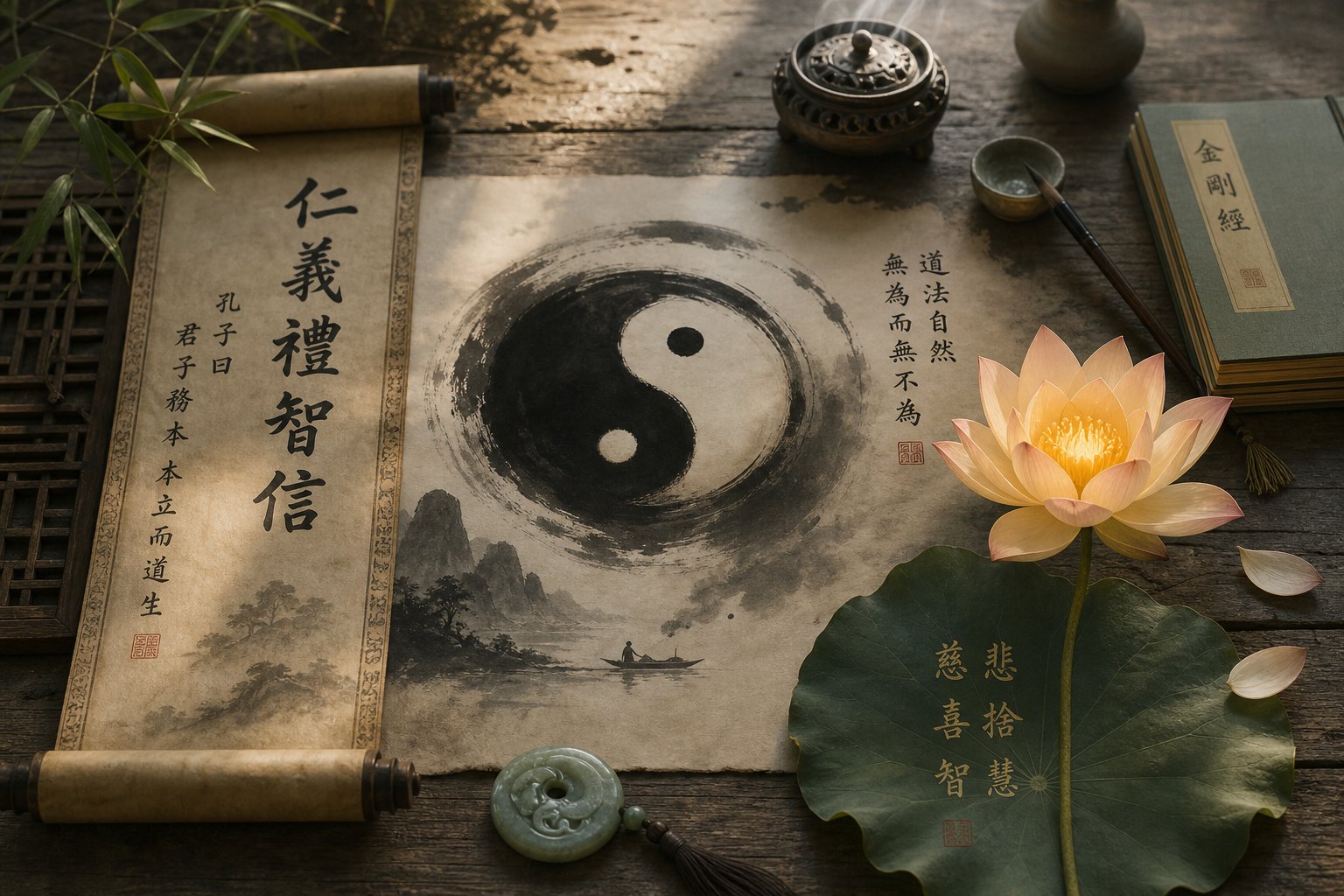
Those philosophical roots are not abstract footnotes. They are living traditions that shaped how millions of people understand, pursue, and express peace across centuries. Three major schools of thought, Confucianism, Daoism, and Buddhism, each claimed different peace characters as their own, loading them with distinct moral weight and spiritual purpose. The harmony chinese character 和 means something fundamentally different in a Confucian temple than the tranquility chinese symbol 宁 means in a Daoist monastery. Understanding these philosophical layers is what separates a surface-level translation from genuine comprehension.
Confucian Harmony and the Character 和
For Confucius (孔子, Kongzi, 551-479 BCE), peace was not a passive state. It was the active result of people fulfilling their roles within a structured social order. The chinese character for harmony, 和, sits at the center of this vision. Harmony in Confucian thought means right relationships: ruler to subject, parent to child, elder to younger, friend to friend. When everyone acts with ritual propriety (礼, li) and benevolence (仁, ren), conflict dissolves naturally.
"He who exercises government by means of his virtue may be compared to the North Star, which keeps its place and all the stars turn towards it." - Confucius, Analerta 2.1
This quote from the Analects captures the Confucian ideal perfectly. Peace is not enforced through punishment. It radiates outward from virtuous leadership. The chinese symbol for harmony, 和, with its grain radical (禾) and mouth radical (口), encodes this social vision at the structural level: shared sustenance, open communication, and mutual provision create the conditions where conflict has no reason to arise.
Daoist Tranquility in 平 and 宁
Daoism takes a radically different approach. Where Confucianism builds peace through social structure, Daoism finds it by dissolving structure altogether. The characters 平 and 宁 resonate with Daoist philosophy because they describe states of natural equilibrium rather than engineered harmony. Peace is not something you construct. It is what remains when you stop interfering.
"The Dao does nothing, yet nothing is left undone." - Laozi, Dao De Jing, Chapter 37
This principle of wu wei (无为, non-action) reframes peace as alignment with natural flow. The yin yang peace symbol illustrates this beautifully. Two opposing forces, dark and light, active and passive, do not fight for dominance. They cycle into each other, maintaining balance without effort. The yin yang peace sign is not merely decorative. It is a philosophical statement: peace exists when opposites coexist without one trying to eliminate the other. The flatness of 平 and the stillness of 宁 both point toward this Daoist ideal of undisturbed naturalness.
Buddhist Peace and the Concept of 安
Buddhism arrived in China around the first century CE and brought yet another framework for understanding peace. In Buddhist thought, suffering (苦, ku) arises from attachment and craving. Peace, then, is not about safety from external threats or social harmony. It is liberation from the internal cycle of desire and dissatisfaction.
"Peace comes from within. Do not seek it without." - Buddhist teaching attributed to early Pali Canon traditions
The character 安 maps onto this framework as inner security, a mind no longer agitated by grasping. The related character 寂 (ji4, stillness or silence) appears frequently in Buddhist texts to describe the peace of nirvana, the ultimate cessation of suffering. The buddhist symbol of peace meaning extends beyond any single character. It encompasses an entire path of meditation, ethical conduct, and wisdom aimed at reaching a state where the mind rests undisturbed. As a symbol of peace in Buddhism, 安 represents not the absence of danger but the absence of the fear that danger produces.
Together, these three traditions reveal why Chinese culture never settled on a single peace character. Confucianism needed 和 for its vision of social cohesion. Daoism gravitated toward 平 and 宁 for their resonance with natural balance. Buddhism adopted 安 and 寂 for their connection to inner liberation. The characters are not synonyms competing for the same slot. They are philosophical positions, each encoding a different answer to the question of what peace actually requires.
These philosophical ideals did not stay locked in ancient texts. They filtered into everyday language, crystallizing into compact four-character idioms that Chinese speakers still use in daily conversation, political speeches, and literary writing.
Chinese Idioms and Expressions Using Peace Characters
Four-character idioms, known as chengyu (成语), are the compressed wisdom of Chinese civilization. Each one packs a story, a moral lesson, or a cultural ideal into exactly four syllables. They show up in speeches, essays, daily conversation, and even text messages. When it comes to things that represent peace, chengyu offer some of the most vivid and culturally loaded expressions in the language. Knowing a handful of these idioms gives you access to how Chinese speakers actually talk about peace in practice, not just in dictionary definitions.
Essential Peace Idioms in Mandarin Chinese
Below are five essential peace mandarin idioms, each built from the characters explored earlier in this article. You will notice how different peace characters combine with other elements to express distinct shades of meaning.
- 天下太平 (tianxia taiping, tian1xia4 tai4ping2)
Literal translation: "All under heaven, great peace."
Idiomatic meaning: The whole world is at peace; universal tranquility prevails.
This idiom describes peace on the largest possible scale, an entire civilization free from war and disorder. The term 太平 carries enormous historical weight. It appears in the name of the Taiping Rebellion (太平天国, Taiping Tianguo, "Heavenly Kingdom of Great Peace"), a massive 19th-century uprising that lasted from 1850 to 1864, ravaged 17 provinces, and took an estimated 20 million lives. The rebels chose 太平 deliberately, framing their revolution as a path toward utopian societal peace. The irony that one of China's bloodiest conflicts carried "great peace" in its name is not lost on Chinese speakers today. - 心平气和 (xinping qihe, xin1ping2 qi4he2)
Literal translation: "Heart level, breath harmonious."
Idiomatic meaning: Calm and even-tempered; composed without agitation.
This idiom turns inward. It describes a person whose emotions are balanced and whose reactions remain measured. You might hear it as advice during an argument: "心平气和地说" (speak calmly). It combines 平 (level) and 和 (harmonious) to paint a picture of what symbolizes peace at the personal, emotional level. - 安居乐业 (anju leye, an1ju1 le4ye4)
Literal translation: "Peacefully dwell, happily work."
Idiomatic meaning: To live and work in peace and contentment.
This is the everyday dream: a stable home and meaningful work. It captures what represents peace for ordinary people, not grand diplomacy, but the quiet security of a settled life. Politicians frequently invoke this idiom when discussing domestic policy and economic stability. - 和平共处 (heping gongchu, he2ping2 gong4chu3)
Literal translation: "Peace, coexist together."
Idiomatic meaning: Peaceful coexistence between nations or groups.
This idiom entered modern political vocabulary through China's Five Principles of Peaceful Coexistence (和平共处五项原则), first articulated in the 1950s as a framework for international relations. It remains a cornerstone phrase in Chinese diplomatic language and appears regularly in state media, treaties, and foreign policy statements. - 平安无事 (ping'an wushi, ping2an1 wu2shi4)
Literal translation: "Level and safe, without incident."
Idiomatic meaning: Safe and sound; everything is fine with no trouble.
This is the idiom you use to reassure someone. After a long trip, a hospital visit, or a natural disaster, reporting 平安无事 means nothing bad happened. Among all things that symbolize peace in daily Chinese life, this phrase might be the most emotionally immediate.
How to Use Peace Idioms in Conversation
Chengyu are not museum pieces. Chinese speakers weave them into conversation naturally, though context matters. 天下太平 works in formal writing or when commenting on world events. 心平气和 fits personal advice or self-reflection. 安居乐业 appears in discussions about quality of life. 和平共处 belongs to political and diplomatic contexts. 平安无事 is the one you text your family after landing safely.
A practical tip: using chengyu correctly signals fluency and cultural awareness. Misusing them signals the opposite. If you are learning Mandarin, start with 平安无事 and 心平气和 in casual settings. Save 天下太平 and 和平共处 for writing or formal speech. The key is matching the idiom's register to the situation, just as you would not use "henceforth" in a text message in English.
These idioms live in textbooks and political speeches, but the peace characters inside them also live somewhere more intimate: in the names parents give their children, the streets people walk down every day, and the signs hanging above shop doors.
Peace Characters in Names and Daily Chinese Life
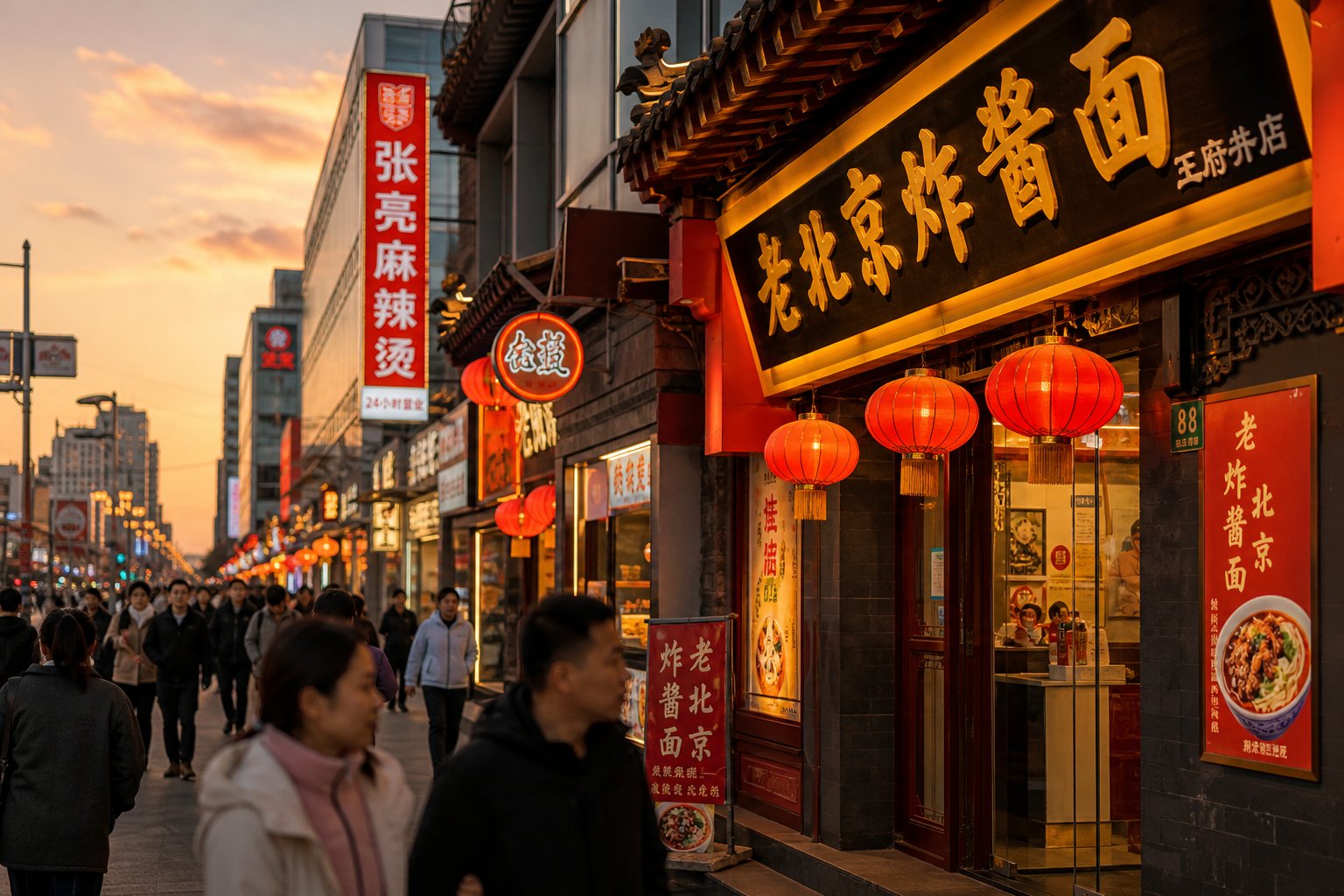
Walk through any Chinese city and you will encounter peace characters everywhere, not as philosophical abstractions but as living parts of the landscape. They appear on street signs, in personal introductions, on holiday greetings, and above storefronts. The peace chinese symbol is not confined to calligraphy scrolls or ancient texts. It is woven into the fabric of daily existence.
Peace Characters in Chinese Personal Names
Chinese parents choose names with extraordinary care. A child's name is not just a label. It is a wish, a blessing projected into the future. Peace characters rank among the most popular choices because they express what every parent wants: a safe, tranquil, and stable life for their child.
According to naming convention research based on China's seventh National Census, characters like 安 (an1, peaceful) and 宁 (ning2, tranquil) appear consistently among popular given-name characters. The character 安 ranked 22nd among the most popular characters for newborns in 2020, reflecting its enduring appeal. Parents select these characters because their meanings directly encode hopes for the child's wellbeing.
Common given names built from peace characters include:
- 安宁 (Anning) - "Peaceful tranquility." A unisex name expressing a wish for calm and security throughout life.
- 和平 (Heping) - "Peace and harmony." Often given to children born during significant historical moments or by parents with strong idealistic values.
- 平安 (Ping'an) - "Safe and sound." One of the most emotionally direct names, stating plainly that the parents want nothing more than their child's safety.
- 安静 (Anjing) - "Quiet and peaceful." A popular name for girls, reflecting a wish for composed temperament.
- 宁馨 (Ningxin) - "Tranquil fragrance." A literary-sounding name combining serenity with elegance.
The naming logic is straightforward in the peace in chinese language context. Each character carries its own blessing, and combining two characters lets parents layer wishes together. A name like 安宁 does not just sound pleasant. It functions as a daily invocation of the chinese symbol of peace, spoken aloud every time someone calls that person's name.
Place Names and Everyday Signs Featuring Peace
Peace characters saturate Chinese geography. Cities, streets, oceans, and provinces all carry these characters as markers of aspiration or historical significance. You do not need to read classical poetry to encounter the asian symbol for peace in China. You just need to look at a map.
- 太平洋 (Taipingyang) - The Pacific Ocean. Literally "Great Peace Ocean," named by European explorers for its calm waters relative to the Atlantic, then rendered into Chinese using 太平.
- 宁波 (Ningbo) - A major port city in Zhejiang province. The name means "Tranquil Waves," reflecting hopes for safe maritime trade.
- 和平路 (Heping Lu) - "Peace Road." One of the most common street names across Chinese cities, found in Beijing, Tianjin, Shanghai, and dozens of smaller municipalities.
- 南宁 (Nanning) - Capital of Guangxi province. Means "Southern Tranquility."
- 平安县 (Ping'an Xian) - "Safe and Sound County" in Qinghai province.
- 中国平安 (Zhongguo Ping'an) - Ping An Insurance, one of China's largest financial corporations. The brand name literally means "China Safe and Sound," leveraging the chinese peace sign to project trustworthiness.
Holiday greetings bring these characters into spoken life too. During Chinese New Year, 平安 (ping'an, safe and sound) appears on red decorations, in text messages, and in face-to-face blessings. On Christmas Eve, which Chinese youth call 平安夜 (Ping'an Ye, "Peaceful Night"), people exchange apples as gifts because the word for apple, 苹果 (pingguo), shares the sound "ping" with 平安. The pun transforms a piece of fruit into a wish for safety.
These everyday encounters mean that Chinese speakers do not experience peace characters as rare or elevated. They are as familiar as street corners and phone notifications. That constant visibility is precisely why these same characters become popular choices for something more permanent: artwork on walls and ink on skin.
Peace Characters in Calligraphy Art and Tattoo Culture
Artwork on walls and ink on skin represent two ends of the same spectrum. One is centuries-old tradition displayed in temples and living rooms. The other is a modern personal statement carried on the body. Both demand the same thing: choosing the right character, in the right script style, for the right context. Get it wrong and you end up with a beautiful piece of nonsense, or worse, something that means the opposite of what you intended.
Traditional Calligraphy Styles for Peace Artwork
Chinese calligraphy offers five major script styles, each with a distinct visual personality and traditional use case. When creating peace-themed artwork, the style you choose communicates as much as the character itself.
Regular Script (楷书, kaishu) is the most legible and widely recognized style. Its strokes are clean, distinct, and balanced. You will find it on New Year decorations, framed home decor, and gift calligraphy. If you want a peace in chinese tattoo that anyone can read at a glance, regular script is the safest choice.
Running Script (行书, xingshu) sits between formal and fluid. Strokes connect slightly, giving the characters a sense of movement without sacrificing readability. It is popular for personal gifts, scrolls exchanged between friends, and decorative pieces that balance elegance with accessibility.
Cursive Script (草书, caoshu) is fast, abstract, and often illegible to untrained eyes. It functions primarily as fine art. A peace character in cursive script becomes a visual experience rather than a readable word, making it suited for gallery pieces and expressive wall art rather than tattoos meant to communicate a clear message.
Seal Script (篆书, zhuanshu) is the oldest style, with rounded, archaic strokes that most modern Chinese readers cannot decipher without training. It appears on personal name seals, temple inscriptions, and formal engravings. For a chinese peace tattoo with historical gravitas and visual mystery, seal script offers a distinctive aesthetic, though you sacrifice immediate readability.
Choosing the Right Peace Character for a Tattoo
A chinese symbol for peace tattoo is permanent. The character you select and the style it is rendered in will live on your body for decades. That makes the decision worth more than a quick image search. Here is what to consider before sitting in the chair.
- Clarify your intended meaning. Do you want peace as inner calm (安 or 宁), peace as harmony with others (和), or peace as absence of conflict (和平)? Each carries a different philosophical weight. A chinese peace sign tattoo using 和平 says something political. One using 安 says something personal.
- Choose between simplified and traditional forms. Traditional characters (like 寧 instead of 宁) carry more visual complexity and historical resonance, which often translates to better tattoo aesthetics. They are also the forms used in classical calligraphy. Mixing simplified and traditional elements in one design is a common mistake that looks wrong to native speakers.
- Verify with a native speaker or qualified teacher. Do not rely solely on translation apps or image searches. Have at least two native Chinese speakers confirm the character, its meaning, and its visual accuracy before committing to ink.
- Select a script style that matches your purpose. Regular script for clarity. Running script for elegance. Seal script for ancient weight. Cursive script only if you prioritize abstract beauty over legibility.
- Ensure the tattoo artist understands stroke order and structure. A calligraphy character is not just a shape to copy. Stroke thickness, direction, and proportion all matter. An artist unfamiliar with Chinese writing may produce strokes that look subtly wrong to anyone who reads the language.
- Consider cultural context. Tattoos have a complex history in Chinese culture, once associated with criminal punishment and Confucian taboos against marking the body. While attitudes are shifting, awareness of this background shows respect for the culture you are borrowing from.
- Think about combinations carefully. If you want peace and love in chinese symbols together, research how those concepts pair naturally in Chinese. The chinese symbol for peace and love is not a single standard character. You might combine 和平 with 爱 (ai4, love), or use 安 alongside 爱, but the pairing should read naturally as Chinese rather than as a word-for-word English translation forced into characters.
The most common regret people report with a peace in chinese symbol tattoo is not choosing the wrong character. It is choosing a character without understanding why it was the right one. When you know the radical structure, the philosophical tradition, and the cultural register behind your chosen character, the tattoo carries genuine meaning rather than borrowed decoration.
Of course, whether your goal is a tattoo, a calligraphy piece, or simply learning to write these characters by hand, the physical act of putting brush or pen to paper follows specific rules. Each stroke has a defined order, direction, and rhythm that determines whether the character looks correct or slightly off.
How to Write Peace in Chinese Step by Step
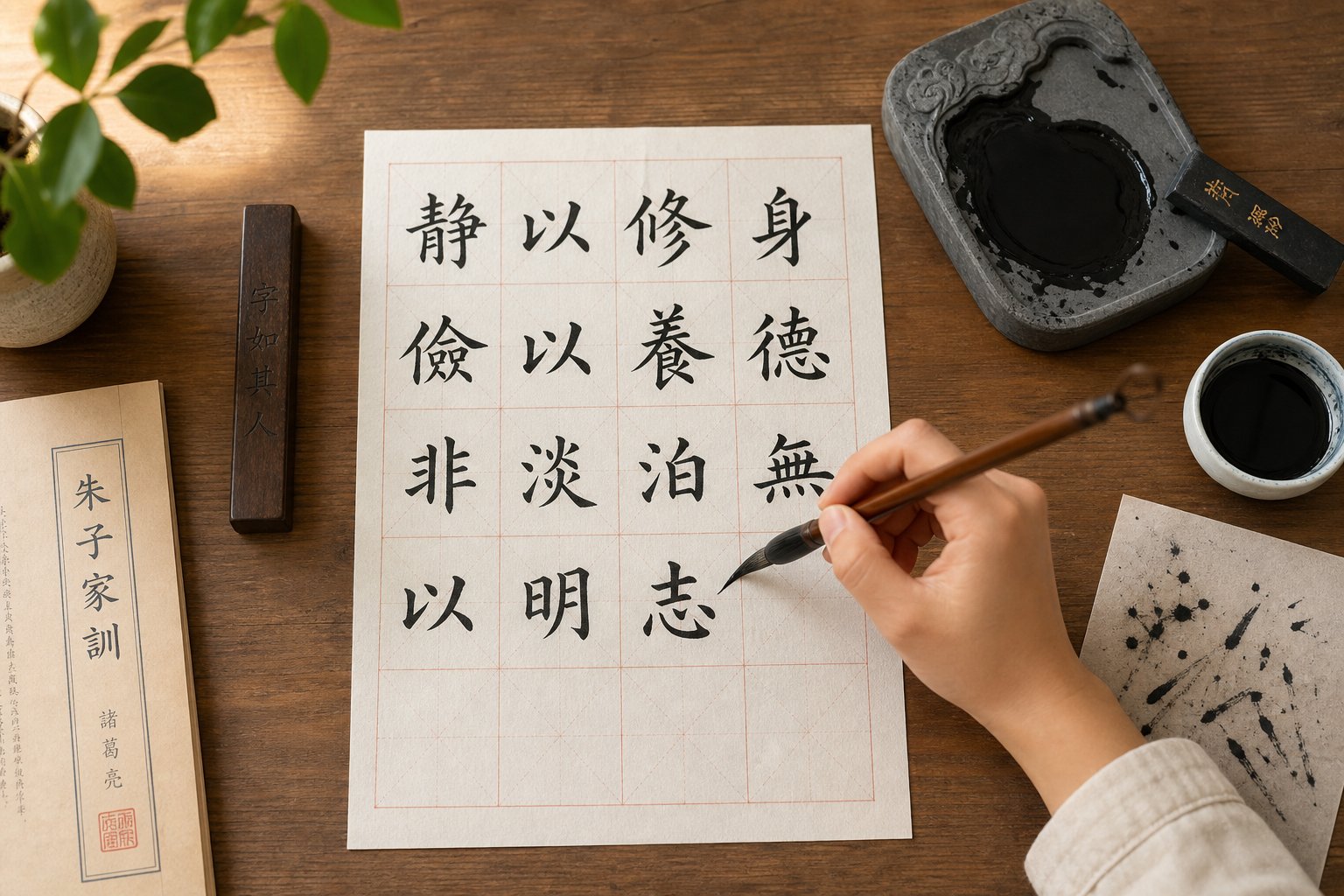
Each stroke has a defined order, direction, and rhythm that determines whether the character looks correct or slightly off. If you have ever wondered how do you write peace in Chinese with proper form, the answer comes down to following a set of universal rules: top to bottom, left to right, horizontal before vertical, and outside before inside. These stroke order principles apply to every character in the language, and the three peace characters below are no exception.
Grab a pen and paper. The instructions below describe each stroke in sequence so you can practice peace in chinese writing right now.
Step-by-Step Stroke Order for 和 平 安
和 (he2) - Harmony/Peace | Total strokes: 8
This character is written left component first (禾, grain radical), then right component (口, mouth radical), following the left-to-right rule.
- Short left-slanting stroke (撇, pie) starting from the top center of the left component, falling down to the left.
- Horizontal stroke (横, heng) from left to right, crossing just below where stroke 1 began.
- Vertical stroke (竖, shu) dropping straight down from the center of the horizontal line.
- Short left-slanting stroke (撇, pie) branching from the lower-left of the vertical.
- Right-falling dot stroke (捺, na) branching from the lower-right of the vertical, balancing stroke 4.
- Vertical stroke on the left side of 口, dropping down then turning right to form the bottom (this is a single folding stroke, 竖折横).
- Short vertical stroke forming the right side of 口, dropping downward.
- Horizontal stroke closing the bottom of 口 from left to right.
Common error: starting with the 口 component on the right. Always complete the left radical (禾) before moving to the right component.
平 (ping2) - Calm/Level | Total strokes: 5
平 follows the top-to-bottom and horizontal-before-vertical rules cleanly. Its symmetry makes it one of the most satisfying chinese letters peace learners practice early on.
- Horizontal stroke (横, heng) across the top, drawn from left to right. This is the longest stroke and sets the character's width.
- Short left-slanting stroke (撇, pie) falling from just below the center of stroke 1, angling down to the left.
- Short right-falling dot (捺, na) mirroring stroke 2, angling down to the right from the same starting point.
- Short horizontal stroke (横, heng) from left to right, positioned below and between strokes 2 and 3.
- Vertical stroke (竖, shu) dropping straight down through the center, cutting through both horizontal strokes. This stroke comes last because it passes through the entire character.
Common error: writing the central vertical stroke too early. A vertical line that cuts through other strokes is always written last in standard stroke order.
安 (an1) - Safety/Peace | Total strokes: 6
安 uses the outside-before-inside rule. The roof radical (宀) is written first, then the 女 (woman) component is placed beneath it.
- Dot stroke (点, dian) at the top center, pressed downward to the right. This is the peak of the roof.
- Left-falling stroke from just below the dot, angling down and to the left to form the left side of the roof (撇, pie with a bend, forming 横折).
- Horizontal stroke sweeping from left to right, forming the right side of the roof canopy (this connects as part of the 宀 radical's folding stroke).
- Short left-slanting stroke (撇, pie) starting inside the shelter space, falling to the lower left. This begins the 女 component.
- Short right-slanting stroke (捺, na) crossing stroke 4, falling to the lower right.
- Horizontal stroke (横, heng) drawn from left to right through the crossing point of strokes 4 and 5, completing the 女 component.
Common error: writing the 女 component before completing the roof. The enclosing structure always comes first, with contents placed inside afterward.
Tips for Writing Peace Characters Correctly
Beyond memorizing individual sequences, a few general principles will improve your chinese writing for peace characters and every other character you attempt:
- Maintain consistent proportions. The left component of 和 should occupy roughly 60% of the character's width, with 口 fitting neatly in the remaining space. For 安, the roof should be wider than the 女 beneath it, creating a sense of shelter.
- Control stroke thickness. Horizontal strokes are typically thinner than vertical ones. Dots and falling strokes taper at the end. This variation gives characters life rather than making them look mechanical.
- Practice the eight basic strokes independently. Every character is built from the same set of fundamental strokes: horizontal, vertical, dot, left-fall, right-fall, rising, folding, and hook. Drilling these individually, the way a musician practices scales, builds muscle memory that transfers to every character.
- Use grid paper. Chinese practice paper divides each square into quadrants. Placing strokes in the correct quadrant ensures balanced proportions. The vertical stroke of 平, for example, should land exactly on the center line.
- Write slowly at first. Speed comes from repetition, not from rushing. Trace each stroke deliberately until the sequence feels automatic, then gradually increase pace.
Learning how to write peace in chinese characters by hand does more than produce nice-looking chinese letters peace enthusiasts can frame or ink onto skin. It builds a physical connection to the meaning. When you feel the roof of 安 form under your pen before placing the woman beneath it, the character's logic becomes something your hand understands, not just your mind. That embodied knowledge is what separates someone who recognizes a character from someone who truly knows it.
Frequently Asked Questions About Peace Chinese Characters
1. What is the most common Chinese character for peace?
The most common Chinese character for peace depends on context. For diplomatic or political peace (absence of war), 和平 (heping) is standard. For personal safety and well-wishes, 安 (an) is the most frequently used, appearing in greetings like 平安 (safe and sound). For inner tranquility or poetic contexts, 宁 (ning) is preferred. Each character occupies a different semantic space rather than functioning as interchangeable synonyms.
2. Which Chinese peace character is best for a tattoo?
The best character depends on your intended meaning. Choose 安 for personal inner peace and safety, 和 for harmony with others, or 宁 (traditional form 寧) for deep tranquility. Traditional character forms generally work better aesthetically due to their visual complexity. Always verify your chosen character with at least two native Chinese speakers, select a tattoo artist familiar with Chinese stroke structure, and consider using seal script or regular script for the clearest results.
3. What is the difference between 安 and 宁 in Chinese?
While both relate to peace, 安 (an) emphasizes safety and security from external threats, originating from the image of a woman sheltered under a roof. 宁 (ning) points toward inner tranquility and quiet composure, with its traditional form 寧 containing radicals for roof, heart, and dish, suggesting contentment when both physical and emotional needs are met. 安 is more common in everyday blessings and greetings, while 宁 leans literary and appears frequently in poetry, place names, and Buddhist contexts.
4. How do you write peace in Chinese characters step by step?
Writing Chinese peace characters follows universal stroke order rules: top to bottom, left to right, horizontal before vertical, and outside before inside. For 安 (6 strokes), write the roof radical 宀 first (dot, then left-falling stroke, then horizontal sweep), then place the 女 component beneath it. For 平 (5 strokes), start with the top horizontal line, add the two falling strokes, then the shorter horizontal, and finish with the central vertical stroke last since it passes through the entire character.
5. What does the Chinese peace symbol mean in philosophy?
Chinese peace characters carry distinct philosophical meanings across three major traditions. In Confucianism, 和 (harmony) represents peace through proper social relationships and shared sustenance. In Daoism, 平 (level) and 宁 (tranquility) reflect peace as natural equilibrium achieved through non-interference, closely tied to the yin-yang concept of balanced opposites. In Buddhism, 安 (security) represents liberation from inner suffering and attachment, pointing toward a mind undisturbed by craving rather than mere physical safety.