Understanding Chinese Characters as Name Building Blocks
When you search for chinese boy names, most lists hand you finished combinations. A name like 志强 (Zhiqiang) appears, you note it down, and the process feels complete. But here is what those lists miss: each character in that name is an independent unit of meaning. 志 means aspiration. 强 means strength. Swap one character out, pair it with something new, and you have an entirely different name with a different story behind it.
That shift in perspective, from browsing complete names to understanding individual mandarin characters, is what gives parents real creative control over their son's name.
Why Individual Characters Matter More Than Complete Names
Chinese names and characters work differently from English names. In English, "James" is a fixed package. You take it or leave it. In Chinese, a given name is assembled from one or two characters chosen from a pool of thousands. Each character carries its own pronunciation, tone, visual structure, and layered meaning shaped by centuries of literary and philosophical use.
A single popular character can appear in dozens of different names, each combination creating a unique meaning. The character 明 (bright), for example, pairs with 哲 to form 明哲 (bright wisdom), with 宇 to form 明宇 (bright universe), or with 德 to form 明德 (bright virtue). One building block, endless possibilities.
This is why focusing on individual characters, rather than pre-made name lists, unlocks far more naming options. You learn what each piece means, then combine pieces that reflect your family's values and hopes.
How Chinese Boy Names Are Structured
A standard Chinese name follows a three-part format: surname plus a given name of one or two characters. In the name 王小明 (Wang Xiaoming), 王 is the family name, and 小明 is the two-character given name. The surname comes first, reflecting the cultural weight placed on family lineage.
Most chinese boy names with characters use a two-character given name. This structure gives parents two slots to fill, two opportunities to layer meaning. Some families also follow generational naming traditions, where one character position is predetermined by a family poem or ancestral record, leaving the other character as the parent's creative choice.
Pronunciation matters just as much as meaning. Mandarin Chinese uses four tones, and the same syllable pronounced in different tones carries entirely different meanings. A chinese boy name that looks elegant on paper still needs to sound harmonious when spoken aloud, which is why tonal pairing between characters is a practical consideration every parent should weigh.
Who This Guide Is For
This guide serves two audiences. If you come from a Chinese-heritage family, you will find a structured breakdown of popular characters organized by theme, complete with stroke counts, radicals, and pairing suggestions that respect traditional naming principles. If you are a non-Chinese parent drawn to the depth and intentionality of chinese names for boys, you will find clear explanations of cultural context, pronunciation guidance, and practical advice for choosing characters that work across international settings.
Either way, the approach here is the same: treat each character as a building block, understand what it carries, and combine it with intention. The categories ahead, from strength and wisdom to virtue and nature, give you a framework for narrowing thousands of possible characters down to the ones that resonate with your family's story.
How We Selected These Popular Characters
With thousands of characters available, narrowing the field requires clear criteria. Not every character that appears in common chinese boy names deserves a spot in a curated guide. Some are popular but shallow in meaning. Others carry deep cultural weight but present pronunciation challenges outside Chinese-speaking communities. The characters featured here had to pass through multiple filters before making the cut.
Data Sources and Popularity Metrics
Our starting point was real-world usage data. China's Ministry of Public Security publishes annual naming reports drawn from the national population information system, which covers over 1.4 billion registered citizens. These reports reveal which characters appear most frequently in newborn registrations each year, giving us a reliable picture of the most popular chinese names in active use. We cross-referenced this data with historical naming records to identify characters that have maintained popularity across generations rather than spiking briefly as trends.
Cultural Significance and Historical Weight
Popularity alone does not equal quality. Many popular chinese male names draw their characters from Confucian classics, Tang dynasty poetry, and foundational texts like the Book of Songs. Characters rooted in these traditions carry literary resonance that a recently coined term simply cannot match. We prioritized characters with this kind of depth, the ones that echo through famous chinese names in history and literature while still feeling fresh in modern contexts.
Practical Naming Considerations We Evaluated
Beyond meaning and popularity, each character was assessed against practical dimensions that affect daily life. Traditional Chinese naming considers stroke count and Yin-Yang balance, where even-stroke characters are Yin and odd-stroke characters are Yang. The five elements system (wuxing) also plays a role: characters associated with Wood, Fire, Earth, Metal, or Water are chosen to compensate for elemental imbalances in a child's birth chart.
Here are the five criteria every character in this guide had to satisfy:
- Cross-generational popularity — consistent use across at least three decades of naming data, not just a passing trend
- Cultural and literary depth — traceable roots in classical texts, philosophy, or historical usage
- Tonal versatility — pairs well with characters of different tones to create harmonious two-character names
- Visual balance — a stroke count and structure that looks proportionate alongside common surnames when written
- International accessibility — a pinyin pronunciation that non-Mandarin speakers can approximate without distortion
These filters ensure that every character ahead is not just common but genuinely useful as a building block, ready to combine into names that hold up across cultures, generations, and the four dimensions of Chinese naming: sound, form, meaning, and element.
Characters That Convey Strength and Power
Strength is one of the oldest and most enduring themes parents reach for when naming a son. In Chinese culture, this goes beyond physical toughness. Powerful chinese male names often encode resilience, determination, and the capacity to protect others. These characters have appeared in the names of generals, emperors, and literary heroes for centuries, and they continue to rank among the most frequently chosen building blocks for boys today.
Why does this theme persist? In Confucian thought, a man of virtue must also possess the inner fortitude to act on his principles. Strength-themed characters capture that expectation. They signal not just what a boy is, but what his family hopes he will become: someone who stands firm when tested.
Here is a quick reference for the four strength characters covered in this section:
| Character | Pinyin | Stroke Count | Radical | Core Meaning |
|---|---|---|---|---|
| 强 | qiang (2nd tone) | 12 | 弓 (bow) | Strong, powerful |
| 武 | wu (3rd tone) | 8 | 止 (stop) | Martial, valiant |
| 龙 | long (2nd tone) | 5 | 龙 (dragon) | Dragon, imperial power |
| 威 | wei (1st tone) | 9 | 女 (woman/戈 halberd component) | Mighty, awe-inspiring |
强 Qiang and the Concept of Inner Strength
The character 强 (qiang, second tone) is built around the radical 弓, meaning bow. Imagine the tension stored in a drawn bowstring: that is the energy this character carries. Its 12 strokes give it visual weight on the page, making it feel substantial when paired with lighter surname characters like 李 or 王.
Literally, 强 means strong or powerful. Connotatively, it extends into perseverance, self-improvement, and the refusal to yield. The classical phrase 自强不息 (ziqi buxi), meaning "ceaselessly strive for self-improvement," comes from the Book of Changes (I Ching) and has kept this character culturally alive for millennia.
Example names using 强:
- 志强 (Zhiqiang) — aspiration + strength, implying someone driven to become powerful through willpower
- 国强 (Guoqiang) — nation + strength, a patriotic name expressing hope for a strong country
- 建强 (Jianqiang) — build + strength, suggesting someone who constructs resilience through effort
Among masculine chinese names, 强 remains a workhorse character. It pairs naturally with abstract concepts (志, 国, 建) because its meaning is concrete enough to anchor more philosophical companions.
武 Wu and the Martial Tradition
At first glance, 武 (wu, third tone) seems purely military. Its 8 strokes combine the radical 止 (stop) with 戈 (halberd), and the traditional interpretation is revealing: true martial virtue means having the power to stop conflict, not just start it. This etymology reframes the character from aggression into disciplined strength.
Historically, 武 carries enormous weight. The legendary Emperor Wu of Han (汉武帝) expanded China's borders and established the Silk Road. The word 武术 (wushu), meaning martial arts, connects this character to an entire philosophical tradition where physical discipline serves spiritual cultivation. For parents drawn to the chinese warrior ideal, 武 encodes that complete picture: strength governed by principle.
Example names using 武:
- 文武 (Wenwu) — literature + martial, the classic pairing representing mastery of both pen and sword
- 武杰 (Wujie) — martial + outstanding, implying exceptional valor
- 武安 (Wu'an) — martial + peace, echoing the idea that strength creates security
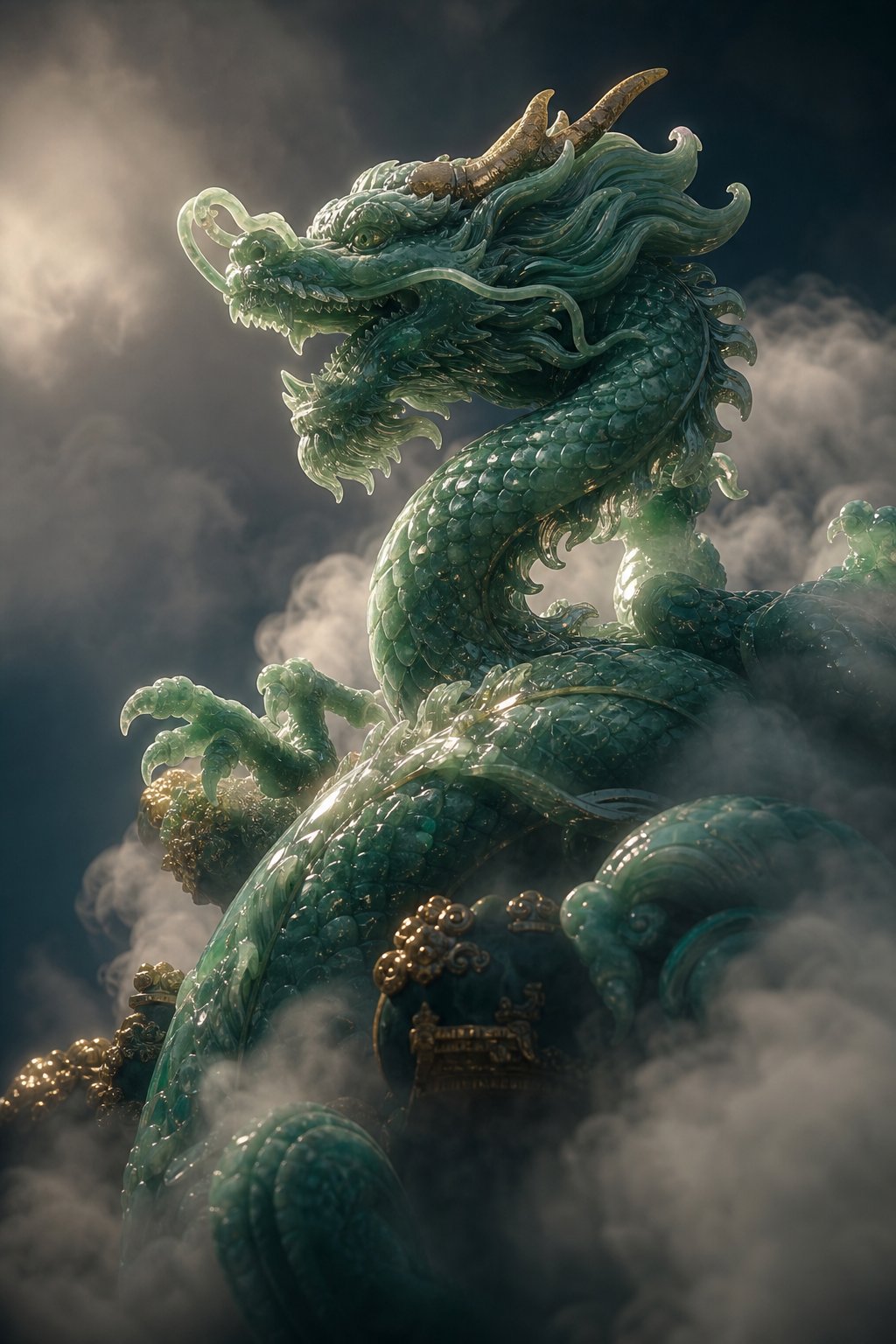
龙 Long as the Ultimate Symbol of Power
No character in the Chinese naming tradition carries quite the same mythic force as 龙 (long, second tone). With only 5 strokes in its simplified form, it is visually compact yet culturally enormous. The dragon in Chinese tradition is nothing like its Western counterpart. It represents benevolent cosmic power, rainfall, imperial authority, and good fortune all at once.
The character itself serves as its own radical. Its ancient oracle bone form depicted a serpentine creature with horns and claws, a composite of nine animals according to traditional accounts. For centuries, the dragon was exclusively associated with the emperor, making it a bold choice for a name. In modern China, that imperial restriction has faded, and 龙 now appears freely in given names, especially for boys born in the Year of the Dragon.
If you are looking for cool dragon names rooted in authentic tradition, consider these combinations:
- 龙飞 (Longfei) — dragon + fly, evoking a dragon soaring through clouds
- 子龙 (Zilong) — son/scholar + dragon, famously the courtesy name of the Three Kingdoms general Zhao Yun
- 龙威 (Longwei) — dragon + might, doubling down on the power theme
Parents should note that 龙 is a high-impact character. It makes a statement. Pairing it with a gentler second character (like 泽 or 瑞) can balance the intensity, while pairing it with another strong character (like 威) creates a name that commands attention.
威 Wei and Commanding Presence
The character 威 (wei, first tone) means mighty, dignified, or awe-inspiring. Its 9 strokes include the 戈 (halberd) component, linking it to martial authority, but the character's connotation leans more toward presence than violence. Think of the quiet authority of someone who commands respect simply by entering a room.
威 appears in the modern compound 威严 (weiyan, meaning dignified) and 威信 (weixin, meaning prestige or credibility). In naming, it suggests a boy who will carry himself with natural authority. LTL Mandarin School's teacher survey highlighted 威航 (Wei Hang) as a recommended name, noting it implies someone smart, well-organized, and capable of handling complex situations.
Example names using 威:
- 威航 (Weihang) — might + navigate, suggesting someone who steers through challenges with authority
- 俊威 (Junwei) — handsome/outstanding + might, combining personal excellence with commanding presence
- 威铭 (Weiming) — might + inscribe, implying a legacy of strength worth recording
Among cool chinese male names and cool chinese names for guys, 威 stands out for its versatility. It works in both first and second position of a two-character given name, pairs well across tonal categories (since it carries the first tone, it contrasts nicely with second or fourth tone companions), and reads as confident without tipping into arrogance.
These four characters represent different facets of strength: 强 as inner resilience, 武 as disciplined martial virtue, 龙 as mythic cosmic power, and 威 as dignified authority. Any of them can anchor awesome chinese names when paired thoughtfully. The key is matching the type of strength to your family's values. Do you envision quiet perseverance, principled action, bold ambition, or natural leadership? The answer points you toward the right character.
Strength, though, is only one dimension of a well-rounded name. Many parents choose to balance a power character with something softer in the second position, drawing from the realm of intellect and insight. That interplay between force and wisdom is where some of the most compelling name combinations emerge.
Characters That Represent Wisdom and Intelligence
In Confucian philosophy, intellectual cultivation is not a luxury. It is a moral obligation. The Analerta states that "the wise are free from perplexities" (知者不惑), positioning wisdom as a path to clarity and right action. This belief runs deep in Chinese naming culture. Parents who choose wisdom-themed characters are expressing a specific hope: that their son will see the world clearly, make sound decisions, and navigate complexity with insight rather than brute force.
These characters rank among the most enduring boy names with meaning in the Chinese tradition. Unlike trend-driven choices, wisdom characters draw their power from millennia of literary and philosophical use. They signal that a family values depth of mind, not just worldly success.
Here is a side-by-side comparison of the four wisdom characters covered in this section:
| Character | Pinyin | Stroke Count | Radical | Core Meaning | Connotation |
|---|---|---|---|---|---|
| 明 | ming (2nd tone) | 8 | 日 (sun) | Bright, clear | Clarity, understanding, optimism |
| 智 | zhi (4th tone) | 12 | 日 (sun) / 知 (know) | Wisdom, intellect | Deep judgment, strategic thinking |
| 睿 | rui (4th tone) | 14 | 目 (eye) | Astute, sagacious | Scholarly perception, foresight |
| 哲 | zhe (2nd tone) | 10 | 口 (mouth) | Philosophy, wise | Philosophical depth, discernment |
明 Ming and the Light of Understanding
Imagine the two brightest objects in the sky placed side by side. That is exactly what 明 (ming, second tone) depicts: the sun (日) on the left and the moon (月) on the right. Together, they create "bright" and "clear", the two things that illuminate the world. With just 8 strokes, this character is visually balanced and easy to write, making it one of the most practical choices among names meaning bright or smart.
The literal meaning of brightness extends naturally into metaphorical territory. 明 connotes understanding, clarity of thought, and an optimistic view of the future. The word for "tomorrow" in Chinese is 明天 (mingtian), literally "bright day," reflecting the cultural association between this character and forward-looking hope. The compound 文明 (wenming) means "civilization" itself, linking brightness to the progress of human knowledge.
Historically, 明 carries the weight of an entire dynasty. The Ming Dynasty (1368-1644) chose this character to represent its founding vision of enlightened rule after the Mongol Yuan period. That association gives the character a layer of imperial grandeur without the mythic intensity of something like 龙.
Example names using 明:
- 明哲 (Mingzhe) — bright + philosophical, suggesting someone whose clarity leads to wisdom
- 明德 (Mingde) — bright + virtue, a classical pairing from the Great Learning (大学) meaning "to illuminate virtue"
- 明宇 (Mingyu) — bright + universe, implying expansive understanding
For parents exploring chinese names male meaning options, 明 is one of the safest and most versatile choices. Its second tone pairs smoothly with fourth-tone characters (like 哲 or 德), and its moderate stroke count balances well visually with most common surnames.
智 Zhi as Deep Wisdom Beyond Cleverness
Where 明 represents the light that makes things visible, 智 (zhi, fourth tone) represents the capacity to understand what you see. This distinction matters. Being bright is passive. Being wise is active. 智 is about judgment, strategy, and the ability to act on knowledge.
The character first appeared over 3,000 years ago on oracle bones, with its earliest form combining 知 (knowledge) with a radical resembling a standing person. In its modern 12-stroke form, it carries the component 知 (zhi, to know) above 日 (sun), suggesting knowledge illuminated. Confucius listed 智 as one of the five cardinal virtues alongside benevolence (仁), righteousness (义), propriety (礼), and integrity (信).
What separates 智 from mere cleverness? The classical phrase 大智若愚 (dazhi ruo yu) captures it perfectly: "great wisdom appears foolish." True 智 is not about showing off intelligence. It is about seeing deeply enough to act with restraint and precision. The historical rivalry between Xiang Yu and Liu Bang illustrates this. Liu Bang declared he would "rather match wits than strength" (吾宁斗智,不能斗力), and his superior strategy ultimately won him an empire.
Example names using 智:
- 智远 (Zhiyuan) — wisdom + far-reaching, implying foresight and long-term thinking
- 智勇 (Zhiyong) — wisdom + courage, echoing the idiom 智勇双全 (wise and brave in equal measure)
- 智轩 (Zhixuan) — wisdom + lofty, suggesting elevated intellect
In modern Chinese, 智 has expanded into technology vocabulary: 智能 (zhineng) means "intelligent" as in artificial intelligence (人工智能). This gives the character a contemporary edge without diluting its classical roots.
睿 Rui and Scholarly Perception
If you want a character that feels distinctly scholarly, 睿 (rui, fourth tone) delivers. Its 14 strokes include the radical 目 (eye), grounding the character in the act of seeing. But this is not ordinary sight. 睿 implies penetrating perception, the ability to see through surface appearances to underlying truth.
The compound 睿智 (ruizhi, meaning farsighted or sagacious) pairs this character directly with 智, creating a doubled emphasis on intellectual depth. In imperial China, 睿 was often reserved for describing emperors and sages, giving it an elevated register. The Shunzhi Emperor of the Qing Dynasty had 睿 in his reign title, and the character appears frequently in classical texts praising rulers who governed through insight rather than force.
What makes 睿 particularly appealing for parents seeking unique boy names with meaning is its relative rarity compared to 明 or 智. It carries the same intellectual weight but feels less common, giving a name distinction without obscurity. Its fourth tone creates natural contrast when paired with first or second tone characters.
Example names using 睿:
- 睿泽 (Ruize) — astute + grace, combining intellectual sharpness with generosity
- 睿明 (Ruiming) — astute + bright, layering two forms of clarity
- 子睿 (Zirui) — son/scholar + astute, a refined pairing with classical resonance
The higher stroke count (14) means 睿 pairs best visually with surnames and companion characters of moderate complexity. Placing it next to a very simple character like 一 (1 stroke) can create visual imbalance when the name is written by hand.
哲 Zhe and the Philosophical Tradition
The character 哲 (zhe, second tone) literally means "philosophy" or "wise." Its 10 strokes include the radical 口 (mouth) at the base, with 折 (to break or discern) above it. The structural logic is evocative: wisdom that can be spoken, insight articulated clearly enough to share with others.
In Chinese intellectual history, 哲 connects directly to the tradition of philosophical inquiry. The modern word for philosophy, 哲学 (zhexue), uses this character. The compound 哲人 (zheren) means "sage" or "philosopher," and 先哲 (xianzhe) refers to the wise thinkers of the past. When parents choose 哲 for a name, they are aligning their son with this lineage of deep thinkers.
What distinguishes 哲 from the other wisdom characters is its emphasis on articulated understanding. 明 is about seeing clearly. 智 is about judging wisely. 睿 is about perceiving deeply. 哲 is about thinking systematically and expressing that thought. It is the character of the scholar who writes, teaches, and shapes ideas for others.
Example names using 哲:
- 明哲 (Mingzhe) — bright + philosophical, one of the most popular pairings in this category
- 哲瀚 (Zhehan) — philosophical + vast (like the ocean), implying boundless intellectual depth
- 哲宇 (Zheyu) — philosophical + universe, suggesting a mind that contemplates the largest questions
For families researching chinese male names and meanings, 哲 offers a distinctive profile. Its second tone makes it tonally flexible, and its 10-stroke count sits comfortably in the middle range, pairing well with both simpler and more complex companion characters.
These four characters, 明, 智, 睿, and 哲, represent different facets of intellectual life. Brightness, judgment, perception, and philosophical thought each carry their own flavor. When exploring chinese names and meanings male options in this category, consider which type of intelligence resonates most with your family's aspirations. Do you hope for clarity of vision, strategic depth, penetrating insight, or systematic thought? The answer guides your choice.
Intellect, of course, does not exist in isolation. The Confucian tradition insists that wisdom must serve moral purpose. A brilliant mind without ethical grounding is, in classical terms, incomplete. This is precisely why many parents pair a wisdom character with one drawn from the realm of virtue, creating names where intelligence and moral character reinforce each other.
Characters That Express Virtue and Moral Excellence
The Confucian tradition holds that a name is not merely a label. It is a moral aspiration made visible. When parents embed a virtue character into their son's name, they are setting a direction for his life, a daily reminder of who he should strive to become. This belief, that naming shapes character, explains why virtue-themed characters have remained among the most enduring choices for male chinese given names across centuries of cultural change.
These characters draw directly from the Five Constant Virtues (Wu Chang, 五常) articulated by Kong Zi (Confucius) and refined by generations of scholars: 仁 (benevolence), 义 (righteousness), 礼 (propriety), 智 (wisdom), and 信 (trustworthiness). Together with 德 (virtue), they form the moral vocabulary that Chinese families have drawn from for over two millennia. Understanding these chinese symbols and meanings gives parents access to the deepest layer of the naming tradition.
仁 Ren as the Highest Confucian Virtue
If you had to choose a single character that represents the heart of Chinese moral philosophy, it would be 仁 (ren, second tone). Confucius himself placed it above all other virtues, declaring 仁者爱人 (renzhě airen): the benevolent person loves others.
The character's structure tells its own story. On the left stands 亻(the "person" radical). On the right sits 二 (the number two). The visual logic is profound: humanity exists in relationship. You cannot practice benevolence alone. It requires at least two people, a giver and a receiver. With only 4 strokes, 仁 is one of the simplest characters in this guide, yet it carries perhaps the heaviest philosophical weight.
What does 仁 mean in a name? It signals compassion, empathy, and a fundamental orientation toward others. Parents who choose this character are expressing the hope that their son will measure his worth not by personal achievement but by how he treats the people around him. The character transcends gender associations more than most, but it appears frequently in chinese given names male registries across all regions.
Example names using 仁:
- 仁杰 (Renjie) — benevolence + outstanding, implying someone whose greatness is rooted in compassion
- 仁宇 (Renyu) — benevolence + universe, suggesting kindness that extends without limit
- 志仁 (Zhiren) — aspiration + benevolence, a name that declares the pursuit of humaneness as a life goal
德 De and the Weight of Moral Character
Walk through any Chinese city and you will encounter 德 (de, second tone) carved into temple walls, printed on school mottos, and embedded in institutional names. Its 15 strokes include the radical 彳 (meaning "step" or "walk"), which reveals something essential about this character's philosophy: virtue is a path, not a destination. It is something you practice through daily action, not a state you achieve once and hold forever.
德 means virtue, moral character, and integrity. But unlike the English word "virtue," which can sound abstract or preachy, 德 in Chinese carries a sense of substance and reliability. The compound 品德 (pinde) means moral quality. 道德 (daode) means ethics. 德行 (dexing) means virtuous conduct. In every case, the emphasis falls on demonstrated character rather than proclaimed ideals.
Both Confucian and Daoist traditions claim this character. Confucians interpret 德 as cultivated moral excellence achieved through study and self-discipline. Daoists read it as natural virtue, the inherent goodness that emerges when a person aligns with the Way. Either interpretation gives a name tremendous depth.
Example names using 德:
- 明德 (Mingde) — bright + virtue, drawn directly from the Great Learning (大学): "The way of great learning lies in illuminating bright virtue"
- 德华 (Dehua) — virtue + splendor, famously carried by Hong Kong icon Andy Lau (刘德华)
- 修德 (Xiude) — cultivate + virtue, emphasizing the ongoing practice of moral development
Among common male chinese names, 德 has maintained steady popularity across generations. It appeared in the names of revolutionary leaders, scholars, and cultural figures throughout the 20th century, and it continues to register in modern naming data without feeling dated.
义 Yi and Righteous Action
Where 仁 asks "do you love others?" the character 义 (yi, fourth tone) asks a harder question: "will you do what is right, even when it costs you?" This is righteousness in its most active form. Not passive goodness, but the willingness to stand up for justice and moral principle.
In its simplified form, 义 has only 3 strokes, making it one of the most compact characters in the naming tradition. The traditional form 義 (13 strokes) includes the radical 羊 (sheep, symbolizing goodness) above 我 (self), suggesting that righteousness means placing moral good above personal interest. The simplified version retains the meaning while dramatically reducing visual complexity.
义 is one of the Five Constant Virtues, and Confucianism emphasizes that adhering to justice helps shape integrity and maintain social fairness. The character appears throughout Chinese literary tradition, most famously in the concept of 义气 (yiqi), the code of loyalty and honor that binds sworn brothers in classics like Romance of the Three Kingdoms. Guan Yu, the legendary general, became the embodiment of 义, and temples dedicated to him still stand across East Asia.
Example names using 义:
- 义博 (Yibo) — righteousness + broad, implying expansive moral commitment
- 义轩 (Yixuan) — righteousness + lofty, suggesting elevated principles
- 忠义 (Zhongyi) — loyalty + righteousness, a classical pairing that echoes the warrior-scholar ideal
One regional note: in Taiwan, where traditional characters remain in use, 義 carries a slightly more literary and formal register. In mainland China, the simplified 义 feels more accessible and modern. The meaning is identical, but the visual impression differs.
信 Xin as Trustworthiness and Integrity
The character 信 (xin, fourth tone) is structurally transparent. On the left stands 亻(person). On the right stands 言 (speech). A person standing by their word. That is trustworthiness reduced to its visual essence.
With 9 strokes, 信 sits in a comfortable middle range for writing. Its meaning encompasses honesty, reliability, and the keeping of promises. The classical saying 言必信, 行必果 (yan bi xin, xing bi guo) captures the standard: your words must be trustworthy, your actions must produce results. In Confucian ethics, a person without 信 cannot function in society because all relationships depend on mutual trust.
What makes 信 particularly relevant for modern naming is its practical orientation. While 仁 and 德 can feel lofty, 信 is grounded in everyday conduct. It is the virtue you demonstrate in business dealings, friendships, and family commitments. Parents who choose this character are often expressing a hope that their son will be someone others can rely on, a person whose word means something.
Example names using 信:
- 信宇 (Xinyu) — trust + universe, implying someone whose integrity extends in all directions
- 信达 (Xinda) — trust + reach/achieve, suggesting that trustworthiness leads to accomplishment
- 立信 (Lixin) — establish + trust, a name that declares the building of credibility as a life mission
When researching chinese men's names and meanings, you will notice that 信 appears more frequently in names from business-oriented families and in regions with strong commercial traditions, particularly in southern China and among overseas Chinese communities where trade relationships historically depended on personal reputation.
Weighing the Pros and Cons of Virtue Characters
Virtue characters are among the most culturally resonant chinese word symbols available for naming. But they come with a unique consideration: a virtue name sets an explicit moral standard that the bearer carries for life. Here is an honest assessment of what that means:
Pros
- Timeless appeal that never feels trendy or dated, working across generations without losing relevance
- Deep cultural recognition: any Chinese speaker immediately understands the aspiration behind the name
- Strong pairing versatility, combining naturally with characters from every other thematic category
- Respected equally in mainland China, Taiwan, Hong Kong, and overseas Chinese communities
- Philosophical weight that gives the name substance in formal and professional contexts
Cons
- High expectations: a name like 仁德 (Rende) implicitly promises moral excellence, which can feel like pressure
- Risk of sounding overly serious or old-fashioned if not balanced with a more contemporary companion character
- Some virtue characters (particularly 德 and 礼) carry associations with political slogans from specific historical periods, which may color perception for older generations
- In casual or playful contexts, an intensely moral name can feel mismatched with a child's personality as they grow
The regional dimension matters too. In Taiwan, where Confucian education remained continuous through the 20th century, virtue characters in names feel natural and uninterrupted. In mainland China, the Cultural Revolution disrupted naming traditions for a generation, making virtue characters feel like a deliberate return to classical values when they reappeared in the 1980s and 1990s. Today, both regions embrace these characters freely, but the cultural memory behind them differs.
For parents weighing these factors, the practical advice is straightforward: pair a virtue character with something that adds lightness, specificity, or natural imagery. A name like 德泽 (Deze, virtue + grace) or 仁宇 (Renyu, benevolence + universe) carries moral weight without feeling like a sermon. The virtue character provides depth. The companion character provides personality.
Virtue and intellect form the internal architecture of a name, the qualities that define who a person is on the inside. But Chinese naming tradition also looks outward, drawing inspiration from the natural world to ground abstract qualities in something tangible and enduring. Mountains, oceans, and sky offer a different kind of meaning, one rooted in the physical world yet rich with metaphor.
Characters Inspired by Nature and the Elements
Mountains do not argue for their own permanence. Oceans do not explain their depth. There is something about nature imagery that communicates meaning without effort, which is exactly why nature-derived characters have remained central to chinese boy names and meanings for centuries. These characters ground abstract aspirations in something physical and enduring. A boy named after the sky does not just carry a word. He carries the weight of everything that word evokes: vastness, freedom, the space where all things are possible.
What makes nature characters particularly useful as building blocks is their connection to wuxing (五行) theory. Each character aligns with one of the five elements, Water, Wood, Fire, Earth, or Metal, giving parents a way to balance elemental energy in a name. If a child's birth chart shows a deficiency in Water, for example, a character like 海 or 泽 can provide that balance while simultaneously carrying rich metaphorical meaning.
Here is a reference table for the four nature characters in this section, showing their element associations and which characters from other categories pair well with them:
| Character | Pinyin | Stroke Count | Element | Core Meaning | Complementary Pairings |
|---|---|---|---|---|---|
| 天 | tiān (1st tone) | 4 | Fire | Sky, heaven | 宏, 德, 泽, 睿 |
| 海 | hǎi (3rd tone) | 10 | Water | Ocean, sea | 明, 瑞, 龙, 哲 |
| 山 | shān (1st tone) | 3 | Earth | Mountain | 智, 仁, 林, 威 |
| 泽 | zé (2nd tone) | 8 | Water | Marsh, grace | 明, 睿, 嘉, 信 |
天 Tian and the Vastness of Sky
The character 天 (tiān, first tone) is one of the most ancient in the Chinese writing system. With only 4 strokes, it depicts a figure with outstretched arms beneath the expanse above, a person standing under the heavens. Its radical is 大 (big), and its meaning encompasses sky, heaven, the celestial realm, and the natural order itself.
In Chinese philosophy, 天 represents the highest principle. The concept of 天命 (tiānmìng, Mandate of Heaven) shaped dynastic politics for millennia. The phrase 天人合一 (tiān rén hé yī) describes the unity between heaven and humanity, a foundational idea in both Confucian and Daoist thought. When this character appears in a name, it carries all of that philosophical weight. It suggests someone whose ambitions are not small, someone oriented toward the xia celestial realm of higher purpose rather than mundane concerns.
As a fire-element character, 天 brings warmth and expansive energy to a name. Its first tone (high and level) gives it a clean, open sound that pairs naturally with second or fourth tone companions. Consider these combinations:
- 天宏 (Tiānhóng) — sky + grand, implying ambitions as vast as the heavens
- 天睿 (Tiānruì) — sky + astute, suggesting celestial-level perception
- 天泽 (Tiānzé) — sky + grace, evoking rain falling from heaven to nourish the earth
Among asian names for boys that cross cultural boundaries easily, 天 stands out. The pinyin "tian" is intuitive for English speakers to pronounce, and the meaning of "sky" or "heaven" translates without losing its poetic quality.
海 Hai as Boundless Depth
The character 海 (hǎi, third tone) means ocean or sea. Its 10 strokes include the water radical 氵on the left side, immediately signaling its elemental alignment. The right component 每 (měi, meaning "every" or "each") adds a sense of inclusiveness: the ocean contains everything, refuses nothing, accepts all rivers that flow into it.
This is not a gentle character. Where 泽 suggests quiet nourishment, 海 suggests vastness that borders on the unknowable. Names with 海 suggest someone with great capacity, someone whose depths you cannot easily fathom. The classical phrase 海纳百川 (hǎi nà bǎi chuān) means "the sea accepts a hundred rivers," describing a person with the tolerance and breadth of mind to embrace all perspectives.
For parents curious about how to pronounce water-element characters like this one, 海 uses the third tone (a dipping tone that falls then rises), which gives it a grounded, weighty sound. That tonal quality makes it pair well with first-tone characters like 天 or 威, creating a pleasing contrast between the level high tone and the dipping low tone.
Example names using 海:
- 海明 (Hǎimíng) — ocean + bright, suggesting clarity emerging from depth
- 海龙 (Hǎilóng) — ocean + dragon, a powerful combination evoking mythic sea creatures
- 瀚海 (Hànhǎi) — vast + ocean, doubling the sense of boundlessness
山 Shan and Steadfast Endurance
With just 3 strokes, 山 (shān, first tone) is one of the most visually iconic characters in Chinese. Its form is a pictograph: three peaks rising from a baseline, the middle one tallest. You can see the mountain in the character itself. This directness is part of its appeal. There is no ambiguity, no hidden complexity. A mountain is what it is.
As an earth-element character, 山 represents stability, permanence, and quiet strength. Mountains do not move. They do not react to storms or seasons. They simply endure. In Chinese literary tradition, mountains symbolize the ideal of the steadfast man, someone whose principles remain fixed regardless of external pressure. The phrase 稳如泰山 (wěn rú Tài Shān, "steady as Mount Tai") captures this perfectly.
The low stroke count makes 山 visually light, which means it pairs best with characters of moderate complexity to avoid looking sparse on paper. Its first tone matches 天, so placing them together (天山) would create tonal monotony. Better pairings use contrasting tones:
- 山德 (Shāndé) — mountain + virtue, implying moral steadfastness as immovable as stone
- 志山 (Zhìshān) — aspiration + mountain, suggesting ambitions as high as peaks
- 山泽 (Shānzé) — mountain + marsh, a classical pairing from the I Ching representing the interaction between stillness and flow
Among chinese names male options in the nature category, 山 appeals to parents who value simplicity and directness. It makes no grand claims. It simply states: this person will be solid, reliable, and unmoved by passing winds.
泽 Ze as Nourishing Grace
The character 泽 (zé, second tone) is perhaps the most poetically layered nature character in common use today. Literally, it means marsh, pool, or wetland. But in naming contexts, its meaning has evolved far beyond geography. 泽 represents accumulated kindness, grace spreading outward like water filling a basin. The character appears in the phrase 泽被后世 (zé bèi hòu shì), meaning "blessings extending to future generations."
Its 8 strokes include the water radical 氵, firmly placing it in the Water element category. But unlike 海, which suggests overwhelming vastness, 泽 suggests nourishment. Think of the difference between an ocean and a life-giving spring. Both are water, but they serve different purposes in a name. The Chinese saying 润泽 (rùnzé) describes how water benefits all living things without asking for anything in return.
This character has surged in popularity over the past two decades. It appears in the names of public figures and has consistently ranked in China's top naming characters for boys. Its appeal lies in the balance it strikes: generous without being soft, deep without being intimidating.
Example names using 泽:
- 明泽 (Míngzé) — bright + grace, suggesting someone whose clarity benefits others
- 睿泽 (Ruìzé) — astute + grace, combining intellectual sharpness with generosity of spirit
- 泽宇 (Zéyǔ) — grace + universe, implying kindness that extends without boundary
For parents building chinese men names from nature characters, 泽 is one of the most versatile options available. Its second tone creates smooth transitions with fourth-tone characters (睿泽, 智泽) and pleasant contrast with first-tone characters (天泽). Its moderate stroke count (8) balances well visually with most surnames and companion characters.
Nature characters succeed in naming because they operate on two levels simultaneously. On the surface, they are concrete and grounded: sky, ocean, mountain, marsh. Beneath that surface, they carry centuries of metaphorical meaning accumulated through poetry, philosophy, and cultural use. This dual nature makes them ideal pairing partners for abstract virtue or wisdom characters. A name like 德山 (virtue + mountain) or 明海 (bright + ocean) gains texture from the interplay between the intangible and the physical.
Tonal awareness matters especially when combining nature characters with each other. Since 天 and 山 both carry the first tone, placing them together creates a flat, monotonous sound. The strongest pairings contrast tones: 天泽 (1st + 2nd), 海明 (3rd + 2nd), or 山哲 (1st + 2nd). This rhythmic variation is what gives a spoken name its musicality, the quality that makes it feel right when called across a room.
Nature and the elements provide the tangible foundation of a name. But Chinese naming tradition also looks forward, toward the outcomes parents hope their sons will achieve. Characters associated with prosperity and good fortune address that forward-looking dimension, carrying wishes for a life marked by abundance and auspicious outcomes.
Characters That Carry Prosperity and Good Fortune
Every parent hopes their child will lead a fortunate life. In Chinese naming culture, that hope is not left to chance. It is written directly into the name itself. Auspicious characters encode wishes for good outcomes, abundant blessings, and a life that unfolds favorably. To define auspiciousness in this context is to understand a worldview where language carries active power: the right word, chosen at the right time, can invite positive energy into a person's destiny.
This belief is not superstition in the casual sense. It is deeply embedded in Chinese cosmology, where names function as a bridge between intention and reality. The practice of embedding fortune into names dates back to the Zhou Dynasty, when court astrologers selected auspicious characters for royal children based on celestial readings. Today, the tradition continues in a more personal form, with parents choosing characters that carry forward-looking optimism without tipping into arrogance.
Here is a reference table for the four prosperity characters covered in this section:
| Character | Pinyin | Stroke Count | Radical | Core Meaning | Popularity Trend |
|---|---|---|---|---|---|
| 瑞 | rui (4th tone) | 13 | 王 (jade) | Auspicious, lucky omen | Rising steadily |
| 福 | fu (2nd tone) | 13 | 礻(spirit/altar) | Fortune, blessings | Timeless classic |
| 嘉 | jia (1st tone) | 14 | 口 (mouth) | Excellent, praiseworthy | Rising steadily |
| 宏 | hong (2nd tone) | 7 | 宀 (roof) | Grand, vast | Stable across decades |
瑞 Rui and Auspicious Omens
The character 瑞 (rui, fourth tone) is one of the most elegant ways to embed good fortune into a name. Its 13 strokes include the radical 王, which in character composition represents jade rather than "king." Jade in Chinese culture symbolizes purity, durability, and heaven's favor. The right component 专 (concentrated, devoted) adds a sense of focused blessing, as if fortune is being directed with intention rather than scattered randomly.
The auspicious meaning of 瑞 runs deep. The compound 瑞雪 (ruixue) means "auspicious snow," referring to early winter snowfall that promises a good harvest. 瑞气 (ruiqi) describes an atmosphere of good fortune. 祥瑞 (xiangrui) means "auspicious omen" and was historically used to describe signs from heaven that validated an emperor's rule. When parents choose 瑞 for a name, they are invoking this entire tradition of heaven-sent blessings.
What makes 瑞 particularly appealing for modern parents is its sophistication. Unlike more direct fortune characters, it carries its meaning with subtlety. A name containing 瑞 does not shout "I want wealth." It whispers "blessings will come." This restraint is why the character has risen steadily in popularity over the past two decades while more blunt prosperity characters have declined.
Example names using 瑞:
- 瑞泽 (Ruize) — auspicious + grace, suggesting blessings that nourish like water
- 天瑞 (Tianrui) — heaven + auspicious, implying fortune that descends from above
- 瑞明 (Ruiming) — auspicious + bright, combining good fortune with clarity of vision
The fourth tone of 瑞 gives it a decisive, grounded sound. It pairs beautifully with second-tone characters (瑞明, 瑞泽) for tonal contrast, and its 13-stroke count provides visual substance without overwhelming simpler companion characters.
福 Fu as the Character of Fortune
No character in Chinese culture is more immediately associated with good luck than 福 (fu, second tone). You will see it everywhere during Lunar New Year: printed on red banners, embroidered on clothing, and famously hung upside-down on doors. That upside-down tradition exists because the word for "inverted" (倒, dao) sounds identical to "arrived" (到, dao), so an upside-down 福 means "blessings have arrived."
The character's 13 strokes include the radical 礻(a simplified form of 示, meaning spirit or altar), connecting it to spiritual blessings and divine favor. The right component combines elements suggesting abundance: a mouth (口), a field (田), and the idea of fullness. Structurally, 福 depicts a person with enough to eat, a roof overhead, and spiritual protection. It is material and spiritual well-being compressed into a single character.
In naming, 福 is the original lucky star chinese families have relied on for generations. The character appears in names across every social class and region. However, its very ubiquity creates a consideration: in some modern contexts, 福 can feel traditional to the point of plainness. Younger parents sometimes perceive it as a grandparent-generation choice. This does not diminish its power, but it does mean that pairing matters. A companion character with contemporary energy (like 瑞 or 泽) can refresh 福 without losing its warmth.
Example names using 福:
- 福瑞 (Furui) — fortune + auspicious, layering two forms of blessing
- 福泽 (Fuze) — fortune + grace, implying blessings that extend to others
- 嘉福 (Jiafu) — excellent + fortune, combining quality with abundance
嘉 Jia and Excellence in All Things
The character 嘉 (jia, first tone) takes a different approach to prosperity. Rather than wishing for external fortune to arrive, it declares inherent excellence. Its 14 strokes include the radical 口 (mouth) and the component 加 (to add), with the upper portion suggesting celebration and praise. The overall meaning encompasses "excellent," "praiseworthy," "fine," and "to commend."
嘉 appears in classical compounds that reveal its range: 嘉奖 (jiajiang) means commendation or award. 嘉宾 (jiabin) means honored guest. 嘉年华 (jianianhua) means carnival or celebration. In every usage, the character signals something worthy of recognition and praise. When placed in a name, it expresses the hope that a boy will be someone others admire and celebrate, not through luck alone but through genuine quality.
This character functions almost like a chinese lucky star in naming: it attracts positive associations without the directness of characters like 福 or 财 (wealth). Parents who want to define auspiciousness through merit rather than fate often gravitate toward 嘉. It says "this child will be excellent" rather than "this child will be lucky," a distinction that resonates with families who value achievement.
Example names using 嘉:
- 嘉瑞 (Jiarui) — excellent + auspicious, combining earned quality with heaven's favor
- 嘉明 (Jiaming) — excellent + bright, suggesting someone whose quality is visible to all
- 嘉德 (Jiade) — excellent + virtue, pairing prosperity with moral substance
宏 Hong and Grand Ambition
Where other prosperity characters focus on blessings received, 宏 (hong, second tone) focuses on scale achieved. Its 7 strokes include the radical 宀 (roof or house), suggesting something expansive contained within a structure. The meaning encompasses "grand," "vast," "magnificent," and "macro-level." The compound 宏大 (hongda) means grand or magnificent. 宏观 (hongguan) means macroscopic, the big-picture view.
In naming, 宏 expresses the aspiration for a life lived on a large scale. Not necessarily wealth in the narrow sense, but breadth of impact, ambition, and vision. A boy named with 宏 is expected to think big, to pursue goals that extend beyond personal comfort into something that matters on a larger stage.
The character's relatively low stroke count (7) makes it visually clean and easy to write, a practical advantage for a character that will appear on documents throughout a lifetime. Its second tone pairs smoothly with fourth-tone characters (宏睿, 宏智) and creates pleasant rhythm with first-tone characters (天宏).
Example names using 宏:
- 天宏 (Tianhong) — sky + grand, suggesting ambitions as vast as the heavens
- 宏远 (Hongyuan) — grand + far-reaching, implying long-term vision and expansive goals
- 宏德 (Hongde) — grand + virtue, combining scale with moral substance
Generational Shifts in Prosperity Characters
Prosperity characters have not remained static across generations. Naming trends in China track closely with cultural and political shifts. In the 1950s, patriotic characters dominated. In the late 1970s, the character 富 (fu, meaning wealthy) surged as economic reform opened new possibilities. By the 2000s, subtler prosperity characters like 瑞, 嘉, and 泽 overtook the more direct 富 and 财 (wealth), reflecting a cultural shift toward understated aspiration.
Characters that remain timeless: 瑞, 嘉, and 宏 have maintained steady appeal because their meanings extend beyond material wealth. They suggest quality, vision, and favorable conditions rather than cash in hand. Characters that can feel dated: 富 (rich), 贵 (noble/expensive), and 财 (wealth) now carry associations with an earlier era's more direct relationship to money. They still appear in names, but younger parents increasingly prefer the elegance of indirect prosperity characters.
Naming Taboos to Avoid with Fortune Characters
Prosperity characters require careful handling. Chinese naming tradition includes specific taboos around fortune-themed names, and violating them can turn an auspicious intention into an embarrassing or even unlucky outcome. Here are the key pitfalls parents should avoid:
- Homophone traps — Always check whether the full name, when spoken aloud, sounds like an inauspicious phrase. For example, pairing certain surname sounds with 福 can accidentally create homophones for negative words. Say the complete name in all four tones and listen for unintended meanings.
- Excessive stacking — Using two prosperity characters together (like 福瑞 paired with a surname meaning "gold") can come across as greedy or desperate. Balance fortune characters with virtue or nature characters to avoid this impression.
- Naming after famous figures — Chinese naming tradition considers it inappropriate to name a child after a famous person, as it comes across as immodest. This applies especially to prosperity characters associated with historical leaders.
- Ignoring tonal clashes — A name where all characters share the same tone sounds flat and unmusical. Since 福 and 宏 are both second tone, placing them together (福宏) creates monotony. Vary tones for rhythmic flow.
- Overpromising — Characters that explicitly claim greatness (like combining 宏 with 伟, meaning "great") can feel like hubris. Chinese culture values modesty, and a name that declares too much invites skepticism rather than admiration.
- Ignoring surname interactions — Some surnames create awkward or humorous combinations with fortune characters. The surname 吴 (Wu, meaning "without") paired with 福 creates 吴福, which sounds like "without fortune." Always read the full name as a phrase.
The safest approach with prosperity characters is restraint. One well-chosen fortune character paired with a grounding companion from another category (virtue, nature, or wisdom) creates a name that feels hopeful without overreaching. The goal is to invite good fortune, not demand it.
With individual characters selected, the real craft begins. Prosperity characters, like all the building blocks covered so far, reach their full potential only when combined thoughtfully with a partner. The principles governing those combinations, tonal harmony, meaning complementarity, and visual balance, determine whether two strong characters become a great name or an awkward pairing.
How to Combine Characters into Harmonious Names
Selecting strong individual characters is only half the work. The real art of Chinese naming lives in the pairing. Two excellent characters placed side by side can clash tonally, look unbalanced on paper, or create unintended meanings when read together. Conversely, two modest characters combined with care can produce a name that sounds musical, reads beautifully, and carries layered significance. Understanding the principles behind successful combinations transforms you from someone browsing a list into someone crafting a name with intention.
Each Chinese character is monosyllabic, meaning one character equals one syllable. By syllable definition, that single sound unit must carry tone, meaning, and visual identity all at once. When two of these dense units sit together in a given name, every dimension interacts. The tone of the first character affects how the second sounds. The stroke count of one influences how the other looks on paper. The meaning of each reshapes the other through context. Mastering these interactions is what separates forgettable names from memorable ones.
Tonal Harmony and Why It Matters
Mandarin has four tones: first (high and level), second (rising), third (dipping), and fourth (falling). When you speak a two-character given name aloud, those tones create a melodic pattern. Some patterns flow naturally. Others feel flat or awkward, like two musical notes that refuse to harmonize.
The core principle is contrast. Avoid placing two characters with identical tones next to each other. A name like 天山 (Tiānshān, both first tone) sounds monotonous when spoken, almost robotic in its flatness. Compare that to 天泽 (Tiānzé, first tone + second tone), where the level high tone lifts into a rising tone, creating forward momentum. Or 明哲 (Míngzhé, second tone + second tone), which works despite sharing a tone because the surname preceding it typically provides the necessary contrast.
This is where the full name matters. Since chinese first names male always follow a surname, you need to consider three tones in sequence, not just two. A surname like 王 (Wáng, second tone) paired with 明哲 (Míngzhé, second + second) creates three consecutive rising tones, which sounds repetitive. But 李明哲 (Lǐ Míngzhé, third + second + second) works because the dipping third tone of 李 provides a contrasting launch point.
The third tone sandhi rule adds another layer. When two third-tone characters meet, the first automatically shifts to a second tone in natural speech. So a name like 海武 (Hǎiwǔ, both third tone) would actually be pronounced Háiwǔ in conversation. This is not necessarily a problem, but parents should be aware that the spoken reality may differ from what the pinyin suggests on paper.
Consider the character 小 (xiǎo) as an illustration. The xiao pronunciation uses the third tone, and xiao meaning encompasses "small" or "young." In nicknames, xiao means something affectionate, a diminutive prefix added before a name character. When 小 precedes a third-tone given name character, the tone sandhi kicks in and 小 shifts to second tone in speech. This same tonal behavior applies to any third-tone character you place in the first position of a given name.
The strongest tonal combinations for two-character given names tend to follow these patterns:
- First + Fourth (level then falling) — creates a sense of decisiveness: 天瑞 (Tiānruì)
- Second + Fourth (rising then falling) — feels dynamic and energetic: 明智 (Míngzhì)
- Fourth + Second (falling then rising) — creates a satisfying arc: 睿泽 (Ruìzé)
- First + Second (level then rising) — feels open and optimistic: 天宏 (Tiānhóng)
Meaning Complementarity in Character Pairs
Sounds complex? Think of it this way: the best name pairings work like a conversation between two ideas. One character says something abstract. The other grounds it in something concrete. One reaches upward. The other provides a foundation. This interplay between complementary meanings is what gives a name depth rather than redundancy.
Pairing two characters from the same thematic category can work, but it risks feeling one-dimensional. A name like 智睿 (Zhìruì, wisdom + astute) doubles down on intellect without adding texture. Compare that to 智山 (Zhìshān, wisdom + mountain), where the abstract concept of wisdom gains physical weight through the mountain image. Or 德泽 (Dézé, virtue + grace), where moral character meets the nourishing quality of water.
The most compelling combinations pair characters from different categories covered in this guide. Here is a compatibility matrix showing which theme pairings produce the richest results:
| First Character Theme | Best Paired With | Why It Works | Example |
|---|---|---|---|
| Strength | Wisdom or Virtue | Power gains purpose and direction | 武哲 (Wǔzhé) |
| Wisdom | Nature or Prosperity | Intellect gains grounding or aspiration | 明泽 (Míngzé) |
| Virtue | Nature or Strength | Moral ideals gain tangibility or force | 仁山 (Rénshān) |
| Nature | Wisdom or Virtue | Physical imagery gains philosophical depth | 海哲 (Hǎizhé) |
| Prosperity | Virtue or Nature | Fortune gains substance beyond luck | 嘉泽 (Jiāzé) |
Notice the pattern: the strongest pairings cross categories. Abstract meets concrete. Internal quality meets external image. Aspiration meets grounding. This principle of complementarity ensures that a name communicates something richer than either character could alone. One word, one syllable, carrying half the story. Two together, telling the whole thing.
Stroke Balance and Visual Aesthetics
When you write a Chinese name by hand or see it printed on a document, the visual weight of each character matters. A name where one character has 4 strokes and the other has 14 creates an imbalance on the page, like a seesaw with all the weight on one side. The simpler character looks sparse and underdeveloped next to its complex neighbor.
The ideal is proportional balance, not identical stroke counts. Characters within 3-5 strokes of each other generally look harmonious together. From the characters covered in this guide, consider these balanced pairings:
- 明哲 (Míngzhé) — 8 strokes + 10 strokes, visually proportionate and comfortable to write
- 天宏 (Tiānhóng) — 4 strokes + 7 strokes, both on the lighter side but balanced with each other
- 睿泽 (Ruìzé) — 14 strokes + 8 strokes, a wider gap but manageable because 睿 is structurally open
The surname adds a third visual element. A complex surname like 魏 (Wèi, 17 strokes) pairs better with simpler given name characters to avoid an overwhelmingly dense full name. A minimal surname like 丁 (Dīng, 2 strokes) benefits from slightly more complex given name characters to create visual substance. As naming experts note, if a surname is dense and complex, pairing it with equally dense given name characters can make the written signature look like an unreadable inkblot.
Calligraphic beauty extends into modern contexts too. Your son's name will appear on school forms, business cards, official documents, and digital signatures throughout his life. A name that looks balanced when written quickly in pen carries a subtle advantage in every context where it appears visually.
Common Pairing Mistakes to Avoid
Even parents who understand these principles individually can stumble when applying them simultaneously. Here are the most frequent pairing errors and how to sidestep them:
Tonal monotony with the surname. Many parents choose given name characters in isolation, forgetting that the surname creates the first beat of a three-syllable rhythm. Always say the full name aloud, surname included, before committing. If your surname is second tone (like 王 Wáng), avoid two second-tone given name characters.
Meaning redundancy. Doubling the same concept (智睿 for double wisdom, 强武 for double strength) wastes the second character slot. Each position should add something new to the name's story.
Ignoring generation naming constraints. In families that follow generation naming traditions (字辈, zibei), one character position is already determined by a family poem passed down through ancestors. The generation character occupies a fixed position, typically the first character of the given name, and all male cousins of the same generation share it. This means your creative choice is limited to the remaining position. If your family's generation character is 德, for instance, you are choosing only the second character: 德明, 德泽, 德瑞. Understanding which slot is yours to fill prevents the frustration of building a perfect two-character combination only to discover that one position is already spoken for.
Homophone blindness. Read the full name as a continuous phrase and listen for unintended words. Chinese is rich in homophones, and a name that looks elegant in characters can sound unfortunate when spoken quickly. This is especially important when combining characters from different tonal categories, where sandhi rules may shift pronunciation.
Elemental imbalance. If you are following wuxing principles, check that your two given name characters do not create a destructive elemental cycle. Water and Fire characters placed together (海明, ocean + bright) can work semantically but conflict elementally. Families who prioritize five-element harmony may need to choose between meaning preference and elemental compatibility.
The practical takeaway: treat name creation as a multi-pass process. First, select characters whose individual meanings resonate. Second, test tonal flow by speaking the full name aloud repeatedly. Third, write the complete name by hand to check visual balance. Fourth, verify that no homophones create awkward readings. Fifth, if relevant to your family, confirm elemental compatibility. A name that passes all five checks is ready to carry a lifetime of identity.
Comparing Character Categories for Your Son
You have five thematic categories in front of you: strength, wisdom, virtue, nature, and prosperity. Each carries distinct energy, cultural weight, and practical considerations. But which one aligns with your family's values? Rather than re-reading every section, use this consolidated comparison to identify where your instincts point.
Comparing Character Themes at a Glance
The following table evaluates all five categories across the dimensions that matter most when choosing asian boy names rooted in Chinese tradition:
| Category | Cultural Weight | International Pronunciation Ease | Pairing Versatility | Modern vs. Traditional Feel | Popularity Trend |
|---|---|---|---|---|---|
| Strength (强, 武, 龙, 威) | High — tied to martial and imperial traditions | Moderate — some sounds (qiang, long) need practice | Moderate — pairs best with wisdom or virtue | Traditional leaning | Stable, slight decline in urban areas |
| Wisdom (明, 智, 睿, 哲) | High — rooted in Confucian scholarship | High — ming, zhi, rui are accessible | Very high — pairs well with all categories | Balanced, timeless | Rising steadily |
| Virtue (仁, 德, 义, 信) | Very high — directly from Five Constant Virtues | High — short, clean syllables | High — anchors abstract or concrete companions | Traditional, gaining modern revival | Cyclical, currently rising |
| Nature (天, 海, 山, 泽) | Moderate — poetic rather than philosophical | Very high — tian, hai, shan are intuitive | Very high — grounds abstract characters beautifully | Modern and fresh | Rising strongly |
| Prosperity (瑞, 福, 嘉, 宏) | Moderate to high — tied to cosmological beliefs | High — rui, fu, jia are manageable | Moderate — needs grounding from virtue or nature | Varies by character (福 traditional, 嘉 modern) | Subtle characters rising, direct ones declining |
A few patterns emerge immediately. Wisdom and nature characters score highest on pairing versatility, meaning they work as flexible companions regardless of what you place beside them. Virtue characters carry the deepest cultural weight but require thoughtful pairing to avoid sounding overly serious. Strength characters trend slightly traditional, which is not a drawback if that resonates with your family, but worth noting if you prefer a contemporary feel.
Regional Preferences Across Chinese Communities
The same character can land differently depending on where your family is rooted. Chinese naming conventions are not monolithic. They shift across regions, dialects, and diaspora communities in ways that matter when choosing asian male names with lasting resonance.
In mainland China, nature and wisdom characters dominate current trends. Recent naming data from provinces like Sichuan and Zhejiang shows parents gravitating toward poetic, literature-inspired names. Characters like 泽, 睿, and 瑞 appear frequently in newborn registries, while older strength characters like 强 and 武 have declined among post-1990 parents who associate them with their own parents' generation.
In Taiwan, where traditional characters remain in daily use, virtue characters maintain stronger continuity. The uninterrupted Confucian education system means characters like 仁, 德, and 義 (traditional form of 义) feel natural rather than deliberately retro. Stroke counts are higher across the board since traditional characters are more complex, which shifts visual balance calculations.
In Hong Kong, Cantonese pronunciation reshapes which characters feel harmonious. A character that sounds elegant in Mandarin may land awkwardly in Cantonese due to different tonal systems. The most common chinese surnames in Hong Kong, like Chan (陈), Wong (王), and Lee (李), are romanized using Cantonese pronunciation, and given name characters are similarly evaluated for Cantonese sound quality first.
For overseas Chinese communities in Southeast Asia, North America, and Australasia, practical considerations often dominate. Parents weigh how easily a character's pinyin translates into a usable English name or nickname. Nature characters like 海 (Hai) and prosperity characters like 嘉 (Jia) gain an edge here because their romanized forms feel natural in English-speaking environments. The most common chinese last names in diaspora communities, such as Li, Wang, and Zhang, often appear with given names optimized for cross-cultural pronunciation.
Generational Trends in Character Popularity
Naming preferences in China function as a cultural mirror. The Global Times reports that post-1980 generation names frequently include characters like 伟 (great), 强 (powerful), and 杰 (excellence), reflecting the pioneering spirit of China's reform era. The post-1990 generation shifted toward romanticized characters like 梦 (dream), 雨 (rain), and 涵 (cultivation), influenced by Hong Kong and Taiwanese pop culture.
Today's parents, largely born in the 1990s, are circling back to classical sources with fresh eyes. Names drawn from the Book of Songs, Tang poetry, and the Tao Te Ching are surging. This is not simple nostalgia. It reflects a generation that grew up alongside China's traditional culture revival and now treats classical references as living aesthetics rather than dusty relics. Characters like 瑞, 泽, and 哲 benefit from this trend because they carry classical depth without feeling locked in any single era.
The best character choice is never universal. It depends on your family's values, regional roots, linguistic context, and the cultural weight you want your son's name to carry forward. A character that feels perfect for a family in Beijing may not suit a family in Vancouver or Taipei. Trust the intersection of meaning, sound, and personal resonance over any popularity ranking.
Understanding where each category sits in this landscape of regional preference and generational momentum helps you make a choice grounded in context rather than abstraction. Asian last names and given names together form a complete identity, and the given name characters you select should feel at home within the specific community your son will grow up in.
Choosing the Right Characters for Your Son
You have explored five thematic categories, studied tonal harmony, and compared regional preferences. The knowledge is in place. What remains is the decision itself: which characters will carry your son's identity forward? This final section distills everything into actionable guidance, giving you a clear path from intention to a name you can commit to with confidence.
The Most Versatile Characters for Any Context
Some characters work beautifully within a single pairing but struggle in others. A handful, though, function as near-universal building blocks, characters that pair well tonally, carry accessible pronunciation for international settings, and hold meaning that resonates across generations. If you want a starting point that minimizes risk while maximizing depth, these are your safest bets among popular chinese characters for boy names:
- 明 (ming, 2nd tone) — 8 strokes, pairs with virtually any category, intuitive pronunciation for English speakers, and carries the dual weight of brightness and the Ming Dynasty legacy
- 泽 (ze, 2nd tone) — 8 strokes, balances grace with depth, works in both first and second position, and its water-element association provides elemental flexibility
- 瑞 (rui, 4th tone) — 13 strokes, sophisticated auspiciousness without bluntness, rising in popularity across all Chinese-speaking regions
- 哲 (zhe, 2nd tone) — 10 strokes, philosophical weight with modern relevance, clean tonal pairing options, and strong visual balance
- 嘉 (jia, 1st tone) — 14 strokes, excellence without arrogance, first-tone stability that anchors more dynamic companion characters
These five characters appear consistently in the best chinese names across mainland China, Taiwan, and overseas communities because they avoid the pitfalls that limit other choices. They are not overly traditional, not trend-dependent, not tonally restrictive, and not difficult for non-Mandarin speakers to approximate. Any of them can anchor unique chinese boy names when paired with a thoughtful companion from a complementary category.
A Step-by-Step Character Selection Process
Imagine you are standing in front of thousands of characters with no clear starting point. That feeling of overwhelm is exactly what this framework eliminates. Follow these five steps in order, and you will narrow the field from thousands to a short list of two or three strong candidates:
- Identify your family's core value. What matters most: strength of character, intellectual depth, moral integrity, connection to nature, or forward-looking optimism? Your answer points you toward one of the five thematic categories as your anchor. You do not need to limit yourself to one category, but starting with a clear value prevents aimless browsing.
- Check family constraints. Does your family follow a generational naming tradition (字辈)? If so, one character position is already determined. Confirm which slot is yours to fill before investing energy in combinations that will not work. For Chinese-heritage families, this step often means consulting elders or reviewing a family genealogy book.
- Select your primary character. From your chosen category, pick the character whose specific meaning resonates most. Do not settle for "close enough." The difference between 智 (strategic wisdom) and 睿 (penetrating perception) matters. Read the character breakdowns carefully and choose the one that matches your precise aspiration for your son.
- Pair with a complementary character. Cross categories for the richest results. If your primary character is abstract (virtue or wisdom), pair it with something concrete (nature). If your primary is concrete (nature or strength), pair it with something philosophical (wisdom or virtue). Test the pairing against all four dimensions: tonal contrast with your surname, visual stroke balance, meaning complementarity, and elemental compatibility if relevant.
- Stress-test the full name. Say the complete name, surname included, aloud at least ten times. Write it by hand. Check for homophone problems by considering every possible reading. Run it past at least two native Mandarin speakers who are not emotionally invested in the choice. As naming experts advise, crowd-sourcing feedback catches issues that a single perspective will miss.
This process works whether you are choosing from a chinese name generator male tool, consulting a professional naming master, or building the name entirely from your own research. The framework ensures that no critical dimension gets overlooked in the excitement of finding a character you love.
Final Tips for Cross-Cultural Families
The dual audience for this guide faces different challenges at the finish line. Here is targeted advice for each:
For Chinese-heritage families: Consult your elders before finalizing. Even if you have done thorough research, grandparents and older relatives often hold knowledge about family naming poems, ancestral taboos, and regional conventions that no guide can replicate. In Chinese tradition, grandparents and extended family are frequently involved in the naming process, and their input carries cultural weight that honors lineage. Check generational naming charts. Verify that your chosen characters do not duplicate the name of a living elder, which remains a significant taboo. And if your family observes wuxing principles, confirm the elemental balance against your son's birth chart before committing.
For non-Chinese families: Prioritize pronunciation accessibility and meaning depth over complexity. A chinese baby boy name that your family, friends, and your son himself can pronounce comfortably will serve him better than an obscure character chosen purely for uniqueness. Characters like 明, 天, 海, and 嘉 offer genuine cultural depth while remaining approachable for English speakers. Consider how the pinyin will function as a first name in Western contexts. "Ming," "Kai," and "Zhe" integrate smoothly. Longer or tonally complex combinations may need a complementary English name for daily use.
For both audiences, remember that popular chinese names for men evolve with each generation, but the characters themselves remain constant. A character chosen today will carry the same radical structure, the same literary associations, and the same philosophical weight fifty years from now. Trends shift. Meaning endures.
A thoughtfully chosen character is more than a label. It is a daily inheritance, a piece of cultural architecture your son carries into every room he enters, every document he signs, every introduction he makes. The time you invest now in understanding these building blocks, in testing combinations, in listening to how the tones rise and fall when you speak his name aloud, that effort compounds across a lifetime. Choose with care, and the name becomes a gift that grows richer with every year he carries it.
Frequently Asked Questions About Chinese Characters for Boy Names
1. How many characters are typically used in a Chinese boy's given name?
Most Chinese boys receive a two-character given name, which follows the family surname to create a three-character full name. This two-slot structure gives parents the opportunity to layer meaning by combining characters from different thematic categories, such as pairing a wisdom character with a nature character. Single-character given names exist but are less common in modern naming practice, as they offer fewer opportunities for meaning complementarity and tonal variation.
2. What role do the five elements (wuxing) play in choosing Chinese name characters?
The five elements system assigns each character an elemental association: Water, Wood, Fire, Earth, or Metal. Parents who follow this tradition select characters that compensate for elemental imbalances in a child's birth chart. For example, if a child's chart shows a Water deficiency, characters like 海 (ocean) or 泽 (marsh/grace) can restore balance. While not all modern families observe wuxing principles strictly, the system remains influential in professional naming consultations across mainland China and Taiwan.
3. Which Chinese characters for boy names work best in international settings?
Characters whose pinyin romanization is intuitive for English speakers tend to perform best cross-culturally. Nature characters like 天 (tian, sky), 海 (hai, ocean), and 山 (shan, mountain) are particularly accessible. Wisdom characters such as 明 (ming, bright) and 哲 (zhe, philosophical) also translate well. The key factors are short syllable length, absence of sounds unfamiliar to English speakers (like the 'q' in qiang), and meanings that resonate universally without requiring cultural explanation.
4. Can I combine two characters from the same thematic category in a name?
You can, but it often produces a one-dimensional result. A name like 智睿 (wisdom + astute) doubles down on intellect without adding texture or contrast. The strongest combinations cross thematic categories, pairing abstract with concrete or internal quality with external imagery. For instance, 智山 (wisdom + mountain) gives intellectual aspiration a physical anchor, while 德泽 (virtue + grace) blends moral character with the nourishing quality of water. Cross-category pairing creates depth that same-category doubling cannot achieve.
5. What naming taboos should I avoid when choosing Chinese characters for a boy?
Several important taboos govern Chinese naming. Never duplicate the name of a living elder in your family, as this is considered deeply disrespectful. Avoid homophones that create unfortunate meanings when the full name is spoken aloud, such as pairing the surname 吴 (wu, meaning 'without') with 福 (fortune), which sounds like 'without fortune.' Do not name a child directly after a famous historical figure, as this is seen as immodest. Also avoid stacking two prosperity characters together, which can come across as greedy rather than hopeful.