What Makes a Chinese Boy Name Truly Strong
Most lists of strong chinese boy names hand you a wall of characters and call it a day. This guide takes a different approach. Before you pick a name, you need to understand what "strength" actually means inside Chinese naming philosophy, because it is not one thing. It is four.
In English, strength usually points toward physical power or toughness. Chinese names operate on a deeper level. Each character carries layers of meaning, literary history, and cultural weight. A single name can reference a warrior, a philosopher, or a mountain that has stood for millennia. When Chinese families choose chinese baby boy names rooted in strength, they are selecting from a rich spectrum of virtues, not just raw force.
Why Chinese Names Carry More Than One Meaning
Every Chinese character is a compact bundle of sound, visual form, and meaning. As MingShu's naming framework explains, a serious Chinese name must satisfy multiple dimensions simultaneously: how it sounds when spoken, how it looks when written, what it evokes culturally, and how it balances elemental energy. This is why choosing chinese names for boys requires more than scanning a translation chart. You are selecting a character that will be written on red envelopes, spoken across crowded rooms, and carried for a lifetime.
The Four Dimensions of Strength in Chinese Naming
Chinese culture recognizes distinct types of strength, each with its own set of characters and traditions. When browsing chinese male names, you will notice they tend to draw from one or more of these categories:
- Physical power and courage (勇 yǒng) - Warrior spirit, bravery, and martial prowess. Characters like 刚 (hard), 武 (martial), and 威 (mighty) live here.
- Quiet resilience (毅 yì) - Endurance, perseverance, and steadfastness. Think of mountains, jade, and pine trees that bend without breaking.
- Moral backbone (义 yì) - Righteousness, virtue, and noble leadership. These names echo Confucian ideals of the gentleman-scholar.
- Intellectual sharpness (锐 ruì) - Wisdom, brilliance, and scholarly achievement. In a culture where scholars historically outranked warriors, this is a powerful form of strength.
Each section ahead explores one of these facets in depth, with full hanzi, pinyin with tone marks, pronunciation guides, and the cultural stories behind the characters. Whether you are searching for chinese names boy options that honor warrior heritage or asian boy names that reflect quiet determination, understanding these dimensions helps you choose with intention rather than guesswork.
The characters themselves hold clues to their meaning. Specific building blocks, called radicals, signal strength before you even read the full character.
Chinese Characters and Radicals That Convey Strength
You can actually see strength inside a Chinese character before you know how to read it. Every piece of chinese hanzi is built from smaller visual components called radicals, and certain radicals act like flags that signal power, durability, or force. When you understand these building blocks, browsing mandarin characters for a name becomes less like guessing and more like reading a blueprint.
Radicals That Signal Power in Chinese Characters
Radicals are the structural DNA of Chinese writing. As LibreTexts' guide to Chinese radicals explains, many characters are pictographic, meaning they started as drawings of real things. The character 山 literally looks like three peaks. The character 力 resembles a flexed arm. These visual origins are not accidents. They are why certain chinese word symbols feel inherently strong the moment you see them on paper.
When a radical appears inside a more complex character, it carries its core meaning along. A character built with the 山 (mountain) radical inherits connotations of immovability and grandeur. One containing 金 (metal) suggests hardness, value, and permanence. This is how mandarin chinese names communicate strength at a structural level, even before you consider pronunciation or literary associations.
How Character Composition Shapes Name Meaning
Chinese characters combine radicals in two main ways that matter for naming. Associative compounds merge two meaningful elements to create a new idea. For example, 武 (martial, military) combines 戈 (halberd) with 止 (foot), depicting a warrior marching with a weapon. Pictophonetic compounds pair a semantic radical with a sound component, so the radical hints at meaning while the other half guides pronunciation. Over 90% of all Chinese characters follow this pictophonetic pattern.
Imagine you encounter the character 钢 (gāng, steel). The left side is 钅, the metal radical, telling you this word relates to something hard and metallic. The right side provides the sound. For parents choosing chinese names with meanings tied to strength, recognizing these radicals is like having a decoder ring. You can quickly identify which characters carry weight and which lean toward softer themes.
Here are the radicals most commonly found in strength-themed names, along with example characters used in naming:
| Radical | Pinyin | Core Meaning | Example Character | Character Meaning | How It Appears in Names |
|---|---|---|---|---|---|
| 力 | lì | Power, force | 勇 (yǒng) | Brave, courageous | 志勇 (Zhìyǒng) — ambition + bravery |
| 金 / 钅 | jīn | Metal, gold | 锐 (ruì) | Sharp, keen | 明锐 (Míngruì) — bright + sharp |
| 山 | shān | Mountain, hill | 岩 (yán) | Rock, cliff | 伟岩 (Wěiyán) — great + rock-solid |
| 石 | shí | Stone, rock | 磊 (lěi) | Stacked stones, upright | 光磊 (Guānglěi) — radiant + upright |
| 戈 | gē | Halberd, weapon | 武 (wǔ) | Martial, military | 武成 (Wǔchéng) — martial + achievement |
| 火 / 灬 | huǒ | Fire, burn | 炎 (yán) | Blazing, scorching | 炎杰 (Yánjié) — blazing + outstanding |
| 弓 | gōng | Bow, stretch | 强 (qiáng) | Strong, powerful | 志强 (Zhìqiáng) — ambition + strong |
| 龙 | lóng | Dragon | 龙 (lóng) | Dragon, imperial power | 龙威 (Lóngwēi) — dragon + might |
| 立 | lì | Stand, erect | 毅 (yì) | Perseverance, resolve | 毅然 (Yìrán) — resolute + natural |
| 矛 | máo | Spear, lance | 矜 (jīn) | Dignified, proud | 矜持 used as a virtue concept in naming |
When translating traditional chinese to english, much of this structural nuance gets lost. A name like 磊 becomes "Lei" on a passport, stripped of the visual triple-stone imagery that makes it feel so grounded in its original script. This is worth keeping in mind if you are selecting a chinese for name purposes across languages. In taiwanese mandarin and mainland usage alike, these radicals carry the same foundational weight, though specific naming trends may differ by region.
With these building blocks in view, the next question becomes practical: which complete names channel warrior spirit and physical courage most directly?
Warrior and Physical Strength Names
Physical courage sits at the most visceral end of the strength spectrum. These are the names that evoke battlefield generals, martial arts legends, and the raw force of a drawn blade. If you are looking for a chinese boy name that carries undeniable power the moment it is spoken aloud, this category delivers. Each chinese male name below draws from characters historically associated with warriors, military commanders, and the martial traditions that shaped Chinese civilization for thousands of years.
Names Meaning Brave and Courageous
Bravery in Chinese culture is not recklessness. It is the willingness to act decisively when others hesitate. Characters like 勇 (yǒng) and 刚 (gāng) carry this precise meaning, appearing across centuries of masculine chinese names chosen for sons expected to face the world head-on.
| Characters | Pinyin | Pronunciation Guide | Meaning |
|---|---|---|---|
| 志勇 | Zhìyǒng | JIH-yong | Ambition paired with bravery. A name for someone who is both driven and fearless. |
| 刚毅 | Gāngyì | GAHNG-ee | Firm and resolute. Combines hardness of steel with unwavering determination. |
| 勇杰 | Yǒngjié | YONG-jyeh | Brave and outstanding. Suggests a hero who rises above through courage. |
| 威武 | Wēiwǔ | WAY-woo | Mighty and martial. Evokes the imposing presence of a commanding general. |
| 力行 | Lìxíng | LEE-shing | Strength in action. Emphasizes doing rather than merely talking. |
| 刚强 | Gāngqiáng | GAHNG-chyahng | Hard and powerful. Double emphasis on unyielding toughness. |
| 勇达 | Yǒngdá | YONG-dah | Brave and accomplished. Courage that leads to achievement. |
| 威豪 | Wēiháo | WAY-how | Mighty and heroic. A bold, commanding presence with grand ambition. |
Names Rooted in Martial Arts and Warrior Culture
China's martial arts traditions run deep, and many powerful chinese male names draw directly from this heritage. The character 武 (wǔ) literally depicts a warrior marching with a halberd, and it anchors some of the most recognizable cool chinese names for guys connected to combat and discipline.
| Characters | Pinyin | Pronunciation Guide | Meaning |
|---|---|---|---|
| 武雄 | Wǔxióng | WOO-shyong | Martial and heroic. Carries the spirit of a chinese warrior who dominates the battlefield. |
| 铁军 | Tiějūn | TYEH-jyoon | Iron army. A name suggesting unbreakable military discipline and collective strength. |
| 虎威 | Hǔwēi | HOO-way | Tiger's might. The tiger is a symbol of raw power and fearlessness in Chinese culture. |
| 武松 | Wǔsōng | WOO-song | Martial pine. References the legendary hero Wu Song from Water Margin who killed a tiger with bare hands. |
| 剑锋 | Jiànfēng | JYEN-fung | Sword's edge. Sharp, decisive, and dangerous when needed. |
| 龙威 | Lóngwēi | LONG-way | Dragon's might. Combines imperial symbolism with raw, elemental power. |
| 战飞 | Zhànfēi | JAHN-fay | Battle flight. Evokes speed and aggression in combat, like a hawk diving toward its target. |
| 豹勇 | Bàoyǒng | BOW-yong | Leopard's courage. Suggests explosive speed paired with fearless instinct. |
Among male china names in this category, animal imagery appears frequently. Tigers, dragons, and leopards are not just decorative. They represent specific martial qualities: the tiger's ferocity, the dragon's authority, and the leopard's precision.
Historical Figures Behind These Names
Many of these names gain cultural weight from the real warriors who bore them or inspired them. Understanding these connections helps you appreciate why certain china name male choices carry such gravity in Chinese-speaking communities.
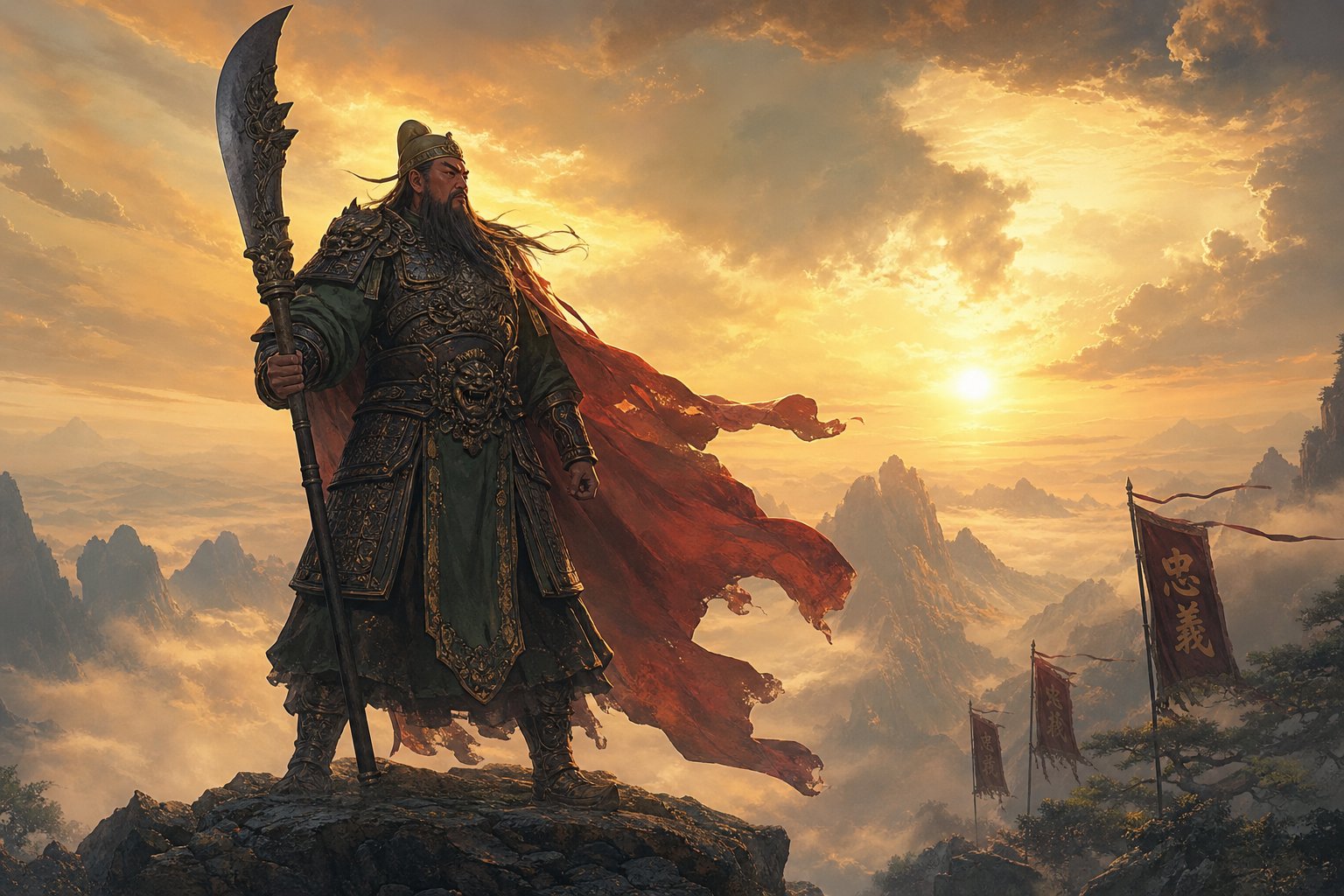
Guan Yu (关羽) stands as perhaps the most iconic chinese warrior in history. A military general during the collapse of the Han Dynasty, his martial prowess was so extraordinary that he was deified as a god of war after his death. Historical accounts describe him riding alone into an army of ten thousand men, cutting off an enemy general's head, and returning untouched. He is revered today as a symbol of loyalty, righteousness, and bravery, with his image appearing in Taoist shrines, Buddhist temples, and businesses across Asia. The character 羽 (yǔ, feather) from his name has become associated with swift, lethal grace.
Other historical figures worth noting:
- Yue Fei (岳飞) - A Song Dynasty general whose name combines 岳 (great mountain) with 飞 (fly), representing strength that soars. His mother famously tattooed "serve the country with utmost loyalty" on his back.
- Zhang Fei (张飞) - Guan Yu's sworn brother, known for his thunderous voice and ferocious combat style. His name pairs a common surname with 飞 (fly), suggesting unstoppable momentum.
- Sun Wu (孙武) - Author of The Art of War, whose given name 武 (martial) became synonymous with strategic military genius rather than brute force alone.
These figures remind us that physical strength in Chinese culture is never purely about muscle. Even the fiercest warriors were celebrated for loyalty, strategy, and moral conviction. That moral dimension of power forms its own naming tradition entirely.
Moral Strength and Noble Leadership Names
In Chinese philosophy, the person who commands a room through character alone is considered stronger than the one who commands it through force. This belief runs through thousands of years of thought, from the teachings of Kong Zi (Confucius) to the governance ideals of every imperial chinese dynasty. If you scan a chinese dynasties list from the Shang through the Qing, you will find that the rulers remembered most favorably are not the conquerors but the virtuous ones, the emperors who led through moral example. That same principle shapes how families choose ancient chinese names male children will carry into adulthood.
Names Inspired by Confucian Virtues
Kong Zi taught that true strength is internal. His concept of the junzi, the gentleman-scholar, describes a person whose power comes from cultivated virtue rather than inherited rank or physical dominance. The five Confucian virtues (仁 benevolence, 义 righteousness, 礼 propriety, 智 wisdom, 信 faithfulness) form the backbone of countless chinese names male meaning seekers will encounter. These characters appear in names precisely because they represent the highest form of human strength in Chinese thought.
The firm, the enduring, the simple, and the modest are near to virtue. — Confucius, Analerta 13.27
That quote captures why so many families gravitate toward virtue-based names. They signal not flashy dominance but quiet, unshakeable moral authority.
| Characters | Pinyin | Pronunciation Guide | Meaning |
|---|---|---|---|
| 仁杰 | Rénjié | RUN-jyeh | Benevolent and outstanding. Suggests a leader whose kindness elevates everyone around him. |
| 义诚 | Yìchéng | EE-chung | Righteous and sincere. A person whose word is unbreakable because it is rooted in moral conviction. |
| 德明 | Démíng | DUH-ming | Virtuous and bright. Moral clarity that illuminates the path for others. |
| 仁德 | Réndé | RUN-duh | Benevolence and virtue combined. Double emphasis on compassionate moral strength. |
| 义勇 | Yìyǒng | EE-yong | Righteous bravery. Courage guided by a moral compass rather than impulse. |
| 德辉 | Déhuī | DUH-hway | Virtue's radiance. The idea that moral character shines outward like light. |
| 信义 | Xìnyì | SHIN-ee | Faithfulness and righteousness. A name for someone whose integrity is absolute. |
| 礼贤 | Lǐxián | LEE-shyen | Propriety and worthiness. Evokes a person who honors others and earns respect through conduct. |
| 仁浩 | Rénhào | RUN-how | Benevolence vast as the ocean. Compassion without limits. |
| 德志 | Dézhì | DUH-jih | Virtue and ambition. Moral strength directed toward a higher purpose. |
Leadership and Authority Names
Beyond personal virtue, Chinese naming tradition also draws from the language of governance and authority. A chinese emperor was expected to embody the Mandate of Heaven, ruling not by fear but by moral legitimacy. Characters like 君 (jūn, ruler/gentleman), 帝 (dì, emperor), and 王 (wáng, king) appear in names that project leadership without arrogance. These are not boastful names. They express the aspiration that a child will grow into someone worthy of guiding others.
| Characters | Pinyin | Pronunciation Guide | Meaning |
|---|---|---|---|
| 君豪 | Jūnháo | JYOON-how | Noble ruler with grand spirit. Combines gentlemanly authority with heroic ambition. |
| 帝恩 | Dì'ēn | DEE-un | Imperial grace. Suggests power exercised through generosity rather than domination. |
| 君泽 | Jūnzé | JYOON-zuh | A ruler's benevolence. Like rain nourishing the land, leadership that benefits all. |
| 王骏 | Wángjùn | WAHNG-jyoon | Kingly steed. Authority paired with speed and elegance, like a thoroughbred horse. |
| 君正 | Jūnzhèng | JYOON-jung | Upright ruler. A leader whose moral compass never wavers. |
| 天佑 | Tiānyòu | TYEN-yo | Heaven's protection. Implies divine favor bestowed on the worthy. |
| 圣贤 | Shèngxián | SHUNG-shyen | Sage and worthy. The highest aspiration in Confucian thought, a person of complete virtue. |
| 君威 | Jūnwēi | JYOON-way | A gentleman's authority. Dignified power that commands respect without raising a voice. |
The Confucian Gentleman Ideal in Naming
What ties all these names together is a single cultural conviction: the strongest person in the room is the one who does not need to prove it. In Confucian thought, the junzi leads by example. He is firm in principle but gentle in manner. He speaks less and acts more. He would rather lose a battle than compromise his integrity.
This philosophy explains why virtue-based names have remained popular across every entry on a chinese dynasties list, from ancient feudal states to modern families. Parents who choose these names are not wishing their son physical dominance. They are wishing him something harder to achieve: the kind of character that earns loyalty without demanding it.
Daoist philosophy adds another layer here. Laozi taught that the softest things overcome the hardest, that water wears down stone. Names like 德明 and 仁浩 carry this paradox. They sound gentle, yet they describe a form of strength that outlasts brute force every time.
For families drawn to this tradition, the question often becomes practical: how do you pair moral strength with intellectual sharpness? Many of the most celebrated names in Chinese history do exactly that, combining virtue with brilliance in a single two-character phrase.
Intellectual Strength and Wisdom Names
In Chinese culture, the pen has always outranked the sword. For most of imperial history, scholars held higher social status than warriors. The civil service examination system, known as the keju, made intellectual achievement the primary path to power, wealth, and family honor. A farmer's son who mastered the classics could become a provincial governor. That cultural reality is why so many chinese first names male children receive are built from characters meaning wise, bright, or learned. These are not soft names. They represent the kind of strength that built dynasties.
Names Meaning Wise and Brilliant
The character 明 (míng) is one of the most beloved in Chinese naming. The ming meaning is layered: it combines 日 (sun) and 月 (moon), literally representing the two brightest objects in the sky. A name containing 明 suggests clarity of thought, illumination, and the ability to see what others miss. Similarly, 智 (zhì, wisdom) and 聪 (cōng, clever) signal mental acuity, while 锐 (ruì, sharp) adds an edge of intellectual precision.
| Characters | Pinyin | Pronunciation Guide | Meaning |
|---|---|---|---|
| 智远 | Zhìyuǎn | JIH-yoo-en | Wisdom that reaches far. A mind capable of seeing beyond the immediate. |
| 明哲 | Míngzhé | MING-juh | Bright and philosophically wise. Suggests someone who grasps deep truths with clarity. |
| 锐思 | Ruìsī | RWAY-sih | Sharp thinking. An intellect that cuts through confusion like a blade. |
| 聪毅 | Cōngyì | TSONG-ee | Clever and determined. Intelligence paired with the perseverance to apply it. |
| 智勇 | Zhìyǒng | JIH-yong | Wisdom and bravery combined. The strategist who also acts decisively. |
| 明锐 | Míngruì | MING-rway | Bright and sharp. Double emphasis on mental precision and clarity. |
| 睿博 | Ruìbó | RWAY-bwoh | Sagacious and broadly learned. Deep insight combined with wide knowledge. |
| 智恒 | Zhìhéng | JIH-hung | Enduring wisdom. Intelligence that deepens with time rather than fading. |
| 聪达 | Cōngdá | TSONG-dah | Clever and accomplished. Mental gifts that translate into real-world achievement. |
| 明志 | Míngzhì | MING-jih | Clear ambition. A mind that knows exactly what it wants and why. |
Scholar-Inspired Names With Literary Roots
The character 文 (wén) deserves special attention among chinese male first names. Its shi meaning extends beyond simple literacy. 文 encompasses culture, refinement, written language, and the entire literary tradition. When paired with other characters, it creates names with deep poetic meaning that reference China's reverence for the written word. The Daoist deity Wenchang (文昌帝君), known as the God of Culture and Literature, was worshiped by examination candidates for centuries, showing just how sacred intellectual pursuit was considered.
The keju system reinforced this cultural weight. Private academies called shuyuan trained young scholars in the classics, and success on the exams could transform an entire family's fortunes overnight. Names drawn from this tradition carry that aspirational energy.
| Characters | Pinyin | Pronunciation Guide | Meaning |
|---|---|---|---|
| 文博 | Wénbó | WUN-bwoh | Cultured and broadly learned. A scholar whose knowledge spans many fields. |
| 书豪 | Shūháo | SHOO-how | Heroic in scholarship. Intellectual ambition on a grand scale. |
| 文昌 | Wénchāng | WUN-chahng | Literary flourishing. References the God of Literature, a blessing for academic success. |
| 学谦 | Xuéqiān | SHWEH-chyen | Learned and humble. The scholar who knows enough to know what he does not know. |
| 翰林 | Hànlín | HAHN-lin | Imperial academy. Named after the elite scholarly institution that advised emperors. |
| 文杰 | Wénjié | WUN-jyeh | Literary excellence. Outstanding talent in the written arts. |
| 博文 | Bówén | BWOH-wun | Broadly cultured. Extensive learning across all disciplines. |
| 思远 | Sīyuǎn | SIH-yoo-en | Far-reaching thought. A contemplative mind that considers long-term consequences. |
| 慧明 | Huìmíng | HWAY-ming | Wise and illuminated. Insight that brings light to complex problems. |
| 文渊 | Wényuān | WUN-yoo-en | Deep literary waters. Knowledge as vast and profound as the ocean. |
You will notice that many of these chinese first names balance sharpness with depth. A name like 锐思 emphasizes cutting precision, while 文渊 suggests bottomless knowledge. Both are intellectual strength, but they project different energies. Families often choose based on which quality they hope will define their son's path: the quick, decisive thinker or the deeply contemplative scholar.
Intellectual brilliance, though, is only as powerful as the will behind it. A sharp mind without persistence burns bright and fades fast. That is why Chinese naming tradition also honors a quieter, more enduring form of strength: the ability to persist through hardship without breaking.
Resilience and Endurance Names That Stand the Test of Time
A blade can be sharp, but if it shatters on first impact, what good is it? Chinese naming philosophy prizes a form of strength that does not announce itself loudly. It simply refuses to break. Characters like 坚 (jiān, firm), 毅 (yì, perseverance), and 恒 (héng, eternal) represent this quiet, enduring power. Among chinese names male families have favored across generations, resilience names hold a special place because they reflect a cultural truth: life will test you, and the person who endures wins.
This category of chinese given names male children carry speaks to persistence through hardship, the slow accumulation of strength over decades, and the refusal to surrender when circumstances turn harsh. In a culture shaped by floods, famines, dynastic collapses, and rebuilding, endurance is not a passive trait. It is survival itself.
Names Meaning Steadfast and Unyielding
These names draw from characters that convey firmness, willpower, and tenacity. You will notice they feel grounded and deliberate rather than explosive. That is intentional. Among chinese men names in this tradition, the energy is less about a single heroic moment and more about showing up every day, year after year, without wavering.
| Characters | Pinyin | Pronunciation Guide | Meaning |
|---|---|---|---|
| 坚毅 | Jiānyì | JYEN-ee | Firm and persevering. Double emphasis on unbreakable resolve. |
| 恒志 | Héngzhì | HUNG-jih | Eternal ambition. Willpower that never fades regardless of circumstance. |
| 毅然 | Yìrán | EE-rahn | Resolute and decisive. The courage to commit fully without looking back. |
| 志坚 | Zhìjiān | JIH-jyen | Ambition made solid. Goals hardened into unshakeable commitment. |
| 韧刚 | Rèngāng | RUN-gahng | Tenacious and hard. Flexibility paired with core strength, like tempered steel. |
| 恒毅 | Héngyì | HUNG-ee | Constant perseverance. Endurance that stretches across a lifetime. |
| 坚强 | Jiānqiáng | JYEN-chyahng | Firm and powerful. Inner toughness that withstands external pressure. |
| 志恒 | Zhìhéng | JIH-hung | Will that endures forever. Ambition without an expiration date. |
| 毅峰 | Yìfēng | EE-fung | Perseverance reaching the summit. Determination that climbs to the highest point. |
| 永坚 | Yǒngjiān | YONG-jyen | Forever firm. Permanence and solidity without end. |
Nature-Inspired Resilience Names
Chinese culture has always looked to nature for models of endurance. Pine trees (松) appear in ancestral imagery as emblems of long life because they stay green through the harshest winters. Mountains stand unmoved through millennia of storms. Iron endures where softer metals corrode. And jade, perhaps the most culturally significant material in Chinese civilization, represents a unique combination: beauty and near-indestructibility fused into one substance.
The jade name meaning in Chinese culture goes far beyond a pretty stone. Jade (玉, yù) symbolizes refined, unbreakable strength. It is hard enough to ring like a bell when struck, yet smooth and luminous. Confucius himself compared the virtues of a gentleman to the qualities of jade: warm to the touch, consistent in texture, and impossible to corrupt. For chinese male names and meanings rooted in resilience, jade characters carry this entire philosophical weight.
Daoist philosophy adds another dimension here. Laozi taught that water, the softest substance, overcomes stone, the hardest. As the Tao Te Ching states: "Nothing under Heaven is softer or weaker than water, yet those who attack what is hard and strong cannot overcome it." This paradox, that yielding flexibility is the deepest form of resilience, shapes many nature-inspired names. They honor the pine that bends in wind rather than snapping, the river that carves canyons without force.
| Characters | Pinyin | Pronunciation Guide | Meaning |
|---|---|---|---|
| 松坚 | Sōngjiān | SONG-jyen | Pine's firmness. Evergreen endurance through all seasons of life. |
| 玉刚 | Yùgāng | YOO-gahng | Jade's hardness. Refined beauty paired with unbreakable core strength. |
| 铁毅 | Tiěyì | TYEH-ee | Iron perseverance. Unyielding will forged under pressure. |
| 岳恒 | Yuèhéng | YWEH-hung | Mountain's constancy. The permanence and grandeur of a great peak. |
| 松涛 | Sōngtāo | SONG-tow | Pine waves. The sound of wind through ancient pines, steady and rhythmic. |
| 玉坚 | Yùjiān | YOO-jyen | Jade's solidity. Strength polished to perfection over time. |
| 铁峰 | Tiěfēng | TYEH-fung | Iron summit. Unbreakable strength at the highest point. |
| 山毅 | Shānyì | SHAHN-ee | Mountain's resolve. Immovable determination rooted deep in the earth. |
| 柏坚 | Bǎijiān | BYE-jyen | Cypress firmness. Like the cypress tree, standing tall through centuries. |
| 泽韧 | Zérèn | ZUH-run | Nourishing tenacity. Strength that sustains others, like water feeding a marsh. |
Notice how many of these names pair a natural element with a character for inner resolve. 松坚 does not just mean "pine" or "firm" separately. Together, they create a specific image: strength that stays green when everything else has withered. 泽韧 combines water's nourishing quality with tenacity, echoing the Daoist teaching that true resilience lies in adaptability rather than rigidity.
These resilience names work beautifully as standalone given names, but they also gain new dimensions when combined with complementary characters. A name built entirely from endurance characters can feel heavy. Pairing resilience with brightness, kindness, or elegance creates something more balanced and more true to how Chinese naming actually works in practice.
Two-Character Name Combinations for Balanced Power
Chinese naming is an act of composition, not selection. You are not picking one word off a shelf. You are combining two characters into a phrase that did not exist before, one that carries layered meaning unique to your child. This is why most modern male chinese given names use two characters for the given name rather than one. A single character limits you to a single idea. Two characters let you build a relationship between ideas, and that relationship is where the real power lives.
How Two Characters Create Layered Meaning
Think of it like mixing metals into an alloy. Pure iron is strong but brittle. Add carbon and you get steel, something stronger than either component alone. The same logic applies to male chinese names. A name built entirely from hard, aggressive characters like 刚强 (hard + powerful) can feel one-dimensional, even harsh. Chinese naming tradition recognizes this. The principle is straightforward: pair a strength character with a complementary virtue to create balance, depth, and auspiciousness.
This is not about softening the name. It is about making the strength more complete. A sword needs both an edge and a spine. When you look at chinese boy names and meanings across generations, the most enduring choices almost always combine force with grace, courage with wisdom, or power with kindness. Pure aggression in a name can feel like a dare. Balanced strength feels like a promise.
Among common chinese names that have stood the test of time, you will notice this pairing pattern again and again. 志强 (ambition + strong) works because ambition gives the strength direction. 德勇 (virtue + brave) works because virtue gives the bravery moral weight. The second character does not dilute the first. It completes it.
Strength Plus Wisdom Combinations
These combinations pair physical or moral strength with intellectual clarity. The result is a name that suggests someone who is both powerful and perceptive, capable of acting decisively because they see the situation clearly.
| Character 1 (Strength) | Character 2 (Wisdom) | Combined Name (Pinyin) | Combined Meaning | Cultural Note |
|---|---|---|---|---|
| 勇 (brave) | 智 (wise) | Yǒngzhì | Brave and wise | Echoes the ideal general who wins through strategy, not just force |
| 刚 (firm) | 明 (bright) | Gāngmíng | Firm and clear-sighted | Suggests unwavering resolve guided by clear judgment |
| 毅 (persevering) | 博 (broadly learned) | Yìbó | Persevering and erudite | The scholar who never stops learning, no matter the obstacles |
| 强 (strong) | 睿 (sagacious) | Qiángruì | Strong and insightful | Power paired with deep perception, a leader's combination |
| 志 (ambition) | 哲 (philosophical) | Zhìzhé | Ambitious and philosophically wise | Drive tempered by reflective thinking, avoiding recklessness |
Strength Plus Kindness Combinations
These pairings balance force with compassion. In Chinese culture, the strongest leaders are those who protect rather than dominate. Names of chinese male figures remembered as heroes almost always combine martial ability with benevolence. Guan Yu was worshiped not just for his fighting prowess but for his loyalty and kindness to the weak. These combinations carry that same energy.
| Character 1 (Strength) | Character 2 (Kindness/Elegance) | Combined Name (Pinyin) | Combined Meaning | Cultural Note |
|---|---|---|---|---|
| 勇 (brave) | 仁 (benevolent) | Yǒngrén | Brave and compassionate | The protector archetype: strength used in service of others |
| 威 (mighty) | 泽 (grace, nourishing) | Wēizé | Mighty yet nourishing | Authority that uplifts rather than oppresses, like rain on dry land |
| 坚 (firm) | 和 (harmonious) | Jiānhé | Firm yet harmonious | Unshakeable principles expressed through peaceful conduct |
| 毅 (persevering) | 文 (cultured) | Yìwén | Persevering and refined | Grit wrapped in elegance, the gentleman who endures gracefully |
| 刚 (hard) | 雅 (elegant) | Gāngyǎ | Hard and elegant | Like polished jade: tough at the core, beautiful on the surface |
| 志 (ambition) | 善 (kind) | Zhìshàn | Ambitious and kind | Drive directed toward good, not just personal gain |
| 武 (martial) | 恩 (grace) | Wǔ'ēn | Martial grace | The warrior who shows mercy, strength restrained by compassion |
| 强 (strong) | 润 (gentle,润泽) | Qiángrùn | Strong yet gentle | Power expressed softly, like a river that shapes stone without violence |
When exploring chinese names and meanings male families actually use in practice, you will find these balanced combinations far outnumber the pure-strength options. The reason is cultural and practical. A name like 刚刚 (hard + hard) would sound repetitive and aggressive. But 刚明 (firm + bright) sounds like a complete person, someone you would trust to lead.
Understanding chinese men's names and meanings at this level reveals something important: the art is in the pairing. One character sets the foundation. The other shapes how that foundation meets the world. Get the combination right, and the name carries a story in just two syllables.
Of course, even the most beautifully paired characters can fall flat if they clash with the surname that precedes them. Tonal harmony between surname and given name is the final piece of the puzzle, and it is where many otherwise strong names stumble.
Pairing Strong Names With Common Surnames
You have found the perfect strength character. It carries the right meaning, the right radical, the right cultural weight. But say it out loud after your surname and something feels off. The syllables collide, or the name sounds flat, like a drumroll that ends on a thud. This is the tonal harmony problem, and it trips up more families than any other step in the naming process.
Among surnames in asia, Chinese surnames carry a fixed tone that every given name must work around. Since the surname comes first and cannot be changed, the given name must adapt. Understanding how Mandarin tones interact is the difference between a name that flows like a river and one that stumbles over itself.
Understanding Tonal Flow in Chinese Names
Mandarin has four tones plus a neutral tone. Each one gives a syllable a distinct melodic shape:
- First tone (ˉ) — High and level, like holding a musical note steady. Example: 刚 (gāng, firm).
- Second tone (ˊ) — Rising, like asking a question. Example: 强 (qiáng, strong).
- Third tone (ˇ) — Dipping low then rising, like expressing surprise. Example: 勇 (yǒng, brave).
- Fourth tone (ˋ) — Sharp and falling, like giving a command. Example: 毅 (yì, persevering).
The key principle is contrast. A well-crafted name moves through different tones, creating a natural rhythm when spoken aloud. As MingShu's naming framework explains, the test is simple: does the name sound right when you introduce yourself across a crowded room?
Two problems to watch for:
- Consecutive third tones. When two third-tone syllables sit next to each other, the first one shifts to a second tone in natural speech. This is not wrong, but it can make the name sound different from how it looks on paper. Three third tones in a row (surname + two-character given name) creates an awkward vocal roller coaster.
- All same-tone names. A name where every syllable shares the same tone sounds monotonous. 张刚昌 (Zhāng Gāng Chāng) is three first tones in a row, producing a flat, droning effect with no melodic movement.
The ideal pattern mixes tones so the name rises and falls naturally. A fourth-tone surname followed by a second-tone and first-tone given name, for instance, creates a satisfying arc: down, up, steady.
Surname Compatibility Examples
The most common chinese last names account for a huge percentage of the population. Here are the five most common chinese surnames paired with strength-themed given names that create strong tonal flow. Each pairing avoids awkward collisions and produces a name that sounds commanding when spoken aloud.
| Surname | Tone | Recommended Strong Name | Tone Pattern | Why It Works |
|---|---|---|---|---|
| 王 (Wáng) | 2nd (rising) | 志毅 (Zhìyì) | 2-4-4 | Rising surname followed by two decisive falling tones creates a commanding finish |
| 王 (Wáng) | 2nd (rising) | 刚毅 (Gāngyì) | 2-1-4 | Rise, hold steady, then drop. Clean arc with strong closure |
| 李 (Lǐ) | 3rd (dipping) | 明锐 (Míngruì) | 3-2-4 | Dip resolves into a rise then a sharp fall. Dynamic and memorable |
| 李 (Lǐ) | 3rd (dipping) | 德恒 (Déhéng) | 3-2-2 | Low start lifts into two rising tones, creating upward momentum |
| 张 (Zhāng) | 1st (level) | 毅博 (Yìbó) | 1-4-2 | Steady start, sharp drop, then a lift. Feels like a story with a strong middle |
| 张 (Zhāng) | 1st (level) | 勇达 (Yǒngdá) | 1-3-2 | Level opening, dip for contrast, then rising finish. Energetic and balanced |
| 刘 (Liú) | 2nd (rising) | 坚毅 (Jiānyì) | 2-1-4 | Rise, hold, fall. Same satisfying arc as Wáng Gāngyì, equally strong |
| 刘 (Liú) | 2nd (rising) | 智远 (Zhìyuǎn) | 2-4-3 | Rise, decisive drop, then a reflective dip. Sounds thoughtful and powerful |
| 陈 (Chén) | 2nd (rising) | 威武 (Wēiwǔ) | 2-1-3 | Rising start, level hold, then a low dip. Creates depth and gravitas |
| 陈 (Chén) | 2nd (rising) | 恒毅 (Héngyì) | 2-2-4 | Two rising tones build momentum before a decisive fourth-tone landing |
Beyond tonal flow, you also need to watch for homophones. A name that sounds identical to a common word with negative meaning will follow your child everywhere. 王思 (Wáng Sī) sounds close to 亡死 (death), for example. Always say the full name aloud multiple times, quickly and slowly, to catch any unfortunate sound-alikes.
Naming trends around these most common chinese surnames also vary by region. In mainland China, two-character given names dominate, and parents increasingly use online databases to check how many people already share a name. In Taiwan, single-character given names remain more common, and families often consult traditional naming masters who factor in generational characters. Overseas Chinese communities, particularly in Southeast Asia and North America, tend to prioritize names that work phonetically across languages, sometimes choosing chinese male names and surnames combinations specifically because they are easy for non-Chinese speakers to pronounce.
Among asian names and surnames traditions broadly, Chinese naming stands out for this tonal dimension. Japanese and Korean names do not carry the same tone-pairing constraints, which is why guidance specific to Mandarin matters here. Whether you are working with one of the most common chinese last names or a rarer surname, the principle holds: contrast creates music, and music makes a name memorable.
Tonal harmony handles how a name sounds within Chinese. But many families today need a name that also works in English, at school, at work, and across borders. That cross-cultural challenge introduces a different set of considerations entirely.
Choosing a Strong Chinese Name for Bilingual Families
Imagine introducing yourself in two languages every day. Your name needs to land cleanly in both, carrying cultural weight in Mandarin while remaining pronounceable at an American school, a Canadian office, or an Australian playground. For chinese american male names, this dual requirement is not optional. It is daily life. And the challenge intensifies when you want a name rooted in strength rather than one chosen purely for phonetic convenience.
As one Chinese American writer recounts, most English-speaking people struggle with sounds that do not exist in their language. Names starting with "x" or "zh" become garbled. Tonal distinctions vanish entirely in english in mandarin chinese transliterations. A powerful name like 志强 (Zhìqiáng) might carry immense cultural gravity, but if teachers, coaches, and classmates cannot say it, the child may grow up distancing themselves from it. The goal is finding names where strength and accessibility coexist.
Phonetic Bridging Between Chinese and English Names
Phonetic bridging means choosing a Chinese name whose sounds overlap naturally with English pronunciation. The kai meaning in Chinese, for example, maps to the character 凯 (kǎi, triumphant/victorious). English speakers already know how to say "Kai" without coaching. The name sounds natural in both languages while carrying genuine strength in its Chinese character. That is the sweet spot.
This approach differs from simply picking an English name and finding characters that approximate its sound. A chinese name generator can produce phonetic equivalents for any English name, but the resulting characters are often chosen purely for sound, leaving the meaning random or hollow. A better strategy is working from the Chinese side first: find a strong character with a pronunciation that English speakers can handle, then let that become the bridge.
Strategies for Bilingual Name Harmony
Families navigating this decision typically choose one of three paths:
- Full Chinese name as the legal name. The child uses their Chinese name everywhere, selecting one with sounds accessible to English speakers. Works best when the name is short and phonetically clean.
- Chinese middle name. An English first name handles daily life while the Chinese name sits in the middle position, preserved for family contexts and cultural identity. This is common among second and third-generation families.
- Hybrid approach. The English and Chinese names share a phonetic link. The child goes by "Kai" at school while the full Chinese name 凯威 (Kǎiwēi, triumphant and mighty) appears on formal documents and is used at home.
Each path has tradeoffs. A full Chinese name preserves cultural identity most completely but requires the child to correct pronunciation regularly. A Chinese middle name avoids that friction but can feel disconnected from daily identity. The hybrid approach balances both but requires careful selection to ensure the phonetic link feels natural rather than forced.
Names That Work Across Cultures
Here are strong Chinese names that bridge well with English, each carrying genuine power in its characters while remaining easy for non-Chinese speakers to pronounce:
- 凯 (Kǎi) — "Kai," meaning triumphant, victorious. One of the most popular crossover names because it sounds complete in English and carries real strength in Chinese.
- 威 (Wēi) — "Way," meaning mighty, powerful. Short, punchy, and immediately pronounceable. Works as a standalone or paired name.
- 龙 (Lóng) — "Long," meaning dragon. English speakers recognize the sound instantly, and the dragon symbolism needs no translation.
- 杰 (Jié) — "Jye," meaning outstanding, heroic. Close enough to English names like Jay that it slides into conversation naturally.
- 明 (Míng) — "Ming," meaning bright, brilliant. Already familiar in English from historical and cultural references.
- 力 (Lì) — "Lee," meaning strength, power. Phonetically identical to one of the most common English-friendly sounds, while carrying raw physical force in Chinese.
- 泰 (Tài) — "Tai," meaning great, peaceful strength. Familiar from Tai Chi, making it immediately accessible and culturally resonant.
- 俊 (Jùn) — "Jun," meaning talented, handsome. Clean single syllable that English speakers handle without difficulty.
- 瑞 (Ruì) — "Ray," meaning auspicious, sharp. The English approximation "Ray" is a recognizable name on its own.
- 震 (Zhèn) — "Jun," meaning thunder, shake. Carries explosive power and approximates familiar English sounds.
Many of these work equally well as cantonese male names, though pronunciation shifts. 凯 becomes "Hoi" in Cantonese, 杰 becomes "Git," and 威 becomes "Wai." Families with Cantonese heritage should test both Mandarin and Cantonese pronunciations against English to find the cleanest bridge. Among cantonese names male families favor, single-syllable strength characters tend to cross over most smoothly because they avoid the tonal complexity of longer combinations.
Some families still consult the Five Elements (五行 wǔxíng) system even in diaspora contexts. This traditional practice assigns elemental properties (wood, fire, earth, metal, water) to a child based on their birth date and time, then selects name characters that balance any elemental deficiency. A child lacking the metal element might receive a name containing 锐 (sharp) or 钢 (steel). While an asian name generator or chinese name generator male tool cannot account for this, families who value the tradition often consult a naming specialist remotely, sending birth details to practitioners in China, Taiwan, or Hong Kong who provide character recommendations via video call.
Among trending chinese american male names, the pattern is clear: families want authenticity without daily friction. Names like 凯文 (Kǎiwén, triumphant + cultured) bridge to "Kevin," while 力安 (Lì'ān, strength + peace) echoes "Liam." These are not compromises. They are creative solutions that honor both worlds the child will inhabit. The strongest name is ultimately the one your son will say with pride in every room he enters, regardless of which language fills it.
Finding that balance requires one more skill: knowing which names to avoid. Certain characters that look powerful on paper carry hidden pitfalls that only become apparent when you understand modern naming trends and common mistakes.
Names to Think Twice About and Modern Naming Trends
A name can look powerful on paper and still trip your child up for decades. Some characters carry hidden connotations that only surface in specific contexts. Others have been used so heavily that they have lost all distinctiveness. Before you finalize your choice, consider these common pitfalls that catch even well-intentioned families off guard.
Characters That Sound Strong but Carry Hidden Meanings
Chinese is a language dense with homophones. A character that means "mighty" in one tone can sound identical to a word meaning something embarrassing in another. Context matters too. Some characters feel powerful in isolation but create awkward phrases when paired with certain surnames or generational characters.
Overly Common Names to Reconsider
The most popular name in china shifts every few years, but certain strength characters have been so heavily used that they now signal generic rather than powerful. Names like Hao (浩), Jun (俊), and Wei (伟) have been consistently popular chinese boy names for decades. They are fine names, but in a classroom of thirty children, your son might share his name with three others. Among common chinese boy names, overuse is the quiet enemy of distinction.
Here are specific cautionary examples worth knowing:
- 伟 (Wěi, great) — Once a strong choice, now one of the most common chinese male names in China. Millions share it, diluting its impact. Think of it as the "James" of Chinese naming: solid but unremarkable.
- 王刚 (Wáng Gāng) — So common it has become a punchline. When a popular name in china pairs with the most common surname, individuality disappears entirely.
- 斌 (Bīn, martial + literary) — Looks balanced on paper, but has been overused since the 1980s. Among popular chinese male names of that generation, it now reads as dated rather than strong.
- 猛 (Měng, fierce) — Carries aggressive, almost animalistic connotations in modern usage. What once sounded heroic now feels blunt and unsophisticated to younger Chinese speakers.
- 霸 (Bà, dominator) — Sounds powerful but carries connotations of bullying and tyranny in contemporary Chinese. The most popular chinese names today avoid this kind of raw aggression.
- 超 (Chāo, surpass) — Widely used in the 1990s, now feels like a product of its era. Also sounds identical to 吵 (noisy) in casual speech, creating an unfortunate association.
- 子强 paired with surname 杜 (Dù Zǐqiáng) — While each character is fine individually, spoken quickly it can sound like 肚子强 (strong stomach), turning a dignified name into an unintentional joke.
Modern Perceptions of Traditional Strength Names
Naming trends have shifted dramatically across generations. Grandparents favored blunt force characters like 军 (army), 刚 (hard), and 强 (strong) because their era demanded survival above all else. Parents in the 1990s leaned toward prosperity names. Today's families, as reflected in recent naming data, gravitate toward names that blend strength with elegance, choosing characters like 睿 (sagacious), 铮 (resonant), and 瑞 (auspicious) over raw power words.
This does not mean traditional strength names are wrong. It means context matters. A name like 志强 still works beautifully when chosen with intention. But picking it simply because it sounds tough, without considering how it sits among the most popular chinese names of the current generation, risks making your son's name feel like it belongs to a different decade.
The strongest Chinese name balances power with grace, carries cultural depth, and sounds harmonious when spoken aloud.
When in doubt, say the full name out loud fifty times. Say it fast, say it slow, say it angry and say it tender. If it holds up across every tone of voice, you are close. And if you are still uncertain, consult family elders who understand your surname's history, or seek a naming specialist who can check for regional homophones, elemental balance, and generational conflicts you might miss on your own. The right name is worth the extra care.
Frequently Asked Questions About Strong Chinese Boy Names
1. What are the most powerful Chinese characters used in boy names?
The most powerful characters for Chinese boy names include 勇 (yong, brave), 刚 (gang, firm), 威 (wei, mighty), 武 (wu, martial), 毅 (yi, perseverance), and 锐 (rui, sharp). Each carries distinct cultural weight. Characters containing strength-related radicals like 力 (force), 金 (metal), 山 (mountain), and 石 (stone) also signal power at a structural level, making them popular building blocks for names that convey physical courage, intellectual sharpness, or quiet endurance.
2. How do you choose a strong Chinese name that sounds good with common surnames?
Tonal harmony is key. Mandarin has four tones, and a well-crafted name moves through contrasting tones to create natural rhythm. Avoid consecutive third tones or all same-tone combinations, which sound flat or awkward. For example, the surname Wang (2nd tone) pairs well with Gangyi (1st + 4th tone) because the rise-hold-fall pattern creates a commanding arc. Always say the full name aloud multiple times to catch unfortunate homophones or tonal collisions before finalizing your choice.
3. What is the difference between warrior names and moral strength names in Chinese?
Warrior names use characters tied to physical courage and martial prowess, such as 武 (martial), 虎 (tiger), and 剑 (sword), often referencing historical generals like Guan Yu or Yue Fei. Moral strength names draw from Confucian philosophy, using characters like 德 (virtue), 仁 (benevolence), and 义 (righteousness) to express leadership through character rather than force. Chinese culture considers moral strength the higher form of power, believing the person who commands respect through integrity is stronger than one who commands through intimidation.
4. Can a strong Chinese boy name work well in English-speaking countries?
Yes, through phonetic bridging. Names like 凯 (Kai, triumphant), 威 (Wei, mighty), 龙 (Long, dragon), and 杰 (Jie, outstanding) carry genuine strength in Chinese while remaining easy for English speakers to pronounce. The strategy is to start from the Chinese side, finding powerful characters whose sounds overlap naturally with English phonetics, rather than forcing English names into Chinese characters. Many bilingual families also use a hybrid approach where the Chinese name shares a phonetic link with an English name used in daily life.
5. Why do Chinese names typically use two characters for the given name?
Two-character given names allow parents to layer meaning by combining complementary virtues. A single character limits you to one idea, but pairing a strength character with a wisdom or kindness character creates balanced depth. For example, 志强 (Zhiqiang) combines ambition with strength, giving the power direction. Chinese naming tradition holds that pure strength without balance can feel aggressive, so pairing force with grace, like 刚雅 (firm + elegant), produces a more auspicious and complete name that reflects the whole person rather than a single trait.