What Su Shi's Name Actually Means in Chinese
When you look up the name 苏轼 (Su Shi), you might expect something poetic or grand. After all, this is one of China's most celebrated literary figures. The reality is far more surprising. Su Shi literally translates to something like "revive" plus "the crossbar on a carriage." That's it. A humble wooden rail at the front of an ancient Chinese chariot.
But here's the thing: that plainness is the entire point. Su Shi's father, the essayist Su Xun, chose this name as a deliberate philosophical lesson. The crossbar (轼) appears to be the one part of a carriage you could remove without consequence. It doesn't bear weight. It doesn't turn the wheels. Yet without it, the vehicle is technically incomplete. Su Xun wanted his brilliant eldest son to internalize that paradox: be indispensable, but never showy.
The Literal Translation of 苏轼
Breaking it down character by character, the su shi name meaning becomes clear:
- 苏 (Su) - The family surname. Its original meaning relates to a type of plant (perilla), but it carries the extended meaning of "revive" or "come back to life."
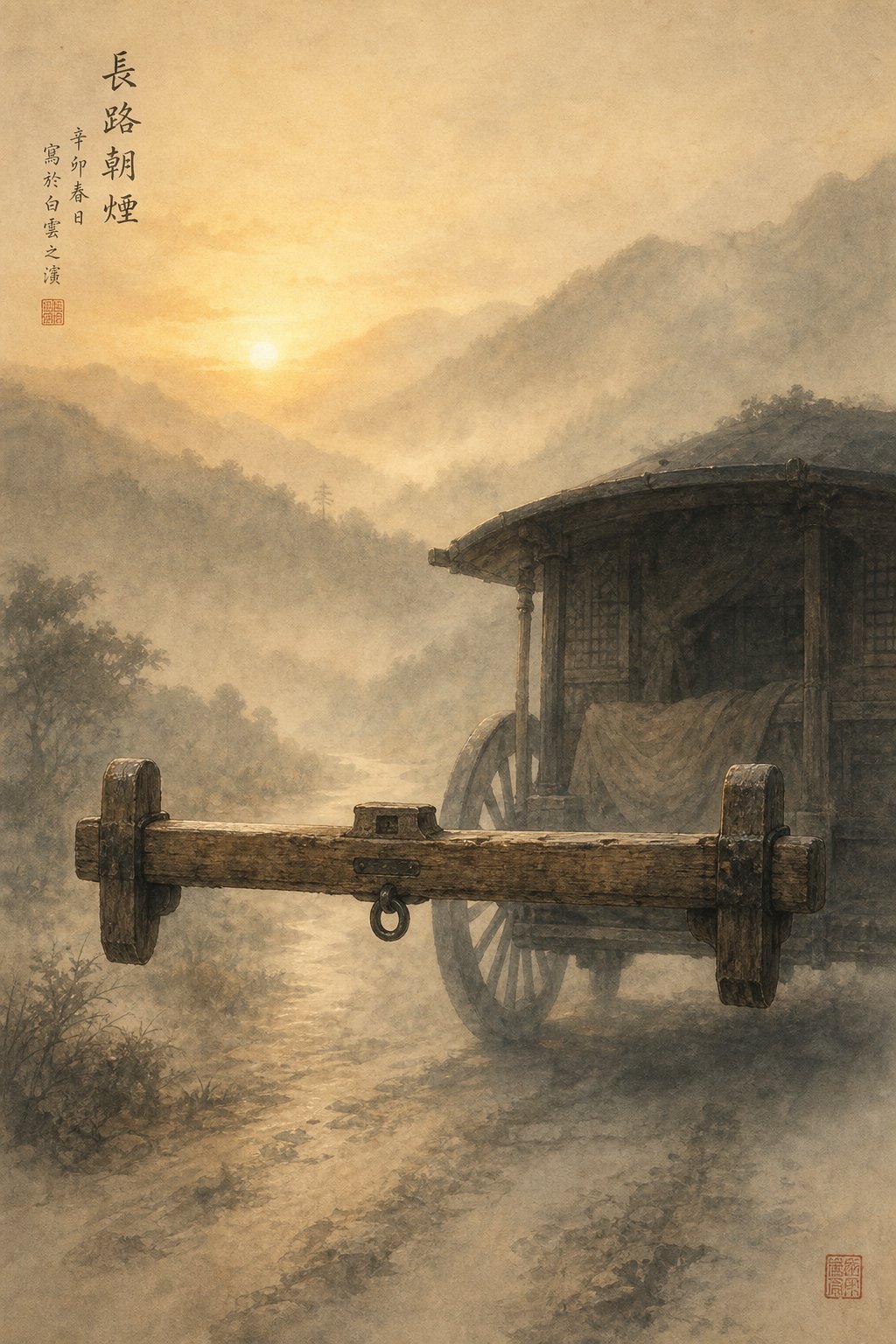
- 轼 (Shi) - The horizontal crossbar or railing at the front of an ancient Chinese chariot. Passengers would lean on it to look ahead. It was functional but visually unremarkable.
Together, the full name 蘇軾 (in traditional characters) identifies a man from the Su clan whose given name evokes a quiet, essential component of a vehicle. Born on January 8, 1037, in Meishan, Sichuan, Su Shi grew into a Song dynasty polymath: poet, essayist, calligrapher, painter, politician, pharmacologist, and gastronome. He is sometimes described as "the preeminent personality of the eleventh century" in the arts. Roughly 2,700 of his poems and 800 letters survive today.
Why This Name Matters Beyond Translation
In Chinese culture, names are not casual labels. They carry moral weight, parental aspiration, and sometimes outright warnings. An su shi-style naming, where a father encodes life philosophy into two characters, represents a tradition stretching back millennia. Su Xun's choice was a masterclass in this art.
His father remarked that the railing, despite being an essential component in the carriage, appears low profile and unassuming. He hoped that his talented and outspoken son would learn self-restraint. The name was both a gift and a caution.
The crossbar seems like the one part of a carriage that could be removed without consequence. Yet take it away, and the vehicle is no longer whole. Su Xun named his son after this paradox: be essential, but never conspicuous.
This tension between brilliance and restraint would define Su Shi's entire life. He never fully heeded his father's counsel. His conspicuous nature led him into a tumultuous political career, multiple exiles, and ultimately into the kind of literary immortality that makes his name one of the most studied in Chinese history. The crossbar, it turns out, became the most visible part of the carriage after all.
Understanding how Su Xun arrived at this name requires looking deeper into the individual characters, the physical object they reference, and the essay he wrote explaining his reasoning.
Breaking Down the Chinese Characters in 蘇軾
Each Chinese character is a small architecture of meaning. Radicals, phonetic components, and historical usage all layer together to create something richer than a single English word can capture. When you examine the su chinese characters in Su Shi's name at the structural level, you'll find that every stroke contributes to the philosophical weight his father intended.
The Surname 苏 and Its Origins
The character 苏 (su) in its traditional form 蘇 is composed of three elements stacked together: 艹 (the grass radical, indicating a connection to plants), 鱼 (fish), and 禾 (grain). The simplified modern form reduces this to 艹 over 办. Its oldest meaning refers to perilla, an aromatic herb in the mint family still widely used in East Asian cooking and medicine. From this botanical root, the character developed an extended meaning: "to revive" or "to come back to life," likely because the plant's strong fragrance was associated with awakening the senses.
As a surname, 苏 traces back to the ancient state of Su, which existed during the Shang and Zhou dynasties in what is now Henan province. The Su clan claims descent from Kunwu, a legendary minister. Over centuries, the family migrated southward, and by the Song dynasty, the Meishan branch in Sichuan had produced one of China's most remarkable literary families. The surname itself carries that quiet resonance of renewal, a fitting family identity for a lineage that would "revive" Chinese letters.
Understanding 轼 as a Carriage Component
The character 轼 (shi) is where the real philosophical payload lives. It combines the radical 车 (che, meaning vehicle or cart) with the phonetic component 式 (shi, meaning style or pattern). Together they point to a very specific object: the horizontal crossbar mounted at the front of an ancient Chinese shi chariot.
Imagine a Zhou or Han dynasty chariot. It's an open-topped vehicle, usually drawn by two or four horses, with large spoked wheels and a flat standing platform. At the front of this platform, a wooden rail runs horizontally at about waist height. This rail is the 轼. Passengers and drivers would lean against it for balance, grip it during turns, and rest their arms on it while gazing at the road ahead.
Here's what makes this component philosophically interesting: the crossbar bears no structural load. It doesn't hold the axle together. It doesn't connect the shafts to the horses. It doesn't support the canopy. Visually, it's the least dramatic part of the vehicle. Yet without it, the chariot fails a basic standard of completeness. A rider without the crossbar has nothing to lean on, nothing to steady themselves against. The vehicle functions, technically, but it is diminished.
In the ritual culture of ancient China, the crossbar also carried ceremonial significance. When passing a place worthy of respect, a rider would perform a gesture called "shi" (the same character used as a verb), meaning to lean forward on the crossbar and bow slightly. The object and the act of reverence shared the same word. This connection between humility and the physical rail would not have been lost on Su Xun.
How the Two Characters Work Together
When you read a shi shi chinese poem by Su Shi, you're encountering the work of a man whose very name argues for quiet indispensability. The surname 苏 suggests revival and vitality. The given name 轼 suggests restraint and unobtrusiveness. Together, they form a kind of instruction: be alive, be vital, but channel that energy into something functional rather than decorative.
This pairing was no accident. Su Xun, himself a master of precise chinese shi prose, understood that a name is a sentence a person carries for life. He constructed 苏轼 as a two-character argument about how to exist in the world. The table below lays out the semantic architecture:
| Character | Radical | Pinyin | Literal Meaning | Extended Meaning |
|---|---|---|---|---|
| 苏 (蘇) | 艹 (grass) | su | Perilla plant | To revive, come back to life |
| 轼 (軾) | 车 (vehicle) | shi | Crossbar on a carriage | Essential yet unassuming; humble functionality |
You'll notice the radical in each character anchors it to the physical world: grass and vehicles, plants and machines. There's nothing abstract here. Su Xun grounded his son's identity in tangible objects, not lofty virtues. He didn't name him "wisdom" or "righteousness." He named him after a wooden rail. That choice tells you everything about the father's philosophy: virtue should be structural, not ornamental.
The full name reads almost like a quiet imperative. Revive, but as a crossbar does. Be present, be necessary, be the thing people lean on without noticing. Whether Su Shi ever managed to live up to that instruction is a question his father answered in a remarkable essay, one that reveals just how deliberately this name was constructed as a counterweight to his son's dazzling talent.
Su Xun's Essay on Naming His Two Sons
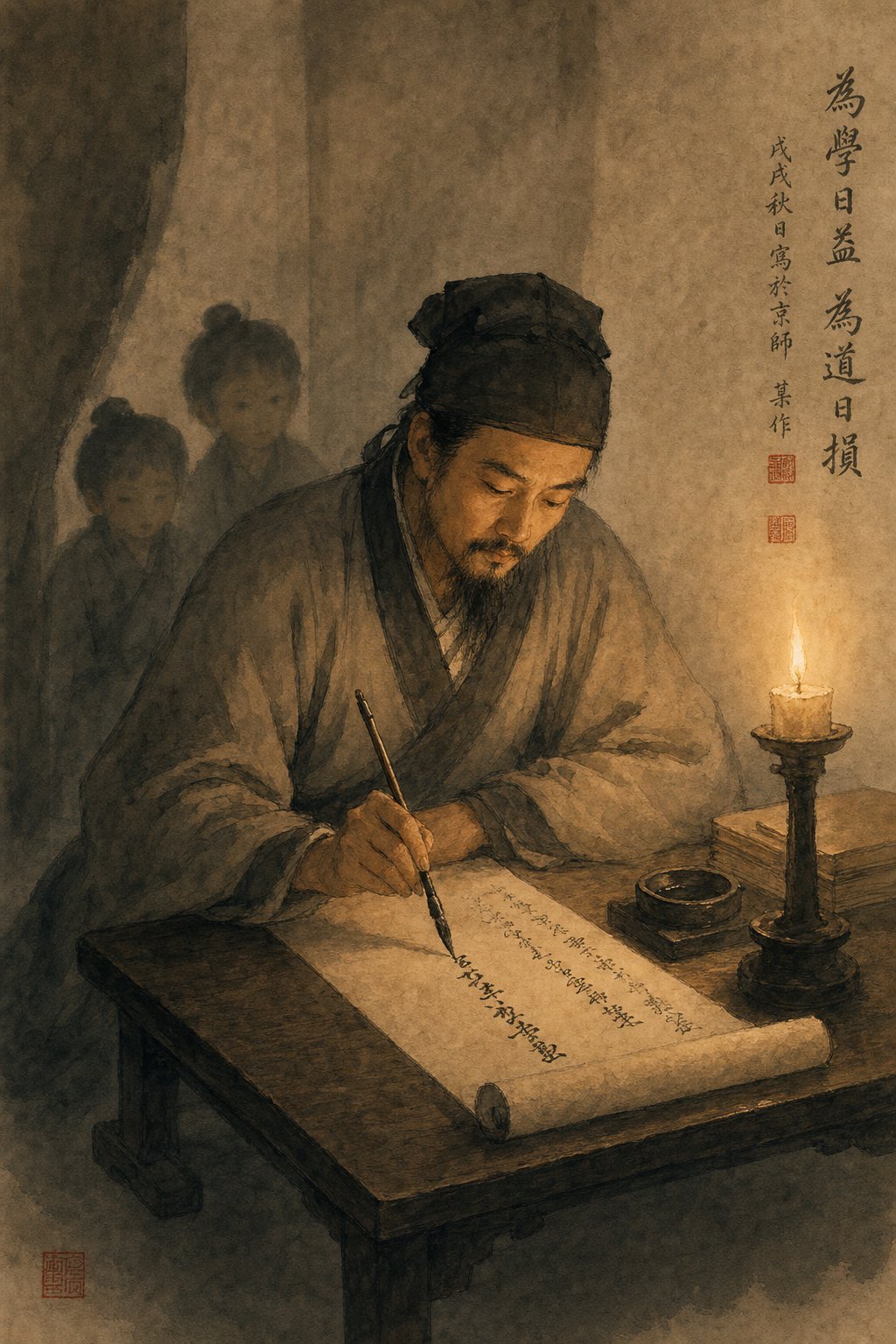
Most parents don't write formal essays explaining why they chose their children's names. Su Xun did. His short prose piece "名二子说" (Naming My Two Sons) is the single most important document for understanding the su shi name meaning. Written when Su Shi was around eleven years old and his younger brother Su Zhe was eight, this essay distills a father's hopes, fears, and hard-won wisdom into fewer than one hundred characters of classical Chinese.
What makes this text remarkable is not just its content but its precision. Su Xun was recognized as one of the Eight Masters of the Tang and Song dynasties, a writer whose diction was both concise and powerful. He brought that same economy of language to the act of naming his sons. Every character in the essay earns its place.
Su Xun's Naming Philosophy in His Own Words
The essay opens by listing the major components of a carriage: the wheel (轮), the spokes (辐), the canopy (盖), and the rear crossboard (轸). Each of these, Su Xun writes, has a clear function. Then he turns to the crossbar: "轼独若无所为者" — the crossbar alone seems to serve no purpose.
Sounds like a strange thing to name your firstborn after, right? But Su Xun immediately reverses the expectation. He continues: "虽然,去轼则吾未见其为完车也" — even so, remove the crossbar and I cannot see how it remains a complete carriage. The logic is deceptively simple. Everything that looks essential is obviously essential. The crossbar's genius is that it appears dispensable while being quietly necessary.
Then comes the line that reveals the father's real anxiety. Su Xun writes: "轼乎,吾惧汝之不外饰也" — Shi, my son, what I fear is that you will not conceal your brilliance. The word 饰 here means to adorn or to mask the exterior. Su Xun wasn't worried his son lacked talent. He was worried the talent was too visible, too unguarded. He wanted Su Shi to learn the crossbar's trick: be structurally vital but visually modest.
The Contrast Between Su Shi and Su Zhe's Names
The essay's second half turns to the younger son, Su Zhe (苏辙). The character 辙 means "wheel rut" — the track left in the ground after a carriage passes. Su Xun's reasoning here is equally sharp but encodes a completely different lesson.
He writes that every carriage in the world follows ruts, yet when people praise a vehicle's accomplishments, the ruts receive no credit. However, when the carriage overturns and the horses die, disaster does not reach the ruts either. The rut exists in the space between fortune and misfortune, participating in neither glory nor catastrophe. Su Xun concludes: "辙乎,吾知免矣" — Zhe, my son, I know you will be spared.
The contrast is striking. For Su Shi, the father encoded a warning: you are brilliant but exposed, so learn to be inconspicuous. For Su Zhe, he encoded a prediction: your cautious nature will keep you safe. One name is aspirational, urging change. The other is descriptive, affirming what the father already observed in his younger son's temperament.
History proved Su Xun remarkably perceptive. The song poet Su Shi lived a turbulent life of political conflict and repeated exile, his outspokenness making him a target. Su Zhe, true to his name, maintained a lower profile and navigated the same political landscape with far less personal damage. The rut outlasted the crossbar in terms of stability, exactly as their father predicted.
A Father's Warning Encoded in a Name
Reading between the lines of this essay, you sense something close to dread. Su Xun wasn't simply playing a literary game. He was a man who had failed the imperial examinations multiple times himself, who understood intimately how the political system rewarded conformity and punished conspicuousness. He watched his elder son's mind develop with what must have been a mixture of pride and alarm.
By the time Su Xun wrote this essay, he had already spent years coaching both sons in history, literature, and philosophy. He could see clearly that Su Shi's intellect was extraordinary, the kind that would produce su shi poems capable of shaking the literary establishment. That brilliance, left unguarded, would inevitably attract envy and political enemies. The name was a talisman against that future.
The crossbar alone seems to serve no purpose. Yet remove it, and the carriage is no longer complete. Shi, my son, what I fear is that you will not conceal your brilliance.
This passage captures the entire emotional architecture of the naming. It is simultaneously a compliment (you are essential), a warning (you appear too exposed), and a plea (learn to be less visible). Su Xun compressed a lifetime of fatherly concern into a single metaphor about a wooden rail.
The essay also reveals something about Su Xun's own intellectual style. He didn't lecture his sons with abstract moral principles. He used concrete, physical objects — a crossbar, a wheel rut — to make philosophical arguments tangible. This approach, grounding ethics in the material world, would later characterize much of Su Shi's own writing. The father's method became the son's method, even if the son never quite managed to follow the father's advice about staying inconspicuous.
What Su Xun could not have predicted was how completely his naming essay would merge with his son's legacy. Today, you cannot study the shi shi poem tradition of the Song dynasty without encountering this text. It has become inseparable from the poet's identity, a prologue written before the story even began. The father's hundred characters of warning now serve as the key that unlocks the meaning behind one of Chinese literature's most famous names.
Yet names, in Song dynasty China, did not exist in isolation. They belonged to a layered system of identity where a man might carry four or five different names across his lifetime, each serving a different social function and revealing a different facet of his character.
The Chinese Naming System Behind Su Shi's Identity
A single person in Song dynasty China could be known by four or more names, each activated in different social contexts. If you've ever been confused by references to "Su Shi," "Su Zizhan," and "Su Dongpo" as though they were different people, you're encountering this system from the outside. Once you understand its logic, the su shi name meaning deepens considerably, because his given name was only one layer in a carefully constructed identity.
The Four Layers of a Chinese Name
Think of it like concentric circles of intimacy and formality. Each naming layer served a distinct social function, and using the wrong one in the wrong context could be either an insult or a declaration of closeness. Here's how the system worked:
- 姓 (xing) — Surname: Given at birth, inherited from the father's lineage, and placed first in Chinese name order. Su Shi's surname is 苏 (Su). It remained constant throughout his life and identified his clan.
- 名 (ming) — Given name: Chosen by parents at birth. Su Shi's ming is 轼 (Shi). Only parents, grandparents, the emperor, or one's teacher could use this name freely. For anyone else to call a man by his ming was either deeply intimate or deeply rude.
- 字 (zi) — Courtesy name: Bestowed around age twenty during the capping ceremony (冠礼), which marked a young man's entry into adulthood. Su Shi's zi is 子瞻 (Zizhan). Once a man received his courtesy name, most peers and acquaintances would address him by surname plus zi as a sign of respect.
- 号 (hao) — Literary name or pseudonym: Self-chosen at any point in life, often reflecting personal philosophy, geographic association, or spiritual practice. A person could adopt multiple hao over a lifetime. Su Shi's most famous hao is 东坡居士 (Dongpo Jushi). When people used someone's hao, they typically dropped the surname entirely.
This layered system meant that the same man could be addressed as Su Shi (by his parents), Su Zizhan (by colleagues and friends), or Dongpo Jushi (by admirers and later generations). Each name carried a different emotional register. People searching for "su si," "shu shi," "su she," or "su shee" online are often encountering phonetic approximations of these various names filtered through different romanization systems or informal transliterations.
Su Shi's Courtesy Name Zizhan Explained
Here's where the naming system reveals its elegance. In Chinese tradition, the courtesy name wasn't random. It was expected to expand upon, complement, or echo the meaning of the given name. The zi functioned as a "further articulation" of the ming, creating a semantic pair that reinforced the parents' original intention.
Su Shi's courtesy name 子瞻 (Zizhan) breaks down as follows: 子 (zi) is an honorific prefix meaning "master" or "one who," and 瞻 (zhan) means "to gaze forward" or "to look ahead with reverence." Together, Zizhan means "one who looks ahead."
The connection to his given name is immediate and physical. What do you do when you lean on the crossbar (轼) of a carriage? You gaze forward (瞻). The courtesy name completes the image that the given name begins. The crossbar is the object; looking ahead is the action performed while gripping it. Father and son's names form a single scene: a traveler leaning on the front rail of a chariot, eyes fixed on the road ahead.
This pairing also deepens the philosophical lesson. If 轼 teaches humility and quiet indispensability, then 子瞻 adds a directive: look forward, maintain perspective, see what's coming. The crossbar isn't just a passive support. It's the place from which you survey the future. Su Xun encoded both restraint and foresight into his son's identity, one name for each quality.
Su Zhe's courtesy name follows the same logic. His ming 辙 (wheel rut) pairs with his zi 子由 (Ziyou), meaning "one who follows the path." The rut is the track; following is the action. Both brothers received names that worked as matched sets, the given name providing the image and the courtesy name providing the motion.
This tight semantic relationship between ming and zi is what makes the Chinese naming system more than bureaucratic layering. It's a form of compressed storytelling. Every time someone addressed Su Shi as "Zizhan," they were unconsciously invoking the carriage, the crossbar, and the act of gazing forward. The name carried its own metaphor wherever it went, reinforcing the father's lesson with every use.
The system's final layer, the hao, operated on entirely different principles. Unlike the ming and zi, which were given by others and bound by tradition, the literary name was self-chosen and self-defined. It reflected not who your parents hoped you would become, but who you believed you already were. For Su Shi, that self-definition would arrive during the darkest period of his life, when exile stripped away every identity except the one he chose for himself.
The Meaning Behind Dongpo Jushi
Su Xun gave his son a name about duty and concealment. Su Shi, decades later, gave himself a name about soil and surrender. The literary name 东坡居士 (Dongpo Jushi) — "Lay Buddhist of the Eastern Slope" — emerged not from a father's careful philosophy but from a man standing in a field during the lowest point of his life, choosing to define himself by the ground beneath his feet rather than the court that had cast him out.
This self-chosen identity would eventually eclipse the birth name entirely. Ask most Chinese speakers who "Su Dongpo" is, and they'll answer immediately. Ask about "Su Shi," and some will pause. The literary name became the man. Understanding why requires looking at the crisis that created it.
The Huangzhou Exile That Created Dongpo
In 1079, Su Shi was arrested in what became known as the Crow Terrace Poetry Trial (乌台诗案). Political enemies accused him of embedding criticism of the emperor and the reformist government in his poems. He spent over a hundred days in prison, uncertain whether he would be executed. When the sentence finally came, it was exile rather than death: banishment to Huangzhou (in present-day Hubei province) as a minor official with no real authority and almost no salary.
Imagine arriving in a provincial backwater, stripped of rank, income, and reputation. Su Shi was forty-three years old. He had been one of the most celebrated scholar-officials in the empire. Now he could barely feed his family. As Christie's specialist Sophia Zhou explains, "When he came out [of prison] in 1080 he was a different man. He was more introspective and started to shy away from politics, and began instead to contemplate on life and philosophy."
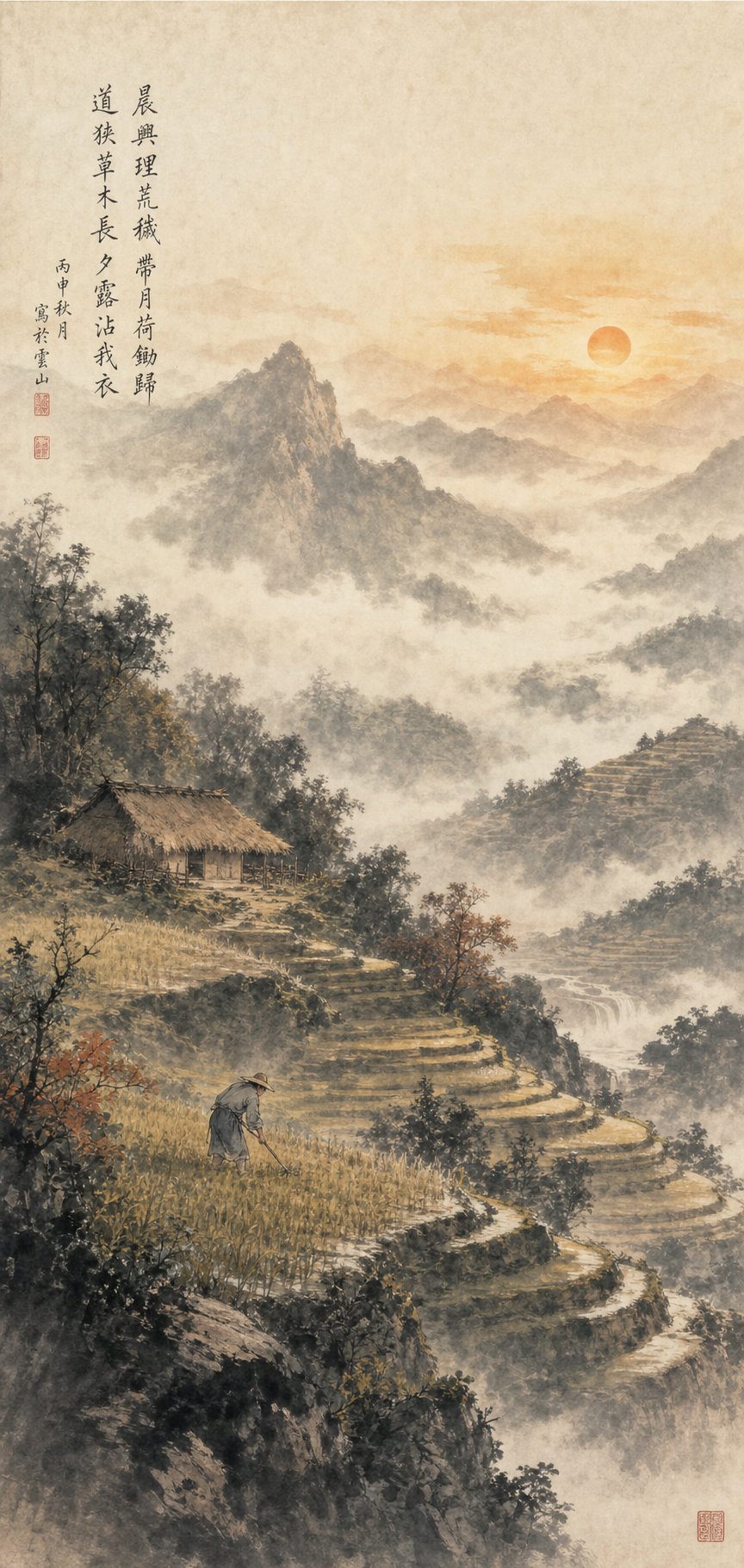
To survive materially, Su Shi obtained a plot of abandoned military land on the eastern slope of a hill outside Huangzhou. He cleared it himself, planted rice and vegetables, and became, for the first time in his life, a farmer. The physical labor was real. The poverty was real. And from this reality, a new identity took root.
The Song dynasty scholar Ye Mengde recorded in his work Shilin Yanyu: "Su Zizhan was exiled to Huangzhou and styled himself 'Dongpo Jushi.' Dongpo was the place where he lived." The name was geographic before it was philosophical. It pointed to a specific hillside, a specific patch of earth that kept him alive when the empire wanted him forgotten.
What Dongpo Jushi Tells Us About His Transformation
Break the name into its components and you'll see how radically it departs from the identity his father constructed:
- 东 (dong) — East, the direction of sunrise and renewal.
- 坡 (po) — Slope or hillside. A piece of terrain, not a manufactured object.
- 居士 (jushi) — A lay Buddhist practitioner. Someone who follows the dharma without taking monastic vows or abandoning worldly life entirely.
Compare this to 轼, the crossbar. The birth name references a human-made object within a system of transportation and social ritual. It speaks of function, duty, and one's role within a larger machine. Dongpo references raw landscape and spiritual practice. It speaks of acceptance, rootedness, and identity drawn from where you stand rather than what you do for others.
The shift is profound. Su Xun's naming encoded humility-through-duty: be essential but invisible within the machinery of state. Su Dongpo's self-naming encoded humility-through-acceptance: find yourself in the earth, in the slope, in the daily practice of being present. One name looks outward toward society. The other looks inward toward the self.
There's also a literary ancestor behind the choice. Su Shi deeply admired the Tang dynasty poet Bai Juyi (白居易), who had been exiled to Zhongzhou centuries earlier and also lived near a place called "Eastern Slope." Bai Juyi wrote poems about planting trees and walking his own dongpo. Song dynasty scholar Zhou Bida noted that Su Shi "did not lightly admire others, but uniquely revered Bai Juyi," and that the Dongpo name "must have originated from Bai Juyi's Zhongzhou writings." By adopting the same toponym, Su Shi was placing himself within a lineage of exiled poets who transformed banishment into creative freedom.
Why the World Remembers Him as Su Dongpo
Here's the paradox: the name born from exile became more famous than the name born from privilege. Su Dongpo is how most people encounter this poet for the first time. Why did the literary name win?
Part of the answer is practical. During the Huangzhou exile, Su Shi produced some of his greatest work. The two "Red Cliff" prose poems, the Cold Food Observance calligraphy (widely considered his finest surviving brushwork), and dozens of poems that would define Song dynasty literature all emerged from this period. The name Dongpo became inseparable from the creative peak it accompanied.
Part of the answer is emotional. "Dongpo" carries warmth and earthiness that "Shi" does not. A crossbar is abstract, intellectual, requiring an essay to explain. An eastern slope is immediate, sensory — you can picture the hillside, feel the morning sun on it. The name invites intimacy in a way that a carriage component never could.
And part of the answer is cultural. Su Dongpo became a folk figure, not just a literary one. His name attached itself to recipes (dongpo pork), to landmarks, to anecdotes about wit and resilience. The self-chosen name carried a story within it — exile, farming, reinvention — that resonated with ordinary people across centuries. You didn't need to read classical Chinese to understand what "the guy who named himself after his hillside farm" meant about a person's character.
The transformation from Su Shi to Su Dongpo mirrors a transformation in the man himself. The crossbar's lesson was about concealing brilliance within a system. The eastern slope's lesson was about finding brilliance outside the system entirely. Su Xun feared his son's visibility would destroy him. In a sense, it did — it destroyed the courtier. But from that destruction, something more durable emerged: a poet defined not by his role in the imperial machine but by his relationship to the land, to Buddhist practice, and to his own creative spirit.
Yet the tension between these two identities — the dutiful crossbar and the liberated farmer-poet — didn't resolve cleanly. It played out across Su Shi's entire biography, shaping his political choices, his exiles, and the way later generations understood the relationship between a name's promise and a life's reality.
How Su Shi's Name Shaped His Life Story
A father names his son after the most inconspicuous part of a carriage. That son grows up to become one of the loudest, most visible, most politically dangerous voices in the entire Song dynasty. If Su Xun's naming was a prayer for restraint, then Su Shi's life was the universe's answer: prayer denied.
The dramatic irony here isn't subtle. It runs through every major episode of Su Shi's biography like a fault line. The crossbar was supposed to teach him concealment. Instead, he became a man who could not stop speaking, could not stop writing, could not stop making himself a target. The su shi name meaning encoded a lesson about invisibility. The man who carried that name lived in permanent, blazing visibility.
The Tension Between Name and Nature
Think of Su Shi's career as a decades-long argument with his father's wish. Su Xun wanted a son who would be structurally essential but visually modest. What he got was a polymath whose brilliance announced itself in every room, every court session, every poem. At nineteen, Su Shi passed the highest-level civil service examinations with such distinction that the examiner, Ouyang Xiu, reportedly said he should "yield the path" to this young man's talent. That's not crossbar behavior. That's the entire carriage catching fire.
The tension wasn't lost on Su Shi himself. His su shi poetry often circles themes of restraint and release, duty and freedom, the desire to withdraw and the inability to stay silent. In his famous mountain poem "Written on the Wall at West Forest Temple," he writes about being unable to see the true shape of a mountain while standing inside it. The metaphor works for his own life: he could see the wisdom of his father's naming, but he could never achieve the distance needed to embody it.
Political Visibility and the Lesson of the Crossbar
The specific moments where Su Shi violated his name's instruction read like a catalog of principled self-destruction. When Wang Anshi's New Policies swept through the Song government in the 1070s, Su Shi didn't quietly disagree. He wrote memorials directly criticizing the reforms. He composed poems satirizing their implementation. He made his opposition legible to everyone, including his enemies.
The consequences arrived in 1079 with the Crow Terrace Poetry Trial. Political opponents combed through his verses, extracting lines they claimed insulted the emperor and mocked state policy. Christie's art critic Alastair Sooke notes that Su Shi was arrested and jailed, with his "private verses" that "mildly satirised the reformist movement" used as evidence against him. Over a hundred days in prison, facing possible execution, all because he could not do what the crossbar does: remain present without drawing attention.
Even after his first exile, the pattern repeated. Recalled to the capital in 1086, Su Shi almost immediately began criticizing the conservative faction that had restored him, because he found their policies equally flawed. He attacked both sides. The crossbar, remember, leans toward neither left nor right. But Su Shi's version of neutrality wasn't quiet balance. It was loud opposition to everyone, a kind of poetry on sunshine and storm alike, praising and condemning with equal force regardless of which political wind was blowing.
His second banishment in 1094 sent him to Huizhou and then Danzhou, on Hainan Island. During the Song dynasty, this remote, malaria-ridden posting was essentially a death sentence. He survived it, but the message was clear: the empire had tried repeatedly to make him invisible, and he had refused every time.
How Exile Fulfilled the Name's Promise
Here's where the story turns. In exile, stripped of office and audience, Su Shi finally became what his father named him to be: essential yet removed from view. He was no longer part of the visible machinery of power. He held no meaningful position. He influenced no policy. Yet his writing during these periods — the Red Cliff poems, the cold mountain poems of Hainan, the calligraphy that scholars now consider his finest — became the most enduring contributions to Chinese culture that any Song dynasty figure produced.
The parallel is almost too neat. The crossbar is removed from the carriage's visible action. It doesn't turn wheels or bear loads. But without it, the vehicle is incomplete. Su Shi in exile was removed from political action. He didn't govern or legislate. But without the work he produced during banishment, Song dynasty literature is incomplete. The name's prophecy fulfilled itself through the very punishment meant to silence him.
In exile, Su Shi finally embodied the crossbar: invisible to the machinery of state, yet essential to the completeness of Chinese civilization.
His calligraphy from the Huangzhou period captures this transformation physically. The Cold Food Observance, written in 1082, is widely regarded as the third greatest work of Chinese calligraphy in history. The brushstrokes convey what Christie's specialist Kim Yu describes as "a sense of desolation" — lines that "may seem simple and yet they are incredibly varied and expressive." This is crossbar energy translated into ink: structurally vital, visually understated, carrying enormous weight without announcing it.
Su Shi's poetry on sunshine breaking through after storms, his philosophical acceptance of hardship, his ability to find joy in farming and cooking and friendship during the darkest years — all of this reads like a man finally learning the lesson encoded in his name. Not through obedience, but through suffering. Not by choosing humility, but by having visibility stripped away until only the essential remained.
The irony is that this very invisibility made him more famous than any court position ever could have. The crossbar, once removed from the carriage of state, became the most studied, most copied, most beloved piece of the entire vehicle. Su Xun's naming worked, just not in the way he intended. His son became indispensable to Chinese culture precisely because he was dispensed with by Chinese politics.
This personal drama played out against a broader intellectual backdrop. Su Shi's naming wasn't an isolated act of parental creativity. It belonged to a Song dynasty culture where names functioned as philosophical arguments, where the act of naming was itself a literary genre, and where the relationship between language and moral identity was taken with a seriousness that modern naming practices can barely imagine.
Song Dynasty Naming Culture and Intellectual Context
Su Xun didn't invent the idea of encoding philosophy into a child's name. He inherited it from a culture that treated naming as a moral act with real consequences. The Song dynasty (960-1279) was the period when this practice reached its intellectual peak, driven by a Confucian revival that insisted every aspect of daily life — including what you called your children — should reflect ethical reasoning.
Names as Moral Philosophy in Song China
The Neo-Confucian movement that flourished during the Song emphasized self-cultivation as a path to both personal fulfillment and social harmony. Scholar-officials like Fan Zhongyan (989-1052) and Sima Guang (1019-1086) modeled lives where private virtue and public service were inseparable. In this intellectual climate, naming a child wasn't a casual decision. It was a declaration of values, a first act of moral education performed before the child could even understand language.
Earlier dynasties approached naming differently. Shang dynasty rulers used calendrical stems and branches (天干地支) as names, reflecting cosmological rather than ethical thinking. Han dynasty names favored bold, expansive characters like "勇" (courage) and "霸" (supremacy), mirroring an empire in confident expansion. The Wei-Jin period saw names filled with Daoist mysticism — characters like "玄" (mystery) and "道" (the Way) proliferated as metaphysical philosophy became fashionable.
Song dynasty naming broke from all of these patterns. It was neither cosmological nor martial nor mystical. It was argumentative. Parents constructed names as compressed ethical propositions. Zhu Xi (1130-1200), the great Neo-Confucian synthesizer, organized his family's names across five generations using the five elements (wood, fire, earth, metal, water) in sequence — each generation's names carrying radicals that corresponded to the next element in the cycle. This wasn't superstition. It was a visible commitment to cosmic order expressed through chinese writing friendship between generations, each name linking parent to child to grandchild in an unbroken chain of meaning.
The calligraphy masters and mountain poetry writers of the Song shared this sensibility. When Ouyang Xiu chose his literary name "Six-One Layman," he was making an argument about simplicity. When Su Shi's own teacher composed prose, every word carried deliberate weight. Language, in this culture, was never merely functional. It was always also ethical.
The Literary Tradition of Naming Essays
What makes Su Xun's "Naming My Two Sons" especially significant is that it belongs to a recognized literary genre. Writing formal essays explaining your children's names was an established practice among Song intellectuals. These weren't private diary entries. They were public documents, circulated among peers, read as both personal statements and literary performances.
Su Xun belonged to the Ancient Prose Movement (古文运动), a literary reform effort that prized clarity, precision, and logical structure over the ornamental parallel prose that had dominated earlier centuries. For writers in this tradition, every sentence needed to earn its place. Applying that same rigor to the act of naming meant that a child's name became a miniature essay in itself — an argument compressed into one or two characters, then unpacked in the accompanying prose.
Understanding the su shi name meaning requires understanding that Song dynasty names were arguments, not just identifiers. They were philosophical positions a person carried for life.
This context transforms how we read Su Xun's essay. It wasn't merely a father's private hope. It was a public intellectual making a public argument about virtue, visibility, and the proper relationship between talent and restraint. The crossbar metaphor worked because Song readers expected names to function this way — as condensed moral reasoning that could be debated, admired, and measured against the life that followed.
That measuring never stopped. Across centuries, readers have held Su Shi's life against his name and asked whether the argument held. But the question itself has traveled far beyond Song dynasty literary circles. Today, Su Shi's various names circulate globally, filtered through different writing systems, romanization schemes, and cultural contexts that would have been unimaginable to the father who sat down to explain why he named his son after a wooden rail.
Su Shi's Names in the Modern World
A thousand years after his death, Su Shi's names still circulate through kitchens, museums, classrooms, and search engines worldwide. The poet who was named after a carriage crossbar now lends his identity to a pork dish, a calligraphic tradition, and a global web of transliterations that can confuse anyone encountering him for the first time.
Su Shi's Name in Modern Chinese Culture
The most visceral way most people encounter Su Shi's legacy is through food. Dongpo pork (东坡肉) — braised pork belly cut into glossy, caramelized cubes — appears on menus across China and in Chinese restaurants worldwide. The dish is named after his literary pseudonym, linking his exile-era identity to a culinary tradition that has evolved dramatically since his time. Su Shi's original version, as described in his poem "Ode to Pork," was simply slow-braised meat with minimal seasoning. The modern version — five-flower pork cut into mahjong-sized blocks, tied with string, braised in soy sauce and Shaoxing wine — emerged only in the late Qing dynasty. Yet the name stuck, because Su Dongpo's cultural gravity transforms a simple braise into a story. His food poetry, particularly the "Ode to Pork" written during the Huangzhou exile, gave later chefs both a recipe and a legend to build upon.
His calligraphy carries similar weight. The Cold Food Observance (寒食帖), written during exile in 1082, ranks among the three greatest surviving works of Chinese calligraphy. Scholars studying the distinctive o in calligraphy strokes — the rounded, flowing forms that characterize Su Shi's brush style — recognize his hand as uniquely expressive, blending technical mastery with emotional spontaneity. His name appears on scrolls in major museums from Taipei's National Palace Museum to collections in Japan and the United States.
Romanization Variants and Their Origins
If you've searched for this poet online, you've likely encountered a confusing array of spellings. Each one traces back to a different system for converting Chinese sounds into the Latin alphabet. The core problem is simple: Chinese characters carry meaning that no romanization preserves. Whether you write "Su Shih" or "Su Tung-po," you lose the crossbar, the eastern slope, and the father's essay. Only the original characters retain the full su shi name meaning.
Here are the most common variants you'll encounter:
- Su Shi — Hanyu Pinyin (the current international standard, adopted by the PRC in 1958 and by the ISO in 1982)
- Su Shih — Wade-Giles romanization, developed by British scholars in the 1860s-1890s and still seen in older English-language scholarship
- Su Tung-po / Su Tung Po — Wade-Giles rendering of his literary name Su Dongpo, common in mid-20th century translations like Burton Watson's Selected Poems of Su Tung-p'o
- Su Dong Po / Su Dongpo / Sudong Po — Pinyin-based informal spellings of his literary name, frequently used in restaurant names and popular media
- Su Dong — Abbreviated informal reference, sometimes seen in casual contexts
- су ши — Cyrillic transliteration used in Russian-language scholarship on Chinese literature
The Wade-Giles system, which dominated English-language sinology for nearly a century, accounts for most of the confusion. It uses apostrophes to distinguish aspirated from unaspirated consonants — a distinction that disappears when publishers drop the marks. "Shih" becomes the Wade-Giles spelling because the system renders the pinyin "sh" sound differently. Meanwhile, "Tung-po" reflects Wade-Giles rules where pinyin "d" becomes "t" and "ong" becomes "ung."
You'll find these variants scattered across library catalogs, restaurant signage, academic papers, and cultural curricula from Beijing to Boston. A Dongpo pork recipe in San Francisco might credit "Su Dong Po." A university syllabus in London might list "Su Shih." A documentary in Moscow references "су ши." They all point to the same man — the one whose father hoped he'd be as quiet as a crossbar, and whose names now echo louder than almost any other figure in Chinese literary history.
Frequently Asked Questions About Su Shi's Name
1. What does Su Shi mean in Chinese?
Su Shi (苏轼) combines the surname Su (苏), meaning 'revive' or referring to the perilla plant, with the given name Shi (轼), which refers to the horizontal crossbar at the front of an ancient Chinese chariot. His father Su Xun chose this name to represent quiet indispensability — the crossbar appears removable, yet without it the carriage is incomplete. It was a philosophical lesson urging his brilliant son to be essential but not showy.
2. Why is Su Shi also called Su Dongpo?
Su Dongpo (苏东坡) is Su Shi's self-chosen literary name, adopted during his exile to Huangzhou in 1080. After being stripped of rank following the Crow Terrace Poetry Trial, he farmed a plot on the eastern slope (东坡) of a hill to survive. He combined this geographic identity with his Buddhist practice to create 东坡居士 (Dongpo Jushi), meaning 'Lay Buddhist of the Eastern Slope.' This name reflected his personal transformation from ambitious courtier to contemplative poet-farmer.
3. What is the difference between Su Shi and Su Zhe's names?
Su Xun named his two sons with contrasting philosophical lessons. Su Shi's name (轼, crossbar) warned against being too visible despite being essential — a caution for his outspoken elder son. Su Zhe's name (辙, wheel rut) predicted safety through caution, since ruts share neither the glory nor the disaster of the carriage above them. History confirmed the father's insight: Su Shi faced repeated political persecution while Su Zhe navigated the same era with far less personal damage.
4. What does Su Shi's courtesy name Zizhan mean?
Su Shi's courtesy name 子瞻 (Zizhan) means 'one who looks ahead' or 'one who gazes forward.' It directly connects to his given name through the carriage metaphor: the crossbar (轼) is the rail passengers lean on to look ahead (瞻). In Chinese naming tradition, the courtesy name was expected to complement or expand upon the given name, and Zizhan completes the physical image that Shi begins — a traveler gripping the front rail while surveying the road ahead.
5. Why are there so many different spellings of Su Shi's name in English?
The multiple spellings — Su Shi, Su Shih, Su Tung-po, Su Dong Po — result from different romanization systems used to convert Chinese characters into Latin letters. 'Su Shi' uses modern Hanyu Pinyin (the current international standard), while 'Su Shih' uses the older Wade-Giles system common in pre-1980s scholarship. 'Su Tung-po' is the Wade-Giles rendering of his literary name Su Dongpo. None of these spellings preserve the original meaning embedded in the Chinese characters.