How Chinese Girl Names Actually Work
Imagine browsing a list of unique Chinese girl names and falling in love with one spelled "Li." You picture it on a birth certificate, say it aloud, and feel satisfied. But here's the thing: you haven't actually chosen a name yet. You've chosen a sound. And in Chinese, a single sound can carry dozens of completely different identities depending on which character you write.
Before you can meaningfully select unique chinese girl names with meaning, you need to understand the mechanics behind how these names function. Chinese naming doesn't work like English naming. There's no fixed registry of pre-made names to pick from. Instead, parents build a name character by character, assembling meaning like a craftsperson selecting materials.
How Chinese Names Are Structured
A Chinese name follows a consistent formula: surname first, given name second. The surname is typically one character (occasionally two), inherited from the father's family line. The given name that follows is one or two characters chosen specifically for that child.
So a full name like Wang Meiling breaks down as:
- Wang (王) - the family surname
- Meiling (美玲) - the two-character given name, where each character carries independent meaning
This structure means the given name is where all the creative and cultural weight lives. Parents aren't selecting from a catalog. They're composing meaning through deliberate character pairing, which is why unique chinese girl names with characters can feel so personal and intentional.
Why Every Character Choice Matters
Here's where things diverge sharply from Western naming conventions. In English, the name "Grace" has one spelling and one general meaning. In Chinese, the romanized spelling is just a phonetic approximation. The real name is the character itself, the hanzi, which carries meaning, visual form, tonal quality, and cultural resonance all at once.
A single pinyin spelling like "Li" can map to dozens of different characters: 丽 (beautiful), 莉 (jasmine), 理 (reason), 力 (strength), 立 (to stand), 黎 (dawn). Each is a completely different name with a completely different identity. The character is the naming decision, not the sound.
This is why two girls both called "Mei" in English might have entirely unrelated names in Chinese. One could be 美 (beauty), another 梅 (plum blossom), and a third 玫 (rose). The pinyin is identical, but the names share nothing in common beyond pronunciation.
Chinese parents don't just pick a name that sounds pleasant. They select characters whose individual meanings complement each other, whose tonal patterns flow naturally when spoken aloud, and whose visual complexity looks balanced when written. A name is simultaneously heard, read, and seen, and it needs to work on all three levels.
This layered approach is exactly what makes the search for genuinely unique chinese girl names so rich and so easy to get wrong if you're only looking at romanized lists. The real depth lives in the characters themselves, and understanding how to read and evaluate them is the essential first step.
Understanding Characters, Pinyin, and Pronunciation
So you've found a unique Chinese girl name in English on a baby name website. It's spelled out in neat Roman letters, maybe "Mei" or "Xin" or "Lan." Sounds lovely. But without knowing which character that spelling represents, you're essentially holding an empty envelope. The address is missing. Pinyin, the romanization system for Mandarin Chinese, was designed as a pronunciation guide, not as a replacement for the characters themselves. When you're choosing unique chinese girl names in chinese characters, the character is the name. The pinyin is just the sound it makes.
Characters Versus Pinyin and Why It Matters
Chinese is not a phonetic language. The written characters don't correspond to an alphabet the way English letters do. Instead, each character is a self-contained unit of meaning and sound. Pinyin was created specifically to help people learn Mandarin pronunciation by transcribing characters into Latin letters. It's a tool, not the thing itself.
Why does this matter for naming? Because when you see a unique chinese girl name written only in pinyin, you're looking at an incomplete picture. The spelling "xin" could be 心 (heart), 新 (new), 欣 (joyful), 馨 (fragrant), or 信 (trust). Each character looks different, means something different, and carries different cultural weight. A name list that only gives you romanized spellings is like a paint-by-numbers kit with no colors included.
Here's a practical illustration of how much ambiguity pinyin alone creates:
| Pinyin | Character | Meaning | Tone |
|---|---|---|---|
| li | 丽 | Beautiful, elegant | 4th (li) |
| li | 莉 | Jasmine | 4th (li) |
| li | 黎 | Dawn, daybreak | 2nd (li) |
| li | 理 | Reason, logic | 3rd (li) |
| yun | 韵 | Charm, rhyme | 4th (yun) |
| yun | 云 | Cloud | 2nd (yun) |
| yun | 蕴 | To contain, hidden depth | 4th (yun) |
Every row shares the same basic spelling, yet each represents a completely different name. This is why seeing unique chinese girl names in english letters alone can be misleading. The tone mark and the character together form the real identity of the name.
How Tones Work and Why They Change Everything
Mandarin Chinese has four main tones plus a neutral tone. Each tone gives a syllable a distinct pitch contour, and changing the tone changes the meaning entirely. This isn't like English intonation, where a rising pitch might signal a question. In Chinese, tone is baked into the word itself.
A quick framework for reading tone marks in pinyin:
- First tone (macron: a) - high and level, like holding a steady musical note
- Second tone (acute accent: a) - rising, like the pitch of your voice when asking "what?"
- Third tone (caron: a) - dips low then rises, a scooping motion
- Fourth tone (grave accent: a) - sharp and falling, like a firm command
When you see a name written as "ma," the tone mark tells you whether it means mother (first tone), hemp (second tone), horse (third tone), or scold (fourth tone). For naming purposes, this means two names that look identical without tone marks are actually different names entirely. Always look for the tone mark when evaluating any unique chinese girl name in pinyin form.
Mandarin and Cantonese Pronunciation Differences
Family dialect adds another layer. Mandarin uses the pinyin romanization system, while Cantonese uses Jyutping, a standardized system developed by the Linguistic Society of Hong Kong. The same character will sound different depending on which dialect your family speaks, and this directly affects how a name feels when spoken aloud.
Consider the character 美 (beautiful). In Mandarin pinyin, it's "mei3." In Cantonese Jyutping, it's "mei5." The tonal systems themselves differ: Mandarin has four tones while Cantonese has six. Research on Chinese name romanization found that standardized systems like Jyutping and Pinyin achieved over 95% recall in accurately representing names, compared to just 68.8% for non-standardized romanization. This gap highlights how much information gets lost when tonal detail is stripped away.
For families choosing a name, dialect matters practically. A name that flows beautifully in Mandarin might feel clunky in Cantonese, or vice versa. If grandparents speak Cantonese while parents primarily use Mandarin, testing the name in both pronunciations helps ensure it sounds natural across family conversations.
If you don't speak Chinese yourself, the most important takeaway is this: always confirm the specific character, not just the romanized spelling. Ask a native speaker to pronounce it in the relevant dialect. Listen for how the tones rise and fall. A name lives in its sound as much as its meaning, and getting both right is what separates a thoughtful choice from a well-intentioned guess.
Beautiful Nature and Elegance Names
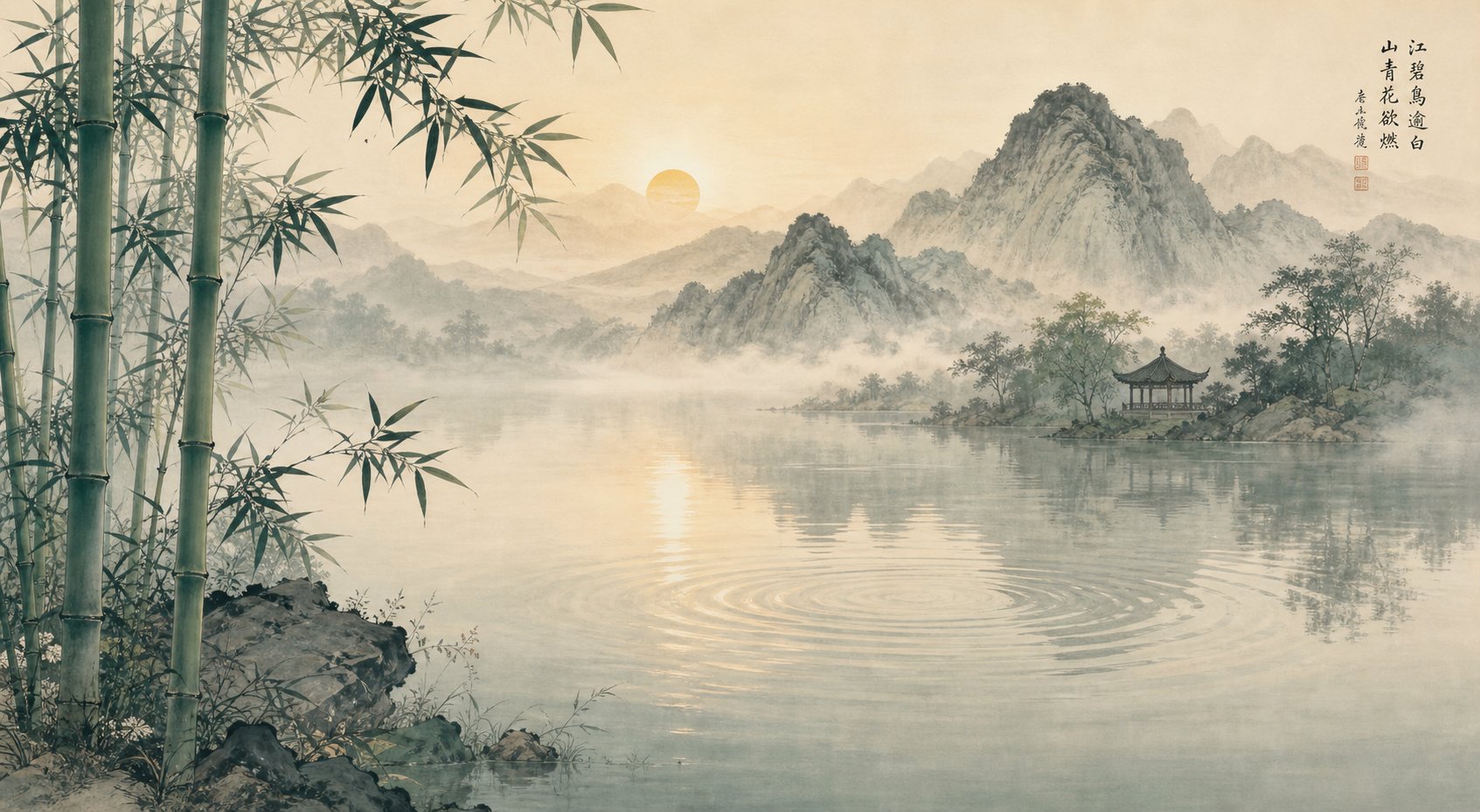
Knowing how characters and tones work gives you the tools to evaluate names properly. The next question is: which names are actually worth considering? Nature-inspired names dominate Chinese naming tradition for good reason. The natural world has served as a metaphor for human virtue in Chinese culture for thousands of years. Jade represents moral integrity. Orchids symbolize refinement. Flowing water suggests adaptability and quiet persistence. These aren't decorative choices. They're philosophical statements compressed into one or two characters.
But here's the catch. Many names that appear on English-language lists as "rare" or "unique" are anything but. Names like Mei (美, beautiful) or Lan (兰, orchid) are the Chinese equivalents of "Sarah" or "Emma." They're lovely, but they won't turn any heads in a Chinese classroom. If you're genuinely searching for beautiful unique chinese girl names, you need to look past the surface-level lists and into less commonly used characters and pairings.
Nature-Inspired Names With Deep Cultural Roots
The names below draw from natural imagery but use characters and combinations that are genuinely uncommon in contemporary China. Each entry includes the character, pinyin with tone marks, and the cultural context that gives the name its weight.
- 汀 (ting1) - A small sandbar where water meets land. This character evokes the quiet edge of a river, a liminal space between water and shore. It appears in classical poetry to describe serene, untouched landscapes. Unlike the common 婷 (ting2, graceful), this character is rarely used in modern names, making it a genuinely rare choice that carries imagery of stillness and natural beauty.
- 漪 (yi1) - Ripples on water. Not the wave itself, but the gentle concentric circles that spread outward when something touches a still surface. This character suggests subtle influence and quiet elegance. It's visually complex (14 strokes), which gives it a sense of weight on paper, and its meaning implies beauty that radiates outward without force.
- 琬 (wan3) - A type of jade with a smooth, rounded top. While jade characters are common in Chinese girl names, 琬 specifically refers to a ceremonial jade piece described in ancient texts. It's far less frequently used than 玉 (yu4, jade) or 瑶 (yao2, precious jade), yet carries deeper historical resonance tied to ritual objects and moral completeness.
- 霁 (ji4) - The clearing sky after rain. This character captures a specific moment in nature: the instant clouds part and light returns. It implies renewal, hope emerging from difficulty, and the beauty of contrast. Rarely seen in everyday naming, it's a pretty unique chinese girl name that carries emotional narrative within a single character.
- 蘅 (heng2) - A fragrant herb (Asarum) that grows in mountain valleys. Referenced in classical literature including the poetry collection Chuci (Songs of Chu), this plant symbolizes hidden virtue, beauty that doesn't announce itself. The character is uncommon enough that most Chinese people would pause to appreciate its literary quality.
- 澜 (lan2) - Large, powerful waves. Unlike the gentle 涟 (lian2, ripples), 澜 suggests the full force of open water. It's a name that pairs natural beauty with a sense of magnitude and strength. The character appears in the compound 波澜 (bo1lan2), meaning "great waves," often used metaphorically for a life of significance and depth.
- 筠 (yun2) - The smooth skin of bamboo. Not bamboo itself (竹, zhu2), but specifically the outer membrane, the part that's resilient, flexible, and luminous. This distinction matters. It suggests someone who embodies bamboo's famous qualities of bending without breaking, but with an added layer of refinement and surface grace.
What Makes These Names Genuinely Rare
The difference between a name that sounds exotic to English speakers and one that's actually uncommon in China comes down to usage data and character frequency. Names built from high-frequency characters like 美, 丽, 花, or 玉 appear in millions of registrations across China. They're the naming equivalent of well-worn paths.
The rare unique chinese girl names listed above use characters that fall outside the top naming choices for several reasons. Some, like 霁 and 蘅, belong primarily to literary vocabulary rather than everyday speech. Others, like 汀 and 漪, describe specific natural phenomena rather than broad concepts, giving them a precision that most parents don't reach for. And characters like 琬 reference objects from classical antiquity that require cultural knowledge to fully appreciate.
Rarity alone doesn't make a name good. What makes these selections work is that they're rare and culturally grounded. Each one connects to a tradition of nature imagery in Chinese art and literature that spans centuries. They reward recognition. A Chinese reader encountering these names would understand them immediately but also register that the parents chose with care and literary awareness.
This intersection of natural beauty and intellectual depth is where the strongest Chinese names live. And for parents drawn to names that carry narrative and philosophy rather than simple prettiness, classical literary sources offer an even deeper well to draw from.
Unique Chinese Names for Girls With Meaning From Classical Texts
Natural imagery gives a name beauty. Literary sources give it authority. In Chinese naming tradition, drawing a name from a classical poem or philosophical text signals something specific: that the parents possess cultural depth and want their child's name to carry intellectual weight. It's the difference between admiring a landscape and quoting the poet who immortalized it. Both appreciate beauty, but one demonstrates a relationship with tradition that Chinese culture deeply respects.
The richest sources for unique chinese girl names and meanings are texts that have shaped Chinese thought for millennia. The Shijing (Book of Songs), compiled around the 6th century BCE, is China's oldest poetry anthology. Tang Dynasty verse represents the golden age of Chinese literary expression. And Daoist philosophy offers names rooted in concepts of harmony, flow, and quiet power. Parents who draw from these sources aren't just naming a child. They're placing her within a literary lineage.
Names From Classical Poetry and the Shijing
The Shijing contains 305 poems covering love, nature, ritual, and daily life. Its language is compressed, musical, and rich with imagery that has echoed through Chinese culture for over two thousand years. Names sourced from these poems carry instant recognition among educated Chinese speakers, a subtle nod that rewards those who catch the reference.
"The peach tree is young and elegant, its leaves luxuriant and full." - Shijing, "Tao Yao" (桃夭)
- 蓁 (zhen1) - Source: Shijing, "Tao Yao" (桃夭). The original line "其叶蓁蓁" describes leaves growing thick and abundant. This character means luxuriant, flourishing, full of life. It's a name that carries the energy of a young tree in full leaf, suggesting vitality and natural abundance. Rarely used in modern naming, it immediately signals familiarity with classical poetry.
- 湄 (mei2) - Source: Shijing, "Jian Jia" (蒹葭). From the famous line "所谓伊人,在水之湄," meaning "the one I seek stands at the water's edge." This character refers specifically to the bank where water meets land. As a name, it evokes longing, beauty glimpsed across distance, and the romantic atmosphere of one of China's most beloved poems.
- 舒窈 (shu1 yao3) - Source: Shijing, "Yue Chu" (月出). The poem describes a graceful figure in moonlight with the phrase "舒窈纠兮." 舒 means unhurried and at ease, while 窈 means deep and graceful. Together they suggest elegance without effort, a composure that comes naturally rather than being performed.
"In the empty mountain after fresh rain, the weather turns to autumn evening." - Wang Wei, "Autumn Evening in the Mountain" (山居秋暝)
- 暝 (ming2) - Source: Tang Dynasty, Wang Wei. This character means dusk or the dimming of light as evening settles. Wang Wei used it to describe the quiet beauty of mountain twilight. As a name, it carries atmospheric stillness and the contemplative mood of Tang landscape poetry. It's unusual enough to surprise, yet grounded in one of China's most celebrated poets.
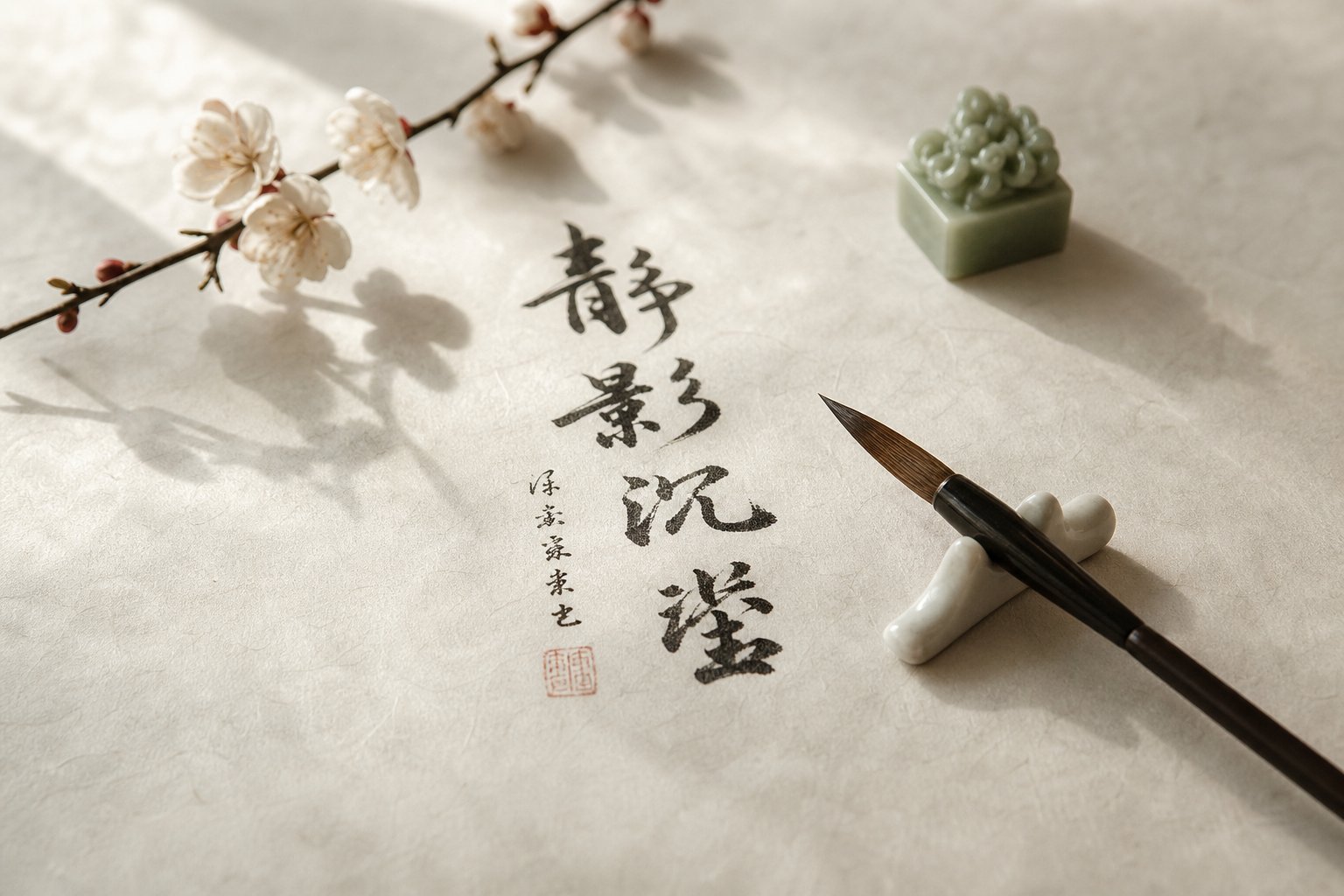
- 疏影 (shu1 ying3) - Source: Song Dynasty, Lin Bu's poem on plum blossoms. The line "疏影横斜水清浅" describes sparse shadows of plum branches falling across shallow water. 疏 means sparse or scattered, 影 means shadow. This two-character name captures the aesthetic of less-is-more, beauty defined by what's absent as much as what's present. It's a name with visual precision and poetic restraint.
Philosophical and Historical Names
Daoist philosophy offers a different register for naming. Where poetry gives imagery, philosophy gives principle. These names carry conceptual weight, connecting a child to ideas about how to move through the world with wisdom and grace.
"The highest good is like water. Water benefits all things and does not compete." - Laozi, Dao De Jing, Chapter 8
- 若水 (ruo4 shui3) - Source: Dao De Jing. From the iconic passage "上善若水," meaning the greatest virtue resembles water. This name literally means "like water" and carries the full philosophical weight of Daoist thought: adaptability, nourishing others without seeking recognition, finding the lowest place and making it powerful. It's among the most intellectually rich unique chinese names for girls with meaning.
- 知微 (zhi1 wei1) - Source: Inspired by the Daoist and Confucian concept of perceiving subtle signs before they become obvious. 知 means to know or perceive, 微 means subtle or minute. The name suggests someone with the wisdom to read situations deeply, to notice what others miss. It carries the intellectual prestige of philosophical discernment without sounding heavy or masculine.
- 玄 (xuan2) - Source: Dao De Jing, Chapter 1. From "玄之又玄,众妙之门," meaning "mystery upon mystery, the gateway to all wonders." This character means dark, profound, mysterious. It connects to the Daoist idea that the deepest truths resist simple explanation. As a unique chinese names for girl choice, it's bold, carrying philosophical gravity in a single stroke-dense character.
Literary names work differently than nature names. They don't just describe a quality. They place the bearer within a conversation that spans centuries, connecting her to specific texts, specific moments of insight, and specific traditions of thought. For parents who value intellectual heritage alongside aesthetic beauty, these sources offer names that grow richer the more you understand them. And that depth extends beyond poetry and philosophy into another dimension of naming: names that carry strength, resilience, and ambition as their core identity.
Strong and Powerful Names for Girls
Poetry and philosophy give names intellectual depth. But some parents want something more direct: a name that announces resilience, ambition, or sheer force of will. Historically, Chinese girl names clustered around beauty, gentleness, and virtue. Characters like 淑 (virtuous), 婉 (graceful), and 静 (quiet) dominated for generations. That pattern is shifting. Research on gender and Chinese naming practices shows that despite an increasing trend toward gender neutrality, traditional concepts still have a profound impact on female naming. Yet modern parents are actively pushing against those boundaries, choosing strong unique chinese girl names that carry power without sacrificing beauty.
This isn't about rejecting femininity. It's about expanding what femininity can contain. A name meaning "courage" or "determination" doesn't make a girl less graceful. It makes her name more complete. The best of these choices balance aesthetic appeal with unmistakable strength, giving a daughter a name she can grow into rather than one she might outgrow.
Names Meaning Strength and Courage
These characters carry direct associations with bravery, endurance, and physical or moral fortitude. They're uncommon in traditional girl naming, which is precisely what makes them stand out.
- 铮 (zheng1) - The sound of metal striking metal, a clear ringing clang. This character implies someone whose character is unmistakable and resonant, like iron tested and proven. It's typically associated with the phrase 铮铮铁骨 (bones of iron), meaning unyielding integrity. Using it for a girl's name is a deliberate statement: she will not bend under pressure.
- 毅 (yi4) - Determination, perseverance, unwavering resolve. This character appears in classical texts describing people who endure hardship without complaint. It's visually substantial (15 strokes) and carries weight on the page. While traditionally more common in boys' names, its increasing use for girls reflects a cultural shift toward valuing female tenacity openly rather than quietly.
- 昭 (zhao1) - Bright, luminous, evident to all. This isn't soft light. It's the kind of clarity that cannot be ignored, like the sun at midday. Historically used in royal titles and the names of empresses, 昭 carries authority. It suggests someone whose presence illuminates a room, whose qualities are self-evident rather than hidden.
- 凛 (lin3) - A piercing cold that commands respect. Think of the bracing air at a mountain summit. This character conveys awe-inspiring dignity, the kind of strength that doesn't need to raise its voice. It's related to the word 凛然 (lin3ran2), meaning awe-inspiring or commanding, and makes a striking chinese unique girl name for parents who want something with edge.
Names Conveying Wisdom and Ambition
Strength isn't only physical or moral. Intellectual power and far-reaching ambition carry their own force. These names speak to vision, discernment, and the drive to achieve something significant.
- 骋 (cheng3) - To gallop freely, to run without restraint across open ground. This character suggests ambition given full rein, potential unleashed rather than contained. It appears in the literary phrase 驰骋 (chi2cheng3), meaning to gallop across vast distances. As a name, it tells a daughter the world is wide and she should cover every inch of it.
- 瞻 (zhan1) - To gaze far into the distance, to look ahead with foresight. This character implies vision that extends beyond the immediate, the ability to see what's coming and prepare for it. It carries connotations of leadership and strategic thinking, qualities traditionally reserved for male names but increasingly chosen for unique girl chinese names that refuse to think small.
- 奕 (yi4) - Grand, magnificent, radiant with energy. This character originally described the brilliance of light and has evolved to suggest someone whose spirit is expansive and whose presence is felt. It's also associated with strategic board games (弈, a near-homophone), lending it an undertone of intellectual mastery. Visually elegant at just nine strokes, it balances power with grace.
- 拓 (tuo4) - To open up, to pioneer, to expand into new territory. From the compound 开拓 (kai1tuo4), meaning to blaze a trail. This is a name for a girl expected to forge paths rather than follow them. It's direct, unambiguous in its ambition, and rare enough in female naming to register as a conscious, bold choice.
What connects all these names is intentionality. Parents choosing characters like 毅 or 骋 for a daughter aren't accidentally picking from the wrong column. They're making a statement about who they believe she can become. The aesthetic beauty remains: these characters are visually striking, tonally satisfying, and rich with cultural resonance. They simply refuse to limit that beauty to softness alone.
Strength and ambition represent one way to break from convention. But there's another direction entirely, one that draws power from shadow rather than light, finding beauty in mystery, solitude, and the darker edges of the natural world.
Names With Dark and Mysterious Meanings
Not every parent wants brightness and bloom. Some are drawn to the quiet power of shadow, the stillness of deep water, the solitude of an autumn night. In Chinese literary tradition, darkness isn't inherently negative. It's atmospheric. Poets across dynasties have treated night, mist, and solitude as sources of beauty rather than dread, and names drawn from this imagery carry a moody elegance that feels both unconventional and deeply rooted.
The key distinction when exploring unique chinese names with dark meanings girl options is this: poetic darkness signals mystery and depth, while funereal darkness signals misfortune. Characters evoking night, shadow, or seclusion can feel stylish and refined. Characters tied directly to death or mourning (like 冥 or 亡) cross into inauspicious territory. The goal is atmosphere, not gloom.
Names With Mysterious and Atmospheric Meanings
These characters pull from nocturnal imagery, deep waters, and the quieter seasons. Each one works as a chinese girl name unique enough to surprise while remaining culturally grounded.
- 幽 (you1) - Secluded, hidden, profound. This character describes the deep quiet of a mountain valley where light barely reaches. It appears throughout classical poetry to evoke places untouched by the ordinary world. As a name, it suggests someone with inner depth that reveals itself slowly, a person of mystery and contemplation rather than surface display.
- 夜岚 (ye4 lan2) - Night mist. 夜 means night, while 岚 refers to the haze that clings to mountain peaks. Together they paint a specific image: mist drifting through darkness across high terrain. This two-character combination feels elegant rather than bleak, capturing the atmospheric beauty of a landscape half-hidden from view.
- 影 (ying3) - Shadow, silhouette, reflection. Not absence of light, but the shape that light creates when it meets form. This character carries a sense of presence that's felt rather than announced. It appears in the poetic compound 疏影 (sparse shadows of plum branches), connecting it to refined aesthetic traditions. A chinese girl names unique choice for parents who want something understated yet striking.
- 溟 (ming2) - The vast, dark expanse of deep ocean. This character describes water so deep it appears black, the kind of sea that ancient texts treated with awe rather than fear. It suggests unfathomable depth and quiet magnitude. Unlike the taboo 冥 (underworld), 溟 stays firmly in the realm of natural wonder.
- 霜 (shuang1) - Frost. The thin white layer that transforms a landscape overnight, making the familiar look strange and luminous. Frost imagery in Chinese poetry signals clarity, sharpness, and the austere beauty of late autumn. As a name, it carries coolness without coldness, precision without harshness.
- 寂 (ji4) - Stillness, solitude, silence. This character doesn't mean loneliness in the sad sense. It describes the profound quiet that Buddhist and Daoist traditions treat as a state of clarity. Think of an empty temple at dawn. The silence isn't empty. It's full of potential. A name that suggests inner peace and self-sufficiency.
Dark Elegance in Chinese Naming Tradition
Why do these names work when they seem to break the rule that Chinese names should be auspicious? Because Chinese literary culture has always recognized that beauty exists in contrast. The moon is most striking against a dark sky. Plum blossoms gain their power by blooming in winter's cold. Autumn's fading leaves inspired some of the greatest poetry ever written in any language.
This aesthetic principle, finding beauty in impermanence, shadow, and solitude, runs through centuries of painting, poetry, and philosophy. A name like 幽 or 溟 doesn't reject positivity. It redefines where beauty lives, placing it in depth rather than brightness, in mystery rather than clarity. For parents seeking something that feels genuinely different from the cheerful, flower-and-jade mainstream of Chinese girl naming, these atmospheric choices offer a path that's bold without being culturally inappropriate.
Dark-leaning names do require extra care in execution. Tonal balance, character pairing, and verification with native speakers become even more important when working with unconventional imagery. The line between evocative and unfortunate can be thin, and crossing it accidentally is easier than you'd think, especially for families navigating naming decisions across cultural and linguistic boundaries.
Cross-Cultural Naming for Diaspora Families
Families living between two languages face a naming challenge that parents in China rarely think about: the name has to work twice. It needs to carry cultural weight in Chinese and function smoothly in English-speaking environments. For parents choosing unique chinese american girl names, this dual requirement shapes every decision, from character selection to how the name pairs with a Western first name or an English surname.
Research on mainland Chinese students found that uniqueness was one of the key aspects of English name choice, serving to distinguish individuals from peers, make them memorable, and express identity. The same principle applies in reverse. Diaspora families want a Chinese name that feels distinctive and personal, not generic, while still being accessible to non-Chinese speakers in daily life.
Pairing Chinese Names With English Names
There's no single correct way to combine a Chinese given name with an English first name. Different families prioritize different things: some want phonetic similarity between the two names, others want meaning alignment, and some treat the names as entirely independent identities. Each approach has tradeoffs.
| Strategy | Chinese Name | English Name | How They Connect |
|---|---|---|---|
| Phonetic bridging | 琳 (lin2, fine jade) | Lynn | Near-identical sound creates seamless switching between languages |
| Meaning echo | 晓 (xiao3, dawn) | Aurora | Both names reference morning light, connecting through concept rather than sound |
| Initial matching | 美琪 (mei3qi2, beautiful jade) | Mia | Shared first letter makes the pairing feel cohesive without forcing phonetic overlap |
| Independent names | 若水 (ruo4 shui3, like water) | Claire | No phonetic or meaning link; each name stands fully on its own terms |
Phonetic bridging is the most popular approach for unique chinese english names girl choices because it reduces friction. When both names sound similar, the child doesn't feel like she's switching identities every time she crosses a linguistic boundary. But it limits your character options to those that happen to sound like English names. Meaning-based pairing gives you full freedom with character selection while maintaining a thematic thread between the two names.
Naming Strategies for Diaspora Families
Beyond the English-Chinese pairing itself, diaspora families face practical questions that families in China don't encounter. How will the name appear on legal documents? Will teachers be able to pronounce it? Does the Chinese surname create awkward combinations with common English words?
A few considerations worth thinking through:
- Surname placement and flow. In English contexts, the Chinese surname moves to the end. Test how the full name sounds in English word order. A name like "Mei Lin Zhang" has a different rhythm than "Zhang Meilin." Some unique chinese girl last names like Chen, Li, or Wu are short and pair easily with longer given names, while longer surnames like Ouyang or Sima may need shorter given names for balance.
- Pronunciation accessibility. Characters with sounds that don't exist in English (like the "x" in Xin or the "q" in Qi) will be consistently mispronounced by non-Chinese speakers. This isn't necessarily a dealbreaker, but it's worth deciding in advance whether you're comfortable with approximations or whether you'd prefer characters whose pinyin maps more closely to English phonetics (like Lan, Ming, or An).
- Legal name structure. Some families use the Chinese name as a legal middle name, others as the primary first name with the English name as a nickname. Consider how school enrollment forms, passport applications, and medical records will handle the name before finalizing the arrangement.
The study on Chinese students' English naming practices also revealed that individuals demonstrated a high degree of agency in their name choices, using creative approaches to select names that felt personally meaningful rather than simply convenient. Diaspora parents can take the same approach: treat the cross-cultural pairing as a creative act rather than a compromise, finding combinations where both names enhance rather than dilute each other.
Whatever strategy you choose, the final step before committing is verification. A name that looks perfect on paper can still carry hidden problems: unfortunate homophones, clashing tones, or character combinations that native speakers would flag immediately. Testing your choice against a structured evaluation framework catches these issues before they become permanent.
How to Evaluate Name Harmony and Avoid Mistakes
You've found characters you love. The meaning resonates, the imagery feels right, and the pinyin looks elegant on paper. But a Chinese name isn't finished until it passes a series of practical tests that go beyond meaning alone. Tonal flow, visual weight, homophone traps, and cultural associations all determine whether a name lands gracefully or stumbles in ways you didn't anticipate. This is where choosing unique chinese names for girls shifts from inspiration to craft.
Chinese naming tradition treats harmony as a measurable quality, not a vague feeling. Parents, grandparents, and professional name consultants in China evaluate names against specific criteria before committing. You can apply the same framework, even without native fluency, by working through each dimension systematically.
Tonal Balance and Character Harmony
Mandarin's four tones give every name a melodic contour. Say a name aloud and you'll hear it rise, fall, dip, or hold steady across its syllables. When tones clash or repeat monotonously, the name feels flat or awkward in the mouth. When they complement each other, the name sings.
The general principle: avoid stacking identical tones, especially the fourth tone (falling). Two consecutive fourth-tone characters sound abrupt and harsh, like verbal punctuation marks hitting back to back. A name like 慕毅 (mu4 yi4) carries powerful meaning but creates a tonal pattern that drops sharply twice in succession. Compare that to 慕宁 (mu4 ning2), where the falling fourth tone resolves into a rising second tone, creating natural forward motion.
Tone pairing guidelines that work well:
- Contrasting tones (4th + 2nd, or 1st + 3rd) create dynamic, pleasing rhythm
- Rising endings (finishing on a 2nd tone) leave the name feeling open and energetic
- Level + dipping (1st + 3rd) produces a calm, grounded quality
- Repeated tones (4th + 4th, or 3rd + 3rd) should generally be avoided unless the surname provides tonal contrast
Remember that the surname is part of the tonal equation. A surname like Wang (2nd tone) already provides a rising start, so a given name beginning with another rising tone might feel redundant. Test the full name, surname included, as a single melodic phrase.
Beyond tone, character harmony includes visual balance. Chinese characters vary enormously in stroke count, from simple forms like 一 (one stroke) to dense constructions like 蘅 (19 strokes). Pairing a visually sparse character with an extremely complex one can look unbalanced when written. Aim for characters within a similar range of complexity, or pair one moderately complex character with one slightly simpler one. The name should look cohesive when handwritten or printed together.
Avoiding Unintended Meanings and Homophones
This is where names go wrong most often, and where non-native speakers are most vulnerable. Chinese is dense with homophones. Characters that sound identical or nearly identical can carry wildly different meanings, and when your chosen name accidentally sounds like an unfortunate word or phrase, native speakers will hear it immediately.
Common traps to watch for:
- Full-name homophones. Read the entire name (surname + given name) aloud quickly. Does it sound like a common word or phrase? A name like 史珍香 (Shi Zhenxiang) looks fine character by character but spoken quickly resembles an obscene phrase. This kind of collision is surprisingly easy to create accidentally.
- Dialect pronunciation shifts. A name that sounds clean in Mandarin might hit a homophone in Cantonese, Hokkien, or Shanghainese. If your family speaks multiple dialects, test the name in each one. As noted in Mandarin tone studies, tonal systems vary significantly across Chinese dialects, and a name safe in one system may be problematic in another.
- Character combination meanings. Two individually positive characters can create an unintended compound word when placed together. Check whether your two-character given name, read as a unit, forms an existing word with a meaning you didn't intend.
- Nickname potential. Consider what shortened forms or repetitions of the name sound like. Chinese children are often called by a doubled version of one character (e.g., 琳琳 Linlin). Does the doubled form of either character in your chosen name sound awkward or unfortunate?
Meaning complementarity matters too. The two characters in a given name should enhance each other rather than contradict or repeat. Two characters both meaning "beautiful" (like 美丽) feel redundant rather than rich. Two characters pulling in opposite emotional directions (like pairing "fierce" with "gentle") can feel incoherent unless the contrast is intentional and poetic. The strongest unique chinese baby girl names pair characters where one provides imagery and the other provides quality: a noun-like character with an adjective-like character, or a concrete image with an abstract virtue.
How to Verify Your Name Choice
Even with careful research, verification by native speakers is non-negotiable. Your own analysis catches the obvious issues. A native speaker catches the subtle ones, the associations that don't appear in dictionaries, the regional slang that shifts a character's connotation, the pop culture reference that makes a name feel dated or comedic.
Follow this evaluation checklist before finalizing any name:
- Say the full name aloud five times quickly. Listen for unintended words or phrases that emerge when syllables blur together. If you don't speak Mandarin, ask a native speaker to do this for you and report what they hear.
- Check each character individually in a comprehensive dictionary. Use resources like MDBG or Pleco to verify every possible meaning of each character, including archaic or literary definitions that might surface for educated readers.
- Search the character combination online. Enter both given-name characters together into a Chinese search engine. If the combination is an existing word, brand name, or famous person's name, you'll find out immediately. This catches collisions you wouldn't discover through dictionary lookup alone.
- Test across dialects. If your family uses Cantonese, Hokkien, or another dialect alongside Mandarin, have speakers of each dialect pronounce the full name and flag any homophone issues specific to their tonal system.
- Evaluate stroke balance visually. Write the full name by hand or view it in a standard font. Do the characters look proportionate next to each other? Does the surname's visual weight complement or overwhelm the given name?
- Consult at least two native speakers from different generations. A younger speaker catches modern slang associations and internet culture references. An older speaker catches classical connotations, regional taboos, and generational naming patterns you might unknowingly duplicate.
- Verify the name doesn't duplicate a well-known figure. Search the full name (surname included) to ensure you're not accidentally giving your daughter the same name as a controversial public figure, fictional villain, or historical person with negative associations.
- Read the name backward. In Chinese, reversing character order sometimes creates existing words. Check that your given name read in reverse doesn't produce an unfortunate meaning.
This process might feel excessive for a single name decision. But consider that this name will be written on every document, spoken in every introduction, and carried through an entire life. The thirty minutes spent running through this checklist prevents the kind of discovery that comes years too late, when a classmate points out what the name sounds like spoken fast, or when a job application lands in front of someone who hears an unintended pun.
For parents researching unique chinese baby girl names and meanings from outside Chinese culture, the verification step is where humility matters most. You can research characters, study tones, and appreciate literary sources independently. But the final judgment on whether a name actually works in lived Chinese requires people who grew up inside the language. Treat their feedback not as optional polish but as an essential structural check, the equivalent of having an engineer review blueprints before you build.
A well-chosen name balances beauty with rigor. It sounds musical, looks balanced on paper, carries meaning that rewards attention, and survives every practical test you throw at it. The names explored throughout this article, whether drawn from nature, classical poetry, philosophical texts, or the atmospheric edges of Chinese literary tradition, all share one quality: they were chosen with intention. Applying this evaluation framework ensures that intention translates into a name your daughter can carry with confidence, one that works as well in a calligraphy brush stroke as it does spoken aloud across any room she enters.
Frequently Asked Questions About Unique Chinese Girl Names
1. What makes a Chinese girl name truly unique versus just uncommon to Western ears?
A genuinely unique Chinese girl name uses characters that fall outside the most popular naming choices within China itself, not just names that sound exotic in English. Names like Mei or Lan are extremely common in Chinese-speaking countries despite appearing on Western 'rare name' lists. Truly rare names use characters from literary vocabulary, describe specific natural phenomena rather than broad concepts, or reference classical texts that require cultural knowledge to appreciate. The distinction lies in actual usage frequency among Chinese families, not in how unfamiliar the pinyin sounds to English speakers.
2. Can I choose a Chinese name for my daughter if I don't speak Chinese?
Yes, but verification by native speakers is essential before finalizing your choice. You can research characters, study their meanings, and appreciate literary sources independently. However, the final judgment on whether a name works in lived Chinese requires people who grew up inside the language. They catch subtle associations that dictionaries miss, including regional slang, pop culture references, unfortunate homophones, and generational connotations. Consult at least two native speakers from different age groups and test the name in any dialects your family uses.
3. Why is pinyin alone not enough when choosing a Chinese girl name?
Pinyin is a romanization tool for pronunciation, not the name itself. A single pinyin spelling like 'li' can represent dozens of different characters, each with entirely different meanings, visual forms, and cultural weight. Choosing a name based only on its romanized spelling is like selecting a paint color by name without seeing the actual shade. The Chinese character (hanzi) is the true name, carrying meaning, aesthetic form, tonal quality, and cultural resonance simultaneously. Always confirm the specific character, not just the sound.
4. How do I pair a Chinese name with an English name for a diaspora child?
Four main strategies exist: phonetic bridging (Lin paired with Lynn), meaning echo (Xiao/dawn paired with Aurora), initial matching (Meiqi paired with Mia), and independent naming where each name stands on its own terms. Phonetic bridging reduces friction when switching between languages but limits character options. Meaning-based pairing gives full freedom with character selection while maintaining a thematic connection. Consider how the full name sounds in English word order, whether teachers can pronounce it, and how it will appear on legal documents.
5. Are names with dark or mysterious meanings considered inappropriate in Chinese culture?
Not necessarily. Chinese literary tradition distinguishes between poetic darkness, which signals mystery and depth, and funereal darkness, which signals misfortune. Characters evoking night, shadow, mist, or solitude can feel stylish and refined because poets across dynasties treated these images as sources of beauty. However, characters directly tied to death or mourning cross into inauspicious territory. The key is choosing atmospheric imagery rooted in literary tradition rather than characters with genuinely negative cultural associations. Native speaker consultation is especially important for these unconventional choices.