Understanding the Pig Zodiac and Chinese Naming Philosophy
Imagine giving your child a name that does more than sound pleasant. A name that aligns with cosmic cycles, elemental forces, and centuries of cultural wisdom. For families welcoming a baby in the Year of the Pig, this is exactly what traditional Chinese naming offers.
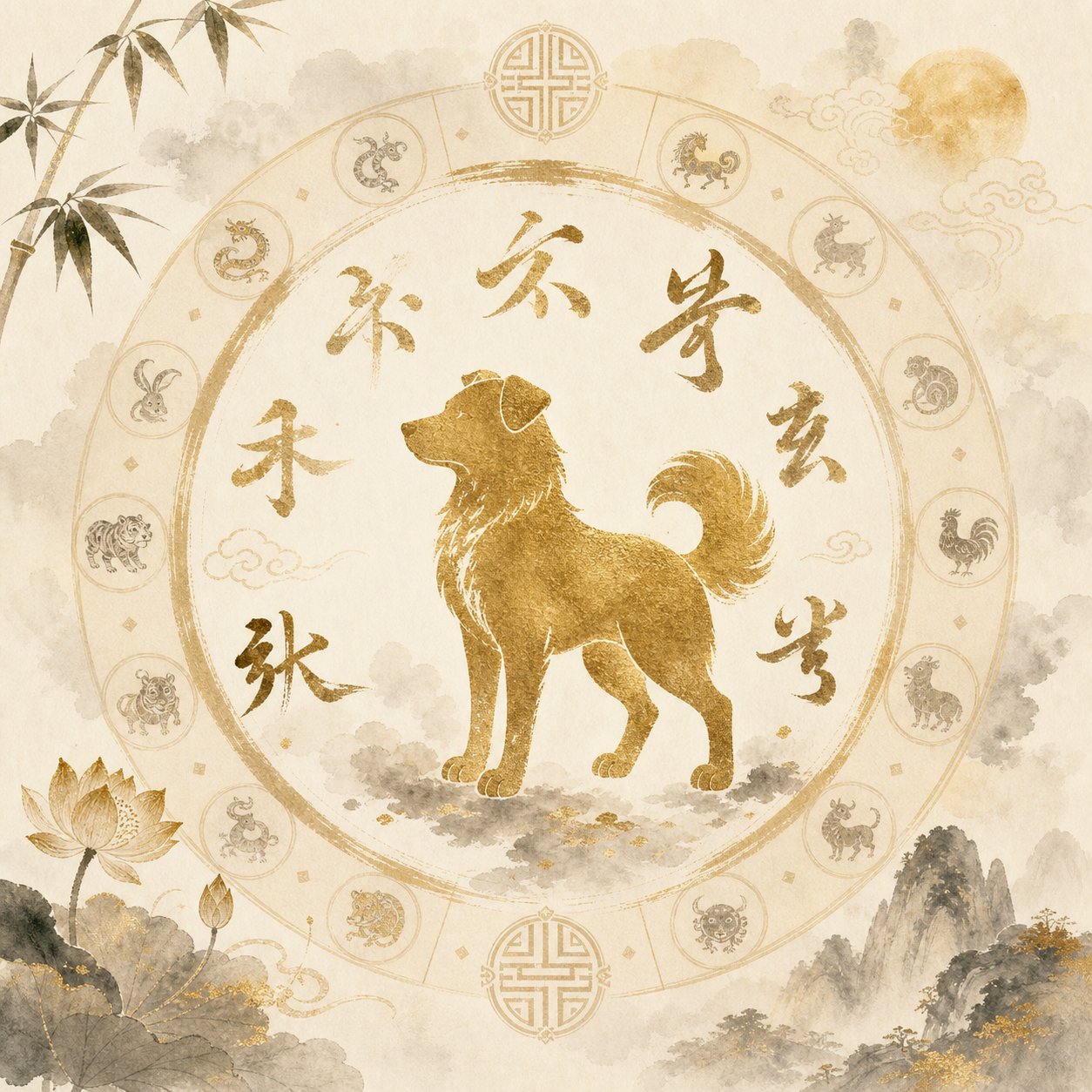
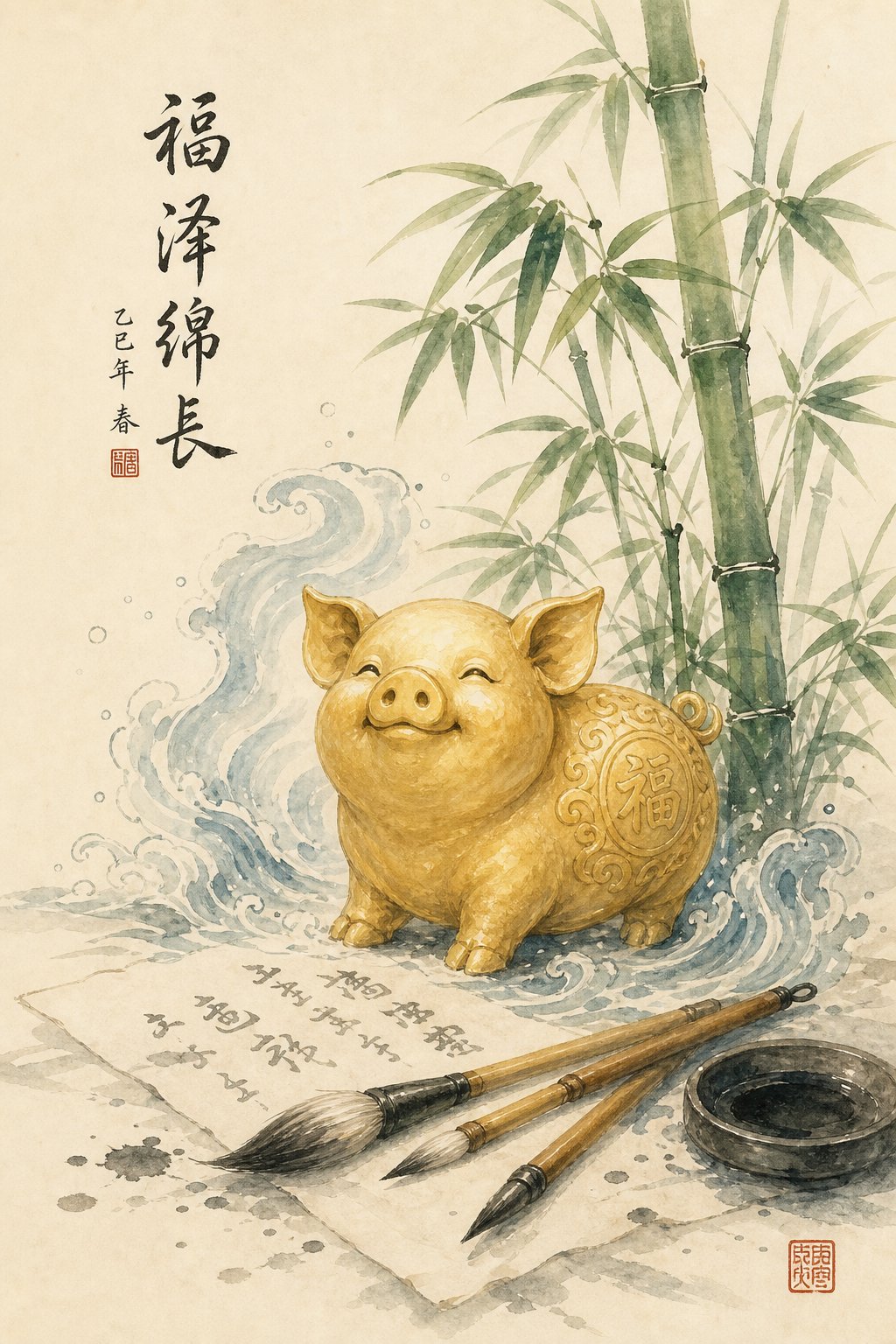
The Pig holds the 12th and final position in the Chinese zodiac cycle, arriving after the Dog and completing the full rotation before the Rat begins it anew. Recent Pig years include 2019 and 2007, with the next one arriving in 2031. This closing position carries deep symbolism: completion, fullness, and the gathering of all blessings before a new cycle begins. It's no coincidence that the Pig is culturally linked to wealth, harvest, and contentment.
Why the Pig Holds Special Significance in Chinese Naming
So how do Chinese parents name their baby born under this sign? The process goes far beyond personal preference. A Chinese baby name is a deliberate act of connection, linking the child's identity to cosmological forces that shape fortune and character. For Pig year babies, three key forces come into play: the zodiac animal itself, the earthly branch 亥 (hai), and the Pig's associated element, Water.
The Pig's core cultural associations are generosity, diligence, compassion, and prosperity, making it one of the most auspicious signs under which to be born.
These traits aren't just personality descriptors. They serve as guiding principles when selecting characters for a child's name. Parents seek characters that resonate with and amplify these qualities, creating a name that supports the child's innate zodiac strengths throughout life.
What Parents Need to Know Before Choosing a Name
Choosing chinese baby names rooted in zodiac tradition involves layering multiple systems together. You'll encounter the Five Elements (Wu Xing), which determine elemental balance based on birth year, month, day, and hour. You'll work with stroke count principles that affect the energetic harmony of written characters. And you'll navigate auspicious and inauspicious radicals, the building blocks of Chinese characters that carry their own symbolic weight.
This framework might sound complex, but each layer serves a clear purpose. The zodiac animal identifies favorable character components. The Five Elements reveal what your child's name needs to balance. Stroke count ensures the name's written form carries harmonious energy. Together, they form a complete system that has guided baby chinese names for generations.
Whether you're drawn to traditional literary names or modern choices, whether your family follows these customs closely or simply wants to honor them thoughtfully, the principles remain the same. You don't need to consult the 100 most common chinese baby names to find the right fit. What you need is a clear understanding of which characters work with Pig energy and which ones work against it.
The sections ahead break this down piece by piece, from auspicious radicals and curated name lists to the hidden taboos that most naming guides overlook entirely.
Auspicious Radicals and Characters for Pig Year Babies
Every auspicious chinese name for pig baby starts with one fundamental question: which character components naturally align with the Pig's cosmic identity? The answer lies in the Pig's earthly branch, its elemental nature, and its zodiac alliances. Once you understand these connections, the logic behind favorable radicals becomes intuitive rather than mysterious.
The Earthly Branch and Water Element Connection
In the Chinese zodiac system, each animal corresponds to an earthly branch. The Pig's branch is 亥 (hai), and it belongs to the Water element within the Five Elements framework. Water governs wisdom, adaptability, and flow. It's a nurturing force, and it shapes which radicals will strengthen a Pig year child's name.
Here's the key principle: elements that produce or support Water are considered auspicious. In the productive cycle of the Five Elements, Metal generates Water. Think of it as condensation forming on a metal surface. Characters containing the 金 (jin, metal) or 钅 (metal radical) component channel this generative energy directly into the child's name. Similarly, Water-element radicals like 氵 (three-dot water) and 冫 (two-dot ice) reinforce the Pig's native element, creating a sense of abundance and alignment.
Wood also plays a supportive role. In the elemental cycle, Water nourishes Wood, which means Wood characters give the Pig's Water energy a productive outlet. Characters with the 木 (mu, wood) radical suggest growth, vitality, and upward momentum, qualities that complement the Pig's natural generosity with forward direction.
Radicals That Harmonize With Pig Energy
Beyond elemental theory, traditional naming masters observed the Pig's nature as a domesticated animal and drew symbolic connections. A pig in a field is content, well-fed, and at peace. A pig with access to grain and cereals lives in abundance. These observations translate directly into radical selection.
The table below breaks down the major auspicious radical categories for Pig year babies, with example characters, pronunciation, and the reasoning behind each:
| Radical Category | Character | Pinyin | Meaning | Why It's Auspicious for Pig Babies |
|---|---|---|---|---|
| 田 (field) | 畴 | chou | farmland, domain | A pig in the field eats freely and lives in contentment |
| 田 (field) | 甲 | jia | first, armor | Suggests being first-ranked while rooted in fertile ground |
| 口 (mouth) | 国 | guo | nation, country | Enclosed mouth radical symbolizes never lacking food |
| 口 (mouth) | 园 | yuan | garden, park | Represents a sheltered space with abundant nourishment |
| 口 (mouth) | 回 | hui | return, circle | Double enclosure signals security and fullness |
| 木 (wood) | 林 | lin | forest, grove | Wood receives Water's nourishment, giving Pig energy productive flow |
| 木 (wood) | 柔 | rou | gentle, soft | Combines Wood growth with the Pig's compassionate nature |
| 木 (wood) | 森 | sen | lush forest | Triple wood amplifies vitality and natural abundance |
| 金/钅 (metal) | 铭 | ming | inscription, remember | Metal generates Water in the productive cycle, boosting fortune |
| 金/钅 (metal) | 锋 | feng | sharp edge, vanguard | Metal radical directly supports the Pig's Water element |
| 金/钅 (metal) | 钟 | zhong | bell, clock | Metal producing Water signifies continuous support and resources |
| 禾/米/豆 (grain) | 秀 | xiu | elegant, outstanding | Grain radicals ensure the Pig never worries about sustenance |
| 禾/米/豆 (grain) | 精 | jing | refined, essence | Rice radical represents lifelong abundance of food and clothing |
| 氵 (water) | 浩 | hao | vast, grand | Reinforces the Pig's native Water element for amplified wisdom |
| 氵 (water) | 泽 | ze | marsh, grace | Water radical aligns with earthly branch 亥, strengthening core energy |
You'll notice that the 口 radical works differently here than you might expect. It's not about speaking or communication. For Pig year naming, the mouth radical represents the pig's love of eating. Characters with this enclosed shape signal that the child will always have enough, a life free from material worry.
Compatible Zodiac Influences on Character Selection
Chinese astrology groups the twelve zodiac animals into compatibility triads called San He (三合). The Pig's triad partners are the Rabbit (卯) and the Sheep/Goat (未). These three signs share compassion, creativity, and sensitivity, and they form what's considered one of the most harmonious groupings in the zodiac.
This compatibility directly influences naming. Characters containing radicals associated with the Rabbit or Sheep are believed to activate the San He relationship, drawing supportive energy into the child's life. For the Rabbit connection, look for characters containing 卯 or the wood-related radical 卯 appears in, such as 柳 (liu, willow) and 卿 (qing, minister/term of endearment). For the Sheep connection, characters like 善 (shan, kindness), 羡 (xian, admire), and 美 (mei, beauty) carry the 羊 (yang, sheep) component.
This same principle applies when parents research auspicious chinese names for rabbit babies or auspicious chinese names for goat babies. The Rabbit, Goat, and Pig share a trinity, so favorable radicals often overlap across these three signs. A character like 善 works beautifully for a Pig baby because it contains the Sheep radical while also meaning "goodness," reinforcing the Pig's innate compassion.
Beyond the San He triad, the Pig also benefits from its Liu He (六合) pairing with the Tiger. And through the San Hui (三会) seasonal winter grouping, the Pig connects with the Rat (子) and Ox (丑). Characters containing 子, such as 孟 (meng, eldest) or 字 (zi, character/word), and those referencing the Ox, like 牛 (niu) components, also carry auspicious weight for auspicious chinese names for pig babies.
The practical takeaway? When evaluating a potential name character, check whether its radical falls into one of these favorable categories: field, mouth/enclosure, wood, metal, grain, water, or zodiac-compatible components. A single character that combines multiple auspicious elements, like 淑 (shu, virtuous) with its water radical and grain-related meaning, becomes especially powerful for Pig year children.
Knowing which radicals to seek is only half the equation. Equally important is understanding which character components create conflict with Pig energy, a topic that catches many parents off guard.
Naming Taboos and Characters to Avoid for Pig Babies
Favorable radicals attract good energy, but certain character components actively work against a Pig year child. These aren't minor stylistic preferences. In traditional Chinese naming philosophy, using a conflicting radical is like planting a seed in hostile soil. The name may sound beautiful, yet its structural energy creates friction with the child's zodiac identity. Here's what to watch for.
Characters Linked to Incompatible Zodiac Animals
The Chinese zodiac places certain animals in direct opposition. For the Pig, the two most conflicting signs are the Snake (巳) and the Monkey (申). The Snake sits directly opposite the Pig in what's called a chong (冲) clash, representing fundamental energetic opposition. The Monkey forms a harm (害) relationship with the Pig, suggesting hidden friction and undermined trust.
What does this mean for naming? Characters containing components associated with these animals should be avoided. Snake-linked radicals include 辶 (walking radical, suggesting a serpent's movement), 弓 (gong, bow, resembling a coiled snake), and 虫 (chong, insect). Monkey-associated components include 申 (shen) itself and the 袁 component found in characters like 猿 (yuan, ape). Parents researching auspicious chinese names for snake babies or auspicious chinese names for monkey babies will notice that the favorable radicals for those signs often conflict directly with Pig energy. What strengthens a Snake or Monkey child can weaken a Pig child, and vice versa. An auspicious chinese name for monkey baby, for instance, might lean heavily on fire-element characters that would be problematic for a Pig year child.
Radicals That Clash With the Pig's Water Nature
The Pig's native element is Water, and in the Five Elements destructive cycle, Water and Fire oppose each other. Fire radicals introduce elemental tension into a Pig year name, potentially draining the child's core energy rather than supporting it.
Characters to be cautious with include those containing 火 (huo, fire), 灬 (four-dot fire, as in 熙), and 日 (ri, sun, which carries strong fire energy). A character like 炎 (yan, flame) or 烨 (ye, brilliant fire) might sound powerful, but the elemental clash undermines the Pig's Water foundation.
Cultural Taboos in Pig Year Naming
Beyond elemental and zodiac conflicts, certain radicals carry culturally unfavorable associations specific to the Pig. These stem from the pig's historical role in Chinese agricultural society, where pigs were raised for sacrifice and slaughter.
The following table outlines the key radicals and characters to avoid, along with the reasoning behind each:
| Radical/Category | Character | Pinyin | Meaning | Reason to Avoid |
|---|---|---|---|---|
| 刀/刂 (knife) | 刚 | gang | firm, strong | Knife radical evokes slaughter, suggesting harm to the Pig |
| 刀/刂 (knife) | 利 | li | sharp, profit | Despite positive meaning, the blade component implies danger |
| 王 (king) | 玲 | ling | tinkling jade | King radical suggests the pig being offered as tribute to royalty |
| 王 (king) | 珍 | zhen | precious, treasure | Implies being "prized" in the sacrificial sense for Pig babies |
| 示/礻 (altar) | 祥 | xiang | auspicious | Altar radical implies being placed on a sacrificial table |
| 示/礻 (altar) | 祺 | qi | blessed, fortunate | Despite positive meaning, the offering connotation creates conflict |
| 火/灬 (fire) | 炜 | wei | brilliant, glowing | Fire directly clashes with the Pig's Water element |
| 火/灬 (fire) | 熙 | xi | prosperous, bright | Four-dot fire base drains Water energy |
| 辶 (serpent movement) | 远 | yuan | far, distant | Walking radical links to the Snake, the Pig's zodiac opposite |
| 弓 (bow/coil) | 强 | qiang | strong, powerful | Bow shape resembles a coiled snake, activating the chong clash |
Notice something counterintuitive here. Characters like 祥 (auspicious) and 利 (profit) carry universally positive dictionary meanings, yet their radical structure makes them problematic specifically for Pig year children. This is why surface-level meaning alone isn't enough when selecting a name. The internal architecture of each character matters just as much as its definition.
A practical approach? When you find a character you love, break it down into its radical components. Check whether any part falls into the knife, king, altar, fire, or Snake/Monkey categories above. If it does, look for an alternative character that carries a similar meaning but uses a compatible radical structure instead.
With both favorable and unfavorable radicals mapped out, the next step is putting this knowledge to work. Curated name lists organized by meaning and aspiration give parents a starting point where the zodiac homework is already done.
Beautiful Chinese Girl Names for Pig Year Babies
Selecting chinese baby girl names for a Pig year daughter means finding characters where meaning and structure work together. The best baby girl chinese name doesn't just sound lovely. It carries auspicious radicals that align with the Pig's Water element, zodiac alliances, and symbolic associations while expressing the qualities parents hope their daughter will embody.
The Pig's defining traits, generosity, compassion, and warmth, naturally lend themselves to names rooted in kindness and abundance. But Pig year girls also benefit from names suggesting intelligence and grace, qualities that channel the Pig's quiet diligence into academic and creative achievement. Below you'll find chinese baby girl names with meaning organized by aspiration, each vetted for zodiac compatibility.
Girl Names Symbolizing Kindness and Compassion
The Pig is considered one of the most compassionate signs in the zodiac. Names in this category amplify that innate warmth, using characters built on auspicious radicals like water, wood, and grain.
| Character | Pinyin | Meaning | Pig Year Significance |
|---|---|---|---|
| 淑 | shū | Virtuous, gentle | Water radical (氵) reinforces the Pig's native element while expressing compassion |
| 善 | shàn | Kindness, goodness | Contains the Sheep (羊) component, activating the San He triad alliance |
| 柔 | róu | Gentle, soft | Wood radical (木) gives the Pig's Water energy a nurturing outlet |
| 惠 | huì | Benevolent, gracious | Meaning aligns with the Pig's generous spirit; balanced stroke count |
| 沁 | qìn | Permeate, refresh | Water radical directly supports the Pig's elemental core; evokes gentle influence |
Traditional picks like 淑 (shū) have appeared in Chinese literature for centuries, while 沁 (qìn) feels more contemporary. Both carry the water radical that strengthens a Pig year child's foundational energy.
Girl Names for Prosperity and Abundance
A life of material comfort and fulfillment is one of the Pig's greatest blessings. These chinese baby names for girls lean into that promise of abundance, using metal and grain radicals that generate or sustain the Pig's Water element.
| Character | Pinyin | Meaning | Pig Year Significance |
|---|---|---|---|
| 锦 | jǐn | Brocade, splendid | Metal radical (钅) generates Water in the productive cycle, boosting fortune |
| 秀 | xiù | Elegant, outstanding | Grain radical (禾) ensures lifelong abundance of food and resources |
| 嘉 | jiā | Excellent, auspicious | Mouth radical (口) symbolizes never lacking nourishment |
| 润 | rùn | Moist, smooth, profit | Water radical reinforces native element; meaning directly suggests prosperity |
| 穗 | suì | Ear of grain, harvest | Grain radical represents the Pig's connection to agricultural abundance |
You'll notice 嘉 (jiā) appears frequently in Cantonese naming traditions as well, often paired with a second character to form names like 嘉欣 (jiā xīn, excellent joy). Its enclosed mouth radical makes it doubly favorable for Pig year daughters, signaling both quality and sustenance.
Girl Names Reflecting Intelligence and Grace
For parents who envision academic achievement and creative brilliance, these baby girl chinese names unique in structure combine intellectual meaning with zodiac-compatible radicals. The Pig's Water element governs wisdom, making water-radical characters especially fitting for this aspiration.
| Character | Pinyin | Meaning | Pig Year Significance |
|---|---|---|---|
| 涵 | hán | Cultivated, contain | Water radical supports Pig's element; meaning suggests depth of knowledge |
| 梦 | mèng | Dream, aspiration | Wood radical (木) channels Water energy into creative growth |
| 清 | qīng | Clear, pure, lucid | Water radical amplifies the Pig's innate wisdom and clarity of thought |
| 桐 | tóng | Paulownia tree | Wood radical receives Water's nourishment; the paulownia symbolizes scholarly refinement |
| 澜 | lán | Great waves, ripples | Water radical with expansive meaning suggests far-reaching intelligence |
| 楠 | nán | Cedar, fine timber | Wood radical paired with a character denoting lasting value and resilience |
A name like 涵 (hán) works on multiple levels. Its water radical aligns with the Pig's element, its meaning suggests intellectual depth, and its moderate stroke count (11 strokes) pairs well with most common surnames. 梦 (mèng) offers a more modern, imaginative feel while maintaining the wood radical that gives Pig energy productive direction.
When browsing baby girl chinese names and meaning lists, keep this principle in mind: the most powerful chinese girl baby names for a Pig year daughter combine a meaning you love with a radical structure that supports her zodiac energy. A character that achieves both, like 善 with its kindness meaning and Sheep-triad radical, or 锦 with its splendor meaning and Metal-generating radical, carries double auspicious weight.
These same structural principles apply to boy names, though the aspirational categories and character choices shift toward different qualities. Strength, integrity, and scholarly achievement take center stage when parents select characters for a Pig year son.
Strong Chinese Boy Names for Pig Year Babies
The Pig's diligence and generosity aren't soft qualities. They require backbone, persistence, and quiet resolve. When parents search for chinese baby boy names that honor these traits, the goal is finding characters where structural auspiciousness and aspirational meaning reinforce each other. A character like 浩 (hao, vast) doesn't just sound strong. Its water radical directly feeds the Pig's native element, making the name work on both the symbolic and cosmological level simultaneously.
This dual significance is what separates a good baby boy chinese name from a great one. The best baby boy names chinese characters carry favorable radicals (metal, water, wood, grain, or zodiac-compatible components) while also expressing the qualities parents envision for their son. Below is a baby boy chinese name list organized by aspiration, with each entry vetted for Pig year compatibility.
Boy Names Embodying Strength and Diligence
Strength in Chinese naming doesn't always mean brute force. For a Pig year son, it often manifests as steadfastness, the kind of quiet power that sustains effort over time. These chinese baby names boy options pair muscular meanings with radicals that harmonize with Pig energy.
| Character | Pinyin | Meaning | Pig Year Significance |
|---|---|---|---|
| 浩 | hào | Vast, grand, mighty | Water radical (氵) reinforces the Pig's native element; conveys expansive strength |
| 锋 | fēng | Vanguard, sharp edge | Metal radical (钅) generates Water in the productive cycle, amplifying fortune |
| 森 | sēn | Dense forest, vigorous | Triple wood radical channels Water energy into powerful, sustained growth |
| 柏 | bǎi | Cypress tree, steadfast | Wood radical (木) receives Water's nourishment; cypress symbolizes endurance |
| 铮 | zhēng | Clang of metal, upright | Metal radical supports Water element; sound imagery suggests unyielding character |
Traditional picks like 柏 (bai) draw from classical poetry where the cypress represents a man who stands firm through hardship. Modern choices like 锋 (feng) feel sharper and more dynamic while still carrying the metal radical that generates the Pig's Water element. Both approaches work. The radical structure ensures zodiac alignment regardless of stylistic preference.
Boy Names for Wisdom and Achievement
The Pig's Water element governs wisdom and intellectual depth. Baby boy names in chinese characters that emphasize scholarly achievement tap directly into this elemental strength, creating a name that supports academic and professional success.
| Character | Pinyin | Meaning | Pig Year Significance |
|---|---|---|---|
| 泽 | zé | Marsh, grace, beneficence | Water radical aligns with earthly branch 亥; meaning suggests wisdom that benefits others |
| 翰 | hàn | Writing brush, vast knowledge | Literary meaning pairs with the Pig's diligent nature; traditionally denotes scholarly men |
| 铭 | míng | Inscription, engrave in memory | Metal radical generates Water; meaning suggests lasting intellectual legacy |
| 清 | qīng | Clear, lucid, pure | Water radical amplifies Pig's innate wisdom; clarity of thought and purpose |
| 秉 | bǐng | Hold, grasp, uphold | Grain radical (禾) ensures abundance; meaning suggests holding fast to principles |
A name like 浩铭 (hao ming) combines two auspicious characters into a two-character given name meaning "grand inscription." Both characters carry favorable radicals (water and metal respectively), and together they suggest a man whose greatness is remembered. This kind of pairing demonstrates how baby chinese boy names gain power through deliberate radical stacking.
Boy Names Representing Integrity and Prosperity
The Pig's association with prosperity isn't about greed. It's about abundance shared generously. These names connect material success to moral character, using field, mouth, and zodiac-compatible radicals that signal both wealth and virtue.
| Character | Pinyin | Meaning | Pig Year Significance |
|---|---|---|---|
| 善 | shàn | Goodness, virtue | Contains Sheep (羊) component, activating the San He triad; moral integrity |
| 家 | jiā | Family, home, expert | Enclosure radical signals security and abundance; the pig thrives within a home |
| 国 | guó | Nation, country | Mouth radical (口) symbolizes never lacking sustenance; suggests leadership scope |
| 泰 | tài | Peace, prosperity, grand | Water component aligns with Pig's element; meaning conveys stable abundance |
| 钟 | zhōng | Bell, concentrate, devotion | Metal radical generates Water; meaning suggests focused dedication and integrity |
Characters like 善 (shan) carry what naming masters call double auspiciousness. The Sheep radical activates the Pig's zodiac triad alliance while the character's meaning, goodness, directly reflects the Pig's compassionate nature. Similarly, 家 (jia) works structurally through its enclosure shape (a pig sheltered and content) and semantically through its meaning of family and mastery.
When building a complete two-character given name, consider pairing characters from different categories. A combination like 泽善 (ze shan, "gracious goodness") stacks a Water-radical character with a triad-compatible character, creating layered zodiac support. Or try 家铭 (jia ming, "family inscription"), which pairs the enclosure radical with the metal radical for both structural harmony and meaningful depth.
Of course, selecting the right characters is only part of the process. The Pig's Water element interacts differently depending on the specific year's heavenly stem, and stroke count calculations add another dimension of precision that can make or break a name's overall harmony.

Five Elements and Stroke Count in Pig Year Naming
Every Pig year baby is born under the Water element, but not every Pig year baby needs the same elemental support in their name. This is where the Five Elements rebalancing method and stroke count analysis come in. They transform naming from a general zodiac exercise into a precise, personalized calibration based on your child's exact birth data.
Five Elements Balance for Pig Year Names
The Pig's earthly branch 亥 carries Water as its fixed element. But here's the nuance: a child's full elemental profile isn't determined by birth year alone. The BaZi (八字) system, sometimes called the Four Pillars of Destiny, maps the elements present in the year, month, day, and hour of birth. Each pillar contributes its own elemental weight, creating a unique balance sheet for every individual.
Imagine a Pig year baby born in a winter month (also Water-heavy) during a Water hour. That child's chart may overflow with Water energy. In this case, a baby chinese name feng shui approach would call for Wood or Earth characters to absorb and redirect the excess, rather than piling on more Water. Conversely, a Pig baby born in a summer month dominated by Fire might need Water-reinforcing characters to restore balance.
This is exactly what professional naming masters assess. As one Hong Kong-based name master explained, the process begins with the child's detailed time of birth: "I find out this person's fate by checking his time of birth and seeing what his element is. If the person's fate is too strong, I will add an element to his name to counter that force and vice versa. The idea is to balance the five elements through the name." Many parents consult a baby chinese name fortune teller or naming specialist for precisely this calculation, though BaZi calculators are also widely available online for those who prefer a DIY approach.
Stroke Count Principles and the Three Talents Grid
Beyond elemental meaning, every Chinese character carries numerical energy through its stroke count. The Three Talents and Five Formations system (三才五格) evaluates how the strokes in a surname and given name interact to produce favorable or unfavorable numerical patterns.
The Three Talents (三才) represent three core formations calculated from stroke counts:
| Formation | Calculation | What It Represents |
|---|---|---|
| Heavenly Formation (天格) | Surname stroke count + 1 | Ancestral fortune, innate conditions, early life influences |
| Human Formation (人格) | Last surname character strokes + first given name character strokes | Core personality, main fortune, most influential formation |
| Earthly Formation (地格) | Sum of all given name character strokes | Career development, opportunities in youth and early middle age |
The ideal configuration has these three formations in a generating relationship rather than a controlling one. For example, if the Heavenly Formation's element generates the Human Formation's element, and the Human Formation generates the Earthly Formation, the name flows with supportive energy from inherited fortune through personal ability into career success.
A practical example: suppose the surname is 林 (lin, 8 strokes). The Heavenly Formation equals 8 + 1 = 9, which corresponds to Fire. To create a generating relationship, the Human Formation should ideally be Earth (since Fire generates Earth). A baby chinese name calculator would identify that given name characters producing a Human Formation number associated with Earth (numbers ending in 5 or 6) create the most harmonious Three Talents configuration for this surname.
One important note: stroke counting in name numerology uses traditional character forms, not simplified ones. Even families who write in simplified Chinese daily should reference the traditional stroke count when performing these calculations.
How the Heavenly Stem Changes Recommendations
Here's what many naming guides miss entirely. Not all Pig years are the same. Each 12-year zodiac cycle pairs with one of five heavenly stems, producing a different elemental variation of the Pig. The heavenly stem modifies the Pig's base Water energy, creating distinct naming needs for each variation:
- Wood Pig (乙亥) - 1995, 2055: Wood and Water combine naturally since Water nourishes Wood. These children already have productive elemental flow. Names can reinforce either element or introduce Earth for grounding. Avoid excessive Metal, which would over-generate Water and create imbalance.
- Fire Pig (丁亥) - 2007, 2067: Fire and Water create inherent tension within the birth year itself. Names benefit from Wood characters, which mediate between Water and Fire by receiving Water's nourishment and feeding Fire. This bridging approach resolves the internal elemental conflict.
- Earth Pig (己亥) - 2019, 2079: Earth controls Water in the destructive cycle, meaning the heavenly stem restrains the earthly branch. Names with Metal characters work well here because Metal exhausts Earth's controlling force while simultaneously generating Water, restoring balance on two fronts.
- Metal Pig (辛亥) - 1971, 2031: Metal generates Water, so these children have strong Water energy amplified by their heavenly stem. Wood characters provide an excellent outlet, giving all that Water somewhere productive to flow. Earth characters can also help absorb excess if the BaZi shows Water dominance.
- Water Pig (癸亥) - 1983, 2043: Double Water from both the heavenly stem and earthly branch creates maximum Water concentration. These children almost always benefit from Wood and Earth in their names to prevent the chart from becoming waterlogged. Avoid additional Water or Metal characters unless the birth month and hour introduce counterbalancing elements.
The 2019 Pig year, for instance, was an Earth Pig (己亥). Parents who welcomed babies that year would find Metal-radical characters like 铭 (ming) or 锦 (jin) especially effective because Metal simultaneously weakens the controlling Earth stem and strengthens the child's Water foundation. The upcoming 2031 Pig year will be a Metal Pig (辛亥), shifting the optimal strategy toward Wood-radical characters that channel the amplified Water energy into growth.
These elemental calculations give you the "what" of naming. But a name isn't just an energy formula. It's something spoken aloud thousands of times throughout a lifetime, which means tonal harmony between surname and given name deserves equal attention.
Pairing Names With Surnames Across Chinese Communities
A name can carry perfect elemental balance and auspicious radicals, yet still fall flat when spoken aloud. Mandarin is a tonal language with four distinct tones plus a neutral tone, and the way surname and given name tones interact determines whether a name flows musically or stumbles awkwardly off the tongue. For Pig year babies, this sonic dimension matters just as much as radical selection.
Tonal Harmony Between Surname and Given Name
Each Mandarin syllable carries one of four tones: first tone (high and level), second tone (rising), third tone (falling then rising), and fourth tone (sharp falling). When two or three characters sit side by side in a name, their tonal sequence creates a rhythm. Some combinations feel effortless. Others sound clunky or monotonous.
Here are the core tonal pairing rules that guide harmonious name construction:
- Avoid three identical tones in a row. A name like Zhang Guangzhuang (all first tone) sounds flat and robotic. Tonal variety creates natural musicality.
- Avoid pairing two third tones consecutively. In spoken Mandarin, consecutive third tones trigger a tone sandhi rule where the first shifts to second tone. This creates pronunciation ambiguity. For example, Li (lǐ, 3rd) + Yǔ (3rd) forces a tonal shift that muddies the name's intended sound.
- Pair falling tones (4th) with rising tones (2nd) for dynamic contrast. A sequence like Wang (wáng, 2nd) + Hào (4th) + Rán (2nd) creates a pleasing wave pattern that carries well across a room.
- Use a level first tone as an anchor. First-tone characters provide stability. Placing one in a three-character name gives the ear a resting point. Example: Chen (chén, 2nd) + Yī (1st) + Hán (2nd) flows smoothly because the middle character grounds the rising tones on either side.
- Test the name at volume. A well-toned name should sound clear when called across a playground or announced in a formal setting. If you find yourself straining to distinguish the syllables, the tonal combination likely needs adjustment.
The practical test is simple: say the full name, surname included, five times quickly. If it trips your tongue or blurs together, the tonal pairing needs work regardless of how beautiful the characters look on paper.
Surname Stroke Count and Given Name Pairing
Tonal harmony addresses the ear. Stroke count pairing addresses the energetic grid. As covered in the Three Talents system, the surname's stroke count is fixed, meaning it determines the mathematical framework within which given name characters must operate.
For common surnames like Wang (王, 4 strokes), Li (李, 7 strokes), or Zhang (张, 11 strokes in traditional form), the Heavenly Formation is already set. The given name's stroke count must then produce a Human Formation and Earthly Formation that sit in a generating rather than controlling relationship. A surname with a low stroke count (like 丁, 2 strokes) needs given name characters with enough strokes to produce favorable formation numbers, while a high-stroke surname (like 魏, 18 strokes) pairs better with lighter given name characters to maintain visual and numerical balance.
This is why experienced naming practitioners always begin with the surname. It's the fixed variable that shapes every subsequent decision about character selection.
Regional Naming Conventions Across Chinese Communities
Chinese baby names over time popularity trends vary significantly by region, and what sounds natural in Beijing may feel unusual in Hong Kong or Singapore.
In Mainland China, names follow Mandarin pronunciation using simplified characters. Pinyin romanization joins the given name into one word: a child named 李浩然 becomes "Li Haoran" in official documents. Trends lean toward two-character given names, and parents increasingly favor characters with literary or poetic resonance.
In Taiwan, traditional characters remain standard, and names are often romanized with a hyphen separating given name syllables: "Li Hao-ran." Naming culture draws heavily from classical Chinese texts, and consulting a name master remains common practice among families of all backgrounds.
Hong Kong presents a unique case. Names must work in both Cantonese and Mandarin pronunciation, since official documents use traditional characters but daily life operates in Cantonese. A character that sounds elegant in Mandarin might carry an unfortunate homophone in Cantonese, so parents here perform a dual phonetic check. Romanization follows Cantonese pronunciation systems rather than Pinyin.
In Singapore, baby chinese name selection reflects the city-state's multilingual reality. Families often consult a baby chinese name master in Singapore who evaluates names across Mandarin, dialect group pronunciations (Hokkien, Teochew, Cantonese), and English compatibility simultaneously. The baby chinese name Singapore tradition blends Southern Chinese dialect heritage with modern cosmopolitan sensibility, and many parents register both Chinese and English names at birth.
For diaspora communities in North America, Europe, and Australia, the challenge multiplies. The Chinese name must pair gracefully with an English first name or function as a middle name that maintains its tonal integrity even when rarely spoken aloud in daily life. This bicultural balancing act introduces its own set of strategies and creative solutions.
Bicultural Naming for Chinese American and Diaspora Families
For families raising children between two cultures, the naming process doubles in complexity. You're not just choosing a chinese american baby name. You're building a bridge between two linguistic worlds, two sets of expectations, and two naming philosophies that operate on entirely different logic. The English name needs to work in classrooms, job applications, and casual introductions. The Chinese name needs to carry zodiac alignment, elemental balance, and familial meaning. Getting both right, and making them feel like they belong to the same child, is the real challenge.
As one Chinese Canadian mother described, the process of choosing both Anglo and Chinese names became "a practice in merging two sets of individual values, balancing tradition and individualism and discovering our role as parents in helping our future child to navigate her multicultural identity." That tension between honoring heritage and embracing a bicultural present is something every diaspora family navigates differently.
Strategies for Matching English and Chinese Names
There are three main approaches to creating chinese english baby names that feel cohesive rather than disconnected:
Phonetic echoing selects a Chinese name whose pronunciation mirrors the English name's sound. A girl named "Mia" might receive the Chinese name 美雅 (mei ya, beautiful elegance), where the opening syllable echoes the English name. For baby boy names chinese american families favor, "Ethan" pairs naturally with 逸涵 (yi han, graceful depth), capturing a similar vowel rhythm. This approach works well because the names feel like variations of each other across languages.
Shared meaning chooses characters that translate the English name's etymology or spirit. "Grace" becomes 嘉恩 (jia en, excellent grace). "Forest" becomes 林 (lin). The names don't sound alike, but they carry the same conceptual DNA. American baby names popular with chinese parents often have clear meanings that translate well: names like Sophia (wisdom), Victor (victory), and Joy all have direct character equivalents.
Independent selection treats each name as its own complete identity. The English name follows Western preferences while the Chinese name follows zodiac and elemental principles without any phonetic or semantic link between them. Many families find this liberating because it removes constraints from both sides. The Chinese name can be fully optimized for Pig year auspiciousness without needing to sound like anything in English.
Maintaining Zodiac Auspiciousness in Bicultural Names
Whether the Chinese name appears as a legal middle name, an informal family name, or a registered given name, its zodiac power remains intact. The auspicious radicals, elemental balance, and stroke count harmony function regardless of how often the name is spoken aloud in daily life. What matters is the structural integrity of the characters themselves.
That said, families who want the Chinese name to feel like a living part of their child's identity, not just a line on a birth certificate, benefit from choosing characters that flow naturally when spoken alongside the English name. Tonal contrast helps here. If the English name ends on a soft sound (like Emma or Noah), a Chinese name beginning with a crisp fourth-tone character creates a pleasing transition.
The table below shows american chinese baby names pairings that maintain both phonetic grace and Pig year zodiac compatibility:
| English Name | Chinese Name | Pinyin | Meaning | Pig Year Compatibility |
|---|---|---|---|---|
| Mia | 美安 | mei an | Beautiful peace | Sheep radical (美) activates San He triad; enclosure in 安 signals security |
| Olivia | 澜薇 | lan wei | Waves and roses | Water radical (氵) reinforces Pig's native element |
| Grace | 嘉润 | jia run | Excellent abundance | Mouth radical (口) plus Water radical: double auspicious structure |
| Ethan | 逸涵 | yi han | Graceful cultivation | Water radical in 涵 supports Pig's elemental core |
| Noah | 诺桉 | nuo an | Promise and shelter | Wood radical (木) gives Water energy productive outlet |
| Lucas | 鹿森 | lu sen | Deer in the forest | Triple wood radical in 森 channels Water into vigorous growth |
| Sophia | 淑菲 | shu fei | Virtuous brilliance | Water radical (氵) directly aligns with Pig's Water element |
| Leo | 铭浩 | ming hao | Inscribed vastness | Metal radical generates Water; Water radical reinforces it |
Notice that american chinese baby girl names like 美安 and 嘉润 use radicals from the auspicious categories covered earlier: Sheep-triad components, mouth enclosures, and water radicals. The English names were chosen for their popularity and phonetic compatibility, but the Chinese names were built entirely on Pig year principles. The phonetic echo is a bonus, not a constraint.
One final consideration: some families worry that a Chinese middle name will be overlooked or forgotten. The naming decision itself carries weight regardless. As one parent reflected, the Chinese name represents "the deep love that her great-grandfather has for her, and the importance of family within the Chinese culture." Whether spoken daily or reserved for family gatherings, the name holds its meaning and its zodiac alignment intact.
With both the cultural and structural dimensions of naming addressed, what remains is assembling all these elements into a single, actionable workflow that parents can follow from start to finish.
Step by Step Guide to Choosing Your Pig Baby's Name
You've absorbed the theory: auspicious radicals, elemental balance, stroke count grids, tonal harmony, and cultural taboos. How do you pull all of it together into a single decision? The process can feel overwhelming when every layer introduces new variables. But approached sequentially, baby chinese name selection becomes manageable, even enjoyable. Think of it as building a filter system. Each step narrows the field until only the strongest candidates remain.
The Complete Pig Year Naming Workflow
Follow these steps in order. Each one depends on the information gathered in the previous stage, so skipping ahead often means backtracking later.
- Record the exact birth details. You need the year, month, day, and hour of birth in the Chinese lunar calendar. These four data points generate the BaZi (Four Pillars) chart, which reveals your child's elemental composition. Many families use a baby chinese name app or online BaZi calculator to convert the Western calendar date into its Chinese equivalent and identify the dominant and deficient elements.
- Identify the elemental gap. Examine which of the Five Elements (Wood, Fire, Earth, Metal, Water) are overrepresented or missing in the chart. Since the Pig's base element is Water, determine whether your child needs more Water reinforcement or whether the chart already overflows with it. A 2019 Earth Pig baby has different needs than a 2031 Metal Pig baby. The heavenly stem variation covered earlier tells you which direction to lean.
- Select your target radicals. Based on the elemental gap, choose radical categories that restore balance. If the chart needs Metal, prioritize characters with 钅 or 金. If it needs Wood, look for 木 or 禾. Cross-reference these with the Pig's universally favorable radicals (field, mouth/enclosure, grain, water, wood, metal) and eliminate any that fall into the taboo categories (knife, king, altar, fire, snake/monkey-linked components).
- Calculate stroke count requirements from the surname. Take your family surname's traditional stroke count and compute the Heavenly Formation (surname strokes + 1). Then determine which Human Formation and Earthly Formation numbers create a generating Three Talents relationship. This gives you a target stroke range for each given name character. A baby chinese name generator can automate this math, but understanding the logic helps you evaluate its suggestions critically.
- Build a candidate list of characters. Search for characters that satisfy three criteria simultaneously: they contain your target radical, they fall within your required stroke count range, and they carry a meaning aligned with your aspirations for the child. Aim for 8 to 12 candidates per given name position.
- Test tonal combinations with your surname. Say each potential full name (surname + given name) aloud five times quickly. Eliminate combinations that create three identical tones, consecutive third tones, or syllables that blur together. Keep only the pairings that sound clear and musical when spoken at normal conversational speed.
- Check for homophone conflicts. Verify that the full name doesn't sound like an unfortunate word or phrase in Mandarin, Cantonese, or your family's dialect. This step catches problems that character analysis alone misses. If your family speaks Hokkien or Teochew at home, test pronunciation in those dialects too.
- Consult family elders. Share your shortlist with grandparents or senior family members. They may flag generational naming conventions (字辈), characters that duplicate a living relative's name (traditionally avoided), or cultural associations you hadn't considered. Their input often refines the list in ways no calculator can replicate.
- Seek professional validation if desired. Many families consult a naming master or BaZi specialist for a final review. As experienced practitioners note, a comprehensive service evaluates characters holistically, considering stroke count, elemental composition, meaning, and compatibility with the parents' charts. This step isn't mandatory, but it provides confidence that no structural conflicts were overlooked.
- Finalize and register. Choose the name that satisfies the most criteria across all layers. No name will score perfectly on every dimension, so prioritize elemental balance and radical compatibility first, tonal harmony second, and stroke count optimization third. Register the name with confidence that it carries both meaning and structural auspiciousness.
Final Checklist Before Confirming Your Baby's Name
Before you commit, run through this verification list. If you can check every item, the name is solid. If one or two items fall short, weigh whether the trade-off is acceptable given the name's other strengths.
- The name contains at least one character with a Pig-favorable radical (water, wood, metal, grain, field, mouth/enclosure, or zodiac-triad component).
- No character contains a taboo radical (knife, king, altar, fire, or Snake/Monkey-linked components).
- The elemental composition of the name addresses the specific gap identified in the child's BaZi chart.
- The Three Talents grid (Heavenly, Human, Earthly formations) sits in a generating rather than controlling relationship.
- The full name's tonal sequence avoids three identical tones and consecutive third tones.
- The name carries no unfortunate homophones in Mandarin or your family's dialect.
- The meaning reflects qualities you genuinely wish for your child, not just technical optimization.
- Family elders have been consulted and no generational naming conflicts exist.
- If bicultural, the Chinese name pairs gracefully with the English name in sound or meaning.
- You feel genuine warmth when you say the name aloud. A baby chinese name should resonate emotionally, not just analytically.
That last point deserves emphasis. Chinese baby names and meanings carry real weight in a child's life, but so does the love behind the choice. The most technically perfect name falls flat if parents feel no personal connection to it. Trust the framework to guide your decisions, then trust your instincts to make the final call. Your Pig year child arrives carrying the zodiac's gifts of generosity, compassion, and abundance. The right name simply ensures nothing stands in the way of those gifts unfolding.
Frequently Asked Questions About Year of the Pig Chinese Baby Names
1. What are the most auspicious radicals for Pig year baby names?
The most favorable radicals for Pig year babies include water (氵), metal (钅/金), wood (木), grain (禾/米), field (田), and mouth/enclosure (口). Water reinforces the Pig's native element, metal generates Water in the productive cycle, and wood gives Water energy a growth outlet. Field and mouth radicals symbolize contentment and abundance, reflecting the pig's nature as a well-fed, sheltered animal. Characters combining multiple auspicious radicals carry extra zodiac power.
2. Which characters should be avoided in names for babies born in the Year of the Pig?
Pig year babies should avoid characters containing knife radicals (刀/刂) which evoke slaughter, king radicals (王) suggesting sacrifice to royalty, altar radicals (示/礻) implying offerings, and fire radicals (火/灬) that clash with the Pig's Water element. Characters linked to the Snake (辶, 弓, 虫) and Monkey (申) should also be avoided since these animals form conflict relationships with the Pig in the zodiac. Even characters with positive meanings like 祥 (auspicious) can be problematic if their radical structure conflicts with Pig energy.
3. How do the Five Elements affect naming for different Pig year variations?
Each Pig year pairs with a different heavenly stem, creating five elemental variations: Wood Pig (1995), Fire Pig (2007), Earth Pig (2019), Metal Pig (2031), and Water Pig (1983/2043). An Earth Pig baby benefits from Metal characters that weaken Earth's control while generating Water. A Metal Pig baby does best with Wood characters that channel amplified Water into growth. The child's birth month, day, and hour further modify elemental needs through the BaZi (Four Pillars) system, making each name truly personalized.
4. Can a Chinese zodiac name still be auspicious if used as a middle name?
Yes, the zodiac power of a Chinese name remains intact whether it serves as a given name, middle name, or family-only name. The auspicious radicals, elemental balance, and stroke count harmony function based on the structural integrity of the characters themselves, not how frequently the name is spoken. Many diaspora families register the Chinese name as a legal middle name while using an English first name daily, and the zodiac alignment holds regardless of usage context.
5. What is the Three Talents grid and why does it matter for Chinese baby names?
The Three Talents (三才) grid is a numerological system that evaluates how stroke counts in a surname and given name interact. It calculates three formations: Heavenly (surname strokes + 1, representing ancestral fortune), Human (last surname character + first given name character strokes, representing core personality), and Earthly (sum of given name strokes, representing career prospects). The ideal configuration places these formations in a generating elemental relationship rather than a controlling one, ensuring supportive energy flows from inherited fortune through personal ability into life success.