The Chinese Character for Autumn Explained
Ever looked at a Chinese character and wondered what story it tells? The Chinese character for autumn is one of those characters that rewards a closer look. It carries layers of meaning that go far beyond a simple season label.
What Is the Chinese Character for Autumn
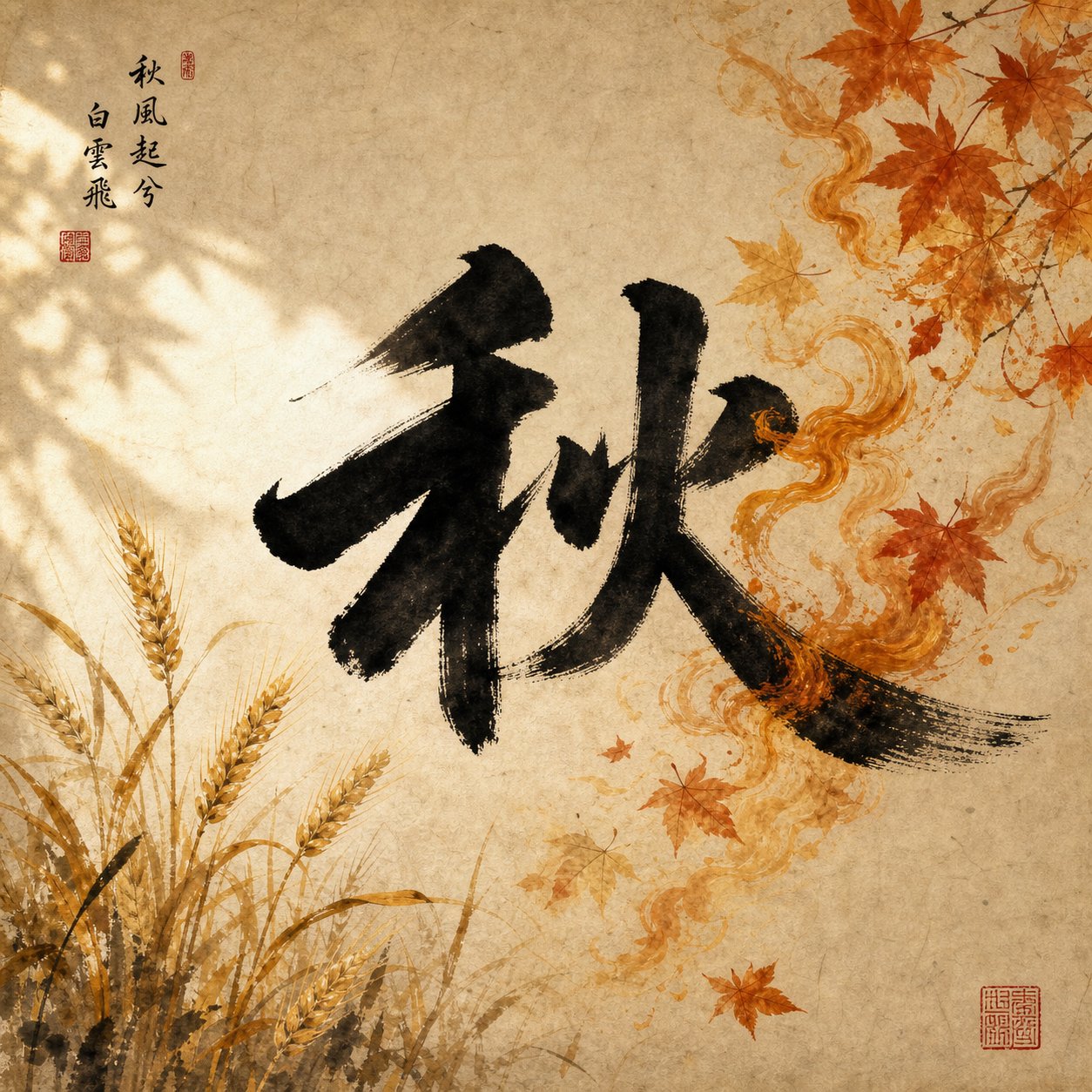
秋 (qiū) is the Chinese character for autumn or fall. It is pronounced in the first tone (high and level) and is composed of two radicals: 禾 (grain) and 火 (fire). The character has 9 strokes and encodes the ancient agricultural practice of drying or burning harvested grain, linking the season directly to its role in the farming cycle.
So what does 秋 mean in Chinese beyond the dictionary definition? At its core, the character represents the harvest season, but its internal structure reveals something unexpected: fire. That pairing of grain and fire is not random. It reflects how ancient Chinese communities experienced and understood this time of year.
If you want to know how to say autumn in Chinese, the answer is simple: qiū, spoken with a steady high tone. You will encounter this character everywhere, from weather reports and poetry to the name of the beloved Mid-Autumn Festival (中秋节).
Why Understanding 秋 Matters for Learners
For beginning Chinese students, memorizing characters as isolated symbols is exhausting and inefficient. Understanding the logic inside a character transforms rote memorization into meaningful learning. The 秋 meaning in English is "autumn," but knowing why it looks the way it does helps you remember it permanently and builds your ability to decode unfamiliar characters using the same radicals.
This article breaks down the construction, pronunciation, cultural symbolism, and literary life of 秋 so you can appreciate the full depth of this single character. The story starts with its two building blocks, and one of them might surprise you.
Breaking Down the Radicals of 秋
Chinese characters are not random drawings. They are built from smaller meaningful parts called radicals and components, and each piece contributes something to the whole. When you look at the components of the Chinese character qiu, you find two distinct elements sitting side by side: 禾 on the left and 火 on the right. Together, they paint a picture of a specific moment in the agricultural year.
Think of it like a tiny equation written in ink. Each radical brings its own meaning to the table, and the combination tells a story that has made sense to readers for thousands of years.
| Component | Character | Pinyin | Meaning | Stroke Count | Position in 秋 |
|---|---|---|---|---|---|
| Semantic radical (left) | 禾 | hé | Grain, cereal crops, harvest | 5 strokes | Left side |
| Semantic radical (right) | 火 | huǒ | Fire, flame, heat | 4 strokes | Right side |
| Full character | 秋 | qiū | Autumn, fall season | 9 strokes | Combined |
The Grain Radical 禾 and Its Meaning
The 禾 grain radical meaning traces back to one of the oldest pictograms in the Chinese writing system. Imagine a stalk of millet or rice bending under the weight of ripe grain heads. That is exactly what the earliest forms of 禾 depicted: a plant ready for harvest.
You will find 禾 in dozens of characters related to agriculture, crops, and the cycle of planting and reaping. Characters like 种 (zhǒng, to plant/seed), 稻 (dào, rice paddy), 积 (jī, to accumulate), and 税 (shuì, tax, which historically meant grain tribute) all carry this radical. Its presence signals that the character has something to do with cultivated plants or the products of farming.
In 秋, the grain radical anchors the character to the land. It tells you immediately that this word belongs to the world of agriculture and seasonal cycles.
The Fire Radical 火 and Its Role in 秋
Here is where things get interesting. Why does the autumn character have a fire radical? At first glance, fire and fall do not seem like obvious partners. Fire (火) is one of the most recognizable pictographic characters in Chinese. Its earliest oracle bone forms looked like flickering flames, and it still carries that visual energy today.
Fire appears in characters associated with heat, cooking, light, and transformation: 烧 (shāo, to burn), 灯 (dēng, lamp), 炒 (chǎo, to stir-fry). But in 秋, fire is not about destruction. It represents a specific agricultural action tied to the harvest season.
The radicals in the character 秋 work together because fire was essential to post-harvest processing. After cutting grain in autumn, farmers used fire to dry crops, burn stubble from cleared fields, and prepare the land for the next cycle. Fire was not the enemy of the harvest. It was the tool that completed it.
How the Two Radicals Create Meaning Together
When 禾 and 火 sit together in a single character, they form what Chinese linguists classify as a compound ideogram (会意字, huìyìzì). This category of characters combines two or more meaningful elements to express a concept that neither component conveys alone. The character 秋 is grain plus fire, and the resulting meaning is the season when that combination happens: autumn.
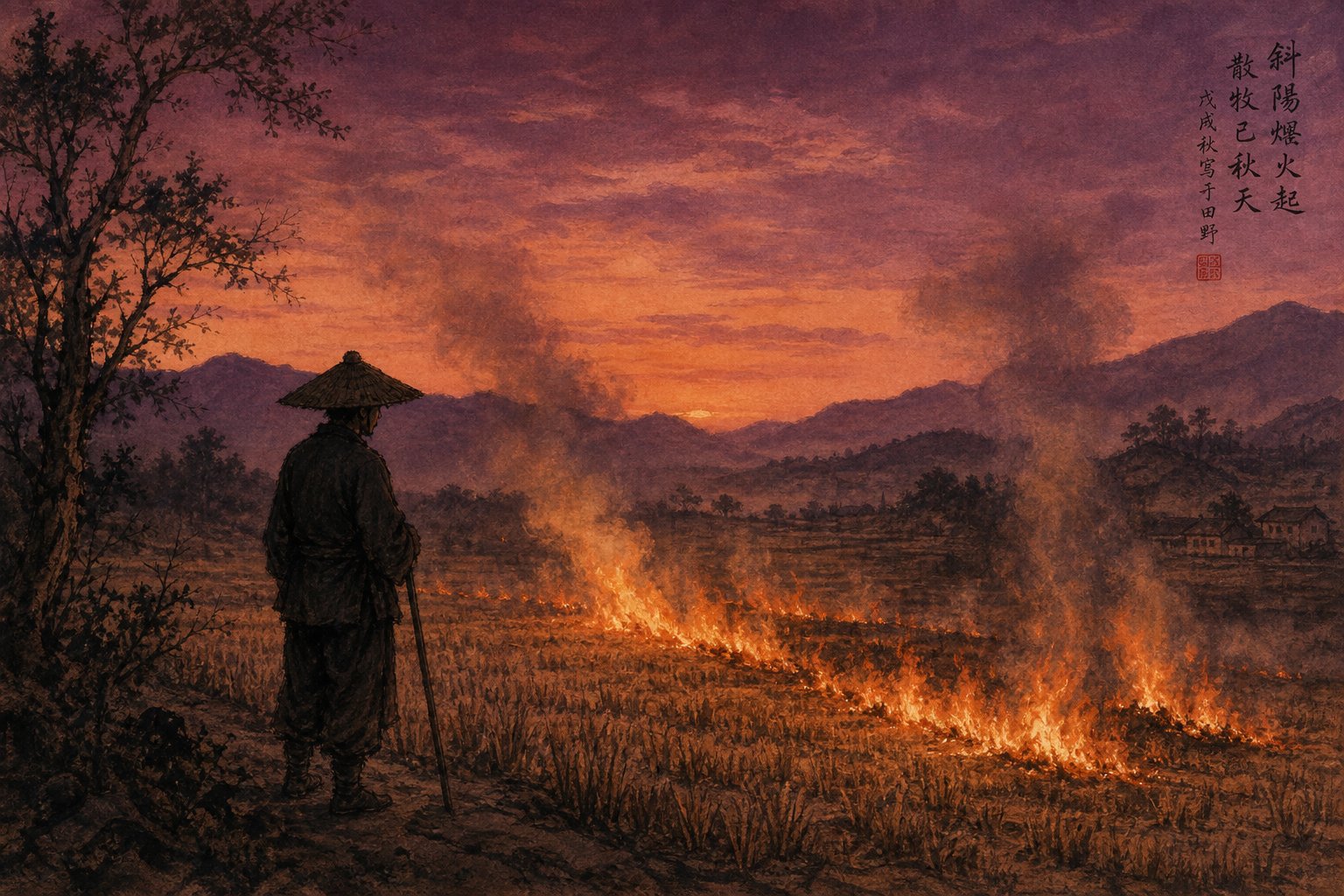
Picture a field after the harvest. Stalks have been cut. Farmers gather the dried grain and use fire to clear what remains. The air smells of smoke and earth. That scene is encoded directly into the character itself. Chinese characters are not arbitrary symbols. They are cultural memory compressed into brushstrokes.
This is what makes studying radicals so powerful for learners. Once you recognize 禾 and 火 inside 秋, the character stops being a shape you need to memorize by brute force. It becomes a scene you can visualize, a logic you can follow. And that same logic extends to hundreds of other characters built from these same components.
The real question remains, though: what exactly was the agricultural reasoning behind pairing grain with fire? The answer takes us deeper into the daily life of ancient Chinese farming communities.
Why the Autumn Character Contains Fire
Imagine standing at the edge of a freshly harvested field in ancient China. The grain has been cut, bundled, and carried away. What happens next? Farmers set fire to the remaining stubble. Smoke rises across the valley, ash settles into the soil, and the land is renewed for the coming year. That scene, repeated every autumn for millennia, is the reason why 秋 has fire baked into its structure.
This is not a coincidence or a quirk of calligraphy. The fire radical in the autumn character explained in its simplest terms comes down to lived experience. Ancient character creators did not sit in libraries inventing abstract symbols. They looked at the world around them and drew what they saw. Autumn was the season of fire on the land.
The Agricultural Logic Behind Fire in Autumn
In early Chinese farming communities, fire played several critical roles after the harvest season:
- Field clearing: burning leftover stalks and stubble removed debris and prepared the soil for the next planting cycle.
- Pest control: fire destroyed insect eggs, larvae, and weed seeds that would otherwise survive winter and damage future crops.
- Soil enrichment: the resulting ash acted as a natural fertilizer, returning nutrients like potassium and phosphorus to the earth.
- Grain drying: harvested grain needed to be dried before storage, and controlled fire or sun-heated surfaces helped reduce moisture content to prevent rot.
According to research on Chinese character etymology, early oracle bone script forms of 秋 actually depicted fire burning crops directly, making the agricultural connection even more explicit than the modern simplified form suggests. One ancient variant even resembled a locust with antennae and wings, linking autumn to the insects that swarmed during harvest time. Over centuries, the character stabilized into the grain-plus-fire form we recognize today.
So why does 秋 have fire? Because autumn was not just the season of reaping. It was the season of transformation through flame. The harvest was only half the story. Fire completed the cycle, turning what remained into fuel for the future.
This reveals a broader principle about how Chinese characters work. They are not arbitrary codes assigned to meanings. They encode cultural memory, preserving the daily realities of the people who created them. When you look at 秋, you are looking at a snapshot of agricultural life from over three thousand years ago, still legible today.
Memory Aids for Remembering 秋
Understanding the etymology is powerful, but you also need a quick mental hook for recall. Here is a mnemonic for remembering 秋 that ties the visual components to the meaning in a single phrase:
Grain (禾) near fire (火) = drying crops after harvest = autumn (秋).
You can also try a short story approach: picture a farmer holding a bundle of grain in one hand and a torch in the other. He is standing in his field at dusk, ready to burn the stubble. That image is the character. Left side: grain. Right side: fire. Season: autumn.
Another angle that helps some learners: think of the color palette. Autumn fields turn golden like ripe grain, and sunsets glow orange like fire. The character 秋 captures that warm color scheme in its components. Gold grain, orange flame, the whole visual world of fall compressed into nine brushstrokes.
These kinds of story-based mnemonics work because they engage the same logic the original character creators used. You are not fighting the character's design. You are working with it, letting the built-in meaning do the heavy lifting for your memory.
With the meaning and memory locked in, the next practical step is getting the character onto paper correctly, stroke by stroke, and making sure the pronunciation lands in the right tone.
How to Write and Pronounce 秋
Knowing what a character means is one thing. Getting it from your brain onto paper in the correct order is another skill entirely. Chinese characters follow strict stroke order rules, and 秋 is no exception. The good news? With only 9 strokes and a clear left-to-right structure, this character is approachable even for beginners. You just need to know where to start and which direction each stroke travels.
The same precision applies to pronunciation. A single tone shift can turn "autumn" into "ball," which makes tone accuracy essential from day one.
Stroke Order for Writing 秋
The 秋 stroke count and order follows the standard Chinese writing rule: left component first, then right component. You complete the entire grain radical 禾 (5 strokes) before moving to the fire radical 火 (4 strokes). Here is the full sequence:
- Stroke 1 (禾): Short horizontal stroke (横, héng) across the top of the left side. Write from left to right.
- Stroke 2 (禾): Vertical stroke with a slight leftward hook at the bottom (撇, piě). This line drops down from the center of the horizontal stroke.
- Stroke 3 (禾): Left-falling stroke (撇, piě) starting from the intersection point and sweeping down to the lower left.
- Stroke 4 (禾): Right-falling stroke (捺, nà) starting from the same intersection point and sweeping down to the lower right. This creates the "arms" of the grain stalk.
- Stroke 5 (禾): Short horizontal stroke (横, héng) crossing through the vertical line in the lower portion. This represents the base of the grain plant.
- Stroke 6 (火): Left dot (点, diǎn) placed at the upper left area of the right component. A quick downward-left press.
- Stroke 7 (火): Right dot (点, diǎn) placed at the upper right area. A quick downward-right press.
- Stroke 8 (火): Left-falling stroke (撇, piě) sweeping from center down to the lower left.
- Stroke 9 (火): Right-falling stroke (捺, nà) sweeping from center down to the lower right, completing the fire radical.
A few practical tips: keep the left and right components roughly equal in width. The grain radical should not crowd the fire radical. Leave a small gap between them so the character breathes on the page. When practicing how to write 秋 stroke order correctly, trace it slowly at first, focusing on proportions rather than speed.
Pronouncing Qiū Correctly
How do you pronounce qiu in Chinese? The pinyin is qiū, and it sits in the first tone, meaning your voice stays high and level throughout the syllable. Imagine holding a single musical note at the top of your comfortable range without letting it dip or rise. That steady, flat pitch is the first tone.
Breaking the sound down further:
- Initial: q- This is not the English "kw" sound. In Mandarin, "q" is a sharp, aspirated sound made with the tongue pressed against the roof of the mouth, similar to a forceful "ch" in "cheese" but lighter and further forward.
- Final: -iū This combines "ee" with a rounded "oo." Start with your lips spread for the "ee" sound, then smoothly glide into a rounded "oo" shape. The whole vowel glides as one unit.
- Tone: first (high level) Keep your pitch steady and elevated from start to finish. No dipping, no rising.
A helpful qiu first tone pronunciation guide trick: say the English word "chew" but replace the "ch" with Mandarin "q" and hold the pitch perfectly flat. That gets you close to the target sound.
Common Tone Mistakes to Avoid
Here is where many beginners stumble. Mandarin has four main tones, and mixing them up changes meaning completely. The most common confusion with 秋 involves the second tone:
| Pinyin | Tone | Tone Pattern | Meaning | Character |
|---|---|---|---|---|
| qiū | 1st tone | High and level (—) | Autumn, fall | 秋 |
| qiú | 2nd tone | Rising (/) | Ball; to seek | 球; 求 |
| qiǔ | 3rd tone | Dipping (∨) | (rare usage) | — |
| qiù | 4th tone | Falling (\) | (rare usage) | — |
The danger zone is qiū versus qiú. Saying "I love qiú" instead of "I love qiū" turns a poetic statement about autumn into a declaration about sports equipment. In conversation, context usually saves you, but in dictation exercises or tonal drills, this pair trips up learners constantly.
Try this tone-pair practice: say qiū (flat and high) followed immediately by qiú (starting lower and rising up). Repeat them back to back until you can feel the difference in your throat and hear it clearly. Then mix them into short phrases:
- 秋天 (qiūtiān) — autumn, first tone then first tone. Both syllables stay high and level.
- 足球 (zúqiú) — football/soccer, second tone then second tone. Both syllables rise.
Practicing these pairs side by side trains your ear and your muscle memory simultaneously. You will notice that the physical sensation of holding a flat tone versus letting it rise becomes distinct with repetition.
Once the stroke order feels natural and the tone sits comfortably in your voice, you are ready to see how 秋 lives beyond the practice page, carrying centuries of cultural weight in Chinese philosophy and tradition.
What Autumn Symbolizes in Chinese Culture
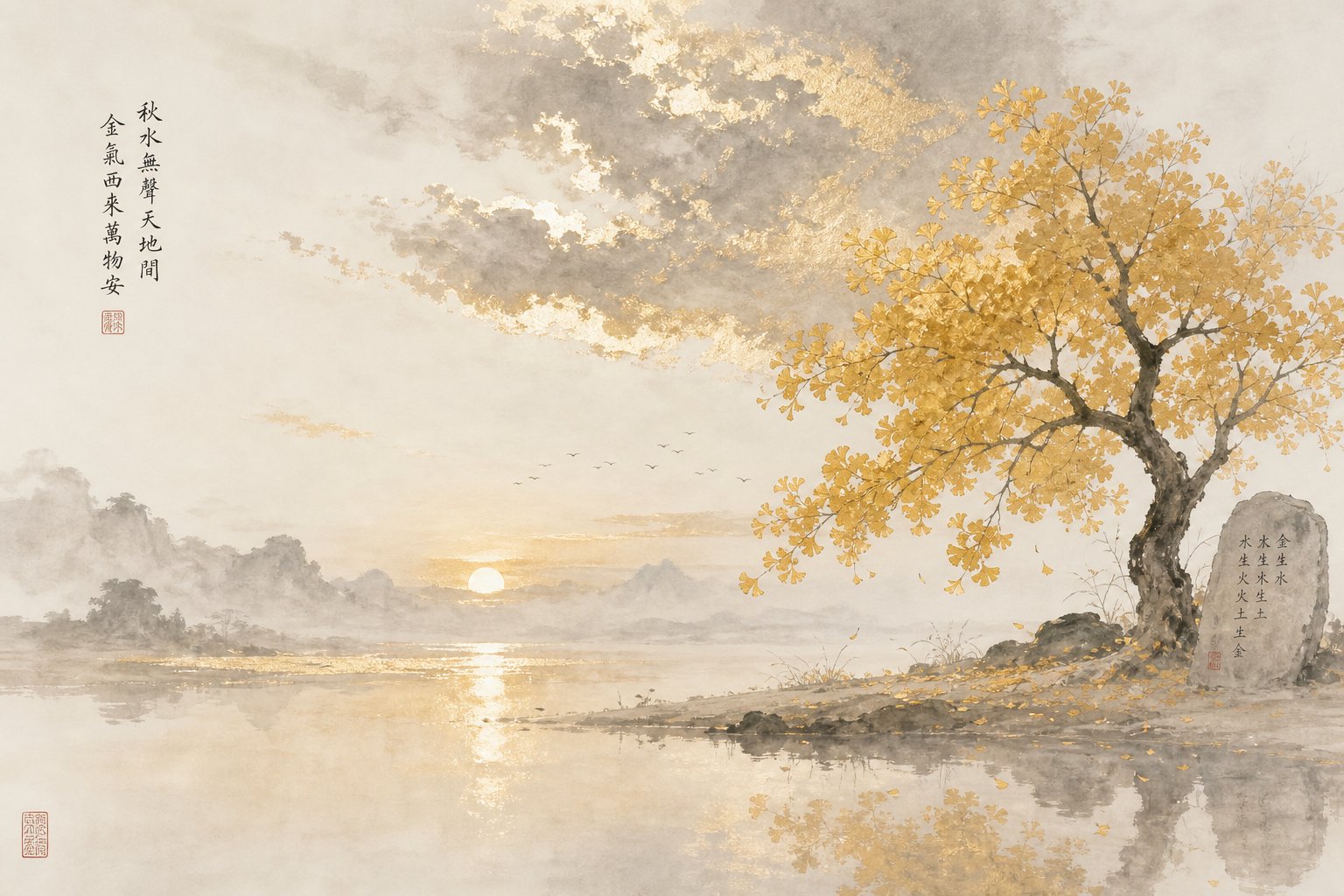
A character that encodes fire and grain in its brushstrokes naturally carries more than a calendar definition. In Chinese thought, 秋 is not just a season. It is a philosophical concept, a mood, and a stage of life. The chinese cultural meaning of fall season reaches into medicine, cosmology, ethics, and art, shaping how people relate to the world as leaves turn and temperatures drop.
Autumn as Harvest and Maturity in Chinese Culture
What does autumn represent in China at its most fundamental level? Harvest and completion. Spring plants the seed, summer nurtures growth, and autumn collects the results. This makes 秋 a natural metaphor for maturity, the point in any process where effort finally yields tangible rewards.
You will hear this metaphor across everyday Chinese life:
- A person in the "autumn" of their career has accumulated wisdom and is reaping professional rewards.
- The phrase 春华秋实 (chūnhuá qiūshí, "spring blossoms, autumn fruit") describes how early effort leads to later achievement.
- Autumn festivals center on gratitude and gathering, celebrating abundance rather than striving.
There is also a quieter dimension. Autumn signals that the peak has passed. The longest days are behind, and what follows is contraction, stillness, winter. This gives 秋 an undertone of reflection and even gentle melancholy. It is the season for looking back at what was accomplished and accepting what was not.
秋 in Chinese Philosophical Traditions
In traditional Chinese cosmology, the Five Elements theory (五行, wǔxíng) maps each season onto an element, direction, color, organ, and emotion. Autumn occupies a specific position in this system that shapes everything from traditional medicine to feng shui.
The five elements theory autumn metal connection works like this: autumn corresponds to the Metal element (金, jīn). Metal represents clarity, precision, structure, and the ability to let go. Think of a blade cutting cleanly through what is no longer needed, the way autumn strips leaves from branches and clears the landscape down to essentials.
Other correspondences in this system include:
- Direction: West, where the sun sets, reinforcing themes of endings and completion.
- Color: White, associated with purity and mourning in Chinese culture.
- Organ: Lungs, which govern breath and are considered vulnerable in dry autumn air.
- Emotion: Grief or sadness (悲, bēi), the natural feeling of release and letting go.
This is why traditional Chinese medicine recommends nourishing the lungs in autumn with moistening foods like pears and white fungus. The season, the element, and the body are all connected in a single coherent framework. The autumn symbolism in chinese culture is not decorative. It is structural, woven into how people eat, heal, and orient their homes.
Eastern vs Western Autumn Symbolism
Western cultures also associate autumn with harvest and change, but the philosophical framing differs in revealing ways. Where Chinese thought places autumn within a cyclical cosmological system, Western traditions tend to emphasize linear progression and individual emotion.
| Aspect | Chinese Autumn Symbolism | Western Autumn Symbolism |
|---|---|---|
| Core theme | Harvest, maturity, letting go | Harvest, nostalgia, decline |
| Philosophical system | Five Elements (Metal), cyclical cosmology | Linear time, memento mori |
| Emotional tone | Reflective grief (悲), dignified release | Romantic melancholy, coziness |
| Associated direction | West (sunset, completion) | No fixed directional link |
| Color associations | White, gold | Orange, red, brown |
| Relationship to death | Natural phase in an eternal cycle | Foreshadowing of mortality |
| Key festivals | Mid-Autumn Festival (reunion, gratitude) | Halloween, Thanksgiving |
Notice how the Chinese framework treats autumn as one turn of a wheel that never stops. There is sadness, yes, but it is the sadness of natural rhythm rather than permanent loss. Western autumn poetry often leans harder into endings and mortality. Both traditions find beauty in the season, but the underlying logic differs.
This philosophical depth is exactly what makes 秋 such a rich character for learners to study. It is a doorway into an entire worldview. And that worldview comes alive most vividly in the everyday words, idioms, and festival names that carry 秋 into modern Chinese life.
Common Chinese Words and Phrases Using 秋
A character only becomes useful when you see it working inside real words and sentences. On its own, 秋 means autumn. Paired with other characters, it unlocks an entire vocabulary of seasons, festivals, and proverbial wisdom that you will encounter in textbooks, conversations, and media across the Chinese-speaking world.
Essential Vocabulary with 秋
The most common chinese words with 秋 are compound words where the character combines with another to specify a particular aspect of the season. Here are the ones you will meet first and use most often:
| Characters | Pinyin | English Meaning | Example Context |
|---|---|---|---|
| 秋天 | qiūtiān | Autumn, fall (general) | 北京的秋天很美。(Beijing's autumn is beautiful.) |
| 秋季 | qiūjì | Autumn season (formal) | 秋季是旅游的好时候。(Autumn season is a good time for travel.) |
| 秋收 | qiūshōu | Autumn harvest | 农民们忙着秋收。(The farmers are busy with the autumn harvest.) |
| 中秋节 | Zhōngqiū Jié | Mid-Autumn Festival | 中秋节我们一家人吃月饼。(Our family eats mooncakes during the Mid-Autumn Festival.) |
| 秋风 | qiūfēng | Autumn wind | 秋风吹落了树叶。(The autumn wind blew down the leaves.) |
| 秋叶 | qiūyè | Autumn leaves | 公园里的秋叶变红了。(The autumn leaves in the park turned red.) |
What is the difference between 秋天 and 秋季? Think of it this way: 秋天 meaning in english is simply "autumn" or "fall" and works in casual conversation. 秋季 is more formal, the version you would see in weather reports, academic writing, or official schedules. Both refer to the same season, but 秋季 carries a slightly more structured tone.
The mid autumn festival chinese characters, 中秋节, deserve special attention. The word literally breaks down as 中 (middle) + 秋 (autumn) + 节 (festival), referring to the 15th day of the eighth lunar month, when the moon is fullest. It is the second most important holiday in China after Chinese New Year, centered on family reunion, mooncakes (月饼), and moon-gazing (赏月). Knowing this single compound word opens the door to an entire cultural tradition.
Idioms and Expressions Using 秋
Chinese idioms about autumn reveal how deeply the season is embedded in the language's proverbial wisdom. These four-character expressions (成语, chéngyǔ) pack entire stories into compact phrases. Here are the most useful ones for learners:
- 一叶知秋 (yī yè zhī qiū) — Literally "one leaf knows autumn." This idiom means that small signs reveal the big picture. When a single leaf falls, you know the whole season is turning. It originated from Song Dynasty naturalist writings and is used today in business and political analysis to describe recognizing major shifts from early warning signs. Example: an experienced investor notices one data point shifting and predicts the market trend before anyone else. That is 一叶知秋 in action.
- 春华秋实 (chūnhuá qiūshí) — "Spring blossoms, autumn fruit." Hard work in the early stages leads to tangible results later. You plant effort in spring and harvest rewards in autumn. Often used to praise someone whose years of dedication have finally paid off.
- 多事之秋 (duōshì zhī qiū) — "An autumn of many events." This refers to a troubled or turbulent period. Autumn here carries its association with decline and difficulty, describing times when problems pile up. You might hear it in news commentary about political instability or economic uncertainty.
- 秋高气爽 (qiūgāo qìshuǎng) — "Autumn sky high, air refreshing." A purely positive expression describing the crisp, clear weather of early fall when the sky feels vast and the air is cool and dry. Perfect for describing a beautiful autumn day or setting the scene in writing.
The 一叶知秋 meaning and usage extends beyond nature observation. In modern Chinese, people apply it to relationships, careers, and market trends. Whenever someone detects a larger pattern from a single clue, this idiom fits. It is one of those expressions that sounds elegant in conversation and signals a certain cultural literacy when used well.
Notice how these idioms carry different emotional registers. Some celebrate autumn's beauty and bounty. Others use the season as a metaphor for difficulty or decline. That emotional range mirrors the philosophical duality explored earlier: autumn is simultaneously a time of abundance and a time of letting go. The vocabulary and idioms built around 秋 capture both sides, giving learners a richer palette for expressing nuance in Chinese. And for those drawn to the melancholic side of that palette, classical Chinese poetry has spent centuries exploring exactly that territory.
秋 in Chinese Literature and Poetry
Centuries of poets have reached for 秋 when they needed a single character to hold longing, beauty, and the ache of passing time all at once. In classical Chinese literature, autumn is not just a backdrop. It is a protagonist, a mood, and a mirror for the human condition. The character appears in thousands of poems spanning every dynasty, carrying emotional weight that far exceeds its nine strokes.
秋 in Classical Chinese Poetry
Chinese poems about autumn form one of the richest veins in the entire literary tradition. Three Tang and Song Dynasty poets illustrate how differently the same season can resonate.
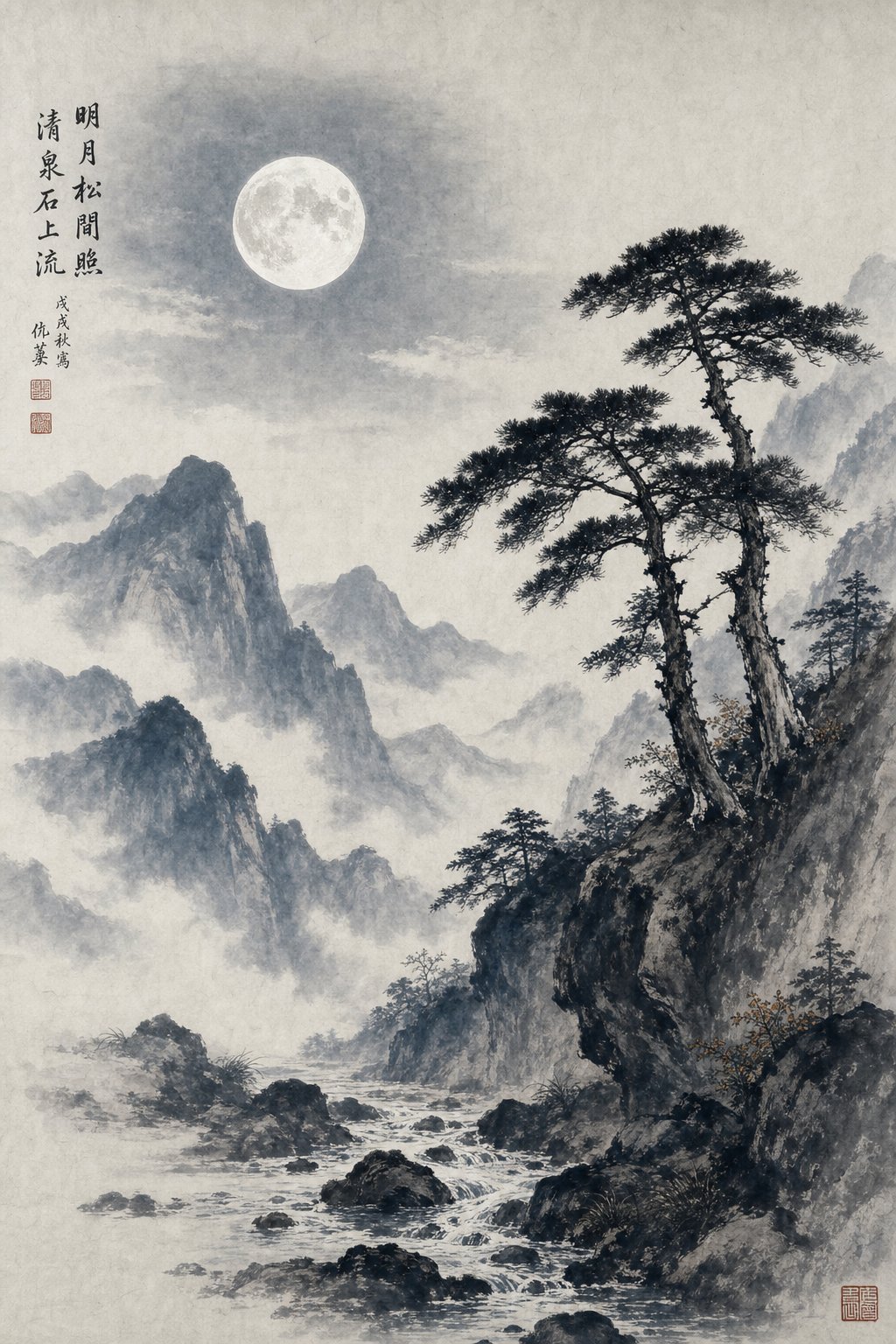
Wang Wei (699-759), one of the greatest landscape poets in Chinese history, captured autumn's quiet beauty in his poem Autumn Evening in the Mountains (山居秋暝):
After fresh rain in the bare mountains, autumn permeates the evening air. Among pine trees bright moonbeams peer; over crystal stones flows water clear.
Wang Wei's autumn is serene and luminous. The rain has washed the mountains clean, moonlight filters through pines, and spring water murmurs over rocks. His verses paint autumn as a season of clarity and spiritual renewal, a time when the natural world reveals its purest form. Wang spent much of his life as a court official and devoted Buddhist, and his poetry reflects that desire to step away from worldly noise into something timeless.
Liu Yuxi (772-842) took a deliberately contrarian stance. In his Song of Autumn (秋词), he challenged the dominant literary mood head-on:
Since olden days we feel sad and drear in autumn, but I say spring cannot compete with autumn. On a fine day a crane cleaves the clouds and soars high; it leads the poet's lofty mind to the azure sky.
Liu wrote this after enduring political exile and personal hardship, yet his autumn is triumphant rather than mournful. The image of a crane soaring through clouds became a symbol of resilience and ambition. His poem reminds learners that 秋 in classical chinese literature is not locked into a single emotional register. The character can carry defiance and joy just as easily as sorrow.
Song Dynasty scholar Zhu Xi (1130-1200) offered yet another angle in Autumn Moon (秋月), describing a clear stream flowing past green hills where "white clouds and red leaves move leisurely." His autumn is contemplative and detached, a space for philosophical reflection far from the "unclean, tumultuous world."
The Literary Theme of Autumn Melancholy
Despite poets like Liu Yuxi pushing back, the dominant literary tradition surrounding 秋 is 悲秋 (bēiqiū), autumn melancholy. This concept is so deeply embedded in Chinese literary culture that Liu felt compelled to argue against it explicitly, which only proves how powerful the convention was.
The 悲秋 autumn melancholy meaning goes beyond simple sadness about cold weather. It encompasses:
- Longing for the absent: autumn's fading warmth mirrors separation from loved ones, making it the season of homesickness and romantic yearning.
- Awareness of impermanence: falling leaves and withering plants become visible proof that beauty does not last, prompting reflection on mortality.
- Political frustration: many poets wrote autumn poems during exile or after failed careers at court, channeling personal disappointment into seasonal imagery.
- The beauty within sadness: crucially, 悲秋 is not despair. It is an aesthetic appreciation of transience, finding something exquisite in the very fact that things pass.
悲秋 is not about being defeated by sadness. It is about finding depth and beauty in the recognition that all things change.
This literary tradition transforms 秋 from a calendar word into an emotional shorthand. When a modern Chinese reader encounters the character in a poem or song lyric, it activates centuries of accumulated feeling. The grain-and-fire etymology gives the character its logical foundation, but 悲秋 gives it its soul.
That emotional resonance did not stay confined to China. As the character traveled across East Asia through shared writing systems and literary exchange, it carried its poetic weight into new languages and new cultural contexts.
How 秋 Works Across East Asian Languages
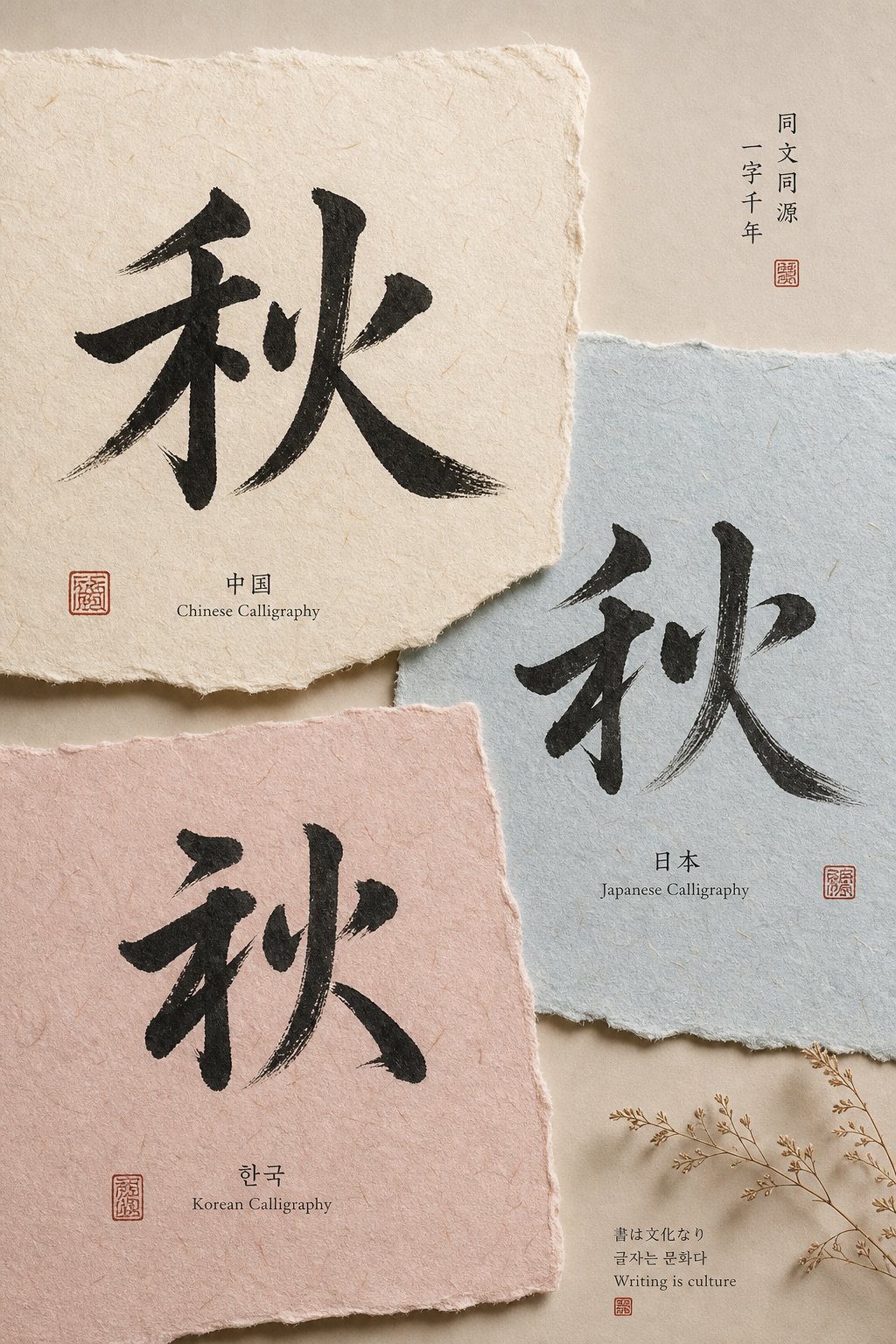
The character 秋 did not remain a purely Chinese possession. When writing systems spread from China to neighboring cultures over centuries of trade, diplomacy, and scholarly exchange, characters traveled with them. Today, 秋 appears in Mandarin, Cantonese, Japanese, and Korean (where it survives in formal or literary contexts despite the shift to Hangul). The shape stays the same. The grain radical still sits beside the fire radical. But the pronunciation, reading conventions, and cultural flavor shift depending on which language you encounter it in.
For learners studying more than one East Asian language, or simply curious about how a single character can sound so different across borders, this comparison reveals how deeply 秋 has rooted itself across the region.
| Language | Character | Pronunciation | Reading Type | Usage Notes |
|---|---|---|---|---|
| Mandarin Chinese | 秋 | qiū (1st tone) | Standard reading | Used in everyday speech, writing, poetry, and compound words like 秋天 and 中秋节. |
| Cantonese Chinese | 秋 | cau1 (high level tone) | Standard reading | Same written usage as Mandarin; spoken form differs. Common in Hong Kong and Guangdong media. |
| Japanese (on'yomi) | 秋 | shū | Sino-Japanese (音読み) | Used in formal compounds like 秋分 (shūbun, autumn equinox) and literary contexts. |
| Japanese (kun'yomi) | 秋 | aki | Native Japanese (訓読み) | The everyday word for autumn. Used in speech, names, and casual writing. |
| Korean | 秋 | chu (추) | Sino-Korean | Appears in formal vocabulary like 추석 (Chuseok, harvest festival) and literary writing. |
秋 in Mandarin and Cantonese
Within Chinese itself, the pronunciation gap between dialects is striking. Mandarin speakers say qiū with a high, level first tone. Cantonese speakers say cau1, also in a high level tone but with a completely different vowel sound. If you are wondering how to say autumn in Cantonese, think of it as roughly "chow" with a high flat pitch, though romanization systems like Jyutping represent it as cau1.
The written character is identical in both varieties. A text message, newspaper headline, or poem using 秋 looks the same whether written by someone in Beijing or Hong Kong. The divergence is purely phonetic, a reminder that Chinese "dialects" are really separate spoken languages sharing a unified writing system. This is one reason why character literacy remains so central to Chinese culture: the written form bridges spoken differences that would otherwise make communication across regions difficult.
In both Mandarin and Cantonese, 秋 carries the same cultural weight. Mid-Autumn Festival is 中秋節 in traditional characters regardless of dialect, and the literary associations with harvest, melancholy, and reflection apply equally. A Cantonese speaker reading a Tang Dynasty autumn poem accesses the same emotional resonance as a Mandarin speaker, even though they would recite it in entirely different sounds.
秋 in Japanese as Aki
Japanese inherited thousands of Chinese characters (called kanji in Japanese) beginning around the 5th and 6th centuries. Each kanji typically has at least two readings: an on'yomi (sound reading derived from the original Chinese pronunciation at the time of borrowing) and a kun'yomi (native Japanese word mapped onto the character's meaning).
For 秋, the aki kanji meaning autumn is the native Japanese reading, the one used in everyday conversation. When a Japanese speaker talks about the fall season, they say aki. It appears in common expressions like 秋祭り (aki matsuri, autumn festival) and the beloved phrase 食欲の秋 (shokuyoku no aki, "autumn of appetite"), referring to the Japanese cultural idea that fall is the season for eating well.
The on'yomi reading shū shows up in more formal or compound contexts. 秋分 (shūbun) means the autumn equinox, and 秋季 (shūki) is the formal term for autumn season, paralleling the Chinese 秋季 (qiūjì). You will notice that shū sounds closer to an ancient Chinese pronunciation than modern Mandarin qiū does, because Japanese borrowed the sound over a thousand years ago and preserved an older phonetic layer.
Culturally, 秋 in Japanese carries many of the same associations as in Chinese: harvest, moon-viewing (月見, tsukimi), maple leaves (紅葉, momiji), and a bittersweet awareness of passing time. The character also appears frequently in Japanese given names. Aki is a popular name element for girls, evoking elegance and the beauty of the season. Names like 秋子 (Akiko) and 千秋 (Chiaki, "a thousand autumns") reflect how positively the character resonates in Japanese naming culture.
Modern Cultural References and Memes
In the age of social media, 秋 has taken on lighter, playful dimensions alongside its classical gravitas. One widely shared phenomenon is the "first cup of milk tea in autumn" (秋天的第一杯奶茶) trend that explodes across Chinese social platforms every year around the autumn equinox. The idea is simple: when autumn arrives, you ask your partner or close friend to send you money for a milk tea, proving they care about you as the weather turns cool. It started as a viral moment and has become an annual ritual, blending consumerism, romance, and seasonal awareness into a single meme.
This trend is interesting because it shows how the character 秋 still functions as a cultural trigger. The mere arrival of the season activates social behavior, even in a generation that may never have read a Tang Dynasty poem. The ancient associations of autumn with warmth, care, and togetherness (think Mid-Autumn Festival reunions) have simply been repackaged into a digital-age expression.
In Japanese internet culture, aki similarly appears in seasonal hashtags, food photography trends, and anime aesthetics celebrating autumn foliage. The character bridges the ancient and the contemporary effortlessly because its core meaning, a season of beauty and change, remains universally relatable regardless of the medium.
What holds true across all these languages and contexts is this: 秋 has never lost its meaning. Whether pronounced qiū, cau1, aki, or shū, whether carved into oracle bones or typed into a smartphone, the character still points to the same season, the same harvest, the same fire-dried grain. That continuity across thousands of years and multiple languages is rare in human communication, and it speaks to the durability of the logic embedded in those nine strokes.
With pronunciation, cultural context, and cross-linguistic awareness in place, the final step is pulling all these threads together into a practical framework for continued study.
Bringing It All Together for Your Studies
Nine strokes. Two radicals. Thousands of years of cultural memory. The character 秋 is a small window into how the Chinese writing system works at its deepest level, and everything you have learned about it applies to hundreds of other characters waiting in your study queue.
Key Takeaways About 秋
- Structure tells a story: 禾 (grain) + 火 (fire) = the season when harvested crops are dried and fields are burned. The character is not arbitrary. It is a compressed image of ancient agricultural life.
- Pronunciation requires precision: qiū sits in the first tone (high and level). Confusing it with second-tone qiú changes autumn into a ball.
- Cultural depth runs far beyond the dictionary: 秋 connects to the Metal element in Five Elements theory, the literary tradition of 悲秋 (autumn melancholy), and festivals like 中秋节 that remain central to Chinese life today.
- Vocabulary builds outward: from 秋天 and 秋季 to idioms like 一叶知秋, the character anchors an entire network of words and expressions you will encounter at every proficiency level.
- The character travels across languages: whether read as qiū, cau1, aki, or shū, the same nine strokes carry recognizable meaning throughout East Asia.
Next Steps for Your Chinese Learning Journey
How do you turn this knowledge into lasting ability? Here is a practical path forward:
Practice the physical character. Write 秋 by hand using the stroke order outlined earlier. Start slow, focusing on proportions between the left and right components. Even five repetitions a day builds muscle memory. Use grid paper (田字格) to keep your strokes balanced, and as research on character learning suggests, combine writing practice with mnemonic visualization for stronger retention.
Learn the compound words in context. Do not memorize 秋天, 秋收, and 中秋节 as isolated flashcard entries. Read them inside sentences. Listen for them in podcasts or graded readers. Contextual learning helps you remember how characters function in real language rather than just what they mean in a dictionary.
Apply the radical method to new characters. The best way to study chinese radicals is to treat every new character the way you treated 秋: break it apart, identify the components, and ask what story they tell together. Once you recognize 禾 inside 秋, you will spot it in 种, 稻, 积, and dozens of other characters. Each radical you learn becomes a key that unlocks a whole family of vocabulary.
Explore the poetry. Read one autumn poem in Chinese, even if you need a translation beside it. The emotional associations of 秋 will deepen your feel for the character in ways that textbook drills cannot replicate.
Learning how to remember chinese character 秋 is really about learning how to remember any character: understand its logic, connect it to culture, use it in real words, and write it with your own hand. When you learn chinese characters about seasons this way, treating each one as a small cultural artifact rather than a random shape, memorization stops being a grind. It becomes discovery.
Frequently Asked Questions About the Autumn Chinese Character
1. Why does the Chinese character for autumn contain the fire radical?
The fire radical 火 in 秋 reflects ancient Chinese agricultural practices. After the autumn harvest, farmers burned leftover field stubble to clear land, control pests, and enrich soil with ash. They also used fire or heat to dry harvested grain before storage. The character preserves this cultural memory by combining 禾 (grain) with 火 (fire), encoding the season when fire transformed the post-harvest landscape.
2. How do you write and pronounce the Chinese character 秋?
秋 has 9 strokes written left to right: first the grain radical 禾 (5 strokes), then the fire radical 火 (4 strokes). It is pronounced qiū in Mandarin with the first tone, meaning your voice stays high and level throughout. The initial 'q' sounds like a sharp 'ch' in 'cheese' but lighter, and the final '-iū' glides from an 'ee' sound into a rounded 'oo.' Be careful not to use the second tone (qiú), which means 'ball' instead of 'autumn.'
3. What does autumn symbolize in Chinese culture?
In Chinese culture, autumn symbolizes harvest, maturity, and reflective letting go. Within Five Elements theory, it corresponds to the Metal element, the west direction, the color white, and the emotion of grief. Autumn represents the point where effort yields results, but also signals that the peak has passed. In literature, the concept of 悲秋 (autumn melancholy) treats the season as a space for contemplating impermanence and finding beauty in transience.
4. What are common Chinese words and idioms that use 秋?
Essential vocabulary includes 秋天 (qiūtiān, autumn), 秋季 (qiūjì, autumn season), 中秋节 (Zhōngqiū Jié, Mid-Autumn Festival), and 秋收 (qiūshōu, autumn harvest). Popular idioms include 一叶知秋 (one leaf signals autumn, meaning small signs reveal the big picture), 秋高气爽 (crisp and clear autumn weather), and 多事之秋 (a turbulent period). These expressions appear frequently in both everyday conversation and formal writing.
5. Is the character 秋 used the same way in Japanese and other East Asian languages?
The character 秋 appears across East Asian languages with the same written form but different pronunciations. In Japanese, it has two readings: aki (native Japanese, used in everyday speech) and shū (Sino-Japanese, used in formal compounds like 秋分). In Cantonese, it is pronounced cau1, and in Korean it reads as chu (추), appearing in words like 추석 (Chuseok harvest festival). The core meaning of autumn remains consistent across all these languages.