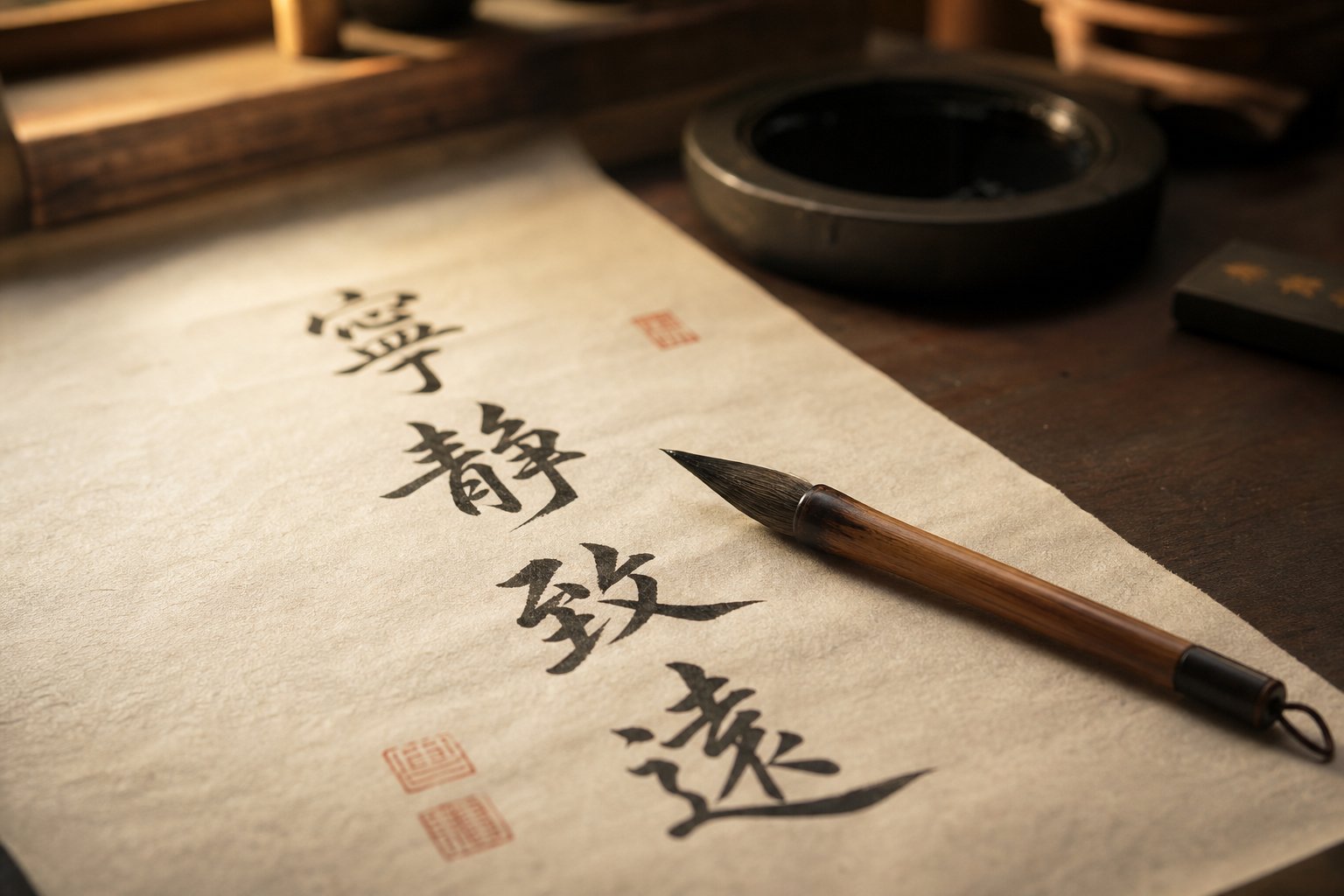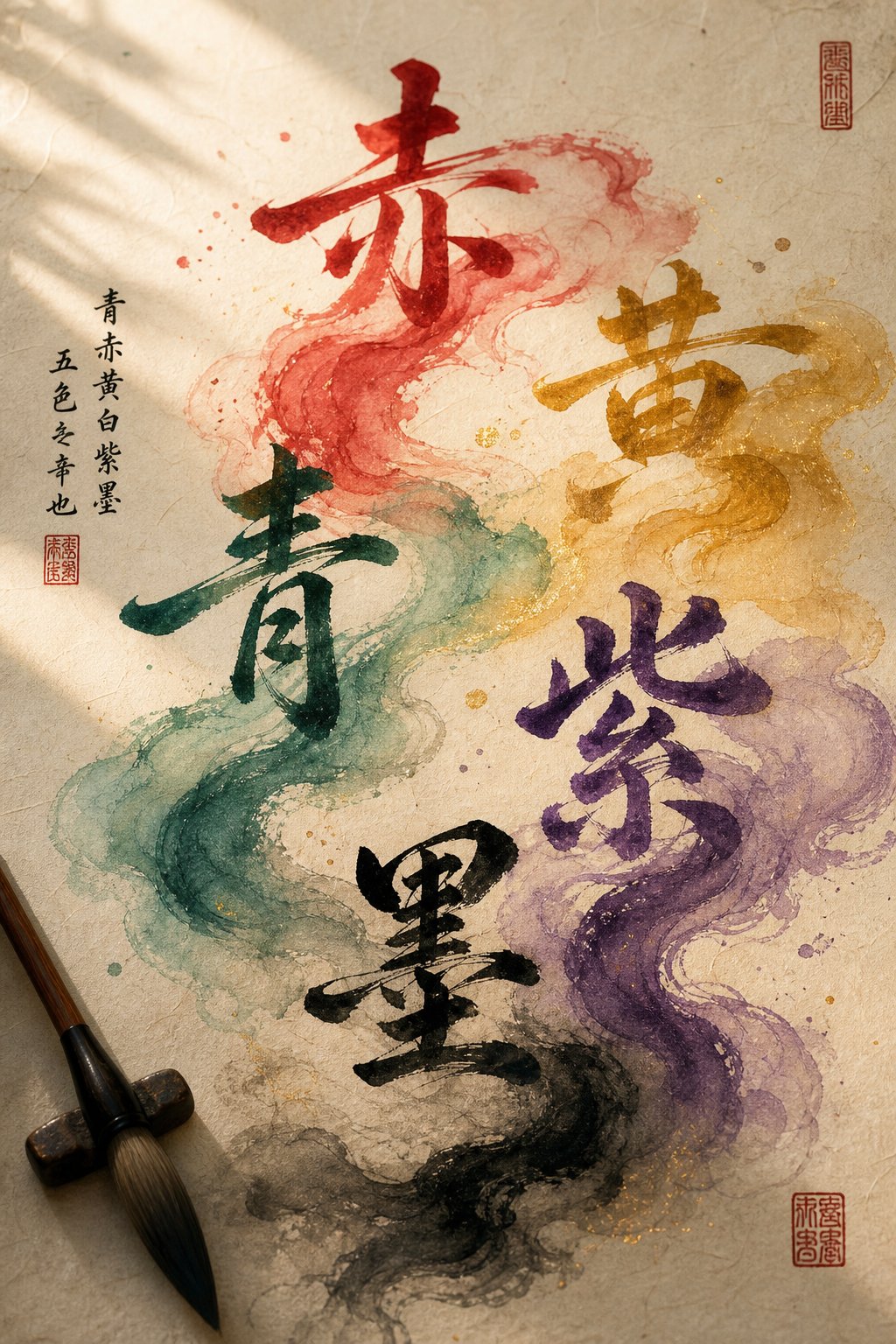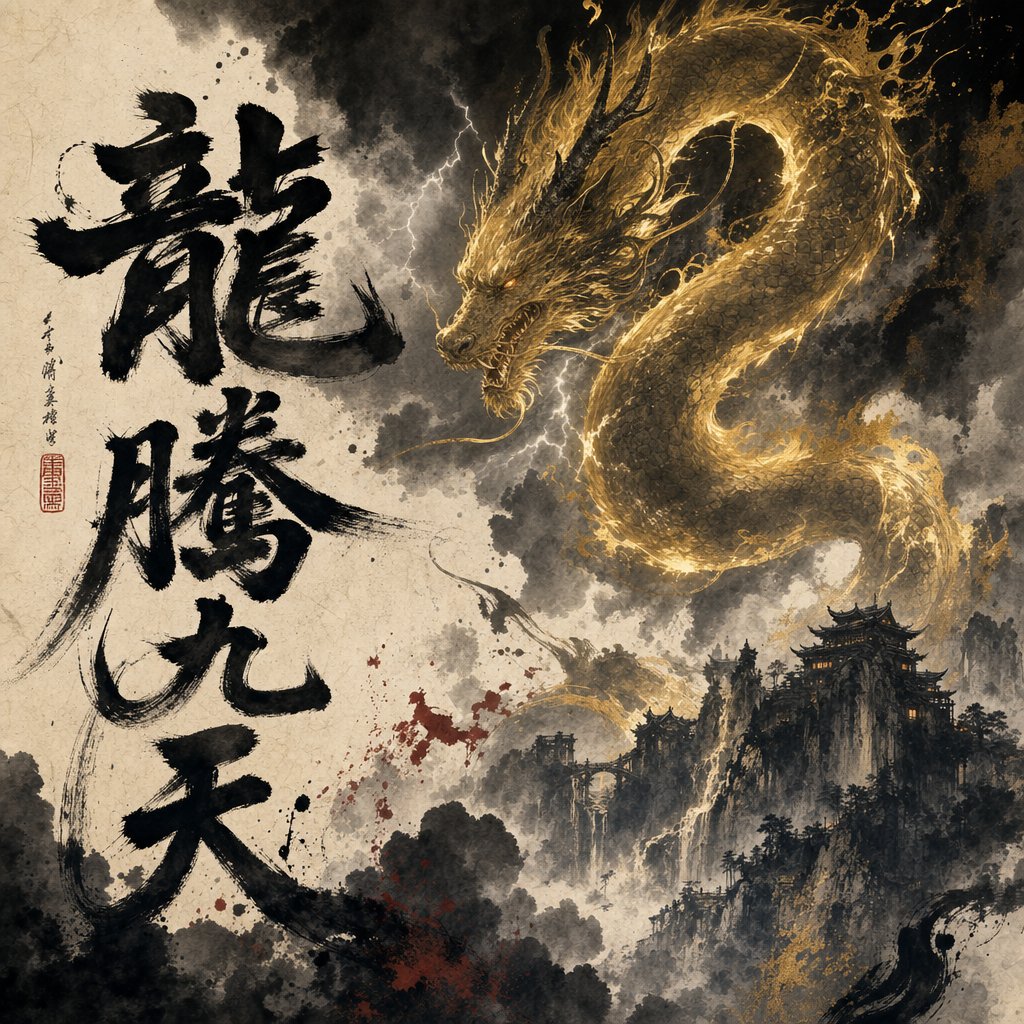
What Makes a Chinese Nickname Truly Badass
When you hear a name like 战神 (God of War) or 铁拳 (Iron Fist), something registers before you even understand the meaning. The sharp consonants, the falling tones, the angular strokes of the characters themselves all project force. That visceral reaction is exactly what separates a forgettable chinese nickname from one that commands a room.
What Makes a Chinese Nickname Badass
A truly fierce chinese nickname operates on three levels simultaneously. First, the characters carry visual weight. Chinese writing evolved from pictographs, where strokes literally depicted objects and forces. A character like 龙 (dragon) still echoes its ancient pictographic roots, its form suggesting coiled power. Second, the phonetic delivery matters. Mandarin's four tones mean that a name spoken in the sharp, descending fourth tone hits the ear like a command rather than a question. Third, the semantic layer creates meaning that compounds with each additional character, building something greater than the sum of its parts.
Unlike alphabetic names that rely purely on sound and cultural association, Chinese characters encode meaning visually in their very structure. A single powerful character can contain radicals for blade, fire, or thunder, making the name's ferocity visible before it is ever spoken aloud.
This triple-layered intensity is why nicknames in chinese culture carry a weight that simple transliterations can never replicate. Funny chinese nicknames exist too, of course, but the fierce ones tap into something primal about how the language encodes power.
The Power of Naming in Chinese Culture
Naming in Chinese tradition is not casual. It is an act believed to shape destiny. As Temple University's Center for Chinese Language Instruction explains, the process of naming is believed to influence a person's destiny, with names for boys often symbolizing strength and power. This belief extends well beyond birth names. The concept of 命名力量 (mìngmíng lìliàng), or "naming power," suggests that the right combination of characters can channel authority, resilience, and intimidation into the person who carries them.
Chinese communities across East Asia hold that a name affects luck in every aspect of life, from career prospects to personal relationships. BBC Worklife reports that feng shui practitioners analyze the five elements (fire, wood, water, metal, earth) embedded in characters to ensure balance and potency. When someone adopts a fierce nickname, they are not just picking something that sounds cool. They are selecting characters whose elemental composition and tonal delivery project a specific kind of energy into the world.
That cultural seriousness is precisely what gives badass nicknames in chinese their legitimacy. They are not random words strung together for shock value. They draw from millennia of belief that language shapes reality. The question becomes: which type of nickname carries the most edge?
Understanding the Three Types of Chinese Nicknames
Not all Chinese nicknames are built the same. Some are whispered by grandmothers over sleeping toddlers. Others are earned through reputation, fear, or sheer force of personality. If you want a name that carries real edge, you need to know which category it belongs to, because picking from the wrong bucket is the difference between sounding like a warrior and sounding like someone's baby.
Xiaoming vs Waihao vs Chuohao Explained
Chinese culture recognizes three distinct nickname types, each serving a different social function. Understanding these categories is essential before you start assembling powerful characters into a name.
小名 (xiǎomíng) literally breaks down as 小 (small) + 名 (name). These are childhood pet names, the soft, affectionate labels parents and grandparents give to young children. Think of them as chinese nicknames for children, names like 宝宝 (Bǎobao, "treasure") or 小虎 (Xiǎohǔ, "little tiger"). They are intimate, domestic, and deliberately non-threatening. Even when they reference powerful animals, the diminutive 小 softens everything. These function as chinese terms of endearment within the family unit, designed to express love rather than project strength.
外号 (wàihào) translates as 外 (outside/external) + 号 (title/designation). These are nicknames given to you by others, often peers, rivals, or the public. You do not choose your 外号. It is assigned based on how others perceive you. This is where things get interesting. A 外号 can be flattering, mocking, or terrifying depending on what you have done to earn it. Historical generals, feared gangsters, and legendary martial artists all received their fierce reputations through 外号 designations.
绰号 (chuòhào) breaks down as 绰 (spacious/ample, but in this context meaning "exceeding" or "distinctive") + 号 (title). These are monikers rooted in a person's defining traits, physical characteristics, or reputation. Research on Chinese address terms confirms that 绰号 and 外号 are closely related categories, both referring to informal names that reflect how a person is perceived socially. The key difference is that 绰号 tends to emphasize a single dominant trait pushed to its extreme, like calling someone 铁臂 (Tiěbì, "Iron Arm") because of their fighting strength.
In practice, the line between 外号 and 绰号 blurs. Both are socially assigned rather than self-chosen, and both carry the potential for serious intimidation. The critical takeaway is this: if you are looking for terms of endearment in chinese, you reach for 小名. If you want something that makes people step back, you are operating in 外号 and 绰号 territory.
Which Nickname Type Carries the Most Edge
Imagine two people walk into a room. One introduces himself by his 小名, 小胖 (Xiǎopàng, "Little Chubby"). The other is known by his 绰号, 黑旋风 (Hēi Xuánfēng, "Black Whirlwind"), a name earned through years of fearsome reputation. You already know who commands attention.
The reason 外号 and 绰号 carry more weight comes down to how they are earned rather than given. A 小名 is a gift of affection from family. Chinese endearments like these serve a bonding purpose. But a 外号 or 绰号 is a social verdict. It means enough people witnessed something about you, your strength, your ruthlessness, your skill, that a name crystallized around it. That social proof is what gives these nicknames their power.
Here is how the three types compare at a glance:
| Chinese Characters | Pinyin | Literal Meaning | Formality Level | Badass Potential |
|---|---|---|---|---|
| 小名 (xiǎomíng) | xiǎo ming | Small name | Intimate/family only | Low. Designed for warmth, not intimidation. |
| 外号 (wàihào) | wài hào | Outside title | Informal/social | High. Earned through public perception and reputation. |
| 绰号 (chuòhào) | chuò hào | Distinctive title | Informal/social | Highest. Built on a single amplified trait taken to its extreme. |
Notice that formality drops as badass potential rises. The fiercest chinese nicknames are never formal. They live in the streets, the battlefields, and the stories people tell when the person is not in the room. Formal titles command respect through hierarchy. Fierce nicknames command respect through fear and awe.
This distinction matters for anyone building their own powerful moniker. You are not crafting a 小名. You are engineering something closer to a 绰号, a name so tied to a dominant trait that it replaces your given name entirely. The legends who carried these names did not pick them off a list. They lived into them. And the characters they drew from? Many came straight out of mythology.
Legendary Nicknames From Chinese Mythology and Wuxia
Chinese mythology did not produce gentle heroes. It produced beings who challenged heaven, toppled armies, and bent the cosmos to their will. The nicknames that survived thousands of years of retelling are the ones that packed entire legends into two, three, or four characters. These are not just cool chinese nicknames. They are compressed epics.
Nicknames From Journey to the West and Three Kingdoms
The two most fertile sources for fierce asian nicknames are Journey to the West and Romance of the Three Kingdoms. Both texts generated monikers so powerful they are still used as gamertags, tattoos, and street names centuries later.
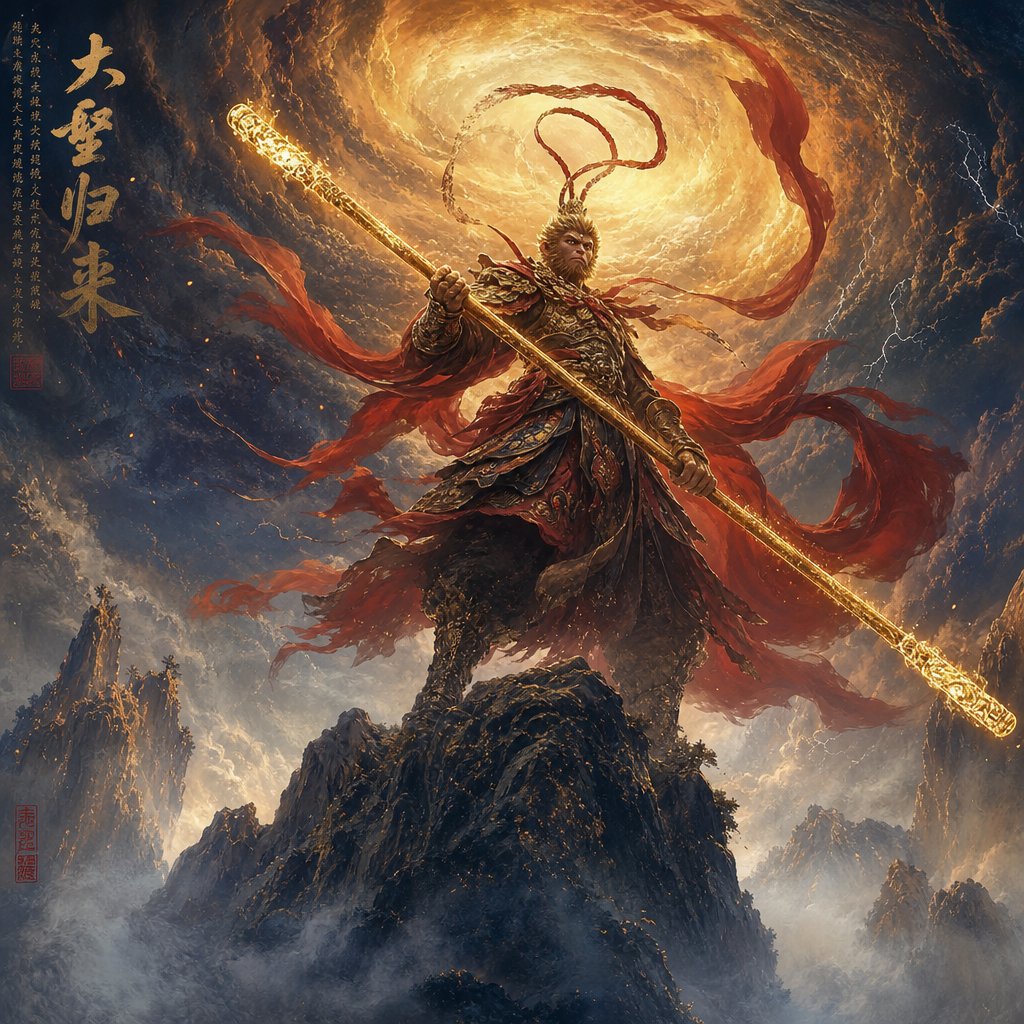
Consider Sun Wukong's self-given title: 齐天大圣 (Qitian Dasheng). The character 齐 (qi, "equal to") paired with 天 (tian, "heaven") already makes a bold claim. Then 大 (da, "great") amplifies 圣 (sheng, "sage/saint"). The compound meaning is not just "great sage who equals heaven." It is a declaration of war against the entire celestial hierarchy. As Journey to the West Research documents, this was a "seditious title" Monkey took during his rebellion against heaven, one so iconic he is still worshiped by this name in Chinese folk religion.
His final title is equally devastating: 斗战胜佛 (Dou Zhansheng Fo, "Buddha Victorious in Strife"). Break it apart and you get 斗 (fight) + 战 (battle) + 胜 (victory) + 佛 (Buddha). Four characters that compress an entire character arc, from rebel to enlightened warrior, into a single nickname in chinese tradition.
From Three Kingdoms, Guan Yu earned the title 武圣 (Wusheng, "Martial Sage"), placing his combat prowess on the same level as Confucius's intellectual legacy. Zhang Fei was known as 万人敌 (Wan Ren Di, "Enemy of Ten Thousand"), a nickname suggesting one man could hold off an entire army. These were not exaggerations. They were reputations forged in blood and retold until they became truth.
Mythological Creature Inspired Monikers
Beyond individual heroes, Chinese mythology produced creatures whose very names became shorthand for specific types of power. Using one as a nickname is like wearing a legend as armor. Each creature carries symbolic weight that native speakers recognize instantly.
The qilin (麒麟), for example, is not simply a "Chinese unicorn." It represents moral authority so absolute that it only appears during times of peace or when a great leader is born. Calling someone 麒麟 implies they carry that same weight of destiny. The phoenix (凤凰, Fenghuang) symbolizes renewal and the balance of opposing forces, making it a fierce choice for someone who has risen from destruction.
Here are mythology-rooted nicknames with full breakdowns:
- 齐天大圣 (Qitian Dasheng) - 齐 (equal) + 天 (heaven) + 大 (great) + 圣 (sage). "Great Sage Equal to Heaven." The ultimate declaration of defiance against authority.
- 斗战胜佛 (Dou Zhansheng Fo) - 斗 (fight) + 战 (battle) + 胜 (victory) + 佛 (Buddha). "Buddha Victorious in Strife." Enlightenment achieved through combat, not meditation.
- 战神 (Zhansheng) - 战 (war/battle) + 神 (god/deity). "God of War." Two characters that need no elaboration. The falling fourth tone on both syllables makes it hit like a hammer.
- 麒麟 (Qilin) - 麒 (male qilin) + 麟 (female qilin). A compound representing a creature of absolute moral power. Both characters share the 鹿 (deer) radical, grounding divine authority in earthly grace.
- 凤凰 (Fenghuang) - 凤 (male phoenix) + 凰 (female phoenix). Symbolizes renewal, balance, and indestructible grace. The 几 radical in 凤 suggests wind and flight.
- 万人敌 (Wan Ren Di) - 万 (ten thousand) + 人 (people) + 敌 (enemy/rival). "Enemy of Ten Thousand." Implies a single person who outmatches an army.
- 武圣 (Wusheng) - 武 (martial/military) + 圣 (sage/saint). "Martial Sage." Elevates combat skill to the level of philosophical mastery.
- 白虎 (Baihu) - 白 (white) + 虎 (tiger). One of the Four Symbols guarding the cardinal directions. Represents autumn, metal, and lethal precision.
- 青龙 (Qinglong) - 青 (azure/green) + 龙 (dragon). The Azure Dragon of the East. Carries connotations of spring storms and unstoppable natural force.
- 夜叉 (Yecha) - Derived from Sanskrit "yaksha," these fierce guardian spirits protect Buddhist treasures. The characters suggest darkness (夜, night) and a fork/divergence (叉), evoking something dangerous lurking in shadow.
You will notice a pattern in these names. The most powerful ones do not just describe strength. They locate that strength within a cosmic framework, whether it is the celestial hierarchy, the cardinal directions, or the cycle of destruction and rebirth. A nickname like 青龙 does not merely say "dragon." It says "the specific dragon that commands the eastern sky and heralds the storm season." That specificity is what transforms a generic power word into a legendary moniker.
Mythology gave these nicknames their origin stories. But real historical figures took that same energy and carried it onto actual battlefields, earning titles just as fierce through documented deeds rather than divine birth.
Famous Historical Figures and Their Fearsome Titles
Gods and mythical creatures are one thing. Flesh-and-blood warriors who earned their terrifying monikers through real campaigns, real bloodshed, and real political dominance are something else entirely. Chinese history is dense with generals and rulers whose nickname chinese culture preserved for millennia, not because storytellers invented them, but because witnesses could not forget them.
These historical titles function differently from mythological ones. A name like 齐天大圣 draws power from cosmic defiance. A historical nickname draws power from documented proof. Someone actually did the thing the name describes. That factual grounding is what makes these titles so compelling as inspiration for modern use.
Warrior Generals and Their Fearsome Titles
Do chinese people have middle names? Not in the Western sense, but they do accumulate titles, courtesy names, and earned monikers that layer onto their identity over a lifetime. The most feared warriors often became known exclusively by their earned title rather than their birth name. Here are the most iconic, ranked by the sheer weight of their legacy:
- 西楚霸王 (Xichu Bawang) - Hegemon-King of Western Chu
Xiang Yu (232-202 BC) did not receive this title. He declared it himself after dividing the fallen Qin empire into the Eighteen Kingdoms. Break it apart: 西 (west) + 楚 (Chu, his ancestral state) + 霸 (hegemon/dominator) + 王 (king). The character 霸 is the key. It contains 雨 (rain) over 革 (leather/change), suggesting a force of nature that transforms everything beneath it. Xiang Yu possessed legendary physical strength, reportedly able to lift a bronze ding vessel, and led 30,000 troops to defeat a 300,000-strong Qin army at the Battle of Julu. His title was not aspirational. It was a statement of fact. - 飞将 (Fei Jiang) - Flying General
Li Guang, a Han dynasty general, earned this nickname from the Xiongnu nomads he fought against for decades. 飞 (fly) + 将 (general) creates an image of a commander who strikes with impossible speed. The Xiongnu feared him so much they avoided his territory entirely. When your enemies name you, that nickname carries a different kind of authority. - 武穆 (Wumu) - The Martial and Reverent
Yue Fei, the Song dynasty general, received this posthumous title after his wrongful execution. 武 (martial) + 穆 (solemn/reverent). His battlefield reputation was so fierce that his name became synonymous with loyalty and military genius. His troops were called the Yue Family Army, and enemy forces reportedly said "it is easier to move a mountain than to shake the Yue Family Army." - 人屠 (Ren Tu) - The Human Butcher
Bai Qi, a Qin dynasty general, earned this grim moniker through campaigns that reportedly resulted in over 400,000 enemy casualties at the Battle of Changping alone. 人 (person/human) + 屠 (slaughter/butcher). Two characters. No ambiguity. This is perhaps the most chilling nickname chinese military history ever produced. - 花木兰 (Hua Mulan) - While not a nickname itself, Mulan's story generated the title 巾帼英雄 (Jinguo Yingxiong)
巾帼 (women's headdress, used as a metonym for women) + 英雄 (hero). This four-character phrase, meaning "heroine among women," became a title applied to any woman who demonstrated extraordinary martial courage. Mulan's legend proved that fierce titles were never exclusively male territory. - 小霸王 (Xiao Bawang) - Little Hegemon-King
Sun Ce, the young warlord who conquered the Jiangdong region during the late Eastern Han period, earned this direct comparison to Xiang Yu. 小 (little/young) + 霸王 (hegemon-king). Rather than diminishing him, the 小 emphasized that he achieved Xiang Yu-level dominance while still in his twenties. The Romance of the Three Kingdoms cemented this nickname into popular culture. - 冠军侯 (Guanjun Hou) - Champion Marquis
Huo Qubing received this title at age seventeen after his first major victory against the Xiongnu. 冠 (crown/first place) + 军 (army) + 侯 (marquis). The word 冠军 (champion) in modern Chinese literally derives from his title. He died at just 24, but his nickname outlived him by over two thousand years.
How Historical Nicknames Inspire Modern Use
What makes these titles so effective as chinese nicknames in english contexts is their compound structure. Each one combines two or more characters that individually carry weight, then multiplies their impact through combination. 霸王 alone means "hegemon-king," but 西楚霸王 anchors that dominance to a specific territory and lineage. 飞将 takes the ordinary word for general and makes it supernatural with a single added character.
This compound logic is the blueprint for building your own fierce moniker. You do not need four characters. Even two, chosen with precision, can carry the weight of an entire legend. The historical figures above proved that a nickname earns its power through specificity. It does not just say "strong." It says exactly what kind of strong, and backs it up with evidence.
These warriors drew their imagery from the world around them: flight, storms, iron, slaughter. The natural world offered them a vocabulary of destruction. That same vocabulary remains available to anyone willing to look beyond human history and into the elemental forces that shaped it.
Nature and Elemental Power Nicknames
Storms, wildfires, apex predators, immovable mountains. These are not metaphors in Chinese naming tradition. They are blueprints. The natural world provides a vocabulary of raw, unchallengeable force, and Chinese characters are uniquely equipped to capture it because the writing system itself evolved from depicting these very forces.
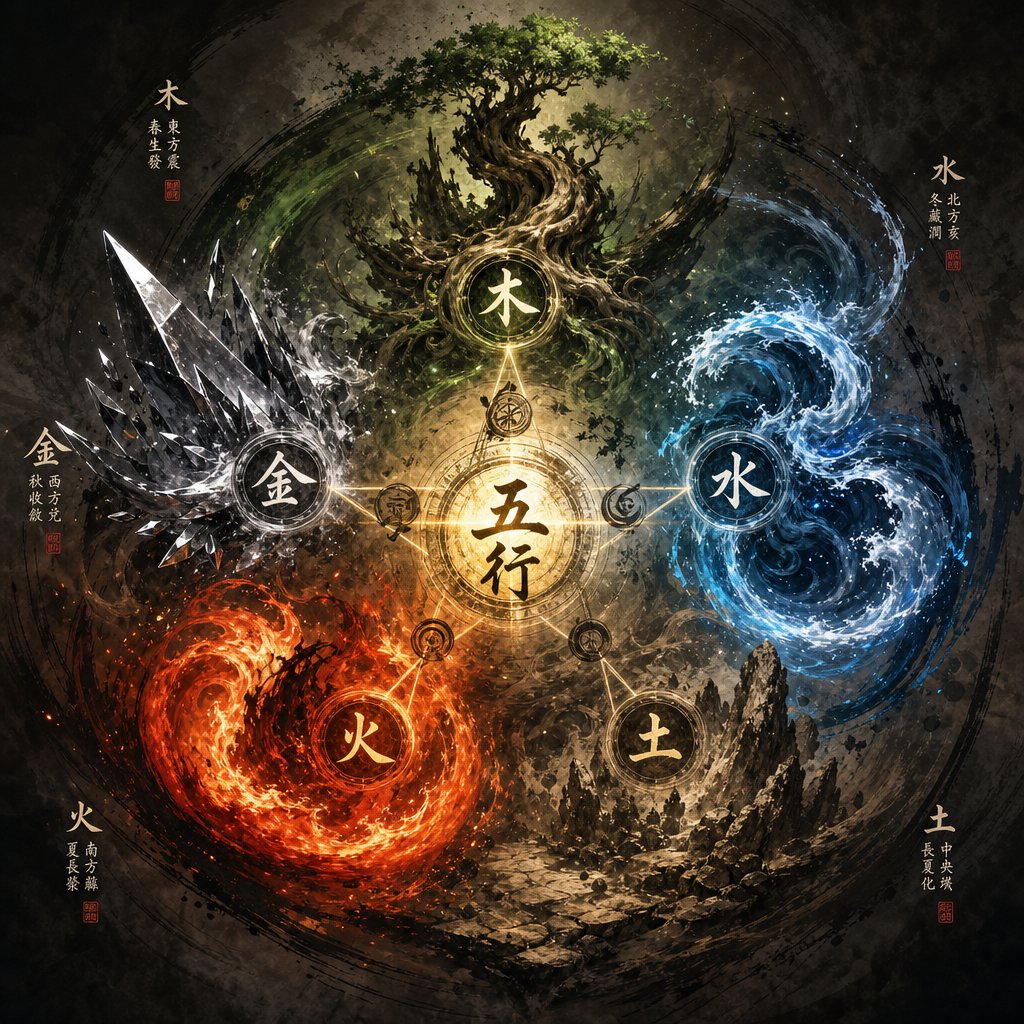
Why does nature imagery resonate so deeply in fierce Chinese nicknames? The answer lies in 五行 (Wuxing), the Five Phases philosophy that has shaped Chinese thought for over three thousand years. As documented in the Book of Documents (尚书), one of China's oldest classical texts, Wuxing describes five fundamental patterns of energy: Wood (木), Fire (火), Earth (土), Metal (金), and Water (水). These are not static elements like entries on a periodic table. The character 行 (xing) literally means "to move" or "to phase." They represent dynamic cycles of creation and destruction that govern everything from seasons to human destiny.
When you build a nickname from nature's forces, you are tapping directly into this cosmological framework. A fire-based name channels ascending, radiating energy. A metal-based name invokes contraction, sharpness, and the ability to cut through confusion. A water name carries depth and relentless adaptability. Each elemental choice positions the bearer within a specific phase of cosmic power.
Storm and Fire Nicknames That Command Attention
Fire and storm names dominate the fierce end of the spectrum because they represent energy at its most visible and destructive. In Wuxing philosophy, Fire (火) is the energy of maximum expression, ascending and radiating outward like summer at its peak. Storm imagery combines Water's relentless force with Wind's unpredictability.
Look at the character 烈 (lie, "intense/fierce"). It contains the fire radical (灬) at its base, four dots representing flames. When you see 烈焰 (Lieyan, "Raging Flame"), the radical structure tells you this name burns before you even read the pinyin. Similarly, 雷 (lei, "thunder") carries the rain radical (雨) on top, visually depicting a storm overhead. The character 暴 (bao, "violent/sudden") in 暴风 (Baofeng, "Violent Storm") contains 日 (sun) and 水 (water) compressed together, suggesting the collision of opposing forces that produces explosive weather.
These are not subtle names. They announce themselves. The fourth-tone delivery on characters like 烈 and 暴 adds a percussive, downward strike to the sound, matching the destructive imagery with aggressive phonetics.
Predator and Mountain Inspired Names
Predator nicknames work differently. Where storm and fire names project outward chaos, animal names project controlled lethality. A tiger does not rage indiscriminately. It waits, then strikes with precision. That distinction matters when choosing between, say, 暴风 (chaotic force) and 猛虎 (Menghu, "Fierce Tiger"), which implies calculated dominance.
The character 猛 (meng, "fierce/ferocious") contains the dog radical (犭), which in classical Chinese extends to all predatory mammals. Pair it with 虎 (hu, "tiger"), a character whose ancient form was a pictograph of a tiger viewed from the side, and you get a name that encodes predatory power at the radical level. 黑豹 (Heibao, "Black Panther") uses 黑 (hei, "black"), carrying connotations of shadow and stealth, alongside 豹 (bao, "leopard"), which contains the 豸 radical meaning "legless predator" — an ancient classifier for dangerous beasts.
Mountain names occupy yet another register: immovable, eternal, indifferent to anything that crashes against them. 铁山 (Tieshan, "Iron Mountain") combines the metal radical 钅 in 铁 (tie, "iron") with 山 (shan, "mountain"), the radical that literally depicts three peaks. It is a name that says: nothing moves me, nothing breaks me.
Interestingly, some of these predator-based names cross over into chinese pet names for animals with fierce personalities. Names like 猛虎 and 黑豹 are popular chinese names for cats with bold temperaments, while 烈风 (Liefeng, "Fierce Wind") shows up among chinese puppy names for large, powerful breeds. The same elemental logic that makes a nickname intimidating for a person can project strength onto a companion animal.
Here is a reference table of nature-power nicknames organized by elemental category:
| Nickname | Characters | Pinyin | Literal Meaning | Power Element |
|---|---|---|---|---|
| Violent Storm | 暴风 | Baofeng | Violent + Wind | Water/Wind |
| Raging Flame | 烈焰 | Lieyan | Intense + Flame | Fire |
| Thunder Strike | 雷击 | Leiji | Thunder + Strike | Water/Fire |
| Fierce Tiger | 猛虎 | Menghu | Ferocious + Tiger | Wood (spring predator) |
| Black Panther | 黑豹 | Heibao | Black + Leopard | Water (darkness) |
| Iron Mountain | 铁山 | Tieshan | Iron + Mountain | Metal/Earth |
| Inferno | 地狱火 | Diyuhuo | Hell + Fire | Fire |
| Lone Wolf | 独狼 | Dulang | Solitary + Wolf | Metal (autumn) |
| Frozen Blade | 寒刃 | Hanren | Cold + Blade | Water/Metal |
| Wild Dragon | 狂龙 | Kuanglong | Mad/Wild + Dragon | Wood (ascending) |
Notice how the most effective names combine elements from different phases. 寒刃 (Hanren, "Frozen Blade") merges Water's cold with Metal's sharpness. 雷击 (Leiji, "Thunder Strike") fuses the storm energy of Water with the explosive release of Fire. In Wuxing theory, these cross-element combinations create dynamic tension, the generating and controlling cycles interacting within a single name. That internal tension is what gives a two-character nickname the feeling of barely contained power.
The elemental framework gives you a system for choosing names with intention rather than guesswork. But raw power is only one dimension. The next question is who gets to wield these names, and whether fierceness belongs to any single gender.
Gender-Inclusive Badass Nicknames for Everyone
Fierceness does not belong to one gender. Chinese history, literature, and modern culture all prove this. Women commanded armies. Non-binary figures populated mythology. And the language itself offers power characters that carry no inherent gender marker. Whether you are searching for chinese nicknames for girlfriend options that go beyond the soft and sweet, or looking for chinese names for boyfriend choices that project dominance, the same elemental building blocks are available to everyone.
Fierce Nicknames for Women and Girls
Chinese naming conventions do associate certain characters with femininity, as Chinese Name Translator's research on naming mistakes documents. Characters like 兰 (orchid) and 花 (flower) traditionally signal female names. But fierce women throughout Chinese history shattered those conventions, and their titles prove that intimidation has no gender requirement.
The phrase 巾帼英雄 (Jinguo Yingxiong, "Heroine") exists precisely because women earned it on battlefields. Here are fierce options rooted in that tradition:
- 铁娘子 (Tie Niangzi) - 铁 (iron) + 娘子 (lady/madam). "Iron Lady." The metal radical in 铁 encodes sharpness and unyielding strength, while 娘子 reclaims femininity as a vessel for that power rather than its opposite.
- 女战士 (Nu Zhanshi) - 女 (woman) + 战士 (warrior). "Woman Warrior." Direct, unambiguous, and built on the same 战 (battle) character that powers 战神 (God of War).
- 凤凰涅槃 (Fenghuang Niepan) - "Phoenix Reborn from Fire." Four characters that compress destruction and resurrection into a single identity. This goes far beyond typical chinese girlfriend nicknames into territory that commands genuine awe.
- 冰女王 (Bing Nuwang) - 冰 (ice) + 女王 (queen). "Ice Queen." The water radical in 冰 suggests controlled, crystallized power rather than chaotic force.
- 烈女 (Lienu) - 烈 (fierce/intense) + 女 (woman). Historically referred to women of extraordinary moral courage. The fire radical in 烈 burns beneath the character, encoding passion and refusal to submit.
These are not diminutives. They do not soften power with qualifiers. A name like 铁娘子 takes the same metal-element force as 铁山 (Iron Mountain) and channels it through a feminine frame without losing a single degree of intensity.
Gender-Neutral Power Names Anyone Can Use
Some of the most devastating Chinese nicknames carry zero gender coding. The characters themselves reference abstract qualities, forces, or states of being rather than gendered identities. These work equally well as chinese couple nicknames where both partners want matching fierce energy, or as standalone monikers for anyone who rejects gendered naming entirely.
- 无畏 (Wuwei) - 无 (without) + 畏 (fear). "Fearless." Two characters, absolute meaning. The negation structure makes it a declaration rather than a description.
- 霸气 (Baqi) - 霸 (hegemon/dominator) + 气 (energy/aura). "Dominating Aura." The same 霸 that powered Xiang Yu's title, now paired with the concept of qi itself. This name says your mere presence overwhelms.
- 不败 (Bubai) - 不 (not) + 败 (defeat). "Undefeated." Another negation structure that defines identity through what cannot be done to you.
- 影刃 (Yingren) - 影 (shadow) + 刃 (blade). "Shadow Blade." No gender, no softness, just the image of something lethal you never see coming.
- 绝尘 (Juechen) - 绝 (to sever/absolute) + 尘 (dust/the mundane world). "Beyond the Dust." Implies transcendence above ordinary existence. Used historically for both male and female figures of extraordinary skill.
Notice that these names define power through negation (fearless, undefeated) or through elemental imagery (shadow, aura) rather than through gendered bodies. That structural choice is what makes them universally applicable. If you are looking for chinese pet names for boyfriend or chinese pet names for girlfriend options that carry real weight, these gender-neutral choices sidestep the entire question of convention.
Cultural Etiquette for Non-Chinese Speakers
Adopting a fierce Chinese nickname as a non-Chinese speaker is not inherently disrespectful, but it does require awareness. The reference material on common naming mistakes highlights several pitfalls that apply directly here.
First, avoid claiming titles that belong to specific historical or mythological figures. Calling yourself 齐天大圣 as a username is playful homage. Introducing yourself by that name in a Chinese social setting crosses into presumption. The distinction is context: online gaming and social media operate under different rules than face-to-face interaction.
Second, verify pronunciation. Chinese is tonal, and mispronouncing your own chosen nickname undermines its power entirely. A name delivered in the wrong tone can shift from fearsome to absurd. The character 霸 (ba, fourth tone) means "hegemon." Pronounced in the wrong tone, it loses all authority.
Third, check for unintended homophones. Characters that look powerful on screen may sound identical to embarrassing words when spoken aloud. Always test your chosen nickname with a native speaker before committing to it publicly.
Finally, understand that earning a fierce nickname through action carries more cultural weight than self-assigning one. In Chinese tradition, the most respected monikers are 外号 and 绰号, names given by others based on witnessed behavior. If you adopt a fierce name, be prepared to live up to it. The name is a promise, not a costume.
Gender does not limit your options. Cultural awareness sharpens them. With the right characters and the right context, anyone can carry a name that makes people pay attention. The real question for many readers is not which gender category to draw from, but which platform they plan to use it on, and that is where modern internet culture has generated an entirely new class of fierce monikers.
Badass Chinese Nicknames for Gaming and Online Profiles
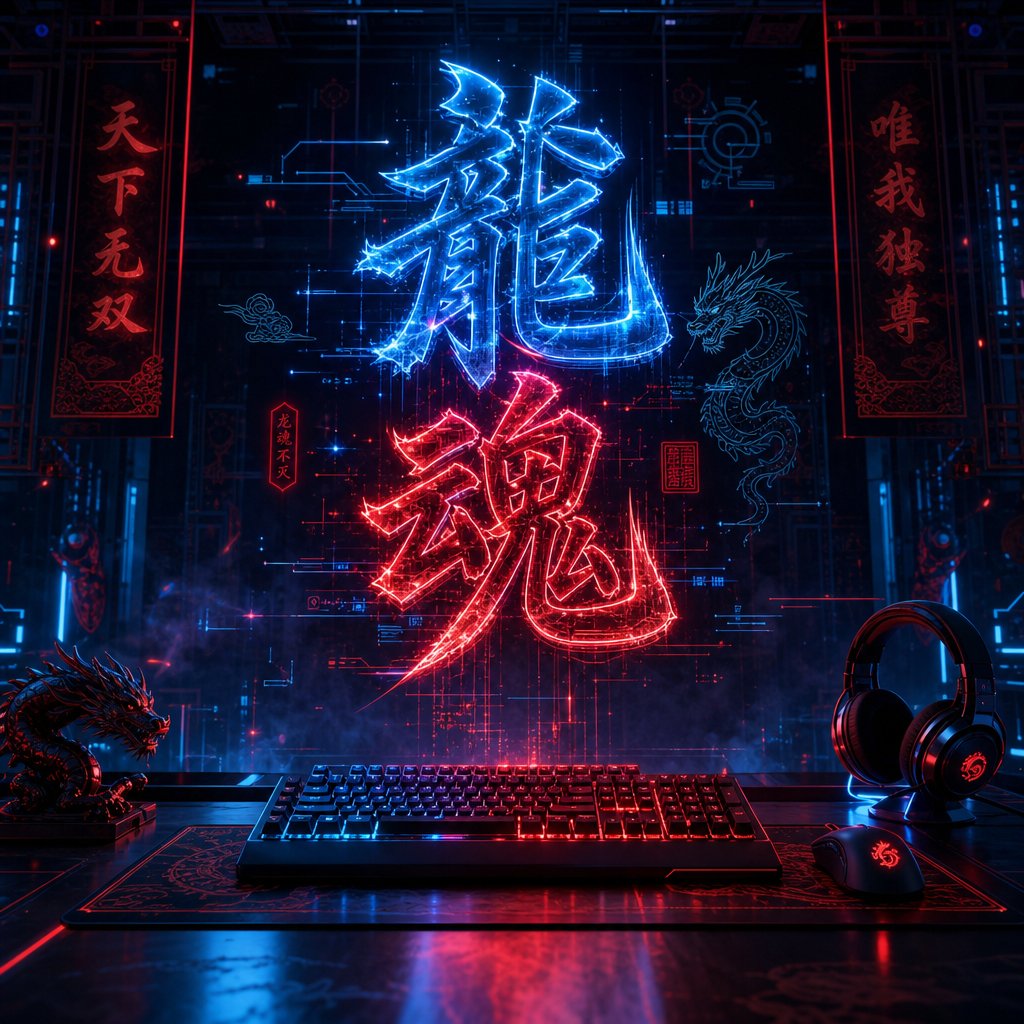
Mythology and history gave these names their weight. But where do most people actually use a fierce Chinese nickname today? Gaming lobbies, Roblox display names, Discord servers, and social media profiles. The platform is the battlefield now, and Chinese internet culture has generated an entirely new class of intimidating monikers built for screens rather than scrolls.
If you have ever searched for roblox chinese display name ideas or scrolled through chinese usernames in an MMO lobby and felt outclassed, you already know the effect a well-chosen name creates. A two-character gamertag in Chinese characters stands out in a sea of generic English handles. It signals intention, cultural literacy, and an edge that "xXDarkSlayer99Xx" simply cannot match.
Ready-to-Use Chinese Gamertags and Display Names
Not every platform handles Chinese characters the same way. Roblox supports Unicode display names, meaning Chinese characters render correctly. Steam, Discord, and most MMOs also support full Unicode. However, some older games or platforms restrict usernames to ASCII characters only, which means you would need a romanized version instead.
Here are practical considerations before you commit to a chinese username:
- Character limits: Roblox display names allow up to 20 characters. Since Chinese characters are single Unicode code points, a two-character name like 杀神 uses only 2 of those 20 slots, leaving room for creative additions.
- Encoding: Chinese characters use UTF-8 encoding, which means each character takes 3 bytes. Most modern platforms handle this without issue, but if a game shows garbled text or boxes, it lacks CJK font support.
- Searchability: Players without Chinese input methods cannot easily search for your name, which adds mystique but reduces discoverability. Some players combine characters with numbers or English for balance.
The chinese name game is straightforward once you understand these constraints. Pick characters that display cleanly at small sizes (avoid overly complex characters with 15+ strokes that become illegible in chat), verify they render on your target platform, and confirm the tonal meaning does not accidentally create humor.
Here is a table of ready-to-use chinese gamertags with platform recommendations:
| Nickname | Characters | Pinyin | Meaning | Recommended Platform |
|---|---|---|---|---|
| Kill God | 杀神 | Shashen | Kill + God/Deity | MMOs, Steam, Roblox |
| Big Boss | 大佬 | Dalao | Great + Boss/Elder | Discord, Roblox, social media |
| Lone King | 孤王 | Guwang | Solitary + King | MMOs, Steam, mobile games |
| Blood Blade | 血刃 | Xueren | Blood + Blade | FPS games, Steam |
| Demon Slayer | 诛魔 | Zhumo | Execute + Demon | RPGs, MMOs, Roblox |
| Overlord | 霸主 | Bazhu | Hegemon + Master | Strategy games, Steam |
| Dark Emperor | 暗帝 | Andi | Dark + Emperor | MMOs, Roblox, Discord |
| War Ghost | 战鬼 | Zhangui | Battle + Ghost | FPS games, mobile games |
| Asura | 修罗 | Xiuluo | Buddhist demon of war | RPGs, fighting games, Steam |
| No Mercy | 无情 | Wuqing | Without + Emotion | All platforms |
Each of these works as chinese names for games across multiple genres. The two-character structure keeps them compact, readable at small display sizes, and easy to type for teammates who have Chinese input enabled.
Modern Internet Slang Nicknames With Edge
Chinese internet culture moves fast. Gaming culture and online slang have produced fierce nicknames that did not exist a decade ago but now dominate lobbies and comment sections across platforms like Douyin, Bilibili, and WeChat.
大佬 (Dalao) is a prime example. It literally means "big boss" or "big shot" and originated in Cantonese gang culture before migrating into gaming communities as a term of respect for highly skilled players. When someone carries 大佬 as their display name, they are claiming top-tier status. The term 牛逼 (niubi), meaning "awesome" or "badass," is one of the most common slang words for expressing that someone is impressively skilled, though its vulgarity makes it better suited to casual gaming contexts than professional profiles.
Other modern slang-derived chinese gamertags that carry serious edge:
- 绝杀 (Juesha) - "Absolute Kill." Used in esports commentary for a game-winning play. As a username, it declares you are the closer.
- 鬼才 (Guicai) - "Ghost Genius." Describes someone with terrifyingly unconventional intelligence. Popular among strategy game players.
- 狠人 (Henren) - "Ruthless One." Two characters that say you do not hesitate, do not negotiate, do not flinch.
- 王者 (Wangzhe) - "King/Sovereign." Borrowed directly from the massively popular mobile game Honor of Kings (王者荣耀), this term now means anyone who dominates their field.
- 毒瘤 (Duliu) - "Toxic Tumor." Originally an insult in gaming communities for disruptive players, some have reclaimed it as a badge of honor, similar to how "toxic" became a self-aware identity in Western gaming culture.
The chinese name game in online spaces follows different rules than traditional naming. Irreverence, dark humor, and self-aware exaggeration are all valid strategies. A name like 杀神 (Kill God) would be absurdly presumptuous in a historical context, but in a gaming lobby it is simply a statement of intent. The platform grants permission that traditional culture would not.
What these modern monikers share with their ancient predecessors is compression. Two or three characters doing the work of an entire reputation. The difference is speed. Historical nicknames took years to earn. A gaming handle takes seconds to set, but the best ones still follow the same structural logic: power character plus context character, delivered in falling tones that hit hard even on screen.
These names work brilliantly in Mandarin-dominant spaces. But Chinese is not one language. Cantonese speakers bring entirely different tonal textures and regional slang to the naming table, and what sounds fierce in one dialect may land completely differently in another.
Mandarin vs Cantonese Badass Naming Differences
Mandarin has four tones. Cantonese has six major tones plus three additional entering tones, bringing the total to nine. That difference is not academic trivia. It fundamentally changes how a nick in chinese lands on the ear. A nickname that drops like a hammer in Mandarin's sharp fourth tone might roll with entirely different weight in Cantonese's six tonal contours, and some characters gain an edge in one dialect that they simply do not carry in the other.
Mandarin Badass Nicknames and Their Tonal Impact
Mandarin's fourth tone, the sharp falling pitch, is the workhorse of intimidation. Characters like 战 (zhan, fourth tone), 霸 (ba, fourth tone), and 杀 (sha, first tone with a cutting onset) all benefit from Mandarin's tonal system because the falling pitch mimics a verbal strike. A nickname mandarin speakers deliver in consecutive fourth tones, like 战帝 (Zhandi, "Battle Emperor"), hits with a staccato rhythm that sounds commanding.
But Mandarin's four-tone system also limits certain combinations. Two consecutive third tones trigger a tone sandhi rule where the first shifts to second tone, softening the delivery. A name like 猛虎 (Menghu) technically undergoes this shift in natural speech, slightly blunting its phonetic aggression. Cantonese does not have this particular constraint.
Cantonese Alternatives With Different Edge
Cantonese nicknames draw from a different well of intensity. The dialect's additional tones create more phonetic texture, and Hong Kong street slang has produced fierce monikers that do not exist in Mandarin at all. The Jyutping romanization system uses numbers (1-6) to mark tones, giving you precise pronunciation guidance that pinyin cannot provide for Cantonese sounds.
Take 大佬 as an example. In Mandarin, it is Dalao (da fourth tone, lao third tone), a relatively flat delivery. In Cantonese, it is daai6 lou2, where the low-level sixth tone on 大 followed by the rising second tone on 佬 creates a growling upswing that sounds more menacing. Hong Kong triad films cemented this Cantonese pronunciation as the definitive version, and gamers worldwide recognize it in that form.
Regional slang unique to Hong Kong and Guangdong culture produces cantonese nicknames with no direct Mandarin equivalent. Terms like 古惑仔 (gu2 waak6 zai2, "tricky kid," meaning street-smart troublemaker) and 煞星 (saat3 sing1, "killing star," meaning someone who brings destruction) carry cultural weight rooted in decades of Hong Kong cinema and street culture. These are not translations of Mandarin concepts. They grew from Cantonese soil.
Here is how the same fierce concept sounds across both dialects:
| Concept | Mandarin | Pinyin | Cantonese | Jyutping | Edge Difference |
|---|---|---|---|---|---|
| God of War | 战神 | Zhanshen (4th, 2nd) | 战神 | zin3 san4 | Mandarin hits harder with falling tone; Cantonese sustains tension with mid-rising tone |
| Big Boss | 大佬 | Dalao (4th, 3rd) | 大佬 | daai6 lou2 | Cantonese version carries more street authority due to Hong Kong film culture |
| Lone Wolf | 独狼 | Dulang (2nd, 2nd) | 独狼 | duk6 long4 | Cantonese low tones create a darker, more brooding sound |
| Mad Dragon | 狂龙 | Kuanglong (2nd, 2nd) | 狂龙 | kwong4 lung4 | Both carry rising energy, but Cantonese "lung" is the iconic pronunciation for dragon worldwide |
| Ruthless | 无情 | Wuqing (2nd, 2nd) | 无情 | mou4 cing4 | Cantonese "mou" has a heavier, more guttural onset |
| Killing Star | 煞星 | Shaxing (4th, 1st) | 煞星 | saat3 sing1 | Cantonese entering tone on 煞 creates an abrupt, clipped sound like a blade snapping shut |
The entering tones in Cantonese, those clipped, abrupt syllables marked by final consonants like -t, -k, and -p, deserve special attention. They produce a percussive quality that Mandarin physically cannot replicate. A character ending in -t (like 殺 saat3) or -k (like 黑 hak1) stops dead, creating a sound that feels like a punch landing. This is why Cantonese action movie dialogue sounds so viscerally aggressive even to non-speakers.
Which dialect should you choose for your fierce moniker? If your audience is mainland Chinese gamers or Mandarin-dominant platforms, lean into fourth-tone combinations. If you are operating in Hong Kong circles, diaspora communities, or want that clipped, cinematic aggression, Cantonese delivers a different kind of bite. Either way, the characters remain the same on screen. The dialect determines how they sound when spoken aloud, and that sonic identity is what transforms written characters into a name people actually remember.
Knowing how dialect shapes delivery is the final piece of the puzzle. The real creative work begins when you sit down to assemble your own combination of power characters, test their tonal flow, and verify they do not accidentally mean something ridiculous.
How to Create Your Own Badass Chinese Nickname
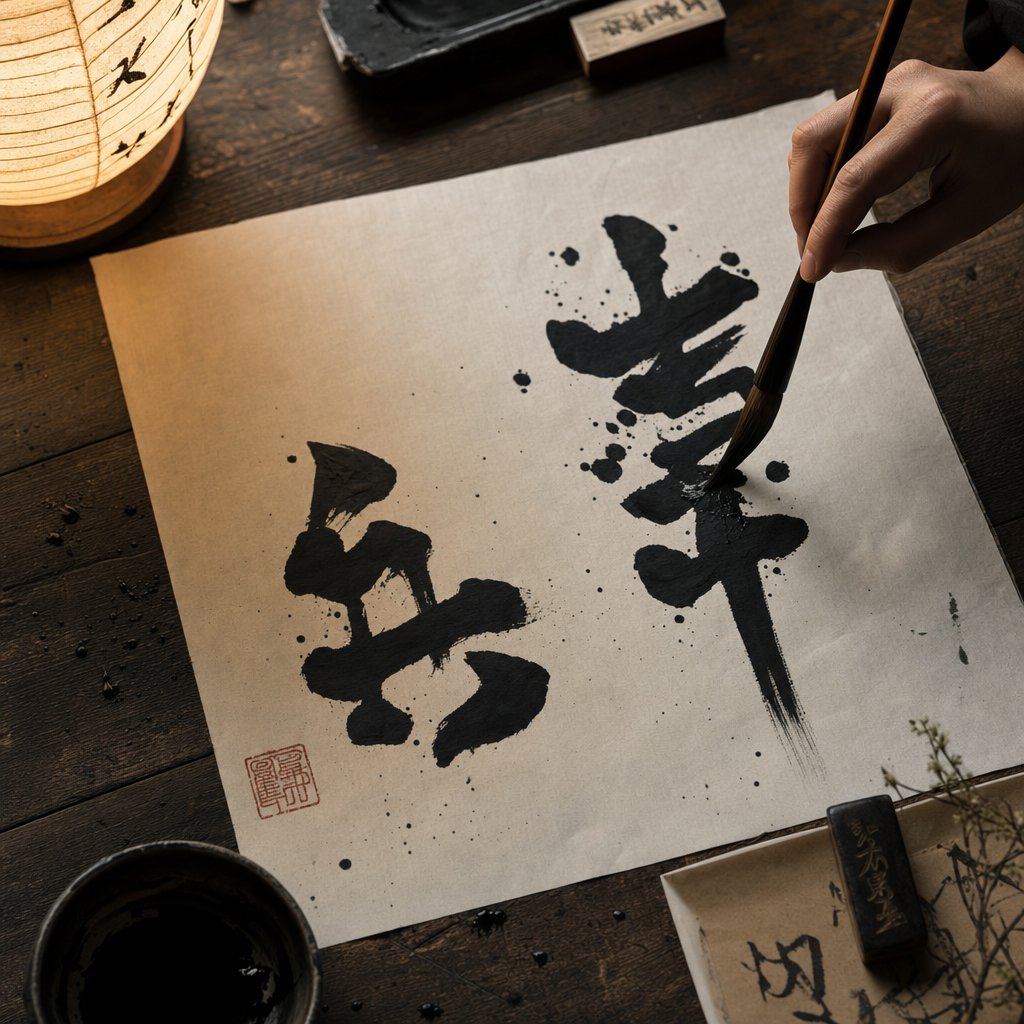
You have the history, the mythology, the elemental framework, and the dialect awareness. The final step is assembly. Building your own fierce Chinese nickname is not guesswork. It is a structured process of selecting characters with embedded power, combining them for compound impact, and then stress-testing the result so you do not accidentally end up on a list of funny chinese names instead of feared ones.
Choosing Power Characters That Work Together
Every strong nickname starts with strong raw materials. Certain standalone characters carry so much weight that they elevate anything paired with them. These are your building blocks, characters whose radicals visually encode force and whose meanings project authority without needing context.
Here is your reference list of high-impact standalone characters:
- 龙 (Long) - Dragon. Radical 212. The ultimate symbol of imperial power, ascending force, and cosmic authority. Combines well with color or temperament characters: 狂龙 (Mad Dragon), 黑龙 (Black Dragon), 金龙 (Golden Dragon).
- 凤 (Feng) - Phoenix. Contains the 几 radical suggesting wind and flight. Represents rebirth and indestructible grace. Pairs with fire or shadow imagery: 凤焰 (Phoenix Flame), 暗凤 (Dark Phoenix).
- 剑 (Jian) - Sword. Contains the knife radical 刂. Encodes precision and lethality. Works with elemental modifiers: 冰剑 (Ice Sword), 雷剑 (Thunder Sword), 影剑 (Shadow Sword).
- 铁 (Tie) - Iron. Metal radical 钅 makes its elemental alignment visible. Conveys unyielding hardness. Pairs with body or nature words: 铁拳 (Iron Fist), 铁心 (Iron Heart), 铁壁 (Iron Wall).
- 雷 (Lei) - Thunder. Rain radical 雨 sits on top, depicting a storm overhead. Carries explosive, sudden energy. Combines with action characters: 雷击 (Thunder Strike), 雷神 (Thunder God), 雷霆 (Thunderbolt).
- 影 (Ying) - Shadow. Contains the hair radical 彡 suggesting something flickering and elusive. Projects stealth and mystery. Pairs with weapons or predators: 影刃 (Shadow Blade), 影狼 (Shadow Wolf), 影帝 (Shadow Emperor).
Notice the pattern. Each character belongs to a distinct power archetype: cosmic authority (龙, 凤), weaponry (剑), material hardness (铁), elemental force (雷), and stealth (影). Your first decision is which archetype fits the identity you want to project.
Beyond these six, other high-value characters include 魔 (mo, demon/magic), 血 (xue, blood), 狂 (kuang, mad/wild), 霸 (ba, hegemon), and 焰 (yan, flame). Each one functions as either a strong lead character or a powerful modifier.
Testing Your Nickname for Tonal Flow and Meaning
Selecting powerful characters is only half the work. A nickname that looks fierce on paper can fall apart when spoken aloud or carry meanings you never intended. The internet is full of funny names in chinese that started as serious attempts but failed one of these verification steps. Here is the complete process:
- Select your power archetype. Decide what kind of force you want to project: raw destruction (fire, thunder), controlled lethality (blade, shadow), immovable strength (iron, mountain), or cosmic authority (dragon, phoenix). This narrows your character pool immediately.
- Choose a two-character combination. Pair a modifier character with a core power character. The modifier sets the tone: 狂 (mad) + 龙 (dragon) creates chaotic energy, while 暗 (dark) + 龙 (dragon) creates brooding menace. Same core, completely different identity.
- Check tonal flow. Say the combination aloud. Consecutive fourth tones (falling pitch) create maximum aggression. A fourth tone followed by a first tone (high level) produces a striking-then-sustaining rhythm. Avoid two consecutive third tones, which trigger tone sandhi and soften the delivery.
- Scan for homophones. Chinese is dense with homophones. A character combination that looks powerful might sound identical to something embarrassing or absurd. The difference between an intimidating moniker and one of the funniest chinese names circulating online is often a single tone or vowel sound. Search your combination in a Chinese dictionary app and check every homophone entry.
- Verify cultural context. Some combinations are already claimed by famous figures, brands, or slang terms. Search your nickname on Baidu or Douyin to see if it carries existing associations. A name that unknowingly references a cartoon character or a meme will undermine your intent.
- Test with a native speaker. This step is non-negotiable. What reads as fierce to a non-native eye might register as awkward, humorous, or nonsensical to someone who grew up with the language. Many people searching for funny oriental names or chinese names funny compilations online are actually finding failed attempts at serious nicknames that no one bothered to verify. Ask a native speaker two questions: does this sound natural, and does it carry any meaning I am not seeing?
The most common failure point is step four. Characters like 死 (si, death) seem edgy until you realize 死 is considered deeply unlucky and its use in a name signals ignorance rather than toughness. Similarly, 屎 (shi, excrement) is one tone away from 师 (shi, master). That single tonal slip is the difference between "Shadow Master" and something that belongs on a list of humorous chinese names.
The goal is a nickname that sounds intentional to native ears, not one that accidentally becomes a joke. Power without precision is just noise.
Follow this framework and you will produce something that carries genuine weight: characters with embedded force, combined for compound meaning, delivered in tones that hit hard, and verified against every possible misreading. That is how legends get their names. Not by accident, but by design.
Frequently Asked Questions About Badass Chinese Nicknames
1. What are the different types of Chinese nicknames?
Chinese culture recognizes three main nickname types. Xiaoming (小名) are intimate childhood pet names given by family. Waihao (外号) are nicknames assigned by others based on public perception and reputation. Chuohao (绰号) are monikers built on a single dominant trait pushed to its extreme. The fiercest nicknames fall into the waihao and chuohao categories because they are socially earned rather than affectionately given, carrying the weight of witnessed behavior and public recognition.
2. How do I choose a badass Chinese nickname for gaming?
Start by selecting two powerful characters that combine a modifier with a core power word. For example, pair 暗 (dark) with 帝 (emperor) to get 暗帝 (Dark Emperor). Keep it to two or three characters so it displays cleanly at small sizes in game lobbies. Verify your chosen name renders correctly on your platform since most modern games support Unicode Chinese characters. Test the combination with a native speaker to avoid accidental homophones that could turn your fierce name into an unintentional joke.
3. Do badass Chinese nicknames work differently in Mandarin and Cantonese?
Yes, significantly. Mandarin's fourth falling tone creates a sharp, commanding sound ideal for aggressive nicknames. Cantonese has nine tones including entering tones that produce clipped, percussive syllables ending in -t, -k, or -p, giving names a punchy quality Mandarin cannot replicate. The same characters can carry different cultural weight depending on dialect. For instance, 大佬 (Big Boss) carries more street authority in its Cantonese pronunciation due to Hong Kong film culture, even though the written characters are identical.
4. Can non-Chinese speakers use badass Chinese nicknames respectfully?
Yes, with awareness. Use fierce Chinese nicknames freely in gaming and social media contexts where playful identity is expected. Avoid claiming titles belonging to specific historical or mythological figures in face-to-face Chinese social settings. Always verify pronunciation since wrong tones can shift a name from fearsome to absurd. Check for unintended homophones by consulting a native speaker, and understand that in Chinese tradition, the most respected fierce names are earned through action rather than self-assigned.
5. What are the most powerful Chinese characters to use in a nickname?
Six characters stand out as high-impact building blocks: 龙 (dragon, cosmic authority), 凤 (phoenix, rebirth and grace), 剑 (sword, precision and lethality), 铁 (iron, unyielding hardness), 雷 (thunder, explosive force), and 影 (shadow, stealth and mystery). Each belongs to a distinct power archetype and combines well with modifier characters. Additional strong options include 魔 (demon), 血 (blood), 狂 (mad/wild), 霸 (hegemon), and 焰 (flame). The key is pairing characters from complementary elemental categories to create internal tension within the name.