The Hidden Chinese Roots Behind Indonesian Surnames
Imagine discovering that your last name in Indonesia — the one printed on your birth certificate, your school diplomas, your passport — was never your family's original name at all. For millions of Indonesians of Chinese descent, this is not a hypothetical. Their Indonesian surnames are adaptations, translations, or complete replacements of ancestral Chinese clan names that were carried across the sea generations ago.
Chinese Indonesian surnames are the names adopted or adapted by ethnic Chinese families living in Indonesia, often in place of their original Chinese clan names. These aren't random choices. They emerged from a collision of dialect pronunciations, colonial spelling systems, political pressure, and personal survival strategies. A single Chinese character — one ancestral surname — can appear as dozens of different Indonesian last names depending on when a family migrated, which dialect they spoke, and what era of policy they lived through.
What Makes Chinese Indonesian Surnames Unique
What sets these names apart from other Indonesian surnames is their layered history. The surname Wijaya, Tanoto, Halim, or Kurniawan might look entirely indigenous. Yet each can trace back to a specific Chinese clan name filtered through Hokkien, Hakka, Cantonese, or Teochew pronunciation. The Chinese surname Chen (陈), for example, becomes Tan in Hokkien dialect — and from Tan alone, families created Tanujaya, Tanoto, Sutanto, Hartono, and dozens more Indonesian forms. One character, one clan, scattered across an entire phonebook of unrelated-looking names.
A single Chinese surname like Huang (黄) — spelled Oei in the Dutch colonial era — produced Indonesian adaptations as varied as Wijaya, Wibowo, Widodo, Hartono, and Permatasari. Without context, you would never guess these names share a common ancestor.
Why Understanding These Names Matters Today
This matters for anyone researching Indonesian last names with possible Chinese roots. It matters for genealogy — connecting with relatives in China, Singapore, or Malaysia who still carry the original surname. It matters for cultural preservation, because when you lose a name, you risk losing the story attached to it. And it matters for the roughly 3 million ethnic Chinese Indonesians navigating identity in a country where their Indonesian family names may hide as much as they reveal.
In the sections ahead, you'll find the history behind the government policies that forced these changes, the dialect-group patterns that shaped how names were adapted, the linguistic mechanics of each transformation strategy, and the modern movement to reclaim what was lost. Whether your last name is Susanto, Pangestu, or Angkasa, the path back to its origin may be shorter than you think.
Government Policies That Forced Surname Changes
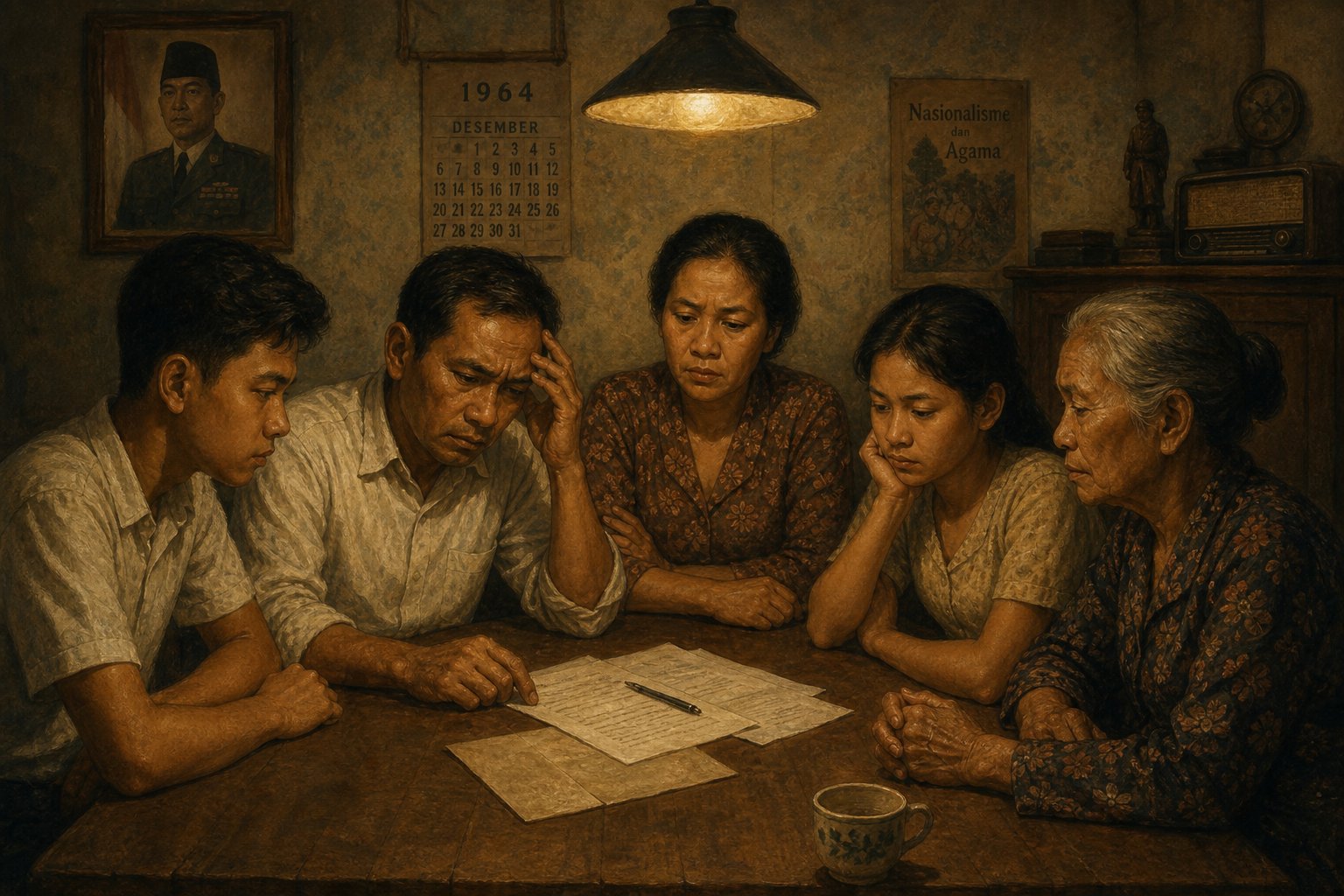
Picture a family sitting around a kitchen table in 1967 Java, forced to pick a brand-new last name before a government deadline. The surname they had carried for generations — Tan, Oei, Lim, Kwee — was no longer acceptable. They had to choose something that sounded Indonesian, something that would help them disappear into the majority population. Some families agonized over the decision. Others rushed through it out of fear. Either way, the name they chose would define their descendants for decades.
This was not a voluntary cultural shift. It was state policy, backed by political pressure and real consequences for those who refused to comply.
The 1966 Policy That Erased Chinese Names
The regulation that dismantled Indonesian Chinese naming traditions was Cabinet Presidium Decision 127 of 1966 (Keputusan Presidium Kabinet Nomor 127 Tahun 1966). Issued during the early months of Suharto's New Order regime, it instructed all Indonesian Chinese to adopt Indonesian-sounding names. While some assimilation supporters had changed their names voluntarily before this point, the policy turned a personal choice into a government mandate.
The political climate made refusal dangerous. Anti-Chinese sentiment ran high following the 1965 political upheaval, and the New Order framed ethnic Chinese as outsiders who needed to prove their loyalty. The regime's broader "assimilation" strategy went far beyond names — it banned Chinese-language schools, prohibited Chinese characters in public, restricted the celebration of Chinese New Year, and shut down Chinese-language media. Only one Chinese-language newspaper was permitted to continue operating.
For Indonesian family names of Chinese origin, the consequences were immediate and sweeping. Families who did not comply faced social stigma, bureaucratic obstacles, and suspicion from authorities. Presidential Decision 240 of 1967 reinforced the directive, and Presidential Instruction 14 of 1967 on Chinese Religion, Beliefs, and Traditions effectively banned Chinese cultural expression altogether. The message was clear: shed your Chinese identity or face exclusion.
The enforcement hit hardest in Java, where many Indonesia Chinese communities lost not only their surnames but also their ability to speak Chinese dialects within a single generation. In cities like Medan and Singkawang, where Chinese populations were larger and more concentrated, some traditions and dialect use survived — but the naming policy applied everywhere.
- 1966 — Cabinet Presidium Decision 127 issued, pressuring Chinese Indonesians to adopt Indonesian-sounding names.
- 1967 — Presidential Decision 240 reinforces the name-change mandate; Presidential Instruction 14 bans Chinese cultural and religious expression in public.
- 1967-1998 — Over three decades of New Order rule, Chinese names virtually disappear from official records. Indonesian family names replace ancestral clan identities.
- 1998 — Suharto falls from power. Reform era begins, and discriminatory policies start to be reconsidered.
- 2000 — President Abdurrahman Wahid issues Presidential Decree No. 6/2000, revoking the ban on Chinese cultural expression and restoring naming freedom.
- 2002 — President Megawati declares Chinese New Year a national holiday, further normalizing Chinese Indonesian identity.
How Abdurrahman Wahid Restored Naming Freedom
The turning point came with President Abdurrahman Wahid, widely known as Gus Dur. In 2000, he issued Presidential Decree No. 6/2000, which revoked the 1967 presidential instruction that had banned public expression of Chinese culture. This single act restored the legal right for Indonesian Chinese families to use Chinese names, celebrate traditions openly, and reclaim cultural practices that had been suppressed for over thirty years.
Gus Dur's decision did not erase the damage. By 2000, an entire generation had grown up without Chinese names. Many younger Chinese Indonesians had never learned their family's original surname. Some, like activist Christa Sydney who shared her story on social media, discovered they had never been given a Chinese name at all — a direct result of parents who internalized the regime's pressure and chose not to pass on what had become a source of danger.
The policy reversal gave families a legal path back to their ancestral names, but the psychological and cultural gap remained vast. Thirty-four years of enforced assimilation had scattered one clan across dozens of unrelated-sounding Indonesian surnames, severed dialect transmission, and left many families unsure of their own origins. The law changed in a single decree. Rebuilding what was lost would take far longer.
That fragmentation — how one dialect, one character, one family could produce wildly different Indonesian names — depended heavily on which Chinese language group a family belonged to. The same written surname took on completely different sounds depending on whether your ancestors spoke Hokkien, Hakka, Cantonese, or Teochew.
Dialect Groups and Their Distinct Surname Patterns
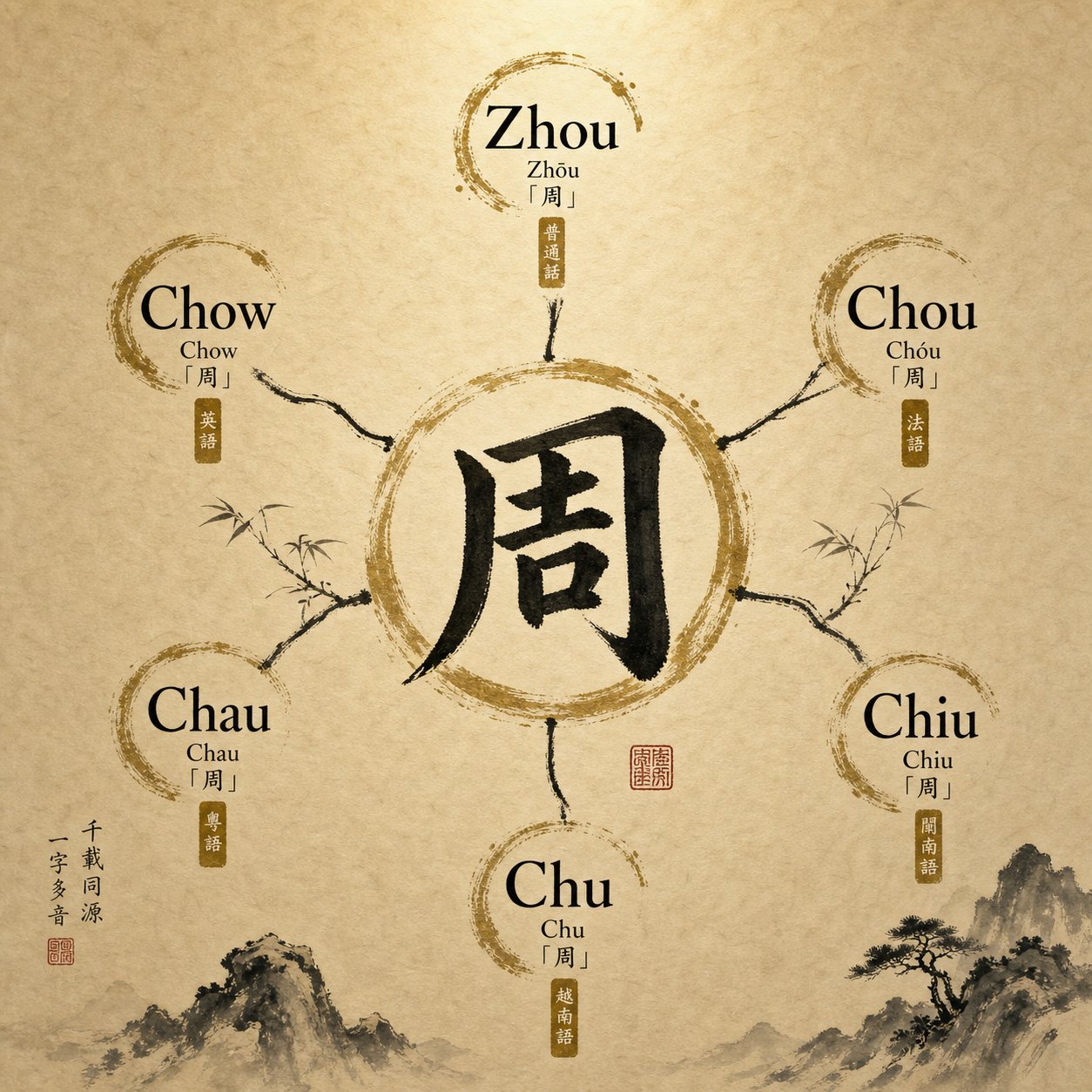
Chinese is not one spoken language — it is a family of mutually unintelligible dialects that share a written script. When Chinese migrants arrived in the Indonesian archipelago over centuries, they brought their regional pronunciations with them. The same character written on a clan ancestral tablet in Fujian province sounded completely different from the same character spoken in a Hakka village in Guangdong. Those pronunciation differences became the foundation for wildly different Indonesian surname adaptations.
Four major dialect groups shaped the landscape of common Chinese surnames in Indonesia: Hokkien, Teochew, Hakka, and Cantonese. Each group settled in different regions, carried different phonetic systems, and ultimately produced different Indonesian name forms — even when the original written surname was identical.
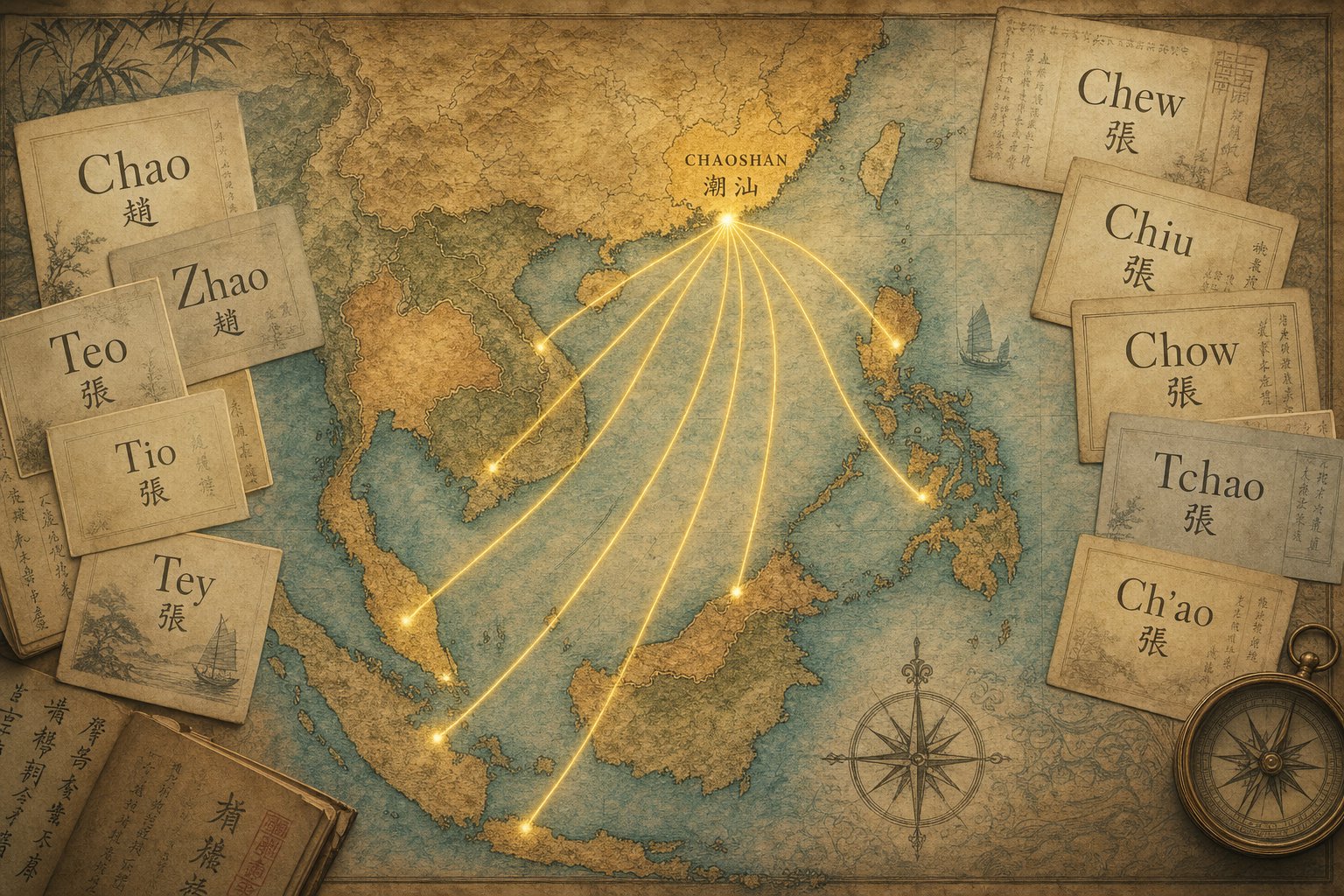
Historical records confirm this pattern. Most Chinese settlers in the archipelago came from the Fukkien (Fujian) and Kwantung (Guangdong) regions of southern China, representing primarily Hokkien, Hakka, and Cantonese communities. Their migration unfolded in waves — traders in coastal ports during the kingdom era, laborers recruited by Dutch colonial enterprises, and merchants establishing networks across Java and Sumatra.
Hokkien and Teochew Surname Patterns
Hokkien speakers form the largest Chinese dialect group in Indonesia, concentrated heavily in Java and parts of Sumatra. Teochew speakers, linguistically close cousins to the Hokkien, settled primarily in coastal trading towns across the archipelago. Because these two dialects belong to the same Southern Min language family, their surname pronunciations often overlap.
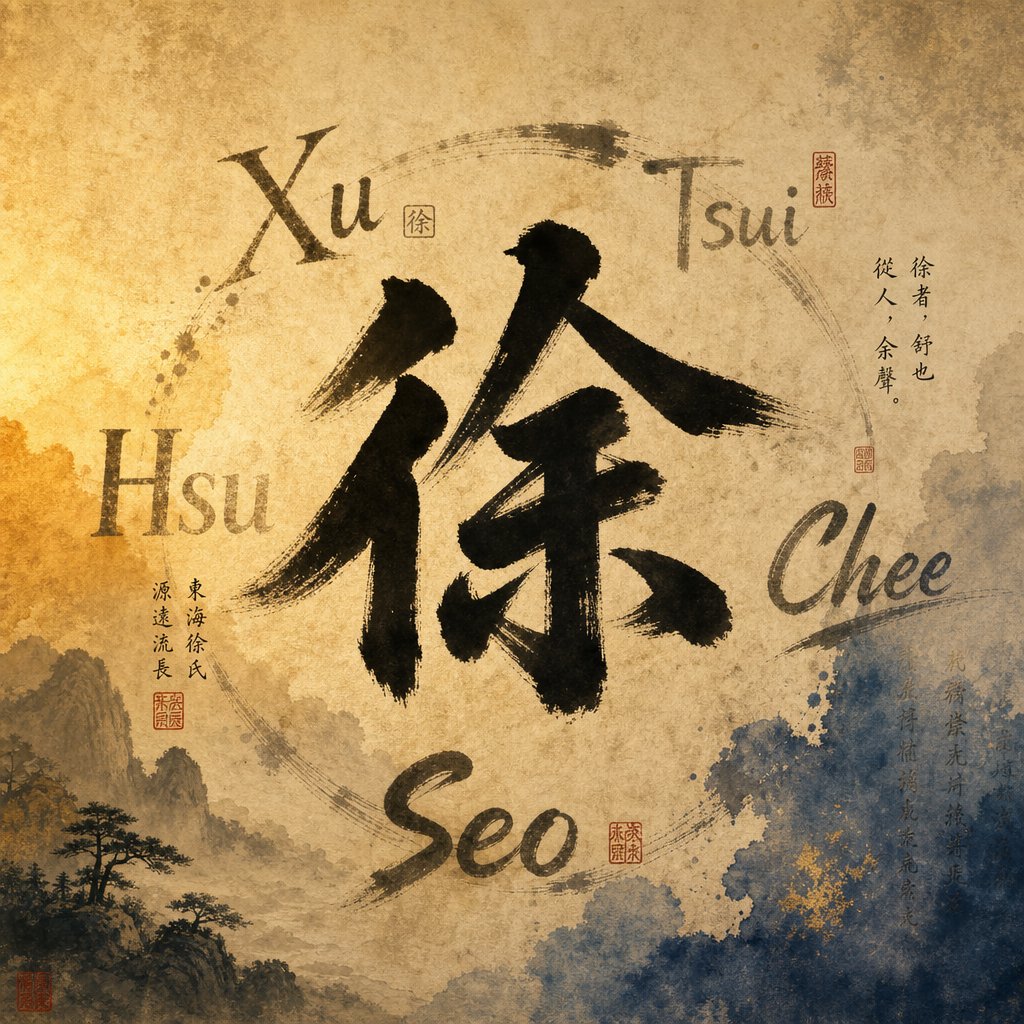
The last name Tan origin, for instance, traces directly to the Hokkien and Teochew pronunciation of the character 陳 (Mandarin: Chen). Both dialect groups say "Tan," which is why this spelling dominates among Chinese Indonesians in Java. Similarly, the last name Ong comes from the Hokkien reading of 王 (Mandarin: Wang), while Teochew speakers pronounce the same character as "Heng." You'll notice that Hokkien speakers also produced distinctive spellings like Oei, Wee, and Ooi for the character 黄 (Huang) — forms that look nothing like the Mandarin original but faithfully reflect Hokkien phonetics.
The Dutch colonial spelling system added another layer. Colonial administrators transcribed what they heard using Dutch orthography, which is why you encounter spellings like Tjo (for the Hokkien pronunciation of certain characters) and Tjoa in older Indonesian records. The tjo meaning in these contexts is simply a Dutch-era phonetic rendering of a Hokkien sound — the "tj" representing a sound that modern Indonesian spelling would write as "c."
Hakka and Cantonese Adaptations in Indonesia
Hakka speakers followed a different migration path. Many arrived as laborers and miners, settling heavily in West Kalimantan — particularly around Pontianak and Singkawang — as well as parts of Bangka-Belitung. Their phonetic system diverges sharply from Hokkien, producing noticeably different surname forms from the same characters.
Where a Hokkien speaker says "Tan" for 陳, a Hakka speaker says "Chin." Where Hokkien gives us "Lim" for 林, Hakka produces "Lam" — a pronunciation shared with Cantonese speakers. The character 黄 (Huang) becomes "Vong" or "Wong" in Hakka, closer to the Cantonese "Wong" than to the Hokkien "Oei." These differences meant that two families sharing the exact same ancestral surname could end up with completely unrecognizable Indonesian adaptations simply because one was Hakka and the other Hokkien.
Cantonese speakers, though a smaller group in Indonesia compared to Hokkien or Hakka, left their mark in certain urban centers. Their pronunciations — Chan for 陳, Lam for 林, Wong for both 黄 and 王 — mirror what you find in Hong Kong and among Cantonese communities in Malaysia. The leong last name, for example, derives from the Cantonese pronunciation of 梁 (Mandarin: Liang), a surname that Hokkien speakers would render as "Neo" or "Niu."
The table below maps how the same Chinese characters produced different dialect pronunciations, each of which then became the raw material for Indonesian name adaptations:
| Chinese Character | Mandarin | Hokkien | Teochew | Hakka | Cantonese | Common Indonesian Adaptation |
|---|---|---|---|---|---|---|
| 陳 | Chen | Tan | Tan | Chin | Chan | Tanujaya, Sutanto, Hartanto |
| 林 | Lin | Lim | Lim | Lam | Lam | Halim, Salim, Limanto |
| 黄 | Huang | Oei / Wee / Ng | Ng | Vong | Wong | Wijaya, Wibowo, Gunawan |
| 王 | Wang | Ong | Heng | Vong | Wong | Widjaja, Onggara, Hendrawan |
| 李 | Li | Lee | Lee | Lee / Li | Lee | Saleh, Lesmana, Suryadinata |
| 郭 | Guo | Kwee / Koay | Kuek | Kok | Kwok | Kusnadi, Kurniawan |
| 蔡 | Cai | Tjoa / Chua | Chua | Tsoi | Choi | Sutjiawan, Cahyadi |
| 吴 | Wu | Goh | Goh | Ng | Ng | Gunawan, Gozali |
| 梁 | Liang | Neo / Niu | Neo | Liong | Leong / Leung | Lianggara, Nugroho |
| 张 | Zhang | Teo / Tio | Teo | Chong | Cheung | Tedjasurja, Chandra |
Notice how a single character like 黄 can appear as Oei, Ng, Vong, or Wong depending on dialect — and then transform into Wijaya, Wibowo, or Gunawan once adapted into Indonesian. This layering of dialect pronunciation on top of Indonesian phonetic adaptation is what makes tracing these names so complex, and so rewarding when the connections finally click into place.
Dialect identity did not just determine how a surname sounded. It also determined which adaptation strategies a family was likely to use — whether they preserved a phonetic echo of the original or replaced it entirely with a Javanese or Sanskrit-derived name.
How Chinese Surnames Became Indonesian Names
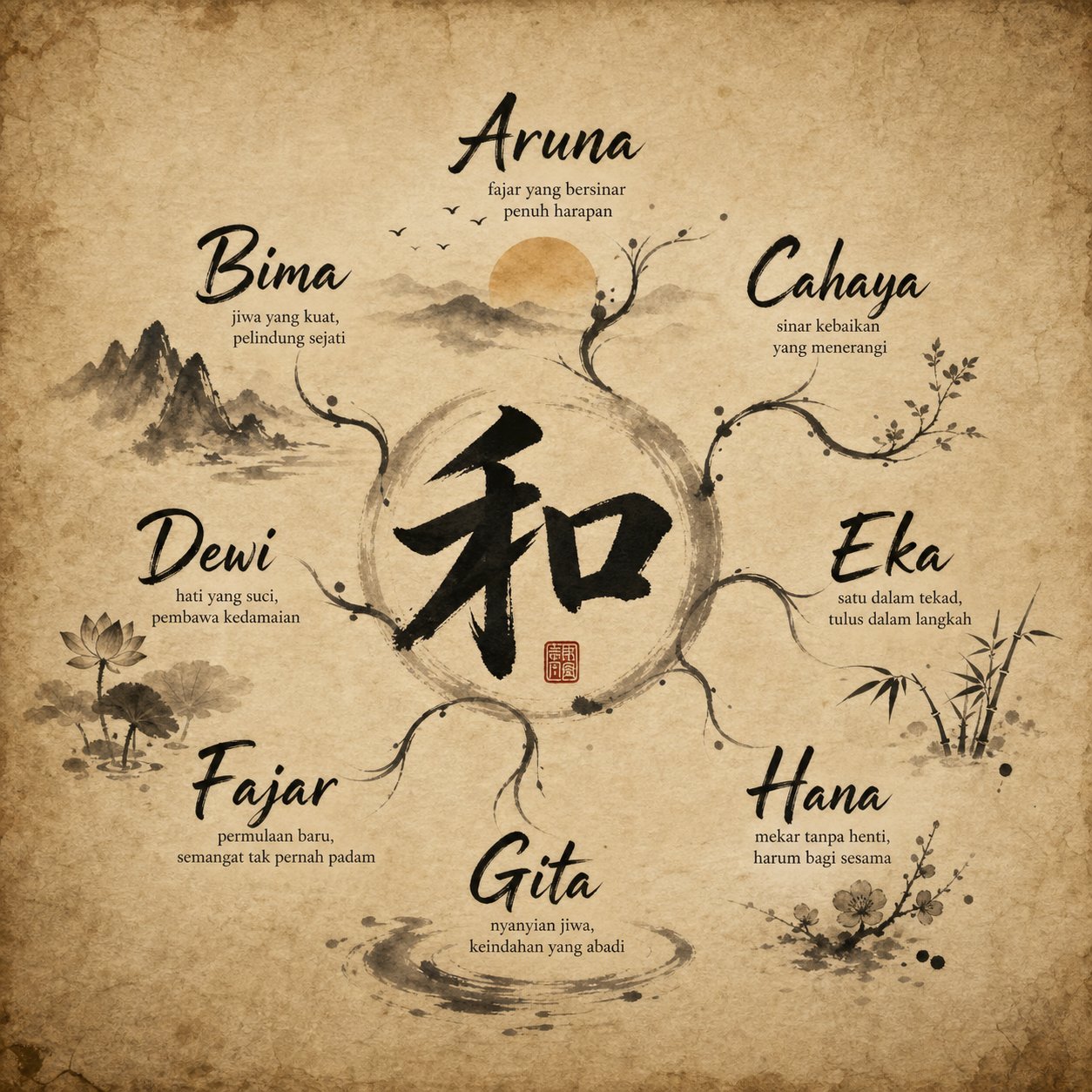
When families sat down to create new Indonesian-sounding names from their Chinese surnames, they were not working from a government-issued guidebook. There was no official formula. Each family improvised, drawing on whatever linguistic creativity, cultural knowledge, or practical instinct they had. The result was a patchwork of strategies — some preserving a clear phonetic thread back to the original, others severing the connection entirely.
Understanding these strategies is like learning to read a code. Once you recognize the patterns, names that seemed purely Indonesian suddenly reveal their Chinese origins.
Phonetic Strategies for Name Adaptation
Linguists and researchers studying Chinese Indonesian surname adaptations have identified several distinct approaches families used. These ranged from subtle sound-based modifications to complete reinventions. Here are the main strategies:
- Phonetic approximation (sound shift) — The original dialect surname was slightly altered to fit Indonesian phonology, then expanded into a full Indonesian-sounding word. The widjaja last name origin illustrates this perfectly: the Hokkien surname Oei (黄/Huang) was phonetically rendered as "Wi-" and combined with the Javanese-Sanskrit suffix "-djaja" (meaning victory), producing Widjaja or Wijaya. Similarly, Oei could become Wibowo, Winata, or Widodo — all starting with the "Wi-" sound that echoes the original.
- Syllable expansion (suffix addition) — The Chinese surname was kept intact as the opening syllable, then extended with Indonesian or Sanskrit-derived suffixes. Tan (陳/Chen) became Tanujaya, Tanoto, Tandiono, or Tanzil. The original surname sits right at the front, clearly visible to anyone who knows what to look for. This was the most common method, producing names where the Chinese root is embedded as a paragoge — a linguistic term for adding sounds to the end of a word.
- Prefix addition (prosthesis) — Indonesian-sounding syllables were placed before the Chinese surname. Lim (林/Lin) became Halim, Salim, Taslim, or Ruslim. The surname Ng — whose origin traces to the Hokkien and Hakka pronunciation of 黄 (Huang) or 吴 (Wu) — could become Ngadiman or Anggraini. In these cases, the original sound is buried inside the name rather than leading it.
- Epenthesis (insertion between syllables) — The Chinese surname was placed between two Indonesian-sounding elements. Ong (王/Wang) became Sasongko, with "Ong" nestled in the middle. Han (韩) became Johanes, with the surname sound woven into a Western-Indonesian hybrid.
- Semantic translation — Instead of preserving sound, some families translated the meaning of their Chinese name into Javanese, Sanskrit, or Arabic equivalents. The famous example: Liem (林), meaning "forest," was translated into the old Javanese word "wana" (also meaning forest), then given the male suffix "-ndi" to create Wanandi. This approach required knowledge of both Chinese character meanings and local languages.
- Complete replacement — Some families chose Indonesian names with no phonetic or semantic connection to their Chinese surname whatsoever. A family surnamed Liem (林) might become Sutanto — a name that contains no trace of the original. This was sometimes done deliberately to maximize assimilation, or simply because a family adopted the surname of an Indonesian neighbor or business associate who helped facilitate the paperwork.
The chua tio meaning question comes up frequently in genealogy forums. Chua is the Hokkien/Teochew pronunciation of 蔡 (Mandarin: Cai), while Tio is the Hokkien rendering of 张 (Mandarin: Zhang). In Dutch colonial spelling, these appeared as Tjoa and Thio respectively — forms that then became raw material for Indonesian adaptations like Cahyadi (from Tjoa) and Setio (from Tio).
The pang last name origin follows a similar pattern. Pang derives from the Hokkien pronunciation of either 彭 (Mandarin: Peng) or 方 (Mandarin: Fang). Under Indonesian adaptation, Pang could become Pangestu — as seen in the well-known business figure Prajogo Pangestu, whose surname incorporates the original Phang sound with an Indonesian suffix meaning "blessing."
Why Some Families Kept Sound Echoes While Others Did Not
The choice between preserving a phonetic link and erasing it entirely was rarely random. Several factors pushed families in one direction or the other.
Families who maintained sound echoes — Kwee becoming Kusnadi (keeping the "K"), Tan becoming Tanoto (keeping "Tan" intact), Ang becoming Angkasa (keeping "Ang") — often did so as a quiet act of resistance. The phonetic thread served as a private marker, a way to signal Chinese identity to those who knew the code while appearing fully assimilated to everyone else. It also made it easier for clan members to recognize each other across the diaspora.
Families who chose complete replacements often faced more intense local pressure, lived in areas with smaller Chinese populations where visibility was dangerous, or simply prioritized safety over cultural continuity. Some were guided by Indonesian neighbors or local officials who suggested names, resulting in choices that reflected the helper's preferences rather than the family's heritage. During Suharto's regime, some Indonesian families gave their own family name to Chinese acquaintances to help them through the bureaucratic process — a gesture of solidarity that nonetheless severed the naming link permanently.
Economic status played a role too. Wealthier families with access to educated advisors tended to craft more sophisticated adaptations — semantic translations or elegant phonetic expansions. Poorer families, facing bureaucratic fees they could barely afford, sometimes accepted whatever name was quickest and cheapest to register.
The result is that two cousins from the same clan could end up with names as different as Tanujaya and Hartono — one preserving the "Tan" root clearly, the other showing no visible connection at all. Both trace back to the same character, 陳, but you would never know it without a conversion map.
A Practical Map of Chinese to Indonesian Surname Conversions
Knowing the strategies is one thing. Having a concrete reference you can check against your own family name is another. This section brings together the most frequently encountered conversions into a single lookup resource — organized not by alphabet but by how commonly these surnames appear among Chinese Indonesian communities.
Keep in mind that no conversion table can be exhaustive. A single Chinese surname like Chen (陈) generated over sixty documented Indonesian adaptations. What you'll find below are the most widely attested forms, drawn from historical records and community documentation. If your family name appears here, you have a strong starting point. If it doesn't, the phonetic patterns may still help you identify which clan name lies beneath your Indonesian surname.
Most Common Surname Conversions at a Glance
The following table covers the high-frequency surnames — the ones that account for the largest share of Chinese Indonesian families. You'll notice that some original surnames produced a staggering number of Indonesian forms, while others remained relatively contained. The variation depends on how large the clan population was in Indonesia, how many dialect groups carried that surname, and how much creative latitude families exercised during the conversion period.
| Original Surname | Chinese Character | Dialect Pronunciation | Common Indonesian Forms |
|---|---|---|---|
| Chen | 陈 | Hokkien: Tan; Hakka: Chin | Tanujaya, Tanoto, Sutanto, Hartanto, Santoso, Tandiono, Tanzil, Tanamal, Chandra, Setiawan, Budiman |
| Lin | 林 | Hokkien: Lim/Liem; Hakka: Lam | Halim, Salim, Limanto, Wanandi, Taslim, Nursalim, Ruslim, Liemena, Alim |
| Huang | 黄 | Hokkien: Oei/Oey/Ng; Hakka: Vong; Cantonese: Wong | Wijaya, Wibowo, Winata, Widodo, Widagdo, Hartono, Gunawan, Permatasari, Sanjaya |
| Guo | 郭 | Hokkien: Kwee/Kwik; Hakka: Kok | Kusnadi, Kurniawan, Kusuma, Gunawan, Santoso, Susanto, Winata, Kuncoro |
| Wang | 王 | Hokkien: Ong; Teochew: Heng; Cantonese: Wong | Widjaja, Ongko, Wangsadinata, Sasongko, Lembong, Radja, Ongkosandjojo |
| Cai | 蔡 | Hokkien: Tjoa/Chua; Hakka: Chhai | Cahyadi, Cahya, Cuaca, Susanto, Surya, Wonowijoyo, Sulaiman, Tirtakusuma |
| Li | 李 | Hokkien: Lee/Lie; Hakka: Li | Lijanto, Liman, Rusli, Aliwarga, Suryadinata |
| Yang | 杨 | Hokkien: Njoo/Nyoo; Cantonese: Yeung | Yongki, Yoso, Nyoto, Muljoto |
| Zhang | 张 | Hokkien: Tio/Thio; Cantonese: Cheung | Setio, Susetyo, Sulistio, Chandra, Kartio |
| Hong | 洪 | Hokkien: Ang; Cantonese: Hung | Anggawarsito, Anggakusuma, Angela, Angkasa, Anggraini, Suryadi |
| Han | 韩 | Hokkien: Han; Cantonese: Hon | Handoko, Handaya, Handoyo, Hanjaya, Burhan, Suhandi |
| Zheng | 郑 | Hokkien: Te/The; Hakka: Chang | Suteja, Teja, Tedjokumoro, Tejarukmana, Tejawati |
| Ye | 叶 | Hokkien: Yap/Jap | Yaputro, Yaputri |
| Zeng | 曾 | Hokkien: Tjan; Cantonese: Tsang | Tjandra, Chandra, Chandrawinata, Candrakusuma |
| Wu | 吴 | Hokkien: Go/Goh/Ng; Cantonese: Ng | Gondo, Gozali, Gunawan, Gotama, Utama |
A few things stand out. The surname Chen/Tan dominates in sheer variety — a reflection of how common this clan name is across all Chinese dialect groups. Huang/Oei produced an equally diverse set of forms because the Hokkien pronunciation (Oei) was phonetically reshaped into the "Wi-" prefix, which then combined with dozens of different Javanese and Sanskrit suffixes.
The yap last name origin connects to the character 叶 (Mandarin: Ye), pronounced "Yap" in Hokkien. Families with this surname typically produced Indonesian forms beginning with "Ya-" such as Yaputro. In Malaysia and Singapore, the same surname appears as Yap or Yip — a useful cross-reference if you're tracing relatives across Southeast Asia. The ooi last name follows a parallel path: it's the English-spelling equivalent of the Dutch "Oei," both representing the Hokkien pronunciation of 黄 (Huang). If your family used Ooi in Malaysia or Oei in Indonesia, you share the same clan origin.
Lesser-Known Adaptations Worth Knowing
Beyond the high-frequency surnames, several less common clan names appear in Indonesian records with their own distinctive adaptation patterns. These are worth knowing because they often stump genealogy researchers who focus only on the "big five" surnames.
The mak surname (麦, Mandarin: Mai) is relatively rare in Indonesia but appears in Cantonese and Hakka communities. Its Hokkien equivalent, Beh or Bak, sometimes produced Indonesian forms starting with "B" or was absorbed into names like Bakrie through phonetic association. People researching the fu last name origin will find two distinct Chinese characters: 符 (Fu) with the Hokkien pronunciation "Hu" and Dutch-era spelling "Hoe," and 傅 (Fu) with Hokkien forms "Bou" or "Po" and Dutch-era spellings "Pou" or "Pouw." Indonesian adaptations include Irawan and Priyatna for the latter.
The ou last name origin traces to 胡 (Mandarin: Hu), which Hokkien speakers pronounce as "O" or "Ou" — spelled "Ouw" or "Auw" in Dutch colonial records. Indonesian forms derived from this surname include Harsono and Husino. This is distinct from the surname 欧 (Mandarin: Ou), which is far rarer in Indonesian Chinese communities.
For those researching the last name Ding (丁), the Hokkien pronunciation is "Teng" and the Dutch-era spelling was "Teng" or "Ting." This surname is uncommon enough in Indonesia that documented Indonesian adaptations are sparse, making it one of the harder names to trace through conversion records alone. The dong last name origin presents a similar challenge: 董 (Mandarin: Dong) was pronounced "Tang" or "Tong" in Hokkien and spelled "Tang" in Dutch colonial documents. One documented Indonesian adaptation is Lintang — a poetic Javanese word meaning "star" — though families with this surname may have chosen entirely unrelated Indonesian names due to its low frequency.
The conversion table above gives you a foundation, but it represents only the most visible layer. Beneath each entry lie dozens of individual family stories — choices made under pressure, creative compromises, and quiet acts of preservation. The real complexity emerges when you consider that members of the same extended family often chose different Indonesian names from this same menu of options, scattering one bloodline across multiple surnames that no longer recognize each other.
How Surname Changes Fragmented Families
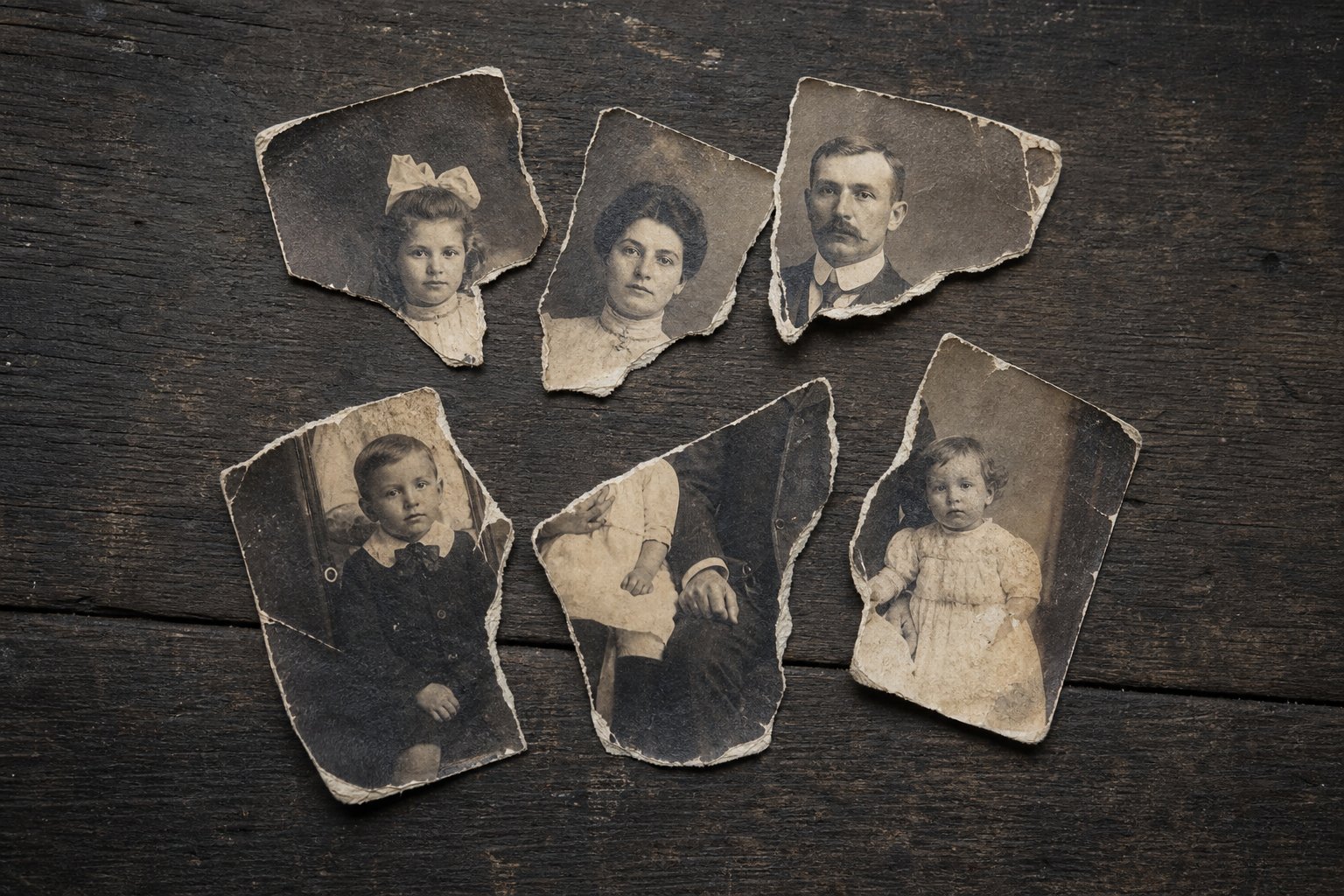
A conversion table shows you the possibilities. Real life shows you the chaos. When the 1966 policy forced families to choose new names, it did not require them to coordinate. There was no central registry ensuring that all members of the Tan clan picked the same Indonesian replacement. Each household — sometimes each individual — made the decision independently. The result was that a single extended family, bound by one Chinese clan name for centuries, emerged from the process scattered across half a dozen unrelated-sounding surnames.
When One Family Became Many Surnames
Imagine a family reunion where the guest list reads like a random sampling of common Indonesian last names. One uncle registered as Wijaya. His brother chose Hartono. Their sister married and her children became Susanto. A cousin in another city, unaware of what the others had picked, settled on Chandra — a popular choice among families adapting the Zeng (曾) or Zhang (张) clan names. The chandra surname appears frequently across Indonesian Chinese communities precisely because it worked as an adaptation for multiple original characters, making it one of the common Indonesian surnames that masks diverse clan origins beneath a single familiar form.
Consider the Oei clan in one Javanese city: the eldest brother became Wijaya, the second brother registered as Wibowo, a sister's family chose Gunawan, and a cousin who moved to Surabaya picked Permatasari. Four households, one ancestor, zero visible connection — and within a generation, their children had no idea they were related.
This fragmentation was not an accident. It was a structural consequence of a policy that gave families no time, no coordination mechanism, and strong incentives to blend in as thoroughly as possible. Some branches deliberately chose different names to avoid drawing attention as a large Chinese clan. Others simply never communicated their choice to relatives in distant cities — remember, this was decades before mobile phones or email.
The genealogical damage compounds over time. By the second or third generation, descendants carrying the name Wijaya have no reason to suspect that the Hartono family down the street shares their great-grandfather. Common last names in Indonesia like Santoso, Gunawan, and Kurniawan each contain thousands of unrelated families — but also contain clusters of relatives who no longer recognize each other. Researchers attempting to reconstruct family trees hit dead ends because the paper trail switches surnames mid-generation with no official cross-reference.
Surname Practices in Mixed Chinese-Indonesian Families
Intermarriage between Chinese Indonesians and indigenous Indonesians added another layer of complexity. Under Indonesian naming conventions, surnames are not legally required — many Javanese, Sundanese, and Balinese Indonesians carry single-word names with no inherited family component at all. When a Chinese Indonesian with an adapted surname married into a family without one, the children might inherit the adapted surname, drop it entirely, or receive a completely new name unrelated to either parent's lineage.
This means that popular Indonesian last names of Chinese origin sometimes disappear within a single generation of intermarriage. A man named Halim (originally Lim/林) marries a Javanese woman named Wulandari. Their children might be named Halim, or they might be given entirely fresh names like Pratama or Nugroho — following the Javanese preference for unique personal names over inherited ones. The Chinese clan connection, already obscured by the 1966 conversion, vanishes completely.
The reverse also happens. Some mixed families chose to keep the Chinese-adapted surname as a unifying family identifier, especially in communities where having a recognizable last name carried social or business advantages. The chandra surname, for instance, appears in both fully Chinese Indonesian families and mixed households — its Sanskrit sound making it feel natural in either context.
All of this means that tracing your ancestry through surnames alone is unreliable. The name on your ID card might connect you to your Chinese clan, or it might be a dead end created by policy, intermarriage, or simple miscommunication between relatives sixty years ago. Recovering the original requires a different approach — one that combines family oral history, dialect identification, and phonetic detective work.
Tracing Your Surname Back to Its Chinese Origins
So your Indonesian surname might hide a Chinese clan name — but how do you actually find it? The paper trail is fragmented, the living memory is fading, and no single database maps every conversion that happened in the late 1960s. Still, the path is not impossible. It requires a combination of family detective work, phonetic analysis, and community connections. Here is a practical framework you can follow, step by step.
Steps to Identify Your Original Chinese Surname
Think of this as working backward through layers — from the Indonesian name on your documents, through the dialect pronunciation it may encode, to the original Chinese character your ancestors carried.
- Talk to the oldest living relatives first. Grandparents, great-aunts, elderly family friends — anyone who was alive before or during the 1966 name change. Ask directly: what was our family name before? Even if they claim not to remember, specific prompts help. Ask about names used at Chinese temples, on ancestral tablets, or in old letters. Some families kept their Chinese name for private use even after officially changing it.
- Identify your family's dialect group. Were your ancestors Hokkien, Hakka, Teochew, or Cantonese? This single piece of information narrows the search dramatically. Clues include which region of Indonesia your family settled in (Java often means Hokkien; West Kalimantan often means Hakka), which Chinese dialect older relatives spoke at home, and which temples or clan associations the family was connected to.
- Analyze the phonetic structure of your Indonesian surname. Look at the opening syllable. Names beginning with "Tan-" likely derive from Chen (陈). Names starting with "Wi-" or "Wid-" often trace to Huang (黄) via the Hokkien pronunciation Oei. A "Hal-" or "Sal-" prefix frequently points to Lin (林) through the Lim form. The lo last name ethnicity question often arises here — Lo is typically the Hokkien or Cantonese pronunciation of 罗 (Mandarin: Luo), and Indonesian adaptations may begin with "Lo-" or have been expanded into forms like Loekito or Lukman.
- Cross-reference against known conversion tables. Use the surname mapping resources available through genealogy communities and academic publications. Match your phonetic analysis against documented conversions for your dialect group. If your surname is Pangestu and your family is Hokkien, the likely origin is Pang/Phang (彭). If your family carries the tu surname, it may derive from 杜 (Mandarin: Du), pronounced "Toh" in Hokkien — the tu last name origin connects to a relatively uncommon clan that produced few documented Indonesian adaptations, making family oral history even more critical.
- Research regional migration records. Dutch colonial archives recorded Chinese residents by their original names. Civil registration records from the colonial era — births, marriages, deaths — often list Chinese names alongside Dutch-era spellings. The Indische Genealogical Society (IGV) has digitized many of these records, and their archive contains over two million entries from the Dutch East Indies period.
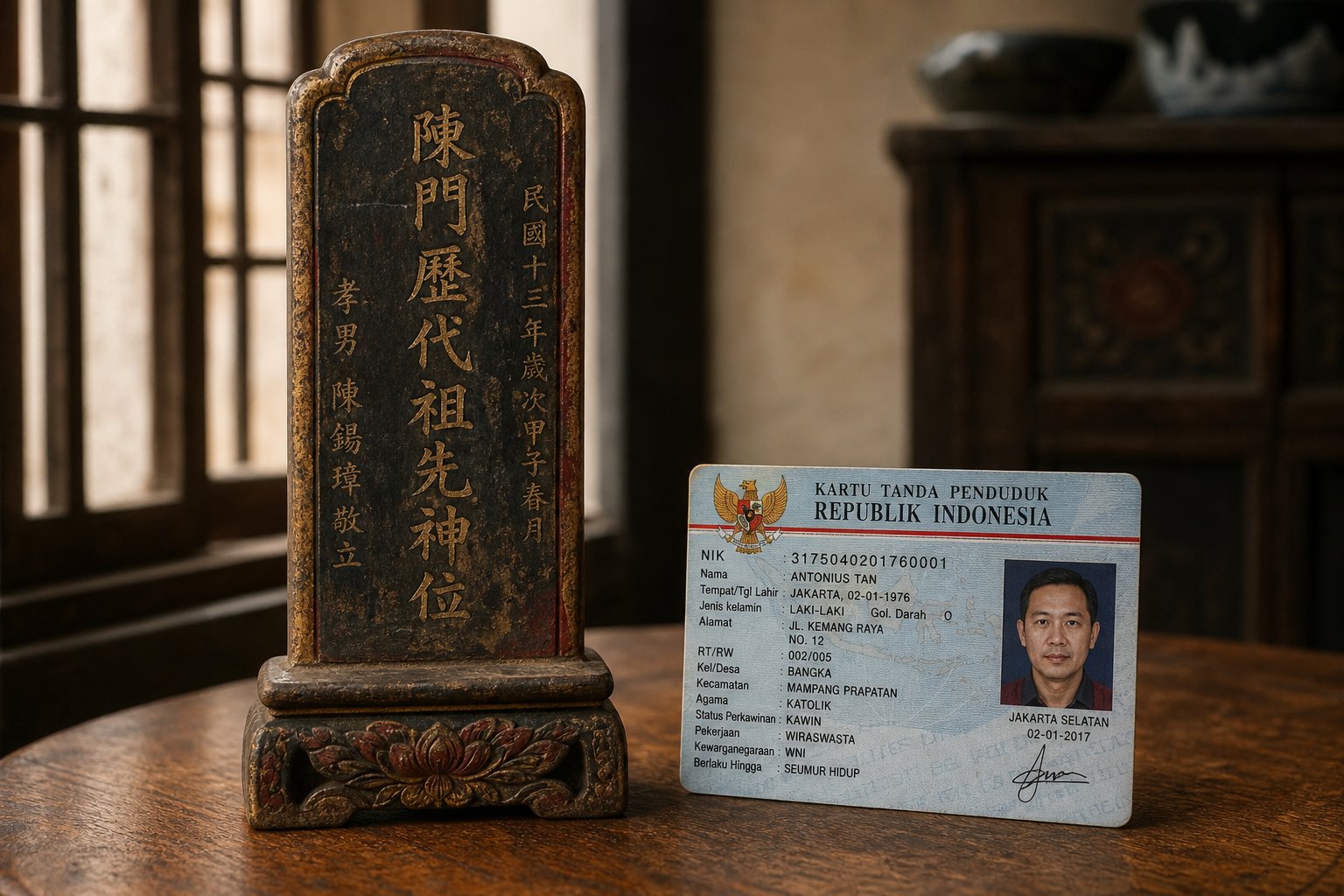
- Check tombstones and ancestral tablets. Chinese graves in Indonesia typically carry the deceased's Chinese name in characters, even when the person used an Indonesian name in daily life. Older cemeteries in cities like Semarang, Surabaya, and Jakarta contain thousands of these markers. My China Roots, a genealogy platform, has been digitizing tombstones and ancestral tablets across Southeast Asia specifically to help diaspora families reconnect with their origins.
- Connect with clan associations and genealogy communities. Chinese clan associations (organized by shared surname) remain active across Indonesia and Southeast Asia. If you can identify even a probable original surname, the relevant clan association may have genealogy books — known as zupu (族谱) — that trace your lineage back centuries. These books are being digitized at scale, with over 15,000 already available in searchable format.
A note on less common surnames: if your research points toward one of the rarest Chinese surnames — names like 涂 (Tu), 孙 (Sun), or 董 (Dong) — documented Indonesian conversions may be sparse or absent from published tables. The surname Sun (孙), pronounced "Sun" or "Soon" in Hokkien, sometimes produced Indonesian forms like Sunarto or Sunardi, though these names also exist independently in Javanese naming traditions. The tung surname (董, Mandarin: Dong, Hokkien: Tang/Tong) is similarly uncommon, and families carrying it may have chosen adaptations that bear no phonetic resemblance to the original. In these cases, oral history and tombstone records become your primary evidence.
The ing last name origin is another question that surfaces in genealogy research. "Ing" typically represents a fragment of a longer Hokkien pronunciation rather than a standalone surname — it can appear as part of names derived from 应 (Ying) or as a middle-generation name mistaken for a surname in Indonesian records. Clarifying whether "Ing" in your family history is a surname or a generational name is an important early step.
Resources and Communities for Surname Research
You don't have to do this alone. A growing ecosystem of organizations, digital tools, and community networks exists specifically to help Chinese Indonesians trace their roots:
- My China Roots — A genealogy platform digitizing Chinese genealogy books, tombstones, and ancestral tablets. Their database covers over 15,000 zupu with a focus on Fujian and Guangdong provinces, where most Indonesian Chinese families originate.
- Indische Genealogical Society (IGV) — A Dutch-based organization with over 1,500 members, maintaining an archive of two million records from the Dutch East Indies. They actively document Chinese graves and colonial-era civil records.
- Perhimpunan Indonesia Tionghoa (INTI) — A prominent Chinese Indonesian organization that supports cultural reconnection and can direct you toward local clan associations.
- Regional clan associations — Organizations like the Tan (Chen) clan association, Lim (Lin) clan association, and others maintain genealogy records and host reunion events. Many have branches in Jakarta, Surabaya, Medan, and Pontianak.
- FamilySearch.org — The LDS Church's genealogy platform contains microfilmed Dutch East Indies civil records, including Chinese community registrations from the colonial period.
- Social media genealogy groups — Facebook groups and WeChat communities dedicated to Chinese Indonesian genealogy allow you to crowdsource identification of surnames and connect with distant relatives who may have preserved records your branch lost.
The search is rarely quick. Families who were severed from their names for over thirty years often need multiple sources to confirm a connection. But the infrastructure for this research is stronger than it has ever been — and every year, more records come online, more tombstones get photographed, and more families share what they know. The question is no longer whether the information exists. It is whether you are ready to look for it.
Reclaiming Chinese Surnames in Modern Indonesia
Finding your original surname is one thing. Legally restoring it is another. Since 2000, Indonesian law has permitted Chinese Indonesians to reclaim their ancestral names — but the path from discovery to official documentation involves bureaucracy, personal conviction, and sometimes difficult family conversations.
The movement is real and growing. In 2013, Surabaya-born Hwely Ongkowijoyo made a deliberate choice: he legally named his newborn daughter Vivian Wang, reviving the original family surname that his grandparents had converted from Ong (王) to Ongkowijoyo under the 1967 regulation. His wife Linda Trisnawati explained the reasoning simply: "For two generations, our family had used the name Ongkowijoyo and we felt that change was needed to move with the times." For this family, reclaiming was not about looking backward — it was about correcting a distortion.
The Legal Process for Restoring a Chinese Surname
Indonesian law does not have a single streamlined "name restoration" procedure. Instead, reclaiming an ancestral indonesian surname — or replacing it with the original chinese name in official documents — requires navigating the general legal name-change process. Here is what that involves:
- File a petition with the local District Court (Pengadilan Negeri) — You must submit a formal request explaining why you want to change your name. The court reviews whether the change is justified and not intended for fraudulent purposes.
- Provide supporting documentation — This typically includes your birth certificate, family card (Kartu Keluarga), national ID (KTP), and any evidence linking your current name to the original Chinese surname. Old family documents, colonial-era records, or ancestral tablets can serve as proof.
- Obtain a court decree (Penetapan Pengadilan) — If approved, the court issues a formal decree authorizing the name change. This is the legal foundation for all subsequent document updates.
- Update civil registration records — Take the court decree to the Civil Registry Office (Dinas Kependudukan dan Catatan Sipil) to amend your birth certificate and family card.
- Update all other identity documents — This includes your KTP, passport, tax ID (NPWP), bank accounts, property titles, educational certificates, and professional licenses. Each institution has its own process and timeline.
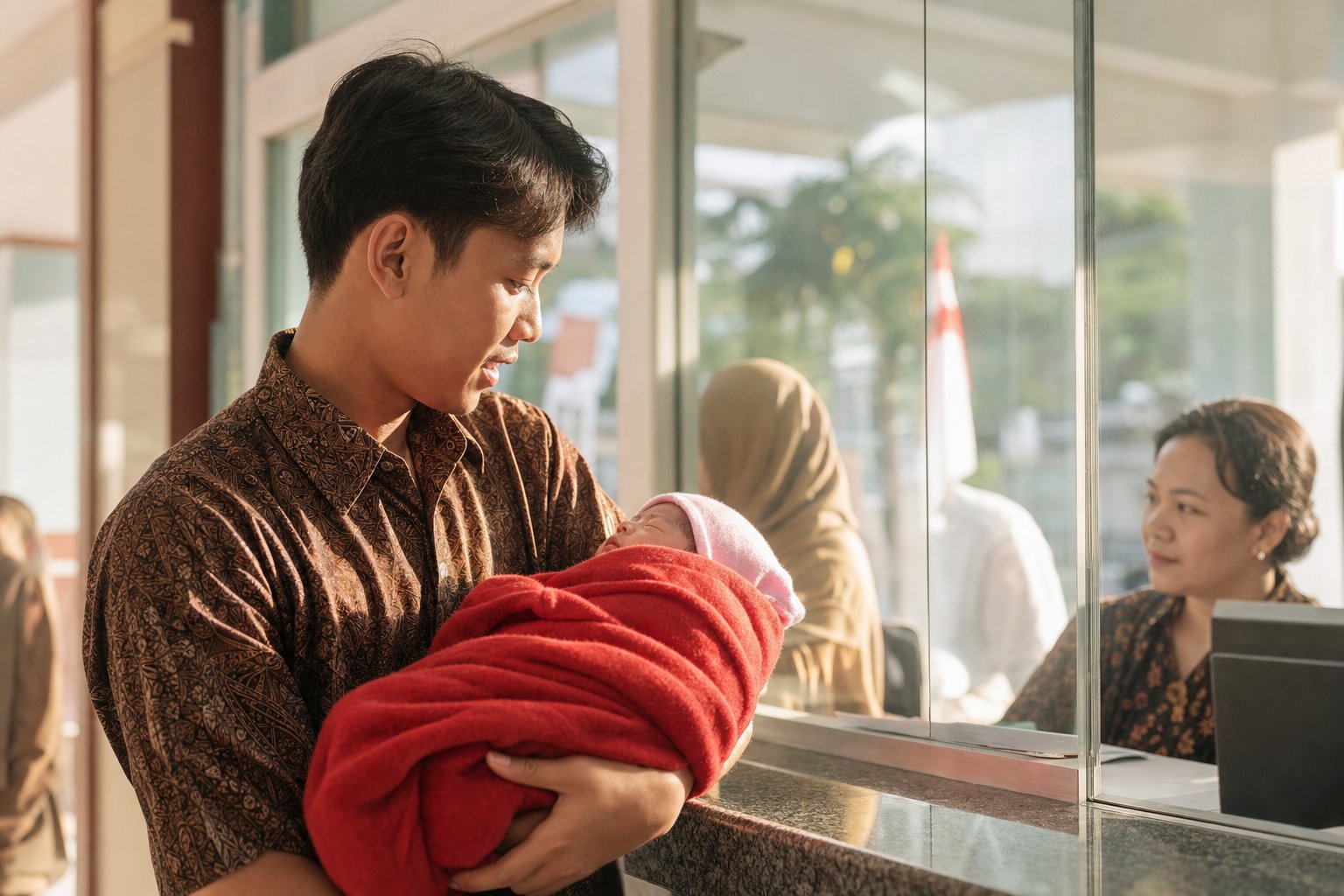
The process is neither quick nor cheap. Court fees, legal representation, and the cascade of document changes can take months and cost several million rupiah. For families who want to give newborn children their original clan name — as Ongkowijoyo did — the path is simpler: you can register the child's birth certificate with any legal name, including a Chinese one, without needing court approval.
Navigating Identity Between Two Naming Traditions
The legal mechanics are straightforward compared to the emotional terrain. Cultural motivations for reclaiming run deep — honoring ancestors, rebuilding connections with relatives in China, Singapore, and Malaysia who still carry the original surname, and asserting that indonesian chinese translation of identity does not require erasure of one half to validate the other.
Cross-border family ties are a powerful driver. When a Chinese Indonesian named Wijaya tries to connect with Wang relatives in Fujian province, the surname mismatch creates confusion and emotional distance. Restoring the original name removes that barrier and signals belonging within the broader clan network. For business families with operations across Southeast Asia, a shared surname also carries practical weight in relationship-driven Chinese commercial culture.
Yet the generational divide is sharp. Older Chinese Indonesians who lived through the discrimination, the 1998 riots, and decades of enforced invisibility often view reclamation with caution. For them, the Indonesian name became a shield — and removing it feels like exposing yourself again. Sinologist Leo Suryadinata has observed that while some have lost their Chinese roots entirely, others are actively rediscovering them — but this does not transform them back into mainland Chinese. "They are still Chinese-Indonesians," he notes.
Younger generations tend to see things differently. Growing up after the reform era, they experience their dual heritage as an asset rather than a liability. Actor Daniel Mananta, who gave his children Chinese names and calls his daughter "Cici" (a Hokkien term for older sister), represents this shift: "I am not a Chinese person who happens to live here; I am an Indonesian with Chinese blood." For this generation, carrying both an indonesian surname and a Chinese name is not contradiction — it is completeness.
Practical concerns remain real. Professionals who have built careers, published research, or established businesses under their Indonesian names face the question of whether a legal change is worth the disruption. Some choose a middle path — using their Chinese name socially and for new family members while keeping the Indonesian name on existing professional credentials. Others, like the growing number of parents registering newborns with Chinese surnames, are simply starting fresh with the next generation.
The indonesia surnames landscape is shifting. What was once a uniform field of Indonesian-sounding names is slowly becoming more varied, more honest, and more reflective of the complex histories these families actually carry. The policy that erased thousands of names took a single decree. The restoration is happening one family at a time — each deciding for themselves what their name should say about who they are.
Frequently Asked Questions About Chinese Indonesian Surnames
1. Why do Chinese Indonesians have Indonesian-sounding surnames?
In 1966, the Suharto regime issued Cabinet Presidium Decision 127, which pressured all ethnic Chinese in Indonesia to adopt Indonesian-sounding names. This was part of a broader assimilation policy that also banned Chinese-language schools, media, and cultural celebrations. Families had to choose new surnames quickly, often without coordinating with relatives, which is why members of the same Chinese clan ended up with completely different Indonesian names. The policy remained in effect for over three decades until President Abdurrahman Wahid revoked it in 2000.
2. How can I find out if my Indonesian surname has Chinese origins?
Start by speaking with the oldest living relatives about pre-1966 family names. Then identify your family's dialect group (Hokkien, Hakka, Teochew, or Cantonese) based on regional settlement patterns and home language. Analyze the opening syllable of your surname for phonetic clues — names starting with 'Tan-' often derive from Chen, 'Wi-' from Huang, and 'Hal-' or 'Sal-' from Lin. Cross-reference your findings with published conversion tables, Dutch colonial civil records, and Chinese tombstone inscriptions in local cemeteries.
3. What is the most common Chinese surname adapted into Indonesian names?
Chen (陈), pronounced 'Tan' in Hokkien dialect, is the most frequently adapted Chinese surname in Indonesia. It generated over sixty documented Indonesian forms including Tanujaya, Tanoto, Sutanto, Hartanto, Santoso, Tanzil, and Chandra. Its dominance reflects both the large population of the Chen clan across all Chinese dialect groups and the phonetic versatility of the 'Tan' sound, which lent itself easily to Indonesian suffix additions like -ujaya, -oto, and -diono.
4. Can Chinese Indonesians legally restore their original Chinese surnames today?
Yes, since 2000 it has been legally possible to restore or adopt a Chinese surname in Indonesia. The process requires filing a petition with the local District Court, providing supporting documentation linking your current name to the original Chinese surname, obtaining a court decree, and then updating all civil registration records and identity documents. For newborns, parents can register any legal name — including a Chinese one — directly on the birth certificate without court approval.
5. Why do different branches of the same Chinese Indonesian family have different surnames?
When the 1966 policy forced name changes, each household made the decision independently. There was no central registry or coordination requirement. One brother might choose Wijaya, another Hartono, and a cousin in a different city might pick Susanto — all originally sharing the same clan name like Huang (黄). Factors like geographic distance, local social pressure, economic status, and whether families had Indonesian neighbors helping with paperwork all influenced the choice, resulting in one bloodline scattered across multiple unrecognizable surnames.