Chinese Internet Slang Nicknames Explained
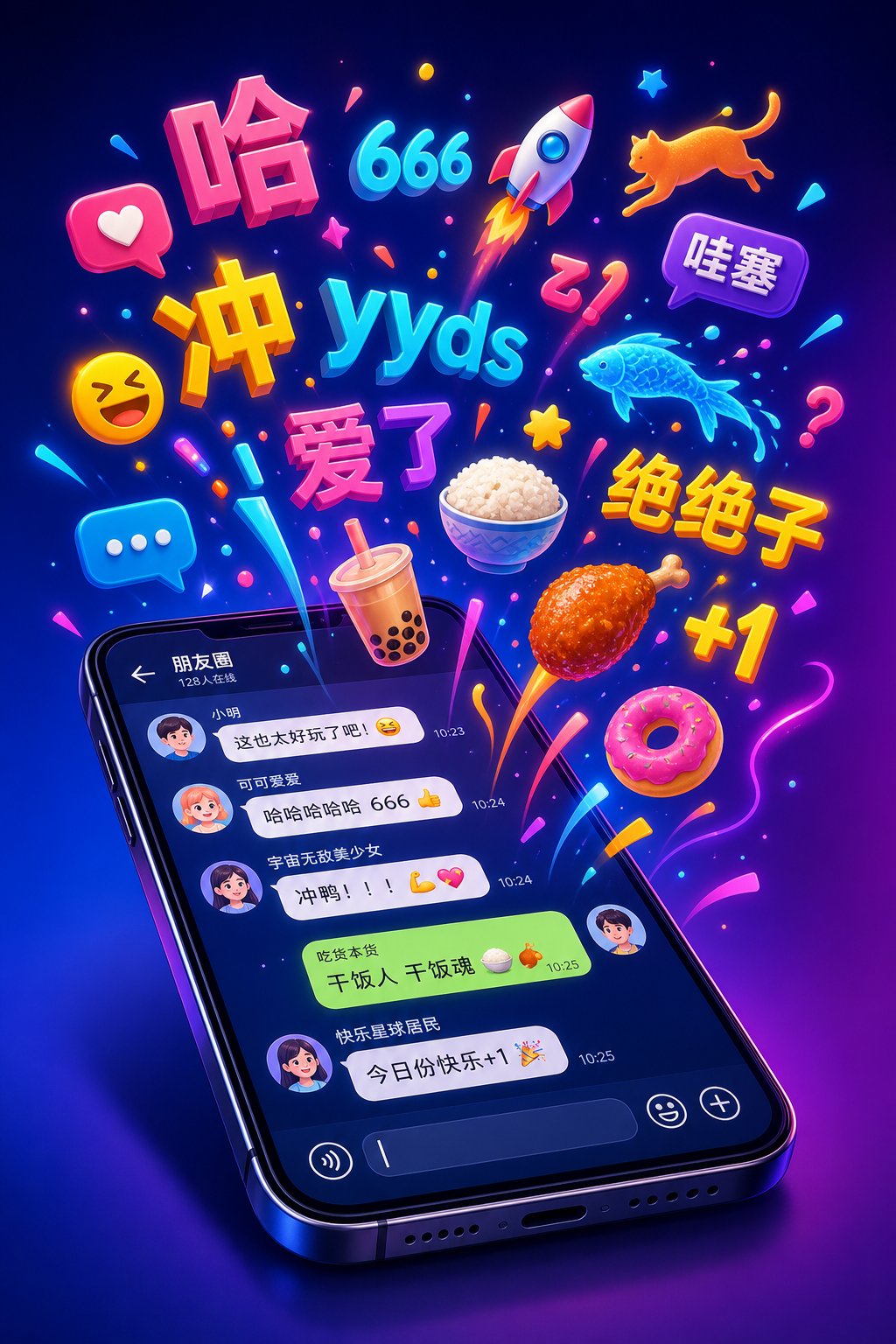
You have probably seen abbreviations like YYDS or XSWL floating around Chinese social media. Those are easy enough to look up. But what happens when someone on Weibo calls a celebrity by a food item, or an entire comment section refers to a public figure using a string of numbers? That is where Chinese internet slang nicknames live, and they operate on a completely different level from simple abbreviations.
Chinese netizens have built an entire nickname ecosystem, one that labels people, social archetypes, relationship dynamics, and public figures using wordplay that only works in Mandarin. These nicknames rely on homophones, character decomposition, tonal puns, and cultural metaphors that are deeply rooted in how the Chinese language functions. Unlike English-language internet culture, where nicknames tend to be straightforward or reference-based, Chinese lingo exploits the structural properties of a character-based writing system to create layers of meaning that even native speakers sometimes need context to decode.
This guide goes beyond a simple vocabulary list. The goal here is to help you understand the system behind the nicknames so you can recognize patterns, decode unfamiliar terms on your own, and actually participate in conversations where this chinese slang shows up constantly.
What Makes Chinese Nickname Culture Unique
Character-based writing opens doors to wordplay that alphabetic languages simply cannot replicate. A single Chinese character can be split into its radical components to create a hidden reference. Two completely unrelated words can share the same pronunciation across different tones, letting netizens swap one meaning for another with plausible deniability. Numbers map onto syllables. Visual similarity between characters creates substitution codes. This layered flexibility means chinese internet slang nicknames can carry double or triple meanings packed into just two or three characters.
Sociolinguistic research on Chinese internet nicknames confirms that the selection of online names is shaped by social, cultural, and psychological factors, with the aggregation of these names reflecting broader societal mentality and values. The character-based system amplifies this effect because it gives users far more creative raw material than any alphabet could. Within the broader world of asian slang, Chinese nickname culture stands apart precisely because of this structural advantage.
Why Nicknames Matter for Understanding Chinese Internet
Imagine scrolling through a trending Weibo hashtag and finding that every comment uses a term you cannot find in any dictionary. Or watching a Bilibili video where the danmu is filled with a nickname you have never encountered. This happens constantly to learners of Chinese, and it happens to native speakers who are not plugged into a specific community. Platforms like Douyin, Xiaohongshu, and WeChat group chats each develop their own nickname vocabularies at a pace that no textbook can keep up with.
Nickname literacy is not optional for navigating Chinese social media. Without it, you are reading the words but missing the conversation.
The gap between textbook Mandarin and real online communication is largely filled by this kind of creative chinese internet slang. Among the many forms of asian slang that learners encounter across different languages, Chinese nicknames are uniquely challenging because they demand knowledge of character mechanics, not just vocabulary. Understanding how these nicknames form is the key to closing that gap, and it starts with the linguistic patterns that make them possible.
How Chinese Netizens Create Nicknames
Every Chinese internet nickname you encounter was built using one of a handful of linguistic tricks. Learn the tricks, and you stop needing to memorize every new term individually. The formation patterns behind these nicknames exploit specific properties of Mandarin: its abundance of homophones, its visually decomposable characters, and its pinyin input system. Once you recognize which pattern is at work, the chat slang meaning clicks into place almost immediately.
Here is a quick overview of the six core formation patterns before we break each one down:
- Homophone substitution - swapping a character for another that sounds identical or nearly identical (e.g., using 河蟹 "river crab" for 和谐 "harmony" because both are pronounced hexie)
- Tonal puns - exploiting tonal differences to create double meanings within the same syllable
- Character decomposition - splitting a character into its component parts to create a coded reference (e.g., breaking 明 into 日 and 月)
- Visual resemblance - substituting characters that look similar on screen (e.g., 囧 used as a face expressing embarrassment)
- Pinyin abbreviations - using the first letter of each syllable to create shorthand codes (e.g., YYDS for yongyuan de shen)
- Number-sound associations - mapping digits to syllables to spell out phrases (e.g., 520 for wo ai ni)
Homophone and Tonal Pun Nicknames
Mandarin has a famously high number of homophones. The Cihai dictionary lists 149 characters for the single syllable "yi" alone. That density of sound-alike words gives netizens enormous creative space. When they want to reference a person or concept without using the actual term, they simply swap in a character that shares the same pronunciation.
Tones add another dimension. Two words might share the same base syllable but differ in tone, and netizens treat that near-match as close enough. This is how slang words in chinese texting conversations often carry a second hidden layer. You read one meaning on the surface, but the intended reference lives in the sound. For anyone used to chinese sms culture, this pattern becomes second nature quickly because the pinyin input method already trains users to think in terms of sound first, character second.
Character Decomposition and Visual Tricks
Chinese characters are not monolithic shapes. Most are built from smaller components: radicals, phonetic elements, and structural pieces. Netizens exploit this by breaking a character apart and using its components as a stand-in reference. Imagine someone referring to a person whose name contains 明 by writing "日月" instead. The two components reconstruct the original character in the reader's mind without ever writing it directly.
Visual resemblance works on a different axis. The character 囧, which structurally looks like a distressed face, became one of the earliest viral visual puns in Chinese internet culture. It does not matter what 囧 technically means in classical Chinese. On screen, it looks like an expression of awkwardness, and that visual association is all netizens need. This kind of visual logic shows up constantly in nickname creation, where a character gets chosen not for its meaning or sound but purely for how it looks.
Pinyin Abbreviation Patterns
The pinyin input method shapes how Chinese people interact with their own language digitally. When you type on a phone using pinyin, you are already thinking in terms of initial letters and syllable sounds. That habit naturally produces abbreviations. Take the first letter of each syllable in a phrase, string them together, and you get a coded reference that insiders recognize instantly.
This is how terms like XSWL (xiao si wo le, "laughing to death") and ZQSG (zhen qing shi gan, "genuine feelings") entered mainstream chinese texting culture. The pattern is consistent: full phrase reduces to initials, initials spread through group chats and comment sections, and eventually the abbreviation becomes more recognizable than the original phrase. For learners trying to decode unfamiliar slang, checking whether a string of letters maps to pinyin initials is one of the fastest diagnostic steps available.
These six formation patterns do not operate in isolation. A single nickname might combine a homophone swap with a pinyin abbreviation, or layer a visual pun on top of character decomposition. The real creativity emerges when netizens stack multiple techniques together, which is exactly what happens when numbers enter the picture.
Number-Coded Nicknames and Their Hidden Meanings
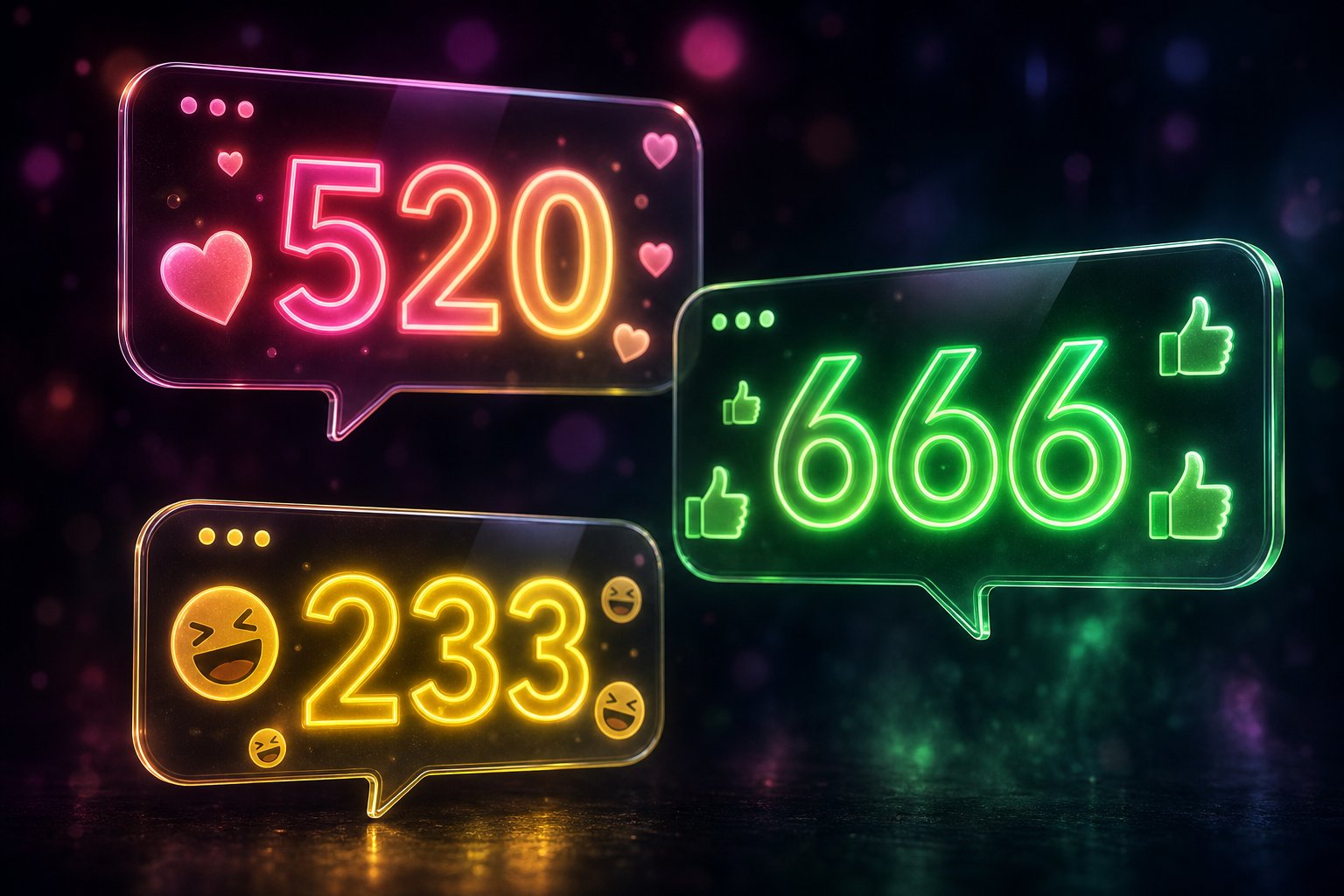
Numbers stop being math the moment they enter a Chinese group chat. Because each digit in Mandarin carries a distinct syllable, strings of numbers can be pronounced as full phrases. The digit 5 sounds like wu (close to wo, "I"), 2 maps to er (close to ai, "love"), and 0 gives you ling (close to ni, "you"). Chain them together and suddenly a phone number looks like a love letter. This chinese number slang system turns digits into nicknames, pet names, compliments, and even insults, all hiding in plain sight.
Number Codes for Love and Emotion
The most famous example is 520 in chinese digital culture. Say wu-er-ling quickly and it blurs into wo ai ni, "I love you." The 520 chinese meaning has become so widely recognized that May 20th (5/20) is now celebrated as an unofficial Valentine's Day in China, with couples exchanging gifts and posting declarations online. It functions as both a phrase and a pet name. Partners call each other "my 520" the way English speakers might say "my love."
Stack more digits and the romance intensifies. 1314 sounds like yi sheng yi shi, "one life, one lifetime," meaning forever. Combine them into 5201314 and you get "I love you forever." The code 9420 (jiu si er ling) echoes jiu shi ai ni, "I just love you." These numeric phrases double as relationship nicknames in WeChat display names, couple bios, and anniversary posts.
On the emotional spectrum, 555 mimics the sound of crying: wu-wu-wu mirrors the Chinese onomatopoeia for sobbing. Despite the 555 meaning love might seem contradictory, it actually expresses affectionate drama, the playful "I'm crying because you're too sweet" tone that fills comment sections under romantic content.
Gaming and Skill-Based Number Nicknames
When someone pulls off an incredible play in a livestream, the screen floods with 666. The 666 chinese meaning traces back to the word liu, which means smooth or slick. Typing 666 in chinese gaming culture is the fastest way to say "that was flawless." It has expanded far beyond games. A well-edited video, a clever comeback in a comment thread, a perfectly timed joke: all earn a wall of 666. The 666 meaning chinese users attach to it is purely positive, carrying none of the negative Western associations.
Then there is 114514, a number code that originated from Japanese internet culture but crossed into Chinese meme spaces on Bilibili. Its pronunciation in Japanese maps to a crude phrase, and Chinese netizens adopted it as an ironic reaction code, often spammed in danmu to signal absurdist humor. Context matters enormously here: using 114514 in the wrong community marks you as either an insider or completely out of touch.
| Number Code | Pronunciation | Meaning | Usage Context |
|---|---|---|---|
| 520 | wu er ling | I love you | Romantic messages, couple nicknames, May 20th posts |
| 1314 | yi san yi si | Forever / one lifetime | Paired with 520 for "love you forever" |
| 666 | liu liu liu | Awesome / smooth | Gaming praise, complimenting skill or style |
| 555 | wu wu wu | Crying sound | Expressing sadness or playful drama |
| 233 | er san san | LOL / laughing hard | Reacting to humor, more 3s = harder laughter |
| 88 | ba ba | Bye-bye | Casual sign-off in any chat |
| 9420 | jiu si er ling | I just love you | Romantic bios, song references |
| 114514 | yi yi si wu yi si | Ironic meme reaction | Bilibili danmu, absurdist humor communities |
What makes these number codes function as nicknames rather than just phrases is how they attach to identity. Couples adopt numeric codes as display names. Gamers earn "666" as a reputation tag. Entire social roles get labeled through digits: the person who always sends 555 becomes the group's dramatic crier, while the one spamming 233 is the resident comedian. Numbers stop representing quantities and start representing people, which is exactly the same transformation that food and animal metaphors undergo when netizens turn them into social archetype labels.
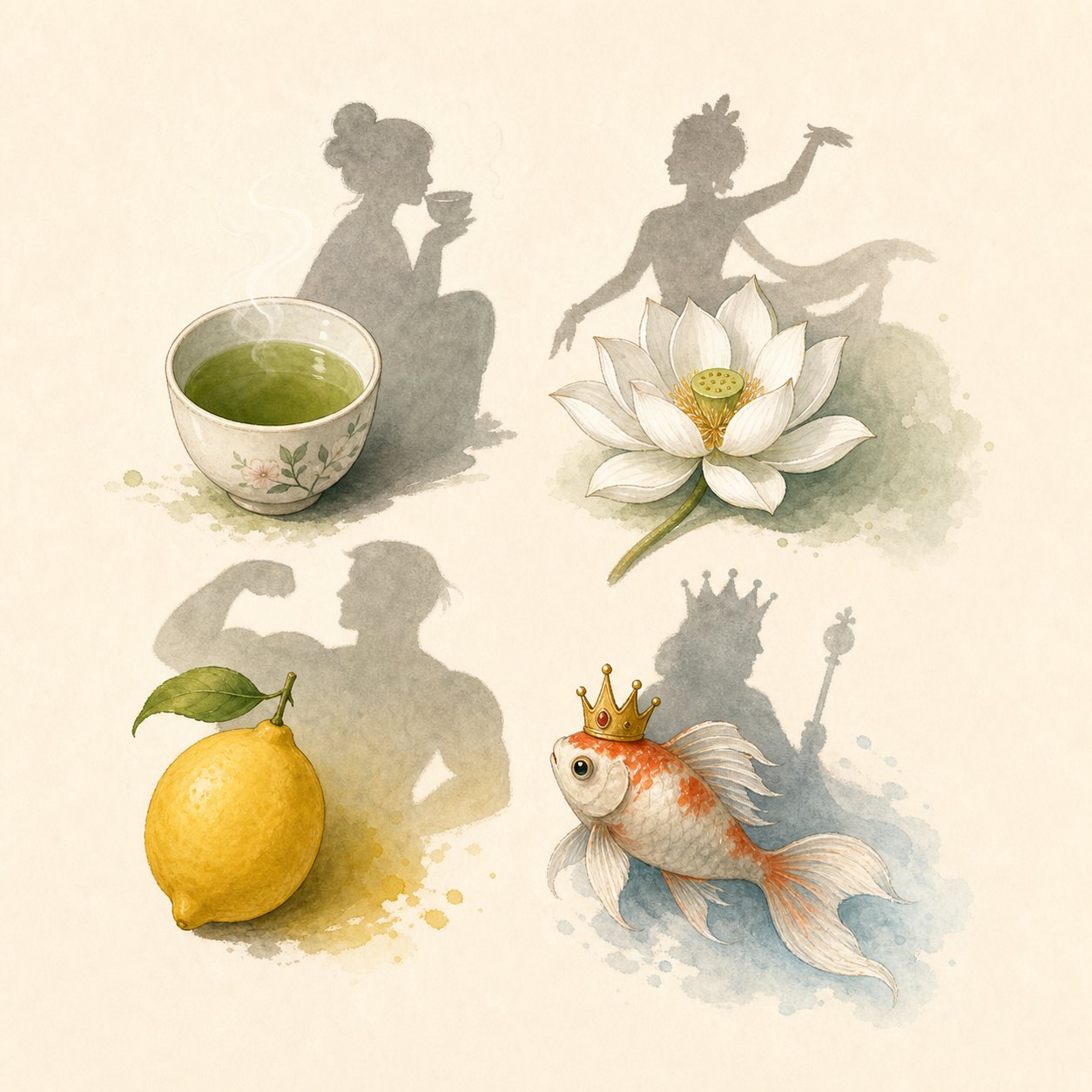
Food and Animal Nicknames for Social Archetypes
Numbers encode identity through sound. Food and animals encode it through imagery. When Chinese netizens want to label a personality type, a social role, or a relationship pattern, they reach for something vivid and instantly recognizable: a cup of tea, a lotus flower, a lemon, a fish pond. These metaphor-based nicknames form one of the richest categories in any chinese slang dictionary, and they carry real social weight. Use the wrong one in the wrong context and you will either confuse people or start a fight.
Why do food and animal metaphors dominate chinese slang words for social types? Part of the answer is cultural. Food occupies a central place in Chinese social life, and animal symbolism runs deep in the literary tradition. But the bigger reason is practical: a metaphor nickname compresses an entire behavioral profile into two or three characters. You do not need a paragraph to explain someone's personality when a single food item does the job. This efficiency is what makes these terms spread so fast across Weibo, Douyin, and WeChat group chats, often becoming some of the funniest chinese jokes in comment sections when applied with perfect timing.
Food Metaphor Nicknames for Social Types
The most notorious food-based nickname in china slang is 绿茶 (lu cha, "green tea"). On the surface, green tea is healthy, natural, and refreshing. That is exactly the point. A 绿茶 is someone, typically a woman, who presents herself as pure, innocent, and harmless while deliberately manipulating social situations to her advantage. She targets specific relationships, often flirting with someone else's partner while maintaining plausible deniability. The term gained traction around 2013 on Weibo and has since become standard vocabulary for analyzing reality shows, workplace drama, and celebrity gossip.
Closely related but distinct is 白莲花 (bai lian hua, "white lotus"). The lotus has symbolized purity in Chinese culture since the Song dynasty, but web novel communities flipped that image into sarcasm. A 白莲花 plays the helpless victim so convincingly that attacking her makes you look like the villain. The difference from 绿茶 is subtle but important: 绿茶 is calculating and targets specific people, while 白莲花 operates by making everyone feel sorry for her. Calling someone 白莲花 is considered more cutting because it implies a deeper, more calculated deception.
Other food-based nicknames in this chinese urban dictionary of social types include:
- 柠檬精 (ning meng jing, "lemon spirit") - a jealous person. Lemons are sour, and so is envy. Someone who constantly compares themselves to others and expresses bitterness about other people's success gets labeled a lemon spirit. Tone: mildly insulting, sometimes self-deprecating.
- 吃瓜群众 (chi gua qun zhong, "melon-eating masses") - bystanders who watch drama unfold without participating. Think of it as the Chinese equivalent of "grabbing popcorn." Tone: neutral, often humorous.
- 软饭 (ruan fan, "soft rice") - used in the phrase "eating soft rice," describing someone who financially depends on their romantic partner. Tone: insulting when applied to others, occasionally self-deprecating humor.
Animal-Based Character Nicknames
Animal metaphors work differently from food metaphors. Where food nicknames tend to describe behavioral strategies, animal nicknames often capture a person's social role or relationship pattern.
The most widely used is 海王 (hai wang, "sea king"), referring to someone who juggles multiple romantic interests simultaneously. The metaphor extends into an entire ecosystem: potential partners are "fish" (鱼), the sea king's dating pool is a "fish pond" (鱼塘), and pursuing new targets is called "raising fish" (养鱼). A related term, 中央空调 (zhong yang kong tiao, "central air conditioning"), describes someone who is warm and attentive to everyone equally, making it impossible to tell if their friendliness is romantic interest or just their default personality.
Here is a quick reference for tone and context, since misusing these terms causes real social friction:
- 海王 (sea king) - player who dates many people simultaneously. Tone: accusatory, insulting. Do not use casually about friends.
- 中央空调 (central air conditioning) - person who treats everyone warmly. Tone: warning or mild criticism, not necessarily insulting.
- 单身狗 (dan shen gou, "single dog") - a single person, especially around Valentine's Day. Tone: self-deprecating humor, affectionate among friends.
- 舔狗 (tian gou, "licking dog") - someone who desperately pursues another person despite constant rejection. Tone: pitying or mocking, sometimes used as self-deprecation.
- 鸽子 (ge zi, "pigeon") / 放鸽子 (fang ge zi, "release pigeons") - someone who flakes on plans. Tone: annoyed but casual, common in group chats.
What ties all these nicknames together is their function as instant social shorthand. Drop the term 海王 into a conversation and everyone immediately understands the full behavioral profile: the charm, the multiple targets, the deception. You do not need to explain. The metaphor carries the entire narrative. This compression is what makes food and animal nicknames so durable in Chinese internet culture. They are not just the funniest chinese jokes in a comment section. They are diagnostic tools that communities use to identify, warn about, and bond over shared social experiences.
These metaphor nicknames describe the people around you. But Chinese internet culture has produced an equally rich vocabulary for describing yourself, your generation, and your relationship to work and society, labels that millions of young people now wear as identity badges.

Self-Labels and Generational Identity Nicknames
Calling someone else a 海王 or 绿茶 is an act of judgment. Calling yourself a 打工人 is an act of solidarity. Chinese internet culture has produced an entire vocabulary of self-applied labels that young people use to describe their relationship to work, ambition, and societal pressure. These are not insults thrown at others. They are identity badges worn with a mix of dark humor, exhaustion, and collective recognition. If you spend any time in Chinese comment sections, you will encounter this mandarin slang constantly, because it is how an entire generation talks about itself.
Workplace and Hustle Culture Nicknames
The term 打工人 (dagong ren, "working person") exploded across Chinese social media in late 2020. On the surface, it simply means someone who works for a living. But the emotional register is everything. Calling yourself a 打工人 signals that you see through the corporate motivational language, that you know your labor is transactional, and that you find grim humor in showing up anyway. It became a morning greeting ritual: "Good morning, fellow 打工人!" flooded WeChat groups like a sarcastic battle cry.
A step darker is 社畜 (shechu, "corporate livestock"), borrowed from the Japanese term shachiku. Where 打工人 carries a tone of ironic pride, 社畜 leans into genuine despair. You are not just working. You are being worked, like an animal with no autonomy. The term gained traction alongside China's notorious 996 culture, where employees work 9 AM to 9 PM, six days a week. Related net slang like 牛马 (niumo, "oxen and horses") and 打工狗 (dagong gou, "wage slave dog") push the animal metaphor further, with netizens on Weibo debating whether actual livestock have better working conditions than office employees.
The emotional register matters here. 打工人 is self-deprecating humor you share with coworkers. 社畜 is a genuine complaint dressed as a joke. 牛马 is raw frustration. Misreading the tone and using 社畜 in a lighthearted context will land awkwardly, like laughing at someone's real pain.
Generational Identity Labels
Beyond workplace frustration, a broader set of mandarin phrases has emerged to describe entire life philosophies. 小镇做题家 (xiaozhen zuotijia, "small-town test taker") originally described students from rural or underdeveloped areas who studied relentlessly to pass the gaokao and reach top universities. A Douban discussion group of over 50,000 self-proclaimed small-town test takers popularized the term in 2020, sharing stories of how academic success still left them at a disadvantage compared to wealthy urban peers with family connections. The label carries both pride in hard work and bitterness about structural inequality.
Then came the philosophical responses to that pressure. 内卷 (neijuan, "involution") describes the exhausting cycle of everyone working harder just to stay in the same place, like running on a treadmill that keeps accelerating. When people decided they were done running, 躺平 (tangping, "lying flat") emerged as a counter-philosophy: refuse to participate in the rat race, do the minimum, and opt out of the competition entirely.
The most recent evolution is 摆烂 (bailan, "let it rot"). Where lying flat is passive withdrawal, letting it rot is active acceptance of deterioration. As one user explained the distinction: "Lying flat equates to spending little effort and adopting a laid-back attitude, whereas let it rot means not caring whatsoever, seeing as there is nothing to be done." The term reportedly originated in NBA fan circles to describe teams that intentionally tank games, then spread through gaming communities before becoming a generational motto. Much of this chinese slanguage would have been unrecognizable even a few years earlier. Compared to 2015 slang, which leaned toward playful absurdism, these newer terms reflect a measurable shift in generational mood: from ironic detachment to something closer to philosophical resignation.
What makes these self-labels function as nicknames rather than just vocabulary is how people wear them. WeChat display names become "打工人小王." Weibo bios read "professional 摆烂 practitioner." Comment sections fill with users identifying as 小镇做题家 to signal shared background and mutual understanding. These are not descriptions. They are tribal markers, and recognizing them is essential for reading the emotional temperature of any Chinese online space. The same creative energy that produces these self-labels also fuels how fan communities build elaborate nickname systems around the celebrities they follow.
Celebrity Nicknames and Fan Culture Across Platforms
Fan communities do not just consume celebrity content. They rename it. Across Weibo, Bilibili, Douyin, and Xiaohongshu, Chinese fans have developed intricate nickname systems for the idols they follow, turning character decomposition, food metaphors, and childhood diminutives into affectionate identity markers. These nicknames serve a dual purpose: they signal insider status within a fandom and create a shared language that outsiders cannot easily penetrate. If you have ever seen a trending hashtag on Weibo and could not figure out which celebrity it referenced, you have already encountered this system in action.
How Fan Communities Build Idol Nicknames
The patterns behind idol nicknames are surprisingly systematic. Fans typically draw from a small set of formation rules, then combine them creatively for each new celebrity. Here are the most common approaches:
- Name character + kinship suffix - Take one character from the idol's name and attach 哥 (ge, older brother), 姐 (jie, older sister), or 宝 (bao, baby/treasure). This is the most basic and widespread pattern, signaling respect and affection simultaneously.
- Food associations - Fans link a celebrity to a food item based on name pronunciation, appearance, or personality. Timothee Chalamet became 甜茶 (tian cha, "sweet tea") because "Cha" in Chalamet sounds like 茶, and fans find his appearance sweet. Nicki Minaj earned 麻辣鸡 (mala ji, "spicy chicken") for her intense, unapologetic persona.
- Animal mascots - Idols get matched with animals based on physical features or personality traits. Round-faced celebrities become hamsters or cats. Energetic performers become puppies. These animal associations then spawn fan art, merchandise, and emoji shorthand.
- Childhood diminutives - Adding 小 (xiao, "little") before a name element creates an endearing, intimate tone. Leonardo DiCaprio is universally known as 小李子 (Xiao Lizi, "Little Plum") because his transliterated surname 李 means plum. Britney Spears became 小甜甜 (Xiao Tiantian, "Little Sweetie") during her early career peak.
- Reduplication for cuteness - Doubling a character from the idol's name adds a childlike, affectionate quality. Taylor Swift's nickname 霉霉 (Meimei, "Moldy Moldy") started as a joke about her early chart struggles but became a permanent term of endearment used across all Chinese platforms.
These nicknames are not random. They encode the fandom's collective interpretation of who the celebrity is. When fans call Mariah Carey 牛姐 (Niu Jie, "Cool Sis"), they are compressing decades of vocal dominance and industry respect into two characters. The suffix 姐 conveys admiration for a senior figure, while 牛 in modern slang means "awesome" rather than its literal meaning of "cow." This is the same linguistic efficiency that makes terms like YYDS work. The yyds meaning, "eternal god" (yongyuan de shen), functions as the ultimate compliment in yyds chinese slang, and fans frequently pair it with idol nicknames in comment sections to express devotion.
Satirical nicknames follow different rules. When a celebrity becomes controversial, netizens create mocking references using homophones or unflattering metaphors. These spread rapidly through comment sections and become a form of collective judgment. Unlike affectionate fan nicknames that stay stable for years, satirical ones shift constantly as public opinion evolves and platform moderation catches up.
Platform-Specific Nickname Conventions
Not every platform uses nicknames the same way. The culture of each space shapes what kinds of nicknames emerge and how they circulate. Research on Weibo fan communication shows that fans engage in highly strategic posting behavior, using idol nicknames with @ mentions and hashtags specifically to boost algorithmic visibility. A nickname on Weibo is not just affectionate. It is a data point that feeds into celebrity popularity charts and trending metrics.
On Bilibili, the danmu (scrolling comment) format demands brevity. Nicknames need to be short enough to read as they fly across the screen. This is where abbreviations like xswl chinese (xiao si wo le, "laughing to death") thrive alongside compressed idol references. The xswl meaning chinese users attach to it is pure reaction, and it often appears alongside a nickname to form a complete emotional statement in just a few characters. Bilibili's community also leans heavily into cp slang, where "CP" (coupling) refers to fan-shipped romantic pairings between celebrities or fictional characters, each pair receiving its own combined nickname.
Douyin livestream culture produces yet another variant. Real-time interaction means nicknames must be instantly recognizable in a fast-moving chat. Fans develop shorthand that works at typing speed, often reducing three-character nicknames to single characters or emoji substitutes. The yy chat style on Douyin, where users voice-chat or type rapid reactions during streams, rewards the shortest possible references that still carry full meaning.
Xiaohongshu operates differently again. Its longer-form post format and lifestyle focus means nicknames appear embedded in narrative context rather than rapid-fire comments. Celebrity references here tend to be more elaborate, sometimes using full food metaphors or multi-character descriptions that would be too long for danmu but work perfectly in a product review or style analysis post.
| Platform | Nickname Style | Typical Patterns | Example |
|---|---|---|---|
| Hashtag-optimized, algorithm-friendly | Full nicknames with # tags, @ mentions, fan-standardized terms | #霉霉# paired with YYDS in trending posts | |
| Bilibili | Ultra-short for danmu readability | 1-2 character abbreviations, CP pair names, reaction combos | Single character from name + xswl flooding the screen |
| Douyin | Speed-typed for livestream interaction | Emoji substitutes, single-character shorthand, number codes | Animal emoji replacing full nickname in live chat |
| Xiaohongshu | Narrative and descriptive | Full food/animal metaphors, multi-character references in context | 水果姐 (Fruit Sister) in a fashion comparison post |
What unites all these platforms is the underlying creative logic. Whether a nickname is two characters in a danmu or a full metaphor in a Xiaohongshu essay, it draws from the same toolkit: sound associations, visual metaphors, cultural references, and kinship language. The platform just determines the compression level. Understanding this means you can encounter an unfamiliar idol nickname on any Chinese platform and still have a framework for decoding it, even if you have never heard of the celebrity in question. The lol in chinese equivalent (233 or hahaha) might look different on Bilibili versus Weibo, but the xswl meaning stays consistent across all of them.
Fan nickname culture thrives in the open, but a parallel nickname ecosystem operates in the shadows, driven not by affection but by necessity. When certain names and topics become unsearchable, netizens do not stop talking. They just get more creative with their references.

How Censorship Fuels Nickname Creativity
Content moderation on Chinese platforms does not just suppress language. It generates it. Every time an automated filter blocks a word, netizens invent a replacement. Every time a replacement gets banned, two more spring up. This pressure cooker dynamic has turned Chinese internet slang nicknames into one of the fastest-evolving linguistic systems on the planet, where coded references for people and events mutate weekly to stay ahead of keyword detection algorithms.
The scale of this phenomenon is staggering. Leaked censorship documents from Xiaohongshu revealed that content moderators discovered 546 coded nicknames for a single public figure over just a two-month period. That is nearly ten new inventions per day, each one exploiting a different crack in the filtering system. When even the word "paratrooper" (伞兵, sanbing) gets repurposed because it sounds similar to a common insult, you begin to see how deeply this creative pressure shapes everyday online vocabulary. The original term behind that substitution relates to the sha bi meaning, a vulgar insult so heavily filtered that users cycle through dozens of homophones and visual lookalikes to express it. The shabi chinese internet ecosystem has spawned countless variants: from near-homophones to character decompositions to entirely unrelated words that communities privately agree carry the same weight.
Censorship Evasion Through Homophone Nicknames
The mechanism is elegant in its simplicity. Mandarin's tonal system means that swapping a single tone or substituting a sound-alike character produces a new word that humans understand instantly but machines struggle to flag. When the hashtag #MeToo was blocked on Chinese social media, users replaced it with 米兔 (mi tu, "rice bunny") because the two characters sound nearly identical to "me too" when spoken aloud. They even reduced it further to emoji: a bowl of rice and a rabbit. The reference remained perfectly clear to any human reader while slipping past automated keyword filters.
This same logic applies to nicknames for public figures, brands, and sensitive events. The word for "river crab" (河蟹, hexie) became code for censorship itself because it sounds like "harmony" (和谐, hexie), the official euphemism for content removal. Once 河蟹 got filtered, users shifted to other seafood terms. As sociolinguist Xuan Wang told Rest of World: "Now people say fish, anything you catch in the sea. Not using the direct homophone, but words that refer in a zigzag way back to the censored word." Expressions like 去他妈的世界 similarly circulate as raw emotional outbursts that users encode through creative character swaps when direct profanity triggers automatic deletion.
The Evolution Cycle of Coded Nicknames
Every censorship-driven nickname follows a predictable lifecycle. First, a sensitive topic or figure becomes unsearchable. Users create a homophone or visual substitute. The substitute spreads through group chats and comment sections. Moderators identify the new term and add it to the filter list. Users immediately generate the next variant, often more obscure than the last. Each cycle pushes the language further from its original form, creating chains of association that only active community members can follow.
In 2022, Weibo and Bilibili announced crackdowns on intentionally misspelled words and homophones, promising to refine keyword identification models. The Cyberspace Administration of China later launched a broader campaign to "rectify the chaos of irregular use of Mandarin" online. But experts remain skeptical that any filtering system can keep pace. As Wang put it: "Wherever there is censorship and control, there is resistance. There is no end to it."
The tools keep expanding too. Beyond homophones, users deploy chrysanthemum script (overlaying Cyrillic characters between Chinese text to confuse OCR), emoji substitution chains, and even references to completely unrelated topics that share geographic or phonetic overlap. When discussions about protests in Henan province were censored, users simply started posting about the Netherlands, because 河南 (Henan) and 荷兰 (Helan, "Netherlands") differ by only one character.
Censorship does not kill Chinese internet language. It fertilizes it. Every banned word becomes a seed for ten new inventions, making the lexicon richer, faster-moving, and harder to decode with each moderation cycle.
This constant evolution means that even native speakers fall behind. A nickname that was current last month may already be obsolete, replaced by a third-generation variant that only makes sense if you followed the entire chain. For learners and outsiders, the challenge is not just vocabulary. It is velocity. The good news is that the same decoding framework that works for fan nicknames and social archetype labels also applies here: sound it out, check for visual tricks, and look for metaphor logic. The difference is that censorship-driven nicknames add one extra step: ask what cannot be said directly, and the coded reference usually points straight back to it.
Decode Any Chinese Nickname You Encounter
Knowing the patterns is one thing. Applying them in real time when an unfamiliar term appears in your feed is another. Whether you are reading a text message in chinese from a friend, scrolling through Weibo comments, or watching danmu fly across a Bilibili video, you need a repeatable process for cracking nicknames you have never seen before. The following framework gives you exactly that: a systematic approach that works regardless of which platform or community produced the term.
The Five-Step Nickname Decoding Framework
When you hit an unfamiliar nickname in any chinese messaging context, run through these steps in order. Most nicknames reveal themselves by step two or three:
- Sound it out for homophones. Read the characters aloud or check their pinyin. Does the pronunciation resemble another word or phrase? This catches the largest category of nicknames, from censorship workarounds to affectionate fan terms. If you are wondering what does yy mean in a comment thread, sounding out the pinyin initials (often yongyuan, "forever," or yiyi, depending on context) usually points you toward the original phrase.
- Break the characters apart. Look at the individual radicals and components. Is someone using a partial character as a stand-in for the full one? Character decomposition nicknames rely on you mentally reassembling the pieces.
- Check number-sound mappings. If the nickname contains digits, pronounce each number in Mandarin and listen for a phrase. Remember that tones blur in casual speech, so approximate matches count.
- Look for metaphor patterns. Does the term reference a food, animal, or everyday object? If so, think about what quality that item represents culturally. A lemon means jealousy. A pigeon means flaking. The metaphor logic is usually straightforward once you identify the category.
- Check platform-specific context. Where did you encounter the term? Bilibili danmu nicknames skew toward gaming and anime references. Weibo trending topics lean toward celebrity and current events. Xiaohongshu comments often use lifestyle metaphors. The platform narrows your search considerably.
The meaning of yy shifts depending on where you see it: in fan communities it often abbreviates yongyuan (forever), while in older chinese messaging slang it can reference yiyin (fantasizing). Context is the tiebreaker every time.
Where You Will Encounter These Nicknames
Knowing the framework is useful. Knowing where to apply it makes it practical. Here are the real scenarios where unfamiliar nicknames will stop you mid-scroll:
- Weibo trending hashtags - A celebrity scandal breaks and within hours the comment section is using three different coded nicknames for the people involved. The hashtag itself might be a nickname you cannot search directly.
- Bilibili danmu - Scrolling comments move fast. You will see compressed references, CP pair names, and reaction terms like 233 or xswl layered on top of idol nicknames. Speed-reading danmu is essentially a nickname literacy test.
- WeChat group chats - Friends share a message in chinese that references someone by a food metaphor or number code. Group-specific inside jokes layer on top of broader internet slang, creating nicknames that only make sense within that particular circle.
- Douyin and Xiaohongshu comments - Livestream reactions and product review threads each generate their own shorthand. A chinese message in a Douyin comment section might compress an entire opinion about a creator into two characters.
One final note on tone awareness: asking what a nickname means is completely normal in Chinese online spaces. Unlike some internet communities where asking marks you as an outsider, most Chinese netizens are happy to explain. The phrase "这是什么梗?" (what is this meme/reference?) is one of the most common questions in any comment section. Use it freely. People enjoy explaining the wordplay behind a clever nickname almost as much as they enjoy creating it.
If you have ever wondered how do chinese people end letters or sign off in digital conversations, you have already noticed that communication style varies enormously by context. The same flexibility applies to nicknames: formal spaces avoid them, casual spaces demand them, and knowing which register you are in determines whether dropping a nickname makes you sound fluent or out of place. Start with observation. Run the five-step framework. And when in doubt, just ask. The worst that happens is someone teaches you something new.
Frequently Asked Questions About Chinese Internet Slang Nicknames
1. What does 520 mean in Chinese internet slang?
520 is a number-based love code in Chinese digital culture. When you say the digits wu-er-ling quickly in Mandarin, it sounds like wo ai ni, meaning 'I love you.' This code is so widely recognized that May 20th (5/20) has become an unofficial Valentine's Day in China. Couples use 520 as a pet name, display name, or romantic shorthand in texts and social media bios. It often pairs with 1314 (meaning 'forever') to form 5201314, which translates to 'I love you forever.'
2. What does 666 mean in Chinese texting and gaming?
In Chinese internet culture, 666 is a compliment meaning 'awesome' or 'flawless.' The digit 6 is pronounced liu in Mandarin, which sounds like the word for 'smooth' or 'slick.' It originated in gaming communities where players spam 666 in chat to praise a skillful play. The term has since expanded to any impressive moment online, from clever comments to well-edited videos. Unlike its negative connotations in Western culture, 666 is entirely positive in Chinese usage.
3. How do Chinese netizens create coded nicknames to avoid censorship?
Chinese internet users exploit Mandarin's tonal system and abundance of homophones to create substitute terms that humans understand but automated filters miss. Common techniques include swapping characters with sound-alikes, using emoji chains to represent blocked words, substituting visually similar characters, and referencing unrelated topics that share phonetic overlap. When one coded nickname gets filtered, users immediately generate new variants, creating an ongoing cycle where censorship pressure actually accelerates linguistic creativity rather than suppressing communication.
4. What is the difference between 绿茶 (green tea) and 白莲花 (white lotus) in Chinese slang?
Both terms describe manipulative people who appear innocent, but they operate differently. A 绿茶 (green tea) is someone who actively targets specific relationships, often flirting with others' partners while maintaining plausible deniability through a sweet, harmless exterior. A 白莲花 (white lotus) manipulates by playing the helpless victim so convincingly that anyone who challenges her looks like the aggressor. Calling someone 白莲花 is generally considered more cutting because it implies a deeper level of calculated deception rather than targeted flirtation.
5. How can I decode an unfamiliar Chinese internet nickname?
Use a five-step framework: First, sound out the characters in pinyin to check for homophones or phrases hidden in the pronunciation. Second, examine the character components to see if someone split a character into its radicals as a coded reference. Third, if numbers are involved, pronounce each digit in Mandarin and listen for a hidden phrase. Fourth, check whether the term references a food or animal and consider what cultural quality that item represents. Fifth, factor in platform context since Bilibili, Weibo, Douyin, and Xiaohongshu each have distinct nickname conventions that narrow interpretation.