Why Chinese Mythology Offers Powerful Baby Name Inspiration
When you name a child after a Greek god or a Norse warrior, people instantly recognize the reference. Chinese mythology names work differently. Each character carries its own standalone meaning, so a name inspired by a moon goddess or a divine archer can sound elegant and modern while quietly holding thousands of years of story beneath the surface.
Chinese mythology spans creation tales like Pangu splitting heaven from earth, celestial love stories like Chang'e ascending to the moon, trickster epics like the Monkey King's rebellion, and folk legends recorded in texts like the Classic of Mountains and Seas. These traditions encode specific values into individual characters: bravery, wisdom, beauty, resilience, compassion, and cosmic balance. For parents searching for chinese baby names that go beyond popular picks, this mythological tradition offers a deep well of options that feel both timeless and fresh.
Why Parents Are Turning to Chinese Mythology for Baby Names
Interest in chinese mythology names has grown as parents look for names rooted in narrative rather than trend. Ancient chinese names drawn from myth carry a sense of weight that purely modern coinages often lack. They connect a child to stories that have survived millennia, stories about overcoming chaos, protecting the vulnerable, and shaping the world itself. Whether you have Chinese heritage or simply feel drawn to the richness of these traditions, mythical chinese names offer something rare: meaning that runs several layers deep.
What Makes Mythology Names Different from Common Chinese Names
Standard chinese names and meanings often reference nature, virtue, or family hopes. Mythology-inspired names do all of that while also carrying narrative weight. A character pulled from a goddess's title or a hero's epithet doesn't just mean "bright" or "jade." It evokes an entire story arc, a personality, a set of trials overcome.
A mythology name doesn't simply describe a quality. It tells your child they were named after someone who embodied that quality under extraordinary circumstances.
This is what separates chinese fantasy names rooted in actual myth from generic poetic choices. The name carries a plot, not just a definition.
Throughout this guide, you'll find pronunciation in pinyin with tone marks, simplified phonetic approximations for English speakers, original Chinese characters, character-by-character meaning breakdowns, and cultural context for each name. The goal is to help you choose a name that honors heritage, sounds powerful in any language, and fits comfortably into modern life.
Understanding Chinese Naming Conventions for Mythology Names
A name inspired by a dragon king or a celestial goddess won't land the way you intend if it accidentally breaks a cultural rule. Chinese names follow a distinct set of conventions, and understanding them is the difference between choosing something meaningful and choosing something that raises eyebrows. Think of these conventions as the grammar of naming. Once you know the structure, you can work creatively within it.
How Chinese Names Are Structured
Chinese names are arranged in the opposite order from English: family name first, given name second. Imagine introducing yourself as "Smith John" and you'll get the idea. The family name is typically a single character, while the given name contains one or two characters. So a full name like WANG Mingyu (王明宇) breaks down as WANG (family name) + Mingyu (given name).
This structure matters for mythology-inspired naming because you're selecting the given name portion, those one or two characters that follow the surname. Each character is an independent unit of meaning, and when two characters sit together, their meanings combine to create something new. For example, 明 (ming, bright) paired with 月 (yue, moon) creates a name that evokes luminous moonlight, a subtle nod to lunar mythology without directly copying a deity's title.
When exploring chinese names and their meanings, you'll notice that the family name can also interact with the given name to form a poetic phrase. Parents with the surname LIU (柳, willow) might pair it with a nature-themed given name so the full name reads like a line of verse. This layered approach is part of what makes chinese traditional names so distinctive.
Auspicious vs Taboo Naming Practices in Chinese Culture
Here's where mythology names require extra care. In Chinese culture, it is considered presumptuous, even disrespectful, to name a child directly after a major deity or revered ancestor. Using the full name Guanyin (观音) for a baby would strike most Chinese families as inappropriate, similar to how naming a child "God" would feel jarring in English-speaking cultures.
The culturally appropriate approach? Extract individual characters from divine names or mythological titles and recombine them. The character 瑶 (yao, precious jade) appears in the name of Xi Wangmu's celestial palace, but used alone or in a new combination, it becomes a beautiful and perfectly acceptable given name. This is the key principle behind the name meaning in Chinese naming: each character stands on its own merit while carrying echoes of its mythological origin.
Beyond deity names, several other rules shape what's considered auspicious or taboo:
- Avoid characters that sound like words with negative meanings. Tones matter: a character pronounced "shu" in one tone means "book," but in another tone means "rat."
- Do not name children after living elders or ancestors. This applies to individual characters, not just full names.
- Consider the total stroke count of the name. Characters are classified as Yin (even strokes) or Yang (odd strokes), and a balanced name follows specific Yin-Yang patterns.
- Generational names (a shared character among siblings or cousins) may already be predetermined by family tradition, limiting which position in the given name is available for a mythology-inspired character.
- The full name should sound pleasant when spoken aloud. Tonal balance matters: three consecutive characters in the same tone can sound flat or awkward.
Understanding the chinese behind the name, the cultural logic that governs character selection, helps you avoid well-intentioned mistakes. A name that looks beautiful on paper but violates tonal harmony or accidentally echoes a taboo word won't serve your child well.
Reading Pinyin and Pronunciation Basics
Every name in this guide includes pinyin, the standard romanization system used in mainland China and Singapore. Pinyin uses the Latin alphabet but assigns different sounds to some familiar letters. A few quick rules will help you read names confidently:
- Q sounds like "ch" in "cheese" (so Qi = "chee")
- X sounds like "sh" in "sheep" (so Xi = "she")
- Zh sounds like "j" in "job" (so Zhang = roughly "jahng")
- C sounds like "ts" in "cats" with a puff of air
- R is similar to the French "j" in "bonjour"
Tone marks appear above vowels as small diacritics: a flat line (first tone), a rising slash (second tone), a dipping "v" shape (third tone), and a falling backslash (fourth tone). Throughout this article, you'll see pinyin with tone marks alongside simplified English phonetic approximations so you can share pronunciation with family members who don't read pinyin.
When you encounter chinese names behind the name, the pronunciation layer is just as important as the meaning layer. A name might carry a gorgeous mythological reference, but if it's consistently mispronounced in your daily environment, that meaning gets lost in translation. The names ahead are selected with both depth of meaning and phonetic accessibility in mind, giving you options that work across languages and contexts.
Baby Names Inspired by Chinese Gods and Goddesses
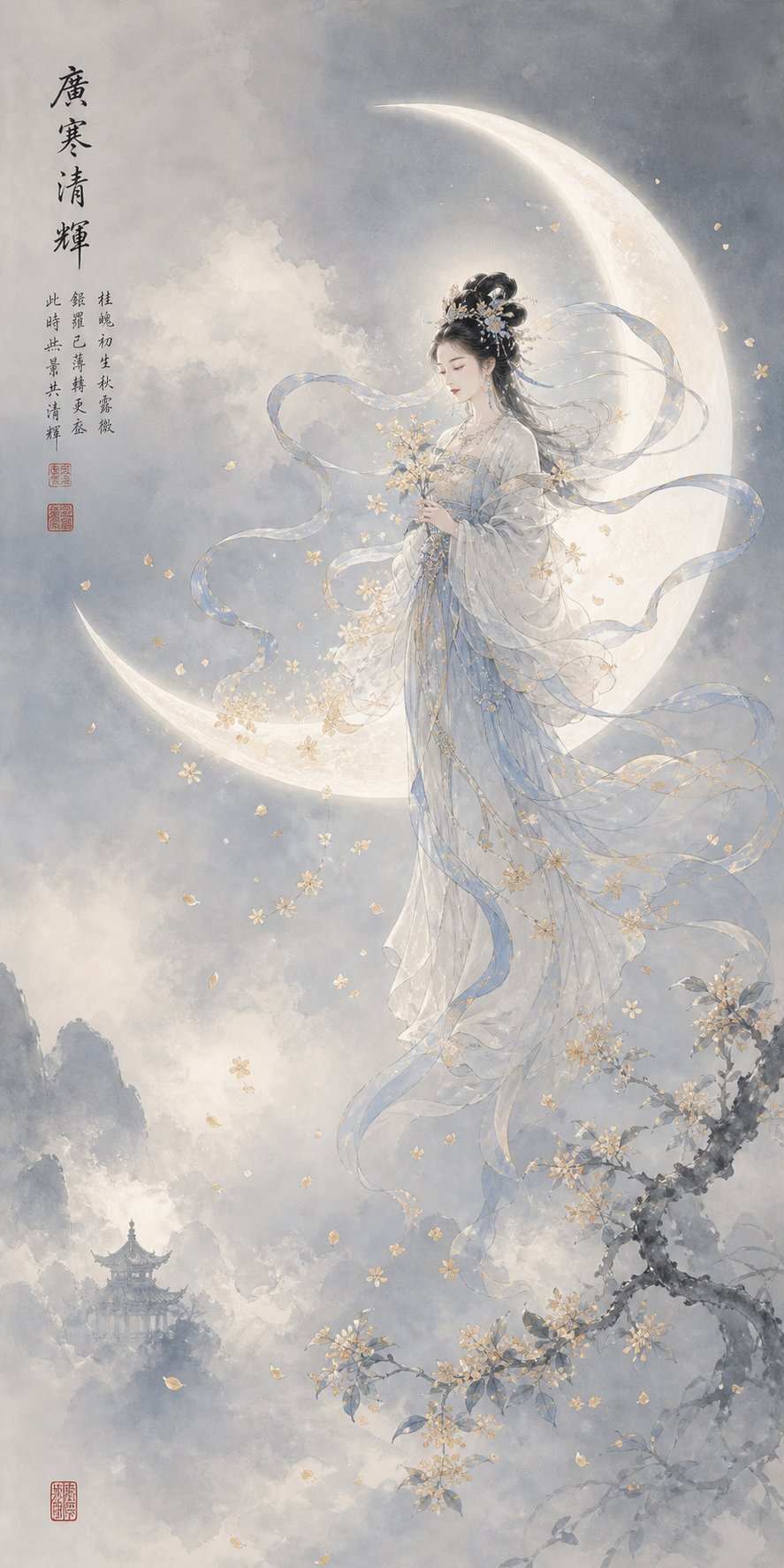
Chinese goddess names carry a particular kind of gravity. These aren't abstract concepts or invented words. They're characters drawn from deities who shaped the world, governed the moon, and held power over life and death. For parents seeking chinese girl names with mythological depth, the goddesses of Chinese tradition offer characters rich in celestial imagery, jade symbolism, and natural beauty.
The key, as covered in the naming conventions above, is extracting individual characters rather than using a deity's full title. What follows are usable baby name options drawn from five major goddesses, each with pronunciation guidance and meaning breakdowns.
Names from Chang'e and Lunar Mythology
Chang'e (嫦娥, Chang'e) is the Chinese goddess of the moon. After stealing an elixir of immortality from her husband, the divine archer Hou Yi, she fled to the moon where she has lived ever since. Her story is celebrated every year during the Mid-Autumn Festival, when families leave offerings of mooncakes and fruit in her honor. The elixir itself was a gift from Xiwangmu, connecting Chang'e's legend to the highest goddess in the pantheon.
Names derived from Chang'e's mythology evoke moonlight, celestial beauty, and quiet independence. These are among the most popular chinese names for girls who want a connection to lunar imagery:
| Character | Pinyin | Pronunciation Guide | Meaning | Origin Story |
|---|---|---|---|---|
| 婵 (嬋) | chan | "chahn" (rhymes with "on") | Graceful, beautiful; poetic word for the moon | From 婵娟 (chanjuan), a literary term for moonlight and feminine grace |
| 月华 (月華) | yue hua | "yweh hwah" | 月 = moon; 华 = radiance, splendor | Refers to the halo of light around the moon, Chang'e's domain |
| 瑶光 | yao guang | "yow gwahng" | 瑶 = precious jade; 光 = light | Name of a star in the Big Dipper, linked to celestial mythology |
The character 婵 (chan) works especially well as a standalone given name or paired with other characters. It carries the moon association without directly naming the goddess, making it a culturally appropriate choice among female chinese names.
Names Inspired by Nuwa the Creator
Nuwa (女娲) is the creator goddess who shaped humanity from yellow clay and repaired the sky when it cracked open. She is often depicted with a human upper body and a serpent's tail, symbolizing her connection to both civilization and primal creative power. Nuwa represents resilience and ingenuity. When the heavens broke, she smelted five-colored stones to patch the sky and cut the legs off a giant turtle to prop up the four corners of the world.
Names drawn from Nuwa's mythology emphasize creation, restoration, and strength:
| Character | Pinyin | Pronunciation Guide | Meaning | Origin Story |
|---|---|---|---|---|
| 炼霞 | lian xia | "lyen shah" | 炼 = to refine, forge; 霞 = rosy clouds | References Nuwa smelting colored stones to mend the sky |
| 补天 | bu tian | "boo tyen" | 补 = to mend; 天 = heaven, sky | Directly references Nuwa's act of repairing the heavens (used as a literary name) |
| 彩石 | cai shi | "tsai shir" | 彩 = colorful; 石 = stone | The five-colored stones Nuwa used to seal the broken sky |
Of these, 炼霞 (Lian Xia) is the most practical as a modern given name. It sounds poetic, carries the imagery of forging beauty from chaos, and avoids any taboo associations. The character 霞 (xia, rosy clouds) appears frequently in chinese baby girl names and pairs well with many surnames.
Goddess Names for Girls with Celestial Meanings
Beyond Chang'e and Nuwa, three other chinese god names from the female pantheon offer rich naming material.
Xiwangmu (西王母), the Queen Mother of the West, is the highest-ranking goddess in Chinese mythology. She controls life, death, and immortality, and tends the Peaches of Immortality that ripen once every 3,000 years. Her palace on Mount Kunlun represents the pinnacle of celestial power.
Mazu (妈祖) is the goddess of the sea, protector of sailors and fishermen. Originally a mortal woman named Lin Mo from Fujian province, she ascended to divinity after saving countless lives at sea through her spiritual powers.
Guanyin (观音) is the bodhisattva of compassion, called upon in times of suffering. She represents mercy, kindness, and the willingness to hear the cries of the world.
| Character | Pinyin | Pronunciation Guide | Meaning | Origin Story |
|---|---|---|---|---|
| 瑶池 | yao chi | "yow chir" | 瑶 = jade; 池 = pool | Xiwangmu's Jade Pool, where the Peaches of Immortality grow |
| 金母 | jin mu | "jeen moo" | 金 = gold; 母 = mother | Alternate title for Xiwangmu, meaning "Golden Mother" |
| 慈航 | ci hang | "tsir hahng" | 慈 = compassion; 航 = voyage, navigation | A title of Guanyin meaning "compassionate vessel" that ferries souls from suffering |
| 灵默 | ling mo | "ling maw" | 灵 = spirit, divine; 默 = silent, contemplative | References Mazu's birth name Lin Mo and her spiritual gifts |
| 碧霞 | bi xia | "bee shah" | 碧 = jade-green; 霞 = rosy clouds | Evokes the jade and cloud imagery surrounding Xiwangmu's mountain palace |
Among these chinese female names, 碧霞 (Bi Xia) and 慈航 (Ci Hang) stand out for modern use. Both sound natural in everyday conversation, carry layered mythological meaning, and translate beautifully when explained to non-Chinese speakers. The jade and cloud imagery in 碧霞 connects to Xiwangmu's domain without naming her directly, while 慈航 captures Guanyin's essence of compassion in motion.
For parents exploring china female names with divine roots, these options offer a middle path: clearly connected to powerful goddess figures, yet appropriate and elegant as given names for a real child growing up in any cultural context.
Goddesses represent one dimension of Chinese mythological power. The other belongs to a creature so central to Chinese identity that it appears on imperial robes, temple walls, and in the very language of strength itself: the dragon.
Dragon-Inspired Names from Chinese Mythology
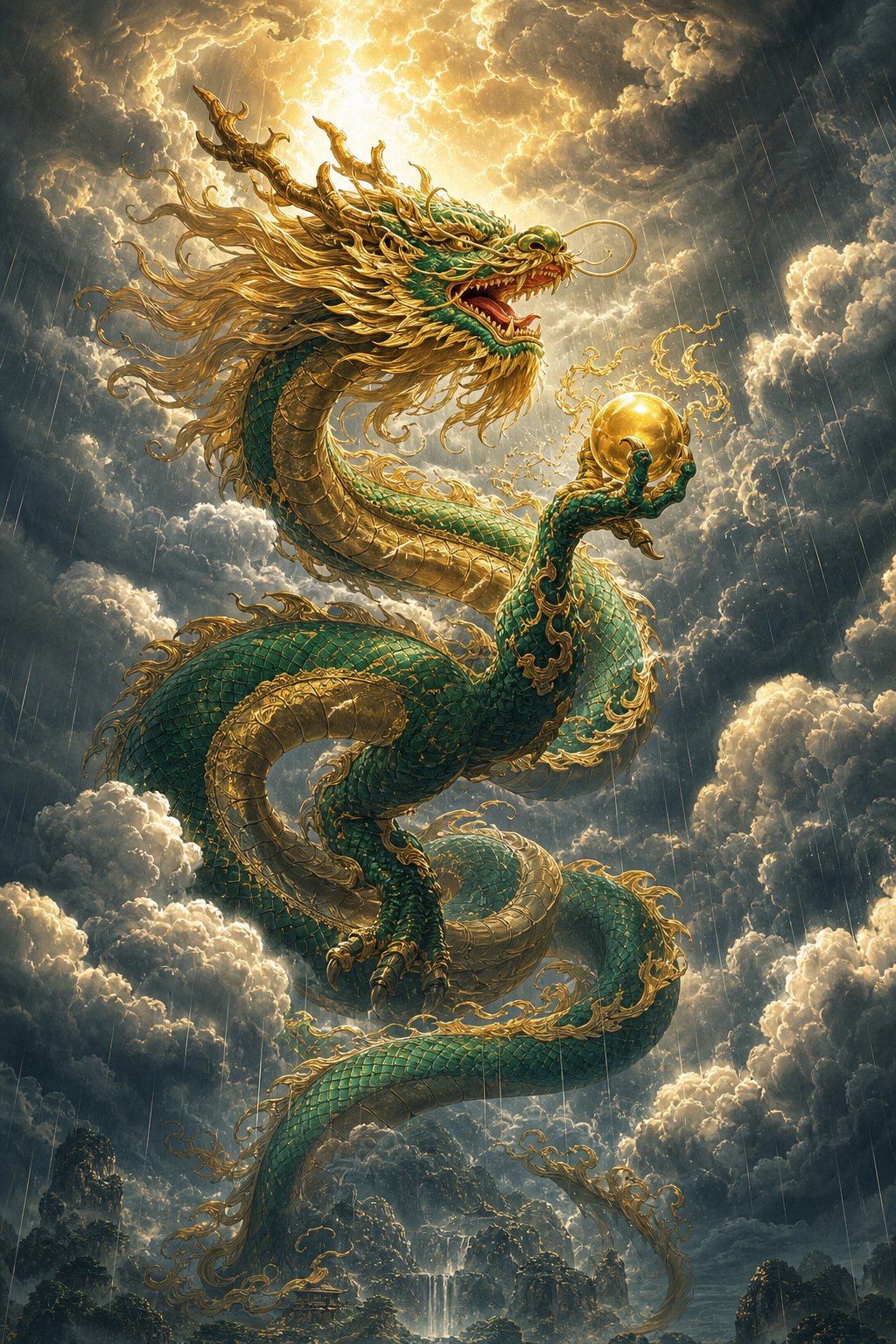
So what is a Chinese dragon called? The answer is 龙 (long, pronounced "loong" with a rising tone), or 龍 in traditional characters. Unlike the fire-breathing villains of Western legend, the Chinese long is a benevolent creature associated with power, wisdom, rainfall, and imperial authority. For centuries, emperors identified themselves as sons of dragons, and the idiom 望子成龙 (wang zi cheng long) literally means "hoping one's child becomes a dragon," expressing a parent's wish for their child's success. That cultural weight makes dragon-inspired characters some of the most potent options for baby names.
The Symbolism of Dragons in Chinese Naming
Chinese mythology features multiple dragon types, each governing a different domain. The Azure Dragon (青龙, Qinglong) controls wind and rain in the east. The Yellow Dragon (黄龙, Huanglong) represents wisdom and imperial favor. The Dragon Kings (龙王, Long Wang) rule the four seas. Celestial dragons called Tianlong (天龙) carry and protect the heavenly palace itself. These distinctions matter for naming because each dragon type connects to different qualities: weather mastery, hidden treasure, spiritual power, or cosmic guardianship.
Using the character 龙 (long) directly in a chinese dragon name is culturally acceptable and has been common for boys throughout Chinese history. Unlike deity names, the dragon character doesn't carry the same taboo of presumption. It's aspirational rather than blasphemous. That said, subtler approaches exist for parents who want dragon energy without the literal character.
Dragon Names for Boys
These asian dragon names use the 龙 character directly or reference specific dragon mythology. Each works as a given name paired with common surnames:
| Name | Characters | Pinyin | Meaning | Dragon Connection |
|---|---|---|---|---|
| Chenlong | 辰龙 | chen long | 辰 = celestial, morning star; 龙 = dragon | References the Dragon's position as the fifth zodiac sign (辰 is its earthly branch) |
| Yunlong | 云龙 | yun long | 云 = cloud; 龙 = dragon | Evokes the cloud dragon (yunlong) who rides through storms and brings rain |
| Longfei | 龙飞 | long fei | 龙 = dragon; 飞 = to fly, soar | From the idiom 龙飞凤舞 (dragon soaring, phoenix dancing), symbolizing grandeur |
| Tianlong | 天龙 | tian long | 天 = heaven; 龙 = dragon | The celestial dragon that guards and carries the heavenly palace |
| Longwei | 龙威 | long wei | 龙 = dragon; 威 = might, authority | Captures the imperial power associated with dragon mythology |
Among these chinese names that mean dragon, Yunlong (云龙) tends to be the most versatile. It sounds natural in both Mandarin and English conversation, and the cloud imagery softens the directness of the dragon character. Longfei (龙飞) carries a sense of movement and ambition that resonates across cultures.
Dragon-Adjacent Names with Subtle Power
Not every parent wants the dragon character front and center. These names evoke dragon qualities, like strength, rain, and celestial movement, without using 龙 directly. Think of them as a dragon chinese name by association rather than declaration:
| Name | Characters | Pinyin | Meaning | Dragon Connection |
|---|---|---|---|---|
| Zeyu | 泽雨 | ze yu | 泽 = marsh, grace; 雨 = rain | Dragons control rainfall; this name captures their life-giving power |
| Haolin | 昊霖 | hao lin | 昊 = vast sky; 霖 = sustained rain | References the Shenlong (spiritual dragons) who govern weather |
| Junchen | 骏辰 | jun chen | 骏 = spirited, excellent; 辰 = celestial, dragon's earthly branch | 辰 is the zodiac branch of the dragon, a subtle nod without the literal character |
| Yingxiao | 应霄 | ying xiao | 应 = to respond; 霄 = sky, heavens | Evokes the Yinglong (winged dragon) who ascended to the heavens |
| Lingyun | 凌云 | ling yun | 凌 = to rise above; 云 = clouds | Captures the dragon's movement through clouds, ambition reaching the sky |
The chinese name for dragon doesn't have to spell it out literally. A name like Lingyun (凌云) paints the image of something powerful rising through clouds, and any Chinese speaker will feel the dragon energy without seeing the character 龙 on paper. Similarly, Zeyu (泽雨) connects to the Dragon Kings' dominion over water and rainfall, a chinese name meaning dragon by implication rather than direct statement.
Dragon names lean heavily toward masculine energy in Chinese tradition. But mythological power isn't limited to one gender or one creature. The warriors and heroes of Chinese legend, both male and female, offer an entirely different palette of naming inspiration built around human virtues tested under impossible circumstances.
Warrior and Hero Names from Chinese Legends
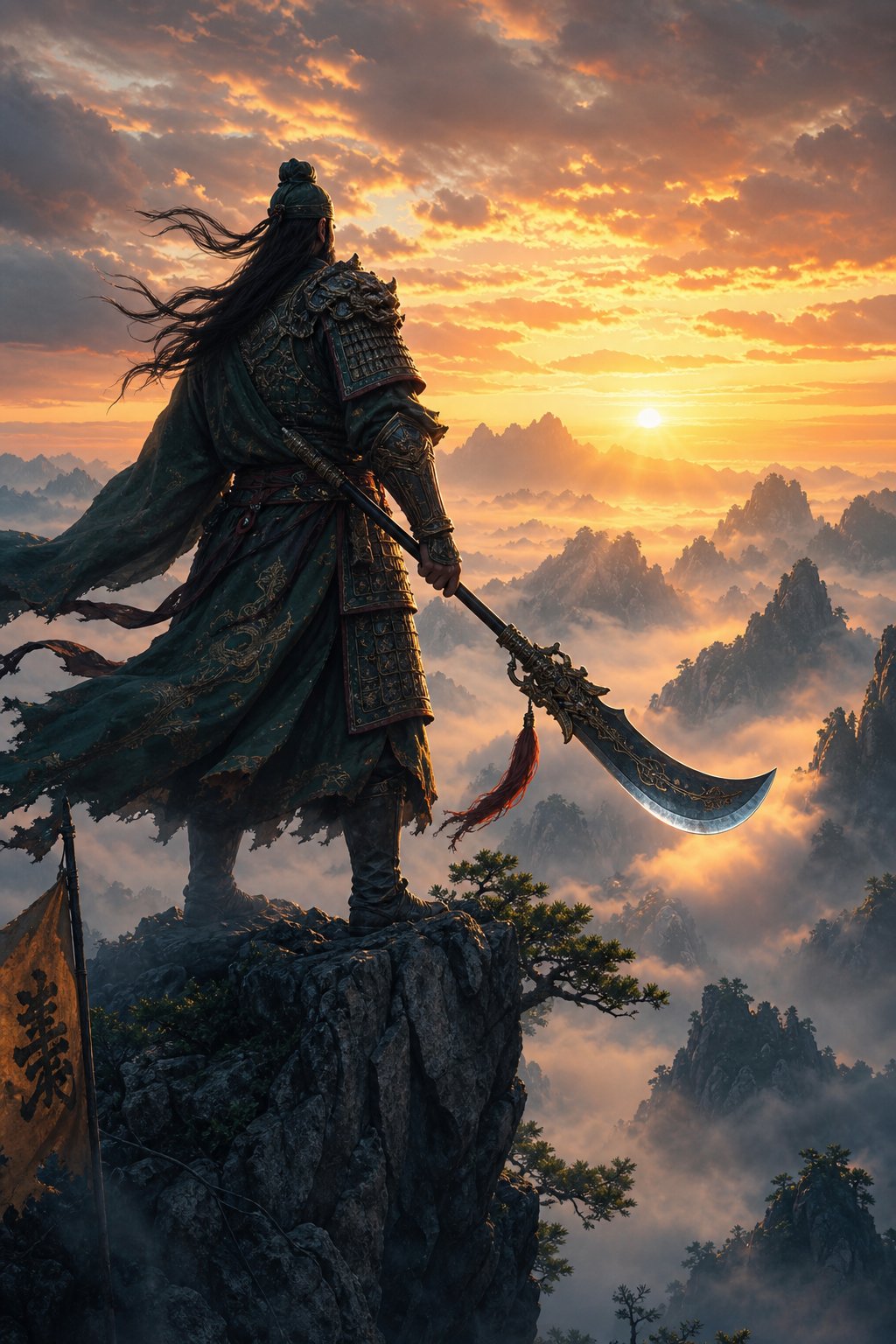
Dragons embody cosmic power. Warriors embody something closer to home: the human capacity to be brave when it counts. Chinese mythology is filled with figures who stood against impossible odds, protected the vulnerable, and earned their place in legend through action rather than birthright. For parents drawn to chinese warrior names, these heroes offer characters steeped in loyalty, courage, and justice.
What are chinese warriors called in their own tradition? The term most often used is 武将 (wujiang, military general) or 勇士 (yongshi, brave warrior). But the mythological warriors below transcend military rank. They're deified protectors, rebel spirits, and legendary archers whose individual name characters carry virtues you can pass directly to a child.
Names from Warrior Deities and Heroes
Each of these six figures occupies a distinct role in Chinese mythology. Their stories span loyalty unto death, filial rebellion, cosmic trickery, and divine marksmanship. Here's who they are and what naming material they offer.
Guan Yu (关羽, Guan Yu) was a historical general during the Three Kingdoms period who was later deified as the god of war and loyalty. He is worshipped in temples across East Asia and represents unwavering righteousness. His red face and crescent-moon blade are instantly recognizable in Chinese culture.
Mulan (木兰, Mulan) is a legendary warrior who disguised herself as a man to spare her aging father from military conscription. According to the earliest versions of her ballad, she served with distinction for twelve years before revealing her identity. Her story represents filial devotion and quiet, determined courage.
Nezha (哪吒, Nezha) is a rebellious protection deity famous for battling dragons and demons. Born with supernatural combat abilities, he plays a central role in Investiture of the Gods and represents youthful defiance against unjust authority.
Sun Wukong (孙悟空, Sun Wukong), the Monkey King, is the trickster hero of Journey to the West. He possesses shape-shifting abilities, immortality, and immense strength. His character embodies cleverness, irreverence, and the transformation from chaos to discipline.
Zhong Kui (钟馗, Zhong Kui) is a demon queller who protects people from malevolent spirits. Depicted as a fierce warrior, he represents justice and the power to confront evil directly.
Hou Yi (后羿, Hou Yi) is the divine archer who shot down nine of the ten suns scorching the earth, saving humanity from destruction. He embodies precision, sacrifice, and heroic action in crisis.
Names Meaning Bravery and Protection
Rather than using a hero's full name, you extract the characters that carry their defining virtue. Here are chinese warrior names male parents often consider, organized by the trait they represent:
- Loyalty and Righteousness (from Guan Yu)
- 义 (yi, "ee") — righteousness, justice. The core virtue Guan Yu represents.
- 羽 (yu, "yoo") — feather, wing. Guan Yu's given name character, suggesting both lightness and reach.
- 忠义 (zhongyi, "johng ee") — 忠 = loyalty; 义 = righteousness. A direct expression of Guan Yu's defining qualities.
- Bravery and Defiance (from Nezha)
- 哪吒's name characters are not typically used independently, but his attributes inspire: 勇哲 (yongzhe, "yoong juh") — 勇 = brave; 哲 = wise. Captures Nezha's fearless spirit tempered by purpose.
- 护灵 (huling, "hoo ling") — 护 = to protect; 灵 = spirit. References Nezha's role as a protection deity.
- Cleverness and Transformation (from Sun Wukong)
- 悟 (wu, "woo") — to awaken, to realize. The central character in Sun Wukong's name, meaning enlightenment through experience.
- 悟空 (wukong, "woo kohng") — 悟 = awakening; 空 = emptiness, void. While using the full name is bold, 悟 alone works beautifully as a given name character.
- 灵通 (lingtong, "ling tohng") — 灵 = spirit, nimble; 通 = to master, to connect. References Sun Wukong's original title, the Stone Monkey of Spiritual Penetration.
- Justice and Protection (from Zhong Kui)
- 镇邪 (zhenxie, "juhn syeh") — 镇 = to guard, suppress; 邪 = evil. Captures Zhong Kui's demon-quelling role, though 镇 alone is more practical as a name element.
- 正威 (zhengwei, "juhng way") — 正 = upright, just; 威 = authority, might. Evokes Zhong Kui's fierce justice without referencing him directly.
- Precision and Sacrifice (from Hou Yi)
- 弈 (yi, "ee") — a homophone of 羿 (Yi, the archer's name) that means strategic skill. Avoids using the deity's exact character while echoing his sound.
- 射天 (shetian, "shuh tyen") — 射 = to shoot; 天 = heaven. A literary name referencing Hou Yi's act of shooting down the suns, though 天弈 (Tianyi) is more practical for everyday use.
Among these names of chinese warriors turned into baby name options, 悟 (wu) and 义 (yi) stand out for their simplicity and cross-cultural readability. Both are single characters, easy to pronounce in English, and carry immediate depth when their stories are explained. A chinese swordsman name like 忠义 (Zhongyi) works well for parents who want the full weight of warrior virtue in two balanced syllables.
Female Warrior Names from Chinese Legends
Female chinese warrior names draw primarily from Mulan's legend but also from warrior goddesses and historical figures who crossed into mythological status. Mulan's name itself, 木兰 (mulan), means "magnolia," combining 木 (mu, wood/tree) with 兰 (lan, orchid). The Ming dynasty playwright Xu Wei gave her the surname Hua (花, flower), making her full name a layered botanical reference that belies her martial prowess.
Here are usable names inspired by female warrior traditions:
- 兰 (lan, "lahn") — orchid. The second character of Mulan's name, symbolizing integrity and quiet strength. Orchids bloom in harsh conditions, mirroring Mulan's resilience.
- 木兰 (mulan, "moo lahn") — magnolia. Usable as a given name, though its fame means most Chinese speakers will immediately think of the warrior legend.
- 英兰 (yinglan, "eeng lahn") — 英 = heroic, outstanding; 兰 = orchid. Combines warrior spirit with Mulan's signature character.
- 慧剑 (huijian, "hway jyen") — 慧 = wisdom; 剑 = sword. A literary name evoking the Buddhist concept of the "wisdom sword" that cuts through illusion, connecting to female warrior imagery.
- 凤仪 (fengyi, "fuhng ee") — 凤 = phoenix; 仪 = grace, bearing. The phoenix is the feminine counterpart to the dragon, and this name captures warrior elegance.
The beauty of these female chinese warrior names is their duality. 兰 (lan) reads as delicate and refined on the surface, but anyone who knows Mulan's story understands it as a name forged in battle. Similarly, 英兰 (Yinglan) announces heroism openly while retaining the orchid's grace. These are china warrior name options that honor strength without sacrificing femininity, a balance Mulan herself embodied for twelve years on the battlefield.
Warrior names draw from specific heroes and their individual virtues. But Chinese mythology also organizes its figures into broader traditions, each carrying distinct cultural weight and philosophical associations, offering yet another lens for choosing the right name.
Names Organized by Mythological Tradition
Guan Yu belongs to folk religion. Guanyin comes from Buddhism. The Eight Immortals are Daoist. When you browse a list of chinese gods, you'll notice these figures don't all come from the same tradition. Chinese mythology isn't a single unified system. It's four overlapping streams, each carrying different philosophical weight, cultural associations, and naming energy. Choosing a name from one tradition over another says something specific about the values you want to embed.
This distinction matters because the common ideas of chinese mythology blend together in popular culture, but within Chinese-speaking communities, people recognize which tradition a name echoes. A Daoist-flavored name suggests harmony with nature and spiritual freedom. A Buddhist-influenced name signals compassion and inner peace. A folk legend name carries earthy, adventurous energy. A Confucian literary name conveys scholarly refinement. Here's how each tradition breaks down for naming purposes.
| Tradition | Key Themes | Example Names | Cultural Associations |
|---|---|---|---|
| Daoist | Immortality, celestial hierarchy, natural harmony, spiritual cultivation | Tianxian, Yaoguang, Qingyun | Freedom, longevity, transcendence; associated with hermits, mountains, and the Jade Emperor's court |
| Buddhist | Compassion, lotus purity, enlightenment, release from suffering | Lianxin, Huiming, Jingci | Mercy, inner peace, wisdom; associated with temples, meditation, and bodhisattvas |
| Folk Legend | Adventure, supernatural creatures, heroic quests, regional spirits | Shanhai, Lingwei, Kunpeng | Imagination, resilience, wildness; associated with the Classic of Mountains and Seas and regional storytelling |
| Confucian Literary | Virtue, scholarship, cosmic order, moral cultivation | Wenzhao, Junyi, Mingde | Refinement, duty, intellectual achievement; associated with classical texts and civil service tradition |
Daoist Mythology Names and Immortal Figures
Daoism contributes the largest share of chinese mythology characters to the naming pool. Its pantheon is structured like a celestial government, with the Jade Emperor at the top, the Three Pure Ones above even him in spiritual rank, and the Eight Immortals serving as beloved folk heroes who proved that ordinary people can achieve transcendence. Taoist names tend to evoke clouds, jade, stars, and the concept of effortless harmony with nature.
Here are usable names drawn from Daoist mythology:
- 清云 (Qingyun, "ching yoon") — 清 = pure, clear; 云 = cloud. Evokes the Daoist ideal of rising above worldly concerns. The "pure clouds" imagery connects to the Three Pure Ones (三清, Sanqing), the highest deities in the Daoist pantheon.
- 瑶光 (Yaoguang, "yow gwahng") — 瑶 = precious jade; 光 = light. References both the Jade Emperor's celestial court and the star Yaoguang in the Big Dipper, which Daoists associate with spiritual guidance.
- 逸仙 (Yixian, "ee syen") — 逸 = carefree, transcendent; 仙 = immortal. Directly references the xian (immortals) who achieved eternal life through Daoist cultivation. The character 仙 appears frequently in taoist names and carries aspirational rather than presumptuous weight.
The Eight Immortals (Ba Xian) deserve special mention. Each immortal carries a symbolic object and represents a different path to transcendence. He Xiangu holds a lotus, Lu Dongbin wields a demon-slaying sword, and Han Xiangzi plays a flute that shifts spiritual energy. Their individual attributes inspire names like 洞宾 (Dongbin, "dohng been"), meaning "cave guest," which references Lu Dongbin's journey from scholar to immortal. Among popular chinese myths, the Eight Immortals crossing the sea remains one of the most retold stories, and its themes of cooperation and individual talent translate naturally into naming inspiration.
Buddhist-Influenced Names with Mythological Roots
Buddhism entered China around the first century CE and merged with local mythology to create a distinct tradition. Figures like Guanyin (originally the male bodhisattva Avalokiteshvara) were transformed into uniquely Chinese mythological characters. Buddhist-influenced names emphasize compassion, purity, and awakening. The lotus flower (莲, lian) is central to this tradition, symbolizing purity rising from muddy water.
- 莲心 (Lianxin, "lyen sheen") — 莲 = lotus; 心 = heart. The lotus heart represents purity of intention. In Buddhist mythology, bodhisattvas sit on lotus thrones, and the flower symbolizes someone who emerges from difficulty unstained.
- 慧明 (Huiming, "hway ming") — 慧 = wisdom, insight; 明 = bright, clear. References prajna (wisdom) in Buddhist philosophy. This name suggests illumination through understanding, a quality associated with enlightenment figures in myths in chinese Buddhist tradition.
- 净慈 (Jingci, "jing tsir") — 净 = pure, clean; 慈 = compassion, mercy. Directly echoes Guanyin's attributes without using her name. The famous Jingci Temple in Hangzhou carries this same combination, grounding the name in both mythology and place.
Buddhist names carry a contemplative quality that sets them apart from the more dynamic Daoist or folk legend options. They work especially well for parents who value gentleness and inner strength over outward power.
Folk Legend Names from Classic Texts
Folk mythology is where Chinese naming gets wild. The Classic of Mountains and Seas (山海经, Shanhai Jing), compiled as early as the 4th century BCE, catalogs hundreds of mythological creatures, strange lands, and supernatural beings across eighteen sections. The Investiture of the Gods (封神演义, Fengshen Yanyi) dramatizes a war between mortals and deities. These texts are treasure troves of chinese myth characters whose names carry imagery of mountains, seas, and untamed spiritual forces.
- 山海 (Shanhai, "shahn hi") — 山 = mountain; 海 = sea. A direct reference to the Classic of Mountains and Seas. Bold and elemental, this name suggests vastness and the spirit of exploration that defines the text.
- 灵薇 (Lingwei, "ling way") — 灵 = spirit, divine; 薇 = fern, a delicate plant. References the mythological bird Jingwei (精卫) who tried to fill the ocean with pebbles, a symbol of persistence. The character 灵 softens the reference while preserving its spiritual dimension.
- 鲲鹏 (Kunpeng, "koon puhng") — 鲲 = giant fish; 鹏 = enormous bird. From Zhuangzi's famous parable of the fish that transforms into a bird spanning the sky. While the full name is literary, 鹏 (Peng) alone works as a strong single-character name meaning "great ambition."
Folk legend names feel less polished than Daoist or Buddhist options, and that's their appeal. They carry the raw, imaginative energy of mythology in chinese storytelling at its most ancient and unfiltered. For parents who want a name that feels adventurous rather than serene, this tradition delivers.
Confucian literary names, the fourth stream, draw from texts like the Book of Songs and the Analerta. Names like 明德 (Mingde, "ming duh"), meaning "bright virtue," or 君毅 (Junyi, "joon ee"), meaning "noble resolve," carry scholarly gravitas. They connect less to supernatural mythology and more to the moral philosophy that shaped Chinese civilization, offering a grounded counterpoint to the celestial and fantastical options above.
Each tradition gives you a different emotional register. Daoist names float. Buddhist names still. Folk names roar. Confucian names stand firm. The tradition you choose shapes not just the sound of your child's name but the story it tells about what you value most. And beneath all four traditions runs another organizing principle, one that Chinese parents have used for millennia to ensure a name fits a child's destiny: the Five Elements.
Five Elements and Mythology-Adjacent Naming
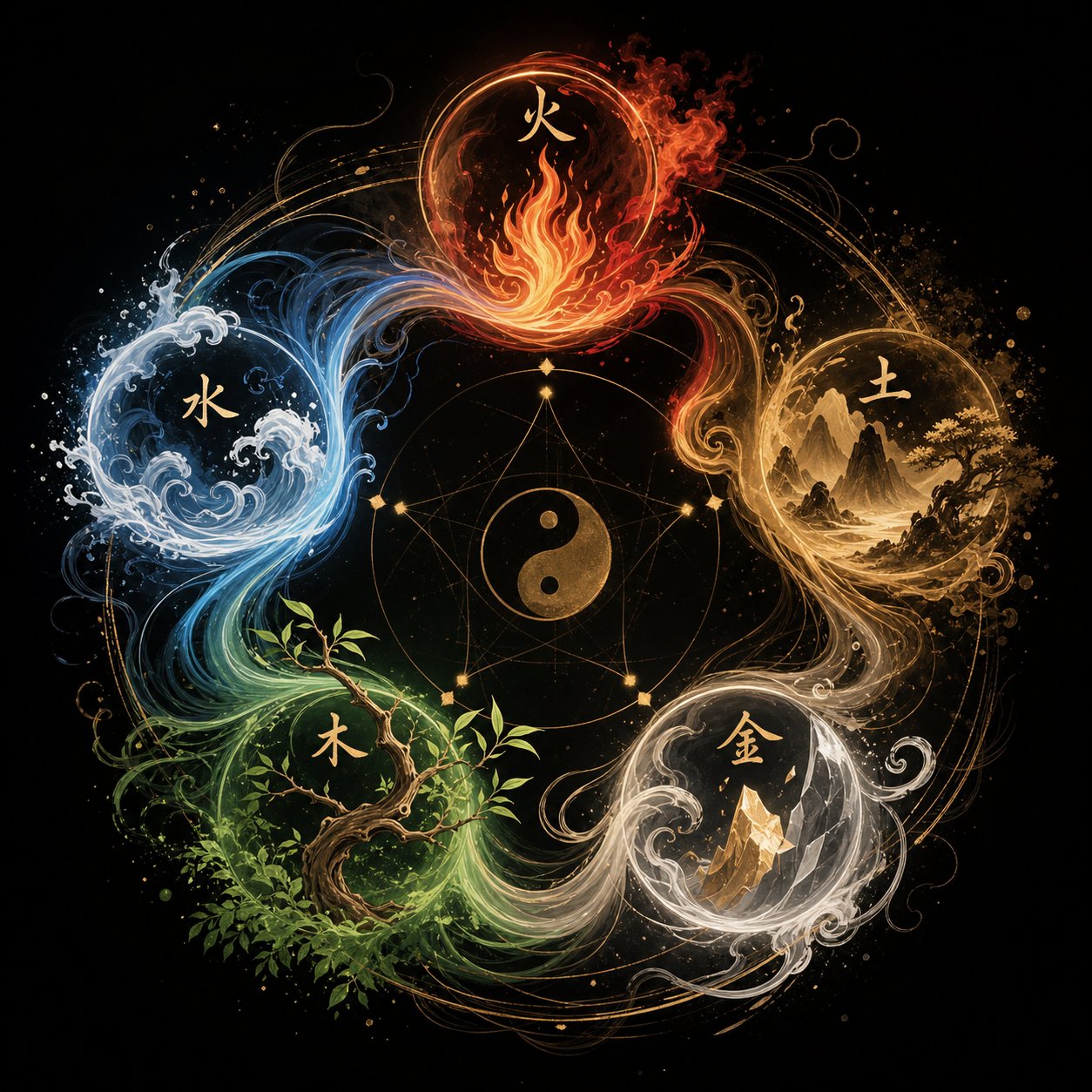
Chinese parents have traditionally chosen name characters not just for sound or meaning but for elemental balance. The Five Elements system, called Wu Xing (五行), assigns every Chinese character an elemental association through its radical, symbolic meaning, or phonetic properties. When a child's birth chart reveals a weak or missing element, the name can supply what's needed. This is where mythology names gain an extra dimension: each mythological figure and domain naturally aligns with a specific element, so choosing a mythology-inspired name can satisfy both narrative depth and elemental harmony at once.
How does this work in practice? A BaZi (Eight Characters) reading maps a child's birth date and time into a chart showing which elements are strong, weak, or absent. If the chart benefits from Water, a parent might choose characters connected to rain, rivers, or depth. If it benefits from Wood, characters linked to growth, spring, or learning become the direction. Mythology names fit naturally into this framework because each mythological domain maps cleanly onto an element.
The Five Elements and Their Mythology Connections
Each element governs a set of mythological figures, creatures, and concepts. When you explore chinese names meanings through this lens, you'll find that elemental logic organizes the entire pantheon. Here are the five elements with mythology-inspired name options for each:
- Wood (木, mu) — Domain: growth, spring, kindness, learning. Mythology connection: Fuxi (creator god associated with civilization's growth), the Fusang Tree (mythical tree where the ten suns rested). Names: 木兰 (Mulan, "moo lahn") — magnolia, the warrior's name; 林萌 (Linmeng, "lin muhng") — 林 = forest, 萌 = sprouting. Both carry Wood energy through plant radicals and growth imagery.
- Fire (火, huo) — Domain: brightness, warmth, courage, transformation. Mythology connection: Zhu Rong (god of fire), the Vermilion Bird (southern guardian), Hou Yi's suns. Names: 炎曦 (Yanxi, "yen shee") — 炎 = blazing, 曦 = dawn light; 朱明 (Zhuming, "joo ming") — 朱 = vermilion, 明 = bright. These carry Fire through radicals and solar mythology.
- Earth (土, tu) — Domain: stability, nourishment, honesty, centeredness. Mythology connection: Nuwa (who shaped humans from yellow clay), Hou Tu (earth goddess), the Yellow Emperor. Names: 坤瑶 (Kunyao, "koon yow") — 坤 = earth (from the I Ching), 瑶 = precious jade; 厚德 (Houde, "hoh duh") — 厚 = deep/generous, 德 = virtue. Earth names ground mythology in solidity.
- Metal (金, jin) — Domain: precision, justice, clarity, strength. Mythology connection: Xiwangmu (whose realm includes golden palaces), the White Tiger (western guardian), celestial weapons. Names: 金瑞 (Jinrui, "jeen rway") — 金 = gold/metal, 瑞 = auspicious; 锋毅 (Fengyi, "fuhng ee") — 锋 = blade's edge, 毅 = resolute. Metal names echo divine weaponry and celestial authority.
- Water (水, shui) — Domain: wisdom, depth, adaptability, flow. Mythology connection: Dragon Kings (rulers of the four seas), Chang'e (associated with lunar tides), Mazu (sea goddess). Names: 泽瀚 (Zehan, "zuh hahn") — 泽 = marsh/grace, 瀚 = vast water; 澜月 (Lanyue, "lahn yweh") — 澜 = rippling waves, 月 = moon. Water names connect to both dragon and lunar mythology.
The elemental layer adds practical value beyond aesthetics. A name can be beautiful and mythologically rich, but if it loads Fire onto a chart already burning with Fire energy, traditional practice would consider it imbalanced. Understanding what a chinese name mean at the elemental level helps you choose with both poetry and purpose.
Mythology-Adjacent Names Using Symbolic Concepts
Some parents want mythology's resonance without naming after any specific god or hero. Mythology-adjacent names reference sacred objects, celestial locations, and divine symbols rather than individual figures. These are uncommon chinese names that carry mythological weight through association:
- 蟠桃 (Pantao, "pahn tow") — the Peaches of Immortality from Xiwangmu's garden. While the full term is literary, 桃 (tao, peach) alone works in names like 桃夭 (Taoyao), referencing both the immortal peaches and a love poem from the Book of Songs.
- 瑶台 (Yaotai, "yow tie") — the Jade Terrace, Xiwangmu's celestial palace. 瑶 carries jade mythology in a single character.
- 昆仑 (Kunlun, "koon loon") — the mythological mountain axis connecting heaven and earth. Bold as a name, but 昆 alone means "elder brother" or "together" and carries the mountain's grandeur subtly.
- 天河 (Tianhe, "tyen huh") — the Celestial River (Milky Way), which separates the Cowherd and Weaver Girl in one of China's most beloved myths.
These concepts let you draw on chinese names meaning without pointing to a single deity. They're the mythology equivalent of naming a child "Eden" rather than "Eve" — the sacred place rather than the sacred person.
Phoenix and Jade Names with Hidden Mythology Roots
Two symbols dominate the beautiful chinese names category more than any others: the phoenix (凤, feng) and jade (玉, yu / 瑶, yao / 琼, qiong). Both carry deep mythological roots that most people sense without fully articulating.
The Chinese phoenix, or Fenghuang (凤凰), is not a resurrection bird like its Greek counterpart. It's a creature that appears only during times of peace and prosperity, representing virtue, grace, and the union of yin and yang. In mythology, it's the empress to the dragon's emperor. Phoenix characters create pretty chinese names that sound elegant while encoding this entire symbolic system:
- 凤仪 (Fengyi, "fuhng ee") — phoenix bearing/grace
- 鸣凤 (Mingfeng, "ming fuhng") — singing phoenix, a sign of coming prosperity
- 凰羽 (Huangyu, "hwahng yoo") — phoenix feather, using the feminine half of Fenghuang
Jade names connect to Xiwangmu's domain, the Jade Emperor's authority, and the Daoist concept of spiritual purity. In Chinese culture, jade represents moral perfection. Characters like 瑶, 琼, 璇, and 玉 all carry jade associations and appear across chinese name meanings as markers of preciousness and integrity:
- 琼瑶 (Qiongyao, "chyohng yow") — fine jade, precious jade. A doubled jade reference that evokes Xiwangmu's palace.
- 璇玑 (Xuanji, "shwen jee") — 璇 = beautiful jade, 玑 = pearl/astronomical instrument. References the jade armillary sphere used to map the heavens in Chinese astronomy-mythology.
- 玉衡 (Yuheng, "yoo huhng") — jade balance. The name of a star in the Big Dipper, connecting jade symbolism to celestial navigation.
Phoenix and jade names occupy a sweet spot: they're immediately recognizable as meaningful to Chinese speakers, they sound graceful in any language, and they carry mythology without requiring explanation. A name like 璇玑 (Xuanji) is an uncommon chinese names choice that rewards curiosity. On the surface it's simply beautiful. Beneath it lies an entire cosmological system of jade instruments mapping the stars.
Elemental balance and symbolic concepts give you tools for selecting the right mythology name. But choosing a name is only half the challenge. The other half is making sure it works in the real world your child will actually inhabit, across languages, cultures, and official documents.
Adapting Mythology Names for Modern Life
A name can carry the weight of a thousand-year-old legend and still need to survive a roll call at a preschool in Toronto. That's the practical tension parents face when choosing mythology-inspired names: how do you preserve depth without creating daily friction? The answer depends on where your child will grow up, which cultural communities they'll move through, and how much explanation you're comfortable building into introductions.
How Mythology Names Work in English-Speaking Environments
Some mythology-derived characters translate into pinyin that English speakers handle easily. Names like Lanyu, Mingfeng, or Zehan use familiar consonant-vowel patterns and rarely get mangled. Others, like Qiongyao or Xuanji, contain sounds (q, x, zh) that trip up anyone unfamiliar with Mandarin phonetics. This doesn't make them bad choices, but it's worth considering how often your child will need to correct pronunciation.
Many asian american girl names solve this by pairing a Chinese given name with an English first name. A child might be Sophia on school rosters and 瑶光 (Yaoguang) at home, at family gatherings, and on legal documents. Others use the Chinese name as a middle name, preserving it officially while reducing daily friction. Neither approach is more authentic than the other. Both keep the mythology connection alive.
The names that tend to work best across languages share a few traits: two syllables, open vowel endings, and consonants that exist in both English and Mandarin. Among popular chinese names in recent years, options like Yilan, Lingyun, and Mulan already feel intuitive to English speakers while carrying full mythological resonance for Chinese audiences.
Modern Usage Across China, Taiwan, and the Diaspora
Which mythology names actually appear on birth certificates today? In mainland China, characters like 瑶 (yao, jade), 龙 (long, dragon), 凤 (feng, phoenix), and 霖 (lin, sustained rain) show up regularly in registered names. According to data from China's Ministry of Public Security, the most popular chinese girl names in 2021 favored poetic, nature-inflected characters like 汐 (xi, night tide) and 涵 (han, mellow), many of which overlap with mythology-adjacent imagery. Characters directly referencing celestial concepts, like 宸 (chen, celestial abode) and 辰 (chen, sun/moon/stars), dominated the boys' rankings.
Taiwan and Hong Kong tend toward slightly more traditional character choices, and mythology-flavored names carry less risk of seeming unusual there. Singapore's naming culture blends Chinese tradition with English-language practicality, producing common chinese first names that often work bilingually by design.
Names considered too mythological for everyday use? Full deity titles like 观音 (Guanyin) or 玉皇 (Yuhuang, Jade Emperor) remain firmly off-limits. But individual characters extracted from those titles, like 瑶, 慈, or 清, are among the most chinese names popular with modern parents precisely because they carry mythological echo without crossing into presumption.
Cultural Sensitivity and Respectful Name Selection
For non-Chinese parents drawn to these names, the question isn't whether you're allowed to use them. It's whether you're willing to do the work of understanding what you're choosing. A mythology name isn't a sound you liked in a fantasy novel. It's a character with specific cultural weight, tonal requirements, and community associations.
Respectful cross-cultural naming means understanding the story behind the characters, not just the aesthetic of the sounds.
Mixed-heritage families often navigate this most naturally. One parent brings cultural knowledge, the other brings curiosity and respect, and together they choose a name that honors both lineages. If neither parent is Chinese, consulting a native Mandarin speaker, ideally someone with knowledge of naming traditions, moves the process from guesswork to grounded decision-making.
Among popular chinese female names and popular chinese names for women, you'll find that the most enduring choices are ones where the parents understood the full picture: meaning, sound, elemental balance, and cultural context. That same standard applies regardless of the parents' background.
Before finalizing any mythology-inspired name, run through this checklist:
- Have you verified the character's meaning with a native speaker or reliable dictionary, not just a baby name website?
- Does the name avoid using a full deity title or the exact name of a revered figure?
- Have you checked tonal balance when paired with your family name?
- Can the name be pronounced reasonably well in the languages your child will use daily?
- Do you know the mythological story behind the characters well enough to share it with your child?
- If you're not Chinese, have you consulted someone from the culture about your specific choice?
- Does the name work on official documents in your country without causing administrative confusion?
A mythology name chosen with care becomes a gift that grows with your child. At five, it's a bedtime story about a goddess or a dragon. At fifteen, it's a connection to heritage that feels personal rather than imposed. At thirty, it's a conversation starter that reveals depth. The best common chinese girl names from mythology aren't the flashiest or most obscure. They're the ones chosen with enough understanding that the story never has to be forced. It simply unfolds, naturally, every time someone asks what the name means.
Frequently Asked Questions About Chinese Mythology Baby Names
1. Is it appropriate to name a baby directly after a Chinese god or goddess?
In Chinese culture, using a major deity's full name for a baby is considered presumptuous and disrespectful. The culturally appropriate approach is to extract individual characters from divine names or mythological titles and recombine them into new given names. For example, rather than naming a child Guanyin, you might use the character ci (compassion) or the combination Ci Hang, which captures the goddess's essence without claiming her title. This principle applies to all major deities including the Jade Emperor, Xiwangmu, and other revered figures.
2. What is the Chinese name for dragon and can it be used in baby names?
The Chinese word for dragon is long (龙 in simplified, 龍 in traditional), pronounced with a rising tone. Unlike deity names, using the dragon character directly in a baby name is culturally acceptable and has been common throughout Chinese history. It carries aspirational meaning rather than blasphemous weight. Popular dragon-based names include Yunlong (cloud dragon), Longfei (soaring dragon), and Tianlong (celestial dragon). Parents who prefer subtlety can use dragon-adjacent characters like chen (the dragon's zodiac branch) or rain-related characters that reference the Dragon Kings' domain.
3. How do the Five Elements affect choosing a Chinese mythology name?
The Five Elements system (Wu Xing) assigns elemental associations to Chinese characters through their radicals, meanings, or phonetic properties. Traditional practice uses a child's BaZi birth chart to identify which elements are strong, weak, or absent, then selects name characters that supply what's needed for balance. Each mythological domain maps to a specific element: dragons and sea goddesses connect to Water, fire gods and the Vermilion Bird to Fire, Nuwa and earth deities to Earth, celestial weapons to Metal, and growth myths to Wood. This adds a practical layer beyond aesthetics when selecting a mythology-inspired name.
4. Which Chinese mythology names work well in English-speaking countries?
Names that translate smoothly into English-speaking environments typically share these traits: two syllables, open vowel endings, and consonants that exist in both English and Mandarin. Options like Mulan, Lanyu, Lingyun, and Zehan use familiar sound patterns and rarely get mispronounced. Names containing pinyin letters q, x, or zh (like Qiongyao or Xuanji) require more frequent correction. Many families pair a Chinese mythology name with an English first name, or use the Chinese name as a middle name, preserving the cultural connection while reducing daily friction.
5. What is the difference between Daoist, Buddhist, and folk legend names in Chinese mythology?
Each tradition carries distinct cultural weight. Daoist names evoke clouds, jade, stars, and spiritual freedom, drawing from immortals and the celestial court. Buddhist-influenced names emphasize compassion, lotus purity, and inner peace, connected to figures like Guanyin. Folk legend names from texts like the Classic of Mountains and Seas carry raw, adventurous energy tied to mythological creatures and heroic quests. Confucian literary names convey scholarly refinement and moral virtue. Chinese speakers generally recognize which tradition a name echoes, so your choice signals specific values about what matters most to your family.