What Pinyin Name Character Combinations Actually Mean
Imagine someone tells you their name sounds like "li." Simple enough, right? But in Chinese, that single syllable opens a door to dozens of completely different identities. The character 丽 means "beautiful," 力 means "strength," 立 means "independent," 莉 evokes jasmine, and 利 suggests sharpness or profit. Same sound, wildly different people.
This is the core challenge behind pinyin name character combinations: the process of selecting specific Chinese characters (汉字) that correspond to a pinyin syllable to form a personal name with real meaning. Pinyin itself is just a phonetic transcription system, a way to represent Mandarin sounds using the Latin alphabet. It tells you how a name is pronounced but reveals nothing about what it actually means.
Pinyin is merely a phonetic guide. The real identity of a Chinese name lives entirely in its characters.
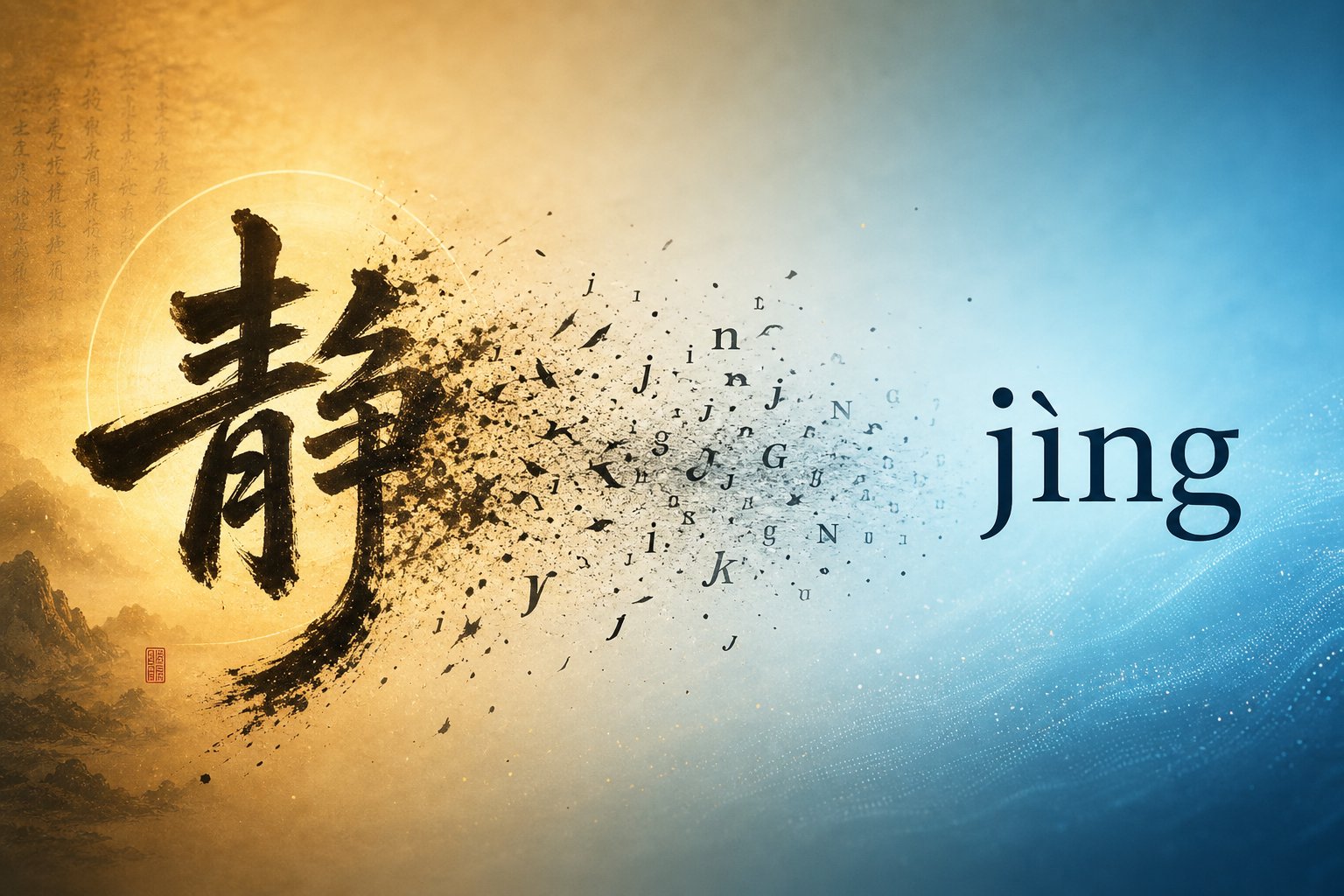
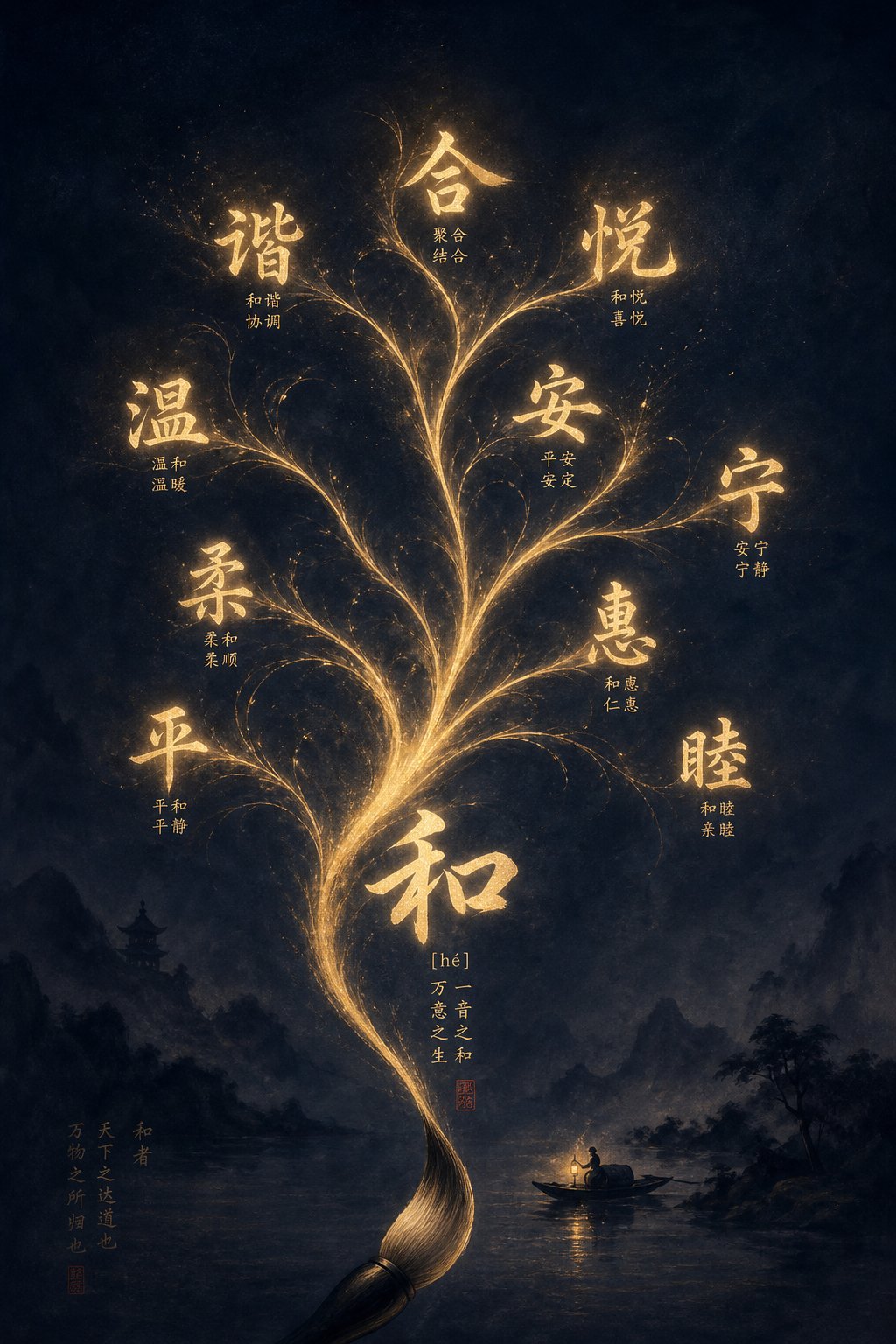
A research visualization by CSH researcher Liuhuaying Yang illustrates this perfectly through a leaf-and-tree metaphor: just as no two leaves are alike, every Chinese character is unique. Yet when transliterated into pinyin, these distinct characters get grouped into clusters sharing the same syllable, blurring their individuality. Thousands of distinct Chinese characters compress into just 375 pinyin syllables, meaning people with entirely different names in characters can end up with identical spellings in romanized form.
Why One Pinyin Syllable Creates Dozens of Name Options
The character 名 (míng) itself means "name," and its 名 meaning extends to concepts of reputation and identity in Chinese culture. When parents choose a name, they are not picking a sound. They are selecting characters that carry wishes, values, and aspirations for their child's future. A name built from characters meaning "wise" and "brave" sends a very different message than one meaning "peaceful" and "graceful," even if both names might share similar pinyin spellings with other character sets.
This matters whether you are a parent naming a child, a foreigner choosing a Chinese name for work or study, or a professional handling transliteration for official documents. In each case, understanding how sound maps to meaning is the difference between a name that resonates and one that confuses or unintentionally offends.
The Sound-Meaning Connection That Makes Chinese Names Unique
Unlike English names where "Michael" is simply "Michael," a Chinese name is assembled character by character. Each character brings its own meaning, visual structure, and tonal pronunciation. A chinese name generator with characters can suggest options based on desired sounds or meanings, but the final choice always requires understanding what each character communicates. Tools like a chinese name generator with meaning provide useful starting points for exploration, especially for those unfamiliar with the thousands of available characters.
Consider the artist Ai Weiwei (艾未未). His given name uses two identical characters, yet the pinyin "wei" alone could represent dozens of other characters with entirely different meanings. Without seeing the actual characters, even native Chinese speakers can struggle to identify which name is intended. This ambiguity is exactly why the character selection behind any pinyin combination deserves careful attention, and why tonal distinctions play such a critical role in narrowing down the right match.

How Tones Shape Character Selection in Chinese Names
Tonal distinctions do more than affect pronunciation. They fundamentally determine which characters are available to you when building a name. Mandarin uses four tones plus a neutral tone, and each tone applied to a given syllable unlocks a completely different set of characters. Choose the wrong tone, and you are not just mispronouncing a name. You are pointing at an entirely different pool of characters with unrelated meanings.
Here is how it works in practice. When you settle on the pinyin syllable "ming" with a second tone (rising pitch), written as "ming," you gain access to characters like 明 (bright) and 名 (name/fame). But you simultaneously eliminate every character pronounced with the first tone (mīng), third tone (mǐng), or fourth tone (mìng). The tone is not optional decoration. It is a hard filter that narrows your options before you even begin evaluating meaning.
This is why anyone trying to translate name to mandarin or use a mandarin name converter needs to think in tones from the very start. Skipping this step is like choosing English words based only on their first letter while ignoring the rest of the spelling.
How Four Tones Multiply Your Character Options
Mandarin's four tones are: first tone (high and flat), second tone (rising), third tone (dipping low), and fourth tone (falling sharply). There is also a neutral tone that appears on unstressed syllables, though it rarely factors into given-name characters.
Each tone transforms a single pinyin syllable into what is effectively a different sound unit in the language. Native speakers perceive "jīng" and "jìng" as completely distinct syllables, not variations of the same word. This means a single romanized spelling like "jing" actually represents four separate phonetic identities, each linked to its own cluster of characters.
For someone learning how to write your name in mandarin, this multiplying effect is both a challenge and an opportunity. One syllable gives you four separate character pools to explore. If none of the characters in the first-tone pool carry the meaning you want, the fourth-tone pool might offer exactly what you need.
Mapping Tones to Character Pools in Practice
Let's walk through the syllable "jing" across all four tones to see how dramatically the character options shift. This is the kind of analysis any mandarin name generator performs behind the scenes, but understanding it yourself gives you far more control over the result.
| Tone | Pinyin | Common Name Characters | Meanings |
|---|---|---|---|
| 1st (high, flat) | jīng | 京, 精, 晶, 菁 | Capital city, refined/essence, crystal, luxuriant |
| 2nd (rising) | jíng | — | (Few common name characters exist at this tone) |
| 3rd (dipping) | jǐng | 景, 井, 警, 璟 | Scenery/view, well, alert, lustrous jade |
| 4th (falling) | jìng | 静, 净, 敬, 靖 | Quiet/still, clean/pure, respect, peaceful |
You'll notice the personality of each tone group is strikingly different. First-tone "jīng" characters tend toward brightness and refinement. Fourth-tone "jìng" characters lean toward calm, purity, and reverence. A name using 晶 (crystal, sparkling) sends a completely different signal than one using 静 (serene, tranquil), even though both would appear as "jing" in a passport or email signature.
This table also reveals a practical reality: not every tone has equally rich options for names. The second-tone "jíng" has very few characters commonly used in personal names, which means if you are set on the "jing" sound, you are realistically choosing among three tonal pools rather than four.
A mandarin name translator that ignores tones will present you with a jumbled list mixing characters from all four pools. That is like searching for English words starting with "b" without specifying whether you want "bright," "bleak," or "brutal." The tone is your first and most powerful filter. Once you fix the tone, you can evaluate the remaining characters for meaning, visual elegance, and cultural resonance, which is where gender conventions and generational trends start to shape the final choice.
Tonal Pairing Aesthetics for Beautiful Sounding Names
Selecting the right tone for a single character is only half the equation. The real musicality of a Chinese name emerges from how tones interact across multiple syllables. Native speakers carry an intuitive sense of which tone sequences feel smooth and which ones land awkwardly, yet they rarely put this instinct into words. When making a Chinese name, understanding these tonal pairings is what separates a name that flows naturally from one that sounds clunky to every native ear in the room.
Think of it like chord progressions in music. Individual notes can be beautiful on their own, but certain sequences create tension, resolution, or harmony. Mandarin tones work the same way. A name with rising-then-falling pitch feels dynamic. A name stuck on the same tonal level feels monotone. These patterns are not arbitrary preferences. They reflect how Mandarin's pitch contours interact acoustically when spoken at natural speed.
Tone Combinations That Sound Harmonious Together
Data from an analysis of over 4,300 Chinese names reveals clear patterns in how parents pair tones within two-character given names. The most common tone combination for the two given-name syllables is 4th tone followed by 2nd tone, appearing 560 times in the dataset. The next most popular pairings are 1st+2nd (421 occurrences) and 3rd+2nd (373 occurrences). The 2nd tone dominates the final position, accounting for 1,658 of 3,413 two-character given names studied.
Why does the 2nd tone (rising pitch) work so well at the end of a name? It creates a sense of lift and openness, like a sentence ending on an upward note. The name feels unfinished in a pleasant way, as if it is reaching toward something. Contrast this with the 4th tone in final position (only 562 occurrences), which drops sharply and can sound abrupt or overly decisive when closing out a name.
Here are the most favored tone pairings for two-character given names, ranked by how frequently native-speaking parents choose them:
- 4th + 2nd tone (falling then rising): Creates dynamic energy and contrast. Examples: 奕琪 (yì qí), 艺文 (yì wén). The most popular pairing overall.
- 1st + 2nd tone (high-flat then rising): Sounds bright and uplifting. Examples: 欣怡 (xīn yí), 心雨 (xīn yǔ becomes xīn yú in context).
- 3rd + 2nd tone (dipping then rising): Produces a wave-like contour. Examples: 子琪 (zǐ qí), 雨晴 (yǔ qíng).
- 4th + 1st tone (falling then high-flat): Sounds authoritative and stable. Examples: 俊熙 (jùn xī), 梦琳 (mèng lín).
- 1st + 1st tone (high-flat then high-flat): Steady and calm, though can feel monotone if overused. Examples: 欣馨 (xīn xīn).
- 4th + 4th tone (falling then falling): Can sound harsh or overly forceful. Less commonly chosen, with only 121 occurrences in the dataset.
The pattern is clear: contrast between tones creates perceived beauty. A name that moves between different pitch levels feels more alive than one that stays flat or repeats the same contour.
Why Consecutive Tones Create Awkward Name Pairings
Consecutive same-tone pairings rank consistently lower in frequency. Two 4th tones in a row (like 慕瀚, mù hàn) produce a double-drop effect that can sound aggressive. Two 1st tones feel static. But the most interesting case involves two consecutive 3rd tones, because Mandarin's phonological rules actually forbid this combination from being spoken as written.
This is where third-tone sandhi comes in. When two 3rd-tone syllables appear back to back, the first one automatically shifts to a 2nd tone in natural speech. The classic example is 你好 (nǐ hǎo), which is actually pronounced "ní hǎo." This rule is non-negotiable in spoken Mandarin.
For names, this means a combination like 美雨 (měi yǔ) will never actually be spoken with two dipping tones. The first character shifts upward, making the name sound like "méi yǔ" in practice. This is why the tone-pattern data from the name analysis shows a grey square where 3rd+3rd should appear. That combination effectively does not exist in spoken form. It always becomes 2nd+3rd.
If you use a tool to generate a Chinese name or rely on a chinese name creator, pay attention to whether it accounts for sandhi. A name that looks like a 3rd+3rd pairing on paper will sound like a 2nd+3rd pairing in every real conversation. This is not a problem per se, but you should evaluate the name based on how it actually sounds, not how it appears in pinyin notation.
The full-name picture adds another layer. The surname's tone interacts with the given name's tones to create a three-syllable melody. The single most common full-name tone pattern is 2nd+4th+2nd (surname in 2nd tone, first given-name character in 4th, second in 2nd), appearing 273 times in the dataset. This creates a satisfying wave: rise, drop, rise. It is no coincidence that many of China's most common surnames (王 Wáng, 陈 Chén, 黄 Huáng, 刘 Liú) carry the 2nd tone, giving parents a natural launching point for these dynamic patterns.
For non-native speakers trying to develop this tonal intuition, the most effective approach is listening practice rather than memorizing rules. Watch Chinese media and pay attention to how names sound when spoken naturally. Say candidate names aloud at conversational speed, not syllable by syllable. A name generator chinese tools produce can give you options, but your ear needs training to judge which combinations feel right. Record yourself saying the name in a full sentence and listen back. If it flows without awkward pauses or pitch collisions, you are likely on the right track. The tonal aesthetics that native speakers feel instinctively can be learned, but only through repeated exposure to how real names sound in connected speech, not from staring at tone marks on a page.

Gender Conventions in Pinyin Character Selection
Tonal flow shapes how a name sounds, but the characters themselves carry another layer of social information: gender. Long before a child speaks their own name, the characters chosen for them signal cultural expectations about femininity, masculinity, and identity. These conventions run deep in Chinese naming tradition, and they start influencing decisions the moment a parent settles on a pinyin syllable.
Here is the thing: certain pinyin sounds carry gendered weight even before you look at specific characters. Softer, more open syllables like "xiao," "ying," "mei," and "lan" tend to lean feminine in the ears of native speakers. Harder, more abrupt sounds like "gang," "wei," "zhi," and "qiang" lean masculine. This is not a strict rule, but it reflects decades of naming patterns that have trained cultural expectations around which sounds "belong" to which gender.
As the Cultural Atlas notes, while many Chinese characters have gender-specific meanings, it can be hard to assume a person's gender from their name alone once it is translated into the Roman alphabet. The gendered information lives in the characters, not the pinyin. This is precisely why anyone using a chinese name generator female or chinese name generator male tool needs to look beyond the romanized output and examine what each character actually communicates.
Traditionally Feminine Pinyin Characters and Their Meanings
Feminine name characters in Chinese tend to cluster around a few thematic families. The most recognizable are characters containing the 女 (woman) radical, such as 婷 (tíng, graceful), 娜 (nà, elegant), 妍 (yán, beautiful), and 嫣 (yān, charming). These characters wear their femininity in their visual structure. Even someone with basic character recognition can spot the 女 component and understand the gendered intent.
Beyond the radical, feminine names draw heavily from nature imagery. Flowers and plants dominate: 花 (huā, flower), 兰 (lán, orchid), 莉 (lì, jasmine), 梅 (méi, plum blossom), 莲 (lián, lotus). Weather and seasons appear frequently too: 雪 (xuě, snow), 霜 (shuāng, frost), 露 (lù, dew), 晴 (qíng, clear sky). Precious materials round out the pattern: 玉 (yù, jade), 珍 (zhēn, pearl/treasure), 琳 (lín, fine jade).
Research on mainland Chinese naming trends confirms that between the 1950s and 1980s, top female characters were generally related to beauty, the color red, and flora. Characters like 英 (yīng, flower petal/hero), 芳 (fāng, fragrant), and 秀 (xiù, elegant) dominated the most popular female names for decades. A chinese girl name generator drawing from traditional conventions would pull heavily from these categories.
Masculine Name Characters and Sound Patterns
Masculine naming conventions favor an entirely different vocabulary. Strength and power dominate: 强 (qiáng, strong), 伟 (wěi, great/mighty), 刚 (gāng, firm/hard), 勇 (yǒng, brave), 力 (lì, strength). Ambition and achievement appear frequently: 志 (zhì, ambition/will), 杰 (jié, outstanding/hero), 俊 (jùn, talented/handsome), 成 (chéng, accomplish). During the Cultural Revolution era, military-themed characters surged in popularity for boys: 军 (jūn, army), 兵 (bīng, soldier), 建 (jiàn, build), 国 (guó, nation).
The sound patterns reinforce these associations. Syllables ending in hard consonant sounds like "-ng" (qiáng, gāng, míng) and those with sharp initial consonants (zhì, jié, gāng) cluster disproportionately in male names. Meanwhile, syllables with softer finals and more open vowels (méi, lán, yǐng, xuě) appear more often in female names.
| Category | Pinyin | Character | Meaning | Gender Association |
|---|---|---|---|---|
| Nature/Flora | lán | 兰 | Orchid | Feminine |
| Beauty | méi | 美 | Beautiful | Feminine |
| Precious | yù | 玉 | Jade | Feminine |
| Grace | tíng | 婷 | Graceful | Feminine |
| Weather | xuě | 雪 | Snow | Feminine |
| Strength | wěi | 伟 | Great/Mighty | Masculine |
| Ambition | zhì | 志 | Will/Ambition | Masculine |
| Courage | yǒng | 勇 | Brave | Masculine |
| Firmness | gāng | 刚 | Firm/Hard | Masculine |
| Achievement | jié | 杰 | Outstanding | Masculine |
Modern Shifts Toward Gender-Neutral Combinations
These traditional patterns are not static. Research tracking naming trends from the 1950s through the 2000s shows a measurable shift. In the 1990s and 2000s, female names increasingly incorporated characters previously associated with competence and intelligence rather than purely beauty or nature. Characters like 慧 (huì, intelligent), 敏 (mǐn, clever/quick), and 欣 (xīn, joyous) rose sharply in popularity for girls, reflecting changing parental aspirations.
Younger parents are increasingly drawn to characters that work across gender lines. Syllables like "yǔ" (宇, universe), "chén" (晨, morning), "ruì" (睿, wise), and "zǐ" (子, child/seed) appear in both male and female names without raising eyebrows. The chinese girl name generator of a decade ago might have offered only floral and beauty characters, but contemporary naming practices embrace a broader palette.
This shift mirrors broader social changes. As the one-child policy concentrated all parental hopes onto a single child regardless of gender, the naming vocabulary expanded. Parents who might once have reserved "ambition" characters for sons began giving them to daughters too. The result is a generation where pinyin name character combinations are less predictable by gender than at any point in modern Chinese history.
Still, the traditional associations have not disappeared. They persist as defaults, as the path of least resistance. A female chinese name generator built on historical data will still skew toward beauty and nature characters because that is what the training data reflects. Knowing these conventions gives you the power to either follow them deliberately or break them with intention, which matters far more than breaking them by accident. And whether you lean traditional or modern, the next challenge remains the same: matching these character choices to a sound that works, especially when you are starting from a foreign name that was never designed for Mandarin's phonetic system.
Starting from Sound to Find the Right Characters
Foreign names were never designed with Mandarin's phonetic constraints in mind. English, Spanish, Arabic, Russian: these languages use sounds, consonant clusters, and syllable structures that simply do not exist in Chinese. When you try to translate your name to chinese, you are not performing a one-to-one swap. You are rebuilding your name from scratch within a completely different sound system, then layering meaning on top of that new phonetic foundation.
This is the challenge that faces millions of expats, international students, and professionals working across Chinese-speaking markets. Your birth name carries your identity, and you want a Chinese version that still feels like you. But Mandarin has roughly 412 possible syllables. English alone uses over 15,000 distinct syllable combinations. Something has to give.
The good news: there is a systematic way to approach this. The process is not guesswork, and it does not require native-level fluency. What it does require is understanding where Mandarin's phonetic boundaries lie and being willing to compromise between perfect sound matching and meaningful character selection.
Breaking Foreign Names into Mandarin-Compatible Syllables
Every Mandarin syllable follows a strict structure: an optional initial consonant, a vowel (or vowel combination), and an optional nasal ending (-n or -ng). That is it. No consonant clusters like "str" or "bl." No closed syllables ending in -t, -k, -p, or -s. No sounds like "th," "v," or the English "r."
When you break a foreign name into Mandarin-compatible pieces, you are essentially filtering it through these constraints. Take the name "Christopher." In English, that is three syllables: Chris-to-pher. But "Chris" starts with a consonant cluster (kr/kr) that Mandarin cannot produce, and ends with an "s" that cannot close a syllable. The standard Xinhua transcription system handles this by inserting vowels between consonants and adding vowels after final consonants that Mandarin does not permit.
The result? "Christopher" becomes something like "Kè-lǐ-sī-tuō-fú" (克里斯托弗) in the official Xinhua rendering: five syllables instead of three. The name has stretched to fit Mandarin's mold. This is standard practice for news media and diplomatic contexts, but for a personal name you will actually use daily, five syllables feels unwieldy. Most Chinese given names are one or two characters. This tension between phonetic accuracy and natural length is the first major decision point.
An english name to chinese converter will typically offer you the full phonetic transcription. But many people opt for a shorter approximation that captures the essence of their name's sound rather than reproducing every syllable. "Chris" might become just 克 (kè) or 柯 (kē), sacrificing the "r" and "s" sounds but keeping the name to a manageable length.
Evaluating Character Options for Phonetic Matches
Once you have identified which pinyin syllables approximate your name's sounds, the real work begins: choosing characters. As the Xinhua transcription guide demonstrates, for any given syllable like "jī," there are roughly 120 characters to choose from. Most of those are unsuitable for names, but you will still face dozens of viable options per syllable.
This is where meaning becomes critical. A purely phonetic approach, picking characters solely because they sound right, often produces names that feel hollow or accidentally offensive to native speakers. As one guide on writing names in Chinese puts it: choosing characters only by sound without checking meaning is one of the most common mistakes foreigners make. A name that looks correct on paper may feel strange to native speakers if the characters are rarely used together.
Here is a step-by-step process for working through this systematically:
- List your name's core syllables. Identify the one or two most distinctive sound units in your name. For "Michael," that might be "mai" and "ke." For "Sarah," it could be "sha" and "la" (or simply "sha").
- Map each sound to the closest pinyin syllable. Check whether the sound exists in Mandarin's syllable inventory. If it does not, find the nearest approximation. "Sa" exists; "sar" does not. "Mai" exists; "my" does not.
- Assign a tone that opens up good character options. You are not locked into a specific tone. Browse characters across all four tones for your chosen syllable and see which tone offers the most appealing meanings.
- Filter characters by meaning and cultural appropriateness. Eliminate characters with negative, overly casual, or archaic associations. Prioritize characters commonly seen in names rather than those used primarily in technical or literary contexts.
- Check tonal flow between syllables. Apply the pairing principles from earlier: avoid consecutive same tones, favor contrasting pitch contours, and say the full name aloud at natural speed.
- Verify the combination does not form an unintended word. Two characters side by side can accidentally spell a common word with embarrassing meaning. Run the combination past a native speaker or dictionary.
- Test with your surname. If you are pairing this with a Chinese surname (or keeping your foreign surname in pinyin), check how the full name sounds as a three-syllable unit.
Consider the name "Anna." The phonetic match is straightforward: 安娜 (Ān Nà). These characters sound close to the original, and they carry positive meanings: 安 means "peaceful" and 娜 means "graceful" or "elegant." This is a case where sound and meaning align naturally. But not every name is this lucky.
Take "Victor." A direct phonetic approach might yield 维克托 (Wéi Kè Tuō), which is the standard media transcription. But for a personal name, three characters feels long, and the characters themselves (维 = maintain, 克 = overcome, 托 = entrust) do not form a cohesive meaning. A better personal name might sacrifice some phonetic precision: 伟 (Wěi, great) alone captures the "Vi-" sound while carrying strong positive meaning as a standalone given name.
This trade-off is the central insight: the best Chinese versions of foreign names are rarely the most phonetically accurate ones. They are the ones that balance recognizable sound with genuine meaning. A name like 安娜 works because it sounds like "Anna" and means something beautiful. A name like 维克托 works for news articles but feels like a transliteration rather than a real name.
The common pitfalls cluster around three mistakes. First, forcing syllables that do not exist in pinyin. If your name contains "th," "v," or consonant clusters, accept that these sounds will be approximated, not replicated. Second, choosing characters with negative or awkward connotations just because they match the sound. The character 死 (sǐ, death) is a valid pinyin syllable, but no one should use it in a name regardless of how well it matches a foreign sound. Third, ignoring tonal flow entirely. Even if each individual character has a lovely meaning, a name where all syllables share the same falling tone will sound flat and heavy in conversation.
The most successful approach treats phonetic matching as a starting point rather than the finish line. Use sound to narrow your options, then let meaning and cultural resonance make the final call. An english to chinese name converter can handle the first step efficiently, but the judgment calls in steps four through seven are where human cultural knowledge becomes irreplaceable. And those judgment calls become even more critical when you consider the pitfalls that await names that pass the sound-and-meaning test but fail on other dimensions entirely.
Pinyin Combinations to Avoid and Why They Fail
A name can pass every test so far: beautiful characters, harmonious tones, appropriate gender signals, and a sound that resonates with your identity. And it can still fail. Some pinyin name character combinations carry hidden traps that only reveal themselves in specific contexts: when spoken aloud at speed, when written without tone marks on official forms, or when processed by a bureaucratic system that strips away everything except the raw romanized letters.
These failures are not about aesthetics or cultural preference. They are structural problems baked into how pinyin interacts with spoken Mandarin and official documentation systems. Knowing where these traps lie is essential whether you are choosing a name for yourself, naming a child, or trying to convert name to chinese for professional use.
Syllable Boundary Traps in Multi-Character Names
Pinyin uses an apostrophe to separate syllables that might otherwise blur together into an unintended reading. The classic example is the city name Xi'an (西安): two syllables, "xi" and "an." Remove the apostrophe and you get "xian," which looks like a single syllable meaning "first" (先) or "immortal" (仙). In city names, context usually resolves the ambiguity. In personal names, it often does not.
Imagine a name combining the characters 皮 (pí) and 袄 (ǎo). Written in pinyin without careful punctuation, "piao" looks like a single syllable that could mean "ticket" (票) or, worse, a slang term for visiting prostitutes (嫖). The intended two-syllable reading "pi'ao" disappears entirely. This is not a hypothetical problem. Passport systems, airline booking platforms, and bank databases routinely strip apostrophes from pinyin names, collapsing syllable boundaries and creating readings the name's owner never intended.
Names where one character ends in a vowel and the next begins with a vowel are especially vulnerable. Any combination crossing these boundaries needs to be tested without the apostrophe to see what unintended single syllable might emerge.
Homophone Pitfalls and Unintended Meanings
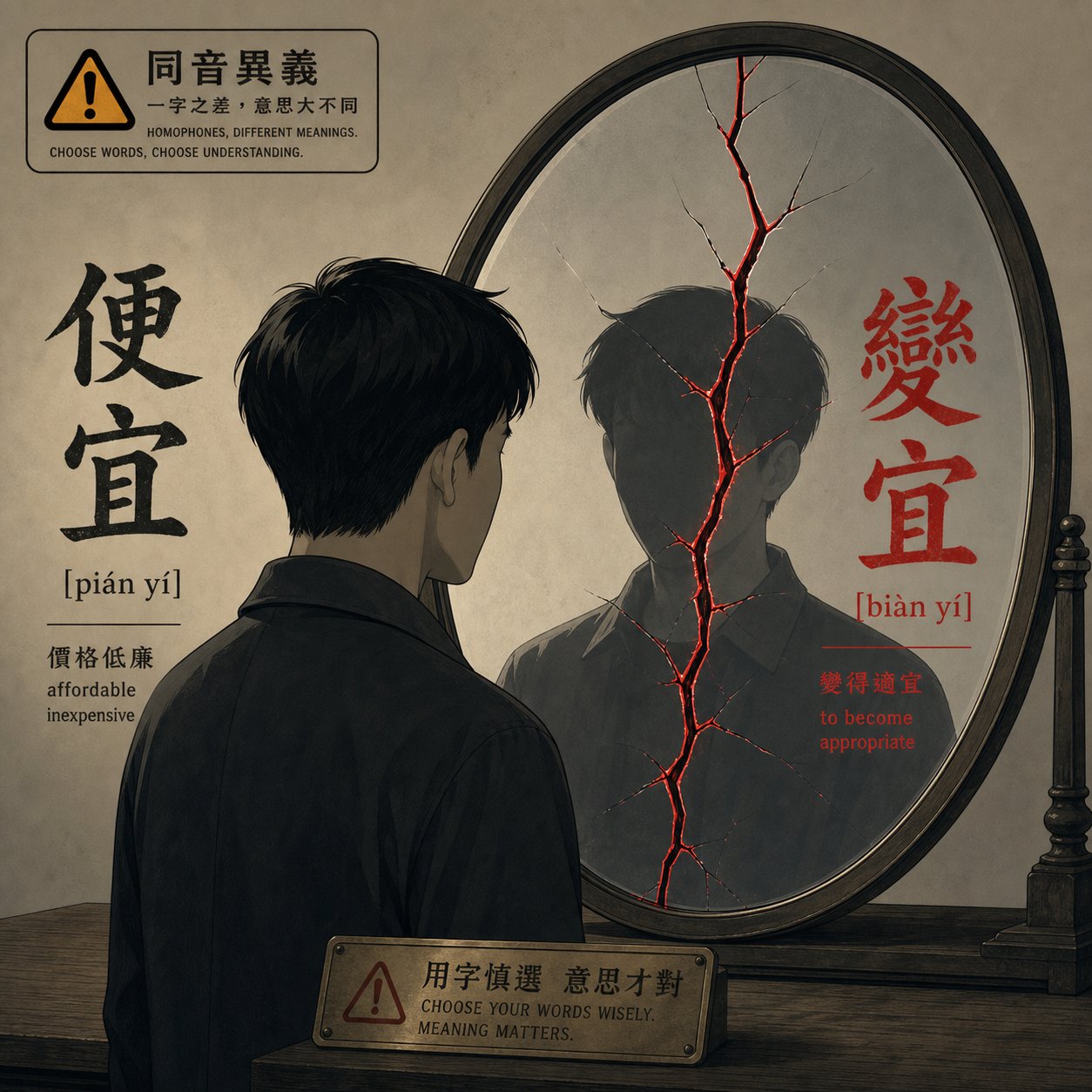
Chinese is famously rich in homophones. As Chineasy's guide to Chinese homophones illustrates, a single tonal slip turns "mom" (妈, mā) into "horse" (马, mǎ), or "buy" (买, mǎi) into "sell" (卖, mài). In names, the danger is not individual characters but what the full combination sounds like when spoken aloud.
A name might use characters with individually lovely meanings, yet the combined pronunciation matches an embarrassing or negative word. Consider these common pitfalls:
- 杨伟 (Yáng Wěi): The surname Yang paired with the character for "great." Sounds identical to 阳痿 (yángwěi), meaning "impotence." This is one of the most frequently cited naming disasters in Chinese.
- 史珍香 (Shǐ Zhēnxiāng): Characters meaning "history," "precious," and "fragrant." Spoken aloud, it sounds like 是真香 (shì zhēn xiāng), which can be interpreted as "it really smells" in certain dialects, or worse, 屎真香 (shǐ zhēn xiāng), "excrement smells good."
- 范统 (Fàn Tǒng): Sounds like 饭桶 (fàntǒng), meaning "rice bucket," a colloquial insult for someone useless.
- 秦寿生 (Qín Shòushēng): Sounds uncomfortably close to 禽兽生 (qínshòu shēng), meaning "born a beast."
- 朱逸群 (Zhū Yìqún): Sounds like 猪一群 (zhū yì qún), meaning "a herd of pigs."
These examples share a pattern: the characters in isolation are perfectly respectable, even elegant. The problem only surfaces when you say the full name at conversational speed and your brain parses the sound stream into different word boundaries than the characters intend. Native speakers catch these instantly. Non-native speakers, and even automated tools, often miss them entirely.
This is why testing a name by speaking it aloud, quickly and in different sentence contexts, is non-negotiable. If you are wondering how do i write my name in chinese, the written characters might look fine on paper while the spoken version triggers suppressed laughter in every meeting room.
Official Documentation Problems from Pinyin Ambiguity
Beyond social embarrassment, pinyin ambiguity creates serious administrative headaches. On passports, bank accounts, university transcripts, and visa applications, Chinese names appear in pinyin without tone marks and without characters. This means dozens or even hundreds of people with completely different character-based names can share identical pinyin spellings.
As ASAP Translate's research on cross-document name discrepancies explains, transliteration is not translation. When a name moves from characters to romanized form, critical identity information disappears. The pinyin "Zhang Wei" could represent 张伟, 张威, 张维, 章伟, or dozens of other character combinations. In China alone, an estimated 290,000 people share the name 张伟. On any system that only stores the pinyin, these are all the same person.
This creates real problems when you need to:
- Open international bank accounts: Pinyin-only records cannot distinguish between customers who share romanized spellings but have different character names.
- Apply for visas or passports: Immigration systems that strip tone marks and characters reduce your unique identity to a string of letters shared by thousands of others.
- Transfer academic credentials: A transcript showing "Li Na" gives no indication whether the student is 李娜, 李纳, 黎娜, or 丽娜.
- Conduct background checks: Name-based searches in pinyin-only databases return massive false-positive pools, potentially flagging you for someone else's records.
The practical lesson for anyone choosing a name: consider how distinctive your pinyin spelling will be in romanized-only contexts. A name like "Zhang Wei" is the Chinese equivalent of "John Smith." If your name will appear frequently in international systems, choosing a less common pinyin combination reduces the chance of identity confusion downstream. This does not mean picking obscure characters for the sake of uniqueness, but it does mean checking whether your chosen combination's pinyin form is shared by millions of others.
These documentation challenges also explain why different romanization systems compound the confusion. The same characters can appear as entirely different Latin spellings depending on whether Hanyu Pinyin, Wade-Giles, or another standard was applied, turning one person's name into what looks like multiple identities across their own paperwork.
Romanization Systems and Their Impact on Name Spelling
One person, one set of characters, and yet their name pinyin spelling can look completely different depending on which romanization standard was applied. A person named 张 is "Zhang" on a mainland Chinese passport but "Chang" on a Taiwanese one. Same character, same pronunciation, two entirely different Latin spellings. Multiply this across an entire name and you get documents that appear to belong to different people entirely.
This is not a minor formatting quirk. It is a systemic issue that affects anyone whose Chinese name crosses regional or institutional boundaries. Understanding why these differences exist, and how they map onto each other, is essential for anyone dealing with chinese name translation to english in professional, legal, or academic contexts.
Hanyu Pinyin Versus Wade-Giles Spelling Differences
Hanyu Pinyin, developed in mainland China during the 1950s and adopted as the international ISO standard, is what most people today mean when they say "pinyin." Wade-Giles, created by British diplomats in the 19th century, dominated English-language texts about China for over a hundred years and remains embedded in Taiwanese official documents, older library catalogs, and historical scholarship.
The two systems represent identical sounds with strikingly different letter combinations. As the Library of Congress Pinyin Conversion Project explains, you can often distinguish the systems at a glance: Wade-Giles syllables begin with letters like HS and TS, while Pinyin syllables begin with B, D, G, Q, X, and Z. Wade-Giles uses apostrophes (or ayns) to mark aspiration, so "ch'" and "ch" represent two different sounds. Pinyin handles this distinction with entirely different letters: "ch" versus "zh."
For personal names, the differences are dramatic. Wade-Giles separates given-name syllables with a hyphen (Wang T'ieh-jen), while Pinyin joins them together (Wang Tieren). A name like 毛泽东 appears as "Mao Tse-tung" in Wade-Giles but "Mao Zedong" in Pinyin. If you only know one system, the other version looks like a different person's name.
Tongyong Pinyin, briefly adopted in Taiwan in the early 2000s before being replaced by Hanyu Pinyin for most public signage, added yet another layer. It agreed with Hanyu Pinyin on many syllables but diverged on others: "ci" became "ci" in both, but "zhi" became "jhih" in Tongyong. The Yale system, common in older American textbooks, introduced its own conventions: "shi" became "shr," and tones were marked with diacritics above vowels rather than with numbers or superscripts.
The result? A single person's name can appear in four or more distinct spellings across their lifetime of documents, depending on where and when each document was issued.
How Regional Standards Affect Name Recognition
When you name translate chinese characters into Latin letters, the output depends entirely on which system the issuing authority uses. Here is how several common name characters appear across the major romanization systems:
| Character | Hanyu Pinyin | Wade-Giles | Tongyong Pinyin | Yale |
|---|---|---|---|---|
| 张 (surname) | Zhang | Chang | Jhang | Jang |
| 陈 (surname) | Chen | Ch'en | Chen | Chen |
| 许 (surname) | Xu | Hsü | Syu | Syu |
| 周 (surname) | Zhou | Chou | Jhou | Jou |
| 志 (ambition) | Zhi | Chih | Jhih | Jr |
| 学 (learning) | Xue | Hsüeh | Syue | Sywe |
| 强 (strong) | Qiang | Ch'iang | Ciang | Chyang |
| 静 (quiet) | Jing | Ching | Jing | Jing |
You'll notice that some characters, like 陈 (Chen), look nearly identical across systems. Others, like 许 (Xu/Hsü/Syu), are almost unrecognizable from one column to the next. This inconsistency is not random. It reflects fundamentally different philosophies about how to represent Mandarin sounds for English-reading audiences.
The practical consequences hit hardest for Taiwanese citizens and overseas Chinese communities. A Taiwanese person whose passport uses Wade-Giles may find that international databases, academic publications, and business contacts all record their name differently than what appears on their government ID. Someone named 许志强 could appear as "Hsu Chih-ch'iang" on their passport, "Xu Zhiqiang" in a mainland Chinese academic journal citing their work, and "Syu Jhih-ciang" on older Taiwanese municipal records.
For anyone trying to chinese translate name characters into a consistent English spelling, the first question is always: which system does the person or institution use? Mainland Chinese names almost universally follow Hanyu Pinyin. Taiwanese names vary by generation and personal preference, with many people retaining Wade-Giles spellings on their passports even after Taiwan officially adopted Hanyu Pinyin for street signs. Older overseas Chinese communities in Southeast Asia and the West often use romanizations based on Cantonese, Hokkien, or other dialect pronunciations that do not correspond to any Mandarin system at all.
This means a chinese name translation to english is never purely mechanical. You need to know the person's regional background, the era their documents were issued, and sometimes their personal preference. Two people with identical characters may legitimately spell their names differently in English, and one person may have multiple "correct" spellings across different documents. The romanization system is not just a technical detail. It is part of the name's identity in international contexts, and getting it wrong can mean failed background checks, rejected visa applications, or professional correspondence that never reaches its intended recipient.
These cross-system inconsistencies also carry a generational dimension. The romanization on your documents often reflects not just where you are from, but when your name was first registered in an international system, a factor that connects directly to how naming trends have shifted across decades in Chinese-speaking societies.

Generational Shifts in Popular Name Combinations
Romanization systems freeze a name in one moment's standard, but the characters themselves tell a different story of time. The pinyin-character combinations parents choose are never random. They reflect the political climate, cultural aspirations, and collective psychology of an entire generation. A name that felt bold and patriotic in 1965 sounds dated in 2025. A name that feels poetic and literary today would have seemed impractical or even politically suspect fifty years ago.
Tracking these shifts reveals something fascinating: Chinese naming is not just personal expression. It is a cultural seismograph, registering societal tremors through the characters parents select for their children.
How Historical Eras Shaped Popular Name Characters
Each political era in modern China left a distinct fingerprint on naming conventions. During the revolutionary period of the 1950s through 1970s, names functioned almost as political declarations. Characters like 红 (hóng, red), 军 (jūn, army), 建 (jiàn, build), and 国 (guó, nation) dominated. A Global Times report on Chinese naming conventions profiles a 64-year-old woman named Feng Aimin (爱民, "love the people"), whose siblings are Feng Jianguo (建国, "build the country") and Feng Yongjun (永军, "support the army"). These were not unusual names. They were the norm. Parents channeled collective ideology directly into their children's identities.
The post-1980 generation, born during China's reform and opening-up era, shifted toward characters expressing personal ambition and strength. Characters like 伟 (wěi, great), 强 (qiáng, powerful), and 杰 (jié, excellence) surged in popularity. These names often consisted of a single given-name character, reflecting a more streamlined, forward-looking sensibility. If revolutionary-era names said "I belong to the nation," reform-era names said "I will achieve something great."
The 1990s brought another pivot. Influenced by Hong Kong and Taiwanese pop culture, parents began favoring romanticized, softer-sounding characters. 梦 (mèng, dream), 雨 (yǔ, rain), and 涵 (hán, cultivation) appeared frequently. Names grew more lyrical, less declarative. The single-character given name gave way to two-character combinations that allowed for more nuanced expression.
Research on historical naming patterns confirms this trajectory quantitatively. A study published in Frontiers in Psychology found that the average frequency of Chinese characters used in baby names decreased steadily between 1950 and 2009, meaning parents increasingly chose less common characters over time. The drive toward uniqueness accelerated with each decade, particularly after the one-child policy concentrated all parental aspirations onto a single name.
Contemporary Trends in Pinyin Name Selection
Today's naming landscape looks dramatically different from any previous era. Young parents, particularly the post-1990 generation, are reaching back into classical Chinese literature for inspiration. Names drawn from ancient texts have become a defining trend. Consider these examples from recent provincial newborn name lists:
- 砚舟 (Yànzhōu): Rooted in a poem by Northern Song Dynasty poet Zeng Gong, where an inkstone is metaphorically compared to a boat carrying thought through brush and ink.
- 锦程 (Jǐnchéng): Derived from the idiom "前程似锦" (qiánchéng sì jǐn), meaning "the future is like brocade," symbolizing splendid prospects.
- 驰柔 (Chíróu): Drawn from Chapter 43 of the Tao Te Ching, evoking the quiet power of softness overcoming hardness.
- 扶苏 (Fúsū): Appearing in China's oldest poem anthology, the Book of Songs, and also the name of Emperor Qinshihuang's eldest son.
Cultural sociologist Xu Shumin describes this trend not as mere pursuit of uniqueness but as a sign that "young parents are reclaiming traditional Chinese culture as a living aesthetic in everyday life." Just as wearing Hanfu expresses cultural identity, naming a child from classical texts is another form of cultural self-expression. Anyone exploring an ancient chinese name generator or a chinese mythology name generator is tapping into this same impulse: the desire to connect modern identity with historical depth.
Yet this literary revival creates a practical tension. Many classically inspired characters are rare enough that they cause problems in digital systems. Chinese computer input methods, government databases, and banking software all operate from standardized character sets. The Chinese government maintains an approved character list for names, and characters falling outside this list may be rejected during birth registration. A beautifully obscure character from a Tang Dynasty poem might be impossible to type on a standard keyboard or render in a hospital's registration system.
This constraint shapes naming decisions in ways previous generations never faced. Parents today must balance cultural aspiration against digital practicality. A chinese surname generator or chinese last names generator draws from well-established character pools precisely because surnames are fixed and universally recognized. But given names occupy a space where creativity pushes against system limitations. The most successful contemporary names thread this needle: characters distinctive enough to feel special, common enough to be typed, displayed, and processed without friction.
The generational pattern is clear. Each era's naming preferences reflect what society values most at that moment: collective loyalty, personal ambition, romantic beauty, or cultural heritage. The pinyin stays the same across decades, but the characters parents attach to those syllables tell the story of a changing nation. And whether you are drawing from revolutionary history or classical poetry, the final step remains the same: systematically verifying that your chosen combination works across every dimension, from tonal flow to digital compatibility to cultural resonance.
Practical Steps to Evaluate Any Name Combination
Every principle covered so far, tonal harmony, gender signals, homophone traps, romanization consistency, generational context, converges on a single practical question: does this specific combination actually work? Whether you are asking "what would my chinese name be" for the first time or refining a name you have used for years, a systematic evaluation catches problems that intuition alone misses.
A Systematic Checklist for Evaluating Name Combinations
Use this checklist in priority order. Earlier items are harder to fix later, so address them first:
- Verify tonal flow across the full name. Say the surname plus given name aloud at natural conversational speed. Listen for pitch collisions (consecutive 4th tones) or monotone stretches. Apply third-tone sandhi mentally: if two 3rd tones sit adjacent, the first shifts to 2nd tone in speech.
- Check for homophone conflicts. Speak the full name quickly and listen for unintended words. Try different word-boundary parsings. Does "Yáng Wěi" accidentally sound like a medical condition? Does the combination echo a common insult or slang term?
- Confirm gender alignment matches your intent. If you want a gender-neutral name, verify the characters do not carry strong traditional associations in one direction. If you want clearly feminine or masculine signals, ensure the characters deliver that without ambiguity.
- Ensure characters appear on the standard approved list. For names that will be registered in mainland China, check against the government's approved character set. For practical use anywhere, confirm the characters render correctly in standard digital fonts and can be typed with common input methods.
- Test syllable boundaries in pinyin-only form. Write the name in pinyin without tone marks or apostrophes, the way it will appear on passports and airline tickets. Does it create an unintended reading? Is the pinyin spelling shared by millions of others?
- Evaluate meaning coherence. Do the characters work together as a unit, or do they feel like random pairings? A strong name reads as a phrase or image, not a list of unrelated concepts.
- Speak it in a full sentence. Insert the name into a natural introduction: "你好,我叫___。" If it flows without awkward pauses or tonal stumbles, it passes the final test.
Testing Your Chosen Name with Native Speakers
If you are trying to find your chinese name or figure out how to get a chinese name that genuinely fits, automated tools offer a reasonable starting point. Name generators can surface character options you might never have considered, especially if your knowledge of Chinese characters is limited. They handle the mechanical work of mapping pinyin syllables to character pools efficiently.
But generators cannot replicate cultural intuition. They miss connotations that shift by region, associations tied to pop culture or historical figures, and the subtle "feel" that makes one combination elegant and another slightly off. As Hacking Chinese emphasizes, checking your name with several native speakers is essential because "a good Chinese name has to take into account connotations and emotions, something which is very, very hard to grasp for us foreigners."
The most reliable verification process combines multiple resources. Use a comprehensive dictionary to confirm character meanings and check for alternate readings. Search the name on Chinese social media to see if real people carry it, which signals naturalness. Ask at least two or three native speakers from different regions for their honest reaction, since associations vary between northern and southern China, mainland and Taiwan. If someone winces or laughs, ask why. That feedback is more valuable than any algorithm.
Wondering how to find my chinese name without any starting point? Begin with what matters to you: a quality you admire, a sound from your birth name you want to preserve, or a character you find visually beautiful. Use that as your anchor, then build outward through the checklist above. The best pinyin name character combinations are not discovered in a single flash of inspiration. They emerge through iteration, testing each candidate against tonal flow, meaning, cultural resonance, and real-world usability until one combination clicks across every dimension.
Frequently Asked Questions About Pinyin Name Character Combinations
1. How many Chinese characters can a single pinyin syllable represent?
A single pinyin syllable can map to dozens or even over a hundred different Chinese characters. For example, the syllable 'li' corresponds to characters like 丽 (beautiful), 力 (strength), 立 (independent), 莉 (jasmine), and 利 (profit). When you factor in all four tones, the total pool expands further since each tone unlocks a separate set of characters. This is why pinyin alone never identifies a Chinese name. The characters behind the romanized spelling carry the actual meaning and identity.
2. What tone combinations sound best in a two-character Chinese given name?
Analysis of over 4,300 Chinese names shows that the most popular tone pairing is 4th tone followed by 2nd tone (falling then rising), which creates dynamic contrast. Other favored combinations include 1st+2nd (bright and uplifting) and 3rd+2nd (wave-like contour). Consecutive same-tone pairings, especially two 4th tones in a row, rank lowest because they sound harsh or monotone. The key principle is tonal contrast: names that move between different pitch levels feel more musical and natural to native speakers.
3. How do I convert my English name into Chinese characters?
Start by breaking your name into Mandarin-compatible syllables, since Chinese does not allow consonant clusters or syllables ending in most consonants. Map each sound to the closest pinyin syllable, then browse characters across all four tones for appealing meanings. Prioritize balancing phonetic similarity with positive character meanings rather than forcing exact sound replication. For instance, 'Anna' becomes 安娜 (peaceful and graceful), which works because it sounds close to the original while carrying beautiful meaning. Always test your chosen combination with native speakers to catch unintended connotations.
4. What Chinese name combinations should I avoid?
Avoid combinations where the full name spoken aloud sounds like an embarrassing word or phrase. Classic examples include 杨伟 (Yang Wei), which sounds identical to the word for impotence, and 范统 (Fan Tong), which echoes a slang term for a useless person. Also watch for syllable boundary traps where two characters without an apostrophe create an unintended single-syllable reading. Additionally, extremely common pinyin spellings like 'Zhang Wei' shared by hundreds of thousands of people can cause identity confusion in international documentation systems.
5. Why does the same Chinese name appear with different English spellings?
Different romanization systems produce different Latin spellings for identical characters. Hanyu Pinyin (mainland China standard) writes 张 as 'Zhang,' while Wade-Giles (historically used in Taiwan) writes it as 'Chang.' Tongyong Pinyin renders it as 'Jhang.' These systems reflect different eras and regional standards. A person's spelling depends on where and when their documents were issued. This means one individual may have multiple legitimate English spellings across passports, academic records, and bank accounts, creating real challenges for cross-border identification.