How Chinese Names Are Structured Differently From Western Names
Imagine meeting someone named "Li Wei" at a conference. You smile, extend your hand, and say, "Nice to meet you, Li." You just called them by their family name, the equivalent of greeting someone named John Smith as "Hey, Smith." This mix-up happens constantly because the chinese name format flips the order English speakers expect.
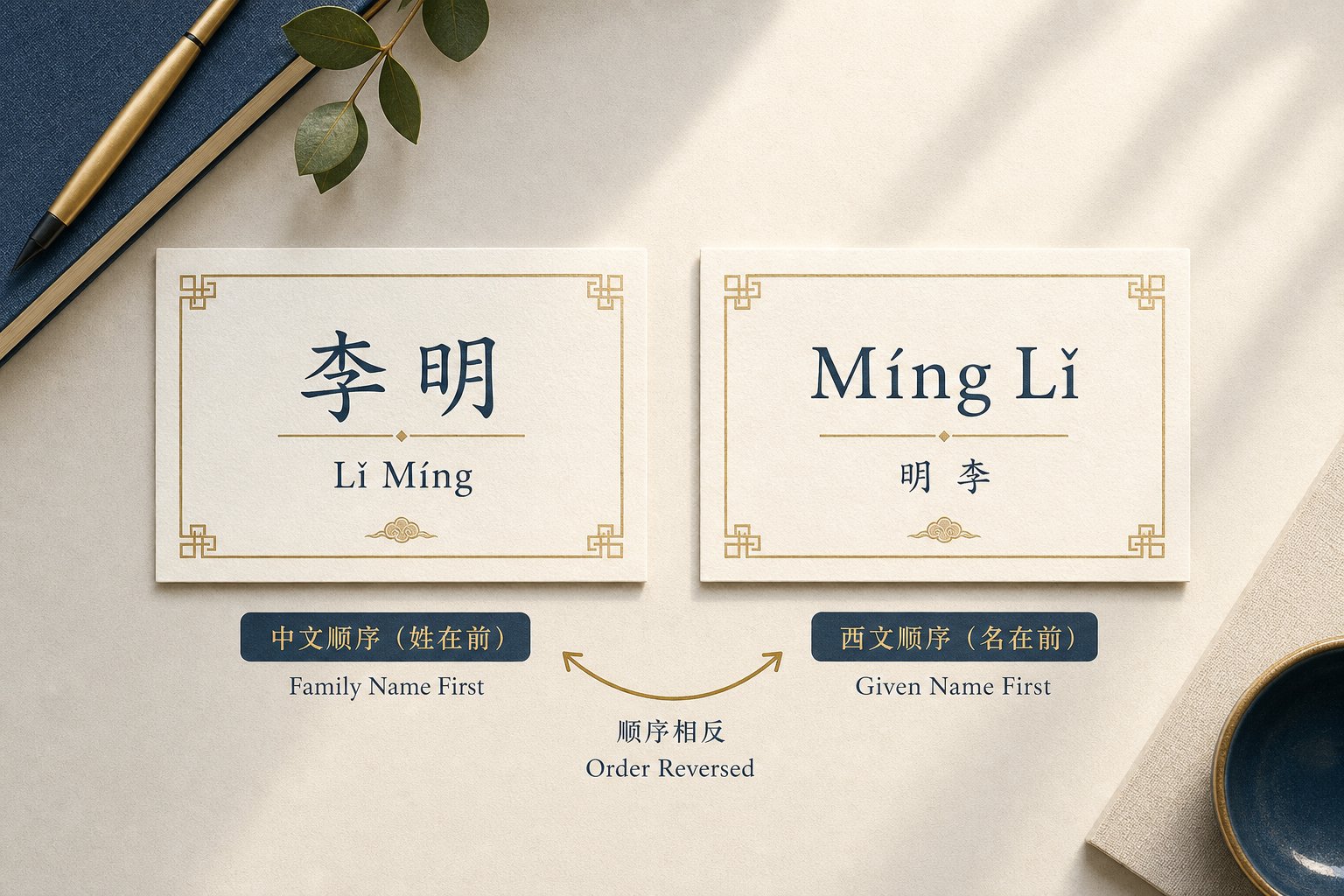
In English, you write your given name first and your surname last: John Smith. In Chinese, the structure is reversed. The surname leads, followed by the given name. So a person whose family name is Li and whose personal name is Wei is written as Li Wei in Chinese order, not Wei Li.
In Chinese, the family name always comes first, followed by the given name. This is the opposite of Western naming conventions.
Why Chinese Name Order Confuses English Speakers
The confusion runs deeper than simple word order. English speakers are trained to assume the first word in any name is the personal name. When you see "Zhang Xiaoming" on a document, your instinct says "Zhang" is the first name. It isn't. Zhang is the surname, shared by millions of people across China.
This matters in everyday situations: addressing emails, filling out forms, making introductions, or citing authors in research papers. Getting it wrong can feel disrespectful or create real administrative headaches.
The Basic Surname-Given Name Structure
Here's how chinese names are formatted in practice. Take the name Wu Gongfu. As Columbia University's Asia for Educators explains, Wu is the family name (like Smith or Jones), while Gongfu is the given name. In Chinese culture, the family holds primary importance in a person's identity, so the family name naturally takes the leading position.
Think of it as a zoom-out perspective: the broader group (family) comes before the individual. When you understand this chinese format for first and last name, you'll never accidentally call someone by their surname thinking it's their personal name again.
A quick before-and-after comparison makes this crystal clear:
- Chinese order: Li Wei (Li = surname, Wei = given name)
- Western order: Wei Li (Wei = given name, Li = surname)
Same person, same name, completely different reading depending on which convention you follow. The challenge gets more complex when you consider that Chinese names vary in length, spelling systems differ by region, and many people adapt their names for English-speaking environments.
Breaking Down the Parts of a Chinese Name
So you know the surname comes first. But how do you tell which part is the surname and which is the given name when you're staring at an unfamiliar name on a business card? The answer lies in understanding the format of chinese names at a structural level: how many characters each part typically contains and which words repeat across millions of people.
Identifying the Surname in a Chinese Name
A Chinese name is compact. The entire thing usually consists of just two or three characters total. The surname is almost always a single character, which translates to a single syllable in English: Wang, Li, Chen, Zhao. Occasionally you'll encounter a two-character compound surname like Ouyang or Sima, but these are rare.
Here's the practical trick: roughly 100 to 200 surnames cover over 80% of China's population. That means if you can recognize the most common ones, you'll correctly identify the surname in most names you encounter. The top four alone — Wang, Li, Zhang, and Liu — account for nearly 300 million people.
These are the surnames you'll see most often in English-language contexts:
- Wang (王) — the most common, meaning "king"
- Li (李) — meaning "plum"
- Zhang (张) — meaning "stretch" or "expand"
- Liu (刘) — associated with martial strength
- Chen (陈) — meaning "morning" or "ancient"
- Yang (杨) — meaning "willow"
- Huang (黄) — meaning "yellow"
- Zhao (赵) — meaning "shine"
- Zhou (周) — meaning "circumference"
- Wu (吴) — referencing the ancient State of Wu
When you see any of these as the first word in a name, you can be confident it's the family name.
Given Names and Their One or Two Character Structure
Everything after the surname is the given name. Understanding how chinese names are formatted first and last becomes intuitive once you grasp this: the given name is either one character or two characters, making the full name either two or three syllables total.
A two-character name like "Li Wei" has a one-character surname (Li) and a one-character given name (Wei). A three-character name like "Zhang Xiaoming" has a one-character surname (Zhang) and a two-character given name (Xiaoming). There's no middle name in the Western sense. When the given name has two characters, they function together as a single unit.
The contrast between surnames and given names is striking. While the pool of surnames is small and shared by millions, given names are virtually unlimited. Parents draw from thousands of characters to craft combinations that carry specific meanings — strength, beauty, wisdom, or references to classical poetry. This is why you'll meet dozens of people surnamed Wang but rarely two with the identical full name.
This chinese names format — a narrow set of shared surnames paired with highly individualized given names — is what makes the system both predictable and endlessly varied. Recognizing the common surnames gives you an immediate anchor point, and everything that follows is the personal, unique part of someone's identity.
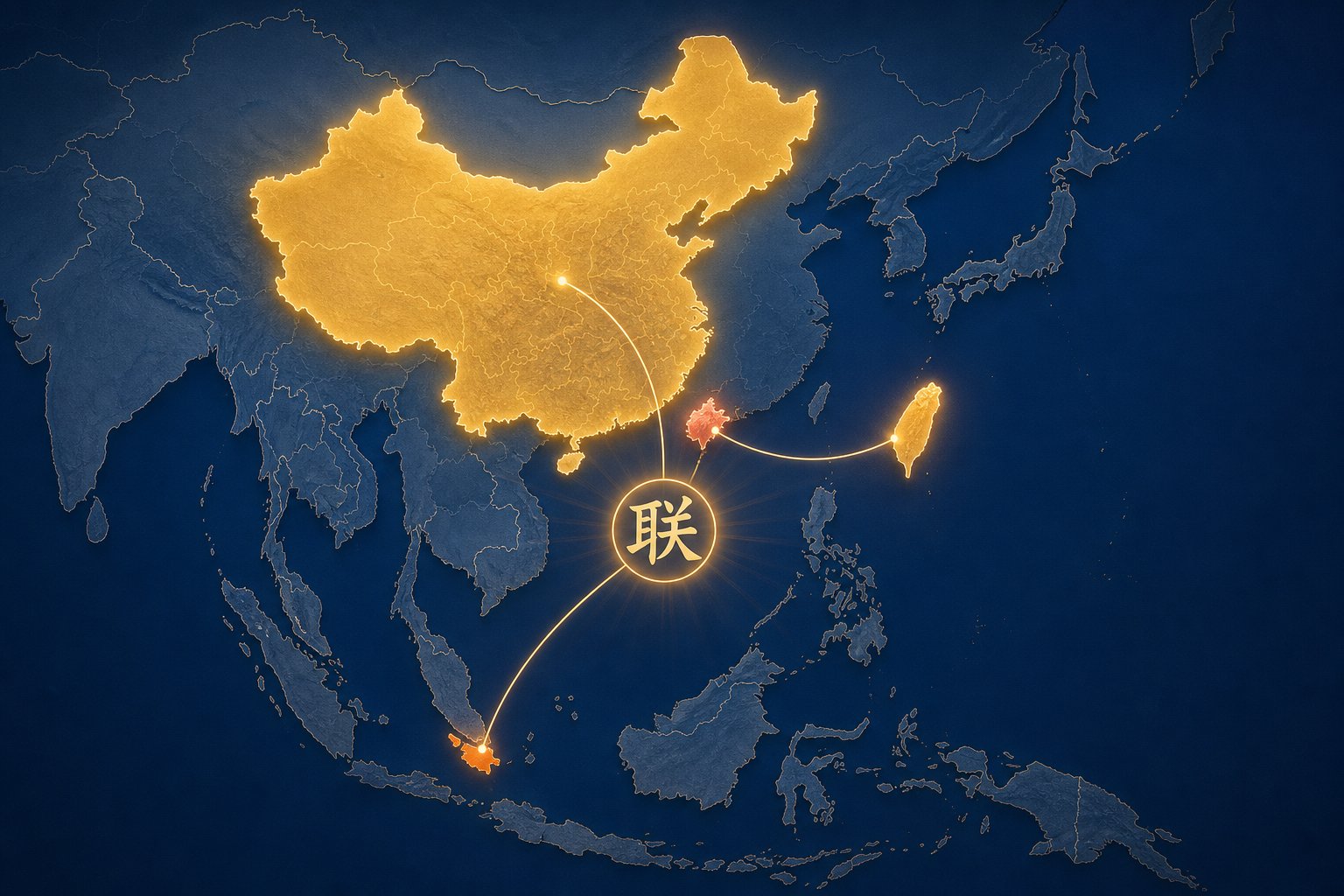
The real complexity emerges when these names cross borders. The same Chinese character can be spelled completely differently in English depending on whether the person is from Beijing, Hong Kong, Taipei, or Singapore.
Regional Differences in Spelling Chinese Names in English
A person surnamed 陈 might spell it Chen, Chan, or Tan in English. Same character, same meaning, three completely different spellings. How is that possible? The answer lies in the fact that Chinese-speaking regions use different romanization systems, and each system reflects a different pronunciation or historical convention. Understanding the chinese letters name format across these regions is essential if you want to read Chinese names correctly in English.
Mainland China and Pinyin Romanization
Mainland China adopted Hanyu Pinyin as its official romanization system in 1958, and it became the international standard recognized by the United Nations in 1986. If you've encountered Chinese names spelled with familiar patterns like Zhang, Xu, or Qiu, you're reading Pinyin.
Pinyin transliterates Mandarin pronunciation into the Latin alphabet using a consistent set of rules. Every character maps to a specific syllable. The surname 王 is always Wang, 李 is always Li, and 周 is always Zhou. This consistency makes Mainland Chinese names relatively predictable once you learn the system.
A few Pinyin conventions trip up English speakers:
- Q is pronounced like "ch" — so Qian sounds like "chee-en"
- X is pronounced like "sh" — so Xu sounds like "shoo"
- Zh is a harder "j" sound — so Zhang sounds like "jahng"
- C is pronounced like "ts" — so Cai sounds like "tsai"
For anyone dealing with names from Mainland China, Pinyin is your default reference. Passports, academic publications, and official documents from the PRC all use this system.
Hong Kong Cantonese and Taiwan Wade-Giles Differences
Step outside Mainland China, and the rules change entirely. Hong Kong uses a Cantonese-based romanization system that reflects local pronunciation rather than Mandarin. The character 陈 is pronounced "chan" in Cantonese, so it becomes Chan instead of Chen. Similarly, 黄 becomes Wong (not Huang), and 周 becomes Chow (not Zhou).
Hong Kong's system isn't formally standardized the way Pinyin is. Spellings were historically influenced by British colonial-era conventions, and families often passed down specific romanizations across generations. You'll notice names like Leung, Ng, Tsang, and Lau that look nothing like their Pinyin equivalents.
Taiwan presents yet another variation. Many Taiwanese names use the Wade-Giles system, an older romanization developed in the 19th century. Under Wade-Giles, 张 becomes Chang (not Zhang), 谢 becomes Hsieh (not Xie), and 刘 becomes Liu (same spelling, different system). Taiwan has gradually shifted toward adopting Pinyin for some official purposes, but personal names on passports still frequently use Wade-Giles or other legacy spellings.
Southeast Asian Chinese Name Spelling Conventions
The singapore chinese name format adds another layer of complexity. Singapore and Malaysia are home to large Chinese populations whose ancestors emigrated from southern China's dialect-speaking regions. Their surnames were romanized based on dialect pronunciation — Hokkien, Teochew, Cantonese, or Hakka — rather than Mandarin.
Singapore's Chinese community is linguistically diverse. Hokkien speakers make up roughly 39% of the Chinese population, followed by Teochew at about 19%, and Cantonese at around 14%. Each dialect group romanized surnames according to its own pronunciation. The result is that the singapore name format of chinese names varies dramatically depending on ancestral dialect.
Consider the surname 林. A Hokkien speaker spells it Lim. A Cantonese speaker writes Lam. In Pinyin, it's Lin. All three refer to the same character and the same family lineage, just filtered through different spoken languages.
The table below shows how a single Chinese surname can appear in English across different regions:
| Chinese Character | Pinyin (Mainland China) | Cantonese (Hong Kong) | Wade-Giles (Taiwan) | Hokkien/Teochew (Singapore/Malaysia) |
|---|---|---|---|---|
| 陈 | Chen | Chan | Ch'en | Tan |
| 林 | Lin | Lam | Lin | Lim |
| 黄 | Huang | Wong | Huang | Ng / Ooi |
| 王 | Wang | Wong | Wang | Ong / Heng |
| 李 | Li | Lee | Li | Lee |
| 吴 | Wu | Ng | Wu | Goh |
| 张 | Zhang | Cheung | Chang | Teo / Chong |
You'll notice that Wong in Hong Kong could be either 黄 or 王, while Ng could be 黄 (Cantonese) or 吴 (also Cantonese). Context and the person's regional background are your only reliable guides.
This regional variation means you cannot assume a single "correct" English spelling for any Chinese name. A person named Tan from Singapore and a person named Chen from Beijing may share the exact same surname character. The spelling simply reflects where their family romanized the name and which dialect shaped the pronunciation. When you encounter an unfamiliar spelling, the question isn't whether it's right or wrong — it's which system produced it.
These spelling differences become especially important when names appear on official documents, where a single inconsistency between systems can create real administrative problems.
Chinese Names on Passports and Official Documents
Spelling variations are one thing. But what happens when a Chinese name hits the rigid fields of a passport, visa application, or university enrollment form? This is where the chinese passport name format creates real confusion, because official documents strip away context clues and force names into boxes that weren't designed for them.
Chinese Passport Name Format Explained
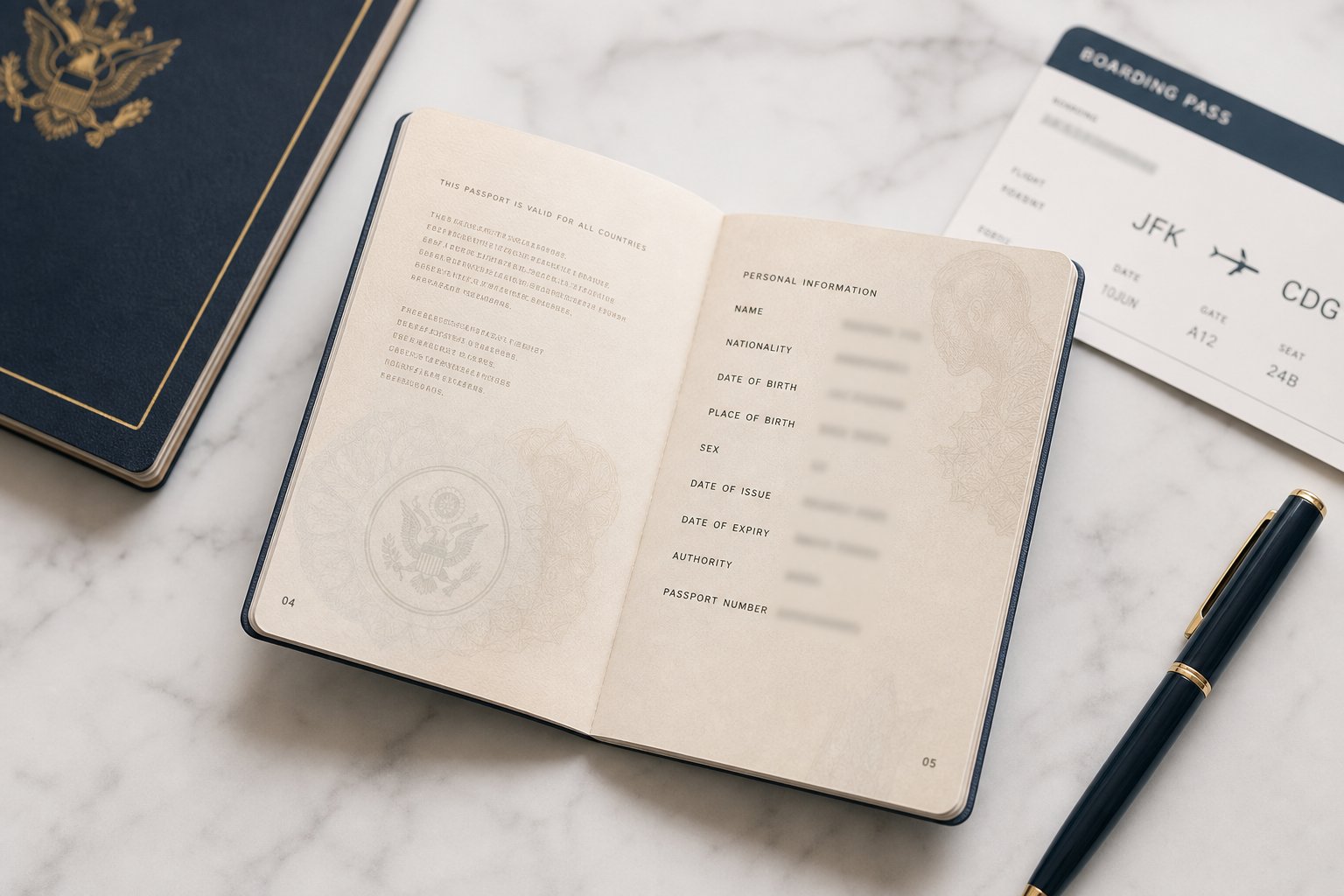
A Chinese passport splits the holder's name into two fields: surname and given name. The surname appears in one line, and the given name appears in another — written in Pinyin, all uppercase, with no spaces or hyphens between characters. A person named 王春浩 (Wang Chunhao) would see their passport printed as:
- Surname: WANG
- Given name: CHUNHAO
Notice that the two-character given name "Chun Hao" is merged into a single block: CHUNHAO. No space, no hyphen. This is standard practice on all PRC passports and follows China's official Pinyin orthography rules.
The problem surfaces when this name needs to fit into a Western system that expects a first name, middle name, and last name. Which field does CHUNHAO go into? Is it a first name? Does the lack of a space mean there's no middle name? Airlines, immigration systems, and university registrars all handle this differently, and inconsistencies between documents can trigger identity verification issues.
Airline booking systems illustrate this perfectly. China Airlines' traveler name guidelines instruct passengers to enter their given name exactly as it appears on the passport, without spaces or punctuation. A name like CHUN-HAO on a Taiwanese passport becomes CHUNHAO in the booking system. Any mismatch between the ticket and the travel document can cause boarding problems.
Formatting Chinese Names on Resumes and Academic Papers
Outside of travel documents, the first name middle name last name format chinese speakers encounter on Western forms requires a judgment call. On a resume or CV submitted to an English-speaking employer, most people place their given name in the "First Name" field and their surname in the "Last Name" field, following Western order. Academic transcripts from Chinese universities, however, often print names in Chinese order — surname first — which can confuse admissions offices abroad.
The table below shows how the same person's name might appear across different document types:
| Document Type | Name Display | Order Used |
|---|---|---|
| Chinese Passport | Surname: WANG / Given Name: CHUNHAO | Chinese order (split fields) |
| Airline Ticket | WANG/CHUNHAO | Surname first, no spaces |
| U.S. Visa Application | First Name: CHUNHAO / Last Name: WANG | Western order |
| English Resume/CV | Chunhao Wang | Western order |
| Chinese University Transcript | Wang Chunhao | Chinese order |
| Academic Journal Citation | Wang, C. | Inverted Western style |
You'll notice the same person appears as WANG CHUNHAO, Chunhao Wang, or Wang, C. depending entirely on context. None of these are wrong — they're just different conventions applied to the same chinese name in english format. The key is consistency within a single document and awareness that the person reading your name may not know which part is which.
For anyone navigating these systems, a practical rule helps: match the format to the audience. Legal and travel documents should mirror your passport exactly. Professional documents aimed at Western readers typically work best in Western order. And when a form asks for "first name" and "last name," treat those as "given name" and "family name" respectively, regardless of which word comes first in your native language.
The formatting challenge doesn't end with field order, though. Multi-character given names raise a separate question that trips up even experienced writers: should you hyphenate, combine, or separate the syllables?
Hyphenation and Spacing Rules for Chinese Given Names
You've seen CHUNHAO on a passport and Chun-Hao on a Taiwanese business card. Same name, different punctuation. So which one is correct? The answer depends on which system you're following, and understanding the chinese given name hyphen rules saves you from inconsistency in everything from email signatures to published articles.
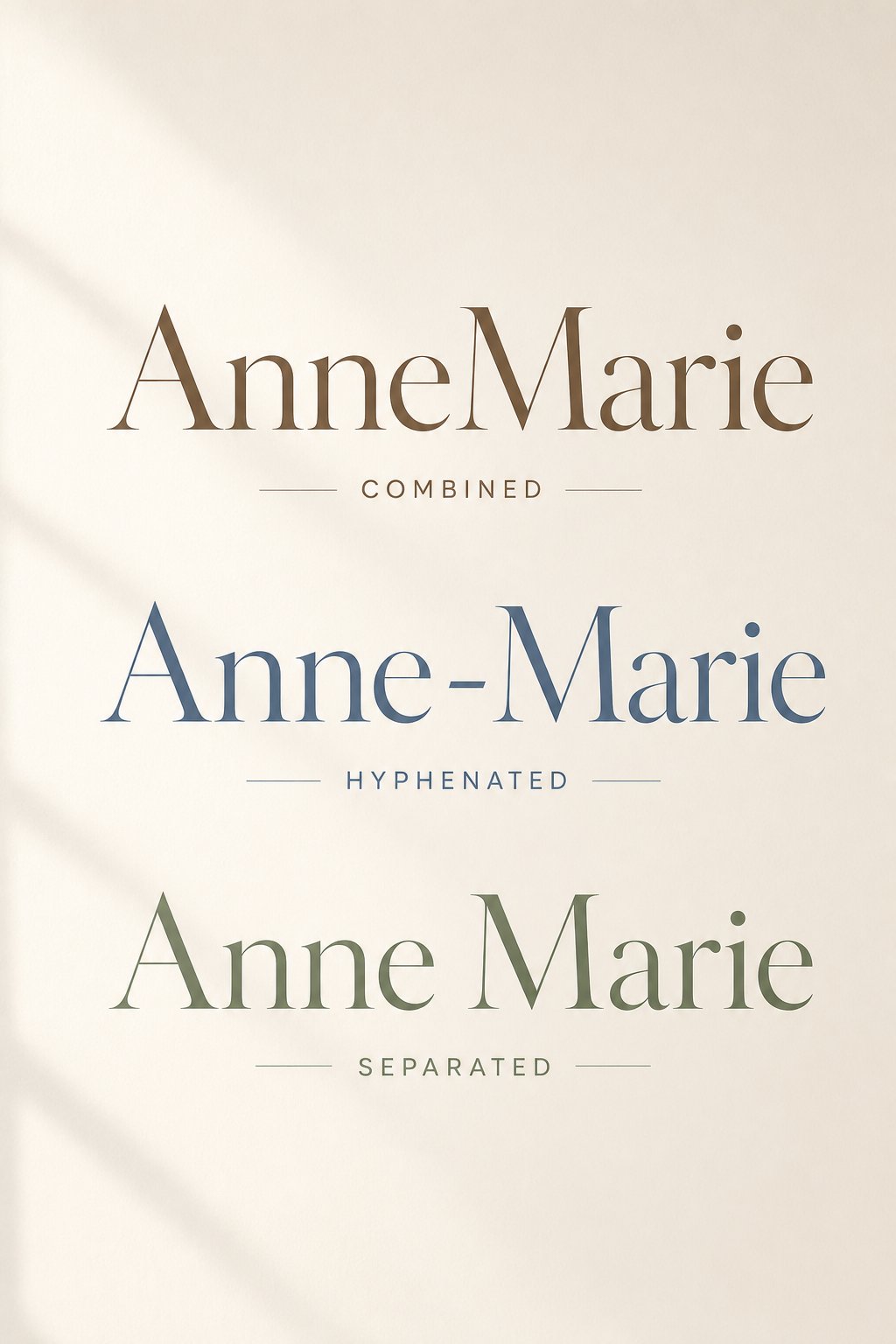
When a Chinese given name has two characters — which is the most common structure for modern names — there are three ways to write it in English. Each approach has its own logic, its own regional associations, and its own set of situations where it works best.
Hyphenated vs. Combined Given Names
Here are the three formatting options you'll encounter when writing chinese names in english format:
- Combined with no space or hyphen: Xiaoming, Chunhao, Jianguo — The two syllables merge into a single word. Only the first letter is capitalized.
- Hyphenated: Xiao-Ming, Chun-Hao, Jian-Guo — A hyphen separates the syllables while keeping them visually linked as one unit.
- Separated with a space: Xiao Ming, Chun Hao, Jian Guo — Each syllable stands alone as if it were a separate word.
The combined form (Xiaoming) is the official standard. China's Pinyin orthography rules are explicit on this point: two-syllable given names should be written as one word, with no space, no hyphen, and no intercaps. The given name is treated as a single entity that shouldn't be broken apart. Under this standard, writing "Zhōu Ēn-lái" is outdated — the correct form is "Zhou Enlai."
The hyphenated form (Xiao-Ming) is widespread in Taiwan and older publications. Consider Taiwan's former president Tsai Ing-Wen — her given name uses a hyphen between the two syllables. This convention makes the name easier to read for English speakers who might otherwise stumble over a long, unfamiliar string of letters. As one writer based in Taiwan noted, the hyphenated form is simply easier to parse visually, even if it's not technically standard Pinyin.
The separated form (Xiao Ming) creates the most problems. When you write "Zhang Xiao Ming" with spaces between every syllable, an English reader has no way to tell whether this is a three-part name or a one-character surname followed by a two-character given name. It introduces ambiguity that the other two formats avoid.
When to Use Spaces or Hyphens in Chinese Given Names
So how do you decide which chinese name hyphenation format to use? Context is your guide:
- Official documents and academic writing: Use the combined form (Xiaoming). This aligns with international Pinyin standards and matches how names appear on Mainland Chinese passports.
- Taiwanese names: Respect the hyphenated form if that's how the person writes their own name. Many Taiwanese individuals use hyphens on their passports and in professional life.
- Informal or reader-friendly contexts: Hyphenation can help English-speaking audiences parse unfamiliar names. A conference badge reading "Jian-Guo" is more approachable than "Jianguo" for someone who has never seen the name before.
- When the person has a stated preference: Always defer to how someone spells their own name. Personal choice overrides any system.
Capitalization adds one more wrinkle. Under standard Pinyin rules, only the first letter of the given name is capitalized: Xiaoming, not XiaoMing. If you hyphenate, both parts are typically capitalized: Xiao-Ming. The intercap style (XiaoMing) appears occasionally in informal contexts and tech platforms, but it's not endorsed by any official standard.
Here's a quick way to remember how to write chinese name in english format when the given name has two characters: if the person is from Mainland China, combine the syllables. If they're from Taiwan, check for a hyphen. And if you're unsure, the combined form is the safest default because it follows the internationally recognized standard.
Whichever format you choose, consistency matters more than perfection. Mixing styles within the same document — writing "Xiaoming" in one paragraph and "Xiao-Ming" in another — signals carelessness. Pick one approach and stick with it throughout.
These formatting decisions become especially visible in professional settings, where a name appears on business cards, email signatures, LinkedIn profiles, and conference materials simultaneously. Getting the format right is one thing; choosing how to present your full name to an English-speaking audience is another question entirely.
Professional Contexts and How to Present Chinese Names at Work
Knowing the correct hyphenation is useful, but the bigger question most Chinese professionals face is this: do I keep my name in Chinese order, flip it to Western order, or adopt an English first name altogether? The chinese name order in english workplace settings isn't governed by a single rule. It's a personal decision shaped by audience, industry, and individual comfort.
The spectrum looks like this. On one end, you keep the original Chinese order: Li Wei. In the middle, you reverse it to match Western convention: Wei Li. On the far end, you add an English given name and pair it with your Chinese surname: David Li. Each approach carries trade-offs in clarity, cultural identity, and ease of use for colleagues who may not be familiar with Chinese naming conventions.
Adapting Chinese Names for Business Cards and Email Signatures
Your business card is often the first tangible impression you leave. The chinese name format for business card design depends on your primary audience. If you work mostly with Chinese-speaking clients, placing Chinese characters prominently with Pinyin underneath preserves authenticity. If your contacts are primarily English-speaking, leading with a Western-order name or an English first name reduces confusion.
A professional layout might look like this:
- Chinese characters: 陈静
- Pinyin: Chen Jing
- English name: Lisa Chen
Notice that the English name follows Western order (given name first, surname last), while the Pinyin preserves Chinese order. This dual presentation lets recipients from either background immediately identify which part is the family name. The same logic applies to email signatures and LinkedIn profiles — consistency across platforms prevents the confusion that arises when "Chen Jing" appears in one place and "Jing Chen" appears in another.
For LinkedIn specifically, the platform's first-name and last-name fields assume Western order. Most Chinese professionals enter their given name in the first-name field and surname in the last-name field, then add their Chinese name or Pinyin in the "Other names" section. Conference badges typically display whatever name you register with, so choosing a format that's easy for other attendees to read and pronounce makes networking smoother.
Using English First Names With Chinese Surnames
Adopting an English first name is extremely common in international business. You'll meet countless professionals who go by "Kevin Zhang" or "Michelle Liu" in the workplace while using their full Chinese name in personal life. This isn't about erasing identity — it's a practical choice that removes pronunciation barriers and helps English-speaking colleagues remember your name more easily.
If you're deciding how to write chinese name professionally with an English first name, keep your Chinese surname intact. "David Li" works because the surname Li is genuine. Avoid choosing an English surname that doesn't match your Chinese one, as this creates disconnect between your identities across documents and platforms.
Organizational Best Practices for Recording Chinese Names
Organizations bear responsibility here too. HR systems, employee directories, and internal communications should accommodate preferred names alongside legal names. ADP's workplace guidance emphasizes that using a person's preferred name promotes engagement and belonging, while failing to do so risks disengagement. This applies directly to Chinese employees whose legal name may appear in Chinese order on official documents but who prefer Western order or an English name in daily interactions.
Here's a step-by-step guide for choosing how to present your name in professional English contexts:
- Identify your primary audience. Are most of your professional contacts English-speaking, Chinese-speaking, or mixed?
- Decide on name order. For predominantly English-speaking environments, Western order (given name first) reduces misidentification. For Chinese-speaking contexts, original order preserves convention.
- Consider adding an English first name. If your given name is difficult to pronounce for English speakers, an English name paired with your Chinese surname offers a practical bridge.
- Standardize across platforms. Use the same format on your business card, email signature, LinkedIn, and conference registrations. Inconsistency creates confusion about which name is "real."
- Communicate your preference clearly. When introducing yourself, state which name you'd like colleagues to use. A simple "Call me Kevin" or "My family name is Zhang" eliminates guesswork.
The chinese company name format follows similar principles — Chinese businesses operating internationally often adopt an English brand name while retaining the Chinese name for domestic markets. Individual professionals make the same kind of strategic choice every time they hand over a business card or send an introductory email.
Whatever format you settle on, the real challenge often isn't the human interaction. It's the software. Digital systems designed around Western naming assumptions can mangle Chinese names in ways that create problems far beyond a misprinted conference badge.
How Software and Digital Forms Handle Chinese Names
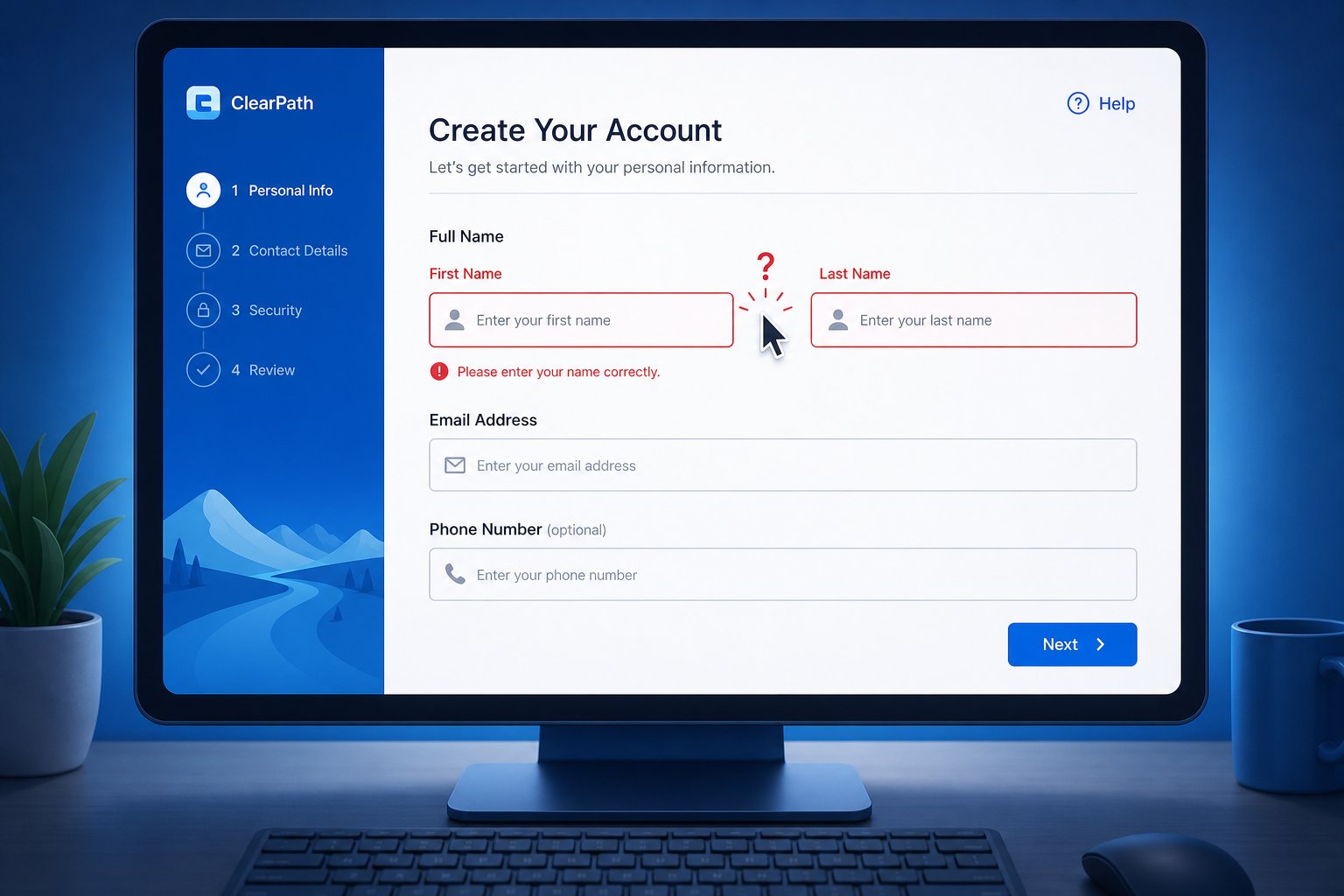
You've chosen the perfect format for your name. You've decided on order, hyphenation, and whether to use an English first name. Then you open a registration form online and find two mandatory fields: "First Name" and "Last Name." No guidance on which is which. No option for a single-character entry. No room for the full Pinyin string without it getting cut off. Welcome to the world of digital systems that were built with John Smith in mind.
The chinese name format in database systems is a persistent pain point because most software was designed around Western naming assumptions. These assumptions are baked into field labels, character limits, validation rules, and sorting algorithms. When a name doesn't fit the expected pattern, the system either rejects it, mangles it, or stores it in a way that makes retrieval unreliable.
Database and Form Field Challenges With Chinese Names
Imagine you're trying to figure out how to enter chinese name in online forms that split names into "First Name" and "Last Name." The form assumes the first name is your given name and the last name is your family name. But if you enter your name in Chinese order — surname first — the system records your family name as your "first name" and your given name as your "last name." Every future email, every auto-generated greeting, every sorted list gets it backwards.
This isn't a hypothetical edge case. The U.S. Web Design System (USWDS) explicitly acknowledges the problem in its name pattern guidance: "In Chinese, Korean, Hungarian, as well as other languages, the first name is the family name." Their recommendation is to use labels like "First or given name" and "Last or family name" rather than assuming position equals function.
Here are the most common problems Chinese names encounter in digital systems:
- Name order inversion: Forms labeled "First Name / Last Name" cause users to enter names in the wrong fields, or force them to reverse their natural name order without clear guidance.
- No-space given names get rejected: Validation rules that require a space in the "full name" field reject entries like "CHUNHAO" because the system assumes a full name must contain at least two words.
- Character limits truncate long Pinyin names: Some systems cap first-name fields at 10-15 characters. A given name like "Guangzhong" (10 characters) barely fits, and compound names with hyphens may exceed the limit entirely.
- Single-character names trigger errors: A surname like "Wu" or a given name like "Yi" may fail minimum-length validation set at three characters. The USWDS guidelines specifically warn: "Do not assume that a single character is an initial. Some names are one character long."
- Alphabetical sorting confusion: When a system sorts by "last name" field, a Chinese person who entered their surname in the "first name" field (following Chinese order) ends up filed under their given name instead.
- Middle name assumptions: Systems that split a two-character given name across "first name" and "middle name" fields fracture the name. "Xiao" ends up as the first name and "Ming" as the middle name, when they should be a single unit.
Research on data linkage confirms these aren't minor inconveniences. A 2025 study published in the International Journal of Population Data Science found that inconsistent name representations in databases lead directly to linkage errors — records belonging to the same person remain unlinked, or records from different people get falsely matched. The study noted that Chinese surname and forename are "often inverted due to different naming conventions" and that "forename characters are sometimes misplaced as middle names." In one historical example, a U.S. Census linkage matched only 3.6% of male Chinese migrants between 1880 and 1900, compared to 16.3% of English migrants — a gap driven largely by romanization inconsistencies and name-order confusion.
Fixing Name Order Issues in Software Systems
So what can developers and administrators actually do? The solutions range from simple label changes to fundamental database redesigns. Here's what works:
- Use culturally neutral field labels. Replace "First Name / Last Name" with "Given name" and "Family name." Better yet, follow the USWDS approach and use combined labels like "First or given name" to bridge both conventions during the transition period.
- Offer a single "Full Name" field when possible. UX research from Prototypr recommends using one name field for internationalized applications: "The structure of a name is not the same across cultures. Your name field should be culturally inclusive so that no one struggles to fill out your form."
- Add a "Preferred name" or "Display name" field. This lets users specify how they want to be addressed in communications, separate from their legal name. A person whose passport reads WANG CHUNHAO can indicate they prefer "David Wang" for everyday use.
- Remove minimum character requirements. Allow names as short as a single character per field. The USWDS explicitly states: "Do support names as short as a single character."
- Increase character limits. Allow at least 128 characters per name field to accommodate long Pinyin strings, hyphenated names, and compound surnames without truncation.
- Don't require spaces in full-name fields. A name like "Chunhao" is complete without a space. Validation rules that demand whitespace exclude legitimate name formats.
- Store name order metadata. If your database needs to sort or parse names, include a field that records whether the name was entered in Eastern or Western order. This prevents downstream sorting errors.
- Support Unicode. The data linkage study recommends "switching to Unicode or other encoding standards to capture non-alphabetical characters" so that original Chinese characters can be stored alongside romanized versions. This gives systems a ground-truth reference when romanized spellings vary.
The chinese name format last name first pattern isn't a bug in how people write their names — it's a feature of a naming system used by over a billion people. The bug is in software that treats Western order as the only valid structure. Every form that forces a user to guess which field their surname belongs in is a form that will produce dirty data, frustrated users, and downstream errors that compound over time.
For organizations managing large databases, the practical takeaway is clear: design for flexibility from the start. Retrofitting name fields after thousands of records have been entered incorrectly is far more expensive than building inclusive form design into the initial architecture. And for individual users navigating these imperfect systems, the safest approach is to enter your given name in the "first name" field and your family name in the "last name" field — matching Western expectations — then use any available "preferred name" field to specify how you'd actually like to be addressed.
These digital challenges mirror a broader pattern: systems built on one cultural assumption struggle when they encounter another. The same tension plays out in academic writing, where citation styles impose their own rigid rules on how Chinese author names should appear in reference lists.
Citing Chinese Names in Academic Papers and References
Citation styles impose their own rigid structure on author names, and Chinese names don't always cooperate. If you're writing a research paper and need to cite a Chinese author, you'll face a deceptively simple question: do you invert the name or leave it as-is? The answer depends on how the name was originally published and which citation style you're using.
APA Citation Rules for Chinese Author Names
Here's the core principle for the apa citation format for chinese name entries: since Chinese names already place the surname first, you do not invert them. The NIE Library's APA guidelines state this explicitly: "For Chinese names, the convention is to write the surname/family name first, followed by the given name. As such, do not invert the order of the name(s) when citing in APA style format."
In practice, the chinese name apa format works like this: write the surname, followed by a comma, then the initials of the given name. If the author's full name is Liu Woon Chia, the citation reads:
- Liu, W. C. (2024). Article title. Journal Name, 17(2), 583-598.
For Chinese authors who use an English first name — say, Jonathan Goh Wee Pin — the order becomes surname, English first name initial, then Chinese given name initials:
- Goh, J. W. P. (2019). Chapter title. In S. Hairon & J. W. P. Goh (Eds.), Book title (pp. 11-30). Springer.
When citing Chinese-language sources, Yale University Library's citation guide shows that you romanize the author's name in Pinyin and provide an English translation of the title in brackets. A Chinese-language book citation looks like this:
- Hao, C. (1998). Tang houqi wudai Songchu Dunhuang sengni de shehui shenghuo [The social existence of monks and nuns in Dunhuang during the late Tang, Five Dynasties and early Song]. Beijing: Zhongguo shehui kexue chubanshe.
Notice the pattern: the surname is isolated, the given name is reduced to initials, and the romanized title is italicized with a bracketed English translation following it. This applies equally to journal articles, book chapters, and other source types in the apa format chinese medicine name citations or any other subject area.
Citing Chinese Names in Other Academic Styles
Chicago and MLA handle Chinese names with slightly different conventions. Chicago style (used widely in humanities) gives you more flexibility — you can write the full given name rather than reducing it to initials, and footnote citations allow the name to appear in natural reading order on first reference. MLA similarly uses the full name but inverts it in the Works Cited list.
The table below shows how the same Chinese author name appears across major citation styles:
| Citation Style | Reference List Format | In-Text Citation | Notes |
|---|---|---|---|
| APA (7th ed.) | Wang, C. H. (2020). Title. | (Wang, 2020) | Surname + initials; no inversion needed |
| Chicago (Notes) | Wang Chunhao. Title. Place: Publisher, 2020. | Wang Chunhao, Title (Place: Publisher, 2020), 45. | Full name in original order in bibliography |
| Chicago (Author-Date) | Wang, Chunhao. 2020. Title. | (Wang 2020, 45) | Surname inverted with comma, full given name |
| MLA (9th ed.) | Wang, Chunhao. Title. Publisher, 2020. | (Wang 45) | Surname first, full given name after comma |
A critical distinction runs through all these styles: if the author published under Western order (Chunhao Wang on the title page), you treat it like any Western name and invert it for the reference list. If the name appears in Chinese order in the original publication (Wang Chunhao), you keep the surname first without additional inversion. The source publication is your guide — cite the name as the author presented it.
When you're unsure whether a name is in Chinese or Western order, check the publication's metadata or the author's institutional profile. Getting this right matters beyond mere formatting. Incorrect name handling in citations can make an author's work harder to find in databases, fragment their publication record, or misattribute their research entirely. The same care you'd bring to spelling a Western author's name correctly applies here — it's a matter of professional respect and academic accuracy.

Mistakes to Avoid and a Quick Reference for Getting It Right
From passports to citation lists to database fields, every context has its own rules. But the mistakes English speakers make tend to be the same handful of errors repeated across all of them. Knowing the correct way to write chinese name in english starts with recognizing where people consistently go wrong.
Common Mistakes to Avoid With Chinese Names
These are the chinese name format mistakes to avoid, whether you're addressing a colleague, filling out a form, or writing a reference list:
- Assuming the first word is the given name. This is the single most common error. In a name like "Zhang Wei," English speakers instinctively treat "Zhang" as the first name. It's the surname. Over 100 million people share it.
- Adding unnecessary spaces in given names. Writing "Xiao Ming" as two separate words when it should be "Xiaoming" (or "Xiao-Ming" for Taiwanese names). Splitting the given name creates ambiguity about which parts belong together.
- Using the surname as if it were a personal name. Calling someone "Zhang" in casual conversation is like calling your coworker "Smith." It's their family name, not what friends use.
- Failing to ask which name is the family name. When you're unsure, many people simply guess. This leads to misprinted badges, incorrectly addressed emails, and database records filed under the wrong letter.
- Inconsistent formatting across documents. Writing "Li Wei" on a business card but "Wei Li" in an email signature confuses everyone about which version is authoritative.
When in doubt, ask the person how they prefer their name to be written. No formatting rule overrides individual preference.
Quick Decision Guide for Formatting Chinese Names
The chinese name order rules for english speakers boil down to context. Here's a framework for choosing the right format based on the situation:
| Context | Recommended Format | Example |
|---|---|---|
| Casual / social introduction | Ask their preference; use given name once invited | "Call me Wei" or "I go by David" |
| Professional (English-speaking audience) | Western order (given name first) | Wei Zhang or David Zhang |
| Academic citation | Follow the publication's original order; use style guide rules | Zhang, W. (2024) |
| Legal / travel documents | Match passport exactly | ZHANG WEI (surname: ZHANG) |
| Digital forms | Given name in "First Name" field, surname in "Last Name" field | First: Wei / Last: Zhang |
The pattern is straightforward: legal contexts demand passport-exact formatting, professional contexts favor Western order for English-speaking audiences, and academic contexts follow the citation style's specific rules. Across all of them, consistency within a single document matters more than which convention you pick.
If you remember only one thing from this entire guide, let it be this: a Chinese name written in English isn't broken or backwards. It follows a different logic — family before individual, group before self. Once you internalize that structure, every name you encounter becomes readable, every form becomes fillable, and every introduction becomes an opportunity to get it right rather than a chance to accidentally offend. The simplest path to accuracy is also the most respectful one: just ask.
Frequently Asked Questions About Chinese Name Format in English
1. Which part of a Chinese name is the first name and which is the last name?
In a Chinese name, the first word is the surname (family name) and the remaining one or two syllables form the given name (personal name). For example, in 'Zhang Xiaoming,' Zhang is the family name and Xiaoming is the given name. This is the reverse of Western convention, where the given name comes first. When Chinese names appear on Western forms, the given name should go in the 'First Name' field and the surname in the 'Last Name' field to avoid confusion in records and databases.
2. Why are Chinese surnames spelled differently across regions like Hong Kong, Taiwan, and Singapore?
Chinese-speaking regions use different romanization systems based on local dialects and historical conventions. Mainland China uses Hanyu Pinyin (based on Mandarin), Hong Kong uses Cantonese-based romanization, Taiwan often uses Wade-Giles, and Singapore/Malaysia use dialect-specific spellings from Hokkien, Teochew, or Cantonese. This means the same Chinese character can produce completely different English spellings. For instance, the surname character 陈 becomes Chen in Pinyin, Chan in Cantonese, and Tan in Hokkien.
3. Should I hyphenate a two-character Chinese given name in English?
It depends on the person's regional background and preference. Official Pinyin standards from Mainland China recommend combining the two syllables into one word without a hyphen (e.g., Xiaoming). Taiwanese names commonly use a hyphen between syllables (e.g., Xiao-Ming). Separating them with a space (Xiao Ming) is generally discouraged because it creates ambiguity. The safest approach is to follow the individual's own preference, and if unknown, the combined form is the internationally recognized default.
4. How do I cite a Chinese author's name in APA format?
In APA style, Chinese names that already appear in surname-first order should not be inverted again. Write the surname followed by a comma, then the initials of the given name. For example, an author named Wang Chunhao is cited as Wang, C. H. If the author published under Western order (Chunhao Wang on the title page), treat it like any Western name and invert it normally. Always check the original publication to determine which order the author used.
5. How should I enter a Chinese name on online forms that ask for first and last name?
Place your given name in the 'First Name' field and your family name in the 'Last Name' field, following Western expectations for those labels. For example, if your name is Wang Chunhao, enter Chunhao as the first name and Wang as the last name. If the given name has two characters, enter them as one word without spaces (Chunhao) unless your passport uses a hyphen. Use any available 'Preferred Name' field to indicate how you want to be addressed in communications.