What Makes Chinese Fantasy Names So Powerful
Imagine a character named Mu Qingfeng. Even before you learn anything about them, the name whispers a story. Mu means "wood" or "tree." Qing means "clear" or "green." Feng means "wind." Together, the name paints a picture of someone rooted yet free, a wanderer with quiet strength. That layered meaning is exactly why Chinese fantasy names hit differently than anything a random syllable generator can produce.
Every character in a Chinese name functions as a building block of identity. Unlike alphabetic names where letters form sounds, each Chinese character (known as Hanzi) carries its own meaning, tone, and visual structure. When you combine two or three of these characters into a name, you are encoding personality, destiny, and cultural resonance into a handful of syllables. A typical chinese name generator fantasy tool might spit out plausible-sounding results, but without understanding the mechanics underneath, you cannot tell whether the output is poetic or accidentally absurd.
Why Chinese Fantasy Names Carry Deeper Meaning Than You Think
Chinese naming culture stretches back thousands of years, shaped by Confucian philosophy, poetic tradition, and folk belief. Parents choose characters that reflect aspirations, and those same principles apply when crafting chinese fantasy names for fiction. A name is not decoration. It is characterization compressed into its smallest possible form.
A single Chinese character can convey an entire personality archetype. The character yi (义) alone signals righteousness, loyalty, and a willingness to die for a cause. Place it in a name, and readers familiar with the tradition already know who this character is before they speak a single line of dialogue.
This depth is what separates authentic naming from surface-level aesthetics. A fantasy chinese name generator can offer starting points, but the real craft lies in understanding why certain characters belong together and what they communicate to readers steeped in the tradition.
Who This Guide Serves and What You Will Learn
This guide is built for novelists constructing Chinese-inspired worlds, TTRPG players who want names with substance at the table, game developers building lore-consistent character rosters, and anyone tired of settling for a basic chinese name gen with no context. You will learn how Chinese names are structured, how naming conventions shift across fantasy subgenres like wuxia and xianxia, and how to build names from scratch using the same principles that make legendary fictional names resonate.
The goal is self-sufficiency. By the end, you will not just use a chinese fantasy name generator. You will understand what makes its best output work and how to improve on it yourself.
How Chinese Names Work in Fantasy Settings
Structure is everything when it comes to Chinese names. Before you can craft a name that feels authentic in your fantasy world, you need to understand the architecture underneath. Chinese names follow a surname-first, given-name-second order, and the total length is almost always two or three characters. That compact format packs an enormous amount of meaning into very little space, which is precisely what makes it so powerful for storytelling.
Surname Plus Given Name Structure Explained
A standard Chinese name consists of one character for the surname followed by one or two characters for the given name. Think of it as a fixed frame with a creative canvas inside. The surname pool is surprisingly small. There are only about 400 different family names in active use across China, and the top 100 single-syllable surnames cover roughly 85 percent of the population. The three most common Chinese surnames alone, Li, Wang, and Zhang, are shared by more than 270 million people.
Given names, on the other hand, offer nearly infinite creative freedom. Parents (and writers) can draw from thousands of Chinese hanzi to construct a given name that reflects personality, aspiration, or destiny. Male chinese given names might feature characters evoking strength, ambition, or scholarly virtue, while female given names often lean toward beauty, grace, or natural imagery. But these are tendencies, not rules, and fantasy settings give you license to subvert them.
When you see a three-syllable name like Wang Xiaoming, the structure is clear: Wang is the one-syllable surname, and Xiaoming is the two-syllable given name. If you encounter a two-syllable name like Li Bai, the surname is Li and the given name is Bai. This surname-first convention is essential. Placing the given name first in a Chinese-setting story is one of the fastest ways to break immersion.
How Romanization Shapes the Reader Experience
Here is something most naming guides overlook entirely: the romanization system you choose changes how your audience perceives a name. Pinyin, the official romanization system for Mandarin Chinese, produces names like Zhang Wuji or Lin Yuexi. Wade-Giles, an older system still seen in Taiwanese contexts, renders the same sounds differently: Chang Wu-chi or Lin Yueh-hsi. And some fantasy authors invent custom romanization to distance their world from real-world China while preserving tonal flavor.
Each system creates a different reading experience. Pinyin feels modern and precise. Wade-Giles carries a slightly archaic, scholarly tone that can suit period fantasy. Custom romanization gives you creative control but risks confusing readers who know Mandarin. The choice depends on your audience and your world's relationship to real Chinese culture. A secondary-world fantasy inspired by Tang dynasty aesthetics might benefit from a modified romanization that signals "familiar but not identical."
Regional dialects add another layer. The character 王 is pronounced Wang in Mandarin, Wong in Cantonese, and Ong in Hokkien. A fantasy world with multiple cultures could use these dialect variations to signal regional origin, the same way accents function in English-language fantasy.
Character Components and Radical Meanings
Every Chinese character is built from smaller visual components, and understanding these components is the key to chinese name interpretation. Most characters are compounds, meaning they combine two or more meaningful parts. These parts are often called radicals or character components, and they function like semantic building blocks.
Consider the character 明 (ming), meaning "bright." It combines 日 (sun) and 月 (moon). Sun plus moon equals brightness. That visual logic runs through the entire writing system. The character 林 (lin), meaning "forest," is simply 木 (tree) written twice. When you see names in chinese and meanings laid out this way, the poetry of the system becomes obvious.
For fantasy naming, this means you can select characters whose internal components reinforce your intended meaning. A character containing the water radical (氵) carries aquatic associations. One built with the fire radical (火) suggests heat, passion, or destruction. A name containing the jade radical (玉) signals preciousness or nobility. You are not just choosing sounds. You are composing visual meaning that literate readers will decode instantly.
| Full Name | Surname | Given Name | Character Meanings | Romanization Style |
|---|---|---|---|---|
| 李云飞 (Li Yunfei) | 李 Li | 云飞 Yunfei | Plum tree + Cloud + Fly | Pinyin |
| 张剑心 (Zhang Jianxin) | 张 Zhang | 剑心 Jianxin | Bow/Stretch + Sword + Heart | Pinyin |
| 王雪琳 (Wang Xuelin) | 王 Wang | 雪琳 Xuelin | King + Snow + Jade-like gem | Pinyin |
| 陳慕風 (Ch'en Mu-feng) | 陳 Ch'en | 慕風 Mu-feng | Ancient kingdom + Admire + Wind | Wade-Giles |
| 林暮霜 (Lin Mushuang) | 林 Lin | 暮霜 Mushuang | Forest + Dusk + Frost | Pinyin |
| Wong Siu-long | 黃 Wong | 兆龍 Siu-long | Yellow + Omen + Dragon | Cantonese Romanization |
Notice how the same structural formula, one surname character plus one or two given name characters, produces wildly different tones depending on the meanings chosen and the romanization applied. Zhang Jianxin reads as sharp and martial. Lin Mushuang feels melancholic and atmospheric. Wong Siu-long carries a Cantonese flavor that immediately signals a different cultural origin within the same fantasy world.
This structural understanding is what transforms a chinese name generator from a random output machine into a creative tool you can wield with intention. And once you grasp how surnames, given names, and character components interact, the next question becomes: which conventions fit your specific subgenre?
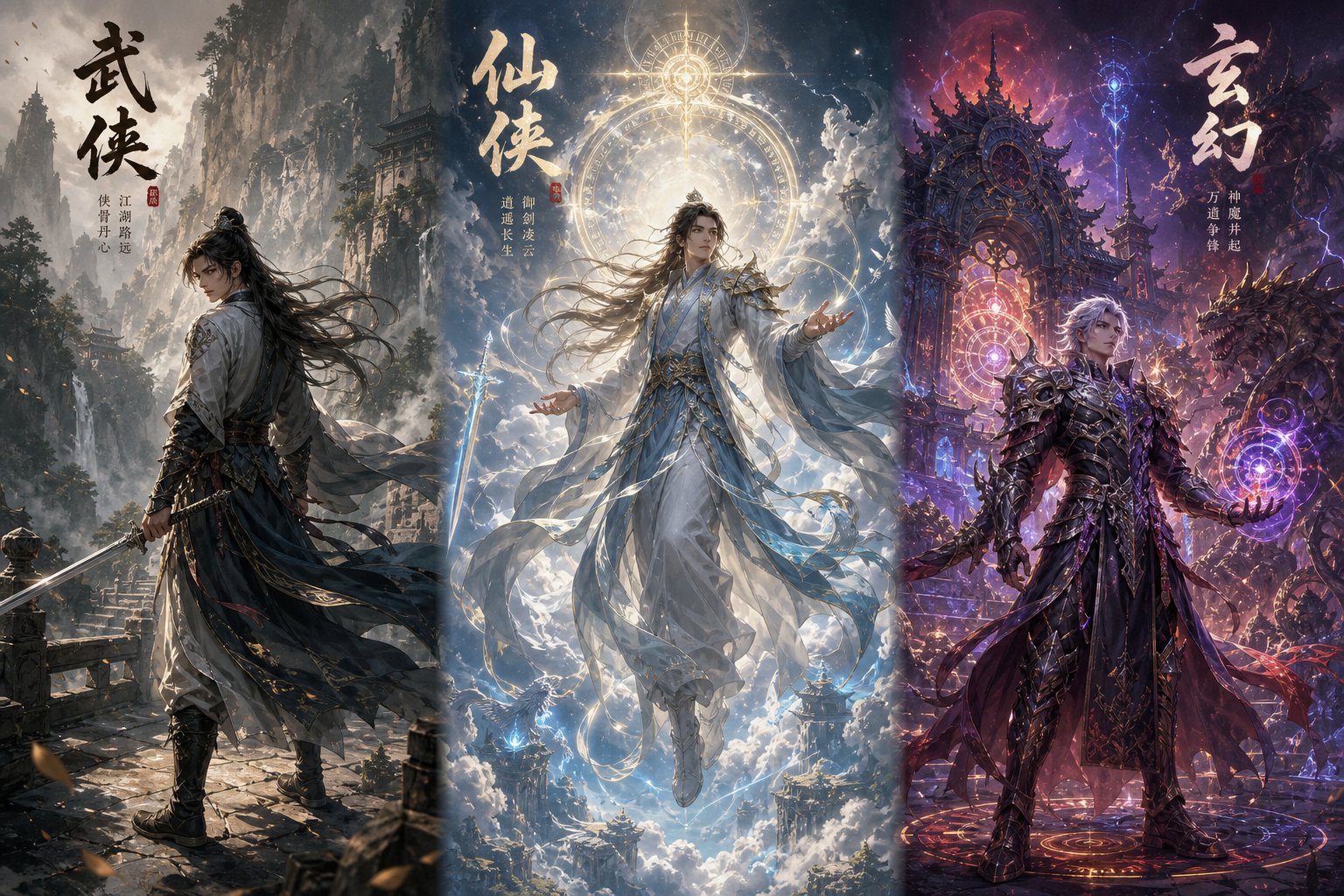
Naming Conventions Across Wuxia, Xianxia, and Xuanhuan
Chinese fantasy is not a single genre. It is a family of subgenres, each with distinct tonal expectations, thematic concerns, and naming philosophies. A name that works perfectly in a gritty wuxia revenge tale would feel out of place in a celestial xianxia cultivation story, and both would clash with the aesthetic priorities of danmei romance. Understanding these differences is what separates a name that merely sounds Chinese from one that sounds like it belongs in your specific story.
Wuxia Names and the Martial Arts Tradition
Wuxia is grounded martial arts fiction. Its world is the jianghu, the "rivers and lakes" underworld of wandering swordsmen, secret societies, and codes of honor. Wuxia names tend toward the earthy and the direct. They evoke steel, stone, natural landscapes, and Confucian virtues like loyalty and righteousness. A wuxia hero's name should feel like something a real person in imperial China might carry, just slightly more poetic.
The key distinction when comparing wuxia vs xianxia naming is scope. Wuxia names stay human-scale. They reference the physical world: mountains, rivers, blades, seasons. Characters in the jianghu also earn colorful epithets based on their deeds or fighting style, and these cool chinese names jianghu figures carry become as recognizable as their birth names. A swordsman might be known across the martial world as "Iron Palm" or "The Drunken Blade" long before anyone learns his given name.
- Gu Longfeng (顾龙风) - "Gu" (to look back/protect) + "Dragon Wind" - suggests a guardian figure with sweeping power
- Ye Qiusheng (叶秋生) - "Leaf" + "Autumn Born" - evokes transience and a wanderer's melancholy
- Shen Tiexin (沈铁心) - "Shen" (deep/sink) + "Iron Heart" - signals unyielding resolve and emotional restraint
- Luo Jianming (罗剑鸣) - "Luo" (net/encompass) + "Singing Sword" - a poetic warrior whose blade speaks for him
Notice how these wuxia names stay rooted in tangible imagery. Iron, autumn leaves, dragon wind. They feel like names that could belong to a jianghu legend, someone whose reputation travels by word of mouth through teahouses and mountain passes.
Xianxia Naming for Cultivators and Immortals
Xianxia raises the stakes from human to cosmic. Characters in xianxia cultivate spiritual energy, ascend through heavenly tribulations, and pursue immortality across thousands of years. The naming conventions shift accordingly. Where wuxia names reference the physical world, xianxia names reach for the celestial: void, heaven, primordial chaos, eternal dao. Characters often accumulate multiple names as they progress through cultivation stages, shedding old identities like mortal skin.
Daoist cosmology heavily influences xianxia naming. You will see characters like Tian (heaven), Xu (void), Xuan (profound/mysterious), and Ling (spirit) appearing frequently. These are not random aesthetic choices. They signal a character's relationship to the cultivation path and their position within the cosmic hierarchy.
- Ling Xuzi (凌虚子) - "Soaring Void Master" - a Daoist cultivator title suggesting transcendence beyond the material
- Yun Tianqing (云天清) - "Cloud" + "Heaven Clear" - an immortal whose nature is serene and boundless
- Bai Wuchang (白无常) - "White Impermanence" - references Buddhist concepts of change and the cycle of existence
- Mu Qinglian (慕青莲) - "Admire" + "Azure Lotus" - the lotus symbolizes purity rising from corruption, a core cultivation metaphor
The shift from wuxia to xianxia naming is a shift from the concrete to the abstract, from iron swords to celestial voids. A well-chosen xianxia name feels like a prophecy. As the reference material from Cultivating Dragons puts it, a character named "Tian Wu" (Heavenly Void) may struggle with their place in the celestial order, their name foreshadowing the very conflict that defines their arc.
Xuanhuan and Danmei Naming Aesthetics
Xuanhuan ("mysterious fantasy") blends Chinese mythology with broader high-fantasy elements. It borrows freely from multiple traditions, mixing Daoist immortals with Western-style magic systems or entirely invented cosmologies. Naming in xuanhuan is more flexible than in wuxia or xianxia because the genre itself is less bound by a single philosophical framework. Names might combine classical Chinese elements with invented terms that signal a secondary world rather than historical China.
- Feng Jiuling (凤九灵) - "Phoenix" + "Nine Spirits" - blends mythological creature with numerological significance
- Zhan Moye (斩魔夜) - "Slay Demon Night" - aggressive, action-oriented, suited to a dark fantasy protagonist
- Su Yanqiu (苏燕秋) - "Revive" + "Swallow Autumn" - lyrical and slightly melancholic, fitting a scholar-mage archetype
Danmei, which literally translates to "indulgence in beauty," is romance-focused fiction predominantly featuring male-male relationships. The danmei meaning extends to its naming philosophy: names in this genre prioritize aesthetic harmony, emotional resonance, and the way two characters' names sound and look together. Pairing is everything. Authors often craft protagonist names so that when spoken together, they create a pleasing tonal rhythm or a poetic contrast.
- Lan Wangji (蓝忘机) and Wei Wuxian (魏无羡) - "Forget-Machine" paired with "Without-Envy" - names that encode each character's emotional core and mirror each other thematically
- Xie Lian (谢怜) and Hua Cheng (花城) - "Thank Pity" paired with "Flower City" - one name carries sorrow, the other beauty, creating emotional tension through naming alone
- Shen Qingqiu (沈清秋) - "Deep Clear Autumn" - elegant, literary, and slightly sorrowful, typical of danmei's preference for names that feel like poetry fragments
Across all these subgenres, the underlying principle remains consistent: names are not labels but compressed narratives. The genre simply determines which narrative register you are working in. Wuxia grounds you in honor and steel. Xianxia lifts you toward heaven. Xuanhuan gives you creative latitude. Danmei demands beauty in pairing.
Genre shapes the vocabulary of naming, but it does not determine the full identity a character carries. In Chinese fantasy, a single person often holds far more than one name, and each name serves a different social and narrative function.
Courtesy Names, Titles, and Epithets in Chinese Fantasy
A character in Western fantasy typically carries one name from birth to death. Maybe they earn a title along the way. In Chinese fantasy, a single person might accumulate five or six distinct names across their lifetime, each one marking a transformation in identity, status, or reputation. This layered naming ecosystem is one of the richest storytelling tools available to writers working in Chinese-inspired settings, and understanding it transforms how you approach character development.
Birth Names Versus Courtesy Names in Fantasy
The foundation of the system starts with the ming (名), the birth name. The ming meaning is straightforward: it is the personal name given by parents, used by family and close intimates. In classical Chinese culture, speaking someone's ming directly was an act of familiarity, even intimacy. Strangers and colleagues would never use it.
At adulthood, typically around age twenty, a person received their zi (字), the courtesy name. This was the name used in formal social interactions, by peers, colleagues, and anyone showing respect. The courtesy name often reflected aspirations or expanded on the birth name's meaning. The famous strategist Zhuge Liang (诸葛亮) had the ming "Liang" meaning "bright" and the courtesy name "Kongming" (孔明) meaning "enlightened opening." One name states a quality. The other deepens it into a philosophy.
For fantasy writers, this creates immediate narrative texture. When a character is addressed by their ming, it signals closeness or disrespect. When they are called by their zi, it signals formality or respect. A single scene can shift emotional register just by changing which name a speaker uses.
Sect Names and Titles of Power
Beyond birth and courtesy names, the imperial Chinese naming system adds further layers that fantasy fiction exploits brilliantly. The hao (号) is a self-chosen art name or style, adopted by scholars, poets, and cultivators to express their personal philosophy. The Song-period writer Ouyang Xiu called himself "Old Drunkard" (醉翁). The strategist Zhuge Liang styled himself "Sleeping Dragon" (卧龙). These names are acts of self-definition, chosen rather than given.
In xianxia and wuxia fiction, sect names and religious names add another layer. A cultivator entering a Daoist sect might receive a dharma name (法号) that replaces their worldly identity entirely. A martial artist joining a school might adopt a generational character shared with all disciples of the same rank, binding them into a naming lineage. A chinese emperor would carry a reign motto, a temple name, and a posthumous title, each serving a different function in different contexts. The same principle applies to a spiritual empress or sect matriarch in fantasy: her birth name, her title within the sect, and her feared epithet across the realm are three separate identities layered onto one person.
Consider how an empress of china in historical fiction might be known by her family name in private, her imperial title at court, and a posthumous honorific after death. Fantasy mirrors this structure. A chinese empress character in your story could carry a childhood name whispered only by her mother, a courtesy name used by advisors, a throne title feared by enemies, and a legendary epithet that outlives her by centuries.
How Epithets Build Legendary Reputation
Epithets are the names the world gives you. Unlike the ming (chosen by parents) or the hao (chosen by yourself), an epithet is earned through deeds and assigned by reputation. In the jianghu, a swordsman might be called "The Jade-Faced Scholar" or "Nine-Fingered Divine Beggar." These function as a nickname royal courts and underworld alike would recognize, compressing an entire legend into a phrase.
The imperial meaning of titles worked similarly in historical China. A posthumous title like "Wu" (武, the Martial) or "Wen" (文, the Cultured) was granted after death based on how the ruler performed in life. Fantasy fiction adapts this by giving living characters epithets that evolve as their story progresses.
In Western fantasy, a character is named once and stays named. In Chinese fantasy, naming is a living process. Each new name is a chapter marker, signaling that the person who earned it is no longer who they were before.
Here is the typical progression a character might experience from birth through legendary status, with examples at each stage:
- Birth name (ming): Jiang Yuan (江源) - "River Source" - given by parents, reflecting hope for a life of flowing abundance
- Courtesy name (zi): Jiang Minghe (江明河) - "Bright River" - received at adulthood, expanding the water imagery into clarity and purpose
- Art name (hao): Gushan Jushi (孤山居士) - "Hermit of the Lonely Mountain" - self-chosen after years of solitary cultivation
- Sect title: Qinghe Zhenren (清河真人) - "Perfected One of the Clear River" - granted by their Daoist sect upon mastery
- Earned title: Jiuzhou Jiansheng (九州剑圣) - "Sword Saint of the Nine Provinces" - recognized after defeating a great evil
- Posthumous epithet: Tianhe Shangxian (天河上仙) - "Supreme Immortal of the Celestial River" - the name by which legends remember them centuries later
Each name in this progression tells a different story. The birth name speaks to parental hope. The courtesy name signals maturity. The art name reveals self-perception. The sect title marks belonging. The earned title records achievement. The posthumous epithet crystallizes legacy. A single character carrying all six names gives you six different emotional registers to play with in dialogue, narration, and worldbuilding.
This system is what makes Chinese fantasy naming so narratively dense. A character does not simply have a name. They have a naming history, and that history is the story itself told in miniature. The question then becomes: which surname anchors this entire progression, and what does that choice communicate before the story even begins?
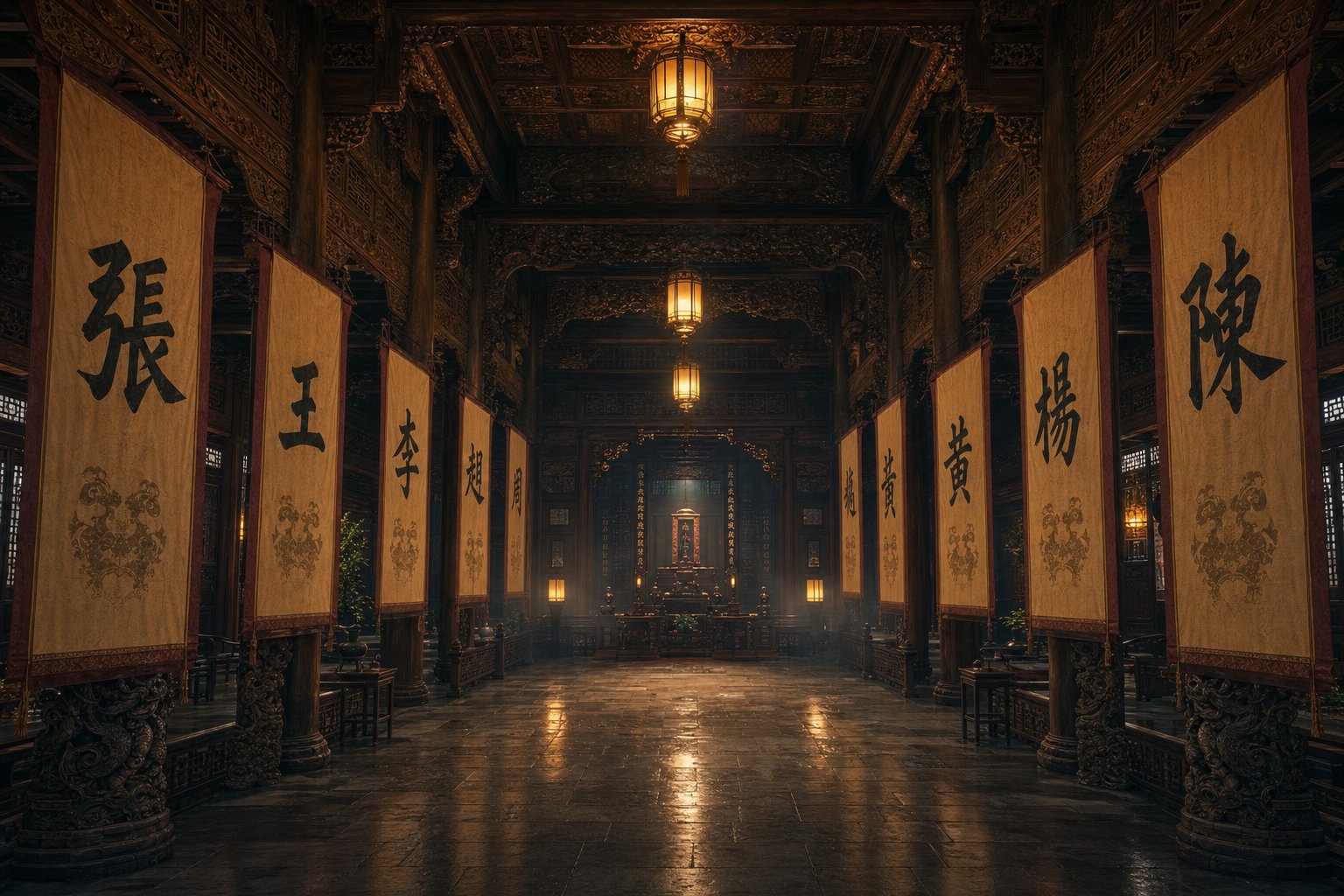
Choosing the Perfect Surname for Your Fantasy Character
A surname is the first thing a reader encounters, and in Chinese fantasy, it carries weight before the given name even arrives. The surname anchors a character in a social world. It signals lineage, class, ethnicity, and sometimes destiny. Choosing the right one is not a throwaway decision. It is the foundation that every other name in your character's progression builds upon.
Most chinese surname generator tools will hand you a random pick from the most common options. That works for speed, but it misses the storytelling potential buried in surname choice. Certain chinese family names carry centuries of historical association, and readers familiar with the tradition will decode those signals instantly.
The Most Common Surnames and Their Fantasy Associations
China's surname pool is remarkably concentrated. The most common chinese last names, Wang, Li, Zhang, Liu, and Chen, account for roughly 30 percent of the entire population. In fiction, this concentration means that common surnames read as "ordinary" or "everyman" unless paired with a striking given name. A character surnamed Wang feels grounded and accessible. A character surnamed Murong feels immediately exotic and aristocratic.
Historical dynasties left deep imprints on specific surnames. Li (李) was the imperial surname of the Tang dynasty, China's golden age of poetry and military expansion. Naming a character Li in a fantasy setting subtly evokes royalty, cultural refinement, and legitimate power. Zhao (赵) was the imperial chinese surname of the Song dynasty, associated with scholarly governance and artistic patronage. Zhu (朱) connects to the Ming dynasty's founding emperor, a peasant who rose to supreme power, making it ideal for characters with humble origins and towering ambition.
These associations are not rules, but they are resonances. A chinese last name generator might output "Li" without context, but a writer who understands the Tang dynasty connection can use that surname to foreshadow themes of lost glory or rightful inheritance.
Compound Surnames That Signal Nobility and Mystery
Single-character surnames dominate everyday life, but compound surnames (复姓) occupy a special place in Chinese fantasy. These two-character surnames are rare in the real world, which is precisely what makes them powerful in fiction. When a character introduces themselves with a compound surname, it immediately marks them as unusual, often noble, ancient, or connected to non-Han lineages.
Many compound surnames derive from Zhou dynasty noble titles, official positions, or place names. Shangguan (上官) literally means "high official" and originated as a title before becoming hereditary. Nangong (南宫) means "Southern Palace," evoking imperial architecture and proximity to power. Sima (司马) means "Master of the Horse," an ancient military rank equivalent to marshal. Each compound surname carries its origin story in its characters, giving readers immediate context.
Non-Han compound surnames add another dimension. Murong (慕容) is of Xianbei origin, associated with the powerful Murong clan that founded several kingdoms during the Sixteen Kingdoms period. Yuwen (宇文), also Xianbei, connects to the Northern Zhou dynasty. Helian (赫连) traces to Xiongnu nobility. In fantasy, these surnames signal characters from steppe cultures, conquered peoples, or ancient bloodlines that predate the dominant civilization. A chinese last names generator rarely distinguishes between Han and non-Han options, but this distinction is a worldbuilding goldmine.
Fictional compound surnames work the same way. If you invent a surname like Qingyun (青云, "Azure Cloud") or Tianshu (天枢, "Celestial Pivot"), readers will immediately read that character as belonging to an old, powerful, or otherworldly lineage. The two-character structure alone signals rarity.
Matching Surnames to Character Archetypes
Surname choice is your first act of characterization. A brooding antihero surnamed Mu (慕, "longing") carries melancholy in his family name. A righteous general surnamed Wei (魏, evoking the powerful Wei state) feels born to command. A mysterious healer surnamed Hua (华, "magnificent" or "China itself") suggests someone whose identity is intertwined with the land.
The table below maps common and evocative chinese surnames and meanings to their fantasy potential, giving you a reference for matching surname to archetype:
| Pinyin | Character | Meaning or Origin | Historical Association | Suggested Fantasy Archetype |
|---|---|---|---|---|
| Li | 李 | Plum tree | Tang dynasty imperial surname | Fallen royalty, rightful heir, poet-warrior |
| Zhao | 赵 | To walk/hasten | Song dynasty imperial surname | Scholar-ruler, strategist, reformer |
| Zhu | 朱 | Vermilion red | Ming dynasty founding surname | Peasant-turned-king, revolutionary |
| Murong | 慕容 | Xianbei clan name | Sixteen Kingdoms aristocracy | Foreign noble, exiled prince, steppe warrior |
| Shangguan | 上官 | High official | Zhou dynasty noble title | Court schemer, noble lady, political mastermind |
| Nangong | 南宫 | Southern Palace | Western Zhou nobility | Mysterious elder, hidden sect leader |
| Sima | 司马 | Master of the Horse | Jin dynasty rulers, Grand Historian | Military commander, chronicler, kingmaker |
| Gu | 顾 | To look back, to care for | Wu region aristocracy | Protector, reluctant hero, guardian figure |
| Bai | 白 | White, pure | Poet Bai Juyi, folk associations | Healer, wandering sage, morally ambiguous figure |
| Ye | 叶 | Leaf | Southern Chinese lineages | Assassin, transient wanderer, spy |
| Xiao | 萧 | Desolate, wormwood | Liang dynasty imperial surname | Tragic hero, lone wolf, melancholic swordsman |
| Zhuge | 诸葛 | Branch of Ge clan | Zhuge Liang, legendary strategist | Genius tactician, inventor, advisor |
You will notice that common surnames like Li and Zhao work well for protagonists who need to feel relatable before their extraordinary nature reveals itself. Compound surnames like Murong, Shangguan, and Nangong work better for characters who should feel immediately set apart, whether by noble blood, foreign origin, or ancient mystery.
A practical approach: use common surnames for characters who earn their legend, and compound surnames for characters who inherit it. The peasant rebel gets surnamed Zhu. The immortal sect patriarch gets surnamed Nangong. The conflicted antihero caught between worlds gets surnamed Xiao, a name that literally means "desolate."
Surname selection sets the stage, but the real creative work begins with what follows it. The given name is where you encode personality, destiny, and the specific thematic vocabulary of your fantasy world, drawing from an enormous palette of power words, nature imagery, and celestial symbolism.
Power Words and Nature Elements for Fantasy Names
Surnames set the stage. Given names tell the story. The characters you choose for a given name determine whether your fantasy figure reads as a celestial warrior, a wandering poet, or a demon-slaying cultivator. Each character carries its own meaning, tone, and archetypal weight, and the art lies in combining them into something that feels both intentional and inevitable.
Think of given name characters as a palette. Some colors are bold and aggressive. Others are soft and ethereal. The best names blend elements from different parts of the spectrum, creating contrast and depth. Below is a breakdown of the most useful character categories for fantasy naming, organized by the energy they bring to a name.
Characters of Power and Dominance
When you need a name that announces strength before the character even draws a weapon, these are the characters that do the heavy lifting. Power characters tend to carry fourth tone (falling, decisive) or first tone (high, commanding) in Mandarin, which gives them a sharp, authoritative sound.
Many of these characters draw from the same symbolic vocabulary as chinese mythology creatures and chinese myth gods. The dragon (龙) is not merely an animal in Chinese cosmology. It is the embodiment of imperial authority, cosmic power, and the generative force of nature. A character named Long-something immediately inherits that mythic weight. Similarly, characters referencing tigers, phoenixes, or the yaoguai (妖怪, supernatural creatures of Chinese folklore) tap into a deep well of cultural resonance that readers familiar with the tradition will recognize instantly.
| Character | Pinyin | Meaning | Tone | Suggested Archetype |
|---|---|---|---|---|
| 龙 | Long | Dragon | 2nd (rising) | Emperor, chosen one, supreme cultivator |
| 威 | Wei | Might, authority | 1st (high level) | General, sect leader, enforcer |
| 霸 | Ba | Domination, hegemon | 4th (falling) | Conqueror, villain, warlord |
| 虎 | Hu | Tiger | 3rd (dipping) | Fierce warrior, bandit king, berserker |
| 烈 | Lie | Fierce, blazing | 4th (falling) | Martyr, passionate fighter, revolutionary |
| 傲 | Ao | Proud, unyielding | 4th (falling) | Lone wolf, arrogant genius, antihero |
| 战 | Zhan | Battle, war | 4th (falling) | Born warrior, military prodigy |
| 凤 | Feng | Phoenix | 4th (falling) | Empress, female warrior names, rebirth figure |
Notice how many power characters carry the fourth tone. That sharp, descending sound mirrors the decisiveness these names are meant to convey. A name like Zhan Lie (战烈, "Blazing Battle") hits hard precisely because both characters drop in pitch, creating an auditory punch. Use these characters for antagonists, military figures, or protagonists whose strength is their defining trait.
Characters referencing ancient chinese weapons serve a similar function. The character 剑 (jian, sword) appears constantly in wuxia naming because the sword is the "gentleman's weapon" in Chinese martial culture. 锋 (feng, blade edge) suggests sharpness of both steel and intellect. 戟 (ji, halberd) evokes the battlefield rather than the duel. Each weapon character carries its own connotation about what kind of fighter your character is.
Nature and Celestial Elements for Ethereal Names
Where power characters announce themselves loudly, nature and celestial characters work through suggestion. They create atmosphere rather than declaration. These are the characters you reach for when building scholars, healers, wanderers, immortals, and characters whose strength is quiet rather than overt.
Nature elements dominate female naming in Chinese fantasy, but they are far from exclusively feminine. A male cultivator named Yun (cloud) or Xue (snow) reads as refined and transcendent rather than soft. Context and pairing determine gendered reading more than any individual character does.
| Character | Pinyin | Meaning | Tone | Suggested Archetype |
|---|---|---|---|---|
| 云 | Yun | Cloud | 2nd (rising) | Wanderer, free spirit, hidden master |
| 雪 | Xue | Snow | 3rd (dipping) | Pure-hearted figure, cold beauty, ascetic |
| 岚 | Lan | Mountain mist | 2nd (rising) | Mysterious recluse, mountain hermit |
| 霜 | Shuang | Frost | 1st (high level) | Emotionally guarded, elegant loner |
| 星 | Star | 1st (high level) | Destined one, navigator, celestial being | |
| 月 | Yue | Moon | 4th (falling) | Romantic lead, night cultivator, yin-aligned figure |
| 辰 | Chen | Celestial body, time | 2nd (rising) | Time mage, astrologer, cosmic wanderer |
| 莲 | Lian | Lotus | 2nd (rising) | Buddhist cultivator, purity amid corruption |
| 松 | Song | Pine tree | 1st (high level) | Steadfast elder, enduring warrior, hermit sage |
Celestial characters like 星, 月, and 辰 work especially well in xianxia settings where characters interact with heavenly hierarchies. A cultivator named Xingchen (星辰, "Stars and Heavens") immediately reads as someone whose ambitions extend beyond the mortal realm. These characters also pair beautifully with virtue or beauty elements to create names with multiple layers of meaning.
The jade name meaning deserves special attention here. Jade (玉, yu) is not merely a gemstone in Chinese culture. It represents moral perfection, incorruptibility, and noble character. Characters containing the jade radical (玉/王) like 瑶 (yao, precious jade), 琳 (lin, beautiful jade), and 璃 (li, colored glass/crystal) all inherit this association with refined beauty and inner worth. When you see these characters in a name, they signal someone precious, cultivated, and morally luminous.
| Character | Pinyin | Meaning | Tone | Suggested Archetype |
|---|---|---|---|---|
| 瑶 | Yao | Precious jade | 2nd (rising) | Noble lady, celestial maiden, treasured disciple |
| 琳 | Lin | Beautiful gem | 2nd (rising) | Elegant scholar, refined beauty |
| 蝶 | Die | Butterfly | 2nd (rising) | Transformation figure, dancer, free spirit |
| 仁 | Ren | Benevolence | 2nd (rising) | Healer, righteous leader, Confucian hero |
| 义 | Yi | Righteousness | 4th (falling) | Sworn brother, loyal protector, jianghu hero |
| 慧 | Hui | Wisdom, intelligence | 4th (falling) | Strategist, scholar, Buddhist practitioner |
Combining Elements for Layered Meaning
The real craft begins when you combine characters from different categories. A name built entirely from power characters (like Zhan Ba, "Battle Domination") reads as one-dimensional, almost cartoonish. A name that blends power with nature, or virtue with celestial imagery, creates tension and depth that makes a character feel real.
Consider these combinations:
- Xue Jian (雪剑, Snow Sword) - blends nature's quiet beauty with martial sharpness, suggesting a warrior whose violence is precise and cold
- Yun Yi (云义, Cloud Righteousness) - pairs ethereal freedom with moral weight, evoking a wandering hero who fights for justice without seeking glory
- Yue Feng (月锋, Moon's Edge) - combines celestial softness with blade imagery, perfect for an assassin who strikes at night
- Long Hui (龙慧, Dragon Wisdom) - merges raw power with intellect, fitting a scholar-emperor or sage cultivator
- Lan Die (岚蝶, Mist Butterfly) - layers two nature elements for a name that feels dreamlike and transient, suited to a spirit or illusionist
The principle is contrast. Pair something hard with something soft. Pair something vast with something intimate. Pair something ancient with something fleeting. The tension between the two characters is what gives a name its personality.
Tonal harmony matters as much as meaning. In Mandarin, pairing two third-tone characters creates an awkward dip-dip rhythm that native speakers instinctively avoid. The most pleasing combinations alternate between tones: a rising tone followed by a falling tone, or a level tone followed by a rising tone. When in doubt, avoid placing two identical tones side by side, especially two third tones or two fourth tones in sequence.
This is why a name like Xue Yue (雪月, both dipping/falling) feels slightly heavy, while Yun Feng (云锋, rising then level) flows more naturally off the tongue. You do not need perfect Mandarin pronunciation to apply this rule. Simply check the tone numbers for your chosen characters and aim for variety rather than repetition.
Chinese mythological creatures offer another rich source of naming elements beyond the dragon and phoenix. The qilin (麒麟), a benevolent chimera, lends characters like 麒 (qi) to names suggesting auspicious destiny. The baihu (白虎, white tiger) and xuanwu (玄武, black tortoise) connect to directional cosmology. Even naming a character after a specific yaoguai type, like fox spirits (狐) or serpent demons (蛇), immediately signals their nature or their struggle against it.
The tables above give you building blocks. The combinations are infinite. But raw materials alone do not make a name authentic. The next consideration is temporal: which dynasty's naming conventions match your setting, and how do regional dialects add linguistic texture to a fantasy world with multiple cultures?
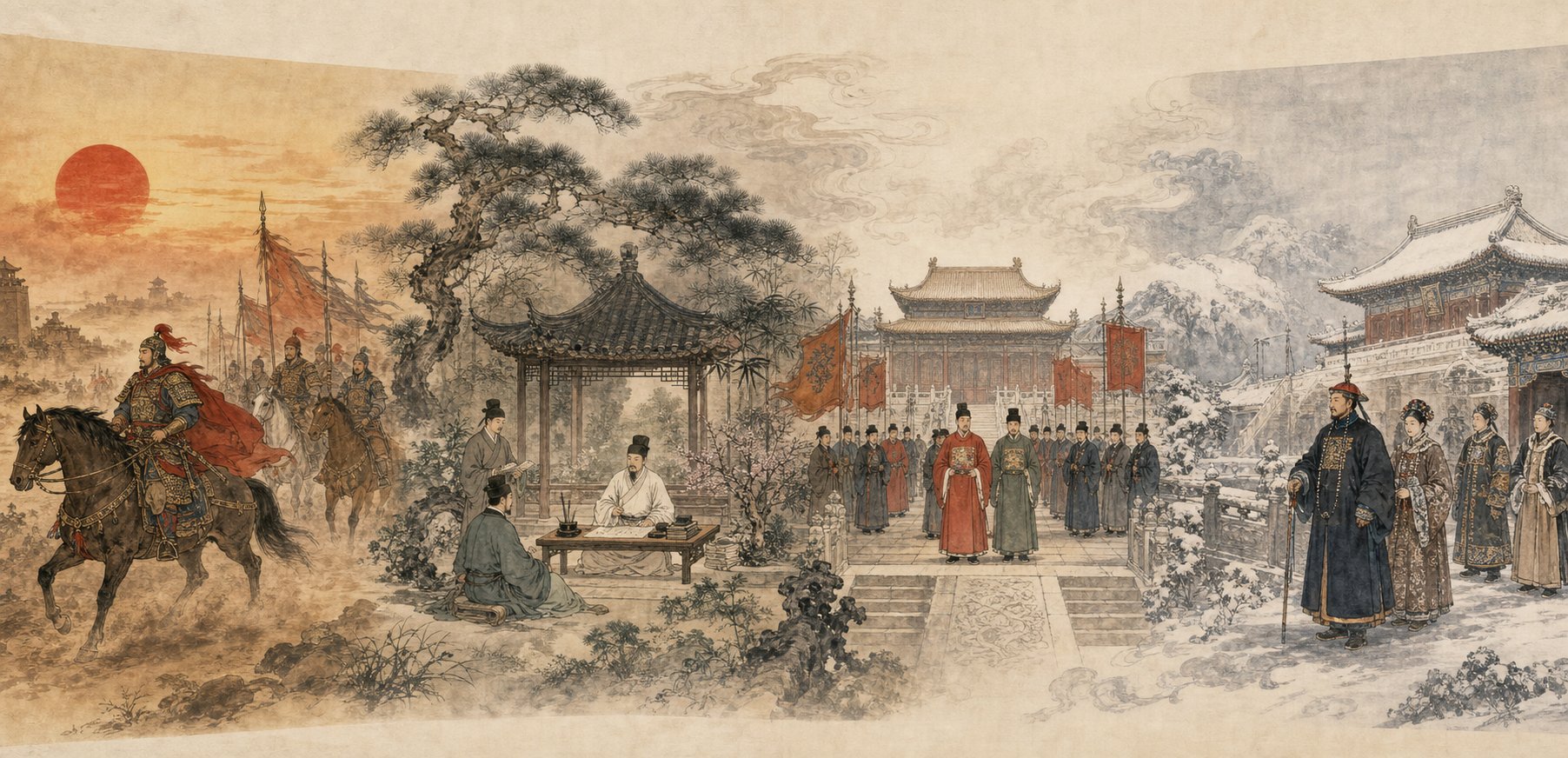
Period-Accurate Names from Tang to Qing Dynasty
Every dynasty on the chinese dynasty timeline carried its own cultural personality, and that personality shaped how people named their children. If you are writing period fantasy set in a specific era, or building a secondary world modeled on one, the naming conventions of that era are as important as the architecture and clothing. Get them wrong, and readers who know the tradition will feel the dissonance immediately. Get them right, and the names themselves become worldbuilding.
When you look at a list of chinese dynasties spanning over two thousand years of imperial history, you will notice that naming trends shifted dramatically from one era to the next. These shifts were driven by philosophy, politics, ethnic influence, and literary fashion. A Tang dynasty warrior and a Qing dynasty scholar would name their sons very differently, even if they shared the same surname.
Tang and Song Dynasty Naming Patterns
The Tang dynasty (618-907 CE) was China's golden age of poetry, military expansion, and cosmopolitan confidence. If you have ever studied a tang dynasty map, you know the empire stretched from the Korean peninsula to Central Asia, absorbing influences from Persia, India, and the Turkic steppe. That boldness shows up in Tang naming conventions.
Tang names tend toward single-character given names that feel direct and powerful. The poet Li Bai (李白, "White"), the emperor Li Shimin (李世民, "World's People"), the general Guo Ziyi (郭子仪, "Righteous Son"). Even two-character given names from this period lean toward grand, outward-facing imagery: heaven, brightness, martial virtue. Tang names announce themselves. They do not whisper.
The Song dynasty (960-1279 CE) shifted the cultural center of gravity from the battlefield to the study. Song China was a civilization of scholars, painters, and philosophers. Naming conventions followed suit. Song-era names favor literary allusions, philosophical references, and characters drawn from classical texts. Where Tang names evoke swords and sunlight, Song names evoke ink and contemplation.
You will see more two-character given names in the Song period, often pairing a virtue character with a nature element to create something that reads like a couplet from a poem. The philosopher Zhu Xi (朱熹, "Bright Dawn"), the poet Su Shi (苏轼, "Carriage Rail" - a humble, grounded image), the painter Mi Fu (米芾, an archaic character suggesting refinement). Song names reward close reading. They assume the audience is literate and will catch the allusion.
Ming and Qing Dynasty Conventions
The Ming dynasty (1368-1644 CE) introduced a naming practice that fantasy writers can exploit for clan-building: generational naming. Ming-era families, especially those with imperial or scholarly connections, assigned a specific character to each generation. All sons born in the same generation shared one character in their given name, with only the second character varying between siblings and cousins.
Imagine a fantasy clan where every member of the third generation carries the character "Yu" (玉, jade) in their name: Yu Chen, Yu Lin, Yu Hao. The fourth generation might all share "Tian" (天, heaven): Tian Ming, Tian Xiu, Tian Feng. This system instantly communicates family relationships to the reader without exposition. If you have ever examined a ming dynasty map and noticed how tightly organized its administrative structure was, generational naming reflects that same impulse toward order and hierarchy applied to family identity.
The Qing dynasty (1644-1912 CE) complicates everything. The Qing was ruled by the Manchu, a non-Han ethnic group whose naming traditions differed fundamentally from Chinese conventions. Manchu names were typically longer, did not follow the surname-plus-given-name structure, and carried meanings in the Manchu language rather than Chinese. As you might notice on a china qing dynasty map, the empire encompassed Manchuria, Mongolia, Tibet, and Xinjiang alongside Han China, creating a multilingual, multiethnic naming landscape.
Qing dynasty chinese characters used in Han naming during this period reflect a blend of traditions. Han Chinese under Qing rule continued their own naming practices, but Manchu influence introduced new patterns. Some Manchu nobles adopted Chinese-style names for official use while keeping Manchu names privately. Others transliterated Manchu names into Chinese characters chosen for sound rather than meaning, creating names that look Chinese on the surface but follow different internal logic. For fantasy writers, this offers a model for depicting conquered peoples, cultural assimilation, or dual-identity characters navigating between civilizations.
| Dynasty | Typical Name Length | Common Themes | Example Names |
|---|---|---|---|
| Tang (618-907) | 2 characters (single-char given name common) | Boldness, martial virtue, celestial imagery, directness | Li Bai (李白), Wang Wei (王维), Du Fu (杜甫) |
| Song (960-1279) | 2-3 characters (two-char given names more common) | Literary allusion, philosophical virtue, nature poetry, subtlety | Su Dongpo (苏东坡), Zhu Xi (朱熹), Lu You (陆游) |
| Ming (1368-1644) | 3 characters (generational character + individual character) | Clan identity, generational order, Confucian virtues, systematic naming | Zhu Yuanzhang (朱元璋), Wang Yangming (王阳明), Xu Xiake (徐霞客) |
| Qing (1644-1912) | Variable (Han: 2-3 chars; Manchu: longer, transliterated) | Dual-culture blending, transliteration, auspicious meanings, banner identity | Cao Xueqin (曹雪芹), Nalan Xingde (纳兰性德), Lin Zexu (林则徐) |
This table gives you a quick reference, but the real value lies in understanding why each dynasty named the way it did. Tang confidence produced bold, short names. Song intellectualism produced layered, allusive names. Ming clan consciousness produced systematic, generational names. Qing multiculturalism produced hybrid names that encoded political identity.
Using Regional Dialects for Worldbuilding Depth
Here is something almost no chinese name generator fantasy tool addresses: the same Chinese character sounds completely different depending on which dialect pronounces it. Mandarin is the standard, but Cantonese, Hokkien (Min Nan), Wu (Shanghainese), and Hakka each render the same characters with distinct phonology. This is not a minor accent difference. These are mutually unintelligible spoken languages sharing a written system.
For worldbuilders, this is a gift. Imagine a fantasy continent where the northern empire and the southern coastal kingdoms share a writing system but pronounce names differently. The character 黄 is Huang in Mandarin, Wong in Cantonese, Ng in Hokkien, and Vong in Hakka. A character named 陈志明 would be Chen Zhiming in the north, Chan Chi-ming in the south, and Tan Tee-beng along the coast. Same person, same written name, three completely different sounds.
This mirrors how the chinese dynasties list played out geographically. Southern dynasties during periods of division often had distinct cultural identities from northern ones, and dialect differences were part of that distinction. You can use this in fantasy to signal:
- Regional origin - A character whose name uses Cantonese romanization (Wong, Chan, Leung) immediately reads as southern or coastal
- Class and education - Characters who use the "standard" pronunciation versus local dialect can signal social mobility or cultural tension
- Historical depth - Older place names or family names preserved in dialect form suggest ancient lineages predating the current political order
- Cultural conflict - Two characters with the same written name but different pronunciations can embody the tension between unified empire and local identity
A fantasy world that uses only one romanization system for all its Chinese-inspired names feels flat. One that varies pronunciation by region, the way a real map of China's linguistic diversity would show, feels alive. The Wu dialect's soft, flowing sounds suit a culture of merchants and poets. Cantonese's sharp tonal contrasts fit a maritime trading power. Hokkien's archaic preservation of older Chinese sounds works for an ancient, isolated civilization that retained what the mainland lost.
Period and place are the two axes that give a naming system its texture. But even with perfect historical grounding and regional variety, a name can still fail if it violates the basic phonological rules of the language it claims to represent. The most common mistakes non-Chinese speakers make when constructing names are surprisingly easy to avoid once you know what to watch for.
Mistakes to Avoid When Creating Fantasy Chinese Names
You have the building blocks: surnames with historical weight, given name characters rich in meaning, dynasty-appropriate conventions, and regional dialect variety. But even armed with all of that, a single phonological error or cultural misstep can shatter the authenticity you have worked to build. The good news? Most mistakes non-Chinese speakers make fall into predictable categories, and once you know what to watch for, they are straightforward to avoid.
Whether you are using a random chinese name generator for quick inspiration or constructing names manually from character tables, these pitfalls apply equally. A tool can produce output that looks plausible on screen but sounds impossible to a Mandarin speaker, carries an accidentally vulgar meaning, or mixes linguistic traditions in ways that break internal consistency. Knowing the failure modes lets you catch problems before they reach your readers.
Impossible Syllable Combinations to Avoid
Mandarin has a strict phonological structure. Not every consonant can pair with every vowel, and not every combination that looks reasonable in English actually exists as a valid syllable in Chinese. The total inventory of Mandarin syllables is only about 400 unique combinations (around 1,200 when you include tonal variants). That is remarkably limited compared to English, which means many letter combinations that feel natural to English speakers simply do not occur in Mandarin.
Sounds complex? Here is the practical version. If you invent a name and cannot find its syllables on a standard Pinyin chart, the name is phonologically impossible. A character named "Tou Gwin" or "Kra Zhelu" might look vaguely Chinese to an English-speaking reader, but no Mandarin speaker would recognize those as valid syllables. Mandarin does not allow consonant clusters (two consonants together without a vowel between them), does not use the sounds "v" or "th," and restricts syllable-final consonants to only "n" and "ng."
Before finalizing any name, cross-reference each syllable against a Pinyin table. If a syllable does not appear on the chart, it cannot be a Chinese name. This single check eliminates the most obvious category of errors.
Unintentional Meanings and Tonal Clashes
Chinese is extraordinarily rich in homophones. A syllable like "si" can mean "four," "death," "silk," "to think," or "to resemble" depending on tone and character choice. When you generate chinese name combinations based on meaning alone, you risk creating something that sounds identical to an unfortunate word or phrase when spoken aloud.
The character combination "Si Wang" might seem like a fine pairing of "to think" and "prosperous," but spoken aloud it is nearly indistinguishable from siwang (死亡), the word for "death." Similarly, the character "ri" (日) means "sun" in literary contexts but functions as a vulgar expletive in colloquial speech. A chinese name creator that only considers written meaning without checking spoken associations will miss these landmines entirely.
Tonal clashes present a subtler problem. Mandarin has four tones plus a neutral tone, and certain tone sequences sound harsh or awkward to native ears. Two consecutive third tones create a dipping-dipping rhythm that speakers instinctively avoid (in natural speech, the first third tone actually shifts to a second tone). Stacking multiple fourth tones produces a hammering, aggressive cadence that works for a villain's name but sounds unpleasant for a protagonist. The most euphonic names alternate between tones, creating a natural rise-and-fall rhythm.
Formatting and Cultural Consistency Errors
Beyond phonology and meaning, structural mistakes break immersion just as quickly. These errors are especially common when writers are familiar with Japanese or Korean naming but apply those conventions to a Chinese-setting story. Here are the most frequent mistakes and how to fix them:
- Placing given name before surname. In a Chinese-setting story, the surname always comes first. Writing "Wuxian Wei" instead of "Wei Wuxian" is the equivalent of writing "of Rivia Geralt" in a Western fantasy. If your narrative is set in a Chinese-inspired world, maintain surname-first order consistently.
- Using Japanese on'yomi or kun'yomi readings for Chinese characters. The character 山 is "shan" in Mandarin but "yama" or "san" in Japanese. The character 風 is "feng" in Mandarin but "kaze" or "fuu" in Japanese. Mixing these readings produces names that belong to neither language. Pick one linguistic tradition and stay consistent.
- Applying Korean romanization to Chinese names. Korean uses characters historically borrowed from Chinese, but the pronunciations diverged centuries ago. "Kim" is a Korean surname; the equivalent Chinese surname is "Jin" (金). Using Korean readings in a Chinese-setting world signals confusion rather than cultural blending.
- Creating syllables that violate Mandarin phonotactics. No syllable in Mandarin ends in a consonant other than "n" or "ng." Names ending in "-k," "-t," "-p," or "-m" are Cantonese, Hokkien, or another dialect, not Mandarin. If your world uses Mandarin-style romanization, these endings are invalid.
- Ignoring the limited initial consonant inventory. Mandarin does not have the sounds "v," "th," "dj," or initial "r" the way English does. The Mandarin "r" is a retroflex approximant, not the English "r." If a syllable would not appear on a standard Pinyin chart, it is not a valid Mandarin syllable.
- Using random chinese names without checking for real-person associations. Naming your fantasy villain "Li Shimin" is like naming your villain "Alexander the Great." Li Shimin was one of China's most revered emperors. Similarly, using names like "Zhuge Liang" or "Guan Yu" for original characters will read as disrespectful or absurd to readers who recognize them.
- Mixing simplified and traditional characters inconsistently. If your worldbuilding materials show Chinese characters, pick one system and stick with it. Simplified characters (used in mainland China) and traditional characters (used in Taiwan and Hong Kong) are two visual registers. Mixing them is like alternating between British and American spelling mid-sentence, but more jarring.
- Treating a chinese anime name as representative of authentic Chinese naming. Anime and donghua sometimes use exaggerated or stylized names for dramatic effect. Names like "Chuuxue" or "Zephyrine" that appear in Chinese-produced animation may be intentionally fantastical or influenced by Japanese naming aesthetics. They are not reliable models for grounded Chinese fantasy naming.
- Forgetting that Chinese characters are not interchangeable with their Pinyin. Two completely different characters can share the same Pinyin spelling. "Li" could be 李 (plum), 力 (strength), 丽 (beautiful), or 厉 (severe). When you write a name in romanization only, you lose the character-level meaning. If meaning matters to your story, specify which characters you intend, even if readers only see the Pinyin.
A chinese name generator from english input faces all of these problems simultaneously. It must transliterate sounds that may not exist in Mandarin, avoid unfortunate homophones, maintain correct name order, and produce something that reads as culturally coherent. The best approach is to treat any generator output as a starting point, then verify it against the rules above before committing to it in your fiction.
The verification process does not require fluency. A Pinyin syllable chart, a Chinese dictionary with tone markings, and a basic awareness of these common pitfalls will catch the vast majority of errors. When in doubt, search your proposed name in a Chinese search engine. If it returns results associated with real historical figures, slang terms, or unintended meanings, you will know immediately.
Avoiding mistakes is defensive work. It tells you what not to do. The next step is offensive: a systematic method for building names from scratch that are phonologically valid, semantically rich, and tailored to your specific creative needs, whether you need one name for a novel's protagonist or a hundred for a game's NPC roster.
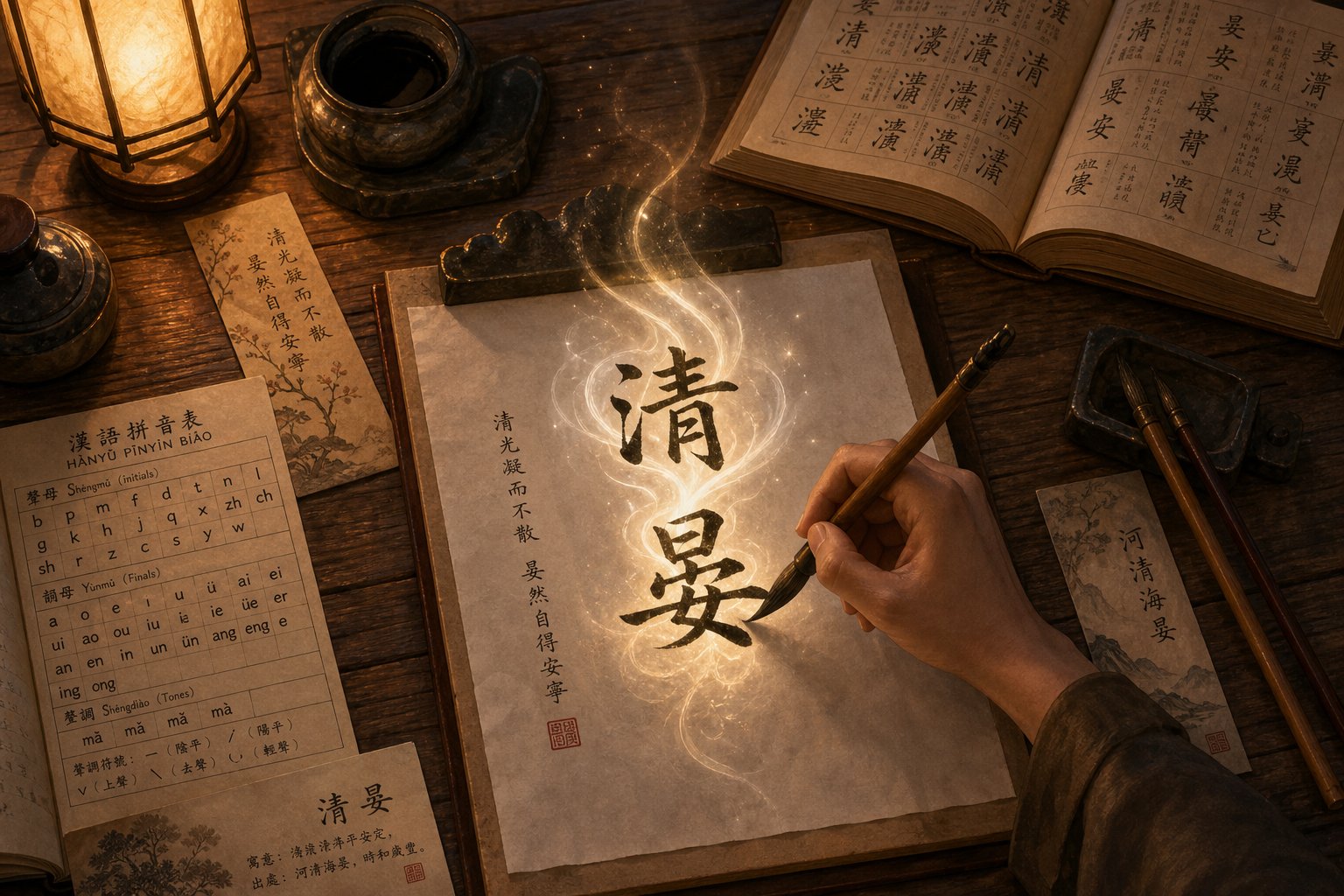
How to Build Authentic Fantasy Chinese Names Step by Step
You know the structure, the subgenre conventions, the historical patterns, and the pitfalls. The question now is practical: how do you actually sit down and build a name? The answer depends on who you are and what you need. A novelist crafting a protagonist's identity needs a different process than a game master who needs six NPCs before Thursday's session. Both need something better than random output from a china names generator with no context.
The method below works for any use case. Follow all six steps for deep, intentional naming. Skip to the abbreviated versions further down when speed matters more than depth.
Step-by-Step Name Construction Method
- Define the character's social position and origin. Before touching a single character, decide where this person sits in your world. Are they nobility, peasantry, clergy, or outcast? This determines surname choice. Common surnames (Wang, Li, Zhang) signal ordinary origins. Compound surnames (Shangguan, Nangong, Murong) signal aristocracy or ancient lineage. A rebel from nothing gets surnamed Chen. A sect patriarch from an old bloodline gets surnamed Ouyang.
- Select a surname that carries the right resonance. Use the surname table from earlier in this guide or pull from a chinese name generator male or female tool to see options. Cross-reference your choice against historical associations. If your character is a deposed royal, Li or Zhao carries that weight. If they are a steppe outsider, Murong or Helian signals non-Han heritage. Say the surname aloud. Does it feel right for the character's presence in a scene?
- Choose given name characters that encode personality or destiny. Pick one or two characters from the thematic categories covered earlier: power, nature, celestial, virtue, beauty, or weapons. The first character often carries the dominant trait. The second modifies or contrasts it. A warrior-poet might pair a blade character with a nature element: Jianfeng (剑风, Sword Wind) or Xuejian (雪剑, Snow Sword). A healer might pair virtue with beauty: Renyao (仁瑶, Benevolent Jade). Let the combination tell a micro-story about who this person is or who they aspire to become.
- Verify tonal harmony. Check the tone number for each character in your full name (surname + given name). Aim for variety. A sequence like 3-1-2 (dipping, high, rising) flows naturally. A sequence like 3-3-3 sounds awkward and would never occur in natural Mandarin naming. If you are unsure, look up each character's tone in any Pinyin dictionary and swap out characters that create tonal monotony. You do not need to speak Mandarin to apply this rule. You just need the numbers.
- Check for unintended meanings and homophones. Search your proposed name's Pinyin in a Chinese dictionary or search engine. Look for homophones that carry negative, vulgar, or comical meanings. Pay special attention to the full name spoken as a phrase. If the syllables together sound like a common word or idiom you did not intend, swap one character. This step takes thirty seconds and prevents embarrassing mistakes that would undermine an otherwise strong name.
- Adapt romanization for your target audience. Decide how the name will appear on the page. Pinyin is the default for most English-language fiction set in Chinese-inspired worlds. If your world is secondary (not literally China), consider whether modified romanization serves you better. Decide on hyphenation: "Lin Mushuang" or "Lin Mu-shuang"? Both are valid, but pick one convention and apply it consistently across all names in your project. Consistency signals intentionality.
This six-step process produces names that are phonologically valid, semantically rich, tonally pleasing, and culturally grounded. It works whether you are building a single protagonist or an entire dynasty. The depth of effort you invest at each step scales to your needs.
Quick Generation for Tabletop and Gaming Sessions
TTRPG players and game masters rarely have time for a six-step deep dive mid-session. When you need a name in under a minute, here is the abbreviated method:
- Keep a pre-rolled surname list. Write down ten surnames before the session starts, split between common (Li, Zhang, Chen, Liu) and evocative (Gu, Ye, Bai, Xiao). When an NPC appears unexpectedly, grab the next surname on the list.
- Pair with a single meaning-character. One given name character is enough for a minor NPC. Pick something that signals their role: Feng (wind) for a messenger, Tie (iron) for a guard, Yue (moon) for a mysterious figure. Two-character given names can wait for characters who earn more screen time.
- Use an asian name generator as a springboard. Tools like a chinese name generator female or asian name generator male option can produce a list of plausible names in seconds. Scan the output for anything that catches your ear, then verify it is not accidentally a famous historical figure. That is enough due diligence for a one-session NPC.
- Build a "name bank" between sessions. Spend ten minutes after each session generating and vetting five to ten names using the full method. Store them in a reference document organized by archetype (warrior, scholar, merchant, villain). Next session, you pull from a curated list instead of improvising under pressure.
The goal for tabletop play is not perfection. It is plausibility. A name that sounds right and carries a hint of meaning is more than sufficient for characters who may only appear once. Save the deep construction work for recurring figures whose names will echo across multiple sessions.
Building a Consistent Naming System for Long-Form Fiction
Novelists and game developers face a different challenge: not one name, but dozens or hundreds that must feel like they belong to the same world. Consistency is what separates a living fictional culture from a grab bag of cool-sounding syllables. Here is how to build a naming system rather than individual names:
- Establish clan rules first. Decide which surnames exist in your world and what they signify. If you have five major clans, assign each a surname and a thematic character pool. The Gu clan might favor nature characters (cloud, mountain, river). The Shen clan might favor virtue characters (righteousness, wisdom, loyalty). This constraint actually makes naming easier because it narrows your choices productively.
- Implement generational naming. Borrow the Ming dynasty convention. Assign a shared character to each generation within a clan. All siblings and cousins share one character; only the second character varies. This instantly communicates family relationships to readers without exposition. When a reader sees Gu Yunfei and Gu Yunhe, they know these two are of the same generation without being told.
- Create naming registers for different social classes. Peasant characters might have simple, earthy names (Daniu, "Big Ox"; Xiaohua, "Little Flower"). Scholar-officials get literary, allusive names. Cultivators get celestial or philosophical names. Bandits get blunt, aggressive names. This stratification makes your world feel socially real.
- Document everything in a naming bible. Track every name you assign alongside its characters, meanings, tones, and clan affiliation. A spreadsheet works. So does a dedicated page in your worldbuilding document. This prevents accidental duplication, tonal repetition across a cast, or contradictions in your naming logic. Game developers building NPC rosters of fifty or more names need this discipline from day one.
- Use generator tools for volume, then curate. When you need a hundred names for a city's population, a chinese girl name generator or chinese name generator male tool can produce raw material quickly. Run the output through your established clan rules and tonal checks. Keep what fits. Discard what does not. The tool handles quantity; you handle quality control.
A female chinese names generator or any similar tool becomes genuinely useful at this scale, not as a replacement for understanding but as a production accelerator. The difference between a writer who uses a generator blindly and one who uses it strategically is everything covered in this guide: structural knowledge, subgenre awareness, historical grounding, and phonological verification.
An ancient chinese name generator might give you a starting point rooted in classical character combinations. A modern tool might prioritize contemporary aesthetics. Neither replaces the judgment of a writer who understands why certain names work in certain contexts. The generator is a chisel. You are the sculptor.
Authenticity and creative freedom are not opposites. The most resonant fantasy names honor the structural logic of Chinese naming while serving the story's unique needs. Learn the rules deeply enough to know which ones to follow, which to bend, and which to break with intention rather than ignorance.
That balance, between respect for tradition and the demands of your specific narrative, is what transforms a name from a label into a soul name. Whether you build each name by hand or filter generator output through informed judgment, the principles remain the same: surname anchors identity, given name encodes destiny, tonal harmony creates beauty, and cultural awareness prevents missteps. Master those four pillars, and every name you create will carry the weight and resonance that makes Chinese fantasy naming so powerful in the first place.
Frequently Asked Questions About Chinese Fantasy Name Generation
1. What is the correct structure of a Chinese fantasy name?
A Chinese fantasy name follows a surname-first, given-name-second structure, typically consisting of two or three characters total. The surname is drawn from a limited pool of around 400 common options, while the given name offers creative freedom using characters that encode meaning, personality, or destiny. For example, in the name Li Yunfei, Li is the single-character surname meaning plum tree, and Yunfei is the two-character given name meaning cloud fly. This compact format allows writers to pack layered symbolism into very few syllables.
2. What is the difference between wuxia and xianxia naming conventions?
Wuxia names stay grounded in the physical world, referencing mountains, rivers, blades, seasons, and Confucian virtues like loyalty. They suit martial arts fiction set in the jianghu underworld. Xianxia names reach for the celestial and abstract, using characters like Tian (heaven), Xu (void), Xuan (profound), and Ling (spirit) to reflect cultivation, immortality, and cosmic hierarchies. The key distinction is scope: wuxia names feel human-scale and earthy, while xianxia names feel transcendent and prophetic, often foreshadowing a character's spiritual journey.
3. How do courtesy names and epithets work in Chinese fantasy fiction?
In Chinese fantasy, a character accumulates multiple names throughout their life. The ming (birth name) is given by parents and used only by intimates. The zi (courtesy name) is received at adulthood for formal social use. The hao (art name) is self-chosen to express personal philosophy. Beyond these, characters may receive sect titles, earned titles based on achievements, and posthumous epithets that crystallize their legacy. Each name marks a transformation in identity, and switching between them in dialogue shifts the emotional register of a scene.
4. What are common mistakes to avoid when creating Chinese fantasy names?
The most frequent errors include using syllable combinations that violate Mandarin phonology, creating accidental homophones with vulgar or comical meanings, placing the given name before the surname, mixing Japanese or Korean character readings with Chinese ones, and naming characters after famous historical figures. To avoid these, cross-reference each syllable against a standard Pinyin chart, search proposed names in a Chinese dictionary for unintended meanings, and maintain consistent surname-first formatting throughout your story.
5. How do I choose the right surname for a Chinese fantasy character?
Surname choice signals social class, ethnic background, and character archetype before the given name even arrives. Common single-character surnames like Wang, Li, and Zhang read as ordinary and accessible, ideal for protagonists who earn their legend. Compound surnames like Shangguan, Nangong, and Murong immediately mark a character as noble, ancient, or foreign. Historical associations also matter: Li evokes Tang dynasty royalty, Zhao connects to Song dynasty scholarship, and Murong suggests non-Han steppe aristocracy. Match the surname weight to your character's narrative role.