
How Your Chinese Name Shapes Career Opportunities
Imagine two identical resumes. Same qualifications, same experience, same university. The only difference? The name at the top. One reads "David Wang." The other reads "Wei Wang." Which one gets the callback?
If you guessed David, the research backs you up, and the gap is far wider than most people realize.
The Hidden Barrier in Your Job Application
The chinese name impact on career outcomes is not a matter of perception or anecdote. It is a well-documented phenomenon studied across multiple countries and industries. A large-scale field experiment involving Monash University sent over 12,000 job applications to more than 4,000 job advertisements in Australia. All candidates were born locally, educated locally, and had equivalent work histories. The only variable was the name.
Despite identical resumes, applicants with ethnic minority names, including Chinese names, received 57.4% fewer callbacks than applicants with English-sounding names when applying for leadership positions.
That is not a subtle disadvantage. It is a filter that removes qualified candidates before they ever get a chance to speak.
Separate research from the University of Chicago's Becker Friedman Institute analyzed over 83,000 fictitious applications sent to Fortune 500 companies and found that a small number of firms are responsible for a disproportionate share of name-based discrimination. The problem is systemic, but it is not uniform.
Why This Matters Across Every Career Stage
Most conversations about name bias focus narrowly on getting hired. The reality is more complex. Your name appears on promotion shortlists, conference badges, email signatures, and LinkedIn profiles. It shapes first impressions at networking events and influences whose name a manager remembers when assigning high-visibility projects.
This guide moves beyond the hiring stage. It covers how a Chinese name interacts with career progression from your first application through leadership advancement, and provides a practical framework for navigating each phase on your own terms. The goal is not to tell you what to do with your name. It is to give you the information and strategies to make that decision with clarity.
The starting point is understanding exactly what the research says, and where the bias is strongest.

Research Evidence on Name-Based Discrimination
The feeling that your name might be holding you back is unsettling. But feelings are not evidence. So what does the data actually show? Researchers across four continents have spent decades testing this exact question using a method called "resume studies" or "correspondence testing." They send identical resumes to real job postings, changing only the name, and then measure who gets called back.
The results are consistent, and they are not subtle.
What Hiring Studies Reveal About Name Bias
A landmark Canadian study from Ryerson University and the University of Toronto found that job applicants with Chinese, Indian, or Pakistani names were 28% less likely to receive an interview callback compared to applicants with Anglo names, even when qualifications were identical. Researchers sent 12,910 fictitious resumes in response to 3,225 job postings. The study also revealed something telling: applicants with Anglo first names paired with Asian last names did not fare much better than those with Asian first and last names. The bias attached to the surname, not just the unfamiliarity of a given name.
In Australia, Dr. Mladen Adamovic's research at King's College London submitted over 12,000 applications to more than 4,000 job ads. Applicants with English names received 26.8% positive responses for leadership roles. Non-English names? Just 11.3%. For non-leadership positions, the gap narrowed slightly: 21.2% versus 11.6%. The disparity was most severe at the leadership level, suggesting that bias intensifies as the stakes rise.
A separate U.S. study published in the Administrative Science Quarterly found that Asian job candidates were almost twice as likely to receive a callback when they "whitened" their resumes by changing their names and removing race-based affiliations. The same pattern held for African-American candidates, pointing to a broader systemic issue rather than something unique to Chinese names alone.
Adamovic's meta-analysis of 123 resume studies from various nations found that over 95% identified high ethnic discrimination in recruitment. Ethnic minority applicants received roughly half as many positive responses as their majority-name counterparts. The discrimination was consistent against both immigrants and second-generation applicants born in the country, confirming that the ethnic minority name itself is the hindrance, not actual language ability or foreign credentials.
| Region | Study Scale | Callback Gap | Key Finding |
|---|---|---|---|
| Canada | 12,910 resumes / 3,225 job postings | 28% fewer callbacks for Asian names | Anglo first name + Asian last name offered minimal advantage |
| Australia | 12,000+ applications / 4,000+ job ads | Leadership roles: 26.8% vs. 11.3% positive response | Bias intensifies for leadership positions |
| United States | Multiple studies including Fortune 500 firms | Nearly 2x callback rate when resumes were "whitened" | A small number of firms drive disproportionate discrimination |
| Cross-national (123 studies) | Meta-analysis across multiple countries | Ethnic minorities received ~50% fewer positive responses | Discrimination persists into the second generation |
How Implicit Bias Operates in Resume Screening
Why does this happen? When researchers asked employers to explain their lower callback rates for Asian-named applicants, the most common response was a variation of: "You see an Asian name and you assume language problems are going to be there." This assumption persists even when the resume clearly indicates local education, local work experience, and native-level English proficiency.
This is implicit bias at work. The screener is not consciously deciding to discriminate. They are making a rapid judgment, often spending fewer than ten seconds on a resume, and the unfamiliar name triggers an unconscious association with "foreign" or "difficult to communicate with." The qualifications on the page cannot override the split-second categorization that happens before the screener reads past the header.
The pattern also reveals something important about where bias lives in the hiring pipeline. At the resume screening stage, your name is doing most of the talking. There is no voice, no body language, no rapport. Just a name and a set of credentials. This makes the initial screen the single most vulnerable point for name-based discrimination, and it explains why the research consistently finds the largest gaps at this stage rather than later in the process.
Understanding where the bias concentrates is useful because it points toward where interventions matter most. But the impact does not stop at the application. Different industries create very different environments for professionals carrying Chinese names, and those differences shape the strategies that actually work.
Industry-Specific Analysis of Name Impact
Not all industries treat unfamiliar names the same way. Research from the University of Chicago's Becker Friedman Institute found that more than half of the variation in racial discrimination across firms is explained by their industry. That means the sector you work in may matter as much as the name on your resume.
So where does a Chinese name create the most friction, and where does it barely register?
Tech and Startup Environments
Technology is often cited as the most meritocratic sector, and there is some truth to that framing. Asian Americans are overrepresented in software development and computer programming roles, which means hiring managers in these fields encounter Chinese names frequently. Familiarity reduces the "foreign" signal that triggers bias in other industries.
Startups with international founding teams or heavy engineering cultures tend to evaluate technical skills over name recognition. When your code passes the automated test suite, your name becomes secondary. However, this advantage erodes quickly in client-facing tech roles like sales engineering, product management, or developer relations, where perceived communication ability carries more weight in hiring decisions.
Company size matters here too. A 15-person startup where the CTO is named Xiaoming creates a very different environment than a legacy enterprise tech firm with a homogeneous leadership team. The smaller and more internationally composed the team, the less a Chinese name registers as unusual.
Finance and Corporate Sectors
Finance tells a different story. The UChicago research identified that industries with heavy client interaction and traditional corporate cultures showed stronger patterns of name-based screening. Banking, consulting, and insurance rely heavily on relationship-building and "executive presence," concepts that often carry implicit cultural assumptions about who looks and sounds like a leader.
McKinsey's research on Asian American workers found that even in high-wage fields, Asian Americans earn $0.93 for every dollar their White colleagues make, a gap correlated with underrepresentation at senior management levels. The "perpetual foreigner" perception is particularly damaging in finance, where trust and rapport drive client relationships. Only 27% of East Asian employees in the study felt their company provided the mentorship needed for success, compared to 44% of White employees.
The bias here is less about getting hired into an analyst role and more about advancing past the mid-career plateau. Your name may not block the entry door, but it can slow the elevator.
Healthcare and Academia
Healthcare and academia present a more nuanced picture. In clinical medicine, patients interact with your name before they meet you. Research suggests that patient trust can be influenced by name familiarity, particularly in regions with less demographic diversity. A surgeon named Dr. Zhang in San Francisco operates in a very different social context than one in rural Alabama.
Academia, meanwhile, has a built-in international culture. Chinese names are common on journal publications, conference programs, and faculty rosters in STEM fields. The bias tends to surface not in hiring for research positions but in administrative leadership roles, department chair selections, and public-facing positions like dean or provost, where the same "leadership presence" assumptions from corporate sectors reappear.
Creative industries like advertising, media, and design fall somewhere in between. These fields value distinctiveness and personal branding, which can make an unusual name an asset rather than a liability, but only once you are past the initial gatekeeping stage.
Several factors determine how strongly your name affects outcomes in any given industry:
- Client interaction level - Roles requiring heavy external relationship-building amplify name bias; back-end technical roles reduce it
- Team diversity - Teams with existing ethnic diversity normalize non-Anglo names and reduce the "foreign" signal
- Hiring process formality - Structured, skills-based assessments reduce screener discretion; informal "culture fit" evaluations increase it
- International exposure - Companies with global operations or international clients view Chinese names as an asset rather than a question mark
- Company size - Multinationals with DEI infrastructure tend to have more standardized screening; small firms rely more on individual judgment, which cuts both ways
The pattern is clear: bias concentrates where subjective judgment has the most room to operate and where the evaluator has the least exposure to diverse names. Technical depth and structured hiring processes act as buffers. Client-facing roles and informal advancement pathways act as amplifiers.
But industry context only tells part of the story. The same name creates different challenges depending on whether you are submitting your first application, shaking hands at a networking event, or being considered for a promotion you have already earned.

Name Impact Across Your Entire Career Lifecycle
A Chinese name does not create a single, static disadvantage. The way it affects you shifts depending on where you are in your career. At the application stage, bias is blunt and measurable. At the promotion stage, it becomes almost invisible, woven into perceptions of "leadership presence" and "executive communication." Understanding how the challenge evolves helps you prepare for each phase rather than fighting the last battle.
Navigating the Application and Interview Stage
You already know the application stage is the most vulnerable point. Your name is processed in seconds, often before a screener reads your qualifications. But what happens when you clear that filter and reach the interview?
The dynamic changes. In person or on video, your communication skills, warmth, and competence become visible. Research shows that bias decreases once interpersonal contact occurs, because the assumptions triggered by an unfamiliar name get overridden by actual interaction. The challenge shifts from "getting seen" to "managing first impressions" in the opening minutes of a conversation.
Interviewers may stumble over your name, creating an awkward opening moment. How you handle that sets the tone. A brief, confident pronunciation guide delivered with a smile removes the tension and signals social ease.
- Optimize your resume header with a phonetic guide or preferred name in parentheses to reduce screener hesitation
- Prepare a natural one-sentence name introduction for interviews: state your name clearly, offer a pronunciation anchor, and move forward
- Apply through referrals and warm introductions whenever possible, bypassing the anonymous screening stage entirely
Networking and Professional Relationship Building
Networking events introduce a different kind of friction. When someone reads your name tag and hesitates, the social cost is small but cumulative. People gravitate toward names they can pronounce confidently. This means professionals with unfamiliar names may receive fewer spontaneous introductions, fewer follow-up emails, and fewer "I remembered your name" moments that build professional relationships over time.
The bias here is not malicious. It is social laziness. People avoid what feels awkward. Your strategy at this stage is reducing that friction without erasing your identity.
- Lead introductions with energy and clarity so the other person hears your name spoken before they attempt it themselves
- Use a memorable association or brief story tied to your name that gives people a mental hook for recall
- Follow up promptly after events with an email that includes your name spelled out, reinforcing the connection while the interaction is fresh
Promotion Pathways and Leadership Visibility
The most consequential stage is also the least discussed. Research from MIT Sloan and the University of Michigan found that while Asians represent over 30% of the workforce at major tech companies, they hold fewer than 15% of executive positions. The Ascend Foundation's analysis of S&P 500 firms found only 16 Asian CEOs in 2017 out of 460 total, despite Asians comprising roughly 6% of the U.S. population. This gap between entry-level representation and leadership attainment is what researchers call the "bamboo ceiling."
At this stage, your name is no longer being screened on paper. It is being spoken in rooms you are not in, during conversations about who is "ready" for leadership. The bias shifts from explicit filtering to implicit pattern-matching. Decision-makers unconsciously compare candidates against a mental prototype of what a leader looks and sounds like. A Chinese name, combined with cultural communication styles that prioritize humility over self-promotion, can make a candidate less "visible" in these discussions.
Lu and colleagues' research found that East Asians were consistently rated as less assertive than their peers, and that this perception, rather than prejudice or motivation differences, was the primary barrier to leadership attainment. The cultural tendency to value harmony and restraint clashes with Western leadership prototypes that reward vocal confidence and self-advocacy.
- Actively seek sponsors, not just mentors, who will advocate for you by name in leadership discussions
- Build a track record of visible contributions: present at all-hands meetings, author internal reports, and volunteer for cross-functional initiatives that put your name in front of senior leaders
- Develop assertive communication habits through deliberate practice, recognizing that cultural humility is a strength in many contexts but may need calibration in promotion-oriented environments
- Request explicit feedback on how you are perceived in terms of leadership readiness, making the invisible criteria visible and actionable
The through-line across all these stages is that bias becomes harder to detect and harder to address as your career advances. Early-stage discrimination is measurable with callback rates. Late-stage discrimination hides inside subjective assessments of "presence," "gravitas," and "fit." Recognizing this progression is the first step toward countering it at every level.
Still, strategy only works when it aligns with your values. The question of whether to adapt your name, and how far to adapt it, is not purely tactical. It touches identity, heritage, and personal boundaries that no career framework can resolve for you.
Deciding Whether to Anglicize Your Professional Name
Strategy and identity do not always pull in the same direction. You may understand exactly how name bias works, know which career stages are most vulnerable, and still feel conflicted about what to do with that knowledge. That tension is not a weakness. It is the honest reality of navigating a system that was not designed with your name in mind.
So how do you make this decision without reducing it to a simple cost-benefit calculation?
The Identity Versus Pragmatism Tension
Ratna Omidvar, founding executive director of the Global Diversity Exchange at Ryerson University, nearly changed her name when she arrived in Canada in 1981 but ultimately could not do it. As she explained to BBC Worklife, "my name is just as much a part of me as the colour of my skin." Meanwhile, Terence King, who was born Wang Lai Ming, adopted an English name after weeks of sending applications without a single interview call. His perspective: "It's just about making a living and getting accepted."
Neither person is wrong. They made different choices based on different values, circumstances, and thresholds for compromise. The problem arises when professionals treat this as a binary, all-or-nothing decision rather than a spectrum with multiple viable positions.
Research from Xian Zhao and Monica Biernat at the University of Kansas adds an important dimension to this conversation. Their studies found that among Chinese students in the US, anglicizing ethnic names was negatively associated with well-being and mental health, with the effect explained by reduced self-esteem. In other words, adopting an English name may smooth professional interactions, but it can carry a psychological cost that accumulates over time. You are not imagining the discomfort. It is measurable.
At the same time, their research documented that using an ethnic name led to fewer responses from White American professors, particularly those who endorse assimilationist ideologies. The pragmatic benefit of anglicization is also real. This is what makes the decision genuinely difficult: both sides of the equation have evidence behind them.
A Structured Framework for Your Decision
Rather than framing this as "change your name or suffer the consequences," consider four distinct approaches. Each carries different tradeoffs depending on your industry, career stage, geographic context, and personal boundaries.
| Approach | Pros | Cons | Best-Fit Scenarios |
|---|---|---|---|
| Keep Chinese name exclusively | Preserves full identity; signals cultural confidence; no psychological cost; filters out biased employers you may not want to work for | Lower callback rates at resume screening stage; potential friction at networking events; requires more effort to build name recognition | Industries with high diversity maturity (tech, academia); cities with large Chinese diaspora; candidates with strong referral networks that bypass cold applications |
| Adopt English name exclusively | Maximizes callback rates; eliminates pronunciation friction; simplifies professional branding in Anglo-dominant markets | Associated with lower self-esteem and well-being in research; may feel inauthentic; disconnects professional identity from personal identity | Client-facing roles in homogeneous markets; early-career professionals in highly competitive fields with limited referral access; industries where name recognition drives revenue |
| Use both names (e.g., "David Wei Chen" or "Wei 'David' Chen") | Offers flexibility across contexts; preserves heritage while reducing screening friction; allows gradual transition in either direction | Can feel like a compromise rather than a choice; requires managing two identities; may signal uncertainty to some evaluators | Professionals transitioning between markets; those building cross-cultural careers; situations where both Chinese and Western networks matter |
| Use initials or shortened form (e.g., "W. Chen" or "Wei C.") | Reduces ethnic signaling without full name change; maintains legal name; simple to implement on resumes and profiles | May appear evasive; does not fully eliminate bias (surname still signals ethnicity); loses the distinctiveness of a full name | Candidates testing the waters; those uncomfortable with full anglicization but wanting to reduce initial screening friction; academic publishing contexts |
A few things worth noting about this framework. First, the decision is not permanent. Many professionals use an English name early in their career when cold applications dominate their job search, then revert to their Chinese name once their reputation and network carry more weight than a resume header. Second, Zhao and Biernat's research found that the tendency to adopt Anglo names was predicted by how pronounceable and memorable professionals perceived their Chinese names to be. If your name is phonetically accessible to English speakers, the practical benefit of anglicization shrinks considerably.
Third, context matters more than any universal rule. The same name that creates friction in a small Midwestern firm may be an asset at a multinational with offices in Shanghai. The same name that slows your job search at 22 may distinguish you at 40 when your track record speaks louder than your resume header.
There is no universally correct answer here. What matters is making the choice deliberately, with full awareness of both the external costs and the internal ones, rather than defaulting to either option out of fear or pride alone.
Whatever you decide about your name itself, the next challenge is practical: how do you present it effectively in professional settings, from email signatures to conference introductions to your LinkedIn profile?
Managing Your Chinese Name in Professional Settings
You have made your decision about your name. Maybe you are keeping it, maybe you are using both, maybe you landed somewhere in between. The next question is execution. How do you present your Chinese name in daily professional life so that colleagues, clients, and contacts get it right without you becoming a full-time pronunciation instructor?
The goal is simple: reduce friction, maintain dignity, and make your name easy to remember. Here is how to do that across the situations that matter most.
Pronunciation Guidance and Workplace Introductions
Most mispronunciation is not disrespect. It is uncertainty. People avoid saying names they are afraid to butcher, which means your name gets skipped in meetings, mumbled in introductions, or replaced with "hey" more often than it should. The fix is proactive pronunciation guidance that removes the guesswork before it becomes awkward.
When introducing yourself, pair your name with a quick phonetic anchor using familiar English sounds. Instead of explaining tones or Pinyin rules, give people a rhyme or reference they already know. "Hi, I'm Xuefei. It sounds like 'shway-fay.'" That single sentence does more than ten minutes of correction ever will.
If someone mispronounces your name in a group setting, a brief, warm correction keeps things moving: "Actually, it's closer to 'shway-fay,' but no worries, it trips everyone up at first." The phrase "no worries" signals that you are not offended, which makes the other person more likely to try again rather than avoid your name entirely.
For conferences or large meetings, consider sending the event host a pronunciation note beforehand. A short email with a phonetic spelling ensures you are introduced correctly without needing to correct anyone publicly.
Digital Presence and Personal Branding Strategy
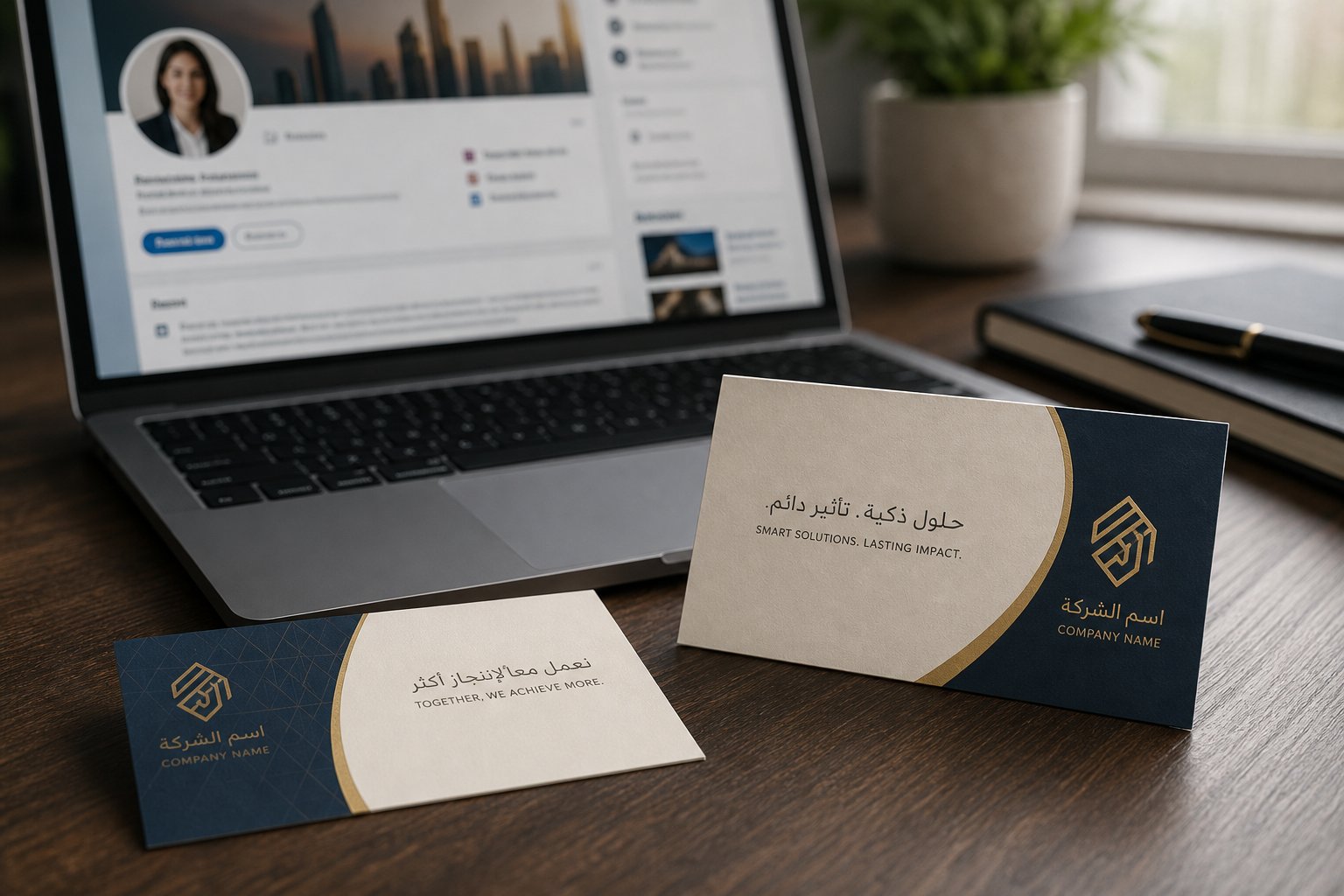
Your digital footprint is where your name lives permanently. Unlike a spoken introduction, your LinkedIn profile, email signature, and business card work for you around the clock. Getting these right means fewer awkward moments in every interaction that follows.
- LinkedIn profile: Add a pronunciation guide using LinkedIn's name pronunciation audio feature. Include your Chinese characters in parentheses after your romanized name if you want to signal bilingual capability. Use the headline field strategically so your professional value is immediately visible alongside your name.
- Email signature: Format your name with a phonetic guide on the first line, for example: "Xuefei Li (pronounced shway-fay)." Include your name in Chinese characters if you work with bilingual contacts. Keep the structure clean: name, title, company, and contact details in a clear hierarchy, as business communication best practices emphasize that clarity and formality build credibility across cultures.
- Business cards: Design bilingual cards with your romanized name and Chinese characters on the same side. Add a small phonetic guide beneath your name. If you operate across Western and Chinese markets, consider a two-sided design with English on one face and Chinese on the other, respecting the formatting conventions of each language.
- Professional email address: Use a clear, recognizable format. If your full name creates a long or confusing address, a first-initial-plus-surname format (e.g., [email protected]) works without requiring you to adopt a different name entirely.
- Social media handles: Consistency matters more than perfection. Use the same name format across platforms so people can find you easily. If your Chinese name is already your brand, keep it everywhere rather than fragmenting your identity across handles.
The common thread across all of these tactics is the same: you are doing the work upfront so that others do not have to guess. Every pronunciation guide you embed, every phonetic note you include, is one less moment of hesitation that could cost you a connection, a follow-up, or a referral.
These strategies work regardless of where you are located. But location itself changes the equation significantly. The same name that requires constant pronunciation coaching in one city may be effortlessly recognized in another, and the rise of remote work is reshaping these geographic dynamics in real time.
Geographic Context and Regional Differences
A Chinese name does not carry the same weight everywhere. The city you live in, the demographic makeup of your region, and the cultural norms of your country all shape how much your name affects your career trajectory. A professional named Jianwei in Vancouver operates in a fundamentally different environment than one in rural England.
How Location Changes the Bias Landscape
Research from multiple countries confirms that name-based discrimination exists broadly, but its intensity varies. A University of Toronto study found applicants with Chinese names were 40% less likely to receive callbacks in Canadian cities. In New Zealand, researcher Paul Spoonley at Massey University documented significant name and accent discrimination tied to assumptions about English proficiency and cultural fit. Similar patterns emerged in studies across the US, UK, Australia, and France.
The critical variable is diaspora density. Cities like Vancouver, Sydney, Singapore, and San Francisco have large Chinese-origin populations. Hiring managers in these areas encounter Chinese names daily, which reduces the "foreign" signal that triggers bias elsewhere. In contrast, regions with minimal ethnic diversity amplify the unfamiliarity effect because a Chinese name stands out rather than blends in.
Singapore presents a unique case. Terence King, born Wang Lai Ming, found that having a Chinese name in Singapore did not help when his appearance did not match expectations. He was told he "didn't look Chinese" despite being a Mandarin speaker. Geography alone does not eliminate bias; it reshapes which assumptions get triggered.
| Region | Bias Severity | Cultural Context | Key Considerations |
|---|---|---|---|
| United States | Moderate to high (varies by city) | Large Asian population in coastal cities; less diversity in interior regions | Tech hubs normalize Chinese names; traditional industries in smaller markets do not |
| Canada | Moderate (documented 28-40% callback gap) | Official multiculturalism policy; high immigration from China | Vancouver and Toronto offer familiarity; smaller cities show stronger bias patterns |
| United Kingdom | Moderate to high | Smaller Chinese diaspora relative to population; class-conscious hiring culture | London is more diverse; regional firms show stronger preference for Anglo names |
| Australia | High (11.3% vs 26.8% callback for leadership roles) | Growing Asian population concentrated in Sydney and Melbourne | Strongest documented bias at leadership level; entry-level gap is narrower |
| Singapore | Low for Chinese names specifically | Chinese-majority population; multilingual business environment | Bias shifts to other axes like appearance, accent, and educational pedigree |
Remote Work and the Shifting Geographic Dynamic
Remote work is redrawing these boundaries. When you apply to a distributed company, your name lands on a screen without the geographic context that might normalize it. A hiring manager in Austin reviewing your application does not have the daily exposure to Chinese names that a manager in San Jose might. In this sense, remote hiring can widen the bias gap by removing the environmental familiarity that diverse cities provide.
On the other hand, global teams create a different dynamic. Companies with offices in Shanghai, Shenzhen, or Taipei treat Chinese names as unremarkable. International business experience and multilingual capability become assets rather than question marks. If you are targeting companies with cross-border operations, your Chinese name signals cultural fluency that monolingual candidates cannot offer.
The geographic calculus is shifting, but it has not disappeared. Where you apply still matters, even if where you sit does not. The broader trend, though, points toward a landscape that is evolving through policy changes, diversity initiatives, and new hiring technologies that may eventually make geography less determinative than it is today.

The Evolving Landscape and Paths Forward
Policy changes, hiring technology, and cultural awareness are not standing still. The environment that produced those stark callback gaps is being reshaped by organizations rethinking how they source and evaluate talent. That does not mean the problem is solved. It means the terrain is shifting, and professionals who understand the direction of change can position themselves accordingly.
How DEI Initiatives Are Changing Hiring Practices
Resume-blind hiring, once a niche experiment, is gaining traction across industries. Research from Harvard Business School found that blinding the hiring process narrowed the gender and age gap by approximately 25 percent without significantly affecting young men. The study concluded that "a blind hiring process increases the overall size, average talent, and gender diversity of the applicant pool." While this research focused on gender and age, the mechanism applies directly to name-based ethnic bias: when screeners cannot see a name, they cannot be influenced by it.
Several Fortune 500 companies have adopted anonymized first-round screening, removing names, photos, and demographic markers from applications before human reviewers see them. Public sector organizations in the UK, Canada, and Australia have piloted similar programs. The logic is straightforward: if the resume screening stage is where name bias concentrates most heavily, removing the name at that stage eliminates the trigger.
AI-powered screening tools add complexity. Algorithms trained on historical hiring data can replicate human biases at scale, rejecting candidates whose profiles resemble those historically screened out. But newer systems designed with fairness constraints can also strip demographic signals and evaluate candidates on skills alone. The outcome depends entirely on how the tool is built and audited. For job seekers, this means the same application might face less bias at one company using well-designed AI and more bias at another using a poorly calibrated system.
Blinding has significant, meaningful impacts on the supply of talent. Talented candidates, especially those from underrepresented groups, are more willing to apply when demographic information is concealed from evaluators.
Diversity initiatives beyond hiring also matter. Companies investing in inclusive leadership training, structured promotion criteria, and sponsorship programs for underrepresented employees are addressing the later-stage bias that blind hiring cannot reach. The chinese name impact on career outcomes is not a single-point problem, and the most effective organizational responses treat it as a pipeline issue rather than a front-door issue alone.
Intersectional Factors That Shape Your Experience
Name bias does not operate in isolation. It intersects with gender, generational status, accent, and professional field in ways that create very different experiences for different people.
Gender amplifies the effect. Chinese women face a compounded disadvantage: research consistently shows that female candidates with ethnic minority names receive fewer callbacks than male candidates with the same names. The "double outsider" dynamic, being both non-Anglo and female, creates a steeper hill in industries where both biases are active. McKinsey's data on Asian American workers confirms that Asian women are particularly underrepresented at the executive level relative to their entry-level numbers.
Generational status matters less than you might expect. The meta-analysis of 123 resume studies found that discrimination persisted against second-generation applicants born and educated in the host country. This challenges the assumption that name bias is really about concerns over language ability or foreign credentials. A candidate named Jianwei who was born in Toronto, educated at McGill, and speaks flawless English still faces a callback gap. The name itself carries the signal, independent of actual background.
Professional field creates different intersections. A Chinese name in academic STEM research is unremarkable because the field is internationally composed. The same name in a regional law firm or a local media company operates in a very different context. Your specific combination of name, gender, industry, and geography creates a unique risk profile that generic advice cannot fully address.
Age and career stage interact with name bias as well. Early-career professionals are more dependent on cold applications where name screening is most active. Senior professionals with established reputations and networks face less resume-level bias but more of the subtle "leadership presence" filtering discussed earlier. The nature of the challenge evolves, but it does not disappear.
Success Models Beyond the Binary Choice
The framing of "change your name or accept fewer opportunities" is a false binary. Plenty of professionals have built successful careers with their Chinese names intact, not by ignoring bias but by developing strategies that route around it.
What these success models share is not a single tactic but a common pattern: they reduced their dependence on the exact stage where name bias is strongest. Instead of relying on cold applications, they built referral networks that introduced them by reputation before a screener ever saw their resume. Instead of waiting to be noticed for promotions, they cultivated sponsors who advocated for them by name in closed-door discussions. Instead of hoping their work would speak for itself, they made their contributions visible through presentations, publications, and cross-functional leadership.
The strategies that work share several characteristics:
- Network-first job searching - Warm introductions bypass the anonymous screening stage entirely, neutralizing the point where name bias is most measurable
- Visible expertise building - Publishing, speaking at conferences, and maintaining an active professional presence means decision-makers encounter your name attached to credibility before they encounter it on a resume
- Strategic sponsorship - Identifying senior advocates who will say your name in rooms you are not in, countering the invisibility that cultural communication styles can create
- Selective targeting - Focusing applications on companies with demonstrated diversity maturity, international operations, or structured hiring processes that limit individual screener discretion
- Owning the narrative - Treating your name as a distinctive personal brand rather than an obstacle, which shifts the framing from deficit to differentiation
None of these strategies require you to change your name. They require you to change your approach to the systems where bias operates. The distinction matters. You are not adapting your identity. You are adapting your tactics to account for a known structural disadvantage, the same way any strategic professional would route around a known bottleneck.
The landscape is moving in a direction that favors authenticity. Blind hiring reduces early-stage filtering. Global teams normalize non-Anglo names. Younger hiring managers who grew up in diverse environments carry fewer implicit associations between unfamiliar names and incompetence. The callback gap documented in studies from the 2010s may not hold at the same magnitude a decade from now.
That does not mean you should wait for the world to catch up. The professionals who thrive are the ones who understand the current system clearly, make deliberate choices about how to navigate it, and build careers that eventually make them powerful enough to change it from the inside. Your name is not the obstacle. The obstacle is a system that has not yet learned to read it correctly. And that system is, slowly but measurably, learning.
Frequently Asked Questions About Chinese Name Impact on Career
1. Do Chinese names really get fewer job interview callbacks?
Yes, multiple large-scale studies confirm this pattern. A Canadian study of nearly 13,000 resumes found applicants with Chinese names received 28% fewer callbacks. In Australia, research showed leadership-role callbacks dropped from 26.8% for English names to just 11.3% for non-English names. A U.S. study found candidates were almost twice as likely to get callbacks when they whitened their resumes. The bias is strongest at the resume screening stage, where recruiters spend fewer than ten seconds per application and unfamiliar names trigger unconscious assumptions about language ability, regardless of actual qualifications.
2. Should I use an English name on my resume to get more interviews?
This is a personal decision with real tradeoffs on both sides. Research from the University of Kansas found that anglicizing ethnic names was associated with reduced self-esteem and lower well-being among Chinese professionals. However, studies also confirm that English names generate more callbacks from employers. Consider alternatives like using both names together, leveraging referral networks to bypass anonymous screening, or targeting companies with blind hiring practices and demonstrated diversity maturity. Your career stage, industry, and geographic location all factor into which approach makes the most strategic sense for your situation.
3. Which industries have the least name-based discrimination for Chinese professionals?
Technology and academic STEM research tend to show less name bias because these fields have high existing representation of Asian professionals, making Chinese names familiar to hiring managers. Structured, skills-based hiring processes in engineering roles also reduce individual screener discretion. Finance, consulting, and client-facing roles in traditional corporate environments show stronger bias patterns. The key factors are team diversity, hiring process formality, level of client interaction, and whether the company has international operations. Smaller startups with diverse founding teams and multinationals with Asian offices also tend to create less friction around Chinese names.
4. How does a Chinese name affect career advancement beyond getting hired?
Name bias evolves as your career progresses. At the application stage, it is measurable through callback rates. During networking, people may avoid names they cannot pronounce confidently, leading to fewer spontaneous connections. At the promotion level, research shows Asian Americans hold fewer than 15% of executive positions at major tech firms despite comprising over 30% of the workforce. This bamboo ceiling effect occurs because decision-makers unconsciously compare candidates against Western leadership prototypes. Cultural communication styles that prioritize humility over self-promotion compound the issue, making professionals with Chinese names less visible in closed-door advancement discussions.
5. Are resume-blind hiring practices reducing Chinese name discrimination?
Resume-blind hiring is gaining traction and shows promising results. Harvard Business School research found that blinding the hiring process narrowed demographic gaps by approximately 25% and increased the overall talent and diversity of applicant pools. Several Fortune 500 companies and public sector organizations in the UK, Canada, and Australia have adopted anonymized first-round screening. However, blind hiring only addresses the initial screening stage. Later-career bias around promotions, sponsorship, and leadership perception requires different interventions like structured promotion criteria, inclusive leadership training, and active sponsorship programs for underrepresented professionals.