How Superstition Shapes Every Chinese Name
When a child is born in a traditional Chinese family, the first question is not "How much does the baby weigh?" It is: "What hour was the baby born?" That single detail sets an entire naming system into motion, one where every brushstroke, every sound, and every radical is believed to steer a child's destiny.
Why Chinese Names Carry Superstitious Weight
So what are Chinese names, really? They are far more than labels. Each name is chosen from a pool of over 220 million possible combinations, and Chinese naming customs treat that selection as one of the most consequential decisions a family will ever make. Unlike English names, where meaning often fades into the background, every Chinese character carries a self-contained word with visible meaning, elemental energy, and a precise number of brushstrokes. The belief is straightforward: get the name right, and you set the child on a path toward health, wealth, and harmony. Get it wrong, and misfortune follows.
In Chinese culture, naming a child is not an act of personal expression. It is an act of fate engineering, practiced for thousands of years from imperial-era taboos to modern professional consultations.
The Interconnected System Behind Every Name
What makes superstitions in Chinese naming so compelling is that they do not operate as scattered folk beliefs. They form a coherent, interlocking methodology. The BaZi system (Eight Characters) maps a child's elemental blueprint from their birth date and hour. The Five Elements theory (Wuxing) identifies which energies are missing. Stroke count numerology determines whether character pairings produce fortunate totals. The Chinese zodiac flags which radicals clash with the birth year animal. Phonetics screen out dangerous homophones. Together, these layers create a unified framework, one that professional naming masters and everyday families still navigate with real seriousness.
These are not isolated Asian superstitions layered on top of each other by coincidence. They are a single system with multiple checkpoints, each designed to ensure a name does not accidentally invite bad fortune. Understanding how they connect reveals why a single misplaced stroke can matter so much.
Understanding Chinese Name Structure and Order
Every layer of that interconnected system needs a vessel to inhabit, and that vessel is the Chinese name itself. But the chinese name structure is unlike anything in the Western naming world. It is compact, deliberate, and loaded with superstitious function at every position.
Surname First and Given Name Structure
Are chinese names last name first? Yes. The family name (xing) always leads, followed by the given name (ming). A typical Chinese name contains two or three characters total: one character for the surname and one or two for the given name. So someone named Wang Xiuying is "Wang" (surname) plus "Xiuying" (given name), not the other way around. This order of chinese names reflects a core cultural value: the family precedes the individual.
The surname carries the weight of lineage. It connects a person to an entire clan stretching back centuries. There are over 4,000 Chinese surnames in use, yet a mere hundred surnames account for over 85% of China's population. Just three surnames, Wang, Li, and Zhang, cover more than 20% of all Chinese citizens. That concentration means the given name bears enormous pressure to distinguish, protect, and bless.
The given name is where superstitious considerations concentrate. While the surname is inherited and fixed, the given name is actively engineered. Parents select characters that are phonetically and semantically meaningful, choosing names believed to influence a person's destiny. Boys often receive characters symbolizing strength and power. Girls often receive characters representing beauty and grace. But beyond gender associations, every character must pass through the filters of elemental balance, stroke count, zodiac compatibility, and phonetic safety.
- Surname (xing) - Comes first. Represents ancestral lineage and clan identity. Inherited, not chosen. Carries spiritual responsibility to honor the family line.
- Given name (ming) - Comes second. One or two characters carefully selected to shape fortune. This is where elemental balancing, stroke calculations, and phonetic screening all apply.
- Generational character (zi bei) - When used, occupies one position within the given name. Shared by all siblings and patrilineal cousins of the same generation to maintain spiritual continuity.
- Milk name (xiao ming) - An informal childhood name, often deliberately humble or unattractive, used to protect the child from supernatural harm before the formal name is settled.
Generational Names and Ancestral Continuity
The chinese generational names system, known as zi bei, is more than a family tradition. It functions as a superstitious practice designed to maintain spiritual continuity across generations. Here is how it works: a family composes a "generation poem" containing a sequence of characters. Each successive character becomes the shared generational name element for everyone born into that generation.
Imagine a family where all siblings and patrilineal cousins share the character "Zhen" in their names: Jia Zhenni, Jia Zhenhai, Jia Zhenhua, Jia Zhendong. That shared element is their generational name. The belief is that this practice binds family members spiritually, ensuring ancestral blessings flow unbroken from one generation to the next. Breaking the sequence risks severing that connection.
These generation poems often contain characters expressing virtuous ideals, like jun (smart, talented) or hao (grand, heroic). The poem composed in 1737 for Mao Zedong's family prescribed characters for dozens of future generations. Mao himself belonged to the "Ze" generation but famously rejected the system when naming his own sons. Families who set off to form new clan branches placed special importance on the generational poem, as it gave their new lineage a sense of legitimacy and spiritual grounding.
Milk Names That Ward Off Evil Spirits
Perhaps the most vivid intersection of chinese naming conventions and superstition is the milk name, or xiao ming. Traditionally, babies were not formally named until a hundred days after birth. During that vulnerable window, and often well beyond it, children received a "small name" meant to serve a very specific supernatural purpose: deception.
The logic is this. Jealous ghosts and evil spirits are believed to target beautiful, healthy, or promising children. A child with a grand formal name attracts dangerous attention from the spirit world. The solution? Give the child a deliberately humble, ugly, or even disgusting milk name. Names meaning "little dog," "mud ball," or worse signal to malevolent spirits that this child is worthless and not worth harming. The more unappealing the name, the safer the child.
This practice reveals something essential about the order of chinese names and the broader naming system. The formal name is engineered to attract good fortune from the universe. The milk name is engineered to repel bad fortune from the spirit world. Both operate within the same superstitious framework, just pulling in opposite directions. Many families continue using milk names as affectionate nicknames long after the formal name is registered, though the original protective intent gradually softens into familial warmth.
With the structural blueprint in place, the real complexity begins. Each character chosen for the given name must satisfy not just meaning and sound, but an elemental equation rooted in the child's exact moment of birth.
The Five Elements Theory Behind Name Selection
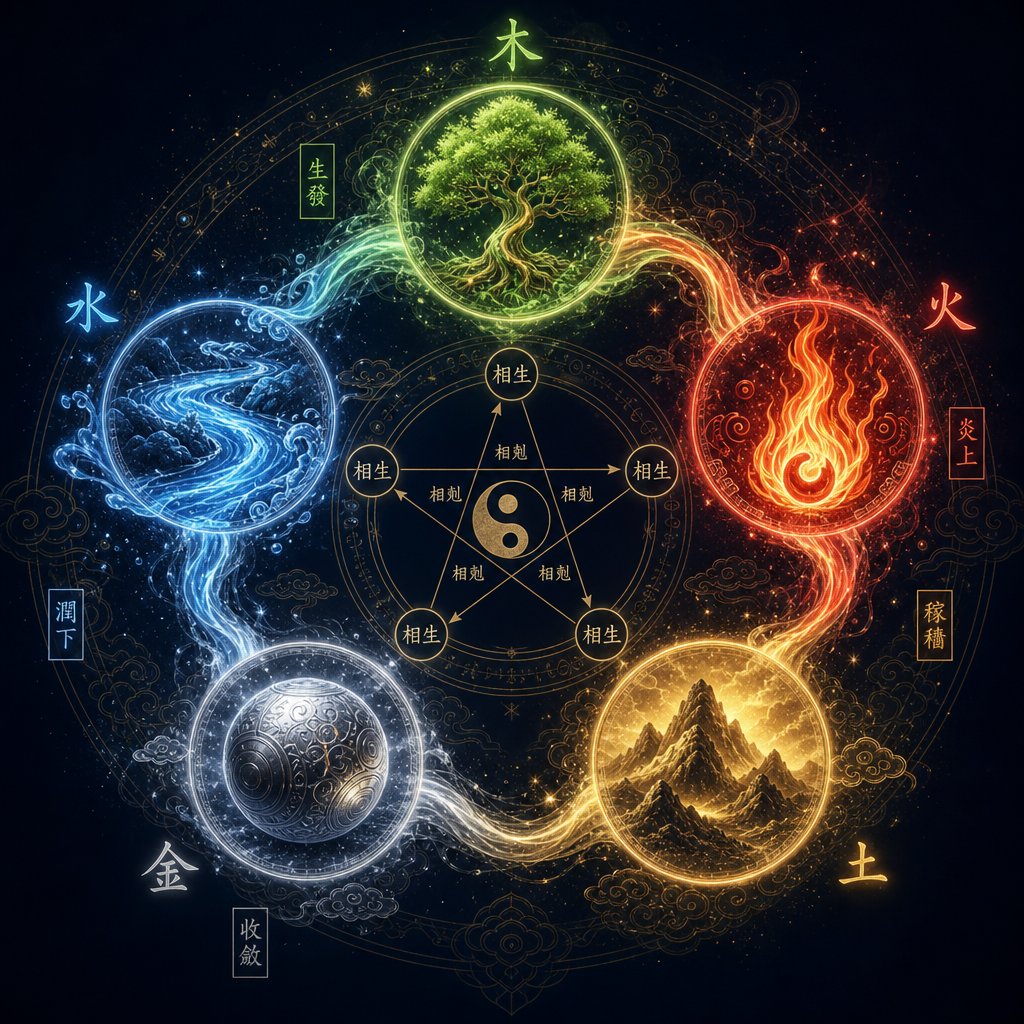
That elemental equation is called Wu Xing (五行), and it is the engine driving most naming decisions in Chinese culture. Often translated as the Five Elements, the term actually means "Five Movements" or "Five Phases." Wood, Fire, Earth, Metal, and Water are not static materials. They are dynamic patterns of energy describing how the universe transforms. When applied to naming, they become a diagnostic tool: identify what energy a child lacks, then select characters that supply it.
Sounds abstract? It is not. This is a practical system families actively use when consulting naming professionals. The meaning of chinese names is never arbitrary. Every character is chosen because it carries a specific elemental charge meant to correct an imbalance written into the child's birth data.
How Birth Time Reveals Elemental Deficiencies
The process starts with the child's exact birth year, month, day, and hour. A naming master converts these four time units into a BaZi chart (Eight Characters), which maps the distribution of all five elements across the child's destiny. The Day Pillar's Heavenly Stem reveals the child's core elemental identity, called the Day Master. A child born with a Yin Fire Day Master, for example, is fundamentally a "Fire person" whose nature resonates with warmth, creativity, and expression.
The naming master then reads the chart for three key indicators:
- Dominant elements - Energies that are overly abundant and may need to be drained or controlled to prevent personality extremes.
- Missing elements - Phases completely absent from the birth chart, often requiring supplementation through specific characters in the name.
- Day Master strength - Whether the core self needs supportive elements to strengthen it or expressive elements to channel its excess energy.
A chart dominated by Fire with little Water suggests someone who burns intensely but may lack emotional depth. A chart heavy in Metal but deficient in Wood suggests precision without flexibility. The name becomes the corrective prescription.
One critical nuance: professional practitioners do not simply count elements and add whatever is missing. They identify the "Favorable Element" (yong shen) that will most effectively harmonize the Day Master. A child born in deep winter with strong Water energy does not need more Water, even if the chart appears "unbalanced" without it. That child needs Fire for warmth. Getting this diagnosis wrong means the name works against the child rather than for them.
Selecting Radicals to Balance a Child's Fate
Chinese characters carry elemental associations through their radicals, the structural building blocks visible within each character. This is what makes the meaning chinese names carry so uniquely suited to elemental engineering. You can literally see the element embedded in the character's form.
When a BaZi analysis reveals that a child's chart lacks Water energy, the naming master selects characters containing the water radical (氵). If Wood is deficient, characters with the wood radical (木) or grass radical (艹) enter the candidate pool. The radical acts as a visible elemental tag, signaling which phase of energy the character channels.
But the radical alone is not enough. The selected character must also sound harmonious with the surname, look balanced in calligraphy, and carry a culturally positive semantic meaning. A Water character with an unfortunate homophone or an unlucky stroke count gets eliminated regardless of its elemental value. This is why naming masters often spend days narrowing candidates. The constraints are layered and unforgiving.
Characters That Strengthen Each Element
What does a chinese name mean when it contains a specific radical? It means someone deliberately placed that elemental energy there to shape the bearer's life path. Here is how the five elements map to radicals, example characters, and the life domains they govern:
| Element | Associated Radicals | Example Name Characters | Life Aspects Governed |
|---|---|---|---|
| Wood (木) | 木 (wood), 艹 (grass) | 林 (lin, forest), 芳 (fang, fragrant), 桐 (tong, paulownia) | Growth, vitality, health, flexibility, benevolence |
| Fire (火) | 火 (fire), 灬 (fire dots) | 炎 (yan, flame), 煜 (yu, radiant), 照 (zhao, illuminate) | Passion, visibility, leadership, warmth, expression |
| Earth (土) | 土 (earth), 山 (mountain) | 坤 (kun, feminine earth), 岳 (yue, peak), 城 (cheng, city) | Stability, trust, nourishment, patience, grounding |
| Metal (金) | 金 (metal), 钅 (metal variant) | 鑫 (xin, prosperity), 铭 (ming, inscription), 锐 (rui, sharp) | Discipline, clarity, righteousness, decision-making, structure |
| Water (水) | 氵 (water), 雨 (rain) | 涵 (han, contain), 泽 (ze, marsh), 润 (run, moist) | Wisdom, adaptability, depth, fluidity, intelligence |
Consider the character Ze (泽), meaning "marsh" or "beneficence." It carries Water energy and suggests generosity and nourishment, like water flowing to sustain fertile land. A naming master might select it for a child whose chart lacks Water, but only if the stroke count aligns, the zodiac permits it, and the phonetic pairing with the surname avoids dangerous homophones.
Names in chinese and meanings are inseparable precisely because of this system. The character Ming (铭), meaning "to engrave" or "inscription," channels strong Metal energy. It suggests a person who leaves a lasting mark, possessing intellect as enduring as carved bronze. The character Rui (锐), meaning "sharp" or "keen," imparts decisive clarity. Each selection is a calculated intervention in the child's elemental destiny.
The five elements also interact through generating and controlling cycles. Wood feeds Fire. Fire creates Earth. Earth bears Metal. Metal collects Water. Water nourishes Wood. A skilled naming master considers not just the missing element but how the chosen character's energy will ripple through the entire system. A name heavy in Wood might inadvertently weaken Earth through the controlling cycle, creating a new imbalance while solving the original one.
This layered complexity explains why the chinese meaning of names cannot be reduced to a simple dictionary translation. The same character carries semantic meaning, elemental energy, stroke count value, and phonetic associations simultaneously. Balancing all four dimensions within a two or three character name is the puzzle that keeps professional naming masters in business, and it is only one layer of the system. The stroke count of each character introduces an entirely separate numerological dimension with its own rules and constraints.
Stroke Count Numerology in Chinese Naming
That separate numerological dimension has a name: bi hua, or stroke count numerology. It treats every brushstroke in a character as a unit of cosmic energy. Add them up in the right combination, and the name channels fortune. Add them up wrong, and you have quietly written misfortune into a child's identity.
How Stroke Counts Are Calculated
Here is where things get counterintuitive. Even in mainland China, where simplified characters dominate daily life, stroke counts for naming purposes are calculated using traditional character forms from the Kangxi Dictionary. A character you write with six strokes in its simplified version might officially count as nine strokes in its traditional form. This distinction matters enormously because the entire fortune reading hinges on precise numbers.
Why traditional forms? The reasoning is that traditional characters preserve the original energetic structure of the written word. Simplification altered visual form but not metaphysical weight. So a naming master always references the Kangxi Dictionary standard, regardless of which script the family uses day to day. This is one reason understanding how chinese names work requires looking beyond the surface of modern writing.
Certain radicals also follow special counting rules. The water radical (氵) counts as four strokes, not three, because its traditional form is 水. The grass radical (艹) counts as six. These stipulated rules mean that even experienced calligraphers sometimes miscount when attempting stroke analysis without professional guidance.
Lucky and Unlucky Stroke Totals
Once you have accurate stroke counts, the numbers themselves carry fortune classifications. The system recognizes 81 base numbers, each assigned an auspicious or inauspicious rating. After 81, the cycle repeats (82 is treated as 1, 83 as 2, and so on).
Which totals are considered lucky? Numbers like 1, 3, 5, 8, 11, 13, 15, 16, 21, 23, 24, 31, 32, 33, 35, 37, 41, 45, 47, 48, 52, and 81 fall into the auspicious category, representing soundness, happiness, and success. Numbers like 4, 9, 10, 12, 14, 19, 20, 22, 28, 34, 36, 44, and 54 are classified as inauspicious, associated with adversity, illness, and hardship.
Some numbers carry specialized meanings beyond simple good or bad. The number 24 indicates wealth fortune. The numbers 21 and 23 signal leadership potential but are considered problematic for women in traditional readings, as they supposedly indicate a temperament too strong for domestic harmony. The number 4 is particularly dreaded because it echoes the broader chinese naming convention of avoiding anything associated with death (si, 死).
A middle category exists too. Numbers like 17, 27, 29, and 38 are classified as "sub-auspicious," meaning they present obstacles but ultimately resolve favorably. Families who cannot achieve a purely auspicious combination across all grids often settle for sub-auspicious numbers in less critical positions.
The Five-Grid Stroke Analysis Method
Stroke count numerology does not simply total all strokes and declare a verdict. The system divides a name into five separate grids (wu ge), each governing a different life domain. This method was systematized by the Japanese scholar Kumazaki Ken'o in 1918, based on Chinese I Ching numerology, and later integrated with traditional Chinese naming practices across Taiwan, Hong Kong, and mainland China.
Each grid has its own calculation formula and its own sphere of influence:
- Heaven Grid (tian ge) - Surname strokes + 1 (for single surnames). Represents inherited fortune and ancestral conditions. Considered largely fixed and outside personal control.
- Personality Grid (ren ge) - Surname strokes + first given name character strokes. The most important grid. Governs overall life destiny and core character.
- Earth Grid (di ge) - Sum of given name character strokes. Influences early life, education, and foundational circumstances.
- Total Grid (zong ge) - All strokes in the full name added together. Reflects fortune trajectory from middle age through old age.
- Outer Grid (wai ge) - Total Grid minus Personality Grid, plus 1. Represents social environment, relationships, and external opportunities.
Imagine you are naming a child with the surname Li (李, 7 strokes in traditional form). You want to pair it with the given name Shimin (世民). Here is how the five-grid breakdown works for the traditional chinese name Li Shimin:
| Grid | Calculation | Stroke Total | Five Element | Life Domain |
|---|---|---|---|---|
| Heaven Grid | 7 (Li) + 1 | 8 | Metal | Ancestral fortune, inherited conditions |
| Personality Grid | 7 (Li) + 5 (Shi) | 12 | Wood | Core destiny, overall life path |
| Earth Grid | 5 (Shi) + 5 (Min) | 10 | Water | Early life, education, youth fortune |
| Total Grid | 7 + 5 + 5 | 17 | Metal | Later life fortune, middle to old age |
| Outer Grid | 17 - 12 + 1 | 6 | Earth | Social environment, external relationships |
In this example, the Personality Grid lands on 12, which falls into the inauspicious category. A naming master would flag this immediately. The Total Grid at 17 is sub-auspicious, meaning obstacles that eventually resolve. The Three Talents configuration (Metal, Wood, Water from the Heaven, Personality, and Earth grids) would then be analyzed for elemental harmony. Metal controlling Wood is a restraining relationship, suggesting tension between inherited conditions and personal destiny.
You can see how this system creates real constraints on how chinese names are structured. A surname with a fixed stroke count limits which given name characters can produce favorable numbers across all five grids simultaneously. Some character pairings that sound beautiful or carry perfect elemental energy become unusable because their stroke totals land on inauspicious numbers. Other characters that seem unremarkable become prized because they hit lucky totals when combined with a specific surname.
This is why the chinese naming convention of consulting professionals persists. Satisfying stroke count requirements while simultaneously meeting Five Elements balance, zodiac compatibility, and phonetic safety demands is a puzzle with very few valid solutions. And the puzzle grows even more constrained when you factor in which specific characters and sounds are considered outright dangerous to include in any name.
Unlucky Characters and Dangerous Homophones
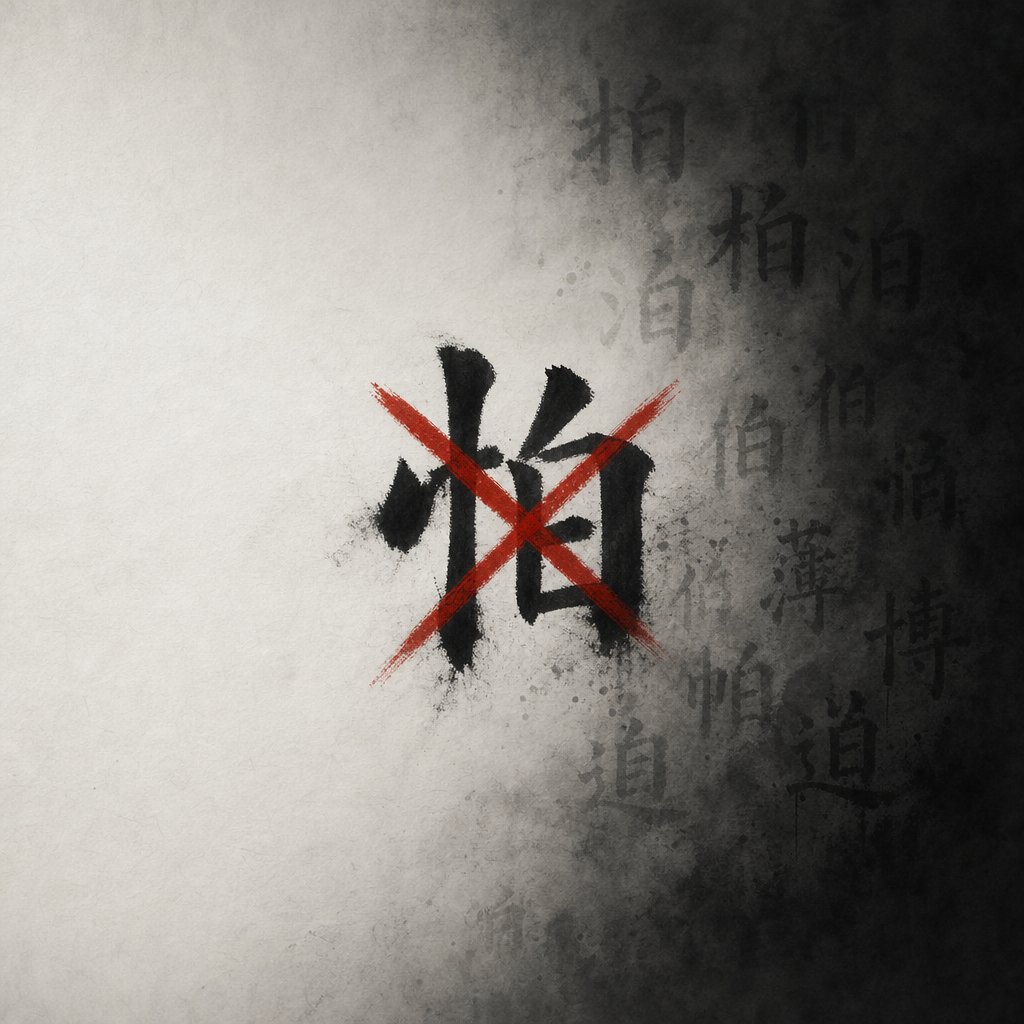
Stroke counts and elemental balance can be perfectly calibrated, yet a name can still be ruined by a single sound. Chinese is a tonal language with a limited number of syllables, meaning hundreds of characters share identical or near-identical pronunciations. That phonetic density turns every name into a minefield of unintended associations. A character with a beautiful written meaning can sound exactly like a word for death, disease, or failure when spoken aloud.
Homophones That Invite Misfortune
The most feared homophone in Chinese naming is si (四), the chinese bad luck number. Pronounced in the fourth tone, it sounds almost identical to si (死), meaning death. This single phonetic overlap drives an entire cultural avoidance pattern: buildings skip the fourth floor, phone numbers drop the digit, and hospitals omit room number four. In naming, the fear extends further. Characters with four strokes, names whose total stroke count equals four, and any syllable that echoes si all become suspect.
But four is only the beginning. Chinese has many bad numbers and dangerous sounds that families screen against when choosing a name. Consider how easily a well-meaning character pairing can go wrong:
- Si wang (思旺) - Individually, these characters mean "to think" and "prosperous." Together, they sound like si wang (死亡), meaning death. A name with positive characters that phonetically spell disaster.
- Shi (失) - Characters pronounced shi in certain tones echo "loss" or "failure," making names containing this sound feel like invitations to lose what you have.
- Li (离) - Sounds like "separation" or "departure." A name evoking li suggests the bearer will be separated from loved ones or drift through life alone.
- Ku (苦) - Means "bitter" or "suffering." Any character sharing this pronunciation carries an undertone of hardship.
- San (散) - Means "to scatter" or "to fall apart." Phonetically adjacent to loss and dissolution.
- Shuai (衰) - Means "decline" or "decay." Even characters that merely rhyme with shuai can trigger discomfort.
These are not obscure concerns. Families routinely read a proposed name aloud in full, testing how the surname and given name sound together as a phrase. A surname like Yang paired with a given name starting with wei could produce "yang wei," a term for impotence. The character itself might mean "greatness," but the spoken combination becomes an embarrassment, or worse, a name people believe actually attracts that condition.
The superstition around names meaning bad luck extends beyond individual syllables to full-name readings. Parents test names against regional dialects, slang, and even children's rhyming games to ensure no cruel nickname lurks within the sounds. In Chinese culture, are pears bad luck in china? Yes, because the word for pear (li, 梨) sounds identical to the word for separation (li, 离). That same phonetic logic applies directly to naming. Any character sharing the pear-separation sound carries a subtle warning of loneliness.
Characters and Radicals to Avoid
Beyond homophones, certain characters are avoided based on their direct meaning. Names meaning unlucky outcomes, like bing (病, illness), huai (坏, bad), or wang (亡, perish), would never appear in a name intentionally. But the avoidance list goes deeper than obviously negative words.
Characters suggesting solitude, fragility, or transience also qualify as unlucky names. Gu (孤, orphan) implies a life without family support. Bo (薄, thin) suggests weakness and insubstantiality. Luo (落, to fall) evokes decline. Diao (凋, to wither) paints a picture of early death. Even characters associated with autumn or winter, seasons of decay and dormancy, can raise concerns when they dominate a name without balancing warmth.
Some characters carry hidden dangers through colloquial usage. The character ri (日) officially means "sun" but functions as a vulgar expletive in certain regions. Cao (草), meaning "grass," has similarly acquired profane connotations in informal speech. A name that reads beautifully on paper can become a source of ridicule when spoken in the wrong dialect or social context.
Names that mean bad luck do not always announce themselves obviously. The danger often hides in combinations rather than individual characters. Two perfectly fine characters placed side by side can produce an unlucky visual or phonetic pattern that neither character carries alone.
The Taboo of Naming After Famous Figures
One of the strongest naming taboos in Chinese culture has nothing to do with sound or stroke count. It concerns repetition. Using the name of a famous or powerful person, whether living or historical, is considered deeply problematic.
The reasoning operates on two levels. First, in traditional Chinese society, repeating the name of an elder or superior was an act of disrespect. This hierarchical sensitivity extends to public figures. Naming a child after leaders like Mao Zedong or Zhou Enlai is not flattery. It is perceived as presumptuous, even an act of contempt toward those figures.
Second, the superstitious dimension: sharing a name with someone powerful invites unfavorable comparison. The belief holds that the child's fortune will be overshadowed by the famous bearer's destiny, leaving the child perpetually diminished. It is as though the name's energy has already been claimed, and a second bearer can only receive its shadow.
This taboo also applies to historical villains, traitors, and morally disgraced figures. Their names carry a kind of spiritual contamination. No family wants their child associated with names that mean unlucky fates already proven by history. Using even a single character from such a person's given name can raise eyebrows, though pairing it with a different surname generally neutralizes the concern.
The same logic discourages naming children after living family members. Unlike Western cultures where a child named after a grandparent honors that person, Chinese tradition treats the repetition as a violation of generational hierarchy. The elder's name belongs to them alone, and duplicating it confuses the spiritual order of the family.
All of these phonetic and character-level dangers interact with the systems already discussed. A character might satisfy Five Elements requirements and produce a lucky stroke count, yet fail the homophone test. Another might sound perfect but carry a radical associated with the child's zodiac clash animal. The constraints compound, which is precisely why the next layer, zodiac year interactions, adds yet another dimension families must navigate simultaneously.
Zodiac Year Interactions With Naming Choices
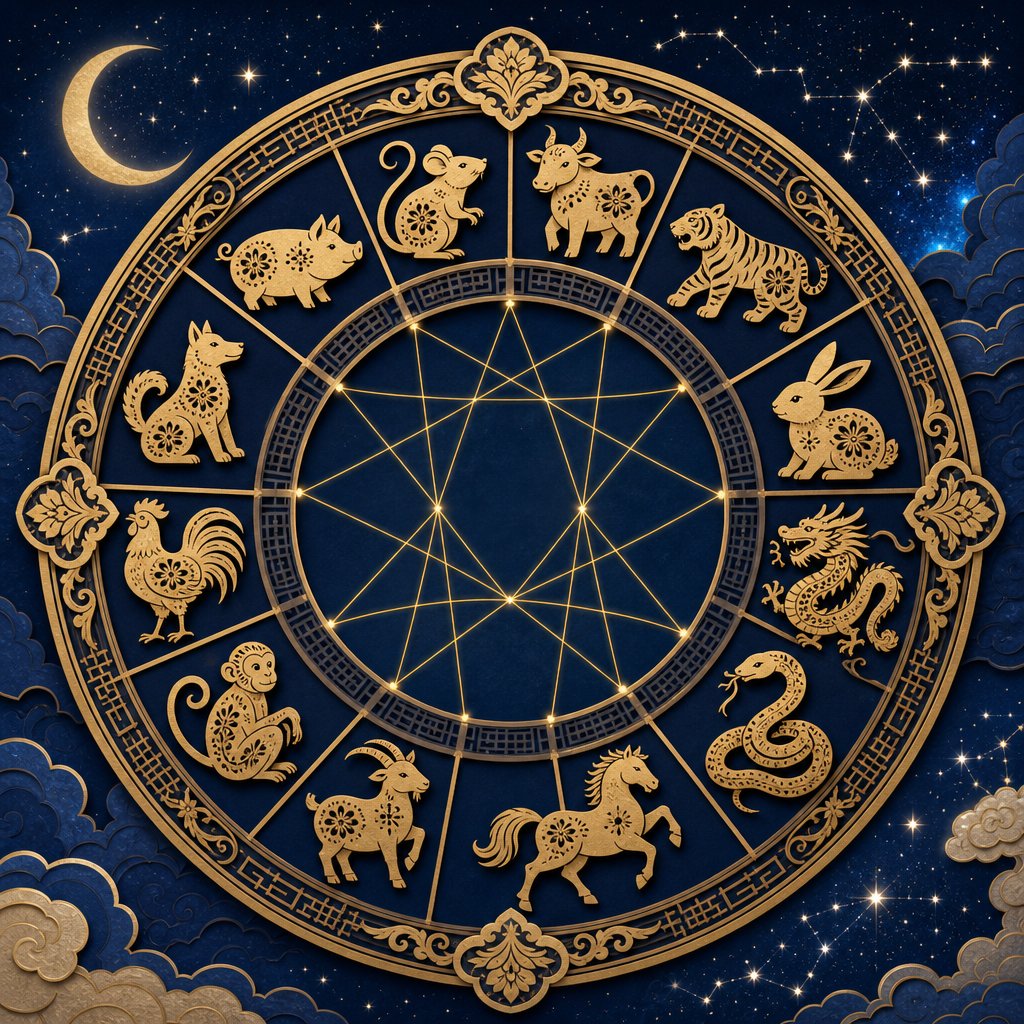
The zodiac layer does not replace the Five Elements or stroke count systems. It stacks on top of them, adding a biological clock to the naming puzzle. Every child is born under one of twelve zodiac animals, and each animal carries its own set of favorable radicals, dangerous character components, and clashing counterparts. A character that passes every other test can still be disqualified because it contains a radical hostile to the child's birth year animal.
Zodiac Animals and Their Favorable Radicals
The logic behind zodiac-based naming draws on the animal's nature, habitat, and traditional associations. A child born in the Year of the Rat benefits from characters containing the grain radical (禾) because rats thrive where grain is abundant. Characters like 秀 (xiu, elegant) or 程 (cheng, journey) carry that radical and suggest a life of plenty. The Rat also favors characters with the roof radical (宀), since rats feel safe in enclosed spaces. Characters like 安 (an, peace) or 宁 (ning, tranquility) signal shelter and security for a Rat-year child.
A child born in the Year of the Tiger, by contrast, benefits from characters containing the mountain radical (山) or the king radical (王), reflecting the tiger's domain as ruler of the forest. Characters like 岚 (lan, mountain mist) or 琳 (lin, fine jade) align with the Tiger's energy. The Ox favors grass radicals (艹) because oxen graze, making characters like 芳 (fang, fragrant) or 茂 (mao, lush) auspicious for Ox-year children.
These associations are among the most widely observed traditions in chinese culture when it comes to naming. Families who might skip stroke count analysis or BaZi consultations still check zodiac radical compatibility. It feels intuitive: give the animal what it needs to thrive, and the child thrives with it.
Animal Clashes That Make Characters Dangerous
Every zodiac animal has a direct adversary positioned six places away on the twelve-animal wheel. These opposing pairs are called "six clashes" (liu chong), and they represent fundamental incompatibility. Using characters associated with a child's clash animal is one of the strongest chinese taboos in naming practice.
The six clash pairs are: Rat-Horse, Ox-Goat, Tiger-Monkey, Rabbit-Rooster, Dragon-Dog, and Snake-Pig. A Rat-year child should avoid characters containing horse-related components like 马 (horse radical) because the Rat and Horse clash directly. Characters like 骏 (jun, fine steed) or 驰 (chi, gallop) become off-limits regardless of how beautiful their meaning or how perfect their stroke count.
The reasoning goes beyond simple opposition. Chinese death superstitions hold that placing a clash animal's energy into a child's name creates lifelong internal conflict. The name fights against the child's innate nature rather than supporting it. Imagine naming a Rabbit-year child with characters containing the rooster radical (酉). The belief is that this invites constant friction, arguments, and instability throughout life.
Beyond the six clashes, a secondary system of "harm" relationships (liu hai) adds further restrictions. These are subtler incompatibilities: Rat-Goat, Ox-Horse, Tiger-Snake, Rabbit-Dragon, Monkey-Pig, and Rooster-Dog. Characters associated with harm animals are not as strictly forbidden as clash animals, but cautious families avoid them too.
| Zodiac Animal | Auspicious Radicals | Clash Animal | Radicals to Avoid |
|---|---|---|---|
| Rat (鼠) | 禾 (grain), 宀 (roof), 王 (king), 口 (mouth) | Horse | 马 (horse), 火 (fire), 日 (sun) |
| Ox (牛) | 艹 (grass), 田 (field), 宀 (roof), 车 (vehicle) | Goat | 未 (goat branch), 心 (heart/meat), 马 (horse) |
| Tiger (虎) | 山 (mountain), 王 (king), 木 (wood), 月 (moon/meat) | Monkey | 申 (monkey branch), 口 (small enclosure), 日 (sun) |
| Rabbit (兔) | 艹 (grass), 木 (wood), 月 (moon), 宀 (roof) | Rooster | 酉 (rooster branch), 金 (metal), 刀 (knife) |
| Dragon (龙) | 水 (water), 日 (sun), 王 (king), 大 (big) | Dog | 犬 (dog), 戌 (dog branch), 山 (mountain) |
| Snake (蛇) | 木 (wood), 口 (enclosure), 宀 (roof), 衣 (clothing) | Pig | 亥 (pig branch), 豕 (pig), 虎 (tiger components) |
You will notice that some radicals appear as favorable for one animal and forbidden for another. The grass radical (艹) is excellent for Ox and Rabbit children but carries no special benefit for a Dragon. The roof radical (宀) protects Rat and Rabbit children but can feel confining for a Horse, an animal that needs open space. This is why superstitions in china around naming cannot be reduced to a universal "good character" list. What blesses one child curses another, depending entirely on birth year.
Ghost Month and Seasonal Naming Taboos
The zodiac year is not the only calendar concern. The lunar month and even the specific day of birth introduce additional naming considerations. The most significant of these is Ghost Month, the seventh month of the lunar calendar, when the gates of the underworld are believed to open and restless spirits roam freely among the living.
Children born during Ghost Month face extra naming precautions. The belief holds that these children are more vulnerable to spiritual interference because they entered the world during a period of heightened supernatural activity. Naming masters often select characters with strong protective energy for Ghost Month babies: characters suggesting light (明, ming), strength (强, qiang), or heavenly authority (天, tian) to counteract the yin energy surrounding their birth.
This is not a fringe concern. As VnExpress reported, some families go so far as to schedule cesarean deliveries before Ghost Month begins, specifically to avoid having a child born under its shadow. The naming implications are just one dimension of a broader cultural anxiety around this period. Families who cannot control the birth timing compensate through the name, loading it with yang energy and protective symbolism.
Seasonal considerations extend beyond Ghost Month. Children born in winter months, when Water energy dominates the natural world, may already have excess Water in their BaZi chart. Their zodiac animal's favorable radicals might include Water components, but the seasonal context makes adding more Water counterproductive. A skilled naming master weighs the zodiac recommendation against the seasonal reality, sometimes overriding an animal-favorable radical because the birth season has already saturated that element.
CNY superstitions also influence naming timing. Children born during the Lunar New Year transition period face a unique question: which zodiac animal governs their name? The official zodiac year changes on the first day of the lunar new year (or on Li Chun, the start of spring, depending on which school the naming master follows). A child born in late January might belong to the outgoing animal or the incoming one, and the answer determines which radicals are favorable and which clash animals apply. Getting this boundary wrong means building the entire name on the wrong zodiac foundation.
This calendar layer reveals why chinese naming is not a one-time calculation but a multi-dimensional puzzle. The zodiac animal sets radical preferences. The birth season adjusts elemental needs. Ghost Month triggers protective character choices. And all of these interact with the Five Elements balance and stroke count requirements already established. The result is a complex matrix of constraints so demanding that most families cannot navigate it alone, which is exactly why professional naming masters remain essential to the process.
Professional Naming Masters and the BaZi Method
A matrix that complex demands a specialist. Enter the qiming shi, the professional naming master, whose entire practice revolves around solving this multi-layered puzzle. These practitioners are not simply calligraphers with good taste. They are trained in classical Chinese metaphysics, combining I Ching divination, Five Elements theory, zodiac analysis, and stroke count numerology into a single consultative process. For families seeking to understand chinese names behind the name, the qiming shi is the person who reveals how every layer connects.
What a Naming Master Actually Analyzes
When a family brings a newborn's birth details to a naming master, the consultation is not a quick creative brainstorm. It is a systematic diagnostic process. The master analyzes multiple dimensions simultaneously, each one capable of vetoing a character that passes every other test.
The chinese name interpretation a master performs covers at minimum five domains: the child's elemental constitution (derived from BaZi), zodiac animal compatibility, stroke count numerology across all five grids, phonetic safety in the family's dialect, and semantic meaning. A character must clear every checkpoint. One failure, whether a clash radical, an unlucky stroke total, or a dangerous homophone, eliminates it from consideration regardless of how well it performs elsewhere.
As feng shui master Shi Jiuzheng, who offers naming services near Beijing's Yonghegong Lama Temple, explained: "The characters in the name should be well-shaped and coordinated, and their meanings should be auspicious and suitable for the baby." That coordination is not aesthetic. It is metaphysical, requiring every element of the name to harmonize with the child's birth data.
The BaZi Chart Reading Process
The foundation of every professional naming consultation is the BaZi chart, sometimes called the Four Pillars of Destiny. The chinese name origin of this method traces back to the Tang Dynasty, when scholars formalized the relationship between birth timing and fate. Here is the step-by-step process a naming master follows from birth data collection through final character selection:
- Collect exact birth data - The master records the child's birth year, month, day, and hour. Even a two-hour difference can shift the Hour Pillar and alter the entire elemental reading.
- Convert to Heavenly Stems and Earthly Branches - Each of the four time units is translated into a pair of characters from the traditional stem-branch system, producing eight characters total (hence "Eight Characters" or BaZi).
- Identify the Day Master - The Heavenly Stem of the Day Pillar reveals the child's core elemental identity. This is the anchor point for all subsequent analysis.
- Map elemental distribution - The master charts how much Wood, Fire, Earth, Metal, and Water appear across all eight characters, identifying excesses and deficiencies.
- Determine the Favorable Element (yong shen) - Rather than simply adding whatever is missing, the master identifies which element will most effectively balance and support the Day Master's strength.
- Cross-reference zodiac constraints - The birth year animal's favorable and clash radicals are overlaid onto the elemental requirements, narrowing the pool of acceptable characters.
- Generate candidate characters - Characters containing the correct elemental radicals, carrying positive meanings, and avoiding zodiac clashes enter the shortlist.
- Calculate stroke counts across all five grids - Each candidate pairing is tested against the surname to ensure all five grids produce auspicious or sub-auspicious totals.
- Screen for phonetic dangers - Surviving candidates are read aloud with the surname to check for unfortunate homophones, dialect-specific slang, and awkward tonal combinations.
- Present final options - The master typically offers two to five names that satisfy all constraints, explaining the reasoning behind each so the family can choose based on personal preference.
This process explains why consultations are not instant. A naming master working through chinese name origins and metaphysical requirements may spend several days narrowing candidates, especially for surnames with difficult stroke counts that limit compatible pairings.
Modern Naming Services and Apps
The demand for professional naming has spawned a thriving commercial industry. In major Chinese cities, naming masters operate storefronts near temples and cultural districts. Along Beijing's Yonghegong Dajie, multiple feng shui masters specialize in baby naming, serving both Chinese families and mixed-race couples whose Chinese partners insist on a properly analyzed name. The service extends to clients from the US, France, the Netherlands, Italy, Russia, and beyond.
Costs vary dramatically. A basic consultation with a neighborhood practitioner might run a few hundred yuan. High-profile masters in Hong Kong charge significantly more. One Hong Kong woman paid approximately HK$15,000 (around $1,930 USD) for a name-change consultation, including the legal registration fee. Premium services that include ongoing fortune readings and name adjustments command even higher prices.
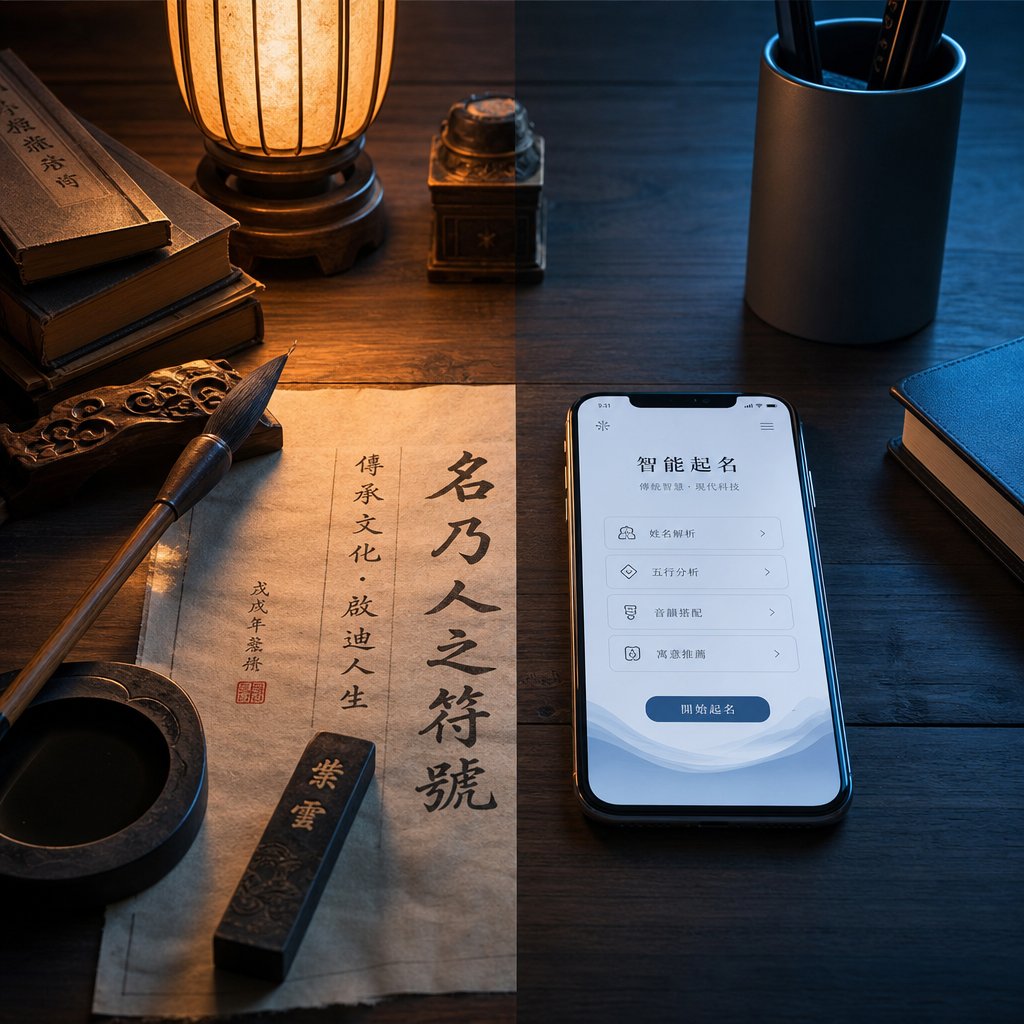
Digital platforms have democratized access to what was once an exclusively in-person service. Naming apps now allow parents to input birth data and receive algorithmically generated name suggestions scored across elemental balance, stroke count, and zodiac compatibility. These apps cannot replicate the nuanced judgment of an experienced master, particularly around dialect-specific phonetic concerns, but they serve families who want a quick screening tool or cannot afford professional fees.
The industry also serves adults. The practice of changing names, called gai ming, is not limited to correcting childhood naming errors. Adults experiencing persistent bad luck, career stagnation, health problems, or relationship failures seek out naming masters to diagnose what went wrong. Hong Kong feng shui practitioner Mak Ling-ling reports that among her adult clients, "about 60 to 70% came to me to get rid of their bad luck." She describes a name as similar to clothing: "it represents one's personality and possibly class."
The gai ming process mirrors the original naming methodology. The master re-reads the client's BaZi chart, identifies which elemental imbalance the current name fails to address, and proposes a new character that introduces the missing energy. Sometimes the fix is subtle, changing a single character while preserving the other. Other times, the entire given name is replaced. The behind the name chinese philosophy remains consistent: if the name's energy does not match the bearer's elemental needs, misfortune accumulates until the mismatch is corrected.
Skeptics exist, of course. Research by Zhang Yan, associate professor of marketing at the National University of Singapore, suggests that name changes function primarily through psychological mechanisms. "People crave for a sense of control, especially during the time of uncertainty," Zhang explains. The act of changing a name may reduce anxiety and boost confidence, creating a self-fulfilling improvement regardless of metaphysical validity. Yet even Zhang acknowledges that the placebo effect is still an effect. If a new name makes someone act more confidently, the practical outcome is indistinguishable from "luck."
Whether driven by genuine belief or cultural pragmatism, the naming industry shows no signs of shrinking. The systems these masters navigate, BaZi, Five Elements, stroke counts, zodiac compatibility, and phonetic screening, remain deeply embedded in Chinese-speaking communities worldwide. But those communities are not monolithic. Regional dialects, diaspora pressures, and generational attitudes create significant variation in how these superstitions are practiced, adapted, or quietly set aside.
Regional Differences and the Modern Naming Landscape
That variation is not minor. A character deemed perfectly safe in Beijing can sound like a curse word in Guangzhou. A naming formula considered standard in Taiwan may be dismissed as outdated in Singapore. The meaning of chinese last names, the phonetic screening process, and even which superstitious layers receive priority all shift depending on where a family lives, which dialect they speak, and how many generations have passed since emigration.
How Dialect Changes Superstitious Concerns
Mandarin has roughly 1,300 distinct syllables. Cantonese has about 1,760. Hokkien operates with its own tonal system entirely. These structural differences mean that homophone dangers are not universal. A character pronounced safely in Mandarin might collide with an unlucky word in Cantonese, and vice versa.
Consider the surname Wang (王). In Mandarin, it sounds regal, meaning "king." In Cantonese, it is romanized as Wong and carries no negative phonetic baggage. But certain given name pairings that work in Mandarin produce unfortunate Cantonese readings. A Hong Kong family screening names must test every candidate against Cantonese pronunciation, not Mandarin, because Cantonese is what teachers, classmates, and colleagues will actually speak aloud daily.
This dialectal reality explains why the meaning of chinese surnames can shift in superstitious weight depending on geography. Romanization itself varies between regions: Liu becomes Lau in Cantonese, Wang becomes Wong, and Zhang becomes Cheung. Each romanized form carries its own set of phonetic associations in the local language environment. Families in Malaysia's Hokkien-speaking communities face yet another layer, screening names against Hokkien pronunciations that neither Mandarin nor Cantonese speakers would flag.
Taiwan adds a further wrinkle. Taiwanese naming culture leans heavily on stroke count numerology and the Five-Grid system, often prioritizing it above Five Elements analysis. Mainland families tend to weight BaZi and elemental balance more heavily. Hong Kong practitioners frequently emphasize Cantonese phonetics and feng shui spatial considerations. These regional priorities mean that the same birth data, fed to naming masters in different cities, can produce entirely different name recommendations, each "correct" within its local tradition.
Diaspora Families Balancing Two Naming Worlds
What happens when a family practicing these traditions lives in London, Sydney, or Toronto? The constraints multiply. The name must satisfy traditional chinese family names and meanings requirements while also functioning in English. It needs to be pronounceable by non-Chinese speakers, free of embarrassing English homophones, and ideally short enough to fit on official documents without truncation.
Many diaspora families solve this by giving children two names: a formal Chinese name that satisfies all superstitious requirements, and a separate Western name for daily use in English-speaking contexts. As naming conventions research notes, it is common for Chinese people to adopt a Western personal name for international contexts while reverting to their original Chinese name when speaking or writing in Chinese. Some families bridge both worlds by choosing a Chinese given name that sounds similar to an English name, like "Mei" doubling as "May" or "Li" echoing "Lee."
This dual-naming approach preserves the superstitious framework without forcing a child to navigate an unpronounceable name in Western classrooms. But it introduces a philosophical tension. If the Chinese name carries all the elemental balancing and stroke count fortune, yet the child is called "Jessica" eight hours a day at school, does the metaphysical protection still apply? Practitioners generally say yes, arguing that the legal Chinese name anchors the child's destiny regardless of what nickname is used socially. Some even advise parents to use the Chinese name at home as much as possible to "activate" its energy, a practice echoed by Hong Kong practitioners who tell clients that a name works better when spoken frequently.
The rise of stereotypical chinese names in diaspora communities reflects this balancing act. Names like "David," "Kevin," or "Grace" became common Western choices precisely because they are phonetically simple and culturally neutral. The Chinese name does the heavy superstitious lifting behind the scenes while the English name handles social navigation. Younger generations sometimes push back against this split identity, choosing to use their Chinese name professionally as a statement of cultural pride, though this choice carries its own complexities when the name contains tonal distinctions English speakers cannot reproduce.
The modern Chinese naming dilemma is not whether to honor tradition or embrace globalization. It is how to satisfy a system built for a monolingual world while raising children who move between languages, cultures, and countries daily.
Modern Skepticism Meets Family Tradition
Younger Chinese adults increasingly view naming superstitions with intellectual skepticism. They understand that no scientific evidence supports stroke count numerology or elemental balancing. Research by Zhang Yan at the National University of Singapore frames these practices as psychological mechanisms rather than metaphysical ones: "People crave for a sense of control, especially during the time of uncertainty." A name change or a carefully chosen name provides that sense of control, functioning as a confidence booster regardless of whether cosmic forces are actually at play.
Yet skepticism rarely translates into outright rejection. When their own children are born, even university-educated professionals who dismiss superstitions in asia as irrational often find themselves consulting a naming master, or at minimum, running proposed names through a stroke count calculator. The pressure comes from multiple directions: grandparents who insist, cultural guilt about breaking a chain of tradition, and a quiet "what if" that lingers even in rational minds.
This is what are some chinese traditions look like in practice today. They persist not because every participant believes literally, but because the social cost of ignoring them outweighs the effort of compliance. Checking a name's stroke count takes five minutes. Offending a grandmother who spent weeks consulting a fortune teller creates lasting family friction. The calculus is practical, not theological.
Even the most skeptical families tend to follow one rule: avoid obviously unlucky sounds and characters. You might dismiss Five Elements theory as pseudoscience, but you still would not name your child something that sounds like "death" in any Chinese dialect. That baseline avoidance, the negative screening, survives even when the positive engineering (adding elements, optimizing strokes) gets dropped. It represents the irreducible core of chinese naming superstition: even if you do not believe a good name brings fortune, you hedge against the possibility that a bad name invites misfortune.
The result is a spectrum of practice rather than a binary of belief versus disbelief. Some families commission full BaZi analyses with professional masters. Others run a quick app check and move on. Still others choose names purely for meaning and sound, then quietly verify the stroke count "just in case." What unites them is not shared conviction but shared cultural vocabulary. They all know what the system is, even if they disagree on whether it works. And in that shared knowledge, the tradition perpetuates itself, not as rigid dogma but as living cultural infrastructure that each generation inherits, questions, and ultimately passes forward in some form.
Frequently Asked Questions About Chinese Names and Superstitions
1. Why do Chinese families consult naming masters for their babies?
Chinese naming masters (qiming shi) perform a multi-step analysis that most families cannot replicate alone. They read the child's BaZi chart from exact birth data, identify elemental imbalances, cross-reference zodiac animal constraints, calculate stroke counts across five grids, and screen for dangerous homophones in the family's dialect. Because all these layers must be satisfied simultaneously, a single character that passes one test may fail another. Professional consultations can range from a few hundred yuan to over HK$15,000 for premium services, reflecting the complexity involved.
2. What makes certain Chinese characters unlucky in names?
Characters become unlucky through three main pathways. First, homophones: characters that sound like words for death (si), loss (shi), separation (li), or suffering (ku) are avoided regardless of their written meaning. Second, direct meaning: characters suggesting solitude, fragility, decline, or illness are screened out. Third, combinatory danger: two individually fine characters placed together can produce an unlucky phrase when read aloud. For example, si wang (思旺) means 'think' and 'prosperous' separately but sounds identical to si wang (死亡), meaning death.
3. How does the Chinese zodiac affect baby naming?
Each of the twelve zodiac animals has favorable radicals that align with its nature and clash animals whose associated components must be avoided. A Rat-year child benefits from grain radicals (禾) because rats thrive near grain, but must avoid horse-related components (马) due to the Rat-Horse clash. These zodiac constraints stack on top of Five Elements and stroke count requirements, meaning a character perfect in every other dimension can be disqualified by a single zodiac incompatibility tied to the child's birth year.
4. Can changing a Chinese name actually improve someone's luck?
Adults experiencing persistent misfortune often seek name changes (gai ming) from professional masters. Research by Zhang Yan at the National University of Singapore suggests the mechanism is primarily psychological: a new name provides a sense of control and boosts confidence, creating measurable behavioral changes. Hong Kong practitioner Mak Ling-ling reports that 60-70% of her adult clients seek name changes specifically to escape bad luck. Whether the improvement comes from metaphysical realignment or placebo-driven confidence, practitioners argue the practical outcome is the same.
5. How do Chinese diaspora families handle naming superstitions abroad?
Many diaspora families give children two names: a formal Chinese name satisfying all superstitious requirements (elemental balance, stroke counts, zodiac compatibility) and a separate Western name for daily use in English-speaking environments. The Chinese name anchors the child's metaphysical destiny while the Western name handles social navigation. Some families bridge both by choosing Chinese names that phonetically resemble English names, like Mei doubling as May. Practitioners advise using the Chinese name at home frequently to 'activate' its protective energy.