What Chinese Names Reveal About Each Generation
Imagine you could guess someone's birth decade just by hearing their name. In China, you often can. Chinese names are not random labels picked for pleasant sounds. They are compact time capsules, encoding the political climate, economic ambitions, and cultural values of the era in which a person was born.
Why Chinese Names Tell a Generational Story
Every Chinese character carries its own self-contained meaning. The character 军 (jun, army) tells a different story than 梓 (zi, catalpa tree). When millions of parents independently gravitate toward the same characters during the same decade, a pattern emerges that mirrors the nation's collective mood. A Chinese name database covering nearly 1.2 billion Han Chinese individuals born between 1930 and 2008 makes these patterns visible at scale. Researchers split the data into birth cohorts and found that names are not created in a vacuum. Parents draw inspiration from current events, trending ideals, and the spirit of their time.
Names encode the wishes parents have for their children. Gather enough of them, and a tapestry of a nation emerges, evolving in time.
This is what makes studying chinese naming trends by decade so revealing. A single given name can place its bearer within a specific chapter of modern Chinese history, from revolutionary fervor to poetic individualism.
The Structure Behind Chinese Given Names
So what are chinese names, structurally? A standard Chinese name consists of two or three characters total. The surname (usually one character) comes first, followed by a given name of one or two characters. In the name Wang Junjie (王俊杰), Wang is the inherited family name, while Junjie is the given name, with each character carrying distinct meaning: 俊 (handsome, talented) and 杰 (outstanding).
Unlike English names, where few people know that "Isabella" means "promise of God," the meaning of chinese names is immediately transparent to any literate speaker. This transparency is what makes chinese naming conventions so culturally loaded. Historically, families relied on generational poems (字辈) to assign one shared character across siblings and cousins, tracking lineage through poetic sequences planned decades in advance. Five-element theory (五行) added another layer, requiring characters that balanced a child's elemental birth chart across Wood, Fire, Earth, Metal, and Water.
These traditional systems prioritized family continuity and cosmic harmony. But as China lurched through revolution, reform, and globalization, the forces shaping name choices shifted dramatically from one decade to the next. Each era left its fingerprint in the characters parents chose, creating a generational code that remains legible today.
Traditional Naming Practices Before the 1950s
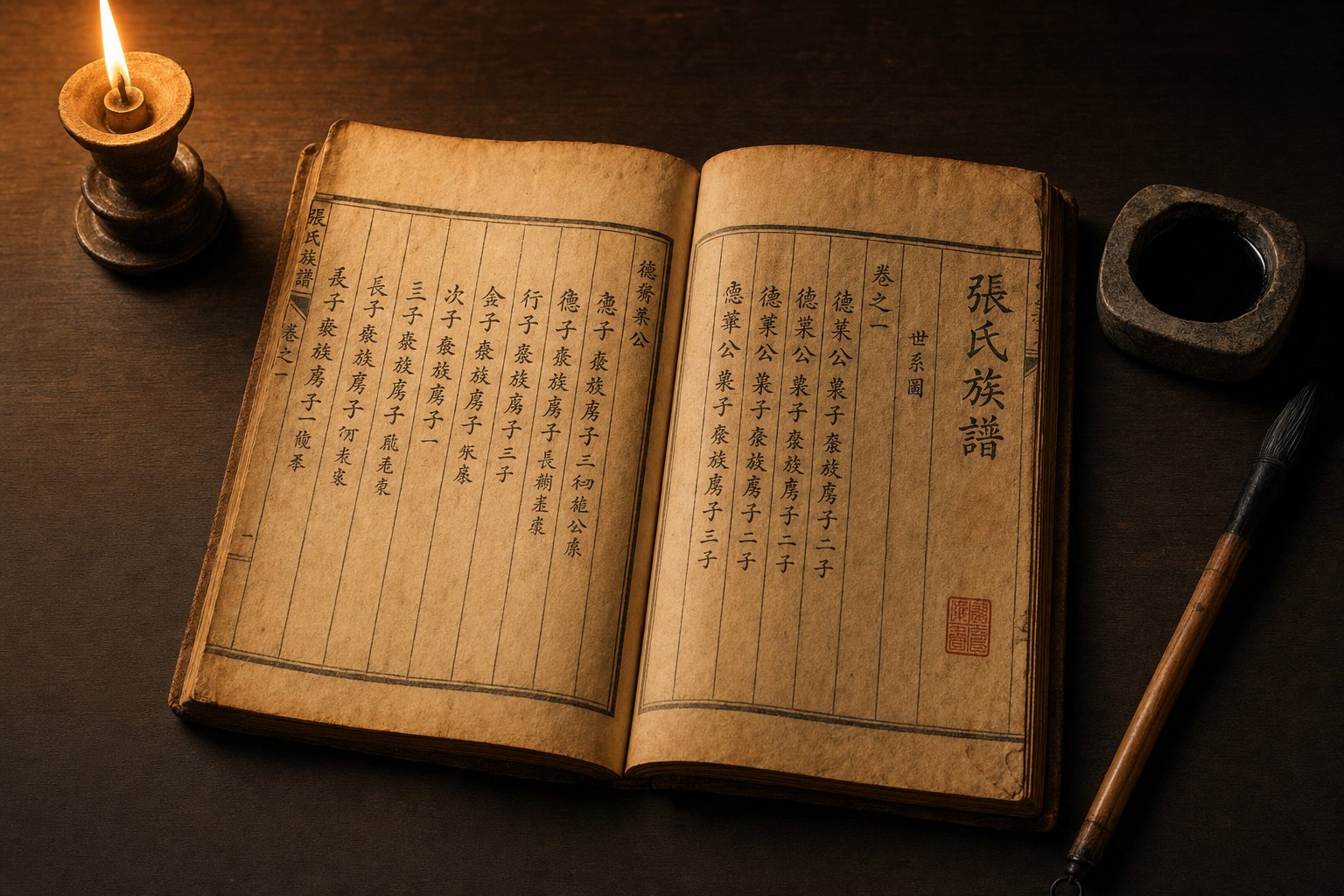
Before political ideology reshaped the naming landscape, Chinese families operated under a system that had remained remarkably stable for centuries. Old chinese names from the 1930s and 1940s were not chosen on a whim. They were calculated, debated, and anchored in frameworks that connected a newborn to ancestors long dead and descendants not yet born.
Generational Poems and Lineage Tracking
The most distinctive feature of pre-revolution naming was the generational poem, or 字辈 (zibei). Imagine a poem composed by a clan ancestor hundreds of years ago, with each character assigned to a successive generation. Every child born into that generation would carry the designated character as part of their given name. Cousins, even very distant ones, shared that same character, making family relationships instantly recognizable.
The Wong clan of Gom Benn village offers a vivid example. Their generational poem, attributed to Ming Dynasty scholar Wong Shi Jun (1570-1661), guided naming for nearly 300 years:
- 圣帝启文明 (Sheng di qi wenming) - "The Holy Emperor begot civilization"
- 道德尊朝廷 (Daode zun chaoting) - "The imperial court respects morality"
- 世传礼义重 (Shichuan li yi zhong) - "Etiquette is passed down from generation to generation"
- 奕祀振家声 (Yi si zhen jia sheng) - "Family traditions are invigorated from age to age"
A man named Wong Chun Fot (传法) belonged to the 传 (chuan) generation, the 23rd in his lineage. His distant cousin Wong Chun Sing (传胜) shared that same 传 character, instantly marking them as generational peers. This system of chinese generation names made lineage tracking effortless across sprawling clans scattered through villages and, eventually, overseas.
The tradition of generational naming stretches back roughly 2,000 years to the Han Dynasty (206 BC - 220 AD). Families began formalizing these sequences into poems just prior to the Song Dynasty (960-1276 AD), creating verses that praised ancestors while voicing hope for future prosperity.
Classical Influences on Pre-Revolution Names
Beyond generational poems, parents in the 1930s and 1940s drew from several additional systems when choosing the remaining character in a child's name:
- Five-element balancing (五行) - A child's birth date determined their elemental profile. If the chart lacked Water, parents chose characters containing the water radical (氵), such as 泽 (ze, marsh) or 洪 (hong, flood).
- Stroke-count analysis (笔画) - Certain total stroke counts were considered auspicious. Parents would adjust character choices to hit favorable numbers.
- Classical literary references - Educated families pulled characters from Confucian texts, Tang poetry, or the Book of Changes. A name like 文彬 (Wenbin, refined and courteous) echoed the Analerta's ideal of the cultivated gentleman.
Two-character given names dominated this era, with one character typically locked in by the generational poem and the second chosen for meaning, sound, and elemental balance. The result was a naming system that prioritized family continuity and cosmic harmony over individual expression. A child's name declared who they belonged to before it declared who they were.
These conventions represent what many scholars study when examining ancient asian names and their underlying logic. The system was deeply communal: your name told the world your clan, your generation, and your place in a cosmic order.
Ethnic minority groups operated under fundamentally different frameworks. Mongolian naming, for instance, did not follow the Han Chinese surname-plus-given-name structure. Mongolians traditionally used a father's name in a position resembling a surname, alongside a given name often derived from Mongolian-language words for nature, virtues, or Buddhist concepts. When these names were rendered in Chinese characters, the characters served as phonetic transliterations rather than carrying independent meaning, a linguistic difference that researchers have noted makes direct comparison between Han and minority naming patterns problematic. Tibetan, Uyghur, and other minority groups maintained their own distinct traditions, largely untouched by the generational poem system.
By the late 1940s, this centuries-old architecture was already weakening. Urbanization pulled families away from ancestral villages where clan elders enforced naming rules. Western-influenced modernization made generational poems feel antiquated. The stage was set for a rupture so complete that within a single decade, the entire philosophy behind the name chinese families gave their children would be rewritten from scratch.
Revolutionary Names of the 1950s Through 1970s
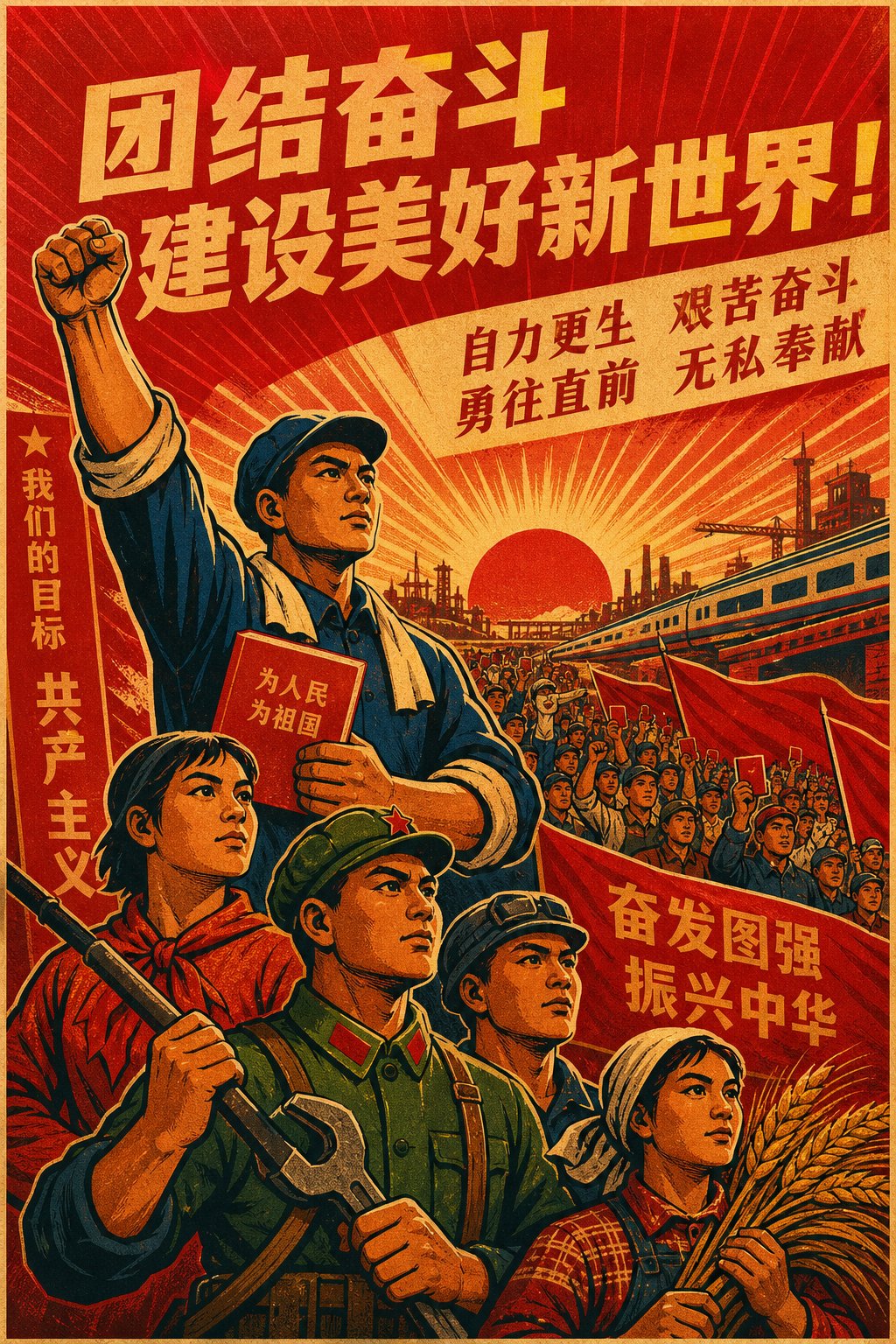
That rupture arrived on October 1, 1949. When Mao Zedong proclaimed the People's Republic of China, naming culture transformed almost overnight. Generational poems, five-element charts, and stroke-count calculations gave way to a single overriding impulse: political devotion. For the next three decades, the most common names in China would read like slogans pulled straight from state propaganda.
Revolutionary Fervor in 1950s Names
The founding of New China unleashed a wave of patriotic naming that swept across every province. Parents who had once consulted clan elders and fortune tellers now looked to the headlines for inspiration. The result was a generation of children whose names declared loyalty to the new state.
Consider the name 建国 (Jianguo, Build the Nation). Data from China's National Citizen Identity Information Center shows that more than 960,000 people share this name, with roughly 24 percent born between 1949 and 1959. Before 1949, the name barely existed. Similar patterns emerged with 卫国 (Weiguo, Guard the Nation), 爱国 (Aiguo, Love the Nation), and 国强 (Guoqiang, Strong Nation). The character 国 (guo, nation) became so dominant that you'll notice it functioning almost like a generational marker of its own, replacing the old clan-assigned characters.
The Korean War (1950-1953) added another layer. Tens of thousands of babies were named 援朝 (Yuanchao, Aid Korea) or 抗美 (Kangmei, Resist America). Among people surnamed Zhang alone, 493 individuals carry the name Yuanchao, and nearly 90 percent were born in the 1950s.
When the Great Leap Forward launched in 1958, industrial ambition flooded the naming pool. Parents literally named children 跃进 (Yuejin, Leap Forward), reflecting the campaign's promise to transform China from an agrarian society into a modern industrial power in just five years. About 60 percent of Chinese people named 民主 (Minzhu, Democracy) were also born during this decade, capturing the ideological optimism of the era.
How the Cultural Revolution Reshaped Naming in the 1960s and 1970s
If the 1950s were patriotic, the 1960s and 1970s were militant. The Cultural Revolution (1966-1976) intensified political naming to an extreme. Parents demonstrated loyalty not just to the nation but to Mao personally and to the revolution as an ongoing struggle. Characters like 红 (hong, red), 军 (jun, army), and 革 (ge, revolution) became ubiquitous in china common names of this era.
Wendi Deng, the Chinese-American businesswoman, was born in 1968 with the given name 文革 (Wenge), literally meaning "Cultural Revolution." She was far from alone. Names like 卫东 (Weidong, Defend the East, a reference to Mao), 卫红 (Weihong, Defend the Red), and 学农 (Xuenong, Learn from the Peasants) filled birth registries. The Red Guards (红卫兵) inspired countless children named with the characters 红 and 兵 (bing, soldier).
The shift from 1950s to 1960s-70s naming reveals a clear escalation from nation-building optimism to revolutionary militancy:
| Chinese Characters | Pinyin | Meaning | Political Context |
|---|---|---|---|
| 建国 | Jianguo | Build the Nation | 1950s - Founding of PRC |
| 援朝 | Yuanchao | Aid Korea | 1950s - Korean War |
| 跃进 | Yuejin | Leap Forward | 1950s - Great Leap Forward |
| 国强 | Guoqiang | Strong Nation | 1950s - Industrialization drive |
| 卫东 | Weidong | Defend the East (Mao) | 1960s-70s - Cultural Revolution |
| 文革 | Wenge | Cultural Revolution | 1960s-70s - Cultural Revolution |
| 卫红 | Weihong | Defend the Red | 1960s-70s - Red Guard movement |
| 建军 | Jianjun | Build the Army | 1960s-70s - PLA glorification |
What makes this period remarkable is the near-complete abandonment of traditional naming systems. Generational poems were dismissed as feudal relics. Five-element theory was denounced as superstition. The most common name in china during these decades had nothing to do with family lineage or cosmic balance. It had everything to do with political allegiance. From 1963 onward, Mao called on all citizens to "learn from the PLA," declaring the communist soldier as the model for national character. Names reflected that directive with startling uniformity.
The pool of common names china produced during these three decades was remarkably narrow. Millions of people ended up sharing identical names because everyone drew from the same tiny set of politically approved characters. This created a practical problem that would take decades to unravel, but in the moment, naming your child after the revolution was not just fashionable. It was safe. In an era of political purges, a patriotic name signaled the right loyalties.
By Mao's death in 1976 and the subsequent purge of the Gang of Four, the revolutionary naming era had run its course. A generation of children named for armies, revolutions, and political campaigns was about to raise children of their own in a China that looked nothing like the one their names described.
The 1980s and 1990s Reform Era Transformation
Deng Xiaoping's Reform and Opening Up policy, launched in 1978, did more than reshape China's economy. It rewired how parents thought about their children's futures. Almost immediately, the pool of Chinese names became far more varied, as political slogans gave way to characters expressing personal aspiration, beauty, and individual achievement. The typical chinese first names of this era sound nothing like the revolutionary vocabulary that dominated just a decade earlier.
Reform Era Names and the Pursuit of Individuality
What changed? The answer is both ideological and structural. With Mao's cult of personality dismantled and market economics taking root, parents no longer felt compelled to signal political loyalty through their children's names. Instead, they reached for characters that expressed the qualities they hoped their child would embody in a newly competitive society.
The shift was dramatic. Popular chinese first names in the 1980s and 1990s gravitated toward characters like:
- 伟 (wei, great/mighty) - Suggesting personal greatness rather than national glory
- 强 (qiang, strong) - Individual strength, not military strength
- 丽 (li, beautiful) - Aesthetic beauty as a valued trait
- 敏 (min, quick/clever) - Intelligence for personal success
- 磊 (lei, open and upright) - Moral character over political correctness
You'll notice the contrast immediately. Where 1960s parents named children 建军 (Build the Army), 1980s parents chose 伟 (Great) or 杰 (Outstanding). The focus shifted from what a child could do for the state to what a child could become as an individual. These common chinese first names reflected a society pivoting from collective sacrifice toward personal achievement.
The One-Child Policy Effect on Naming Ambition
The one-child policy, mandated in 1979, transformed naming psychology in a way few policies ever could. When you have only one child, that single name carries the full weight of parental hope. No second or third child to spread aspirations across. Every character had to count.
This pressure produced a fascinating structural change. Single-character given names peaked in the 1980s. Before the one-child policy, siblings commonly shared a generation character: three brothers might be named 瑞奇 (Ruiqi), 瑞林 (Ruilin), and 瑞杰 (Ruijie), all sharing 瑞. With no siblings to differentiate from, parents opted for a single, powerful character as the entire given name. A child surnamed Wang might simply be called Wang Wei (王伟) rather than Wang something-wei.
This generation, often called the "little emperors," received names loaded with ambition. But the single-character trend created an unintended problem. With a limited set of popular characters and only one character to work with, millions of children ended up sharing identical names. The Chinese internet later coined the term "market names" (菜市场名) to describe this phenomenon: shout a popular name in a crowded market, and multiple heads turn.
Gender-specific naming also diverged sharply during this period. Revolutionary-era names had been relatively gender-neutral since both boys and girls could be named 红 (Red) or 卫东 (Defend the East). The reform era introduced a clear split in popular chinese names:
| Gender | Popular Characters | Meanings | Underlying Value |
|---|---|---|---|
| Male | 伟, 强, 磊, 刚, 勇 | Great, Strong, Upright, Firm, Brave | Strength and achievement |
| Female | 丽, 芳, 敏, 静, 娟 | Beautiful, Fragrant, Clever, Quiet, Graceful | Beauty and refinement |
Researchers tracking the 1.2 billion person dataset found that after the 1980s, some gender-neutral radicals began appearing, with daughters also receiving characters meaning "excellent" (佳) and "cultured" (文). Still, the dominant pattern of this era encoded traditional gender expectations more explicitly than the politically uniform names of the Mao years ever did.
By the late 1990s, the limitations of single-character naming were becoming obvious. Identity confusion, bureaucratic headaches, and the sheer embarrassment of sharing your full name with dozens of classmates pushed parents back toward two-character given names. The quest for uniqueness that had driven the single-character experiment would soon find new outlets entirely, as China's entry into global markets brought fresh cultural influences flooding in.
How Globalization Reshaped Names in the 2000s
China's entry into the World Trade Organisation in 2001 was more than an economic milestone. It signaled a psychological shift. The country that had spent decades looking inward now saw itself as a global player, and that confidence rippled into how parents named their children. The turn of the 21st century heralded a more self-assured China, one that had weathered the 1997 Asian Financial Crisis and the SARS pandemic while earning its seat among world powers. With the internet accelerating cultural exchange, influences on popular names in china could suddenly come from anywhere.
Globalization and Pop Culture Influence on 2000s Names
What happens when a billion people gain access to television dramas, online literature, and global media simultaneously? Naming culture fragments. Unlike previous decades, where a single political event could dominate an entire generation's names, the 2000s had too many cultural inputs competing for attention. Parents stopped reaching for ideological characters and started choosing names that sounded beautiful, looked elegant on paper, or echoed a beloved fictional character.
Pop culture became a direct naming engine. When the time-travel drama Treading On Thin Ice (步步惊心) aired, a wave of baby girls were named 若曦 (Ruoxi), after the show's heroine. Online novels, historical dramas, and celebrity culture all fed the pool of china popular names in ways that would have been unthinkable a generation earlier. Parents browsed character dictionaries not for political safety but for aesthetic resonance, seeking combinations that felt literary, poetic, or simply pleasant to say aloud.
The most popular chinese names of this decade reveal a clear pivot toward characters valued for their visual beauty and tonal harmony rather than ideological weight:
- 涵 (han, contain/cultivated) - Suggests depth and refinement, popular for both genders
- 宇 (yu, universe) - Evokes vastness and ambition beyond national borders
- 欣 (xin, joyful) - Pure positivity without political undertone
- 浩 (hao, vast/grand) - Expansive and aspirational, a top male character
- 萱 (xuan, daylily) - Botanical elegance, popular for girls
- 博 (bo, broad/learned) - Intellectual breadth in a globalizing world
- 琪 (qi, fine jade) - Precious and aesthetically pleasing
- 睿 (rui, wise/astute) - Intelligence framed as wisdom rather than cunning
You'll notice something missing from this list: politics. Not a single revolutionary character in sight. The chinese names popular during this decade reflect parents who valued personal qualities, natural beauty, and intellectual aspiration over collective ideology. Some parents even borrowed phonetically from Western names. A girl surnamed Su (苏) might become Su Shan (苏珊), an adaptation of "Susan," while Anna became 安娜 (Anna). These borrowings remained a minority trend but signaled just how porous cultural boundaries had become.
The Return of Two-Character Given Names
The single-character experiment of the 1980s had created a practical disaster. Millions of people shared identical full names because the math was brutal: limited surnames multiplied by a small set of fashionable single characters produced massive overlap. The colloquial term "market names" (菜市场名) captured the frustration perfectly. Call out a common name in a crowded space, and too many people turn around.
By the 2000s, two-character given names swung back as the dominant structure. The extra character doubled the possible combinations, giving parents room to craft something distinctive. This structural return also allowed for more nuanced meaning. Instead of a single blunt character like 强 (strong), parents could layer ideas: 浩然 (Haoran) combines "vast" with "righteous," drawing from a passage in Mencius describing an upright and noble spirit. The name works on multiple levels: classical reference, pleasant sound, and aspirational meaning.
This era also saw the rise of professional naming consultancies. Companies like Qimingtong built entire businesses around helping parents select auspicious names, blending traditional methods like stroke-count analysis and five-element balancing with modern data on name frequency. Parents paid real money to avoid duplication and ensure their child's name hit the right numerological notes. The practice reflected a broader cultural pattern: as competition intensified in education and careers, even a child's name became a strategic investment.
Some parents pushed further, selecting rare or complex characters to guarantee uniqueness. The pop star Yi Yangqianxi (易烊千玺), born in 2000, carries a four-character name that many Chinese people cannot read correctly on first attempt. His name combines his surname 易 with 烊 (a dialectal word for "welcome") and 千玺 (a homophone of "millennium," marking his birth year). This kind of creative ambition in china popular names foreshadowed an even more dramatic shift in the decade to come, as parents would mine classical poetry and obscure literary texts for characters that no algorithm could predict.
Modern Naming Trends From the 2010s Onward
The creative ambition that defined 2000s naming was just a warm-up. From 2010 onward, Chinese parents dove headfirst into classical literature, mined ancient poetry for forgotten characters, and treated naming as an art form rather than a practical task. Social media amplified every trend at lightning speed, turning obscure characters into nationwide phenomena within months. The result is a generation whose names sound like lines from Tang Dynasty verse, yet whose parents discovered those characters through WeChat articles and Douyin videos.
Social Media Era and Literary Name Revival
When you scroll through a Chinese kindergarten class roster from the mid-2010s, certain characters jump out with startling frequency. The character 梓 (zi, catalpa tree) became so dominant that it earned the nickname "the generation character of the 2010s," functioning almost like the old clan-assigned generational poems but driven by viral aesthetics rather than ancestral decree. Paired with characters like 涵 (han, cultivated), 萱 (xuan, daylily), or 轩 (xuan, lofty), it produced names that sounded poetic and looked elegant in calligraphy.
How did one character conquer an entire generation? Social media created feedback loops that traditional naming never experienced. A parent posts their baby's name on WeChat Moments. Friends admire it. Naming consultancy accounts share lists of "elegant classical characters." Algorithms push the same content to millions of expectant parents simultaneously. The character 轩 (xuan, lofty), drawn from classical descriptions of grand halls and noble bearing, spread through exactly this mechanism. By the time parents realized everyone else had the same idea, an entire cohort shared nearly identical names.
The irony is thick. Parents reaching for uniqueness through literary characters ended up creating a new kind of conformity. The most popular names in china during the 2010s, names like 子轩 (Zixuan), 梓涵 (Zihan), 浩宇 (Haoyu), and 一诺 (Yinuo, "one promise"), appeared so frequently that they became the decade's equivalent of the 1980s "market names." The quest for poetic distinction produced its own form of mass repetition.
What drove parents toward classical sources in the first place? Partly national confidence. A China hosting the Olympics, launching space stations, and leading global trade no longer felt the need to borrow from Western culture. Instead, parents turned inward to their own literary heritage. The Book of Songs (诗经), Songs of Chu (楚辞), and Tang poetry became naming goldmines. A common saying emerged among naming consultants: "name girls from the Book of Songs, name boys from the Songs of Chu" (女诗经, 男楚辞). Characters like 兮 (xi, a classical exclamatory particle), 瑶 (yao, precious jade), and 墨 (mo, ink) carried the weight of millennia while feeling fresh to modern ears.
Combined Surnames and Trisyllabic Names
A structural revolution quietly unfolded alongside the literary revival. China's relaxation of the one-child policy, first to two children in 2015 and then to three in 2021, coincided with a growing trend: combined parental surnames. Instead of automatically inheriting the father's surname, some children received both parents' surnames, creating four-character full names like 陈林子墨 (Chen Lin Zimo), where Chen is the father's surname, Lin the mother's, and Zimo the given name.
This practice reflects shifting gender dynamics. Mothers, many of them only children themselves under the old policy, wanted their family names carried forward too. The result is trisyllabic given names (three-character given names after the combined surname) or, more commonly, a two-surname-plus-two-character-given-name structure that produces four-character full names. These longer names break centuries of convention where three characters total was the norm.
Government regulations both enabled and constrained this creativity. China has no single codified "naming law," but several regulations shape what parents can do:
- Character restrictions - Names must use characters from the standardized General Standard Chinese Characters list (通用规范汉字表), which contains 8,105 characters. Rare or archaic characters outside this list may be rejected at registration.
- Technology limitations - Public security databases use specific character encoding systems. If a character is not in the system, it literally cannot be registered, regardless of its historical legitimacy.
- Length limits - While no national law explicitly caps name length, local civil affairs offices have occasionally rejected names exceeding six characters total.
- Combined surname rules - A 2014 legislative interpretation confirmed that children may use either parent's surname or a combination, giving legal backing to the combined surname trend.
These constraints create friction. Parents who discover a perfect classical character sometimes find it rejected because the local registration system cannot encode it. Others push boundaries deliberately, leading to occasional legal disputes over whether a chosen character qualifies as a legitimate name component. The tension between creative aspiration and bureaucratic standardization defines modern naming in ways that researchers exploring chinese names behind the name often highlight.
Chinese Diaspora Naming Divergence
While mainland parents mine classical poetry, Chinese families abroad navigate an entirely different challenge: bridging two linguistic worlds. Popular chinese american names reflect a bicultural balancing act that has no direct parallel on the mainland.
The structure itself diverges. As research on Chinese American personal names documents, diaspora families typically give children both a Western given name and a Chinese given name. The Western name handles daily life in English-speaking environments, while the Chinese name maintains cultural and familial connection. A child might be "Emily" at school and "美琳" (Meilin) at family gatherings.
Common chinese american names show patterns shaped by generation and acculturation level. Earlier immigrant generations often chose Western names phonetically similar to their Chinese names, creating bridges like "Mei" for 美 or "Lee" doubling as both surname and given name. More recent immigrants tend to select trending American names (Olivia, Ethan, Sophia) independently of the Chinese name, treating the two as parallel systems rather than translations of each other.
The differences between mainland and diaspora naming preferences reveal how environment reshapes cultural practice:
| Dimension | Mainland China (2010s-2020s) | Chinese American Diaspora |
|---|---|---|
| Primary structure | Surname + 2-character given name (or combined surname + given name) | Western first name + Chinese middle name + surname, or dual naming systems |
| Character sources | Classical poetry, literary texts, nature imagery | Characters chosen for meaning and phonetic compatibility with English name |
| Key concern | Aesthetic elegance, uniqueness within Chinese context | Pronounceability in English, cultural identity preservation |
| Trending characters | 梓, 轩, 宇, 诺, 墨, 兮 | Characters with clear, positive meanings easily explained to non-Chinese speakers (e.g., 美 beauty, 明 bright, 安 peace) |
| Surname handling | Combined parental surnames gaining popularity | Father's Chinese surname retained; mother's surname sometimes used as middle name in Western style |
| Naming consultants | Widely used; blend five-element theory with frequency data | Less common; parents rely on family input and personal research |
For diaspora families, the Chinese name often carries heavier symbolic weight precisely because it is used less frequently. It becomes a deliberate cultural statement rather than a daily-use identifier. Some parents choose characters that reference their ancestral hometown or family history, embedding a sense of origin that their American-raised children might otherwise lose. Others prioritize characters whose meanings translate cleanly into English, giving the child a ready answer when classmates inevitably ask, "What does your Chinese name mean?"
This divergence highlights something fundamental about chinese names behind the name: context determines everything. The same character can serve radically different purposes depending on whether a child grows up in Shenzhen or San Francisco. Mainland parents optimize for literary beauty within a homogeneous linguistic environment. Diaspora parents optimize for cross-cultural legibility and identity anchoring across two worlds.
What unites both groups is the sheer intentionality of the process. Whether consulting a five-element chart, scrolling through poetry databases, or testing how a name sounds in both Mandarin and English, parents in the 2010s and beyond invest more deliberate thought into naming than perhaps any previous generation. The most popular name in china may cycle every few years as new literary references go viral, but the underlying drive, giving a child a name that is both meaningful and distinctive, remains constant.
This intensely personal process, however, does not exist in a vacuum. Naming choices still cluster by gender in ways that reveal persistent cultural expectations, even as the specific characters shift from decade to decade.
Gender-Specific Naming Patterns Through the Decades
Naming choices still cluster by gender in ways that reveal persistent cultural expectations, even as the specific characters shift from decade to decade. Track chinese given names male and female across the past seventy years, and you'll find a story that mirrors China's evolving relationship with gender itself. The pattern is not a straight line from traditional to progressive. It zigzags: rigid gender roles in traditional naming, a brief flattening during the revolutionary era, sharp re-differentiation in the reform period, and a recent drift back toward neutrality.
Male Naming Patterns Across Decades
What does society expect of its sons? The answer changes with each generation, and ancient chinese male names encode those expectations with remarkable clarity. Characters that have remained popular across multiple cohorts reveal a baseline: sons should be 明 (ming, bright/open), 志 (zhi, ambitious), and 文 (wen, cultured). These qualities, drawn from Confucian ideals of the gentleman-scholar, persisted even through political upheaval.
The revolutionary decades temporarily overrode this baseline. During the 1950s through 1970s, male names leaned heavily on military and political characters: 军 (jun, army), 刚 (gang, steel/firm), 建 (jian, build), and 国 (guo, nation). A boy named 建军 (Jianjun, Build the Army) was not expected to literally enlist. The name expressed hope that he would embody the discipline and selflessness associated with the People's Liberation Army. Political loyalty trumped personal qualities as the primary aspiration parents encoded.
The 1980s reform era brought a sharp pivot. With market competition replacing collective struggle, parents reached for characters suggesting individual excellence: 伟 (wei, great), 强 (qiang, strong), 磊 (lei, upright), and 勇 (yong, brave). These names still emphasized traditionally masculine traits, but the frame shifted from serving the state to personal achievement. If you scan a list of top 100 chinese male names from this decade, you'll find almost no political vocabulary. Strength, ambition, and moral uprightness dominate instead.
By the 2000s and 2010s, male naming expanded further. Characters like 宇 (yu, universe), 浩 (hao, vast), 博 (bo, broad/learned), and 轩 (xuan, lofty) suggest intellectual breadth and cosmic aspiration rather than physical strength. The most popular male given name for recent newborns, 浩然 (Haoran), draws from a passage in Mencius describing an upright, noble, and generous spirit. Literary refinement has replaced raw power as the aspirational ideal for boys.
Female Naming Patterns Across Decades
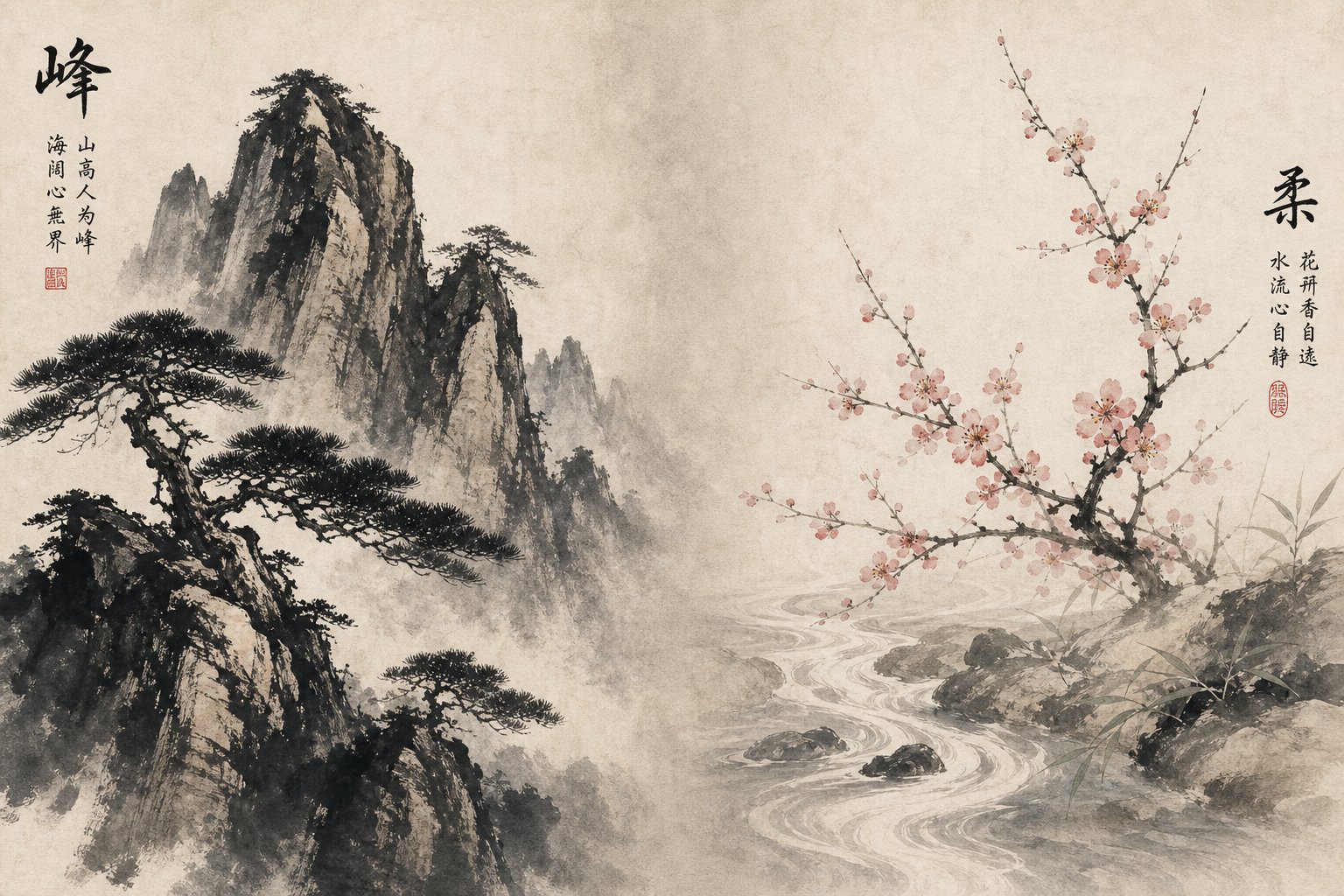
Ancient chinese names female reveal a narrower palette than their male counterparts. Traditional expectations for daughters centered on beauty, virtue, and domestic grace. Characters like 玉 (yu, jade/pristine), 梅 (mei, plum blossom), 芳 (fang, fragrance), and 丽 (li, beautiful) dominated for generations. These names drew heavily on nature metaphors: flowers, precious stones, and pleasant scents. A daughter was a plum blossom, delicate and admired. A son was a mountain, strong and enduring.
The revolutionary era disrupted this pattern more dramatically for women than for men. Girls born in the 1950s through 1970s received names like 红梅 (Hongmei, Red Plum) or 卫红 (Weihong, Defend the Red), blending feminine nature imagery with political vocabulary. Some parents abandoned gendered naming entirely, giving daughters names like 建华 (Jianhua, Build China) that could belong to either sex. The Cultural Revolution's ideology of gender equality, however imperfectly practiced, produced a brief window where naming was relatively gender-neutral.
That window closed in the 1980s. Popular chinese names for girls during the reform era swung back toward beauty and refinement: 丽 (li, beautiful), 芳 (fang, fragrant), 静 (jing, quiet), 敏 (min, clever), and 娟 (juan, graceful). The one-child policy intensified this pattern. With only one daughter, parents invested her name with concentrated feminine ideals. Doubled characters like 冰冰 (Bingbing, icy/pure) and 诗诗 (Shishi, poetic) added a layer of perceived cuteness that had no male equivalent.
The 2010s brought another shift. The most popular names for newborn girls, like 梓萱 (Zixuan, catalpa tree + daylily) and 一诺 (Yinuo, one promise), still lean toward elegance but carry less explicitly gendered weight. Daughters are now also expected to be 佳 (jia, excellent), 晓 (xiao, knowing), and 文 (wen, cultured), characters that previously appeared primarily in male names. This crossover reflects women's rising social position in a modernizing China.
| Decade | Popular Male Characters | Popular Female Characters | Cultural Driver |
|---|---|---|---|
| Pre-1950s | 明 (bright), 志 (ambitious), 文 (cultured), 德 (virtuous) | 玉 (jade), 梅 (plum), 芳 (fragrant), 秀 (elegant) | Confucian ideals and classical literary tradition |
| 1950s-1970s | 军 (army), 建 (build), 国 (nation), 刚 (steel) | 红 (red), 英 (heroic), 华 (China/splendid), 兰 (orchid) | Revolutionary politics and gender-neutral ideology |
| 1980s-1990s | 伟 (great), 强 (strong), 磊 (upright), 勇 (brave) | 丽 (beautiful), 芳 (fragrant), 静 (quiet), 敏 (clever) | Market reform and re-differentiated gender roles |
| 2000s | 浩 (vast), 宇 (universe), 博 (broad), 睿 (wise) | 涵 (cultivated), 欣 (joyful), 萱 (daylily), 琪 (jade) | Globalization and aesthetic individualism |
| 2010s-present | 轩 (lofty), 宇 (universe), 泽 (grace), 墨 (ink) | 梓 (catalpa), 涵 (cultivated), 诺 (promise), 瑶 (precious jade) | Classical literary revival and social media trends |
A clear pattern emerges from this table. Male names consistently emphasize competence, ambition, and expansiveness, while female names cluster around beauty, nature, and refinement. But the gap is narrowing. Research on gendered naming practices in Mandarin Chinese confirms that gender stereotypes reflected in names have decreased over time, with a growing overlap in characters used for both sexes.
One structural detail is telling. After the 1980s, characters with gender-neutral radicals like 氵 (water) and 青 (green) appear frequently for both boys and girls. Daughters receive characters with the 亻 radical (meaning "person" or historically "man"), such as 佳 (excellent). Male names, however, still avoid the 女 (woman) radical entirely. The boundary is loosening asymmetrically: feminine names can borrow from masculine territory, but not the reverse.
Younger parents influenced by global culture are pushing further toward gender-neutral naming. Characters like 安 (an, peace), 乐 (le, joy), and 知 (zhi, knowledge) carry no gendered connotation and appear increasingly in both male and female names. Whether this trend represents a lasting shift or a passing fashion remains an open question, but it marks a clear departure from the sharply divided naming of the reform era. The characters parents choose for their children still reflect what society values, and those values are being renegotiated in real time.
These gendered patterns, of course, do not exist in a vacuum. They operate within a regulatory framework that has shaped naming possibilities in ways most parents never see, from approved character lists to the practical limits of computer encoding systems.
Government Regulations and Regional Variations
That regulatory framework is more powerful than most parents realize. Every creative naming impulse, from mining classical poetry to combining parental surnames, runs through a gauntlet of government rules, character encoding limits, and local bureaucratic discretion. The result is a system where what you can name your child is shaped as much by technology and policy as by personal taste.
Character Simplification and Its Naming Impact
When the People's Republic introduced simplified characters in the 1950s and 1960s, the reform did more than streamline literacy. It altered the visual and semantic texture of names. Characters that had carried centuries of calligraphic elegance in their traditional forms were reduced to fewer strokes. The character 華 (hua, splendid/China) became 华. The character 國 (guo, nation) became 国. For naming, this meant that stroke-count calculations, a traditional method for ensuring auspicious names, had to be recalculated entirely.
Some parents resisted. Families who valued the aesthetic weight of traditional characters found their preferred forms discouraged, though not strictly banned, on official documents. A typical chinese name registered today uses simplified characters by default because that is what government systems accept. The use of simplified characters is advised over traditional forms, though this is not rigidly enforced in every jurisdiction. Still, the practical effect is clear: the hanzi family name and given name that appear on a Resident Identity Card will almost always be rendered in simplified script, regardless of what the parents originally intended.
This matters because some characters lost visual distinctiveness through simplification. Traditional characters with different meanings but similar simplified forms created new ambiguities. Parents who wanted a specific classical character sometimes found its simplified version indistinguishable from another character entirely, forcing a different choice.
Legal Restrictions and Approved Character Lists
China has no single comprehensive "naming law." Instead, naming rights are scattered across several legal documents and administrative regulations that have accumulated over decades. Here are the key milestones that shaped what chinese common names look like today:
- 1986 - General Principles of Civil Law: Article 99 guaranteed citizens the right to a name and free choice in naming, establishing the legal foundation for personal naming rights.
- 2001 - Marriage Law revision: Article 22 confirmed that children may take either parent's surname, opening the door for maternal surname inheritance.
- 2009 - Character encoding expansion: Government databases supported approximately 32,232 characters via the GBK encoding standard, creating a hard ceiling on usable naming characters despite over 70,000 known Chinese characters existing.
- 2013 - General Standard Chinese Characters Table (通用规范汉字表): Published 8,105 standardized characters, effectively defining the practical pool from which most names are drawn.
- 2014 - Legislative interpretation on surnames: Confirmed that children may use a combined surname from both parents, giving legal backing to the four-character name trend.
- 2017 - Religious naming restrictions: Banned names deemed to "exaggerate religious fervor" in certain regions, including names like "Jihad," "Imam," and "Mecca" among Uyghur communities in Xinjiang.
The most surprising constraint is technological rather than legal. Since every citizen must be registered in government computer networks and carry a Resident Identity Card, any character that cannot be digitally encoded simply cannot be used as a name. It does not matter if the character appears in the Kangxi Dictionary or has been used in Chinese literature for a thousand years. If the Public Security Bureau's system cannot input it, the name is rejected.
This creates real conflicts. A woman named Ma Cheng (马𩧢), whose given name consists of three horse characters stacked together, has spent years dealing with systems that render her name as "马CHENG" or "马马马马" because the character is not supported digitally. A man named Zhao C (赵C), who used the Latin letter as his given name since birth, was forced to change it when upgrading to a second-generation ID card because Latin characters are prohibited in han chinese names under government standards. He sued, won initially, but ultimately settled and changed his name.
Regional variations add another layer of complexity. Southern provinces like Guangdong and Fujian, where Cantonese and Hokkien dialects dominate daily speech, show naming preferences influenced by how characters sound in the local dialect rather than in standard Mandarin. A character that sounds elegant in Cantonese might sound flat in Mandarin, and vice versa. Northern provinces tend to favor characters with strong, open vowel sounds that carry well in Mandarin's tonal system. Coastal cities with more international exposure show higher rates of phonetically Western-influenced names, while inland provinces maintain stronger ties to traditional naming frameworks.
Even within the same city, naming preferences split along education and class lines. University-educated parents in Beijing or Shanghai are more likely to draw from classical literary sources, while working-class families may prioritize auspicious stroke counts or five-element balancing. The typical chinese name varies not just by decade but by geography, dialect, and social position, all operating within the same regulatory boundaries.
These regulations continue to evolve. As Unicode standards expand and government databases upgrade, the pool of available characters slowly grows. But the fundamental tension remains: parents want creative freedom, and bureaucratic systems demand standardization. That push and pull has quietly shaped chinese naming trends by decade just as powerfully as any political movement or cultural shift. Recognizing these constraints helps explain why certain characters dominate each era, not always because parents loved them most, but because the system made them the path of least resistance.
Identifying Birth Decades From Chinese Names
All the regulatory constraints, gender patterns, and cultural shifts covered so far converge into something surprisingly practical: you can often estimate when a Chinese person was born just by reading their name. Whether you encounter a colleague named 建国 (Jianguo) or a classmate named 梓轩 (Zixuan), those characters carry generational fingerprints as distinctive as fashion or slang.
Quick Markers for Identifying Name Generations
Think of it like a field guide. You don't need to memorize every popular character from every era. Instead, look for a few reliable signals. Does the name contain overtly political vocabulary like 国 (nation), 军 (army), or 红 (red)? That person was almost certainly born between 1949 and 1976. Does it use a single-character given name expressing personal strength, like 伟 (great) or 强 (strong)? Likely an 1980s birth. Does it sound like a line from a poem, with characters like 梓 (catalpa), 轩 (lofty), or 涵 (cultivated)? You're probably looking at someone born after 2005.
Here's a quick-reference table synthesizing the most common chinese name patterns across each major period:
| Decade | Signature Characters | Naming Philosophy | Historical Driver |
|---|---|---|---|
| Pre-1950s | Generational poem characters; 德 (virtue), 文 (cultured), 玉 (jade) | Family continuity and cosmic harmony | Clan lineage systems, five-element theory, Confucian values |
| 1950s | 国 (nation), 建 (build), 华 (China), 援 (aid), 跃 (leap) | Patriotic devotion to the new state | Founding of PRC, Korean War, Great Leap Forward |
| 1960s-1970s | 红 (red), 军 (army), 革 (revolution), 卫 (defend), 兵 (soldier) | Revolutionary militancy and loyalty to Mao | Cultural Revolution, Red Guard movement |
| 1980s | 伟 (great), 强 (strong), 丽 (beautiful), 磊 (upright), 静 (quiet) | Individual achievement and personal qualities | Reform and Opening Up, one-child policy, market economy |
| 1990s | 杰 (outstanding), 敏 (clever), 佳 (excellent), 婷 (graceful) | Competitive aspiration and aesthetic appeal | Economic boom, growing global awareness |
| 2000s | 浩 (vast), 宇 (universe), 涵 (cultivated), 欣 (joyful), 博 (broad) | Globalized ambition and tonal beauty | WTO entry, internet culture, pop culture influence |
| 2010s-present | 梓 (catalpa), 轩 (lofty), 诺 (promise), 墨 (ink), 兮 (classical particle) | Classical literary elegance and poetic identity | Social media trends, national confidence, classical revival |
A few caveats. These are probabilities, not certainties. A person named 建国 born in 1999 exists somewhere. Regional variation, family tradition, and individual taste all create exceptions. But across a population of over a billion people, the patterns hold with remarkable consistency. The most common chinese first names of each era cluster so tightly around specific characters that researchers can predict birth cohorts with surprising accuracy using name data alone.
Structural clues help too. A single-character given name (surname + one character) strongly suggests a 1980s birth, when that format peaked. A four-character full name with what appears to be two surnames points to a post-2010 birth, when combined parental surnames gained popularity. And if you encounter a name that sounds like it belongs in a classical poem but the person is clearly under twenty, you're witnessing the literary revival that defines the current generation.
The Ongoing Tension Between Tradition and Modernity
What makes typical chinese names so fascinating is that they sit at the intersection of competing forces. On one side: tradition. Generational poems, five-element balancing, stroke-count analysis, and ancestral naming books still hold sway in many families, particularly in rural areas and among overseas Chinese communities. Research from the National University of Singapore confirms that generational naming practices are fading among younger Chinese Singaporeans, with most university students unfamiliar with their family's genealogy books. Yet experts argue these traditions deserve renewal because they keep dispersed families connected and preserve important history.
On the other side: modernity. Young parents who primarily speak English or consume global media may view generational poems as outdated. They want names that sound beautiful, photograph well on social media, and express their child's unique identity rather than their place in a lineage. Some adapt the tradition in miniature, choosing common characters or initials shared among siblings rather than following a centuries-old poem. Others abandon it entirely.
This tension is not new. It has simply taken different forms in each era. The 1950s replaced tradition with politics. The 1980s replaced politics with individualism. The 2010s attempted to reclaim tradition through a modern lens, mining classical texts not out of obligation but out of aesthetic choice. Each generation believes it is naming differently from its parents, yet each generation's names cluster just as predictably as the last.
That predictability is the point. Chinese names remain one of the most accessible windows into modern Chinese history precisely because they are not random. They are collective decisions made by millions of parents responding to the same cultural moment. The most popular chinese name of any given year is not popular by accident. It reflects what an entire society values, fears, and hopes for its children at that specific point in time.
Next time you meet someone with a Chinese name, you hold more information than you might realize. Those one or two characters after the surname are a compressed autobiography: not of the individual, but of the era that shaped them. From revolution to poetry, from slogans to sonnets, the story of modern China is written in the names its people carry.
Frequently Asked Questions About Chinese Naming Trends
1. How can you tell someone's birth decade from their Chinese name?
Chinese names contain generational markers tied to specific eras. Names with political characters like 国 (nation) or 军 (army) typically indicate a 1950s-1970s birth. Single-character given names expressing personal strength like 伟 (great) suggest the 1980s. Literary characters such as 梓 (catalpa) or 轩 (lofty) point to births after 2010. These patterns emerge because millions of parents independently respond to the same cultural moment, creating predictable clusters that researchers have verified across a dataset of nearly 1.2 billion individuals.
2. Why did Chinese names become so political during the 1950s to 1970s?
After the founding of the People's Republic in 1949, naming culture shifted from family-centered traditions to expressions of political loyalty. Traditional systems like generational poems were dismissed as feudal relics. Parents chose names reflecting current campaigns: 建国 (Build the Nation) during the founding era, 援朝 (Aid Korea) during the Korean War, and 卫东 (Defend the East) during the Cultural Revolution. In an era of political purges, a patriotic name signaled safe allegiance, making ideological naming both fashionable and protective.
3. What impact did the one-child policy have on Chinese naming practices?
The one-child policy, mandated in 1979, concentrated all parental aspiration into a single name. With no siblings to differentiate from, parents favored single-character given names loaded with ambition. This structural shift peaked in the 1980s but created an unintended problem: limited surnames combined with a small set of popular characters produced massive name duplication. The term 'market names' emerged to describe this phenomenon, eventually pushing parents back toward two-character given names in the 2000s for greater distinctiveness.
4. What are the most popular Chinese baby name characters in the 2010s and 2020s?
The dominant characters for recent births include 梓 (zi, catalpa tree), 轩 (xuan, lofty), 涵 (han, cultivated), 诺 (nuo, promise), and 墨 (mo, ink). These characters draw from classical Chinese poetry and literature, reflecting a cultural revival driven by national confidence and social media trends. Parents mine texts like the Book of Songs and Songs of Chu for elegant characters, though viral sharing on platforms like WeChat has ironically made many of these supposedly unique choices extremely common.
5. How do Chinese American naming practices differ from mainland Chinese naming?
Chinese American families typically maintain dual naming systems: a Western given name for daily English-speaking life and a Chinese given name for cultural connection. Mainland parents optimize for literary beauty within a homogeneous linguistic environment, favoring poetic characters from classical texts. Diaspora parents prioritize cross-cultural legibility, choosing Chinese characters with clear meanings easily explained to non-Chinese speakers and Western names that are independently selected rather than translations. Combined parental surnames are common on the mainland but rare in diaspora naming.