Why Chinese Nicknames for Girls Carry Deep Cultural Meaning
When someone calls a girl "sweetie" in English, it's casual. Maybe even forgettable. But when a Chinese speaker shifts from a formal name to a nickname, something significant just happened. A social boundary moved. A relationship leveled up. That single word carries weight that most outsiders never notice.
Chinese nicknames, known as 小名 (xiǎomíng, meaning "small name"), function as invisible social maps. They tell you exactly how close two people are, who holds authority in the relationship, and what emotional tone is permitted between them. Unlike Western culture, where nicknames often arise spontaneously, Chinese terms of endearment follow deeply rooted linguistic patterns shaped by centuries of Confucian social hierarchy. Historically, Chinese naming traditions included multiple layers of identity. A person could carry a formal given name (ming), a courtesy name (zi) granted in adulthood, and a self-chosen informal name (hao) used among close circles. Today's nicknames for girls echo that same layered approach to identity and intimacy.
In Chinese society, accepting a nickname from someone signals you've granted them emotional access. Refusing it, or insisting on your full name, is a polite but unmistakable boundary.
Why Chinese Girl Nicknames Matter More Than You Think
Terms of endearment in Chinese do more than express affection. They encode relationship status, age dynamics, and social permission. A boyfriend's pet name for his girlfriend signals something different than a grandmother's childhood nickname for the same girl. The words might even sound similar, but the social meaning shifts entirely based on who says them, where, and when. Understanding these chinese endearments means understanding the invisible rules governing closeness in Chinese-speaking communities.
The Four Categories of Chinese Nicknames for Girls
This guide breaks chinese nicknames into four distinct worlds, each with its own formation rules and cultural logic:
- Childhood nicknames (乳名 ruming) given by parents and grandparents
- Romantic pet names used between partners, from classic chinese words of endearment to modern inventions
- Playful nicknames exchanged among female friends and classmates
- Self-chosen online display names used across WeChat, Douyin, and gaming platforms
Each category follows different formation patterns, carries different social weight, and signals a completely different type of relationship. Knowing which nickname belongs in which context is what separates genuine cultural fluency from awkward guesswork.
The real power, though, lies not in memorizing a list but in understanding how these names are built from the ground up.
How Chinese Girl Nicknames Are Formed
Memorizing a list of cute mandarin nicknames only gets you so far. What if you could build your own from scratch? Chinese girl nicknames follow predictable linguistic patterns, and once you understand the mechanics, you can generate dozens of natural-sounding names without ever consulting a dictionary again.
People often ask, do chinese people have middle names? Not in the Western sense. Most Chinese names consist of a one- or two-character surname followed by a one- or two-character given name. There's no separate middle name slot. But this compact structure is exactly what makes nickname formation so elegant. Every character becomes raw material for transformation.
Reduplication and Prefix Patterns That Sound Adorable
The most common nickname in chinese culture uses reduplication: take a single character and double it. The repeated syllable creates a musical, childlike rhythm that sounds inherently affectionate. Imagine a girl named Wang Tian (王甜). Double the given name character and she becomes Tiantian (甜甜), instantly warmer and more intimate.
Prefix patterns work differently. Adding 小 (xiǎo, "little") before a name or character creates casual familiarity without deep intimacy. It's the nickname mandarin speakers reach for among colleagues and newer friends. The 阿 (a) prefix leans more southern and Cantonese-influenced, carrying a sense of long-standing closeness. Suffix patterns like adding 儿 (er) produce a soft, playful sound common in northern Mandarin dialects.
Here's how each pattern works in practice:
| Pattern Type | Structure | Example (Simplified/Traditional) | Pinyin | Meaning |
|---|---|---|---|---|
| Reduplication | Character + Character | 甜甜 / 甜甜 | Tiántián | Sweet-sweet |
| Reduplication | Character + Character | 萌萌 / 萌萌 | Mengmeng | Cute-cute |
| Reduplication | Character + Character | 朵朵 / 朵朵 | Duǒduǒ | Blossom-blossom |
| Prefix (小) | 小 + Name | 小美 / 小美 | Xiǎoměi | Little beauty |
| Prefix (阿) | 阿 + Name | 阿花 / 阿花 | Āhuā | Ah-Flower |
| Suffix (儿) | Name + 儿 | 小花儿 / 小花兒 | Xiǎohuār | Little flower (with r-suffix) |
| Single-character shortening | Drop one character | 雪 from 雪琳 / 雪 from 雪琳 | Xuě | Snow (from Xuelin) |
Single-character shortening is the subtlest pattern. When a girl has a two-character given name like Xuelin (雪琳), close friends might call her just Xue (雪) or just Lin (琳). This truncation signals deep familiarity. As Chinese Name Translator notes, dropping part of someone's name essentially says: "We know each other well enough that I don't need the full identifier."
Tonal Rules That Make or Break a Nickname
Here's where nicknames in chinese get tricky. Mandarin has four tones, and certain combinations sound naturally pleasing while others land awkwardly or even offensively.
Reduplicated nicknames work best when the original character sits in the first or second tone. Characters in the first tone (high and flat) create a bright, cheerful sound when doubled. Think of Fēifēi (菲菲, fragrant) or Xīxī (熙熙, joyful). Second-tone characters (rising) produce an upbeat, energetic feel: Miaomiao (苗苗, sprout).
Third-tone characters present a challenge. In Mandarin, when two third tones appear consecutively, the first shifts to a second tone. So 美美 (měiměi, beautiful) actually sounds like "meiměi" in natural speech. This isn't wrong, but it can sound less crisp than other combinations. Fourth-tone reduplications (falling, emphatic) sometimes sound too forceful for a cute nickname, though exceptions like Duoduo (朵朵) work because the character itself carries soft meaning.
The real danger zone? Characters that sound innocent alone but create unfortunate homophones when doubled or prefixed. A character that means "elegant" in one tone might sound like a word for something embarrassing in another. Native speakers catch these instinctively, but learners should always test a new nickname with a native friend before using it.
How to Create Your Own Personalized Nickname
Ready to build one yourself? Start with the girl's given name and run through these steps:
- Identify the most meaningful or pleasant-sounding character in her name
- Test reduplication first. Does doubling it sound musical? Check the tone combination.
- If reduplication feels too intimate for your relationship level, try 小 + that character instead
- For a northern Mandarin flavor, add the 儿 suffix. For a southern or Cantonese feel, try the 阿 prefix.
- Say it out loud three times quickly. If it flows without tongue-tripping, you've found a winner.
This system mirrors how the traditional chinese courtesy name worked historically. Just as scholars once chose a "zi" (字) that complemented their formal name's meaning, modern nicknames often play off the semantic content of the original characters. A girl named Yuxin (雨欣, rain + joy) might become Xinxin (欣欣) to emphasize the joyful element, or Xiaoyu (小雨, little rain) for a gentler, more poetic feel.
The formation pattern you choose also signals your relationship to her. Parents gravitate toward reduplication. Friends lean on the 小 prefix. Partners mix and match depending on mood. Understanding these mechanics transforms you from someone who memorizes nicknames into someone who truly speaks the language of closeness.
Of course, knowing how to form a nickname is only half the equation. The romantic context adds an entirely different layer of meaning, expectation, and emotional stakes.

Romantic Nicknames Partners Use for Their Girlfriends
Romantic stakes change everything about how a nickname lands. Call a girl 小美 among friends and it's casual. But when a boyfriend whispers 宝贝 in a private moment, that same linguistic structure carries an entirely different emotional charge. Chinese pet names for girlfriend use follow unwritten rules about timing, setting, and relationship depth that most guides completely ignore.
So how do you say sweetheart in chinese, and when is it actually appropriate? The answer depends on where you are in the relationship. Some terms work on a second date. Others would feel presumptuous before months of established trust. Let's break down both the classics and the modern favorites, with real context for each.
Classic Romantic Nicknames Every Couple Uses
These are the foundational chinese terms of affection that have stood the test of time. You'll hear them in dramas, read them in texts, and encounter them in everyday couple interactions across China.
宝贝 (Bǎobei) remains the most universally used romantic nickname. Literally meaning "treasure" or "baby," it's the chinese name for girlfriend that feels natural at almost any stage. Couples use it in texts, in person, and even in semi-public settings without embarrassment. Its versatility makes it the safest starting point for anyone navigating a new relationship.
亲爱的 (Qin'ai de) translates directly as "darling" or "my dear." If you've ever wondered how to express darling in chinese, this is the phrase. It carries a slightly more formal warmth than 宝贝 and often appears at the beginning of messages or as a greeting. Married couples and long-term partners favor it for its respectful tenderness.
甜心 (Tianxin) means "sweetheart" and borrows some influence from English-language romance culture. It's lighter, more playful, and works well in the early dating phase when heavier terms might feel too intense.
For deeper commitment, 爱人 (Airen) literally means "lover" and functions as the chinese for my love in its most sincere form. This term skews toward married couples or very serious partnerships. Using it too early can feel presumptuous, as it implies a level of devotion that casual dating hasn't earned yet.
Modern Sweet Names for Your Chinese Girlfriend
Younger couples have expanded the romantic vocabulary far beyond the classics. These modern chinese nicknames for girlfriend reflect internet culture, pop media influence, and a playful sensibility that older generations might find overly cute.
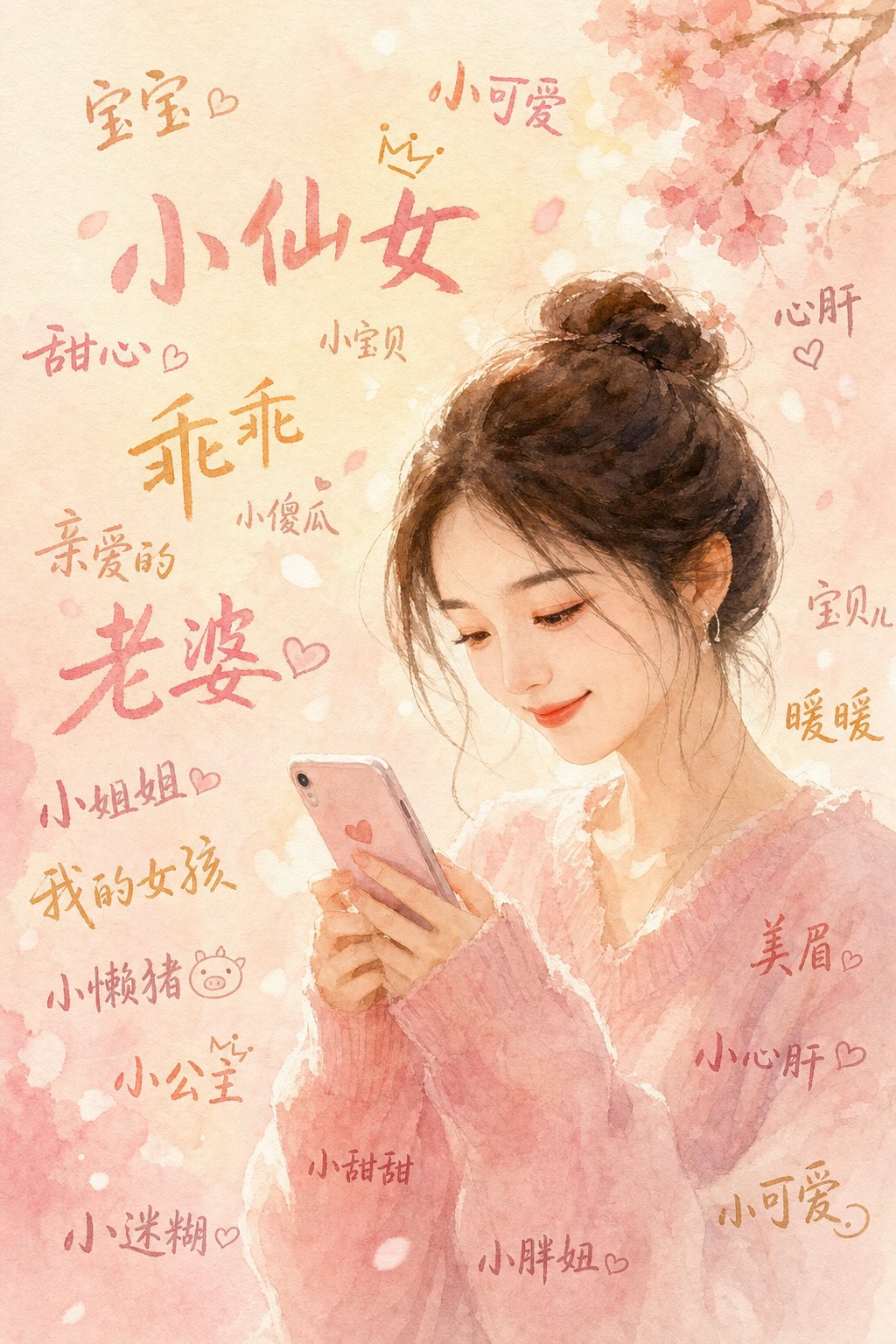
小仙女 (Xiao xiannü, "little fairy") has exploded in popularity. It flatters without being too intimate, making it perfect for the early courtship phase or public compliments. Boyfriends drop it in WeChat messages and social media comments alike.
小可爱 (Xiao ke'ai, "little cutie") works similarly. It's affectionate but light enough that it won't make either person blush in front of friends. Think of it as the nickname equivalent of a casual arm around the shoulder rather than a full embrace.
傻瓜 (Shagua, "silly goose" or literally "fool") might surprise non-Chinese speakers. Calling your girlfriend in chinese a "fool" sounds harsh in translation, but between couples it signals deep comfort. You'd only use this with someone who knows you well enough to hear the love underneath the teasing. As LingoAce explains, it's used affectionately when a partner does something innocent or endearingly clumsy.
老婆 (Laopo, "wife") gets used even by unmarried couples as a statement of commitment. It's bold, possessive in a warm way, and signals that the speaker sees a future together. Some couples adopt it within months of dating; others reserve it for engagement or marriage.
Matching the Right Nickname to Your Relationship Stage
Timing matters more than vocabulary. The wrong nickname at the wrong stage creates awkwardness that's hard to recover from. Here's how these terms map to actual relationship progression:
| Nickname | Characters (Simplified/Traditional) | Pinyin | Meaning | When to Use | Intimacy Level |
|---|---|---|---|---|---|
| Sweetheart | 甜心 / 甜心 | Tianxin | Sweet heart | Early dating, texting, public | Low - casual flirting |
| Little Fairy | 小仙女 / 小仙女 | Xiao xiannü | Little fairy maiden | Compliments, social media, early dates | Low - flattering |
| Little Cutie | 小可爱 / 小可愛 | Xiao ke'ai | Little cute one | Casual moments, group settings okay | Low to medium |
| Treasure | 宝贝 / 寶貝 | Baobei | Treasure, baby | Texting, in person, semi-public | Medium - established couple |
| Baby | 宝宝 / 寶寶 | Baobao | Precious baby | Private moments, playful texting | Medium - comfortable together |
| Darling | 亲爱的 / 親愛的 | Qin'ai de | Dear one, darling | Messages, greetings, any setting | Medium - warm and respectful |
| Silly | 傻瓜 / 傻瓜 | Shagua | Silly fool | Private teasing, playful scolding | Medium-high - deep comfort |
| Wife | 老婆 / 老婆 | Laopo | Wife | Private, committed relationship | High - serious commitment |
| My Love | 爱人 / 愛人 | Airen | Lover, beloved | Serious partners, married couples | High - deep devotion |
| Heart's Beloved | 心上人 / 心上人 | Xin shangren | The one in my heart | Poetic moments, written messages | Very high - literary romance |
Notice the pattern: lighter, more public-friendly terms cluster at the top, while deeply intimate or commitment-heavy names sit at the bottom. A boyfriend who jumps straight to 老婆 on a third date might come across as either charmingly bold or uncomfortably forward, depending on the girl's personality and regional norms.
Context also shifts meaning. 宝贝 whispered privately carries romantic weight. The same word shouted across a crowded restaurant feels performative. Chinese couples tend to reserve the most intimate pet names for private texting and one-on-one moments, using lighter terms like 小可爱 or 甜心 when friends are around.
The generational divide matters too. Younger couples in their twenties freely mix playful terms like 小仙女 with ironic ones like 傻瓜. Couples in their forties and fifties often stick with 亲爱的 or 老婆, viewing the newer terms as overly cutesy. Regional preferences add another layer: southern couples might lean toward softer Cantonese-influenced endearments, while northern couples embrace the directness of terms like 宝贝儿 (with that characteristic Beijing er-suffix).
Romantic nicknames exist in a world of two. But girls don't only receive names from partners. The nicknames parents bestow in childhood often carry even deeper emotional resonance, lasting decades longer than any romantic pet name ever could.
Adorable Nicknames Chinese Parents Give Their Daughters
A boyfriend's pet name might last a few years. A parent's nickname for their daughter? That one sticks for life. The tradition of 乳名 (ruming, literally "milk name") runs deep in Chinese family culture, and these childhood nicknames operate on completely different logic than romantic terms. They're chosen before a baby can even respond to them, rooted in hopes, personality observations, or simply the sound that made a newborn smile.
Unlike formal given names, which often involve consulting elders, considering generational naming conventions, and balancing the five elements of Chinese philosophy, a ruming is intimate and spontaneous. It belongs exclusively to the family circle. Grandparents, parents, aunts, and uncles use it freely, but outsiders rarely hear it. Think of it as the name that lives inside the home's walls.
Food and Nature Inspired Names Parents Love
Chinese parents draw from the world around them when crafting cute chinese nicknames for daughters. Food and nature dominate because they carry built-in warmth. Calling a baby girl "sugar" or "little peach" feels instinctively tender in any language, but in Mandarin these names gain extra charm through reduplication and tonal melody.
Food-based nicknames signal sweetness and abundance. The word sweet in chinese (甜, tian) appears constantly in these names because it captures exactly what parents feel when they look at their daughter. Nature-based names lean more poetic, connecting the child to beauty and growth.
- Food-based nicknames:
- 糖糖 (Tangtang) - Sugar-sugar. One of the most popular cute chinese names for girls among new parents.
- 果果 (Guǒguǒ) - Fruit-fruit. Suggests something precious and nourishing.
- 桃桃 (Taotao) - Peach-peach. Peaches symbolize longevity and beauty in Chinese culture.
- 小汤圆 (Xiǎo tangyuan) - Little glutinous rice ball. Implies roundness, warmth, and family togetherness.
- 蜜蜜 (Mimi) - Honey-honey. Soft-sounding and effortlessly affectionate.
- Nature-based nicknames:
- 朵朵 (Duǒduǒ) - Blossom-blossom. Evokes flowers opening, potential unfolding.
- 小兔 (Xiǎotu) - Little rabbit. Rabbits represent gentleness and good fortune.
- 月月 (Yueyue) - Moon-moon. Carries elegance and quiet luminosity.
- 星星 (Xīngxīng) - Star-star. Bright, hopeful, and universally appealing.
- 小鱼 (Xiǎoyu) - Little fish. Playful, energetic, often given to active babies.
- Animal-based nicknames:
- 小猫 (Xiǎomāo) - Little cat. For quiet, graceful girls.
- 燕燕 (Yanyan) - Swallow-swallow. The bird symbolizes spring and happiness.
- 鹿鹿 (Lulu) - Deer-deer. Trendy among younger parents for its gentle, modern sound.
You'll notice food names tend to skew younger and trendier. New parents in urban China gravitate toward 糖糖, 果果, and 小汤圆 because they sound fresh and playful. Nature and animal names like 燕燕 or 小兔 carry a slightly more traditional feel, though 鹿鹿 has surged in popularity thanks to its soft phonetics and association with grace.
Nicknames That Follow Daughters Into Adulthood
Here's what surprises many people outside Chinese culture: these childhood chinese pet names don't expire. A thirty-year-old professional might still hear her mother call her 糖糖 at a family dinner. A grandmother might address her married granddaughter as 小兔 without a second thought. The nickname exists in a time capsule, preserving the relationship as it was when the child was small.
This persistence isn't accidental. It reinforces family bonds and signals unconditional love. No matter how accomplished a daughter becomes in the outside world, within the family she remains someone's little peach, someone's blossom. The nickname carries no diminishment. It carries belonging.
Some names transition more gracefully into adulthood than others. Reduplicated names like 朵朵 or 月月 age well because they sound elegant regardless of context. Names with the 小 prefix (小兔, 小鱼) can feel slightly more childish, though most families use them without self-consciousness. The names that sometimes get retired are overly babyish food names like 小汤圆, which a teenage daughter might gently push back against in front of friends, even while secretly loving it at home.
Choosing a Nickname by Emotional Tone
Beyond category, parents can select chinese nicknames for children based on the feeling they want the name to carry. The same girl might suit a sweet name, a playful name, or an elegant name depending on her personality and what her parents hope to express.
- Sweet tone (warm, tender, comforting):
- 糖糖 (Tangtang) - Sugar
- 蜜蜜 (Mimi) - Honey
- 乖乖 (Guāiguāi) - Good girl, well-behaved one
- 甜甜 (Tiantian) - Sweetie
- Playful tone (energetic, fun, spirited):
- 豆豆 (Doudou) - Little bean
- 小鱼 (Xiǎoyu) - Little fish
- 跳跳 (Tiaotiao) - Bouncy, jumpy
- 皮皮 (Pipi) - Mischievous one
- Elegant tone (refined, poetic, graceful):
- 月月 (Yueyue) - Moon
- 朵朵 (Duǒduǒ) - Blossom
- 琳琳 (Linlin) - Jade tinkling
- 诗诗 (Shīshī) - Poetry
- Virtue-based (aspirational, character-focused):
- 乖乖 (Guāiguāi) - Obedient, well-behaved
- 慧慧 (Huihui) - Wise, intelligent
- 静静 (Jingjing) - Calm, serene
- 安安 (An'an) - Peaceful, safe
Virtue-based names like 乖乖 and 静静 lean traditional. They reflect an older generation's values, where a daughter's obedience and composure were prized qualities. Modern parents still use them, but the trend has shifted toward names that celebrate personality (皮皮 for a spirited child) or aesthetics (诗诗 for a dreamy one) rather than behavioral expectations. Among today's new parents, cute chinese names for girls tend to prioritize sound and feeling over moral instruction.
The generational shift is real. Grandparents might suggest 乖乖 or 慧慧. Millennial and Gen Z parents reach for 鹿鹿, 果果, or even playful inventions that didn't exist a decade ago. Neither approach is wrong. They simply reflect different eras of parenting philosophy, filtered through the same linguistic patterns that have shaped Chinese naming for centuries.
These family nicknames exist in a protected space. But step outside the home, into a classroom or a friend group, and the nickname game changes entirely. Among peers, the rules get looser, funnier, and sometimes sharper.
Funny and Playful Nicknames Among Female Friends
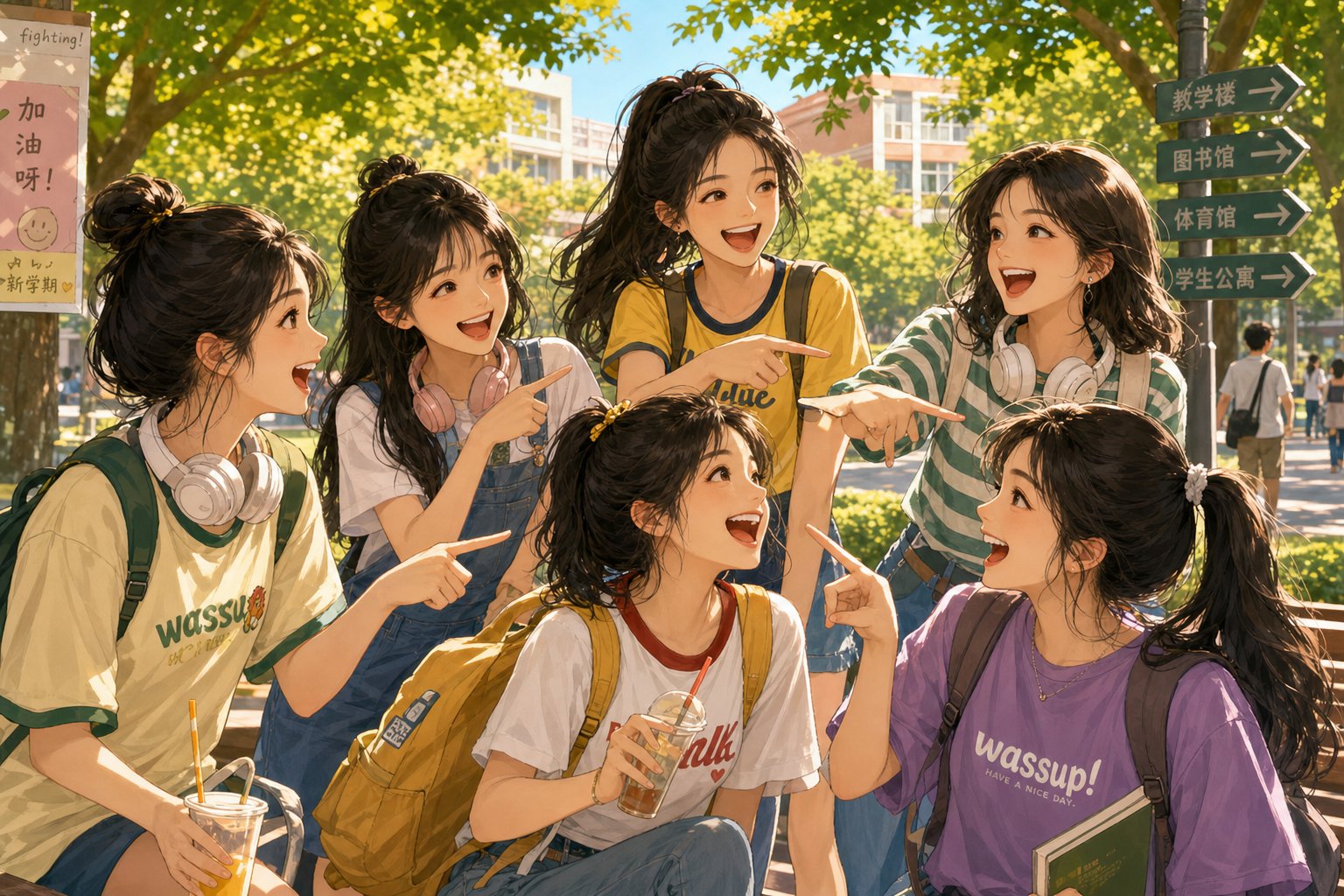
In Western culture, calling a friend "chubby" or "big head" would likely end the friendship. In Chinese girl culture, those exact nicknames signal you've made it into the inner circle. Funny chinese nicknames between female friends operate on inverted logic: the more teasing the name, the deeper the trust it implies. If someone bothers to craft a humorous nickname for you, it means they've observed you closely enough to notice your quirks and feel safe enough to laugh about them with you.
This is one of the most misunderstood aspects of Chinese social dynamics. What sounds like mockery to outsiders functions as a bonding ritual among close friends. The nickname itself becomes shared property, a private joke that reinforces group identity every time it's used.
Playful Nicknames That Signal Close Friendship
So what do these funny names in chinese actually sound like? They draw from physical traits, eating habits, personality quirks, and creative wordplay. A girl who's always snacking might become 吃货 (chihuò, "foodie"). Someone with a round face could earn 土豆 (tǔdòu, "potato"). A friend who spaces out in class gets tagged 阿呆 (ā dāi, "little spacey"). Each name captures something real about the person, wrapped in affection rather than cruelty.
Here are the most common formation strategies ranked by how frequently they appear in Chinese girl friend groups:
- Physical trait exaggeration - 肉肉 (ròuròu, "chubby"), 大头 (dàtóu, "big head"), 小矮子 (xiǎo ǎizi, "shorty"). These work because they take something obvious and make it endearing through diminutive framing or reduplication.
- Personality-based labels - 吃货 (chihuò, "foodie"), 话痨 (huàláo, "chatterbox"), 迷糊 (míhu, "scatterbrain"). These celebrate quirks rather than criticizing them.
- Name puns and homophones - A girl named 诗涵 (Shīhán) might become 柿子 (shìzi, "persimmon") because the sounds overlap. Pun-based funny chinese names require linguistic creativity and show the nicknamer paid attention.
- Pop culture references - Comparing a friend to a drama character, anime figure, or viral meme. A girl with a fierce personality might get called 灭绝师太 (Mièjué Shītài, a stern martial arts character). These references shift with trends and mark generational belonging.
- Food comparisons - 汤圆 (tāngyuán, "rice ball") for someone soft and round, 辣椒 (làjiāo, "chili pepper") for a fiery temper. Food-based funny asian nicknames feel inherently warm because food itself carries positive associations in Chinese culture.
How Teasing Names Work in Chinese Girl Culture
The social dynamics behind these nicknames follow specific unwritten rules. Not just anyone can assign a teasing name. Typically, the person who coins the nickname holds equal or very close social standing within the group. A new classmate attempting to give someone a funny nickname on day one would come across as presumptuous or rude. The right to tease is earned through time and shared experience.
School-age nickname culture tends to be more direct and physical-trait-focused. Middle school girls might call each other 胖妞 (pàngniū, "chubby girl") or 黑妹 (hēimèi, "dark-skinned girl") with genuine affection. Among adult women, the humor shifts toward personality observations and situational jokes. A colleague who always forgets her lunch becomes 饿死鬼 (èsǐguǐ, "hungry ghost"). The word funny in chinese language (好笑, hǎoxiào) itself captures this dual nature: something that makes you laugh because it's recognizable, not because it's cruel.
How these names spread matters too. A nickname born in a private conversation between two friends might stay between them. But if it's clever enough, it radiates outward through the friend group until everyone adopts it. The original recipient's reaction determines whether it sticks. Laughing along gives permission. Visible discomfort kills it, at least among considerate friends.
When Funny Nicknames Cross the Line
The boundary between playful and hurtful isn't always obvious, but experienced Chinese friend groups navigate it through a few key principles:
- Consent through reaction - If the person laughs or uses the nickname for themselves, it's fair game. If they go quiet or change the subject, the name should be dropped immediately.
- Private insecurities are off-limits - Teasing someone about a trait they're visibly self-conscious about (weight they're trying to lose, skin conditions, family situations) crosses from bonding into bullying.
- Context sensitivity - A nickname acceptable among close friends becomes humiliating when used in front of strangers, authority figures, or romantic interests. Chinese names funny among peers can wound when the audience changes.
- Power dynamics - A popular girl nicknaming a shy classmate carries different weight than two equally-positioned friends teasing each other. The social power behind the name matters as much as the name itself.
The generational shift here is notable. Older Chinese women (40+) tend to use fewer teasing nicknames among friends, preferring respectful address patterns. Younger women, especially those raised on internet humor and meme culture, embrace increasingly creative and absurd nicknames that would puzzle their mothers entirely.
That internet influence doesn't stop at reshaping friend-group humor. It's created an entirely new category of names: the ones girls choose for themselves, crafted for screens rather than spoken aloud.
Modern Internet and Social Media Nicknames for Girls
Every nickname we've covered so far shares one thing in common: someone else chose it. A parent, a boyfriend, a friend. But online, the script flips entirely. Chinese girls craft their own display names, and these self-chosen identities reveal something no given nickname ever could: how a girl wants the world to see her when she controls the narrative.
This distinction matters more than it might seem. Offline nicknames reflect how others perceive you. A chinese username or display name reflects how you perceive yourself, or at least the version of yourself you want to project today. And "today" is the key word. Unlike a childhood ruming that lasts decades, online names shift with moods, breakups, seasons, and trending aesthetics. They're identity as performance, updated in real time.
Research on Chinese adolescents' digital behavior confirms this pattern. A 2025 study published in Frontiers in Psychology found that Chinese teens on Douyin actively construct and reconstruct their digital identities through selective self-presentation, balancing authenticity with social expectations. Display names are the first layer of that construction, the front door to their curated digital self.
WeChat and Douyin Display Name Trends
WeChat and Douyin serve different social functions, and the chinese display names girls choose on each platform reflect that difference. WeChat is semi-private, tied to real-life contacts like family, classmates, and colleagues. Douyin is more public-facing, built for discovery and performance. The naming strategies shift accordingly.
On WeChat, display names tend toward subtle self-expression. They're visible to people who already know you, so the goal isn't attracting strangers but signaling mood, personality, or current life chapter to an existing audience. On Douyin and Xiaohongshu (China's equivalent of Instagram meets Pinterest), names function more like branding. They need to be memorable, searchable, and aesthetically distinctive.
Here are the most popular online nickname styles trending among Chinese girls right now:
- Aesthetic Unicode and symbol names - Incorporating special characters, Japanese kana, or decorative symbols to create visually distinctive names. Examples: "_鹿野." "星野 ✧" "-柒月naruto." The periods, underscores, and symbols aren't random. They create visual breathing room and signal a curated aesthetic sensibility.
- English-Chinese hybrid names - Mixing English words with Chinese characters for a cosmopolitan feel. Examples: "sweet诗诗" "Luna月光" "cherry小樱." These hybrids appeal because they feel modern and globally connected without abandoning Chinese identity.
- Literary and poetic references - Drawing from classical Chinese poetry, song lyrics, or novel quotes. Examples: "人间忽晚" (suddenly evening in the human world), "山有木兮" (the mountain has trees), "南风知我意" (the south wind knows my heart). These names signal education, emotional depth, and a romantic worldview.
- Mood-based names that change frequently - Short phrases capturing a current emotional state. Examples: "想吃草莓" (craving strawberries), "今天也很累" (tired again today), "等风来" (waiting for the wind). Girls might change these weekly or even daily, treating the display name like a micro-diary entry.
- Couple-matching display names - Coordinated names with a boyfriend or best friend that form a pair. Examples: "南风" paired with "北巷" (south wind / north alley), "左耳" paired with "右耳" (left ear / right ear), "星辰" paired with "大海" (stars / ocean). These publicly declare a relationship without being explicit.
- Minimalist single-character or two-character names - Ultra-short names that feel mysterious and cool. Examples: "栀" (gardenia), "鸢" (kite-bird), "予安" (granting peace). The brevity itself becomes the aesthetic statement.
- Self-deprecating humor names - Ironic or absurd names that signal confidence through not taking yourself seriously. Examples: "秃头少女" (balding girl), "肥宅快乐" (happy homebody), "学废了" (failed at studying). These cool chinese nicknames work because the humor is self-directed and relatable.
The mood-based approach deserves special attention. Western social media users typically pick a username and keep it for years. Chinese girls, especially Gen Z users, treat their display name as a living status update. Changing it after a breakup, during exam stress, or when a new season arrives is completely normal. Friends learn to read these shifts as emotional signals without needing to ask directly.
Gaming Handles and Username Culture for Girls
Gaming platforms create yet another naming context. Chinese gamertags for girls follow different rules than social media display names because the audience is largely strangers, and the environment is competitive or cooperative rather than purely social.
Popular chinese names for games among female players tend to fall into a few categories. Some girls choose deliberately feminine names to own their identity in male-dominated spaces: "仙女不下凡" (fairy who won't descend to earth), "奶茶续命" (milk tea keeps me alive), or "软糖味的风" (wind that tastes like gummy candy). Others pick gender-neutral or deliberately fierce names to avoid unwanted attention: "无名" (nameless), "执剑" (sword-bearer), or "孤" (solitary).
Chinese usernames in gaming also reflect server culture. On Honor of Kings (王者荣耀), one of China's most popular mobile games, couple-matching gamertags are extremely common. Partners coordinate names that reference the same poem, song, or inside joke. Friend groups sometimes create matching sets of three or four names that only make sense together, turning the username itself into a group identity marker.
The strategic element is real too. Some female gamers deliberately choose cute or helpless-sounding names to attract teammates who want to "carry" them, a social tactic that's both criticized and widely practiced. Others choose intimidating names precisely to subvert expectations when they outperform male players.
How Online Nicknames Reflect Gen Z Identity
Why do Chinese Gen Z women invest so much creative energy in display names? The answer connects back to a fundamental shift in how identity works online versus offline.
In traditional Chinese culture, your name was given to you. Your nickname was given to you. Your identity was largely constructed by your family and community. Online platforms broke that pattern entirely. For the first time, young Chinese women could name themselves, rebrand at will, and experiment with identities that might not be available to them in their offline lives. A quiet girl from a small city can present herself as witty and cosmopolitan through a clever display name. A student under intense academic pressure can signal her inner world through a poetic WeChat name that her parents never see.
The research on Douyin self-presentation supports this. Adolescents use platform tools to manage multiple versions of themselves, maintaining separate public and private personas and adjusting their digital identity based on audience and context. The display name is the simplest, most frequently updated element of that identity management system.
Several cultural forces drive the specific trends we see today:
- Aesthetic culture (审美文化) - Chinese internet culture places enormous value on visual harmony. A display name isn't just read. It's seen. Character choice, spacing, and symbol placement all contribute to how the name looks on screen.
- Emotional authenticity - Gen Z Chinese women value emotional honesty among peers. Mood-based names that admit vulnerability ("好想回家," meaning "really want to go home") build connection through shared feeling rather than performed perfection.
- Platform algorithm awareness - On Douyin and Xiaohongshu, display names affect discoverability. Content creators choose names that are searchable, memorable, and brand-friendly, blending personal expression with strategic thinking.
- Resistance to formality - Choosing a playful or absurd online name pushes back against the rigid naming conventions of Chinese professional and family life. The internet becomes a space where naming rules relax.
Cool chinese nicknames online also serve as cultural timestamps. A name referencing a 2023 drama will feel dated by 2025. Literary references cycle in and out of fashion. Even the preferred symbols and formatting styles evolve season by season. Reading someone's display name history is like reading a diary of their cultural consumption and emotional journey.
This self-naming freedom exists within a specific digital ecosystem. But Chinese-speaking communities aren't monolithic. The same girl might choose completely different naming styles depending on whether she's in mainland China, Hong Kong, or Taiwan, where regional language patterns reshape everything about how nicknames sound and feel.
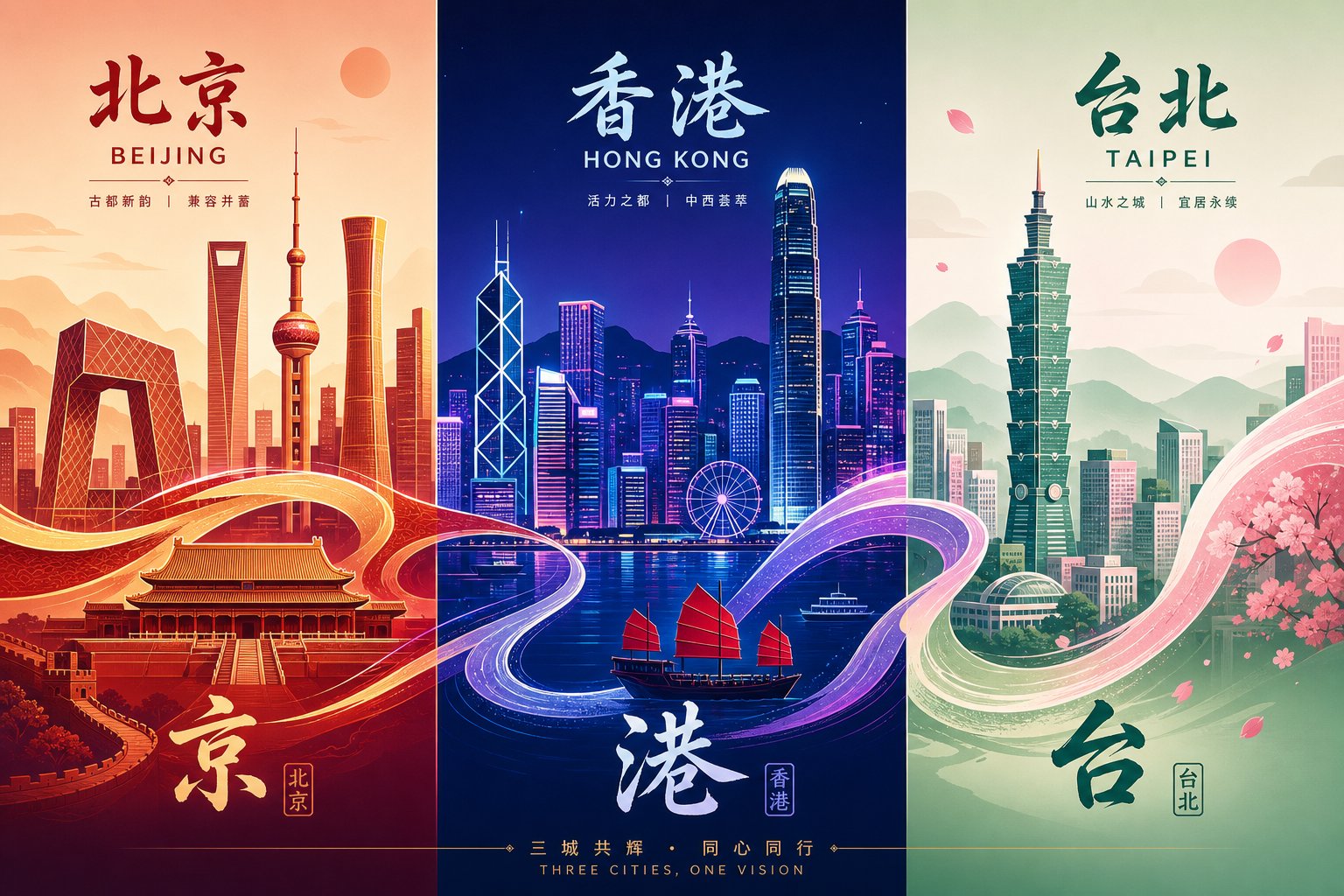
Regional Variations Across Mandarin, Cantonese, and Taiwanese
A nickname that sounds perfectly natural in Beijing might land awkwardly in Hong Kong or feel oddly formal in Taipei. Chinese-speaking communities aren't a single block. The same affectionate impulse gets filtered through different dialects, colonial histories, and pop culture influences, producing nicknames that share DNA but sound nothing alike in practice.
If you've been thinking of asian nicknames as one unified system, this is where that assumption breaks down. Regional variation isn't a minor footnote. It's the difference between sounding like an insider and sounding like a textbook.
Cantonese Nickname Patterns Unique to Hong Kong
In Cantonese-speaking communities across Hong Kong and Guangdong province, the 阿 (a) prefix dominates nickname formation far more than in Mandarin. While Mandarin speakers reach for 小 (xiao) as their default casual prefix, Cantonese speakers default to 阿 for nearly everything: friends, family, colleagues, even pets. As genealogist Linda Yip documents in her research, the 阿 prefix functions as a "softening, relationship-affirming sound particle" that signals respect, affection, and kinship all at once.
A girl named Wing Yi (颖仪) becomes 阿Yi among friends. Someone named Ka Man (嘉敏) gets shortened to 阿Man. Notice something? Hong Kong nicknames frequently blend Cantonese structure with English elements. A girl might be called 阿Cat, 阿Kel (from Kelly), or 阿B (from baby). This English-Cantonese hybrid style is a distinctive hong kong nickname pattern you won't find on the mainland.
Cantonese nicknames also favor different reduplication rhythms. Where Mandarin doubles characters with even stress (Tiantian), Cantonese reduplication often carries a sing-song quality shaped by the language's six tones. Names like 妹妹 (mui-mui, little sister) and BB (bi-bi, baby) reflect how cantonese nicknames prioritize sound texture over character meaning.
Taiwanese Nicknames With Japanese Influence
Taiwan's nickname culture carries a distinct flavor shaped by fifty years of Japanese colonial rule (1895-1945) and ongoing Japanese pop culture influence. You'll hear Taiwanese girls use suffixes borrowed from Japanese: adding 醬 (jiang, from Japanese -chan) after names, or using 桑 (sang, from -san) in playful contexts among friends.
A girl named Mei Ling might become 美玲醬 (Meiling-jiang) among close friends, a taiwan nickname pattern that would sound strange on the mainland. Taiwanese Mandarin also favors softer, more drawn-out pronunciation that makes nicknames sound inherently cuter. The 小 prefix remains common, but it's delivered with a gentler, more melodic intonation than its mainland counterpart.
Taiwanese couples also borrow Japanese endearment structures. Terms like 達令 (daling, from English "darling" filtered through Japanese katakana) appear in Taiwanese romance culture but rarely in mainland usage. The island's unique blend of Hokkien dialect, Mandarin, and Japanese loanwords creates mandarin chinese names and nicknames that feel familiar yet distinctly local.
How the Same Endearment Sounds Across Regions
Imagine you want to call a girl something affectionate. The concept stays the same, but the execution shifts dramatically depending on where you are. Here's how common nickname ideas translate across all three regions:
| Nickname Concept | Mainland Mandarin | Pronunciation | Hong Kong Cantonese | Pronunciation | Taiwanese Mandarin | Pronunciation |
|---|---|---|---|---|---|---|
| Little + Name (e.g., Mei) | 小美 | Xiao Mei | 阿美 | A-Mei | 小美 or 美醬 | Xiao Mei / Mei-jiang |
| Baby / Darling | 宝贝 | Baobei | BB / 宝贝 | Bi-bi / Bo-bui | 北鼻 (phonetic) | Bei-bi |
| Cute girl | 小可爱 | Xiao ke'ai | 得意妹 | Dak-yi mui | 可爱鬼 | Ke'ai gui |
| Silly / Goofy | 傻瓜 | Shagua | 戆居居 | Ngong geoi geoi | 乖乖 / 笨蛋 | Guaiguai / Bendan |
| Pretty one | 美女 | Meinü | 靓女 | Leng-lui | 正妹 | Zheng-mei |
| Bestie / Close friend | 闺蜜 | Guimi | 姊妹 / bestie | Ji-mui | 姐妹淘 | Jiemei tao |
A few patterns jump out from this comparison. Hong Kong leans heavily on English borrowings and Cantonese-specific vocabulary (靓女 instead of 美女). Taiwan favors phonetic adaptations of foreign words (北鼻 as a sound-based spelling of "baby") and Japanese-influenced structures. Mainland Mandarin stays closest to standard dictionary forms but adds regional flair through the 儿 suffix in northern cities.
The practical takeaway? If you're choosing a nickname for a girl, knowing her regional background matters as much as knowing her personality. A mainland girl might find 阿 + name too old-fashioned or overly Cantonese. A Hong Kong girl might think 宝贝 sounds too mainland-drama. A Taiwanese girl might expect the softer, more playful register that her local culture normalizes. The same affection, expressed through the wrong regional filter, can feel slightly off, like wearing the right outfit to the wrong party.
These regional differences didn't appear overnight. They evolved across decades of political separation, media influence, and generational change, forces that reshaped not just where nicknames come from but what they mean to the people who use them.
How Chinese Girl Nicknames Have Evolved Across Generations
Regional differences tell you where a nickname comes from. Generational differences tell you when. The romantic words in chinese that made your grandmother blush in the 1960s might make a Gen Z girl cringe today, and the internet slang her generation uses would baffle anyone born before 1980. These shifts aren't random. Each generation's nickname vocabulary was shaped by the political climate, media landscape, and social freedoms available to them.
Traditional Nicknames From Grandparents' Generation
For women born in the 1940s through 1960s, nicknames stayed simple, practical, and virtue-focused. During this era, political movements discouraged overt romanticism. Chinese pet names for lovers were restrained by necessity. Couples in public used formal address or plain terms like 爱人 (airen, "lover" or "spouse"), which carried ideological weight as a gender-neutral, egalitarian term promoted during the Mao era. It was the standard way to say lover in chinese language without sounding bourgeois.
Childhood nicknames from this generation leaned heavily on survival hopes and simple blessings: 招弟 (Zhaodi, "beckoning a younger brother"), 来福 (Laifu, "fortune arrives"), or plain reduplication of single characters like 兰兰 (Lanlan, orchid) and 英英 (Yingying, heroic). These names reflected scarcity-era thinking. Parents wanted health, fortune, and sons. Daughters' nicknames often carried that subtext, though affection still lived underneath.
How Pop Culture Transformed Romantic Pet Names
The 1990s and 2000s cracked everything open. Taiwanese idol dramas flooded the mainland, and with them came a new emotional vocabulary. Shows like Meteor Garden (流星花园), It Started with a Kiss (恶作剧之吻), and Hi My Sweetheart (海派甜心) didn't just entertain. They taught an entire generation how to flirt. Taiwanese dramas held significant influence across Chinese-speaking regions from the 1990s to the 2010s, particularly in the romance genre, and their impact on couple in chinese naming culture was enormous.
Suddenly, calling your girlfriend 老婆 (laopo, "wife") before marriage became normal rather than presumptuous. Terms like 宝贝 (baobei) shifted from something parents said to children into mainstream chinese couple nicknames between young lovers. The Taiwanese drama aesthetic, soft-spoken male leads whispering sweet nothings, normalized a level of verbal intimacy that previous generations would have found embarrassing in public.
This era also popularized 亲爱的 (qin'ai de, "darling") as a romantic opener in phone calls and text messages. Chinese nicknames for lovers became more expressive, more playful, and more publicly acceptable. The cultural permission came directly from screens.
A grandmother who called her husband 老头子 ("old man") with gruff affection raised a daughter who called her boyfriend 亲爱的 after watching Taiwanese dramas, who then raised a granddaughter who calls her partner 崽崽 ("little cub") because she saw it trending on Douyin.
What Gen Z Girls Call Each Other Now
Today's generation inherited all previous layers and added internet-native creativity on top. The shift from broadcast media to social media meant nicknames no longer trickled down from TV scripts. They bubble up from comment sections, livestreams, and viral posts.
Modern chinese pet names for lovers among Gen Z include terms that would puzzle anyone over 35: 崽崽 (zaizai, "little cub"), 猪猪 (zhuzhu, "piggy"), and 笨蛋 (bendan, "dummy") used with exaggerated sweetness. The ironic register is key. Where older generations chose names that sounded beautiful or respectful, Gen Z deliberately picks names that sound silly because sincerity feels too vulnerable. Wrapping affection in humor is the emotional armor of a generation raised online.
Even 老婆 (laopo) reads differently now. For millennials, it signals committed romance. For Gen Z girls using it with their female best friends, it's a playful declaration of platonic devotion, completely detached from its literal meaning of "wife." The same word, three generations, three entirely different social signals.
What drove this latest shift? Globalization brought exposure to Korean and Japanese cute culture. Social media rewarded novelty and humor over tradition. And the sheer speed of internet trends means that any nickname feeling fresh today might feel stale within months, pushing constant reinvention. The vocabulary of closeness keeps expanding, but the underlying human need, to signal "you matter to me" through a special name, remains exactly the same across every generation.
Knowing the history helps you read the room. But even with perfect vocabulary and generational awareness, using these nicknames at the wrong moment or in the wrong context can backfire. The cultural etiquette around when and how to deploy a nickname carries just as much weight as the name itself.
Cultural Etiquette and When to Use These Nicknames
You've got the vocabulary. You understand the formation patterns, the regional flavors, the generational layers. But knowing a nickname and knowing when to use it are completely different skills. In Chinese culture, deploying pet names in chinese at the wrong moment doesn't just feel awkward. It can damage a relationship, signal disrespect, or create misunderstandings that linger for months.
The rules aren't written down anywhere, which is exactly why so many outsiders stumble. They're absorbed through observation, corrected through social feedback, and internalized over years of navigating Chinese social life. Here's the framework that governs it all.
Social Rules for Using Nicknames by Relationship Type
Age and hierarchy form the backbone of nickname etiquette. An older person calling a younger girl by a cute nickname? Perfectly natural. A younger person using a casual nickname for someone older without explicit permission? That reads as disrespectful, even if the intent is friendly.
The closeness threshold matters just as much. As Chinese Name Translator explains, each step down the intimacy gradient from formal name to nickname requires social permission. You don't start calling someone by a reduplicated name the day you meet them. The transition happens gradually, often signaled by the other person using a casual form first.
Here's a practical breakdown of what's appropriate in each scenario:
- Older to younger (family, mentors, teachers) - Nicknames flow freely downward. A grandmother, aunt, or older colleague can use diminutives without asking. This is expected and welcomed.
- Younger to older - Stick with formal address (姐姐, jiejie for older sister; 阿姨, ayi for auntie) unless the older person explicitly invites a nickname. Jumping to casual forms signals you don't recognize the hierarchy.
- Same-age peers (new) - Use full given names or the safe 小 + surname pattern until the friendship deepens. Wait for cues. If she introduces herself with a nickname, that's your green light.
- Same-age peers (close) - Reduplication, teasing names, and creative nicknames are all fair game once mutual comfort is established. The shift usually happens organically over weeks or months.
- Romantic interest (early stage) - Light, public-friendly terms like 小可爱 work. Heavier terms like 宝贝 or 老婆 before the relationship is defined can feel presumptuous or come across as flirty chinese overconfidence.
- Professional settings - Nicknames are almost universally taboo. Even close friends who use playful names outside work revert to 小 + surname or full names in meetings, emails, and client-facing situations. Using someone's childhood 乳名 at the office would be deeply embarrassing for them.
The signal of switching matters too. When someone who normally calls you by your full name suddenly uses a nickname, pay attention. Something shifted. They're claiming closeness, testing boundaries, or expressing warmth they hadn't shown before. Conversely, if a friend who always uses your nickname suddenly reverts to your formal name, that coolness is intentional. It's a withdrawal of intimacy without needing to say a word.
Code Names and Secret Nicknames for Crushes
Chinese crush culture has its own fascinating naming tradition. When someone likes a girl but doesn't want mutual friends to know, they assign her a code name. These code names for crushes in chinese culture serve a practical purpose: you can talk about her openly in group chats or conversations without anyone connecting the dots.
Common strategies include using initials (just the pinyin first letter of her name), assigning an unrelated object name (calling her "草莓," caomei, strawberry, because she wore a strawberry-print shirt the day you noticed her), or referencing a shared inside moment only you'd recognize. Some people use seat numbers from class, zodiac signs, or even emoji codes in group chats.
The code name tradition connects to broader chinese flirt phrases culture, where indirectness is valued over blunt confession. Admitting feelings directly carries high social risk in Chinese peer groups. A code name lets you process your emotions with trusted friends while maintaining plausible deniability. If the crush is eventually reciprocated, the code name sometimes evolves into an actual pet name between the couple, carrying the romantic origin story with it.
Among younger Chinese, the mandarin for friend (朋友, pengyou) itself becomes loaded in crush contexts. Introducing someone as "我朋友" (my friend) with a certain tone or hesitation signals to observant listeners that this person might be more than a friend, or that you wish they were.
Public Versus Private Nickname Etiquette
Where you are changes what's acceptable as much as who you're with. The same nickname that feels natural in a private WeChat message can become mortifying when spoken aloud in a restaurant full of strangers.
- Private (texting, alone together) - Almost anything goes between people who've established mutual comfort. This is where the most intimate and playful names live. Chinese flirt phrases and sweet nicknames thrive in private digital spaces.
- Semi-private (small friend gatherings) - Playful nicknames and teasing names are fine among the inner circle. Romantic pet names between couples are acceptable if the group is close enough to be comfortable witnessing affection.
- Public (restaurants, transit, workplaces) - Dial it back. Most Chinese couples avoid overtly romantic nicknames in public, especially around older people or strangers. Lighter terms like names with 小 or simple given-name shortening feel appropriate. Shouting 宝贝 across a crowded space reads as performative rather than genuine.
- Family gatherings - Parents' childhood nicknames for daughters are always acceptable here. Romantic partners should use restrained terms around the girlfriend's parents until the family dynamic is well established. Using overly intimate chinese flirting phrases in front of her father is a universally bad idea.
- Online (social media comments, group chats) - Context depends on audience. A comment visible to hundreds of followers calls for lighter nicknames than a private message. Couple-matching display names signal the relationship publicly without requiring anyone to say anything intimate out loud.
The underlying principle is simple: the more public the setting, the more restrained the nickname should be. Intimacy is a private currency. Spending it publicly can feel like showing off rather than expressing genuine feeling. Chinese social culture values subtlety. The most powerful nicknames are often the ones only two people ever hear.
Knowing when to use a nickname protects you from social missteps. But there's one more layer of protection worth having: knowing which nicknames to avoid entirely, because some names that seem harmless carry hidden pitfalls that even well-intentioned speakers fall into.

Chinese Girl Nicknames to Avoid and Common Mistakes
Good intentions don't protect you from bad nicknames. A tone slip, a direct translation, or an innocent-sounding character can turn an affectionate gesture into something embarrassing, confusing, or outright offensive. These mistakes happen constantly, especially when non-native speakers attempt chinese nicknames in english-to-Chinese conversion without understanding the landmines underneath.
The trickiest part? Many of these errors sound perfectly fine to untrained ears. You won't know something went wrong until you see the reaction on her face or the awkward silence in the room.
Tone Combinations That Accidentally Sound Offensive
Mandarin's four tones mean that characters sharing the same pinyin spelling can carry wildly different meanings. When you combine characters into a nickname, the resulting sound might accidentally echo something vulgar or unfortunate.
The character 日 (ri, "sun") seems poetic for a nickname. But in colloquial speech, it doubles as a crude expletive. Any nickname incorporating this sound risks unintended vulgarity. Similarly, doubling certain fourth-tone characters can produce sounds that mimic swear words or slang for body parts. A character meaning "elegant" in isolation might, when reduplicated, sound like a word for something you'd never say in polite company.
Numbers create problems too. As Chinese Name Translator documents, the number 4 (四, si) sounds like "death" (死, si), making any nickname incorporating it feel ominous rather than cute. The number 250 (二百五, er bai wu) is a well-known insult meaning "idiot." Even using 2 (二, er) casually in a nickname can imply stupidity in northern Chinese dialects.
Translation Traps When Converting English Pet Names
The most common foreigner mistake? Directly translating English endearments into Chinese and expecting them to carry the same warmth. They almost never do.
Saying babe in chinese by using a literal translation like 婴儿 (ying'er) doesn't signal romance. It means "infant." You'd sound like you're talking about an actual baby, not flirting. The same problem hits honey in chinese relationship contexts. Translating "honey" directly as 蜂蜜 (fengmi) refers to the substance bees make. Nobody uses it as a pet name. It would be like calling your girlfriend "maple syrup" in English. Technically sweet, practically bizarre.
Even the concept of how to call someone hot in chinese doesn't translate cleanly. English speakers might reach for 热 (re, literally "hot temperature"), which has zero romantic connotation. The actual Chinese equivalent for calling someone attractive would be 好看 (haokan, good-looking) or the slang 颜值高 (yanzhi gao, high appearance score), neither of which works as a nickname.
Attempting a darling chinese equivalent by saying "达令" (daling) only works in Taiwanese contexts where the Japanese-filtered English loanword has cultural roots. On the mainland, it sounds dated or theatrical. And if you're searching for a chinese name for my love, translating "my love" word-for-word as 我的爱 (wo de ai) sounds like a song lyric, not something you'd actually call a person. Native speakers use 爱人 (airen) or 宝贝 (baobei) instead.
| Common Mistake | Why It Fails | Better Alternative |
|---|---|---|
| Translating "baby" as 婴儿 (ying'er) | Means literal infant, zero romantic connotation | 宝贝 (baobei) or 宝宝 (baobao) |
| Translating "honey" as 蜂蜜 (fengmi) | Refers to the food product, not a person | 亲爱的 (qin'ai de) or 甜心 (tianxin) |
| Using 热 (re) to mean "hot" (attractive) | Only means temperature, not attractiveness | 好看 (haokan) or 漂亮 (piaoliang) |
| Saying 达令 (daling) for "darling" on the mainland | Sounds theatrical or outdated outside Taiwan | 亲爱的 (qin'ai de) |
| Using nicknames with 四/4 sounds | Echoes 死 (si, death), feels ominous | Avoid si-sound characters in nicknames entirely |
| Reduplicating characters with vulgar homophones | Innocent characters can sound like slang when doubled | Test with a native speaker before using |
| Using 小姐 (xiaojie) as a cute nickname | In some regions, it's slang for sex worker | 小美女 (xiao meinü) or use her actual name |
| Calling her 妞 (niu) without close relationship | Can sound catcalling or overly familiar from a stranger | Only use among established close friends |
Regional Taboos You Need to Know
A nickname that's perfectly innocent in one dialect can carry crude or embarrassing meaning in another. The classic example: 小姐 (xiaojie, "miss") is a polite form of address in Taiwan but has become associated with sex workers in parts of mainland China. Calling a girl 小姐 as a nickname in Shanghai or Shenzhen sends a very different signal than it does in Taipei.
Cantonese adds its own layer of complexity. Certain Mandarin characters that sound neutral take on vulgar meanings when read in Cantonese pronunciation. A nickname built around the character 鸠 (jiu, "dove" in Mandarin) becomes an obscenity in Cantonese. Characters involving 撚 or 柒 carry innocent meanings in standard Mandarin but function as profanity in Hong Kong slang.
The safest approach? If you're creating a nickname for a girl whose dialect background you're unsure about, stick to universally safe patterns: reduplication of clearly positive characters (甜甜, 萌萌), the 小 prefix with her actual name character, or established terms like 宝贝 that carry no regional baggage. Test anything creative with a native speaker from her specific region before committing to it.
The underlying lesson across every mistake in this list is the same: Chinese nicknames aren't just vocabulary problems. They're cultural navigation problems. The words matter less than the social awareness behind them. Get the context right, respect the boundaries, and even a simple 小 + name will carry more genuine warmth than the most elaborate pet name deployed at the wrong moment.
Frequently Asked Questions About Chinese Nicknames for Girls
1. What is the most common romantic nickname for a Chinese girlfriend?
Baobei (宝贝), meaning 'treasure' or 'baby,' is the most universally used romantic nickname among Chinese couples. It works across nearly all relationship stages, from early dating to marriage, and feels natural in both private texts and semi-public settings. Its versatility and warm tone make it the safest starting point for anyone in a Chinese-speaking relationship.
2. How do you form a cute Chinese nickname using reduplication?
Take a single meaningful character from a girl's given name and double it. For example, if her name contains 甜 (tian, sweet), she becomes Tiantian (甜甜). This pattern works best with first-tone or second-tone characters, which produce bright, musical sounds when repeated. Avoid doubling third-tone characters carelessly, as the mandatory tone shift can make the result sound less crisp.
3. What Chinese nicknames do parents typically give their daughters?
Chinese parents commonly use food-based names like Tangtang (糖糖, sugar) and Guoguo (果果, fruit), nature-based names like Duoduo (朵朵, blossom) and Xingxing (星星, star), and animal-based names like Xiaotu (小兔, little rabbit). These childhood nicknames, called ruming (乳名), often follow daughters well into adulthood and are used exclusively within the family circle as expressions of unconditional love.
4. Are there Chinese nicknames that should be avoided because they sound offensive?
Yes. Characters containing the sound 'si' (四) echo the word for death (死) and feel ominous. The term xiaojie (小姐) is polite in Taiwan but associated with sex workers in parts of mainland China. Directly translating English pet names like 'honey' as fengmi (蜂蜜) refers only to the food product and carries zero romantic meaning. Always test creative nicknames with a native speaker from the girl's specific region before using them.
5. How do Chinese nicknames differ between mainland China, Hong Kong, and Taiwan?
Mainland Mandarin favors the xiao (小) prefix and standard terms like baobei. Hong Kong Cantonese relies heavily on the a (阿) prefix and frequently blends English with Cantonese, producing hybrid names like 阿Kel. Taiwanese Mandarin incorporates Japanese-influenced suffixes like jiang (醬, from -chan) and phonetic adaptations of English words like beibi (北鼻, baby). Choosing the wrong regional style can make a nickname feel foreign or awkward to the recipient.