Understanding Chinese Nicknames for Sons and Why They Matter
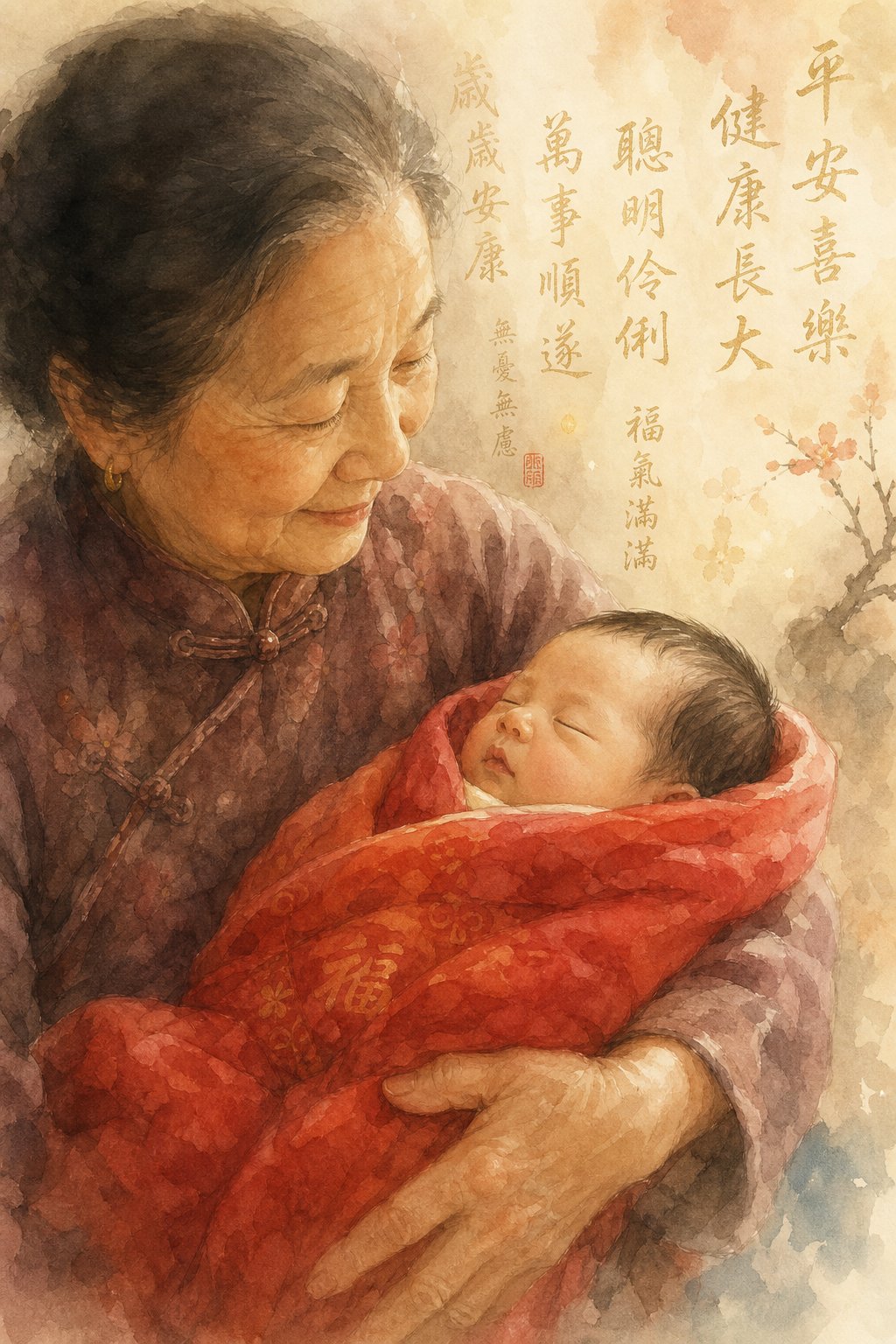
Imagine a grandmother whispering a secret name to her newborn grandson, a name that will never appear on any official document but will be spoken with more love than any formal title ever could. That is the heart of Chinese nicknames for son, a tradition so deeply woven into family life that nearly every Chinese boy grows up hearing two names: one for the world and one for home.
What Are 小名 and Why Every Chinese Son Has One
In Chinese families, a child's pet name, called 小名 (xiǎo ming, meaning "small name") or 乳名 (rǔ ming, meaning "milk name"), is the intimate name given shortly after birth. It is the name parents murmur during late-night feedings, the one grandparents debate over with laughter and strong opinions. Unlike Western nicknames that often emerge organically from schoolyard interactions or shortened versions of a legal name, Chinese pet names are deliberately chosen as terms of endearment in Chinese family culture, carrying emotional weight from day one.
These chinese nicknames for children serve a specific purpose: they create a private bond between family and child. A boy might be called 小宝 (xiǎo bǎo, "little treasure") or 豆豆 (dòudou, "little bean") at home while his formal name is reserved for teachers, documents, and the outside world.
Formal Names vs Pet Names in Chinese Culture
The distinction between a formal name and a pet name is not casual. It reflects an entire philosophy about identity and belonging.
The 大名 (dà ming) is a child's public identity, chosen for auspiciousness, family legacy, and social standing. The 小名 (xiǎo ming) belongs to the intimate circle, a name that says "you are ours" before the child even understands language.
People often ask, "do chinese people have middle names?" The answer varies, but the naming system works differently from Western conventions. Rather than a first-middle-last structure, Chinese names follow a family name plus given name format, and the 小名 exists as a separate, parallel identity entirely outside that official structure. It is not a middle name or a shortened version of anything. It is its own creation, born from affection.
For sons specifically, chinese nicknames carry layers of cultural expectation. Boys have historically received pet names tied to strength, prosperity, or even deliberate humility, each choice shaped by beliefs about protection and destiny. This guide focuses entirely on those son-specific traditions, the meanings behind them, and how they continue to evolve across generations.
The reasons families invest so much thought into these small names go far deeper than simple affection. They reach into centuries of philosophy, superstition, and family honor.
Cultural Traditions and Beliefs Behind Nicknaming Sons
Confucian philosophy, folk superstition, and cosmological thinking have shaped how Chinese families name their boys for over two thousand years. A pet name is never just cute. It is a small act of cultural engineering, designed to protect a son, honor his lineage, and set the tone for his life.
Confucian Values and Family Honor in Son Nicknames
In Confucian thought, a son carries the family line forward. His name, even his informal one, reflects the family's aspirations and moral compass. Nicknames like 德德 (Dede, "virtue") or 孝孝 (Xiaoxiao, "filial piety") are not random. They embed values directly into daily speech, so every time a parent calls their boy, they reinforce what the family stands for.
Generational continuity matters too. Some families choose pet names that echo a grandfather's formal name or reference the family's ancestral region. The nickname becomes a thread connecting a newborn to ancestors he will never meet, a quiet reminder that he belongs to something larger than himself.
Traditional Superstitions Behind Humble Nicknames for Boys
Here is where things get counterintuitive. Many traditional Chinese families deliberately gave their sons ugly or lowly nicknames, a practice called 贱名 (jian ming, "humble name"). The logic? Evil spirits and misfortune target precious things. If you call your boy 狗蛋 (Goudan, "dog egg") or 铁柱 (Tiezhu, "iron pillar"), you trick malevolent forces into overlooking him.
To outsiders, these might sound like funny chinese nicknames, even absurd. But within the culture, they carry deep parental love disguised as indifference. Some of the most common traditional beliefs include:
- A humble name makes a child "invisible" to jealous ghosts and spirits
- Boys need more protection than girls because they carry the family line, making funny names in chinese tradition actually a form of spiritual armor
- The uglier the nickname, the healthier the child will grow, since spirits will not bother claiming him
- Using animal names like 虎子 (Huzi, "little tiger") borrows the animal's strength to shield the boy
- Naming a son after something sturdy or common, like stone or iron, grounds his spirit in the physical world
What strikes many people as funny chinese names are actually rooted in a parent's deepest fear: losing a child. In eras of high infant mortality, these naming conventions were deadly serious.
Zodiac and Five Elements Influence on Naming
The Chinese zodiac and the Five Elements system (五行: wood, fire, earth, metal, water) add another layer to nickname selection. A boy born in the Year of the Tiger might receive a nickname reinforcing that animal's power, while a child whose birth chart shows a deficiency in water could be given a name containing the water radical (氵) to restore balance.
This practice remains remarkably popular. As South China Morning Post reported, modern Chinese parents still actively consult the Five Elements when choosing names, blending ancient cosmology with contemporary sensibilities. A naming master might analyze a newborn's exact birth time, determine which element is weak, and suggest nicknames that compensate. A boy lacking fire might become 炎炎 (Yanyan, "blazing"), while one needing earth could be called 石头 (Shitou, "little rock").
These systems give parents a framework that feels both scientific and spiritual. The nickname is not just affectionate. It is calibrated, a small correction to the universe's balance on behalf of a son who cannot yet speak for himself.
With so much meaning packed into these short, simple-sounding names, you might wonder: how exactly are they constructed? The answer lies in a handful of elegant linguistic patterns that Chinese families have refined over centuries.
How Chinese Nicknames for Boys Are Formed
Every chinese nickname follows a structural formula. Whether a grandmother in Beijing or a young mother in Shenzhen is coining a pet name for her son, she is drawing from the same small set of linguistic building blocks. Once you see the patterns, you will recognize them everywhere.
There are three core methods for forming nicknames in chinese: reduplication, prefixing, and suffixing. Each creates a different feel, and some lean more masculine than others.
| Pattern Type | Structure | Example (Characters) | Pinyin | Meaning |
|---|---|---|---|---|
| Reduplication | AA | 明明 | Mingming | Bright-bright |
| Reduplication | AA | 壮壮 | Zhuangzhuang | Strong-strong |
| Prefix (小) | 小 + X | 小龙 | Xiao Long | Little dragon |
| Prefix (阿) | 阿 + X | 阿宝 | A Bao | Ah-treasure |
| Prefix (大) | 大 + X | 大勇 | Da Yong | Big-brave |
| Suffix (儿) | X + 儿 | 虎儿 | Huer | Tiger-child |
| Suffix (仔) | X + 仔 | 龙仔 | Longzai | Dragon-boy |
Reduplication Patterns for Boy Nicknames
Reduplication is the most common way to form a nickname in chinese for young children. You take a single meaningful character and double it: 乐乐 (Lele, "joy-joy"), 军军 (Junjun, "army-army"), 鹏鹏 (Pengpeng, "roc-roc"). The repetition softens the word, making it sound affectionate and childlike.
For sons, parents tend to reduplicate characters associated with strength, brightness, or ambition. Think 强强 (Qiangqiang, "strong-strong"), 聪聪 (Congcong, "clever-clever"), or 磊磊 (Leilei, "rock pile-rock pile"). The doubled syllable creates a rhythmic, sing-song quality that rolls easily off the tongue when calling a toddler across a room.
Prefix Nicknames Using 小 阿 and 大
Prefixes give a nickname its relational tone. 小 (xiao, "little") is the most universal, working across all regions: 小虎 (Xiao Hu, "little tiger"), 小杰 (Xiao Jie, "little hero"). It signals youth and tenderness.
阿 (a) dominates in southern dialects, particularly Cantonese, and carries a warm, familiar ring: 阿明 (A Ming), 阿强 (A Qiang). It feels less diminutive than 小 and often persists into adulthood.
大 (da, "big") is reserved for eldest sons or boys with bold personalities: 大壮 (Da Zhuang, "big and sturdy"), 大毛 (Da Mao, "big hair/firstborn"). It projects confidence and is distinctly masculine in usage.
Suffix Patterns With 儿 and 仔 for Sons
The suffix 儿 (er) adds a gentle, endearing quality. As DigMandarin explains, this phonetic phenomenon called 儿化 (erhua) expresses feelings of love or endearment in Chinese culture. Older family members commonly show affection by attaching 儿 to one character of a boy's given name. If your son's name is 李小明 (Li Xiaoming), a grandmother might call him 明儿 (Minger). Other examples include 宝儿 (Baoer, "treasure-child") and 柱儿 (Zhuer, "pillar-child").
The suffix 仔 (zai) is more southern and Cantonese-influenced, carrying a meaning close to "lad" or "young one." You will hear 肥仔 (Feizai, "chubby boy"), 靓仔 (Liangzai, "handsome lad"), and 细仔 (Xizai, "little one"). This suffix skews almost exclusively male, making it one of the most gendered nickname markers in Chinese.
These patterns can also combine. A boy might be 小明明 (Xiao Mingming) at home, layering a prefix onto a reduplicated base for extra warmth. The flexibility of these building blocks means parents can fine-tune exactly how a nickname sounds and feels, adjusting formality, affection, and regional flavor with a single syllable change.
Knowing the mechanics is one thing. Seeing them in action across dozens of real nicknames, sorted by theme and context, brings the whole system to life.
Popular Chinese Nicknames for Baby Boys and Toddlers
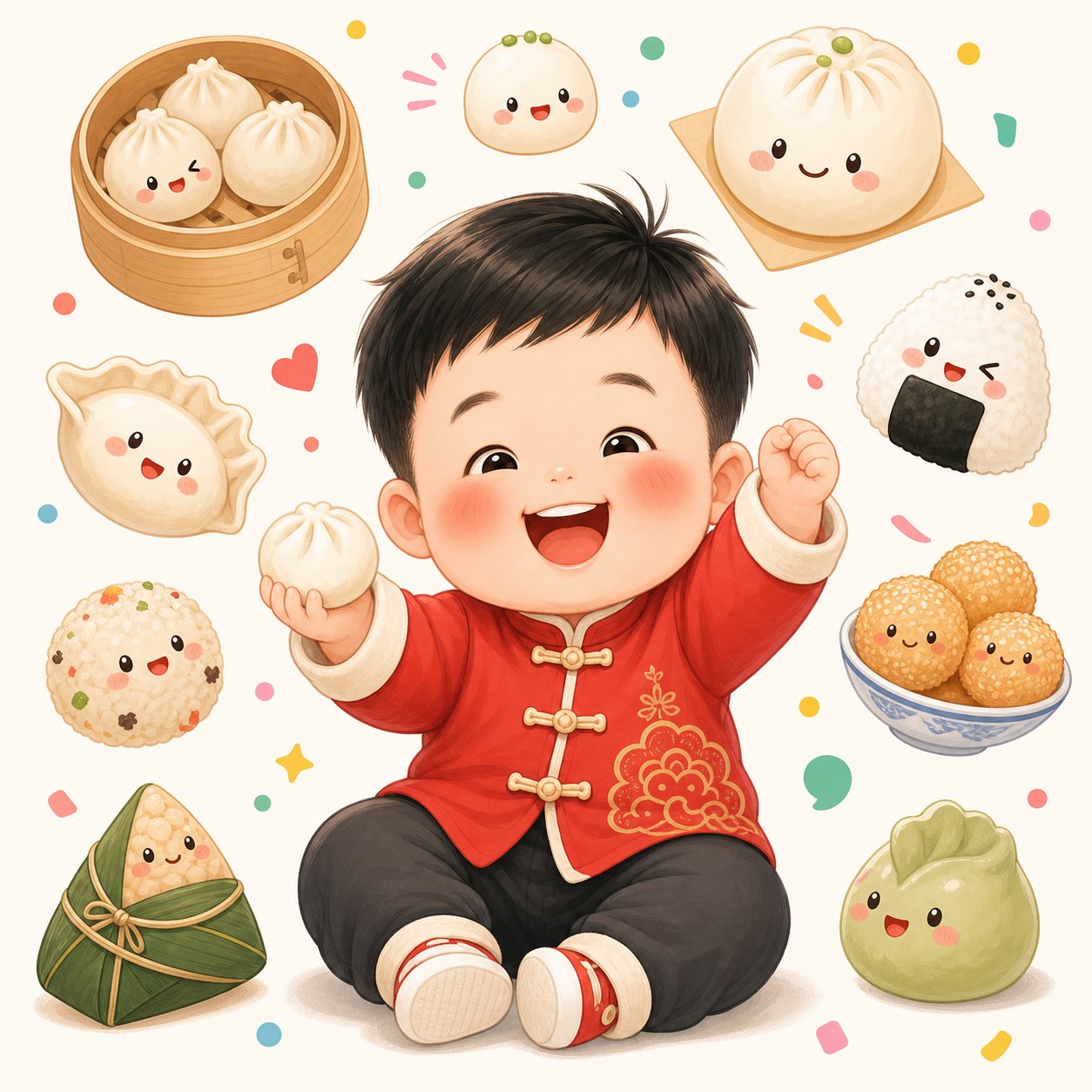
When a Chinese toddler toddles across the living room, the name his family shouts is rarely the one printed on his birth certificate. It is something shorter, rounder, and packed with feeling. Below is a curated collection of real nicknames Chinese families use for their sons, organized by the imagery behind them.
Animal-Inspired Nicknames for Baby Boys
Animals represent qualities parents hope their sons will embody. Dragons signal power and good fortune. Tigers convey bravery. Even smaller creatures carry affection, turning a baby boy into something fierce or adorable depending on the family's style.
| Nickname (Characters) | Pinyin | Meaning | Typically Used By | Best For |
|---|---|---|---|---|
| 龙龙 | Longlóng | Dragon-dragon | Parents, grandparents | Newborns, especially boys born in Dragon year |
| 虎子 | Hǔzi | Little tiger | Father, grandfather | Toddlers and young boys (strength connotation) |
| 小熊 | Xiǎo Xióng | Little bear | Mother, close family | Chubby, cuddly babies |
| 鱼儿 | Yúer | Little fish | Mother | Active, wiggly infants |
| 小马 | Xiǎo Mǎ | Little horse | Parents | Energetic toddlers, boys born in Horse year |
You will notice that 虎子 (Hǔzi) appears across generations. It represents strength, bravery, and the hope that a boy will grow up healthy and fearless. Fathers and grandfathers especially favor this one, often using it well past toddlerhood.
Food-Based Pet Names Chinese Parents Love
Food nicknames are where cute chinese nicknames truly shine. Young Chinese parents have embraced snack-inspired and ingredient-based names with enthusiasm, finding them playful and endearing. These names work because they sound soft, feel warm, and often describe a baby's round, squishy appearance.
| Nickname (Characters) | Pinyin | Meaning | Typically Used By | Best For |
|---|---|---|---|---|
| 豆豆 | Dòudou | Little bean | Whole family | Newborns and infants (tiny size) |
| 饺子 | Jiǎozi | Dumpling | Parents | Chubby babies, winter-born boys |
| 糯米 | Nuòmǐ | Sticky rice | Mother, grandmother | Clingy, sweet-natured toddlers |
| 小汤圆 | Xiǎo Tāngyuán | Little rice ball | Mother | Round-faced babies |
| 土豆 | Tǔdòu | Potato | Parents, siblings | Short, sturdy toddlers |
| 包子 | Bāozi | Steamed bun | Whole family | Plump, cheerful babies |
| 芒果 | Mángguǒ | Mango | Young parents | Summer-born boys, modern families |
糯米 (Nuòmǐ, "sticky rice") carries particular cultural weight. In traditional Chinese culture, glutinous rice symbolizes happiness, health, and prosperity, so calling a son by this name wraps him in good wishes every time the family speaks it. These cute chinese names drawn from food reflect a broader trend among younger parents who find traditional virtue-based names too formal for daily use.
Strength and Virtue Nicknames for Sons
Not every family reaches for the playful. Some prefer nicknames that project aspiration, embedding qualities like resilience, intelligence, or moral character directly into what they call their boy each morning.
| Nickname (Characters) | Pinyin | Meaning | Typically Used By | Best For |
|---|---|---|---|---|
| 壮壮 | Zhuàngzhuàng | Strong-strong | Father, grandparents | Robust babies and toddlers |
| 森森 | Sēnsēn | Forest-forest (lush vitality) | Parents | Boys with calm, grounded temperaments |
| 聪聪 | Cōngcōng | Clever-clever | Grandparents | Alert, curious infants |
| 乐乐 | Lèlè | Joy-joy | Whole family | Happy, smiley babies |
| 小宝 | Xiǎo Bǎo | Little treasure | Mother, father | Any age, especially youngest sons |
| 安安 | Ān'ān | Peace-peace | Parents | Calm babies, families valuing tranquility |
| 瑞瑞 | Ruìruì | Auspicious-auspicious | Grandparents | Boys born during lucky dates or festivals |
Context shapes which nickname surfaces. Grandparents tend to favor virtue names like 壮壮 or 聪聪 because they echo Confucian ideals. Mothers often gravitate toward softer options like 乐乐 or food-based names. Fathers split between animal-power names and strength-based ones. In practice, a single Chinese toddler might answer to three or four different pet names depending on who is calling him and whether the moment is playful or serious.
Many of these cute chinese words double as wishes. When a grandmother calls her grandson 瑞瑞, she is not just getting his attention. She is speaking good fortune into existence, one syllable at a time. That layering of love and intention is what separates these nicknames from simple baby talk.
What happens to these names as a boy outgrows his crib, starts school, and eventually becomes a teenager? The answer is more nuanced than you might expect, because Chinese families rarely agree on when a pet name should retire.
How Son Nicknames Evolve From Infancy to Adulthood
A boy called 豆豆 at six months will not always feel comfortable being called 豆豆. Chinese nicknames for sons are not static labels. They shift, stretch, and sometimes quietly disappear as a boy moves through life stages, each phase bringing new social pressures and new forms of family affection.
Infant and Toddler Nicknames From Birth to Age Three
The earliest pet names, the 乳名 (rǔ ming, "milk names"), arrive within days of birth. These are the softest, most uninhibited chinese terms of endearment a family will ever use. No one worries about embarrassing a newborn. Reduplication names like 宝宝 (Bǎobao) and food-based names like 糯米 (Nuòmǐ) dominate this stage because their round, repetitive sounds mirror baby talk across cultures.
During these first three years, the nickname is universal. Everyone uses it: parents, grandparents, aunts, uncles, neighbors. The formal name exists on paper but rarely gets spoken aloud. The pet name is the child's identity in daily life.
Childhood Nicknames and Peer Adaptations
School changes everything. Around age five or six, a boy's world expands beyond family, and his nickname enters new territory. Here is how the progression typically unfolds:
- Birth to age 3: Full use of 乳名 by all family members. Soft, playful names with no social consequences. Examples: 小鱼 (Xiǎo Yú), 蛋蛋 (Dàndàn).
- Ages 3 to 6: Family continues using the pet name at home, but teachers and new acquaintances begin using the formal name. The child starts hearing both identities.
- Ages 6 to 12: Peers create their own nicknames, often based on physical traits or the formal name. The family 小名 retreats to home use. Boys may start resisting "cute" names in front of classmates.
- Ages 12 to 18: Adolescent sons frequently push back against childhood pet names, especially ones that sound babyish. Parents may shorten or adapt the nickname. 壮壮 might become just 壮, or the family switches to the formal name in public while keeping the pet name for private moments.
- Adulthood (18+): The original 小名 becomes a marker of intimacy. Only the closest family members still use it, and often only in private or emotional contexts.
The transition is rarely clean. A twelve-year-old might snap at his mother for calling him 豆豆 in front of friends, then curl up on the couch that evening perfectly content to hear it whispered at bedtime. Chinese words of endearment carry different weight depending on who is listening.
When Parents Still Use Pet Names for Adult Sons
Here is what surprises many people outside the culture: most Chinese parents never fully stop using their son's childhood nickname. A 35-year-old man visiting his parents for Spring Festival will still hear his mother call him 小明 or 乐乐 across the kitchen. These chinese terms of affection do not expire. They simply become private, reserved for moments when the family unit closes its doors to the outside world.
The intimacy level of a 小名 actually increases with age. The older a man gets, the fewer people remain who use his baby name. Eventually, only parents and perhaps a spouse carry that name forward, making it one of the most personal chinese endearments a person can hear.
Gender plays a role in how this timeline unfolds. Sons face stronger social pressure to "outgrow" cute nicknames than daughters do. A woman called 甜甜 (Tiántián, "sweet-sweet") at thirty raises no eyebrows, but a man still publicly called 蛋蛋 (Dàndàn, "little egg") might feel it clashes with adult masculinity. Families navigate this by naturally gravitating toward the more dignified-sounding nicknames for sons as they age, keeping the tender ones for truly private use.
This evolution does not happen the same way everywhere. Regional dialect, geography, and local custom all shape how long a nickname sticks and what form it takes, sometimes producing dramatically different results from one province to the next.
Regional and Dialect Variations in Chinese Boy Nicknames
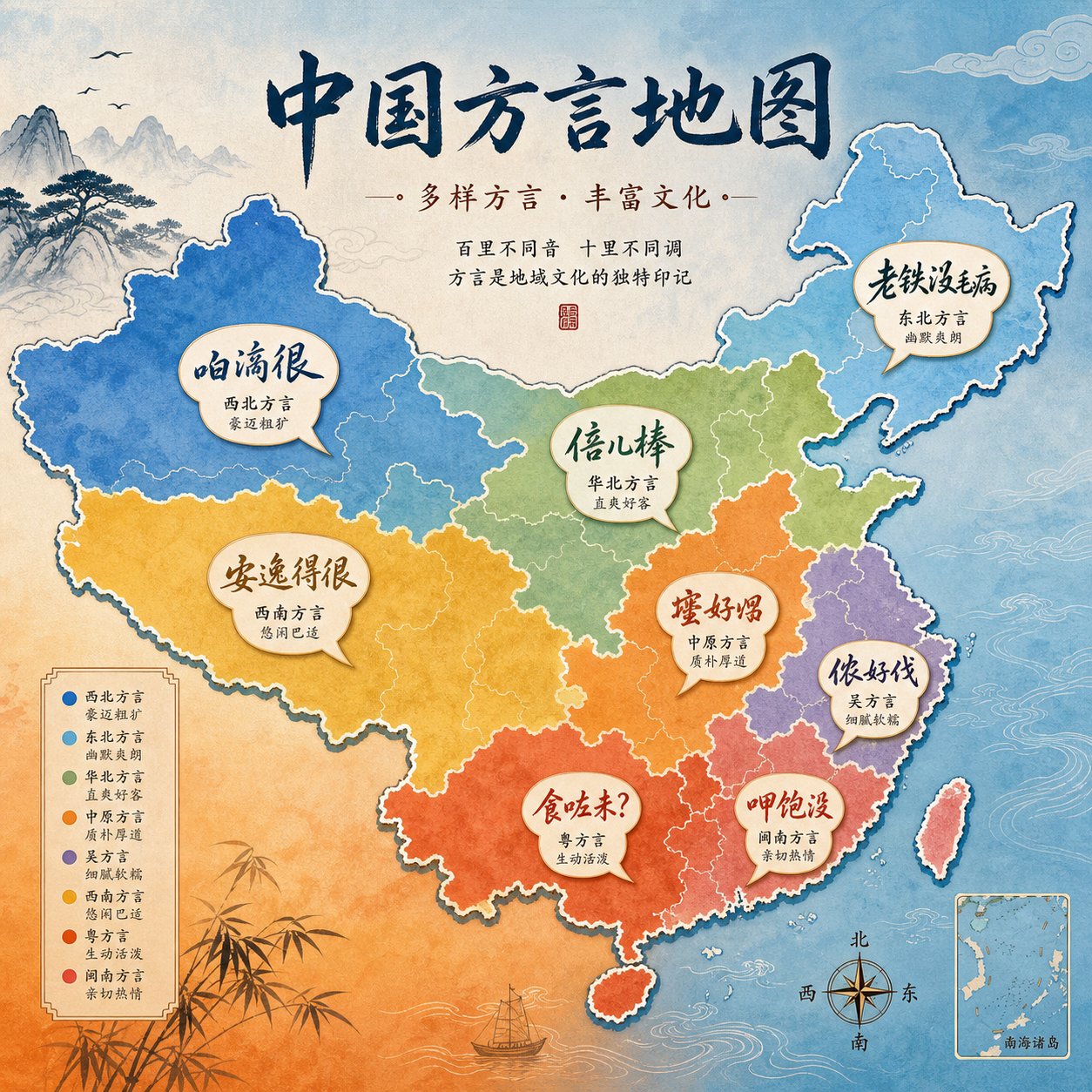
A boy called 小龙 (Xiǎo Long) in Beijing might be 阿龙 (A Long) in Guangzhou and Leng-a in a Hokkien-speaking household. Same concept, completely different sound. Pet names in chinese are shaped as much by geography as by family preference, and the dialect a family speaks determines which patterns feel natural and which sound foreign.
Mandarin Nicknames for Sons
Standard Mandarin, spoken across northern and central China, favors the 小 (xiǎo) prefix and reduplication as its go-to nickname structures. A nickname in mandarin tends to sound crisp and tonal, with the four-tone system giving each syllable a distinct melodic shape.
Common patterns include:
- 小 + single character: 小军 (Xiǎo Jūn, "little soldier"), 小伟 (Xiǎo Wěi, "little greatness")
- Reduplication: 浩浩 (Hàohào, "vast-vast"), 天天 (Tiāntiān, "day-day/everyday")
- 儿化 (erhua) suffix: 宝儿 (Bǎor, "treasure-child"), 柱儿 (Zhùr, "pillar-child")
The erhua suffix is distinctly northern. Families in Beijing and the surrounding provinces sprinkle it liberally into pet names, giving them a soft, rolling quality that southern speakers rarely replicate. A Mandarin-speaking father calling his son 虎儿 (Hǔr) across a courtyard is an unmistakably northern sound.
Cantonese Boy Nicknames and the 阿 Tradition
Cantonese nicknames operate on different instincts. The prefix 阿 (aa3 in Jyutping romanization) dominates so thoroughly that it functions almost like a default article before any boy's name. Where Mandarin reaches for 小, Cantonese reaches for 阿.
Cantonese nicknames for boys also lean heavily on the suffix 仔 (zai2), meaning "lad" or "young one." This creates combinations like 肥仔 (fei4 zai2, "chubby boy"), 靓仔 (leng3 zai2, "handsome lad"), and 细仔 (sai3 zai2, "little one"). The six-tone system of Cantonese gives these names a musical, sing-song quality distinct from their Mandarin equivalents.
Another Cantonese habit: using physical descriptions as affectionate labels. Calling a son 肥仔 is not an insult. It signals health and prosperity, a well-fed child in a family that can provide.
Hokkien and Shanghainese Variations
Hokkien (Min Nan), spoken in Fujian, Taiwan, and Southeast Asian Chinese communities, uses the prefix 阿 (a) similarly to Cantonese but adds its own suffix: 仔 is pronounced "a" or "kia" depending on the sub-dialect. A boy might be called A-beng (阿明) or Sio-ti (小弟, "little brother") within the family.
Shanghainese (Wu dialect) takes yet another path. The prefix 小 exists but is pronounced "xiau" with a softer, breathier quality. Shanghainese families also favor the suffix 囡 (noe, meaning "child"), though this is more commonly applied to girls. For sons, 小鬼 (xiau-jyu, "little ghost") is a playful, teasing nickname unique to the region.
| Dialect | Example | Pronunciation | Usage Notes |
|---|---|---|---|
| Mandarin | 小龙 (Little dragon) | Xiǎo Long | 小 prefix dominant; erhua suffix in northern regions |
| Cantonese | 阿龙 (Ah-dragon) | aa3 lung4 | 阿 prefix default; 仔 suffix for boys; physical descriptors common |
| Hokkien | 阿龙 | A-leng | 阿 prefix shared with Cantonese; kia suffix in some sub-dialects |
| Shanghainese | 小龙 | Xiau-lon | Softer pronunciation; playful teasing names more accepted |
What stands out across all these dialects is that the underlying intention never changes. Whether a family says Xiǎo, Aa, or A-, they are doing the same thing: wrapping a son's identity in warmth and claiming him as their own. The sound differs, but the love is structurally identical.
Regional tradition anchors these names in the past, but younger parents across every dialect group are now pulling in entirely new directions, blending English words, pop culture references, and internet slang into how they name their boys at home.
Modern Trends in Chinese Nicknames for Sons
Younger Chinese parents are not abandoning the 小名 tradition. They are remixing it. A generation raised on K-dramas, Marvel films, and multiplayer games now draws nickname inspiration from places their grandparents never imagined. The result is a wave of creative, hybrid pet names that still feel affectionate but carry a distinctly contemporary edge.
Pop Culture and Celebrity-Inspired Son Nicknames
Celebrity baby names set trends fast in China. When actor Deng Chao and actress Sun Li nicknamed their son 等等 (Děngděng, "wait-wait"), it sparked a nationwide conversation about playful, unconventional pet names. Other celebrity parents have chosen names like 小海绵 (Xiǎo Hǎimián, "little sponge") and 醒醒 (Xǐngxǐng, "wake up-wake up"), proving that modern families value humor and personality over traditional virtue signaling.
Fans of anime, superhero franchises, and Chinese variety shows also borrow character names for their sons. A boy might be called 悟空 (Wùkōng) after the Monkey King, 奥特 (Àotè) from Ultraman, or 小哪吒 (Xiǎo Nézhā) after the mythological child warrior. These cool chinese nicknames blend cultural heritage with pop entertainment, giving a son a name that feels both rooted and modern.
English-Chinese Hybrid Pet Names
Bilingual families and internationally minded parents increasingly mix English sounds into Chinese nickname structures. This creates playful mashups that work in both languages:
- 小Max (Xiǎo Max) — Chinese prefix with an English name
- Leo仔 (Leo zǎi) — English name with a Cantonese boy-suffix
- 汤姆 (Tāngmǔ, "Tom") — phonetic transliteration used as a pet name at home
- 小K (Xiǎo K) — single English letter as the core, popular among trendy urban parents
- 安迪 (Āndí, "Andy") — used as a 小名 even when the formal Chinese name is entirely different
These hybrids let parents signal cosmopolitan identity while keeping the structural warmth of a traditional chinese nickname. The 小 or 仔 framing makes even a foreign name feel domesticated, like it belongs at the family dinner table.
Gaming and Social Media Nickname Trends for Boys
Gaming culture has leaked into family naming in unexpected ways. Parents who met through online games sometimes give their sons nicknames drawn from that shared history. Meanwhile, older boys and teens adopt chinese gamertags and display names that eventually stick as real-life nicknames among peers.
Trending styles in this space include:
- 战神 (Zhànshén, "god of war") — borrowed from gaming titles, used as a playful home nickname for competitive boys
- 小皮卡 (Xiǎo Píkǎ) — shortened from Pikachu, popular among millennial parents
- 像素 (Xiàngsù, "pixel") — a quirky modern choice reflecting digital-native identity
- 氪金 (Kèjīn, "pay-to-win") — humorous internet slang nickname implying a son is the family's biggest investment
- 大王 (Dàwáng, "king/boss") — gaming-inspired power name used affectionately for assertive toddlers
For teens, the crossover between a chinese username and a real nickname is increasingly seamless. A boy known as 风行者 (Fēng Xíng Zhě, "Windwalker") in his gaming squad might hear that name shouted across the school cafeteria. Parents searching for roblox chinese display name ideas or chinese names for games often discover that the same naming principles apply: short, punchy, and memorable. The line between a digital persona and a family pet name keeps blurring.
What ties all these modern trends together is balance. Even the most creative young parents still want a nickname that sounds affectionate when whispered at bedtime. The format changes, the references update, but the emotional function remains identical to what it was a thousand years ago.
For families navigating two cultures simultaneously, that balancing act becomes even more complex. Diaspora parents face a unique challenge: choosing nicknames that honor Chinese tradition while functioning smoothly in English-speaking environments.
Chinese Son Nicknames for Diaspora and Mixed-Heritage Families
Your son answers to "Jake" at school and "小杰" (Xiǎo Jié) at grandma's house. He does not think twice about it. But you, the parent standing between two worlds, might wonder whether you are doing enough to keep the naming tradition alive or whether the constant switching confuses more than it connects.
For Chinese-American, Chinese-British, Chinese-Australian, and other diaspora families, choosing a pet name for a son is not just about affection. It is about cultural transmission, about handing a boy something intangible that links him to a heritage he may not encounter daily outside the home.
Choosing Nicknames That Work in English and Chinese
The most practical approach is selecting chinese nicknames in english-friendly phonetics. A name that English-speaking friends and teachers can approximate without mangling gives a boy confidence to share it beyond the family circle. Some strategies that work well:
- Choose names with sounds common to both languages. 乐乐 (Lèlè) sounds close to "Leh-leh," which English speakers handle easily. 安安 (Ān'ān) maps neatly to "Ahn-ahn." Avoid names heavy in tones or sounds absent from English, like the "x" in 小 or the "zh" in 壮, unless you are comfortable with approximation.
- Use the nickname as a bridge name. Some families pick a pet name that doubles as an informal English name. 小凯 (Xiǎo Kǎi) becomes "Kai" at daycare. 豆豆 (Dòudou) becomes "Dodo" among non-Chinese friends. The child carries one identity expressed two ways.
- Keep it short. Two-syllable nicknames travel better across languages. Reduplication names like 明明 (Míngmíng) or prefix names like 阿宝 (Ā Bǎo) are compact enough to stick in anyone's memory regardless of their language background.
- Test it out loud in both contexts. Say the nickname in an English sentence and a Chinese sentence. Does it flow naturally in both? If it sounds jarring or requires lengthy explanation every time, it may stay confined to home use, which is perfectly fine but worth deciding intentionally.
The goal is not to flatten the name into something generic. It is to find the sweet spot where a son feels proud saying it in either language rather than embarrassed by the gap between his two worlds.
Maintaining Cultural Connection Through Pet Names Abroad
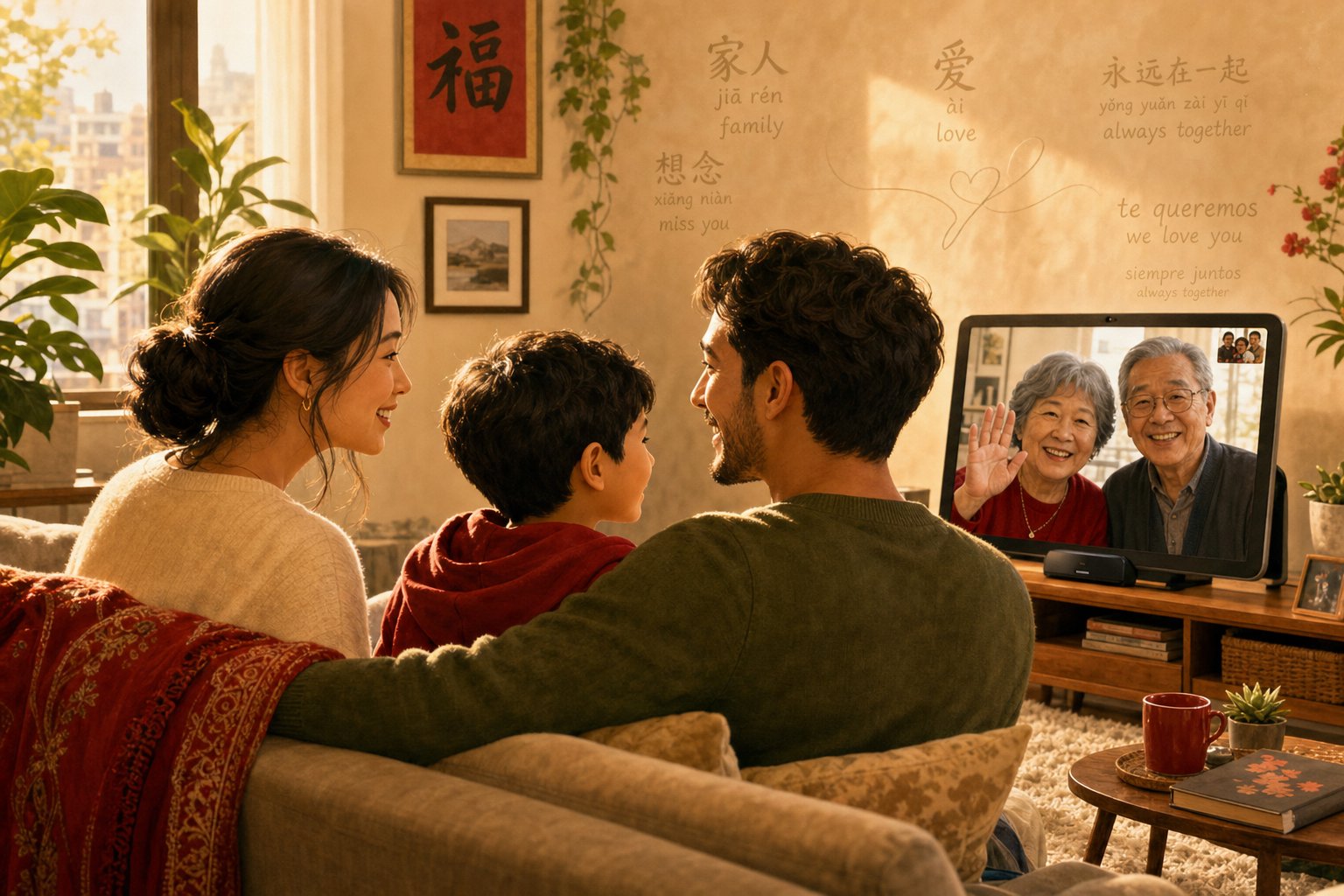
A pet name spoken daily does more cultural work than a formal Chinese name that only appears on documents. When grandparents in Guangzhou video-call and use the same 小名 that parents use at the dinner table in Sydney, a boy absorbs something powerful: he belongs to a family that spans continents and speaks a shared emotional language.
Cecilia Huang, a Taiwanese-Canadian writer, described this tension when naming her own child. She feared that if her daughter's Chinese name was not part of daily life, it would not feel like a significant part of her identity. A friend offered a grounding perspective: "Just because someone has a Chinese name, it doesn't mean that they will learn to speak Chinese." The name alone is not the culture. But used consistently and lovingly, it becomes a doorway into it.
For sons specifically, maintaining the pet name tradition abroad reinforces that Chinese masculinity has its own vocabulary of tenderness. A boy who hears his father call him 小虎 (Xiǎo Hǔ) learns that strength and affection coexist in his heritage, a lesson that no language class can replicate.
Navigating Dual Names in Mixed-Heritage Families
Mixed-heritage families face an additional layer. When one parent is Chinese and the other is not, the pet name can feel like it belongs to only one side of the family. The non-Chinese parent might struggle to pronounce it, or the Chinese grandparents might feel excluded if the family defaults to an English nickname.
Families who navigate this well tend to share a few habits:
- Involve both sides in the naming. Let the non-Chinese parent suggest the meaning or theme while the Chinese-speaking family finds the right characters. A father who loves the ocean might inspire 小浪 (Xiǎo Làng, "little wave"), giving both parents ownership of the name.
- Normalize multiple names without hierarchy. A son can be "buddy" to his English-speaking dad, 宝贝 (bǎobèi) to his Chinese mom, and 阿仔 (aa3 zai2) to his Cantonese grandmother. None of these cancels the others. They coexist as layers of identity rather than competing labels.
- Teach the story behind the name. When a boy understands why his grandmother calls him 龙龙 (Lónglóng), the name carries weight even if he cannot read the characters. Context transforms a sound into a story.
- Let the child lead as he grows. Some boys embrace their Chinese nickname publicly. Others prefer it as a private family thing. Both responses are healthy. The parent's job is to keep the name available, not to force its use in spaces where the child feels exposed.
What matters most is consistency at home. Asian nicknames do not need to perform for the outside world to do their emotional work. A pet name whispered at bedtime in a London flat carries the same cultural DNA as one shouted across a courtyard in Fuzhou. The setting changes. The bond it builds does not.
Whether your family is fully Chinese, mixed-heritage, or simply drawn to the tradition, there are practical etiquette questions worth considering before settling on a final choice: who gets to use the nickname, how it interacts with the formal name, and what mistakes to avoid along the way.
Cultural Etiquette and Tips for Choosing the Right Nickname
A pet name is a gift given within a circle of trust. Using it correctly signals that you understand where you stand in a family's emotional architecture. Using it incorrectly, even with good intentions, can feel intrusive. Whether you are choosing a nickname for your own son or navigating someone else's, a few unwritten rules make all the difference.
Etiquette Rules for Using Someone's Son Nickname
Not everyone earns the right to use a boy's 小名. The intimacy level of a Chinese pet name is closer to a family secret than a casual label. Think of it this way: in English, calling someone's child "sweetheart" when you barely know the family would feel presumptuous. A 小名 carries that same weight, multiplied by cultural expectation.
A 小名 operates on concentric circles of intimacy. Parents and grandparents sit at the center with full, unrestricted use. Close aunts and uncles occupy the next ring. Family friends may hear the name but should wait to be invited before using it. Colleagues, teachers, and acquaintances remain outside entirely.
Key etiquette points to remember:
- Never use an older person's 小名. Calling someone from a senior generation by their childhood pet name is deeply disrespectful, regardless of how close you are.
- Wait for permission. If a Chinese friend shares their son's nickname with you, that is an act of trust. You can use it with the child, but do not broadcast it to others.
- Do not ask directly. Some families consider the 小名 private. If it comes up naturally, wonderful. Pressing someone to reveal it can feel like prying.
- Context matters. Even within the family, using a pet name in a formal setting (a school meeting, a family banquet with elders present) can embarrass an older boy. Read the room.
This layered system of access is what separates chinese pet names for lovers, chinese couple nicknames, and family nicknames from each other. A wife might call her husband by his childhood 小名 as a sign of deep closeness, similar to how chinese nicknames for lovers function as private emotional codes. But that same name would never be used by a coworker. The boundaries are invisible yet firmly felt.
Tips for Choosing the Perfect Nickname for Your Son
Selecting a 小名 is less about finding the "perfect" word and more about aligning sound, meaning, and family identity into something that feels right when spoken a thousand times a day. Here is a step-by-step approach:
- Start with your family's values. What matters most to you? Strength, kindness, humor, resilience? Let that value guide your character selection. A family that prizes courage might lean toward 勇勇 (Yǒngyǒng) or 小虎 (Xiǎo Hǔ).
- Check phonetic harmony with the formal name. Say the 小名 and the 大名 together out loud. Do they share too many similar sounds, creating confusion? Or do they complement each other with contrasting tones? Ideally, the pet name should feel like a natural companion to the formal name, not a competitor.
- Consider tonal flow. Avoid pairing two falling tones (fourth tone) back-to-back, which can sound harsh. A mix of tones, like a rising tone followed by a neutral tone (as in 明明, Míngming), creates a gentler rhythm suited to daily calling.
- Test it across generations. Will grandparents feel comfortable saying it? Will the name still sound dignified when your son is fifteen? Names like 蛋蛋 (Dàndàn) are adorable for infants but may cause friction in adolescence. If longevity matters to you, choose something that ages gracefully.
- Respect generational naming traditions. Some families maintain a shared character across all children of the same generation. If your family follows this practice, incorporate that character into the nickname structure, perhaps as the base of a reduplication (e.g., if the generational character is 文, the nickname becomes 文文, Wénwén).
- Involve the extended family. Grandparents often have strong opinions, and their buy-in matters. A nickname that the whole family embraces will be used consistently. One that only the parents like may get quietly overridden by a grandmother's preferred alternative.
Common Mistakes to Avoid When Picking Chinese Boy Nicknames
Even well-meaning parents and non-Chinese speakers stumble into pitfalls. The most frequent errors:
- Ignoring homophones. Chinese is full of words that sound identical but carry wildly different meanings. A name that sounds lovely in one tone might be an unfortunate word in another. Always check what other characters share your chosen pronunciation.
- Choosing overly trendy names. Pop culture references date quickly. A nickname inspired by a 2024 viral meme may feel stale by the time your son starts school. Classic patterns endure for a reason.
- Mispronouncing tones and assuming it does not matter. Tones are not optional decoration. 妈 (mā, mother) and 马 (mǎ, horse) differ by a single tonal shift. If you are a non-native speaker choosing or using a Chinese pet name, invest time in getting the tones right. Your effort signals respect.
- Picking a name that clashes with the surname. The surname and nickname will be spoken together in certain contexts. 石石 (Shíshí) paired with the surname 施 (Shī) creates a tongue-twister no one wants to repeat daily.
- Assuming chinese pet names for boyfriend or romantic nicknames are interchangeable with son nicknames. Terms like 老公 (lǎogōng, "hubby") or 亲爱的 (qīn'ài de, "darling") belong to romantic relationships. They are chinese couple nicknames, not parent-child terms. Mixing these registers sounds deeply awkward to native speakers.
The best chinese nicknames for son share a few qualities: they are easy to say, pleasant to hear, meaningful to the family, and flexible enough to grow with the child. They do not need to be clever or unique. They need to feel like home. When you call your boy by his 小名 and he looks up with recognition and warmth, the name has done its job perfectly.
Frequently Asked Questions About Chinese Nicknames for Sons
1. What is the difference between 小名 and 大名 in Chinese naming?
小名 (xiǎo ming) is a pet name or milk name used exclusively within the family circle, given at birth to express affection and intimacy. 大名 (dà ming) is the formal given name used on official documents, at school, and in public settings. The two names exist as parallel identities — the 小名 never appears on paperwork and is reserved for private family life, while the 大名 represents the child's public identity chosen for auspiciousness and social standing.
2. Why do some Chinese families give their sons ugly or humble nicknames?
This practice, called 贱名 (jian ming), stems from traditional folk beliefs that evil spirits target precious or valued things. By giving a son a lowly-sounding name like 狗蛋 (dog egg) or 铁柱 (iron pillar), parents believed they could trick malevolent forces into overlooking the child. In eras of high infant mortality, this was considered spiritual protection. The uglier or more common the nickname, the safer the child would be from jealous ghosts, making these names expressions of deep parental love disguised as indifference.
3. At what age do Chinese sons typically stop using their childhood nickname?
There is no fixed age, but the transition happens gradually. Around ages 6-12, the pet name retreats to home use as peers and teachers use the formal name. By adolescence (12-18), many boys resist babyish nicknames in public. However, most Chinese parents never fully stop using the 小名 — it simply becomes increasingly private. Adult sons often still hear their childhood pet name during family gatherings or intimate moments, with the name's intimacy level actually increasing over time as fewer people remain who use it.
4. How do Chinese diaspora families choose nicknames that work in both English and Chinese?
Diaspora families often select nicknames with phonetics that English speakers can approximate easily, such as 乐乐 (Lele) or 安安 (Anan). Common strategies include using the pet name as a bridge name (小凯 becomes 'Kai' at daycare), keeping nicknames to two syllables for cross-language memorability, and testing the name aloud in both English and Chinese sentences. The goal is finding a name the child feels proud saying in either language rather than one that requires lengthy explanation.
5. Can non-family members use a Chinese boy's 小名?
Using someone's 小名 requires an implicit invitation. The name operates on concentric circles of intimacy: parents and grandparents have unrestricted use, close relatives occupy the next ring, and family friends should wait to be invited before using it. Colleagues, teachers, and acquaintances remain outside entirely. If a Chinese friend shares their son's nickname with you, that is an act of trust — you may use it with the child but should not broadcast it to others or ask directly if it has not been offered.