How Chinese Names Work as Storytelling Tools in Fiction
Imagine reading a novel where a single name tells you a character's social class, family lineage, moral alignment, and ultimate fate — all before they speak a single line of dialogue. In Western fiction, names like "John" or "Sarah" rarely carry that weight. But in Chinese novels, every syllable is a deliberate narrative choice. The characters (hanzi) selected for a name carry visual meaning through their radicals, phonetic meaning through their tones, and cultural meaning through centuries of literary association. Chinese novel character naming conventions aren't decorative — they're load-bearing architecture that holds entire storylines together.
For writers crafting stories with Chinese characters and for readers trying to decode the layers beneath the surface, understanding these naming conventions unlocks a dimension of storytelling that's otherwise invisible.
Why Chinese Names Carry More Weight in Fiction
Chinese names function as micro-narratives. A name isn't just a label — it encodes family history, parental aspirations, and social position into two or three carefully chosen characters. The family name comes first, signaling lineage and collective identity. The given name follows, carrying the weight of individual destiny. In some families, a generational character shared among siblings and cousins weaves yet another layer of meaning into the structure, creating continuity across an entire clan.
Consider how this works in practice. A character named Wang Minghui (王明辉) doesn't just have a pleasant sound. "Ming" (明) means bright or clear, "hui" (辉) means radiance — together they project brilliance and promise. Parents in real life choose characters for positive meaning, and novelists exploit this expectation ruthlessly. When a fictional character carries a name suggesting darkness or ambition, readers immediately sense something is off. The name itself becomes foreshadowing.
This is why chinese names and meanings matter so much in fiction. Every character in a name was selected from thousands of possible hanzi, each carrying distinct connotations. The process of naming chinese characters in a novel is closer to writing poetry than filling out a birth certificate.
How Chinese Novel Names Differ from Real-World Naming
Real-world chinese naming conventions follow cultural rules — parents seek auspicious meanings, avoid characters that sound like negative words, and sometimes consult fortune tellers to align a name with a child's birth date. Novelists know these rules intimately, but they bend and amplify them for storytelling purposes.
Where a real parent would never use characters associated with death or misfortune, a novelist might give a villain a name dripping with dark imagery — shadow, cold, conquest. Where real names aim for subtle beauty, a wuxia author might push poetic intensity far beyond what any actual parent would choose, naming a swordsman after wind and void. The conventions are rooted in tradition but creatively amplified to serve narrative function.
Asian names across many cultures carry meaning, but Chinese fiction takes this further than most traditions. A skilled novelist treats naming as characterization shorthand — compressing backstory, personality, and destiny into a handful of syllables that resonate differently depending on who speaks them and when.
In Chinese literary tradition, a well-crafted name doesn't just identify a character — it argues for who they are. The name is the first act of storytelling, and every reader encounter with it reinforces or complicates that initial argument.
This layered approach to chinese names and characters means that naming in Chinese fiction operates on multiple frequencies simultaneously — visual, phonetic, semantic, and cultural. The question isn't just what a name means, but how it sounds, what it looks like on the page, and what associations it triggers in a reader steeped in the tradition. That structural complexity is exactly what makes the anatomy of a Chinese character name worth examining piece by piece.
The Anatomy of a Chinese Character Name
So how are chinese names structured, exactly? Strip away the poetic layering and cultural associations, and you'll find a surprisingly rigid architecture underneath. Every Chinese name follows a specific positional logic — and novelists exploit that logic to communicate information before a single plot event unfolds.
Understanding this chinese name structure is essential for anyone writing or reading Chinese fiction, because deviations from the standard pattern always mean something.
Surname Plus Given Name Order and Its Narrative Impact
The most fundamental rule of how do chinese names work: the surname comes first, the given name follows. This isn't just a formatting preference — it reflects a collectivist cultural value where family identity precedes individual identity. You belong to your clan before you belong to yourself.
Novelists leverage this ordering for worldbuilding. In historical and wuxia fiction, characters are often introduced surname-first in formal contexts, reinforcing hierarchical social structures. When a character is addressed by given name alone, it signals intimacy or disrespect depending on context. The family name appearing first symbolizes the importance of heritage and lineage — a principle that fiction writers use to anchor characters within larger clan dynamics and power structures.
Single-Character vs Two-Character Given Names in Novels
Chinese first names — the given name portion — can be either one or two characters long. This choice is never arbitrary in fiction.
Single-character given names often signal antiquity, nobility, or sharpness. Think of historical emperors and legendary figures — many carried just one character after their surname. In novels, a single-character given name tends to feel more commanding, more ancient, more decisive. It leaves less room for softness.
Two-character given names offer richer semantic territory. Authors can layer complementary or contrasting meanings, create internal rhythm, and embed generational characters alongside personal ones. Parents form given names by choosing one or two characters from over 5,000 possibilities, and novelists take full advantage of that combinatorial depth. A two-character given name like "Mingyue" (bright moon) paints a more complete image than either character alone could achieve.
Three-Character Names and When Authors Break the Pattern
The standard 3 letter chinese name — one surname character plus two given name characters — is the most common structure in fiction and real life alike. It provides a balanced rhythm: identity, meaning, meaning.
But deviations from this pattern immediately catch a reader's attention. A two-character full name (single-character surname plus single-character given name) feels terse and powerful. A four-character name suggests a compound surname like Sima or Ouyang, instantly signaling noble or scholarly lineage. When authors break the three-character pattern, they're sending a signal about who this character is before any description appears on the page.
| Position | Element | Function | Example Pattern |
|---|---|---|---|
| First | Surname (姓) | Identifies family, clan, and lineage | Li (李), Wang (王), Sima (司马) |
| Second | Generational character (optional) | Links siblings/cousins within a generation | Shared "Zhen" (振) among cousins |
| Second or Third | Personal given name character | Encodes individual meaning, aspiration, or destiny | Yue (月, moon), Long (龙, dragon) |
This positional logic gives readers an instant decoding framework. Surname tells you where a character comes from. Given name tells you where they're meant to go. And the choice between one or two given-name characters shapes how much semantic weight that destination carries — a distinction that becomes even more powerful when authors select specific hanzi loaded with hidden meaning.
Surname Selection and What It Reveals About Characters
Before a novelist even touches the given name, the surname has already done heavy lifting. The last name in chinese fiction isn't a random pick from a hat — it's a calculated signal. Readers steeped in the tradition will instantly register whether a chinese surname suggests an ordinary background, imperial blood, or something more exotic. Authors know this, and they exploit it ruthlessly.
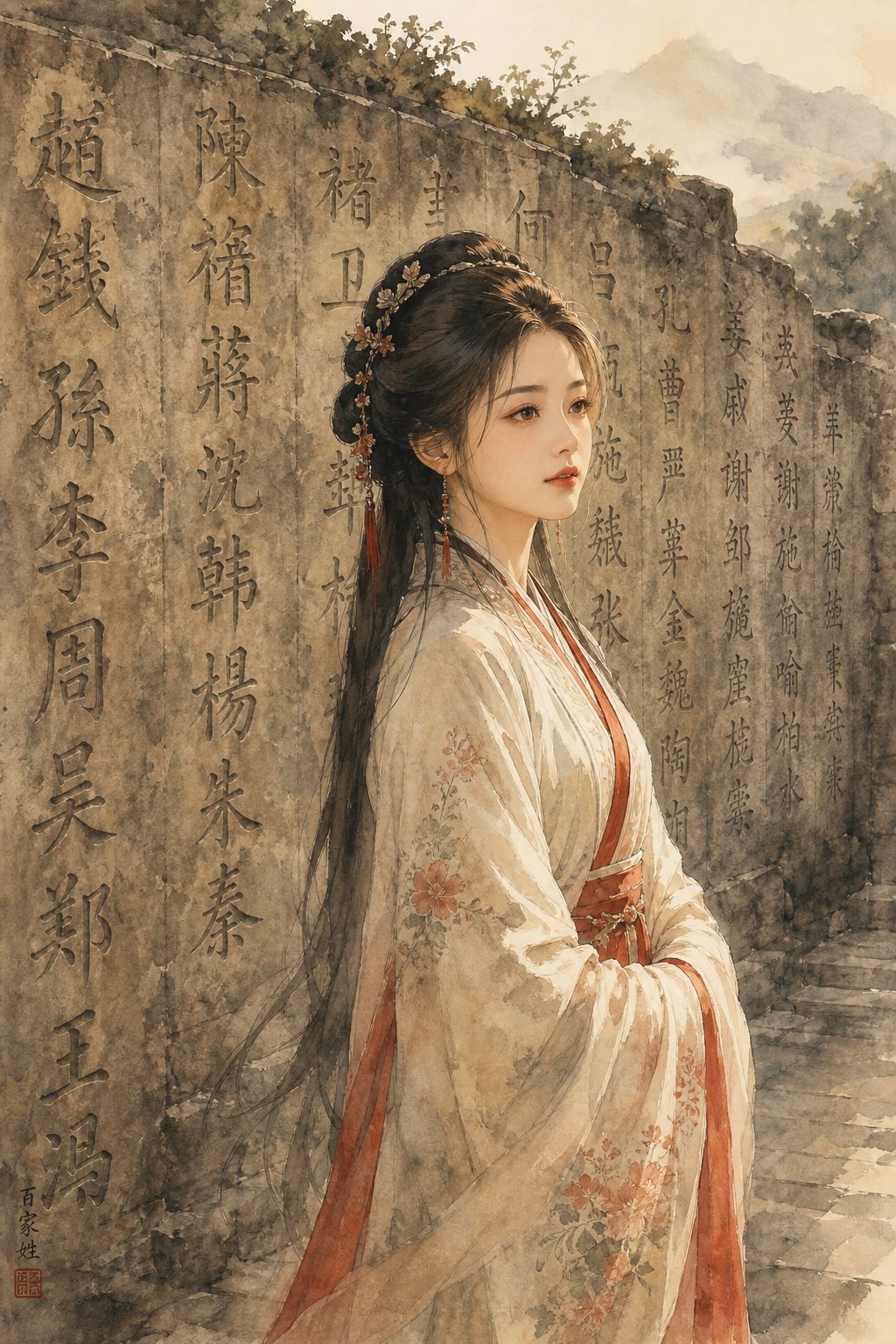
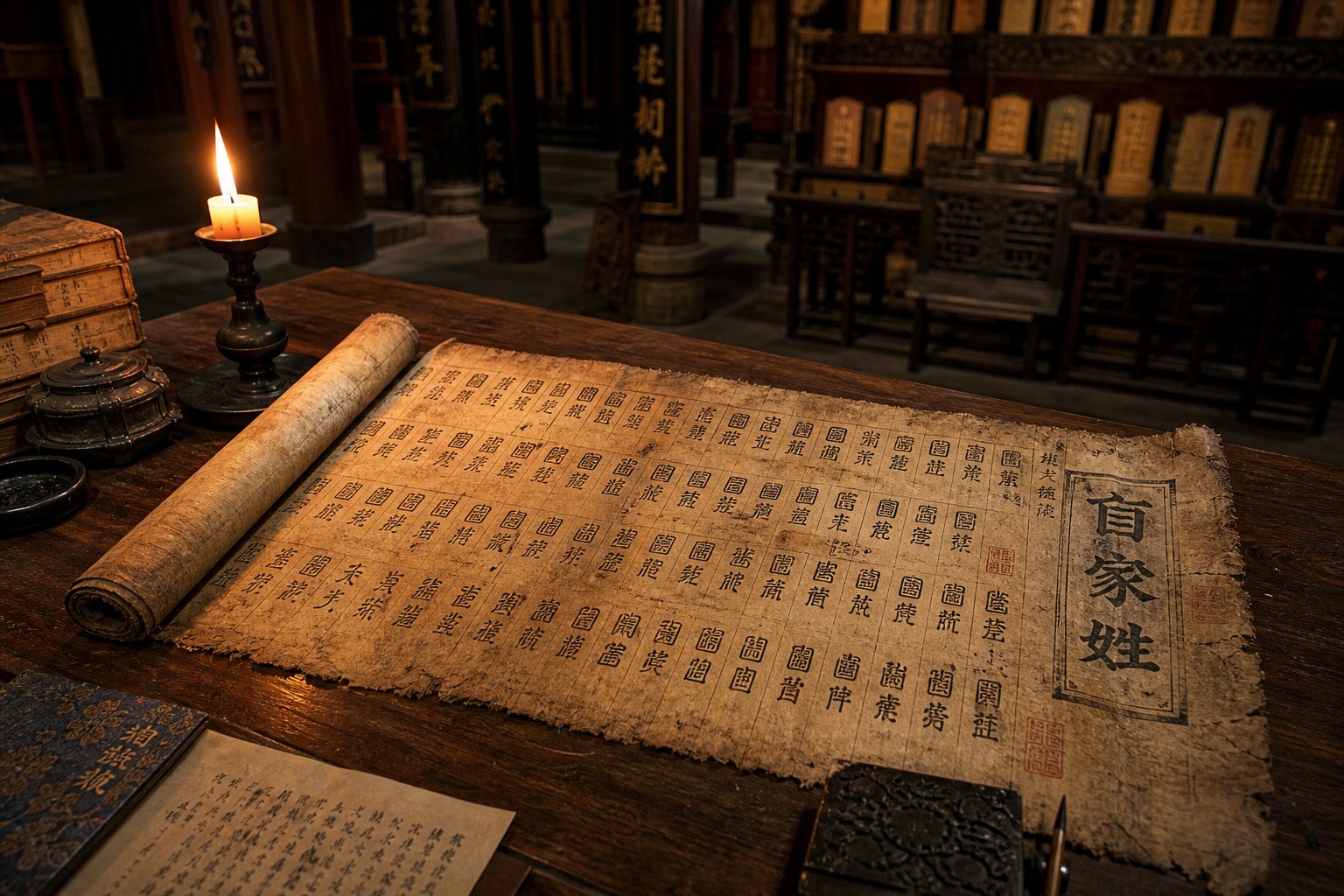
The foundation for this lies in the Hundred Family Surnames (百家姓), a Song dynasty text listing over 500 surnames that became a standard educational primer for centuries. Young scholars memorized it alongside the Three Character Classic and the Thousand Character Classic. The ordering wasn't alphabetical or random — it reflected political power, with the Song imperial surname Zhao placed first. That hierarchy still echoes in how readers perceive character surnames today.
Common Surnames and What They Signal to Readers
When you encounter a character surnamed Wang, Li, Zhang, or Liu — the four most common chinese last names, each carried by tens of millions of people — you're meeting an everyman. These surnames suggest ordinariness, relatability, and grounded social standing. A protagonist named Li carries no aristocratic baggage. They could be anyone, which makes their journey feel accessible.
Contrast that with compound surnames like Sima, Ouyang, Nangong, or Shangguan. These immediately signal nobility, scholarly lineage, or ancient prestige. The Hundred Family Surnames lists compound surnames toward the end, and their rarity in real life makes them feel elevated in fiction. A character surnamed Sima — the same family name as the Jin dynasty imperial house and the great historian Sima Qian — arrives on the page already wrapped in gravitas. Readers don't need exposition to sense that this person comes from power.
Understanding chinese last name meanings gives readers a shortcut into character dynamics. A novel pitting a Li against a Nangong has already established a class tension before any dialogue is written.
Clan Names and Generational Characters in Family Sagas
Family sagas and dynasty novels rely on another layer of surname-adjacent convention: the generational naming system known as 字辈 (zibei). In this system, all siblings and paternal cousins within a single generation share one character in their given name. The sequence of these shared characters is prescribed by a generation poem — sometimes dozens of characters long — composed by family elders when a lineage is established.
Imagine a novel featuring three brothers named Li Wenlong, Li Wenfeng, and Li Wenpeng. The shared "Wen" (文) character instantly tells you they're the same generation. Their father's generation might share "Yu" (裕), and their children might share "Zhi" (志). A reader tracking these patterns can map family relationships and timeline placement without a single line of exposition.
The most famous real-world example comes from the descendants of Confucius. The Kong family's generation poem was imperially bestowed during the Ming dynasty and extended multiple times through the Qing dynasty and into the Republican era. Novelists writing historical fiction often create similar generation poems for their fictional clans, lending the worldbuilding an authentic structural depth that readers recognize instinctively.
This system also creates dramatic possibilities. When a character breaks from the generational naming pattern — adopting a new name, abandoning the shared character — it signals rupture. Exile, rebellion, or disgrace. The surname in chinese culture binds you to your clan, and the generational character binds you to your place within it. Severing either bond carries narrative weight.
Regional and Ethnic Surname Patterns
Chinese surnames meaning extends beyond family identity into geography and ethnicity. Certain surnames cluster in specific regions, and experienced readers pick up on these signals. Wu (吴) connects to Jiangsu and the ancient state of Wu. Zhong (钟) and Lin (林) appear frequently in southern Fujian and Guangdong. Ma (马) is the most common surname among the Hui Muslim minority. These associations let authors telegraph a character's regional origin through surname alone.
In wuxia and historical fiction, non-Han naming patterns add further texture. Xianbei surnames like Murong and Yuwen, Turkic-influenced names, and Manchu clan names all appear in novels set during periods of ethnic interaction. A character surnamed Murong in a martial arts novel immediately evokes the Xianbei aristocracy and their complex relationship with Han Chinese culture — no backstory dump required.
- Imperial surnames (Zhao, Li, Zhu, Liu) — signal dynastic power, restricted usage, and political weight
- Noble/compound surnames (Sima, Ouyang, Shangguan, Nangong) — suggest scholarly lineage, aristocratic heritage, or ancient prestige
- Common surnames (Wang, Zhang, Chen, Yang) — convey everymen characters, relatability, and broad social accessibility
- Regional surnames (Wu, Lin, Zhong, Xie) — indicate geographic origin and cultural background tied to specific provinces
- Ethnic minority surnames (Murong, Yuwen, Helian, Tuoba) — evoke non-Han heritage, frontier settings, and cross-cultural tension
Each category carries its own narrative connotations, and skilled authors mix them deliberately within a cast to create social texture. A story populated entirely by common surnames feels like a village tale. Introduce one compound surname into that mix, and the power dynamics shift instantly — the reader feels it before the plot confirms it. That instinctive response is exactly what makes character surnames such efficient storytelling tools, and it only deepens when authors move past the surname into the hidden meanings encoded within each given-name character.
How Character Choice Encodes Hidden Meaning in Names
A surname places a character within a lineage. But the given name — those one or two carefully selected hanzi — is where authors hide their deepest storytelling. Every chinese name meaning operates on multiple frequencies at once: the visual shape of the character on the page, the sound it produces when spoken aloud, the dictionary definition it carries, and the web of cultural associations it triggers. Skilled novelists choose name chinese characters that satisfy all four dimensions simultaneously, creating names that reward close reading and reveal new layers as a story unfolds.
When you encounter a name in Chinese fiction and feel something about the character before you've read a single line of their dialogue, that's the hanzi doing its work. The question is: how do authors actually build that effect?
Radical Composition and Visual Meaning in Name Characters
Chinese characters aren't arbitrary symbols. They're constructed from smaller components called radicals — building blocks that carry their own elemental associations. When naming chinese characters in fiction, authors select hanzi whose radicals telegraph personality traits, elemental affinities, and narrative roles at a glance.
Consider the Five Elements (Wu Xing) system that drives much of xianxia fiction. Each element corresponds to specific radicals that appear in name characters:
- Water radical (氵) — characters like Han (涵, "contain"), Ze (泽, "marsh/grace"), and Run (润, "moist") suggest depth, adaptability, and wisdom
- Fire radical (火/灬) — characters like Yan (炎, "flame"), Yu (煜, "radiant"), and Zhao (照, "illuminate") project passion, visibility, and intensity
- Wood radical (木/艹) — characters like Lin (林, "forest"), Fang (芳, "fragrant"), and Tong (桐, "paulownia") evoke growth, vitality, and resilience
- Metal radical (金/钅) — characters like Ming (铭, "inscription"), Rui (锐, "sharp"), and Xin (鑫, "prosperity") convey precision, strength, and clarity
- Earth radical (土/山) — characters like Kun (坤, "earth/feminine"), Yue (岳, "peak"), and Cheng (城, "city") signal stability, endurance, and grounding
In xianxia novels, where cultivation systems often revolve around elemental mastery, a character's name radicals frequently foreshadow their cultivation path. A protagonist with water radicals in their name might be destined for fluid, adaptive martial arts. A rival bearing fire radicals projects aggression and explosive power. Readers familiar with the system decode these signals instantly — the name becomes a preview of the character's fighting style and spiritual alignment.
The jade radical (玉/王) deserves special mention. Characters containing it — like Yao (瑶, "precious jade"), Jue (珏, "paired jade"), or Qiong (琼, "fine jade") — immediately signal preciousness, refinement, and often feminine beauty. A character named with jade radicals arrives on the page already wrapped in elegance, before a single physical description appears.
Tonal Aesthetics and How Names Sound Matters
Meaning chinese names carry isn't limited to what you see on the page. How a name sounds when spoken aloud shapes reader perception just as powerfully. Mandarin's four tones — high-level (first), rising (second), falling-rising (third), and falling (fourth) — give authors a phonetic palette to paint with.
A name composed of falling fourth-tone characters sounds decisive, commanding, even aggressive. Think of sharp, downward syllables that land like sword strikes. A name built from first-tone characters floats — high, sustained, ethereal. Rising second-tone names feel questioning, unresolved, or aspirational. The tonal flow between surname and given name creates a natural rhythm that skilled authors calibrate to match character personality.
Imagine a gentle healer named with soft, rising tones versus a ruthless general named with sharp, falling ones. You'll notice the phonetic texture matches the character archetype before you consciously register why. Authors also avoid tonal collisions — two third-tone characters in sequence create an awkward stumble in speech, which might be used deliberately for a comedic or clumsy character but would undermine a heroic one.
Beyond tones, homophones create another layer of chinese name interpretation. A name that sounds identical to a word meaning "death," "loss," or "separation" carries those associations whether the written character intends them or not. Novelists weaponize this: a villain's name might be a near-homophone for something sinister, planting unease in the reader's ear even when the written characters appear neutral.
Layering Multiple Meanings Into a Single Name
The most sophisticated chinese names meaning operates on isn't a single definition — it's a constellation of possible interpretations that shift as the story progresses. This is where naming becomes genuine literary craft.
Take a character named Xiao Se (萧瑟) from the wuxia series Blood of Youth. On the surface, "xiao se" means "bleak" or "desolate" — the sound of autumn wind through bare branches. For a fallen prince living in exile, the name captures his current state perfectly. But "xiao" is also his imperial surname, and "se" carries undertones of musical resonance. As the character reclaims his identity, the name's meaning shifts from melancholy to something richer: a name reflecting both his fall from power and the poetic depth beneath his disguise.
This technique — choosing characters with multiple valid readings — transforms names into foreshadowing devices. Early in a story, readers interpret the name one way. As revelations unfold, the same characters yield new meaning. The name hasn't changed, but the reader's understanding of it has. That's the power of semantic layering in name in chinese meaning construction.
A masterfully layered name doesn't just describe who a character is at the start of the story — it contains who they will become. The meaning unfolds in parallel with the plot, so that by the final chapter, the name reads like a prophecy that was hiding in plain sight all along.
Authors achieve this by selecting hanzi that sit at the intersection of multiple semantic fields. A character meaning both "to cut" and "to decide" works differently in a story about a swordsman than in a story about a judge — but in a story where the swordsman becomes a judge, both meanings activate simultaneously. The name becomes a compressed thesis statement for the entire character arc.
This multi-dimensional approach to chinese name meanings — where visual radicals, tonal aesthetics, and semantic layering all operate in concert — explains why experienced readers treat names as texts within texts. A name isn't just read once and filed away. It's revisited, reinterpreted, and reconsidered as the story deepens. And that interpretive richness only multiplies when characters carry not just one name, but several — courtesy names, art names, and titles that shift depending on who is speaking and what relationship they hold.
Courtesy Names and Titles as Relationship Markers
A single given name, no matter how carefully crafted, can only do so much. In Chinese fiction — particularly historical, wuxia, and xianxia genres — characters don't carry just one name. They accumulate names throughout their lives, each one functioning like a key that unlocks a different social door. A chinese courtesy name reveals maturity. An art name projects aspiration. A posthumous name delivers a final verdict on a life lived. And the choice of which name someone uses when addressing a character tells you everything about the relationship between speaker and subject — without a single line of exposition.
This layered system gives novelists an extraordinary tool. Instead of writing "they were close friends" or "he resented her authority," an author simply has one character use a particular name form. Readers fluent in the convention decode the social dynamics instantly.
Courtesy Names as Coming-of-Age Markers in Fiction
The courtesy name (字, zi) is given when a person reaches adulthood — traditionally around age 20 for men and 15 for women. It functions as a social name, the one most people use in polite address. In novels, the moment a character receives their zi often marks a turning point: childhood ends, responsibility begins.
Here's where it gets interesting for storytelling. Your ming (名, birth name) is intimate. Only parents, grandparents, teachers, and the emperor can freely use it. If a general acquaintance calls you by your ming, it's considered rude and impolite. But between lovers or sworn brothers, using the ming signals deep emotional closeness — the kind of intimacy that bypasses social formality entirely.
The courtesy name, by contrast, is respectful but measured. When most people address you, they use your surname plus your zi. It acknowledges your adulthood and your dignity without claiming closeness. In fiction, tracking who uses which name form becomes a map of every relationship in the story.
Consider the dynamic in The Untamed (based on Mo Xiang Tong Xiu's novel). Lan Wangji's ming is Zhan (湛, meaning clarity). His zi is Wangji (忘机, meaning "forgetting trickery"). Wei Wuxian starts calling him "Lan Zhan" early on — before they're close — which would have been deeply presumptuous. That single naming choice communicates Wei Wuxian's brash personality, his disregard for social boundaries, and his instinctive desire for intimacy, all without the author needing to explain any of it. Later, when Lan Wangji accepts and even welcomes being called "Lan Zhan," the name hasn't changed — but the relationship has. The same two syllables now carry tenderness instead of offense.
This is why chinese honorifics and naming forms matter so much in fiction. A parent suddenly switching from courtesy name to birth name might signal anger — "you're in trouble." An enemy refusing to use your zi, insisting on your ming in public, is delivering a deliberate insult. The naming system turns every form of address into a micro-drama.
Art Names and Posthumous Names for Worldbuilding Depth
Beyond the courtesy name sits the art name (号, hao) — a self-chosen or publicly bestowed title that adds yet another layer. Unlike the ming or zi, the hao has no character limit. It often references a person's place of origin, philosophical aspiration, or defining achievement. You don't attach a surname before it. And you can have more than one.
In The Untamed, Lan Wangji's hao is Han Guang Jun (含光君) — "the one who contains light." The younger Lan clan disciples call him by this title because using either his ming or zi would be inappropriate given their generational difference. The hao creates respectful distance while simultaneously building his legend. It's how the wider world knows him — not as a person with a family and feelings, but as a figure of almost mythic stature.
Historical figures demonstrate this perfectly. Li Bai — China's most celebrated poet — carried the ming Bai (白), the zi Taibai (太白), and the hao Qing Lian Ju Shi (青莲居士, "the Hermit of Green Lotus"). Each name served a different social function and appeared in different contexts. Novelists replicate this structure to give their fictional worlds the texture of lived history.
Posthumous names (谥号, shihao) operate differently still. These are assigned after death as a moral judgment on the deceased's life. The posthumous name system is based on the opposition between positive and negative evaluations — a virtuous ruler might receive a name meaning "cultured" or "martial," while a tyrant gets one meaning "cruel" or "dark." In fiction, posthumous names let authors create legendary historical figures within their worlds. A sect founder known only by a grand posthumous title feels ancient and authoritative, even if the author never writes their actual life story. The name itself implies centuries of reverence or condemnation.
For worldbuilding, this is remarkably efficient. A single posthumous name — say, "Sword Sovereign Wuji" — conjures an entire backstory: someone mastered the sword, achieved sovereignty, and was honored with a name meaning "limitless" after death. Three words do the work of three chapters.
How Address Forms Shift by Speaker and Situation
The real power of this system emerges when you see it in motion. A single character might be addressed by five or more different names depending on who is speaking, and each form communicates something distinct about the relationship, the emotional temperature, and the social context.
In wuxia and xianxia fiction, this multiplies further. A martial sect adds its own naming layer — shifu (master), shixiong (senior brother), shimei (junior sister) — creating a parallel family structure with its own hierarchy. A character might be "Senior Brother Li" within their sect, "Young Master Li" to outsiders, "Li Zhan" to their parents, "Ziming" (their zi) to peers, and "the Jade Sword Immortal" (their hao) to the wider martial world. Each name form is a different lens on the same person.
Imagine a scene where a character who has always called someone "Senior Brother" suddenly uses their ming. The shift is seismic — it could mean betrayal, a confession of love, or a rupture so deep that formal titles no longer apply. Authors don't need to write "their relationship changed forever." The name change says it.
| Speaker | Name Form Used | What It Signals |
|---|---|---|
| Parent | Ming (birth name): "Zhan" | Familial intimacy, authority, or displeasure if tone shifts |
| Close friend / lover | Surname + Ming: "Lan Zhan" | Deep emotional closeness, chosen intimacy beyond social norms |
| Peer / acquaintance | Surname + Zi (courtesy name): "Lan Wangji" | Respectful distance, acknowledgment of adult status |
| Junior disciple | Hao (art name): "Han Guang Jun" | Reverence, generational distance, public reputation |
| Enemy / outsider | Title or epithet: "that Lan sect cultivator" | Deliberate depersonalization, hostility, or fear |
This table illustrates just one character, but multiply it across an entire cast and you'll see why the naming system is such a powerful narrative engine. Every conversation becomes a negotiation of status and feeling. A character addressed as "Mr. Lan" (兰先生) by a stranger — using the formal honorific equivalent of mr in chinese address — occupies a completely different social space than when his mother whispers his ming in worry.
For writers, this system eliminates the need for clunky relationship exposition. For readers, it transforms every form of address into a puzzle worth solving. And for both, it demonstrates why chinese novel character naming conventions aren't just cultural decoration — they're active narrative machinery, generating meaning with every utterance. That machinery operates differently depending on genre, though. The naming rules that govern a Tang dynasty court drama look nothing like those shaping a modern xianxia web novel, and understanding those genre-specific patterns is what separates competent naming from masterful naming.

Genre-Specific Naming Rules Every Writer Should Know
Read the first line of a Chinese novel — just the protagonist's name — and an experienced reader can usually identify the genre before anything else happens. A character named Ye Qingxuan (叶轻玄, "leaf, light, mysterious") belongs to a different fictional universe than one named Zhang Xiaoming (张小明, "Zhang, little brightness"). The naming conventions shift so dramatically across genres that names function almost like genre tags, setting reader expectations from the very first page.
These aren't arbitrary aesthetic preferences. Each genre developed its own unwritten naming rules over decades of reader-writer co-evolution, and violating them creates dissonance that pulls readers out of the story.
Wuxia and Xianxia Naming Patterns
Wuxia — martial arts fiction — favors names evoking nature, weapons, and elemental forces. Think of ancient chinese names that sound like they belong to wandering swordsmen: characters referencing wind (风), clouds (云), swords (剑), frost (霜), and solitude (孤). Chinese masculine names in wuxia tend toward the austere and poetic. A hero might be named Gu Feng (孤峰, "solitary peak") or Leng Yue (冷月, "cold moon"). Chinese feminine names in the genre lean toward natural beauty — plum blossoms, autumn waters, jade — but with an edge that suggests martial capability beneath the elegance.
Xianxia — immortal cultivation fiction — takes these patterns and amplifies them into the cosmic. Names reference Daoist and Buddhist concepts: void (虚), primordial (元), heaven (天), dao (道), and immortality (仙). Sect naming hierarchies add another layer entirely. A disciple entering the Cloud Mist Sect might receive a dharma name incorporating the character "yun" (云, cloud), binding their identity to the sect's lineage. Senior cultivators often shed their birth names entirely, becoming known only by their dao hao — a cultivation title like "Sword Sovereign" or "Azure Lotus Immortal."
Chinese male given names in xianxia frequently draw from cosmological imagery — stars, dragons, thunder, void — projecting power that transcends the merely human. The naming escalation matches the genre's power scaling: as characters ascend through cultivation realms, their names and titles grow proportionally grander.
Historical Fiction and Dynasty-Accurate Naming
Historical fiction demands a different discipline entirely. Naming patterns shifted significantly between dynasties, and period-accurate fiction requires matching names to era. Tang dynasty names favored single-character given names and drew heavily from Confucian virtues and natural imagery. Song dynasty naming introduced more two-character given names with literary allusions. Ming dynasty names often reflected the generation-name system rigidly, while Qing dynasty fiction must account for both Manchu and Han naming traditions coexisting.
The most critical constraint in historical fiction is taboo name avoidance (避讳, bihui) — the cultural prohibition against using characters from an emperor's given name. During the Qin dynasty, the First Emperor's name Zheng (政) forced the pronunciation of the character 正 in "first month" (正月) to shift from zheng to its current reading. During the Tang dynasty, Emperor Taizong's name Shimin (世民) required avoidance of those characters in succession. The strength of this taboo was reinforced by law — transgressors could face severe punishment for writing an emperor's name without modification.
For novelists, this means a character living during the Kangxi reign who casually writes the character 玄 (xuan) — part of the emperor's name Xuanye — would shatter historical authenticity. Skilled historical fiction authors weave these constraints into their worldbuilding, sometimes using taboo avoidance as a plot device: a character's slip in name avoidance might reveal their true dynastic loyalties or foreign origins.
Cantonese names and regional dialect pronunciations add further complexity for novels set in southern China. A character from Guangdong might carry a name that reads differently in Cantonese than in Mandarin, and authors writing about southern merchant families or maritime traders sometimes signal this through surname choices and phonetic patterns associated with Yue culture.
Modern Romance and Contemporary Literary Fiction Names
Step into modern romance or contemporary literary fiction and the naming landscape transforms completely. Gone are the dharma names, courtesy names, and generational characters. Modern genres use naming to signal personality and social class through a different vocabulary — one rooted in contemporary Chinese life rather than classical tradition.
A CEO male lead in a modern romance might be named Gu Jincheng (顾锦城, "look upon the brocade city") — elegant, wealthy-sounding, with characters suggesting refinement and urban sophistication. His love interest might carry something softer: Su Nianxi (苏念夕, "Su, thinking of evening") — lyrical, slightly melancholic, with a poetic sensibility that signals emotional depth. These names would feel absurd in a wuxia novel, just as a wuxia name like "Lonely Sword" would feel ridiculous in a modern office romance.
Danmei (boys' love) fiction has developed its own naming subculture. Character names tend toward the aesthetically beautiful regardless of gender presentation, often incorporating characters for jade, moonlight, snow, or music. The genre borrows freely from both historical and modern naming pools depending on setting, but maintains a consistent emphasis on phonetic beauty and visual elegance in the written characters.
Literary fiction — the kind aiming for Mao Dun Prize territory rather than web novel popularity — often uses deliberately plain names. A farmer protagonist might simply be called Wang Er (王二, "Wang Two") — a numbering convention historically used for commoners. The plainness itself becomes a statement: this is a story about ordinary people, told without romantic embellishment.
| Genre | Surname Style | Given Name Style | Additional Names Used | Tone / Aesthetic |
|---|---|---|---|---|
| Wuxia | Mix of common and rare; compound surnames for nobility | Nature imagery, weapons, solitude, elemental forces | Jianghu titles, nicknames, sect names | Poetic, austere, evocative of landscape |
| Xianxia | Often rare or invented; sect-linked surnames | Cosmic imagery, Daoist concepts, elemental radicals | Dharma names, dao hao, cultivation titles | Grand, ethereal, escalating with power level |
| Historical Fiction | Dynasty-appropriate; must respect naming taboos | Era-matched: single-char for Tang, literary for Song | Courtesy names, art names, posthumous names | Period-accurate, formally layered |
| Modern Romance | Common surnames; occasionally rare for wealthy leads | Elegant, contemporary, personality-signaling | Nicknames, English names, pet names | Polished, aspirational, emotionally resonant |
| Danmei | Varies by setting (historical or modern) | Aesthetically beautiful, gender-fluid elegance | Courtesy names in historical; nicknames in modern | Lyrical, visually striking, phonetically smooth |
| Literary Fiction | Common, sometimes deliberately plain | Simple, sometimes numbered, realistic | Rarely used; plainness is the point | Grounded, unadorned, socially observant |
You'll notice the pattern: each genre has trained its readers to expect certain naming textures, and those expectations become part of the reading contract. A name that fits perfectly in one genre creates cognitive dissonance in another. This is why writers working across genres — or blending them — need to understand not just the mechanics of naming, but the genre-specific conventions that readers bring to the page as interpretive frameworks.
Genre shapes the naming palette, but within any genre, another force exerts even stronger pressure on how characters are named: social hierarchy. The distance between an emperor's name and a servant's name isn't just aesthetic — it's structural, governed by rules about which characters are permitted, which are forbidden, and how much complexity a person of a given rank is allowed to carry in their identity.
Social Class Signals Hidden Inside Character Names
A character's place in the social order doesn't need to be stated outright — their name announces it. Chinese novelists have always understood that naming patterns differ sharply across class lines, and they exploit those differences to build entire hierarchies without a single paragraph of exposition. The moment a reader encounters a name, they're already sorting that character into a social tier based on the complexity, elegance, or bluntness of the characters chosen.
This isn't subtle. It's systematic. Imperial names follow one set of rules, commoner names follow another, and religious names operate in a parallel structure entirely. Knowing these tiers lets you read social dynamics the way the author intended them to land.
Noble and Imperial Naming Conventions in Fiction
At the top of the hierarchy, imperial and noble characters receive names governed by restriction and ceremony. Their given-name characters are often drawn from a limited pool of elevated hanzi — characters referencing heaven, dragons, jade, brilliance, or cosmic order. In many dynasties, the imperial family followed a strict generational poem that dictated one character per generation, leaving only the second given-name character open for individual selection.
The Ming dynasty offers the most famous chinese names from this system. Emperor Zhu Yuanzhang prescribed that each generation of his descendants would share a specific character, and the remaining character had to contain a radical corresponding to the Five Elements in a fixed cycle: wood, fire, earth, metal, water. This produced names like Zhu Gaochi (高炽, fire radical), Zhu Zhanji (瞻基, earth radical), and Zhu Qizhen (祁镇, metal radical). The system was so rigid that princes sometimes required newly invented characters to satisfy both the generational poem and the elemental radical requirement.
For novelists, this kind of structured naming instantly communicates power. A character whose name follows a visible generational pattern with restricted, elevated characters reads as royalty before any crown appears. The constraint itself signals privilege — only those at the top have naming rules imposed by imperial decree.
Commoner and Servant Naming Patterns
Drop to the bottom of the social ladder and the naming landscape changes completely. The most common chinese names for lower-class characters in fiction are deliberately simple — sometimes brutally so. Historical novels frequently give commoners names based on birth order numbers: Wang Er (王二, "Wang Two"), Zhang San (张三, "Zhang Three"), Li Si (李四, "Li Four"). These are among the most typical chinese names for peasant characters, and their plainness is the point.
Servants and laborers might carry names drawn from animals, plants, or humble objects: Xiao Gou (小狗, "little dog"), Tie Niu (铁牛, "iron ox"), Chun Hua (春花, "spring flower"). These names lack the semantic sophistication of noble names — no layered meanings, no poetic allusions, no generational characters linking them to a prestigious lineage. The absence of complexity is itself a class marker.
This contrast does heavy narrative work. When a character named "Iron Ox" stands opposite one named "Jade Sovereign of the Eastern Peak," the power imbalance is visceral. Readers feel the social distance in the naming gap alone. Some of the most popular chinese names in fiction — the ones readers remember — belong to characters whose humble names make their eventual rise feel earned. A protagonist called Wang Er who becomes an emperor carries the weight of that transformation in the distance between his birth name and his eventual reign title.
Religious and Cultivator Naming Hierarchies
Religious figures operate outside the secular class system but maintain their own parallel naming hierarchy. Buddhist monks abandon their family surname entirely upon ordination, adopting the Buddhist surname Shi (释, from Shakyamuni) and receiving a dharma name from their master. This erasure of family identity signals their departure from worldly attachments — and in fiction, it creates characters who exist outside normal social bonds.
Daoist practitioners follow a different pattern. They retain their surname but receive a religious name (道号, dao hao) that references their spiritual aspiration or the lineage of their master. A Daoist character named "Master Qingyun" (清云道人, "Clear Cloud Daoist") carries their sect identity and spiritual orientation in their title. The naming structure tells you their place within the religious hierarchy — an outer disciple, an inner disciple, an elder, or a patriarch each carries progressively grander titles.
In xianxia fiction, cultivation sects blend these religious naming traditions with martial hierarchy. A new disciple might keep their birth name. Upon formal acceptance, they receive a sect-linked dharma name. As they advance through cultivation realms, they accumulate titles that reflect their achievements — "Sword Elder," "Peak Master," "Ancestor." The most famous chinese names in the xianxia genre often belong to ancient founders known only by their posthumous cultivation titles, their birth names lost to time. This layering creates a sense of deep history within fictional worlds.
- Imperial family — Restricted character pools, generational poems, elemental radical requirements, naming taboos protecting their characters from common use
- Nobility and scholar-officials — Compound surnames, literary allusions in given names, full courtesy name and art name systems, multiple formal titles
- Merchants and gentry — Aspirational given names referencing wealth and prosperity (金 jin, 富 fu, 财 cai), common surnames, courtesy names adopted for social climbing
- Commoners and farmers — Simple one-character given names, birth-order numbering, nature or animal references, no courtesy names or art names
- Servants and laborers — Diminutives (小 xiao + noun), animal names, object names, often lacking a proper given name entirely
- Buddhist monastics — Surname Shi (释) replacing family name, two-character dharma name from master, temple name indicating lineage
- Daoist practitioners — Birth surname retained, dao hao (道号) reflecting spiritual aspiration, sect lineage embedded in naming generation
- Xianxia cultivators — Birth name for early life, sect dharma name upon initiation, escalating titles through cultivation realms, posthumous title after ascension
Each tier follows its own internal logic, and skilled authors mix characters from multiple tiers to generate social friction naturally. A common chinese name like Zhang San sitting in the same scene as an imperial prince named with restricted jade-radical characters creates instant dramatic tension — the reader feels the hierarchy without being told about it. That instinctive response is what makes naming such an efficient worldbuilding tool. It encodes an entire social system into the cast list itself, freeing the narrative to focus on what these characters do rather than explaining where they stand. And within those social tiers, certain naming patterns have become so recognizable that they function as character archetypes — shorthand that experienced authors either fulfill or deliberately subvert to surprise their readers.
Naming Archetypes and Authorial Style in Chinese Novels
Certain naming patterns have appeared so consistently across decades of Chinese fiction that they've hardened into archetypes. Experienced readers recognize them instantly — the humble protagonist name that promises hidden greatness, the villain's name dripping with dark grandeur, the mentor whose name radiates ancient wisdom. These patterns aren't accidents. They're the accumulated craft of generations of novelists who understood that a name sets narrative expectations before the first plot beat lands.
What separates competent naming from masterful naming is knowing when to fulfill those expectations and when to shatter them.
Protagonist and Antagonist Naming Patterns
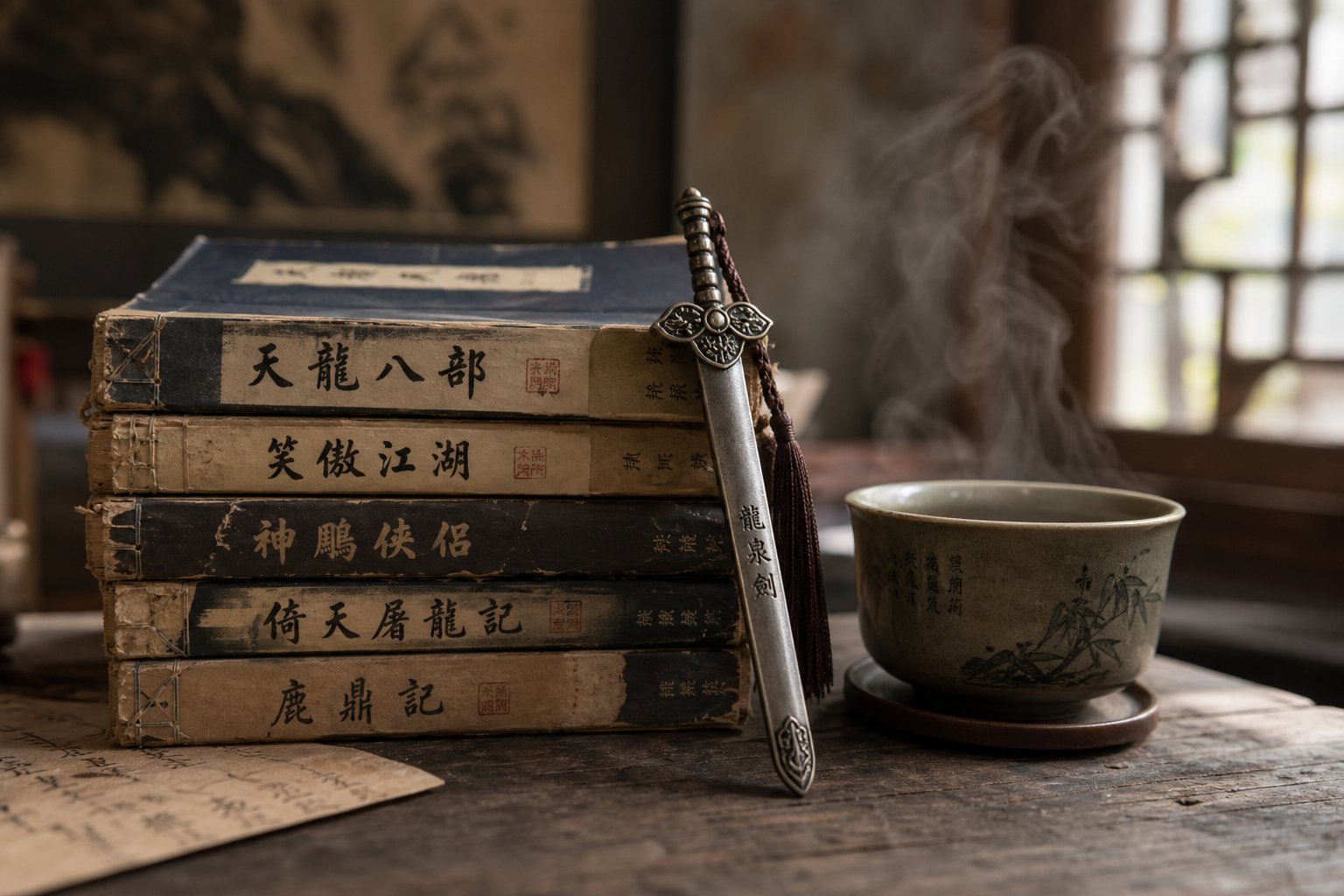
Think about the most memorable chinese names for boys in wuxia fiction — the heroes who anchor entire series. You'll notice a pattern: protagonists frequently carry names suggesting ordinariness, concealment, or unrealized potential. Zhang Wuji (张无忌, "without taboo") from Jin Yong's The Heaven Sword and Dragon Saber bears a common surname and a given name that sounds almost like a negation — "fearless" on the surface, but also readable as "without restraint," hinting at the extraordinary destiny hiding beneath an unassuming exterior. Ye Fan (叶凡, "leaf ordinary") from the xianxia novel Shrouding the Heavens makes the pattern even more explicit — his name literally means "ordinary," which becomes deeply ironic as he ascends to cosmic power.
This isn't coincidence. A well-crafted xianxia name isn't just poetic — it's a prophecy, and protagonist names often prophesy through contrast. The gap between the humble name and the extraordinary fate creates narrative tension that carries the entire story. Readers root for a character named "ordinary" to become anything but.
Antagonists follow the opposite logic. Their names project power, beauty, or menace from the start. Chinese first names male villains carry tend toward the grandiose — characters referencing demons (魔 mo), darkness (暗 an), domination (霸 ba), or celestial authority claimed rather than earned. A sect leader named Mo Tianlie (魔天烈, "Demonic Sky Fury") evokes a powerful and fearsome image of destruction — there's no ambiguity about this character's role. The name announces threat.
Chinese first names female characters carry follow gendered variations of the same archetype split. A heroine might be named with characters suggesting quiet resilience — Ling Fei (凌霏, "rising mist") or Ye Ruoyi (叶若依, "leaf, as if reliant") — names that balance grace with hidden strength. A female antagonist, by contrast, often carries names of dangerous beauty: characters for foxes, poison flowers, or cold jade that signal seduction and peril simultaneously.
Love interests occupy their own naming territory. Their names tend toward the aesthetically beautiful — moonlight, music, gentle rain — creating phonetic softness that contrasts with the protagonist's rougher-edged name. Mentor figures lean toward characters suggesting distance and wisdom: far (远 yuan), void (虚 xu), ancient (古 gu). Comic relief characters often carry names with slightly absurd phonetic qualities or meanings that undercut seriousness — a deliberate tonal mismatch that signals their narrative function.
How Master Authors Approach Naming as Craft
The archetype patterns exist as a shared vocabulary, but the greatest Chinese novelists developed distinctive naming styles that became part of their authorial signature. Compare Jin Yong and Gu Long — the two titans of wuxia — and you'll see how naming philosophy reflects broader creative vision.
Jin Yong's names are layered, poetic, and allusive. Each one rewards research. Linghu Chong (令狐冲) — the protagonist of The Smiling, Proud Wanderer — carries a rare compound surname meaning "lonely fox" paired with a given name meaning "soaring" or "rushing forward." The name encodes his entire character: wild, unconventional, free-spirited. Dugu Qiubai (独孤求败, "Solitary Seeking Defeat") is so powerful he searches for someone who can beat him — and the name tells you that before any scene confirms it. Jin Yong's chinese names male characters carry function like compressed poems, each one a thesis statement for the character's arc.
Gu Long took the opposite approach. His writing style lends itself to imitation because of how distinct it is — and his naming follows the same principle of sharp minimalism. Where Jin Yong layers meaning upon meaning, Gu Long favors names that hit like a blade strike: short, evocative, and slightly mysterious. Characters like Ximen Chuixue (西门吹雪, "West Gate Blowing Snow") or Lu Xiaofeng (陆小凤, "Lu Little Phoenix") carry names that create atmosphere through imagery rather than philosophical depth. The names sound cool first and mean something second — which perfectly matches Gu Long's prose style of mood over exposition.
This difference in naming philosophy extends to how each author handles supporting casts. Jin Yong names even minor characters with care — in wuxia and xianxia, naming every character is essential for world-building and immersion. Gu Long, by contrast, sometimes introduces characters through epithet alone — "the Bodhisattva of Venom," "the Twin Ghosts of North Mang" — letting the title do the work that a carefully constructed given name would do in Jin Yong's hands. Both approaches work, but they create fundamentally different reading experiences.
Naming patterns create reader expectations — and the most powerful narrative moments come from either fulfilling those expectations so perfectly that the name feels inevitable, or subverting them so sharply that the reader must reassess everything they assumed. A villain's name on a hero, or a humble name on a god, forces the reader to look past the label and discover the person beneath it.
This principle explains why the most memorable characters in Chinese fiction often carry names that play against type. A protagonist named "Useless" who becomes invincible. A gentle-sounding name on a ruthless killer. The archetype exists precisely so it can be broken — and the breaking creates meaning that a straightforward name never could. Understanding these patterns gives writers a toolkit, but the real craft lies in knowing when to reach for the expected and when to reach for the surprise. That tension between convention and subversion is what keeps readers engaged — and it becomes even more complex when these names must cross linguistic boundaries and reach audiences who don't read Chinese at all.
Writing Chinese Names for English-Speaking Audiences
All the layered meaning, tonal beauty, and social signaling encoded in Chinese names faces a brutal bottleneck the moment those names must reach readers who don't read hanzi. The challenge of chinese name translation isn't just linguistic — it's a storytelling problem. How do you preserve the richness of a naming system built on visual radicals, semantic layering, and tonal aesthetics when your audience sees only romanized syllables? Every writer working across this boundary makes trade-offs, and the choices matter more than most realize.
Pinyin vs Wade-Giles vs Custom Romanization
The romanization system you choose shapes how readers experience every name in chinese fiction. It's not a neutral technical decision — it carries genre expectations and accessibility implications.
Pinyin has replaced the Wade-Giles system as the standard in U.S. libraries and is the official romanization method in mainland China. For modern fiction and any story set after 1949, Pinyin is the expected choice. It's what most language learners recognize, and it produces clean, consistent spellings: Zhang, Xiao, Qing.
Wade-Giles persists in older translations and Taiwanese contexts. Names like Chiang Kai-shek and Tao Te Ching use this system, and well-established personal names in Wade-Giles are not converted to Pinyin even in modern library records. For fiction set in Taiwan or translations aiming for a mid-century aesthetic, Wade-Giles creates a particular atmosphere — slightly formal, slightly antiquated.
Different romanization systems are used from region to region, and this matters for fiction set in Hong Kong, Southeast Asia, or diaspora communities. A character from Hong Kong might spell their surname "Tse" rather than "Xie" — and that spelling choice signals cultural identity. Some authors develop custom romanization for fantasy worlds, prioritizing phonetic accessibility over strict accuracy. If your readers will stumble over "Xue" but glide through "Shway," the custom spelling might serve the story better — though purists will object.
The key principle: match your romanization to your audience and setting. A historically rigorous novel demands Pinyin or period-appropriate systems. A fantasy loosely inspired by Chinese culture has more freedom to prioritize readability.
Making Chinese Names Memorable for Non-Chinese Readers
Even with consistent romanization, English-speaking readers often struggle to distinguish chinese names into english form — especially when a large cast shares similar syllable structures. Readers who can instantly differentiate "Margaret" from "Michael" may blur "Mingyu" and "Minghao" into the same mental slot.
Practical techniques help. Vary syllable counts across your cast — mix two-syllable names (Li Feng) with three-syllable names (Ouyang Xiu) and single-syllable nicknames (Ah-Jiu). Use distinct initial consonants so names look different at a glance on the page. Introduce characters in small groups rather than flooding the reader with a dozen names in chapter one.
Strategic use of nicknames, titles, and translated meanings can anchor names in reader memory. A character formally named Bai Lianhua might be introduced through her sect title "the Lotus Physician" first, giving readers a semantic hook before the Pinyin name appears. This mirrors how many readers first encounter chinese names for english names — through meaning rather than sound. Tools like a chinese name converter can help writers understand the phonetic landscape they're working with, but the real craft lies in curating which names appear on any given page.
Some writers wonder "what is my chinese name" or explore generating a chinese name from english name as a creative exercise — and while these explorations build familiarity with the naming system, fiction demands more deliberate construction than any automated tool provides.
Handling Multiple Name Forms in English-Language Narratives
The biggest structural challenge is the multiple-names-per-character system discussed earlier. A character with a birth name, courtesy name, art name, and sect title creates four potential points of confusion for readers unfamiliar with the convention. Introduce all four at once and you've lost your audience. Suppress three of them and you've flattened the cultural richness that makes the naming system powerful.
The solution is staged introduction — revealing name forms gradually as the story earns them, with clear contextual signals each time a new form appears.
- Introduce the character with one primary name form — usually the one most characters use in dialogue — and establish it firmly through repetition across several scenes.
- When a second name form appears (a parent using the birth name, or a title used by strangers), frame it within a sentence that makes the connection explicit: "His mother still called him Zhan — a name no one outside the family dared use."
- Let relationship dynamics motivate each new name form's introduction. A courtesy name appears when the character comes of age. A sect title appears when outsiders discuss them. Each form arrives because the story demands it, not because the author wants to display the system.
- Maintain a consistent "default" name in narration — the name the protagonist uses internally or the name most frequently spoken in dialogue — so readers always have a home base to return to.
- Use brief, natural reminders when switching between name forms after gaps. A phrase like "Wangji — Lan Zhan, as only Wei Ying called him" costs five words and prevents confusion without breaking immersion.
The goal isn't to simplify the system into something it's not. It's to pace the complexity so readers absorb it naturally, the way they'd absorb any unfamiliar cultural framework — through context, repetition, and emotional resonance rather than glossaries and footnotes.
Translating a name in chinese fiction is ultimately an act of trust. Trust that your readers can handle complexity if you introduce it with care. Trust that the meaning encoded in these names — the radicals, the tones, the social signals — will resonate even in translation if you give readers enough context to feel what the name is doing. The english to chinese name pipeline runs both directions: writers bringing Chinese stories to English audiences, and writers building Chinese-inspired worlds for global readers. In both cases, the naming conventions aren't obstacles to overcome. They're storytelling tools waiting to be wielded — tools that, when handled with craft and cultural respect, make characters feel more real, more layered, and more alive than any single-language naming system could achieve alone.
Frequently Asked Questions About Chinese Novel Character Naming Conventions
1. How are Chinese names structured in novels?
Chinese names in novels follow a surname-first, given-name-second structure. The surname identifies family lineage and collective identity, while the given name (one or two characters) encodes individual meaning, aspirations, or destiny. A standard full name is three characters: one surname character plus two given-name characters. Deviations from this pattern, such as compound surnames (Sima, Ouyang) or single-character given names, signal specific traits like nobility, antiquity, or commanding presence. Authors deliberately manipulate this structure to communicate character background before any plot event occurs.
2. What is the difference between a courtesy name and a given name in Chinese fiction?
A given name (ming) is the birth name used only by parents, elders, and extremely close intimates. A courtesy name (zi) is bestowed at adulthood and serves as the standard polite form of address among peers and acquaintances. In fiction, who uses which name form reveals relationship dynamics: a stranger using someone's ming is deeply rude, while a lover using it signals chosen intimacy. Authors use these shifting address forms to show evolving relationships without explicit exposition, making every name choice in dialogue a micro-drama of social negotiation.
3. How do Chinese novel authors choose character names for different genres?
Each genre follows distinct unwritten naming rules. Wuxia favors names evoking nature and solitude (wind, frost, solitary peaks). Xianxia uses cosmic and Daoist imagery (void, primordial, heaven) with escalating cultivation titles. Historical fiction demands dynasty-accurate naming including taboo avoidance rules. Modern romance uses elegant, personality-signaling contemporary names. Literary fiction often employs deliberately plain names like birth-order numbers. These conventions are so ingrained that readers can identify a novel's genre from the protagonist's name alone.
4. Why do some Chinese novel characters have multiple names?
Characters accumulate names throughout their lives, each serving a different social function. A birth name (ming) is intimate and restricted. A courtesy name (zi) is the standard adult address form. An art name (hao) is self-chosen or publicly bestowed, projecting aspiration or achievement. Sect titles, posthumous names, and jianghu epithets add further layers. Different people address the same character differently based on their relationship, creating a dynamic system where every form of address communicates status, emotion, and social context without requiring narrative explanation.
5. How can writers make Chinese character names accessible to English-speaking readers?
Writers should vary syllable counts across their cast, use distinct initial consonants so names look different on the page, and introduce characters in small groups rather than all at once. Strategic use of nicknames, titles, or translated meanings provides semantic hooks for reader memory. Multiple name forms should be introduced gradually through story context rather than all at once. Maintaining one consistent default name in narration gives readers a home base, while brief natural reminders during name-form switches prevent confusion without breaking immersion.