When a Place Becomes a Family Name
Imagine carrying the name of a kingdom that vanished two thousand years ago. For hundreds of millions of people with Chinese surnames, that is exactly what happens every time they write their family name. These are toponymic surnames — names drawn directly from geographic locations like ancient states, rivers, mountains, and cities. They form one of the largest and most historically rich categories among all chinese surnames and meanings.
What Are Toponymic Chinese Surnames
A toponymic surname is one whose meaning or origin connects to a specific place. In Chinese genealogy, this category is massive. Scholars studying the origins of chinese last names estimate that place-derived surnames account for a significant portion of the entries in the Baijiaxing (百家姓), the classic Song Dynasty text cataloging Chinese family names.
Here is a distinction most guides overlook: there is a difference between a surname that literally means a location and one that originated from a location. Take the surname Shan (山). Its chinese name definition is straightforward — it means "mountain." The geographic meaning is baked right into the character. Compare that with Chen (陈). Chen does not translate to a landscape feature, yet it derives from the ancient State of Chen in modern Henan province. Both are location-based surnames, but they work differently. One is semantically transparent; the other requires historical context to decode.
Understanding this distinction matters when you research chinese family names and meanings, because it determines whether you can read the geography on the surface or need to dig into dynastic records to find it.
Why Location-Based Surnames Matter in Chinese Culture
Chinese surnames carry weight far beyond identification. They encode lineage, ancestral territory, and clan identity. During the Xia, Shang, and Zhou dynasties, rulers granted land to nobles and vassals, and those nobles adopted the names of their territories as hereditary family names. The meaning of chinese last names in this category is, at its core, a claim to ancestral land — even when that land changed hands millennia ago.
Most people with location-based Chinese surnames carry the name of a place that existed thousands of years ago — kingdoms dissolved, rivers renamed, cities buried — yet the surname endures as a living map of ancient geography.
This is what makes chinese surnames meaning locations so compelling for genealogical research. Your last name may point to a specific province, a vanished state, or a river valley where your ancestors first settled. It is a geographic fingerprint passed down across a hundred generations.
Most guides to chinese last names and meanings organize entries alphabetically or by popularity. This article takes a different approach — organizing surnames by geographic category: ancient states, rivers and mountains, cities and compass directions, and compound surnames with hidden place-name roots. This structure mirrors how these names actually formed, connecting each surname back to the type of landscape or territory that produced it.
The story begins where most of these surnames were born: in the feudal territories of the Zhou Dynasty, where political geography and family identity became permanently fused.
How Ancient Fiefdoms Became Hereditary Surnames
The Zhou Dynasty (周朝, Zhōu Cháo, 1046–256 BCE) ran one of history's most consequential real estate programs. Kings parceled out territory to loyal nobles, relatives, and military leaders. Those nobles then did something that would echo across three thousand years: they named themselves after the land they ruled. This single feudal practice generated the majority of ancient chinese surnames still in use today.
The Zhou Dynasty Feudal System and Surname Formation
Under the Zhou feudal system — known as fēngjiàn (封建/封建) — the king divided his realm into fiefdoms and granted them to vassals. Each vassal governed a state (guó, 国/國) and owed allegiance to the Zhou court. The system created dozens of semi-independent territories, each with a distinct name tied to its geography or founding charter.
Here is where chinese family names enter the picture. Vassals and their descendants adopted the name of their granted state as a hereditary identifier. The state of Zhèng (郑/鄭) produced the Zheng surname. The state of Wèi (卫/衛) produced the Wei surname. The state of Cài (蔡) produced the Cai surname. Political geography was not just shaping borders — it was writing family identity into permanent record.
Before the Zhou period, the system of xìng (姓, clan name) and shì (氏, branch name) served different functions. Xìng distinguished marriage eligibility between clans, while shì indicated social rank and territorial affiliation. The feudal expansion of the Zhou era massively multiplied the number of shì in circulation, each one tied to a specific piece of land.
From Territorial Lords to Hereditary Family Names
The Spring and Autumn period (770–476 BCE) and the Warring States era (475–221 BCE) represent the peak of toponymic surname formation. As states fragmented, merged, and competed, new territorial names constantly entered the surname pool. Consider this timeline:
- 1046 BCE — Zhou kings begin granting fiefdoms; early state names like Lǔ (鲁/魯), Qí (齐/齊), and Jìn (晋/晉) emerge as clan identifiers.
- 770 BCE — The Eastern Zhou begins; over 140 vassal states exist, each generating potential surnames from their territory names, fief names, and settlement names.
- 475–221 BCE — The Warring States consolidate power into seven major states. Citizens of conquered territories retain their former state names as permanent surnames.
- Post-221 BCE — The xìng and shì systems merge into the single-surname (xìngmíng) system still used today, freezing location-based identities in place.
This progression shows how a chinese family name was not chosen — it was assigned by political geography. If your ancestor governed or lived in a particular territory, that territory's name became your bloodline marker. The reference material from Baidu Baike's entry on Chinese surnames confirms that feudal state names like Qi, Lu, Jin, Song, Zheng, Wu, Yue, Qin, Chu, Wei, Han, Zhao, Wei, Yan, Chen, Cai, Cao, and others all became common surnames through exactly this mechanism.
The Baijiaxing and Geographic Origins
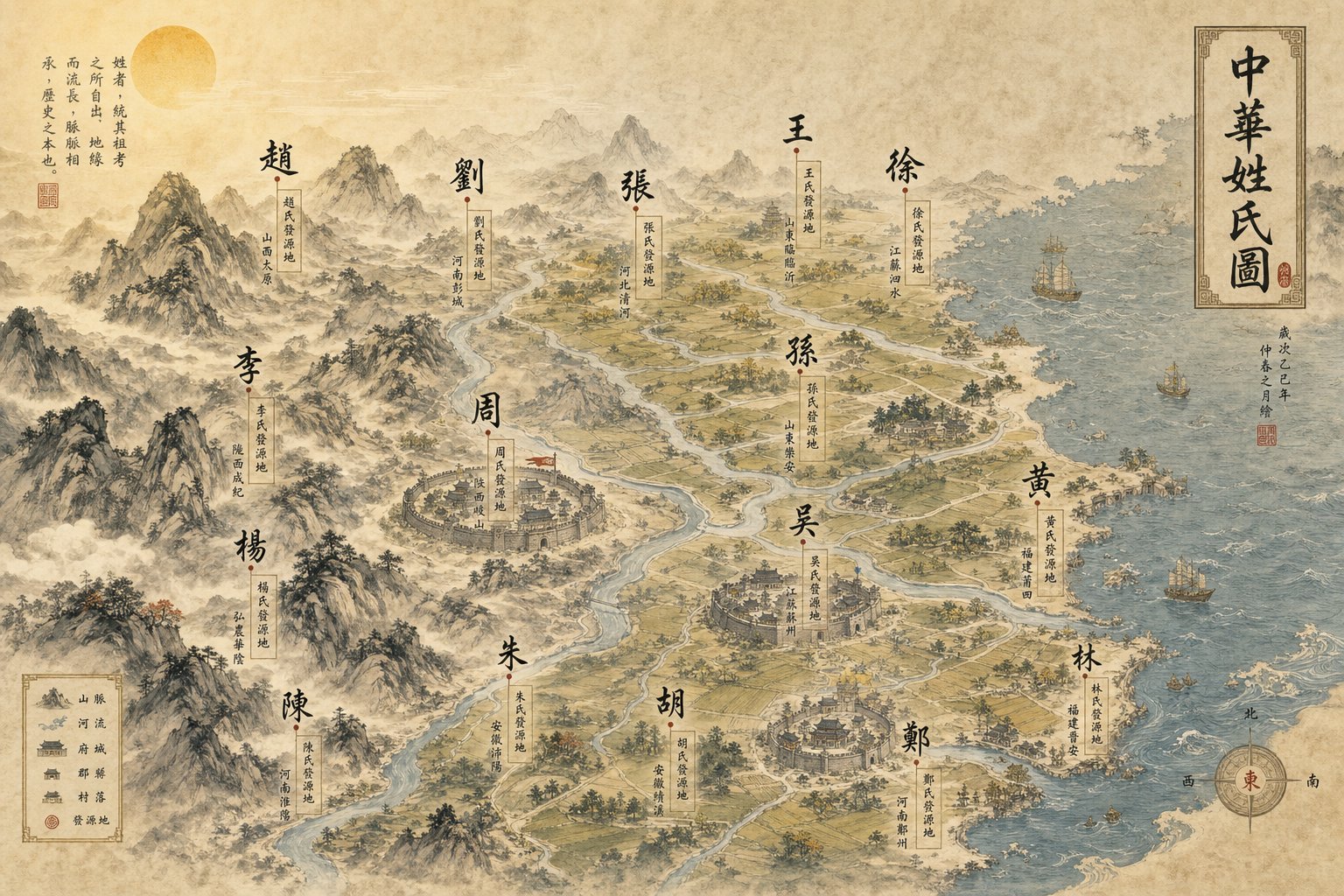
The Bǎijiāxìng (百家姓/百家姓), compiled during the Northern Song Dynasty, originally cataloged 411 surnames and later expanded to 504. While the text arranges surnames for easy memorization rather than by origin, a geographic reading reveals something striking: a large proportion of its entries trace back to place names. Among the top 300 surnames by modern population, 171 originated in Henan province alone, with 78 of the top 100 surnames directly rooted there. Henan's dominance makes sense — it sat at the heart of Zhou Dynasty political power, hosting states like Chen, Zheng, and Han.
What you find when you study ancient chinese last names through the Baijiaxing is essentially a geographic census of Zhou-era China. The surname in chinese culture is not merely a label; it is a fossilized coordinate pointing to a specific territory in a specific dynasty. The feudal map of 3,000 years ago lives on in phone books and government registries worldwide.
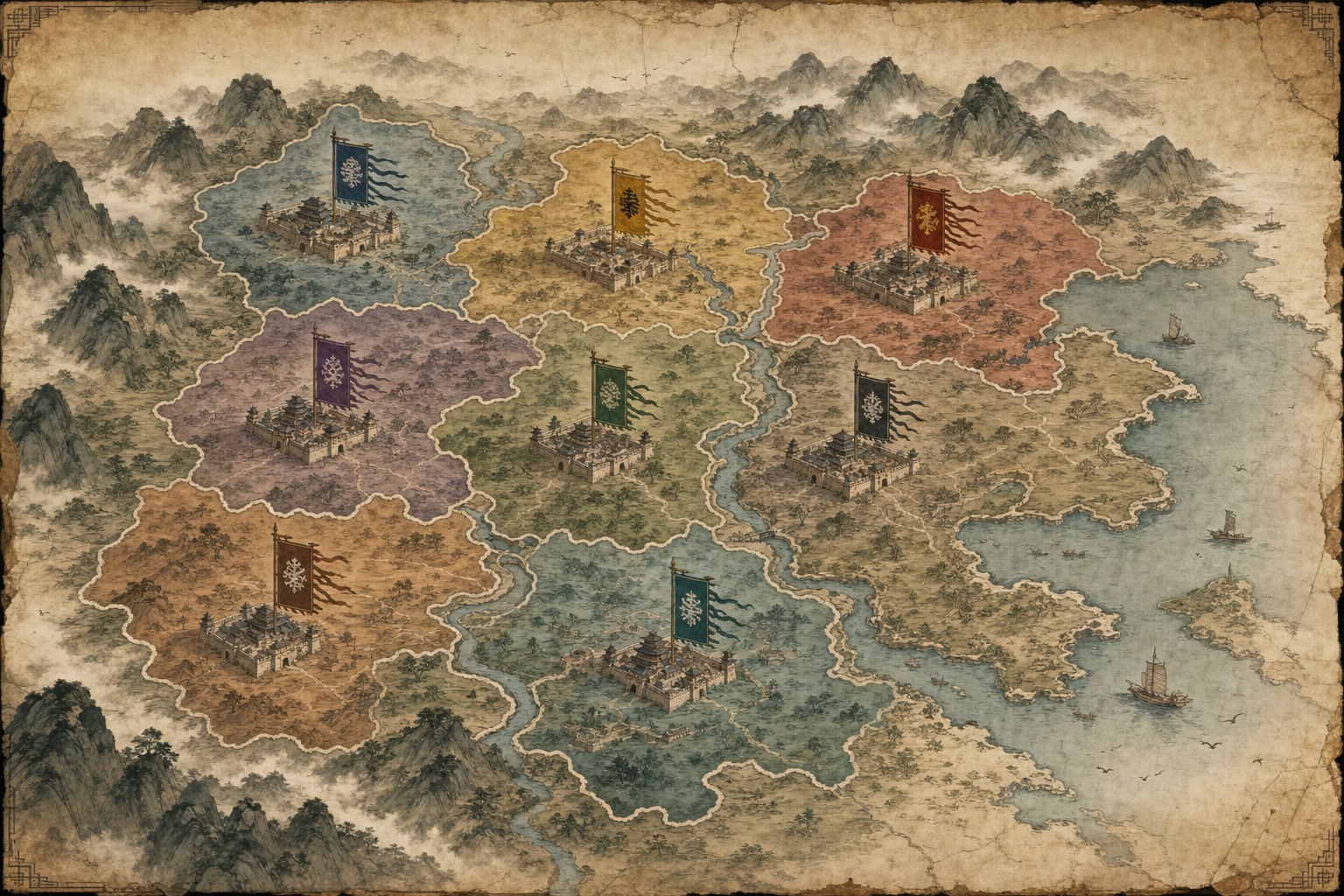
These state-derived surnames did not stay abstract historical artifacts. They correspond to real, mappable locations — and the largest group among them traces directly to the named kingdoms of the Spring and Autumn and Warring States periods.
Surnames Born from Ancient Chinese States
The named kingdoms of ancient China did not just produce wars and philosophies — they produced family names carried by billions of people alive today. State-derived surnames form the single largest category of location-based Chinese surnames, and many rank among the most common chinese last names in the world. When you meet someone surnamed Zhao, Chen, Song, or Qin, you are encountering a living reference to a political territory that functioned as an independent power for centuries.
Surnames from the Spring and Autumn Period States
The Spring and Autumn period (770-476 BCE) saw over a hundred vassal states operating under nominal Zhou authority. Several of these states produced surnames that remain extraordinarily common today. Chen (陈/陳, Chén) derives from the State of Chen, a duchy located in what is now eastern Henan province near modern Zhoukou. The state lasted from roughly 1046 to 479 BCE before being absorbed by Chu. Its ruling family and citizens carried the name forward, making Chen one of the most common chinese surnames globally — over 60 million people bear it in mainland China alone.
Song (宋, Sòng) traces to the State of Song, also in Henan, centered around modern Shangqiu. Founded as a fief for descendants of the Shang Dynasty royal house, the State of Song survived until 286 BCE. Lu (鲁/魯, Lǔ) points to the State of Lu in modern Shandong province — the homeland of Confucius and a cultural powerhouse of the era. Zheng (郑/鄭, Zhèng) maps to a state in central Henan near modern Xinzheng, while Cai (蔡, Cài) references a small state in southern Henan.
You will notice a pattern here: Henan province appears repeatedly. This is not coincidence. The Central Plains region served as the political heartland of Zhou-era China, concentrating vassal states in a relatively compact geographic area. That density of states produced a density of surnames — which is why Henan is considered the ancestral origin point for more common chinese last names than any other province.
Surnames from the Warring States Period
The Warring States era (475-221 BCE) consolidated power into seven dominant kingdoms, and each one generated a surname that persists as a common surname in china today. Zhao (赵/趙, Zhào) comes from the State of Zhao, which controlled territory across modern Shanxi and Hebei provinces with its capital at Handan. Zhao holds a special place in Chinese surname culture — it opens the Baijiaxing text as its very first entry, likely because the Song Dynasty imperial family bore this name.
Qin (秦, Qín) derives from the State of Qin in modern Shaanxi province, the kingdom that ultimately conquered all others and unified China. Wei (魏, Wèi) maps to the State of Wei in modern Shanxi and Henan. Han (韩/韓, Hán) traces to the State of Han in central Henan. Chu (楚, Chǔ) references the powerful southern state spanning modern Hubei and Hunan. Yan (燕, Yān) points to the northeastern state in modern Hebei and Beijing.
The zhang last name origin also connects to this geographic tradition, though through a slightly different path. Zhang (张/張, Zhāng) is often linked to Qingyang in modern Gansu province, where the legendary ancestor Huī (挥) supposedly invented the bow. Some scholars connect it to an ancient settlement called Zhang in modern Hebei. Either way, Zhang — the most common chinese surname by some population counts — carries geographic roots even if its character literally references a drawn bow rather than a state name.
Mapping Ancient States to Modern Provinces
Pinpointing where each surname originated helps you trace ancestral geography with surprising precision. The table below maps major state-derived surnames to their original territories and modern locations:
| Surname (Simplified) | Surname (Traditional) | Pinyin | Ancient State | Modern Province Location | Dynasty Era of Origin |
|---|---|---|---|---|---|
| 赵 | 趙 | Zhào | State of Zhao | Shanxi / Hebei | Warring States |
| 陈 | 陳 | Chén | State of Chen | Henan (Zhoukou) | Western Zhou – Spring and Autumn |
| 宋 | 宋 | Sòng | State of Song | Henan (Shangqiu) | Western Zhou – Warring States |
| 鲁 | 魯 | Lǔ | State of Lu | Shandong (Qufu) | Western Zhou – Spring and Autumn |
| 秦 | 秦 | Qín | State of Qin | Shaanxi (Xianyang) | Spring and Autumn – Warring States |
| 魏 | 魏 | Wèi | State of Wei | Shanxi / Henan | Warring States |
| 韩 | 韓 | Hán | State of Han | Henan (Xinzheng) | Warring States |
| 楚 | 楚 | Chǔ | State of Chu | Hubei / Hunan | Spring and Autumn – Warring States |
| 郑 | 鄭 | Zhèng | State of Zheng | Henan (Xinzheng) | Western Zhou – Spring and Autumn |
| 蔡 | 蔡 | Cài | State of Cai | Henan (Shangcai) | Western Zhou – Spring and Autumn |
| 燕 | 燕 | Yān | State of Yan | Hebei / Beijing | Western Zhou – Warring States |
What this table reveals is a geographic clustering. The most common chinese last names derived from states concentrate heavily in the Yellow River basin — Henan, Shandong, Shanxi, Shaanxi, and Hebei. These provinces formed the political core of ancient China, and their state names became the chinese common last names that hundreds of millions of people carry today.
State-derived surnames tell a story of political identity frozen into hereditary markers. But not all location-based surnames reference kingdoms and borders. Some carry the imprint of something older and more elemental — the rivers, mountains, and natural landscapes that shaped settlement patterns long before any state drew its first boundary line.
Surnames Drawn from Rivers, Mountains, and Landscapes
Rivers carved valleys. Mountains blocked migration routes. Forests provided shelter. Long before any king drew a border on a map, natural geography determined where families settled — and those features became their names. Unlike state-derived surnames that require historical context to decode, landscape surnames wear their chinese name meaning on the surface. The character itself tells you exactly what kind of terrain your ancestors called home.
River and Water Feature Surnames
Water was life in ancient China, and families who settled along major waterways often adopted the water feature as their identifier. These surnames frequently contain the water radical (氵), a visual clue pointing straight to their geographic roots.
- Jiang (江, jiāng) — means "river," specifically large rivers like the Yangtze. One of the most recognizable water-based surnames, carried by approximately 4.5 million people today.
- He (河, hé) — also means "river," traditionally associated with the Yellow River (黄河). Less common as a surname than Jiang but equally transparent in its geographic origin.
- Pan (潘, pān) — derives from a river that flows into the Han River, with the water radical clearly visible on the left side of the character.
- Hai (海, hǎi) — means "sea," indicating ancestors who lived in coastal regions.
- Hong (洪, hóng) — means "flood" or something expansive, carrying the water radical as a marker of its aquatic origin.
Notice how each of these characters either contains the water radical or directly names a body of water. When you encounter chinese names with meanings tied to water, the radical system makes identification straightforward — no dynastic history required.
Mountain and Terrain Surnames
Elevated terrain shaped settlement just as powerfully as rivers. Families living on hills, near mountain passes, or along ridgelines adopted those features as hereditary markers.
- Shan (山, shān) — means "mountain." The character is a pictograph of three peaks, making it one of the most visually literal chinese surname meanings in existence.
- Qiu (丘/邱, qiū) — means "hill" or "mound." The variant 邱 adds the city radical (阝), suggesting a settlement built on elevated ground.
- Cui (崔, cuī) — means "tall mountain" or "towering," with the mountain radical (山) sitting at the top of the character.
- Shi (石, shí) — means "stone" or "rock," reflecting families who lived in rocky terrain.
- Guan (关/關, guān) — means "mountain pass," referencing families positioned at strategic gaps between peaks.
These terrain surnames tend to be less common than the state-derived names covered earlier. You will not find Shan or Qiu competing with Chen or Zhao on population charts. But what they lack in frequency, they make up for in clarity — their chinese last name meanings are immediately readable to anyone who knows basic characters.
How Natural Landscape Shaped Family Identity
A third group of landscape surnames draws from vegetation and land features rather than water or elevation:
- Lin (林, lín) — means "forest" or "woods." The character doubles the tree radical (木) to depict multiple trees growing together. Lin originated from the late Shang dynasty and remains widely carried today.
- Tian (田, tián) — means "field," representing cultivated agricultural land. The character is a pictograph of divided farmland.
- Ye (叶/葉, yè) — means "leaf," connecting to forested or vegetated areas.
- Lu (陆/陸, lù) — means "land" or "high flat ground," indicating dry elevated terrain suitable for settlement.
What ties all these names in chinese and meanings together is a shared logic: the landscape came first, and identity followed. A family did not choose to be named "River" or "Mountain" the way you might pick a username. They were identified by their neighbors, their community, and eventually official records according to the most prominent geographic feature near their home. Over generations, that description hardened into a permanent surname.
These landscape surnames also reveal something about chinese name meanings at the character level. Geographic radicals — the water radical (氵), the mountain radical (山), the earth radical (土) — function almost like tags, flagging a character's connection to physical terrain. Recognizing these radicals gives you a quick diagnostic tool for identifying whether a surname likely has toponymic roots.
Landscape features shaped surnames at the micro level — one family, one river, one hillside. But geography also operated at a larger civic scale. Cities, administrative capitals, and even compass directions produced their own distinct category of hereditary names.
From City Names and Compass Points to Family Identity
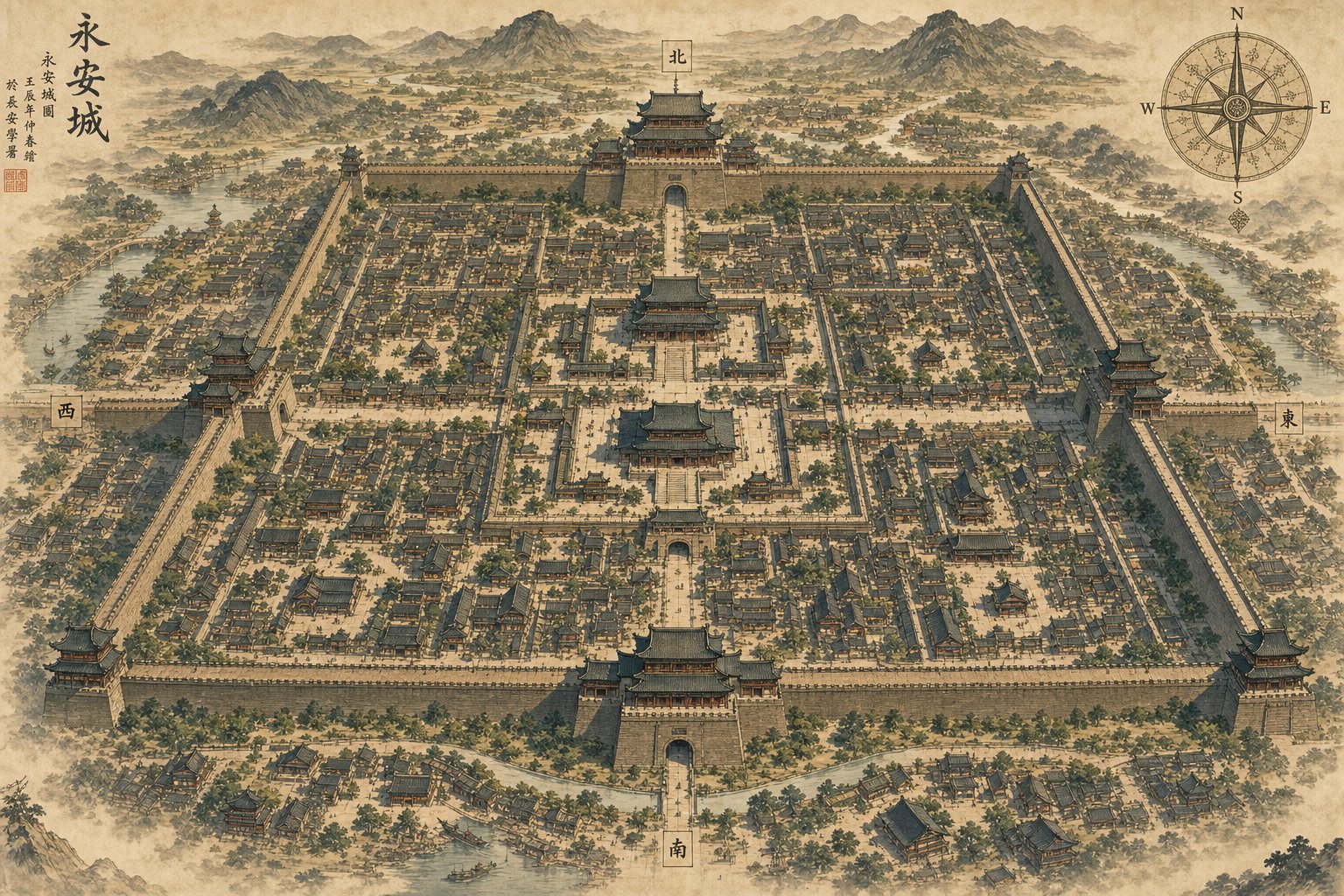
Rivers and mountains shaped surnames at the scale of individual settlements. Cities operated differently. A major urban center could stamp its name onto thousands of families at once — everyone who lived there, traded there, or governed there became associated with that city's identity. This is why some of the most common chinese last names trace not to kingdoms or natural features, but to specific towns, capital cities, and even the cardinal directions that described where a family sat relative to a landmark.
City and Settlement Surnames
Ancient Chinese cities were population magnets. When a city grew powerful enough to define a region, its name often transferred to the families rooted there. These surnames carry the imprint of urban life rather than wilderness.
Luo (洛, luò) connects to Luoyang (洛阳), one of China's most historically significant cities. Luoyang served as the capital for multiple dynasties and sat at the intersection of major trade routes in modern Henan province. Families associated with the Luo River area or the city itself adopted this name. The character contains the water radical (氵), reflecting Luoyang's position along the Luo River. Note that this is distinct from the surname Luo (骆), which has entirely different origins — including descent from Jiang Ziya's lineage in the State of Qi and the Ying surname's Zhao lineage.
Jing (京, jīng) means "capital city." The character itself denotes a large, elevated settlement — a place of political importance. Families surnamed Jing likely descended from people who lived in or administered an ancient capital. Because China's capital shifted multiple times across dynasties, the Jing surname could reference several different geographic locations depending on the lineage.
Hao (郝, hǎo) traces to an ancient settlement called Hao in what is now Shanxi province. The character includes the city radical (阝) on the right side, a structural clue that flags its urban origin. Hao ranks among the more popular chinese last names — roughly 30 million people carry it today — largely because the original settlement sat in a densely populated region of northern China.
Directional Surnames and Their Geographic Logic
Imagine living east of the village well, or south of the city wall. In ancient China, that relative position could become your family's permanent identifier. Directional surnames did not reference a specific named place — they described where a family lived in relation to one.
- Dong (东/東, dōng) — means "east." Families positioned east of a major landmark, river, or settlement center.
- Xi (西, xī) — means "west." Indicates families on the western side of a reference point.
- Nan (南, nán) — means "south." One of the more common directional surnames, possibly because southern positions often meant proximity to water sources.
- Bei (北, běi) — means "north." Less common as a surname, but still in active use.
The logic here is relational rather than absolute. A family surnamed Dong was not "eastern" in any universal sense — they were east of something specific to their community. Over time, the reference point faded from memory while the directional label remained permanent. This makes directional surnames fascinating but frustrating for genealogical research: you know the family's relative position, but the landmark they were positioned against may have disappeared centuries ago.
Administrative Region Names That Became Surnames
Beyond individual cities and compass points, China's administrative geography also fed the surname pool. Districts, prefectures, and commanderies all contributed names that families carried forward.
| Subcategory | Surname (Simplified/Traditional) | Pinyin | Geographic Reference | Modern Location |
|---|---|---|---|---|
| City/Town Name | 洛 | Luò | Luoyang / Luo River area | Henan |
| City/Town Name | 京 | Jīng | Capital city (various) | Multiple provinces |
| City/Town Name | 郝 | Hǎo | Ancient Hao settlement | Shanxi |
| City/Town Name | 邢 | Xíng | State/city of Xing | Hebei (Xingtai) |
| Directional | 东/東 | Dōng | East of a landmark | Various |
| Directional | 西 | Xī | West of a landmark | Various |
| Directional | 南 | Nán | South of a landmark | Various |
| Directional | 北 | Běi | North of a landmark | Various |
| Administrative Region | 邵 | Shào | Shao district/fief | Henan / Hebei |
| Administrative Region | 邓/鄧 | Dèng | State/district of Deng | Henan (Dengzhou) |
| Administrative Region | 郡 | Jùn | Commandery (administrative unit) | Various |
What stands out in this table is how city-based surnames tend to cluster in specific provinces while directional surnames scatter broadly. That pattern makes sense: a city name anchors to one location, but "east" or "south" could apply anywhere people settled near a reference point.
Some of these remain among the most popular chinese last names precisely because the cities they reference were major population centers. Hao's origin in Shanxi, Deng's roots in Henan, Xing's connection to Hebei — these were not remote villages. They were thriving settlements where large populations concentrated, and large populations meant more families adopting the local name. The most common last name china produces in any given category tends to correlate with the population density of its origin point.
City and directional surnames represent the civic layer of Chinese toponymic naming — identity shaped by human settlement patterns rather than raw terrain. Yet there is another category that competitors rarely explore: compound surnames built from two characters, where the extra syllable often preserves geographic detail that single-character names compress away.
Compound Surnames with Hidden Geographic Origins
Single-character surnames compress an entire geographic origin into one syllable. Compound surnames (复姓/複姓, fùxìng) do the opposite — they use two characters, giving them room to encode more spatial detail. A name like Ouyang does not just point to a mountain; it tells you which side of that mountain. This extra specificity makes compound surnames a uniquely precise category of rare chinese surnames, and one that most guides to location-based naming overlook entirely.
What Makes Compound Surnames Different
Most Chinese surnames are a single character. Compound surnames use two or more, and they account for a tiny fraction of the population. Where a name like Chen (陈) tells you "State of Chen" and stops there, a compound surname can specify a direction, a landmark relationship, or an administrative position tied to a territory — all within the name itself.
Many Chinese compound surnames derive from Zhou Dynasty noble titles, official positions, and place names. The geographic ones are especially interesting because their two-character structure often preserves a spatial relationship that would be impossible to express in a single character. You get not just "where" but "where relative to what."
This structural advantage is also why compound surnames tend to be among the rarest chinese surnames in modern China. Over centuries, many clans simplified their two-character names down to one character for convenience. Those that survived intact preserved geographic information that their single-character cousins lost.
Notable Location-Derived Compound Surnames
Not all compound surnames have geographic roots — some derive from official titles or clan branches. But the ones that do carry place-name origins rank among the most historically significant. Here are the most notable, ordered by their impact on Chinese history and culture:
- Ouyang (欧阳/歐陽, Ōuyáng) — means "south of Mount Ou Yu." The character 阳/陽 (yáng) indicates the sunny, southern side of a mountain, while 欧/歐 references Mount Ou in what is now Hunan province. This surname literally encodes a compass orientation relative to a specific peak. Ouyang remains the most commonly encountered compound surname in modern China, carried by notable figures throughout history including the Song Dynasty literary giant Ouyang Xiu.
- Sima (司马/司馬, Sīmǎ) — originally the title "Master of the Horse," a military position responsible for cavalry and territorial defense. While technically an official title rather than a pure place name, the role was inseparable from territorial control — the Sima managed horses across specific regions of the realm. The surname produced Sima Qian, China's foundational historian, and the entire ruling house of the Jin Dynasty (265-420 CE).
- Shangguan (上官, Shàngguān) — translates to "upper pass official," combining a directional word (上, upper) with an administrative term (官, official). The name references a high-altitude government post, tying family identity to an elevated geographic position. The Shangguan clan traces to the Spring and Autumn period and produced notable Tang Dynasty figures like the poet Shangguan Wan'er.
- Linghu (令狐, Línghú) — derives directly from a place called Linghu in what is now Linyi County, Shanxi province. Unlike the previous examples, this is a straightforward toponymic transfer: the settlement name became the family name. The Tang Dynasty chancellor Linghu Chu is among its most prominent bearers.
- Nangong (南宫/南宮, Nángōng) — means "Southern Palace," referencing a specific architectural landmark and its surrounding district. Families living near or administering the southern palace complex of a Zhou-era capital adopted this as their identifier.
Other unique chinese surnames in this category include Dongmen (东门/東門, "East Gate"), referencing families who lived near the eastern gate of a city wall, and Ximen (西门/西門, "West Gate"), indicating the opposite side. These gate-based compound surnames function like ancient street addresses — they pinpoint a family's position within an urban layout.
Why Compound Surnames Preserve More Geographic Detail
Consider the difference between a single-character surname like Nan (南, south) and a compound surname like Nangong (南宫, Southern Palace). The first tells you a direction. The second tells you a direction and a landmark. That layered specificity is what makes uncommon chinese surnames in the compound category so valuable for genealogical research.
The two-character structure allows three types of geographic encoding that single characters cannot achieve:
- Direction + landmark — Ouyang (south of Mount Ou), Shangguan (upper pass), Dongmen (east gate)
- Place name preserved intact — Linghu (the settlement of Linghu), Guanqiu (毌丘, a specific place name)
- Administrative role + territory — Sima (horse master of a region), Situ (司徒/司徒, minister governing the masses of a territory)
This is why unique chinese last names in the compound category often tell richer stories than their single-character equivalents. They are miniature geographic descriptions rather than compressed labels. A researcher tracing the Ouyang lineage knows to look south of a specific mountain in Hunan. Someone researching the rare chinese last names Dongmen or Ximen knows their ancestors lived at a city gate — and which one.
The rarity of these surnames today reflects a historical winnowing process. As China unified and administrative systems standardized, the practical inconvenience of two-character surnames pushed many families to abbreviate. Ouyang, Shangguan, Sima, and Situ survived because their clans maintained enough prominence and cohesion to resist simplification. Dozens of others did not, their geographic specificity lost when the second character was dropped.
Compound surnames preserve the most granular geographic data in the Chinese naming system. But even single-character location surnames faced a dramatic test of survival — one that came not from gradual cultural drift, but from a single political event in 221 BCE that dissolved every independent state on the map simultaneously.

How Imperial Unification Froze Location Names Forever
In 221 BCE, something paradoxical happened to every location-based chinese surname in existence. Emperor Qin Shi Huang (秦始皇) completed his conquest of the six remaining Warring States — Zhao, Wei, Han, Chu, Yan, and Qi — and dissolved them all into a single centralized empire. The states vanished from the political map overnight. Yet the millions of people who carried those state names as surnames kept them. The kingdoms died; the names did not.
The Dissolution of States and Preservation of Names
Think about what unification actually meant at the individual level. One day you were a citizen of the State of Zhao, living in a sovereign territory with its own laws, currency, and army. The next day, Zhao no longer existed — absorbed into the Qin empire. But your surname? Still Zhao. Your neighbors still called you Zhao. Your children would still be Zhao. The political entity that gave your family its identity was gone, but the identity itself had become self-sustaining.
This happened simultaneously across all conquered territories. Families surnamed Wei (魏) kept their name even though the State of Wei was erased. Families surnamed Han (韩) retained their identifier despite the State of Han's destruction. Chu, Yan, Qi — every dissolved kingdom left behind a permanent population of surname-bearers who functioned as living fossils of a political geography that no longer existed.
The destruction of ancient Chinese states did not erase their names — it cemented them permanently through the surnames of their former citizens, turning political extinction into genealogical immortality.
This is why surnames in china carry such deep historical weight. A chinese surname like Zhao or Chu is not merely a family label — it is the last surviving trace of a sovereign nation. The royal chinese surnames of the Warring States era lost their armies, their treasuries, and their territorial power. What they kept was something no conqueror could strip away: the hereditary name itself, passed from parent to child regardless of who controlled the land above.
The Qin conquest created a unique situation among the most common surnames in china. Before 221 BCE, carrying the surname Zhao meant you belonged to or descended from the ruling apparatus of a living state. After 221 BCE, it meant your ancestors once did. The name shifted from a marker of current political affiliation to a marker of historical geographic origin — and that is exactly what it remains today, over two thousand years later.
Writing Standardization and Surname Recording
Qin Shi Huang did not just redraw political borders. He also standardized how those borders — and everything else — were written down. Before unification, each state used its own regional script variants. The same surname character could look noticeably different depending on whether it was written in Chu script, Qi script, or Zhao script. The statesman Li Si oversaw the first government standardization of Chinese characters, introducing a formalized seal script (小篆, xiǎozhuàn) that replaced all regional variants.
For surnames china had accumulated over centuries, this standardization was transformative. A name that might have been written three different ways across three former states now had exactly one official form. The Qin standardization comprised over 3,000 characters, and surname characters were among the most critical to fix in place — they appeared in census records, tax documents, and military registries that the new empire depended on for governance.
Consider what this meant practically. The most common last names in china were suddenly locked into a single written form, recorded in centralized imperial documents, and administered by a unified bureaucracy. Regional variation in how a surname looked on paper disappeared. The character 赵 (Zhao) looked the same whether you lived in former Zhao territory or had migrated to the opposite end of the empire. Writing standardization did not just preserve location-based surnames — it made them portable, legible across the entire unified state.
The combination of political dissolution and script standardization created a one-two effect that froze china last names in amber. The states that generated these surnames were gone, so no new political changes could alter their meaning. The writing system that recorded them was standardized, so no regional drift could change their form. Royal chinese surnames like Zhao and Chu became permanent historical artifacts — carried by ordinary citizens who had no royal power left, but whose names still pointed to the exact territories their ancestors once ruled or inhabited.
This freezing effect explains a pattern you can observe today: the geographic distribution of surnames across China still roughly mirrors the boundaries of states that ceased to exist in 221 BCE. People surnamed Zhao remain concentrated in Shanxi and Hebei. People surnamed Chu cluster in Hubei and Hunan. The empire erased the borders, but the surnames remember where they were.
What the Qin unification could not do, however, was prevent people from moving. Over the following centuries, wars, famines, and imperial resettlement programs scattered these location-locked surnames far beyond their origin points — across Southeast Asia, through dialect regions that would romanize the same characters in wildly different ways, and eventually to every continent on earth.
Tracing Location Surnames Across the Chinese Diaspora
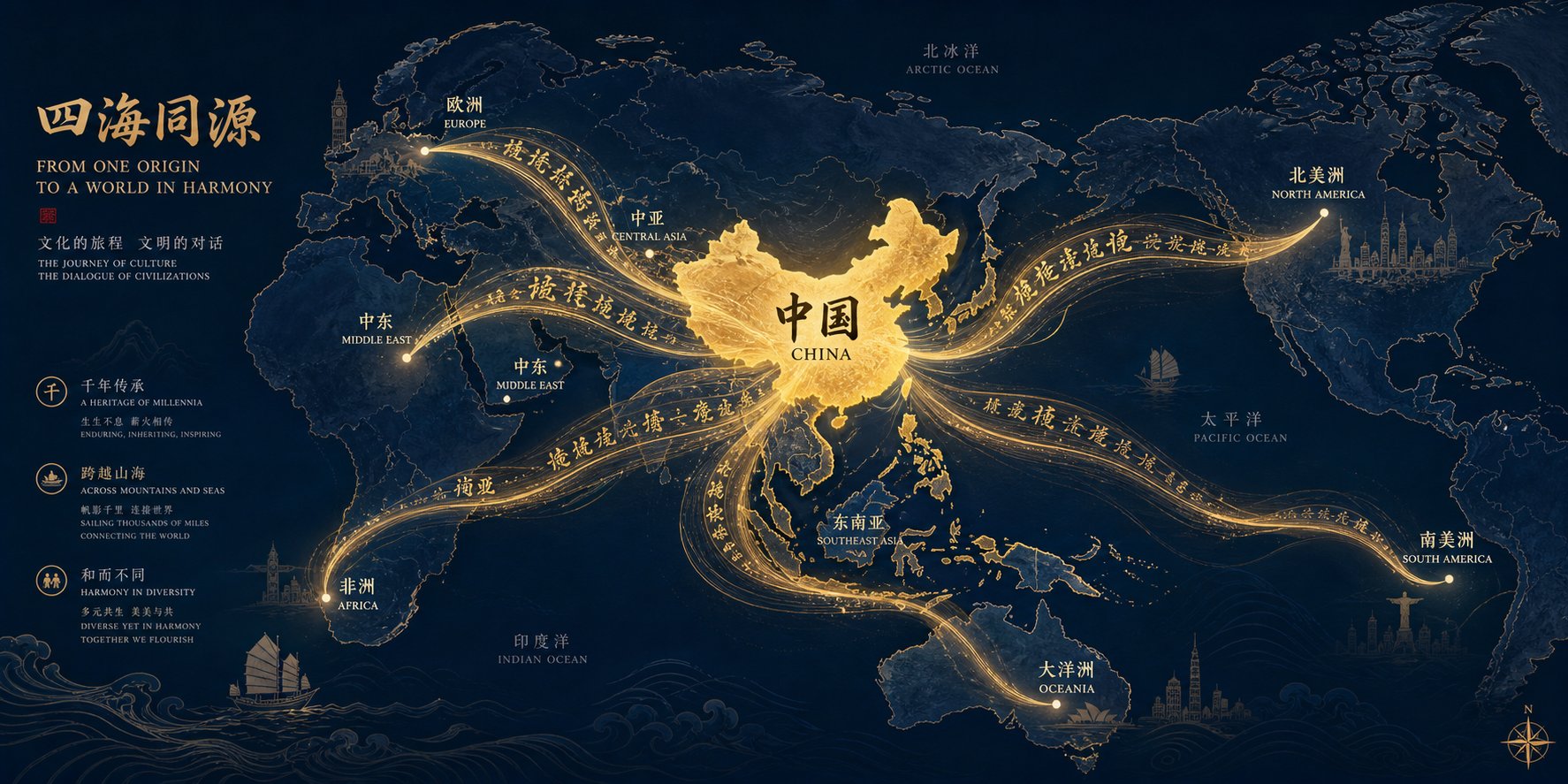
The Qin unification froze location-based surnames in place, but it could not freeze the people who carried them. Over the next two millennia, waves of migration carried these geographic names far beyond their origin provinces — south into Guangdong and Fujian, across the Taiwan Strait, through Southeast Asia, and eventually to every major city on earth. Along the way, something happened that makes tracing these surnames surprisingly difficult today: the same character got romanized differently depending on which dialect the speaker used. A surname that clearly references an ancient state in its written Chinese form becomes unrecognizable when filtered through Cantonese, Hakka, or Hokkien pronunciation systems.
Migration Waves and Surname Distribution
Chinese migration did not happen randomly. It followed specific routes at specific historical moments, and each wave carried a distinct mix of surnames tied to particular origin regions.
The earliest major southward migrations occurred during the Jin Dynasty (265-420 CE) and again during the Song Dynasty (960-1279 CE), when northern families fled warfare and pushed into Fujian, Guangdong, and Guangxi. These migrants brought surnames rooted in the Yellow River basin states — Chen, Huang, Lin, Zheng — into southern China. That is why Chen is the most common surname in southern China today, shared by 10.6% of the population there, while Wang dominates the north at 9.9%. The geographic origin of these surnames lies in Henan and Shandong, but their population centers shifted south with the migration.
Later waves carried these same surnames overseas. Hokkien speakers from Fujian settled heavily in Taiwan, the Philippines, and Indonesia from the 16th century onward. Cantonese speakers from Guangdong dominated migration to Hong Kong, Southeast Asia, and North America during the 19th and 20th centuries. Hakka communities dispersed across multiple regions. Each group brought its own pronunciation of the same written surnames — creating the romanization puzzle that confuses researchers today.
This is why taiwan last names like Chen, Lin, and Huang mirror the Fujian surname distribution rather than the national average. It is also why hong kong last names skew heavily toward Cantonese pronunciations — Chan, Wong, Leung — that look nothing like their Mandarin equivalents on paper. The diaspora did not scramble surname geography; it replicated it in new locations, preserving the migration path in the spelling.
How Dialect Romanization Obscures Geographic Meaning
Here is the core problem for anyone researching chinese american surnames or overseas Chinese family names: the romanized spelling you see on a passport or birth certificate tells you which dialect your ancestor spoke, but it hides the original Chinese character — and with it, the geographic meaning.
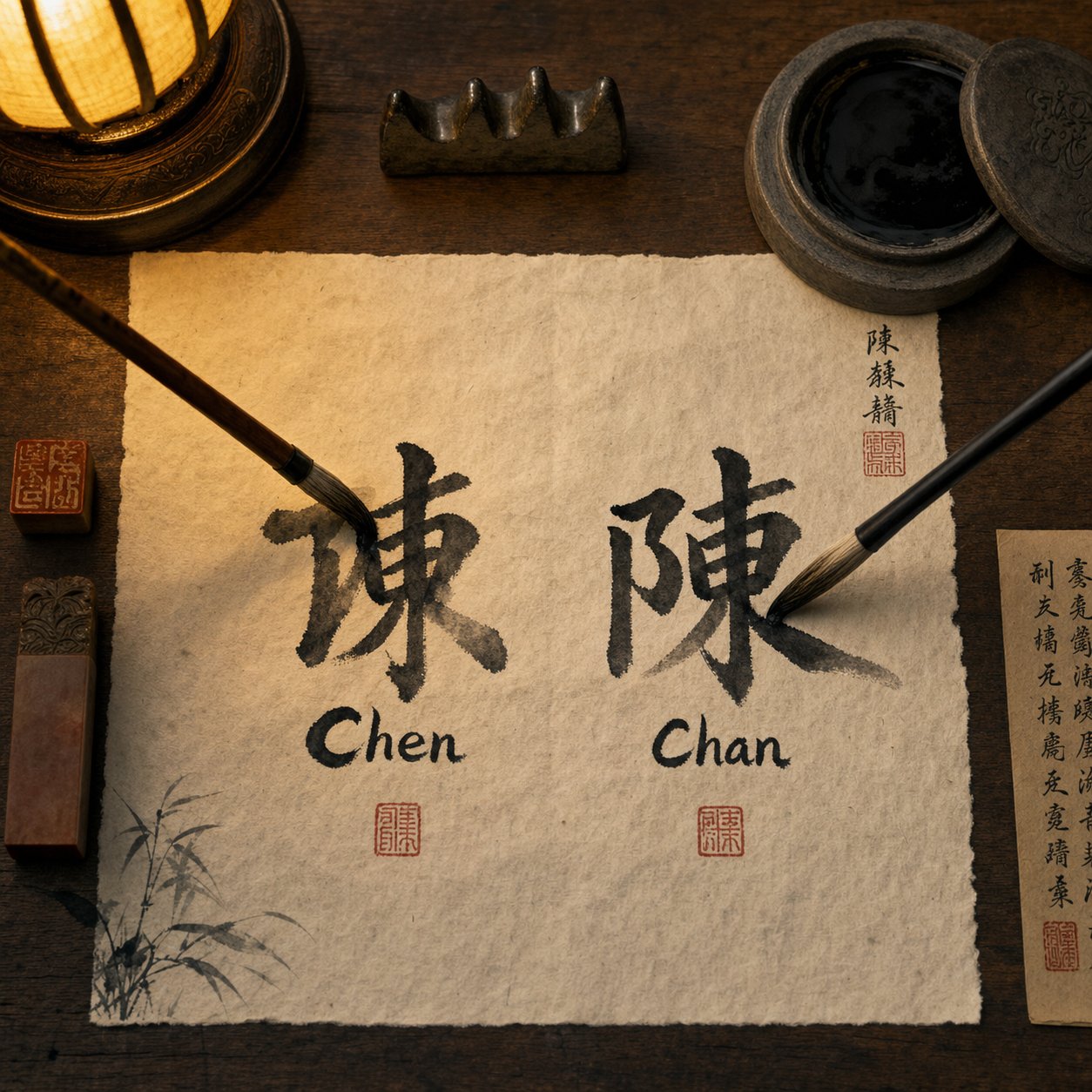
Take the surname Chen (陈/陳). In its written form, it clearly references the ancient State of Chen in Henan province. The geographic origin is right there in the character. But when this surname travels through different dialect systems, it fractures into spellings that share no visual resemblance:
- Mandarin pinyin: Chen
- Cantonese: Chan
- Hokkien: Tan
- Teochew: Tang
- Hakka: Chin
Someone surnamed "Tan" in Singapore and someone surnamed "Chan" in San Francisco may share the exact same surname character — and the exact same ancient geographic origin — without realizing it. The chan last name origin traces to the same State of Chen that produced the Mandarin "Chen," but the Cantonese romanization strips away that connection for anyone who does not read Chinese characters.
This pattern repeats across dozens of location-based surnames. Among cantonese surnames, Wong replaces Huang, Cheung replaces Zhang, and Chiu replaces Zhao. Each of these mandarin surnames carries a specific geographic origin story — Huang from the State of Huang, Zhao from the State of Zhao — but the Cantonese romanization makes that origin invisible to English readers. The same character, the same ancient state, the same geographic meaning — rendered unrecognizable by pronunciation alone.
The table below maps key location-based surnames across four major dialect romanization systems. If your family name appears in any column, the geographic origin in the rightmost column applies to you regardless of which dialect spelling you use:
| Character (Simplified/Traditional) | Mandarin Pinyin | Cantonese | Hakka | Hokkien | Geographic Origin |
|---|---|---|---|---|---|
| 陈/陳 | Chen | Chan | Chin | Tan | State of Chen, Henan |
| 赵/趙 | Zhao | Chiu | Chau | Teow | State of Zhao, Shanxi/Hebei |
| 黄/黃 | Huang | Wong | Vong/Wong | Ng/Wee | State of Huang, Henan |
| 吴/吳 | Wu | Ng | Ng | Goh | State of Wu, Jiangsu |
| 郑/鄭 | Zheng | Cheng | Chang | Teh/Tee | State of Zheng, Henan |
| 林 | Lin | Lam | Lim | Lim | Forest origin, Henan/Fujian |
| 宋 | Song | Sung | Sung | Song | State of Song, Henan |
| 秦 | Qin | Chun | Chin | Chin | State of Qin, Shaanxi |
| 周 | Zhou | Chow/Jau | Chew | Chew/Jew | Zhou Dynasty territory, Shaanxi |
| 蔡 | Cai | Choi | Chai | Chua | State of Cai, Henan |
Identifying Your Location-Based Surname Across Dialects
If you carry chinese american last names like Chan, Tan, Wong, Ng, or Goh, the table above is your decoder ring. Each of these cantonese last names or Hokkien spellings maps back to a specific Chinese character — and that character maps back to a specific ancient location. The romanization is just a pronunciation layer sitting on top of the geographic meaning.
Here is a practical approach to identifying whether your surname has toponymic origins:
- Step 1: Determine which dialect system your romanized surname comes from. Cantonese romanizations dominate among families from Hong Kong and Guangdong. Hokkien spellings are common in Taiwanese, Singaporean, and Filipino Chinese communities. Hakka romanizations appear across multiple regions.
- Step 2: Match your romanized spelling to the original Chinese character using a cross-dialect reference like the table above.
- Step 3: Research the character's origin. If it references a state, river, mountain, city, or directional term, your surname has geographic roots.
Regional surname distribution among overseas communities still echoes ancient geography filtered through migration history. Chinese american surnames on the West Coast of the United States skew heavily toward Cantonese spellings — Chan, Wong, Lee, Ng — because 19th-century immigration drew primarily from Guangdong province. East Coast communities show more diversity, including Mandarin pinyin spellings from later waves of mainland and Taiwanese immigration. In Southeast Asia, Hokkien and Teochew spellings dominate because those dialect groups led the earlier merchant migrations.
The pattern is consistent: wherever you find a concentration of a particular dialect romanization, you can trace it back through a specific migration route to a specific origin province — and from that province, back to the ancient state or geographic feature that first generated the surname. A person surnamed Chiu in Toronto, Teow in Jakarta, and Zhao in Beijing all carry the same geographic fingerprint: the State of Zhao in Shanxi and Hebei, frozen into a family name in 221 BCE and scattered across the globe by two thousand years of migration.
Dialect romanization obscures geographic meaning at the surface level, but the underlying character preserves it perfectly. The real challenge for researchers is not the pronunciation layer — it is learning to read the structural clues hidden inside the characters themselves, where geographic radicals quietly signal a surname's connection to rivers, mountains, cities, and ancient terrain.
Reading Geographic Clues Hidden in Surname Characters
Every Chinese character is built from smaller components — radicals — that often hint at the character's meaning. When you apply this principle to surnames, certain radicals function like geographic tags, quietly flagging a name's connection to physical terrain. You do not need to read classical Chinese to spot these clues. You just need to know which building blocks to look for.
Geographic Radicals That Reveal Place Origins
A radical is a recurring component that appears across many characters sharing a related meaning. In any comprehensive chinese surname list, four geographic radicals appear with striking frequency:
- 阝 (fù/yì) — City or mound radical — Appears in surnames like Zheng (郑), Hao (郝), Deng (邓), Xing (邢), and Qiu (邱). When this radical sits on the right side of a character, it derives from 邑 (yì, city). On the left side, it derives from 阜 (fù, mound or hill). Either position signals a connection to a settlement or elevated terrain.
- 氵 (shuǐ) — Water radical — Found in surnames like Jiang (江, river), Pan (潘), Luo (洛), Hong (洪), and He (河). This three-stroke radical on the left side of a character almost always indicates a relationship to water — rivers, lakes, or coastal areas.
- 山 (shān) — Mountain radical — Present in surnames like Cui (崔, towering peak), Lan (岚, mountain mist), and Dai (岱, Mount Tai). The radical can appear as a standalone character or sit atop or beside other components.
- 土 (tǔ) — Earth radical — Shows up in surnames connected to land and terrain. Characters containing this radical often reference specific types of ground, soil, or constructed earthworks like city walls.
Spotting these radicals gives you an immediate first filter. If a surname contains 阝, 氵, 山, or 土, there is a strong chance it carries toponymic origins — even before you consult any historical record.
Reading the Landscape Inside a Character
Radicals are clues, not guarantees. As the reference guide from Berlitz notes, radicals can hint at a character's meaning or pronunciation, but they are not always reliable — use them as clues, not rules. A surname containing the water radical probably has aquatic origins, but context matters. The character's full etymology, not just its radical, determines whether the geographic connection is real or coincidental.
Still, the pattern holds remarkably well for surnames. In chinese name order — where the surname (姓, xìng) comes first, followed by the given name — the family name is the element most likely to preserve ancient geographic information. Given names change every generation; surnames persist for millennia. That persistence means the radicals inside them have been carrying geographic data since the Zhou Dynasty.
When you look at a list of chinese surnames and see characters like 郑, 洛, 崔, or 邓, you are reading compressed landscape descriptions. The city radical in Zheng tells you "settlement." The water radical in Luo tells you "river." The mountain radical in Cui tells you "peak." Each radical is a one-stroke geographic label that survived three thousand years of linguistic evolution.
Practical Steps to Research Your Surname Geography
If you want to trace your own surname back to its original location, here is where to start:
- Identify the character. If you only know the romanized spelling, use a cross-dialect reference (like the table in the previous section) to find the original Chinese character. Searching for your surname 中文 — the Chinese-language version — is the essential first step.
- Check the radicals. Look for 阝, 氵, 山, or 土 within the character. Their presence suggests geographic origins worth investigating further.
- Consult a chinese family name list with etymologies. The Baijiaxing (百家姓) and its modern annotated editions provide origin narratives for each surname. Online databases now offer searchable versions with province-level origin data.
- Research your ancestral jùwàng (郡望). This term refers to the commandery or region where a surname clan was historically most prominent. Genealogical records (族谱, zúpǔ) often list the jùwàng, giving you a specific geographic anchor point.
- Cross-reference with historical maps. Once you have a state name, city name, or regional reference, overlay it onto maps of Zhou, Qin, or Han Dynasty geography to find the modern equivalent location.
A list of chinese family names is not just a directory of identifiers — it is a geographic index of ancient China, compressed into single characters and carried across the world by billions of people. Whether your surname contains a visible water radical or hides a vanished kingdom behind an opaque character, the geographic story is there. It just takes knowing where to look.
Your last name is, quite literally, a map. The territory it points to may have changed hands dozens of times, been renamed, flooded, or built over. But the surname remembers what the land forgot.
FAQs About Chinese Surnames Meaning Locations
1. What percentage of Chinese surnames come from geographic locations?
Scholars estimate that place-derived surnames account for a significant portion of the 504 entries in the Baijiaxing (Hundred Family Surnames). Among the top 300 surnames by modern population, 171 originated in Henan province alone, which served as the political heartland of Zhou Dynasty China. State names, river names, mountain references, city names, and directional terms all contributed to this massive category of toponymic surnames that billions of people still carry today.
2. How can I tell if my Chinese surname has a geographic origin?
Look for geographic radicals within the Chinese character of your surname. The city radical (阝) appears in names like Zheng and Deng. The water radical (氵) signals river connections in names like Jiang and Pan. The mountain radical (山) marks terrain origins in names like Cui. If you only know the romanized spelling, first identify which dialect system it comes from (Cantonese, Hokkien, Hakka, or Mandarin), then match it to the original character using a cross-dialect reference table before checking for these structural clues.
3. Why do the same Chinese surnames have different spellings in different countries?
The same Chinese character gets romanized differently depending on which dialect the speaker uses. For example, the surname Chen (陈) becomes Chan in Cantonese, Tan in Hokkien, and Chin in Hakka. These spelling differences reflect migration patterns — Cantonese spellings dominate in Hong Kong and among early North American immigrants from Guangdong, while Hokkien spellings are common in Taiwan, Singapore, and the Philippines. Despite the different romanizations, all variants share the same character and the same geographic origin in the ancient State of Chen in Henan province.
4. What is the difference between a surname that means a location and one that originated from a location?
A surname that means a location has transparent geographic meaning visible in the character itself — like Shan (山, mountain) or Jiang (江, river). A surname that originated from a location requires historical context to decode — like Chen (陈), which does not translate to any landscape feature but derives from the ancient State of Chen in Henan. Both are toponymic surnames, but the first category can be read at face value while the second demands knowledge of dynastic history and feudal geography to trace back to its place-name roots.
5. Why are compound Chinese surnames considered rarer than single-character surnames?
Compound surnames (复姓) like Ouyang, Shangguan, and Linghu use two characters instead of one, which made them less convenient for daily use over centuries. Many families gradually simplified their two-character names down to a single character. Those that survived intact — such as Ouyang (south of Mount Ou) and Dongmen (East Gate) — preserved more geographic detail than their single-character equivalents. Their two-character structure can encode direction plus landmark, a complete place name, or an administrative role tied to a territory, offering richer genealogical information for researchers.