Understanding Christian Chinese Names and Their Significance
Christian Chinese names are names used by Chinese-speaking believers that carry biblical or spiritual meaning through Chinese characters. They fall into two broad categories: transliterated biblical names rendered phonetically in Chinese (like David becoming Dawei, 大卫) and original Chinese names composed of characters that express Christian virtues, theology, or devotion. These names serve as markers of faith for baptism, personal identity, and everyday life within Chinese Christian communities around the world.
What makes this naming tradition so distinctive? It sits at the intersection of two deeply layered systems. Biblical heritage brings thousands of years of scriptural names and their stories. Chinese character-based naming brings a tradition where every stroke carries meaning, where parents carefully select characters for their sound, visual beauty, and semantic depth. When these two traditions meet, the result is something neither could produce alone.
What Makes a Name Christian and Chinese
In Western Christian culture, naming after a saint or biblical figure is straightforward. You pick "Matthew" or "Grace" and the connection is clear. Chinese naming works differently. Each character in a name is chosen individually for its meaning, and characters combine to create layered significance. A name like Xi'en (喜恩) does not reference a specific biblical person. Instead, it weaves together "joy" and "grace" into a two-character expression of lived theology.
This means Chinese names with Christian meaning can be far more creative and personal than their Western counterparts. As one Chinese Catholic commenter noted, characters like "ai" (love), "an" (peace), and "en" (grace) appear frequently in the names of Chinese believers, each one a deliberate theological statement compressed into a single brushstroke.
Unlike Western Christian names that honor a specific saint or biblical figure, Chinese Christian names often encode an entire prayer or spiritual aspiration within one or two carefully chosen characters.
Why These Names Matter to Believers
For Chinese Christians, these names do more than identify. They testify. A child named Xinyi (信义, "faith and righteousness") carries a confession of belief every time their name is spoken. An adult convert who takes the baptismal name Enyou (恩佑, "grace and divine protection") marks their spiritual turning point in characters that family and community can read and understand.
Christian naming traditions in Chinese culture also reflect a broader reality: the focus in Chinese naming is on creating something unique and meaningful rather than recycling common first names. Parents pore over dictionaries and consult elders to find the right combination of characters. When faith enters that process, the result is a name that functions as both identity and declaration, a personal creed written in ink and spoken aloud every day.
This dual nature raises practical questions. How did these naming conventions develop over centuries of missionary contact? What are the actual Chinese characters used for God, Jesus, and other core terms? And how do Catholic and Protestant traditions differ in their approach? Each of these layers shapes the names believers carry today.
The History of Christian Naming in China
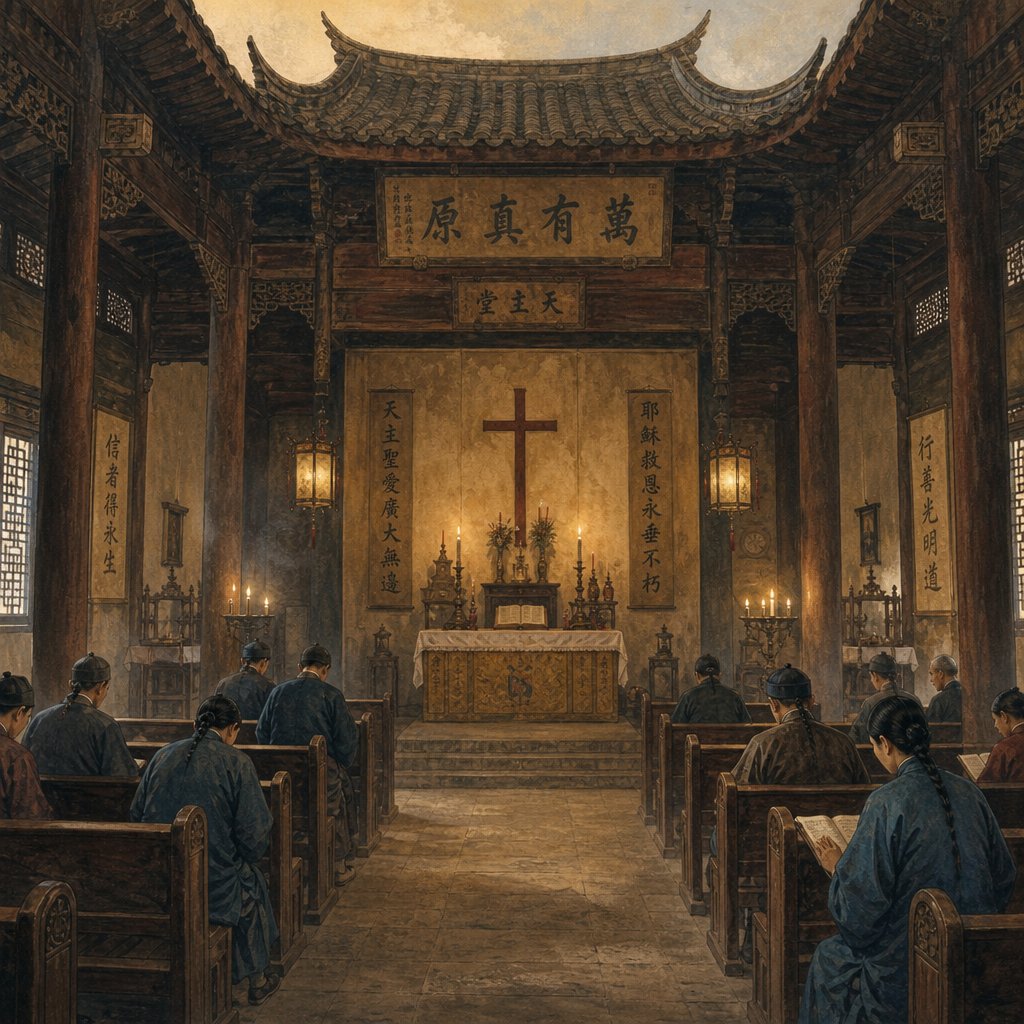
The story of how Chinese Christians got their names historically stretches back nearly 1,400 years, and it is anything but simple. Every era brought new missionaries, new linguistic strategies, and new political realities that shaped how believers identified themselves. The evolution of Christian names in China mirrors the faith's own turbulent journey through dynasties, revolutions, and revivals.
From Jesuit Missions to Modern House Churches
Christianity first reached China in 635 AD, when Nestorian missionaries arrived in the Tang Dynasty capital of Chang'an. These early believers borrowed heavily from Buddhist and Daoist vocabulary, translating "God" with terms like Zhen Zhu (真主, "True Lord") and even using the Buddhist term Fo (佛). Naming conventions during this period were experimental and fluid, with no fixed standard.
When Jesuit missionaries like Matteo Ricci gained access to China in 1582, they brought a more systematic approach. Jesuits favored the Confucian term Shangdi (上帝) for God and introduced Catholic baptismal names transliterated into Chinese. Their strategy was cultural integration: dress like Chinese scholars, speak the language of the court, and find existing Chinese concepts that could carry Christian meaning. This philosophy extended directly into how converts were named.
Protestantism arrived much later. Robert Morrison stepped off a ship in Guangzhou in 1807 and spent decades translating the Bible into Chinese. His translation choices, and those of missionaries who followed, planted the seeds for naming conventions that persist today. Protestant missionaries tended to create original Chinese names with spiritual meaning rather than relying solely on saint-name transliterations. After foreign missionaries were expelled in 1949, house church communities continued these traditions independently, often choosing names that quietly expressed faith during decades of persecution.
The Great Term Question and Its Impact on Names
Imagine trying to name your child after God when theologians cannot agree on what to call God in your language. That was the reality facing Chinese Christians for over a century. The "Term Question" was a fierce debate among missionaries over whether the Hebrew Elohim and Greek Theos should be rendered as Shangdi (上帝), Shen (神), or Tianzhu (天主) in Chinese.
Catholics eventually settled on Tianzhu by papal decree in the early eighteenth century. Protestants never reached consensus. When the Union Version Bible was published in 1919, it simply offered two editions: one using Shangdi, the other using Shen. This split directly shaped Jesuit missionaries' Chinese naming conventions and Protestant alternatives alike. A Catholic convert might take a name incorporating Tian (天, heaven) reflecting the Tianzhu tradition, while a Protestant believer might choose characters tied to En (恩, grace) or Zhu (主, Lord) from their own theological vocabulary.
| Era | Period | Key Actors | Naming Conventions |
|---|---|---|---|
| Nestorian | 635-845 AD | Persian missionaries | Buddhist/Daoist borrowed terms; no fixed naming standard |
| Jesuit Catholic | 1582-1773 | Matteo Ricci, Adam Schall | Saint names transliterated; Shangdi or Tianzhu used for God |
| Early Protestant | 1807-1919 | Robert Morrison, Hudson Taylor | Biblical names transliterated; original Chinese names with spiritual meaning |
| Union Version Era | 1919-1949 | Chinese and Western translators | Standardized transliterations; dual Shangdi/Shen editions |
| House Church Era | 1949-present | Chinese believers independently | Discreet virtue-based names; revival of biblical transliterations post-1980s |
The history of Christianity in China names is ultimately a story of negotiation between two civilizations. Each generation of believers inherited the unresolved tensions of the last and found their own way to carry faith in the characters they chose. Those choices, shaped by theology, politics, and culture, determined the exact vocabulary available for the names Chinese Christians use today.
How to Say and Write God and Jesus in Chinese
The vocabulary that emerged from centuries of theological debate forms the foundation of every Christian Chinese name. If you want to understand how these names work, or choose one for yourself, you need to know the core terms. So what is God called in Chinese? The answer depends on which tradition you follow and what nuance you want to express.
Writing God in Chinese Characters
Chinese has no single, universally agreed-upon word for the Christian God. Instead, believers draw from several terms, each carrying distinct connotations shaped by history and denominational preference.
The most common Protestant term is Shen (神), a character that originally meant "spirit" or "deity" in a general sense. Over time, its use within Chinese churches has given it a specifically Christian meaning, much like how the English word "God" with a capital G distinguishes the biblical deity from generic references. The Chinese Union Version Bible offered editions using Shen, and it has since become the basis of most theological writing in Chinese Protestantism.
Shangdi (上帝) takes a different approach. Its two characters literally mean "Supreme Emperor" or "Sovereign Above." Jesuit missionary Matteo Ricci championed this term in the late 1500s, arguing that ancient Chinese texts already contained knowledge of a supreme deity. Shangdi carried imperial and Confucian associations, lending it a sense of cosmic authority. Both Shen and Shangdi editions of the Chinese Bible remain in print, and both terms appear in Christian Chinese names.
Catholics use a third term entirely: Tianzhu (天主), meaning "Lord of Heaven." This term was established by papal decree and remains exclusive to Catholic usage. You will rarely see Protestants use it, precisely to avoid confusion between traditions.
How Jesus and Christ Appear in Chinese
Unlike the terms for God, the Chinese characters for Jesus and Christ are phonetic transliterations rather than meaning-based translations. When you say Jesus in Chinese, you are hearing an approximation of the original sound rendered through Chinese syllables.
Yesu (耶稣) is how to say Jesus in Chinese. The characters 耶 (ye) and 稣 (su) were chosen purely for their phonetic value. They do not carry independent theological meaning the way Shangdi or Shen do. This is a transliteration, not a translation.
Jidu (基督) represents "Christ" and is also a phonetic rendering. The character 基 (ji) means "foundation" in everyday Chinese, and 督 (du) means "to supervise" or "governor." While these characters were selected for sound, some Chinese Christians appreciate the coincidental resonance: Christ as the foundation who governs all things.
Zhu (主) means "Lord" or "Master" and is used across both Catholic and Protestant contexts. It appears constantly in worship, prayer, and naming. Unlike the transliterated terms, Zhu is a native Chinese word repurposed for Christian use, similar to how English speakers use "Lord" in both secular and sacred contexts.
Yehehua (耶和华) is the transliteration of Yahweh, preserved in the Chinese Old Testament. It appears less frequently in names but remains important in liturgical and theological settings.
Pronunciation Guide with Pinyin
Mandarin Chinese is a tonal language, meaning the same syllable pronounced with a different pitch carries a completely different meaning. Getting the tones right matters, especially when these terms appear in names. Here is a complete reference for pinyin for Christian terms in Chinese:
| Chinese Characters | Pinyin (with tones) | Literal Meaning | Usage Context |
|---|---|---|---|
| 神 | Shen (second tone, rising) | Spirit / Deity | Protestant term for God; most common in theological writing |
| 上帝 | Shangdi (fourth tone + fourth tone) | Supreme Emperor / Sovereign Above | Protestant alternative for God; Confucian-rooted, used in some Bible editions |
| 天主 | Tianzhu (first tone + third tone) | Lord of Heaven | Catholic exclusive term for God |
| 耶稣 | Yesu (second tone + first tone) | Phonetic transliteration of Jesus | Universal across all Chinese Christian traditions |
| 基督 | Jidu (first tone + first tone) | Phonetic transliteration of Christ | Universal; often paired with Yesu as Yesu Jidu (Jesus Christ) |
| 主 | Zhu (third tone) | Lord / Master | Used in prayer, worship, and names across all denominations |
| 耶和华 | Yehehua (second + second + second tone) | Phonetic transliteration of Yahweh | Old Testament references; formal theological contexts |
You will notice that some of these terms are meaning-based translations (Shen, Shangdi, Tianzhu, Zhu) while others are sound-based transliterations (Yesu, Jidu, Yehehua). This distinction matters for naming. Characters chosen for meaning can be recombined freely in names, creating new expressions of faith. Transliterated characters are more fixed, typically used as-is to reference a specific biblical figure.
These core terms are the building blocks from which Chinese Christians construct their names. A name might incorporate Zhu (Lord), echo the En (grace) of God's character, or directly reference Yesu. The difference between Catholic and Protestant naming traditions, explored next, determines which of these terms a believer is most likely to draw from and how they combine them with family and generational conventions.
Catholic and Protestant Naming Traditions Compared
Denominational identity shapes nearly everything about how a Chinese believer receives and uses a Christian name. The difference between Catholic and Protestant Chinese names is not just theological preference. It determines whether your name references a specific saint, whether you use it at work or only at church, and even how many syllables it contains.
Catholic Baptismal Name Traditions
When a Chinese Catholic is baptized, they receive a saint's name. This practice mirrors the universal Catholic tradition of choosing a patron saint, but in China it creates a distinctive dual-name system. As one Chinese Orthodox priest explained, "We use the Christian name in church, to receive Holy Communion, baptism, marriage, but in school, at work, in official documents we always use our Chinese name."
Catholic Chinese baptismal names are typically transliterations of Western saint names rendered phonetically in Mandarin. Mary becomes Mali (玛利亚), Joseph becomes Ruose (若瑟), and Teresa becomes Delesa (德肋撒). These transliterations often sound distinctly foreign in Chinese, which is partly the point. They mark a separate, sacred identity reserved for liturgical life. A few believers use their saint's name in Chinese translation as their legal name, but this remains unusual. The foreignness of the transliteration signals that this name belongs to a different sphere, the spiritual rather than the social.
Protestant Approaches to Christian Names
Protestants take a fundamentally different path. With no tradition of patron saints, Protestant Chinese Christian names tend to fall into two categories: transliterated biblical names (like Dawei for David or Yisilai for Israel) and original Chinese compositions built from characters expressing faith, grace, or other Christian virtues.
The second category is where Protestant naming gets creative. Parents or converts select characters like En (恩, grace), Xin (信, faith), or Guang (光, light) and combine them into names that read as natural Chinese given names while carrying spiritual weight. Unlike Catholic saint names, these compositions do not sound foreign. They blend seamlessly into everyday use, making them suitable for both church and social life without the dual-name separation Catholics maintain.
Here are the key differences at a glance:
- Catholics receive a saint's name at baptism; Protestants typically do not follow a saint-name tradition
- Catholic names are used primarily in church settings (communion, marriage, confession); Protestant names often double as everyday given names
- Catholic transliterations tend to sound distinctly foreign in Chinese; Protestant original compositions sound like natural Chinese names
- Catholics maintain a clear separation between their Christian name and legal name; Protestants more commonly integrate spiritual meaning directly into their legal given name
- Orthodox Christians in China follow the Catholic pattern of saint-name adoption with the same dual-name system
Regional Differences in Transliteration
Imagine the name "John." In Mandarin-speaking communities, it becomes Yuēhàn (约翰). In Cantonese-speaking regions of southern China and Hong Kong, the same name is transliterated as Joeng-hon or sometimes Yok-hon, using different characters or pronunciations that better match Cantonese phonology. The same biblical figure, two very different sounds.
Cantonese vs Mandarin Christian name transliteration differences run deep because the two dialects have distinct sound systems. Cantonese preserves final consonants (-k, -t, -p) that Mandarin lost centuries ago, which means transliterations of the same Western name can look and sound quite different depending on the region. Paul is Baoluo (保罗) in Mandarin but Bo-lo in Cantonese. Peter is Bide (彼得) in Mandarin and Pei-dak in Cantonese.
These regional variations also reflect historical missionary influence. Catholic communities in Macau and southern Guangdong developed their transliterations through Portuguese-speaking Jesuits, while northern Protestant communities worked from English or German phonetics. The result is that two Chinese Christians sharing the same patron saint might not immediately recognize each other's names on paper.
Denominational and regional identity, then, are not just background details. They actively determine the sound, structure, and social function of a believer's name. This layered system also means that anyone exploring these naming traditions has a rich palette of options, from saint-name transliterations to original character compositions built from the vocabulary of faith.

Popular Christian Chinese Names for Boys
That rich palette of options becomes most tangible when you see actual names laid out with their characters, sounds, and spiritual roots. Whether you are a Chinese Christian parent searching for the right name or a believer exploring your heritage, Christian Chinese boy names with meaning offer a powerful way to declare faith through identity. The names below are organized into two categories: biblical names rendered phonetically in Chinese, and original compositions that weave Christian virtues directly into the characters.
Biblical Names Transliterated for Boys
These are names drawn straight from Scripture, transliterated so that their sound in Mandarin echoes the original Hebrew or Greek. They carry the weight of a specific biblical story and connect the bearer to a figure whose life is recorded in the Word. You will find these biblical boy names in Chinese characters used across both Catholic and Protestant communities, though exact transliterations can vary slightly by region.
| Chinese Characters | Pinyin | English Equivalent | Biblical Connection |
|---|---|---|---|
| 大卫 | Dawei (da fourth tone, wei fourth tone) | David | King of Israel, man after God's own heart (1 Samuel 13:14) |
| 以赛亚 | Yisaiya (yi third tone, sai fourth tone, ya fourth tone) | Isaiah | Major prophet who foretold the coming Messiah (Isaiah 7:14) |
| 约书亚 | Yueshuya (yue first tone, shu first tone, ya fourth tone) | Joshua | Led Israel into the Promised Land after Moses (Joshua 1:9) |
| 以利亚 | Yiliya (yi third tone, li fourth tone, ya fourth tone) | Elijah | Prophet who called down fire from heaven (1 Kings 18) |
| 但以理 | Danyili (dan fourth tone, yi third tone, li third tone) | Daniel | Faithful in the lion's den; interpreter of dreams (Daniel 6) |
| 约翰 | Yuehan (yue first tone, han fourth tone) | John | Beloved disciple of Jesus; author of the Gospel of John |
| 保罗 | Baoluo (bao third tone, luo second tone) | Paul | Apostle to the Gentiles; wrote much of the New Testament |
| 马太 | Matai (ma third tone, tai fourth tone) | Matthew | Tax collector turned apostle; Gospel writer |
| 摩西 | Moxi (mo second tone, xi first tone) | Moses | Delivered Israel from Egypt; received the Ten Commandments |
| 撒母耳 | Samuer (sa first tone, mu third tone, er third tone) | Samuel | Prophet and judge who anointed Israel's first kings |
A few things to notice. These transliterations prioritize phonetic resemblance over character meaning. The characters in Dawei (大卫) happen to mean "great" and "to guard," which feels fitting for a warrior king, but that is coincidence rather than design. The primary function is sound. Still, many Chinese Christian families appreciate these happy accidents of meaning, seeing God's hand even in the transliteration process.
Original Chinese Boy Names with Christian Meaning
This is where the naming tradition gets deeply personal. Rather than borrowing a biblical figure's name, parents compose an entirely new name using characters that express Christian faith, hope, or devotion. These Christian male names in Mandarin Chinese sound completely natural as given names while carrying spiritual significance that fellow believers immediately recognize.
Characters like 恩 (en, grace), 信 (xin, faith), and 光 (guang, light) appear frequently in these compositions. They combine with other characters to create layered meaning. Think of it like writing a two-word prayer that your child will carry for life.
| Chinese Characters | Pinyin | Meaning | Spiritual Connection |
|---|---|---|---|
| 恩泽 | Enze (en first tone, ze second tone) | Grace that nourishes | God's grace flowing like life-giving water (John 4:14) |
| 信恒 | Xinheng (xin fourth tone, heng second tone) | Steadfast faith | Enduring belief that does not waver (Hebrews 11:1) |
| 光明 | Guangming (guang first tone, ming second tone) | Radiant light | Christ as the light of the world (John 8:12) |
| 天恩 | Tian'en (tian first tone, en first tone) | Heavenly grace | Blessings that come from God above (James 1:17) |
| 义诚 | Yicheng (yi fourth tone, cheng second tone) | Righteous and sincere | Righteousness through faith (Romans 3:22) |
| 信德 | Xinde (xin fourth tone, de second tone) | Faith and virtue | The fruit of the Spirit expressed in character (Galatians 5:22) |
| 恩佑 | Enyou (en first tone, you fourth tone) | Protected by grace | God as shield and protector (Psalm 91:4) |
| 真光 | Zhenguang (zhen first tone, guang first tone) | True light | The true light that gives light to everyone (John 1:9) |
| 平安 | Ping'an (ping second tone, an first tone) | Peace | The peace of Christ that surpasses understanding (Philippians 4:7) |
| 荣恩 | Rong'en (rong second tone, en first tone) | Glorious grace | Glory of God's freely given grace (Ephesians 1:6) |
| 慕道 | Mudao (mu fourth tone, dao fourth tone) | Seeking the Way | Christ as the Way, the Truth, and the Life (John 14:6) |
| 福生 | Fusheng (fu second tone, sheng first tone) | Born into blessing | Blessed is the one who trusts in the Lord (Jeremiah 17:7) |
Notice how Chinese names meaning grace for boys often pair 恩 (en) with a second character that specifies the nature of that grace: nourishing (泽), protective (佑), or glorious (荣). This combinatorial approach gives parents enormous creative freedom while keeping the spiritual message clear.
Some families also draw from the broader Chinese naming tradition of balancing elemental associations. A character like Ze (泽), which is a water-element name meaning "nurturing places where water congregates," pairs beautifully with En (恩) because grace is often described in Scripture as living water. The spiritual and cultural layers reinforce each other.
Whether you lean toward a direct biblical transliteration or an original composition, the key is intentionality. Each of these names tells a story. A transliterated name says, "I identify with this biblical figure and their journey." An original composition says, "This is the spiritual truth I want spoken over my life every single day." Both are valid, both are powerful, and both carry God's story forward in Chinese characters.
Girls' names follow a similar structure but draw from a different palette of characters, ones that emphasize wisdom, love, and spiritual beauty alongside the same core vocabulary of grace and faith.
Popular Christian Chinese Names for Girls
Characters like 慧 (wisdom), 爱 (love), and 灵 (spirit) open up a world of naming possibilities that feel distinctly feminine while carrying the same theological weight as their masculine counterparts. Christian Chinese girl names with meaning draw from Scripture's heroines, the poetry of Proverbs, and the tender language of God's love for His people. The result is a collection of names that sound beautiful in Mandarin, look elegant in brushstrokes, and speak volumes about the faith behind them.
Biblical Names Transliterated for Girls
Scripture is full of women whose courage, faithfulness, and devotion shaped the story of redemption. When their names are rendered in Chinese characters, they carry that same narrative power into a new linguistic world. These biblical girl names in Chinese characters connect the bearer to a specific woman of faith whose story is preserved in the Word.
| Chinese Characters | Pinyin | English Equivalent | Biblical Connection |
|---|---|---|---|
| 以斯帖 | Yisitie (yi third tone, si first tone, tie third tone) | Esther | Queen who risked her life to save her people (Esther 4:14) |
| 路得 | Lude (lu fourth tone, de second tone) | Ruth | Faithful daughter-in-law whose loyalty led her into God's covenant (Ruth 1:16) |
| 马利亚 | Maliya (ma third tone, li fourth tone, ya fourth tone) | Mary | Mother of Jesus who said yes to God's plan (Luke 1:38) |
| 撒拉 | Sala (sa first tone, la first tone) | Sarah | Mother of nations who laughed at God's promise and then lived it (Genesis 21:6) |
| 利百加 | Libaijia (li fourth tone, bai third tone, jia first tone) | Rebekah | Chosen bride whose generosity revealed God's guidance (Genesis 24) |
| 拉结 | Lajie (la first tone, jie second tone) | Rachel | Beloved wife of Jacob; mother of Joseph and Benjamin (Genesis 29) |
| 底波拉 | Dibola (di third tone, bo first tone, la first tone) | Deborah | Judge and prophetess who led Israel to victory (Judges 4-5) |
| 哈拿 | Hana (ha first tone, na second tone) | Hannah | Prayed faithfully for a child and dedicated Samuel to God (1 Samuel 1) |
| 百基拉 | Baijila (bai third tone, ji first tone, la first tone) | Priscilla | Early church leader who taught alongside her husband Aquila (Acts 18) |
| 多加 | Duojia (duo first tone, jia first tone) | Dorcas/Tabitha | Disciple known for acts of charity; raised from the dead by Peter (Acts 9:36-42) |
Like the boys' transliterations, these names prioritize phonetic resemblance to the original Hebrew or Greek. Lude (路得) uses characters meaning "road" and "to obtain," which some Chinese Christians read as a poetic echo of Ruth's journey: she walked a road and obtained a place in God's family. Whether intentional or coincidental, these resonances enrich the name for those who notice them.
Original Chinese Girl Names with Christian Meaning
This is where Christian female names in Mandarin Chinese truly shine. Parents compose names using characters that express spiritual beauty, divine love, and the quiet strength of faith. Among Chinese Catholic and Protestant families alike, characters like 爱 (ai, love), 恩 (en, grace), and 安 (an, peace) appear frequently in girls' names. As Chinese Christians in Singapore and Malaysia have noted, names built around "ai" (love), "an" (peace), and "en" (grace) are especially popular among believing families because they compress an entire theology of God's character into a child's identity.
Chinese names meaning love for girls often pair 爱 with a second character that specifies the direction or quality of that love: heavenly love, graceful love, love that shines. The same combinatorial freedom applies to wisdom, spirit, and joy.
| Chinese Characters | Pinyin | Meaning | Spiritual Connection |
|---|---|---|---|
| 爱恩 | Ai'en (ai fourth tone, en first tone) | Love and grace | God's love expressed through grace (Ephesians 2:4-5) |
| 慧灵 | Huiling (hui fourth tone, ling second tone) | Wise spirit | The Spirit who gives wisdom (1 Corinthians 2:10-13) |
| 恩慈 | Enci (en first tone, ci second tone) | Gracious kindness | The kindness of God that leads to repentance (Romans 2:4) |
| 灵美 | Lingmei (ling second tone, mei third tone) | Spiritual beauty | Beauty of a gentle and quiet spirit (1 Peter 3:4) |
| 信爱 | Xin'ai (xin fourth tone, ai fourth tone) | Faith and love | Faith working through love (Galatians 5:6) |
| 天慧 | Tianhui (tian first tone, hui fourth tone) | Heavenly wisdom | Wisdom from above that is pure and peaceable (James 3:17) |
| 喜乐 | Xile (xi third tone, le fourth tone) | Joy | The joy of the Lord is your strength (Nehemiah 8:10) |
| 恩琳 | Enlin (en first tone, lin second tone) | Grace like beautiful jade | God adorns His people with grace (Proverbs 1:9) |
| 安宁 | Anning (an first tone, ning second tone) | Peaceful serenity | Peace I leave with you (John 14:27) |
| 爱华 | Aihua (ai fourth tone, hua second tone) | Love in full bloom | Love that never fails (1 Corinthians 13:8) |
| 真爱 | Zhen'ai (zhen first tone, ai fourth tone) | True love | God is love, and whoever abides in love abides in God (1 John 4:16) |
| 望恩 | Wang'en (wang fourth tone, en first tone) | Hoping in grace | Set your hope fully on the grace to come (1 Peter 1:13) |
A few patterns stand out. Names using 灵 (ling, spirit) carry a sense of the ethereal and sacred, making them popular for girls whose parents want to emphasize the Holy Spirit's presence. Names with 慧 (hui, wisdom) connect to the Proverbs tradition where wisdom is personified as a woman calling out in the streets (Proverbs 1:20). And names built around 爱 (ai, love) reflect the most fundamental declaration of Christian theology: God is love.
You will also notice that many of these original compositions sound completely natural as Chinese given names. A classmate or colleague hearing the name Enlin (恩琳) would recognize it as a lovely, feminine name. A fellow believer would also catch the deeper layer: grace adorning a life like precious jade. This dual readability is one of the great strengths of the tradition. The name works in both worlds without compromise.
Whether drawn from the heroines of Scripture or composed fresh from the vocabulary of faith, these names give girls a spiritual inheritance written into the very characters of their identity. The building blocks behind them, individual characters like 恩, 爱, 慧, and 灵, each carry their own weight of meaning. Understanding how those characters function independently opens up even more possibilities for creating names that are both deeply personal and theologically grounded.
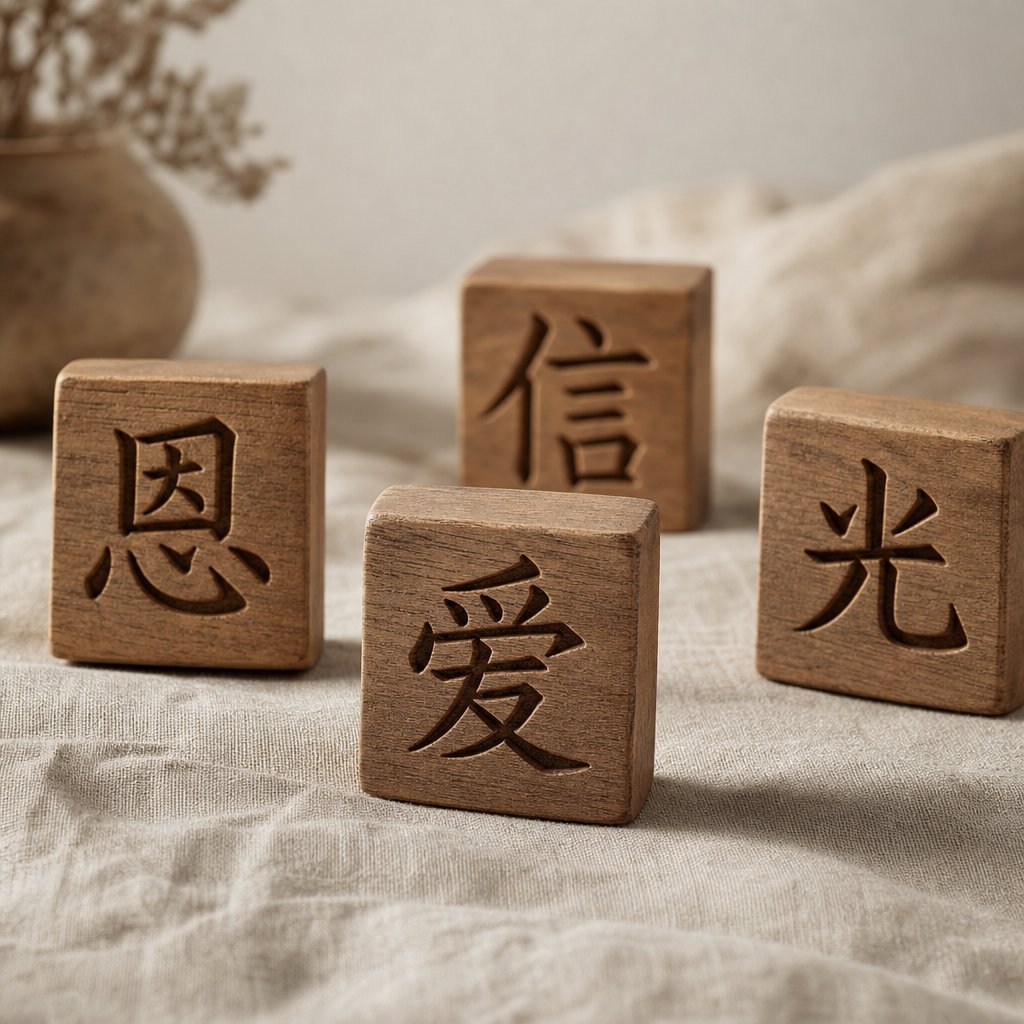
Chinese Characters with Christian Meaning Used in Names
Every name you have seen so far is built from a small set of recurring characters, each one a concentrated expression of theology. Think of these characters as a spiritual alphabet. Once you understand what each one means and how it behaves in combination, you can read the faith embedded in any Christian Chinese name, or even begin composing your own.
Characters That Express Faith and Devotion
Some characters point directly upward, toward God, heaven, and the believer's relationship with the divine. These are the faith-related Chinese characters for names that anchor a person's identity in their devotion.
| Character | Pinyin | Core Meaning | Christian Significance | Example Name Combinations |
|---|---|---|---|---|
| 信 | Xin (fourth tone) | Faith / Belief / Trust | The foundation of the Christian life (Hebrews 11:1) | 信恒 (steadfast faith), 信德 (faith and virtue), 信爱 (faith and love) |
| 恩 | En (first tone) | Grace / Favor | God's unmerited favor toward humanity (Ephesians 2:8) | 恩泽 (nourishing grace), 天恩 (heavenly grace), 恩琳 (grace like jade) |
| 天 | Tian (first tone) | Heaven / Sky | God's dwelling place; the source of all blessings (James 1:17) | 天恩 (heavenly grace), 天慧 (heavenly wisdom), 天赐 (heaven-bestowed) |
| 灵 | Ling (second tone) | Spirit / Soul | The Holy Spirit who dwells in believers (Romans 8:11) | 慧灵 (wise spirit), 灵美 (spiritual beauty), 灵恩 (spiritual grace) |
| 福 | Fu (second tone) | Blessing / Good fortune | Blessings from God through worship and obedience | 福生 (born into blessing), 福恩 (blessed grace), 福音 (good news/gospel) |
The Chinese character for grace in names, 恩 (en), deserves special attention. It appears more frequently than almost any other character in Christian Chinese naming. Its structure tells a story: the top component 因 suggests "cause" or "reason," while the bottom 心 means "heart." Grace, then, is visually rendered as something that has a cause rooted in the heart. For believers, that cause is God's love.
The character 福 (fu) carries an even deeper history. Scholars at East Asia School of Theology have traced its ancient pictographic form back to an image of offerings placed on an altar to God. The radical 礻 derives from 示, depicting an altar used in worship, while the right component 畐 originated from a pictogram showing a cup and wine jar held by two hands in offering. The original meaning in ancient times was "offerings to God" or "blessings from God." For Chinese Christians, using 福 in a name connects the bearer to a tradition of divine blessing that predates the arrival of missionaries by thousands of years.
Characters That Reflect Christian Virtues
Where the first group points toward God, this second group describes the character qualities that faith produces in a believer's life. These are the virtues Scripture calls the fruit of the Spirit, rendered in single brushstrokes.
| Character | Pinyin | Core Meaning | Christian Significance | Example Name Combinations |
|---|---|---|---|---|
| 义 | Yi (fourth tone) | Righteousness / Justice | Righteousness imputed through faith in Christ (Romans 3:22) | 义诚 (righteous and sincere), 信义 (faith and righteousness), 义恩 (righteous grace) |
| 爱 | Ai (fourth tone) | Love | God is love; the greatest commandment (1 John 4:8) | 爱恩 (love and grace), 真爱 (true love), 爱华 (love in bloom) |
| 光 | Guang (first tone) | Light | Christ as the light of the world (John 8:12) | 光明 (radiant light), 真光 (true light), 光恩 (light of grace) |
| 真 | Zhen (first tone) | Truth / Genuine | The truth that sets free; Christ as the Truth (John 14:6) | 真光 (true light), 真爱 (true love), 真理 (truth/doctrine) |
| 平 | Ping (second tone) | Peace / Level / Calm | The peace of Christ that surpasses understanding (Philippians 4:7) | 平安 (peace), 平恩 (peaceful grace), 平信 (peaceful faith) |
One character worth highlighting is 义 (yi, righteousness). As one Chinese Christian commenter noted, the character is said to resemble Christ on the cross. The top component 羊 means "lamb," and it sits above 我 meaning "me." Lamb above self. Whether this is etymologically precise or a devotional reading, it illustrates how Chinese believers find layers of spiritual meaning within the very structure of their characters.
Combining Characters for Deeper Meaning
Sounds complex? It is actually intuitive once you see the pattern. Chinese names typically consist of a one-character surname followed by a one- or two-character given name. The given name is where faith-related characters do their work. When you combine two characters, you create a relationship between their meanings. Here is how to combine Chinese characters for Christian names effectively:
- Pair a "source" character (天, 恩, 福) with a "quality" character (慧, 光, 美) to express where the quality comes from. Example: 天慧 means wisdom that comes from heaven.
- Pair two virtues together to create a compound aspiration. Example: 信爱 means faith expressed through love.
- Pair a spiritual concept with a nature image for poetic resonance. Example: 恩泽 pairs grace with a character meaning marshland or moisture, evoking grace as life-giving water.
- Use a character that echoes a specific Scripture passage. Example: 真光 (true light) directly references John 1:9.
The order of characters matters too. In Chinese naming convention, the first character of a two-character given name often carries slightly more weight or sets the tone. Placing 恩 (grace) first, as in 恩泽, emphasizes grace as the primary reality. Placing it second, as in 荣恩 (glorious grace), makes glory the leading note with grace as its substance.
With these building blocks in hand, you have the vocabulary to read, appreciate, and even draft a meaningful name. The next question is practical: how do you actually choose the right one? Tonal harmony, stroke count, generational conventions, and the social contexts where the name will be used all play a role in moving from a beautiful idea to a name that works in real life.
How to Choose the Right Christian Chinese Name
Moving from a beautiful idea to a name that actually works in daily life requires more than spiritual inspiration. It requires attention to sound, structure, and social context. Whether you are a Chinese Christian parent preparing for a new baby, an adult convert choosing a meaningful Chinese name for baptism, or a non-Chinese speaker seeking a name that honors both faith and culture, the process follows a similar logic. Here is a practical Chinese Christian baby naming guide that walks through each consideration.
Steps for Choosing a Baptismal Name
Adult converts face a specific question: do I transliterate a biblical name, or compose something original? The steps to pick a Chinese baptismal name depend partly on your denomination (Catholics typically select a patron saint, Protestants have more freedom) and partly on how you plan to use the name. Here is a reliable process:
- Clarify your purpose. Will this name be used only in church settings, or do you want it to function as an everyday name? Catholics generally maintain a separate baptismal name for liturgical use. Protestants often integrate spiritual meaning directly into a name used socially.
- Choose your approach. Decide between a transliterated biblical name (connecting you to a specific scriptural figure) or an original composition using faith-related characters. Both are valid. A transliteration says "I identify with this person's story." An original composition says "This is the truth I want spoken over my life."
- Select characters with intention. If composing an original name, pick one or two characters from the vocabulary of faith (恩, 信, 光, 爱, 真, etc.) and test how they combine. Read the meaning of each character individually and together.
- Test tonal harmony. Say the full name aloud, surname included. Mandarin has four tones, and a well-crafted name moves through different tones to create natural rhythm. Avoid placing two third-tone characters back to back, which creates an awkward dip in speech. The test is simple: does it sound right when you introduce yourself across a room?
- Check for negative homophones. A name that sounds beautiful in isolation might be a homophone for an unfortunate word. Ask a native Mandarin speaker to listen for unintended associations.
- Consult your pastor or a Chinese-speaking friend. They can catch cultural nuances you might miss, from outdated character usage to regional connotations that vary between northern and southern China.
- Confirm visual balance. Write the full name out. Characters with vastly different stroke counts can look unbalanced on paper. A surname with three strokes paired with a given name character of twenty strokes creates visual heaviness. Aim for a composition that looks harmonious when written together.
Naming a Child in a Chinese Christian Family
When you are naming a baby rather than yourself, additional layers come into play. Chinese Christian parents often spend weeks deliberating, and the process typically involves extended family input.
Generational naming is one tradition worth understanding. In many Chinese families, one character in the given name is shared across all children (or all cousins) of the same generation. This generation character (字辈, zipei) is predetermined by the family lineage, leaving parents to choose only the second character freely. Christian families sometimes select a faith-related character as the generation marker, so all siblings carry a shared spiritual inheritance. Imagine three brothers named 恩泽, 恩光, and 恩信, each beginning with grace.
Stroke count traditions also matter in some families. Certain total stroke counts are considered auspicious in Chinese numerology, and parents may adjust character choices to hit a favorable number. While some Christian families set aside these folk practices as incompatible with faith, others view them as cultural rather than spiritual and incorporate them freely. There is no single right answer here, only family conviction.
One more consideration unique to this context: Chinese families feel strongly about uniqueness. Parents want their child's name to be one of a kind. If they discover someone else in their community shares the name, some will even rename the child. This drive toward originality actually works in favor of Christian naming, since composing a name from faith-related characters produces combinations unlikely to be duplicated.
When and How These Names Are Used Socially
A common question for anyone learning how to choose a Chinese Christian name: where does this name actually get used? The answer depends on denomination and personal preference.
For Catholics and Orthodox Christians, the baptismal name (saint's name) is used in church for communion, baptism, marriage, and confession. It does not typically appear on official documents like passports, ID cards, or school records. The legal name remains the Chinese given name chosen by parents. As one Chinese Orthodox believer explained, "A few people use their Christian name in Chinese translation as their legal name, but this is unusual."
For Protestants, the line blurs. Because Protestant names are often original Chinese compositions rather than foreign-sounding transliterations, they can serve as both the spiritual name and the legal given name. A child named 恩泽 (Enze, "nourishing grace") carries that name on their birth certificate, school roster, and church membership roll alike. No switching between identities is required.
Here is a quick reference for how these names function across contexts:
| Context | Catholic/Orthodox Usage | Protestant Usage |
|---|---|---|
| Church worship and sacraments | Saint's name (transliterated) | Given name with Christian meaning |
| Official documents (ID, passport) | Chinese legal name only | Same name used in church (if original composition) |
| School and workplace | Chinese legal name only | Same given name |
| Family and close friends | Either name depending on context | Given name or nickname |
| Introduction to other believers | Often both names shared | Given name (spiritual meaning recognized) |
The practical takeaway? If you want a name that works seamlessly across every area of life, an original Chinese composition with embedded Christian meaning gives you the most flexibility. If you value the distinct sacredness of a name reserved for worship and spiritual life, a transliterated saint's name creates that separation intentionally.
Whichever path you choose, the goal remains the same: a name that carries faith honestly, sounds natural in conversation, and honors both the biblical tradition and the Chinese art of meaningful naming. For non-Chinese speakers considering this journey, a few additional considerations around cultural sensitivity and common pitfalls can make the difference between a name that bridges cultures beautifully and one that misses the mark.

Cultural Sensitivity When Choosing Chinese Christian Names
Can non-Chinese people have a Chinese Christian name? Absolutely. Chinese Christian communities generally welcome outsiders who adopt a Chinese name with sincerity, especially when faith is the motivation. A shared name tradition signals that you value the community enough to enter it on its own linguistic terms. The key distinction is not whether you take a name, but how you go about it.
Appreciation looks like humility, curiosity, and willingness to be corrected. It means asking native speakers for guidance rather than assembling characters from a dictionary app. Appropriation, by contrast, treats a name as a costume, something exotic to try on without understanding its weight. In Chinese culture, names carry family honor, spiritual aspiration, and social identity. Approaching that tradition with genuine respect transforms the act of naming into respectful cross-cultural Christian naming practice rather than a superficial gesture.
Respectful Approaches to Cross-Cultural Naming
The University of Warwick's intercultural awareness guidelines offer a principle that applies perfectly here: admit what you do not know, take an interest, and check your assumptions with people who know the culture from the inside. Applied to naming, this means involving Chinese-speaking believers at every stage, not just at the end for a quick approval.
- Do ask a Chinese pastor, teacher, or friend to help you select and verify your name
- Do learn the correct tones and practice pronunciation until it feels natural in your mouth
- Do understand the meaning of every character in your name, not just the overall translation
- Do use the name consistently in the community where it was given, showing you take it seriously
- Don't pick characters solely because they look visually appealing without confirming their meaning
- Don't use names of revered historical or cultural figures, which can feel presumptuous
- Don't treat the name as a novelty or joke, using it only when it feels convenient
- Don't skip the tonal dimension, since a mispronounced tone can change your name's meaning entirely
Common Mistakes and How to Avoid Them
The most frequent mistakes to avoid with Chinese name selection come down to three categories: sound problems, meaning problems, and cultural blind spots.
Sound problems happen when you ignore homophones. Chinese is rich with words that sound identical but carry wildly different meanings. A name that sounds like "death" (si, 死) or an expletive will follow you into every introduction. As naming experts have documented, even characters that seem harmless individually can combine into unfortunate phrases when spoken aloud quickly. Always say the full name, surname included, to multiple native speakers and ask bluntly: does this sound like anything bad?
Meaning problems arise from literal translation. Choosing characters that directly translate an English concept often produces names that sound childish or awkward in Chinese. A name meaning "Happy Light" might feel inspiring in English but read as cartoonish to Chinese ears. Aim for the subtlety and poetic compression that characterizes natural Chinese naming.
Cultural blind spots include ignoring gender conventions (certain characters read as strongly masculine or feminine), using overly complex characters that are difficult to write, or accidentally echoing a famous person's name. The naming taboo of bihu (避讳) means you should never use characters from the names of elders or ancestors in the community where you worship.
Here is a simple truth: every Chinese person you ask for help will appreciate that you asked. The act of seeking guidance is itself a sign of cultural sensitivity when choosing Chinese Christian names. It communicates humility, and humility is the posture that opens doors.
Choosing a Chinese name rooted in Christian faith is not an act of pretending to be something you are not. It is an act of entering a shared story through a shared language. When you carry a name like Ping'an (平安, peace) or Enze (恩泽, nourishing grace), you are not borrowing someone else's culture. You are joining a family of believers who have expressed their faith through these characters for generations. Done with care, your name becomes a bridge, not a barrier, connecting you to brothers and sisters across every language and nation who call on the same Lord.
Frequently Asked Questions About Christian Chinese Names
1. What are Christian Chinese names?
Christian Chinese names are names used by Chinese-speaking believers that carry biblical or spiritual meaning through Chinese characters. They include two main types: transliterated biblical names rendered phonetically in Chinese (such as Dawei for David or Lude for Ruth) and original Chinese compositions built from characters expressing Christian virtues like grace (恩), faith (信), love (爱), and light (光). These names serve as markers of faith for baptism, personal identity, and daily life within Chinese Christian communities worldwide.
2. How do you say God and Jesus in Chinese?
God has multiple terms in Chinese depending on denomination. Protestants commonly use Shen (神, meaning spirit/deity) or Shangdi (上帝, meaning Supreme Emperor). Catholics exclusively use Tianzhu (天主, meaning Lord of Heaven). Jesus is universally transliterated as Yesu (耶稣) across all Chinese Christian traditions, while Christ is rendered as Jidu (基督). The term Zhu (主, meaning Lord) is used across all denominations in prayer and worship contexts.
3. What is the difference between Catholic and Protestant Chinese Christian names?
Catholics receive a saint's name at baptism that is transliterated into Chinese and used primarily in church settings like communion and marriage. These names often sound distinctly foreign in Chinese. Protestants typically compose original Chinese names using faith-related characters that sound natural and can serve as both spiritual and legal given names. This means Protestant names work seamlessly across church, school, and workplace, while Catholics maintain a clear separation between their Christian name and their legal Chinese name.
4. Can non-Chinese people have a Chinese Christian name?
Yes, Chinese Christian communities generally welcome non-Chinese individuals who adopt a Chinese name with sincerity, especially when faith motivates the choice. The key is approaching the process with humility and cultural respect. This means consulting native Chinese speakers for guidance, learning correct tonal pronunciation, understanding the meaning of every character chosen, and using the name consistently in community. Seeking help from a Chinese pastor or friend is itself a sign of respect that opens doors.
5. How do I choose a meaningful Christian Chinese name for my baby?
Start by deciding between a transliterated biblical name or an original composition using faith-related characters like 恩 (grace), 信 (faith), or 光 (light). Test tonal harmony by saying the full name aloud with the surname, avoiding two third-tone characters back to back. Check for negative homophones by asking native speakers, consider visual balance in stroke count, and consult your pastor or Chinese-speaking friends for cultural nuances. Some families also use a shared generation character among siblings to create a unified spiritual inheritance.